Monday musings on Australian literature: Book industry awards

How to title today’s post was my first challenge – and I hope the title I settled on covers it well enough. What I am wanting to cover here are those awards that don’t go to books (or manuscripts) or writers, but to those in the industry – people and organisations – that support writers and their books. The ABIAs, or, Australian Book Industry Awards, have been doing this for some years.

ABIAs

Established in 2006, these awards are, says Wikipedia, ‘publishers’ and literary awards held by the Australian Publishers Association annually in Sydney “to celebrate the achievements of authors and publishers in bringing Australian books to readers”‘. I have only written on them once before, and that was to highlight some of the winners in the 2019 awards that interested me. However, these awards also recognise others working in the industry. The categories change over the years, but since 2017 there have been awards for (listed with the winners in the years they were made):

  • Book Retailer of the Year: Readings (2020); Readings (2021); Harry Hartog Bookseller, Burnside Village, Adelaide (2022); Big W (2023)
  • Bookshop of the Year: Books Kinokuniya (2020); Avid Reader, Brisbane (2021); Avenue Bookstore, Albert Park, Melbourne (2022); Matilda Bookshop (2023); Fullers Bookshop, Hobart, Tasmania (2024)
  • Commissioning editor of the Year: Jane Palfreyman (Allen & Unwin) (2023); Catherine Milne (HarperCollins Publishers) (2024)
  • Independent Book Retailer of the Year: Readings Potts Point Bookshop (2017); Readings (2018); Mary Martin Bookshops (2019)
  • Marketing Strategy of the Year: Bloomsbury for Johann Hari’s Stolen Focus (2023); Affirm Press for Pip Williams’ The Bookbinder of Jericho (2024)
  • National Book Retailer of the Year: Booktopia (2017); Dymocks (2018); Booktopia (2019)
  • Publisher of the Year: Pan Macmillan Australia) (2017); HarperCollins (2018); Pan Macmillan Australia (2019); Allen and Unwin (2020); Penguin Random House Australia (2021); Penguin Random House Australia (2022); Allen and Unwin (2023); Penguin Random House Australia (2024)
  • Rising Star Award: Shalini Kunahlan, marketing manager at Text Publishing (2018); Ella Chapman, head of marketing communications at Hachette Australia (2019); Hazel Lam, senior book designer at HarperCollins (2020); Pooja Desai, head of design at Hardie Grant Children’s Publishing (2021); Emily Hart, Commissioning Editor, Hardie Grant Books (2022)
  • Small Publisher of the Year: NewSouth (2017); Thames & Hudson Australia (2018); Affirm Press, with Honourable Mention to Magabala Books (2019); Magabala Books (2020); UQP (or University of Queensland Press) (2021); UQP (or University of Queensland Press) (2022); UQP (or University of Queensland Press) (2023); Magabala Books (2024)

As you can see, the categories move around a bit, but there are awards for publishing companies, booksellers, and book industry professionals. I like seeing designers, commissioning editors and marketers being recognised in what is an awards-rich field.

ABDAs

The Australian Book Design Awards aim to “showcase the best of the best in book design in this country”. They are open to books designed and first published in Australia, in the year preceding the awards. They are offered in multiple categories. In 2024, some 19 categories are in the mix, including Best Designed Commercial Fiction Cover, Best Designed Literary Fiction/Poetry Cover, Best Designed Non-fiction Cover, and so on. There are awards for covers only and for overall book design. I have written about them once, in the past, for the 2017 Shortlist.
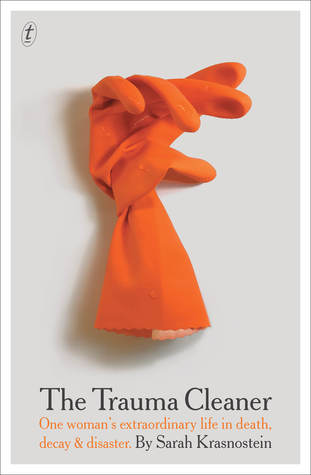
Sarah Krasnostein, The trauma cleaner

Their Awards Archive site takes a bit of navigation, and doesn’t always present the information in the most ideal way, but you can find some gorgeous covers there, including Sandy Cull’s award winning cover (2017) for Heather Rose’s The museum of modern love. Another award winner – cover and overall design (2018) – was W.H. Chong’s work on Sarah Krasnostein’s The trauma cleaner. Back in 2018, I attended and wrote up a Canberra Writers’ Festival event involving W.H. Chong.

Specialist Awards

There are also awards run by specialist or special interest publishers, like the Educational Publishing Awards Australia (or EPAAs). These were co-founded in 1993 by the APA (Australian Publishers Association) and the late Professor Mike Horsley, and are organised by the APA which also manages the ABIAs. Most of the award categories are for specific books/educational titles, but they also include Primary and Secondary Publisher of the Year, which, in 2023, were won by SevenSteps (Primary) and Cambridge University Press (Secondary). Publisher Jacaranda has been a regular winner of these awards.

Are you aware of these awards, or of similar awards in your location or area of interest? I’d love to hear about them.
What would you recommend?

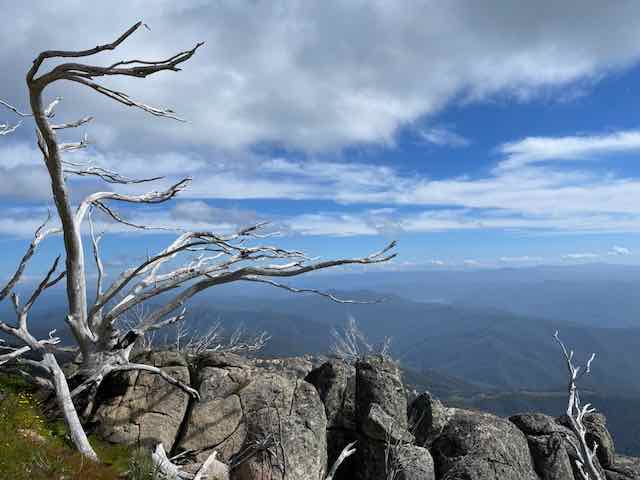
Last week, Mr Gums and I drove back from Melbourne where we had spent the holiday season with family. Having spent over two weeks in the city – very lovely because we saw family – I did want a little country respite before hitting our own (much smaller, admittedly) city. Bright, in Victoria’s Alpine Shire was our chosen destination and it was truly delightful. Mountains and rivers are my happy places.

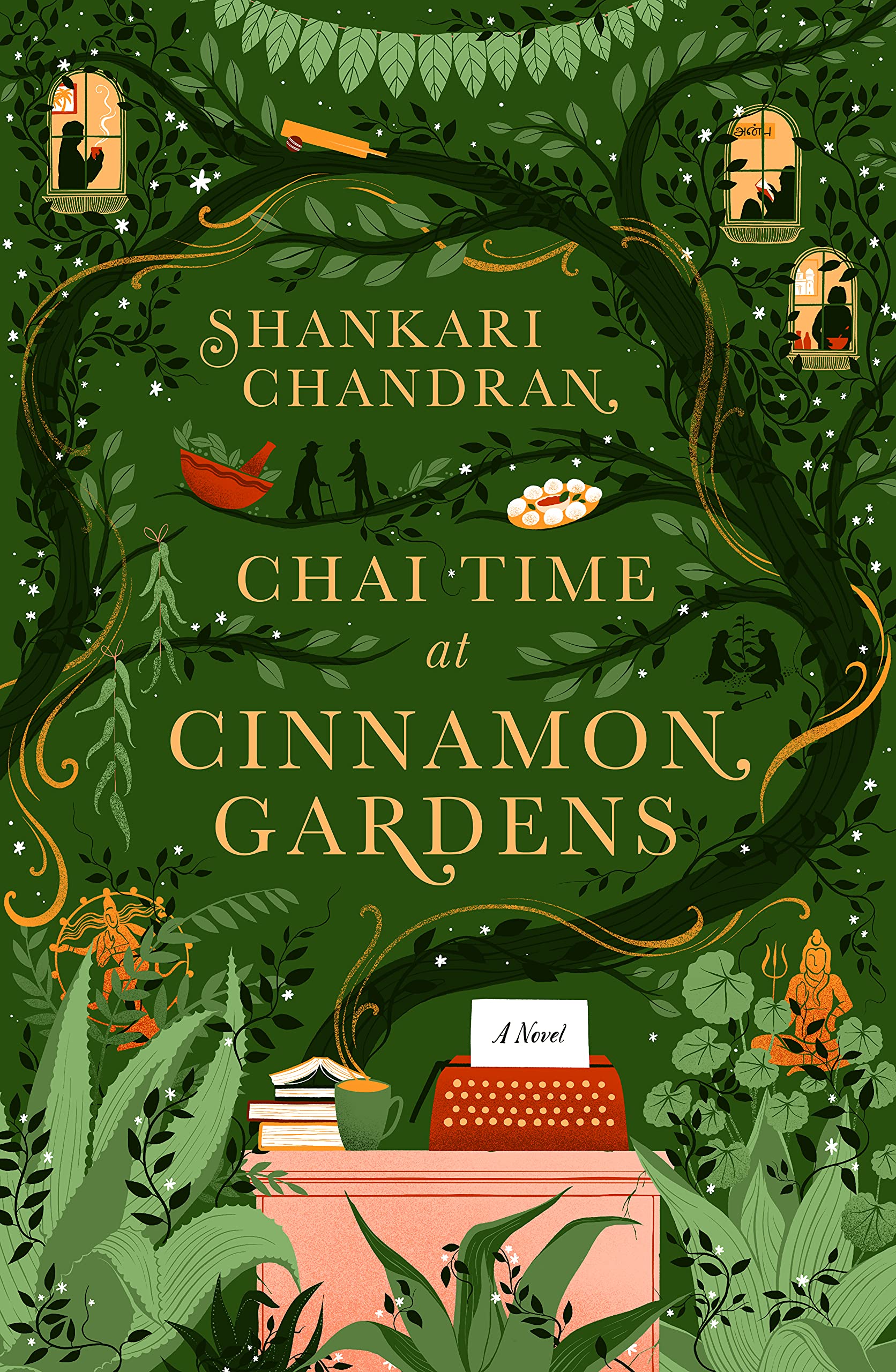
However, it wasn’t all road-tripping and bushwalking. The township of Bright has some good restaurants and, I noticed, a lovely little independent bookshop called, yes, The Bright Bookshop. I mean, you’d have to wouldn’t you? It’s a small shop but its inventory was excellent and with much to tempt me. But I just bought one book, Shankari Chandran’s Chai time at Cinnamon Gardens, which is on my reading group schedule this year.

None of this, though, is the point of my post. There was one other person browsing in the shop while I was there, and I overheard her asking for advice from the bookseller. She told him that her 18-year-old daughter wants to be a reader. She didn’t like science fiction, fantasy or dystopian novels, she said. In fact, she didn’t like anything involving suspension of disbelief. But the book couldn’t be “too literary” either, as her daughter preferred a nice linear story. Oh, and she wouldn’t read any books her sister read! I didn’t ask about historical fiction or crime, which is a shame, but the conversation kept spearing off, and I was running out of time.

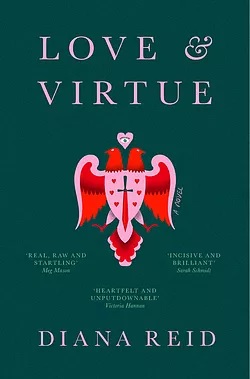
However, I had to go, we did throw around a few ideas, including the American Curtis Sittenfeld, the Australian Diana Reid, Robbie Arnott’s Limberlost (“no”, said the mother to the bookseller), Jack Kerouac’s On the road (the mother didn’t think so, and nor did I), and older American writers like Anne Tyler (which the mother thought a possibility). The mother also suggested Sally Hepworth, whom I don’t know, and I wondered about other Aussies like Toni Jordan, Karen Viggers and Irma Gold – to name a few – who have written young women well. By the time I left, a decision hadn’t been made. But, my question to you – my litblogging community brains trust – is, what would you have suggested to get a wannabe reader keenly reading?

Over to you …

My literary week (13), it’s (mostly) all about Aussies

This last week or so we’ve been on the road again, severely cutting into my reading time, but literary things have been happening, nonetheless.

National Bookshop Day, 2018

Readings Kids, Carlton

Readings Kids, Carlton

Yesterday, August 10th, was, as many of you know, National Bookshop Day and I did, in fact, visit a bookshop, Readings in Carlton, Melbourne. I bought Gerald Murnane’s Border districts, which brings me one step closer to reading this Miles Franklin shortlisted book. Daughter Gums and I also visited, next door, the Readings Kids bookshop, where she bought Alison Lester’s Rosie sips Spiders for a baby shower she was attending this weekend.

It was so hard not to buy more, but you all know how behind I am in my reading so you’ll understand my abstemiousness!

I’d love to hear what you did – if you are an Aussie – to support the day?

Alison Lester Gallery

A couple of days before National Bookshop Day we were driving to Melbourne from Canberra via one of the long routes, in this case via Cann River. It was an interesting drive that took us through some quite dramatic landscapes – from the shimmering yellow-white colours of the Monaro in drought to the lush green of south-east Victoria which is not!

Alison Lester GalleryOn Day Two we overnighted at Foster, in order to visit Wilson’s Promontory, before driving on to Melbourne the next day via Fish Creek. Now, Fish Creek is a very pretty little town that also happens to be the home of the Alison Lester Gallery – yes, the Alison Lester who wrote (and illustrated) the book Rosie sips spiders mentioned above. Fish Creek is a lovely little town, and is in the region where Lester was born, grew up and still lives. We bought books here for our new Grandson Gums. The Gallery sells Lester’s books plus numbered prints of her beautiful book illustrations. It also has a little library nook where you can read her books before you decide to buy them. Unfortunately Lester wasn’t there, but you can organise to have your books signed if you want to (and don’t mind waiting for your books!)

BTW Alison Lester was one of Australia’s Inaugural Children’s Laureate from 2011 to 2013, which I wrote about back then.

The Wife and RBG

One of our Melbourne traditions is to have a meal and see a movie with Daughter Gums. We usually go to Cinema Nova (across the road from Readings Bookshop.) It’s a big complex, but not at all like those big impersonal suburban multiplexes. The cinemas are mostly small, and many have rather idiosyncratic layouts, but the movie selection is wonderful. We decided to see The wife, starring Glenn Close and Jonathan Pryce, and adapted from Meg Wolitzer’s novel, that I haven’t read. It focuses on the responses and feelings of the wife of an author who is told he has won the Novel Prize for Literature. If you don’t know the story, I don’t want to spoil it, but it is a great film for booklovers, and, particularly, for women booklovers! I enjoyed seeing Glenn Close again in a meaty role. The story is full of issues to chew over about gender, morality, pride, vocation, relationships over the long haul, and about how a door chosen can have unexpected ramifications down the line.

Ruth Bader Ginsburg

Ruth Bader Ginsburg, by Supreme Court of the United States (Supreme Court of the United States (Source 2)) [Public domain], via Wikimedia Commons

Then, suddenly finding ourselves with some extra free time, Mr Gums and I took the opportunity to also see the documentary RBG about the US Supreme Court justice, Ruth Bader Ginsburg. As documentaries go, this takes a pretty standard form – a combination of archival footage, contemporary footage, interviews with Ginsburg and with friends, family and colleagues. Wikipedia quotes film reviewer Leslie Felperin who says:

…there is something deeply soothing about RBG, a documentary that, like its subject, Supreme Court Justice Ruth Bader Ginsburg, is eminently sober, well-mannered, highly intelligent, scrupulous and just a teeny-weeny bit reassuringly dull.

As I said, traditional in form, but the subject is so intelligent and her contributions to thinking about women’s rights so relevant beyond the USA, that the film kept us engaged from beginning to end. She is a fascinating woman with an inspiring capacity for clarifying the complex.

Bangarra Dance Theatre’s Dark Emu

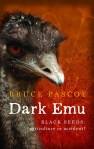
Bruce Pasco, Dark emuNow, we didn’t quite see Bangarra Dance Theatre’s performance of Dark Emu this week but we did see it very recently so I’m sneaking it in here. This is Bangarra’s interpretation of Bruce Pascoe’s book Dark emu (my review) in which he argues that indigenous Australians were not hunter-gatherers but had an agricultural practice, a practice that better proves, in legal terms apparently, their sovereignty or ownership of the land.

I wondered how they would balance the abstraction of dance with the literalness of the theory Pascoe presents (a theory that requires evidence of all sorts of agricultural practices) without, somehow, being prosaic. The dance, the props (which helped convey activities such a corralling animals, damming water, storing food), the lighting, and the music (which mixed traditional sounds with more suggestive modern ones) kept the audience on track with the story being told, although I understand Canberra reviewer Michelle Potter’s point that we didn’t always comprehend the “meaning” of what we were seeing in terms of the theoretical argument. For Mr Gums and me, though, these concerns were not strong enough to spoil the spectacle of Bangarra’s dancing. The moves, the shapes, the energy – we can never get enough of them and we did “get” the main threads of the narrative. (And, I suspect a second viewing would make a big difference. It is sometimes tricky to separate out spectacle from meaning first time around.)