Monday musings on Australian literature: Australia’s bestsellers, Black Friday week 2024

With thanks to Colin Steele – Canberra’s wonderful Meet The Author convenor, who is also one of my major sources of literary news – I have another list for you, this one of the top selling books in this year’s Black Friday sales. Black Friday is a post-Thanksgiving Day sales event with a long and complicated history in the USA, which Wikipedia explains in detail if you are interested. Australia has no Thanksgiving Day so, how do these things happen? (That’s a rhetorical question, folks). And how does Black FRIDAY become Black WEEK or so? (Another rhetorical question.)

Wikipedia also explains that it came to Australia in the 2010s, with Apple Inc being an early promoter of Black Friday deals. However it happened, and whenever it happened, today, if you enter “book sales black friday Australia” into your search engine you will get myriad results from the big well-known online places like fishpond, booktopia and amazon, through the shopfront/online booksellers like QBD, Dymocks and Big W, to publishers like Penguin Books Australia and specialist organisations like the Children’s Book Council of Australia. Everyone, it seems, had Black Friday book sales.

There are many ways we can think about this – in terms of capitalism and the encroachment of American culture, for example – but when it comes to books, there is a silver lining if it results in more people buying books they otherwise may not have. I’ll leave that for you to think about (and maybe discuss in the comments). Meanwhile, whatever we might think, it has presented another interesting way (for those of us who love statistics) to see what people are buying – presumably not only for themselves but for Christmas gifts.

Colin obtained this list from (the pay-walled) Books+Publishing, on Friday, 6 December 2024. They reported that according to Nielsen BookData, 2024 Black Friday–week sales ‘saw volume sales in the Australian book market 40% higher than the average weekly sales in the four weeks prior’, with sales volume in the week of Black Friday up 4% compared to the week of the retail promotion in 2023.

Australia’s bestsellers during Black Friday week, ranked by copies sold from 24 to 30 November 2024, were:

Top five overall bestsellers

  1. Nagi Maehashi, RecipeTin Eats: Tonight (Macmillan): Australian
  2. Guinness world records 2025 (Guinness World Records)
  3. Lee Child & Andrew Child, In too deep (Bantam)
  4. John Farnham & Poppy Stockell, The Voice inside (Hachette): Australian
  5. Liane Moriarty, Here one moment (Macmillan): Australian

Top five adult fiction
  1. Lee Child & Andrew Child, In too deep (Bantam)
  2. Liane Moriarty, Here one moment (Macmillan): Australian
  3. Carissa Broadbent, The songbird and the heart of stone (Tor Bramble)
  4. Richard Osman, We solve murders (Viking)
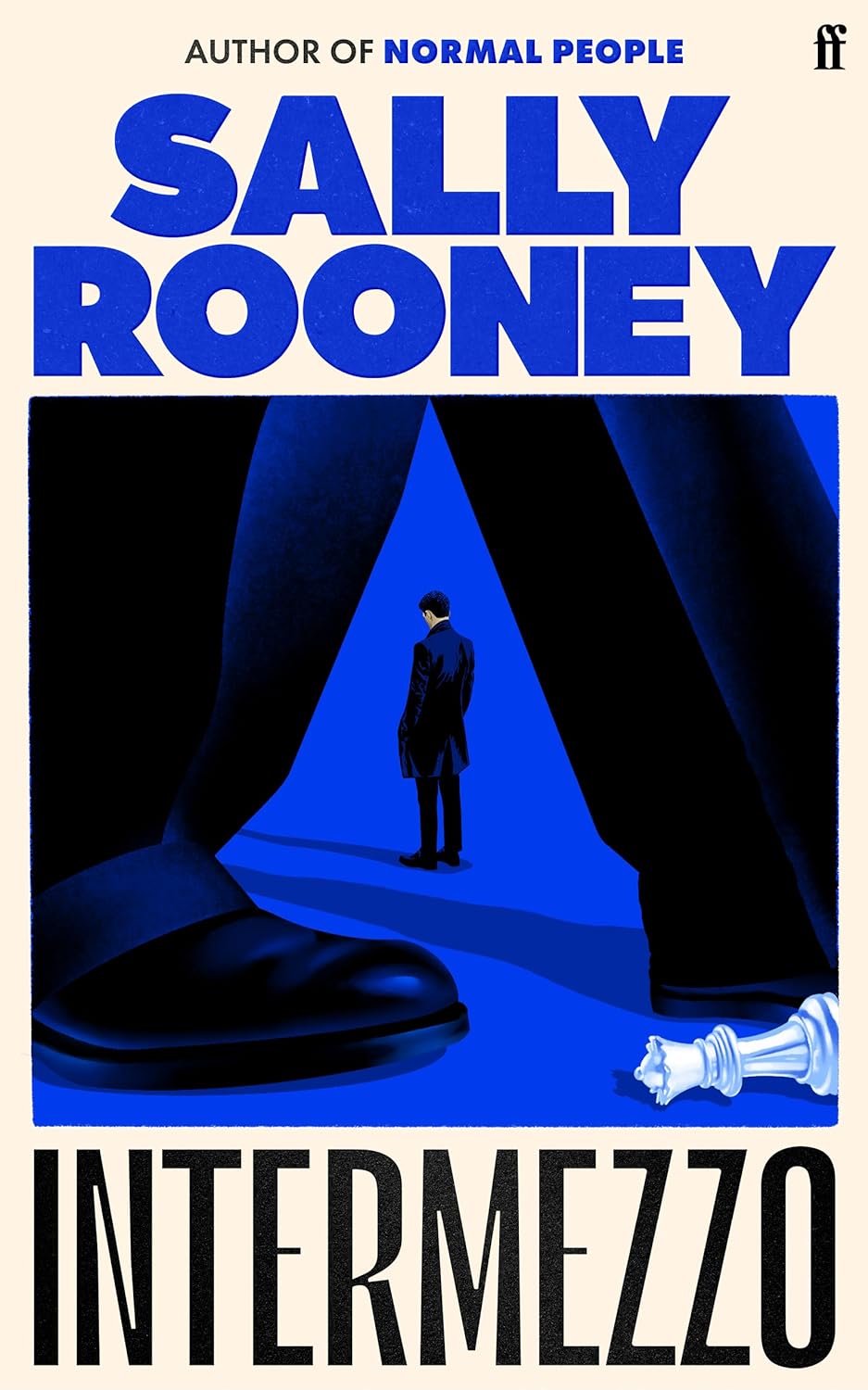
  5. Sally Rooney, Intermezzo (Faber)

Top five adult nonfiction
  1. Nagi Maehashi, RecipeTin Eats: Tonight (Macmillan): Australian
  2. Guinness world records 2025 (Guinness World Records)
  3. John Farnham & Poppy Stockell, The Voice inside (Hachette): Australian
  4. Nagi Maehashi, RecipeTin Eats: Dinner (Macmillan): Australian
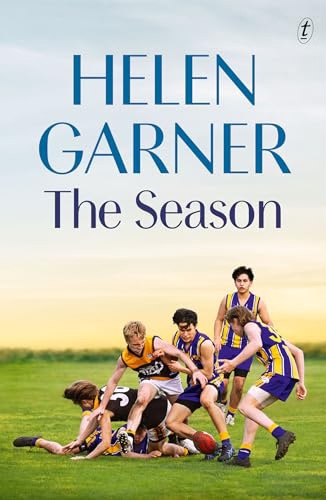
  5. Helen Garner, The season (Text): Australian

While I’m sure Australia’s booksellers were pleased with the sales, and will hope that these sales continue through the holiday season, and while it’s good to see a strong showing of Australian writers in the non-fiction list, it is disappointing to see Australian writers all but absent from the fiction list. The crime novels in the list aren’t Australian, nor the fantasy. Even the one literary fiction work is not Australian. Why is that? Why do more people want to read Sally Rooney than the recent works of Charlotte Wood, or Melissa Lucashenko, or Robbie Arnott, or any of our many other wonderful writers of literary fiction?

Any thoughts?
Monday musings on Australian literature: Books set at the beach

Summer has formally started here in the Southern Hemisphere, and in Australia that means (for most people), the beach. We have gorgeous beaches here – not that they are my go-to place – so I thought to share some books set at the beach, by the sea. Some of these may also be “beach reads” (see my post on that concept), but that idea, whatever it means to you, is not what is driving this selection. Rather, I’ve chosen these books for the different ways they explore the beach – or, the idea of the beach – in Australian culture.

This is a very selective list, and I’m presenting it in order of publication.

Beach set books

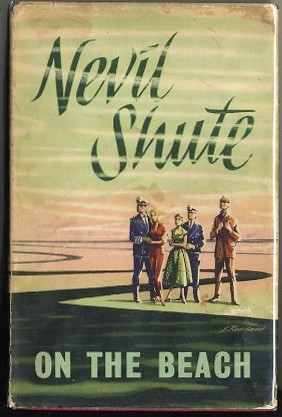
Nevil Shute, On the beach

Nevil Shute, On the beach (1957, read before blogging): Shute’s classic apocalyptic novel needs, surely, no introduction. It is perhaps a cheeky inclusion here as it is not so much set “on the beach” but in Melbourne where some of the last people alive on earth are awaiting death from radiation following a nuclear war in the Northern Hemisphere. The idea of beach, in fact, is more metaphoric, or allusive, than literal, though most covers show beach and/or sea scenes. This book keeps on keeping on. Only last year, Alexander Howard wrote in The Conversation that the Sydney Theatre Company was presenting the first stage adaptation, and commented that

Shute’s vision of humanity’s self-inflicted destruction is eerily resonant in our time of climate emergency. The nuclear threat remains, too, in our perilous historical moment of democratic backsliding and failing nuclear states.

Kathy Lette and Gabriel Carey, Puberty blues (1979, seen – but not read – before blogging): one of our most famous beach-set books, this is a coming-of-age novel about two friends growing up on Sydney’s beaches, and coming up against the gendered nature of the surfing community, where girls are accepted only so long as they support the males. Lette has described 70s surfing culture as “tribal and brutal”.

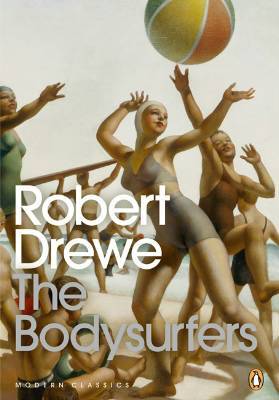
Robert Drewe, The bodysurfers

Robert Drewe, The bodysurfers (1983, on my TBR): Drewe regularly features the beach and/or the sea in his writing. Many of his books are titled for beach and sea themes. His novels and and short story collections include The rip, The drowner, and The true colour of the sea; his memoir is titled The shark net; and he edited an anthology titled The Penguin book of the beach. The bodysurfers is more a collection of interconnected short stories than a novel. According to the back cover blurb of my edition, it is “set among the surf and sandhills of the Australian beach – and the tidal changes of three generations of the Lang family”. Like many of the books I’m including here, it has been adapted to other media, in this case to film, television, radio and the theatre! I read the first two stories some time ago and loved the writing. I intend to finish it one day, which is why it is still on my bedside table.

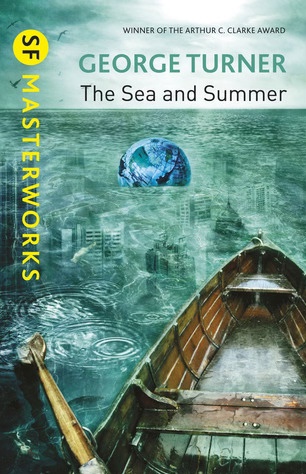
George Turner, The sea and summer (1987): like Shute’s novel, this is not exactly set on the beach, but this dystopian novel by Miles Franklin award-winner Turner is about climate change and the sea flooding the city – Melbourne again, in fact. Fourtriplezed, who comments on my blog occasionally, has reviewed this novel on goodreads. The book, he says, conveys a “dystopian nightmare” characterised by “greenhouse induced floods that make large tracts unlivable, worldwide economic collapse, over population, mass starvation”. He quotes from the novel:

“This is Elwood and there was a beach here once. I used to paddle here. Then the water came up and there were the storm years and the pollution, and the water became too filthy.”

Tim Winton, Breath (2008, my post): like Puberty blues, Breath is set amongst surfers, though on the Western Australian coast. Also like Puberty blues, it’s not so much about surfing as the cultural issues around it. In this case, the protagonist is male, and the focus is masculinity and risk-taking, and how the choices you make follow you. Winton, like Drewe, writes frequently about the beach and the sea but never simply. The sea and surfing offer necessary rejuvenation for Winton the person, but writer Winton uses it effectively to explore the themes that concern him about family and love, values and responsibility, lost males, and the environment.

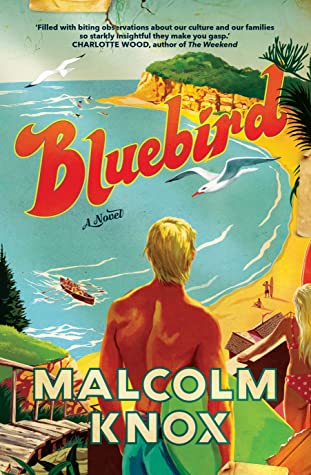
Malcolm Knox, Bluebird (2020, my review): a satirical novel set in a beachside suburb. I wrote in my post that it looks like a satire on all those beach communities that pepper Australia’s coasts – the middle-aged men who prefer surfing to working, the country-club set, the councils which sell out to developers, small-town racism and gay-bashing, and so on. However, I suggested that while a beach-town might be the setting, its satire is broader, reaching into wider aspects of contemporary Australian life – dysfunctional men and broken families, development, aged care, banking, local government, and so on. In other words, given Australians’ love for the beach, such a place makes the perfect, relatable, setting for his satire …

That seems a good point on which to end this little selection. The beach in Australia can mean and reference so many aspects of our lives and national psyche, from escape and relaxation through the many ways we relate, behave and think to apocalypse and dystopia.

Do you have favourite beach-set books, Australian or otherwise?

Malcolm Knox, Bluebird (#BookReview)

Malcolm Knox’s sixth novel, Bluebird, comes with some impressive endorsements. On the front cover is “Charlotte Wood, author of The weekend“, while the back features “Christos Tsiolkas, author of Damascus and The slap” and “Adam Gilchrist, former test cricketer and beach-goer”. Hang on, Adam Gilchrist? What the?

Some of you will know why, but I didn’t. However, I now know that as well as being a novelist, Knox is a respected journalist who has been a cricket correspondent, sport editor, and literary editor. Wikipedia reminded me that he was the literary editor who exposed “the fake Jordanian memoirist, Norma Khouri“. This won him and co-journalist, Carolyn Overington, a Walkley Award for Investigative Journalism.

The thing is, I knew Malcolm Knox’s name, but had read none of his novels or his many works of non-fiction. Consequently, I came to Bluebird cold. I have no idea whether it is typical of Knox’s writing, but, I did enjoy it.

Superficially, it looks like a satire on all those beach communities that pepper Australia’s coasts – the middle-aged men who prefer surfing to working, the country-club set, the councils which sell out to developers, small-town racism and gay-bashing, and so on. You can imagine it, I’m sure. Except that, in fact, it soon becomes clear that while a beach-town might be the setting, Bluebird’s satire is broader, reaching into wider aspects of contemporary Australian life – dysfunctional men and broken families, development, aged care, banking, local government, the list goes on. It’s more that given Australians’ love for the beach, such a town makes the perfect, relatable, setting for his tale.

However, satire can sometime be an intellectual exercise, engaging the mind more than the heart, but Knox achieves both, by creating flawed characters whom we recognise and can engage with, and by telling a story that is just that bit larger than life to make it exciting but not so much that it doesn’t feel real. At first, I was concerned that it was just a little bit too smart-alecky for me, that there were just a few too many biting lines, but I found myself drawn in because I cared about the seemingly hapless 50-year-old Gordon and (some of) his family and friends.

How did they get away with it?

The novel is told in four parts – First Part, Next Part, This Part and Last Part – with each introduced in an italicised section by “Bird’s eye”, a not quite disinterested truth-teller. The story concerns the recently unemployed, recently separated Gordon, and his attempts to keep Bluebird’s iconic house, The Lodge, intact. The Lodge, however, is more than a house; it’s a symbol of all that is both good and rotten in Bluebird, in Gordon’s family, in, I think we could say, Australia. It is a paradox. Bird’s eye, introducing First Part, says:

This house is not an answer but a question: absolute beachfront yet virtually inaccessible, sitting on premium real estate that is somehow not real estate at all, a historic abuse protected by custom.

And the question is, how did they get away with it, or, more pointedly, as Bird’s eye asks, what have they got away with, to, even more pointedly, will they keep getting away with it.

So, through Gordon, the novel explores how its characters (and, dare I say, Australians) have managed to maintain the good life. Gordon lives in his beloved Lodge, sharing the bunk room with his teenage son Ben, who has some sort of “Asperger-ish ADHD-sih, non-specific, nameless disorder-is Thing”, and his goddaughter Lou, who is, arguably, the most competent character in the novel. His soon-to-be ex-wife, Kelly, is also there, occupying the “queen room”. His many unemployed, or minimally employed, friends also hang around the Lodge – unless, that is, there is a surf. And, he has elderly parents, irascible father Ron, who is living, unwillingly, in aged care due to having terminal kidney failure, and mother Norma, “a model for pressing forward without an inward glance”. But, the centre of it all is Gordon, and he is floundering. He has no money, and is marooned by a secret concerning his brother’s death over 40 years ago. The problem is that he is likeable, “a good man” in fact, and people want to help him, even at risk to themselves.

And, of course, there are the bullies – including his soon-to-be ex-step-mother-in-law Leonie who pulls the family financial strings for her own purposes, Council heavy Frontal, and “big man” about town, Tony Eastaugh. None of these want to help Gordon save The Lodge, and thus Bluebird itself.

It’s a complicated story of financial skulduggery set against personal insecurities, jealousies, and just plain ineffectuality, but the novel holds together largely because of its language and humour, Knox’s ability to skewer Australian culture, and his insight into human nature. I loved for example his comment on Gordon and Kelly’s marriage:

Habit, over-familiarity, neglect and inaction killed more lives than cancer.

Change is what I’m ready for (Gordon)

Marriage, however, is not his main target. Rather, it’s Australian men and the way they are letting the side down. Bluebird’s men tend to be ambitious power-hungry bullies or ineffectual past-focused also-rans. There are few in the middle. Overall, it’s the women who are decisive, which is not to say that they are all “better” people. Knox’s attitude to most of his characters seems to be one of frustrated affection. These people, he seems to be saying, are hanging onto the past, but

The past was worn out, not as solid as it was made out to be. Past its best.

The ending, when it comes, is cataclysmic, but not hopeless. Knox wants us to believe that people – that Australia, which seems also to be wallowing in its past – can change. It’s not that the past is all bad, but it shouldn’t drive us.

Introducing the Last Part, Bird’s eye says

This is not the outsider’s story. This is the story of those who are in the middle yet on the margin, the hole in the doughnut, so close to the centre that they have fallen into the void.

The question is, can we get ourselves out? Bluebird is a warm and funny but also biting read. Recommended.

This review is featured by Twinkl in their blog about the latest must-read books. See more recommendations and get involved at Book Lovers’ Top Picks For Your 2021 TBR List.

Malcolm Knox
Bluebird
Crows Nest: Allen & Unwin, 2020
487pp.
ISBN: 9781760877422

(Review copy courtesy Allen & Unwin)