Tuesday Atzinger, The River (#Review)

Back in January I reviewed two stories from Ellen van Neerven and Rafeif Ismail’s anthology Unlimited futures: Speculative, visionary Blak+Black fiction for Bill’s (The Australian Legend) Australian Women Writers Gen 5 Week. The stories I reviewed were the second and third in the anthology because they were the first two by Australians in it. The anthology’s first story, however, is African in origin. Titled “The River”, it is by Tuesday Atzinger, who is described in the book’s Biographical Notes as “a poet and emerging writer … [who] … explores and celebrates Afro-blackness, queerness, disability and feminism. They peddle in discomfort and their primary goal is to fling words together to make you squirm”. Atzinger currently lives in Melbourne “on the unceded lands of the Wurundjeri People of the Kulin Nations”.

“The River” is worth discussing for several reasons, but specifically because it’s the first piece in the anthology, so was, presumably, chosen for a reason. Some of that reason is explained in the anthology’s introduction, which, by the by, takes the form of a conversation between the two editors. One of the topics they discuss is the cover, which was designed by Larrakia woman, Jenna Lee. Ismail describes it as looking at “the interaction of separate cultures in the most respectful and wonderful way”, and also sees it as suggesting “infinity”. It does, doesn’t it. Van Neerven adds that it also reflects “the movements of water” in the anthology. She says:

We were going to begin the anthology with water to allow those kinds of threads of connection and continuation to flow into each other. For me the cover really kind of feels like rivers connecting and the light that is created through water, but it’s also water that we protect and have a relationship and a responsibility to.

Water! Such a complex element in our lives. Most of my friends adore the sea, but for me it’s the rivers that draw me most. They can be young, direct, and fast, or slow, meandering, and somehow wise, or anything inbetween. They can be critical to creation stories, and this role is part of Atzinger’s opening story, making it particularly appropriate as the opening piece.

The first thing to say about “The River” is its form – it is a short story in verse. The River is not named, but we know it’s in Africa, partly because an African word, Ubuntu, is repeated throughout the story: “Ubuntu/Together”. According to the New World EncyclopediaUbuntu pronounced [ùbúntú], is a traditional African concept. The word ubuntu comes from the Zulu and Xhola languages, and can be roughly translated as “humanity towards others”.’ It has been adopted more widely around the world for its humanistic concepts – and is also, would you believe, “used by the Linux computer operating system” to convey the sense of bringing “the spirit of Ubuntu to the software world”. Valid appropriation? I didn’t find much concern about this use on the ‘net.

Anyhow, to the story itself. We are immediately introduced to the River, and a village that lies near it. The word “prosperous” is used, but we are warned that things aren’t so simple:

Shallow water so clear that the stones beneath it glistened brightly
Depths dark and mysterious, hiding all that lay below
The River, ever a source of sustenance
                                                                      And of danger

The story starts with creation: “Eons ago/The River had rippled in welcome as the people first arrived”. It provided refuge and sustenance; it saw “passion, grief, joy and courage”; it saw, in other words, the life of the community, of “the people who slept under the sun”. It had also seen “a lineage of Chiefs/Some wise, some brave, some imperious” until the present one “Mehluli – the Warrior Chief”. He is described in words like “proud”, “arrogant”, “dominating” and “greedy”. He desires a woman, Thandeka, but she already has a “perfect love” with Amandla, a hunter. Amandla fears the River, fears the aformentioned danger, and while she’s away hunting her fears are justified when the Warrior Chief makes his move on Thandeka.

The problem is that you “cannot refuse the chief”. Violence ensues. The River acts in an unusual way, and a dramatic story follows as Thandeka fights back, as does the River, to right the balance that has been disturbed. It is, ultimately, a story with a moral, a story to teach proper behaviour, right values.

The story is told in a beautiful, poetic style. The changing rhythms and strong use of repetition convey elemental and opposing tones – prosperity and togetherness versus power and greed. “The River” is a thoroughly enjoyable read. It is founded in the sorts of lesson-giving stories that are part of most belief systems, but its queer-love narrative brings the story and its traditional message into modern thinking and times. A worthy first story for the anthology, I think.

Tuesday Atzinger
“The river”
in Ellen van Neerven and Rafeif Ismail (ed.), Unlimited futures: Speculative, visionary Blak+Black fiction
North Fremantle: Fremantle Press in association with Djed Press, 2022
pp. 23-41
ISBN: 9781760991463 (eBook)

Claire G. Coleman, Night bird (#Review)

Wirlomin-Noongar woman Claire G. Coleman’s short story “Night bird” is the second First Nations Australia story in Ellen van Neerven and Rafeif Ismail’s anthology Unlimited futures: Speculative, visionary Blak+Black fiction, the book I chose for Bill’s (The Australian Legend) Australian Women Writers Gen 5 Week. The week finished officially a week ago, but I’m hoping Bill won’t mind my still referencing it. Coleman is not new to my blog. I reviewed her debut novel, Terra nullius, the year after it came out. She has written more fiction and some non-fiction since then, with a clear focus on the devastating impact of colonisation on First Nations culture and people.

“Night bird” continues this focus. It follows Ambelin Kwaymullina’s story in the anthology, “Fifteen days on Mars” (my review), which works well, because both draw on the importance and role of Ancestors in First Nations culture. Coleman’s story is told first person by an artist who is “too afraid to sleep, too tired to be awake”, who drinks to drown her sorrows, who fears she may be “going mad again [my emph]”. She tells us

I am haunted by the ghost of my Ancestors’ Country like a phantom limb …

[…]

I have been cut off from my Country, my ancestors cut up, the land drilled and dug and eaten by machines … my wounded homeland won’t let me rest.

This is not a subtle story. The narrator (whom I think is female, so I’ll go with that) grieves for a life she “could never have” because Country has been “severed”. She has “returned to Country” but, finding it “dead”, “could feel nothing and none” of her Ancestors. She feels haunted, but by what or whom?

I can hear a voice but I can’t make it out. I can hear a song but I can’t catch the words. I can hear the wind and it’s stealing my breath. I can hear nothing and it is screaming.

Country is part of her, but she wants to be free of the haunting, the “wordless voice”, the “phantom presence” that won’t go away. There is a wind, but it is “coming from the wrong direction – away from Country”. Then,

The wind changes, it caresses my back, and suddenly it’s coming from Country.

However, at the same time, a man appears and threatens her. There are now two voices – his and the Ancestors. This is a story about a battle between disempowerment (represented by the man) and empowerment (represented by the Ancestors). Is she, and are they, strong enough to prevail?

I suspect this story was inspired by an experience Coleman describes in her article in Writing the Country (The Griffith Review 63). She describes the life-changing experience of going to Country in 2015, her family’s Country that had been taboo due to a massacre that had occurred there in the nineteenth century. She writes:

I didn’t go there until 2015, that place changed my life forever, my world, my life, even the way I breathed. I took the taboo air into my lungs and I did not die or maybe I did. The bones of my feet landed on the sand and returned to life, I was born again on Country. The story of that place made me a storyteller; story is in my veins.

She says an old man told her that “no matter where we go Country calls out to us” and she writes of the bird, the Wirlo (or curlew), that “to me and mine are family”. Its cry, its scream, “calls me home” – as does the night bird in this story. She describes how Country cares for people as they care for Country. She writes:

I wept when I realised Country had not forgotten me even when I did not know Country. My old-people, my ancestors, would care for me.

All of this is seems embedded in “Night bird”, so now, back to it. It is another example of “Indigenous futurism”. It is ground very much in the real world. The voices that our narrator hears are mysterious, sometimes coming from her phone, sometimes from the air around her, but they are not magical, not fantastical, they are the Ancestors – and the story envisions a healthy relationship with them and thus Country.

On her website, Coleman includes a link to an interview she did with VerityLa after Terra Nullius came out. Among the questions was that one we readers love, which is whether any authors or novels influenced her. The first one she named was HG Wells’ War of the worlds, because it “is great in giving an understanding of how to show an overwhelming powerful enemy destroying a less well-armed defender”.  “In fact,” she says, “War of the Worlds is a powerful text for the examination of invasion and colonisation”. You can certainly see its influence in Terra Nullius, and it is evident here too.

Claire G. Coleman
“Night bird”
in Ellen van Neerven and Rafeif Ismail (ed.), Unlimited futures: Speculative, visionary Blak+Black fiction
North Fremantle: Fremantle Press in association with Djed Press, 2022
pp. 66-73
ISBN: 9781760991463 (eBook)

Ambelin Kwaymullina, Fifteen days on Mars (#Review)

In 2014, Ambelin Kwaymullina, whose people are the Palyku of the Pilbara region of Western Australia, described herself in a Kill Your Darlings essay as writing “speculative fiction for young adults”. Three years later, in the 2017 Twelfth Planet Press anthology, Mother of invention, she said that she was “a Palyku author of Indigenous Futurisms”, citing Grace Dillon (as did I in this week’s Monday Musings) as the term’s originator. I share this progression in her thinking because it’s indicative of the energy and intellectual engagement among First Nations people with literature and the politics of what they are doing. Kwaymullina is an example of a First Nations Australian writer who is actively engaged in First Nations culture and thinking, as well as in the craft of writing.

I first came across Kwaymullina early in my volunteer work for the original Australian Women Writers Challenge, because many reviews for her young adult novels were posted to our database. But, I had not read her because YA literature is not my thing. However, I decided to read Ellen van Neerven and Rafeif Ismail’s anthology Unlimited futures: Speculative, visionary Blak+Black fiction for Bill’s (The Australian Legend) Australian Women Writers Gen 5 Week 15-22 January, and the first work in the anthology by an Australian woman was “Fifteen days on Mars” by Kwaymullina. Woo hoo… here was my chance to finally read her. I will post on more in this fascinating book, which I’ve not yet finished, later.

“Fifteen days on Mars” is an accessible short story, told chronologically from Day One to Day Fifteen. The politics is made clear in the opening paragraph, by beautifully skewering colonial settler behaviour concerning the naming of places:

It had been almost a year since we came to Mars. That was what I called this place although it had another name. It was Kensington Park or Windsor Estate or something like that but I couldn’t have said what because I could never remember it.

Our first person narrator Billie and her mum have come to Settler suburbia, where they are “the only Aboriginal people”, for some reason that is not immediately clear though we sense there’s a specific purpose. Billie hadn’t wanted to come but, as her mother’s only offspring without children, she’d drawn the short straw. The story starts with her pulling weeds from their garden, the very plants that the rest of the neighbourhood love, plants (I mean “weeds”) like roses. In this metaphorical way the colonial setting is established. This is a world we know. Very soon a new couple moves in across the road. Billie, at her Mum’s insistence, does the neighbourly thing, and makes contact. She quickly realises that their new neighbour, Sarah, is being abused by her husband, whom Billie calls The Suit. What to do?

To this point, notwithstanding the hint at the start that there’s something unusual about the situation, the story reads like a typical piece of contemporary fiction – that is, set in the known present world. But slowly, we become aware that something else is going on. Billie refers to “the rules”. Does she just mean the normal “rules” of social behaviour? Nope, our suspicion is right, there is something else. There’s reference to Sarah needing to “ask”, and to whether what or how she asks is “good enough for them upstairs”, aka “the Blue”, as Billie’s mum calls them. Billie says:

the truth was we knew very little about them, except they were some kind of intergalactic healers. But we knew why they’d come. It was because of the Fracture.

So now it’s clear we are in speculative fiction/Indigenous Futurism/Visionary Fiction/SFF territory. This is the sort of speculative fiction I can enjoy, something that doesn’t require me to learn a whole new world but that injects something new into the world I know, something that upends it a little.

The Fracture is not fully explained, but “something had smashed into the relationships that were space-time and cracks had spread out from the point of impact” resulting in, says Billie, “bubbles of the past floating across my reality”. The Blue, we are told, are trying to repair this Fracture, leaving humans “to do something about the bubbles” – but to the Blue’s rules. Billie’s mum had signed up “for the job of changing the bubble-world, or at least, of changing some of the people enough so they could exist in our reality”. Hmm, this makes them sound a bit like missionaries. An ironic twist?

Anyhow, the story continues, with a strong reference to the Stolen Generations, as Billie and her Mum, recognising these are “strange times”, try a different tack to save Sarah, and call on the ancestors. They hope the Blue won’t mind.

I will leave it there. I enjoyed the story – because it tells a First Nations story truthfully but generously; because the characters of Mum and Billie, while being somewhat stereotypical (the wise Mum and the reluctant Billie), are warm and engaging; and because the ideas and the story itself are intriguing to watch being played out.

In her 2017 piece cited above, Kwaymullina describes Indigenous Futurisms as “a form of storytelling whereby Indigenous peoples use the speculative fiction genre to challenge colonialism and imagine Indigenous futures”. This is exactly what she does in “Fifteen days on Mars”. The colonial legacy is unmistakeable, with most inhabitants of Settler suburbia remaining “unbelievably ignorant”, but she also offers glimmers of hope. I don’t eschew bleakness, but as an optimist I also appreciate it when writers can see paths to a better future. It’s energising.

Ambelin Kwaymullina
“Fifteen days on Mars”
in Ellen van Neerven and Rafeif Ismail (ed.), Unlimited futures: Speculative, visionary Blak+Black fiction
North Fremantle: Fremantle Press in association with Djed Press, 2022
pp. 42-64
ISBN: 9781760991463 (eBook)

Monday musings on Australian literature: First Nations Australia speculative fiction

This post is my first contribution to Bill’s (The Australian Legend) Australian Women Writers Gen 5 Week 15-22 January. Gen 5 encompasses women who have been writing from the 1990s to now. Bill argues that two major trends characterise this era: “the rise and rise of Indigenous Lit” and “writing which in earlier days would have clearly been SF – but which now is generally characterised as Climate Fic., Dystopian, or less frequently, Fantasy/Surreal/Postmodern.” With this in mind, Bill decided that AWW Gen 5’s focus would SFF – Science Fiction/Fantasy.

Given Bill observed that First Nations Women are writing in this genre, I have decided, for this post, to combine the two trends. It won’t be comprehensive, but more in the spirit of providing an introduction or overview. Here goes …

I have seen various terms applied to SF, or what I prefer, though Bill doesn’t, to call Speculative Fiction. Introducing their anthology, Unlimited futures, Ellen van Neerven and Rafeif Ismail speak of Visionary Fiction, which Wikipedia explains is not “science fiction” because it is driven by “new and uncanny experiences (mystical, spiritual and paranormal) in the neural web”. Wikipedia quotes Michael Gurian, who was one of the first to promote the genre on the web. He defines visionary fiction as “fiction in which the expansion of the human mind drives the plot. Where science fiction is characterized by storytelling based in expanded use of science to drive narrative, visionary fiction is characterized by storytelling based in expanded use of mental ability to drive narrative.” So, it may not be traditional SF, but I believe it can be encompassed under the speculative fiction umbrella, particularly as First Nations people see it.

Claire G Coleman, Terra nullius

The other main term I want to share, I found in BookRiot, in their 2020 article, “Explore Indigenous Futurisms with these SFF books by Indigenous authors”, by Danika Ellis. Ellis, who also uses the umbrella term, Speculative Fiction, writes that “Indigenous Futurisms” was coined by Dr. Grace Dillon, professor in the Indigenous Nations Studies Program at Portland State University. It was inspired by Afrofuturisms, which explores speculative fiction through an African diaspora lens. Ellis explains that “depictions of Indigenous people in mainstream media has often placed them in a historical context, not recognizing the Indigenous cultures and individuals of today, never mind the future. Indigenous Futurisms imagine Indigenous people into every context: space travel, fantasy worlds, alien invasions, and more.” BookRiot’s list includes Claire G. Coleman’s Terra Nullius (my review) and Ambelin Kwaymullina’s young adult novel The interrogation of Ashala Wolf. Ellis makes the point that:

Indigenous Futurisms brings a much-needed perspective to a genre that is often uncritically colonial, whether it’s fantasy rooted in Medieval England, or space travel that celebrates conquering new worlds.

Good one. Not being a reader in this genre, I hadn’t clocked this.

Meanwhile, closer to home, last June The Conversation ran a review by Yasmine Musharbash of This all come back now: An anthology of First Nations speculative fiction, which was edited by Mykaela Saunders. This anthology, you will have noticed, uses the term Speculative Fiction, and Musharbash accepts this, offering her understanding of the genre:

In my view, speculative fiction – the narrative exploration of “what-ifs”, the creative probing into latent possibilities, the imaginary voyaging into potential futures – is the genre of our times. We are on the brink of … something. Environmentally, for sure. But also socially, politically, economically. 

What this something is, when it will happen, how it will shape the future: these are the questions at stake. 

This all come back now, she says, is the “first Australian anthology of First Nations speculative fiction”. This might be so, but of course First Nations Australians have been writing speculative fiction for some time. Musharbash discusses what characterises this anthology as “First Nations”, and says the first thing is “Country with a capital C, in that very First Nations sense of something utterly fundamental and intimately related to the self, is centrally present across these pages. Many of these stories are fully immersed in Country.” This is not surprising, nor, really is the other recurring element she identifies, humour. I have mentioned before First Nations humour and its particular flavour. Musharbash describes the humour as being cheeky, and often “bitter-funny”.

First Nations Australia SFF

I wrote above that First Nations Australians have been writing speculative fiction (SFF) for some time, and I’ve reviewed a little here on my blog, including Coleman’s Terra nullius, and Ellen van Neerven’s “Water” (my post), which is included in This all come back now. Coleman, in fact, is making this space a bit of her own, with two more novels, The old lie (Bill’s review) and Enclave (Bill’s review), published

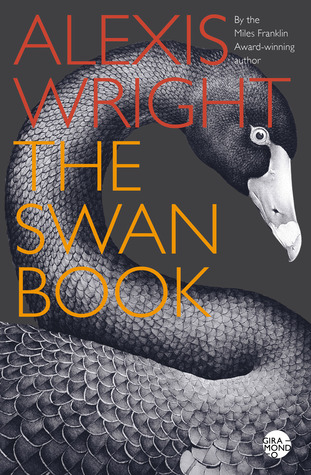
Book cover

Before them was Alexis Wright with Carpentaria (my review) and, more obviously, The Swan book (Lisa and Bill). Bill describes this latter as being set “some time in the future after the countries of Europe have been lost in the Climate Wars”. It is still on my TBR.

However, there are several other writers whom I’ve not read or reviewed (yet) on my blog, like Karen Wyld and Alison Whittaker. Another is Ambelin Kwaymullina, who is best known for her YA speculative fiction series, The Tribe. Six years ago, she wrote a post, titled “Reflecting on Indigenous superheroes, Indigenous Futurisms and the future of diversity in literature on the loveozya blog. She starts with a strong argument about how Indigenous writing has been measured, against Western concepts, and addresses that colonisation aspect I mentioned above. She also addresses the point I have heard Alexis Wright make about “magic”, and takes it further:

In Australia and elsewhere, Indigenous peoples have also long been able to interact with the world in ways that the West might label as ‘magic’, but this is because the West often defines the real (and hence the possible) differently to the Indigenous cultures of the earth. There are many aspects of Indigenous realities that might be called ‘speculative’ by the West (such as communicating with animals and time travel). There is also much in Western literature that Indigenous peoples regard as fantasy even though it is labeled as fact, including the numerous negative stereotypes and denigrations of Indigenous peoples and culture contained within settler literature. 

Another good challenge to our worldview. She too references Dillon’s “Indigenous futurisms”, explaining that it describes “a form of storytelling whereby Indigenous peoples use the speculative fiction genre to challenge colonialism and envision Indigenous futures”.

Kwaymullina argues that there’s a growing Indigenous presence in speculative fiction, including in YA and Children’s fiction, and names some writers – Teagan Chilcott, Tristan Michael Savage, graphic novelist Brenton McKenna, and the young Aboriginal people responsible for NEOMAD (my post).

So, an exciting time for the genre and for literature in general, but I’ll close here …

Have you have read any First Nations (anywhere) speculative fiction? If so, care to share?