Ellen van Neerven (ed.), Writing black (#BookReview)

Writing black: New indigenous writing from Australia is one of the productions supported by the Queensland Writers Centre’s if:book that I wrote about in a recent Monday Musings. It’s an interactive e-book created using Apple’s iBooks platform, and can be downloaded free-of-charge via the if:book page or directly from iBooks.
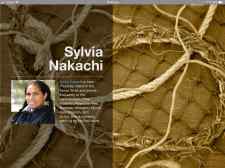
Title page for Ch. 16, Sylvia Nakachi

Ch. 16, Sylvia Nakachi (Using fair dealing provisions for purposes of review)

Writing black was edited (and commissioned) by Ellen van Neerven (whose book Heat and light and story “Sweetest thing”, I’ve reviewed here). It contains works by 20 writers, in a variety of forms, including prose by writers like Bruce Pascoe, Tony Birch, and Marie Munkara; poetry by Tara June Winch, Lionel Fogarty, Kerry Reed-Gilbert and Steven Oliver (most of which are presented in both text and video); and twitter-fiction by Siv Parker. For each writer, there is a “title” page which provides a brief biography, and the works are illustrated with gorgeous sepia-toned photography by Jo-Anne Driessens.

In her editor’s introduction, van Neerven states that, by the time of publication, there had not been a “digital-only anthology of Australian indigenous writing”. This book addresses that gap, but with a very particular goal. It was, she writes, “moulded by possibility”, by the fact that “the multimedia and enhancements a digital publication allows lifts the imagination”. Certainly, we see some of these possibilities in this production.

Her point, though, that particularly interested me was this:

Expectations of what we write about are changing, no longer the narrow restriction of life stories and poetry. Indeed, Indigenous writers do not need to write about Indigenous issues at all, if they choose not to. With more Indigenous books and authors comes a new generation of readers — open-minded to what Indigenous writers can write about, and across new forms and experiences.

Great point – just as it’s important that we see indigenous people on television and in movies, for example, without their indigeneity needing to be referenced or be part of the story. Anyhow, we see this broadening of content in Writing black – in Jane Harrison’s “Born, still”, for example – although, not surprisingly and completely understandably, given where we are on the reconciliation journey, many of pieces do have political intent.

This brings me to one of the appealing aspect of this production, which is its variety, not only in form as I’ve already mentioned, but in tone and content. The pieces span moods from the intensity of Tara June Winch (“Moon”) to the cheeky humour of Marie Munkara (“Trixie”), from the anger of Kerry Reed-Gilbert (“Talking up to the white woman”) and the frustration of Steven Oliver (“You can’t be black”) to the melancholy of Bruce Pascoe’s (“A letter to Barry”). Many of the pieces speak to loss of country and identity, and the emotional impact of these. What makes them particularly powerful is that they come from all over, from the tropical north to country Victoria to various urban settings.

Another appealing thing, which stems from its being an e-Book, is that we can hear poets perform their own work, as well as read the text ourselves. One of these is the new-to-me Steven Oliver. He has four poems in the collection – “Real”, “You can’t be black”, “Diversified identity” and “I’m a black fella” – with video of him reading each of them. He (or his poetic persona) is an urban dweller who regularly confronts questions concerning his indigenous identity. In “Real” he describes a discussion with another who refuses to accept he’s “black”, who produces those crass arguments like he’s “more of a brown” and “not really a full”, but who suddenly turns when our poet responds that his English name suggests he’s not “from here”. Oliver writes:

Listen here Abo, you know-it-all coon
It seemed that my friend has spoken too soon
Just moments ago I was not the real thing
Yet now by his words my heritage clings

This is a long-ish poem, but is accessible. Its use of rhyming couplets provides a light touch that keeps the reader engaged while the actual words drive home a serious point about Aboriginal identity. I hope it’s taught in schools.

Another poem of his, “You can’t be black”, also addresses assumptions others make about what being Aboriginal is:

You can’t be black
When the media shows Aborigines they live on communities
And struggle with petrol, poverty and disease
So you can’t be black
If you’re black you wouldn’t have nice clothes on your back.

Oliver’s poems are made to be performed, as are those of the next poet Kerry Reed-Gilbert.

She also comes out fighting, with five poems. She writes of being in a bar, waiting for the racist slurs (“A conversation and a beer”), or of being exploited by people who only want to know her to further their own aims (“Talking up to the white woman”). She speaks in the voice of a white racist in “Because my mum said so” to show how racism is learnt through families. This is a particular concern of mine. I’ve seen schools trying their hardest to teach tolerance and respect – but that role-modelling at home is mighty powerful stuff.

Another well-established poet who has been politically active for decades is Lionel Fogarty. His two poems in this collection focus more on caring for country, on sharing the land, on passing knowledge on.

The prose pieces are, overall, more diverse. There’s Tristan Savage’s cheeky short film script, “Gubbament man” about Freddy the indigenous “discrimination prevention officer”. Siv Parker’s twitter-fiction piece “Maisie May” was originally released as tweets over several hours on, note, 26th January, in 2014. It tells of a trip to country for the funeral of Aunty Maisie May who “could tell you about country and our ways that we lost over the years.” Marie Munkara is here too with her particular brand of humour to tell about “Trixie” who takes revenge on her ex. There’s also Tony Birch whose “Deep rock” clearly draws from (or fed into) his novel Ghost River (my review). And there’s David Curtis whose “What kind dreaming” tells of three young indigenous men, two already becoming familiar with the life and law of their country and the other a greenhorn from the city, who go bush. Our greenhorn soon learns a few things from the other two, who respect “them old people”.

In an interview in Sydney Review of Books, Ellen van Neerven comments briefly on why she wanted to do this “digital collection”:

For me it’s as much about audience and access. There is a really hungry international audience for Indigenous writing but also lots of roadblocks in getting the books out there. Being able to access work online is definitely an advantage and we’ve had a lot of feedback and contact from people overseas who have been able to find out about Indigenous writing and read content from 20 different authors that way.

And that’s exactly it. This oh-so-rich collection introduces readers to many of Australia’s current significant indigenous writers, not to mention the range of issues that interest them. And it’s free to download. That we should be so lucky! A big thanks to if:book and the Queensland Writers Centre for supporting such innovative and sophisticated projects as this one.
aww2017 badgeEllen van Neerven (ed.)
Writing black: New indigenous writing from Australia
State Library of Queensland, 2014
133pp.
ISBN: 9780975803059
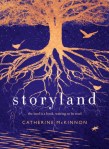
Catherine McKinnon, Storyland (#BookReview)

Catherine McKinnon, StorylandIt is still somewhat controversial for non-indigenous Australian authors to include indigenous characters and concerns in their fiction, as Catherine McKinnon does in Storyland. But there are good arguments for their doing so. One is that not including indigenous characters continues the dispossession that started with white settlement. Another is that such fiction brings indigenous characters and stories to people who may not read indigenous authors, which is surely a good thing?

However, such writing requires sensitivity, or empathy, on the part of non-indigenous writers. Indigenous author, Jeanine Leane says that this can only be achieved by social and cultural immersion (which can include informed reading of indigenous writing). McKinnon addresses this in a couple of ways. In her author’s note, she refers to discussing “stories and ownership” with local Illawarra region poet and elder, Aunty Barbara Nicholson, which resulted, for example, in her telling a brutal story from the convict perpetrator’s point of view rather than from the indigenous victim’s. She also acknowledges Nicholson “for reading, local knowledge and generous advice both early on in the process and nearing completion”. But now let’s get to the reason for all this …

Storyland is set in the Illawarra region south of Sydney, and tells the story of the Australian continent, post-white settlement, from 1796 to 2717. It has a nine-part narrative arc that takes us through five characters and six time periods: Will Martin 1796, Hawker 1822, Lola 1900, Bel 1998, and Nada 2033 and 2717. These form the first five parts of the novel. The final four parts return through Bel, Lola, Hawker, finishing with Will Martin, each picking up its character’s story where it had been left first time around. Got it? Two of these characters – Will and Hawker – are based on historical figures, while the rest are fictional.

… a tricksy plot

Will’s employer, the explorer George Bass, says early on that “the land is a book, waiting to be read”, and this, essentially, is what the book’s about. Will is a 15-year-old who sailed with Flinders and Bass in 1796 on their search for a river south of Sydney. On their trip they meet “Indians” whom they fear might be cannibals. We leave them at a nervous moment in their encounter to move to 1822 where we meet the convict Hawker. He’s a hard man, who believes you need “a mind like flint and a gristly intent”. He has his eye on a young indigenous woman, but also on improving his future. From him, we jump again, this time to 1900 and young hardworking dairy-farmer Lola who lives with her half-sister and brother Mary and Abe, both of whom have indigenous blood. There is racism afoot, with a neighbouring farmer suspicious of Abe’s friendship with his teenage daughter Jewell. We leave this story, with Jewell having gone missing, to meet Bel in 1998.

Bel, the youngest of our protagonists at 10 years old, spends her summer rafting with two neighbourhood boys on a lagoon that features in each of the stories. They befriend a couple, Ned and his indigenous girlfriend Kristie. Bel is a naive narrator, but adult readers quickly see the violence at the centre of this relationship. Meanwhile, down the road lives the slightly younger Nada, who is the pinnacle of our chronological arc, featuring in 2033 and 2717. In 2033, climate change has created havoc in the land, and a dystopia is playing out …

Country and connection

I hope this doesn’t sound too confusing – or fragmented – because in fact Storyland is a very accessible book. Superficially, it seems disjointed, but McKinnon connects the stories through links that gradually register as the narrative progresses. For example, the transitions between each story all feature birds, such as this one from Hawker to Lola:

The women are disappearing into the forest. And then they are gone. Lost in the dark trees. An owl

Lola
1900

calling boo-book, boo-book.

(My html skills aren’t up to replicating the layout I’m afraid.) Other links include the aforementioned lagoon, a creek, a cave which most characters reference, a big old fig tree and an ancient stone-axe. None of these are forced, or feel out of place. Instead these places and objects naturally connect the stories, despite their very different narratives, to provide a continuity that transcends the people to focus on the land itself – because, ultimately, this is a story about the land and our ongoing relationship with it.

McKinnon, the author bio says, has been a theatre director and playwright, as well as a prose writer. This is evident in the voices (all first person) and dialogue which beautifully capture the rhythms, vocabulary and grammar of the different characters and their times. Will Martin talks of “Indians”, Hawker talks of “forest”, while turn-of-the-century farmer Lola uses structures like “Jewell and me carry buckets of skimmed milk” and “When he were done”. Ten-year-old Bel is language-proficient, with a good vocabulary, but she sees things through a ten-year-old’s eyes, such as this on the abused Kristie, who “has her big black sunglasses on” and “looks funny, her lips look bigger or something”.  (In a delightful in-joke, her father Jonathan is writing his PhD on unreliable narrators).

The real star of the novel, though, is the land. McKinnon traces its trajectory from an almost pristine state at the dawn of colonisation through being farmed by Hawker and Lola to climate-change-caused destruction in 2033 followed much later by a mysterious post-apocalyptic world. She similarly traces our relationship with indigenous people from early caution, uncertainty and tentative goodwill, through 19th century brutality and ongoing dispossession, to the continuing racism and exploitation of the twentieth century.

The question to ask here is why did McKinnon structure the story the way she did, starting and ending with 1796? Here is Will at the end, exploring a beach on his own:

The white sand curves around the land; the dunes in the late night are dark mountains and valleys; the forest behind is thick and green to the sky. This is a wild place. Too wild for civilisation. It is a place for adventure.

And “the water is fresh” to drink! Is McKinnon, by ending with this more idyllic picture of the land, suggesting that there’s still hope? This is how it was, this is what could happen. Does it have to? Can we yet turn it around? Well, yes, perhaps. As Uncle Ray says to Bel, “it’s our job to look after all this land around here. If we don’t, bad things can happen.”

“To dare is to do”, George Bass tells Will, and this is what McKinnon has done in Storyland. She has combined historical, contemporary and speculative fiction to tell us a story about our land – and our relationship with it and with the people who know it best. This land, these mountains, creeks, lagoons and trees, were here first, Uncle Ray says, and this makes us “part of their history, not the other way around.” The message is clear.

Storyland is a beautiful book physically – in cover, design and construction – as well as being a moving and relevant read. I dare you to read it today.

Bloggers Lisa (ANZlitLovers) and Bill (The Australian Legend) liked this book too.

aww2017 badgeCatherine McKinnon
Storyland
Sydney: Fourth Estate, 2017
382pp.
ISBN: 9781460752326

(Review copy courtesy HarperCollins Publishers)

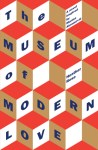
Heather Rose, The museum of modern love (#BookReview)

Heather Rose, The museum of modern loveAs I neared the end of Heather Rose’s Stella Prize-winning novel The museum of modern love, I slowed down. I wanted, of course, to know how it was going to resolve, but I wanted to savour it too. It doesn’t seem right to rush the end of thoughtful books like this.

But, I have to admit that I was initially hesitant about reading the book, as I am about any book inspired by a person or work I don’t know. I fear missing something important. However, I did want to read it and my reading group scheduled it. The die was cast. Then, as I was about to start reading, Brother Gums sent me a link to the documentary Marina Abramović: The artist is present about her and the performance piece which inspired this novel. I was set! As it turned out, I think Rose’s writing is evocative enough that it wasn’t necessary to have seen the film, but it did add a layer to the experience.

So, what is The museum of modern love about – besides love, that is? Its centre is performance artist Marina Abramović’s 75-day piece, The Artist is Present, which she performed at MoMA in the spring of 2010, to accompany a large retrospective exhibition of her work. The piece involved her sitting, still, quiet, at a table all day, 6 days a week (MoMA is closed Tuesdays), with gallery attendees invited to take turns to sit opposite her and share a gaze. It was an astonishing success, with, by the end, people camping out overnight to get the chance to sit. Many attended for days just to watch, creating, as Rose describes it, quite a community of spectators. In the end, over 850,000 people attended, with 1,545 people sitting (including Rose). (All are recorded at flickr.)

Anyhow, from this premise, Rose weaves an engaging, thoughtful story about art and love. It has two main narrative strands, telling the real Marina Abramović’s story and that of an attendee, the fictional musician Arky Levin, whose life is stalling, partly due to a restraining order made by his now-unresponsive terminally-ill wife that he not visit her. Interspersed with these, enriching the exploration of the themes, are smaller stories of other attendees, and family and/or friends of the protagonists. It’s narrated by a mysterious third person voice, who starts the novel with

He was not my first musician, Arky Levin. Nor my least successful. Mostly by his age potential is squandered or realised. But this is not a story of potential. It is a story of convergence.

This is a very particular omniscient narrator, some sort of artist’s muse who self-describes late in the novel as a “good spirit, whim … House elf to the artists of paint, music, body, voice, form, word”, one whose job is sometimes just “to wake things up”. This could be cutesy or forced, but it isn’t because Rose doesn’t overdo it. Mostly the story progresses without the intrusion of this narrator, so that when s/he appears we pay attention.

The moral conundrum at the novel’s heart is – is art enough or is love more important? It’s explored primarily through Levin, whose friends suggest he should appeal Lydia’s court order.

I know you’re going to say that she wanted you to do this; she wanted you to make music. But is that enough?

Music, it sounded feeble suddenly in the face of the yawning gap between life before Christmas and life these past four months. (p. 158)

So what does Levin do? Continue to live his increasingly lonely life making music, or follow his heart?

Levin’s story is off-set against other stories, notably that of Jane Miller, a friendly, recently widowed art teacher visiting New York from Georgia. She is lonely, like Levin, missing her husband “achingly, gapingly, excruciatingly. Her body hadn’t regulated itself to solitude.” She becomes one of the mesmerised watchers, but she also connects with others in the crowd, including Levin and Brittika, a PhD student from the Netherlands who is writing her thesis on Marina. Jane forms a natural link between the two themes of love and art.

What, then, is art?

The first time Jane attends the performance, she overhears people in the crowd questioning what the show is about, asking what is art, in fact. There are, of course, the naysayers, the ones who say that “art is irrelevant. If everything goes to crap, it won’t be art that saves us”. But Jane thinks differently, and turns to the man next to her who is, you guessed it, Levin, and says

I think art saves people all the time … I know art has saved me on several occasions.

As the novel progresses, various claims are made for art. Our muse, speaking particularly for artists, believes that “pain is the stone that art sharpens itself on time after time” and that “artists run their fingers over the fabric of eternity”. Marina’s art teacher says to her 16-year-old self that  “Art will wake you up. Art will break your heart”, which causes Marina to consider that “Art … could be something unimaginable”. At one point Marina is reported as saying “I am only interested in art that can change the ideology of society”.

Jane, the viewer, though, has her own epiphany:

And maybe this was art, she thought, having spent years trying to define it and pin it to the line like a shirt on a windy day. There you are, art! You capture moments at the heart of life.

But, I think it is art critic Healayas who makes the clearest, simplest point when she says during a discussion about Marina’s performance:

She simply invites us to participate … It may be therapeutic and spiritual, but it is also social and political. It is multi-layered. It is why we love art, why we study art, why we invest ourselves in art.

… and what has love got to do with it?

Everything, if art, as all this suggests, is about humanity.

Let’s look specifically at Levin. It would be easy to criticise him, as his friends and daughter gently do, for being passive. But, we do get the sense that Lydia encouraged his passivity in their life together, that she liked to be in control, not in a control-freak way but in that way that super-competent people can do. Moreover, Lydia made her order out of love for him, to let him continue creating his art, rather than look after her which she didn’t believe was in him. So, what’s Levin to do? How does he reconcile his love against hers?

The resolution when it comes is triggered by art, by Marina’s performance. And this, as Jane believes art can do, probably saves him. I say probably because Rose, clever writer that she is, leaves the ending uncertain. As she and Levin realise,

the best ideas come from a place with a sign on the door saying I don’t know.

This is an inspired and inspiring book that leaves you pondering. I’ve only touched the surface.

Lisa (ANZLitLovers) also liked the novel.

aww2017 badgeHeather Rose
The museum of modern love
Sydney: Allen & Unwin, 2016
284pp.
ISBN: 9781760291860

Karenlee Thompson, Flame tip: Short fictions (#BookReview)

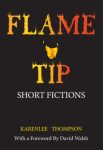
Karenlee Thompson, Flame tipShort story anthologies usually have some sort of organising principle – a theme, perhaps, such as Australian love stories, or a prize, such as the Margaret River Short Story Competition – but single author collections tend to be looser. Not so Karenlee Thompson’s Flame tip which she describes as containing “creative writing pieces that weave in and around the Tasmanian bushfires of 1967”. These fires, she writes, “left 62 people dead, 900 injured and over 7,000 homeless in a single day”.

With subject matter like this, you might think Flame tip would be distressing to read – and there is that. But Thompson manages to vary the tone enough, by injecting the occasional bit of humour and satire for example, to lighten the melancholy of the heavier stories. This humour, in fact, starts with David Walsh’s idiosyncratic (we would expect no less) introduction. He tells us he remembers the day – 7 February – because it was his first day of school, and his Mum forgot to pick him up. She “forgot” because she was fighting a fire on their back fence, but Walsh wonders whether this was a “viable excuse” or whether she chose to “triage the back fence over her weird and difficult son”. Whatever the reason, Walsh’s family lost neither home nor persons – unlike some of the characters in Thompson’s book.

So now, the book. Karenlee says in her introduction that it’s a collection to be “dipped into at random” and that her aim is “to present the truth ‘under the mask of fiction’ (to borrow from Gao Xingjian), revealing nuances of character and place, as well as repercussions that are often difficult to expose through nonfiction”. This is exactly what she achieves. Some of the stories are told from the point of view of people who experienced the day – who lost loved ones or property – and some are told by later generations. Sometimes the impact of the fires is direct and obvious, such as the wife who lost the love of her life (“Like a wall”), while elsewhere it is far less direct, such as the fickle lover in “Love, what is thy name?” whose grandparents lost their home in the fires.

Many of the stories of loss – the loss of a husband, parent or friend – are the sorts of stories you’d expect. I don’t mean by that, however, that they’re clichéd or uninteresting, but just that in such a collection you’d expect such stories of loss. Thompson ensures her stories are interesting by personalising the loss, and by creating “real” characters rather than the heroes and saints you tend to get in the media. An example is the betrayed wife in “A bird in the oven” who was 12 years old when she lost her mother in the fire and who took “a long time growing up”. Another is “The keeper of the satchel”, a man more damaged by his mother’s lack of love than by her death.

There are positive stories too, such as the young girl in “Jack Frost” who finds love. And there are surprising stories. One is “Medusa One Snake”, about how a family of birds manipulates fire to locate prey (the fleeing animals, “a mobile smorgasbord”). Another is “Degustation” about a woman on a date with the perfectly-named Augustus from a family which “had bought up all the available charred and rubble-ridden farms in the district, after the fire had rendered the singed locals almost comatose with shock”. There’s always someone ready to make a buck out of other people’s pain!

The issue of form … short fictions

The book is subtitled “short fictions”, and Thompson describes it as a collection of “creative writing pieces”. In other words, the term “short stories” isn’t used. There are “traditional” short stories here, but the collection also includes other “pieces”. There’s the shape poem “Flame”, an epistolary story (“Love, what is thy name”), and the piece titled “Lost” which riffs on lost-and-found ads. In it Margaret Groombell writes:

Lost

A life

Including: four-bedroom weatherboard home with indoor amenities, a much loved border collie answering to the name of Richie, a sense of security, linen and cutlery, a priceless hand-painted jardinière, stamp collection gathered and assembled over three generations, pink shower cap studded with daisies, deck of hand-painted burlesque playing cards, a position of some standing in the community, 2 striped deck chairs …

And so on. The random ordering of “items” here – “a sense of security” next to “linen and cutlery” – beautifully conveys the dislocation, the disorder, that such loss generates.

Another piece, “Annabelle, just looking”, plays with the idea of personal ads, but it’s an extended ad in which 72-year-old Annabelle explains her needs and why she’s where she is. She describes herself. She’s “never considered Botox or any of that other rubbish”, she says:

My forehead, therefore, is less like a flat screen TV and more like a topographical map. Life has surprised me, frightened me, delighted me – it’s all there in plain sight, writ large for the world to see.

Her demands aren’t many, but she hates “open fires”.

My final example is the short two-pager, “Cross stitch”, about Nettie who’s lost everything, but is surrounded by the macrame and aprons

made with altruistic fervour, no doubt, by women and girls who wanted to give her something to help her settle into a tiny house that had nothing from her life before.

I love the way Thompson, in piece after piece, breaks down popular notions about fires and their aftermath, and shows us the more likely reality.

So far, I’ve focused on the bushfire theme, but one of the lovely things about this collection is how Thompson interweaves other ideas into it. In “Like a wall” and “Jack Frost” she tackles racism and community prejudices. And in “Degustation” she satirises fine dining – degustation menus in particular – as well as the arrogance and sense of entitlement of the wealthy. It’s a delightful, funny story. Indeed, Thompson’s writing overall has a light touch, with a keen eye for the absurd.

Flame tip is a serious collection about a serious subject, and it could so easily have become heavy. However, by varying form, voice and tone, Thompson has produced a book that not only sustains our interest but that, despite its subject matter, is enjoyable to read. And that’s no mean feat.

Lisa (ANZLitLovers) also enjoyed the book

aww2017 badgeKarenlee Thompson
Flame tip: Short fictions
Melbourne: Hybrid Publishers, 2017
166pp.
ISBN: 978 1 925272 73 4

(Review copy courtesy Hybrid Publishers)

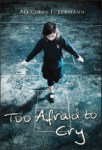
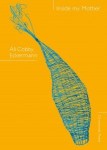
Ali Cobby Eckermann, Too afraid to cry (#BookReview)

ANZ Lit Lovers Indigenous Literature Week bannerHaving reviewed Yankunytjatjara/Kokatha woman Ali Cobby Eckermann’s poetry collection, Inside my mother (my review) for Lisa’s ANZlitLovers Indigenous Literature Week, 2017, I decided to also read her 2012 memoir, Too afraid to cry. It filled in a lot of gaps, which is not necessary to appreciate or comprehend the poetry but which does deepen the understanding.

The memoir’s dedication starts with the lines:

this is a poetic memoir
a story of healing
not burdened by blame

And that is pretty well what it is. It’s not an angry book, so much as a sorrowful one. Sorrow about the abuses and losses that affected her childhood and early adulthood, in particular. The sorrow starts early, when she’s young, and abused. She writes of her uncle rubbing her leg inappropriately, and progressing to assault, though she doesn’t say that because she’s only 7 years old. However, while she may not have the language to analyse what was happening to her, she does have the language to describe the feelings:

I felt the icy wind inside my head begin to blow. I could not move. The icy wind is very dangerous.

This “icy wind” becomes a metaphor throughout the book for the abuse, for her memory of it, and for its impact on her psyche until she can no longer cry – “the ice block had turned to stone, and now there was no moisture left inside me”. Hence the title of the memoir.

So, to summarise the book before I delve any further, Too afraid to cry is the story of a young indigenous baby adopted by a non-indigenous family. It’s a good loving family, with parents who, unable to have children, adopted four – two from the mission – and fostered another. But this family, as loving as it is, is a deeply religious one which does not understand the pain experienced by children from a different culture to its own. The result is that Eckermann is left to contend with racism and abuse that she, too, does not initially understand. Here, for example, is a schoolyard experience:

[I] didn’t notice that they had begun to form a circle around me, but I did notice that the icy wind was blowing inside my head and was starting to freeze my guts. Someone held me while other hands pulled my underpants down. There was a strange noise in my ears, like a faraway scream, but I could still hear the sounds of those doing the laughing and teasing. They said they wanted to know if I was the same as other girls. Someone laughed, saying they didn’t know if ‘boongs’ were different. I was frozen with the icy wind roaring through my body. I didn’t want to know what a ‘boong’ was.

Note the “icy wind” again. As childhood turns to adolescence, Eckermann, who had been an excellent student, begins to withdraw from her family and turns instead to alcohol and drugs to cope with the pain and sense of disconnect. It’s not a surprising story, but it’s a useful one for those who don’t understand what disconnection from one’s own culture can do, particularly in a society where difference is not tolerated. Eckermann learns much later, apparently, of the ridicule her adoptive mother had faced for having aboriginal children.

Anyhow, gradually, after many experiences, painful ones, risky ones and some more positive, Eckermann finds her way to her own culture, and healing begins:

Slowly the stone inside me turned to ice and then the ice began to melt. I felt real tears on my face for the first time in my adult life.

What’s remarkable about the memoir – something you may have guessed from what I’ve written – is her ability to get into her head at the time, to write from the point of view of the age and person she was when the things she describes happened, rather writing them as memory that she is now reflecting and commenting on. Of course the telling of the experience, the choosing of which experiences to tell, is a form of commentary, but I’m sure you get my point.

The memoir is remarkable for other reasons too. It’s told in 92 short anecdotal chapters, which are divided into four parts. The style is spare, with short, simple sentences. This is a book which shows rather than tells. Much of the commentary is conveyed through poems inserted between some of the chapters, such as “Heroin” between Chapters 45 and 46. It’s a short poem, like most of hers, and uses repetition and powerful wordplay on the word “arms”, to invoke prostitution, loving and heroin. The last stanza reads:

in their arms
they survive
a modern world.

Some of the poems appear again – the same or sometimes changed* – in Inside my mother.

Another aspect of the memoir, which adds to its sense of almost mythic universality, though is probably also done to protect individuals, is her minimal use of actual names. Her siblings, for example, include Big brother, Foster brother, and some relations are Aunty and Uncle. She does though name her mothers.

Too afraid to cry is an innovative and evocative memoir, which manages to convey hurt and pain, truthfully, but with a generosity that is humbling.

aww2017 badgeAli Cobby Eckermann
Too afraid to cry
Elsternwick: Ilura Press, 2012
224pp.
ISSN: 978-1-921325-29-8 (eBook)

* Changed, I think. I’m writing this in California, and my copy of Inside my mother is back in Australia.

Australian Women Writers 2017 Challenge completed

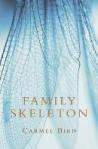
Carmel Bird, Family skeletonI usually write my completion post for the Australian Women Writer’s Challenge, around the middle of the year, even though I plan to take part until the year’s end. As in previous years, I signed up for the top-level, Franklin, which involves reading 10 books and reviewing at least 6, and as in previous years I’ve exceeded this. However, it’s good to get the completion post out of the way before the end of year madness begins!

I have, so far this year, contributed 16 reviews to the challenge, two more than for last year’s completion post.

Here’s my list in alphabetical order (by woman author), with the links on the titles being to my reviews:

Unlike last year’s half-way list, I did review one classic and a book by an indigenous woman author this year. There are other differences too. Last year I’d read just three memoirs (with two of those being hybrid biography-memoirs) while this year I’ve reviewed five memoirs to date. The fiction-nonfiction ratio, though, is still roughly the same.

aww2017 badgeLast year, I ended the post on plans for the rest of the year – and said that they would include reading at least one indigenous woman, Ali Cobby Eckermann, which indeed I did (her Ruby Moonlight). This year, however, I’m not setting out any plans. I do know I’ll be reading Heather Rose’s Stella Prize winner, The museum of modern love, as my reading group is doing that. (We will be reading a couple of other women writers, but they are not Australian.) As for the rest of my reading plans for the year, they are undefined – which means I could very well be as surprised as you by what turns up!

Ali Cobby Eckermann, Inside my mother (#BookReview)

ANZ Lit Lovers Indigenous Literature Week banner

Ali Cobby Eckermann, a Yankunytjatjara/Kokatha woman, has featured a few times on this blog, including in my review of her verse novel, Ruby Moonlight, and my Monday Musings post on her winning the valuable Windham-Campbell Prize this year. She is now appearing again as I review her poetry collection, Inside my mother, for Lisa’s ANZlitLovers Indigenous Literature Week, 2017.

Ali Cobby Eckermann, Inside my mother

Inside my mother is a challenging read, particularly if you are an occasional reader of poetry like I am, but it’s well worth the effort – for the insights it offers, and for the pure pleasure of reading a skilled wordsmith. As the title suggests, the collection’s focus is mothers – and there’s a reason for this, one all too familiar to First Nations Australians. Cobby Eckermann’s family has a history of children being taken from their mothers – her mother was taken from her mother, Cobby Eckermann was taken from hers, and then Cobby Eckermann had to give up her son for adoption. You can hear and feel the pain of these losses in the collection, but you can hear more too, because while these losses frame the collection, Eckermann doesn’t confine herself to them.

The collection is divided into four parts, which build up in intensity until we reach the last part in which the focus is squarely on grandmothers, mothers and children – and the attendant losses.

The poems, though, are not all grim in tone, they vary in form, and they are held together by recurring motifs or ideas, specifically, mothers (of course), sky, earth and birds, all of which make perfect sense given the author, her culture and themes. The first poem is one of a small number of shape poems. Shaped like a bird’s wing, and titled “Bird song”, it references the power of Indigenous spirituality, and ironically comments on how it was so often co-opted by the church. It gets the collection off to a good start. Part 3 starts with another poem about birds, “Tjulpu”. It comprises two-line stanzas, with a separate final last line, and attests to the power of birds for the speaker. “Life is extinct/without bird song”, it starts.

The first First Nations Australian poet I ever read, probably like most Australians around my age, was Oodgeroo Noonuccal (or Kath Walker, as my still loved edition had her). When I started reading Inside my mother, I wasn’t immediately reminded of Noonuccal, but when I got to the devastating poem written in the voice of a woman who drinks too much, “I tell you true”, I immediately thought of Noonuccal’s poems and their effective blend of the personal and the political. The poem is a plea for people to not rush to judge when they see someone “drunk and loud and cursing/Don’t judge too hard ‘cos you don’t know/What sorrows we are nursing”.

This poem looks simple. It uses those traditional rhetorical tools of rhyme and repetition to produce a singsong rhythm which satirically mocks the seriousness of the story it is telling. The effect is mesmerising. The second verse starts:

I can’t stop drinking I tell you true
Since I found my sister dead
She hung herself to stop the rapes
I found her in the shed

Other poems deal with traditional culture (“Vengeance”), political issues (“Hindmarsh Island”, “Kulila”, “Oombulgarri“), love (“Love 22/06/10”), stolen generations (“Severance”, “First born”, “The letter”), to name just a few. The meaning of some of these, particularly those I’ve listed under political issues, depend on knowledge of the politics they reflect. I needed, for example, to look up Oombulgarri.

Some poems are more personal (or, personally political!), such as “Eyes”, to give just one example. “Which eyes will she need today”, the speaker asks? Those of terror, or submission, or of “wonder or contempt”. I won’t tell you which ones she chooses, but they’re appropriate for the overall tone of this collection, reflecting its sorrow and its grit.

And then some, as usually happens with poetry collections, I found a little obscure, although, as I reread many for this review, more of them fell into place. You can’t rush poetry.

While it’s not my favourite poem in the collection, the last poem in Part 1 is appropriate to end on because it addresses the theme of this year’s NAIDOC Week. It’s called “Lament”, and is another poem featuring two-line stanzas, and repetition. Of the six stanzas, three are the same: “I can not stop/must sing my song”. And why can’t he stop? Because he’s the “last speaker/of my mother tongue.” Language. So important.

aww2017 badge

Ali Cobby Eckermann
Inside my mother
Artarmon: Giramondo, 2015
90pp.
ISBN: 9781922146885


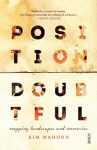
Kim Mahood, Position doubtful (#BookReview)

Kim Mahood, Position doubtfulKim Mahood’s memoir Position doubtful is a such a stimulating read. That might sound weird for a book whose subtitle is Mapping, landscapes and memories, but the thing is that it hits the spot in so many ways that are central to the issues confronting Australians right now. In other words, it’s about our relationship to place. Specifically, it’s about how kartiya* (non-indigenous Australians) comprehend our love for place, how we reconcile that vis-à-vis that of indigenous Australians, and how we go about respecting each other’s relationship with our land. Mahood may not explicitly generalise it like this, as for her it’s a personal journey – one exploring her experience of place and her reckoning of that with the indigenous owners – but I believe we can extrapolate her thinking to encompass something more universally Australian.

So, let me describe this personal aspect of the journey first, because this is, essentially, a memoir. It primarily covers the twenty years or so, from the mid 1990s, during which Mahood, chasing “unfinished business”, made annual trips back, from her Canberra region base, to the Tanami Desert region where she’d spent her childhood on a cattle station run by her parents, but which is now owned by the local Warlpiri people. She chronicles her desert art trips with Pam Lofts, the mapmaking she does to document country and stories, her various itinerant jobs, and most of all her relationships in the communities in which she stays, particularly Mulan (a Walmajarri community) and Balgo (where she works early on in the art centre).

Maps underpin her way of viewing and understanding place, and have become, also, the basis of her art practice. Early in the book, she writes:

In recent years I have made a number of maps with Aboriginal people, designed to reveal common ground between white and Aboriginal ways of representing and understanding country … The information marked on them is a mixture of Aboriginal knowledge – traditional camp sites, the birthplaces of individuals, the tracks of ancestors – scientific information about ancient shorelines and archaeological investigations, and the template of bores and paddocks and tracks and boundaries that represent the cattle stations and stock routes of white settlement. They serve different purposes – aboriginal, scientific, testimonial, environmental – depending on when and where they are used. Often there is a mismatch between my interpretation and the Aboriginal interpretation of their purpose.

So, this is a story about communication and negotiation, about sharing knowledge and understanding, about layers and multiple meanings, and above all, about respect for other while standing one’s own ground. The way Mahood navigates all this – the accommodations and understandings she works through, socially, personally, intellectually, scientifically, artistically and philosophically – is, really, what the book’s about. And it’s what makes it such a relevant read.

Now it’s my turn, I’m going to tell my side of the story

But of course, to write this story, she had to confront that issue I’ve raised here several times before of kartiya speaking for and/or about indigenous people. She addresses this in the last chapter (without specifically discussing the issue itself), when she describes visiting Mulan in September 2015 to tell them about her book. She organises several meetings, and reads “everything” that she thinks “might offend or upset people”. She is particularly anxious about her suggestion that the “popular version” of a massacre story she’s been told could be “a compilation of several distinct events” but she needn’t have worried. Her listeners nodded in agreement and pointed her to other people she could talk to.

This massacre “story” reminded me of another ongoing thread of mine – that one about “fact” versus “truth”. The truth is that massacres occurred – that’s not denied – but the evidence is now so murky that the various “facts” presented don’t always align. Does this mean the history, the recording of massacres, is wrong? I don’t think so.

a template of country infused with multiple meanings

The book is structured more or less chronologically following her trips, but she does move backwards and forwards occasionally – to finish an experience or flesh out a story. In between the more chronological, narrative chapters, are specifically reflective ones where she pauses to explore an idea. One is titled “Mapping Common Ground”. In it she articulates her ideas about language, maps, and being human. She says that “mapmaking was the common ground” on which she and her “Aboriginal companions put together our different conceptions of country”. She describes how maps “captured the imagination of the local mob”. They provided

concrete evidence of the knowledge that existed in the country, and they represented country in a way that everyone could understand, including the kartiya upon whom so much of the negotiations about land depended. … But the maps also aggravated the simmering arguments about who came from where, who owned which place.

And there, you see, is the politics. Politics is not Mahood’s focus but it is there, and the more you know about indigenous history, past and present, in Australia, the more you see it in the book. It’s there in the implications of changing a word from “custodians” to “ownership”, in the absence of middle-aged men resulting in matriarchies, in the “unintended consequences” of the 1968 equal wages bill, in the high prevalence of disease like diabetes, in who has or controls the money, and so on. It’s rather a mess, but “fixing” is not Mahood’s aim here, so she notes and moves on.

The title itself subtly references the underlying politics. Literally it means “of uncertain position” and is often used, for example, to indicate shipwrecks. However, when her father used the term, while navigating in the Tanami Desert, Mahood writes:

The term lodged in my mind as a metaphor for the way in which white Australians move through and occupy the country, especially the less accessible parts of it. And while the advent of satellite technology has given us the tools to find and map geographic locations with great accuracy, it seems to me that our position in relation to the remote parts of the country is more doubtful than it ever has been.

Metaphor, in fact, underpins much of how Mahood sees and explains the world, and I enjoyed that aspect of her writing, the way she finds some term or experience or object to reference bigger meanings.

Position doubtful is not exactly an easy read, but it’s a thoroughly engaging one. As memoirs go, it’s a strange hybrid, combining wonderfully warm and sometimes funny anecdotes about the people she meets and travels with, oral histories, indigenous creation stories, poetic insets, travel writing containing beautiful descriptions of landscapes, and of course her introspective reflections on who she is and what she’s doing. She allows herself to be vulnerable, and yet there’s a strong sense of self there too.

Kim Mahood, Gia Metherell

Bessie’s map, from the book and shown at CBR Writers Festival, 2016

I’ll close with some comments she makes regarding a trip to Lake Gregory with local owners and kartiya, including the palaeontologist Jim Bowler. It’s aim was to create “a cross-cultural document” showing “the interplay between  Aboriginal knowledge and western scientific knowledge in a form … easily accessible to both Walmajarri and kartiya“. She writes:

To have the ancient geography interpreted simultaneously through modern science and the Waljirri or dreaming, lays down a template of country infused with multiple meanings. While I don’t believe the creation stories in a literal way, they breathe animate life into the landscape in a form as potent and awe-provoking as the deep-time story Jim’s science tells. They complement rather than contradict each other.

And then, she talks of a discussion with Bessie, premier traditional owner for the area, in which they look at Bessie’s painting (see my image above) and the big painted map created during the project. As they talk, Mahood writes:

In putting together these two ways of conceptualising the same place, I experience a cognitive shift from which I will never entirely cover.

It’s a cognitive shift that is gradually happening throughout Australia – I hope – as we all come to terms with our different ways of seeing our history and our relationship to place and each other. This book makes an excellent contribution to this process.

Lisa (ANZLitLovers) appreciated this book too. Her write-up fills in some of the gaps I couldn’t cover without writing a tome.

aww2017 badgeKim Mahood
Position doubtful: Mapping, landscapes and memories
Brunswick: Scribe, 2016
320pp.
ISBN: 9781925321685

* Kartiya: white people (there is no one indigenous word for white people)

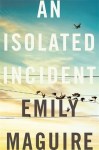
Emily Maguire, An isolated incident (#BookReview)

Emily Maguire, An isolated incidentEmily Maguire’s novel, An isolated incident, reminded me of Charlotte Wood’s The natural way of things (my review). Sure, An isolated incident is a crime novel, albeit a genre-bending one, while The natural way of things is a dystopian novel, but both deal with the same fundamental issue, misogyny. Wood exposes the scapegoating of women for their sexuality, while Maguire tackles violence against women (and in doing so, also traverses some of the same ground regarding attitudes to women’s sexuality).

That Maguire is going to confront the issue head-on is implicit in the irony of her title. Twenty-five-year-old Bella’s murder may have happened in an isolated place, and such murders may be rare in her small country town, but as we all know in our media-fuelled times, violence against women is not isolated. Indeed, it happens with terrible frequency. Maguire makes sure that not only do we not forget this, but that we see it in its entirety.

I started by saying that An isolated incident is a genre-bending crime novel. Now, I’m no expert in crime fiction but I know enough to recognise that this book inverts our expectations. In a nod to the genre, the novel is told chronologically with the chapters named by the date, such as “Monday, 6 April”. However, it is not told from the point-of-view of the police or detectives, and it does not focus on the whodunnit aspect, though the investigation does provide an ongoing thread. Instead, the story is told through two voices – the first person voice of Chris, Bella’s grieving big sister, and the third person voice of journalist May who has come to town with her own demons regarding a married lover. This narrative approach enables Maguire to broaden her reach, to focus on things other than catching the criminal, because that is the least relevant – I almost said least important except of course we do want these perpetrators off our streets – part of the story. The most relevant is why does this violence happen, and how does it affect those involved.

Maguire does not, however, provide any answers to these questions. Who knows why it happens? But Maguire does show some of the ways misogyny plays out in everyday life, from the “all piss and wind … harmless” pest who follows women in his car, through men who won’t take no, the men in the pub who know about violent men but do nothing, the schoolboy who enacts his sexual attraction by creating ugly pictures, to actual domestic violence resulting in a wife’s death. It’s powerful because it’s all so real – and true. And, definitely not isolated.

In a telling exchange between May and Chris, May says:

‘… You don’t realise how much most men dislike women. And knowing that, most women can’t relax around men the way you do. Can’t let ourselves show that we like them even if we really do.’

‘Ah. That’s a different thing, though. I like ’em fine, but I’m never relaxed, not fully. It’s like with dogs. All the joy in the world, but once you’ve seen a labrador rip the face off a kid, you can’t ever forget what they’re capable of.’

Late in the novel, Chris ponders this whole issue of the things men do and don’t do, and, heartbreakingly, decides:

… and there are men … who are pure and good of heart and intent and who only want to be our friends and brothers and lovers but we have no way of telling those from the others until it’s too late, and that, perhaps, is the most unbearable thing of all.

Similarly powerful is the way Maguire captures bereaved sister Chris’ grief. Chris is a down-to-earth, small-town barmaid who’s not above taking the odd man home for a little necessary money on the side. Her grief, her loss, is overwhelming, threatening to upset her sanity, and Maguire captures it well, including showing the impact of requiring a relative to identify a body when that body has been horrifically disfigured. The memory of how Bella looked, and imagining how the disfigurement occurred, add significantly to Chris’s grief.

An intriguing thread in the novel concerns the role of writing. Through May being a writer, Maguire explores, initially, the exploitative behaviour of journalists. They sweep into town en masse, intrude on people’s lives, trot out their jargon-laden reports about “close-knit” communities, and when the excitement is over, breeze out again to the next drama. May is one of these, until something about this story, and about Chris, results in her quitting her job to stay.

She explains to her brother why. It’s because she wants her writing to help overcome “the fear, the injustice”, whether by helping to catch the killers or just writing about Bella in a real way rather than simply as a victim. A little later, she tries to convince Chris to talk to her, arguing that her writing may help bring justice. As she argues with Chris, we wonder how much of what she is saying is sincere and how much is desperation to get a story, now that she’s freelance. Maguire writes:

May had started speaking in desperation but as the words came she realised she had once believed all of this about the power of a well-written story. The quaver in her voice told her that maybe she still did.

Hmm, is this Maguire, too, arguing for the value of writing her novel – and for writing in general?

So, did I like the novel? I did enjoy reading it. Maguire’s writing is compelling: it was easy to engage with Chris particularly, and to be interested in journalist May. Maguire’s picture of Strathdee is convincing, and she successfully imbues the story with a complexity that offers no easy answers. If it has a failing, it’s that it’s spread a little thin across the issues – male violence, media intrusion, grief and closure – resulting in an ending that didn’t quite punch an emotional or intellectual point home.

Quite coincidentally, just as I finished this book, Mr Gums and I watched the 2008 miniseries of Sense and sensibility, whose script was written by Andrew Davies. Towards the end comes a line from Marianne, albeit not Austen’s. Having been “burnt” by the dastardly Willoughby, she asks Elinor,  “What do men want from us – perhaps they don’t see us as people but as playthings”. Fortunately, many (most, perhaps) men do see women as people, but these novels, together with books like Anna Krien’s Night games (my review), remind us that we still have a long way to go before there is true equality, true respect, between the sexes.

This book has been reviewed by several of my blogging friends, including Michelle (Adventures in Biography), Bill (The Australian Legend), Lisa (ANZLitLovers), Kate (booksaremyfavouriteandbest), and Kim (Reading Matters). Two didn’t like it much, the others were more positive!

aww2017 badgeEmily Maguire
An isolated incident
Sydney: Picador, 2016
343pp.
ISBN: 9781743538579

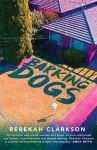
Rebekah Clarkson, Barking dogs (#BookReview)

Rebekah Clarkson, Barking dogsThe best way to describe Rebekah Clarkson’s debut book, Barking dogs, is that it’s a portrait of a community undergoing social change. This community is Mount Barker on the outskirts of Adelaide. Once a farming community, it is now, says Wikipedia, “one of the fastest growing areas in the state”, the province of developers, the aspirational and the upwardly mobile, rich pickings in other words for an observant novelist. But, did you notice that I said “debut book” not “novel”? This is because, superficially, this book presents as a collection of short stories. However …

What’s in a name? It reminded me of the recent discussion about Junot Díaz’s debut book, Drown, on the ABC’s First Tuesday Bookclub. Drown is also a collection of short stories, but panel members argued that it could be defined as a novel because “the stories are too interlinked for us not to see it as a narrative whole”. Drown, though, does have the same narrator throughout, which Clarkson’s book doesn’t. Her book is probably closer to Tim Winton’s The turning. Like Barking dogs, its stories are set in the same place, and it has some recurring characters, though, from memory, I’d say recurring characters are a stronger feature of Clarkson’s book.

The question is, of course, does any of this matter? Not really, except that calling it a novel might attract more readers – you know, those who say they don’t like short stories. And, it is always relevant to consider form, even if, in the end, the actual label is irrelevant.

The form, style and structure of Barking dogs, do, in fact, give us much to consider. There are, for example, 13 stories. Are we meant to consider the “negative” implications of the number 13 in terms of this community’s future? Why does Clarkson start the collection with a troubling story (“Here we lie”) set at a later time in the book’s chronology, and end with a story set at the earliest time (“If it wasn’t this”)? The fact that this last story, although set in the seemingly idyllic rural days, ends rather bleakly on the image of a tree “alone, stark and bare” suggests that Clarkson recognises the complexity in all communities. Again, I was reminded of Pulitzer prize-winning author Paul Beatty on the First Tuesday panel talking about how he sometimes plays around with the order of the stories in Drown, and how this changes its impact.

Regardless of the overall intention, though, the stories make great reading. Whether they are told 1st, 2nd or 3rd person, and whether the narrator is male or female, young, middling or older, or struggling financially or more well-off, Clarkson is able to get inside her characters’ heads. She captures, and explores, the feelings, values and thoughts, the confusions, uncertainties, and pretensions, of her town’s inhabitants. We can “see” it all: the struggle to pay mortgages, to maintain meaningful marriages, to raise their children (or to conceive them in the first place), to get on with their neighbours, to achieve the lives to which they aspire.

A number of motifs run through the book, including the murdered girl Sophie Barlow (whose family appears in the second story, “Something special, something rare”, but whose story is never fully told), the Wheeler family which forms the main connecting thread in the collection, and of course the barking dogs of the title. These, together with the setting, contribute to the coherence of the whole.

Some stories stood out more than others. This may say more about my particular interests, rather than the quality of the stories, but it may also be that the stories that are more connected by characters are more engaging because of the story development they entail. It’s a book that would bear multiple readings, because even skimming it for this review revealed further links and connections that I missed on my first pass.

The overall theme, that of a community going through change, is beautifully encapsulated in the story “Hold me close”, in which the recently widowed Edna, a long-term resident of the town’s now rural outskirts, struggles to understand the aspirations and lifestyle of her daughter, Andrea, who has moved back to the area. Andrea lives in a “ex-display home village” and, Edna thinks, is more interested in appearance than substance. This tension between striving for success and being, hmm, more real is played out in various ways in the other stories.

The Wheelers

But, perhaps the best way to illuminate the book is to look briefly at how the Wheeler family is woven through the book. The Wheelers are 49-year-old Malcolm, a successful management professional, his confident teacher wife, Theresa, their 11-year-old son Martin who’s been diagnosed with Asperger’s, and Jasper, their barking dog. They epitomise the new families in the area – their aspirations, their values, and their problems – and at least one of them appears, or is referred to, in seven of the stories. The first references are in passing. In “Something special, something rare”, Martin has been physically bullied by Liam Barlow, but we don’t meet him specifically, and in the following story “World peace” he is again referred to, this time by one of his classmates. We gather he’s a little different, and doesn’t fit in well with the normal schoolyard cut-and-thrust.

The next four stories (4th, 7th, 9th and 11th) in which they appear are told from their perspectives, the first two from Malcolm’s, then one from Martin’s, and finally Theresa’s. I don’t want to give too much away, but we get the picture of a fairly kind, laissez-faire husband married to a more go-ahead, shall we say, proactive, wife. In the fourth story, “Raising boys”, we also meet their barking dog who is bothering his neighbour, and in the seventh, which is, structurally, the central story, Malcolm receives some terrible news which provides the book’s emotional heart. The penultimate story, “Jasper”, is shocking. It exposes the cracks in “society today”, such as unrealistic aspirations, lack of neighbourly communication, fractured marital relationships.

Interestingly, while the stories are not presented chronologically, the Wheelers’ “story” is, giving the book a clear narrative arc. The overall order, perhaps, provides its thematic one, one that warns against rose-coloured glasses about the past.

Unfortunately, I am using an uncorrected proof copy from which quotes are forbidden (though I have “quoted” one or two phrases which I hope is okay!). However, I do want to briefly mention the writing, which maintains an effective satirical tone while also conveying a level of tenderness for the characters. There’s some lovely irony too. We know for example, that poor Graham Barlow’s vision for his business, Winners, is unlikely to be realised (“Something special, something rare”), and that Gladeview Park, where many of our characters live, does not provide the “Serene and fun-filled living” environment promised on the estate’s sign (“Jasper”).

Barking dogs offers a thoughtful, intelligent look at contemporary suburban life. It explores what a pristine, homogenous white middle-class enclave might look like. Unfortunately, it looks more like a bunch of isolated individuals than a healthy community, partly because the pressures that drive them seem to prevent real engagement with each other. It doesn’t need to be this way.aww2017 badge

Rebekah Clarkson
Barking dogs (Uncorrected bound proof)
South Melbourne: Affirm Press, 2017
240pp.
ISBN: 9781925475494

(Review copy courtesy Affirm Press)