For around 10 years I devoted my last Monday Musings of the year to the Australian Women Writers Challenge, which most of you will remember was instigated by Elizabeth Lhuede in 2012 in response to concerns in Australian literary circles about the lack of recognition for women writers. As I explained last year, it would be changing tack in 2022 to focus on past and often under-recognised or overlooked women writers, from the 19th- and 20th-centuries. By the end of the last year, we felt that much of what we had aimed for in the original challenge had been achieved, with women writers seeming to be well-established on Australia’s literary scene, at least by observable measures. We hope that holds, as there have been regressions in the past. Just compare the impressive visibility of Aussie women writers in the 1920s and 30s with a couple of decades later. For now, though, things are looking positive.
So, 2022 started with a new team overseeing this new phase, Elizabeth, Bill, and me. Our plan was to publish articles and reviews about earlier writers, and publish their actual writings – in full or excerpt form, as appropriate – in order to promote what we knew to be Australia’s rich heritage of Australian women’s writing. I’m not going to do a full rundown of the year’s achievements because Elizabeth will be doing an end-of-year round up on the site in January, but I do want to share a little about what we’ve achieved …
What happened in 2022
We have managed to post twice a week: articles and reviews on Wednesdays, and actual writings, related where possible to the previous Wednesday’s post, on Fridays. Bill took on the job of commissioning editor and has done a wonderful job of finding guest posters to fill the spare weekly slots. Elizabeth, who was keen from the start to bring actual writings to the fore, has scheduled all the Friday posts and worked on enhancing the Stories from Online Archives pages. In addition to writing my monthly Wednesday post, as all three of us have done, I have taken a quieter role in the background, including contributing to discussions about guest posts, and our policies and practices, and helping with various behind-the-scenes tasks like Trove editing to support postings.
We made it to the end of the year, with a decent following in tow. Our stats have dropped significantly from the old challenge days, but we expected that with our narrower focus. While it is always encouraging to have readers, we see the main value of what we are doing to be long-term. In bringing past and lesser-known writers into the light, we not only ensure that they are visible and more easily found by people who are looking for them, but we’d like to think that this visibility will inspire, encourage and facilitate further research into Australia’s literary heritage. We have had at least one academic express gratitude for the help the site has provided her in her research. Music to our ears.
Our Wednesday posts have been an eclectic mix. Rather than impose structure – thematic, chronological, whatever – on our posting schedule, we decided to let the posters choose their topic. This made it easier for Bill to lock in guest posters, because he could give them free rein depending on their relevant interests, and resulted in a variety of posts which (hopefully) appealed to our readers. To see what we posted, just head over to the site – with only two postings a week, there are not too many to scroll through.
For now, I’ll briefly summarise what we three have done in particular.
Elizabeth has focused particularly on lost writers, on those women who have all but disappeared from view. She has not only brought them into the light, but has solved a few mysteries along the way. For example, who was R McKay Tully? Male or female? Elizabeth worked it out. Or Netta Walker? A woman yes, but what’s in a name? Again, sleuth Elizabeth was on the case. The thing is that Elizabeth’s posts provide useful insights into the research process as well as into the writers she unearths.
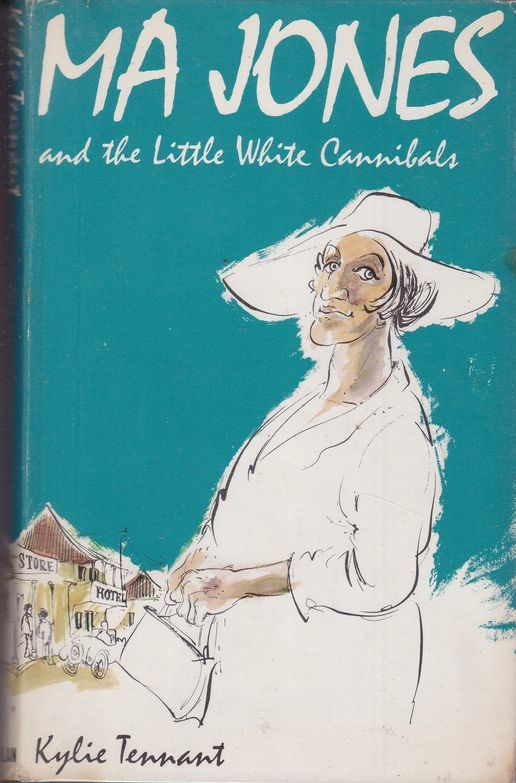
Bill, on the other hand has tended to write reviews – with a little biography thrown in – of authors he’s been keen to explore more, besides his beloved Miles Franklin, like Kylie Tennant (Ma Jones and the little white cannibals), Rosa Praed (The bond of wedlock), and Ada Cambridge (A mere chance). All are authors I’ve read but wish to read more.
I started the year by posting on selected primary and secondary sources for research into Australian women writers, and then moved into posts on specific writers, many of them edited or enhanced versions of posts I’ve written here. These included posts on juvenilia, the poet Eliza Hamilton Dunlop, and journalist-botanist-author Louisa Atkinson.
We have also had some wonderfully generous guest posters who accepted Bill’s call to delve into history for us – bloggers Jonathan Shaw and Brona from Australia, Emma from France and Marcie McCauley from Canada; published authors Jessica White, Michelle Scott Tucker, Debbie Robson and Nathan Hobby; and academics and historians Stacey Roberts and Linda Emery. We are hugely grateful to them.
And so, 2023
Although the blog is not generating a lot of traffic, Elizabeth, Bill and I believe it is serving the purpose we identified, and so have decided to continue in 2023. We would love, though, to hear if you have ideas for posts, or would like to offer a post yourself, or have any other suggestions.
Meanwhile, I have enjoyed the year, because of our subject-matter and because Bill and Elizabeth have been so easy to work with. There’s something special about working with others on a shared goal … so roll on 2023. We are ready.
 Whispering Gums