Gabrielle Gouch, Once, only the swallows were free (Review)

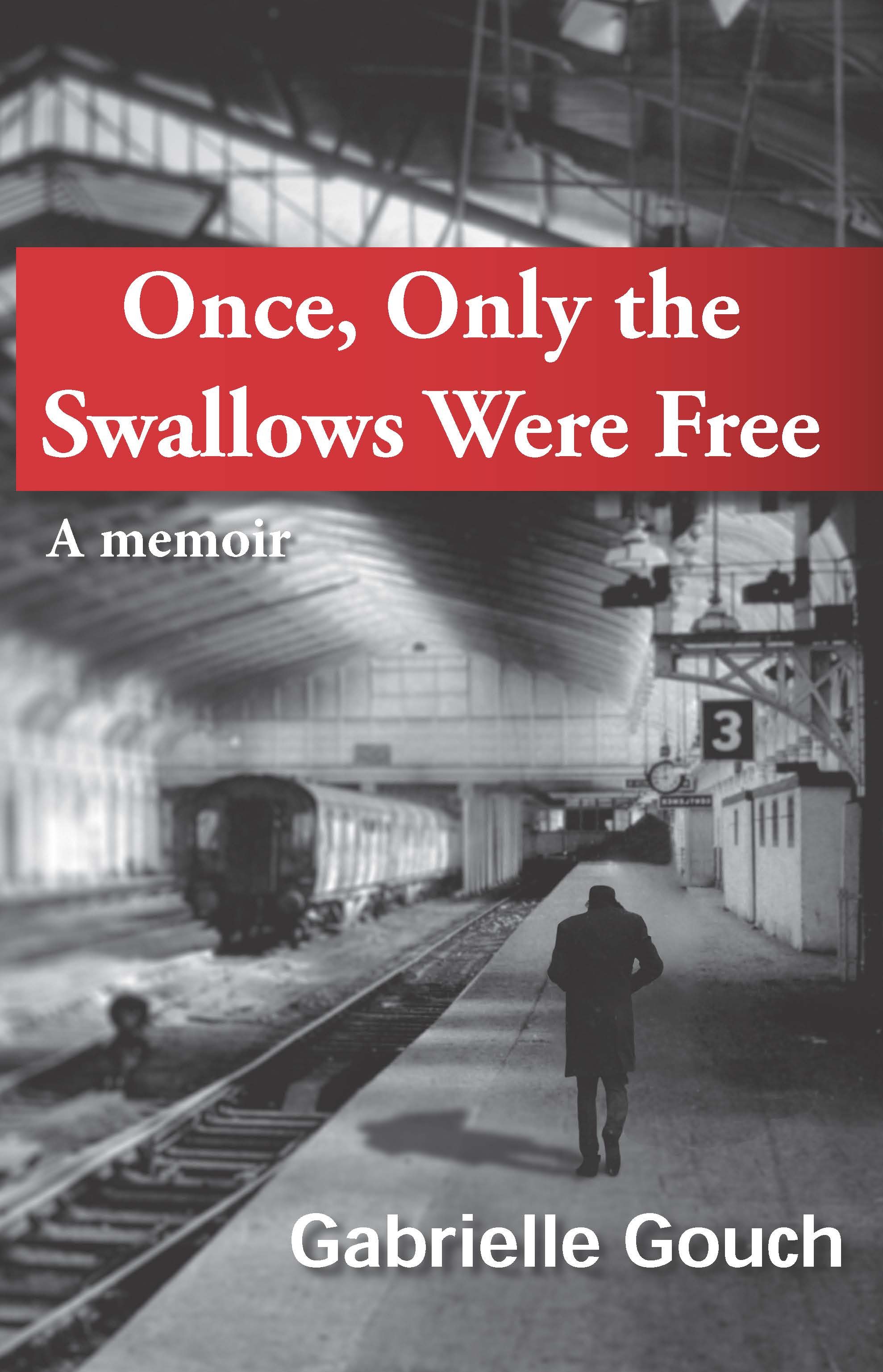
Gabrielle Gouch, Once, only swallows were free

Courtesy: Hybrid Publishers

Do you differentiate memoir from autobiography? I do. For me, a memoir, such as Gabrielle Gouch’s Once, only the swallows were free, deals with a specific aspect of a person’s life, such as a sportsman writing about his career when he retires from it or a person writing about her growing up, like, say, Alice Pung‘s Unpolished gem. An autobiography, on the other hand, I see as something more holistic, something written near the end of one’s life and summing up its entirety. What do you think?

Gabrielle Gouch was born in Transylvania, Romania to parents who’d both fled anti-Semitic Hungary. She moved elsewhere in Romania with her family before they emigrated to Israel, without her older half-brother, when she was around 20. A few years later, she emigrated on her own to Australia which has remained her home ever since. This is the basic chronology of her life, but Gouch is not really interested in telling us this story chronologically – and in fact, she’s not really interested in telling us the story of her life. What interests her is the brother, Tom, left behind. She wants to know about his life during and post communism in Romania. She also wants to know about the gaps in her knowledge of the family.

Gouch therefore doesn’t tell the story in a simple chronology. While she clearly signposts where you are as you read, I found it a little disconcerting to start with, until I felt familiar with the places and people she was writing about. This, however, could be due to other things going on in my life as I started this book. The memoir starts in 1990 with her first return to Transylvania after “the collapse of communism. The eternal and invincible communism”. A return that took place 25 years after she had left. As the book progresses, she visits Cluj several times, catching up with her brother, learning about her family. It’s a sad story – not surprisingly. Tom’s mother, the much beloved, vivacious Hella, died in childbirth. His – and eventually Gabrielle’s – father, Stefan, married the nanny, refugee Roza, hired in to look after the physically handicapped Tom. (As far as I can tell, his condition is hemiplegia, probably caused by the forceps birth). Roza and Stefan went on to have two children – Gabrielle and, somewhat later, Yossi – but country girl Roza was never accepted by Stefan’s well-to-do family.

The book proper starts in 1962 with the family expecting permission to migrate to Israel to arrive any minute. Of course, it doesn’t – and it is not until some 40 or so pages and three years later that they are finally able to leave. They leave without Tom, now well into his twenties, but exactly why this is so is not understood by Gouch. During the course of the book she finds out why – and she finds out what Tom’s life was like under the communist regime. It’s a very interesting story, and once you master the time shifts across the book’s seven parts, it’s a very readable one. The very short Part 2, for example, returns to the opening of the book, her return in 1990. Then Part 3 jumps to 2002 and another trip of hers “home”. From then on the focus is her time with Tom and the stories she gradually pieces together.

Gouch is a good writer. Her language is expressive, but not over-done. That is, she has some lovely turns of phrase that capture moments and people well. Here, for example, she describes her family’s reaction when her mother says something surprising:

We looked at her as if she had made her way into our home by the back door somehow, a woman we had never met before.

And I like this simple description of children:

Well, children are like shares, you never know how they will turn out.

There are two main threads in the book, one being life under communism, as experienced by Tom, and the other being the life of the emigrant, as experienced by her family. The book is enlightening for people interested in either of these topics, but I’m going to highlight the second, the emigrant’s life, because she explains it beautifully – from the tough life her parents experienced in Israel to her own experience of dislocation from culture. She writes, as she starts to reconnect with her brother:

Noone ever told me that you cannot turn physical distance into emotional one, you cannot forget your native country, you cannot give up your mother tongue. It deadens you inside.

She gives one of the best descriptions of the relationship of language to culture that I have read. She meets an old professor who had chosen to stay living under the repressive regime because, he said, “This is my native land, my language. I belong here.” She writes:

His words lingered. ‘My native land, my language.’ For most people, the sound of Hungarian is awkward; for me it is poetry and delight. When I say ‘flower’ in English I refer to a plant with petals and colours. But the word in Hungarian, virág, sounds to me melodious and joyful. Yes, you can learn to speak a language, you can even learn to think in a language but will you feel the same joy and sadness at the sound of those words? Feel the black desperation or be uplifted by hope? Will the word love evoke the same tenderness and ardour? I don’t think so.
Australian Women Writers ChallengeGouch also writes about “history”, about the impact on people of living through some of history’s trickiest times, as her family had. Her description of her father’s life – a loving father who had worked hard – is heart-rending:

A man who was a Jew but not Jewish enough, an Israeli but not quite, a Hungarian Jew among Romanians and a Jew among Hungarians. Finally he left this world with its divisive nationalisms, ideologies and religions which had marred most of his life. He was just another man on whom history had inflicted its painful and murderous pursuits: Nazism, the Second World War, the communist dictatorship, the Arab-Israeli conflict and Israeli religiosity. History had match-made him, history had controlled his life. It was over. He joined the infinite Universe.

I’ve possibly quoted too much, but Gouch’s words are powerful and worth sharing.

“Knowledge”, Gouch’s father once told her, “is your only possession”. Once, only the swallows were free is a story of discovery for Gouch, but for us, it provides a window into a particular place, time and experience that most of us know little about. The knowledge, the understanding, we gain from reading it is a precious thing.

Gabrielle Gouch
Once, only the swallows were free: A memoir
Melbourne: Hybrid Publishers, 2013
279pp.
ISBN: 9781921665998

(Review copy supplied by Hybrid Publishers)
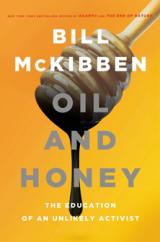
Bill McKibben, Oil and honey (Review)

Bill McKibben, Oil and Honey

Courtesy: Black Inc

It’s coincidental, but nicely appropriate, that the World Meteorological Organisation (WMO) published its Provisional Statement on the Status of the Climate in 2013 last week, just as I was finishing US environmental activist Bill McKibben‘s latest book, Oil and honey: The education of an unlikely activist. It’s likewise coincidental that, three days before WMO’s announcement, Stefanie (of So Many Books) published a post titled Gardening for Climate Change* containing her thoughts on her garden and how climate change might affect it.

WMO’s statement says, among other things, that “During the first nine months of 2013, most of the world’s land areas had above-average temperatures, most notably in Australia, northern North America …”. As you know, I live in Australia; Bill McKibben and Stefanie live in the northern part of the USA. We are seeing (feeling) the changes, and are concerned. What I’m going to say next is pretty obvious, but I’m going to say it anyhow because I always like to start with the basics in discussions like this. There are two critical issues in the climate change debate: Is the climate changing and, if it is, Is it human-caused? It’s hard to imagine, given all the data available, that there’s anyone out there who really believes the climate is not changing, though I believe there are still some who think it’s simply a case of “climate variability”. These people think that the climate will get back to normal (some year soon, they hope). The trickier issue, however, is the causal one. Most of the deniers are not so much denying that the climate is changing, but that we are causing it. This brings me to Bill McKibben.

McKibben does not, in Oil and honey, spend time trying to prove that humans are causing climate change. For him it’s a given. Rather, he shares how he changed from being an environmentalist, who researched and wrote books, to an environmental activist who campaigns (and writes books). It’s an interesting, clearly written book about one man and his path, but can also be read as a how-to for those who want to get active.

You may now, though, be wondering about the title. Oil and honey? I’m sure there’s an ironic allusion here to the biblical “land of milk and honey” (which we are not heading towards), but there is also a literal meaning to the title. The narrative shifts pretty seamlessly between his two main passions. One is to do with bees, honey and good farming practice. The other is oil, or the fossil fuel industry, and how to stop its impact on the climate. Oil and honey, climate and farming. It’s all related.

You may also be wondering, particularly if you’re not American, who Bill McKibben is. As the blurb on the back of my edition says, he has written over a dozen books including the New York Times bestselling Eaarth and The end of nature. He also founded the environmental organisation 350.org and “was among the first to warn of the dangers of global warming”. Despite all this, he did not until recently see himself as an activist. After graduating, he worked as a journalist for The New Yorker for five years, but quit in 1987 when its long-term editor was forced out of his job. Since then he has been a freelance writer.

Oil and honey is his latest book. I’d call it part-memoir part-manifesto, because it is both the personal story of his transition to full-blown activism and the story of his passion for saving the planet. The personal aspect of the book helps make it a good read. We get to understand his thinking, we feel his anxiety about becoming not only an activist but a leader of activists, and we learn that his activist philosophy is inspired by the non-violent resistance ideas of Gandhi and Martin Luther King Jr. We see his love for nature and for working close to the land on the bee-farm he bought for his friend Kirk Webster to run. This farm functions both as respite and as a place for him to see land stewardship working.

That’s the memoir aspect. In the manifesto aspect, he shares with us the development of his ideas and strategies. We learn of various campaigns he has been involved in since 2009, including Step It Up, Keystone XL,  Do the Math. And he explains how he and his co-activists have shifted from focusing on politics and politicians – through such activities as sit-ins at the White House and lobbying politicians – to directly tackling the fossil fuel industry. He came to realise, he says, that the situation was/is becoming so dire there’s no time “for slow graceful cultural evolution”. Consequently, the last part of the book deals with the goal of encouraging educational institutions to divest their investment portfolios of fossil fuel industries. They’ve targeted educational institutions because students represent a significant percentage of climate change activists. For these students the question is simple:

are you paying for our education by investments in an industry that guarantees we won’t have a planet to make use of that learning?

I’ve only touched the surface of what this book covers. Like many books of its type, chances are that it will only be read by the converted. That’s a bit of a shame, but it’s not useless says McKibben:

You might think it’s a waste to preach to the choir, but the truth is, you need to get the choir fired up, singing loudly, all out of the same hymnal. The choir is there, but most of the time it’s just humming in the background, or singing so many tunes that no distinct harmony emerges.

So, if you’re part of the choir, this book is still for you. And if you’re not, think about joining. It could be the most important thing you do.

Bill McKibben
Oil and honey: The education of an unlikely activist
Collingwood: Black Inc, 2013
255 pp.
ISBN: 9781863956178

(Review copy supplied by Black Inc)

* Stefanie has since posted a link to a British blog called Climate Change Garden.

Monday musings on Australian literature: Indigenous Australian memoirs

As Australians would know, this week – July 7-14 – is NAIDOC week. NAIDOC originally stood for an organisation – ‘National Aborigines and Islanders Day Observance Committee’ – but the acronym has now become the name of the week itself. Fascinating how acronyms can take on lives of their own, isn’t it? Anyhow, the theme for this year’s celebrations is We value vision: Yirrkala Bark Petitions 1963.

This theme commemorates the 50th anniversary of two bark petitions which were sent by the Yolngu people of Yirrkala in northeast Arnhem Land to the Australian Parliament. The petitions concerned the Commonwealth Government’s granting of mining rights on land excised from Arnhem Land. They asked the Government to recognise the Yolngu peoples’ traditional rights and ownership of their lands. These petitions were the first indigenous Australian documents recognised by the Government and helped, the NAIDOC website says, to “set into motion a long process of legislative and constitutional reforms for Aboriginal and Torres Strait Islander people”. Many Australians know of Eddie Mabo and the Native Title Act of 1993, but I wonder how many know of actions like this which occurred decades earlier?

In this spirit of commemorating the past, I thought today’s Monday Musings could focus on indigenous Australian memoirs/autobiographies. I’ve written on this topic before, and so will try to avoid repeating myself too much. Interestingly, all of the books I mention below are by women. The Cambridge companion to Australian literature says, in fact, that since the 1970s, Aboriginal women have dominated indigenous autobiography.

A number of themes run through indigenous memoirs/autobiographies and, of course, identity is a big one. One of the best known examples of a memoir about identity is Sally Morgan‘s My place which was published in 1988, Australia’s bicentenary year – the bicentenary, that is, of white settlement in Australia. It was not a year that was universally celebrated by indigenous Australians, for good reason. My place was, possibly, the first book by an indigenous Australian that many non-indigenous Australians had read – and it became a best-seller. Morgan, also an artist, told the story of her family – and of their shame that was so strong that she had not been told she was indigenous. She’d been let think she was of Indian (that is, from the subcontinent) extraction, until she was well into her teens. I haven’t read My place since 1988, but I expect it would still stand up well today. Morgan is a great story-teller.

Anita Heiss‘s Am I black enough for you, which was published in 2012, is also about identity, but in a different more confident way. I’m reading this one now. In it, Heiss aims to educate Australians about the breadth of indigenous life and experience in Australia, to show us that people do not have to be living a traditional indigenous life in the desert to identify as indigenous.

A big topic for indigenous memoirs is the experience of the Stolen Generation. Many of these also deal with identity, but from a specific point of view. I mentioned one – Doris Pilkington‘s Following the Rabbit Proof Fence – in my previous post. While I’ve read a couple of novels dealing with this issue since that post, I haven’t read more memoirs. There are many out there, though, including Rosalie Fraser’s Shadow Child: A Memoir of the Stolen Generation (1998), Doris Kartinyeri’s Kick the tin (2000), Donna Meehan’s It is no secret: The story of a stolen child (2000).

As Australians would know, the most comprehensive study of the Stolen Generation appeared in the government report Bringing them home (1997). This 700-page report contains excerpts from the testimonies of over 500 indigenous people about their or their families’ experiences of being stolen.

A common style of memoir – for indigenous and non-indigenous people alike – is what I’d call the “success memoir”. You know, those chronicling major success or high achievement. Sydney 2000 Olympic Games gold medallist Cathy Freeman wrote Cathy: Her own story in 2003. As often happens with memoirs written by non-writers, she had a co-author, the sportswriter Scott Gullan.

Last but not least is the simple story-of-my-life memoir, though most memoirists wouldn’t be writing their stories if they really were simple! Ruby Langford Ginibi would fall into this category – I think, as I haven’t read her yet. Ginibi published her first book, the gorgeously titled Don’t take your love to town, in 1988 when she was 54. She won a Human Rights Literary Award for it. Ginibi was a lecturer in and historian of Aboriginal history, but her start was way different. She married young, had nine children, lived and worked in the bush, and also worked as a clothing machinist. One of the obituaries written after her death says:

Through her numerous books, short stories, poetry, interviews and public appearances and her commitment to ‘edu-ma-cating’ non-Aboriginal people about Indigenous peoples’ circumstances and struggle she made a distinctive and substantial contribution to Australian history and literature.

 “‘Edu-ma-cating’ non-Aboriginal people”. That’s what all these writers are doing in their different ways … I’m glad they are, and will continue to read a few each year.

Unfortunately, many of these books are likely to be out of print but most should be available in libraries – in Australia at least. If you’d like to read one, I suggest you do so now and join ANZLitLovers Indigenous Literature Week. Lisa will, I understand, accept reviews after the week has finished.

Monday musings on Australian literature: Guest post from Christina of Memory and You

As with most of my guest posters here, I met Christina through blogging and thus discovered not only another Australian litblogger (there aren’t many of us) but one who is also a writer. Her special interest is memoir and her blog is titled Memory and You. I enjoy (a good) memoir but don’t get to read as many as I’d like, partly because it is not always easy to determine which are the “good” memoirs. And here is where Christina comes in. She has a PhD and a Masters degree in life writing, and is writing memoir herself. She also mentors and teaches other writers, and reviews books for a couple of newspapers. She has thought a lot about memoir and so I’m thrilled she agreed to write a guest post on it for my blog. Thanks Christina …

Memoir as an act of healing

Memoir is a multi-faceted art, and has become the people’s voice. There is even an Australian publisher’s prize for an unpublished memoir, The Finch Memoir Prize, awarded annually. For me, there are two sorts of memoir: the ‘good story’ that tells us how it is to experience life events that have shaped, perhaps damaged, a life; and the remarkable memoir, that fuses the personal with the universal, and takes us on a journey that we remember and want to revisit. Of the first type, there are many, and more being published each year. Of the second type, there are a few, bright stars that shine out in a crowded galaxy.

It is the bright stars that I want to focus on here, and share with you some that I think are, like a good wine, worth adding to your library (or cellar). The three Australian memoirs I want to talk about are: The Young Widow’s Book of Home Improvement, by Virginia Lloyd (2008); When it Rains, by Maggie Mackellar (2010) and Reaching One Thousand, by Rachel Robertson (2012). These are all memoirs that deal with loss, grief, disability, and with how the subject, the narrator, has been affected  and has survived. There are also some renowned memoirs by overseas writers on this theme, including Joan Didion’s Blue Nights and The Year of Magical Thinking, and Joyce Carole OatesA Widow’s Story.

Some critics say that grief should remain private, unspoken. But memoir can be an act of healing, not only for the writer, but for readers who have suffered and seek stories of others who have survived loss, abuse, betrayal. And even if we have not been so unfortunate, through empathy, we enter another’s pain and are strengthened and illuminated by their sharing. When the personal is fused with the universal, in a memoir that makes us pause, catch our breath, linger and want to return, we share what it means to be human, and finish the book feeling different, more alive.

The Young Widow’s Book of Home Improvement is, as the sub-title tells us, about love and renovation. The author, Virginia Lloyd, lives in an old inner city 19th century house that is attacked by rising damp. The story opens with the diagnosis, by an expert, that it needs extensive repair. The expert is incredulous that Virginia has let the problem get so bad. Her reason, which she does not tell him, is that when the problem surfaced, her husband was dying. She met John when she was 32 and single. He was 47, divorced, and had been diagnosed with a rare tumour at the base of his spine. She knows this, but he is not defined by his illness, and they fall mutually and deeply in love. She moves in with him, and within months, they are married. 11 months after the wedding, she buries him. Throughout the love story and the final, agonising ending, the theme of repair to the rising damp, and of her steps away from the grave, are woven into the narrative. It is impossible to summarise briefly how artfully and seamlessly this is done, and how, as a young widow, she is released from the self that briefly loved and lost into an undefined future, in a house that is both an ending and a beginning; her life as a wife is ended, and her life as a widow and a person who is not defined by her past is beginning, as she prepares to “take flight” for New York, with John’s blessing and desire that she should live “a rich and full life”.

When it Rains, by Maggie Mackellar, narrates how her life is shattered by the sudden descent of her husband into psychosis and suicide, closely followed by her mother’s diagnosis of aggressive cancer, and death within nine months. She and her husband have a five-year-old daughter, and she is six months pregnant with their son when she becomes a widow. After these terrible losses, which she had no time to prepare for, she struggles on for a year in the city, then moves with her children to the family farm in central western New South Wales. Heat and drought are constant themes, but the simple life, the horses and other livestock, the rhythms of the land and the seasons, slowly restore her and her children to a sense of worth and a reason for living. She takes the scary step of resigning from her academic job, and becomes a country woman and a full-time mother and writer. She struggles with two griefs, the grief for her beloved mother, which is “open and raw and honest”, and the intertwined, ambivalent grief for her husband, whom she had loved unreservedly and feels betrayed and abandoned by. He haunts her dreams, and “the question of why one death is so different from another, one grief so perplexing, so hidden, and another so obvious, so instinctively harrowing, keeps niggling me”. At last, she begins to release him, and when her daughter is nine, and agrees that it is time to let go, they go back to the sea, and the children throw his ashes into the air:

He mixes with salt and wind. He falls on rock and heath. He falls into beauty as the children scatter him like chicken feed. They laugh and chase each other on the high headland in the screaming wind. I say goodbye. At last, I say goodbye.

The epilogue: it’s Christmas Eve back at the farm, and a big rain is forecast, breaking the long and severe drought. She lies in bed, quiet and lonely. Then the rain starts to fall. “Tomorrow, I think, because of the rain, tomorrow will be different.”

Finally, a few words about Rachel Robertson’s memoir of her relationship with her autistic son, Reaching One Thousand. The story of Rachel’s awakening to her son’s difference, and her search for ways of relating to him that respect his difference and allow them to develop trust and intimacy is delicately told, with restraint and honesty. Theories about autism and the mind are lightly woven in and filtered through the narrator’s down-to-earth, ethical, questioning intelligence. Understanding and acceptance bring healing for disappointed expectations, and the joy of sharing a different way of being. One of the delights of this story is that Ben, a story-teller in his own right, has a strong voice, and is given the last word. I wrote a longer review of this memoir in my blog.

If you haven’t read these stories, I recommend them. They are shining examples of memoirs of healing.

Izzeldin Abuelaish, I shall not hate (Review)

Revenge is a concept that I just don’t get. No, let me put that another way. I understand the emotions that give rise to the desire for revenge – though I’ve never, admittedly, been tested myself, not like, say, Izzeldin Abuelaish. What I don’t understand is the belief that revenge is the answer, that it will make something (whatever that thing is) better. I’ve never seen it do so. In fact, what it seems to do is make things worse. And so, I admire Abuelaish’s stance in his book, I shall not hate, because if anyone has been tested, he has.

Dr. Abuelaish & Rabbi David

Dr. Abuelaish & Rabbi David, Oct 2009 (Photo credit: achituv, using CC-BY-SA 2.0)

For those of you who don’t know his story, Abuelaish was born in the Jabalia Refugee Camp in the Gaza Strip in 1955. Through hard work and persistence, the encouragement of several teachers, and the support of his mother, he became a doctor, eventually specialising in gynaecology and obstetrics, and becoming an infertility expert. This, though, is not what the book is about. It’s about his ability to rise above horrific personal tragedy – the killing of three of his daughters by Israeli Defence Force (IDF) shells in January 2009 during a 23 day attack on Gaza* – and his decision:

I had two options to choose from: I could take the path of darkness or the path of light.

He chose the path of light, because, as he writes:

I believe in co-existence, not endless cycles of revenge and retribution. And possibly the hidden truth about Gaza can only sink in when it is conveyed by someone who does not hate.

Though making this choice – towards light – was clearly a conscious act, we readers aren’t surprised because we’ve seen him making this same choice throughout the book despite, as he says, being “tested by brutal circumstances the whole of my life, as have many people in Gaza”.

The book chronicles his life from birth to the tragedy – and then his response. He tells about his family’s leaving their farm (which was subsequently taken over by Ariel Sharon!) to join the refugees in Jabalia, and their lives in the camp. He describes the struggle to survive – under grinding poverty that’s rather reminiscent of Frank McCourt’s in Angela’s ashes. He understands how poverty and long-standing oppression lead to acts of violence. As a young boy, he saw education could provide a way out but writes of how without the encouragement of teachers he could well have given up in order to work to help support his parents and siblings. And, he describes his early experiences with Israelis, including working on an Israeli farm during a school vacation, and their joint recognition that they had more similarities than differences.

More alike than different. That’s one of the threads of his story. Another is his belief – and this, again, is a belief he has chosen – that good can come of bad. That’s how he has survived and will, presumably, always survive the setbacks that confront him. One of the lessons of the book is, I think, this one of choice – it is within us all to choose light over dark, hope over desperation. A cynical reader could see Abuelaish as naive except, and this is a big except, he has walked the talk. Not only did he experience the violent (I can’t begin to describe what he saw in his daughter’s bedroom minutes after the attack) deaths of his daughters but throughout his life he has faced immense obstacles to get where he’s got and to maintain his generous positive philosophy. Just reading his descriptions of getting in and out of Gaza – such as he did on a regular basis to work in an Israeli hospital – has made me decide that I will never again complain about being held up a few minutes at an airport for a random security check!

This is not literary fiction, but the story is so compelling it rises above the plain prose. If I had any criticism it would be that it gets a little repetitive at times – but then, I get the sense that life is pretty repetitive in Gaza! He tells his story chronologically, with the odd out-of-sequence digression to make a point. And, there is the rare use of medical imagery to convey an idea. He describes hate as a chronic disease and says:

I am a physician, and as a consequence I see things most clearly in medical terms. I am arguing that we need an immunisation program, one that injects people with respect, dignity, and equality, one that inoculates them against hatred.

It might sound like most of the book is just about talk, but Abuelaish is about more than that. He recognises that action is needed. This action can be as simple as bringing people together so they can share their experiences, find commonalities and learn to trust again. Trust in the Middle East is, he says, “gasping for air”. But, the point I really like is his argument that empowering women, changing their status and role, is a critical part of the solution. Girls need to be properly educated and women’s values need to be better “represented through leadership at all levels of society”. The impediments to achieving this are both financial and cultural, and he has established a foundation titled Daughters for Life to work towards this aim. “Investing in women and girls”, he writes, “is a way out of poverty and conflict”.

When the going gets tough, the tough get going … and Abuelaish is one tough, in the best senses of the word, guy. This is a book I won’t be forgetting in a hurry.

Izzeldin Abuelaish
I will not hate: A Gaza doctor’s journey on the road to peace and human dignity
London: Bloomsbury, 2010
237pp.
ISBN: 9781408814147

* This is not a spoiler. If you don’t come to the book already knowing the basic story, you will know it from the back page and from the foreword and opening chapters.

Monday musings on Australian literature: Indigenous Australian autobiographies

When I was a child my father told me to be proud I was of “aboriginal descent”. Perhaps it was the silence surrounding his words that made them resonate as they did; I’d certainly heard no such thing anywhere else in my life, certainly not in my reading or schooling. There didn’t seem much in the way of empirical evidence to support my father’s words. A child, and unable to either calibrate injustice and racism or identify its cause, I sensed the legacy of oppression. (Kim Scott in Kayang and me)

Indigenous autobiographies are finally, I think, starting to make their mark in mainstream Australian publishing. The first so-called indigenous autobiography I read was Douglas Lockwood‘s I, the aboriginal. It sounds like an autobiography but in fact it was written about an indigenous man, Phillip Roberts (Wailpuldanya of Alawa tribe), by a white writer. It was published in 1962 – though I read it later in the 1960s – and it introduced me to a world I knew little of but recognised as important to my life as an Australian.

Through the 1970s I read various books about indigenous Australians, but it was the poetry of Oodgeroo Noonuccal, which most conveyed to me the experience of being an Aboriginal Australian. And then, in 1988, came the hugely successful Sally Morgan’s My place which was, I think, the first “real” indigenous Australian autobiography I read. Unlike Kim Scott, Sally was not told to be proud of her “Aboriginal descent”. Rather, it was hidden from her – or, at least, she was oblivious of it though, as I recollect, her sister had cottoned on to something of their derivation. Her family did not promote their background – for obvious reasons in a society where, as Scott says, there was (is) a “legacy of oppression” – but Sally worked her way through it to find her own place as an indigenous woman, writer and artist in Australia.

One of the first posts on this blog was on Boori (Monty) Pryor’s autobiography Maybe tomorrow. It’s a short autobiography by a man who has geared his life towards educating young people – white and indigenous – about what being indigenous means. His aim is twofold – to encourage pride in indigenous people and understanding and respect in white people. In a later post, I referred to Leah Purcell‘s Black chicks talking which tells the lives of a number of indigenous women in Australia. They are written by Purcell but are based on interviews she conducted with the women. Her goal is similar to Pryor’s: she sees her women subjects as role models for young indigenous Australians but also wants white Australians to recognise and understand the lives and achievements of indigenous women. Both books are good reads.

Rabbit-proof fence

Rabbit-proof fence, including the route taken by the three young girls (Courtesy Wikipedia, using CC-BY-SA 3.0)

The Stolen Generation – that is, the generation/s of Aboriginal people in Australia affected by the government practice of taking mixed-race children away from their families – has resulted in pretty much a whole new genre of indigenous autobiography. The Stolen Generation report itself contained many stories (or case studies) to prove its case. For white Australians, though, the best known Stolen Generation story is Doris Pilkington‘s Following the Rabbit Proof Fence (which was also made into a film). It tells the story of three young girls who, in 1931, escaped the settlement they were taken to, well over 1500kms from their home, and followed the rabbit-proof fence to return to their families. Doris is the daughter of one of the girls – and she, too, like her mother was stolen.

I have only recently come across Hazel Brown and Kim Scott’s 2005 book Kayang and me. Kim Scott is an award-winning Western Australian indigenous novelist and Hazel is his aunty. Together they have written this story of the Wilomin Noongar people in southwest Western Australia. I have only started it, but it is the book that inspired me to write this post. It describes a region of Australia I know little about, so I look forward to making its acquaintance!

I am aware that I have barely scraped the surface of a genre of writing that I would like to delve more into. This will not, I hope, be the last I write on this topic – but, in the meantime, I’d love to hear comments and recommendations from you on the topic.

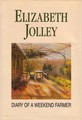
Elizabeth Jolley, Diary of a weekend farmer

Elizabeth Jolley's Diary of a weekend farmer

Bookcover (Image courtesy Fremantle Arts Centre Press)

I took 2 valium and went to bed early (Monday 12th October, 1970)

Elizabeth Jolley’s Diary of a weekend farmer is one quirky memoir (if you can call it that). And yet it is, really, exactly what you might expect from a writer who rarely wrote the expected!

It is a slim volume – illustrated with warm, shimmery paintings by West Australian artist, Evelyn Kotai. The diary entries were written by Jolley at irregular intervals from 1970 to 1974 (probably), and are accompanied by poems by Jolley, plus the occasional contribution from her husband Leonard and daughter Ruth. Some of the entries are reflective

… being on this piece of land makes me feel very much aware of the shortness of life, I mean our human life in comparison with the land and the big old trees. (from Monday 6th [September, 1971] continued)

while others are factual

Ruth and I tried to plant tomatoes ground too dry and hard. (from 10th November 1970)

As you can see, little care (or perhaps a lot of care – how are we to know?) is taken with punctuation.

Jolley’s trademark wry, or even wicked, comments are in evidence

Next door’s place has been well cleared and conquered I think the word should be … (from 11th November 1970)

There is, in fact, a tiny plot running through the book and it has to do with the “neighbour woman”. She appears regularly as a rather ambiguous presence who doesn’t respect Elizabeth and her city-slicking family, and their farming endeavours, but offers some useful advice at times. Much of this “plot” is carried though a poem (“Neighbour Woman on the Fencing Wire”) which continues in sections throughout the book:

I suppose you didn’t notice last Sunday evening
you left your rake and mattock out …
(from “Continuation from the Fencing Wire”)

This woman is a little thorn in Jolley’s side – always pointing our her failings – and yet at the end, Jolley’s underlying compassion becomes evident as she writes of the “neighbour woman’s death” and her husband’s grief:

… and I understood I was face to face with someone who really loved the neighbour woman and that he would never get over something that is brushed aside in the word bereavement. (from No date required)

But, what this little volume particularly shows is her love of the land – along with her recognition of its challenges. Here’s one example:

Is it an alien place resisting or is it retreating from all our human endeavour. And then the doves fly up glowing in the rising sun and the sound from their wings is like a tiny clapping. (from Monday 25th February, 1973).

There is a very Jolley-esque tension here between an almost mystical beauty and a power that is not always benign.

And here is a reference to gums and their widow-making capability:

The wind moves the trees great branches fall
In the wind or in the stillness
A few feet nearer and I should have been crushed
Into the greater stillness.
(from “Great Branches Fall”)

These diary entries were made before her first book, Five acre virgin, and other stories, was published in 1976, though she’d had individual short  stories published from the 1960s on. When I read memoirs by writers, I look (of course) for references to writing. There is not much here, though. Besides the mention of something her husband said as being “a very good 1st sentence”, the main reference to her writing is this:

I finished the story “Pear Tree Dance” for the BBC, an idyllic ending! The newspaper of Claremont Street contains the grim and sinister side of things. (from 19th August 1971)

She’s right about that. Newspaper is one of my favourites of hers but it is rather grim. It was not published until 1981 … and is about a woman who wanted her own piece of land. I think I’ll leave it here – and let you ponder that idea!

Elizabeth Jolley
Diary of a weekend farmer
South Fremantle: Fremantle Arts Centre Press, 1993
ISBN: 1863680438
95pp

Helene Hanff, 84 Charing Cross Road

Before you all (well, those of you of a certain age at least) gasp and wonder how it could be that I haven’t read this delightful little tome before, I assure you that I have. However, on our drive home today from our week at the coast, we listened to an unabridged audiobook version, and I can’t resist sharing some thoughts from this most recent acquaintance with the book.

For those of you who haven’t read it, 84 Charing Cross Road could I suppose be described as a sort of epistolary memoir. It comprises the correspondence between an American writer and bibliophile, Helene Hanff, and Frank Doel of Marks & Co, a London bookshop specialising in secondhand and antiquarian books. The correspondence starts in 1949 and covers the next two decades. Over time, others in the Marks & Co family join in, but the essential relationship is always that between bookbuyer Helene and bookseller Frank. In a horrible bit of blurb writing, it is described on the back of my (almost antiquarian itself) paperback as “the very simple story of the love affair between …”. Well, that cheapens it because it’s not a love affair in the usual sense. It’s a business relationship that also becomes a friendship. He is married, she is not … and no romance ever ensues.

I am not going to write a full review of the “story”, about how Helene sent “care packages” to the staff of Marks & Co to brighten up their postwar rations-ridden lives, about its humour and humanity. Rather, I thought I’d just share a couple of the comments she, a true bibliophile, makes about books and reading.

One is to do with marginalia. Hanff, like me, likes marginalia. She does it herself, and she likes it in the secondhand books she buys. She says in response to a book received as a gift:

I wish you hadn’t been so over-courteous about putting the inscription on a card instead of on the flyleaf . It’s the bookseller coming out in you all, you were afraid you’d decrease its value. You would have increased it for the present owner. (And possibly for the future owner. I love inscriptions on flyleaves and notes in margins, I like the comradely sense of turning  pages someone else turned, and reading passages some one long gone has called my attention to.) (16 April 1951)

Another year, another book gift, and here is her response:

I do think it’s a very uneven exchange of Christmas presents. You’ll eat yours up in a week and have nothing left to show for it by New Year’s Day. I’ll have mine until the day I die – and die happy in the knowledge that I’m leaving it behind for someone else to love. I shall sprinkle pale pencil marks through it pointing out the best passages to some book-lover yet unborn. (12 December 1952).

Hanff was clearly a slow-reader and liked re-reading, but she was not sentimental about books per se. Here she is on managing her books:

I houseclean my books every spring and throw out those I’m never going to read again like I throw out clothes I’m never going to wear again. It shocks everybody. My friends are peculiar about books. They read all the bestsellers, they get through them as fast as possible, I think they skip a lot. And they NEVER read anything a second time so they don’t remember a word of it a year later. But they are profoundly shocked to see me drop a book in the wastebasket or give it away. The way they look at it, you buy a book, you read it, you put it on your shelf, you never open it again for the rest of your life BUT YOU DON’T THROW IT OUT! NOT IF IT HAS A HARD COVER ON IT! Why not? I personally can’t think of anything less sacrosanct that a bad book or even a mediocre book. (18 Sept 1952)

Ellen of Fat Books and Thin Women would agree I think. Check out her recent post in praise of re-reading, and see for yourselves. Those of you who’ve been reading my blog for a while will know that I too am not averse to a bit of re-reading. There is a special joy in revisiting loved books and learning from them anew, isn’t there?

Finally, (only) because I’m missing my Jane Austen meeting today due to the aforesaid travel, I will share with you her discovery of Jane Austen. Hanff, you see, was not one for “stories”. “It’s just stories. I don’t like stories” she wrote in an undated letter around 1963/64. She preferred history (“i-was-there-books”), essays, poetry and the like. However, in 1952, she discovered Jane Austen “and went out of my mind over Pride & Prejudice …”. I’m sure I would have liked Helene Hanff.

Helene Hanff
84 Charing Cross Road (Audio CD)
Read by Juliet Stevenson and John Nettles
Hachette Audio (orig. pub. 1970)
2 hrs (approx) on 2 compact discs
ISBN: 9781405502559

Kate Holden, The Romantic: Italian nights and days

kate Holden, The Romantic book cover

Book cover (Courtesy: Text Publishing)


The romantic, by Kate Holden, is hard to categorise. In an interview with Richard Aedy on ABC Radio’s Life Matters she comments that, despite the success of her memoir In my skin, she was “a little bit uncomfortable with memoir” because it felt a bit “narcissistic”. And so this, her second book, she intended writing as a novel, albeit based heavily on her experiences in Rome. However, as she tells Aedy, her editor told her that most of what she’d written was not fiction, but “life” and so she decided to write it as memoir. So why my opening statement? Well, it’s because this memoir is told in third person.

Who, then, is Kate Holden? Today she is a professional writer living in Melbourne, but she was not always so. In my skin, which I read before my blogging days, is an astonishingly honest chronicle of her twenties when she was a heroin addict and sex worker. The romantic is a sequel of sorts. It tells the story of her year or so in Rome and Naples where she went to further her recovery, to, as she says, find herself. She tells Aedy that she decided on third person to enable her to maintain “critical distance from my own former self” (since the events in the book occurred around 2003) and to give the reader the prerogative of that distance too. Which, I think, is not a bad thing – as this is one very explicit book about, as she says, “the permutations of love, sex and romance”. Sex, though, predominates this threesome, if you get my drift.

Okay, that might be a cheap shot, because Holden is, again, fearlessly honest. The book, told chronologically, is divided into 7 parts, most of them named for a sexual/romantic partner, and some of these partners overlap a little. Throughout the book she alludes to poets – particularly the romantic poets, Byron and Shelley. In fact, each part of the book is introduced with a quote from a poet. In her interview with Aedy, she said that she wanted to be “honest, sincere and authentic like the Romantic poets”. Well, she certainly seems to be that, even if much of what she is being honest about is not exactly “romantic” – unless, that is, we define ongoing self-questioning as “Romantic”.

And here, in a way, is the rub. Holden is not only a fearless writer, she is also a good one. She knows how to string a sentence together, she describes character and evokes place well, and she expresses emotion clearly. But, I’m not sure what the point is for the reader. There is a lot of detail here about relationships – and sex in particular – that is not particularly positive for her. Around the middle of the book she writes:

She wishes to be free, virtuous, brave, joyous. The men around her say she is needy, neurotic, manipulative, disingenuous, hurtful, promiscuous. She knows she is deceptive, duplicitous and cynical. Somewhere in all of this is a portrait. She thinks this; and buries her face in the pillow.

This sort of self-analysis is the flavour of the book so that, in the end, it feels more like something that is therapeutic for her than enlightening for the reader.

The seventh part of the book – a short one named Kate – is introduced by the following lines from Byron:

I am not now
That which I have been.

I certainly hope so because the Kate in this book has, by the end, still not quite found herself. However, her interview with Richard Aedy in 2010 reveals a composed, confident and articulate woman. I look forward to seeing what this woman produces next.

Kate Holden
The romantic: Italian nights and days
Melbourne: Text Publishing, 2010
240pp.
ISBN: 9781921656743

(Review copy courtesy Text Publishing)

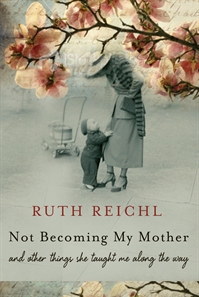
Ruth Reichl, Not becoming my mother

Ruth Reichl, Not becoming my mother
Book cover (Courtesy: Allen& Unwin)

Ruth Reichl and Kate Jennings were both born in 1948, the former in the USA and the latter in Australia. Both had problematic relationships with their mothers and have written about those relationships, Reichl in memoirs and Jennings in her autobiographical novel, Snake. In her first memoir, Tender at the bone (1998), Reichl tells a few (many of them funny) stories against her mother, and describes her urgent need to escape home. Some 20 years later in Not becoming my mother, she revisits her mother – but with the wisdom that time brings. Similarly, in Snake, Jennings’ major focus is “Girlie” and her mother, and particularly Girlie’s desperation to be loved by a woman who was fundamentally unhappy and unable to provide that love.

The thing is that these mothers* were born in the first two or three decades of the twentieth century. They experienced war, depression and, worse still, the awful restrictions imposed on women of that era. Not only were education and work not encouraged, but they were told that marriage was the only life for them. This is the story Reichl tells in Not becoming my mother, and in doing so explores who her mother really was and finally recognises (and appreciates) why her mother behaved the way she did. Here she is on her mother and her mother’s friends:

I have never seen so many unhappy people. They were smart, they were educated and they were bored. Some of them did charitable work, but it wasn’t fulfilling. Their misery was an ugly thing, and it was hard on their families. It was a terrible waste of talent and energy, and watching them I knew that I was never going to be like them.

The mother in Jennings’ novel tells her daughter:

‘She’ll be married at eighteen, a hag by the time she’s thirty’, continues Irene. ‘Don’t let it happen to you’.

Ruth’s mother, on hearing of Ruth’s engagement:

‘Isn’t this very old-fashioned?’ she asked, coolly … ‘I thought that these days people your age just lived together.’

I was certain that Mom would eventually warm to the idea. She did not …

She had introduced me to her friends, shown me the drawbacks of a traditional marriage and offered me what she herself had wanted – permission not to marry.

Both mothers – Ruth’s real one and Kate’s (semi)fictional one – seek meaningful things to do with their lives and to them this primarily meant (preferably paid) work. Both manage it in fits and starts but society was not enamoured of working women and did not make it easy for them. Both mothers experienced some degree of mental illness – which reflects that well documented fact that married women were (and still are, I believe) the highest risk group for mental illness.

These are not pretty stories but they need to be told. Interestingly, Reichl’s story has a positive ending. Late in her life, her mother does find meaning and spends her last years actively involved in her community. Jennings’ fictional story, on the other hand, ends far more equivocally. Despite these differences, both books are powerful reminders of what life was like for a whole generation of women. And they remind us why we need to keep working to ensure self-actualisation for everyone, regardless of gender or other socially imposed limitations.

By the time she wrote Not becoming my mother, Reichl had made her peace with her mother’s memory, had finally realised that much of her mother’s seemingly bizarre or erratic behaviour was borne of the frustration in her life and her desire that her daughter not follow her footsteps. Luckily for me, my mother, also born in the first third of the century, managed to convey similar messages about education, work and marriage, while also providing the love and support that all children need and deserve.

Ruth Reichl
Not becoming my mother, and other things she taught me along the way
Crows Nest: Allen & Unwin, 2009
112pp
ISBN: 9781741757538

* These are just two examples of sad, difficult mothers from those decades. There are many more, such as Jill Ker Conway‘s mother in The road from Coorain.