The Michael Crouch Award is part of the National Biography Award (NBA) suite of prizes. I have written about the NBA before, but have never specifically focused on the Michael Crouch Award.
But first, a quick recap … the National Biography Award has been going since 1996, and celebrates excellence in life writing, that is, in biography, autobiography and memoir. It is, apparently, Australia’s richest prize for Australian biographical writing and memoir, with the prize-money being:
- $25,000 for the National Biography Award winner
- $2,000 for each of the six shortlisted authors
- $5,000 for the Michael Crouch Award
Michael Crouch Award
Michael Crouch was one of the original sponsors of the NBA, but died in 2018. In 2019, the award came under new sponsors, who not only increased the prize money for the shortlisted authors, but also created a new prize to honour Michael Crouch. Named, obviously, the Michael Crouch Award, it is for a first (debut) published biography, autobiography or memoir by an Australian writer. It has been awarded since 2019, but most of the NBA reporting focus has continued to be the “main” award.
So, to give these writers some extra air, I’m listing here all its winners to date:
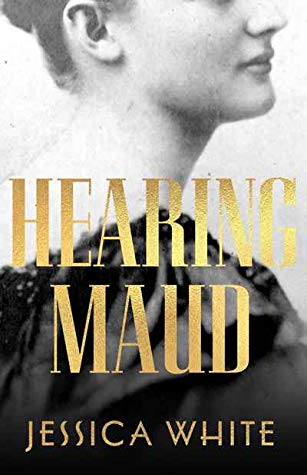
- 2025: Nikos Papastergiadis, John Berger and me (Giramondo Publishing, biography/memoir)
- 2024: Jillian Graham, Inner song: A biography of Margaret Sutherland (Melbourne University Press, biography, Lisa’s review)
- 2023: Tom Patterson, Missing (Allen & Unwin, biography)
- 2022: Amani Haydar, The mother wound (Pan Macmillan, memoir, Kate’s review)
- 2021: Andrew Kwong, One bright moon (HarperCollins, memoir)
- 2020: Jessica White, Hearing Maud (UWA Publishing, biography/memoir, my review)
- 2019: Sofija Stefanovic, Miss Ex-Yugoslavia (Atria Books, memoir)
It’s interesting, but not surprising, that the memoirs have it.
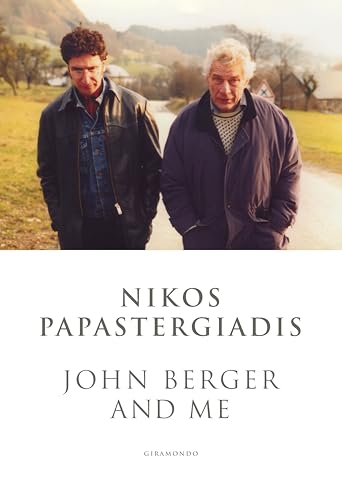
Having read several hybrid biography/memoirs, including Jessica White’s, I am particularly interested in this year’s winner. I enjoy the process – if done well of course – whereby a writer explores another person through some prism of their own life, though this prism varies widely. In some cases, the writer and subject are related (like mother and daughter), or they are friends (like Papastergiadis and Berger), or they have something in common (like deafness in the case of Jessica White and her long-dead subject, Maud Praed). If you want pure biography, these don’t do the job, as they tend not to be comprehensive. But, what I like about these hybrids, is how the writer explores some aspect of their subject’s life story alongside, or through the prism of, their own perspectives or experiences. Done well, and particularly if both writer and subject are interesting, this form can be satisfying – and illuminating.
This was the case with Jessica White’s Hearing Maud, as I discussed in my post, and I can understand its being the case with Papastergiadis’s book. The judges called it “an original hybrid form”. The website continues:
The judges chose John Berger and Me for the Michael Crouch Award for a Debut Work for its originality and clever, non-linear but accessible structure. The quality of the author’s perceptive, lyrical, subtly humorous prose also stood out among a highly competitive field of debut books. A unique and highly readable blend of biography and memoir.
And there, I think, is a major reason why I enjoy reading these hybrids, the fact that there is no set form or formula. Each one can reinvent the wheel, with authors free to choose the approach that best suits the story they want to tell, the ideas they want to explore. It’s exciting to read books like this where authors have to work out from scratch how to start, proceed, and finish!
As for this latest winner, I am particularly interested, because John Berger’s Ways of seeing made a lasting impression on me when I read it – and saw the BBC series – in the late 1970s. I can imagine why such a man would interest a sociologist like Papastergiadis, but I think their friendship and points of contact ended up being far deeper and broader than just sociology. I’m so tempted.
Have you read any of these winners – and/or are you interested in hybrid biography/memoirs?


 I had been toying with a different topic for today’s post, but Brian’s (
 Emma Ayres, Cadence: Travels with music – A memoir (2014) (
 Archie Roach, Tell me why: The story of my life and my music (2019): Now, this book by Indigenous Australian singer-songwriter, guitarist, and activist, Roach, is one I should read in July for
 Whispering Gums