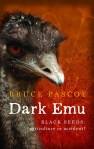
Indigenous author Bruce Pascoe’s Dark emu, black seeds: Agriculture or accident? was my reading group’s October book, and a very interesting read and discussion it turned out to be. It’s not a simple book to discuss and really got us thinking, eliciting a variety of responses, though we all agreed with Pascoe’s basic premise that we Australians need to revise our understanding of, and beliefs about, Australia’s history. How could we not?
argues for a reconsideration of the ‘hunter-gatherer’ tag for pre-colonial Aboriginal Australians and attempts to rebut the colonial myths that have worked to justify dispossession.
Pascoe, they continue, contends that indigenous “systems of food production and land management have been blatantly understated in modern retellings of early Aboriginal history”.
A case to be argued
Dark emu is, then, a book that is determined to argue a case – and herein lies its challenge. In his Introduction, Pascoe sets out his main thesis which is that Aboriginal economy was “much more complicated … than the primitive hunter-gatherer lifestyle we had been told was the simple lot of Australia’s First People”. He asks:
Could it be that the accepted view of Indigenous Australians simply wandering from plant to plant, kangaroo to kangaroo in hapless opportunism was incorrect? (p.12)
Now, there are a couple of things here that disconcerted me. Firstly, emotive language like “hapless” doesn’t help when you want to present a logically argued case. And, anyhow, “hapless” is not a word I would ever apply to hunter-gatherer societies. Being hunter-gatherers doesn’t, to my mind, mean they don’t know their environment and don’t use this sense and knowledge in their hunting and gathering. But secondly, I didn’t comprehend his argument that the early settlers had no legitimate right to seize the land because Aboriginal Australians were practising agriculture:
In denying the existence of the economy they were denying the right of the people their land and fabricating the excuse that is at the heart of Australia’s claim to legitimacy today. (p.17)
Arguing this seemed to me to imply the corollary that if indigenous Australians did not have this economy, if they were indeed simply hunter-gatherers, then taking the land would be legitimate? But surely the fundamental truth is that, regardless of how indigenous people were living and using the land, it was their home and they had a right to be treated as the owners? Being on the path to sedentism, practising agriculture and aquaculture, didn’t, in my mind, make their ownership of the land more legitimate. Did it? I needed to understand this a bit more so, unusually for me, I set off looking for discussions of the book before completing my review, and I found the answer.
It was in a discussion of the book by Amy McQuire at NewMatilda.com. McQuire wanted to know why Australia had “so readily embraced” Dark emu, and whether it meant Australians must now “embrace the issue of sovereignty and treaty”. She quotes Professor of Law Megan Davis (from It’s our country: Indigenous arguments for meaningful constitutional recognition and reform):
“It mattered whether claiming a territory was done by settlement or whether by conquest and cession, because each had differing implications for the reception or not of British law.
“Settlement occurs when the land is desert and uncultivated and it is inhabited by backward people.
“Conquest means that it is a forcible invasion of occupied land and cession means that there is a treaty over occupied land. In the case of conquest, the laws of people conquered apply until the Crown or other foreign power laws apply, and in regard to cession, a treaty is entered into but the Crown or foreign power abrogates it.”
She writes “When lands are cultivated, then they are gained through conquest or they are ceded by a treaty”. And when lands are conquered or ceded, it still has laws of its own.
“Until the Crown asserts sovereignty and actually changes them ‘the ancient laws of the country remain’.”
Ah, so now the penny dropped. It’s all about the “law” (European law, that is), not about “reason” or “logic”. Pascoe makes reference to “Australia’s claim to legitimacy”. He discusses the way colonisers can fabricate history and be reluctant to credit colonised peoples (e.g.. p.61) for their achievements, and in so doing underrate sovereignty. But it didn’t properly click with me. I consequently didn’t see why he was arguing so forcefully for this “new” vision of pre-colonial Aboriginal Australian life. I was reading it more as an interesting, and yes very important, contribution to our understanding of Australian history, and I was seeing it as a way of correcting the historical record, and therefore of restoring the “truth” and, critically, “Aboriginal pride in the past”. But I didn’t fully grasp the import of the distinction he was making (and why, accordingly, the odd emotive word or long bow crept in.)
Convincing the doubters
However, this little niggle didn’t stop my being thoroughly engaged by the book. I loved the way Pascoe interrogates records from the past, particularly the journals of explorers such as Charles Sturt and Thomas Mitchell, to prove that Aboriginal Australians* were developing a sedentary culture based on intensification of agriculture and aquaculture. They managed the land, “manipulating the landscape” to produce crops for harvesting, corral animals for hunting, and trap fish for capturing and spearing. They irrigated, they built wells and dams, they stored food for future use. They built dwellings and lived in village groups. And they had been doing so for thousands, if not tens of thousands, of years making them among the world’s earliest, if not the first, agriculturalists (depending on whose “dating” you believe).
Pascoe, however, doesn’t stop at his argument that they practised agriculture. He also contends that they practised it sustainably, using a variety of techniques, including what archaeologist Rhys Jones called “firestick farming”. He argues that there’s much about Aboriginal practices that we could learn and use today, and that modern Australian agriculture could be more sustainable, particularly in our environmentally-uncertain-climate-changing world, if we focused our efforts on Australian plants and animals.
The depth of Pascoe’s research is mind-boggling, and is perhaps partly explained by his comment in that NewMatilda.com article that academics had criticised his previous writing, which apparently used his own words. He decided “to use an authority that they respected … the explorers and the settlers… you know the ‘heroic’ first settlers.” (Oh dear!) But he also draws on a wealth of other research from anthropologists (like WEH Stanner), archaeologists (like Rhys Jones), historians (like Gill Gammage and Rupert Gerritsen), and others. The book is heavily but not intrusively footnoted (I do like a footnote!), and contains an extensive bibliography.
While I would never have called myself a doubter needing to be convinced, it is true that, for all my interest in the subject, my knowledge of indigenous history and culture was rather out of date. Dark emu should, really, be read by all Australians, and at 156 pages of text, it is not a big ask.
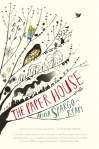
I hadn’t heard of Anna Spargo-Ryan’s novel, The paper-house, when it was sent to me for review, which is not surprising given it’s a debut novel. However, I loved the cover – designed by one of Australia’s top book designers, Sandy Cull – and so was more than willing to give it a go. It traverses some familiar ground, grief and loss, and mental illness, but it did so differently enough to keep me well engaged.
The novel starts with a young couple, Heather and Dave, in a strong, happy relationship. They decide to have a child and that this means buying a house to accommodate their new family. They see one south of Melbourne and immediately know that’s it. And already here, by page 4, as she describes the end of their house-hunting, we have garnered a good sense Spargo-Ryan’s clear but evocative writing:
After six weeks of looking and imagining, we ate teacakes on the western side of the peninsula and our hearts stayed behind when we left.
So simply said – no florid adjectives – but so arresting in its clarity. And it also encompasses two motifs which feature strongly in the novel, hearts and imaginings. Indeed the book opens with the line “My heart fell out on a spring morning”. We know, right then, that this is going to be a story about feelings – not to mention, also, that our writer has a wonderful turn of phrase!
Another strong thread in the novel is that of gardens. Their new house, of course, has a garden:
And the garden: a maze of established trees and crouching shrubs and flowers with bees on them and the faint trickle of water. A garden in which to wander, in which to get lost. For picnics and parties. It breathed in time with me and spat me out into the afternoon air, where the sea caught on the updraft and shot through the corridors. I watched it heave and change as it became night.
It’s a big garden, one which disappears from view behind a “row of pittosporums with their straight backs”, one with “good solid pittos … [which] keep the neighbours out of your business”. These pittosporums become a sort of reference point in the novel for her experience of the garden and, in a way, for her mental state, because this is a story about mental states. It’s about suffering a deep, deep loss, and how this new loss brings back a similarly deep past loss that has remained unresolved.
But now, I don’t want to give away this loss, though perhaps if you’ve heard of the book you already know. The story is told chronologically but, interspersed with this main narrative which chronicles around 6 months in the couple’s lives, are flashbacks in which Heather remembers life with her mentally ill mother Shelley, with her father and her older sister Fleur, and with her Gran. It was clearly a loving family but one under immense stress which each member handled in slightly different ways. As the contemporary story exposes Heather’s increasingly unstable state, we are also inexorably led to the tragedy that occurred in Heather’s teenage life. The resolution has a certain predictability to it, but Spargo-Ryan builds it so well that it doesn’t feel clichéd.
One of the pleasures in reading this sad but ultimately hopeful book lies in the characters around Heather. Her sister and father, and elderly neighbours Sylvia and Ashok, in particular, are colourful but human, and they create a warm, engaging but not sickly-sweet community which tries to shore up Heather. There’s husband Dave too, but he is a little more shadowy, off working as a teacher during the day when much of the action takes place.
The story is told first person by Heather, and as her mental state worsens we find ourselves a little destabilised, uncertain about what is real and what isn’t. She’s reliable only in the sense that she’s telling us what she is seeing and believing, but what she sees and believes is not always “real”. This is where the garden becomes significant. Initially the focus of her dreams for her little family, it becomes escape and refuge:
I threw myself from the bed and into the air. Nightlife moved in silhouette and shadow: the broad wings of a fruit bat against the sky, the low call of the boobook owl that always spoke in couplets – mopoke, mopoke. In the garden the pittosporums stood to attention and the moon pooled at their feet.
Shhh, said my body, folding around me.
But gradually it enables her imagination to run amok – and it plays an important role in the resolution.
The book is beautifully produced – creatively presenting text and white space to mirror and convey the disarray of Heather’s mind. However, what I most liked about it is the way it conveys the impact of mental illness on family members, the way it explores how family members, neighbours and friends can work together to nurture an ill person, and, importantly, the way it shows how carers can get lost in the focus on the ill person. It’s all done through language that shines and shows, rather than didactically tells and exhorts. By the end I had real tears in my eyes, and that doesn’t happen often.
Anna Spargo-Ryan The paper house
Sydney: Picador, 2016
295pp.
ISBN: 9781743535202
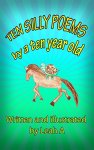
PREFACE AND DISCLOSURE: As some of you know Son Gums is a primary school teacher. One of the programs he likes to run with his class is “the Passion Project”. Part of the theory behind this project is that kids don’t always get to do in class the things that really interest them so, over one 10-week term in the school-year, each student chooses a project s/he is passionate about to work on. Some time is allocated in class each week, and the rest is done at home. At the end of term, the students present what they’ve produced or created, which I understand can (and has) included games, computer programs, websites, artworks, live or animated films/videos, novels and cookbooks. This year, one girl wrote, illustrated and then published on Amazon a book of ten poems. I have bought and read the book and been given permission to write about it here.
NOW, THE FUN PART, THE BOOK: I titled my brief Amazon comment/review, “Edward Lear watch out”, because this gorgeous little (in size, not value) book reveals a lively, cheeky mind just like, I imagine, Edward Lear’s was. And like Edward Lear, Leah (hmm, I didn’t notice that homophone until now) is both writer and illustrator. Her ten silly poems are written in a variety of styles, including Lear’s favourite, the limerick.
The first two poems are not limericks, however, but 8-line rhyming couplets about her parents. They reminded me of when our children (one being, of course, Leah’s teacher) were growing up and showing an interest in writing. I decided then that I needed to let go of my ego and be prepared for my less endearing qualities to be revealed to all. Leah’s parents have clearly realised they must do the same, if they are to encourage her talent. Mum gets away with it this time, but Dad doesn’t come out quite so well:
You’re very handsome and oh so cool
Even though you sleep and drool.
(from “Dad”)
Lucky Mum eh?
Several of the poems are about animals and their adventures, usually involving food. “Lightning”, with its nicely controlled a-b-c-b rhyme, tells of the secret behind this horse’s speed (“All his speed and fastness/Was due to eating sauerkraut”)! Isaac the dog, on the other hand, finds that he needs to be a little careful about what he decides to “bite, bite, bite”. Like many of the poems, “Isaac” also uses the a-b-c-b rhyming pattern, but here Leah changes the form a little by ending most of the stanzas with the refrain “bite, bite, bite”. This use of a refrain comprising repeated words enhances the poem’s mood of silliness, but Leah also has the confidence to break the pattern in the middle of the poem, before taking it up again, to provide a needed change of pace. She’s not afraid, in other words, to mix it up a bit.
Most of the poems are narrative, and tell humorous little stories, as you’d expect of the nonsense verse tradition within which Leah is writing. “Carolina Reaper”, for example, tells of a birthday girl who ignores the advice of a Mexican restaurant waiter, to her detriment, while the two delightful “Turbo Turtle” poems play with the commonly held assumption that turtles are slow.
Turbo Turtle, Turbo Turtle
How fast can you go?
Compared to me a cheetah
Is oh so very slow.
(from “Turbo Turtle”)
Occasionally the rhythm falters, but this is offset by the sure sense of story, the cheeky sense of humour, a clever use of language, not to mention the delightful illustrations. And anyhow, what can you expect when you have to write, illustrate and publish a book in ten weeks! Ten silly poems by a ten year old is not only an entertaining read but an impressive achievement. If you have a mind to support young authors, and you have a Kindle (or the Kindle app on your tablet), you might like to buy a copy for yourself at the Amazon link below. At AUD1.31, it’s a steal.
A, Leah
(Illus. by Leah A) Ten silly poems by a ten year old
2016
26pp.
ASIN: B01LY4LZ1J
I think … how all our best art is free; as complex as that, as simple as that. (Gaudi and the light)
I rather liked this statement from Mike Ladd’s collection Invisible mending, even though I’m not totally sure what he means! Does he mean freely available, that is, we don’t have to pay to access it? Or does he mean it frees the spirit, takes us away from ourselves? Either way, he has a point, though perhaps “best” might be arguable in the first sense.
But now, that ongoing conundrum: how to review a collection, particularly a rather strange collection comprising poetry, short stories, memoir, essays and photographs, too. The two common choices are to summarise the range of the stories – like, you know, the stories take us from Adelaide to Japan to Chile and tell us about broken relationships, environmental destruction and living with dementia – or to pick a few stories (as I did with Cassie Flanagan Willanski’s Here where we live) and discuss them. Neither approach is completely satisfactory, but what can you do?
In the forest, La Sagrada Familia
Overall, I enjoyed the collection, though I did have a couple of quibbles, which I’ll get out of the way now, before I talk about what interested me. One of these quibbles relates to a pet hate, the use of “utilise” rather than “use”. In “Gaudi and the light”, Ladd writes that Gaudi “utilised spirals, honeycombs, the planoid surfaces of magnolia leaves”. There are some who argue that “utilise” adds another layer to “use”, meaning “put to good purpose”, but unfortunately its over-use spoils any special meaning it “might” have for me. Also in “Gaudi and the light” is this sentence:
There had always been an aestheticism within him: his reverence of nature combined with an early drive towards utopian socialism, ongoing vegetarianism and a sometimes dangerous tendency to fast.
He goes on to talk about Gaudi embracing “a Franciscan concept of holy poverty”. Did he mean “aestheticism” or “asceticism”? Actually, my quibbles are all in this story, because my third one is surely a typo: “in the shadows was an agonising crucifixion figure, the body a taught bow”. Taut, methinks? Maybe this story was rushed, which is a bit of a shame because Gaudi’s life is intriguing and Ladd reminded me of the wonderful time we had seeing his work and learning about him when we visited Barcelona three years ago.
There is a lot in this collection to enjoy, including, for me, learning about pantun poetry. I know about Japanese haiku and tanka, but had never heard of “pantun”. Ladd discusses them in his travel essay, “Pantuns in the orchard” which describes his stay in Malaysia with his wife who was working on an art project. There are different types of pantuns he tells us but his favourite is the “tunggal” which comprises four iambic lines with an abab rhyme. Like haiku, pantun is strict about content as well as form: the first two lines “draw their imagery from the outside world” while the last two lines “turn inward toward human relationships and psychology”. Ladd includes a collection of his, in the piece called “A book of hours at Rimbun Dahan”. I’ll share a couple that tickled me:
I start the great four-bladed ceiling fan.
Seconds later, a gecko drops to the floor,
stunned. Yes, the world’s like that,
We all hang on as long as we can.
AND
Under the mosquito net, settling to sleep
you feel safe from the world’s attacks.
Then you hear the needling, invisible whine
of that one mosquito inside the net: the mind.
These don’t have the traditional rhyme pattern, but they work for me.
Superficially, the book looks like a disparate collection, in form and content, but running underneath are some recurring ideas addressing contemporary concerns (such as human rights at home and abroad, and the environment) and family (including the dementia-related death of his father, and the return of a travelling son). The story “A neighbour’s photo” tells of the loneliness and uncertainty of a 14-year-old Sudanese who has migrated to Australia with his 18-year-old brother. In the poem “Learn to speak our language”, the narrator turns the statement on its head by suggesting the complainer might learn Kauna or Pitjanjatjarra. Sometimes the politics is more stark, as in the short “Gasoline flowers” in which four self-immolators, starting with Mohamed Bouazizi, are likened to flowers.
Nearly halfway through the book is a little series of pieces about health, the narrator’s own experience in hospital and his father’s with dementia. He captures well that eerie world – a hospital – in “The edge of the lake”. He describes the strange camaraderie that can occur in a hospital ward as four men experience their illness. He writes of his experience of surgery:
Though my legs are cut to blazes, I’m enjoying myself. I feel cradled, it all makes glowing sense to me: the hospital system with its rituals and meals and machines, its steel surface and pecking orders.
I know what he means. It’s a weird, weird world – with its own time and laws – and yet it can feel cocooning, with the outside world far away. Sadder though are the pieces about his father, the man with dementia who is “aghast at the rate the world is leaving him” (“My father at the clothesline”).
One of the longest pieces in the book is “Traffik”. It features the unnamed Student and Middleman, as well as a named Japanese man, Morii, and is about the illegal smuggling of orang-utans. I don’t think I’ve read a fiction piece on this topic before. I liked the complexity of Ladd’s story, the careful way he develops it and the fact that our Student smuggler and orang-utan buying Morii are not simplistic stereotypes of the “parts” they play.
Two other pieces I particularly enjoyed were the story about indigenous pensioner “Ken” and the memoir “Gaps” about parents catching up with their son who has returned from a trip to Columbia. I loved the wordplay on gaps – generation gap, the gaps in knowledge you experience when you return from being away for awhile, and gaps in the hearts of people who may never know that their family members drowned on the Siev X.
There was more that I enjoyed too, including the pointed “Skiing in Dubai” and the satirical “Radio News”, but I’ll finish here.
The back cover describes the collection as “based loosely on the ideas of scarring and healing”. As you can probably tell from the pieces I’ve shared, it is certainly about that. However, it is also about the business of being an artist, and so I’ll close with the last lines of the poem “Back again”:
Our magpie (we call it ours)
tries its run of notes, falters, and repeats;
like our writing and art careers.
Well, perhaps there was the odd falter in this collection but that didn’t stop me being impressed by the versatility and passion of Mike Ladd, and enjoying my time with him. Oh, and it has a beautiful cover, too.
Mike Ladd
(with photographs by Cathy Brooks) Invisible mending
Mile End: Wakefield Press, 2016
127pp.
ISBN: 9781743054079
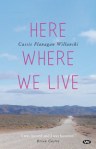
“Write what you know” is the advice commonly given to new authors – and it’s something Cassie Flanagan Willanski, author of Here where we live, seems to accept. Set in South Australia, where Willanski lives, this debut collection of short stories reflects her two main interests, creative writing and the environment. The book won Wakefield Press’s Unpublished Manuscript Award a couple of years ago, and I can see why.
I wasn’t sure what to expect when I opened the book. Adelaide author and creative writing teacher Brian Castro is quoted on the front cover as saying “I was moved and I was haunted” and on the back “Her stories are as spare and understated as the harsh landscape she describes…” I’d concur. Her stories are not your typical short story. That is, they don’t have tight little plots, nor do they have shock (or even just surprising) endings. They are more like slices-of-life, or like chapters of a novel, in the way they tease out moments in people’s lives that you can imagine continuing into a larger story. And yet, they are complete in themselves and absolutely satisfying.
However, there is more to these stories than “just” slices of life. Willanski writes in her author’s note that they were written as part of her Master of Arts degree, in which she explored “the ways white Australians have written about (and for) Indigenous people in the twentieth and twenty-first centuries”. She introduces the notion of “Indigenous invisibility” which she describes as “ignoring Indigenous Australian people’s current existence, and mourning them as extinct”. She then talks about the issue we’ve discussed here before noting that as white writers became aware of this “Indigenous invisibility” they started to “write about them as characters in their books”. She says she has tried to reflect in her stories the various attitudes she found in her research. I found them authentic and sensitive, but the real judges of whether she’s been successful are indigenous people, aren’t they? There’s a reference to indigenous elder and activist Sue Haseldine in her acknowledgements, which may suggest some acceptance?
There are nine stories in the collection, three told first person, and the rest third person, except for the last and longest story which has two alternating voices, one third, the other second. Her protagonists include a young girl, a young male teacher, a 70-something woman, and a woman grieving for her late female partner. A few stories are connected, but this is not critical to appreciating the collection. Several of the stories, Willanski says in her author’s note, were inspired by real events but in each her imagination has created something new and fictional. Some of these real events are matters of history, such as the Hindmarsh Island Bridge controversy and the Maria shipwreck, while others draw from personal experiences.
Despite the historical inspiration behind some stories, they are all set in contemporary South Australia. The first two are told first person: “This is my daughter’s country” opens the first (“My good thing”) and “The night my husband told me he was going to leave me we were in the middle of a heatwave” starts the second (“Drought core”). Straightaway we are introduced to Willanski’s nicely controlled, pensive tone, and her ongoing themes: family relationships, indigenous issues, the environment and climate change.
The first story is told in the voice of a white woman who has an indigenous husband and a daughter. They are going back to country to clean rockholes. No-one is named – “this is my daughter”, “this is my husband”, “my daughter’s grandmother” – which gives the story a universal, almost mythical sense. There are hints of challenges – subtle references to the Stolen Generations and to environmentally destructive tourism – but it’s a short, warmhearted story about the drive to connect with land and people, and sets up the collection nicely.
I can’t describe every story so I’ll jump to the fourth one, “Stuff white people like”. It is lightly, self-mockingly satirical. It tells the story of a young couple, Oliver and Clay, visiting Ceduna where Oliver is considering a job as a “Nature School Teacher”. They are both earnest, Oliver particularly so, in wanting to understand and relate to indigenous people, so they decide to attend a “healing ceremony” for “‘Maralinga, climate change, feral animals, you name it,’ said the principal vaguely.” It’s an uncomfortable experience, and Oliver doesn’t know how to react to the event which isn’t what he expected. He doesn’t want to be “like the other white people” but how should he be? Clay is able to go with the flow a bit, but not Oliver. Later, on their trip home, she is able to laugh, and take the jokes in the book Stuff white people like, while Oliver is “crippled with self-awareness”. He can’t quite match Clay’s insight. She reads from the book about white people “knowing what’s best” for others:
“Do you think I’m like that?”
“‘Cos you’re excited to get to work with Aboriginal kids? No!” She stopped for a minute, trying to piece together her thoughts. “Well, I mean–” she said and stopped again.
“What?” said Oliver.
“Well it’s just that Aboriginal people already know about having school outside.”
“I know,” said Oliver. “What’s your point?”
Clay looked at him again, then said, almost irritably, “Well, you’re taking something they’ve been doing for thousands of years and putting the white seal of approval on it.”
“But the missionaries took it away,” said Oliver.
He didn’t say it, but it was implied, and they didn’t know what to do with the implication. Oliver would be giving it back.
I love this on so many grounds – the personal and the political, the desire and the discomfort, the sincerity and uncertainty. These underpin the collection.
Desert Oaks, Centralia
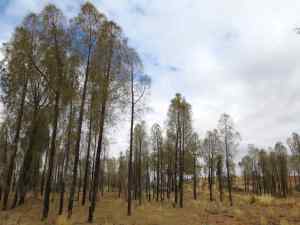
There’s only one story in which Willanski speaks “for” or “in the voice of” indigenous people, “Oak trees in the desert”. It’s about the First International Woman Against Radioactive Racism Conference, held in Monument Valley, Utah. This is a fictional conference, but “radioactive racism” is “real” and the aforementioned Sue Haseldine is active in this area.
Willanski opens the story with an indigenous Australian woman introducing herself at the conference. It’s a strong story, with the first-person voices of various First Nation conference attendees interspersed with the third-person story of white Australian woman, 76-year-old Bev, whose late husband had worked at Maralinga and had contracted cancer. There’s also a young white woman activist-organiser providing, again, a light satirical touch. Like many of the stories, it’s very personal but also has a big political message. (I also enjoyed it because I love Australia’s desert oaks, and I’ve driven in the stunning Monument Valley.)
This is getting long so I’ll end with the last story, “Some yellow flowers”, which contrasts a mature love, through the grieving Jean whose partner Nancy has died, with the young love of two teenagers, Loretta and Jackson. This story brings together several of the collection’s themes, including developing and maintaining loving relationships, climate change and caring for the environment, and indigenous-settler relationships. There is a big storm – one of those one-hundred-years storms that are occurring more frequently these days:
The roof shrieks and the sea spray pelts against the front verandah. The separation between land and water, sea and sky, past and present and living and dead becomes more obviously a figment of daytime imagination.
Dreams are had, stories are told, relationships are resolved – not simplistically, but with a sense of continuum.
This is the sort of writing I like: undramatic, understated, reflective stories about ordinary people coping with breakups, death, new relationships, but overlaid with a strong set of values and contemporary concerns, in this case encompassing the intertwined issue of respecting indigenous people and caring for our country. While not always comfortable reading, it’s a hopeful book – and I like that too.
Cassie Flanagan Willanski Here where we live
Mile End: Wakefield Press, 2016
146pp.
ISBN: 9781743054031
I cannot let this week pass without adding my voice to the tributes made by my blogger friends to anthropologist-historian Inga Clendinnen (1934-2016), who died last week at the too-young age of 82. It seemed fitting to delay my tribute for a couple of days to make her a Monday Musings topic. Clendinnen deserves no less (says she, applying a gravitas to her Monday Musings that they don’t really warrant!)
Now, I wonder how many of my non-Australian readers have heard of or know much about this rather significant Australian public intellectual? Clendinnen’s first area of speciality – and the subject of her first two books – was the Aztec civilisation. I haven’t read those books. She then wrote another which is on my TBR, Reading the Holocaust (1998). Her next was the first I read, her memoir Tiger’s eye (2000). Critic Morag Fraser described it as follows (the back blurb):
This is a rare book … it is memoir, history, fiction, a documenting of filial gratitude and ingratitude, and a record of the cauldron of a near-fatal illness, all bundled coherently – that’s the miracle – between covers.
The book was inspired by her experience with liver disease (and her ensuing transplant) … but this disease in turn inspired her to contemplate all sorts of things about life – hers and life in general – about the things that interest her, like writing, for a start, and of course about the experience of being seriously ill. (Oh dear, I’ve always wanted to reread this, and am now becoming distracted from the task at hand by dipping into it!) She talks about how writing is her way of understanding herself. Much of what she says is thoughtful, serious, philosophical, but there are also light touches:
Meanwhile, I wrote. I was in a big mixed ward and discovered when I pulled out my writing pad that in such a ward writing is ‘letter-writing’, and therefore a collective activity. Topics and items of local interest were offered by patients and by nursing staff. If I said, defensively, that I was writing stories, passing strangers–chaplains, orderlies, tea-ladies–would stop to empty a bucket of tales about their dogs or their ex-wives over me, or would say that they are writers too, or would be when they could get around to it. When they weren’t too busy living.
I love how she captures that special world that is the hospital.
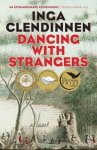
Anyhow, moving on. The book that really brought her to wider attention in Australia was her multi-award-winning book, Dancing with strangers (2003). In her Introduction she describes it as “a telling of the story when a thousand British men and women, some of them convicts and some of them free, made a settlement on the east coast of Australia … and how they fared with the people they found there.” “A” telling, she writes. I like that. She also explains how she aimed to apply the disciplines of history (which can be “culture-insensitive”) and anthropology (which can be insensitive to “temporal change”) to an analysis of episodes recorded in primary resources in order to understand better what people did and why they did it. In other words, she teases out possible cultural assumptions, expectations, and, even, aspirations which might have underpinned the behaviours and events that have too often been simplified in the historical record we all know.
So, in this history, we have Clendinnen, our historian, saying things like “I think Baneelon believed he had fully instructed Phillip as to what was in store for him”, and
There is another possibility in this hall-of-mirrors world: that Barangaroo’s funeral rites were muted not because of Barangaroo’s social isolation, but because of Baleen’s ongoing ambition to impress the British, in this case with the reverent sedateness of his mourning. After all, he has watched enough British burials.
She concludes by arguing, logically it seems to me, that “to understand history we have to get inside episodes, which means setting ourselves to understand our subjects’ changing motivations and moods in their changing contexts, and to tracing the devious routes by which knowledge was acquired, understood and acted upon.” This is the sort of history I enjoy reading …
Every time, in fact, that I read Clendinnen on history I am mystified all over again about her strong criticism of Kate Grenville’s comments regarding The secret river. I keep thinking I’m missing something. In Dancing with strangers Clendinnen uses her knowledge of culture and human beings to fill gaps or find different explanations for how people behaved which is, in a different but to me related way, what “literary” historical novelists do. We could get caught up in semantics here, in arguing exceptions and rules, and so on, but my feeling (with no evidence I admit) is that Grenville’s over-exuberant-at-the-time way of explaining what she was doing “got up Clendinnen’s nose”. I read (and enjoyed) Clendinnen’s Quarterly Essay on “The history question: Who owns the past (QE23)” (2006) and the section in which she discusses novelists and historians is replete with my marginalia! I’ll leave it there!
Finally, the last book of hers that I’ve read is her essay collection, Agamemnon’s kiss (2006). One of the dedicatees is “my unknown [liver] donor, April 1994”. Not surprisingly, the collection includes essays on health, life and death. It also includes writings on reading fiction, writing history, the history wars, the Holocaust. And she writes about other writers, such as Hilary Mantel and Penelope Fitzgerald. In the last titular essay, she writes (yet again) about reading and writing. I’ll end with something that I think we’d all agree with:
Rewarding reading is like being luxuriously absorbed in intimate conversation with a person not previously known, but whose words somehow interweave with the lonely interior monologue we conduct inside our heads. In real life we might encounter such a conversation in five, ten or twenty years, or possibly not at all. In a world of libraries and bookshops it is forever at our fingertips …
Vale Inga Clendinnen. Thank you for all your wonderful books, and for the intimate conversations we can now, because of them, continue to have with you.
For tributes from other bloggers, please see
Michelle’s of Adventures in biography (who brought Clendinnen’s death to my attention last week)
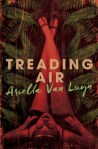
It wasn’t until I reached the end of Ariella Van Luyn’s debut novel, Treading air, that I discovered it was loosely based on the life of a real person. I’m glad it happened that way. I like introductions, but I always read them last because I like to come to my reading as unencumbered as possible – and totally unencumbered I was with this one. Even the title gives nothing away.
So, I was pleasantly surprised to find the first page labelled “Brisbane 1945”, because I spent some of my formative years in Brisbane, albeit rather later than 1945. I was even more surprised, a couple of chapters in, to find a section labelled “Townsville 1922”, because my Mum was born in Townsville at the end of that decade, and I visited it a few times in my youth. There, see how I’ve sneakily given you the historical setting – and implied the structure – without specifically saying so?
Now, let’s get to the story. As Van Luyn explains in her acknowledgements at the end of the novel, it concerns Elizabeth (Lizzie) O’Dea, aka Betty Knight/O’Brian/Stewart/Johnson, who was born in Brisbane around the turn of the 20th century*. She married Joe O’Dea and moved to Townsville in 1922 where Joe was promised a job. However, as Van Luyn tells it, Joe soon loses that job, and Lizzie, with few work skills, becomes a prostitute, which she sees as far more lucrative, and yes, less demeaning, than the domestic work her mother had done. From there, life becomes increasingly challenging … but, I’ll leave the plot here, because there are other things to discuss.
The novel opens in Brisbane’s lock hospital where Lizzie’s been sent by a magistrate. This opening set-up gives me a great opportunity to discuss how Van Luyn uses fiction and history to construct her character and story. Brisbane’s Courier Mail and the Townsville Daily Bulletin both report on a case at that time: Lizzie is accused of “attempting to steal £20” which brings about a “bond” (deferred) sentence on 8 May 1945. The Courier-Mail writes
“It is rather remarkable,” said Mr. Wilson, “that in this long list of stealing convictions she has never been given a chance to see if she could reform. “We will just try it for an experiment. …” Mr. Wilson ordered O’Dea to enter into a bond to come up for sentence if called upon within six months. “We will both thank you, sir,” said the woman as she left the dock.
Mr Wilson’s “experiment” idea resulted from O’Dea arguing that she wanted a chance to be there for her husband Joe’s imminent release from his 20-year prison sentence.
However, the “crime” Van Luyn uses in the opening of her novel is Lizzie’s stealing “tins of bully beef and some US army blankets”. This crime actually occurred in 1944 and the court case in October of that year resulted in a fine of £5. Here is Van Luyn’s story of the court case in her opening chapter:
At first, in the police court, surrounded by dark wood, she couldn’t make sense of what Mr Wilson was saying about Joe. In a wig that hung down his cheeks, he looked at her medical report and decided to be generous: only six weeks in the lock hospital to recover [because she’d been found to have “the clap”]. He said when Joe got out a few days after she had, they could start a new life together. “We’ll try it for an experiment,” Wilson said, and Lizzie wanted to stick her fingers in his eyeballs. She isn’t a bloody lab rat.
My marginalia here is: “feisty, independent”. So, I have two points to make. One is that Van Luyn shifts a crime of which Lizzie was accused to a different time because, presumably, it’s a more interesting time, narratively speaking. And the other is that, instead of having Lizzie thank Mr Wilson, Van Luyn has her responding (internally, anyhow) in a feisty manner to establish Lizzie as an independent woman, a survivor. For an historian, these “plays” with the facts would be unforgivable, but for Van Luyn, they enable her to engage the reader in the story and quickly establish the sort of person she believes, from her research, that Lizzie was. In other words, Van Luyn plays with the “facts” to create her “truth”. As she is writing fiction, I have no problem with that! Do you?
The other main point I want to make about this book draws from Sulari Gentill’s comments at the Canberra Writers Festival. She said she likes to find interesting but forgotten people. I understood this to mean working class people and minorities, that is, the “little” people, the women, and those disadvantaged by culture, race, and so on. This is certainly what Van Luyn does here. In addition to Lizzie, a working class woman, she also has Chinese and indigenous characters in Townsville. In this focus on the “forgotten people”, her book reminds me of others I’ve reviewed recently, including Eleanor Limprecht’s Long Bay (my review) about abortionist Rebecca Sinclair, and Emma Ashmere’s The floating garden (my review), which uses fictional people to tell the story of a real situation, the removal of marginalised people from their Milson’s point community to make way for the Sydney Harbour Bridge.
“Her life has twisted away from her”
Back to the story. It’s told third person, but from Lizzie’s perspective, and alternates between the 1920s and the mid 1940s, so we know at the beginning that Lizzie’s been “on the game” and is a survivor. Several dramas occur during the novel – including a murder, a shooting, an attempted suicide – and all these can be found in court records of the time. Van Luyn doesn’t over-sensationalise these, any more than she does Lizzie’s life as a prostitute. She is, though, explicit in her descriptions, giving us a picture of a lusty, resourceful young woman who’s determined to survive. Life is tough going, however. Lizzie, like Townsville, is “unformed”, but Joe, she comes to realise, “can’t look after her” as she’d hoped, so “she has to look after herself”. Moreover, although prostitution is more lucrative than domestic work, she’s not very good at saving – not surprisingly, given her upbringing – so the gap between the dream of an independent future and the reality stays wide for much of the novel.
It’s to Van Luyn’s credit that she has managed to create out of a scrappy historical record a character who, petty criminal though she is, not only comes alive but engages us fully. This is not a sentimental story, but it nonetheless reminds us that not everyone gets a lucky start in life. There are Lizzies still amongst us today. This is the sort of historical fiction I enjoy.
Ariella Van Luyn Treading air South Melbourne: Affirm Press, 2016 282pp. ISBN: 9781925344011
(Review copy courtesy Affirm Press)
* Researching Trove, I found several court reports in which her age wanders around wildly, suggesting birthdates anywhere between 1893 to 1902.
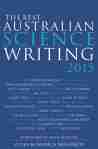
It was one of the more science-minded members of my reading group who tentatively suggested we add The best Australian science writing 2015 anthology to this year’s schedule. I’m not sure why she was uncertain because we’ve shown ourselves to be pretty open readers. Our main question when someone suggests a book is “Will there be something to talk about?” I can’t imagine a book like this lacking in things to talk about. And so we scheduled it.
Five editions of this anthology have been published, each with a different editor, so I was tickled to find that our edition’s editor was Bianca Nogrady whose thoughtful book about death and dying, The end, I reviewed a couple of years ago.
Now, an anthology like this can be read in different ways. You can read it sequentially, as I did because I know editors put thought into ordering their content. Nogrady did a careful job here, not butting articles on similar topics up against each other, but ordering them in a way that built on our understanding. Alternatively, you can pick and choose depending on your interests, though the titles don’t always give away their contents. What are science writers doing getting creative with their titling! Or, in this case, you could meander through the anthology by following the links to “like” articles provided at the end of each article. Presumably your perambulations would get you through them all at the end! This approach might be a fun (and enlightening) way to read it, but I was on a deadline, so …
I started at the engaging Foreword by Adam Spencer, the Australian comedian and radio presenter with a special interest in science and maths, and read on. I was quickly engaged and read it almost like a page-turner. Truly! Of course, there was the odd article that didn’t really grab me, and some grabbed me so much that I’ll not forget them in a hurry, but overall it was an enjoyable, stimulating read.
In her Introduction, Nogrady analyses the content. She says that while the 2014 anthology featured several articles “on our changing climate and its repercussions, this year there were an overwhelming number of submissions about our vanishing biodiversity, and what could be or is being done about it”. She argues that this “suggests a shift away from the big picture catastrophe of climate change – in the face of which many of us feel utterly powerless – towards a more specific and manageable concern”. She also notes that there were “a number of articles exploring the rapidly evolving field of robotics and artificial intelligence” and observes that “despite being a relatively small nation, we have long held our own in the global science and technology arena”. This is certainly borne out by the articles in the anthology. I’d add a third thread – medical issues. We probably don’t need an explanation for this one. Who is not interested in health and medicine!
Entrants for the annual Bragg UNSW Prize for Science Writing, named for the father and son who were Australia’s first Nobel laureates, form the core of the anthology. The 2015 winner was Christine Kenneally’s “The past may not make you feel better”. Excerpted from her Stella prize-winning book The Invisible History of the Human Race, it explores, from multiple angles, DNA testing and genomic counselling, using Huntington’s chorea as its reference point. The runners-up were Idan Ben-Barak’s “Why aren’t we dead yet”, a wonderfully lucid and surprisingly entertaining description of pathogens and the immune system, and Trent Dalton’s “Beating the odds” about the driven Australian man who has developed an artificial heart.
There are several reasons why I enjoyed the read, and I’ll dot point them to keep it simple:
subject matter: although I’m not at all scientifically inclined, I recognise the significant role science (or STEM) plays in our lives – in health, the environment, our buildings and transport, for a start. These essays, selected for their ability to communicate scientific issues well, were just what I needed to bring me up to speed, particularly in those areas I’m pretty ignorant in, such as robotics. James Mitchell Crow’s prize-shortlisted article “Robots on a roll”, for example, introduced me to “big” robots working on the Brisbane docks and in Pilbara mines.
radical ideas: some articles challenged current thinking or practices. These included Brodie Smith’s “Playing God” on the idea that we should use triaging to manage the problem of vanishing species and Michael Sleaze’s also prize-shortlisted article, “Aliens versus predators: the toxic toad invasion”, which argues that this invasion, while not a good thing, is not the disaster we’ve believed it to be.
esoteric topics: by this I mean articles on topics I would never have known about had I not read the anthology. Lauren Fuge’s “The women who fell through the cracks of the universe” delves into late 19th to early 20th century astronomy to tell us about “Pickering’s harem“, the mostly unsung women (or “human computers”) who contributed hugely to “the first Henry Draper Catalogue, a catalogue of more than 10 000 stars classified according to spectrum, published by Pickering in 1890”. Of course, I loved that this article was as much about history as about science!
style: the articles varied in style and tone. There was even a poem or two. There were some written in first person, giving a personal perspective. In “How I rescued my brain”, David Roland took us on his journey of diagnosis, treatment and eventual recovery from his stroke. And there were some written with a light, humorous touch. Ian Lunt’s “Field guide to the future”, for example, provides a delightful comparison between traditional printed field-guides (I particularly love wildflower ones) and the new digital ones.
But here’s the common problem with anthologies and collections – how to do the book justice without naming every contribution. I think I’ll just share a few quotes, to give you a flavour, starting with Slezak on the toads:
The toads are spreading further and faster than anyone expected, and they do have a devastating impact when they first arrive in a region. But most animals are adapting to their presence surprisingly quickly, and some even benefit.
‘If you’re a frog, the toad is your superhero,’ says Shine. ‘You’ve got its picture up on the wall. This guy is coming in, he looks like a frog and is killing everything that attacks frogs. If you’re a green tree frog, what more could you hope for in life?’
[…] ‘I’ve gone to thinking it’s a good-news story about the resilience of ecosystem. (from “”Aliens versus predators: the toxic toad invasion”)
Here is Ian Lunt on the fact that printed field guides must use words (not audio) to describe bird calls:
With a budget for paint – one illustration per species – but none for sound, cheerful ornithologists turned to onomatopoeia: ‘Pee-pee-pee-peeooo, Wee-willy-weet-weet, It-wooa-weet-sip, Zzzt zzzt zzzt. Cher-cher-cherry-cherry, Wah-i-wah-i-wah-oo, Twitchy tweedle, Kupa-ko-ko, Lik-lik-lik’. Less cheerful colleagues followed suit: ‘Chop-chop, Four o’clock, Wide-a-wake, Walk to work. Want a whip? It’s for teacher. Tweet-your-juice, Sweet pretty creature’. (All real calls, I assure you.) (from “Field guide to the future”)
And thirdly, here is Idan Ben-Barak on the human immune system:
And so, an immune system must correctly identify a diverse array of harmful creatures and react to each one in its own special way. Oh, and you know what would be very helpful? If it could remember the pathogens it’s encountered before and store this information on file, somehow, so that it could make short work of them the next time they pop in. And it needs to be prepared for new invaders it’s never encountered before, because life is like that. And it needs to be prepared for completely new invaders nobody has ever encountered before in the history of humankind, because pathogens evolve over time. And it needs to be economical, so the body can keep it operational. And it needs to be fairly unobtrusive, so the body can keep functioning normally. And it needs to do it all very quickly, every time, or the body will be overrun, because pathogens multiply like the devil. (from “Why aren’t we dead yet”)
Hopefully by now, I’ve convinced you that this is a great read – and if I haven’t, well, you’re probably a lost cause! Either way I’ll leave it here.
Bianca Nogrady (ed) The best Australian science writing 2015
Sydney: NewSouth Publishing, 2015
ISBN: 9781742242231 (ebook)
Back in 2012, I reported on Text Publishing’s new initiative to publish Australian classics, with new introductions, and market them at a very affordable $12.95. I was thrilled and hoped the venture would take off. Well, it did, and now four years later they have published the 100th title in the series. What a wonderful achievement – for them and for readers of Australian literature. I have loved seeing favourite authors in print again and, particularly, being introduced to new ones (to me) including the luminous Elizabeth Harrower and the intriguing Madeleine St John.
Text’s 100th Classic
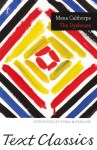
Text Publishing – quite rightly – is planning to celebrate this milestone but, before I talk about that, I should tell you the title of the 100th book shouldn’t I? It’s a book and author I hadn’t heard of, The dyehouse by Mena Calthorpe. Originally published in 1961, it was, according to Wikipedia, shortlisted for the Miles Franklin Award. Hmm … I wonder where the Wikipedia author got that from, because on the Wikipedia Miles Franklin page it says that they’ve not been able to find records of shortlists released prior to 1987. Fiona McFarlane, who wrote the introduction to Text’s release, says it was “commended for the Miles Franklin Award”. I wonder where that came from too. I’d love to know more about the early history of the awards. However, that’s not my concern today.
The dyehouse belongs to the tradition of social realist novels – to which Ruth Park’s Harp in the south belongs, not to mention many of the books written by our women writers of the 1920s to 1940s. It is set in a textile factory, and the Australian Women’s Weekly, reporting its publication, quoted Calthorpe as saying:
All my life I’ve just written for myself, for experiment. I started this novel when I was working in the dyehouse, simply to practise writing dialogue.
McFarlane tells us that Calthorpe was a member of the Communist Party in the 1950s, and after leaving that joined the Australian Labor Party. She was also secretary for a while of the “leftist Australasian Book Society”. It’s not surprising, then, that she wrote in the social realist style.
McFarlane says that the book received mostly favourable reviews, from the “right-wing Bulletin to the left-wing Tribune“. However, my research did uncover a less than favourable one from The Canberra Times’ reviewer “RR”. RR was rather circumspect about it, praising it with one hand and panning it with the other. S/he writes:
Despite its immaturity of style, it is an impressive piece of work—about a factory, factory workers, unsubtle seduction, and love.
Its characters range from a not-very-convincing All Black, Renshaw, to a veritable troupe of Snowy Whites. The few in-betweens, notably Oliver Henery, are the really interesting characters. They almost come to life. The story is about simple people experiencing simple emotions.
“Almost come to life”. Oh dear. Describing it as, among other things, the story of “a lovesick girl and her search for the Real Thing”, s/he says
This is trite material. That Mrs. Calthorpe makes it interesting is a tribute to her skill.
Yet the book is badly overwritten and pretentious. It needs ruthless pruning of its “literary” passages […
…] She has considerable skill as a writer, her great strength appears to be story construction. When she stops fascinating herself with her own clever prose, throws away her thesaurus, and gets down to telling a story simply, economically, and honestly she may well be a force to be reckoned with on the Australian literary scene.
Well, that final point is good isn’t it? Interestingly, when the book was republished by Hale and Iremonger in 1983, suggesting faith in it, The Canberra Times’ reviewer, author Marian Eldridge, was more positive. She ends her piece with:
Calthorpe’s views about the exploitation of people are clear but at no time does she preach at the reader. Nor does she offer pat solutions. She is too good an artist for that: through spare, clear prose and jaunty dialogue she creates a series of intermeshing situations that she lets speak for themselves. She does not probe deeply into the psychology of her diverse characters but neither has she created stereotypes.
The Dyehouse’ is a fine example of the social realist genre. Through Calthorpe’s vivid, compassionate picture of people at work we learn a great deal about the actual processes in a dyehouse, or at least one of 25 years ago. I find very satisfying a piece of fiction that both tells a good story and explains how things work.
So, Eldridge likes her prose … anyhow, that’s enough for now. I’ll say more when I read it myself!
Text’s celebration plans
Text is clearly proud of its achievement – as it should be – and is planning a multi-pronged celebration, which will hopefully also promote these books to more Australian readers. Celebratory activities include:
events at writers festivals;
giveaways and reader competitions;
a revamped website including a literary map of Australia and New Zealand;
initiatives for bookshop promotions;
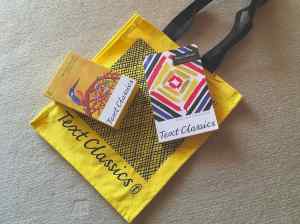
a boxed set of 100 Text Classics Postcards (thanks Text for my complimentary set); and
a free “I could never get bored with reading” (Amy Witting) tote bag for customers buying Text Classics at participating bookshops.
If you are interested in any of these I suggest you go to their website and “become a text member”. While there you will see a special deal of 5 classics for $50. You’ll also see Text’s Top Ten classics. Guess which book is number one? Elizabeth Harrower’s The watch tower (my review). What a service Text has done for Australian literature by bringing this author to our attention. I wonder what great finds Text will bring to us in the next 100?
Oh no! Because, as I explained in my first post, I booked late, I missed some events that I would love to have attended, but I was thrilled that one of my “musts” was still available, Charlotte Wood (author of The natural way of things). However, I woke up in the morning, looked at the Festival website, and saw that the session had been cancelled “due to illness”. Another headline act I’d wanted to attend, Stan Grant, had been cancelled shortly before the Festival “due to unforeseen circumstances”. Disappointing for us, and of course for the hardworking organisers, but that’s festivals isn’t it! Fortunately, I had three other sessions booked for the day and, you know, the lesser-known lights are generally just as interesting as the “stars”. It’s just that they’re, well, lesser known. And, there is a silver lining: this will now be a shorter post – for me to write and you to read – than yesterday’s magnum opus.
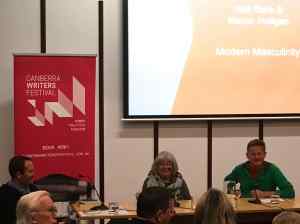
Nick Earls and Marion Halligan: “Modern masculinity” (hosted by Dr Christopher Chapman)
National Portrait Gallery curator, Dr Chapman, who is responsible for the Tough and Tender Exhibition, introduced authors Marion Halligan and Nick Earls, noting that both their recent books deal with boyhood and manhood. He quoted RW Connell on the hierarchy of modern masculinity and its basis in social and cultural expectations. “Alternative” males, Connell writes, are disenfranchised in the majority culture, even though the “majority” idea of masculinity doesn’t necessarily guide most men’s lives.
Halligan said she doesn’t think consciously of issues like this when writing but relies on her experience, which is of tender, kind, non-aggressive – though admittedly not always virtuous – men. The protagonist of Goodbye sweetheart who dies in the first pages – does that mean he’s the protagonist, Marion wondered aloud! – is not a good man.
Commenting on the fact that back in the 17th-18th centuries a common aspiration for men and boys was to be Robinson Crusoe – to be able to survive on their own in the wild – Earls noted that this scenario had no human contact. He writes his men at a time of challenge in their lives, at moments of reckoning, but these are often quiet moments, and involve connections with others, sometimes children. These men, like Halligan’s, have decent hearts, but make mistakes.
Halligan commented that she likes that Earls’ books are not miserable. They are not about dysfunctional families but can include moments of dysfunction. Earls confirmed this assessment, saying he wanted to write “real” families who connect with each other but for whom things sometimes go awry.
And so the discussion continued, moving fluidly, more like a conversation than a formal interview, though Chapman did inject some questions.
Halligan talked about changes in childhood between her generation and that of her grandchild, wondering about the impacts of these changes, while Earls spoke of some of the boys in his recent novella series, The wisdom tree. He talked of using an 11-12-year-old boy as a protagonist because this is the age of starting to push boundaries, of wanting to be successfully independent but also being a little fearful. He wanted the narrator of this story, NoHo, to be naive about what he was seeing. In another of the novellas, he puts a twenty-something rapper, his minder, and a 40-something rock journalist together, setting their different worldviews against each other.
Chapman asked Earls and Halligan what writers about men they liked. Earls, rather surprisingly, named Richard Ford, Raymond Carver, and Cormac McCarthy. He quickly qualified his nominations by saying he doesn’t “like” the men created by these writers but is fascinated by how they construct types of masculinity that he doesn’t relate to as a man, but that he believes and is interested in as a reader. Halligan, conversely, said she likes people who write characters like hers, writers liked William Trevor and John Banville who create muddled and not necessarily virtuous men. She does like Carver, though, for his sentences!
(I loved Halligan’s aside that she now reads on her iPad because if she buys more books she would have to move out of house! I hear you Marilyn!).
There was much more in a conversation that wove naturally between real life experiences and the writing of fiction, not surprising in authors who base their fiction in contemporary life. The audience Q&A continued this flavour. Some questions furthered the “literary” discussion, looking at whether the archetypal hero can encompass wider conceptions of masculine and feminine qualities and, more generally, at the challenge of constructing characters. Other questions moved into the personal. Earls discussed parenting. What do you keep and what reject from previous generations’ practices? And, of course, this topic couldn’t be discussed without some reference to the impact of feminism on the growing confidence in girls and increasing confusion about roles and expectations for boys.
A final point nicely made was that authors can create fluidity in gender roles, which must surely contribute to the wider conversation.
Kim Mahood (with Gia Metherell)
Interviewer, and ex-Canberra Times literary editor, Gia Metherell commenced by telling us that the focus of her session with author and artist Kim Mahood would be her recently published memoir, Position doubtful. She started by quoting Susan Wyndham’s recent description of Mahood:
On the morning I meet the artist and writer Kim Mahood, she has driven her ute nonstop for 1000 kilometres on her way home to Canberra from the Tanami Desert in Western Australia, a journey she has made back and forth across the continent for more than 20 years with the compulsion of a migrating bird.
A small, lean figure with a dry sense of humour, unfazed by flat tyres and solitude, Mahood seems honed for no-frills survival. Cleaning out her vehicle after the long drive with her dog, Pirate, she found a wire used for digging out witchetty grubs, a tomahawk and remnants of cooked kangaroo tail. Yet her conversation and her creative work have the subtle eloquence of an urban intellectual.
OK, including quotes like this is going make this post longer than planned. Sorry folks, but this is such an apposite description. Although Kim Mahood spends part of her life in my region, I hadn’t really heard of her until I read her eye-opening piece, “Blow-ins on the cold desert wind”, in The invisible thread. She spent much of her childhood on a cattle station in the Tanami Desert. That station is now owned by indigenous people, but in adulthood Mahood returned to the area and now shares her time between there and here.
Much of the conversation focused on her experience of and relationship to land – as an artist and as a white person spending time in indigenous communities. It made for a very thoughtful development of ideas that are currently circulating contemporary Australian thought (and explored in such books as Bill Gamma’s The greatest estate on earth). Mahood thinks that landscapes enter us at a physiological level, particularly those landscapes we experience when young. She talked about different layers of knowing the land – traditional, pastoral, sacred/ritual.
And this of course brought us to that uncomfortable issue in contemporary Australia: how we non-indigenous people, who also call this country home, understand our own relationship to the land we “usurped” or “took up”. Mahood is living this challenge. She described not knowing how to respond when she returned to her old home; she felt stripped of her knowledge and identity (which, of course, is how indigenous people would have felt when the land was originally taken from them). How do white people make connections with land they love without disenfranchising indigenous people? You do it, she said, by putting yourself in their hands. It takes time, and you have to become “less precious about stuff”, like your car! Anyhow, this issue and this solution are the central ideas of her book.
Her book’s title captures this conundrum. “Position doubtful” has a literal meaning which describes places that cannot be definitively placed on maps, but it also works as a metaphor capturing her uncertainty. This reference to maps neatly segued us to mapping, Mahood’s art and indigenous art – and how these relate to understanding of land, of country. Mahood talked of a mapmaking project designed to help geologist Jim Bowler (he of Lake Mungo fame) research evidence about ancient climates in the area. The Tanami, she said, has no permanent water, but the entire landscape is marked by water. Occasional massive rainfalls can reactivate its “deep past” landscape.
Metherell asked whether indigenous art can work as maps. Mahood was measured in her response, but said that yes, orientations of places to each other are right, but that these paintings “embody” experience. They are complex “maps” that encompass stories, they are open, unfinished documents.
And here I’m going to make this post a little longer again by sharing part of the reading Mahood gave from her book. She’s describing doing a painting:
… the edge of the cliffs breaks against the sky like a wave. I score it with hard strokes of the brush, an emphatic horizontal line that differentiates my approach from the local aboriginal concentration on ground and surface. This seems important. Although my own perceptions have undergone all sorts of modifications, I know the horizon is more than a visual dimension. It is as much a symbol in its way as the concentric circles that indicate sites and routes, and it’s a symbol to which I can lay claim. The horizon is one of the perceptual fault lines that runs between white and Aboriginal ways of understanding country …
She discussed the intersection between local knowledge and scientific knowledge. For indigenous people, the people have to be healthy for the country to be healthy, whereas scientists look at “fixing” the environment. There is a very deep gap in ideas of causality. Maps, she believes, can bring the two ways of thinking together.
At some point Mahood said that she writes better than she talks. Hmm, I know exactly how she feels, except she was completely articulate and has no need for uncertainty on this front!
But, I think I’ll stop here. It was a deeply satisfying session. I hope that I’ve given you a flavour – and a sense of what you missed by not being there! Yes, I know, I probably missed some other wonderful session – but that’s the nature of festivals isn’t it? The point is to be satisfied with what you decide to go to – and I was.
I’ll just close with a brief reference to terminology. The Walmajarri people with whom she works call white people kartiya. She commented that we don’t in Australia have a single term to describe non-indigenous people the way they New Zealanders have, for example. She wishes we did, so we don’t have to be referred to as “non” (that is, “non-indigenous”).
Oh, and she described Position doubtful as a love story. I’m looking forward to reading it.
Jennifer Rayner and Omar Musa, Generation less (with Laura White)
My final session of the festival was probably also my most overtly political, as its focus was Jennifer Rayner’s book Generation less in which she explores her theory that her generation, the Millennials, (she was born in 1986) will be the first generation in 80 years to be worse off than its parents. When her parents were her age, she said, they had a house, stable jobs, and a superannuation scheme under way. We are facing a time of reducing opportunity for young people, she argued, and if we don’t do something about it, everyone will be worse off.
Departing from my more usual chronological reporting, I’m going to start with a comment I heard as I was leaving the theatre. The person, around my age, said to her companion, “I really just wanted to hear him talk because he’s such an interesting character”. Hmmm … if this was referring to Omar Musa versus Jennifer Rayner, which I presume it was, then was the hidden message here that she didn’t much engage with the rest of what she heard? Certainly, the two – also of a certain age – who were sitting behind me didn’t seem to, as they left partway after quite a bit of muttering between themselves. Of course, it may be that they had an important dinner engagement to get ready for. But enough of that, let me get back to my report …
Because, the point is that Rayner’s thesis can be confronting to us of the baby-boomer generation. It would be easy to get defensive, except, as members of the audience pointed out, many of us have children in her generation and are seeing firsthand of what she speaks. Rayner admitted that she was expecting quite a backlash, but for this reason she has more often got understanding and a desire to do something.
Despite the dry-sounding nature of all this, it was in fact a lively and engaging session. Poet-rapper Omar Musa (also author of a novel, Here come the dogs) of course helped here. His intensely serious, but humorous, approach to what he does injected lightness, while also underpinning the importance of the concerns being discussed. He introduced himself by performing his hard-hitting poem, “My generation”.
His concerns are a little different to those of Rayner’s but they intersect. He is particularly interested in the disenfranchisement or disengagement of younger people, particularly of young “minority” men who don’t have the purpose of their immigrant parents. They feel disengaged from Canberra’s policy-makers.
Musa’s focus is people not usually written about, he said. Race, class, gender issues cause friction, he said, and create a combustible society. Feminism has a strong place, but for young men there is a “toxic masculinity”, and an inclination to see them as perpetrators. But they’re human beings too, he argued, and he wanted to humanise them in his novel.
So, the session shifted pretty easily between Rayner’s logical, evidence-based commentary, and Musa’s arts-based one. Rayner defined the issues confronting her generation as having three prongs: Work, Wealth and Well-being. In a nutshell, this means that (and she supported it with relevant data):
WORK: It is harder for young people to achieve stable jobs in the workforce, and wage inequality between ages is increasing
WEALTH: Her generation is “worth” less than her parents’ at the same age
WELLBEING: Her generation doesn’t have kids as early, doesn’t partner up as early, stay at home longer, all of which affects their emotional development and thus wellbeing.
Rayner said she grew up in the optimism of the Hawke era, while Musa talked of the disconnect between Keating who had a vision for the future, seeing the best Australia as ahead of us, and Howard who looked back to the halcyon days of the 1950s.
Rayner admitted that those young people who have gone to university are on a path – a slower path than the past, but they have one. Her main concern is the other 60% for whom there are fewer entry-level jobs and who end up doing insecure often “cobbled together” work. It is particularly here that Rayner and Musa saw parallels between their books. Those currently worse off are young men who drop out of school early. They become “badly dispossessed” such as the housepainter in Musa’s novel. Musa was inspired by Christos Tsiolkas’ The slap, he said, except that Tsiolkas is about the middle class while his concerns the aspirational or working class in a changing cultural landscape.
(At some point here, Musa laughingly praised Rayner as being “so articulate”. She certainly knew her stuff, but Musa, though seeming to be briefly thrown on a couple of occasions, is no slouch – and was certainly not “put out”. They just had to work at times to find idea-connections in terms of their respective approaches!)
It wasn’t all negative though. Discussion also focused on solutions. These are mostly institutional and structural, said Rayner, because the problem has been caused by policies that have been put into place over years. Young people need to be part of the conversation, alongside business councils, seniors’ organisations and unions, for example.
She said that economic insecurity is at the base of the problem, and housing is the defining issue in terms of health and well-being. The 25-35-year-old group is struggling to buy their first homes, she said. Musa said don’t look at him. “I’m a poet, I’m not into economics”. We laughed!
Anyhow, Rayner said that her book is based on hard data, and she (aligned with the ALP, she disclosed), wants good evidence-based public policy. But, what can we do? Rayner had some answers: vote for policies that will address the inequities, such as policies reforming negative-gearing and capital gains tax, policies that increase access to apprenticeships and those improving security for workers. There are also practical things, like not taking advantage of injurious policies. There are, in other words, moral choices we can make now – as well as when we cast our vote every three years. Later, she also referred to the increasing and successful, use of citizen juries – made up of a random group of people – to feed ideas into policy development, as another solution.
Musa’s solution was, as you’d expect, more personal. Listen to young people, he said, understand their stories in complex and nuanced ways, not by reverting to stereotypical views. Such listening demonstrates an openness to reconsidering our assumptions. He referred to Nigerian writer, Chimamanda Ngozie Adichie who refers to the danger of the single narrative. Poetry in Australia, he said, is now being taken up by other races – it’s no longer the domain of white middle class poets – and he hopes the thoughts and ideas of this generation of poets will start to feed into the public forum. “The arts and storytelling will save us!” he argued with passion,
There was more, including a detailed discussion of Musa’s novel, his exploration of the “messiness of the clash between class and agendas”, and his wish to show tension, not resolve it.
Then, I guess, came a real point of difference between the two. Musa wants a more radical shift. He suggested that talking about house-buying is no longer relevant, that there are those who, considering issues like climate change, want a different life and world. Rayner agreed there has been some shift in what young people value, that they can be less consumerist, but she believes most still want what their parents wanted, and that they should have the option.
The session concluded with another performed poem by Musa. It was one of his more positive ones he said. It started, “Let me tell you about a father and son feud” and ended with
Trying to be a better me
Can’t say better than that.
… and here ended my festival. I plan a little recap post in a few days – if I can marshall my thoughts together. In the meantime, a huge thanks to the organisers, volunteers, supporters and sponsors. It was a wonderful event and I was thrilled to hear that it will be back next year. Put August 25-27 in your diaries now folks!



 Whispering Gums