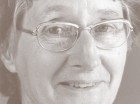
Monday musings on Australian literature: Alison Lester

Saturday, as I noted in my Six Degrees of Separation post, was National Bookshop or Love Your Bookshop Day in Australia (and in Great Britain too, it seems). For last year’s day, I wrote a post on author-owned/managed bookshops, most of which were located in places other than Australia. The exception was Australian children’s author and illustrator, Alison Lester, so I thought she deserved a little feature post today.

Alison Lester has appeared in my blog a few times, but the first was the most significant, because it was when she and Boori (Monty) Prior were named our first two Children’s Laureates. She was also mentioned briefly in my post referencing the 2018 National Bookshop Day, when Daughter Gums bought a Lester book for a baby shower she was attending! It’s time, then, to give her a little bit of a profile here, even though children’s literature is a sideline focus here.

As I wrote in my Children’s Laureate post, I first became aware of Lester through my own children. As I wrote then, she’s an author/illustrator best known for her picture books, though she has also illustrated chapter books for other writers and written a couple of young adult novels. The first book that she both wrote and illustrated herself was 1985’s Clive eats alligators.

Book cover

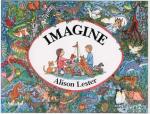
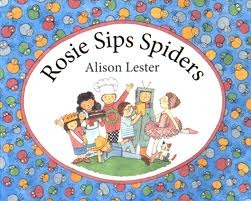
This means that Lester was just starting out when my children were young, so most of her children’s books have been published after my children left that stage of their reading lives. But, we did have some favourites, including Rosie sips spiders (1988), Imagine (1989) and Magic beach (1990). As our children grew we also enjoyed Robin Klein’s chapter book, Thingnapped, which was illustrated by Lester.

Lester, like all the best children’s book authors and illustrators has a lovely sense of fun while also conveying important values to children, such as respecting difference, a critical value at a time when rejecting other seems to be on the rise again. Indeed, as her website says, “her picture books mix imaginary worlds with everyday life, encouraging children to believe in themselves and celebrate the differences that make them special”.

Jonathan Shaw of Me fail? I fly has discussed Alison Lester’s books several times on his blog in his Ruby Reads series where he discusses the books he reads to his granddaughter. Lester’s books featured by Jonathan to date are:

  • Clive eats alligators (1985), which features seven children going about their daily lives, except that “Clive eats alligators”. You’ll have to read it to discover that that means! Jonathan says that the fun in this book lies in tracing any one of these children through the book to see “how their interests play out in the different contexts: the girl who loves horses, the bookish boy” and so on. Rosie sips spiders, which Daughter Gums loved, follows the same children in more adventures through life. Lester fans will get a giggle when, in this Rosie book, they read that “Clive jumps in Alligator Creek.”
  • Are we there yet? (2005), a picture book about – yes, you’ve guessed it – family car travel. Jonathan says that her images are “completely beguiling”. Maybe this is why it was the first book given to a child from Dolly Parton’s Imagination Reading Library.
  • Kissed by the moon (2013), about a baby, the night, and nature. Jonathan writes that “pragmatically speaking, I guess it’s a bedtime read, but Alison Lester knows how to put words together, and how to make images, that reach in and touch your heart”.
  • My dog Bigsy (2015), which is one of those books in which the feature character wanders around a farm, meeting other animals, like, for example, Pat Hutchins’ fabulous Rosie’s walk. I haven’t read this Lester yet, but Jonathan says that Lester does it well. I think I’ll be getting it for Grandson Gums.

Thanks Jonathan for posting on these books – for the Australian Women Writers’ Challenge where we have appreciated these posts, and so I could use them here! Very thoughtful of you!

Lester has been shortlisted for, or won, Children’s Book or Picture Book of the Year awards several times over the years. She has also won the Dromkeen Medal for services to Australian literature, and was the first children’s writer to be awarded the valuable Melbourne Prize for Literature. She has been shortlisted for the international Astrid Lindgren Memorial Prize. And, of course, she is an active promotor of Aussie children’s literature, including being that Children’s Laureate role and being an Ambassador for the Indigenous Literacy Foundation.

Lester, born 1952, was a farm girl, and still rides a horse when she can. Adventure, that features in her stories, is in her DNA it seems (something I think I missed!) So, I wasn’t surprised to read that in 2005 she went to Antarctica as an Australian Antarctic Arts Fellow. You can read her Antarctic Diary on her website.

Alison Lester Gallery

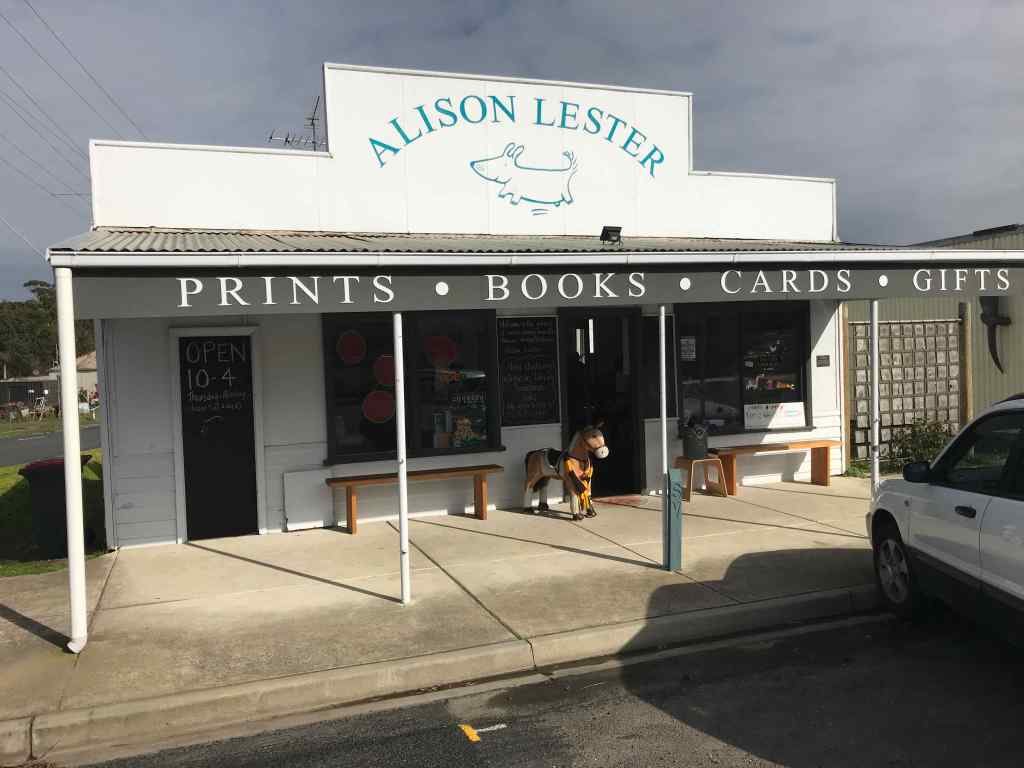
Now to Lester’s bookshop. It is, I have to admit, not like the others. Located in the gorgeous Victorian town of Fish Creek, near where Lester was born, it is more a “gallery” than a bookshop, and is devoted solely to her work. We have been there, and it is a light, airy, welcoming place that sells her books, cards and other merchandise, and also prints of many of her illustrations. It also has lounges where you can sit and read her books.

So, a rare post for me, given its focus is children’s literature, but most of us here started our reading lives when we were very young, and if we’ve had children or grandchildren we’ve done our best to share that love down the generations.

I’d love to hear about your favourite children’s authors. Who did you love as a child and/or who have you loved reading to children in your life?

Bill curates: Favourite writers, no. 2

Bill curates is an occasional series where I delve into Sue’s vast archive, stretching back to May 2009, and choose a post for us to revisit.

We discovered in August that Thea Astley is Sue’s #3 favourite writer. We’ve always known that Jane Austen (here) is #1. So I thought we should check out # 2. And, if you’re wondering, I’ve looked and there is no #4. Sue of course – she’s a librarian – is astonishingly well organised, so to go to her Jolley reviews, click on Authors above. There you will find authors listed alphabetically, and beneath each author the books Sue has reviewed.

My original post titled: “Favourite writers 2: Elizabeth Jolley”

Not, unfortunately, being a time-traveller, I haven’t managed to see or hear Jane Austen in person. I am, however, far more fortunate in this regard when it comes to the subject of my next favourite writers post – Elizabeth Jolley. I did get to see and hear her at a literary lunch at the height of her career. My reaction was the same as many others – her “little old lady” appearance and voice belied her sharp wit and earthy worldliness.

Elizabeth Jolley (Photo: Courtesy Fremantle Arts Centre Press)
Elizabeth Jolley (Photo: Courtesy Fremantle Press)

It’s not surprising that she is one of my favourite writers: I call her my antipodean Jane Austen. She is witty and ironic, she is wicked (though blacker than Austen), and she tends to write about a small number of people in a confined, often domestic, situation. But here the similarity ends. While the “character” of Austen’s characters play a role in what happens to them – there’s a reason why Elizabeth not someone like Lydia “gets” Mr Darcy – Austen’s main interest is in the social and economic constraints on her characters. Jolley on the other hand focuses more on the interior. She explores loneliness and alienation. She looks at the disturbing or unsettling sides of relationships, the ‘feelings’ people have but often don’t admit to such as those for a person of the same sex or for a person for whom they should not have feelings for (due, for example, to age differences, power differences, or infidelity). She shows how difficult it is to maintain a long-term intimate or deep relationship that is equal on all levels (physical, intellectual, social, material, etc).

In the Australian and New Zealand Journal of Psychiatry (Vol. 25, No. 1, 1991), Jolley writes:

In my own writing I have been interested in the exploration of survival (perhaps emotional survival), resilience and responsibility. (I only know this now after several books are written).

How very Jolleyesque that aside is – humble but a bit sly at the same time. She continues a little later to say:

…for the most part my characters are perplexed, anxious, often frightened with perhaps one redeeming aspect in their personalities – that of optimism which might for a time, until it gets out of hand, keep them from the specialist’s doorstep.

Photo: Courtesy Fremantle Press

The first Jolley I read was the short story, “Night runner”, in an anthology titled Room to move. It introduced me to her concept of alienation and rather black notion of survival, her particular brand of irony, her portrayal of characters who more often than not suffer from some level of self-delusion, and her dark humour. I went on to read Miss Peabody’s inheritance, The newspaper of Claremont Street, The well, The sugar mother, and An innocent gentleman, among others, and have never really been disappointed. I enjoy her use of repetition and self-referencing, the motifs and the characters, even, that reappear in different works. She gets me in the pit of my stomach with her vulnerable but often unkind or downright cruel characters, but makes me laugh at the same time with her depictions of their attempts at survival. You just have to see Ruth Cracknell playing The woman in a lampshade to know what I mean!

I have not yet read all of Jolley’s works. Just as for a long time I kept back one Jane Austen novel because once I’d read it I’d have read them all, I am now doing the same with Jolley. Her books are so delicious they need to be savoured. I’m sure this is not the last post I’ll be writing about her.

Postscript: Since this post I have read more Jolley, but I still have some up my sleeve!

____________________

Bill is right. There is no #4, though I have frequently thought about who would be my number 4. I’ve also wondered about how many favourite writers it would be reasonable to have? I love so many writers, still living and those who are no longer with us … but I think that if I do name a 4th I will stick to ones who have died. And, I think I know who that would be.

You now know my top three writers, as I considered them 10 years ago? Would you care to name your top 3?

Carol Lefevre, Murmurations (#BookReview)

Book coverMurmurations is a beautiful, evocative word, and Carol Lefevre’s latest book, titled Murmurations, does beautiful, thoughtful justice to it. It is though an unusual book. Styled by its author as a novella, it reads on the surface like a collection of short stories, except that the stories are not only connected by the various characters who pop in and out, but by an overarching mystery concerning one of them, Erris Cleary, whose funeral occurs in the first of the eight stories.

Murumuration is, you may know, the collective noun for a flock of starlings, something I discussed in my 2016 post on Helen Macdonald’s essay “The human flock”. She says starlings flock for protection (out of fear), to signpost where they are to other starlings, and for warmth. Lefevre provides, as an epigraph for her book, an image of a murmuration and the following quote from a paper on starling flocks:

The change in the behavioural state of one animal affects and is affected by that of all other animals in the group, no matter how large the group is.

These ideas are all reflected, in some way, in Lefevre’s book. But, the book also has another idea as Lefevre explains in her acknowledgements, and that is that each story was inspired by a different Edward Hopper painting. If you know his paintings – like “Automat” which inspires the first story – you will know that although they are set in real places, they have a certain paradoxical other-worldliness, which entwines bleakness with a sort of dreamy expectation. This tone also pervades Lefevre’s book.

Murmurations starts with “After the island”. Here, young doctor’s secretary Emily considers the funeral of her employer’s wife, the 53-year-old Erris Cleary. She remembers some mysterious messages that had occasionally broken through the doctor’s patient note recordings, messages that implied Erris was in danger. The book ends with “Paper Boats”, in which two neighbours, Amanda and Magda, discuss Erris’ death, with Amanda going on to write a short story about it. Erris Cleary, then, is the link that joins the stories.

The six stories that come between these opening and closing ones are all, like the two just mentioned, told third person from different characters’ perspectives. All are women except for the titular (and penultimate) story, “Murmurations”, which features a young man. His, Arthur’s, story is the only one in which we finally “meet” Erris as a living woman. Four of the remaining five stories feature women who moved in Erris’ circle – Claire, Fiona, Jeanie and Delia – with the fifth one featuring Lizbie who had a complicated and ultimately tragic relationship with two sons from this circle. She is also the daughter of the final story’s Amanda.

Each story focuses on the dark little accommodations or disturbances in its protagonist’s life. Marriage breakdown, looming dementia, suicide and other events threaten to – and usually do – destabilise the characters. There is a sense of quiet desperation in the stories, even in those that look to be alright on the surface. Claire (“Little Buddhas everywhere”) clings to the husband who has remarried. She relies on his sense of responsibility, not to mention her faith in her inherent lovability, to keep him looking after her as well as his new family, while Jeanie (“The lives we lost”) is thrown by the fact that the man she married admits years later that he hadn’t loved her then, though he did now. Delia (“This moment is your life”) is starting to lose her mind. She appreciates her second husband but seems to have married the same sort of controlling man she had the first time. And so on.

These are, mostly, the quiet little tragedies of life, the ones that never make the newspapers but that are all around us – if we only knew what questions to ask. As one character or another appears in the story of another, we see the possibilities for impacting each other – as in a murmuration. The overarching tragedy is that for all their apparent connections, no one seems to really see what is happening to the others or to have the time, or even the desire, perhaps, to genuinely care. This is beautifully illustrated in Jeanie’s story. She moves in with her cousin but they can’t connect:

Neither cousin understands what the other is saying. Though they speak the same language, words, sentences, turn opaque when they attempt to describe their lives.

The implication seems to be that this little murmuration of women is a surface one only, with little protection or warmth afforded to the individual members.

The exception is the mysterious Erris who, in the titular story, speaks to the young Arthur, working in her garden. She offers him the chance to fly:

… and a note, addressed to him, scribbled on a page torn from a blind notebook: Fly away, Arthur. Fly far, be free. Erris.

Around the edges of the paper, cloud shapes were filled with dozens of small, dark, pencilled birds.

The book is beautifully structured to suggest complex layers of links between the stories and characters, layers that would only multiply, I suspect on multiple readings.  The first story’s Emily, for example, is a young girl from the Star of Bethlehem children’s home. Then, after five stories about women linked through neighbourhood lives to Erris, we come to the aforementioned young Arthur. He also comes from the Star of Bethlehem children’s home and was a friend of Emily’s. Will these two, despite lacking the opportunities the others have presumably had, make a better fist of their lives?

The final story adds another dimension. In converting Erris’ death and the mystery surrounding it into a short story that she submits to The New Yorker, Amanda hopes to achieve her writing goal:

to hit one true note. A note that will make sense of something, perhaps of everything, a note that will crack the obliterating silence once and for all.

Can fiction, Lefevre seems to be asking, make the difference? Can we, through fiction, see the connections that we don’t always see in the real lives around us? If it’s fiction like this, written with such clarity and heart, I believe it can.

Challenge logoCarol Lefevre
Murmurations
North Geelong: Spinifex, 2020
108pp.
ISBN: 9781925950083

(Review copy courtesy Spinifex Press)

Thea Astley, An item from the late news (#BookReview)

Book coverSet in the satirically named town of Allbut, whose nearest large town is the equally satirically named Mainchance, Thea Astley’s An item from the late news is framed by the story of a man who comes to the town, fearful of “the atom bomb”, and wanting to live a quiet – sheltered, you might say – life.

Wafer is this man, and the story is narrated, from the perspective of ten years after the events, by townswoman Gabby. Introducing the story, she tells us that she was living at the coast when he arrived for “his sad little attempt at reclusion”, and goes on to say that

I reckon now, sprawled on my day-bed guilt, that … the town wasn’t really different from anyplace else except that its final actions become more redly horrible as I think about them.

This tells us much, that the story is not going to end well, that Gabby is implicated, and that Allbut is “anyplace”. It focuses our mind less on what’s going to happen, and more on how and why things go badly. This being Astley, the answers lie in small-mindedness, cowardice, brutality – and, in this story in particular, in greed. It is greed which provides the impetus for the denouement, but along the way, we see sexism, racism, and machismo running amok, all of which lay the groundwork for the behaviour that brings about the end.

Allbut is “anyplace”, one of hundreds of towns set in “landscape skinned to the bone”. It’s a “nothing” town, or, alternatively and ironically, “a clean and decent town”, “a caring town”. It has “all” the obvious things – people, farms, cemetery, pub, war memorial, police – “but” what you really need, kindness and generosity. Into this town comes the outsider, Wafer. Hippie-like in dress and behaviour, “he smiles at children, blacks, old gummy folk. He doesn’t count his change.” Indeed, Gabby tells us, he is “too friendly with the blacks. The town hates that.” He is too kind, too generous, but is also afraid. Having seen his father blown up before his eyes during the war, and having followed the Hiroshima attack, he has come to Allbut to build a bomb shelter.

Narrator Gabby, although of the town, is also an outsider, also a misfit. She has never quite fit with normal “squatting class” expectations, couldn’t be “the daughter of their Sunday social page dreams”. An artist by trade, she’d painted “the very heart of boredom”, albeit unrecognised by her buyers. After failed relationships, institutionalisation for a mental breakdown, and overseas travel, she returns to town, still bored and looking for love. She falls for Wafer, and starts painting again – well, drawing, anyhow. But, she tells us – ominously – “this whole horrible canvas will have the detail of a Brueghel and the alarm of Goya.”

Allbut is peopled with several characters: loner Moon with “the trigger-quick temper”, Sergeant Cropper, Councillor Brim, Smiler Colley and his teen daughter Emmeline, Headmaster Rider and son Timothy, the regularly mentioned but rarely seen (of course) Indigenous woman Rosie Wonga, and Doss (with “blonde hair set in jazz age waves”) and her man Stobo. Karen Lamb, in her Astley biography Inventing the weather, writes about Astley’s use of music: “A character’s mind might be full of classical music – to show an evolved intellect – but jazz was better to bring out a character’s exuberance and refusal to follow convention”. Doss, then, is one of the positive characters in the book, though she has little power to affect the outcome.

An item from the late news is a slim volume – at 200 pages in my edition – but through irony, foreshadowing, repetition, and evocative menace-laden language, Astley builds her story painstakingly but irrevocably to its conclusion. Sexual violence – first against shop dummies, then an assault on Emmeline – sets the stage, but it’s Wafer’s gemstone which captures the attention of the men in the town. It is then that the brutality really starts to build, and we know, even if we’d hoped before, that this really will not end well.

The novel is Astley’s 8th of 15, that is, it’s slap bang in the middle of her fictional oeuvre. By the time she wrote it, her broader themes were well established. These include concern about the Americanisation of Australian culture, the negative influence of television, rabid commercialisation and development (“Sunshine of the vanished sand … the high-blood pressure of the high rise”), poverty and social inequity, not to mention racism and sexism. She fears for the “nothingness” that she sees characterising people’s lives; she rails against what Wafer calls “this blinkered world”; and she exposes her ultimate truth that, as Wafer again says, “we all fail … we fail each other”.

You could also say, though, that there is a cliche at the heart of this story, that of the woman scorned, because although it’s the men of the town who are the most brutal, it’s Gabby who fails her big moment. However, she is such a complex creation that this is not how the novel reads. Instead, by having the damaged Gabby operating as both observer and actor in the events, Astley subtly subverts that trope – and encourages us to be generous.

It was in her review of An item from the late news, that Helen Garner described Astley’s writing as “heavy-handed, layered-on, inorganic, self-conscious, hectic and distracting” and wrote that “this kind of writing drives me beserk”. If you know the writing styles of these two writers, this will make sense, but I suspect Garner, who had a long relationship with Astley, came to appreciate her work. Certainly, the language could be seen as “heavy-handed, layered-on”, but I love its evocativeness and power, the richness of her allusions, the succinct yet poetic way in which Astley can convey an idea. Even the title conveys a punch. It’s thrilling to read.

An item from the late news is quintessential Astley. It offers an unflinching look into the heart of small-minded Australia, and finds much to disturb us. And that is the value of reading literature like this.

Read for ANZLL Thea Astley Week; Lisa also reviewed the book for her week.

Challenge logoThea Astley
An item from the late news
Ringwood: Viking, 1999 (Orig. ed. 1982)
200pp.
ISBN: 978014069488

Bill curates: Thea Astley, Drylands

Bill curates is an occasional series where I delve into Sue’s vast archive, stretching back to May 2009, and choose a post for us to revisit.

I selected Drylands because a) this is ANZLL Thea Astley Week; and b) I have just reviewed it myself. Sue apologizes that she relied on “not well-formed” notes, but she came up, as usual, with a well formed and insightful review which I probably should have read before I wrote my own.

_______________________

My original post titled: “Thea Astley, Drylands (Review, of sorts)”

Thea Astley, DrylandsI read Thea Astley’s Drylands many, many years ago now, so what I’m going to share here – inspired by my post earlier this year on confronting Australian novels – are the notes I made when I read it. They are not particularly well-formed, because I wasn’t planning a review at the time, though I must admit that I did spend some time skimming it as I tried to massage my notes into some shape. Too hard not to! It’s her last novel, and it earned Astley her fourth Miles Franklin Award (shared with Kim Scott’s Benang).Drylands is subtitled “a book for the world’s last reader”. It’s one of those tricky books that looks like a collection of short stories but is, albeit perhaps loosely defined, a novel. Its structure comprises sections titled “Meanwhile” by the so-called writer of the stories, Janet, alternated with stories about inhabitants of, or visitors to, a dying town called Drylands:

a God-forgotten tree-stump of a town halfway to nowhere whose population (two hundred and seventy-four) was tucked for leisure either in the bar of the Legless Lizard or in front of television screens, videos, Internet adult movies or PlayStation games for the kiddies.

[…]

No one was reading anymore.
It’s a town “being outmanoeuvred by the weather. As simple as that. Drought. Dying stock.”

The main subject of these stories are three men (Franzi Massig, farmer Jim Randler and the indigenous Benny Shoforth) and three women (Evie the writing teacher, Lannie Cunneen, and Joss the publican’s wife). This is all quite neat, except that we are thrown somewhat by the fact that the “Janet” character may be a conceit dreamed up by Evie, who says she will “write a story … about a woman in an upstairs room above a main street in a country town, writing a story about a woman writing a story”. Since Janet is an inhabitant of Drylands while Evie is not, it makes sense that this might be Evie’s work, not Janet’s, making Evie both character and observer*. Another spanner in the narrative-voice-works is that two of the stories – those of Franzi Massig and Joss – are told first person. I might be reading too much into it, but I wonder if Astley is using this uncertainty to mirror the disorder she sees in society, if that makes sense.

Drylands explores many of the issues important to Astley. The two overriding ones are words and their importance/power, and the impoverishment of the spirit (often related to our inhumanity). Subsumed in the latter are some of Astley’s recurrent issues – gender and race, dispossession and power imbalances. She rails against the shallowness and small-mindedness that lead to poor treatment of “other” (indigenous people, women, less educated people, the ageing, etc), to “the powerlessness”, as Benny calls it, “of poverty and colour”. Here is a husband coming to drag his wife out of her writing class to get him his lunch:

He was hurling words at his shrinking wife like clods or bricks and she was not dodging but receiving them like a willing saint, enduring abuse like a terrible balm.

I wonder what Astley would have written about our treatment of asylum-seekers had she still been around, but unfortunately she died in 2004.

Thea Astley is, as you’ve probably gathered, an unsettling writer – and one with some very strong viewpoints. Besides being unimpressed by how women, indigenous people, and ‘oddballs’ (or outsiders) are treated, she’s also not too fussed about computers, television, and our sports-mad society. For these reasons I’m inclined to agree with Kerryn Goldsworthy that there’s a dystopian element to her vision. I didn’t pick it at first because I tend to see dystopian novels as being speculative or fable or allegorical, as being, in other words, about what “might be” rather than what “is”. The handmaid’s tale is a dystopian novel that is not specifically set in the future but neither is it set in a recognisable “real” world. Lord of the flies and Animal farm are dystopian views of the world that are not set in the future but, arguably, neither do they present a realistic community/society/place. Drylands, though, is recognisably our world, but a pretty grim version of it, which suggests dystopia. It’s probably worth noting here that Drylands was published in 1999, that is, at the end of the millennium.

Regardless of formal definition, though, Drylands, like dystopian novels, is pervaded by a sense of hopelessness. There are likable people – many – but life isn’t easy or happy for them. There are, however, some positive or redemptive hints, particularly for Clem and Joss. Janet, the linking character, on the other hand, can only glimmer the fact that there might be something out there:

There was something out there, but she doubted she would ever discover. The idiocy of her wasted years made her laugh even more.

There were no endings no endings no

The writing in Drylands, though sometimes colourful, is sparer, more restrained than we are used to from Astley – and just right for a bitter tale about lack of literacy, loss of reading skills, and the implications thereof. Janet’s mother tells her that “being unable to read is being crippled for life”. Janet, writing her story, worries whether she’s getting her narrative right, but decides it’s “better for readers to frolic with their own assumptions from the words spoken, the deeds done” – which is, perhaps, the ultimate irony if everyone has lost the ability to read! If you only ever read one Astley, you couldn’t go wrong with this one.

Thea Astley
Drylands
Ringwood: Viking, 1999
294pp
ISBN: 9780670884704

* There is a scene in “Stranger in town”, where Evie briefly meets the eyes of the woman (whom we know is Janet) living above the newsagency.

____________________

Bill is too modest in his introduction. He has a different perspective on this book which is well worth reading – as is the set of comments that his post engendered. Do check it out (at the link in the intro above).

Have you taken part in Lisa’s Thea Astley week? 

Desley Deacon, Judith Anderson: Australian star, First Lady of the American stage (#BookReview)

Book coverWhen historian Desley Deacon offered me her biography of Dame Judith Anderson for review, I was a little reticent because my review copies were getting out of hand. Little did I know then what was in store for me, and just how much more behind I would become. However, finally, its turn came, and here I am with my review.

First though, I must say something about the publication itself, particularly given our recent discussion here about Print on Demand books. Deacon’s Judith Anderson: Australian star, First Lady of the American stage is available as an e-Book or a PoD one. I read the PoD edition, and it is beautiful. The cover is gorgeous, and the book’s overall design is stylish, with an art deco look reflecting the style of Anderson’s early life and career. The book is big and heavy, but the binding is strong allowing the book to open well for reading. And, the icing on the cake is that it is gorgeously illustrated with quality reproductions of images from the full range of Deacon’s life. These illustrations are beautifully interspersed throughout the book, rather than concentrated, as is more common, into a couple of glossy photographic sections.

But, of course, the important thing is the content. There are, broadly, two main types of biography, those written in the narrative or creative fiction style, like, for example, Sarah Krasnostein’s The trauma cleaner (my review), and those traditional, scholarly, cradle-to-grave ones, like Philip Butterss’ An unsentimental bloke: The life and work of C. J. Dennis (my review). These latter tend to be closely referenced and well-indexed. Judith Anderson is one of these.

“she has a way with her” (critic)

So now, Judith Anderson. Like many of my generation, my first introduction to her was as the terrifying Mrs Danvers in Alfred Hitchcock’s classic 1939 (no I wasn’t alive then!) Rebecca. But, Judith Anderson had been around a long time before that. Born in Adelaide in 1897, she (as Francee Anderson) went to the USA in 1918, and this is where she both established her career and made her home for the rest of her life. It wasn’t easy – is an actor’s life ever? – but eventually Anderson began to get roles. Deacon chronicles the trajectory of her career meticulously, from these early days to her final performances when she was in her eighties. It was a long, and distinguished career which, while centred on the stage, also included film, television, radio and the college speaking circuit. Anderson, unlike some actors, was not averse to working in forms – like television, like, even, television soaps – scorned by others. Regarding this latter, Anderson is quoted as saying “there is no indignity in earning $5,000 per week”. No, indeed, particularly when you never knew where your next pay check was coming from, and when you were providing significant support to other family members.

Various themes run through this story of Anderson’s life. One is the frequency with which critics praised the brilliance of her acting but bemoaned the silliness or inappropriateness of the vehicle. Indeed, this issue was the main reason for the long time it took for her to have her breakthrough. However, Anderson, always a hardworker, kept at it, and eventually her vehicle came, the play Come of age, by Clemence Dane. It was 1934, and she’d been treading the boards in America for 16 years! English playwright Keith Winter saw the play and wrote:

There are in the English speaking world, three actors who have genius of a quite staggering order – Charles Laughton, Edith Evans, and Judith Anderson. Perhaps Laurence Olivier.

No small praise. In the end, though, besides the aforementioned Mrs Danvers, the two roles for which Anderson was most known, was as Euripides’ Medea and Shakespeare’s Lady Macbeth. Character and strong women roles did seem to be her forte.

“same old muddling” (Anderson)

While the biography’s focus is Anderson’s work life, largely because that was her life, Deacon also includes something of her personal life, including, in particular, her two short disastrous marriages. It was a sadness for Anderson that she never managed to have her own family and children. This brings me to another theme that runs through the biography: she had, as Deacon describes it, a “hectic personality” or, as Anderson herself said, “I have not myself a very serene temperament”.

Australian arts administrator, Robert Quentin, said during her 1955 tour in Australia, that she was “more than living up to her reputation as being the most troublesome actress in the world.” Deacon is not one of those biographers who psychoanalyses her subject. Her approach is more straight – that is, she presents what is on record, using the occasional “may” or “could” when some fact or other is not known. However, I’d like to suggest that, while this apparent difficult behaviour of Anderson’s was probably partly her temperament, it may also have stemmed from ongoing frustration with the acting life, with the challenge of getting work, with being messed around, with having to accept what she felt were less than ideal plays or co-players, and so on. In 1935, for example, she was being sussed out for a play, but there was the usual to-ing and fro-ing as backers, producers, and/or agents negotiated and fiddled around. She writes, “when I left Wed afternoon it was definite – but now the same old muddling.” You can feel the frustration.

“near perfection in the dramatic art” (Variety)

Judith Anderson: Australian star, First Lady of the American stage is clearly, like Deacon’s friend Jill Roe’s biography of Miles Franklin, a passion project that was years in the making. Thoroughly researched, and written in a formal but accessible style, it is a positive but non-hagiographical story of an actor who was once described by Variety as achieving “near perfection in the dramatic art”. Dame Judith Anderson is too little remembered today, but her struggle to fulfil her creative self is timeless. For this reason, if no other, her biography is well worth reading.

Challenge logoDesley Deacon
Judith Anderson: Australian star, First Lady of the American stage
Melbourne: Kerr, 2019
509pp.
ISBN: 9781875703067 (PoD)

(Review copy courtesy the author.)

Bill curates: Favourite writers: 3, Thea Astley

Bill curates is an occasional series where I delve into Sue’s vast archive, stretching back to May 2009, and choose a post for us to revisit.

Lisa’s ANZLL Thea Astley Week runs from 17 – 25 August so I thought it would be timely to skip ahead a bit as we make our way through the best of Sue’s older posts and pull out a couple of her half dozen or so Thea Astley posts (I’m going to have to go back and discover who favourite writers 1 and 2 are).
_______________________

My original post titled: “Favourite writers: 3, Thea Astley”

I love its densely woven grammar, its ingrained humour, its uncompromising politics, and its undimmed outrage at human folly, stupidity and greed (Kerryn Goldsworthy on Thea Astley’s writing)

and

Great story, great characters … Stylistically, however, this book is like a very handsome, strong and fit woman with too much makeup on … This kind of writing drives me berserk” (Helen Garner, on Astley’s “An item from the late news”)

Despite winning four Miles Franklin awards along with several other major Australian literary awards, Thea Astley(1925-2004) has to be one of Australia’s most underappreciated writers. The two quotes above, from two significant Australian literati, give us a clue why. She was uncompromising and gutsy in her subject matter and she took risks with her style. This made her a pretty controversial writer. It also makes her great for discussion by reading groups (if they’re prepared to give her a try!)

Before I continue, though, I need to be honest. Her career spanned over 40 years and some 15 or so novels, as well as countless short stories, essays and articles, but I have only read about half of the novels and a few short stories. I’ve read enough though, from her mid career A kindness cup (1974) to her last novel Drylands (1999) to know that I like her and want to read more.

Thea Astley, DrylandsTake Drylands, for example. It covers a lot of the things important to Astley. Two major ones are words and their importance/their power, and people’s cruelty to each other. Subsumed in this latter one are some recurrent issues for her – gender, race, and other power imbalances. She has several targets in this book: she’s not too fussed on computers, television, or our sports-mad society; she’s also critical about how women are treated, not to mention indigenous people and ‘oddballs’. She’s a writer with a strong social conscience – and, for example, tackled race issues head on in books like the ironically titled A kindness cup (1974) and the gorgeously titled The multiple effects of rainshadow (1996).

But it’s not her subject matter that loses her fans so much as her writing. It can be dense…though it can have a sly humour too. She once said in an interview with Candida Baker that “I can’t resist using imagistic language. I like it. I really don’t do it to annoy reviewers”! It’s how she thinks. Here, for example, are some lines describing a town and its “barbaric” Christmas from the first page of the novel, An item from the late news (1982), referred to by Helen Garner in my opening quotes:

…the beer-gut belchings and the rattle of schooner glasses that always discover the Christmas crib and soothe the infant with whack yoicks seem to me to have a muckworm style. All towns. Not just this one. Because this one is smaller, a mere speck on the world’s glassy eye, the grossness is horribly apparent.

Time usually diminishes the memory; but for me it has done nothing but magnify that swollen moment of history when Wafer had the wax on his wings melted from flying too close, not to the sun, but to the local grandees.

Astley, as you can see, is rather critical of small town Australia…and small towns are the common settings for her books. I’m not sure why I, an optimist, like her jaded view of the world. Perhaps being an optimist enables me to take on board her concerns – concerns that are hard to argue against – without being ground down by them?  Anyhow, in 2002 she won a much-deserved, I think, special award at the NSW Premier’s Literary Awards for being ‘a trailblazer’.

I hope, if you haven’t read her before, that this has whetted your appetite. I’ll say no more but end with a favourite line, with which I identify, from Drylands :

… she had never been harried by the glamour of any possessions but books.

(Note: You may notice that some of the content of this blog is also on Wikipedia. Please don’t accuse me of plagiarism: what I’ve used here is material I put there!)

____________________

Bill said in his introduction that he’ll have to suss out my first and second favourite writers. I wonder what he’ll think when he does? I haven’t written another Favourite Writers post but have considered it many times. How many favourite writers can I have, I’ve wondered? Anyhow, I do have a couple of writers in mind for 4 and 5, and may write them up one day.

Meanwhile, do you plan to take part in Lisa’s Thea Astley week, and, if so, what do you plan to read?

Melbourne Writers Festival 2020: Navigating our future

MWF logoI didn’t think I’d get to this session, but when my regular Thursday evening commitment was cancelled, I knew exactly what to do …

Navigating our future (Thursday 13 August 6-7pm)

This intriguingly titled session was described as follows:

Australian literature provides a means through which we might better understand ourselves, and our relationships with our region and the world. Larissa McLean Davies, Associate Professor in Language and Literacy at Melbourne Graduate School of Education, is joined by Professor Ken Gelder from the Faculty of Arts to explore the crucial role of literature and reading in this time of climate and social crisis, and the vital importance of teaching diverse Australian literature in schools. With an introduction from Alexis Wright, Boisbouvier Chair in Australian Literature. (Supported by University of Melbourne, Faculty of Arts)

Alexis Wright introduced it, explaining that it was the Boisbouvier Oration, but here’s the thing, it wasn’t an oration, but a conversation. Hmm … just as well I like conversations. Wright, herself, gave the Boisbouvier Oration in 2018, which was reported by The Sydney Morning Herald:

It was Alexis Wright who threw out the challenge. Australia must create great expectations of building a visionary literature for our times, she said. We should put some money into buying rocket fuel rather than just topping up the gas barbie bottle.

Richard Flanagan gave the inaugural “lecture” as The Monthly reported it in 2016. His and Wright’s focused in some way on the value or power or role of writing, and this is how the 2020 oration-cum-conversation was framed too, though it didn’t quite go where I expected it to. Instead, it focused more on the practice of teaching Australian literature in Australian schools today – in what’s being taught, in the challenges of teaching our literature, and in how things might be improved. It felt like the advertised topic – exploring “the crucial role of literature and reading in this time of climate and social crisis, and the vital importance of teaching diverse Australian literature in schools” – was a given rather than a topic to be discussed. And, that’s ok.

So, the session … it did work as a conversation, though Ken Gelder was primarily in the interviewer role, and Larissa McLean Davies in the interviewee one.

Role of Australian literature in Australian schools

Gelder commenced by saying that the things covered would include how literature can assist young people to navigate their futures, strategies for teachers, and the urgent need to prioritise the teaching of Australian literature in these challenging times. He noted that our current challenges include bushfires, COVID-19, and the Black Lives Matter movement which, in Australia, has focused on the failure of government to end institutionalised discrimination, including the ongoing Aboriginal deaths in custody issue. It is a time of climate and social crisis.

Anita Heiss, Growing up Aboriginal in AustraliaMcLean Davies exemplifed the importance of literature by saying that the recent Black Lives Matter protests brought attention to the need for indigenous stories to be heard. She said that it resulted in books by indiengous authors, like Anita Heiss’ Growing up Aboriginal in Australia (my review), and books about racism being sold out. Wow, that really says something, doesn’t it, about the value of awareness and consciousness-raising to book sales. People do want to know these stories!

These stories, she argued, help us negotiate the crises we face. The stories become part of our own subjectivity and help us negotiate our own place in the world. This was one of the most powerful things she said in the session.

Status of Australian literature in the schools

The conversation then turned to the current situation regarding the place of Australian literature in schools. McLean Davies explained that the creation of the national curriculum in 2007/8 made the teaching of Australian literature mandatory in the curriculum, requiring teachers to select and teach an Australian text (at least one) at every year level. It’s rare for such compulsion to be in school curriculums internationally, she said, which suggests the fragility of our national literature.

However, we don’t know how these texts are being taught, nor what texts are being taught (except for year 12 which has set texts). We don’t, she said, know how many Australian texts are taken up and how many are written on in the exam. In other words, there is no mechanism for assessing this mandatory teaching of Australian literature. This is the research she is doing. (How fascinating. I hope we get to see the results of her team’s research.)

The selection of texts

There are text setting panels, often setting them for 2 years, though for the obvious practical reasons – teacher familiarity, the development of resources, and the economics of availability – they will usually stay on the list for 3 to 4  years. We don’t know, however, whether these books are treated as marginal or main texts for study. The texts student will write on in exam will get the most attention – of course.

Diversity in Australian literature school texts

Gelder talked about the importance of setting suitable texts at times of crises, and diversity in literary studies. Do works by writers like Alexis Wright, Tony Birch, Tara June Winch, Lionel Fogarty, Charmaine Papertalk Green, and Ellen van Neerven have visibility, he asked?

McLean Davies said they did, because, for example, in Victoria, there are set texts for year 12, but in other years, teachers have choice, within guidelines. However, their choice depends on teachers’ personal reading diets, the professional learning they are undertaking, and the time they have to engage in new reading (given the increasing administrative work pressure teachers are under.) So, there’s opportunity but …

Claire G Coleman, Terra nulliusShe talked about the issue of “engagement” and that in trying to achieve this for diverse classes, teachers will often resort to more standard “white”, often neo-colonial texts. But young people are interested in indigenous issues, climate, etc, she said. Teachers would do well to turn to, for example, Claire G Coleman (Terra nullius) and Alexis Wright to bring these issues into the classroom. We need to think about what engagement means for Australian school students.

On being nimble in text selection

Gelder noted that quite often texts on school lists look like they’ve been there forever, but syllabi need to be nimble if they are to reflect the now. He’s found that some of his overseas students have read more Australian literature than local students have. We need to “sell our literature” he suggested.

McLean Davies said there is the issue that teachers often rely on their own reading experiences and learning. A multi-pronged approach is needed to support teachers, including looking at undergraduate degrees, and supporting teachers to develop new intertextual understandings of literature. Teachers need to learn how they can use literature to contest their own views. They need to develop new intertextual networks that enable new Australian writing to be accessed in the classroom. She quoted a colleague who said that “you don’t read a text, but a text reads you”. It is fundamental that teachers have the confidence to sell a text. They need packaged resources, and need knowledge about literature that they may not have in their own background.

Cultural cringe?

Gelder made the lovely statement that students need to be swept away by literature but teachers provide the broom, but is there cultural cringe? Australian literature tends to be characterised as white and inward-looking. Are we still resistant to, or defensive about, diversifying our understanding of our literature?

Jasper Jones, by Craig SilveyMcLean Davies concurred to a degree, but gave a nicely nuanced response, evoking a complex understanding of culture cringe:

  • There is resistance from teachers because Australian literature is seen as too white, as buying into the  Right’s rhetoric about nationalism. Teachers fear buying into the colonial monolith, into notions of nation. There’s some mismatch between what teachers want to do re diversity and the Right’s leaders wanting to focus on “nation”. That homage to Australian colonial origins is still there in the discourse, and this makes teachers anxious.
  • Cultural cringe is evident in text selection. A recent survey, 2017/8, her team did of texts being taught brought responses from 700 teachers. Only one Australian text, Craig Silvey’s Jasper Jones, appeared in the top 10 (at 8). The others included Macbeth, Romeo and Juliet, To kill a mockingbird, Animal farm, Hamlet, Outsiders (SE Hinton), 1984, and Othello. This gave us a “cause for pause” she suggested!

A place for colonial writing?

Gelder wondered if there was a place for colonial writing, particularly given it can contain its own critiques. He talked quite a bit about colonial writing, which has been his interest for ten years, but I want to move on … However, he did say, and has a point of course, that quite a lot of indigenous writing “works over” our colonial heritage, refiguring and remapping the colonial period. Is there goodwill towards colonial literature, he asked?

McLean Davies said there’s not a lot of colonial literature on syllabi in more senior years, but agreed there is potential for rethinking colonial ideas through colonial texts. She referenced the wonderful To be Continued database of short stories published in Australian newspapers, which provides access to colonial texts. Publicly available resources like this represent a wonderful potential for engaging students in literary enquiry. Teachers could use geospatial modelling to find stories set in places where students live, providing an opportunity to think about stories about those places and about the implication of those stories for their current lives. She commented that pedagogy – how we teach – is as important as what is taught. In this period of lockdown, teachers need access to digital content, but education hasn’t fully mobilised these tools in literature.

On the value of local, versus global?

Gelder talked about the conflict between the local (particularly obvious in these lockdown times) and the push for a more global/cosmopolitan outlook. (He cited Alexis Wright’s interview with expatriate Australian writer Peter Carey, and his novel Amnesia).

McLean Davies agreed, and suggested now is a good time to think about the place we are occupying and our relationship to it.  She talked about the value of speculative fiction, like Coleman’s Terra nullius and what happens if you don’t take notice of place. She also suggested that the problem is that we are continually reaching for the global, but the role of the local is very important. She mentioned Growing up Asian in Australia and Alice Pung’s wanting to read people who were like her, proving again that the local and the personal are important. It’s not one or the other. Teachers need to thing about the breadth of what they are selecting, need to look at global and local, because students need to read all those stories.

Supporting teachers

The session ended on the important issue of supporting teachers. Their challenge is to find time to develop new understandings of Australian literature. She’s involved in a project – partnership with the Stella Prize – which involves asking teachers to select a text from the longlist and then think about the text and their students, about that text re other books, and re other cultural artefacts. It’s a good opportunity to bring past and present texts together. But, the fundamental issue is that teachers need time and professional learning. They need more professional development that recognises them as intellectually interested and able to develop own new knowledge about text. Yes!

So, this is not quite the session I was expecting but, as I’m interested in both education and the teaching of literature, it ended up suiting me perfectly.

Lisa (ANZLitLovers) is also posting on the Festival, as is Theresa (Theresa Smith Writes).

Melbourne Writers Festival 2020: Let me be brief

MWF logoI won’t get to many Melbourne Writers Festival events, because those of most interest to me clash with other commitments and responsibilities. This is a shame given this year’s extensive digital program would enable me to attend my first ever MWF. Never mind, there will be other years. Nonetheless, I was thrilled to find a session on short stories at a time I could attend, so attend I did.

Let me be brief (Sunday 9 August 5-6pm)

The session was moderated by Wheeler Centre Programming Manager Veronica Sullivan who knew the books well. She managed the 45 minutes or so tightly but with intelligence and warmth. The panel comprised three writers of recently published short story collections: Yumna Kassab (The house of Youssef), Jo Lennan (In the time of foxes), and Elizabeth Tan (Smart ovens for lonely people). I’m sorry to say that despite liking short stories, I haven’t read any of their books.

Sullivan started by asking each writer about her collection, targeting her questions to what she saw as significant aspects of those collections.

Introducing the writers

Yumna Kassab

Book coverSullivan introduced The house of Youssef as comprising “spare and sharp” stories about a Lebanese community in Sydney, exploring “the way generations differences play out … the gaps … that make mutual understanding so challenging.” Kassab agreed her stories are about community and family. It’s unavoidable that there will be tensions between generations in any community, she said, but these are exacerbated in migrant communities because of the added layer of different cultural expectations. She’s become increasingly interested in this issue.

Sullivan wanted to know what drew her to these sorts of moments in the very short story form that she mostly uses. Kassab said it wasn’t her initial plan. She thought she’d need to be more dramatic, but found this form appropriate for exploring relationships. She’s always liked short stories. She said – provocatively perhaps – “the novel is a fleshier version of the short story”. She feels the form is well suited to delivering the message she wants to deliver – delivering a strong message is clearly important to her.

Jo Lennan

Book coverIntroducing Lennan’s collection, Sullivan described it as having an international outlook. It has a wide geographic spread, featuring characters taken out of their comfort zones. Lennan observed that mobility has become familiar over the last decades. It seems easy, but is in fact complicated, as she shows in her title story, “In the time of foxes”. It’s about a young filmmaker in London with a young toddler. Her mother is developing dementia back home, and, there’s a fox in the backyard to deal with. She has to face “giving up” her childhood home. Lennan’s point is that living abroad offers immense opportunities but can be accompanied by immense cost. The time has come for this character to pay that cost. (This cost, as many of my generation knows, is also paid by those left at home – particularly with COVID-19, for example, keeping grandparents away from their overseas grandchildren!)

Sullivan asked her to explain the fox motif which recurs through the collection – sometimes real, sometimes simply referenced. Lennan responded that foxes have spread throughout the world and have adapted to various environments, creating so many parallels with human mobility. They are also, she said, survivors and shapeshifters. However, she’s suspicious of themes in short story collections. Hmm, having just read Emily Paull’s Well-behaved women (my review), which does have a unifying idea, I don’t think overall themes are necessarily bad! Anyhow, she said that in her collection, the fox motif was “never a straight-jacket”.

Lennan also said that, despite this overall animal motif, the book is very much about human relationships, because they are the stuff of short fiction, of fiction in general. In her collection, relationships sometimes go disastrously, but in many stories there is a turn-up at the end. In one, for example, the protagonist doesn’t get what he wants but is changed, becoming a larger and better person at the end.

Elizabeth Tan

Book coverSullivan introduced Tan by noting that her stories, which include animal protagonists, unsettle readers expectations and assumptions. She asked how this approach allows her to explore perceptions. Tan spoke from personal experience when she observed that people can look at characters – like her cats and mermaids – and assume they don’t have interiority or inner life, that they are just a sidekick to another’s life. She likes exploring how these characters are unexpectedly resilient, and suggested they could mirror how she moves through life. As a young Asian woman, she often feels underestimated. But, she is not always sure if how she thinks the world is seeing her is how it actually is, but how do you know? She quoted Chimamanda Ngozi Adichie’s statement that “the problem with stereotypes is not that they are untrue, but that they are incomplete”.

Sullivan asked Tan about the surreal and humorous or satirical aspects of her stories, wondering what responses she was looking for. Tan said that she didn’t set out to be funny, but hoped people find her stories funny. Friendship, she said, can be defined by laughter, by empathy in sharing silly things and humour about them.

Choosing the short story form

Sullivan wanted – naturally, given the “theme” of the session – to discuss the short story form: what drew the writers to the form, how they attack its particularities, and how they consider aspects like structure and characterisation.

Many of Kassab’s stories are very short. Why, wondered Sullivan? Kassab said she didn’t really make a choice, that for her the voice of the character is the important thing. It’s this, and the idea, that dictates the structure, and word choices. She didn’t set out to write the collection. She likes shortness, believing that she can deliver a greater message that can get lost in larger work. She also said that it is easier to experiment – with technique, structure, voices – in shorter work. Such experimentation is harder to sustain in a novel.

Lennan’s stories are longer and more disparate. They have a depth of characterisation, with a sense, said Sullivan, that they start before the story and continue after it. Lennan agreed with Kassab that short stories provide scope for experimentation. She said she “inevitably” writes longer short stories, which facilitates the deep characterisation that people want in a novel. It’s having her cake and eating it too, she said! She’d been working on a novel but realised that her best writing was in her WhatsApp chats with friends! Short stories are more immediate, and felt the right way to bring immediacy and freshness to her writing.

Tan is different because her first book was a novel. However, she agreed with Lennan that brevity offers freshness, and with Kassab about the flexibility possible with short stories. You can be more playful, she said. Sometimes she gets reader feedback wishing a story was longer, but she likes that you can explore a particular moment without having to build an entire world. She said that reality is fragmented, without a lovely shape. Short stories can capture fleeting moments. Tan suggested that the desire for longer stories is a desire for conclusiveness that life can’t offer. Sullivan concurred, suggesting that short stories leave a space for readers wanting more, for anticipation. I agree. Short stories frequently leave you wondering whether you’ve “got it”, but I think this is often the author inviting us to explore.

Sullivan asked the three what advice they’d give writers regarding writing short stories. Lennan said do both, novels and short stories in tandem, arguing that few visual artists work on one piece at a time. Kassab agreed, saying writers are creative people. Ideas change, and interests change, so try different things and be prepared to throw preferences out the window. Tan also agreed, saying you don’t have to choose. Rubik (on my TBR) was going to be short stories, but the same characters kept popping up.

Sullivan suggested that the idea of conforming to set forms comes from the publishing industry. There was some discussion about this, with a general feeling that the narrow definitions are breaking down. Kassab didn’t set out to write a short story collection. It just happened. She suggested that you create the work first and let the marketers try to categorise it! There was also discussion about contemporary attention spans versus that of older generations, and that short stories might better suit the more fragmented way we consume media these days. I know this is often bandied about, but I’m not completely convinced. I’d have to see the research!

I liked Lennan’s response to this attention span argument. She proposed that in some ways they ask more of a reader. Readers have to keep reinvesting in characters, from story to story. The writer has a responsibility to make it a worthy transition for for the reader. The collection needs to work as a whole. She recognises that reading fiction right now – besides beach reads – is a big ask of people. You need to think about what you want for your reader – catharsis, to move them, to present a provocative twist, for example?

Naming favourites

The session ended with that favourite festival question about the writers’ current favourites.

Kassab: This is her year of South American writers. She’s loving Jorges (great thinker about literature and ideas) and Bolaño (great experimenter).

Lennan: Chekhov (his “clear-sighted and sympathetic portrayal of humanity”, which is timeless); Tatyana Tolstaya’s On the golden porch; and the Australians Tegan Bennett Daylight (Six bedrooms, my review) and Christos Tsiolkas (Merciless gods).

Tan: Tom Cho’s Look who’s morphing (TBR) and Julie Koh’s Portable curiosities. Both show you can write about anything you want, you can make stuff happen. Also Emily Paull’s Well-behaved women, and Wayne Marshall’s Shirl (which makes her laugh).

A great session, which offered, to me anyhow, some short story gold.

Lisa (ANZLitLovers) is also posting on the Festival, as is Theresa (Theresa Smith Writes).

Emily Paull, Well-behaved women (#BookReview)

Book coverWell-behaved women is a debut collection of short stories by Western Australian writer Emily Paull. It is one of those collections that has a unique title, and what a perfect – and teasing – title it is for a collection of stories focused on women.

It has, you won’t be surprised to hear, the usual mothers, grandmothers, sisters and wives, but there are also teachers and students, writers, a step-father and step-daughter, and a vagrant woman. They span all ages. Most of the stories are told first person, with a few third person ones, and in nearly all the narrator or protagonist is, of course, female.

The collection starts with a bang, with a story described on the back page, so I’m not spoiling it, as “a world champion free-diver disappears during routine training” (“The sea also waits”). It’s the ideal opener because it’s about a woman who has chosen a dangerous sport because it’s – dangerous. She’s a woman whose “devil-may-care coastal ways” seem to disgust seemingly better behaved women with their painted nails and carefully tanned skin. It sets up the collection well as one likely to explore the nuances of women’s lives and the consequences of their decisions – oops, behaviour.

And so, from this first story on, Paull interrogates women’s lives from diverse angles. The stories read, mostly, like lovely little slices of life rather than as dramatic stories with twists. I like these sorts of stories, provided they ring true to life, because I’m curious about the choices people make. Paull has probably pored over these stories, honing them to the essential, but what we see is writing that looks easy. It flows well, and the stories show rather than tell, leaving readers to draw their conclusions. There’s nothing particularly inventive about the style or structure. Paull uses foreshadowing and flashbacks, traditionally, but judicially, to move her narratives along. The end result is a collection of accessible, well-crafted stories about relatable characters in, mostly, Western Australian settings.

The second story, “Miss Lovegrove”, has a young female drama student talking about her teacher. This teacher feels the need to tell her students the realities of life – “you will most likely never be on television at all during your careers, which will be short” – and she teaches our narrator a very cruel lesson. She is certainly not a well-behaved woman. Is she brutal? (Yes.) Is she bitter? (Probably.) Is she doing her young student a favour as she intimates? (We need to decide.) Fortunately, the next story, “Crying in public”, is gentler. It’s about the first real heart-break and a grandmother’s wisdom. Unlike “Miss Lovegrove”, Grandma wants to nurture her charge through the pain of the real world. This idea neatly links the two stories. There is, in fact, careful crafting in the order of the stories, with subtle links connecting one story to the next. I enjoyed identifying what I thought were the links!

Anyhow, other stories tell of friends found and lost, of coming out, of grief. In some, the stories could be any of us – an old high school flame returning to see if she can recover a past love (“Down south”), a sister grieving over her terminally ill sister (“Sister, madly, deeply”), a young woman discombobulated by her grandparents’ death (“Nana’s house”), a woman trying to fit the the image of the perfect wife (“The settlement”). But some are a little more dramatic, such as that about a woman whose backyard is found to hold a human skeleton (“From under the ground”), or the warm-hearted story about a vagrant woman caught in a bushfire (“The things we rescued”), or the tragic coming out story (“Picnic at Green’s Pool”).

What I most liked about the stories – even those that were more dramatic in flavour – is that the people are believable. Their emotions and reactions, in the main, are those of “normal”, flawed human beings. They make mistakes, like the young woman who leads on a colleague she’s not really interested in (“Nana’s house). They eat too much or too little, in a struggle to be themselves (“Dora”). And so on. You could see this as a feminist book. The title certainly suggests there’s an element of this in Paull’s thinking – but the book is not stridently so. The title is more wry, than barbed.

While most of the stories are average short story length, one, “Font de Gracia”, is a little longer. Its premise is a rather typical teacher-student affair, but it is well handled and resolved, without didacticism. It has some lovely writing, such as this description of mother-daughter tension:

Joana snatched up her bag without breaking eye contact with her mother. Their anger was like the pull between magnets.

It’s hard to pick favourites, but I did like the last two. “Versions of herself” is about a prickly 90-year-old in a retirement village – no, not in aged care or a nursing home, but independently living in a retirement village. It’s one of the broken-heart stories. Shirley Carruthers is not the most likeable woman around, but Paull, as she does with all her characters, encourages us to see and feel beneath the surface, to understand the whys. The point for me is that we don’t have to like everyone, but we can be kind.

The final story, “The woman at the Writers Festival”, concludes the collection beautifully, with a cheeky exploration of the writing life – particularly its challenges for women – and it does have a twist.

Well-behaved women, then, is a tight, engaging collection of stories about ordinary women, and the messiness of life. Rather than offer answers, it challenges readers to think about these messes, and consider what could be done to tidy them up a bit – next time around. Another good read from the people at Margaret River Press.

Challenge logoEmily Paull
Well-behaved women
Withcliffe: Margaret River Press, 2019
242pp.
ISBN: 9780648652113

(Review copy courtesy Margaret River Press)