Monday musings on Australian literature: Forgotten writers 1, Helen Simpson

Do you often wonder how many of the writers we love now will still be read a few decades on? How good are we at identifying those who will continue to be read? So-so, I think you’ll agree if you’ve noticed the many unfamiliar, but well-regarded-at-the time, names amongst the authors mentioned in my various historical posts. It is this that has inspired me to start a new, occasional, Monday Musings sub-series on forgotten Australian writers.

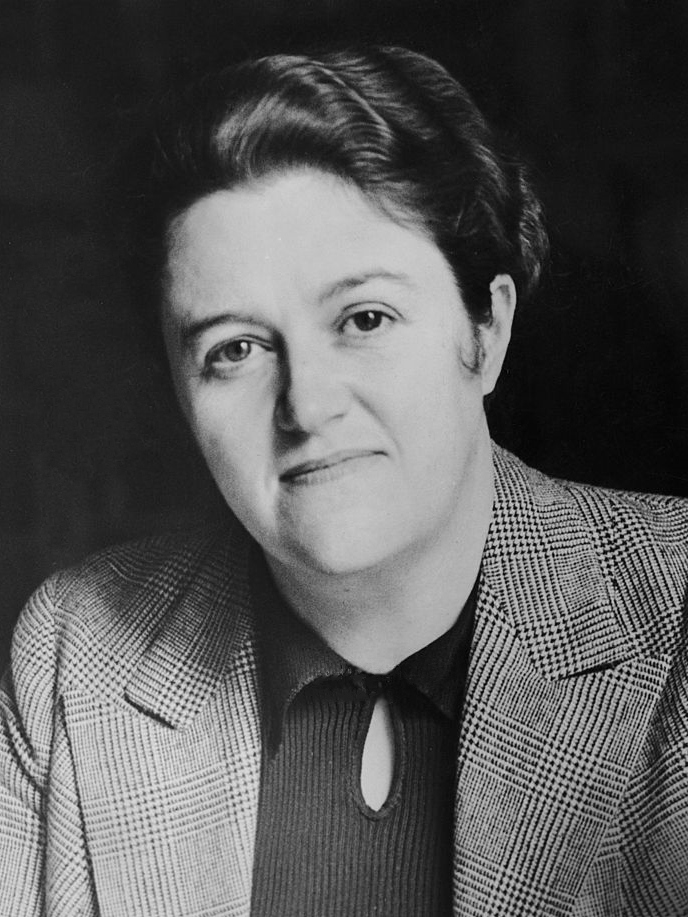
Helen de Guerry Simpson, ca 1935, photographer unknown. (Public Domain, via Wikipedia)

First up, I’ve chosen an interesting one because of her complex relationship with Australia. She’s Helen Simpson, or, more fully, Helen de Guerry Simpson, who was born in Sydney, Australia, in 1897 and died in Worcestershire, England, in 1940.

I’ll start with a brief bio. Simpson was born in Australia and lived here until 1914, when, at 16 years old, she went to England to join her mother who had separated from Simpson’s father several years previously. After that, Simpson spent very little time in Australia, as far as I can tell from the Australian Dictionary of Biography. She returned in 1921 for her brother’s wedding, but was back in England by February 1924. She was in Australia again briefly in 1927, but was back in England that year, as she married there in 1927. Her husband was Australian-born Denis Browne, interesting to us because his uncle was Thomas Alexander Browne (aka Rolf Boldrewood). However, he was significant in his own right as the Father of Pediatric Surgery. Simpson came back to Australia in 1937, to give a series of lectures for the ABC, but was gone again by 1938. Sadly, she died of cancer in 1940.

So, she was Australian, even though Arnold Haskell wrote in 1944 that Katharine Susannah Prichard, Helen Simpson and Henry Handel Richardson “are so well known in England that they are accepted as English writers”! Colin Roderick included her in his 1947 book Twenty Australian novelists, and Zora Cross includes Simpson in her list of writers who started here but then moved abroad.

Starting here is a bit of a moot point. The ADB says that she published several short plays and founded the Oxford Women’s Dramatic Society before her 1921 Australian visit. However, in 1921, Angus and Robertson did publish her Philosophies in little, “a collection of her own verse with her translations from French, Italian and Spanish”. In 1922, ADB also says, she entered a play about Benvenuto Cellini, A man of his time, in the Daily Telegraph literary competition. It was staged the next year by Australian theatrical producer Gregan McMahon. ADB says he only produced four Australian plays between 1920 and 1927, so that’s surely a feather in her cap.

Novels

Simpson wrote 13 novels between 1925 (Acquittal) and 1940 (Maid no more). A few were collaborative works, including a couple of detective novels written with Clémence Dane. She also wrote verse, plays, short stories and non-fiction works.

The Oxford companion to Australian literature (2nd ed.) devotes almost a full column to her. It says that two of her novels had Australian content – Boomerang (1932) and Under Capricorn (1937) – and that her “trio of fantastic novellas”, The woman on the beast (1933), includes one set in Australia in 1999! (Links are to Project Gutenberg Australia.) Two of her novels, one being Under Capricorn, were filmed by Alfred Hitchcock.

So, how good was her writing? Let’s start with Miles Franklin who mentions her in her diaries. She writes in August 1936:

Helen Simpson: one of the giants. Perhaps she would have wiped Brent [of Bin Bin, or Miles herself] out of his field had she not relinquished it. The lively vitality and inherent understanding of the Australian scene in Boomerang show what we lost, what England has gained. Again, in the third division of The woman on the beast in a sketchy, impressionistic effort, she indicates what she could have done to take Australia by the back of the collar and shake her to a sense of her asininity, her pathetic enslavement to an old sectarian controversy–a worse importation than the foxes and other noxious weeds. But H.S. left her country for her own great literary success.

Australian writer Coralie Clarke Rees, in an extensive article in The Sydney Morning Herald (1 June 1937), agrees, calling this “third division”

an imaginative “tour de force,” showing Australia, as the last stronghold of the old order of religion and politics, being invaded by a woman evangelist of the new totalitarian order, whose character seems an ingenious compound of that of Aimee Semple MacPherson and Mary Baker Eddy.

However, Miles Franklin later (around March 1940) modified her view of Boomerang, noting its “melodrama and disjointedness”, and Katharine Susannah Prichard, writing to Miles Franklin on 1 July 1932, says that

HM Green [see my recent Monday Musings post], of Sydney, writing to me the other day, said he liked it [Back to Bool-Bool] much better than Boomerang

Now, here I’m going to share the opening of Boomerang, which won the 1932 James Tait Black Memorial Prize:

Life can afford extravagance, books cannot; for this reason nobody will dream of believing in my two grandfathers. They are too true to be good–good fiction, at any rate; if I try to give some kind of picture of them, it is because they frame between them a vision of a golden age, which could only have existed in brand-new countries, among brand-new circumstances and laws. It was not a golden age for everybody, wives or servants for instance, but for these two it was; they were, to use a word which is almost dead, characters.

I am sorry to think what would happen to these two old gentlemen if they had the misfortune to live now; it would be something legal, that is certain, falling heavily to crush their magnificent egotism and eccentricity. Their wives, who in the ‘seventies put up with them with the uncomprehending patience accorded by Insurance Companies to Acts of God, would nowadays divorce them. Servants would bring, and win, actions against them for assault. As for their families, these would scatter immediately after the first row or two, and go forth to earn their livings with all the horrid freedom that the post-war period accords …

I love this cheeky tone, and her reference here (and in the Foreword) to the fact that fiction cannot be as “extravagant” as life! The Oxford companion says that Boomerang and Under Capricorn “have involved, highly coloured plots, lightly sketched but credible characters, and a lively, humorous and sophisticated narrative style”. This, in fact, summarises what I found in Trove.

So, for example, The Sydney Morning Herald reviewing (16 February 1932) Boomerang describes its rather wild episodic plot and thinks its characters are not particularly well-drawn, but argues that:

It can safely be said that no Australian novelist for many years has provided such an exciting tale, or handled separate scenes and episodes with such liveliness and wit.

I particularly enjoyed respected academic of the time T. Inglis Moore who wrote that:

it is in the romances, Boomerang and The woman on the beast in particular, that Helen Simpson has found her metier. In them she stands out amongst Australian writers as a witty romantic, a teller of vivid tales spiced with satire, tinged with wit.

His article (linked on his name above) in the Sydney Morning Herald (7 August 1937) offers a thoughtful, even-handed analysis of her, and is well worth reading. He recognises that she can be “romantically theatrical, artificial, escapist”, but, assessing her place in Australian literature, he says:

Amongst the contemporary novel-writers one stands supreme. No other Australian comes within cooee of Henry Handel Richardson. Then comes, well, Katharine Prichard, shall we say, along with Brent of Bin Bin? And here, somewhere, must come Helen Simpson.

He concludes with:

Taking her all in all, she is perhaps the most “intelligent” of contemporary Australian novelists in the sophisticated sense, and, along with Christina Stead, the wittiest.

This is strong praise. So what happened? Where did she go? Was her style not strong enough overall to overcome her plots and characters? Or, is it just a matter of fashion? Whatever, I have greatly enjoyed reading about this woman, and may very well share a bit more about her in the future because she was quite a character.

Printed sources

Brunton, Paul (ed.) The diaries of Miles Franklin (2004)

Ferrier, Carole (ed.) As good as a yarn with you (1992)

The Oxford companion to Australian literature, 2nd ed. (1994)

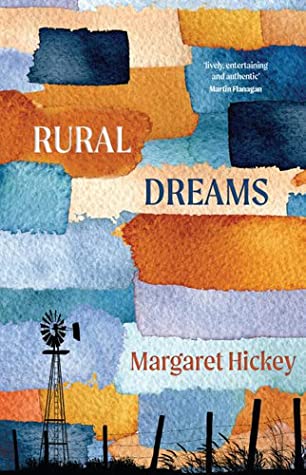
Margaret Hickey, Rural dreams (#BookReview)

Rural dreams is another collection of short stories from small independent publisher MidnightSun, and it’s another good one. I hadn’t heard of Margaret Hickey before, but her website says that she’s won a number of awards and is a performed playwright. Relevant to this book is that Hickey grew up in small country towns in Victoria and currently lives in that state’s northeast. In other words, in this book about rural lives, she knows whereof she speaks.

Like most short story collections, Rural dreams comprises stories told in different voices and points-of-view. The narrators, male and female, range from teens to the middle-aged, and the stories are told in first person and third person voices, with one told second person. The tone varies from funny to sad, from reflective to scary, and the subject matter represents a wide gamut of rural lives, from those who have left to those who want to leave, from those who are farmers to those who are sea-changers. And, of course, it encompasses a range of rural issues, to do with farming, dying land and dying towns, for example, as well as those more universal human issues involving love and loss, joy and fear.

I greatly enjoyed most of the stories – there’s usually one or two in a collection that doesn’t quite connect. The opening story, “Saturday morning”, fired the perfect opening salvo. Told third person, it’s about a young engineering student named Simon who now lives in a share house in Melbourne but who gets up early every Saturday morning, through winter, to drive about three hours home to play football. Even he wonders why he does it, given the way it disrupts his weekend, but, as he hits “the shire boundaries”

… there it comes, that big ball of a sun, that big ball of orange rising up over the horizon. It jolts him every time. Rays light up the stone fences, hit the trees and illuminates the paddocks. The old gums shimmer green and grey in the early morning light and world appears golden quiet. It’s like it is every Saturday, a new era.

They might have a chance today.

He’s home.

“This place, it gets to you”, says the old coach, in “Coach”. And place, of course, underpins most of these stories, whether it’s the Wimmera or Mallee or Ninety Mile Beach in Gippsland.

Counterpointing our narrator in “Saturday morning” is the young Year 12 student in the next story, “Glory days”. Living in the dry Wimmera, he is sweating his ATAR score, dreaming of escape to the city where there’ll be “no more discussions about rain and cows, it will be all about novels and films and experience”.

And so the stories continue, wending across the state, and further afield. “A bit of scrapbooking” promotes the joys of living in the oft-maligned Surfers Paradise in southeast Queensland. Reminiscent a little of Kath and Kim, this story contrasts our narrator’s life in Surfers with her son’s and his partner’s in Melbourne. She just can’t understand his move there for, he told her, “a bit of culture”:

Well, I’ve never understood that. We’ve got culture all around us up here.

Take Jupiter’s Casino–it’s full of all sorts! You’ve got your Sheiks, your Maoris, your South Australians. And you can buy your sushi, your ravioli and your chicken schnitzel in every dining establishment. Every kweezeen you like.

A first person voice is the perfect choice for this story. It made me laugh. Its humour combined with a warm touch at the end makes it just the right antidote – can an antidote come first? – to the darker story, “Desolate”, which follows. This story, and the longest one in the collection “The Precipice”, are the darkest stories here. In “Desolate” our sea-changing narrator from St Kilda, whose “barely disguised air of yuppiedom did little to hide the threat of violence that lurked beneath”, finds that beautiful deserted beaches harbour their own issues. The opening to this story is deliberate:

It’s one of those days that almost kills you; it’s that beautiful.

In “The precipice” and “The Renovation” the titles are pointedly metaphorical, with the former being about domestic violence which is clearly not confined to cities. This story builds up slowly from a therapeutic bushwalk to one of horror for the three women involved. The end, though, is perfect. Hickey, who clearly loves rural living, is realistic rather than rosy about it. She references violence, drought, and issues like the potentially damaging health impact of chemicals, without being didactic or polemical. She know the characters too, like the middle-aged man still living at home who just “likes birds” of the feathered variety (“Twitcher”) or “town weirdo” Joe who cares about the land regardless of the locals (“Overcoat Joe”) or the single-mum who stands up for her scholarship-winning son at his hoity-toity private school (“Mind your language”).

As many contemporary Australian writers are increasingly doing, Hickey also incorporates references to Indigenous Australian lives and culture. She doesn’t attempt to speak for them, but these references suggest an awareness that’s important. Anna, in “The precipice”, remembers a place called “the Leap for the stories of Aboriginal families herded there by whites in the early days of settlement”; Ruby in “The renovation” is told about the middens in the community she’s moved to; Peter remembers the scar trees in “Binky”.

Finally, while the stories are stand-alone, a few are subtly linked. Kate Brunt, a netball player from the town mentioned by Simon (“Saturday morning”), is one of the young travellers in “The wanderer”. The coach (“Coach”) briefly mentions Simon. These links have no overall narrative significance, but they have a nice grounding effect.

Rural dreams is a love letter to rural Australia, one that recognises the tensions and challenges, as well as the warmth and community. Hickey gently mocks Australia’s ongoing romance with the bush, giving us instead an image that is real and human. A truly engaging read.

Challenge logo

Margaret Hickey
Rural dreams
Adelaide: MidnightSun, 2020
232pp.
ISBN: 9781925227680

(Review copy courtesy MidnightSun)

Leah Swann, Sheerwater (#BookReview)

Book cover

I’ve been wanting to read Leah Swann’s Sheerwater, having read and enjoyed, a few years ago, her short story collection, Bearings (my review). However, I didn’t get around to buying a copy, so was pleased to see it available as an audio book when I was looking for listening matter for our recent Melbourne trip. I thought we’d finish it on the trip but, in the end, the sightseeing was so interesting that we listened less than we thought we would. We’ve finished it now!

But, how to write about a crime book in which the main mystery – the disappearance of two boys – is resolved for us early on. At least, resolved in the sense that we discover what has happened to them and who was involved. As it turns out, though – and we learn this quickly – there’s another story to tell, and it’s a powerful, terrifying and unfortunately only too relevant one, a story of domestic violence, of power and control that isolates those who are vulnerable.

Interestingly, the novel’s opening reminded me strongly of the unforgettable opening to Ian McEwan’s Enduring love, which, as it happens, is also about dysfunctional love, albeit a different sort. There is also an ironic allusion to Australian literature’s “lost child” motif, when Ava thinks “this was a Continent where you could still get lost”, because these children aren’t “lost” – per se!

Anyhow, the story takes place over three days, and is told in alternating 3rd person voices, primarily those of the mother Ava, father Laurence, and 9-year-old Max who is the older of the two sons. Swann does an impressive job of getting into the heads of these disparate characters. Each one feels psychologically real, and their stories are compelling – well, most of their stories. Laurence is way too chilling to be compelling, but he is scarily real.

Now, I’m not going to write my usual sort of review, because listening to a novel (particularly while driving) doesn’t provide the same opportunity for reflection (and note-taking) that reading does, and certainly not for recording quotes, though I did jot down a few when I wasn’t the driver. The novel falls into the literary crime category, I’d say, for several reasons: it’s not a traditional crime novel; it’s told from multiple points of view; and the language is highly descriptive, if not poetic.

The title Sheerwater, for example, has multiple meanings. There’s the literal one, it being the name of the town that Ava is escaping to, and a literal and metaphorical one in that shearwaters (or, mutton birds), at the time the book is set, are doing their big migration south. They start the novel and each of the three days (if I remember correctly). There’s a sense that their impressive endurance mirrors that of women like Ava, and their arduous journey that of the boys. If we push it, there could also be a play on the words “sheer water” given the multiple meanings of “sheer” (pure, perfect, precipitous) and the role of water and the sea in the novel.

“We become evil when we hide the truth from ourselves” (Mother)

Swann creates a melancholic tone early on with phrases like “no pity under its wings”, and “sea of shipwrecks and stolen lives”. The no-nonsense but ultimately supportive policewoman Ballard is described by Ava as having a face like the “impermeable slap of seawashed stone”. It’s not all completely grim though. There is a lot of love, and Ava’s comment on one person’s kindness being enough to sustain a whole childhood is beautiful albeit, in a sense, prophetic.

So, was this book good to listen to? Yes, and no. Katherine Tonkin reads it well, including bursting into little verses of song when required. I didn’t find her voice intrusive, which can be a problem with audiobooks. However, for me, such highly descriptive books are better read than listened to. Somehow, when listening, there’s a greater sense of wanting to get on with the story. The descriptions and internal ruminations got in the way of that, whereas reading it would have allowed me to better absorb the language and descriptions, to feel and consider them, so I’m sorry about that.

Still, the narrative is strong, and it grabbed our attention, forcing us to think hard about each character, their truthfulness, their motivations, and the soundness of their actions. Who would you believe, and what would you do (if you were any of the characters involved), are the questions you confront as you read. The ending is also strong, emotional – and, dare I say it, appropriate.

In Sheerwater, Swann uses fiction to put flesh on the media stories we hear about domestic violence, encouraging us to see behind the stories to feel the confusion, roller-coaster emotions, helplessness and terror that those involved experience. Sheerwater is a book that says something.

Read for Reading Matters Southern Cross Crime Month

Challenge logo

Leah Swann
Sheerwater
(Read by Katherine Tonkin)
Bolinda/HarperCollins Audio, 2020
8hrs 44min (Unabridged)
ISBN: 9781460782354

Garry Disher, Bitter Wash Road (#BookReview)

Garry Disher’s Bitter Wash Road has been sitting on my TBR pile for over seven years. It was sent to me on spec but, as crime is not my preferred reading, I didn’t feel obliged to read it – and yet, I hung onto it, just in case… So, when Kim (Reading Matters) decided to run an Aussie-New Zealand crime month, I knew what I was going to read.

Actually, though, this is not the first Disher to appear on my blog. Text had previously sent me an earlier one of his, Wyatt, which I managed to talk Son Gums into guest reviewing for me. You can read his review here. However, Wyatt is a thriller with an anti-hero as its protagonist, so is very different to Bitter Wash Road, a police procedural featuring the more sympathetic constable, Paul Hirschhausen (Hirsch).

More sympathetic he may be, but straightforward he is not, because Hirsch is a recently demoted detective who has been sent three hours north from Adelaide to a “single-officer police station” in Tiverton, a fictional “blink-and-you’d-miss-it-town” in struggling “wheat and wool” country. Having previously worked with a team of corrupt detectives, Hirsch, though not found guilty (which, he realises, is different to being found “not guilty”), has “a stink clinging to him”. For whatever reason, Internal Investigations is not convinced he’s clean. Consequently, Hirsch finds himself investigating crime in a fearful community where the police are hated, while also having to watch his own back. Who can he trust?

“an air of waiting”

To my surprise, I greatly enjoyed this novel. It’s well-plotted, so that while the ending isn’t a complete surprise – surely it’s not a good crime novel if it is? – there are enough possibilities thrown in your path along the way to keep you pondering which way it will go. However, it’s not the plot that grabbed me. It’s the characterisation, the writing, and the subtle way contemporary issues are referenced or implicated in the story.

Hirsch is introduced in the first paragraph as the “new cop in Tiverton” and then we immediately meet him through a phone conversation with his sergeant, Kropp, in nearby Redruth. Some shots have been heard out near Tin Hut and he is to investigate. We are then launched into the action as Hirsch drives off, but we are also introduced to his character. He’s observant and careful, but also, probably sensibly, a bit paranoid. When he comes across a gum tree blocking the road, he sees it as a potential ambush, but on closer inspection it’s simply a fallen branch:

All that sinewy health on the outside and quiet decay within.

A bit like the police, really.

With such language the tone is set. Hirsch is isolated, physically and psychologically, like many in the region, for different reasons. This is a tough place where Sergeant Kropp’s two brutal constables, Nicholson and Andrewartha, terrorise the locals, paying particular attention – if you know what I mean – to young girls and Indigenous youths. Hirsch needs all his resources to navigate this lot and the rest of the community’s officials. Fortunately, he’s a true policeman, sizing up every place and person he sees or comes across, alert to every nuance in behaviour. This is, after all, the key both to survival and getting at the truth.

Now, I’m not an expert on writing about crime, but even I realise that I haven’t actually mentioned the crime. It wasn’t the gunshots out near Tin Hut, in fact, but the body of a dead girl out that way, along Bitter Wash Road. Hit and run? Or something else? A little later, a woman is found dead, this time looking like suicide. What is going on in the area? Were these deaths murders? Are they connected?

Set in a dry, struggling outback community, Bitter Wash Road is an example of a sub-genre that is now loosely known as outback or drought or bush noir. It is typified by remote communities living in harsh, unforgiving landscapes, and, as Disher makes clear, by the sort of sexism and racism that is peculiar to such settings (which is not to say they aren’t found in other settings too.)

In this sub-genre you would, I expect, find descriptions like this:

A five-hour round trip. Lengthening shadows striped the crops, the highways, the hillsides. More birds on more wires. An air of waiting, of things drying, turning to dust.

So, with suggestive writing like this, a compelling and complex character like Hirsch, and a plot with as many dips and turns as its titular road, Bitter Wash Road makes splendid reading. I’m not surprised that Disher decided a few years later to return to Hirsch with Peace (2019) and Consolation (2020).

Read for Reading Matters Southern Cross Crime Month. Kim has also reviewed this novel.

Garry Disher
Bitter Wash Road
Melbourne: Text Publishing, 2013
325pp.
ISBN: 9781922079244

Review copy courtesy Text Publishing

Bill curates: Ruth Park

Bill curates is an occasional series where I delve into Sue’s vast archive, stretching back to May 2009, and choose a post for us to revisit. This is a most enjoyable project as I read every post and usually the comments too. Which is why I’m still only up to Oct. 2010. Today, because I can, I’ve chosen an AWW Gen 3 post on Ruth Park which I had previously overlooked.

______________________________

My original post titled: Monday musings on Australian literature: Ruth Park

The muddle-headed wombat by Ruth Park, book cover

For a New Zealander, Ruth Park is a very popular Australian! Not only did she write the much-loved (and studied) Harp in the south trilogy, but she also wrote the hugely popular (in its time) radio serial The muddle-headed wombat, was married to the Australian D’Arcy Niland (now deceased) who wrote The shiralee, and is mother to children’s author-illustrators Deborah and Kilmeny (now deceased) Niland. Ruth Park also won the Miles Franklin Award with her Swords and crowns and rings, and wrote two very popular autobiographies, Fence around the cuckoo and Fishing in the Styx. And this is not all – or even all of the best – that she’s produced in her long career.

Park was born in New Zealand in the early 1920s and first came to Australia in 1940 when she met D’Arcy Niland. She writes that Australian writer Eve Langley*, with whom she had a longstanding friendship, said of Niland:

‘That’s a good face … Do you know what it is saying?’
‘No, what?’
‘It says “Take me or leave me.” I like that.’

So apparently did Park. She returned to Australia in 1942 to work as a journalist, and married Niland. They worked at various jobs in rural New South Wales for some years before Park’s stories gained the attention of the Australian Broadcasting Commission (ABC) resulting in their decision to try to make a living from free-lance writing. They wrote, and wrote, and wrote – anything that would earn money. They wrote, for example, short stories, genre stories (such as romances and westerns), radio talks and radio plays, scripts for radio comics, all the while honing their skills for their more serious writing goals. And they lived during these early years in Sydney’s inner city slum, Surry Hills.

These experiences of living in rural areas and city slums are clearly evident in Swords and crowns and rings (the story of the dwarf Jackie, and his love Cushie Moy) and the Harp in the south trilogy (the story of the Darcy – ha! – family). The thing I love about these books – both of which span the first 4-5 decades of the twentieth century – is the way Park explores gritty issues like poverty, abortion, religious bigotry, unemployment and illness with a psychological and social realism that also encompasses warmth and humour. Her main characters tend to be the quintessential Aussie battlers, but their concerns transcend time and place. It’s not surprising, really, that these works keep being read, re-published, set for study, and adapted for television and film.

Realism though is not the only string to Park’s fictional bow. She wrote in several “genres” for a range of audiences, including fantasy for children. Her Muddle-headed wombat stories ran on the ABC Children’s Session from 1957 to 1971. I have to say that I never have really been one for anthropomorphism, and have read few children’s classics featuring animals (no, not even The wind in the willows) but even I would tune in for the wombat! Park also wrote a children’s time-travel fantasy Playing Beatie Bow, which is taught in schools and has been made into a film.

And yet, for all this, I’m sure she is little known outside Australia … if I am wrong, please let me know!

In the meantime, I will conclude with her description in her first autobiography, Fence around the cuckoo, of her first sighting of Australia as she arrived by boat:

What I saw were endless sandstone cliffs reflecting the sunrise. A chill ran over my skin, my ears buzzed as they had once done when I was about to experience uncertainty about something as yet unknown. The sea fled south, its malachite green changing to beaming blue; the sky was sumptuous with a sun hotter than I had ever known.

This was my first glimpse of Australia Felix, the ancient, indifferent, nonpareil continent that was to become the love of my life.

Ruth Park is not one of those ground-breaking writers who makes you go, wow!, but  she is an excellent story-teller who has an enviable ability to create and develop memorable characters who confront the real “stuff” of life. You could do far worse than read her if you want an introduction to Australian literature. If I haven’t convinced you, read Lisa at ANZLitLovers and Tony of Tony’s Bookworld on Harp in the South, and kimbofo at Reading Matters on her “Top 10 novels about Australia”.

*Park mentions Langley (whom I reviewed early in this blog) several times in Fence around the cuckoo. One concerns Park’s decision to stay with Eve to escape a Peeping Tom uncle but, when she arrived at the windmill in which she believed Eve to be living, she found no Eve but another woman who had heard of Eve but not for some years. “What had happened to that weird girl?”, the new windmill resident wondered. Poor Eve. She was indeed a bit weird and had a rather sad life, but that is another story.

___________________________

Book cover

It’s interesting for me to re-read these old posts of mine, and think about how I’d write them now! Regarding Park, my admiration has only grown for her warmth, humour and abiding sense of fairness. Check my Park posts here.

But, back to Bill. He says he’s not a fan of Park’s autobiographies but he does recommend, whenever he can, the Park/Niland memoir The Drums Go Bang, which we have both reviewed (Bill’s review) (my review). I enjoyed her autobiographies, but The drums go bang is very special.

Are you are Park fan? If so (or if not), we’d love to hear your thoughts.

Bill curates: Some Australian expat novelists

Bill curates is an occasional series where I delve into Sue’s vast archive, stretching back to May 2009, and choose a post for us to revisit. I’m a bit over seeing my name up the top here, but Sue has asked me to keep going for a little longer, and how could I possibly say no.

This one is from August 2010. My opinions on the topic are quite different from Sue’s, but I’ll save that for Comments.

______________________________

My original post titled: Monday musings on Australian literature: Some Australian expat novelists

Australia is the only country I have come across that divides its writers into residents and those who have dared to live elsewhere. Can one imagine Americans writing of Ernest Hemingway, or the Brits of Auden, thus? (Carmen Callil, Australian-born founder of Virago Press)

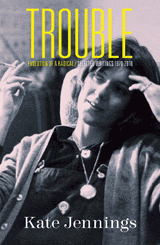
That answers one of my questions: that is, whether other nations talk about “expats” the way we do. Apparently they don’t. Is it the oft-quoted Australian cultural cringe? Is it envy? Perhaps I’ll just skirt the issue and say that Australians have a bit of a reputation for wanderlust, so I’m not surprised that we have our share of novelists who have gone overseas and stayed. One of those is Kate Jennings whose “fragmented autobiography”, Trouble, I reviewed last week. Kate Jennings went to New York in 1979, and has not returned (except for regular visits). In her book, she includes interviews with three other expat Aussie writers, Sumner Locke Elliott and Ray Mathew (both now deceased), and Shirley Hazzard. I thought it might be interesting to talk a little about some of our still-living novelists who reside in the USA.

But first, Ray Mathew, the least known of Jennings’ three interviewees. I hadn’t heard of him until a few years ago when he was the subject of one of the National Library of Australia’s (NLA) gorgeous little “A Celebration” books, using funds bequeathed in his name by his American friend and patron, Eva Kollsmann. The Ray Mathew and Eva Kollsmann Trust is a significant bequest which funds a number of initiatives at the NLA. One of these is the annual Ray Mathew Lecture which is to be given by “an Australian living abroad”. The first lecture was given in 2009 by Geraldine Brooks, and the second, this year, by Kate Jennings.

Shirley Hazzard
Hazzard, 2007 (Courtesy: Christopher Peterson, via Wikipedia, using CC-BY-SA 3.0)

For brevity’s sake – and because I’ve read each of these writers – I’ll just focus in this post on five Australian expat novelists based in the USA. Some of them are very well known internationally, moreso than many of our home-based writers. This is not surprising I guess: if you live in the USA and get published there your market potential is far greater than it would be at home. That said, the lure of increased fame and fortune is not the reason these writers moved overseas:

  • Geraldine Brooks: moved to New York in 1983 to study, met and married American journalist (Tony Horwitz), and now splits her time between Australia and the USA. Geraldine Brooks titled her Ray Mathew lecture, “The opportunity of distance”. She’s the youngest of these five and, perhaps, has the most uncomplicated view of her relationship with home. She has travelled widely and discussed in that lecture all the benefits that have resulted, but her final point is:

For all its opportunities, distance can still feel like a tyrant, sometimes, when a partner’s work or a kid’s schooling means we must spend more time there than here. The oscillation stalls, the roots start to dry out. It’s like a high stakes game of musical chairs. Round the world you go, and then the music stops and you have to sit down somewhere, but it’s not quite the chair you were aiming for.

  • Peter Carey: moved in 1990/91 to New York with his wife to work in their respective careers, and has remained there. Peter Carey, not surprisingly given his status, is often asked about his expat status. Here is what he said in an interview for the Paris Review:

Of course, there is a specially reserved position in Australian culture for the expatriate. The prime expatriates—people like Clive James, Germaine Greer, Robert Hughes—belong to an earlier generation than mine. When these people return to Australia, they are asked, What do you think of us? How are we doing? The expatriate is occasionally lauded and occasionally fiercely criticized for daring to come back and judge. I try to stay away from that as much as humanly possible. I don’t feel at all like an expatriate….

  • Shirley Hazzard (has died since I wrote this post back in 2010): moved to Hong Kong with her parents in 1947 when she was 16 years old, ending up in New York in 1951 where she has been mostly based since, though does spend time regularly in Capri, Italy. A webpage on Shirley Hazzard summarises her expat status in this way:

Hazzard does not reject her designation as an Australian writer but insists her temperament is not national. She only took out United States citizenship twenty-five years after she began living in New York, on the resignation of Richard Nixon. Eschewing nationalistic identifications, she does not consider herself as an expatriate, and emphasized that “to be at home in more than one place” (Gordan and Pasca). However, her novels are full of displaced Anglos in Hong Kong and Italy, or displaced Australians in London and New York.

  • Janette Turner Hospital: moved to Boston in the mid 1960s with her husband, and has lived in Canada and the USA. She now splits her time between these two countries and her home state of Queensland. In an early Griffith Review, Hospital commented on the impact of modern technology on being physically displaced, and wrote:

Place is unequivocal. But virtual communities and diaspora organizations suggest that you don’t always need to be somewhere to be a part of something. You can check the surf report, vote, play scrabble, watch the evening news, buy a car or be connected to country from the other side of the world. This new reality reflects an age-old truth: that home is where the heart is. It offers a new kind of citizenship. One we’re defining as we go.

  • Kate Jennings: as described above. She bookends Brooks nicely: not only because they gave the first two Ray Mathew lectures but because they both value travel highly but offer almost opposing conclusions. Here is Jennings from her lecture:

I have lived now in New York nearly as long as I lived in Australia. Heretical as it might seem, Australia is neither my country nor my home, as it is for Geraldine. It’s the place I started from, to paraphrase TS Eliot slightly. It shaped me, but so have my 30 years in New York city. I have, as Robert Dixon put it, ‘overlapping allegiances and multiple affiliations’.

Well, that lot provides enough to think about I reckon. I was going to talk a little about these writers’ works but I’ve taken up enough of your time for this Monday. More anon… Meanwhile, if you’ve lived away from “home” for any period of time, what do you think about all this?

___________________________

Thanks so much Bill for being willing to continue this series until I can get back to some semblance of normal reading and posting. I’m particularly pleased that he chose this one because given he has some different ideas to mine. I look forward to hearing them to seeing whether I agree, given I wrote this post over 10 years ago.

And, of course, we’d be interested to know what you think…

Bill curates: Dymphna Cusack’s A window in the dark

Bill curates is an occasional series where I delve into Sue’s vast archive, stretching back to May 2009, and choose a post for us to revisit. During the latter part of January we will look at some of Sue’s older posts which have relevance to my Australian Women Writers Gen 3 Week, Part II, 17-23 Jan, 2021

Dymphna Cusack was a central writer of the Gen 3 period. I (Bill) recently reviewed her Say no to death (1951) which with its focus on TB gives us some perspective on the plagues like Covid-19 which regularly sweep around the world. Here, in a post from 2013, Sue reviews Cusack’s memoir of her years as a teacher, written in the 1940s but published posthumously.

______________________________

My original post titled: Dymphna Cusack, A window in the dark

Dymphna Cusack‘s A window in the dark has been glaring at me from my TBR pile for many years now. Not being able to stand it any longer, I decided to sneak it in before my next reading group book, Michelle de Kretser‘s Questions of travel. Posthumously published by the National Library of Australia, A window in the dark is Cusack’s chronicle of her teaching years, spanning 1922 to 1943.

For those who haven’t heard of her, Dymphna Cusack (1902-1981) is an Australian writer best known for her collaborative novel (with Florence James), Come in spinner (1951), and Caddie, the story of a barmaid (1953), which was made into a successful feature film in 1976. According to Debra Adelaide‘s comprehensive introduction, Cusack was not interested in writing her autobiography but, in the mid-1970s, three decades after she finished teaching, she decided to write about this part of her life. While much has changed since 1975/6 when she wrote it (let alone 1944 where the story ends), A window in the dark – “my job was opening a window in the dark for the minds entrusted me” – is an interesting read. It is not, though, a typical writer’s memoir; its focus really is teaching and education.

The book is well produced with an excellent introduction and explanation of its genesis by Debra Adelaide (though I would have loved an index). It was prepared from the version included with her papers held by the National Library of Australia. This version is probably the final draft, but Adelaide believes that Cusack would have done more work on it, had it found a publisher. Certainly, it does have some rough edges, but not enough to spoil the content nor to prevent our getting some sense of Cusack as a person, as a writer, and of course as a teacher.

Cusack tells the story of her years as a teacher chronologically, starting with university and her decision to accept a bonded Teachers College Scholarship. However, a number of themes run through the book and I’m going to frame the rest of this post through some of them.

Format: Photograph Notes: Dymphna Cusack (1902...

“The sum total of my years of teaching in Broken Hill and Goulburn was the conviction that the high school curriculum was insane”

Cusack decided very early in her career that the curriculum she was required to teach was unsuitable for all but the minority who planned to go on to university. She rails, in particular, against the teaching of ancient languages (Latin) and against the focus on British history and English (as in from England) literature (both only to the end of the nineteenth century, what’s more). She criticises educational practice which relied heavily on examinations and argues against dependence on IQ assessment for identifying capable students. She is disgusted by corporal punishment. She does become a bit repetitive, as she moves from school to school, but that simply reinforces her passion for relevant education and humane methods. Being personally interested in local and contemporary history, she’s distressed that students weren’t taught about their own places. Students in Broken Hill were taught nothing about that city’s origins, nor its geology and botany. Students in Parkes learnt nothing about William Farrer and his pioneering work with wheat. And so on … Students learnt, well, I’ll let her tell you:

It was the same in every country town I lived in. An essential part of our history was ignored, whether massacres of whites by blacks or blacks by whites, while we got bogged down in the Hundred Years’ War or the Thirty Years’ War or the Seven Years’ War – all taught with no reference whatever to the basic economic causes underlying them.

She was happiest when, for various reasons, she was given non-examination classes to teach. Then she could teach what she thought was useful. A playwright herself, she was renowned for her drama classes, and the school plays she produced.

“I look so middle-class; it’s my nose”

Despite her ongoing frustrations (not to mention chronic health issues), she had, you can see from this quote, a sense of humour. Cusack belonged to that wonderful cohort of left-leaning writers in early to mid-twentieth century Australia, a cohort which included Miles Franklin (with whom she collaborated on books), Flora Eldershaw and Frank Dalby Davison.  She had a finely honed moral and social conscience, and was acutely aware of injustice. She was not above using her “middle-class” look to get a hearing on issues important to her. She was distressed that Australia, which, by the 1850s was

politically and socially the most advanced country in the world … should by the middle twenties be bogged down into a morass of social and sectarian bigotry and educational conservatism.

Cusack became convinced of the “wickedness of our economic system”, which could not fund milk for children of unemployed parents but could, somehow, find the “money for everything for war”. She abhorred the power those with money had over others. She became unpopular with the Department of Education for her outspokenness on social and economic justice issues, and was particularly critical of the treatment of “that much-maligned creature, the woman teacher”.

“What we want is the warmth, the humanity, the feeling for Newcastle that is inherent in everything you write about …”

So said BHP’s Newcastle manager Keith Butler to Cusack in 1943 as he offered to pay for a novel about Newcastle and the steelworks. Not surprisingly, Cusack would have none of it. She did, however, write her novel, titled Southern steel (1953), and it was, apparently, a positive portrayal. Cusack wrote throughout her teaching career – mostly plays, many of which were performed on the ABC but only some of which have ever been published. She tackled tricky-for-her-times issues such as racism, workers conditions’ and war. Her second novel, Jungfrau (1936), which explored young women, their sexuality and abortion, was runner-up in the Bulletin’s S. H. Prior memorial prize. It was shocking for its time.

“… I found in my teaching life teachers are sublime optimists – why, I never knew.”

And yet, she must have known, for she stuck to teaching through years of ill-health and poor treatment by those in power. She did it, partly of course to support herself, but partly too because she loved her students. She was still receiving thankyou letters from them in her last years. That surely says something.

Why, though, read a book written in the mid-1970s about education in the 1920s-40s? It is not, after all, a memoir, so there are gaps in the story of her life – particularly in terms of her significant relationships. And while she mentions some of the plays and novels she wrote during the time, she does this mostly in relation to something happening in her teaching life. Moreover, it’s not particularly interesting in terms of form. That is, she doesn’t play, as some writers do when writing non-fiction, with narrative style or voice or perspective. Yet, there are reasons for reading it. It works as social history and a history of education. It provides insight into the development of her political philosophy and social values. It shows off her skills as a writer, particularly her ability to evoke people and place. And, for all its seriousness, it contains many entertaining anecdotes.

I’m so glad I finally read what turned out to be a fascinating book about (and by) a compassionate, funny and feisty woman whose intelligence is displayed on every page. Would that every child had teachers like this.

Dymphna Cusack
A window in the dark
Canberra: National Library of Australia, 1991
175pp.
ISBN: 9780642105141

___________________________

Dymphna Cusack was an interesting woman who was passionate about economic fairness and social justice. For that reason, she fits in very well with the wonderful cohort of women writers who were active, particularly in the 1920s to 40s, such as Katharine Susannah Prichard, Marjorie Barnard, Flora Eldershaw, to name a few. I’m glad Bill chose this post to bring up the rear of “my” contributions to his AWW Gen 3 Week.

We’d love to know whether you’ve read any of Cusack’s novels or other writings, and what you think?

Wendy Scarfe and Allan Scarfe, A mouthful of petals: Three years in an Indian Village (#BookReview)

Husband and wife writers, Wendy and Allan Sharfe, first published A mouthful of petals, the story of their three years in the remote Indian village of Sokhodeora, in 1967. It is not, however, their only book. Wendy Scarfe has written poetry and several novels, two of which I’ve reviewed here, Hunger town and The day they shot Edward, while her late husband, Allan, also wrote some novels and short stories. Collaboratively, they wrote several books besides A mouthful of petals, including a biography of Indian independence activist Jayaprakash Narayan.

It was Jayaprakash, or JP as he was known, who invited the Scarfes to return to Sokhodeora in 1960, after their 6-month volunteering stint, because he believed serving India was in their hearts. Their service would, he wrote, be “of great value to us and would add to that international good-will and understanding that are so badly needed”. In their opening chapter, the Scarfes write poetically of the place that was to be their home for three years:

Sokhodeora is a dot that is part of the plain: beautiful, serene, full of a sense of continuity with the very beginnings of human civilisation.

But to enter the narrow, zigzag alleys between the congested houses is to lose much of the impression of beauty and to realise the antiquity of man’s anxiety, poverty and misery.

Their role was to be education-related, though on their arrival JP admitted that “frankly” he didn’t know “what specific, clear-cut work” to give them! Ah, the days before KPIs! (Or, more likely, as the Scarfes say, the difference between Western and Eastern world views.) The big picture, the ideal, was that education was needed, and that the villagers needed to see that education was about more than gaining Government employment, which, of course, most villagers would never do.

And so, the Scarfes set about developing their own goals and schedule of work, regularly calibrating with the supportive JP. Uppermost was starting a school for children and night classes for adults. However, they also responded to the practical reality of village life which was characterised by extreme poverty, which in turn meant problems like hunger and poor health. How can children learn, for example, if they are not reasonably nourished? When Jayaprakash comments on the villagers’ apathy, Wendy replies that she believed it was “nutritional”:

People can’t have physical and mental vitality on two meals of rice and pulse a day. A huge proportion of village women suffer from anaemia and they must be just dragging themselves around.

Here is where we realise that aid work like this requires not just the necessary professional skills – in this case, teaching – but resourcefulness and entrepreneurship. The Scarfes, for example, discovered the existence of a supply of powdered milk, and developed a program for its distribution. They wrote many appeals for foodstuffs, eventually landing a winner with the American Meals for Millions Foundation, which provided an awful-sounding but highly nutritional product called “Mysore Multi-Purpose Food”. Again, they were heavily involved in distribution and teaching how to use it. They looked at other issues too, including the provision of toilets, family planning, the building of a classroom, and so on. All this is macro-level. They also worked at the micro-level, supporting individual villagers in all sorts of ways, especially in obtaining the medical help and pharmaceuticals they needed. It’s no wonder that, as this edition’s Publisher’s Note says, this book served, for years, “as a primer for intending field workers”.

None of this was easy of course, and the challenge was exacerbated not only by the usual infrastructure problems – such as transport – but also by cultural and personal issues, particularly the challenge of engaging the villagers in an environment characterised by caste prejudice, gender inequality and inter-family quarrelling.

A mouthful of petals, then, has plenty of interesting content, but I would also like to comment on the writing. It’s a collaborative book, but what voice do you choose to write a book involving both authors’ lives? Ruth Park and D’Arcy Niland, in their memoir The drums go bang (my review), used first person plural when writing about joint experiences, and third person when writing about the experience of one of them. The Scarfes took a different approach, narrating the book in first person from Allan’s point of view, with Wendy spoken of in third person. It works, but I rather like Park and Niland’s approach.

Overall, the writing is straightforward, as it has to be to impart all the information it does, but there are lovely flourishes all the same, like the description of Sokhodeora I cited early in this post. The book is also enhanced by the people populating it. Not only are we given some insight into JP, but the Scarfes tell stories about several villagers, including the initially apprehensive but willing Mahadev who works for them from the start and the ultimately tragic Kesurwa whom they choose to train as their kindergarten teacher. These people give life to the bigger picture being told.

Now, when I read a book like this, by which I mean a book that is about a different place and time – after all, we are talking India of 60 years ago – I think about its relevance (beyond any intrinsic interest in the subject matter) to my place and time. This book provided a few such points, one being the importance of education. There’s literacy, of course, but the Sharfes specifically discuss the value of understanding cause-and-effect, of the ability to draw logical or useful conclusions from observation and experience – regarding pain and illness for example – and how this lack impeded village and villagers’ development. This made me think, rightly or wrongly, of what has been happening in the USA recently where there seems to be just that lack of ability in some of the populace. A failure of education?

Then there’s the big point: the idea of having global responsibility for each other. The Scarfes write:

We are all responsible for the human condition and those who are educated are responsible to those who are not.

I like the use here of “responsible to” not “for“. It shifts this idea of responsibility from a patriarchal notion to something more cooperative or service-oriented.

A mouthful of petals is a passionate book that still offers much to think about. It is well worth reading.

Lisa (ANZLitLovers) also enjoyed and reviewed this book.

Challenge logo

Wendy Scarfe and Allan Scarfe
A mouthful of petals: Three years in an Indian village
Mile End: Wakefield Press, 2020 (rev. ed. with Epilogue; orig. ed. 1967)
275pp.
ISBN: 9781743056844

Review copy courtesy author and Wakefield Press.

Jasmine Seymour and Leanne Mulgo Watson, Cooee mittigar: A story on Darug songlines (#BookReview)

Recently, on a bit of a whim, I bought two books from the Indigenous Australian publishing company, Magabala Books. They were the younger readers-young adult novel, Black Cockatoo (my review), which had been shortlisted for a few awards, and this picture book, Cooee mittigar, which had just won the 2020 Prime Minister’s Literary Award for Children’s Fiction. It is described on the Awards website as “introducing children and adults-alike to Darug ‘Nura’ (Country) and language”. So, a book for children and adults. I’m in …

The book tells the story of the seasons*, as understood or experienced by Sydney’s Darug people, through the eyes of the black swan, Mulgo. It is a perfect example of the generosity of Indigenous Australians. Despite being dispossessed of their country, despite being repeatedly discounted as having anything important to contribute, despite being overlooked or specifically excepted by policy-makers, they come back again and again, willing to share their knowledge – and, particularly, their language – when there’s a real risk that it too might be taken from them. They seem to understand, when so many don’t, that it’s only by sharing and communicating with each other our values and belief systems that we can mature as a nation.

And so, we have this beautiful hardback, written and illustrated by two Darug women, Jasmine Seymour and Leanne Mulgo Watson. Like many recent books I’ve read by Indigenous Australian writers, it incorporates Indigenous – Darug here, of course – language into the story. The technique they use is, in two-page spreads, to tell the story using English and Darug words, immmediately followed (on the same spread) by a glossary for the Darug words used. So, for example, we have:

In the time of yuruka and burara
Elders tell us not to hunt the buru.

yuruku – hot
burara – dry
buru – kangaroo

The glossary words are presented in slightly smaller but still clear text. The illustrations for the page, as you’d expect in a picture book, help convey the meaning. This spread, for example, is dominated by hot-dry looking yellows and tans, with two kangaroos lazing in the grass.

But now, let’s go back to the beginning. The book starts with a welcome: “Warami mittigar. Welcome friend. … Cooee mittigar. Come here friend.” We are then introduced to our guide, the afore-mentioned black swan, Mulgo, who tells us that she will teach us “about Darug life” – and off we go, starting, logically, with an introduction to Biami (dreaming ancestor spirit) and the idea of Darug dreaming and the songlines which tell the story of “Nura” or country. From here, we move through the seasons, starting when the “the darrabura [day] grows long and the weather warms up”. Each step of the way, we are told what to look for, what might be happening, what we can do, with respect to country and the natural environment, such as:

During dagara, gulgadya will bloom –
ready to be turned into spears.

dagara – frost
gulgadya – grasstree

The story ends with the gentle request to “tread softly on our lands”.

The language flows simply – though, as a non-indigenous reader, I’m sure it would take me a few readings to feel comfortable enough with the words to make it sound good aloud. Leanne Mulgo Watson’s illustrations draw mostly from greens, blues and yellows, but with touches of other hues. They are gorgeously evocative of the text, making them a delight for all readers, but they also provide good opportunities for actively engaging younger readers (and listeners).

At the end of the book is a complete glossary of the Darug words used throughout, with a simple pronunciation guide, which is a feature I’ve missed in other books. So, for example, there’s “warami – wara me – hello”. There is also a one-page description of Darug Country, and another page providing brief bios of Seymour and Watson.

Cooee mittigar concludes with a statement of its creators’ intentions, which are “to share Darug language and culture and show that the Darug people are still strong on Country”. They also “hope that Cooee mittigar will contribute to the continuation of stories and culture”. I’d be surprised if they haven’t achieved this, but I hope that in publishing this post I will have made my contribution to supporting their goals.

Challenge logo

Jasmine Seymour and Leanne Mulgo Watson (illus.)
Cooee mittigar: A story on Darug songlines
Broome: Magabala Books, 2019
48pp.
ISBN: 9781925936865

* As many Australians know, Indigenous Australians do not see the year through “our” four-season calendar, but through different seasons depending on the country.

Angela Savage, Mother of Pearl (#BookReview)

Book cover

Having commented in my Reading Highlights post about how little self-directed reading I did last year, I decided to start the year with just that, before returning to the Review TBR pile. What to choose? Many books jostled for attention, but in the end I chose Angela Savage’s novel Mother of Pearl because I felt it would be a warm-hearted but meaty read, just right for this time of year. I was right.

Let’s start with the meaty first. The subject matter is commercial surrogacy, in Thailand specifically. This surrogacy involving “farang” couples was banned in Thailand during the writing of this book, but that doesn’t invalidate it. Many novels have been written about behaviours, cultures, practices that have changed or disappeared – and, anyhow, commercial surrogacy still exists in various forms in different countries around the world. So, on many fronts, both contemporary and historical, Mother of Pearl has much to offer.

And what it offers is a sensitive portrayal of a very complex issue. On the surface, the novel is about a childless Australian couple paying a poor Thai woman to carry “their” baby (created using the husband’s sperm and a donor egg) but, as Savage wrote on novelist Amanda Curtin’s blog*, what specifically interested her were “the political, ethical, cultural and emotional aspects of overseas surrogacy”. This, of course, makes the book sound very much like an “issues” novel, and it is. However, Savage, who is an experienced and award-winning crime writer – I have reviewed her novel, The dying beach – has written a novel that shows not tells, that is in no way didactic, that explores the “issue” from multiple angles without moralising.

How does she do this? Partly by creating well-rounded and engaging characters, which include Meg (the would-be mother), her sister Anna (an experienced Southeast Asian aid worker), and surrogate mother Mod. There are others, including Meg’s husband Nate. The novel starts in 1998 with Mod who is, then, a 16-year-old girl. We learn of the role of temple culture in her life, and we hear her “fortune” told which says that her “good luck will be earned, not won”. The novel then jumps ten years and we are introduced to forty-year-old Anna, recently returned from Cambodia, and her 14-months-younger sister Meg who has, ostensibly, given up the idea of having a child after years of trying, including gruelling IVF rounds. However, at Anna’s place, she meets a gay couple with a child born to a Thai surrogate mother, and the seed is sown.

Who are the winners, who are the losers (Anna, paraphrased)

From here, the novel, like many modern novels, switches perspectives, primarily between Mod, Anna and Meg, to explore the emotions and motivations, the practice and legalities of commercial surrogacy, and the cultural implications in Thailand. Anna – who is experienced in Thai culture and, let us say, the “disinterested” party – is our main guide through all this. She is, I’d say, our voice, because she is the one concerned about the exploitative aspects of this surrogacy. However, she comes to see that it’s a little more complex than would appear on the surface. This is not to argue that such surrogacy is a good thing, but that neither is it a black-and-white issue.

I particularly liked the way Savage explored the different motivations of surrogate mothers through Mod’s spending time with other surrogates and potential surrogates. We learn not only of the need for money, but of factors like the desire to earn Buddhist merit and the exploitation of young Thai women by their boyfriends and fathers. Exploitation, we realise, is a complex beast.

So, the novel is meaty because it does tease out many of those “political, ethical, cultural and emotional” factors that Savage intended to do. Meg’s single-minded focus on having a child, and the pressure this creates on others, is quietly interrogated. Aid-worker Anna’s discomfort with the exploitativeness of commercial surrogacy is teased out, as she faces reassessing “the moral high ground, where she’d once felt so at home”. The financial, cultural and emotional implications for Mod are also genuinely explored.

However, the novel is also warm-hearted because it is non-judgemental. Our main characters aren’t perfect. Meg and Anna, in particular, have their sisterly squabbles, tensions and fallings-out, but their disagreements aren’t bitter, and they both “put their foot in it” at times. More importantly, though, Savage leaves it to the reader to consider the issues and decide where we stand, and why.

Finally, underpinning all this is the writing. Mother of Pearl, which is logically divided into three parts – Preconception, Gestation, Afterbirth – is an accessible novel. The alternating perspectives are easy to follow, the pacing is good, and the writing flows well. There are some perfect descriptions, like

Anna recoiled like a sea anemone poked with a stick. She was fixed to the rock face; everything moved around her.

but they are not overdone in a novel for which the narrative is the driving force. I was concerned for a while that Meg and Nate were too good to be true, given the stresses they’d been under for years, but Savage injected enough little cracks to reassure me that they hadn’t stepped out of a romance novel. Finally, there’s the perfectly apposite pearl motif, which is also handled with a light touch.

Mother of Pearl, then, respects the complexity of its “issue” without becoming polemical. In so doing, it discourages judgement where compassion should prevail, and yet is clear-eyed about the realities that make surrogacy so problematical. A good choice for my first book of 2021.

Lisa (ANZLitLovers) also appreciated this book.

Challenge logo

Angela Savage
Mother of Pearl
Transit Lounge, 2019
318pp.
ISBN: 9781925760354

* Thanks to Lisa for providing the link to this post.