Monday musings on Australian literature: Forgotten writers 16, Edna Davies

Of all the forgotten writers I’ve researched, Edna Davies proved by far the most difficult. Even AustLit had nothing on her besides a list of a few works, but she intrigued me so I soldiered on. This post, like most of my recent Forgotten Writers posts, a revision, with a little bit of added information, of the one I posted there.

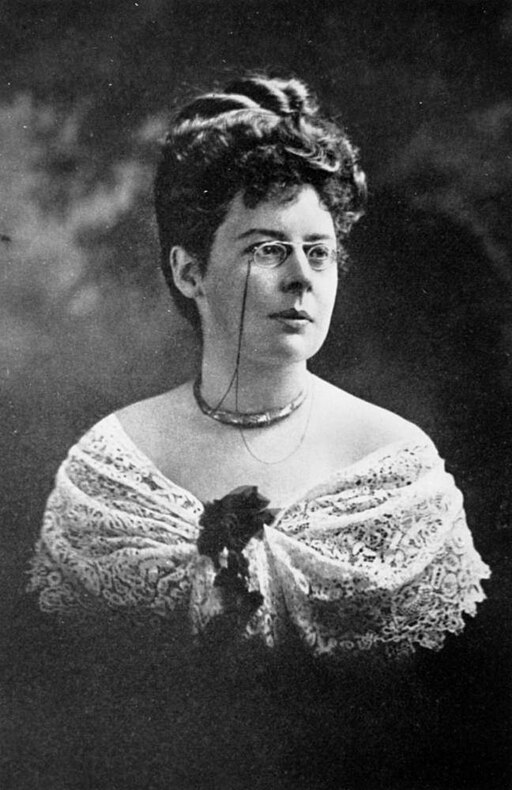
Edna Davies

So, for my AWW post I started at the end, where we get some facts. Her death was reported on 26 December 1952 in the Family Notices section of The Pioneer (from Yorketown, South Australia). It said she was 56 years old, which suggests she was born in 1896. The notice gives her name as Edna Irene, identifies her parents, and names her siblings as Daisy, Keith and Jack (deceased).

There are two other entries for her in the newspaper in December. On 12 December, a brief article announced that ‘Miss Edna Davies, “Pioneer” representative and correspondent, has been absent for some weeks because of ill health, and is at present in hospital, where she may have to spend some time yet’. They identify someone who will gather news, and add that “until Miss Davies’ return to Minlaton, advertisements, or payment of accounts, should be sent direct to the Pioneer Office”, which suggests she had an administrative role. They conclude this announcement, by saying that ‘The weekly feature “Comments on the News” (Written by Miss Davies) will, we regret, have to be temporarily suspended”, which confirms her writing contribution.

On 26 December, the same day the death notice appeared, they published a brief obituary. Here it is in full:

Press and Radio Correspondent Dies
Yorke Peninsula generally will feel the loss of Miss Edna Davies, of Minlaton who died in an Adelaide Hospital on Monday. Miss Davies, whose name is particularly familiar to readers of “The Pioneer,” has served many years as Southern and Central Yorke Peninsula’s chief correspondent for radio stations, provincial and metropolitan newspapers. People in many Peninsula towns will miss the friendly weekly phone calls she used to make in her search for news about the doings of local organisations and people. Her articles, as well as her Peninsula news items, have been of great value and interest, and we join her brother and sister and our readers in mourning her sudden demise.

So, it’s likely that she was born in Minlaton, central Yorke Peninsula, which is about 30 kms north of Yorketown, the home of her employer The Pioneer. Indeed, on 20 March 1926, a brief article appeared in The Pioneer, headed “Minlaton. Farewell to Miss Edna Davies”. The article describes an event that was held at the Minlaton Institute “to bid farewell to Miss Edna Davies and Mr. Jack Davies” (presumably the brother mentioned in the death notice.) They were leaving for London. (Indeed, according to Adelaide’s The Register, they left on 20 March). There were “eulogistic addresses” and “a useful cheque” was handed to Miss Davies. What does this tell us? Not a lot, but we can glean some information. She was around 30 years old, and seemingly not married. She was known in the community, at least enough for her departure to be reported on, albeit social news was more common at the time. It also tells us – from the headline – that it was she, not her brother, who was most known.  

Since writing my AWW post, I have done more research, and have discovered something about why she was known in the community. For example, Adelaide’s Observer (3 November 1923), writing on the Central Yorke’s Peninsula Agricultural Society’s annual show, observed that “the show committee provided the dinner … under the able management of Miss Edna Davies … Things worked smoothly in this department”. The article also praises the work of the Society’s secretary, Mr D.M.S. Davies, Edna’s father.

Anyhow, back to her chronology, three months after the report of her going to London, Moonta’s The People’s Weekly (12 June 1926) writes about the Minlaton Literary Society’s fourth annual musical and elocutionary competitions, advising that entries go to “secretary (Miss Edna Davies)”. This must have been a clerical error because, from the many newspaper reports under her by-line – and headed “Travel” or “Our London Letter” – it’s clear that she was in England by June 1926, then through 1927 and probably into early 1928. It’s possible that some of the articles dated later in 1928 were written back home.

Certainly, on 31 May 1929, there is a report in The Pioneer of the Minlaton Institute Literary Society’s seventh annual musical and elocutionary competitions and once again entries were to go to secretary Edna Davies. She probably was back on the job then. From this time, there are more articles, stories and columns – including her “Comments on the News” – by her South Australian papers. Together they build up a picture of who she was, and what she thought about life – local, national and international.

One that captured my attention was written from England, and published in The Pioneer on 6 January 1928. She starts by saying she hadn’t been doing much sightseeing so was “short of material” for her London Letter. So, she writes about some reading she’s doing about Australia, including a book by Mr Fraser. From what she says, I believe the book was Australia: The making of a nation (1911/12) by Scottish travel writer John Foster Fraser. Chapter 19 is tilted “A White Australia”. Fraser, a man of his times, understands the desire for a “white Australia”, but asks this:

What will Australian people say when the question is put to them, “As you are not developing this region [the great uninhabited north], what right have you to prohibit other people from developing it? It was not your land in the first instance. You obtained it by conquest that was peaceful. What can you do to resist conquest by force of arms? Who are you to say to the world, Let other peoples crowd together and be hungry owing to congestion of population, live cramped and struggling lives, but we, although doing practically nothing to develop our own resources, do not want anybody else to come in and develop the resources of a part of the world not given to us but given to the human race?'”

Davies is taken with this question and asks, “Have we all studied the pros and cons of the question carefully, so that should it be wanted, we can without hesitation give a carefully thought out decision after viewing the question from all sides. Looking back through history we see that no nation has ever come into, or held its own, without fighting for it, so why should we be an exception”. Her thinking – and Foster’s thinking – is not our thinking, but that she took the issue up and was published tells us something about her and the times. Neither of course consider that “little” line of Foster’s that “It was not your land in the first instance”.

Another randomly chosen example of her thinking comes from 20 June 1952, when she writes in her column “Comments on the News”:

READING about a press conference Mr. Menzies had recently in London this thought struck me — “What much wider outlook British pressmen seem to have than do their colleagues in Australia.”
And that’s a bad thing for Australia. Because if pressmen haven’t a wide outlook how can the public, who depend on them for news of the outside world, be expected to have one.

She slates it to the “old problem” of Australia’s geographic isolation, suggesting that “we are so isolated from other places that it it [sic] hard to realise that their welfare and their doings are important to us”.

AustLit lists 5 stories by her, and AWW lists 12 short stories in Stories from online archives (11 from the 1930s and 1 from the 1940s), but these are just a few of many short stories by her that were published in South Australian newspapers, and The Bulletin. I shared one of The Bulletin stories in my AWW post. Titled “Scrub”, it’s perfect “Bulletin-fare”, with its story of a woman who cannot get over a childhood nightmarish experience in the bush, and an intriguing take on lost-child-in-the-bush tradition in Australian culture.

Edna Davies turned out to be another example of an independent woman who seems to have made a career for herself in journalism and writing.

Sources

Edna Davies, “Scrub“, The Bulletin, Vol. 56 No. 2906 (23 Oct 1935)

All other sources are linked in the article.

Angus Gaunt, Anna (#BookReview)

Last month, I posted on the winners of the 2025 Finlay Lloyd 20/40 Publishing Prize, of which Angus Gaunt’s Anna was one. I am thrilled with this prize, not only because I love the novella form, but because of the variety of stories we are seeing. So far the fiction winners have been an historical novel from Kim Kelly, a contemporary coming-of-age novel from Rebecca Burton, and an audacious “what if” story from PS Cottier and NG Hartland. Three very different books, and now Anna makes it four.

When I started reading Anna, I thought I was heading into a dystopian novel. It is told third person from Anna’s perspective, and starts with her walking in the woods. A young man is following her. The woods are not identified, and neither is the young man, but she recognises him as a guard from the place she’s just left. Through their initial interaction, we learn that “the war is over” and the gates had been opened. Therefore, she firmly implies, he has no jurisdiction over her.

Anna, we discover as her journey continues, is about 15 years old, and had been taken to a labour camp with her family about three years ago. Her parents had died but she’s hoping her remaining siblings are ahead of her, safe in the exodus she’d missed. We know nothing about the woods – but they do not sound Australian – nor do we know the time setting. It is cold. There are some generic animals and plants – deer, hares, mushrooms, berries. The story focuses on Anna’s thought processes and her survival. There is almost nothing about the sociopolitical situation that got her there. We do know that Anna and the guard speak different languages, which suggests an invasion or some sort of oppression of minorities, but Gaunt does not go there. The notes I made during my reading, include this: “Timeless, placeless, non-political, means not dystopian? More allegory?”

The judges don’t call it either of these, but on “why this book is different” they say:

Winter is only beginning to thaw in a remote forest as Anna treks for her survival, accompanied by someone she cannot trust. With distilled clarity, this short novel carries the reader on a journey from victimhood to self-possession.

So, it is about survival, or, more precisely, about the inner resources you need to develop to overcome a dire situation.

Anna is a moving and absorbing read. Gaunt quickly engages our sympathy for his protagonist, young and defenceless in the woods. The language in the first two paragraphs sets up uncertainty. It starts:

Anna had already walked further than she meant to, but did not want to go back, not yet. She was basking in the sun … also in the silence. She had not done something like this for a long time … (p. 9)

Then she stops and looks up, where she sees “a large predatory bird … floating on secret air currents, delicate wing tips spread”. “Predatory” but “delicate”. Should we be worried? Then she sees the young guard, later identified as Yevgeny. He’s very young, uncertain, and in a show of bravado he tries to shoot the bird, but fails. He’s never shot anything before. And so the narrative and its main characters are established. Anna is alert, sensitive, intelligent and has some nous and wisdom about her. The guard, also young, lacks confidence, experience and nous, and is confused about his role as a man, a soldier, a human. This makes him potentially dangerous but also vulnerable. We – like Anna – are on the watch for which way he might go.

And so the novel progresses as this uneasy, wary-of-each-other pair journey through the woods, looking for the railroad and its promise of civilisation. Early on, during a brief time when she and Yevgeny are not together and she has returned to the camp, Anna meets a dying man who gives her his last food. Then later, together, they come across a cottage containing a barely surviving couple.

This brings another literary form to mind, the journey narrative, the search for home, a new one or old one, and – perhaps – for self. In journey narratives, physical and spiritual or emotional challenges are faced, and people are met. The journeyer must rely on inner resources to overcome the challenges, including assessing whether the people met are to be trusted or not. This is what we watch Anna do. We are privy to her thoughts as she goes, as she draws together past knowledge and present experience, and we gain confidence in her ability to make good decisions. Nearly half way through the story, her mind drifts to the schoolroom. It is comforting, but she stops herself,

recognising that she was attracted by the emotion of it rather than its practical application. There was not room for emotion. She was glad of this thought. Feelings and emotion could only cloud the mind, waste precious resources. All resources were precious. Her mind was clear now. She had a choice to make and she made one. (p. 56)

Of course it’s not a straight line, and Anna, like any journeyer under stress, slips back several times before getting a grip once more.

Anna is beautiful to read, from the first sentence. The language is tight but expressive. The necessary tension is off-set by moments of tenderness and hope, not to mention some subtle foreshadowing. And the characterisation is warm and empathetic.

I concluded my post on last year’s winner, The thirty-one legs of Vladimir Putin, that it was an audacious “what if” story. Anna is also audacious, in a different way. It calls on the tropes of established forms, like allegory and the journey narrative, but makes them into something new, something that confronts issues like trust and power in a way that feels both modern and timeless.

Read for Novellas in November.

Angus Gaunt
Anna
Braidwood: Finlay Lloyd, 2025
110pp.
ISBN: 9780645927047

Review copy courtesy Finlay Lloyd.

Teffi, The examination (#Review, #1925 Club)

Mostly for the Year Clubs, I read an Australian short story, usually from one of my anthologies. However, for 1925, I couldn’t find anything in my anthologies, so turned to other newspaper-based sources, including Trove, but I mainly found romances or works that were difficult to access. And then, out of the blue, I found something rather intriguing, a story titled “The examination”. It was written by a Russian woman named Teffi, translated into English by J.A. Brimstone, and published in The Australian Worker, an Australian Workers’ Union newspaper, on 25 November 1925. I don’t know when it was originally written, nor have I been able to found out who J.A. Brimstone was.

Who is Teffi?

The Australian Worker ascribes the story to N. Teffi. This nomenclature is interesting. My research suggests that Teffi, not N. Teffi, was the pen name of Nadezhda Lokhvitskaya (1872-1952). Wikipedia gives her pen name as Teffi, but its article on her is titled Nadezhda Teffi. Curiously, the article’s history page includes a comment from a Wikipedian, dated 11 June 2014, that “Her pen name is only Teffi, not Nadezhda Teffi”. This Wikipedian “moved” the article (Wikipedia-speak for changing titles) to “Teffi”, but it was later moved back to “Nadezhda Teffi”. Seems to me it should be under “Nadezhda Lokhvitskaya” or “Teffi”. But, let’s not get bogged down. There’s probably more I don’t know about how she used her name over time.

The more interesting thing is who she was. Wikipedia provides what looks like a fair introduction to her life, so I won’t repeat all that here. Essentially, it says she was a Russian humorist writer who could be both serious and satirical, but whose gift for humour was “considered anomalous for a woman of her time”. However, she proved them wrong, “skyrocketing to fame throughout Russia with her satirical writings, so much so that she had candies and perfume named after her”.

Literary scholar Maria Bloshteyn, writing in the LA Review of Books in 2016, would agree. She starts her piece by describing Teffi as “once a Russian literary superstar”, and says that “Nadezhda Lokhvitskaya claimed that she took the comic-sounding and intentionally androgynous nom de plume for good luck”. Bloshteyn writes:

She began to publish in her early 30s and tried her hand in various genres, but it was her short stories, with their keen and hilarious observations of contemporary society, that were read by everyone from washerwomen to students to top government officials. They won her literary success on a scale unprecedented in pre-Revolutionary Russia.

My short story, however, was written post-Revolution, given we are talking 1925. But, I’m jumping ahead. Tsar Nicholas II was a big fan, Bloshteyn says, as was Vladimir Lenin “with whom she worked in 1905 at the short-lived New Life [Novaia Zhizn’] newspaper”. She left Russia in 1919, during the “Red Terror” when things started to turn sour. Her popularity continued in the émigré world. After the collapse of the Soviet Union, her books were read again and “celebrated as recovered gems of Russian humor”.

This potted history sounds very positive, but Bloshteyn explains that there was also darkness in her life, including the death of her loved father when she was young, difficult relationships with siblings, a failed marriage, mental health problems, and more. Also, “she became a victim of her immensely successful but severely confining brand”, meaning editors and readers “only wanted the Teffi they knew” and, worse, “they perceived all of her stories as funny, even when they were clearly tragic”. How frustrating that would be, eh?

She was inspired by – and has been likened to – Chekhov. Bloshteyn says:

Her appreciation of the absurd, of the comic minutiae of life, helps set off the darker or more transcendent aspects of our existence, but her main focus, in the tradition of the great 19th-century Russian writers, was always human nature itself: what makes us tick and why.

I’ll leave her biography here, but if you are interested, start at Wikipedia, and go from there.

“The examination”

“The examination” tells the story of a young girl, Manichka Kooksina, who is sitting for her end-of-year exams which will decide whether she moves on to the next grade. Important things ride on passing them, including staying with her friend Liza who has already passed and getting the new bike her aunt promised her if she passed. However, instead of knuckling down to study she fritters her time, trying on a new dress, reading, and finally filling her notebooks with a prayer “Lord, Help”, believing that if she writes it hundreds or thousands of times she will pass. Needless to say, she does not do well.

The story is beautifully told from her perspective, with much humour for the reader as she flounders her way through preparation and the exam itself. She feels persecuted, an animal being tortured, and resorts to the absurd solution of writing lines, while her nervous peers have at least tried. I wondered why this particular story of hers was chosen by The Australian Worker. Was it the only one available to them in English? Did the examination theme feel universally relevant? According to Bloshteyn, Teffi said that “even the funniest of her stories were small tragedies given a humorous spin”. This is certainly a “small tragedy” for the – hmm, foolish, procrastinating, but believable – Manichka.

Bloshteyn’s essay is primarily a review of two books that had been recently published, Tolstoy, Rasputin, others, and me: The Best of Teffi and Memories: From Moscow to the Black Sea. The former includes sketches and some of her “best loved short stories”. GoodReads says of it that “in the 1920s and 30s, she wrote some of her finest stories in exile in Paris … In this selection of her best autobiographical stories, she covers a wide range of subjects, from family life to revolution and emigration, writers and writing”. I don’t know whether “The examination” is one of them, but Bloshteyn writes, of the child-themed stories she mentions, that all “show children in the process of getting to know the world around them and finding the means to cope with it”. Manichka, although showing some resourcefulness, has a way to go.

I was thrilled to find this little treasure in Trove, and will try to read more Teffi. Has anyone else read her?

* Read for the 1925 reading week run by Karen (Kaggsy’s Bookish Ramblings) and Simon (Stuck in a Book).

N. Teffi
The examination” [Accessed: 21 October 2025]
in The Australian Worker, 25 November 1925

Monday musings on Australian literature: Forgotten writers 15, Tarella Daskein

I first came across Tarella Daskein back in 2021 when Bill (The Australian Legend) wrote a post about her as the result of her coming up in discussions and reading about Katharine Susannah Prichard. She then slipped my mind until a couple of months ago when I was searching around for a subject for my Australian Women Writers post that month. This post, like most of my recent Forgotten Writers posts, s a minor revision of the one I posted there.

Tarella Daskein

As with many of the lesser-known writers we research for this blog, Tarella Daskein (1877-1945) was somewhat challenging to pin down. It’s not that she wasn’t known. Indeed, Wikipedia and AustLit both have entries for her. However, there were conflicting details of her life. For example, both Wikipedia and AustLit had her death date as 1934, which was curious because Adelaide’s The Advertiser reported on her visiting that city in June 1935. How could that be? Further, The Advertiser also had her husband as Mr. T.S. Daskein while Wikipedia and other newspaper articles had him as Mr. T.M. Daskein. Compounding all this was her use of multiple names, including some confusion over her maiden name. The above-mentioned Advertiser, for example, reported it as Quinn. AustLit, however, resolved this by noting at the end of its entry that her name had been incorrectly spelled as ‘Quinn’ in Miller and Macartney’s Australian Literature: A Bibliography (1956). The death date issue was clarified by, strangely, Wikipedia’s article on her father, Edward Quin, which gave her death as 1945 and cited a newspaper notice as evidence. And a death notice for her husband confirms him as T.M. not T.S.

So, with all that resolved, who was this Tarella Daskein? Tarella Ruth Quin was born in Wilcannia, second daughter to pastoralist and one-time member of the New South Wales Legislature, Edwin Quin, in 1877. She is best known as a writer of children’s stories, but also wrote three adult novels – A desert rose (1912), Kerno (1914) and Paying guests (1917) – and many short stories which were published in contemporary newspapers and magazines. AustLit provides a good outline of her origins. She was one of eight children. Her father owned a dairy farm called ‘The Leasowes’, near Victoria’s Fern Tree Gully, and a sheep station called ‘Tarella’, after which she was named, in far western New South Wales near Wilcannia. ‘Ella’, as she was known, was educated in Adelaide, but spent most of her life on stations. She married Thomas Mickle Daskein, part proprietor of a station in far northwest NSW.

Cover for Tarella Quin Gum Tree Brownie

AustLit says that her first writing comprised short sketches of station life, which were published under the pseudonym “James Adare” in the Pastoral Review. At the editor’s suggestion, she also wrote some stories for children, which she sent to Ethel Turner, hoping to have them published in Sydney newspapers. However, Turner apparently recommended they be published as books. Her first book, Gum Tree Brownie, was published in 1910, with illustrations by Ida Rentoul whom Ella’s younger sister, Hazel, knew at school. This began a long partnership between the two, with Ida Rentoul Outhwaite illustrating many of her books for children. Wilde et al say she was “one of Australia’s most successful writers of fairy-stories for children” and that “humour, irony, a fluent, dramatic style and fantasy reminiscent of Lewis Carroll enliven her stories”.

Bill, as mentioned above, came across her, initially in Katharine Susannah Prichard’s autobiography, Child of the hurricane. Apparently, Prichard was governess for a year at Tarella Station in 1905, by which time Tarella, who was six years older than KSP, was already a published author. Prichard, says Bill, is “pretty dismissive” of Quin’s writing.

However, not all were. Several contemporary reviewers praised her adult novels, often singling out Kerno: A stone for special mention. On 10 April 1915, Adelaide’s Observer wrote:

Kerno, although similar in some respects, is nevertheless distinctly different from A Desert Rose. The latter is a novel – the former is a study – a keen analysis of human feelings and desires. One cannot well peruse the book without thinking deeply, and wondering what one would have done in circumstances like those in which the leading actors found themselves placed. Young people and those having a preference for light ephemeral literature may be inclined to consider the story rather tame; but all who have a true appreciation for human nature, and endeavour to probe into its many and varied qualities, will find in it compelling and absorbing interest.

Those who praise Kerno mostly praise it for its “real” characters and deep understanding of human nature. Indeed, the Observer says that it “richly deserves to rank among the best truly Australian novels”. Daskein was also praised for her understanding of and ability to convey life in the bush and, as the Observer says, for her “descriptive writing which … captivates the reader”.

Notwithstanding all this, Quin mostly wrote for children, with The Australian Women’s Weekly claiming, after the publication of Chimney Town in 1936, that

She has published more ambitious volumes, but her tales for children have a unique charm that makes one feel that this is her real metier.

Quin’s publishing career lasted from around 1907 to the mid-1930s, so it was no flash in the pan. AustLit lists over 20 works by her, but this may not be all. Regardless, she was well-known to readers of her time, and, according to Adelaide’s The Rouseabout, had some presence in literary circles, including being “a foundation member of the Melbourne centre of the P.E.N. Club and a constant attendant at its meetings”. She died on 22 October 1945, at a private hospital in Melbourne. The fact that I found little mention of this beyond The Rouseabout’s short article suggests that in the last decade of her life – after the death of her husband in 1937 – she faded from view.

The piece, “The camel”, which I chose for AWW, was published in The Bulletin’s Christmas issue in 1935. It shows a writer a writer who knows the outback, knows how to entertain her audience, and, who firmly belongs to the bush tradition. Life is tough, but our woman protagonist is resourceful.

Sources

Bill Holloway, “Tarella Down a Rabbit Hole“, The Australian Legend (blog), 16 December 2021 [Accessed: 9 November 2025]
The Rouseabout, “In Town and Out“, The Herald, 12 November 1945 [Accessed: 16 August 2025]
Tarella Quin, AustLit [Accessed: 16 August 2025]
Tarella Quin, Wikipedia [Accessed: 16 August 2025]
William H. Wilde, Joy Hooton and Barry Andrews, The Oxford companion to Australian literature. Melbourne, Oxford University Press, 2nd, edition, 1994

Prime Minister’s Literary Awards 2025, Winners

In lieu of my usual Monday Musings post, I am reporting on the 2025 Prime Minister’s Literary Awards which were announced this evening, and which I attended via the live-stream from the Creative Australia website. I shared the short list several weeks ago, so I won’t repeat those here.

The awards ceremony was a long one, and I suspect longer than planned, because Mr Gums saw the winners come through on his phone before they had all been announced. The problem, I’m guessing, of automatic scheduling!

The event was emceed by an Australian comedian, writer, actor, and television presenter, Alex Lee, whom I don’t know. (I guess you are going to say, “where have you been?”) She injected lightness and humour into the opening, a bit like you see at America’s Academy Awards. Like the Academy Awards, some of the jokes worked and some didn’t. The thing is, I suppose, different jokes will work for different people.

She did say, however, that there were 645 entries this year, 100 more than last year. That says something, I presume, about the health of writing and publishing in Australia.

 There were then two speakers, the Chair of the Writing Australia Council, Larissa Behrendt, who commented on the appropriateness of holding the Awards at the NLA which embodies the “the heart of our nation’s stories”. She said that the Awards “celebrate writing, reading ideas and the voices that shape who we are”, and she thanked Selina Walker for her welcome. She reminded us of the 65,000 years of storytelling in our country.

Behrendt then introduced the Minister for the Arts (among his many hats), Tony Burke, whose passion for the arts is palpable to anyone who hears him speak. Behrendt noted his appreciation of the centrality of First Nations Arts to Australia’s cultural policy. And said that this is a minister who shows up at opening nights, awards nights, festivals and so on, because he deeply understands why the Arts matter.

I couldn’t possibly share all that Burke said. He recognised the main players, commenting first on the generosity of the word “welcome” Selina Walker’s Welcome to Country. He thanked Australian Greens leader, Sarah Hanson-Young, who was present and who has been there, in support, through the whole cultural policy journey. He thanked Alex Lee for injecting a bit of fun, and he acknowledged Larissa Behrendt (who is Chair of the National Library of Australia Council) and Clare Wright (who is Chair of the Council of the National Museum of Australia.) He noted that it has been a long time since a writer has chaired the NLA’s Council, and an historian that of the NMA. (I groaned inwardly as we are still waiting for an archivist – or appropriate professional – to chair the council of the National Film and Sound Archive!) But all progress in this sphere of Boards/Council appointments is good!

Burke talked at some length about the importance of the arts and, what he believes to be the strength of the Government’s Creative Australia cultural policy. He talked particularly about writing. he argued that the ability to learn from writing is the gift “we celebrate tonight”. He suggested that writing is the only art form that we don’t react to with physicality. Music, Dance, Visual Arts, and so on, engage through the senses – sight, hearing – but writers work on our imaginations, writing lives within our minds. (There are some debates in this, I think, but I still like his point.)

He also quoted from three books to illustrate his points. First was from Kelly Canby’s children’s book, A leaf called Greaf, which ends on the idea of things being held in the heart forever, and which is the gift writers give us. Then he mentioned Fiona McFarlane and Michelle de Kretser who spoke to untold stories. Highway 13 deals ingeniously with the fact that we hear more about the person who should not be remembered rather than the stories of those affected by that person’s actions. Then he quoted from Theory and practice, which I will abbreviate to “that was the meaning of assimilation … it trained us to disappear”. Writers, he said, make sure that people are seen. (For me, though, he raised yet another idea to explore in this wonderful novel.)

There was more, but I think that’s a great point on which to end the introductions.

And the winners

  • Fiction: Michelle de Kretser, Theory & practice (Text, my review)
  • Poetry: David Brooks, The other side of daylight: New and selected poems (UQP)
  • Nonfiction: Rick Morton, Mean streak (Fourth Estate)
  • Australian history: Geraldine Fela, Critical care: Nurses on the frontline of Australia’s AIDS crisis (UNSW Press)
  • Children’s literature: Peter Carnavas, Leo and Ralph (UQP)
  • Young adult: Krystal Sutherland, The invocations (Penguin)

Links on authors’ names are to my posts on these authors. (I loved that Children’s Literature winner, Peter Carnavas, is a teacher-librarian. Go him.)

Now, this being the Prime Minister’s Literary Awards and, anyhow, this being a gathering of writers who as a group are passionate about ideas, many political comments were made, lengthening the supposedly short speeches. These comments addressed what is happening in Gaza, the issue animal rights, the treatment of human beings by government social policy, and the gutting of humanities and humanities research in Australian universities. In the case of the last, Geraldine Fela’s video speech had been cut off at the allotted time, but she had asked Clare Wright to complete her speech, which Wright did!

Thoughts anyone?

Monday musings on Australian literature: Forgotten writers 14, Gertrude Mack

Gertrude Mack is the third of the Mack literary sisters, and by far the least known, though at the time she was well-recognised, with her activities and thoughts frequently reported in the newspapers. Her “disappearance” from view is most likely because, unlike her sisters, all her writing was for newspapers and magazines. She did not have one published book to her name. It makes a big difference to a writer’s longevity in the literary world.

As with many of my Forgotten Writers posts, I researched Gertrude Mack for the Australian Women Writers’ blog. This post is a minor revision of the one I posted there. So, who was she …

Gertrude Mack

Gertrude Mack (?-1937) was an Australian journalist and short story writer. The youngest of thirteen children – who included five daughters – Mack was born in Morpeth, New South Wales, to Irish-born parents, Jemima (nee James) Mack and the Rev’d Hans Mack. As a child, she lived in various parts of Sydney including Windsor, Balmain and Redfern, and was educated at Sydney Girls’ High School. Two of her older sisters also had literary careers, Louise Mack (see my posts) and Amy Mack (whom I featured last week). These sisters have been documented in Dale Spender’s Writing a new world: Two centuries of Australian women writers (1988) and by their niece Nancy Phelan in the Australian Dictionary of Biography, but neither Spender nor Phelan mention Gertrude. According AustLit, a diary of Mack’s is included in Phelan’s papers at the State Library of New South Wales. Curious.

This dearth of formal biographical information meant relying heavily, for this post, on Trove, where articles written by Mack abound. They tell of a curious and adventurous woman who was able to report firsthand on those challenging 1920s and 30s in Europe and the Americas. For example, in 1924, four years after the Mexican Revolution, she decided to go to Mexico City, something her American friends thought “a wild whim”. She writes for The Sydney Morning Herald (22 November 1924), that “according to American newspapers, it did seem a risk, but I knew their way of making any Mexican news appear hectic”. In the end, it does prove difficult, and she fails on her first attempt. She admits that she was not prepared for the poverty she sees in Juarez, just over the border from El Paso, and “was not yet accustomed to the unshaven Mexican”, but she later wrote admiring pieces on the country.

Mack spent eight years in London from around 1929 to 1937, and returned at least once for a few weeks in 1933. It was a difficult time in Europe, and The Sun (18 June 1933) reports that she had found “the same sense of strain in all the European countries, and this has been intensified more recently by the war menace, which seems to be very real.” I have not been able to find an image of her, but during this visit, sister Louise described her in “Louise Mack’s Diary” in the Australian Women’s Weekly (17 June 1933):

Tall, very slight and svelte, in a smart black frock of her own making, her hair marcelled, her big, grey eyes looking big-ger than ever under the glasses she had taken to lately. Elegant? Yes, certainly.

An interesting little fact which came up in a couple of the newspaper reports of this 1933 visit was that on her voyage she, and two other “matrons” had been in charge of 48 children, who had been selected for the Fairbridge Farm School to be taught various branches of farming. Sydney’s The Sun (June 18) explained that “the children, whose ages ranged from eight to twelve years, included both boys and girls, and were chosen by the selection committee of the Child Immigration Society, which body exercises the greatest care in choosing only suitable potential citizens for Australia, says Miss Mack”. If you haven’t heard about Fairbridge, check out Wikipedia. Miss Mack might have had faith in it, but the whole scheme was marred by dishonesty, and worse, child abuse.

Gertrude returned again to Australia in 1937. There was much interest in her return, with newspapers reporting on her thoughts from the moment she first touched the continent in Western Australia. The West Australian (3 March 1937) wrote that she had passed through Fremantle in the “Orama”, and quoted her as saying Australian writers were doing well in London. “Henry Handel Richardson was acclaimed by many critics as the finest writer of the day”; and Helen Simpson (my first Forgotten Writer) “had taken up broadcasting work in addition to her writing”. She said Nina Murdoch had had success with Tyrolean June and Christina Stead with Seven poor men of Sydney. The paper observed, tellingly, that “undoubtedly Australian writers were getting more recognition in London than in their own country”.

It also quoted Mack as saying she believed England was interested in stories about Australia, but that their interest depended “entirely on the topic of the story.” Unfortunately Australian writers “usually presented the drab side of the life of the country and laid too much stress on the droughts and the drawbacks” and “the frequent descriptions of struggles against drought and the hardships of Australian life gave readers a wrong impression of the country”. Consequently, readers “did not realise that the country had a normal life, with a bright social side, and the mass in England seldom knew that there was very fertile land in Australia”. According to Mack, “German people knew more about Australia and were more interested than the people of any other country”.

Adelaide’s News (6 March 1937) took up the issue of how Australia is viewed, but with a slightly different tack, writing:

“It would be difficult,” said Miss Mack, “to make the average uneducated English man or woman believe that there is, in Australia, such a thing as culture. English people would be surprised if they could have a glimpse of real country life on a big station.
The only way to overcome this wrong idea.” she said, “is by our literature, which has not yet developed fully.”

Although she was talking about staying in Australia for just 6 months, it appears that Gertrude Mack was seriously ill when she returned in 1937. She visited her brother C. A. Mack, of Mosman, but died in a private hospital in Darlinghurst on Wednesday 31 March and was buried at the Northern Suburbs Crematorium on the Friday.

A few days later “an appreciation” written by “W.B.”  appeared in The Sydney Morning Herald (6 April). W.B. It’s a moving tribute:

To those of us who had the happiness and the privilege of an intimate association with Gertrude Mack over a long period, abroad and in Australia, her death has meant a very poignant personal loss and sorrow. Her happy outlook on life, her faculty for perceiving the humorous side of things, and her sensitive reactions to atmosphere, made her a delightful companion, and she made friends among every class of people, whether they were foreigners or people of her own race. She had an unusual flair for getting at the heart of the interesting aspects of life and affairs, and this, added to her other gifts, enabled her to write such charming and interesting sketches, stories, and interviews. Her short stories and sketches were invariably the outcome of personal contacts. She could paint engaging pictures of people and places, and make them real to her readers. She also possessed outstanding musical ability, and might have won distinction as a pianist had she elected to take up music as a profession, for she had a fine critical perception and a rare appreciation of the true values in music.

She also translated stories from Russian, collaborating with Serge Ivanov to publish in English a volume of N. A. Baikov’s tales for children. Gertrude Mack was a fascinating woman, and would be a worthy subject for a biography – either on her own, or as part of a larger biography on the Mack sisters.

Sources

Monday musings on Australian literature: Forgotten writers 13, Amy Mack

In the first decades of the 20th century, a family of sisters made some splash on Australia’s literary scene. I have already written about the eldest of them – Louise Mack – but there were also Amy (this post’s subject) and Gertrude, all of whom appeared in newspapers of the time as writers of interest. They were three of the thirteen children of their Irish-born parents, Rev. Hans Hamilton and his wife Jemima Mack. As with many of my Forgotten Writers articles, I researched Amy Mack for the Australian Women Writers’ blog, where we have several posts devoted to her.

Amy Mack

Amy Eleanor Mack (1876-1939) was a writer, journalist, and editor. She was six years younger than the more famous Louise, and, says Phelan in the Australian dictionary of biography, was “less temperamental … and lived more sedately”, which is not to say she lived a boring life.

Mack began work as a journalist soon after leaving school, and from 1907 to 1914 was editor of the ‘Women’s Page’ of the Sydney Morning Herald. She married zoologist Launcelot Harrison, in 1908, and in 1914, they went to England where he did postgraduate work at Cambridge, before serving in Mesopotamia as advisory entomologist to the British Expeditionary Force. While he was away, Mack worked in London as publicity officer for the ministries of munitions and food.

The couple returned to Sydney after the war, with Launce becoming professor of zoology at the University of Sydney, and Amy continuing her literary career among other roles and activities. They did not have children. According to Phelan, after her husband died she continued to publish occasional articles, but her impulse to write faded as her health declined. She died of arteriosclerosis in 1939.

Works

Amy Eleanor Mack’s subject was nature, and she wrote about it in newspapers and books, for adults and children. Australian ecologist, Manu Saunders, writes on her blog that:

Australia has a wonderful heritage of nature writers, many working before nature writing was ‘a thing’. The national collection of Australian children’s books about native wildlife is inspiring. Even more inspiring, many of Australia’s best nature stories were written in the early-mid 19th century, and mostly by women.

And one of those women, she continues, was Amy Eleanor Mack. (I have written before on one of our early colonial nature writers, the pioneering Louisa Atkinson.)

Book cover for Bushland stories

Mack’s first publications were two collections of essays, A bush calendar (1909) and Bush days (1911), which were compiled from articles she’d written for the Sydney Morning Herald. She also wrote two popular children’s books, Bushland stories (1910) and Scribbling Sue, and other stories (1915). Wikipedia lists 14 books, many of which were first published in newspapers, but all of which have nature-related titles, like The Fantail’s house (1928) and The gum leaf that flew: And other stories of the Australian bushland (1928).

Her books were well-reviewed in the newspapers of the time. Her first, A bush calendar, was described by Sydney’s The Farmer and Settler (26 November 1909), as charming, “a sympathetic review of bird life and plant life in the Australian bush during the four seasons of the year”. But what is interesting is what they say next:

It is the kind of book that ought to be on every girl’s bookshelf, and every thoughtful and intelligent boy’s also, being not only an exceedingly pleasant thing to look at and to read, but one calculated to induce in many a desire to get to know more of nature in some of her sweetest phases.

I’m intrigued by the gender differentiation – “every” girl, but only “every thoughtful and intelligent boy”. These sorts of insights into other times make researching Trove such a joy. Anyhow, the review also suggests that it would be “a delightful remembrancer for Australians abroad”. A year later, on 26 November 1910, Sydney’s The World’s News, reviewed Mack’s children’s book, Bushland stories, calling it an improvement on A bush calendar. It comprises a “collection of fables, allegories, fairy tales, or whatever one chooses to call them” which, the News says, has “created a folklore for young Australians”. In it, Mack personifies nature, with birds, beasts and fish all acting and speaking “like rational beings”. Each story has a moral but there is none of the “preachiness, which many youthful readers shy at”.

Reviews of later books continue in a smilier vein. In 1922, on 6 December, Lismore’s Northern Star writes about Wilderness, which, it says,”tells in a most interesting way of the fascinations of a piece of land which once had been a garden, planted with fruit trees and roses, but which has been neglected until the bush reclaimed it for its own”. This is the book that Saunders writes about in her blog in 2017. The book had been originally published in three parts in the Sydney Morning Herald. Saunders explains that it

tells the story of an unnamed patch of wild vegetation in Sydney (Mack never names the city, but given the original publisher and the wildlife she describes, it seems pretty obvious). Mack describes the plot so vividly and intimately that you imagine yourself there. You can visualise Nature reclaiming this plot of land, left untended after the keen gardener who owned it passed away.

Saunders then describes its content, including examples of the nature Mack describes, as well as her attitude to it and her observations. Saunders was surprised but “weirdly” comforted to find conservation messages that are still relevant today embedded within the book.

Legacy

Australian feminist Dale Spender, in her book Writing a new world, says a little about Amy Mack, though she spends more time on Louise. However, she makes a point about the Mack sisters and their peers, Lilian and Ethel Turner:

Lilian and Ethel Turner, Louise and Amy Mack were part of a small group of spirited literary pioneers who at very early ages adopted public profiles in relation to their work. When they moved into the rough and tumble world of journalism – when they entered competitions, won prizes, and published best-selling novels before they were barely out of their teens – they broke with some of the long-established literary conventions of female modesty and anonymity. They sought reputations and in doing so they show how far women had become full members of the literary profession: they also helped to pave the way for the equally youthful and exuberant Miles Franklin whose highly acclaimed novel, My Brilliant Career (1901), was published when the author was only twenty-one.

Ever political, Spender argues that had it “been brothers (and ‘mates’)” who created the sort “colourful and creative community” these sisters did, and achieved their level of literary success, we would have heard of them. Books would have been written about ‘their “literary mateship” and they would have been awarded a place in the readily accessible literary archives’. But,

because these writers were women, and because they have been consigned to the less prestigious categories of journalism and children’s fiction (both a classification and a status with which I do not agree) they, and their efforts, and their relationships – to rephrase Ethel Turner – go unsung.

Amy Mack is less well-known now than her sister Louise, and certainly less well-known than Ethel Turner, but in her time she was much loved. However, even then, she didn’t always get her due, as a reader wrote to The Sydney Morning Herald on 16 April 1935:

With reference to the articles on Australian women writers in the Supplement, one is surprised at the omission of Amy Eleanor Mack, who surely wrote two of the finest books for children ever published in Australia. In “Bushland Stories” and “Scribbling Sue” the true spirit of our bushland has been preserved with a charm and sincerity all its own, and I think I am right in stating that, with the exception of Miss Ethel Turner’s “Seven Little Australians,” no books published in Australia for children had greater sales.

Four years later, announcing her death on 7 November 1939, The Sydney Morning Herald said that her work “had a mark of reality about them that found for her an increasing circle of readers”, but it was “A.T.” of North Sydney, who wrote to this same paper on 8 November, who captured her essence:

Her culture, wit, and broadmindedness, and her marvellous sense of humour made her a figure in the northern suburb in which she resided.

Sources

Nancy Phelan, ‘Mack, Amy Eleanor (1876–1939)‘, Australian Dictionary of Biography, National Centre of Biography, Australian National University, published first in hardcopy 1986.
Manu Saunders, “The wilderness: Amy Eleanor Mack“, ecologyisnotadirtyword.com, 4 March 1917
Dale Spender, Writing a new world: Two centuries of Australian women writers, originally published by Pandora Press, 1988 (sourced in Kindle ed.)

Helen Trinca, Looking for Elizabeth: The life of Elizabeth Harrower (#BookReview)

Elizabeth Harrower The watch tower

Like many, I was astonished when I read Elizabeth Harrower’s The watchtower (my review), upon its publication by Text Classics in 2012. Astonished not so much for its writing, though that is excellent, but for its subject, which is what we’d now call coercive control. The astonishment comes from the fact that The watchtower was first published in 1966, at a time when domestic abuse was hidden. Harrower recognised it, however, and called it out. The book made a splash at the time, but then disappeared from public view, though not completely from academia. Then, in 2012, Michael Heyward and his Text Publishing Company decided to publish it, and so began what biographer Helen Trinca calls, her “second act”.

Looking for Elizabeth is the second literary biography I’ve read by Trinca, the first being Madeleine: A life of Madeleine St John (my review). Trinca must like challenging subjects, because Harrower, like St John, was challenging to write about, albeit in Harrower’s case, Trinca had the benefit of knowing her.

So, what made Elizabeth Harrower such a challenge? Trinca had many conversations with her from 2012 on, including formal interviews for newspaper articles, and Harrower had placed her papers (including letters, reminiscences, and novel drafts) with the National Library, to which Trinca apparently had full access. But interviews and papers don’t tell the full story, particularly if the subject has spent her life “curating” or shaping it, destroying many of her papers along the way, including, as she told Text editor David Winter in 2013, “more than 400 foolscap pages of literary thoughts – part journal, part stories, part eye-witness accounts, secrets and so on”.

Trinca’s biography draws on a variety of sources, which she documents in her Author’s Note. Besides her personal connections with Harrower, which included meetings, phone calls and emails, and Harrower’s papers, she used the papers of others (including Shirley Hazzard, Kylie Tennant, and Judah Waten), all sorts of other records, and interviews with family and friends. Gaps in information are frequently noted within the text – and are sometimes speculated about using that thing that many literary biographers do, the works themselves. How much can – and do – they tell us about the person who held the pen?

Many writers say they begin their project with a question. In Trinca’s case, the framing question seems to have been, Why did Elizabeth Harrower stop writing at the height of her powers? Because, this is indeed what she did. Having written and published four well-received novels – Down in the city (1957), The long prospect (1958, my review), The Catherine wheel (1960), and The watchtower (1966) – she withdrew her fifth completed novel, In certain circles, from publication in 1971, and never published a novel again, despite many encouragements from her friends including Patrick White and Christina Stead. She wrote a few short stories, but gave up writing altogether by the end of the 1970s.

From this literary trajectory, Trinca weaves a moving and interesting story about a fascinating woman. Like Madeleine, this is a traditional, chronologically told biography. It is well-documented, using clear but unobtrusive numbers pointing to extensive notes at the end, and there is a decent index.

“I’ve lived dangerously” (Elizabeth Harrower)

I am not going to tell the story of Harrower’s life, because the biography does that. Essentially, she was born in industrial Newcastle in 1928, and lived with her grandmother after her parents divorced, before joining her mother in Sydney. She never got over, it seems, being “a divorced child”. It dislocated her. Her mother remarried, and Trinca suggests that her stepfather was behind men like The watch tower’s Felix Shaw. She lived in London from 1951 to 1959, before returning to Australia, rarely leaving Australia after that. She did not marry, but had an intense, emotional relationship with the older, married Kylie Tennant, which raises questions that Trinca isn’t able answer, though she points to other “crushes” on older women. Do we need to know?

Through Harrower’s life she mixed with some of Australia’s significant people, including writer Patrick White, politician Gough Whitlam, and artist Sid Nolan. She had a long correspondence with Shirley Hazzard (about which I wrote after attending the launch of a book of those letters.) She died in 2020, suffering from Alzheimer’s. (Her life dates closely mirror my own mother’s.)

Now, rather than detailing this life more, I’ll share some of the threads that run through Trinca’s story, as they provide insight into who Harrower was, and what makes her writing, and her persona, so interesting. They also give the biography a narrative drive.

These threads include that aforementioned one regarding why she stopped writing. Another concerns what drove her to write. Trinca writes about an interview Harrower had with broadcaster Michael Cathcart in November 2015:

She reprised a comment she had often used in the past: ‘I always had an alarming and dangerous interest in human nature. And so recently, I think I was answering some questions, and I said that I felt I had urgent messages to deliver. I wanted to tell people things’.

These things are the emotional truths we find in her books. In an interview with Jim Davidson for Meanjin in 1980, she discouraged people from finding her life in her books, saying that the “emotional truth” is there but “none of the facts”:

None of the books are actual accounts by any means. They are less extreme than reality because reality is so unbelievable. Besides which, people can only take so much. You don’t want to frighten them do you, or do you?

This is the “wounded wisdom” that critics like America’s James Wood identified. It’s not surprising, given the life that led to this “wisdom”, that Harrower was wary, guarded, in her dealings with people, which is another thread that runs through the book. Harrower was polite and genuinely interested in people – “she listened with intent” – but always turned questions back on them rather than give herself away. In 1985, she admitted that, in interviews, “my whole intention seemed to be to give nothing away, to disguise myself”.

Which brings me to the final thread I want to mention, the idea of having “lived dangerously”. Several times through the biography, Trinca refers to Harrower’s saying that she had lived dangerously, but what did she mean? It seems she meant something psychological, metaphysical even. In 2012, she said to Trinca:

In my own mind I have lived dangerously, dangerously in the sense of finding out more and more about human nature. … At this age, you are aware of some very contrary and dangerous things you have done with your life as if you were going to be immortal. This is the irritating thing, now it is dawning on me that I am not immortal.

She said something similar in 1985, “I consider that in my life I’ve lived dangerously, and I haven’t lived a self-protective sort of life”.

“To have lived dangerously”, writes Trinca near the end of her book, “was a badge of honour for Elizabeth”. I read this as Harrower believing that, for all her wariness, she had let herself be open to life and its difficult emotional challenges.

What it actually means probably doesn’t greatly matter, despite Trinca’s “looking”. Nor do the gaps. What matters is the body of work she left, however she lived her life. It’s beautiful, unforgettable, precious, and Trinca tells that story so well.

I now look forward to Susan Wyndham’s biography which is due out soon. How will she fill in the gaps? Will she delve more into Harrower’s political leanings, and what conclusions will she draw about Harrower, who she was and why she wrote what she did?

Helen Trinca
Looking for Elizabeth: The life of Elizabeth Harrower
Collingwood: La Trobe University Press, 2025
309pp.
ISBN: 9781760645755

Winnie Dunn, Dirt poor Islanders (#BookReview)

Book cover

When my reading group chose our books for the second half of the year, the shortlist for the Miles Franklin Award had not yet been announced. However, wonderfully, the three books we chose from the longlist, all ended up on the shortlist. One of those was Winnie Dunn’s debut novel, Dirt poor Islanders. It is the first novel published by a Tongan Australian, and adds a welcome strand to the body of Australia’s second and third generation migrant literature.

Dirt poor Islanders spans around a year when its protagonist Meadow is approaching 12 years old. It can, therefore, also be read as a coming-of-age novel. It is a raw, earthy, honest and sometimes confronting read that exposes the challenges faced by Australian-born migrant generations, who are caught between two worlds.

This is not a new story. However, what is impressive here is that Dunn, in her first novel, has found her own strong and clear voice. It’s there in the way she gets right into the head of her protagonist Meadow, who is, admittedly, modelled on herself. It’s there in the way she interweaves English and Tongan language, capturing the vitality in her migrant community. It’s also there in her use of repetition, some of it onomatopoeic, to give her writing rhythm and create a tone that’s sometimes melancholic, sometimes humorous. Dunn also doesn’t spoon-feed her readers. She expects us to go with the flow and make the necessary connections. It’s not hard reading, but it does require attention.

“this way of seeing myself as half … and never enough” (Meadow)

So, who is Meadow? She’s a young girl who lost her birth mother at the age of 4. At the novel’s opening she is the eldest of six children in a blended family comprising three children from her birth mother, one from her step-mother, and two from this second marriage. Another is on the way. Her father is 30 years old. Meadow is grappling with what it means to grow up Tongan, particularly one who is hafekasi (half-Tongan half-White) and feeling caught between two worlds, neither of which fully accept her. She is desperate for a mother, and feels closest to her namesake, aunt Meadow, who lives in Mount Druitt with our Meadow’s paternal grandmother and another four aunts.

We follow Meadow through a tumultuous year. Early on, she spends most weekends at her Nana’s house surrounded by the five aunts, but when her father buys a new house in Plumpton, he wants Meadow, her sister Nettie and brother Jared, to call that home. With her birth mother gone, however, Meadow feels “stuck” and insecure. Aunt Meadow, also known as Lahi, is her “mother-aunt” and her rock. The narrative is built around the wedding of this Lahi, who, Meadow believes, is more interested in women. She fears for her boyish aunt, but she also fears for herself, that she will lose this mother figure to whom she clings with all her being.

Now, Meadow wants to be a writer, so she’s an observant girl, well able to express her feelings. She sees the messiness – literal and figurative – of Tongan lives, and she shares the lessons she is learning about being Tongan, not all of which are pretty. For example, “Tongan meant dirty” (p. 37), “being a joke” (p. 73) and “second best” (p. 102). But, there are positives too. “Togetherness was what it meant to be Tongan” (p. 40) and “being Tongan meant eating together and being grateful to eat together” (p. 118).

Dirt poor Islanders, then, depicts a migrant family living under stress. Big families and low-paying jobs with long hours mean a chaotic home. Meadow’s scalp is nit-infested, and her home, decorated with second-hand goods, much picked off roadsides, is cockroach-infested. Her parents work hard to keep the family sheltered and fed, but the mess overwhelms. Flipping between maturity and immaturity, Meadow sees all this – the hard work, the exhaustion, the love – but she struggles to find her place, to accept her Tongan heritage.

It all finally comes to a head, and her father organises for her to go to Tonga, because, he says, “it’s time for youse to know what being a Tongan truly means” (p. 239).

Migrant literature encompasses both memoir and fiction, with the latter mostly being autobiographical or autofiction. Dunn confirmed in her Conversations interview that much of the novel’s family background comes from her life, but the novel diverges from real life in its narrative arc and the resolution of Meadow’s inner turmoil. This answered the question I had as I was reading, which was why Dunn had chosen fiction, like Melina Marchetta did in Looking for Alibrandi, over memoir, like Alice Pung did in Unpolished gem. It’s a choice. What matters are the truths conveyed, not the facts, and Dirt poor Islanders feels truthful.

This truth is not all raw and confronting as I may have implied at the beginning. It is also warm and humorous. Meadow, who doesn’t like rich, fatty Tongan food tells us:

If it came out of a can covered in sugar and sodium, Tongans were eating it. But back then, all I wanted was food that came out of a window. (p. 37)

Preferably at Maccas! There are also funny scenes, many relating to the wedding which occupies the novel’s centre, and which is another nod – besides the title and epigraph – to the book that clearly inspired Dunn, Kevin Kwan’s Crazy rich Asians.

“no one could live as half of themselves” (Meadow)

However, Dunn’s book is fundamentally different from Kwan’s, whose aim, he said, was, to “introduce a contemporary Asia to a North American audience”. Dunn did want to introduce Tongan Australian culture – and counteract the image presented by Chris Lilley in Summer Heights High – but through Meadow, she also explores the excruciating difficulties children caught between cultures face. By the end of the novel Meadow comes to understand a little more the “messy truth” of being an Islander, and that:

No one could live as half of themselves. To live, I needed to embrace Brown, pālangi, noble, peasant, Tonga, Australia – Islander. (p. 275)

Dirt poor Islanders is both shocking and exciting to read, which is probably just what Dunn intended. I feel richer for it!

Winnie Dunn
Dirt poor Islanders
Sydney: Hachette Australia, 2024
293pp.
ISBN: 9780733649264

Wayne Bergmann and Madelaine Dickie, Some people want to shoot me (#BookReview)

Having finally read Wayne Bergmann and Madelaine Dickie’s Some people want to shoot me, I am not surprised that it has been shortlisted in the Nonfiction category of this year’s Western Australian Premier’s Book Awards. It is moving; it is clearly written; and it is informative about big issues. Wayne Bergmann is a Nyikina* man and Madelaine Dickie a kartiya (white) woman, making this one of those collaborative novels I wrote about recently.

Before I continue, a little on its form. This is a work of nonfiction. It is essentially memoir, written in third person by Bergmann and his collaborator, Dickie. And, being a memoir, it has a specific focus. In this case, it is one underpinned by a powerful sociopolitical message concerning the right of First Nations people to survive and prosper on their own land.

“walking in two worlds”

So … Some people want to shoot me is about a man who realised he must walk in two ways – the kartiya way and the old people’s way, that is the white way and the way of his traditional culture. For his heart and soul he needed to walk the traditional ways, but in his head, seeing the suffering and the social and economic dysfunction caused by dispossession and powerlessness, he had to walk the kartiya way. The book exposes just what a tough balancing act this was – and is. It demanded (demands) strength, bravery, nous, clarity of purpose – and the support of family.

The book opens with a Prologue which sets the scene. It’s 2011 and Bergmann, who is at breaking point after years of negotiating on behalf of Kimberley Traditional Owners, walks out of a meeting with a mining company and heads, with his wife and children, back to country:

to the mighty Martuwarra, the Fitzroy River – lifeblood of Nyikina country, Wayne’s country, his children’s country – made by Woonyoomboo when the world was soft.

From here, the book starts in Chapter 1 the way memoirs usually do – at the beginning. For Bergmann, the beginning is Woonyoomboo who tasked the Nyikina people to look after country. This they did, until the arrival of white settlers in the late 19th century, when things “radically changed”. The first two chapters chronicle some of this change through the lives of Bergmann’s forbears. It depicts a world where the legacy of nuns, monks, ethnographers, pastoralists and miners “was still felt acutely”, where “frontier massacres had occurred within living memory”, and “where justice, under whitefella law, didn’t often grace Kimberly Aboriginal People”. Bergmann, who was born in 1969, saw this, felt this, and took on the pastoralists, mining companies and governments to “upend the status quo”.

Of course, such upending doesn’t come easily, and the people doing this upending aren’t always understood and appreciated, which is where we came in at the Prologue. The book details, chronologically, Bergmann’s work, from his early work with the KALACC (Kimberley Aboriginal Law and Culture Centre) and his realisation that for Aboriginal people to be empowered under Western law and able to make systemic changes, “they needed to understand the kartiyas’ law system inside out”. So, he did a law degree, and then, at the age of 33, became CEO of KLC (Kimberley Land Council) and here is where the really hard work started, and it was not pretty. It demanded every ounce of energy, intelligence and resilience, he could muster.

Bergmann had to be clear about the role, which was, as a native title representative body, “to facilitate a process and follow procedure in accordance with native law to allow Traditional Owners (TOs)” to make decisions “about their country”. This meant consulting with the TOs and ensuring they understood what they were being asked for and what was being offered. When stakes are high, emotions also run high. Some environmentalists, for example, would turn against TOs (and thus the KLC) when their views diverged, but sometimes TOs believed that some development was advantageous to their people. Then, of course, there were times TOs didn’t agreed with each other, or when there was disagreement between TOs and others in their communities. This is to be expected, of course. Do all kartiyas agree? But, it makes for very difficult times, and Bergmann was at the centre. As well as working with the relevant Kimberley TOs, Bergmann was also negotiating with the Western Australian government and, for example, the Woodside mining company, negotiating not only the actual agreements, but for money and resources to carry out consultations so that the TOs could come to the table well informed. All this is explained clearly in the book, making it well worth reading for anyone who has not followed native title cases closely. It’s both enlightening and chastening.

Bergmann made some significant deals, but it was a bruising time, so after a decade, wiser and with a clear view ahead, he moved on to establish KRED Enterprises. A charitable business, wth the tagline of “walking in two worlds”, its aim was (and is) to support cohesive Aboriginal economic development in the Kimberley, to encourage businesses run by and for Aboriginal people. The rest of the book covers Bergmann’s work – under the KRED umbrella and in other areas (including buying a newspaper, the National Indigenous Times) – all focused on the one goal, to pull his people out of poverty and disadvantage, to ensure they have the opportunities available to all Australians, and in so doing to improve their lives and outcomes. Nothing less will do.

We had to create some wealthy Aboriginal organisations, and wealthy Aboriginal people, so we could shape our own future, on our own country.

Woven through the accounts of Bergmann’s work are stories about his personal life, some good times but also the egregious attacks his wife and children faced at the height of his KLC work. We come to see the truth of Dickie’s description of him in her Introduction, as “demanding, smart, intensely political and visionary”. This is a man who puts himself on the line because he is driven to see First Nations Australians prosper.

Some people want to shoot me packs a lot into its 223 pages. That it covers so much, with great clarity and readability, is due to the writing. It’s well structured, and employs some narrative techniques, including evocative chapter titles and the occasional foreshadowing, which keep the story moving. At the end of the book is an extensive list of Works Cited and a Select Bibliography, which provide authority for what has gone before, if you need it.

Meanwhile, here are some words by another First Nations leader, Clinton Wolf:

One thing you’re going to get from Wayne is the truth. Some people like hearing it. And some don’t.

This book tells Wayne’s story, and I did like hearing it. It’s a great read about a great Australian, telling truths we all need to hear.

* First Nations cultures are orally-based, which results in inconsistent spellings when their languages are written. This post uses the spellings that Bergmann and Dickie use in their book.

Wayne Bergmann and Madelaine Dickie
Some people want to shoot me
North Fremantle: Fremantle Press, 2024
223pp.
ISBN: 9781760992378