Australian public intellectual and ethicist, Clive Hamilton, wrote in his 2005 book Affluenza (excerpted in The invisible thread) that
Politicians love to identify with the Aussie battler, that stoic, resilient character who has little and complains less. Fifty years ago Australia was full of battlers, people hardened by the rigours of depression and war and, if not proud of their penury, certainly not ashamed of it. The Aussie battler is the central icon of Australian political folklore, and the image persists despite the fact that, as a result of sustained economic growth in the past five decades, the number of people who truly struggle has shrunk to a small proportion of the population.
My plan here, though, is not to discuss the political use (about which Hamilton makes a lot of sense) but the literary one, because reading this excerpt of course made me think about what part this “motif” or “myth” has played in Australian literature. I’ve written a few Monday musings to date on “themes” (such as the lost child, the beach, the gum tree, even sheep). The little Aussie battler is worthy, I think, of similar, albeit introductory, exploration. Is this icon (or stereotype) that is so popular with politicians, also reflected in Australian literature?
Who then is the “little Aussie battler”? My understanding of the term is that it refers to men (or more broadly families) who are working class, urban or rural, who struggle (battle) to make a living. Historically, they had few pretensions to upward mobility, except perhaps for their children. There’s a discussion of the word’s meaning on the Australian National University website, which includes the following definition of the “battler” as:
the person with few natural advantages, who works doggedly and with little reward, who struggles hard for a livelihood, and who displays enormous courage in so doing.
The notion of “the battler” probably originates in Australia’s convict heritage of the late 18th century and the battle to survive, but the early “battlers” in Australian literature were the itinerants and the struggling rural workers of the late 19th century, as glorified by writers like Banjo Paterson and Henry Lawson. They could be employed, irregularly employed, or unemployed. By the early to mid twentieth century, the “battlers” were often urban, though the country battler survived.
In fact, the iconic “battlers” of early 20th century literature were Steele Rudd‘s Dad and Dave, the struggling settler farmers who are often described as “the original Aussie battlers”. The first Dad and Dave book, On our Selection, was written in 1899, but the characters and their struggles became popularly known through plays, film and radio in the first decades of the 20th century. My favourite battlers, though, are those of Ruth Park. Her Harp in the south trilogy and her Miles Franklin Award winning Swords and crowns and rings are quintessential battler stories. New Zealand born Park got down pat the mid-twentieth century battler, the often flawed characters with big hearts and a desire to provide for their families and care for their mates. George Johnston’s My brother Jack is another example of a great battler of Aussie literature, as is Kylie Tennant‘s unfortunately lesser known novel The battlers. These mid-20th century battlers had usually experienced the Great Depression and/or the world wars. Life was difficult.
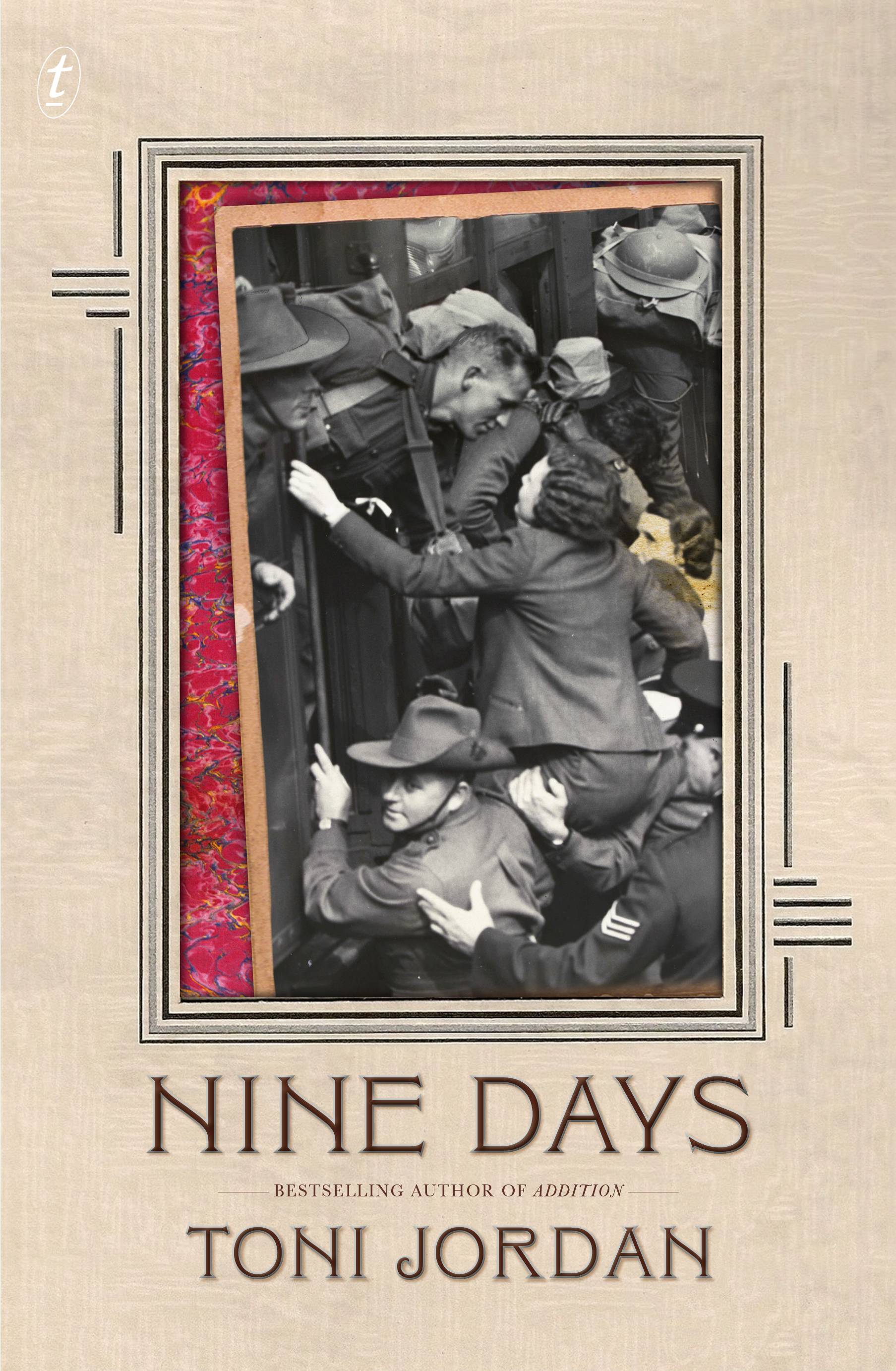
Book cover (Courtesy: Text Publising)
Current writers like Joan London (Gilgamesh) and Toni Jordan (Nine days) have also written about these historic battlers, as has, most famously, Tim Winton in Cloudstreet. What does it say, I wonder, that the book which most often wins surveys seeking our favourite or best Australian novel is this one about Aussie battlers?
But what about late 20th or early 21st century battlers? Do they still exist (outside the politicians’ minds?). Are Tim Winton’s more contemporary-focused books, like The turning, also about “Aussie battlers”? If they are, they are written with a more realistic, less affectionate eye, I think, than the earlier books I’ve mentioned. Is the old definition of “battler” – essentially, a working class white Australian male – still reflective of contemporary Australian society, with its multicultural and increasingly middle-class make-up? Certainly, when I think about recent Australian literature that is set in current times, the “battler” theme, or even character really, does not come to the fore – and yet, if I Google, “aussie battler”, the idea is alive and well. It seems, perhaps, that literature has turned its eye to more complex notions of the Australian character while politicians and the media stick to a romanticised version of “the battler”. I’d love to know what other readers of Aussie literature think.
 Whispering Gums