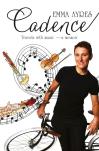
Emma Ayres, Cadence: Travels with music (Review)

Emma Ayres, CadenceAlthough Emma Ayres’ memoir Cadence had been passed around my reading group with much enthusiasm over the last year or so, I wasn’t intending to read it – not because I wasn’t interested, but because there were other books I wanted to read more. However, when I found the audiobook at my aunt’s house while we were clearing it out, Mr Gums and I decided to listen to it on our trips to and from Sydney. It proved to be a great car book. However, a warning: we listened to it intermittently over two months, so this will be more a post of reflections than a coherent review.

Emma Ayres is probably known to most Australian readers of my blog, but perhaps not to others so let’s start with a potted bio. Born in England in 1967, Ayres is a professional musician – a viola player in fact – who has also worked as a radio presenter. She lived in Hong Kong for eight years, playing with the Hong Kong Philharmonic Orchestra, but in 2000 she rode a bicycle, fundraising for charity, from Shropshire, England, through the Middle East and central Asia, to Hong Kong. She moved to Australia in 2003, and worked as an ABC Classical Music radio presenter for eight years, from 2008 to 2014.

Now to the memoir. Cadence is ostensibly a travel memoir, but it covers a lot of ground within its seemingly narrow construct of chronicling her year-long bicycle journey. The ground it covers, besides the story of her travel, which is exciting enough given the regions she rode though, includes her childhood, her reflections on her life as a musician, and her analyses of classical music. Some of her technical descriptions went over my head, but I found her discussions of composers to be not only accessible and eye-opening, but deeply interesting. And it’s all told with a thoughtful philosophical underpinning.

Cadence is an excellent title for a musician’s memoir, and she plays with its meanings throughout, referring, for example, to a “perfect cadence”, or a “slow cadence”, or more frequently to  “interrupted cadences … moments when the direction is changed”. Indeed, the memoir could be seen as comprising almost continuous interrupted cadences because, although the bicycle trip provides her memoir’s chronological backbone, she skips around frequently, going backwards to her childhood and early years as a musician and forwards to her life after the trip when she briefly toyed with being a cellist. It can take a little concentration to keep track of exactly which part of her life she is writing about at any one time, but it’s not too hard. After all …

Cadences are waypoints in the music, places where you can take a breather, readjust your instrument and hurtle on to the next bit of the adventure.

I greatly enjoyed Ayres’ reflections on life and travel. The book is full of her insights, many learnt on the road. For example, regarding the challenge of deciding whether to do the trip she says:

If you are not sure whether or not you should do something, ask your ninety-year-old self.

At another point she discusses how much she loved Pakistan despite all the nay-saying she had received when she was planning her trip. She was treated, she writes, almost without exception, with kindness and generosity everywhere she went. “Do we make our own welcome?” she wonders, and goes on to suggest that before we criticise another country, we should perhaps look at ourselves first.

Being a woman cycling alone is risky business, particularly in some of those male-dominated countries through which she travelled. She frequently took advantage of her androgynous look, helping it along by keeping her hair very short and wearing non-feminine clothes (where she could). Consequently, she was regularly taken for a man. She discusses gender often, commenting on how we are ruled by it and its associated expectations. She sees herself as “a border dweller in the world of gender”, writing:

I do admire people who are by birth penumbral but have the courage and desire to be firmly one or the other and go through a sex change, but I like the fluidity of being able to float around the middle. I really to think that the basic this or that of male and female is shallow and limiting. How simplistic to think, with all those opposing hormones flowing in each of our bodies, that we are one and therefore not the other. And how much better in countries like India and Thailand that they recognise more than two sexes. More variations in the octave, more variations in gender.

Another theme that runs through the book is the idea of being in the moment. She tells the story of being taken to task for reading Anna Karenina when on a bus in Pakistan. Her young seat-mate is mystified by her passionate rendering to him of the story, saying to her “but you are here!” She genuinely sees his point, and puts the book down. Later in the trip, she regrets not spending more time with a fellow-traveller who crosses her path because “I was too focused on destination and again forgot the importance of the here and now”.

Cadence is a generous, warm-hearted book which abounds with travel anecdotes to delight any lover of travel literature. There are scary moments, and funny ones, and others that are just plain interesting. It also contains intelligent, considered insights into music, some of which I plan to share in a follow-up post. For now, I’ll conclude with a comment she makes early in the book:  “Travel”, she says, “goes inwards as much as outwards”. That is exactly what she demonstrates with this book. I can see why all those in my reading group who read the book urged it onto the next person.

awwchallenge2016

Emma Ayres
Cadence: Travels with music – a memoir
Sydney: ABC Books (by HarperCollins), 2014
284pp.
ISBN: 9780733331893

Emma Ayres
Cadence: Travels with music – a memoir (audio)
(read by Emma Ayres)
ABC Commercial, 2014
8 hours (approx) running time (on 7 CDs)

Nancy Cato, All the rivers run, Book 1 (Review)

It’s been a long time since I reviewed an audiobook or, more accurately, reviewed a book via its audiobook version. As I’ve said before, I don’t listen often to audiobooks, but last month Mr Gums and I did a long drive and so decided to listen to Nancy Cato‘s All the rivers run. I referred to this novel a few Monday Musings ago, because it was one of Australia’s early, successful adaptations for television.

Enough introduction though, time to talk about the book. Our audiobook contained the first book* of Philadelphia (Delie) Gordon’s saga. It starts her story when, in 1890 at the age of 13 she is orphaned in a shipwreck off the coast of Victoria. She is taken in by her dour aunt and more welcoming uncle who lead a spartan prospecting life at Kiandra in the Australian Alps. When her uncle Charles strikes it rich – that is he finds a large nugget of gold – the family (with her cousin, Adam, who is three years older than she) move to a sheep farm on the Murray River not far from Echuca. This first book, which is pretty much a coming-of-age story, finishes when Deli (as she prefers to be called) leaves home at the age of 17, after a tragedy has struck the family.

This is not really the sort of book I would normally read, though it is the sort of book I’d listen to on audiobook. Why so? Well, at the risk of being called a literary snob, I tend not to read sagas (whether they be historical fiction, fantasy or whatever). This is because their focus tends to be plot rather than style, structure, theme and, even perhaps, character development, though I know aficionados will argue with me and they will probably be right (to a degree!). Anyhow, there’s nothing wrong with that, it’s just not what I prefer to read. However, such stories are perfect for listening to in the car. Literature requiring intense concentration is not a safe bet when you are driving (or even when you are navigating). Horses for courses, as they say.

Cato’s book, like good historical fiction, captures the social history of the era well, particularly the tail end of the gold rush, the 1890s depression, life along the Murray River for the pastoralists and paddle steamers, the challenges faced by women in a male dominated society. She also touches on the dispossession of the indigenous people, showing the women working as “house-girls” for the pastoralists and their all too often descent into prostitution, often as the result of being used by and bearing the children of their white male bosses. Cato was, apparently, an active campaigner for indigenous land rights as well as for conservation.

I enjoyed Cato’s vivid descriptions of the landscape. The plot is a little predictable and the characters are somewhat stereotypical – the welcoming, easy-going farmer, the tough wife, the handsome son champing at the parental bit – but not so much that they don’t engage. Delie in this first book, for example, is a believable young girl, orphaned and taken in essentially by strangers and then experiencing her first love. She’s bright but not brash, independent but not without uncertainties.

I enjoyed one little description in particular. At a moment when things are going wrong for Deli, Cato writes that “a pair of kookaburras laughed sardonically”. I liked this description because only recently I’d been thinking about the first white settlers in Australia and what they made of the birds here, many of whom can sound pretty raucous. I wondered, in particular, what they thought when they first heard a kookaburra’s “laugh” as we describe it. Sardonic, is a very good description of it!

Overall then, it’s an enjoyable read, if you enjoy historical sagas, are interested in life in country Australia in the 1890s – and particularly if you have a long drive ahead of you! You could do way worse …

Nancy Cato
All the rivers run: A river not yet tamed (Audio CD)
Read by Kate Hosking
Bolinda Classics
6 hrs 15 mins on 5 discs
ISBN: 9781742336732

* Note: As far as I understand it, the three books in the trilogy were originally separately published as: All the rivers run (1958); Time, flow softly (1959); and But still the stream (1962). Recent editions, however, combine the three novels into one volume titled All the rivers run. I am not sure where the title A river not yet tamed comes from, but it looks like it might be Bolinda’s title for the first part of their recording of the trilogy.

Helene Hanff, 84 Charing Cross Road

Before you all (well, those of you of a certain age at least) gasp and wonder how it could be that I haven’t read this delightful little tome before, I assure you that I have. However, on our drive home today from our week at the coast, we listened to an unabridged audiobook version, and I can’t resist sharing some thoughts from this most recent acquaintance with the book.

For those of you who haven’t read it, 84 Charing Cross Road could I suppose be described as a sort of epistolary memoir. It comprises the correspondence between an American writer and bibliophile, Helene Hanff, and Frank Doel of Marks & Co, a London bookshop specialising in secondhand and antiquarian books. The correspondence starts in 1949 and covers the next two decades. Over time, others in the Marks & Co family join in, but the essential relationship is always that between bookbuyer Helene and bookseller Frank. In a horrible bit of blurb writing, it is described on the back of my (almost antiquarian itself) paperback as “the very simple story of the love affair between …”. Well, that cheapens it because it’s not a love affair in the usual sense. It’s a business relationship that also becomes a friendship. He is married, she is not … and no romance ever ensues.

I am not going to write a full review of the “story”, about how Helene sent “care packages” to the staff of Marks & Co to brighten up their postwar rations-ridden lives, about its humour and humanity. Rather, I thought I’d just share a couple of the comments she, a true bibliophile, makes about books and reading.

One is to do with marginalia. Hanff, like me, likes marginalia. She does it herself, and she likes it in the secondhand books she buys. She says in response to a book received as a gift:

I wish you hadn’t been so over-courteous about putting the inscription on a card instead of on the flyleaf . It’s the bookseller coming out in you all, you were afraid you’d decrease its value. You would have increased it for the present owner. (And possibly for the future owner. I love inscriptions on flyleaves and notes in margins, I like the comradely sense of turning  pages someone else turned, and reading passages some one long gone has called my attention to.) (16 April 1951)

Another year, another book gift, and here is her response:

I do think it’s a very uneven exchange of Christmas presents. You’ll eat yours up in a week and have nothing left to show for it by New Year’s Day. I’ll have mine until the day I die – and die happy in the knowledge that I’m leaving it behind for someone else to love. I shall sprinkle pale pencil marks through it pointing out the best passages to some book-lover yet unborn. (12 December 1952).

Hanff was clearly a slow-reader and liked re-reading, but she was not sentimental about books per se. Here she is on managing her books:

I houseclean my books every spring and throw out those I’m never going to read again like I throw out clothes I’m never going to wear again. It shocks everybody. My friends are peculiar about books. They read all the bestsellers, they get through them as fast as possible, I think they skip a lot. And they NEVER read anything a second time so they don’t remember a word of it a year later. But they are profoundly shocked to see me drop a book in the wastebasket or give it away. The way they look at it, you buy a book, you read it, you put it on your shelf, you never open it again for the rest of your life BUT YOU DON’T THROW IT OUT! NOT IF IT HAS A HARD COVER ON IT! Why not? I personally can’t think of anything less sacrosanct that a bad book or even a mediocre book. (18 Sept 1952)

Ellen of Fat Books and Thin Women would agree I think. Check out her recent post in praise of re-reading, and see for yourselves. Those of you who’ve been reading my blog for a while will know that I too am not averse to a bit of re-reading. There is a special joy in revisiting loved books and learning from them anew, isn’t there?

Finally, (only) because I’m missing my Jane Austen meeting today due to the aforesaid travel, I will share with you her discovery of Jane Austen. Hanff, you see, was not one for “stories”. “It’s just stories. I don’t like stories” she wrote in an undated letter around 1963/64. She preferred history (“i-was-there-books”), essays, poetry and the like. However, in 1952, she discovered Jane Austen “and went out of my mind over Pride & Prejudice …”. I’m sure I would have liked Helene Hanff.

Helene Hanff
84 Charing Cross Road (Audio CD)
Read by Juliet Stevenson and John Nettles
Hachette Audio (orig. pub. 1970)
2 hrs (approx) on 2 compact discs
ISBN: 9781405502559

Alan Bennett, The lady in the van

It is a truism that truth is stranger than fiction, and Alan Bennett’s The lady in the van is one work that proves it. It is strange – and wonderful – that a woman could have lived the way the eponymous lady did for as long as she did, and it is equally strange – and wonderful – that Bennett allowed her to do so in his front yard for as long as he did.

This piece was first published in the London Review of Books in 1989, but I only happened across it this year, twice! First was in the form of a BBC-4 audio CD given to my mother-in-law for Christmas by my brother. She was both mystified and entranced by it and insisted I hear it. Second was, soon after, in a review by kimbofo at Reading Matters. It became clear that this was meant to be my year for The lady in the van! And so, a couple of weeks ago I finally heard the CD, and today I finished the book. Like many before me, I was charmed.

The lady in the van is a simple tale about an eccentric old lady (though she’s only in her late 50s when the story starts in 1969) who lives in a van which Bennett eventually allows her to park in his front yard. That was in March 1974 and it continued until her death in 1989. Fifteen years! It reminded me a little of the Maylses Brothers‘ documentary film, Grey Gardens, which documents the lives of Edith Bouvier Beale and her daughter, also Edith Bouvier Beale, Jackie Kennedy’s aunt and cousin. Due to lack of funds they lived for years in dilapidation and squalor. But, while Bennett’s lady, Miss Shepherd, also lived in squalor, it’s the feisty eccentricity in all these women that associate them in my mind. They are all women who, despite their rather desperate circumstances (for whatever reason), refused to be ground down by it, who maintained some sense of pride and self in the face of a life most of us could not comprehend.

Anyhow, back to Bennett. The story is told primarily through diary excerpts, with a brief introduction, and a postscript added in 1994. In the beginning, there was Miss Shepherd (the name she gives but not her real name) and she was parked in the street in Alan Bennett’s neighbourhood. The first diary entry starts in October 1969, nearly 5 years before she moves into his front yard. Bennett explains how it is that she managed to live in her van on the neighbourhood streets for so long:

What made the social set-up funny was the disparity between the style in which the new arrivals found themselves able to live and their progressive opinions: guilt, put simply, which today’s gentrifiers are said famously not to feel … There was a gap between our social position and our social obligations. It was in this gap that Miss Shepherd (in her van) was able to live.

The whole thing does, I have to say, sound particularly English – the tolerance that enabled her to live that way for so long, and the polite and reserved rather than familiar “relationship” she and Bennett maintained over the years. Throughout the twenty years that the story covers, we learn a fair amount about Miss Shepherd despite her pretty effective attempts to keep herself to herself. We learn that she is committed to the Catholic Church (had in fact tried to be a nun) and politically conservative, and that she occupies herself selling pencils and writing letters and pamphlets. We also learn some things about Bennett, that he is kind (keeping an eye on her throughout, while respecting her privacy) but also that he likes a quiet life:

I was never under any illusion that the impulse [to let her in and stay] was purely charitable … But I wanted a quiet life as much as, and possibly more than, she did.

Bennett gives us a vivid picture of Miss S, through her bizarre sense of dress (including a skirt made of dusters) and her little speech mannerisms, such as her frequent use of the word “possibly”. One of Miss S’s problems is hygiene and toileting, and by the end she is incontinent. Throughout the story, Bennett refers to the smell (stench, actually) of her van. One day he mentions the smell to her, and she responds:

Well, what can you expect when they’re [construction workers] raining bricks down on me all day? And then I think there’s a mouse. So that would make a cheesy smell, possibly.

This is a woman with pride, despite the destitute situation she finds herself in. She is also resilient and sly, and contrives to pretty well always get what she wants. Bennett tells the story with humour but not patronisingly – and this is because it’s a humour that contains admiration for her resourcefulness, for someone who “even when she is poorly … knows exactly what she is about”. How could he do otherwise with a woman who announces to him: “I was a born tragedian … or a comedian possibly”. He clearly struggles with how much he should intervene and how much he wants to intervene. It’s a pretty invidious position to be in really – how far can you (should you, do you) extend charity?

All this said, there is something uncomfortable about it all, as there is about Grey Gardens, and this is the voyeurism involved. Both are truly fascinating stories – but a fascination tinged with horror. Are we plundering their lives for our own entertainment, or are we learning something about the resilience of the human spirit? It’s a fine line: I think Bennett, like the Maysles, has managed to draw it in the right place, and this is because of the humility and real affection with which they have presented these women. Bennett ends up, in the postscript

wondering at the bold life she has had and how it contrasts with my own timid way of going on – living, as Camus said, slightly the opposite of expressing. And I see how the location of Miss Shepherd’s van in front but to the side of where I write is the location of most of the stuff I write about; that too is to the side, and never what faces me.

Bennett, Alan
The lady in the van
London: Profile Books, 1999
92pp.
ISBN: 9781861971227

Bennett, Alan
The lady in the van (audio)
BBC Audiobooks, 2009
85 mins running time

Ruth Park, Swords and crowns and rings

Note to self: never again “read” an audiobook over a long period, such as, say, 5 months! This is how I read Ruth Park‘s engrossing 1977 Miles Franklin award-winning novel, Swords and crowns and rings. It was not hard to keep up with the plot as it’s pretty straightforward – and powerful. It is hard, though, over such a time to keep up with and remember all the nuances in her writing and expression and the way they affect character development and thematic strands. For a thoughtful review of the book by someone who read it more sensibly, please see my friend Lisa’s, of ANZLitLovers, here.

I am not an experienced “reader” of audiobooks and I have to say that I found what seemed to me to be the over-dramatisation of the story rather trying in the first few CDs. I gradually got used to it, however, and by the end I was happy with Rubinstein’s reading, but it did take me a while to settle into it.

New-Zealand born Ruth Park is a wonderful chronicler of Australian life. Her novel, The harp in the south, set in working class Sydney in the 1940s is, to my mind at least, an Australian classic – but it is just one of her extensive and well-regarded body of work. Her autobiographies are also well-worth reading, not only for the light they throw on her life and on that of her husband, author D’Arcy Niland, but also on that of the Australian literary establishment of the mid-twentieth century.

Anyhow, back to the novel. Swords and crowns and rings tells the story of two young people born in an Australian country town before World War 1 – pretty Cushie Moy (born to a comfortable family with the stereotypical socially ambitious mother who has married down) and the dwarf, Jackie Hanna (whose background is well and truly working class). Not surprisingly, Cushie’s parents frown on the friendship which develops between the two. This is not an innovative story but, rather, good historical fiction with evocative writing and sensitive character development. Consequently, as you would expect, the two are separated just as they realise their love for each other and the book then chronicles their respective lives – Cushie with various relations in Sydney and Jackie in a number of country locations before he too reaches Sydney. Much of the book takes place during the early 1930s Depression. Park gorgeously evokes the hardships – physical, economic and emotional – experienced by people like Jackie and his step-dad “the Nun” as they struggle to support themselves. All this is underpinned by Park’s thorough knowledge of the social and political history of the time: we learn about labour organisations and the rise of socialism, of that irascible politician “Big Fella” Jack Lang, and of the building of the Sydney Harbour Bridge.

The resolution is predictable – it is, after all, a book of its genre – but it is not over-sentimentalised and is not achieved before the characters, Jackie in particular, have matured to the point that we can trust that he not only deserves what will come but that he will continue to work and mature for the betterment of himself and those he loves. It is truly a powerful book about human nature, as well as about the place and time in which it is set.

Ruth Park
Swords and crowns and rings (Audio CD)
Read by Deidre Rubenstein
Bolinda Audio, 2007
18 hours on 15 compact discs
ISBN: 9781741636628

The trouble with audiobooks (for me)

Headphones

Listening (Courtesy: OCAL on Clker.com)

Once was audiobooks were used primarily by visually impaired people and travellers, but with the rapidly increasing miniaturisation of audioplayers, audiobooks are now being “read” by people going on walks, working out in the gym, doing housework, sitting on public transport, or even working at their computers. In other words, people listen to audiobooks pretty well anywhere that they can. I am not, however, one of them. In fact, I can count on one hand (excluding snippets heard over the years on radio) the number of audiobooks I have “read” (or is that listened to?). Do you “read” an audiobook? How differently do you experience a book when you listen to it versus read it?

For me, the experience is so different that when I am in a listening situation I prefer radio and music to books. And here is why (but please, this is a purely personal thing – it is about how I like to enjoy books and is in no way intended to be prescriptive about how everyone should enjoy books):

  • I like to see the words – know how they are spelt and so on – partly, but not only, because this can be critical to my understanding (particularly with authors who engage in wordplay).
  • I like to stop and think as I read – ponder about a phrase or an idea, and even flip a few pages back sometimes to check a link that I think the author is making.
  • I like to make notes as I go and, if I own the book, I do this in the book – making notes helps me remember what I’m reading, and helps me write a blog or prepare notes for later discussion.
  • I don’t want to miss visual clues – some authors, and particularly post-modern ones, use visual clues and games to add to their text, but there are other more subtle visuals in “normal” books that you miss in an audio version.
  • I don’t particularly like it when a reader acts out the voices in a book – it distracts me from my own understanding of the text. The reader for the audiobook of Ruth Park’s Swords and crowns and rings (link here is to ANZLitLovers review), for example, irritated me intensely with her voices and dramatisation, though as she wore on I got used to her because it is a great story!
  • I like the physicality of the book (though I can probably relinquish this in the same way that I am pretty happily converting from CDs to iTunes for my music).

All this said, I have enjoyed a couple of audiobooks. The outstanding one was Roald Dahl reading his own Charlie and the Chocolate Factory. Authors readings their own works can be a hit-and-miss affair, but Roald Dahl was perfect. I heard snippets of Barack Obama reading his Dreams from my father on the radio and thought he also read his own work beautifully. On another tack, I enjoyed hearing Mary Durack’s memoir Kings in grass castles when we did a long long family trip several years ago.

Audiobooks clearly have their place. They work best for me when they are memoirs or simple plot-driven books rather than literary fiction, and so on the next very long trip we do I’ll probably seek out some memoirs. I also know that I will be very glad of their existence when (or, hopefully, if) my sight fails me. But, otherwise, I will be sticking to reading rather than listening…and this means that the technology that is likely to attract me is the eBook. I can see myself trying them in the not too distant future.