Yes, you read right. This week’s Monday Musings on Australian Literature focuses on an award established by the Swedish government, but it is an international award. Established in 2002 to honour the Swedish children’s author Astrid Lindgren (as you’ll have guessed), the prize is five million SEK, making it, says Wikipedia, the richest award in children’s literature and one of the richest literary prizes in the world.
The award, continues Wikipedia, “annually recognises one or more living people and extant institutions” for “their career contributions”, in the case of people, and for their long-term sustainable work, in the case of institutions. The winners should be “authors, illustrators, oral storytellers and promoters of reading” and their work should be “of the highest quality, and in the spirit of Astrid Lindgren.” The award’s aim “is to increase interest in children’s and young people’s literature, and to promote children’s rights to culture on a global level”.
Alert readers here will have seen it mentioned here before, most recently in my post on Alison Lester, because she has been nominated for the award. However, she’s not the only Australian to have been so listed, and in fact, Australians have won it.
Aussie winners
The first winner, in 2003, was Maurice Sendak, but in its short history, Australians have won twice: Sonya Hartnett in 2008 (whose adult novel Golden boys I’ve reviewed) and Shaun Tan in 2011 (whose little book Eric, from Tales of outer suburbia, I’ve reviewed.)
The Chinese paper, People’s Daily Online, reported Hartnett’s win, quoting the award jury as saying:
Sonya Hartnett is one of the major forces for renewal in modern young adult fiction …
and
With psychological depth and a concealed yet palpable anger, she depicts the circumstances of young people without avoiding the darker sides of life. She does so with linguistic virtuosity and a brilliant narrative technique; her works are a source of strength.

Reporting Tan’s win, Claire Armitstead of The Guardian wrote that
Larry Lempert, the chair of the jury, described Tan as “a masterly visual storyteller” whose minutely detailed pictorial narratives touched everyone, regardless of age. “His pictorial worlds constitute a separate universe where nothing is self-evident and anything is possible,” the citation says.
The Guardian article describes the prize as focusing on work with “a profound respect for democratic values and human rights”. That certainly describes Shaun Tan’s work, and ethos, as I know them.
Announcing the British contingent for the 2020 award, The Guardian quoted the jury’s citation for British past-winner Philip Pullman (whose His Dark Materials series Daughter Gums loved) for writing that
stands firmly on the side of young people, ruthlessly questioning authority and proclaiming humanism and the power of love whilst maintaining an optimistic belief in the child even in the darkest of situations
I rest my case – I think!
Some Aussie candidates
As far as I understand it, candidates are nominated by organisations around the world, but the winners are chosen by, quotes Wikipedia, “a jury with broad expertise in international children’s and young adult literature, reading promotion and children’s rights. The 12 members include authors, literary critics and scholars, illustrators and librarians. One member represents Astrid Lindgren’s family.”
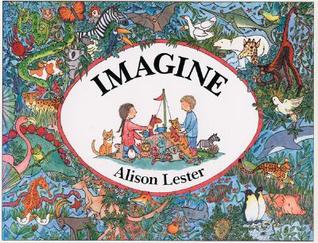
I’ve already said that Alison Lester has been shortlisted (or, announced as a “candidate” as they call it), but given our strong children’s literature culture here, many Australians have been shortlisted over the years, too many, in fact for me to discuss in detail.
Children’s/young adult author John Marsden was nominated in 2008. I enjoyed reading his books when my children were young, and was impressed by the fearlessness with which he tackled some difficult issues, including domestic violence in his 1987 novel, So much to tell you.
Some authors have been listed multiple times. For example, Jeannie Baker, Ursula Dubosarsky, Susanne Gervay and Margo Lanagan were candidates for the 2020 Award, and are again for 2021. The specialty Indigenous Australian publisher Magabala Books and the Indigenous Literacy Foundation are also in this 2020 and 2021 group.
I know and have read works from some of these writers and organisations, but not all. However, it’s clear how and why Magabala Books and the Indigenous Literacy Foundation would meet the prize’s interest in “democratic values and human rights”.
I could go on finding more Aussies to tell you about, but I think you get the gist. This is an impressive, and significant award in both value and what it is trying to achieve (or so it seems to me).
Are you familiar with it?
 Whispering Gums