Some years ago I wrote a Monday Musings post on Australia’s literary couples. However, it recently occurred to me that we also have some literary dynasties, which could be fun to explore. This post, like many of its ilk, is a bit of a fishing exercise. I will share a few that came to me, and would love you to share ones that come to you.
By dynasty, I mean two or more generations of one family (that is, in the same line of descent.) My focus is fiction but I’m allowing some deviations from this where writing reputations are strong. So, here’s my list – in chronological order by birthyear of the oldest family member.
Charlotte Barton (1796-1867) and Louisa Atkinson (1834-1872)
Charlotte Barton and daughter Louisa Atkinson are probably the least well-known of the writers I list here, even though Charlotte is credited as having written Australia’s earliest known children’s book, A mother’s offering to her children, and Louisa as the first Australian-born woman to publish a novel in Australia, Gertrude the emigrant.
However, Atkinson had a bigger bow to her name, botany. As I wrote in Wikipedia and here, she was well-known for her fiction during her life-time, but her long-term significance rests on her botanical work. She’s regarded as a ground-breaker for Australian women in journalism and natural science, and is significant in her time for her sympathetic references to Australian Aborigines in her writings and for her encouragement of conservation.
Louisa (1848-1920) and Henry Lawson (1867-1922)
 By all accounts, Louisa Lawson was quite a force. A poet, writer and publisher, as well as a suffragist and feminist, she was fully engaged in the country’s literary and political life, but is most remembered now for the latter, particularly her feminist causes.
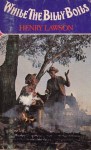
Louisa’s relationship with her poet-short story writer son, Henry, was fraught. However, together they edited the radical pro-federation newspaper The Republican, and, later she published his poems and stories in her own newspaper, The Dawn. She used this press to publish his first book, Short stories in prose and verse. It is Henry, then, who is most remembered for his writing. His most famous story is “The drover’s wife”, which many Aussies do (or did) at school, and his best-known collection is While the billy boils. Lawson is probably still Australia’s best known short story writer.
Bill (The Australian Legend) quotes Bertha, Henry Lawson’s wife, as saying
“If there is anything in heredity, Harry’s literary talents undoubtedly came from his mother …”
Ruth Park (1917-2010), D’Arcy Niland (1917-1967), and Deborah (b. 1950) and Kilmeny Niland (1950-2009)
Novelists (and writers of all forms) Ruth Park and D’Arcy Niland created quite a literary family, with two of their five children, twin daughters Deborah and Kilmeny, becoming successful children’s book writers and (primarily) illustrators. I have written about Ruth Park before, and need to review Niland on my blog, but when I was the mother of young children, I became very aware of Deborah and Kilmeny who collaborated on thirteen children’s books. Their best known book is an illustrated version of Banjo Paterson’s poem, Mulga Bill’s Bicycle. First published in 1973, it has never been out of print. Unfortunately, Kilmeny died in 2009.
Olga (1919-1986) and Chris (b. 1948) Masters
 Both Olga and her son Chris Masters were journralists. Chris still is. Olga commenced work as a journalist when she was only 15 years old, but through her relatively short career, she also wrote novels, short stories and drama. Her career as a published writer of fiction was very brief, with The home girls short story collection being published in 1982 and Loving daughters, her wonderful first novel, published in 1984. It is Australian literature’s loss that she died just as her fiction career was taking off.
Son Chris is, primarily, a journalist, but he is at the top of his profession with multiple Walkley Awards to his name, and his controversial biography of a controversial radio personality, Jonestown: The power and the myth of Alan Jones, won a Queensland Premier’s Literary Award. I wonder if he’s ever thought of writing a novel?
Dorothy Hewett (1923-2002), Merv Lilley (1919-2016), Kate (b. 1960) and Rozanna Lilley (b. 1960)
Multi-awarded poet, novelist and playwright Hewett led a colourful and controversial life – some of which has come out posthumously in poet daughter Kate’s collection Tilt and daughter Rozanna’s memoir, Do oysters get bored? I don’t really want to explore that here because it’s a whole other subject, but you can read a little about it on the ABC and in my post on a Canberra Writers Festival conversation with Rozanna.
Meanwhile, and regardless, they do comprise another dynasty of writers, with, between them, a significant oeuvre.
Ann Deveson (1930-2016) and Georgia Blain (1964-2016)
Ann Deveson was well-known to Australians of my generation, because of her high profile as a social commentator and filmmaker, not to mention her role as the “Omo” lady in a famous serious of television commercials for Omo laundry detergent! She was, you’d have to say, versatile, also having been chair of the South Australian Film Corporation and Executive Director of the Australian Film, Television and Radio School. Her most famous book is, probably, her memoir-biography about her son’s schizophrenia, Tell me I’m here.
Deveson’s daughter, Georgia Blain, was also a writer, but, unlike her mother she had a substantial body of fiction to her name, as well as non-fiction. Blain won or was short or longlisted for many of Australia’s literary awards, with her most successful novel being her 8th and last, Between a wolf and a dog. Deveson and Blain tragically died within days of each other, which I wrote about at the time.
Thomas (b. 1935) and Meg Keneally (b. ca 1967)
 Multi-award-winning author Thomas (Tom) Keneally has published over 40 novels, from his 1964 debut novel, The place at Whitton, to his most recent 2020 novel, The Dickens boy. He is best known for his Booker prize-winning novel, Schindler’s ark, which was adapted to the Academy Award winning film, Schindler’s list.
Amongst his 40 or so novels are four in The Monsarrat Series, which he co-wrote with his daughter Meg. Meg has gone on to publish a novel on her own, Fled, with another due out this year. Both Tom and Meg write primarily historical fiction.
In a “Two of us” article in 2016 in The Sydney Morning Herald, Tom writes
Temperamentally I could see she was very like me. I think that’s why we’re able to work together now. I find it hard to batter out 1500 words of a new draft of a novel in a day, and I was always impressed by the speed and fluency with which she could write. I thought, “Wouldn’t it be good to get her out of the maw of the corporate world and turn her into something really self-destructive, like a novelist?”
Haha, love it!
There are other dynasties, most notably families of historians, but I’ll finish here and wait for your suggestions.
Postscript: No, I haven’t forgotten those 10th anniversary literary requests. They will be done, but they require more time than I have now, hence this post that was already in the offing!

 Whispering Gums