A preamble
The Canberra Writers Festival is back in 2025, with a new Artistic Director, author Andra Putnis whose biography-memoir, Stories my grandmothers didn’t tell me I reviewed earlier this year. The Festival’s theme continues to be “Power Politics Passion”, albeit not as dominating in promotion as it used to be.
The ACT Book of the Year
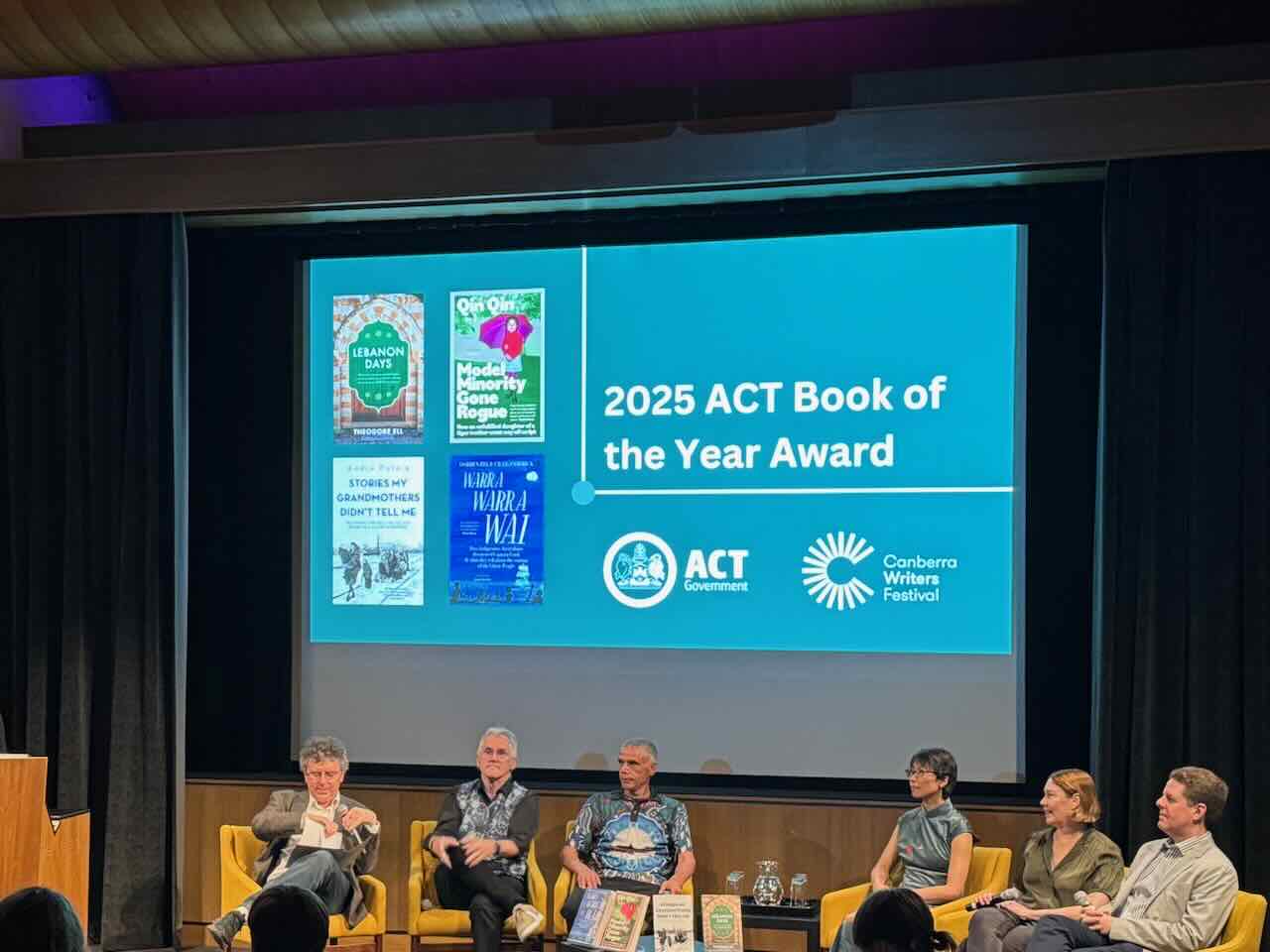
The ACT Book of the Year is broad-based award, meaning that it encompasses fiction, nonfiction, plays, and poetry. It is presented by the ACT Government, and was first made in 1993. I have written on this award in a Monday Musings, so won’t say more here!
The winner announcement has been made in various ways over the years. In 2023, for example, I attended the presentation at Woden Public Library. This year it was announced during the first full day of the Canberra Writers Festival, which feels fitting.
But first, there was the shortlist, which was announced on 7 September:
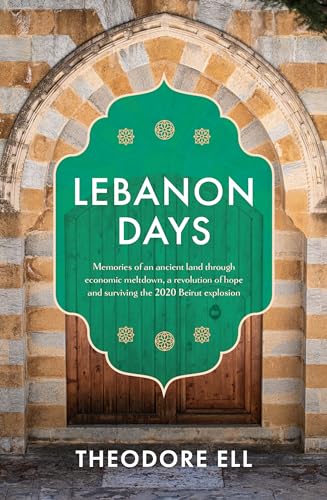
- Theodore Ell, Lebanon days: memoir, based on Ell’s experience when he accompanied his wife on her diplomatic posting to Lebanon and witnessed a country on the brink of collapse
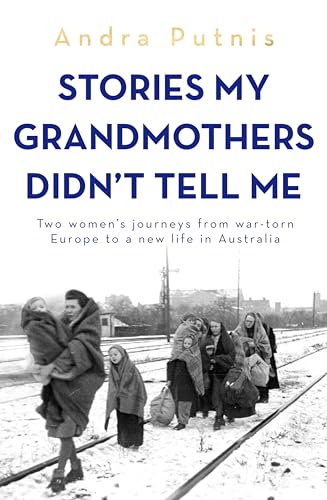
- Andra Putnis, Stories my grandmothers didn’t tell me (my review): biography/memoir about the author’s two Latvian grandmothers, their experiences during the war, their subsequent emigration to Australia and the family they built here.
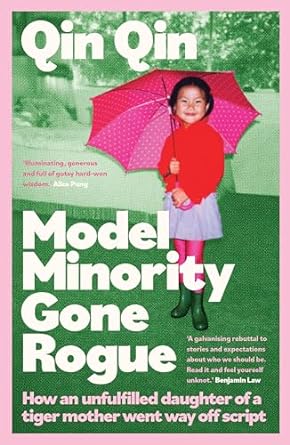
- Qin Qin, Model minority gone rogue: memoir, by a young high-achieving Asian-Australian woman and her break from suffocating expectations to find the life she wants to lead.
- Darren Rix & Craig Cormick, Warra warra wai: history, focusing on First Nations people’s experience of James Cook’s exploration of the east coast of Australia in 1770, in order to ensure the complete story is told.
All shortlisted books this year, are nonfiction, three being memoirs.
The panel
The event comprised two parts – a panel discussion featuring the shortlisted authors followed by the winner announcement.
So, the panel. It was moderated delightfully by science fiction writer, Daniel O’Malley. His questions were perfect for the shortlisted books, and generated some enlightening responses. Unfortunately – or fortunately, for those of you who know how longwinded I can be – I had some technological challenges so didn’t capture some of the thoughtful ideas and experiences shared with us. Hmm, this has still ended up being long!
On their 30-second pitch for their books
Darren said it all when said he would tell people Warra Warra Wai was “a great read”. This is true, I think, for each of the books.
On whether the book they produced was the book they started out writing
Darren and Craig started travelling up the east coast of Australia gathering stories, wanting to contribute to truthtelling, to expose the history of dispossession and share the story of rebirth, to “record history in the right manner”, but it ended up being a much bigger story. Qin Qin said she always wanted to be a writer, but that her story started to take form and gel during COVID when Chinese people were being demonised. Andra was in Darwin and can pinpoint the time when she decided to write her story, when she realised that what she wanted to write was how her family came to Australia and become the people they were (are). Theodore probably had the most circuitous route. His book started as an essay that was more successful than he expected. (In fact, my friend, the writer Sarah St Vincent Welch, told me, that this essay, “Façades of Lebanon”, won the 2021 Calibre Essay Prize). He realised he had more to tell. He could have writte more essays, choosing a theme at a time, but he realised that Australians know little about Lebanon – its history and its beauty – so a book it was.
On what they did and didn’t include
Theodore provided the most intriguing answer. His book is written in five parts, and he wrote it backwards, that is, he started with part 5 which covered the most recent memories. Then he worked on part 4, and he knew what was needed to set up part 5! Ingenious. Andra knew she wanted to include the arc of her grandmothers’ lives. What she cut was a lot about herself! She realised she only needed enough about herself to sustain interest in the grandmothers. Qin Qin spoke like the Type A person she admits to being. She kept a diary as a child, and this provided some content, but her publisher and editor helped a lot. When she submitted her draft, hoping it was pretty much done, she was told she could write good dialogue and that it read like something written to get an HD! That brought a laugh from the audience. However, with editorial guidance, she eventually produced something that broke open her heart. Darren and Craig talked about their process, which included Craig doing the archival research, and both interviewing First Nations people up the coast. Darren said they interviewed young people as well as elders, to get a full picture.
On major challenges or any resistance they experienced
Qin Qin described her writing as “one continuous showdown” involving her constantly deprogramming herself from the limiting pressures and expectations she felt as the eldest daughter. She said anyone writing about race will get pushback, and at one stage she contacted the police about emails she was getting. Andra said she had been very afraid about how her story would be perceived, by the family and the Latvian community. The fear was so great she nearly gave up. But the response has been good, and the family has responded with such grace. Theodore did not face any real opposition or obstacles but there were ethical challenges. He’s not Lebanese, no one in his family is Lebanese, so he has no true stake in what happens to Lebanon. He wanted to avoid ventriloquising Lebanese points of view. The ethical core of the book is what people told him, in their words, but to protect their privacy he gave them pseudonyms. Also, as his wife is a diplomat – the reason he was there – he had to be careful about doing anything “unbecoming”. Even the simplest thing can be spun the wrong way, so he had a delicate path to tread. Fortunately DFAT was happy with the manuscript. Craig said the commonality between all the shortlisted books is that they are open to pushback, but books threaded with a respectful element of truth are protected. He and Darren said that some communities rejected their approach, but that with many, once they sat down and explained what they were doing – that they weren’t from “the government” or “a university” – they were accepted. This was then passed on, like traditional message sticks, to other communities. They explained they wanted to produce a woven black and white history. Also, many communities had not been asked these sorts of questions by an Aboriginal man.
On where they write and how (a writer’s question)
Andra can’t write just anywhere, but needs a place to base herself. She started with vignettes, like squares in a patchwork, which she then assembled. She was helped by the fact that Nana Aline had already started reflecting on her life. As for Qin Qin, it’s a lovely thing when, as you sit through panels like this, authors reveal themselves as the real – and individual – people they are. So, her response was not surprising. She said the writing process was an ongoing journey of becoming more aware of herself, but she finds it easier to let herself, rather than others, down. So, she needs deadlines, which her publisher gave her regularly. She then wrote anywhere, anytime, to meet those deadlines. She works best when there’s accountability. Darren and Craig spent lots of time together in planes and cars, during which they talked about what they were doing, their structure, the way they would incorporate different timelines (like dreamtime and white time). Once they got the structure, the writing was easy. Makes sense to me. Theodore said he must have a room. He has a room at home and one at the ANU. The latter is where he does the hard yards, the welding of the words.
On what was most satisfying
For Darren it was travelling country, particularly those he hadn’t been to before. Craig added that communities wanted their own stories in a form they could read, and their book has provided this. Qin Qin said that with each rewrite she felt she shed layers, she felt weight lifting. Her book is a spiritual memoir, one about deprogramming herself from living up to expectation. She was glad to find she had her own voice. Andra said getting to the end was satisfying, but she also related to the idea of shedding layers. What moved her most, however, was when Nana Aline told her that she had felt “seen” by her granddaughter. Theodore had two. One was that while much of his story is dark it also contains fun, because Lebanese people are witty and satirical. These scenes and those of real friendship mean a lot to him. Also, he liked, during revision, how much spontaneously came back in memory, enabling him to relive the many stunningly beautiful places.
On their next project
Craig and Darren are working on two books, which they call “batmen” (about the Aboriginal cricket tour of England in 1868) and “Batman” (about Treaty, involving Victoria, Tasmania and New South Wales)! Qin Qin’s sole (deprogramming) journey is to have no goals, so she will see what comes up. Andra can’t wait to write something else but didn’t say whether she had a project, while Theodore’s main longterm project is a biography of Les Murray.
The announcement
Michael Petterson, ACT Government’s Minister for Business, Arts and Creative Industries, made the announcement, including sharing comments from the judges, but this is long enough. He did say, however, that there was a record number of 56 books entered for this year’s award.
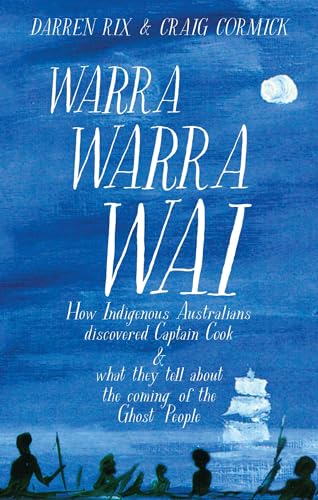
The winning book was Darren Rix and Craig Cormick’s Warra Warra Wai, which the judges praised for providing a “unique lens on history, land and identity”. Theodore Ell’s Lebanese days was highly commended. I hope the ACT Government will share the judges comments on their website.
At the end of the announcement Craig said that he and Darren had decided that, should they win, they would pronounce it a four-way tie, which they did, and handed each author a medal to document it! The audience loved this spirit.
The session ended with afternoon tea served in the National Library foyer. A lovely treat for us who attended this free event!
Canberra Writers Festival, 2025
The ACT Book of the Year
Friday 24 October 2025, 2:30-4:30pm
 Whispering Gums