Sherwood Anderson, Adventure (Review)

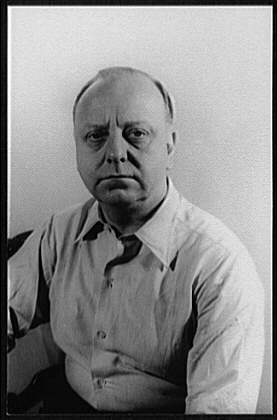
Sherwood Anderson, 1933 (Carl Van Vechten [Public domain], via Wikimedia Commons)

Sherwood Anderson, 1933 (Carl Van Vechten [Public domain], via Wikimedia Commons)

As some of you will know, I started discussing books online in January 1997 when I joined a listserv-based international reading group. I was active in that group until around the time I started blogging, when I found I could no longer keep up with all my on-line presences. In the period that my involvement was slowing down the group read Sherwood Anderson’s collection of interrelated stories, Winesburg, Ohio, but I didn’t take part. So, when one of the tales from this book was published last week by the Library of America, I decided to read it.

Rather coincidentally, the story’s title “Adventure” is similar to the last Library of America piece I read, Helen Keller’s “I go adventuring”. Each, however, uses the notion of “adventure” rather differently. Keller talks about physical adventuring, that is, travelling in New York as a deafblind person, though she also talks about what this adventuring means to her emotionally or spiritually. For one, it provides her with “the comforting certainty that mankind is real flesh and that I myself am not a dream”. Regarding Anderson’s use of the word though, LOA’s notes quote scholar Ray Lewis White, who says that “adventure” means ““the one brief moment, the one epiphany, the one telling instant, that captures and communicates the essence of that character’s personality, leaving nothing more to be said or learned about him or her.” The story which is specifically titled “Adventure” is apparently placed slap bang in the middle of the collection – and, yes, there is an epiphany.

It tells the story of Alice, who is twenty-seven years old. Although on the surface she is “very quiet”,  “beneath a placid exterior a continual ferment went on”. This ferment has its origins in a love affair with a town journalist when she was sixteen. She loses her virginity, after sincere promises from the man, Ned, that he would come back for her. He says, “Now we will have to stick to each other, whatever happens we will have to do that”. But of course, as happens with these things, Ned’s life doesn’t go quite as he planned. After a year, he has met other girls and stops writing to Alice. However, she, “the girl who had been loved”, continues to believe and hope that Ned will return.

By her early twenties, she is still waiting. She does not blame Ned for her loss of virginity. Indeed she’d offered to go away with him, unmarried, back then when she was sixteen, but she also feels unable to marry another man because “the thought of giving to another what she still felt could belong only to Ned seemed monstrous”. Alice, then, is not your “typical” shrinking small town girl done wrong. She’d offered to go away with him, but she’s also a product of her time’s attitudes regarding sex being a gift to the one you love and, of course, of her continuing love for this man:

“I am his wife and shall remain his wife whether he comes back or not”, she whispered to herself, and for all of her willingness to support herself could not have understood the growing modern idea of a woman’s owning herself and giving and taking for her own ends in life.

I’m not an expert in early post-World War One America, and I haven’t read the whole book, but I can’t help thinking that Anderson reflects here, in a story published in 1919, the modernist concern with conformist society. He certainly presents a fairly bleak view of what is possible for humans in constricting social environments, as did the “names” of the modernist movement.

Alice – I wonder if there’s an ironic reference in use of this name – continues to hope, she saves money for her future life with Ned for a few years until, one day

With a shiver of dread, she realized that for her the beauty and freshness of youth had passed. For the first time she felt that she had been cheated. She did not blame Ned Currie and did not know what to blame. Sadness swept over her. Dropping to her knees, she tried to pray, but instead of prayers words of protest came to her lips. “It is not going to come to me. I will never find happiness. Why do I tell myself lies?” she cried, and an odd sense of relief came with this, her first bold attempt to face the fear that had become a part of her everyday life.

And so, she continues on, trying “to get a new hold upon life”. She spends companionable time for a while with a much older man, realising she doesn’t want him but is avoiding being alone, because “if I am not careful I will grow unaccustomed to being with people”. And then comes the adventure … in which Alice’s bravery and desire to live life to the full results in a moment of abandon that paradoxically forces her to confront the reality of her situation. It’s a devastating (though not tragic in the usual meaning of the word) conclusion. Read it, and see what I mean.

I really liked this story. I liked the way Anderson presents Alice’s self-awareness, and her little attempts to break free, while at the same time recognising the reality for women like her at that time.

Sherwood Anderson
“Adventure”
First published: In Winesburg, Ohio: A group of tales of Ohio small town life, 1919.
Available: Online at the Library of America

Helen Keller, I go adventuring (Review)

My reading has been so disjointed recently that I thought I’d look at recent Library of America (LOA) offerings for inspiration, and came across Helen Keller‘s “I go adventuring”, an excerpt from her Midstream: My later life. It appealed to me because I haven’t read anything by Keller since I was a teenager, and because this piece is about New York. I couldn’t resist.

Helen Keller sitting holding a magnolia flower, circa 1920 (Presumed Public Domain, from Los Angeles Times photographic archive, UCLA Library)

Helen Keller sitting holding a magnolia flower, circa 1920 (Presumed Public Domain, from Los Angeles Times photographic archive, UCLA Library)

Firstly, Keller. What an amazing woman. Like many, I suppose, I have always been in awe of her ability to make a meaningful life for herself without sight or hearing. LOA’s always useful introductory notes discuss Keller being asked, in relation to another excerpt, “what she could possibly have ‘seen’ from the top of the Empire State Building”. She replied that

I will concede that my guides saw a thousand things that escaped me from the top of the Empire Building, but I am not envious. For imagination creates distances that reach to the end of the world … Well, I see in the Empire Building something else—passionate skill, arduous and fearless idealism. The tallest building is a victory of imagination.

The notes continue to say that throughout her adulthood, Keller “faced scepticism over her abilities and criticism for her choices of language”. On one occasion, she responded that the deaf-blind person “seizes every word of sight and hearing, because his [using the male pronoun common to her times!] sensations compel it. Light and color, of which he has no tactual evidence, he studies fearlessly, believing that all humanly knowable truth is open to him”. American novelist and essayist, Cynthia Ozick, LOA tells us, accepts Keller’s point, saying, simply, “She was an artist. She imagined”.

Secondly, New York. Before I first visited New York in the early 1980s, I’d lived in Sydney, and had visited great European cities like London, Paris and Rome. None of these interested me greatly because I really don’t much like cities. (Yes, I liked the museums and galleries, the historic sites, but as places to “be” they didn’t really appeal). But New York. There was something about it – and I finally “got” cities. I still don’t like them a lot, but I credit New York with opening my eyes to “city-ness”, if that makes sense, to the buzz and rush and life of them.

However, I’ve indulged myself enough now, so let’s get to Keller’s piece. She starts by referring to her situation:

Cut off as I am, it is inevitable that I should sometimes feel like a shadow walking in a shadowy world. When this happens I ask to be taken to New York City. Always I return home weary but I have the comforting certainty that mankind is real flesh and that I myself am not a dream.

See, that’s New York for you! She then talks about the great bridges, starting with Brooklyn Bridge, which she says is “the oldest and most interesting of them … built by my friend, Colonel Roebling”. In my first visit to New York, one of the places I had to visit was Brooklyn Bridge – because of Ken Burns’ wonderful documentary of the same name. It’s an old film now, 1981, but is well worth viewing if you haven’t seen it and get the chance. Keller, though, says she mostly uses the Queensborough Bridge. She writes that not all poetry is found in poetry books, that

much of it is written in great enterprises of engineering and flying, that into mighty utility man has poured and is pouring his dreams, his emotions, his philosophy. This materializing of his genius is sometimes inchoate and monstrous, but even then sublime in its extravagance and courage. Who can deny that the Queensborough Bridge is the work of a creative artist?

While we continue to build astonishing structures, continue to push the edges of what we can achieve,  we are also, I think, more blasé about the achievements and more questioning about the value and implications. Keller’s admiration reminded me of the awe and wonder of the nineteenth and early twentieth centuries towards engineering feats, though she too, with the word “monstrous”, is perhaps sensing some other ways of seeing?

Keller’s piece is really short, so I’m not going to commentate it all. She describes circumnavigating New York in a boat and talks about about life on the water, and she ends with a vivid description of the power of the subways. I want to close though on another reference to herself. She writes:

New York has a special interest for me when it is wrapped in fog. Then it behaves very much like a blind person. I once crossed from from Jersey City to Manhattan in a dense fog. The ferry-boat felt its way cautiously through the river traffic. More timid than a blind man, its horn brayed incessantly. Fog-bound, surrounded by menacing, unseen craft and dangers, it halted every now and then as a blind man halts at a crowded thoroughfare crossing, tapping his cane, tense and anxious.

With that, she conveys so beautifully, for sighted people, some of her experience of the world.

Helen Keller
“I go adventuring”
First published: In Midstream: My later life, 1929.
Available: Online at the Library of America

Virgil Thomson, Taste in music (Review)

Virgil Thomson portrait, 1947

Virgil Thomson, 1947 (Public Domain, from the Library of Congress via Wikipedia)

There are several reasons why now seemed an opportune time to write my first Library of America (LOA) post for 2015. The first reason is obvious. It’s June and I haven’t featured one yet. The second is because my last post was on music, so writing about an article by American composer Virgil Thomson seemed apposite. The third reason relates to an interesting comment Thomson makes about reviewing, recalling my recent post on the AustLit anthology of criticism.

And then there’s reason why this article, published by LOA back in February, initially attracted my attention. It’s because of Virgil Thomson himself. I first heard of him back in the 1970s as the composer of two beautiful American government sponsored documentaries, The plow that broke the plains (1936) and The river (1938), made by filmmaker Pare Lorents. I won’t reminisce about this now, but I enjoy noting these connections we make over our lives.

In my post on the Austlist anthology of criticism, I quoted the editors as defining criticism as  “interpretation”, something they differentiated from “reviews” which they saw as focusing on “evaluation”. In LOA’s introductory notes to Thomson’s piece, they quote Thomson’s explanation as to why, as music critic and editor for the New York Herald Tribune, he only used composers and performers as reviewers. He said:

It’s a writing job, but the subject is music and you’ve got to know a good deal about the subject in order to be believable. In order to be a reviewer, you have to forget whether you liked it or not and tell your reader what it was like.

Hmmm … a rose by any other name, eh? What Thomson calls “reviewing” is what the anthology editors call “criticism”. Whatever name we give it, I realise that I tend to prefer reviews/criticism that focus on analysing what the work is like, what makes it tick, more than whether the reviewer liked it. “Liking” is such a subjective thing and can depend so much on one’s experiences, preferences, personality even, whereas describing “what it was like” involves knowledge of the art form, the ability to “see” it in context, to understand how it does what it does, and to describe, perhaps, what it “means”. This is not to say that “liking” isn’t important, but that it is not necessarily the most important aspect – for me anyhow.

So, then, Thomson’s “Taste in Music”. He starts by differentiating taste “for” music, which he sees as the ability to enjoy music, pretty much indiscriminately, and taste “in” music, which involves liking certain kinds of music over others. He then discusses admiration versus liking, suggesting that “there are often striking contradictions between what musical people admire and what they like”. Admiration is about “reason” while “liking is an inspiration”. You can’t alter “liking”, he says, “by any act of will”. But “it will frequently alter itself … without warning”. I think we have all experienced that! Loving something, and then suddenly tiring of it, growing out of it perhaps.

Thomson’s main argument is that “development of taste” is not the main objective of music education, that the important thing is “understanding, that whole paraphernalia of analysis and synthesis whereby a piece is broken down into its component details, mastered, restored to integrity, and possessed”. This is true of literature too. How often have you heard people say that studying literature put them off reading, or off the classics. And yet, pulling apart books is the only way you learn to understand them, what makes them tick. Thomson goes on:

Persons unprepared by training to roam the world of music in freedom but who enjoy music and wish to increase that enjoyment are constantly searching for a key, a passport that will hasten their progress. There is none, really, except study.

Oh dear, he’s right, I know he is. And this is why I constantly say that my reports of Griffyn Ensemble concerts do not constitute reviews. They are reports of what I enjoyed, and what I made of the performance. I do not have the skills or training to review music.

Thomson also discusses the familiar versus unfamiliar in music. He writes that “the too old, the too new, the in-any-way strange, we resist simply because we do not know how to take them on”. We enjoy the familiar, he says, and this leads toward “a timid conservatism with regard to unfamiliar music”. He writes that:

The lay public will try anything, but it will be disappointed, on first hearing, in anything it has no method for remembering. We like the idea of being musically progressive, because progress is one of our national ideals; but we do not always know how to conduct a progress.

This is probably true of the new in all of the arts, don’t you think? “To hear music correctly”, he wrote, to “know one’s mind”, we need to be able to “hear patterns in sound”. This is what I feel about all music, but particularly new, unfamiliar work. I might sense patterns but on one hearing, and with almost no musical training, I don’t feel capable of “reviewing” it, of understanding let alone explaining what makes it tick, the same way I can, for example, with a novel. I am experienced at looking for patterns in literature, but not so for music. Thomson suggests that the untrained will “rarely know the difference between their tastes and their opinions”. Hmm … probably true.

His next point is that while professional musicians express “responsible opinions” based on knowledge, it is “lay opinion” which creates the “modes or fashions in consumption that make up the history of taste”.  Interesting. He admits that knowledgeable persons play some role in developing these “fashions” but that they can’t force the public to like what it doesn’t want. He argues that creators cannot behave freely with trendy music. You can’t tinker with what people like. For this reason, he says, unsuccessful or unfashionable music “is sometimes the best music, the freest, the most original”.

What I most enjoyed about Thomson’s essay, though, is that he doesn’t lay down the law. He knows music, like all arts I’d say, is a slippery beast. There “is no rule” that can’t be broken. He writes that:

Those who think themselves most individual in their likings are most easily trapped by the appeal of chic, since chic is no more than the ability to accept trends in fashion with grace, to vary them ever so slightly, to follow a movement under the sincere illusion that one is being oneself.

He then has a dig at intellectuals. “You can always sell to the world of learning” he says, “acquaintance with that which it does not know”!

In other words, the only real answer to understanding and appreciating music, is “labor, much study, and inveterate wariness [because] the pleasures of taste, at best, are transitory”. “Nobody”, he says, “professional or layman, can be sure that what he finds beautiful this year may not be just another piece of music to him next.”

So, having logically argued the meaning of responsible reviewing and the importance of understanding music, Thomson concludes that in the end “the pleasures of taste … are transitory”. The best we can do, he says, is consult our appetite about what we consume and after consuming it “argue about the thing interminably” with all our friends. On that basis, I think, the important thing is to enjoy what we read, hear or see, and when we write about it to be clear about the basis on which we are writing. Our readers can then assess our opinion on the basis of what they understand to be our background, knowledge and prejudices. What do you think?

Virgil Thomson
“Taste in music”
First published: In The musical scene, 1945.
Available: Online at the Library of America

Annie Parker, Passages in the life of a slave woman (Review)

I have, this year, reviewed a couple of Library of America‘s (LOA) stories about slavery in the USA, one being Harriet Ann Jacobs’ “The lover”, and the other William Wells Brown’s, Madison Washington. I’ve always been interested in slavery in the US, so when Annie Parker’s “Passages in the life of a slave woman” appeared in my inbox, I of course wanted to read it – and discovered yet another intriguing story.

When I say I discovered “another intriguing story”, I don’t just mean Parker’s story but the story of Parker herself. Let me explain. Parker’s story, “Passages in the life of a slave woman”, was published, according to LOA’s always illuminating notes, in Autographs for freedom. This was an annual anthology of antislavery literature published as a fundraising venture by the Rochester Ladies Antislavery Society. (Only two were apparently produced). The anthologies included “original works by such dignitaries as Ralph Waldo Emerson, Harriet Beecher Stowe, Theodore Parker, William Wells Brown, Catherine M. Sedgwick, William H. Seward, and Horace Greeley”, as well as Frederick Douglass’ novella, The heroic slave, about Madison Washington. They also included two pieces by Annie Parker – a poem, Story telling”, and the story I’m discussing here. But, here’s the thing – no-one, says LOA, apparently knows who this Annie Parker is (or was).

So, like any good blogger, I did an internet search – just a little one – and found a guest post on the blog of the IAHI, aka, the IUPUI (Indiana University-Purdue University Indianapolis) Arts and Humanities Institute. The guest post, published in September 2014, is titled “In Search of Annie Parker by Professor Jack Kaufman-McKivigan”. Kaufman-McKivigan’s post concerns a symposium that was coming up in October at which experts were “to examine the historical and literary significance of Douglass’s novella, The Heroic Slave.” In preparation for this event, staff members were engaging, he said, in some “literary detective work” – and one of these projects was trying to identify Annie Parker.

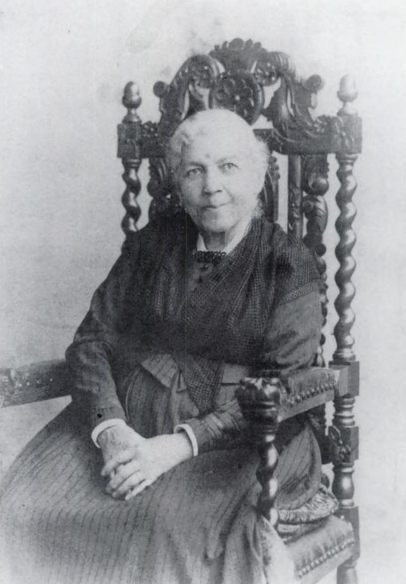
Harriet Ann Jacobs, 1894 (Presumed Public Domain, via Wikipedia)

Harriet Ann Jacobs, 1894 (Presumed Public Domain, via Wikipedia)

Kaufman-McKivigan writes in the post that in recent decades her story “has been anthologized several times as one of the earliest works of fiction by an African-American author”. That’s interesting in itself, because it means they (whoever “they” are) have assumed she was an African-American contributor. It could be so, and the story could be autobiographical, but I also wondered, given the lack of information about her, whether “Annie Parker” was a pseudonym. Anyhow, our professor says they found a couple more articles by an Annie Parker in a temperance journal from Geneva, New York, but then the trail went “cold, very cold”. Genealogical research, he says, turned up “a few possible ‘Annie Parkers’ in the upstate New York region” but none had “any known connection to the antislavery movement and all were white”. He then posits that Annie Parker may not have been a runaway slave as others have speculated, but might have been “a pen-name”. The question then is whose? One possible idea is the above-mentioned Harriet Jacobs. There are some valid reasons for making this connection, as he explains in the post – so do read it at the link above if you are interested. Why Jacobs might have wanted to use a pseudonym is a question the literary detectives are now working on. All very interesting – and one of the reasons I do enjoy these LOA offerings.

Now, though, the story – which is told first person in the voice of a slave, after the opening paragraph is told third person. I was, I must say, quite flummoxed by this. The paragraph has some odd punctuation, in that there are opening quotation marks but no closing ones. LOA’s notes suggest this is to indicate that the rest of the story is composed entirely of her narrative. Fair enough, though I don’t quite understand why Parker needed to start with the third person, except that it does make for an easy way of telling us who the narrator is.

The story is told by the slave, Phillis, sister of another slave, Elsie, who had died giving birth to her second child. Both Elsie’s children – the first, a son, and the newborn, a girl – were fathered by “the young master”. The son, who looks too much like his father is sold off before the young master brings a wife home, thus preventing any awkward questions being asked. Meanwhile, Phillis cares for the daughter, Zilpha, as she grows up to young womanhood. I won’t give away the story here but simply tell you that LOA introduces it as a “tale, charged with incest and gothic intrigue”. You can read it at the link, below. It’s only 6 pages.

This is not a story about beatings and cruel physical treatment. Indeed the new mistress:

proved a kind and gentle mistress. All the slaves loved her, as well they might, for she did everything in her power to make them comfortable and happy.

But, we never forget that slaves are powerless – and, as we know only too well, when anything happens that threatens an owner’s happiness or security, little thought, even on the kindest plantations, is given to the “feelings” of the slaves. They are possessions and can be moved around at will. Their emotional or psychological needs, let alone their physical safety, are not relevant. And so, in this story, as certain truths come to light, the owner takes actions to protect his security and happiness. The irony is that he, like his mistress, is generally (perhaps “superficially” is the better word) kind and fair, but there are limits – and it is the impact of those limits that we are left with, confirming once again what a destructive institution slavery was, indeed is.

Annie Parker
“Passages in the life of a slave woman”
First published: In Autobiography for freedom, 1853.
Available: Online at the Library of America

Toshio Mori, Japanese Hamlet (Review)

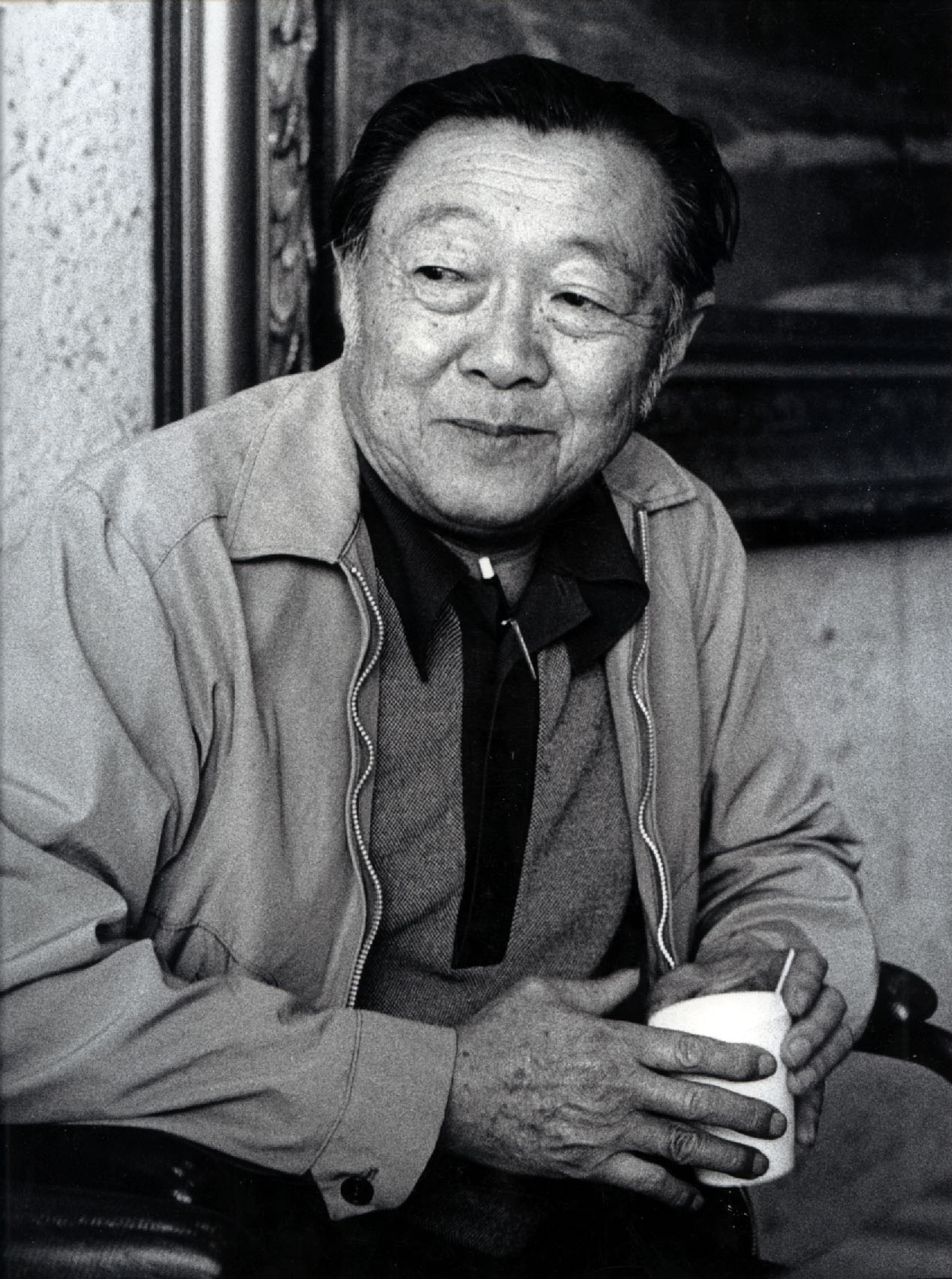
Toshio Mori (Courtesy: Nancy Wong, via Wikipedia, using CC-BY-SA 3.0)

Toshio Mori (Courtesy: Nancy Wong, via Wikipedia, using CC-BY-SA 3.0)

What I love about the Library of America is the variety of works it features in its Story of the Week program. Because of my interest in Japan and Japanese writers, I was particularly attracted to Toshio Mori’s story, “Japanese Hamlet”, that they published a couple of weeks ago. Toshio Mori was one of the first Japanese-American writers to be published in America – and he was best known for short stories. Two things that make him interesting to me.

According to Wikipedia, Mori was born in Oakland, California in 1910. Like many Japanese-Americans, he was interned in a camp (for him, the Topaz War Relocation Centre in Utah) during World War 2. According to LOA, the story “Japanese Hamlet” was written in 1939, but wasn’t published until 1946 – in a magazine called the Pacific Citizen which was apparently the “leading magazine of the Pacific Asian American community”. It was then titled “The School Boy Hamlet”. It appeared later, as “Japanese Hamlet”, in his collection The Chauvinist and other stories, published in 1979, the year before his death.

The story is told by an unnamed first person narrator. He talks of a man, Tom Fukunaga, who “was a schoolboy in a Piedmont home. He had been one since his freshman days in high school. When he was thirty-one he was still a schoolboy”. This Tom, who “did not want anything in the world but to be a Shakespearean actor”,  visits the narrator regularly to recite Shakespeare to him. He’s a schoolboy because he still lives at the school, and has not got a job because he is perfecting his acting skills. Our narrator is happy to hear the recitation because “there was little for me to do in the evenings”.

Tom’s family is not happy with his decision, calling him “a good-for-nothing loafer” who “ought to be ashamed of himself for being a schoolboy at his age”. He tells his relatives that he’s “not loafing” but “studying very hard”. We learn that an uncle visits him regularly trying “to persuade him to quit stage hopes and schoolboy attitude”. His parents have disowned him, his uncle says, and “pretty soon your relatives will drop you”. But Tom is unmoved. He has his goal and will not be swayed from it. He lives on five dollars a week, plus room and board, presumably covered by his family. He feels no guilt about this.

So, what do we have here? We have the would-be artist persisting with his dream. We also have the suggestion of Japanese culture not understanding the pursuit of an individual goal over one’s responsibility to family and community. Then we add the fact that Tom’s favourite role is Hamlet, the quintessential dreamer and procrastinator. I like the complexity of this criss-crossing themes and ideas. Life, we know and Mori shows, is not a simple this-then-that but a complex web of interacting influences.

In all this it’s not clear who the narrator is – a friend, old teacher, neighbour? Is he American or Japanese? Interesting that Mori has chosen to tell the story through a first person narrator, and yet has told us nothing about this narrator. What is the narrator’s role? He (presumably “he”) mediates between us and Tom’s story but he is also an actor in the story. This complicates our response to Tom, I think, because we see him through the eyes of another, but we don’t know who that other is. Regardless of who the narrator is, he starts to be “afraid that Tom’s energy and time were wasted and I helped along to waste it.” He tries to encourage Tom to contact some theatre people, fearing “we are wasting our lives”. Interesting, here, that the narrator is not only worried about enabling Tom to waste his life but about wasting his own. Eventually, the narrator starts to dread Tom’s presence “as if his figure reminded me of my part in the mock play that his life was”. One night he suggests Tom give it up for a while because it is “destroying” him. Tom simply ceases to come.

The narrator feels “bad” because he knew Tom would “never abandon his ambition”. And, while he knew Tom would never become a great Shakespearean actor, he admired “his simple persistence”. The story ends quietly, with no clear resolution – though we do see Tom once again.

LOA’s introductory notes quote a literary scholar, David Palumbo-Liu, who says that while the story seems to offer a simple message, ‘it masks an underlying tension from “a faith in the power of Art to transcend race, ethnicity, and history.””  Ethnicity is not mentioned in the story, except in the title under which it was eventually published – and it is of course  implied in Tom’s name. However, LOA continues, Palumbo-Liu expands his argument: “In a world of racial difference, to be Hamlet, Tom cannot be Japanese; to be Japanese, Tom cannot be Hamlet. Yet the myth of universal art denies that there is any contradiction since, in being an artist, Tom can do both.” LOA suggests that Tom is much like Mori himself who also persevered with his writing, hoping to reach “a wide American audience”.

Not knowing Mori’s oeuvre, I don’t know whether he intended this story to be what Palumbo-Lui sees. I don’t know, either, whether he intended it to be about Japanese culture’s emphasis on duty over individuality, since many Western families would also look askance at a young person not getting a job. What I do know is that although its “simple” message is about the perseverance of a passionate artist, it’s not a simple story. I’m glad to have been introduced to Toshio Mori.

Toshio Mori
“Japanese Hamlet”
First published: in Pacific Citizen, August 17, 1946
Available: Online at the Library of America

John Updike, The lovely troubled daughters of our old crowd (Review)

I have an old-friend-cum-ex-colleague who has been asking me for longer than I can remember to read John Updike. He even, a year or so ago, sent me a link to a Kindle special for Rabbit, Run. I obediently bought it, and I do intend to read it, I do. However, I recently reorganised my Kindle and discovered that I have a TBR pile there of 20 books! How can that be? I hardly ever buy for the Kindle. But, there you are, the Kindle Cloud never lies, so I must have. All this is to say that I realised it could be some time before I got to Updike, so when I saw a story by him appear on the Library of America a year ago, I printed it out! It finally reached the top of the pile and I’ve just read it. My friend is right. I really should read (more) Updike.

The story, “The lovely troubled daughters of our old crowd”, is told from the point of view of a male member of a group of couples who socialised and holidayed together over many years – indeed from the time their daughters were two or three to now, when they are in their mid-twenties. Well, until they were somewhere in their teens anyhow, because the old crowd is no longer together – not only due to “the children, really, growing unenthusiastic and resistant” to group holidays but due to “the divorces as they began to build up”.

He compares happy times of the past – from his perspective – to the less than exciting or fulfilling things all their daughters are doing now – from his perspective. He also compares the daughters to their mothers – and again, of course, it’s from his perspective. This is the important thing about the story – his perspective. We know nothing really of what the girls thought then or think now. We only know what a now middle-aged man thinks. Should we trust his view? What does the fact that Updike included this in a collection, published in 1987, titled (presumably by him) Trust me tell us about his intention?

Late in the story, the narrator also compares the girls to the “daughters of people we hardly knew”. These daughters “are married to stockbrokers or off in Oregon being nurses or in Mexico teaching agronomy” while

our daughters haunt the town as if searching for something they missed, taking classes in macramé or aerobic dancing, living with their mothers, wearing no make-up, walking up beside the rocks with books in their arms like a race of little nuns.

So, here’s the challenge. From his point of view, there’s something wrong with these girls. They are not getting married, they are not in high status or highly admirable jobs or situations. Well, we readers might ask, why should they be, given that their parents have clearly not set good examples of happy marriages? Indeed, our narrator, who’s in “about the last marriage left”, reveals a wandering eye. We wonder, in fact, whether they may have been swinging couples. We might also ask, though, what is wrong with the choices the daughters are making? Why should they wear make-up? To catch a man? What is wrong with walking “beside the rocks with books”? And, do they want to marry a stockbroker?

I love the complexity of this, the fact that Updike has chosen to tell this story through decidedly subjective eyes, and yet has managed to leave the interpretation surprisingly open. It’s a story, I suspect, that can be read very differently depending on each reader’s experience and point of view, despite some givens in the text.

Before I conclude, I want to mention the style. The tone is intimate – as though the narrator is talking to one of his old friends. He refers, for example, to Mary Jo Addison and “that bad spell of anorexia”, implying we know all about Mary Jo’s problems. There’s also some lovely imagery, such as this description of the young girls with “their pale brushed heads like candles burning in the summer sunlight”. Decorative but not very necessary? Is this how they were treated? And, overall, there’s a sense of disconnect between the narrator’s nostalgia and the reality of their lives. I’m not sure he’s unreliable exactly, but he does seem rather deluded about what role he and his friends may have played in who the girls are now.

“The lovely troubled daughters of our old crowd” is such a sly story. It suggests that the daughters are troubled, are somehow wrong, and maybe they are, maybe they’re not, but that is not the real, or the whole, story. And therein lies the lovely irony in the title.

John Updike
“The lovely troubled daughters of our old crowd”
First published: in The New Yorker on April 6, 1981; later republished in his collection Trust me (1987)
Available: Online at the Library of America

Wallace Stegner, Crossing to safety (Review)

StegnerCrossingPenguinNearly two decades ago, I read Wallace Stegner’s Angle of repose. I loved it. Indeed, for many years I had the following quote from it on my work whiteboard: “Civilisations grow by agreements and accommodations and accretions, not by repudiations”. Not just civilisations, I thought, but marriages, teams, organisations. I like the way this man thinks. And so, when someone suggested my reading group do his last novel, Crossing to safety, I jumped at the chance. At last I could read that copy languishing on my TBR.

The tricky thing about discussing Crossing to safety is that it’s about many things – big ones like life, friendship, love, order versus chaos, and the nature of art (in its wider meaning), as well as more specific ones like academia and east-versus-west (in the US). I can only tackle a few of them in this post so will pick those, of course, that speak most to my enthusiasms. First, though, the plot.

Crossing to safety chronicles the 35-year friendship (amicitia) between two couples, which started in Madison, Wisconsin, in 1937. Charity and Sid Lang are a well-to-do couple, with two children, from the east, while Larry (who narrates the story) and Sally Morgan are a far poorer couple from the west. Both women are pregnant when the couples meet, and both men are working, on contract, in the English department of the university. The novel, though, doesn’t start with their meeting. It starts 35 years later, in 1972. Larry and Sally have been summoned, some 8 years after their last visit, to the Langs’ summer compound in Vermont, “the place where during the best times of our lives friendship had its home and happiness its headquarters”. Pretty soon we realise things are somewhat awry. Charity is “at death’s door”, hence the summons. We also learn that Sally is disabled, though since when we don’t know.

The story, then, is being told from 1972. Our narrator, Larry, is aware that:

Recollection, I have found, is usually about half-invention, and right now I realise that there is much about Sid and Charity Lang that I either invented or got secondhand.

This, together with the fact that Larry frequently comments and reflects on life, memory and art, gives the book a complexity without detracting from its being an engaging story about interesting people. Interesting? Did I say interesting?

This is not an adventure story (Larry, early in the novel)

One of the themes of the novel concerns the nature of art. Larry is a writer, so it’s not surprising that he’s interested in the creation and meaning of art. There are several discussions between the characters, as well as comments by the narrator, on the subject.

Around two-thirds through the novel Sid and Charity’s daughter Hallie asks Larry to write a novel about them. Larry demurs, pondering after the discussion:

How do you make a book that anyone will read out of lives as quiet as these? Where are the things that novelists seize upon and readers expect? Where is the high life, the conspicuous waste, the violence, the kinky sex, the death wish?

We are reminded of this a little later in the novel when the four, with their children off their hands, spend a sabbatical year in Italy, lapping up art and culture. Most people, they consider, have read Milton’s Paradise lost, but how many have read Paradise regained? Can art, they wonder, only be about “sin and suffering … the most universal human experiences”? Charity, naturally, dissents, arguing that “of course you could make great art out of happiness and goodness”. She argues that artists (including writers) found it “easier to get attention with demonstrations of treachery, malice, death, violence” but “art ought to set standards and provide models”.

This is pretty much what Stegner has done – not by creating boring paragons but by presenting characters who “made mistakes” but who “never tripped anyone up to gain an advantage”. Instead, they “jogged and panted it out the whole way”. In doing so, he explores what determines a worthy, or even just meaningful, life.

Order is the dream of man (Larry, quoting Henry Adams)

Early in the novel, Larry quotes historian Adams’ statement that “Chaos is the law of nature; order is the dream of man”. This is, I think, one of the major themes of the novel. It’s not for nothing that Charity is established as the supreme organiser. She has absolute faith – one that is never dimmed by evidence to the contrary – that “if you wanted something, you planned for it, worked for it, made it happen”. Time and again, though, Larry shows that

… you can plan all you want to … but within a single afternoon, within hours or minutes, everything you plan and everything you have fought to make yourself can be undone as a slug is undone when salt is poured on him. And right up to the moment when you find yourself dissolving into foam you can still believe yourself fine.

And so, illness happens, jobs are lost, wars start – and the dream of man comes asunder. We could call this fate, and at times Larry does, but I think, really, Stegner is more realist than fatalist. He, through Larry, recognises “the miserable failure of the law of nature to conform to the dream of man” but this is no breast-beating “woe-is-me” novel.

de Amicitia (Cicero, alluded to by Larry)

I don’t want to end on heaviness, so let’s get to the unifying theme, or idea, of the novel – friendship. It’s a friendship built on immense generosity – of spirit and of means. Charity and Sid welcome Sally and Larry into their heart and home. They are generous when Larry has early writing successes “where smaller spirits might let envy corrode liking”. They provide financial support (paid back, later, though not demanded) when polio strikes Sally. In return, Larry points Sid towards a job when Sid’s career flounders. And so on … all that you’d expect in a real friendship, in other words.

This is not to say it’s all smooth sailing. There are tensions, a serpent in Eden to use Larry’s metaphor. They are mainly caused by Charity’s unfulfilled ambitions for Sid and her over-organising nature that results, at times, in “a clash of temperament or will” that she always wins. Stegner writes some powerful scenes that, while not high drama in the big scheme of things, glue us readers to the spot. There is “painful ambiguity” in this friendship but it is underpinned by “uncomplicated love”. If you believe that’s possible, as I do, you will love this book.

How valid is the commission?

This is an unusual review for me because I’ve barely touched on aspects like the style and the structure. Both are interesting and deserve attention, but my patience with myself is running out! Early in the novel, Sid asks Larry about “that banal subject, fascinating to non-writers, of why writers write”. Are they “reporters, prophets, crazies, entertainers, preachers, judges, what” and “who appoints them?” They appoint themselves, they agree, but if so “how valid is the commission?” Good question. All I can say is that I’m glad Stegner appointed himself because he is one thoughtful, engaging writer.

Wallace Stegner
Crossing to safety
New York: Penguin Books, 1988
341pp
ISBN: 9780140133486

J. Sterling Morton, About trees (Review)

One of the first Library of America stories I wrote about here was John Muir’s “A wind-storm in the forests“, so when I saw one titled “About trees” pop up recently, I had to read it. By recently, I mean April – as the Library of America published it to coincide with Arbor Day in the US which occurs at the end of April. J. Sterling Morton is credited as the originator of “this tree-planting festival” – in 1872.

JS Morton, ca 1890s (Presumed Public Domain, via Wikipedia)

JS Morton, ca 1890s (Presumed Public Domain, via Wikipedia)

According to Wikipedia, J. Sterling Morton (1832-1902) was a Nebraska pioneer, newspaper editor and Secretary of Agriculture for President Cleveland. According to LOA’s notes, Morton and his wife moved in the mid-1850s “to a bare, windswept 160-acre homestead in newly incorporated Nebraska City”. This is when, LOA says, his “mania for tree-planting” began. I don’t know much about Nebraska – and what I do know has come from Willa Cather’s novel My Ántonia (my review), which was published in 1918 but set around the 1880s. The landscape Cather describes in that novel rings true to LOA’s description of Morton’s Nebraska. Anyhow, like other successful pioneers, Morton gradually expanded his original small house into something much larger – in his case, a replica of the White House, no less! His estate is now the Arbor Lodge State Historical Park and Arboretum.

Now to the article, “About trees”. It is, LOA tells us, the prefatory chapter in a pamphlet titled Arbor Day Leaves that was compiled in 1893 by the chief of the US Forestry Division, Nathaniel Hillyer Egelston. It was intended as “a complete programme for Arbor Day observance, including readings, recitations, music and general information”. Some pamphlet, eh?

Morton starts by praising trees as:

the perfection in strength, beauty and usefulness of vegetable life. It stands majestic through the sun and storm of centuries. Resting in summer beneath its cooling shade, or sheltering besides its massive trunk from the chilling blast of winter, we are prone to forget the little seed whence it came. Trees are no respecter of persons. They grow as luxuriantly besides the cabin of the pioneer as against the palace of the millionaire.

Sherbrooke Forest and Eucalyptus regnans

Sherbrooke Forest (Vic) and Eucalyptus regnans

He says trees are “living materials organised in the laboratory of Nature’s mysteries out of rain, sunlight, dews and earth”, and are the result of a deft metamorphosis. He explains this metamorphosis by telling us more specifically how an oak grows from a planted acorn, and how the earth, through the roots, provides food such as phosphates while:

foliage and twig and trunk are busy in catching sunbeams, air, and thunderstorms, to imprison in the annual increment of solid wood. There is no light coming from your wood, corncob, or coal fire which some vegetable Prometheus did not, in its days of growth, steal from the sun and secrete in the mysteries of a vegetable organism.

I love the John Muir-like romantic prose here! Animal and tree life are, he says, interdependent. Trees are “essential to man’s health and life”. Without vegetable life and growth, animal life would be exterminated:

When the last tree shall have been destroyed there will be no man left to mourn the improvidence and thoughtlessness of the forest-destroying race to which he belonged.

It’s worrying that over a century later, we have Australian Prime Minister Tony Abbott stating that “We have quite enough national parks. We have quite enough locked up forests already. In fact, in an important respect, we have too much locked up forest.” (For one academic’s assessment of the issue, check out forest ecologist Rod Keenan’s* article,  “Abbott’s half right: our national parks are good but not perfect”, at The Conversation.)

Morton argues that “in all civilisations man has cut down and consumed, but rarely restored or replanted, the forests”. In some parts of the world, this has changed, due largely to initiatives like Arbor Day, Earth Hour, not to mention the creation of national parks and reserves. Of course, replanting with (obviously) new trees does change the ecological balance and no matter how carefully managed it is, it is based on knowledge that we know is imperfect. Better then, as much as possible, to preserve forests and let them renew naturally – or so it seems to me!

Anyhow, Morton concludes by reaffirming the importance of planting trees “to avert treelessness, to improve the climatic conditions, for the love of the beautiful and useful combined”.

Arbor Day is, he says

the only anniversary in which humanity looks future ward instead of past ward, in which there is a consensus of thought for those who are to come after us, instead of reflections concerning those who have gone before us. It is a practical anniversary. It is a beautiful anniversary.

When Arbor Day Leaves was published in 1893, forty-four of the USA’s then forty-eight states observed Arbor Day (and by 1920s all states were practising it). What a great legacy.

Later this week, I will post on Australia’s first Arbor Day … watch this space.

J. Sterling Morton
“About trees”
First published: in Arbor Day Leaves (ed. N.H. Egelston), 1893
Available: Online at the Library of America

* I’m no expert, and Rod Keenan is not the darling of all environmentalists, but he offers a reasoned perspective.

Dinah Fried, Fictitious dishes (Review)

Dinah Fried, Fictitious dishes

Courtesy: HarperCollins Australia

Regular readers here know that I recently spent a few weeks in North America – mostly in Toronto, bookended by a few days in Southern California. We spent our last day with a friend I “met” many years ago through online reading groups. We actually met Trudy for the first time in 2008, so this was our second meeting. She is a fun, generous person, and upon our arrival at her pretty cottage, she proceeded to shower us with gifts targeting our interests and activities. One of these was Dinah Fried’s Fictitious dishes which she chose because of our “sophisticated palate and enthusiastic approach to dining” – as well as, of course, my love of reading. I’m not so sure about the sophisticated bit, but we do love our food!

Dinah Fried’s book, subtitled “an album of literature’s most memorable meals”, is one of those delightful little books for readers to get their teeth into. (Ha!) As you read it you think, of course, about your favourite meals and foods in books. (You know what I’ll be asking you at the end of this post, then, don’t you?). In her introduction, Fried mentions some of her favourites, starting with one of my own, Heidi (by Johanna Spyri). Fried mentions the golden cheesy toast that Heidi’s grandfather serves her in their home in the mountains, but I also remember the white bread rolls that so astonished Heidi when she lived in the town with Clara. Who doesn’t like cheese on toast and perfect bread rolls!

The book contains an eclectic and sometimes surprising collection of “fictitious dishes” in both adult and children’s books that range from European classics like Kafka’s Metamorphosis to modern American Pulitzer prize winners like Cormac McCarthy’s The road. This latter, involving a can of pears, reminded me of the cans of peaches* in Adam Johnson’s The orphan master’s son (my review). In other words, the book can send you off on little journeys of your own! There are 50 or so dishes, and each is presented as a two-page spread. On the left is the title of the book, the quote, and some tidbits of information inspired by the book and/or the food items chosen. On the right is Fried’s photo of the food, lovingly prepared and carefully laid out. In her introduction, she talks briefly about food preparation and the work involved in sourcing just the right props. It is good fun looking at the photos and thinking about her design choices. She is, after all, a designer, a graduate from the Rhode Island School of Design. As with any book of this ilk, some designs worked better for me than others, but I enjoyed looking at them all.

Most intriguing to me, though, were the little pieces of information. They include:

  • the history of various food items, like freeze-dried potatoes, for Beverly Cleary’s Beezus and Ramona;
  • notes about the books, such as prizes won or an interesting point about their publication; and
  • comments on the authors, such as their inspiration for the work or their relationship to the food.

There’s no real pattern to these. Some books have four or five points, and others only two, but they are fun to read. She does provide a list of references at the back, along with a list of the books chosen and the editions she used for the quotes. I do have one bone to pick with her (oh dear!), and that’s regarding her comment on, you’ve probably guessed it, Jane Austen! Food appears quite frequently in Austen’s novels, and particularly in Emma, which features a hypochondriacal father keen to ensure everyone eats as plainly and boringly as he does. It also features a picnic, a strawberry gathering party (from which Fried takes her quote), and balls and dinners. My quibble relates to Fried’s comment that “Despite proposals, Austen never married, setting her apart from many of her novels’ characters, who are husband hunters”. To describe Austen’s heroines so baldly as “husband hunters” badly misses Austen’s point. Her heroines were prepared not to marry (as Austen didn’t) if they couldn’t marry for love. Austen knew the importance of money to women’s security, but her heroines also wanted to love and respect the man they married.

But now, to the fun bit. One of my favourite bookish references to food comes from Virginia Woolf’s A room of one’s own. I’m sure you know to what I refer! However, as Fried’s book is devoted to fiction, I’ll share one of my favourite fictitious dishes (one that wasn’t included by Fried). It comes from Gene Stratton Porter’s A girl of the Limberlost and refers to a brown leather lunchbox:

It did open, and inside was a space for sandwiches, a little porcelain box for cold meat or fried chicken, another for salad, a glass with a lid which screwed on, held by a ring in a corner, for custard or jelly, a flask for tea or milk, a beautiful little knife , fork and spoon fastened in holders, and a place for a napkin.

Not only did I adore the idea of this gorgeous little box, but the love and generosity behind it in the story speaks to the most important thing about food in our lives – the making of and sharing it with those we love. Now, over to you … what are your favourite fictitious dishes?

Dinah Fried
Fictitious dishes: An album of literature’s most memorable meals
New York: Harper Design, 2014
126pp.
9780062279835

* They play an important role in the lives of the main characters, but to explain it would be to spoil!

Adam Johnson, The orphan master’s son (Review)

Adam Johnson 2006

Adam Johnson 2006 (Courtesy: Roms69, using CC-BY-SA 3.0, via Wikipedia)

Given my current reading preferences, I probably wouldn’t have read Adam Johnson’s Pulitzer prize-winning novel, The orphan master’s son, if it hadn’t been for my reading group, but I’m rather glad I did. It’s a confronting novel, not only because of its brutal content, but also because it is an outsider’s critique. I always feel more comfortable if criticism comes from within, free of external agendas. However, criticism from within is scarcely possible in a totalitarian regime, so I admire Johnson for taking it on.

Now that’s off my chest, let’s get to the book. Most of you probably already know what it is about. It is set in the Democratic People’s Republic of Korea during the reign of Kim Jong-il (who died in 2011) and explores the lives of citizens living under his repressive, authoritarian rule. The novel is divided into two parts: The Biography of Jun Do, and The Confessions of Commander Ga. The first part is told in third person voice, in a linear chronology. The second part, however, is more complex. As well as continuing the third person narrative, there is a first person strand by a new character, an unnamed interpreter, and an “official” strand told via loudspeakers. While each has a linear chronology, they are told at different rates resulting in the overall chronological sequence being somewhat jagged. This structure reinforces one of the main themes of the novel which has to do with stories, lies and truths, and shifting identities.

The structure is one of my reasons for liking the book. I like it when authors use technical aspects of their work, like the structure, to reinforce their intention. It adds challenge to the reading, making me think about what the author is doing and why. It also, in this case, helped distract my mind from much of the brutality of the content. In the interview with his editor David Ebershoff at the back of my edition, Johnson said that he had “to tone down much of the real darkness of North Korea”. Wow, is all I can say to that.

Anyhow, I’ve written three paragraphs without saying anything about the story or plot. The first thing to say is that Jun Do (a play on John Doe, neatly suggesting hidden or uncertain identities) and Commander Ga are the same person. In the first part, Jun Do, the titular orphan master’s son, takes part in many “adventures” on behalf of the state, including working as a tunnel soldier, kidnapping Japanese, gathering radio information on a fishing boat, and representing North Korea on a delegation to Texas after which, because they fail their assignment, he is sent to Prison 33, a prison mine. In this first part, Jun Do learns the art of survival and, importantly, the importance of stories to that survival. In the second part, Jun Do has survived the prison, killed the hated Commander Ga, and emerged, with the state’s sanction, to take his place, including moving in with Ga’s wife, the beautiful actress, Sun Moon.

It is in this part that Do/Ga’s life comes together and then starts to “unravel”, though not without his complicity and not without doing some damage of his own. The novel is beautifully plotted so that seemingly random or bizarre occurrences – such as Jun Do hearing radio signals from the “girl rower”, his chest being tattooed by a boat captain with an image of Sun Moon, and his being given a DVD of the film Casablanca – all find their place in the latter part of the novel.

“there is nothing between the citizen and the state” (interrogator)

But now I want to get back to stories. In the first part, the fishing boat crew concoct an improbable story involving Jun Do to explain the disappearance of the Second Mate, who has defected, and thereby protect themselves from retribution. In Texas, when Jun Do expresses uncertainty about repeating this story, the delegation leader, Dr Song, tells him:

Where we are from … stories are factual. If a farmer is declared a music virtuoso by the state, everyone had better start calling him maestro. And secretly he’s be wise to start practising the piano. For us the story is more important than the person. If a man and his story are in conflict, it is the man who must change.

This is what Jun Do does throughout the novel. He changes to suit the role he finds himself in. He has to, to survive. In the second part of the novel, we are presented two versions of his story – the third person narrated one which we take as the “truth”, and the propaganda one broadcast over loudspeakers to all the “citizens” of Pyongyang.

Alongside these two narratives is that of our first person narrator, the interrogator, who works in Division 42, the department which extracts information from enemies of the state. A self-styled biographer, he eschews the thuggish techniques of the “rival interrogation team”, the Pubyok, although his apparently benign story collecting methods conclude with a brutal pain (electric shock) machine which aims to create

a rift in the identity— the person who makes it to the far shore will have little resemblance to the professor who now begins the crossing. In a few weeks, he will be a contributing member of a rural farm collective […]. There’s no way around it: to get a new life, you’ve got to trade in your old one.

He is, in a strange way, a voice of conscience, as he starts to question what it’s all about. Indeed, at one point he asks his father “Is it just about survival? Is that all there is?”. This question recurs near the end when Do/Ga, our interrogator’s last case, imagines a life that “would no longer be about survival and endurance”.

In most of my reading, multiple viewpoints are used to convey the idea that there are different ways of seeing things. It’s usually pretty benign, even if some of the individual perspectives are not. But in this novel, there is something sinister going on, so sinister that if you are caught out in the wrong perspective you will very likely find yourself at a prison farm (or worse). You need to make sure, in other words, that your identity matches the one the regime has for you. And this brings me to the scariest thing about the society Johnson depicts – the precariousness, or uncertainty or, even, the randomness of existence. To survive, you must believe what you are told or, as Jun Do learnt early in his life, do what you are told.

“no beginning, an unrelenting middle, and ended over and over” (Do/Ga)

I’ve said nothing, though, about the experience of reading this book. It may sound silly, given what I’ve written above, but this novel takes you on a wild ride. Besides the inevitable brutality, it has tender moments, some very funny ones, and is more than a little absurd. It asks us to accept, and believe in, Jun Do as our guide. It’s a dystopian novel with a touch of romance, adventure and mystery/thriller.

The success of a book like this rests on its authenticity, on whether we believe the truths that lie beneath the fabrication. Unfortunately, I do.

Adam Johnson
The orphan master’s son
London: Black Swan, 2013
575pp.
ISBN: 9780552778251