Lionel Shriver, So much for that

Lionel Shriver, So much for that

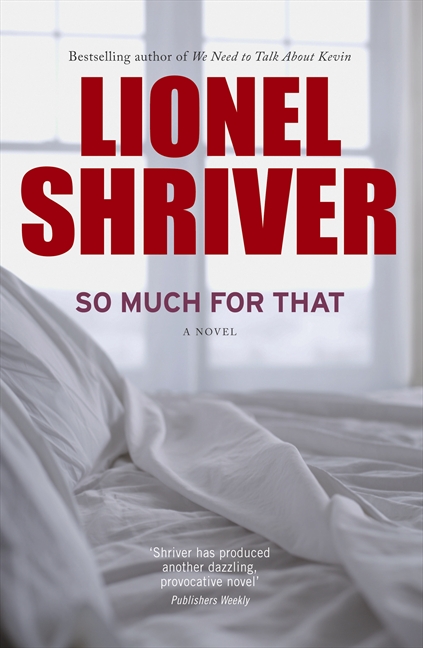
Book cover (Courtesy: HarperCollins Australia)

Having had my own rather traumatic experience of the American healthcare system back in the 1980s I was rather keen to read Lionel Shriver‘s latest offering, So much for that. And, I wasn’t disappointed – or, let me rephrase that, I found it an interesting and engaging page-turner though not a top-ten-of-the-year one.

First a quick plot summary. The book starts with 48-year-old nice-guy Shep Knacker planning to escape the American rat-race to his dreamed of, and as it turns out ironically named, AfterLife in Pemba off Zanzibar. Unfortunately, his plans turn sour with his wife’s announcement that she has a rare aggressive cancer called peritoneal mesothelioma and will need him to continue working, for his health insurance. Paralleling Shep and Glynis’ experience of health service and insurance – and told in roughly alternating chapters – is that of their good friends Jackson and Carol whose 16-year-old daughter, Flicka, was born with the degenerative disease, familial dysautonomia.

So, at the start we have a terminal cancer diagnosis and a child with a disease that is not likely to see her making old bones. Through the course of the novel, two more health issues are thrown in to round out the mix – aged care for Shep’s father after he falls and breaks his femur, and elective shall-we-say “vanity” surgery undertaken with disastrous results by Jackson. This all felt a little contrived to me – as did the occasional preachy dialogue that seemed to be there to make sure we got it. (Shriver is not a taker-outer I think!)

But, somehow, Shriver made it all work – right through to the rather surprising and, thus, risky ending. I liked the fact that she balanced the health care polemics with some wider issues such as the psychology and language of illness and the soul-destroying nature of the American (in particular) rat-race. And I liked the way she offset the plot and structural contrivances with a warm but unsentimental regard for her characters. Glynis and Flicka are not “pin-up” patients but “real” people who are angry with their lot and exhibit selfishness and petulance more often than meek forbearance. Glynis, like the character in Helen Garner‘s The spare room, is in denial about her fate pretty much to the end, and Flicka sees little value in living the sort of life she does. Both consequently feel little need to make it easier for those around them.

Most of Shep’s chapters commence with a statement of his net worth, which at the beginning of the novel is around $730K but which decreases with alarming rapidity as the months wear on and his poor insurance cover doesn’t begin to meet the costs of Glynis’ treatment. If you knew nothing before about co-payments, deductibles, co-insurers, out-of-network providers and lifetime payment caps, you’ll know all about them by the time you finish the book. (Apparently the most common cause of personal bankruptcy in the USA is medical debt.) But this is just the background – the polemics if you will – because the more interesting story is that of Shep and Glynis’ complicated but loving relationship, and of how friends and family react to the diagnosis. We feel Shep’s pain as he realises “he couldn’t fix things”. We understand Glynis’ eventual epiphany that “her husband had misguidedly hoarded his pennies, when the only currency they spent that had ever counted was time”. We cringe when we recognise ourselves in the friends who don’t visit often enough, who offer lip-service assistance rather than actual help. And we start to understand the real implications of cancer-speak that encourages an unrealistic belief in positive thinking, that suggests you can win the battle if you fight hard enough:

I know you mean well [says Shep to the oncologist], but after all this military talk she now equates – dying – with dishonor. With failure. With personal failure.

Near the end Shep asks the doctor what the $2 million spent on Glynis’ treatment (to date) had bought:

“Oh, I bet we’ve probably extended her life a good three months.”
“No, I’m sorry, Dr Goldman,” Shep said on the way out. “They were not a good three months”.

… leaving the real question, which Shep had previously asked his father, hanging:

“is there also a limit to how much you should pay to keep any one person alive?”

Lionel Shriver does not specifically answer this question in the novel but – despite the ending – you know exactly what she thinks.

There is more I could say about the novel. The story of Jackson and Carol, for example, offers the book more than a simple confirming parallel. There are some genuinely funny moments, particularly those between Shep and his free-loading sister Beryl, and those when Jackson pronounces yet another long-winded title for the book on “mugs and moochers” that he never will write. And there are some interesting discussions about art and artists, and about parenting in modern USA. But I’ve said enough I think to give a sense of what this book is about.

Shep says at the end that he’d “rather live a good story than read one”. I’ll leave you to ponder the implications of a novelist writing that line … and simply say that while this is not a perfect novel, I don’t begrudge having given up a bit of my good life to read it!

Lionel Shriver
So much for that
Sydney: Fourth Estate, 2010
433pp.
ISBN: 9780732287030

HL Mencken, The nature of liberty

I’ve said it before, and I’ll probably say it again: I am enjoying being introduced to classic American writers of whom I’ve heard but not read through the Library of America. This week it is HL Mencken, and you can read his satirical piece, “The nature of liberty” (1920), online at LOA. Mencken (1880-1956), according to the brief introductory notes that always accompany these LOA stories, was a highly popular figure in post World War 1 America*. The Library writes that this popularity gave him the freedom to write on subjects that no-one else would: he “supported woman suffrage, promoted African American authors, and championed the contribution of immigrants to American society. He inveighed against censorship, corruption, police brutality, the Ku Klux Klan, and (above all) Prohibition“. Well, I thought, this sounds like an interesting man.

And so, I read “The nature of liberty”. It is essentially a satirical essay on the limits of liberty, on the way the Bill of Rights has been “kneaded and mellowed” through the legislature and judiciary, on the tension between a person’s liberty and the law (aka the state). The example he uses is the use of violence by police. He imagines the story of an innocent citizen who resists arrest and is beaten, then arrested and investigated by the police. He shows how, once that citizen is proven innocent, the citizen’s rights of redress are severely limited because all those involved (police, detective, watchman) acted within the law. There is only one right that the citizen has, he says

…and the courts have jealously guarded it. You have a clear right, guaranteed under the Constitution, to go into a court of equity and apply for a mandamus requiring the Polizei to cease forthwith to expose your portrait in the Rogues’ Gallery among the murderers. This is your inalienable right…

The satire is obvious throughout the essay – but you can see it here, particularly in the use of emotive terms such as “Polizei” and “Rogues’ Gallery”, and legalese such as mandamus. At the beginning of the essay, he ridicules the Civil Libertarians, with whom he patently sympathises, as follows:

…the same fanatics who shake the air with sobs every time the Postmaster-General of the United States bars a periodical from the mails because its ideas do not please him, and every time Russian is deported for reading Karl Marx, and every time a Prohibition enforcement officer murders a bootlegger who resists his levies …

Mencken very effectively shows, in this essay, how “rights” can be so regulated that the ordinary citizen ends up, in effect, with few. Those of us living in the era of “the war against terror” are only too aware of how quickly rights can be eroded in the name of the “common good”, in which the rights of individuals can be overridden in the blink of an eye.

Mencken was a passionate libertarian. He was critical of democracy, seeing it as inherently paradoxical, and of course, as a libertarian, he disliked socialism. And yet, we are social beings who live in groups, and we therefore need to balance individual liberties against the needs of the group. Earlyish in the essay, he comments that the Bill of Rights “specified the rights of a citizen, but it said nothing whatever about his duties”.  This issue of “duties” is mentioned and then dropped. I wonder, for all the satire, what his attitude was to “duties” and the degree to which these “duties” might impinge upon individual freedoms? But that, I think, is a discussion for another day … perhaps via another LOA essay.

*He was apparently also the inspiration for Anita Loos’ Gentlemen prefer blondes!

Dinaw Mengestu, An honest exit

There are, I suppose, two exits in Dinaw Mengestu’s short story “An honest exit”, which you can read at The New Yorker. One is the exit the father in the story made, when a young man, from his home in Ethiopia and the other is his final exit from life. (No spoiler here: we are told he dies in the first line of the story.) Mengestu is an Ethiopian-born American writer. According to Wikipedia, this short story is an excerpt from his coming novel, How to read the air, and clearly belongs to that growing body of work, Immigrant Literature.

As it turns out it was rather an apposite read for me, given all the “Stop the boats” calls we Aussies have just heard during our recent election. I wish more people would read stories like this. They might then realise that boat people (let’s forget the people smugglers for a moment) are not opportunists gaily leaving their homes to sail to a “better” place. They are leaving their home, their culture, their life – and they do not usually do it lightly or with ease.

Anyhow, this particular story starts with the father’s death and the son, a college teacher in Early American literature, deciding to tell his father’s story to his students.  However, as is only too common, he doesn’t know the full story:

I needed a history more complete than the strangled bits that he had owned and passed on to me – a short, brutal tale of having been trapped as a stowaway on a ship. So I continued with my father’s story, knowing I would have to make up the missing details as I went.

And so, over the course of a few lessons, he tells a story to his students, about how his father managed to get to Sudan, and from there, through the help of a man called Abrahim (“like the prophet”), onto a ship bound for Europe. As we hear the story – which is believable even if not necessarily factual – we also learn a little about the son. He says, for example, that he calls his place of work “the Academy”, a name he has stolen from a Kafka story about a monkey who’s been trained to give a speech to an academy:

I used to wonder if that was how my students and the other teachers, even with all their  liberal, cultured learning, saw me – as a monkey trying to teach their language back to them.

We see how disconnected he feels from both his father and his life. However, as he tells his story he seems to start to (re)connect a little:

They [his students] had always been just bodies to me … For a few seconds though I saw them clearly …They were still in the making, each and every one of them. Somehow I had missed that … As I walked home that night I was aware of a growing vortex of e-mails and text messages being passed among my students. Millions of bits of data were being transmitted … and I was their sole subject of concern. I don’t know why I found so much comfort in that thought, but it nearly lifted me off the ground, and suddenly, everywhere, I felt embraced.

A little further on, we learn that his father’s story is being spread around the “Academy”, albeit distorted as these things go. He hears various versions involving the Congo, Rwanda and Darfur! He is at one point called into the dean’s office:

“… How much of what they’re [students] saying is true?”

“Almost none of it,” I told him …

“Well, regardless of that,” he said, “it’s good to see them talking about important things. So much of what I hear from them is shallow, silly rumours. They can sort out what’s true for themselves later.”

The narrator is a little disconcerted by this, by the idea that “whether what they heard from me had any relationship to reality hardly mattered; real or not, it was all imaginary to them”. And yet, he himself is making a lot of it up as he goes! He continues his story with the students, ending at the point his father leaves Sudan as a stowaway. He says:

My students, for all their considerable wealth and privilege, were still at an age where they believed that the world was a fascinating, remarkable place, worthy of curious inquiry and close scrutiny, and I’d like to think I reminded them of that. Soon enough they would grow out of that and concern themselves with the things that were most immediately relevant to their own lives.

What he doesn’t do is tell the real truth of his father’s escape. Rather, when he gets to this point in his father’s story, he says “I knew that it was the last thing I was going to say to my class”. We don’t actually know what he does next because the rest of the story concerns his father, but it seems that there is a third exit in the story, his from teaching. It probably is “an honest exit”. All in all, this is an intriguingly layered story about migration, dreams and trust, stories and truth, teachers and students, and privilege.

To end, I might just return to Kafka’s “Report to the Academy” in which the ape says, “There is an excellent German expression: to beat one’s way through the bushes. That I have done. I have beaten my way through the bushes. I had no other way, always assuming that freedom was not a choice”. It rather suggests to me that there’s more than one reason our narrator alludes to Kafka’s monkey…

William James, On some mental effects of the earthquake

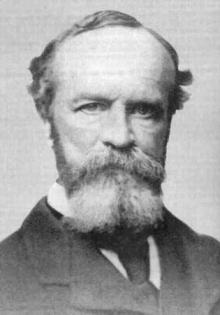
William James

William James (Presumed public domain, via Wikipedia)

There are a couple of reasons why I was intrigued to read this week’s Library of America offering. The most obvious is that it’s by William James. Not only is he a recognised American philosopher and psychologist, but he is also the brother of Henry James, and I have come across him several times in that context. For that reason alone, I was keen to read something by him, albeit a fairly small and very specific piece.

The other main reason, though, is more personal. In 1990, my family and I went to live in Southern California for a few years and, I have to say, there were several fears attached to this decision: guns, pollution, and earthquakes, not to mention the high probability that our kids would be kidnapped from under our noses in the queue for Disneyland! Well, the latter, you may be surprised to know, didn’t happen – and, while we were there during the Rodney King riots, we didn’t really have any run-ins with guns. We did, however, experience pollution. As for earthquakes, it just so happened that we were out of town on vacation for the two biggest that occurred during our time. All we experienced were a couple of tremors. Nonetheless, like all good Californians, we had our earthquake kit ready to go.

After that long introduction, let’s get to James. This essay, titled “On some mental effects of the earthquake” (1906), was written a few days after James and his wife, who were at Stanford University at the time, experienced the big San Francisco earthquake of 1906. He starts the essay with his east coast friend’s farewell statement: “I hope they give you a touch of earthquake while there, so that you may also become acquainted with that Californian institution”. Hmm … what’s that saying? What I’d say is: Be careful what you wish for?

As it turned out, the good people of Stanford were far enough away from the centre to feel the big shake (and quite a lot of damage) but minimal loss of life. James’s first reaction, once he realised what he was experiencing, was:

glee and admiration; glee at the vividness with which such an abstract idea or verbal term as “earthquake” could put on when translated into sensible reality and verified concretely [me: I think this means “at the excitement of experiencing an earthquake” don’t you!?]; and admiration at the way in which the frail little wooden house could hold itself together in spite of such a shaking. I felt no trace of fear; it was pure delight and welcome.

Ever the psychologist philosopher, he then analyses and articulates his early spontaneous non-fearful response. He said he “personified” it as having “animus and intent”, that it was easy to perceive it as “a living agent”. He goes on to say that he now understood how people mythologised catastrophe, that “it was impossible for untutored men to take earthquakes into their minds as anything but supernatural warnings or retributions”.  He also observes that most people slept outside the next few nights, not simply to be safer in case of a recurrence “but also to work off their emotion, and get the full unusualness out of the experience”. That makes sense to me and I rather like his way of articulating it.

In San Francisco proper, though, the situation was different (as we know). There was more devastation, and a lot of death. He managed to get to SF for the day and draws some conclusions from that too. As he says, his business is not with the “material ruin” but “with ‘subjective’ phenomena exclusively”. What he saw were people going about their business:

It was indeed a strange sight to see an entire population in the streets, busy as ants in an uncovered ant-hill scurrying to save their eggs and larvae.

And he is surprised, as were the officials, by the lack of criminal activity, besides petty pilfering. Is this the same now? Anyhow, this is not his main point. Two things, he says, stand out, and they are both “reassuring to human nature”:

  • “the improvisation of order out of chaos”: he notes that there are some people who are natural organisers (“natural order-makers”) and that at times like this they get to work. He suggests that while much of this was “American, much of it Californian” it would have happened in any country in crisis. In  fact, he says that “Like soldiering, it lies always latent in human nature”.
  • “universal equanimity”: he suggests that the expressions of horror and pathos came from elsewhere, but that the people experiencing the crisis just got on with recuperating. He writes that “the cheerfulness, or, at any rate, the steadfastness of tone, was universal. Not a single whine or plaintive word did I hear from the hundred losers whom I spoke to. Instead of that there was a temper of helpfulness beyond the counting”. And again, he suggests “it is easy to glorify this as something characteristically American, or especially Californian…But I like to think that what I write of is a normal and universal trait of human nature”.

I must say that I do like his lack of nationalism in all this, his suggestion that these positive and admirable traits are “human” rather than “American”. We have had many, many catastrophes and disasters since then, and I’d like to think that what James saw in 1906 has held true. But has it? Does more looting and crime go on now (as the media always implies)? Or, do the people on the ground immediately organise to help themselves and each other? Being one who likes to see the good us, I’d like to think so.

Edgar Allan Poe, Hop-Frog

Edgar Allan poe

Edgar Allan Poe (Presumed Public Domain, via Wikipedia)

I am loving the way Library of America is encouraging me to finally read authors I’ve been meaning to read for a long time. Yes, they are short works, but at least I am getting a sense of these authors – and that’s a start. This week’s offering is Edgar Allan Poe’s “Hop-Frog”. Like the other works I’ve blogged about, you can read it online at the Library of America.

I must admit I only knew of Poe as primarily a writer of Gothic and horror stories, so I was a little surprised to discover that “Hop-Frog” is a satire. It starts with:

I never knew anyone so keenly alive to a joke as the king was. He seemed to live only for joking…

I rather wondered if this was going to be a fairy story, but I quickly realised that it was something quite different. We discover in the first paragraph that the surest road to the king’s favour was to tell jokes, and that the king had 7 ministers who were all accomplished jokers. The king’s jokes, however, do not rely on wit. Rather

He had a special admiration for breadth in a jest, and would often put up with length, for the sake of it. Over niceties wearied him … upon the whole, practical jokes suited his taste far better than verbal ones.

Do you sense the likelihood that a trick is to be played? If so, you’d be right. Without giving too much away, I will say that there are two more characters in this story, the king’s fool, because every king should have one, and a young dancer. Now, the fool is the Hop-Frog of the title. He is a crippled dwarf. Here is Poe’s description of Hop-Frog:

…Hop-Frog [the name given to him by the seven ministers] could only get along by a sort of interjectional gait – something between a leap and a wiggle – a movement that afforded illimitable amusement, and of course consolation, to the king, for (notwithstanding the protuberance of his stomach and a constitutional swelling of his head) the king, by his whole court, was considered a capital figure.

Surprising that, eh? The young dancer is Trippetta, also a dwarf but a well-proportioned one. As the story goes, Hop-Frog is asked by the king to come up with an idea for a costume for him and his ministers to wear to a Masquerade Ball. Before obtaining Hop-Frog’s ideas, however, they torment him by making him drink alcohol, something they knew did not agree with him:

But the king loved practical jokes, and took pleasure in forcing Hop-Frog to drink and (as the king called it) “to be merry”.

As you have probably guessed, the resolution involves a practical joke that rather turns on the king – but, other than telling you that, my lips are sealed. To this extent the story is pretty predictable. What makes it a good story, despite this, is not only the way Poe plots it (because it is perfectly set up), but the satirical language in which it is told. I particularly loved this:

“…Characters, my fine fellow; we need characters – all of us – ha! ha! ” and as this was seriously meant for a joke, his laugh was chorused by the seven.

Not knowing much about Poe, I read this as a satire of power, of the way the powerful can have no qualms about humiliating and belittling those less powerful. And, indeed, the story works very well on this level. However, there is, apparently, the possibility of something else also going on. According to LOA’s brief introductory notes, scholars note the parallel between Hop-Frog and his tormenters, and Poe and his critics. The notes also suggest other parallels with Poe’s life such as his being an orphan, and his problems with alcohol. There is more discussion of these parallels in the Wikipedia article on the story.

All that said, it is, in the end, a revenge story – and a pretty fine one at that. I should read more Poe.

Howard Zinn, Finishing school for pickets

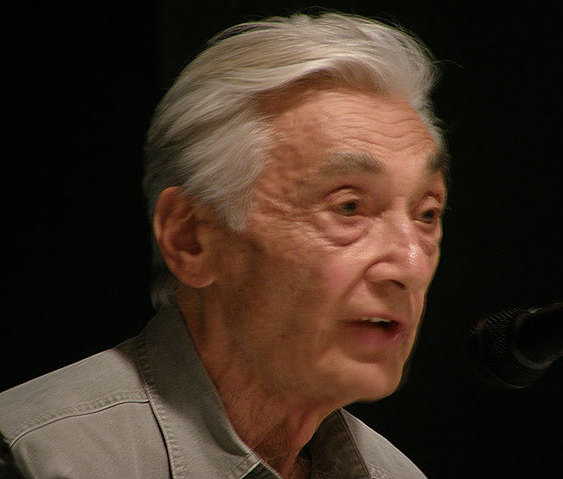
Howard Zinn

Howard Zinn, 2009 (Courtesy: B-Fest at Athens Indymedia, using CC-BY-SA 2.0, via Wikipedia)

I have been remiss lately with my Library of America reading. Busy-ness has taken its toll, but it just so happened that this week I was (briefly) between books and the LOA offering looked right up my alley, so I decided to read it over breakfast. “Finishing school for pickets” was published in 1960, making it the most recently written of the LOA items I’ve read to date. It was written by Howard Zinn (1922-2010), an American writer, historian, activist and all-round intellectual. You can read the essay yourself, online, at the Library of America site.

However, before I discuss this essay, a little background. In 1955, Rosa Parks refused to give up her seat to a white person on a Montgomery, Alabama, bus. She wasn’t the first to take such action but it was this particular occasion which sparked the Montgomery Bus Boycott whose aim was to end segregation on the city’s public transport. The battle was finally won in a Supreme Court ruling in late 1956. But, more importantly, it played a pivotal role in the fledgling Civil Rights Movement in the USA. Now, jump a few years and over the border to Atlanta, Georgia, and we are in the time and place of Zinn’s essay.

In 1960, Howard Zinn was chair of the history department at Spelman College, America’s oldest “black college for women” (Wikipedia). This college was well-known as, more or less, “a finishing school” for young black women. They were encouraged to “be nice, be well-mannered and ladylike”, to “not speak loudly” and not “get into trouble”. As Zinn says, “if intellect and talent and social consciousness happened to develop also, they were, to an alarming extent, by-products”. Here is the opening para of the essay:

One quiet afternoon some weeks ago, with the dogwood on Spelman College campus newly bloomed and the grass close-cropped and fragrant, an attractive, tawny-skinned girl crossed the lawn to her dormitory to put a notice on the bulletin board. It read: Young Ladies Who Can Picket Please Sign Below”. (Let’s not worry here about the “attractive, tawny-skinned” descriptor as Zinn’s heart was clearly in the right place).

Zinn goes on to chronicle various subversive actions being undertaken by the “still ‘nice'” but politically aware students. He says: “They are well-mannered, but this is somewhat tempered by a recent declaration that they will use every method short of violence to end segregation”. And so what do they do in the cause of desegregation? They sit in the front (aka white) area of buses; they occupy the white section of the Georgia Legislature’s gallery “in a pioneering show of non-violent resistance”; they show up “at the main Atlanta library in sufficient numbers to worry [my emphasis] the city administration into a decision to admit Negroes there” (what the? the librarian in me asks), and so on. Zinn writes that:

Spelman girls, more sheltered than women at the other colleges, were among the first to leave the island and to begin causing little flurries of alarm in the segregated outside world.

These activities, he says, may have bewildered the conservative matriarchy of Spelman, but they infuriated the “officialdom of the State of Georgia”. However, this did not stop the students of Spelman (and the other colleges of the Atlanta University Center) who continued their campaign even though, as Zinn describes it, many of them came from “the deep South … the Faulknerian small towns of traditional Negro submissiveness”.

It’s a highly readable essay, with light-handed use of various rhetorical devices to progress his argument, but it does not conclude on any great triumphs. After all, in 1960, there was (and, some would say, there still is) a long way to go in the cause of true racial equity. Zinn’s goal was, I assume, to raise some awareness amongst the white readers of The Nation. I can only hope he did so. As for him, he was fired from Spelman in 1963 “for insubordination” (his words), that is, for siding with his students in their fight for desegregation.

Zinn died earlier this year. Not long before he died he said that he would like to be remembered “for introducing a different way of thinking about the world, about war, about human rights, about equality,” and “for getting more people to realize that the power which rests so far in the hands of people with wealth and guns, that the power ultimately rests in people themselves and that they can use it. At certain points in history, they have used it. Black people in the South used it. People in the women’s movement used it. People in the anti-war movement used it. People in other countries who have overthrown tyrannies have used it.” (Wikipedia).

This essay is clearly just one tiny example of how he went about achieving this lifelong passion. I am indebted to the Library of America for making it available to us.

Jeffrey Eugenides, Extreme solitude

I’ve only read one work by Jeffrey Eugenides, and that was his grand saga of an immigrant family in America, Middlesex. I enjoyed its sweep and the insight it provided into the social history of twentieth century America from an immigrant point of view, and I liked the way he mixed light and dark in his story-telling. “Extreme solitude” is, though, a short story, and was published this month in The New Yorker. It is a rather tongue-in-cheek take on young love viewed through the changing literary theory scene in early 1990s (I think) academia.

The story opens with Madeleine and her realisation that she loves Leonard, whom she’d met in an “upper-level semiotics seminar”. This class is taught by a lecturer who had changed from his long-standing allegiance to New Criticism (and its focus on text) to Semiotics and the ideas of theoreticians like Roland Barthes. Semiotics was only just reaching academia – at least in my neck of the woods – in the very early 1970s and so the tensions between these two approaches to literary criticism somewhat passed me by.

Madeleine, as I’m sure I would have in her place, initially found Semiotics mystifying and unhelpful. After a few seminars she goes to the library to find a nice nineteenth century novel:

to restore herself to sanity. How wonderful it was when one sentence followed logically from the sentence before! What exquisite guilt she felt, wickedly enjoying narrative! Madeleine felt safe with a nineteenth-century novel. There were going to be people in it. Something was going to happen to them in a place resembling the world.

But then, “for reasons that were entirely extracurricular, semiotics began making sense” and it all, of course, has to do with love! She’s reading Roland Barthes’ A lover’s discourse and comes across his description of “a lover’s discourse” as being “extreme solitude”. She connects – because it describes her feelings for the somewhat self-sufficient Leonard. From then on, the story plays in a lovely tongue-in-cheek way with love and particularly with the “signs” or “signifiers” of love (as Semiotics would have it), with the language one uses (as in the loaded “I’d love to” come out with you), and with all those early relationship behaviours that you try to “deconstruct” to find out whether he does or doesn’t.

It’s a pretty straight-forwardly structured short story, and the ending is a little pat. But made its point clearly. I read “Extreme solitude” as a clever and playful take on the limits of theory … and I thought it was fun.

Shirley Jackson, Charles

Before I start this review, I have a technical question. Does anyone know why advice to bloggers about maximising your site always say not to use something like “here” for a hyperlink but, rather, to add the link to the actual name of what is being linked to? In other words, to make the link so – Shirley Jackson’s Charlesrather than so – Shirley Jackson’s Charles can can be read here? I have done both but I have tended to prefer the “here” approach when I am making a link to the actual text of the item I am reviewing. Otherwise, the chances are – and this has happened – that the blog’s readers miss it because they will not know that the link under the title is the actual story and not just a link to an article about (or a source to buy) the story. My preference is to go for the unambiguous approach – but is there a really BIG reason why I shouldn’t? Enquiring minds – well mine anyhow – would love to know.

Anyhow, on to what will be a brief review of this week’s Library of America story. It’s by – well, if you’ve read the first para you’ll know by now – Shirley Jackson. Another American writer I’ve never heard of! Apparently she is best known for her “tales of psychological horror” (LOA introductory notes) but this one that they’ve presented to us, “Charles”, is an ordinary domestic life story. It was published in Mademoiselle magazine in 1948 and, again according to LOA, “is one of the first of her numerous semi-autobiographical stories of life as a 1940s housewife raising children who sometimes seemed one step outside her ability to control them”.

Well, that certainly seems to the the case in “Charles” because it is clear that the young protagonist of the story has it all over his parents. It’s a nice little story but rather predictable. I’d be surprised if any experienced reader didn’t “get” it some long time before the end. This spoils the story a little – although perhaps Jackson is playing a game with the reader, willing us to see what the parents clearly don’t? Whatever her intentions,  it nicely shows the wiliness of children and the gullibility of many parents. I think though, that to properly assess Ms Jackson, I should read one of her psychological tales rather than this little slice-of-life piece.

Nathanael West, Business deal

This week’s Library of America offering was (or “is” since it’s still this week, but “was” cos I’ve read it – all this tense stuff can be so bothering!) Nathanael West’s Business deal. It’s short, and I’d just finished my novel for bookgroup, so I decided to read it.

I don’t know much about Nathanael West, other than recognising his name, but according to Wikipedia he lived from 1903 to 1940. Another writer who died young – though he wasn’t quite so young as the likes of poor Keats and Stephen Crane, neither of whom even made 30, and he died not of illness but in a car accident. Anyhow, Wikipedia describes West as “author, screenwriter and satirist”. The brief introductory notes accompanying the story say essentially the same thing. These notes suggest that his recognition as a writer comes mainly from his novels, but his money came from his plays. This LOA offering, however, is a short story. It was published in 1933 in a magazine called Americana, which apparently published a lot of satirical writing.

Business deal is about the head of a movie production company, which is rather aptly named “Gargantual Pictures”, planning his next takeovers while at the same time preparing not to pay a very successful young scriptwriter what he’s asking. This is not a subtle story, and neither character is particularly appealing:

The mongoose [the scriptwriter] sat comfortably and waited for the cobra [the company head] to strike again.

Effective image, eh? It is, in fact, a pretty typical negotiation story in which one side holds its ground while the other pulls out all arguments until one of them either capitulates or plays the winning card at just the right moment. I won’t tell which one is which, but if you think of which profession West was you may just work out who wins this particular deal! It’s a humorous if rather predictable story, but it does demonstrate the well-honed skills of a successful satirist. It is worth reading for that.

Stephen Crane, When man falls, a crowd gathers

Stephen Crane

Stephen Crane (Presumed public domain, via Wikipedia)

This week’s Library of America offering is a sketch/article by Stephen Crane. Now, while I suppose most Americans have read what I believe to be Crane’s most famous work, The red badge of courage, I’m afraid I haven’t – and so, when this opportunity to read something by him arose, I was more than happy to take the opportunity. You can too, by reading it here. (It’s well worthwhile, and is less than 5 pages.)

According to the Library of America’s notes, the story was published in 1894 in The New York Press under the following heading:

When man falls, a crowd gathers
A Graphic Study of New York Heartlessness
Gazing with Pitiless Eyes
“What’s the Matter?” That too Familiar Query

That pretty much sums it up really. The notes also say that it was based on a real incident. It’s a simple story: a man and a boy are walking in the street one evening, when the man suddenly falls to the ground. Immediately a crowd gathers, ready to criticise (“Oh, a jag, I guess”) rather than help. The boy indicates, however, that it’s a fit but this still doesn’t result in any obvious sympathy or assistance. Instead, the crowd pushes closer and closer wanting a view. The language used to describe the crowd’s behaviour leaves us in no doubt as to the intent:

Those in the foremost rank bended down, shouldering each other, eager, anxious to see everything. Others behind them crowded savagely for a place like starving men fighting for bread.

This is writing that pulls out all stops to make its point: the rhythm (“shouldering each other, eager, anxious to…”), the word choice (“savagely”) and the imagery (likening their behaviour to that of survival) work together to create a powerful picture in just two sentences. The language continues in this vein building up a tension between the crowd, which shows more interest in the spectacle, and the helpless boy who is unsure what to do to help his companion. It’s not until halfway through the story that someone offers some help – but still the majority stands by:

There were men who nearly created a battle in the madness of their desire to see the thing.

Meanwhile others with magnificent passions for abstract statistical information were questioning the boy. “What’s his name?” “Where does he live?”

Eventually, a policeman (“a man whose life was half-pestered out of him by the inhabitants of the city”) appears, exhibiting “the rage of a placid cow”. (A wonderful oxymoron that reminded me of Tony’s recent post on the subject.) Gradually, but with continued difficulty described in similar evocative language, the man is helped.

This is delicious writing: it’s almost, but not quite, over the top in the way it piles up the imagery. What saves it from being hyperbolic is that it is, unfortunately, all too believable – for then, and for now. It’s not for nothing I think that Crane titles it “when man falls” not “when a man falls”, making it rather clear that this is not a one-off situation. What a shame Crane (1871-1900) died so young.