Louise Erdrich, The night watchman (#BookReview)

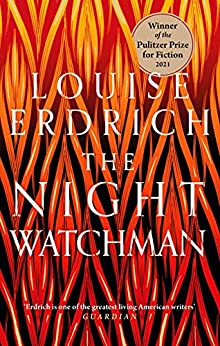
Louise Erdrich’s Pulitzer Prizewinning The night watchman is historical fiction about a community fighting back against a government set on “terminating them”. Erdrich, whom I have reviewed before, is an enrolled citizen of the Turtle Mountain Band of Chippewa Indians of North Dakota and it is the story of this community’s response to something called the House Concurrent Resolution 108 that she tells in The night watchman.

Passed by Congress on August 1, 1953, this Resolution would, says Erdrich in her Afterword, “sever legal, sacred, and immutable promises made in nation-to-nation treaties”. Or, as Wikipedia explains, it would “end reservations and tribal sovereignty” and “integrate Native Americans into mainstream American society”.

As it happens, Erdrich’s grandfather, Patrick Gourneau, was Chairman of the Turtle Mountain Band of Chippewa Advisory Committee at the time and recognised this resolution for what it was. He is the inspiration for Thomas Wazhushk, one of Erdrich’s two protagonists. Thomas is a man of two cultures:

Watching the night sky, he was Thomas who had learned about the stars in boarding school. He was also Wazhashk who had learned about the stars from his grandfather, the original Wazhashk. (p. 17)

Throughout the novel Thomas strategically draws on these two selves in order to perform his role, which is to keep the community safe (or, at least, safer, than they would be if the Government’s plans came to fruition).

This is both a sophisticated and a grounded novel. Grounded in the way Erdrich uses her storytelling ability to create a compelling narrative peopled by a large cast of wonderfully individuated characters. We are interested in them all, and this makes the novel a darned good read. Sophisticated in how Erdrich subtly layers her story to enrich its meaning. The overall structure comprises two parallel but related stories or journeys: Thomas’s fight for his community’s survival, and his niece Patrice’s journey to find both her missing sister and her own path in life. Erdrich’s writing is simple, plain, but also imbued with gorgeous lyricism, metaphor and symbolism. The novel is threaded, for example, with physical holes, wells, caves, ship holds, and falls, which never let us forget the precariousness of these people’s lives.

She also peppers the story with humour, which reminds us no matter how serious things are, people can still have a laugh. There are many laugh-out-loud moments, alongside a recognition of humour’s role in how we navigate the things we confront. In Minneapolis, Patrice finds herself in a strange and potentially dangerous situation, and has

the sort of feeling and thinking that could only be described in Chippewa, where the strangeness was also humorous and the danger surrounding this entire situation was of the sort that you might laugh at, even though you could also get hurt… (p. 131)

“Survival is a changing game” (Biboon)

Overlaying all this is Erdrich’s exploration of how language works, how it can be used to clarify or obfuscate, to inspire or deflate. Her writing embodies this knowledge. So, for example, Thomas receives the Resolution papers and reads them carefully. He sees

their unbelievable intent. Unbelievable because the unthinkable was couched in such innocuous dry language. Unbelievable because the intent was, finally, to unmake, to unrecognize. To erase as Indians … his people, all of us invisible and as if we never were here, from the beginning, here. (p. 79)

His people were being targeted, the papers said,

for emancipation. E-man-ci-pation. Eman-cipation. This word would not stop banging around in his head. Emancipated. But they were not enslaved. Freed from being Indians* was the idea. Emancipated from their land. Freed from the treaties that Thomas’s father and grandfather had signed and that were promised to last forever. (p. 80)

Later, the once dapper but now frequently drunk Eddy Mink cuts to the chase, stunning officialdom with his plain language statement:

The services that the government provides to Indians might be likened to rent. The rent for use of the entire country of the United States. (p. 200)

Meanwhile, as Thomas builds his case, Patrice, who works in the Turtle Mountain Jewel Bearing Plant where Thomas is the titular night watchman, sets off for Minneapolis to look for her sister. Vera had gone there with her new husband but had not been heard of since. What Patrice finds in the city, how people can be exploited, is shocking, and she returns home somewhat wiser but with more to learn about herself and the ways of humans.

Surrounding Thomas and Patrice is a large community of people – family, friends, neighbours, work colleagues, teachers, coaches, visiting missionaries, and even a ghost. The interactions between these people build up a picture of a community that functions despite external stresses and the usual internal disagreements. This makes engrossing reading because these characters are so real, including the two Mormon missionaries who not only add humour and pathos but also represent the naiveté of supporters of a faith – in the form of Utah Senator Arthur V. Watkins – that was driving the Resolution.

Similarly, our protagonists’ interactions with specific individuals make great reading while also advancing the narrative and the ideas. When Thomas is with his father Biboon and Patrice with her mother Zhaanat, we feel their spiritual connection with their culture, and their desire to learn from their elders. When Thomas is with the white teacher and boxing coach, Barnes, we see how little non-Indian society understands the existing situation and the implications of the Resolution. Thomas patiently – and generously – explains to the clueless Barnes why Indians are not, and can never be, “regular Americans”. And, why he, Barnes, cannot be an Indian! Just look at this writing:

“If I married an Indian woman,” said Barnes, “would that make me an Indian? Could I join the tribe?”
He was awed at the possible sacrifice he could be making.
Thomas looked at the big childish man with his vigorous corn-yellow cowlicks and watery blue eyes. Not for the first time, he felt sorry for a white fellow. There was something about some of them—their sudden thought that to become an Indian might help. Help with what? Thomas wanted to be generous. But also, he resisted the idea that his endless work, the warmth of his family, and this identity that got him followed in stores and ejected from restaurants and movies, this way he was, for good or bad, was just another thing for a white man to acquire.
“No,” he said gently, “you could not be an Indian. But we could like you anyway.”

In statements like “he was awed at the possible sacrifice he could be making”, Erdrich conveys more about cultural superiority than just this man’s thoughts.

When Patrice is with her girlfriends and workmates, Valentine and Doris, we see how her goals diverge from their more girlish ones, and when she is with Wood Mountain we see her inner conflict about her chosen direction. As a young person, her journey is more personal than Thomas’s but they coalesce when it comes to saving the community.

“Assimilation. Their ways become your ways.” (Roderick)

I loved spending time with these characters. In fact, so did most of my reading group, as this novel was our September read. We enjoyed her vividly drawn characters – and their perfect names, like Juggie Blue, Wood Mountain, Louis Pipestone, Millie Cloud, and Patrice not Pixie. We teased out the complexity of the storytelling, the way Erdrich seemed to effortlessly incorporate complex ideas into a compelling narrative. This starts right at the title, The nightwatchman, which is both literal, Thomas’ job, and metaphorical, in his role of keeping watch as the community’s Chairman. I was reminded a little of Melissa Lucashenko’s novels, in which tough stories are told with compassion and humour to paint a picture of real people confronting a world that’s against them.

Early in the novel, Thomas moves that the Committee call the Resolution the “Termination Bill [because] Those words like emancipation and freedom are smoke”. This bill heralded what is now called the Termination Era (1953-1968). As Erdrich explains in her Afterword, this is what happened to 113 tribal nations. Although some regained recognition, “31 are now landless” and “24 are considered extinct” (p. 447).

The night watchman is one of those books that hits the spot – the heart spot and the mind spot. Recommended.

* The novel is set in 1953, and Indian is the term most commonly used when the specific Chippewa is not.

Louise Erdrich
The night watchman
London: Corsair, 2020
453pp. (Kindle edition.)
ISBN: 9781472155337

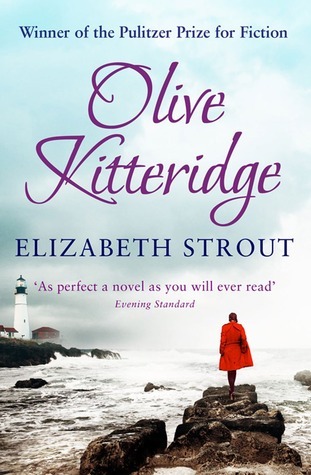
Elizabeth Strout, Olive Kitteridge (#BookReview)

Elizabeth Strout’s Pulitzer prize winning novel Olive Kitteridge has been around for 17 years, but it’s only now that I have managed to read it. And that’s because my reading group scheduled it as our June read. It’s not that I didn’t want to read it – I really did – but other books kept getting in the way. I realise now that I should not have let that happen because Olive Kitteridge is a wonderful read.

Now, how to describe it? The first thing is its form. It’s more like a collection of linked stories, or what its Wikipedia article calls a short story cycle. Although I’ve read many linked short story collections, I haven’t come across this term before. I’d like to explore it some time, but not now, because I’m keen to talk about the book. I will say, though, that some in my reading group found the episodic form somewhat disconcerting at first. However, despite this, almost all of us thoroughly enjoyed the book. Why? Well, as it turned out, the form is partly what makes it such a strong and moving read.

As most of you will know, the novel is set mostly in the late 20th and very early 21st centuries in the fictional small-town of Crosby, in coastal Maine. It comprises 13 chapters – or stories – that explore the life of retired schoolteacher Olive Kitteridge and her relationships with family and friends. In some of the chapters Olive is front and centre, but in others she makes a cameo appearance, sometimes just as a passing reference. The end result is as much a picture of a small town as it is of Olive, though Olive is our lynchpin. As one of my reading group members said, her question as she read each story was, “Where’s Olive?”

everyone thinks they know everything and no one knows a damn thing. (“River”)

So, while my reading group talked about the form and the gorgeous writing, we mostly focused on the picture painted of a small town – which, said one, provides an antidote to the “apple-pie” image we typically get of small-town America – and on the character of Olive. She is complex and not easy for readers to like, but we found her real, and most of us did like her. The opening story, “Pharmacy”, doesn’t pull any punches in its depiction of Olive. She comes across as curmudgeonly, uncompromising. She is cutting about her husband Henry’s new young pharmacy assistant and unwilling empathise with her. She is prickly and vengeful with her son’s new bride, Suzanne (“A Little Burst”), while Bob in “Winter Concert” wonders how Henry can “stand” her.

However, there are many occasions where Olive is kind and compassionate, where she sees need in others and helps or offers to help, where, as Henry describes it, “all her outer Olive-ness” is stripped away. For example, ex-student Julie remembers Olive telling a class

“Don’t be scared of your hunger. If you’re scared of your hunger, you’ll just be one more ninny like everyone else.” (“Ship in a bottle”)

And Rebecca recollects Olive saying to her at school, “if you ever want to talk to me about anything you can” (“Criminal”). Olive also quietly talks a young man, an ex-student, down from suicide (“Incoming tide”) and she and the truly “nice” Daisy try hard to help the young anorexic Nina (“Starving”).

Olive, too, can be insightful. In “Security”, for example, we read that sometimes she had “a sense of just how desperately hard everyone in the world was working to get what they needed”. And she suffers, especially from a “rupture” with her beloved son, and from grief over husband Henry’s massive stroke.

So, what we have is a character who can be tough and acerbic – even engage in a little schadenfreude – but also be sensitive and empathetic. This led me to see the book as being about more than a picture of a small town, much as that is a central and engaging part of it. The form – the interconnected short stories about life in the town – supports this view of the novel. However, this form also supports another way of looking at it, one encompassing something fundamental about our humanity.

In each story, we see characters confronting some crisis or challenge in their lives – some big ones, some quieter ones. We never see these stories fully through. They are vignettes, even those featuring Olive. This made me think about how little we know others, and perhaps even ourselves? We never fully know what others think of us, or what impact we have on others, but in this book – largely because of its form – we do see, for example, how Olive is, or has been, viewed or remembered, both positively and negatively. No one perspective is right, but each contributes to a picture of a person. This is how life goes. We see little parts of people’s lives, and sometimes we are little or big parts of people’s lives, but what do we truly know?

A bleak interpretation of this could be that it exposes our essential aloneness, but a more positive perspective is that it reminds us that we are all “real” people with good and bad, hard and soft selves. Books like Olive Kitteridge encourage us to look around corners, to not take one aspect of a person at face value, to be generous to others and ourselves. It also reminds us that we never stop learning about ourselves (or others). Certainly, at the end of this book, Olive, in her early 70s, is still discovering things about herself and her feelings. She isn’t giving up, no matter how tough things have become.

In my group’s opening discussion, I said that I thought the novel offered many truths, albeit often uncomfortable ones. For example, in “Tulips”, which is a story about things going terribly wrong, Olive reflects, “There was no understanding any of it”. But, my favourite occurs in “Security”, when some rapprochement is being made with her son, and Olive thinks

whatever rupture had occurred… It could be healed. It would be leaving its scars but one accumulated these scars.

One surely does!

There’s so much more to talk about in this book – the spot-on descriptions, the quiet humour, the many beautifully wrought characters and their trials, and the political references such as to 9/11 and George W Bush which provide context. But the main story is the human, the personal. The novel closes with Olive reflecting deeply on her life and her choices, on how much had been “unconsciously squandered”. She realises that, while

It baffled her, the world. She did not want to leave it yet.

I love getting inside the heads of characters like Olive, and so I loved Olive Kitteridge. I’ll be reading more Strout I’m sure.

Brona and Kate both read and enjoyed this long before I did!

Elizabeth Strout
Olive Kitteridge
London: Simon & Schuster, 2008
270pp.
ISBN: 9781849831550

Sherman Alexie, War dances (#Review)

Sherman Alexie’s “War dances” is the fourteenth and last story in the anthology, Great short stories by contemporary Native American writers. It is also the longest story in the book, and the most intriguing in form.

Sherman Alexie

Anthology editor Bob Blaisdell introduces Alexie as “born in 1966, of Coeur d’Alene and Spokane heritage”, meaning he is from US’s Pacific northwest. Describing Alexie as the “most colloquial” of the writers in the anthology, Blaisdell also says that he writes “with a confessional voice that is often humorous”. Not surprisingly, given Alexie is a contemporary and award-winning author, Wikipedia provides quite a lot more, too much in fact to share here in even summary form, so click on the link if you are interested. There are personal and political controversies there, as well as several literary awards.

Essentially, though, Wikipedia describes him as “a Native American novelist, short story writer, poet, screenwriter, and filmmaker”. And, citing a couple of sources, Wikipedia says this about his themes:

Alexie’s poetry, short stories, and novels explore themes of despair, poverty, violence, and alcoholism in the lives of Native American people, both on and off the reservation. They are lightened by wit and humor. According to Sarah A. Quirk from the Dictionary of Library Biography, Alexie asks three questions across all of his works: “What does it mean to live as an Indian in this time? What does it mean to be an Indian man? Finally, what does it mean to live on an Indian reservation?” The protagonists in most of his literary works exhibit a constant struggle with themselves and their own sense of powerlessness in white American society.

“War dances”

“War dances”, as I wrote above, has an intriguing form. Blaisdell writes in his introductory Notes for the anthology that “we feel as if the writer [Alexie] is discovering the story himself and extending conventional short story boundaries as he composes it: we encounter an interview a checklist, a poem, a critique of that poem and continual jokes and revelations”.

Now, as far as I can tell, the “story” titled “War dances” comes from a book of short stories of the same name. It won the PEN/Faulkner Award for Fiction in 2010. GoodReads’ entry for the book describes it as “a virtuoso collection of tender, witty, and soulful stories that expertly capture modern relationships from the most diverse angles.” My problem is that I don’t know whether the “story” in Blaisdell’s anthology is a coherent excerpt from this book, or whether Blaisdell has selected disparate pieces to represent the work as a while. Whichever it is, I found an online version in The New Yorker. It comprises essentially the same content, with just a few differences that suggest some editing has happened between the versions. Also, in Blaisdell’s book the short pieces are numbered 1 to 16, while in The New Yorker they are not. None of this is probably germane to my comments so I’ll say no more. Consider yourselves informed!

I thoroughly enjoyed reading this piece (these pieces). The quotes I’ve shared about his work all ring true from what I read here – the mix of forms (lists, poems, interviews, and so on), the wit and humour, the “diverse angles”. It is a work that draws from Native American experience, but that encompasses wider personal and political issues.

By personal issues, I mean his dealing with significant familial relationships, and by political, I mean his recognition that Native Americans don’t exclusively suffer from the socioeconomic (including health) ramifications of racial discrimination. While the pieces seem disparate, there is an overall narrative arc concerning the narrator’s own health – he is diagnosed with a meningioma – and his father’s. There are also recurring motifs which connect many of the pieces – insects, like Kafka’s bug (or cockroach), being one. Here is a scene from the first person narrator visiting his father in hospital. You can see the pointed use of bees here:

How had this change happened? For the first sixty-seven years of his life, my father had been a large and dark man. And now he was just another pale and sick drone in a hallway of pale and sick drones. A hive, I thought, this place looks like a beehive with colony collapse disorder. (4, Blankets)

The imagery here is clear, but not laboured. Alexie doesn’t, in general, labour his points but lets humour do the talking. The second last piece comprises questions for his dying father, the first one being

True or False?: when a reservation-raised Native American dies of alcoholism it should be considered death by natural causes. (15, Exit Interview for My Father)

There are many references to race, and to its construction by other in the determination to distinguish and separate, while for our narrator, no such distinction truly exists:

And then I saw him another Native man … Well, maybe he was Asian; lots of those in Seattle. He was a small man, pale brown, with muscular arms and a soft belly. Maybe he was Mexican, which is really a kind of Indian too, but not the kind that I needed. It was hard to tell sometimes what people were. Even brown people guess the identity of other brown people. (4, Blankets)

This is followed by a self-deprecating racist joke … the reason a Mexican was not the kind of Indian our narrator needed was because he was looking for a blanket for his shivering, hospitalised father, and, well, Indians do blankets don’t they! The dialogue with the man, who is indeed Indian, is priceless.

So, these pieces build up. Entertaining to read, with their varied forms and chatty but cleverly humorous style, they convey specific truths about racism, and larger ones about identity, change and loss. In terms of this work at least, I’d say Sarah Quirk’s above-quoted three questions nail it. “War dances” – including for its very title – makes a worthy conclusion to this anthology.

(Thanks to Carolyn for this book.)

Sherman Alexie
“War dances” (orig. pub. 2009)
in Bob Blaisdell (ed.), Great short stories by contemporary Native American writers
Garden City: Dover Publications, 2014
pp. 104-127
ISBN: 9780486490953

Available online, with some differences, at The New Yorker (August 10 and 17, 2009)

Shirley Hazzard, The bay of noon (#BookReview)

Shirley Hazzard’s novella, The bay of noon, has been in my sights for a long time, but finally, this Novellas-in-November year, I managed to get it out of my sights and into my hands. It’s the first of two novellas I read for the month, but the second to review. Such was my November (and we are now well into December!)

Published in 1970, The bay of noon was Hazzard’s second novel. It was one of six books nominated for the Lost Man Booker Prize in 2010. This was a special award created to, in effect, right a wrong which occurred when a change in the Booker Prize rules resulted in books published in 1970 missing out on a chance for Booker glory. The award was decided by public vote, with JG Farrell’s Troubles emerging the victor.

I’ve read three books by Hazzard before blogging, but since then I’ve just read one short story – “The picnic” – for the 1962 Club. In my post on that story, I referred to a review in The Guardian of Shirley Hazzard’s Collected stories. The reviewer Stephanie Merritt writes that “Hazzard’s recurring themes here – enlarged upon in her novels – are love, self-knowledge and disappointment”.

This is true of The bay of noon, which tells of a young Jenny, who, though born in England, had been sent to Cape Town with other young children to escape the Blitz. Post-war she was reunited with her older brother but, realising that her love for him was unhealthy, she leaves England to take up a job with NATO in Naples, bringing me to another of Hazzard’s recurring themes, that of young women leaving home to find their place. I understand from her biography that Hazzard herself worked for NATO in Naples in the timeframe this book is set, so she knows whereof she writes – which is not to say that she is writing her life. This is fiction, so while Hazzard draws on her own experiences, Jenny’s story is not hers.

Anyhow, we are in Naples, and it is some years after World War II, the mid 1950s in fact. Hazzard loved Italy, and her description of Naples at this time is imbued with a love born of knowing a place authentically, not as a sightseer. Naples is poor, and damaged both by war and a Mt Vesuvius eruption in 1944. Hazzard’s evocation of the city is a joy to read. A “through the looking-glass” city of both “apartness” and “continuity”, it also provides a moody, sometimes metaphoric, backdrop for our newcomer Jenny.

The storyline is straightforward. Knowing no-one outside of her work, Jenny follows up a letter of introduction to the charming and welcoming writer Gioconda, whose married lover, and Roman film director, Gianni, she also meets. Soon, however, through her work, Jenny also comes to know a Scotsman, Justin Tulloch, and a relationship of sorts develops between them. These relationships, and how they play out – with their mysteries and betrayals – form the nub of the story, but they are not what the novel is about. That is not so straightforward, but there are clues.

The title offers one clue, particularly, for me, the idea of “noon” as a time when the sun is at its highest, when the light is brightest, and so, perhaps representing a moment of clarity and, perhaps, also, of transition or change? Another clue is in the epigraph from Auden’s “Goodbye to the mezzogiorno” and in the opening paragraphs, both of which encompass ideas about memory and experience. The story is told first person through Jenny’s eyes, and there is a sense as the novel progresses of her working through an experience. Or, perhaps, not so much “working through” as allowing the passage of time to do its work. In the opening paragraphs, Jenny speaks of experiences building up “until you literally sink under them” but is also aware that, with the passage of time, memory, which was once “clouded with effects and what seemed to be their causes”, can become protective. As Auden concludes his poem:

… though one cannot always
Remember exactly why one has been happy,
There is no forgetting that one was.

But of course, not all memories are happy – and time can’t make them so. Gioconda, who had suffered loss, says

‘When people say of their tragedies, “I don’t often think of it now”, what they mean is it has entered permanently into their thoughts, and colours everything…’ (p. 67)

Just prior to this, she admits:

‘When I talk of it this way, now, to you, it all comes out as if there were some sequence, some logic, instead of moods, contradictions, alternatives. The design imposes itself afterwards. And is false, must be false.’ (p. 66)

It’s a curious but beguiling novel. The writing has a formal, intellectual – almost dispassionate, and sometimes elegiac – tone. It feels as though it belongs to a much earlier time, earlier in a way than the time in which it is set. This works somehow, partly because of Hazzard’s clear and measured prose, partly because the characters themselves seem to belong to an earlier time, and partly because Jenny is telling us the story from some time in the future.

As I read The bay of noon, I kept trying to place it within a wider literary tradition. It belongs, in part, to those stories about young people being taken under the wing by more experienced elders. Jenny observes the world she is drawn into, gradually becoming a more active and confident player in it. However, an Englishwoman, she remains an outsider, so retains her observer status which, over time enables her to see some realities she had missed in the first flush.

This is not a simple coming-of-age story, as it might look on the surface. Jenny is not an ingenue, but neither is she, at the start, experienced enough to understand the complex emotions and tragedies her older friends have experienced. Moreover, Hazzard has set the novel in a time that was itself complex, as Europe, and Naples specifically, was emerging from the war and – hmmm, was what? I wanted to say remaking itself, but that’s not the sense we get of Naples. It’s more one of being itself.

Towards the end, Jenny, reflecting on that past time in Naples, likens it to a

vineyard that had been left to flourish intact … among the deadly apartment buildings, not so much showing how it was as what has happened to it.

And that is the book’s ultimate meaning for me. It is not about who we are, what we hoped for, or where we have arrived, but about, in the closing words of the novel, “how we came”. Life, in other words, is a process, a journey that doesn’t always take us where we plan or expect.

Read for Novellas in November. Also read by Brona for the month. Read very late for the 1970 Year Club run by Karen (Kaggsy’s Bookish Ramblings) and Simon (Stuck in a Book)

Shirley Hazzard
The bay of noon
ISBN: 9781860494543
Virago Press, 2005 (originally published 1970)
182pp.

Beth H. Piatote, Beading lesson (#Review)

Beth Piatote’s “Beading lesson” is the thirteenth of fourteen stories in the anthology, Great short stories by contemporary Native American writers, and with it, we move from the 1990s to the 2000s.

Beth H Piatote

Anthology editor Bob Blaisdell provides very little information about Piatote. It simply says that she is Nez Perce and a Professor of Native American Studies at University of California, Berkeley. Wikipedia provides a little more, but not much in terms of life history. It tells us that she is a scholar and author, that she is “a member of Chief Joseph’s Tribe and the Colville Confederated Tribes”. And it expands on her academic qualifications and achievements a bit more. It seems most of her writing is academic, but she has had one short story collection published, The beadworkers, published by CounterPoint Press in 2019.

“Beading lesson”

“Beading lesson” is the shortest story in the anthology. Blaisdell gives its original date as 2002, but the source for the story is a 2008 Oxford University Press anthology, Reckonings: Contemporary short fiction by Native American women. However, I believe, from the GoodReads description of The beadworkers, that the story was also included there.

GoodReads describes The beadworkers, starting with, “A woman teaches her niece to make a pair of beaded earrings, while ruminating on a fractured relationship”. This perfectly captures the setting of “Beading lesson”, but of course there’s much more to it. Before I get onto that, however, I’ll add that the collection sounds interestingly varied, as it includes stories set in the 1960s and 1890. GoodReads concludes its description/promo with “Formally inventive, witty, and generous, the works in this singular debut collection draw on Indigenous aesthetics and forms to offer a powerful, sustaining vision of Native life in the Americas”. I haven’t read the other stories, but my guess from reading “Beading lesson” is that the collection explores the cultural, social, political and economic role and implications of beadwork, and that it also uses the idea of beadwork literally, as a practice, and symbolically, to represent the wider culture.

So now, “Beading lesson”. The fractured relationship mentioned by GoodReads is with the aunt’s sister, that is, the niece’s mother. The story is told first person by the aunt, who gently and patiently shows her niece the intricacies of beading, as they make some earrings for the mother. However, as she passes on to her niece an important cultural skill, she also shares values and information that she believes are important for her niece to know. In other words, the skill teaching is part of wider mentoring, which is what all good skill teaching is about.

What makes this story interesting is the subject of this mentoring. It’s multifold – to pass on cultural traditions, to teach the niece some life-skills, and, eventually, maybe, to lead to a repair in the broken relationship with her sister. It appears that this sister, the youngest in her family, had been spoilt. As a result, she had not learnt the skills our narrator had learnt, and has lost culture. The aunt tells her niece:

I think sometimes she wishes she learnt to bead, but she didn’t want to when she was little. She was the youngest, so I think she was a little spoiled but don’t tell her I said that. She didn’t have to do things she didn’t want to, she didn’t even have to go to boarding school. 

The boarding school reference is intriguing. Our narrator is positive about her experience, when, quite often, such schools were sites of cultural loss.

As the lesson progresses, we learn that the narrator is passing on beadskills to men in prison, which gives them skill and pride. The subtle message here of course concerns Indigenous incarceration. We also learn that her beadwork has supported her in tough times, through times of “livin’ skinny”. And, we gain some insight into the politics of, let us say, “Indigenous arts and crafts”. The aunt tells her niece that when some people

buy your beadwork, they think it should last forever. Somebody’s car breaks down, he knows he got to take it to the shop, pay someone to get it goin’ again. But not with beadwork — not with something an Indian made. No, they bring it back 10 years later and they want you to fix it for free! They think because an Indian makes it, it’s got to last forever. Just think if the Indians did that with all the things the government made for us. Hey, you got to fix it for free! 

The use of vernacular for the aunt’s story could lull readers into thinking she is a sweet but simple old lady. However, as the story builds, it becomes increasingly clear that she knows exactly what she is about. We see her to be kind, wise, and generous, where it is warranted, but not stupid. She knows the value and importance of what she does, but she also knows exploitation and is resilient in its face. She knows that maintaining cultural practice is important to her people’s continuation. This a story in which the personal is quietly, but absolutely, infused with the political. It’s clever and delightful to read.

Beth H. Piatote
“Beading lesson” (orig. pub. 2002)
in Bob Blaisdell (ed.), Great short stories by contemporary Native American writers
Garden City: Dover Publications, 2014
pp. 100-103
ISBN: 9780486490953

Available online at High Country News.

Kurt Vonnegut, Slaughterhouse-Five (#BookReview)

While my reading group’s main reading fare has, from the start, been contemporary fiction, we also mix it up a bit. We do non-fiction, for example, and most years we try to do a classic. Over the years we’ve done Jane Austen, Elizabeth von Arnim, Anton Chekhov, EM Forster, and Randolph Stow, to name a few. This year we turned to Kurt Vonnegut, and, because we couldn’t decide which book to do, we narrowed it to two – Cat’s cradle and Slaughterhouse-Five – and let members decide. You can tell from the post title which one I chose. This was because I have read Cat’s cradle, albeit decades ago. Most of the group, however, read Cat’s cradle, because they’d read Slaughterhouse-Five before.

So, Slaughterhouse-Five it is then – and I’m confronted by the old challenge of what to say about a classic, and a cult classic at that. This book has been analysed ad infinitum, and been found, as the decades have trundled by, to retain its relevance to new generations. However, before I say more, let me give a very brief synopsis, just in case there’s someone out there who doesn’t know the story.

“jumbled and jangled”

Ha, did I say brief synopsis? Easier said than done, but I’ll give it a try. Slaughterhouse-Five tells the story of Billy Pilgrim, from his early years, through his time as an American soldier during World War II including being in Dresden when it was bombed, to the post-war years. During his life, Billy is also abducted by flying saucer and taken to the planet of Tralfamadore, where he is displayed in a zoo. The critical issue underpinning all this is that Billy was damaged by his wartime experiences, something we now recognise as PTSD. Vonnegut conveys – and represents – Billy’s discombobulation, his trauma, through a complex non-linear, non-chronological narrative, in which Billy, who “has come unstuck in time”, travels not only back and forth through time, but also back and forth between Earth and Tralfamadore. 

Slaughterhouse-Five is, as a result, a challenging, sometimes mystifying read, but it is also an exhilarating one, because Vonnegut tells his story through satire and absurdity, both of which I love. In the first chapter, the narrator, who is Vonnegut, tells us about writing the book we are now reading. As he hands his finished book to the publisher, he says

It is so short and jumbled and jangled, Sam, because there is nothing intelligent to say about a massacre.

Alongside the occasional appearance of this first-person narrator, we have the unsuccessful science fiction writer Kilgore Trout, who can also be read as a version – caricature – of Vonnegut. His “unpopularity was deserved”, the narrator tells us. “His prose was frightful. Only his ideas were good”. But, Billy loves him. We first meet Trout when Billy is introduced to him by Rosewater, another patient in the hospital to which Billy had committed himself when he feels he is “going crazy”:

Rosewater was twice as smart as Billy, but he and Billy were dealing with similar crises in similar ways. They had both found life meaningless, partly because of what they had seen in war. Rosewater, for instance, had shot a fourteen-year-old fireman, mistaking him for a German soldier. So it goes. And Billy had seen the greatest massacre in European history, which was the fire-bombing of Dresden. So it goes.

If you’ve read the novel, you will know that “so it goes” is its over-riding refrain. Used over 100 times, at moments of murder, death, and other disasters, it functions as a motif, one that both underlines and undermines the horror, by drawing attention to it, then passing it off. The constant opposition, in the novel, of the serious with the offhand keeps the reader unsettled, which is part of the point.

The occasional self-conscious appearance of the author/Vonnegut and the references to Kilgore Trout, along with its story-within-a-story framework, its wild playing with time and place, its fragmentary approach to storytelling, and its unapologetic undermining of “reality”, make this book a postmodern work, if that interests you. By this I mean what sort of work it is doesn’t matter, really. It’s what the work says or makes you feel that really counts. However, it’s these features and techniques which enable Vonnegut to convey what he wants to say in such a powerful way. The how of it is inseparable from the meaning of it.

Slaughterhouse-Five is said to be about many things, including war and pacifism, fate and free will, our experience of time. I could discuss each of these in turn, but the academics already have. I’ll simply say that my primary takeaway is that it’s about the absurdity and incomprehensibility of life and, by example, about how our everyman Billy Pilgrim copes (or doesn’t) with such life.

Slaughterhouse-Five was published at the height of the Vietnam War and the anti-war movement. It was, it seems, the right novel at the right time. Although Vonnegut had had some success before, this was the novel that apparently established him. I can see why. With wars just keeping on coming – and being just as horrific and absurd as the ones that came before them, I can also see why this novel continues to speak to new generations of readers. I mean, how can you not laugh at Billy on display in Tralfamadore:

Then he did exercises he had learned in the Army—straddle jumps, deep knee bends, sit-ups and push-ups. Most Tralfamadorians had no way of knowing Billy’s body and face were not beautiful. They supposed that he was a splendid specimen. This had a pleasant effect on Billy, who began to enjoy his body for the first time.

And, you know what? I’m going to leave you right here, because if this doesn’t convey why this book is such a complex, funny, humane read, I don’t know what will.

Kurt Vonnegut
Slaughterhouse-Five, or, The children’s crusade
Horizon Ridge Publishing, 2024 (Orig. pub. 1969)
199pp.
ASIN: ‎ B0D9SKLL68

Eli Funaro, The dog pit (#Review)

Eli Funaro’s “The dog pit” is the twelfth of fourteen stories in the anthology, Great short stories by contemporary Native American writers. Like the previous stories by Thomas King and Duane Niatum, it was written in the 1990s.

Eli Funaro

Anthology editor Bob Blaisdell provides very little information about Funaro, and I have to say that I have very little more to add. Blaisdell says that he “seems to hail from Minnesota, where he is a video director” and that his “plain-spoken and shocking story was written for a program at the Institute of American Indian Arts at Santa Fe”. That’s it.

All I’ve found is that someone called Eli Funaro – presumably the same one – is part of a media company called A Tribe Called Geek, which describes itself as

an award-winning media platform for Indigenous Geek Culture and Stem. But we are more than just a media platform. We are a community of intelligent, imaginative, innovative and creative Indigenerds acknowledging and advancing the visibility of our contributions to pop culture and STEM. From indigenous superheroes to Harry Potter and more, our podcasts, website and social media are a celebration of Indigenous Representation and Geekery.

When I tried to enter the “A Tribe Called Geek” website, I got one of those “Not Secure” warnings. While it’s probably OK to proceed, I’m not prepared to take the risk.

So, all I have is a list of 35 articles by Eli Funaro at a site called Muck Rack. Clicking on the articles takes me to that website with its “not secure” warning, and to find out more about Funaro at Muck Rack I have to join, which I’m not going to do. Funaro is not in Wikipedia, and nor is A Tribe Called Geek, but Muck Rack is. It’s a software program that “connects public relation offices and journalist listing on social media”.

What all this says to me is that Funaro seems to be more a journalist than a writer of fiction, and that his affiliation and ongoing interest is Indigenous. His articles – some of which are dated “three months ago” – seem to be mostly reviews, such as of the Wolverine movie, and of Marvel comics. The list provides a brief summary, or the opening sentence, and it’s clear that most reference “Indigenous” issues. For example, on Marvel’s Echo comics, Funaro writes that “of all the Indigenous Heroes appearing in the Marvel Universe, Echo stands out as one of the more unique comic book characters”.  Echo – or Maya Lopez – is a Cheyenne woman.

“The dog pit”

“The dog pit” is one of the shortest stories in the anthology. It is told first person in the voice of an eight-year old boy who lives on the “rez” – reservation – where, he tells us, “no garbage trucks … came to pick up your trash”, the implication being that other people had this service. So, Saturday is Garbage Day, and our narrator and his dad’s job is to haul their garbage to the dump.

The story opens with “It was a sunny Saturday, the day that dog died”. A few paragraphs in we are introduced to our boy’s dog Corky, for which his father seems to have little time. “You fed that mutt yesterday” he says, when the boy wants to feed his dog before they head off. But soon they are on their way, along “untitled roads”. Another indication of their second-class status.

The boy finds a pink ball in the glove-box and starts playing with it. However, when his father, having told him he can have it, also tells him he’d taken it from a dead man at the hospital where he works as a janitor, the boy is not so sure he wants it. His father, we are learning, is a practical man. Life is tough and he doesn’t have time for sentiment.

So they get to the dump, with its piles of burning trash and rancid smell, empty their bins, and go through their routine of bleaching their bins before they leave for home. While this is happening, the boy picks up the ball again, only to be told by his dad that the old man who had died holding the ball had probably not been the only person to have died holding it. This makes him anxious; he fears there will be many dead people angry with him if he keeps the ball.

Then we get to the death of the dog mentioned in the opening sentence. It involves the titular dog pit, and is cruel. The boy doesn’t know what to make of it, but doesn’t want his dog to end up there. HIs father, who might be practical, is not hard and says this wouldn’t have to happen. The story concludes with the boy creating his own stories about death with his new Zartan and Stormshadow toys, but also on a sense of a childish ability to put it aside. This is where I come a bit unstuck, because a point is being made in referencing these GI Joe-series figures, but there are cultural nuances that I am not fully across.

On the surface, “The dog pit” is a story about the innocence-versus-experience aspect of youth, on the gradual way we become aware of the darker side of life without taking it all in at once, but there are deeper socioeconomic and sociocultural issues being explored here, ones that Funaro seems to have continued to explore.

It’s not a perfect story. The language doesn’t always stay true to an eight-year-old’s voice, but this is probably the work of a young writer. It works overall, however, because it’s tightly told.

Eli Funaro
“The dog pit” (orig. pub. 1994)
in Bob Blaisdell (ed.), Great short stories by contemporary Native American writers
Garden City: Dover Publications, 2014
pp. 95-99
ISBN: 9780486490953

Sigrid Nunez, The vulnerables (#BookReview)

Sigrid Nunez has been on my radar for a long time. So, why now? I blame Jonathan (Me Fail? I Fly!), since it was his post on Nunez’s latest novel, The vulnerables, that captured my attention and encouraged me to make now her time. What an intriguing book! I have no idea whether it is like her other books, but it certainly captivated me.

What exactly is it, was my first question? A novel, says its subtitle. Its probably best described as autofiction, but it did feel at times like a book of essays. In fact, late in the novel, our narrator who, like Nunez herself, is a writer, refers to Virginia Woolf and her aspiration

to invent a new form. The essay-novel. Chapters of fiction alternating with nonfiction chapters, “a terrific affair” that would include, well, everything: “satire, comedy, poetry, narrative . . . And there are to be millions of ideas but no preaching—history, politics, feminism, art, literature—in short a summing up of all I know, feel, laugh at, despise, like, admire hate & so on.”

On the next page, Nunez writes of Annie Ernaux who told her diary that “Tonight, I know I have to write ‘the story of a woman’ over time and History.” And so she did, some twenty years later. Ernaux’s book, says Nunez, is “a personal narrative spanning the period between 1941 … and what was then the present day, 2006: the autobiography of a woman that was also a kind of collective autobiography of her generation”.

Both of these encapsulate, to some degree, what Nunez is doing in The vulnerables. I like essays, so I enjoyed the “essay-novel” feel of this book, including its cheeky toying with where the boundaries are in what she is doing. And, I like personal narratives, not to mention the idea of a book being “a kind of collective autobiography” of a generation.

Nunez and I are of the same broad generation, although with some significant differences given she was born in New York in 1951 to a German mother and a Chinese-Panamanian father. But, we are both women of a certain age and so were designated “vulnerable” at the start of the pandemic, which is where the novel opens – in the northern spring of 2020. It is here, early on in the pandemic, when she is “breaking the rules” by going out and about too much, that a young friend admonishes her, telling her, “You’re a vulnerable … And you need to act like one.”

There is so much to write about in this book – her exploration of our generation, and how we are seeing things in these last decades of our lives. The discussions our narrator has with her friends about gender, for example, mirror mine, as does her awareness of the changes that come with ageing. Her concern about what happened in American politics in 2016, and its ongoing implications, mirror that of many of us. As do her references to racial and social injustice, the climate crisis … and so on. All heightened, here, by the pandemic, whose uncertainties shape the book’s tone. But, I want to focus on one particular aspect, her exploration of writing.

Our narrator is, as I’ve said, of a certain age. She’s seen a lot of life, and a lot of writing, and here she ponders, though her lively stream-of-consciousness style, the role, meaning, and form of writing. She begins with the opening sentence – “It was an uncertain spring” – from Virginia Woolf’s The years. But, just a few paragraphs on we are told that one of the first rules of writing is to “never open a book with the weather”, albeit our narrator has “never understood why not”. Between the opening sentence and this statement, she admits that she remembers almost nothing about Woolf’s book, and then writes that:

Only when I was young did I believe that it was important to remember what happened in every novel I read. Now I know the truth: what matters is what you experience while reading, the states of feeling that the story evokes, the questions that rise to your mind, rather than the fictional events described.

I felt right then and there that this was going to be a book for me. I rarely remember plots, but frequently remember how books made me feel, how I reacted to them.

Why are you making things up?

The vulnerables is deceptively simple. Our narrator takes us into her confidence about what is happening to her, and what she is thinking, as she moves through those early days of spring and into lockdown stage, when she accepts the task of pet-sitting a miniature macaw named Eureka in a classy New York apartment, only to find herself sharing this role with a disaffected, but opinionated Gen Z son of friends of the apartment owner. She calls him Vetch, a prickly metaphoric contrast to the old-lady flowers, like hydrangeas, that she had previously regaled us with.

Woven through this loose plot, are our narrator’s thoughts on a range of subjects. It has a relaxed stream-of-consciousness feel, but is, nonetheless, formally stylish, using subtle repetition, metaphor, sly humour and literary allusions, to develop her ideas. It’s also erudite with frequent digressions that explore anything from the relevance (or not) of Dickens and what, say, J.M. Coetzee thinks about writing, to a discussion of My octopus teacher and of how the events of 2016 stopped speculative fiction author William Gibson in his tracks. This might feel random at the start, but the links are there, and the ideas – the questions – slowly build. It’s the sort of book that invites you to go with the flow, and if you do, you will eventually not only see the pattern, but will also have been both entertained and inspired to think.

What most inspired me was Nunez’s exploration of what sort of writing is most relevant now. She shares the thoughts and experiences of many of the great writers of the last century or so – Virginia Woolf, Annie Ernaux, Joan Didion, J.M. Coetzee, to name a few. Early in the novel she quotes Coetzee who said that what comes in late life to many writers is “an ideal of a simple, subdued, unornamented language and a concentration on questions of real import, even questions of life and death.”

Then, late in the novel, in a wry comment about the pandemic and its distinction between “essential” and other workers, she notes that of writers, the only ones deemed essential were the journalists. She seems to agree, writing that “silence all the journalists and we’d have the end of human rights”. And, more pointedly, she responds to the question of whether there is still a place for fiction, with:

Growing consensus: The traditional novel has lost its place as the major genre of our time. It may not be dead yet, but it will not long abide. No matter how well done, it seems to lack urgency. No matter how imaginative, it seems to lack originality. While still a powerful means of portraying human character and human experience, somehow, more and more, fictional storytelling is coming across as beside the point. More and more writers are having difficulty quieting a voice that says, Why are you making things up? 

There is fear about “the growing use of story as a means to distort and obscure reality”. But, in her subversive way, Nunez explores both sides. She writes of her time with Vetch, saying

… even now I sometimes find myself talking to him. But when I do he is never ‘Vetch.’ Always his real name. His sweet name.
But how could any of this have really happened? I must be making it up.

Does it matter whether she’s making it up or not?

It is a little before this, that our narrator discusses Woolf’s thoughts about creating her new form, “the essay-novel”, and then teases out what we might want now (including a funny dig at reader’s guides for book clubs). It’s not simple or straightforward – indeed, it’s paradoxical, it’s “elegy and comedy” combined – but, in the end, what she has written is a novel. A strange, or different, almost essay-novel it may be, but there, I’d say, is your answer.

Sigrid Nunez
The vulnerables: A novel
London: Virago, 2023
250pp.
ISBN: 9780349018096

Duane Niatum, Crow’s sun (#Review)

Duane Niatum’s “Crow’s sun” is the tenth story of fourteen in the anthology, Great short stories by contemporary Native American writers, and moves us into the 1990s, where we will remain for the next two stories before ending up in the early 2000s.

Duane Niatum

Anthology editor Bob Blaisdell provides more information about Niatum than he does for some of the writers, but I am supplementing that with information from Wikipedia and the Poetry Foundation. Variously described as a poet, fiction writer, playwright, essayist and editor, Niatum was born in 1938 in Seattle, Washington, to a Klallam (Salish) mother and Italian-American father. After his parents divorced when he was just 4, he spent a lot of time with his maternal Klallam grandfather, from whom he learnt tribal ways and oral traditions. He is an enrolled member of the Klallam Tribe (Jamestown Band).

At 17, Niatum enlisted in the United States Navy, and served in Japan. On leaving the Navy, he did his B.A. in English, at the University of Washington, studying with poets, Theodore Roethke and Elizabeth Bishop. He then earned his M.A. at Johns Hopkins University, and a Ph.D. in American culture from the University of Michigan.

Poetry was his main love, it seems. Wikipedia states that he “established himself as one of the most influential promoters of Native American poetry”. He edited a Native American author series at Harper & Row Publishers, producing two “influential anthologies”. He has published essays on Native American literature, and his poetry has been translated into many languages.

The Poetry Foundation says that his “writing is deeply connected with the Northwest coast landscape, its mountains, forests, water and creatures” and that “the legends and traditions of his ancestors help shape and animate his poetry”. However, it is a short story, of course, that Blaisdell has chosen for his anthology.

“Crow’s sun”

I’ve now read a couple of Niatum’s poems at Poetry Foundation, but none that specifically illuminate this story. “Crow’s sun” presumably draws from his experience in the Navy as it deals with a young sailor named Thomas sentenced to 30-days in the brig. I’m not saying that the story is autobiographical. It may be – I don’t know – but my point is that his Naval experience, and its treatment of people of colour, is sure to have informed the story.

The narrative takes place over one day. It starts with Thomas, just one year into his service, waiting to be taken to the brig and ends with him behind bars. Not a lot of action, in other words, but a lot goes on. This is a story about systemic racism. Thomas, we learn, had let his mother and step-father talk him into enlisting under-age, a common story for youths of colour with limited opportunities. In his case, he’d already been kicked out of home after he’d “stopped his step-father from beating up his mother in a drunken brawl”.

Once in the Navy, things don’t go well. Thomas “cannot fathom why sailors 17 to 70 live in some dream of future glory, which is the oldest myth of the military”. We are not told what Thomas has done, but it appears, from Shore Patrolman Cook’s advice as he delivers Thomas to the brig, that Thomas has been treated harshly:

“This hole’ll be your home for thirty days, Thomas. And buddy, you’d better watch your mouth in this joint. Do your time with your trap shut, until you’re running free. Don’t act the wise-guy. I don’t like your face, Thomas, but I don’t think those hicks from the base were right. You’re a punk, but who isn’t at your age. They went too far. I believe burning a man at the stake’s too much like what like what I left in Alabama.”

This surprises Thomas, because Cook, who “is a spit and polish sailor married to the idea that blind obedience to orders is the only law”, has never really liked him. His advice, then, means something, and Thomas thanks him for it. The rest of the story tells of his admission interview with the Brig Warden – and we get the full measure of the racism he is likely to experience. The Warden aggressively violently enforces his will. He calls Thomas, insultingly and erroneously at that, a “wetback”. He ridicules Thomas’ name insisting it should be “Pancho Villa or Willy Garcia”. I don’t need to continue because you’ve surely seen or read enough scenes like this to get the gist.

What makes this story is how Thomas handles the situation, which is to call on the wisdom of his grandfather. At the first sign of the Warden’s aggression:

The muscles in Thomas’ face tighten; his eyes thicken; narrow into tiny moons peering from behind a shield of fern. He sways slightly; stiffens his whole body, not sure what to expect from the man closing in. Grandson to Cedar Crow, Thomas feels his fingers change to claws, to a wing of thrashing spirit flying wildly inside his ear. (Be calm and steady now. This man could be your enemy. Know his every move. Break him like a twig if he tries to harm you. Be the Thunderbird of our song. I am Crow, your father.)

From here on, Thomas draws on his grandfather’s wisdom to assess and manage the situation. There is violence but he sees death is not on the cards. We learn that many Klallam people had lost faith in their beliefs and practices, but not Thomas. His late grandfather, “the quiet man of family, sea and forest had counselled him well”. From here to the end, where we leave Thomas standing in his cell, we observe him watching and responding to the Warden and drawing on his spirit wisdom.

It’s a strong story about the power and value of knowing your culture.

Duane Niatum
“Crow’s sun” (orig. pub. 1991)
in Bob Blaisdell (ed.), Great short stories by contemporary Native American writers
Garden City: Dover Publications, 2014
pp. 75-83
ISBN: 9780486490953

Barbara Kingsolver, Demon Copperhead (#BookReview)

Barbara Kingsolver’s latest – and multi-award winning – novel, Demon Copperhead, was inspired, as I’m sure most of you know, by Charles Dickens’ autobiographical novel, David Copperfield. Indeed, Demon Copperhead opens with an epigraph from that novel:

“It’s in vain to recall the past, unless it works some influence upon the present.”

This could be an argument for writing historical fiction, and is certainly relevant to Kingsolver’s political intent, but for the novel’s protagonist it’s far more personal. Several times through the novel Demon refers to the point at which things changed – usually for the worse – but it’s two-thirds through where he makes it clear

Where does the road to ruin start? That’s the point of getting all this down, I’m told. To get the handle on some choice you made. Or was made for you. […]

In my time I’ve learned surprising things about the powers stacked against us before we’re born. But the way of my people is to go on using the words they’ve always given us: Ignorant bastard. Shit happens.

But, I’m jumping ahead here … so let’s back up a bit. I started by referencing the fact that the novel was inspired by David Copperfield, and it was inspired by it for one very good reason, which Kingsolver explains in her Acknowledgements:

I’m grateful to Charles Dickens for writing David Copperfield, his impassioned critique of institutional poverty and its damaging effects on children in his society. Those problems are still with us. In adapting his novel to my own place and time, working for years with his outrage, inventiveness, and empathy at my elbow, I’ve come to think of him as my genius friend.

So there you have it. Kingsolver has transferred Charles Dickens’ London of the early to mid-nineteenth century to Lee County Virginia from around 1990 to 2004 or so. While Demon struggles to make something of his life against all odds, not recognising or accepting until later that those odds were stacked against him from the start, Kingsolver, like Dickens, is a reformer doing her best to ensure that we will see from that start just how stacked those odds are at every level. I was expecting the book to be primarily about the OxyContin/opioid addiction crisis but it is much broader than that. It’s about poverty and the intergenerational trauma that this engenders – and how this helps lay the foundation for something like OxyContin to take hold.

“What matters in a story is the heart of its hero” (Demon)

I admit that I was not initially keen to read this novel. Not only is it very long, but I’ve read (and, yes, enjoyed) Barbara Kingsolver before, and I have higher priority books on my TBR. However, it was my reading group’s first read of the year, so of course I read it. It’s not a perfect novel, but Demon’s voice was so engaging and the translation of Dickens to Appalachian America is so pertinent to contemporary politics, that I’m glad I read it.

I can see, though, why it’s one of those divisive novels that engenders strong feelings one way or another. For a start, translating Dickens to contemporary times is risky. Dickens’ novel, being published in serial form, is long and episodic, with a large cast of characters, a touch of melodrama, and a lot of detail. A big, baggy, monster in other words. This style does not necessarily suit contemporary readers, but this is what you get with Demon Copperhead.

Like Dickens’ novel, Demon Copperhead wears its heart on its sleeves, meaning it’s not subtle. It can be didactic at times, as in Mr Armstrong’s lessons on capitalism and coal mining companies and Tommy’s discussion of historical truths. Its large cast of characters aren’t quite stereotypes but many are clearly typified by their behaviour – the bad characters who manipulate and use others (like stepfather Stoner, foster-father Crickson, and anti-hero Fast Forward), the weak characters who are well intentioned but can do more harm than good (like Coach), the kind hearts who pick Demon up when he’s down but can’t properly guide him (like the Peggotts), and the shining lights who try to set him on the right path but know he has to decide for himself (namely June and Angus).

In other words, Demon Copperhead is an in-your-face novel, which could be alienating. However, what kept me engaged was the character of Demon himself. Born to a junkie mother and orphaned at 11 when she ODs on oxy, he has a vivacity, an openness, and a heart that you want to see survive, despite setback after setback after setback. He’s “resilient”, a survivor, which is something those around him see early on. This is not to say, though, that he will survive, because even survivors need a hand, and this is what Demon sometimes gets, sometimes doesn’t, and, distressingly, sometimes eschews because he is determined not to be helped, to make his own decisions, to be his own man.

Regardless, once Demon had me, I was in. I have lived in Virginia (albeit very middle-class northern Virginia) and I have driven through various parts of Appalachia. I am interested in the culture, and, having recently read JD Vance’s Hillbilly elegy (my review), I am interested in how it is playing out in contemporary America. Kingsolver explores the role played by big pharma in targeting poor Appalachian regions with their painkillers, at a time when the region was suffering from the callous withdrawal of coal companies*. She shows how socioeconomic factors like these, combined with systemic failures in child welfare, not to mention poor educational opportunity, and the ongoing ostracism of “hillbillies”, contribute to the rise of MAGA politics in the USA.

She also shows the opposite, because while Demon is aware of the factors that work against him, he also sees what can sustain – good people offering the right support, the best parts of rural traditions, and nature, whose benefits are both spiritual and practical. The question is, are these enough? Or, what is needed to make them enough?

You have probably noticed by now, that I am not doing my usual sort of review here. This is partly because, being a multi-award winning Barbara Kingsolver novel, Demon Copperhead has already been written about ad infinitum, and partly because I wanted to tease out my own feelings about such a polarising novel. Yes, I can see – even agree with – some of the criticisms. It’s long and detailed, is didactic in places, and is not what you’d call subtle – rather like Dickens, in fact. However, the power of the story and its accompanying messages, combined with Demon’s utterly captivating voice, got me over the line. Kingsolver, I’d say, does her epigraph proud, whichever way you read it.

* One of my reading group members share an article about this very issue in a January 28 article in The Guardian.

* For a more traditional review of the novel, do check out Brona’s.

Barbara Kingsolver
Demon Copperhead
London: Faber & Faber, 2022
644pp.
ISBN: 9780571376490 (eBook)