Monday musings on Australian literature: Neilma Sidney Literary Travel Fund

We all know that a writer’s life is not a well-paid one. One way that writers keep going, that is, that enables them to continue writing, is through winning awards and grants. I report often on awards, and they also regularly appear in the media, but how much do we know about grants? And what exactly is a grant?

I’m not sure what the official definition of an artist’s grant is, but I’d define it broadly to encompass any monies or, other in-kind products or services (like residencies), intended to support creators doing their work. Grants tend to be offered by government bodies, foundations, trusts and non-profit organisations, with the best-known ones in Australia being, probably, those offered by the Australia Council for the Arts and the Copyright Agency. However, there are many other grants – big and small, general and specific – that writers can apply for. Darned if I know how they find out about them all, but their state writers centres, most of which I’ve now covered in this blog, are probably a good start.

I don’t want to get into the politics of funding artists. There’s the politics involved in grant-making (as anyone who has followed the Australia Council over the years knows only too well) but there’s also the bigger issue of how (or if, some would say) we should, as a society, support artists in the first place. Instead, today, I just want to share one specific grant, as an example of the sort of support artists (in this case writers) need and can get.

Neilma Sidney Literary Travel Fund

The Neilma Sidney Literary Travel Fund was established in 2017 by Writers Victoria, with funding from the Myer Foundation, in the name of poet, novelist and short story writer Neilma Gantner (1922-2015). Gantner was the daughter of businessman and philanthropist Sidney Myer. The Fund recognises, says the Writers Victoria webpage, “the unique value of travel in the development of new writing and literary careers”.

The grants, which range between $2000 and $10,000, are “intended to support emerging, midcareer and established Australian writers and literary sector workers. This includes writers, editors, agents, publishers, librarians, booksellers, employees and associates of literary organisations and journals, and other literary professionals currently living in Australia”.

Last week, Books + Publishing advised that Writers Victoria had announced the fifth round of recipients for the Fund. This round was the second offered in 2019. The judges change for each round, with those for Round 5 being writer Eugen Bacon, podcaster Astrid Edwards, and Black Inc. publisher Kirstie Innes-Will.

Here are the recipients (in grant amount order), showing the sorts of activities the fund supports:

  • Evelyn Araluen and Jonathan Dunk ($9656): to research Aboriginal and settler–colonial literary and cultural relations in England and the Czech Republic. Araluen is an Indigenous Australian poet, educator and researcher, while Dunk is a poet, critic, fiction-writer and academic.
  • Cate Kennedy ($7000): to attend writers’ festivals in Ireland and Jamaica, and residencies and reading events in the US. I’ve read some of Kennedy’s short stories, and have reviewed the excellent anthology Australian love stories which she edited.
  • Ruhi Lee ($6850): to research her memoir in India. Lee is a Melbourne-based writer, and was, in fact,  part of this year’s HARDCOPY program, run by the ACT Writers Centre (about which I wrote in 2015).
  • Mirandi Riwoe ($6062): for a residency at the Tyrone Guthrie Centre in Ireland. I’ve reviewed her powerful novella, The fish girl.
  • Book cover for Madelaine Dickie's TroppoMadelaine Dickie ($4374): to research a proposed biography of Wayne Bergmann in Broome. I’ve reviewed Dickie’s debut novel, Troppo, and will be attending the launch of her second book, the intriguingly titled Red can origami, this month. Dickie won the T.A.G Hungerford Award for Troppo, and it was also shortlisted for the Dobbie Literary Award and the Barbara Jefferis Award.
  • Fiona Hardy ($3920): to research and begin her middle-grade fiction book on Christmas Island. Hardy is a children’s book writer, reviewer and bookseller.
  • Robert Lukins ($3473): to research a novel in Carter Lake, Iowa–Nebraska, US. Lukins’ debut novel, The everlasting Sunday, was short or longlisted for some major literary awards this year.
  • Maria Takolander ($3177): to attend the Arteles artist-in-residency in Finland. I have Takolander’s short story collection, The double, on my TBR, but keep not getting to it! My bad.
  • Sara Saleh ($3100): to take part in the inaugural Arab–Palestinian literature festival in New York. Saleh is an Arab-Australian poet, creative artist and activist.
  • Tamara Lazaroff ($2723): to research her memoir on De Witt Island, Tasmania. Lazaroff is a Queensland-based writer of fiction and nonfiction, who took part in last year’s HARDCOPY program.

Books + Publishing referred to “eleven successful writers, booksellers and publishers” but in fact all these grants have been given to writers and/or for writing projects. This is not surprising really, given their generally insecure funding base, but it would be interesting to know how often other literary professionals have been given grants.

It’s darned hard work applying for grants, I know. The above 11 (for ten projects) were selected from 99 applicants, which is probably not a bad ratio. Still, writers must have to juggle the time spent on writing grant applications against writing their books. I congratulate the above 11 on their success, and hope they find spending their money both fruitful and enjoyable!

Elizabeth Kuiper, Little stones (#BookReview)

Book coverAnnouncing their 2019 longlist back in February (see my post), the Stella Prize judges said that they “wished for more representations of otherness and diversity from publishers: narratives from outside Australia, from and featuring women of colour, LGBTQIA stories, Indigenous stories, more subversion, more difference”. Elizabeth Kuiper’s debut novel, Little stones, may not exactly fulfil this wish for subversion and difference, but it is set in Zimbabwe, and that’s certainly a start.

The main story concerns 11-year-old Hannah’s life as the daughter of divorced parents – and what ensues when her mother decides to leave Zimbabwe, wanting to take her daughter with her. Her father’s up till then somewhat controlled anger against her mother intensifies, and he does all he can to prevent this happening, despite the fact that he has shown little commitment to the real business of loving and rearing a child.

It’s not a particularly new story, but this one has an added layer; it’s the early 2000s and Hannah and her parents are middle-class white Zimbabweans living under Robert Mugabe’s increasingly violent regime. Life is not easy for her family, which includes her tobacco-farmer grandparents, with African nationalism ramping up against what Hannah comes to recognise as “crushing colonisation”.

The story is told first person by Hannah, and this is both its strength and weakness. Strength because Hannah, though intelligent and observant for her age, is a naive narrator. She can only see through an 11-year-old’s eyes, while we, of course, know or can guess what is really happening, whether this is the political violence and corruption happening in the background (and sometimes even closer) or the more personal conflict happening between her parents. So, for example, early in the novel she hears her mother and grandparents talking, yet again, about the Warvets, whom she understands to be “a big family who wanted to steal farms from everyone in Zimbabwe”. Finally, she insists on being heard:

Mum,’ I insisted. ‘I don’t want us to give our farm away to another family.’
‘Another family?’ Mum sought clarification.
‘The Warvets.”
Mum looked around the room, first at Nana, then Grandpa, and let out a sigh. She explained to me that the War Vets were not an extended family. They are a large group of people called the ‘War Veterans’ who mobilised to take back what they saw as their land.

The naive narrator voice achieves a few things. It conveys how unsettling it is for children to be living under stresses that they don’t fully understand, but it can also keep the tension down a little because the full horrors are not made explicit to us (albeit we can guess them.) Hannah is a lovely character, whose special and sustaining relationships with her best friend Diana Chigumba and the family’s Shona housekeeper (not “maid” says her mother) Gogo, are delightfully conveyed. She can, being 11, be naughty, but she’s at heart a sensitive, loving, well-adjusted child.

However, this voice can be a weakness too. It’s difficult to sustain the voice of a child – and unfortunately, perhaps, I’ve just read Tim Winton’s The shepherd’s hut which does it extremely well. Here, I felt that at times Kuiper’s Hannah used language and concepts that an 11-year-old would not use. We are told she’s intelligent, and good with language, but still I wasn’t always convinced. Here, for example, she talks about the guardianship court case her mother is fighting:

In the past, I would have tried to offer whatever morsel of advice I could manage, but as the court case progressed I came to realise that most of the time she was talking about herself, and so I absorbed her rhetorical questions as a necessary and cathartic part of the process for her.

This, and examples like it, seem rather sophisticated to me in both expression and idea. The question is, are we supposed to believe that this is 11-year-old Hannah telling the story as it happened or older Hannah telling the story? I’m not sure it’s always completely clear, but I felt it was intended to be the former.

All this brings me to the question of whether Kuiper’s story would have been better told as a memoir, because I understand that the novel is, like most debut novels, autobiographical. Of course, I don’t know where the facts of her life end and the fiction begins, but it’s a question that I pondered as I read. And, also of course, memoir would bring its own challenges for Kuiper that she may not have wanted to confront. I don’t blame her for that.

Anyhow, this is a minor quibble if you are prepared to go with the flow, which I decided to do. Kuiper handles well the challenge of conveying the difficulty of the situation for Hannah’s family as white Zimbabweans in an increasingly tense and dangerous atmosphere. She shows that it’s not all about race, or simply about race. There’s the issue of different races – Shona versus Matabele – and there’s class. Hannah’s best friend Diana, for example, comes from a well-to-do black family. Kuiper also handles convincingly the parallel, and perhaps most significant for Hannah, issue of separated parents wrangling over their daughter. The descriptions of Hannah’s father’s increasing manipulation of the system to get his way are infuriating if not chilling – but oh so real. Hannah, in fact, has to grow up fast if she is to survive this dual personal and political unrest she finds herself in.

Little stones is, then, essentially, a coming-of-age story, which also works as a Young Adult-Adult crossover novel. It offers something special to readers in both these areas because its perspective is a rare one for us to read here; because it is told with a lovely vitality and attention to the details of a life lived under complex political and personal circumstances; and because it manages to tread that fine line that shows rather than judges. And that, I think, is impressive.

Lisa (ANZLitLovers) also enjoyed this book.

AWW Challenge 2019 BadgeElizabeth Kuiper
Little stones
St Lucia: UQP, 2019
264pp.
ISBN: 9780702262548

(Review copy courtesy UQP)

Tim Winton, The shepherd’s hut (#BookReview)

Book coverTim Winton and Christos Tsiolkas have to be Australia’s foremost contemporary writers about men and boys, Tsiolkas doing for urban/surburban males what Winton does for small town/rural ones. Winton’s latest novel, The shepherd’s hut, continues his exploration of males in extremis. It’s strong, gritty, page-turning, and yet reflective too, which is not easy to pull-off.

The shepherd’s hut is the story of a teenage boy who goes on the run after finding his violent father dead, crushed under the car in the garage. He thinks he’ll be blamed, and he’s not hanging around to find out. With the exception of Lee who lives in Magnet – she’s symbolically and literally his magnet – he’s friendless, so it’s to Magnet that he heads, on foot across the Western Australian desert. And thus the adventure begins, except that the novel starts at the end of that adventure – or the beginning of the next adventure – take your pick. Here are the last few sentences of the opening two pages:

For the first time in me life I know what I want and I have what it takes to get me there. If you never experienced that I feel sorry for you.

But it wasn’t always like this. I been through fire to get here. I seen things and done things and had shit done to me you couldn’t barely credit. So be happy for me. And for fucksake don’t get in my way.

What an impressive opening. The tone, and thus the character, is defiant. There’s the hint of trials that have been confronted. There’s the in-your-face vernacular language. And there’s the sense of something ending and something else beginning. Where is this book going to go, we wonder, so we turn the page – and we find ourselves in the past, at the beginning, we suspect, of whatever it is that he has just come through.

Soon enough, we learn that our boy is Jaxie Clackton, that his mother had died not too long ago from cancer, and that he is living with his violent father. Jaxie himself is, not surprisingly, prone to bullying and violence himself, but, really, all he wants is peace:

all a person wants is feeling safe. Peace, that’s all I’m after.

Can this angry boy, can anyone who has grown up surrounded by violence, really remake themselves? That is the question.

The shepherd’s hut is, essentially, a road story, albeit one done on foot. Jaxie heads out into the wheatbelt, steering clear of the highway. The exposed, pared-back landscape provides the perfect backdrop for Jaxie’s emotions as he struggles to survive in the wheatbelt-mining-desert country in which he finds himself. It’s not easy to hide out there where “you stick out like a rat on a birthday cake”, let alone find food and water, but Jaxie has to survive, physically, mentally and spiritually, if he is to achieve his goal. Winton’s descriptions of Jaxie’s journey – the landscape, what he needs to do to sustain himself – are graphic and visceral.

Eventually, Jaxie finds another human being out there, exiled Irish priest Fintan MacGillis. Jaxie is naturally suspicious – given all he’s heard about “pedos” and “kiddy-fiddlers” – but gradually a bond, sometimes uneasy but nonetheless strong and mutually beneficial, forms between these two outsiders. Jaxie’s energy and passion provide a foil for Fintan’s wiser more experienced understanding of the world. There is a sort of biblical feeling to all this – a forty-days-in-the-desert vibe – as these two serve out their “exiles”.

There is a lot we are not told. Exactly why Fintan is there is never fully explained (but it’s not for kiddy-fiddling), and whether anyone is really after Jaxie is never confirmed. This information is not important to the story being told, which is … well, what is it about?

“I know what I am now” (Jaxie)

On the surface, it is about violence – particularly about domestic violence and its impact on those so abused, like our Jaxie. But, this is Winton, and while his novels chronicle social conditions, exposing society’s failings, his main interest tends to something deeper – call it biblical, theological, or spiritual. So, to focus on Jaxie, our protagonist, I’d argue that his time in the desert – both alone and then with Fintan – do result in some spiritual  growth for him. One of the motifs running through the book concerns goats – why? Well, we could read Jaxie as a scapegoat. Literally, and perhaps even symbolically. We know he’s on the run because he believes he’ll be blamed for his father’s death, but is it going too far to also read him, damaged young man that he is, as a scapegoat for the violence enacted by society? We can certainly read the outcast, somewhat flawed priest Fintan, who, significantly, lives in the titular shepherd’s hut, as his spiritual guide. Indeed, Fintan describes the landscape in which they find themselves as “penitential”.

In the novel’s opening two pages, Jaxie, on his way out of the desert, describes himself as having “hoofed it like a dirty goat all these weeks and months”, but, he says, “I’m no kind of beast anymore”. It is both his time in the desert and the, dare I call it, ministrations of Fintan, which bring him to this new sense of self. Late in the novel, before the final drama that brings their time in the desert to its conclusion, Fintan says to Jaxie, “I suspect that God is what you do, not what or who you believe in”. When the crisis comes, Jaxie sees himself as an “instrument of God”, but my, it’s not a particularly pretty one!

In other words, none of this is as neat as we might like. Fintan is a complex shepherd, and Jaxie a problematic subject of his shepherding. There are no simple solutions, and there are no perfect beings, but there are people who are prepared to go through fire (or the desert, as the case may be) in order to come to a better understanding of themselves. “I know what I am now”, Jaxie says at the end, but whether he achieves the peace he believes is coming, whether he, with his “for fucksake don’t get in my way” attitude, is truly capable of achieving it, is the question we are left with. I’d like to think so.

Jaxie, then, is an original, compelling character whose edgy energy wins you over despite yourself. He challenges us to consider how violence plays out in contemporary society, and forces us to confront what this violence does to us. Through him, Winton asks whether redemption is possible and, more importantly, what that might look like. The shepherd’s hut is a book I could read many times and find something new to consider every time. That makes it a special read.

Tim Winton
The shepherd’s hut
Penguin Random House Australia, 2019 (orig. ed. 2018)
266pp.
ISBN: 9780143795490

Monday musings on Australian literature: University of Canberra Book of the Year 2020

Jasper Jones, by Craig SilveyI wasn’t necessarily planning to announce the University of Canberra’s Book of the Year again this year, having written about it three times already – in 2012 when it was initiated, in 2014, when I checked to see how the program was going, and in 2018 to announce this year’s book. However, next year’s book is such a good choice that I felt it worth reminding you again of this initiative, which is now in its 8th year.

The program involves the University providing a selected book, free, to all commencing students across the five faculties. It is “required reading”. The book is “integrated into the curriculum and provides a common conversational topic on campus”. You can see the main goals in my 2018 post, and there is more about the program at the UC Book page. I had to laugh at one of the FAQs on this page. The question is:  “What does ‘required reading’ mean? Do I have to read the book?” And the answer:”Yes, all commencing undergraduate and postgraduate students in 2020 are required to read the Barbed Wire and Cherry Blossoms…” I would love to see more on the site about how this actually plays out.

It’s an inspired and inspiring initiative, though I’ve had some quibbles. I wrote last year that it was a shame that the books haven’t always been Australian, because it provides an excellent opportunity to introduce students to Australian literature. I also note that while the genres and subject matter have varied somewhat, there’s not been much diversity in terms of writers. No indigenous writer, no writer from a non-white/non-English language background, for example. Well, that has changed this year!

First though, here are the books to date:

2013: Jasper Jones, by Craig Silvey (my review)
2014: Room, by Emma Donoghue
2015: The Rosie Project, by Graeme Simsion (my review)
2016: The strays, by Emily Bitto (my review)
2017: The white earth, by Andrew McGahan
2018: Do Androids dream of electric sheep? by Philip K. Dick
2019: The natural way of things by Charlotte Wood (my review)

UC Book for 2020

In October, the University announced the shortlist, which comprises, this year, all recent Australian books. But, not only are they ALL recent Australian books, they are ALL by indigenous writers! What a wonderful message that sends.

Here’s the shortlist:

  • Tony Birch’s Ghost River (my review): “The highly anticipated new novel from the Miles Franklin-shortlisted author of Blood … The river is a place of history and secrets. For Ren and Sonny, two unlikely friends, it’s a place of freedom and adventure…
  • Claire G Coleman’s Terra nullius (my review): “The Natives of the Colony are restless. The Settlers are eager to have a nation of peace, and to bring the savages into line. Families are torn apart, re-education is enforced…”
  • Anita Heiss’ Barbed wire and cherry blossoms: “In 1944, over 1,000 Japanese soldiers break out of the No.12 Prisoner of War compound on the fringes of Cowra. In the carnage, hundreds are killed, many are recaptured, and some take their own lives rather than suffer the humiliation of ongoing defeat. But one soldier, Hiroshi, manages to escape. At nearby Erambie Station, an Aboriginal mission, Banjo Williams, father of five and proud man of his community, discovers Hiroshi, distraught and on the run…”
  • Melissa Lushenko’s Mullumbimby“When Jo Breen uses her divorce settlement to buy a neglected property in the Byron Bay hinterland, she is hoping for a tree change, and a blossoming connection to the land of her Aboriginal ancestors…”
  • Kim Scott’s Taboo: “From Kim Scott, two-times winner of the Miles Franklin Literary Award, comes a work charged with ambition and poetry, in equal parts brutal, mysterious and idealistic, about a young woman cast into a drama that has been playing for over two hundred years…”

While I’ve only read two of these books, I have read books by all of these authors, and am thrilled to see them represented here because each has something to offer to the program.

Book coverAnd the winner is: Anita Heiss’ Barbed wire and cherry blossoms.

The judges have chosen, probably, one of the less challenging reads from the list, but that’s sensible given the diverse readership they are choosing for in interest, skills and background – and it will serve the purpose of raising some necessary issues regarding indigenous history and lives. Sure, it’s about the past, but it can lead from there to discussions about How much has and hasn’t changed since then, and why …

Responding to the news of her win, Heiss told CityNews:

To have the UC community engaging in the story of the Cowra Breakout, and life of Wiradjuri people living under the Act of Protection during wartime, will add to a greater understanding of a significant moment in Australian history.

What do you think about the book choices, or the program itself?

Non-fiction November 2019, Weeks 4 to 5

Meme logoAs for my first Nonfiction November post this year, I am concatenating my last two posts, and posting them in the middle of the two weeks.

The meme is jointly hosted by Julz (Julz Reads) (Week 1), Sarah (Sarah’s Book Shelves) (Week 2), Katie (Doing Dewey) (Week 3), Leanne (ShelfAware) (Week 4) and Rennie (What’s Nonfiction) (Week 5).

Week 4: (Nov. 18 to 22) Leann (Shelf Aware) Nonfiction favourites:

What makes a book you’ve read one of your favorites. Is the topic pretty much all that matters? Are there particular ways a story can be told or particular writing styles that you love? Do you look for a light, humorous approach or do you prefer a more serious tone? 

I’ll start with what I don’t look for, which is tone. That is, I don’t look for any particular tone over another. The important thing is that the tone matches the subject. I am not put off by serious, sad or confronting tones, but I can also enjoy (who doesn’t) a humorous tone. I also don’t gravitate to memoir, though I do read a select few each year. This year, for example, I’ve read Ros Collins’ Rosa: Memories with licence (my review), Anita Heiss’s anthology Growing up Aboriginal in Australia (my review), Vicki Laveau-Harris’ The erratics (my review),  and Jocelyn Moorhouse’s Unconditional love (my review).

What I do look for are subject matter and author’s approach or style. My favourite subject matter would have to be literary biography (and to a slightly lesser degree, literary memoir) but none of this year’s books have been such. I like essays, of which I’ve read a few this year, some stand-alone, some in collections. And I particularly like reading authors who explore form, who don’t stick to the tried-and-true. This doesn’t mean I don’t read and enjoy the tried-and-true if it’s well-written and a topic I’m interested in. Two standout non-fiction books this year for me were:

  • Maria Tumarkin’s Axiomatic (my review), which she says is not a collection of essays, though I’m not sure what else to call it. This is a humane, provocative books that forces us to rethink those axioms, those cliches that we too often resort to in an effort to not confront uncomfortable truths and situations.
  • Clare Wright’s You daughters of freedom (my review) for its well-researched but highly readable history of the women’s suffrage movement in that late nineteenth to early twentieth centuries, and Australia’s significant role in it. Wright has done a wonderful job of bringing a hidden history to the fore.

Note: I have only included books I’ve read from November 2018 to October 2019. Any read this month will be in the running for 2020’s meme!

Week 5: (Nov. 25 to 29) Rennie (What’s Nonfiction) New to my TBR:

It’s been a month full of amazing nonfiction books! Which ones have made it onto your TBR? Be sure to link back to the original blogger who posted about that book!

I’m afraid that I haven’t really had time to take note of many books posted by other meme posters, though I have read several posts. So, I’m listing here a small selection of non-fiction books I am keen to read, not just ones that have appeared via this year’s meme:

  • Larissa Behrendt’s Finding Eliza: Power and colonial storytelling, which is in fact old on my TBR but which I’m going to make a concerted effort to read by next Nonfiction November.
  • Peter Carey’s Wrong about Japan, because I love Japan and am interested in what Peter Carey has to say. Brona (Brona’s Books) posted about this in her Be the Expert post.
  • Annie Cossins’ The baby farmers, because I’m interested in colonial Australian women’s history. Shelleyrae (Book’d Out) included this in her Be the Expert post.
  • Paul Genoni and Tanya Dalziell’s Half the perfect world: Writers, dreamers and drifters on Hydra, 1955–1964, which won this year’s Prime Minister’s Literary Award for Nonfiction. It’s about the post-war international artist community on the Greek island of Hydra, which included our Aussie literary couple, Charmian Clift and George Johnston.
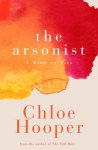
  • Chloe Hooper’s The arsonist, which has been shortlisted for several awards and has been on my TBR most of this year. It seems an absolute must given the early start to this year’s bushfire season here down under.

And there you have it. Another Nonfiction November completed in two posts. I apologise for not giving it the attention it deserves, but I am glad I was stimulated by the meme to spend a little time thinking about nonfiction this month.

Any nonfiction favourites you’d like to share? (Not that my TBR pile needs them, mind you, but other readers might like to hear of them!)

Monday musings on Australian literature: Deafness and Australian writers and writing

Book coverToday’s post was inspired, of course, by my recently reading Jessica White’s memoir-biography, Hearing Maud (my review), which parallels White’s own experience of deafness with that of Maud Praed. This post will not be an exhaustive (or even comprehensive) discussion of the topic, but a broad-brush introduction to some of the ways deafness is reflected in modern Australian literary culture.

For a start, some of our best-known writers have been deaf, including Henry Lawson, who was deaf by the age of 14; Judith Wright, who started losing her hearing in her 20s; and Richard Flanagan. Flanagan was “virtually deaf” for the first six years of his life. Novelist Kirsten Krauth says “I can read this experience through all of Flanagan’s work, his ability to translate, to make us listen, his forceful prose, and his empathy for others struggling with language too.” Aljaz, the protagonist of his novel, Death of a river guide, was deaf in his early years due to pneumonia. Krauth shares this quote from the book:

He [Aljaz] now listened to the way in which words were used, the way one word could carry so many different meanings, how every word could be a tree full of fruit. But when he asked questions he was answered only with a quizzical shake of the head.

The issue of how disability (specifically, deafness) affects, positively and negatively, how a person experiences and/or responds to the world is a theme that runs through White’s book.

Quite serendipitously, I came across last week, Michael Bérubé’s essay “Autism aesthetics” in the Sydney Review of Books. The essay, obviously, is about autism, but he starts with this:

About 10 years ago, I began to get impatient with disability studies. The field was still relatively young, but it seemed devoted almost entirely to analyzing how disability was represented – in art, in culture, in politics, et cetera – especially in the case of physical disability. This, I thought, fell short of the field’s promise for literary studies. Where, I wondered, was the field’s equivalent of Epistemology of the Closet, the book in which Eve Sedgwick showed us how to ‘queer’ texts, such that we will never read a narrative silence or lacuna the same way again? Put another way: I wanted a book that showed how an understanding of disability changes the way we read.

He reviews three books which he believes do just this, which demonstrate how “autistic readers and writers can widen the range and deepen the complexity of human expression”.

This post is mostly going to do what made Bérubé impatient, but it will touch on what he’s looking for too. Regardless, though, I wanted raise the issue of how abled people “read” and “judge” literature through “abled” lenses, how we “pathologise” people with disabilities (either as creators or as characters.) As Bérubé says, “There must be no performance criteria for being human”.

However, before I get to that, another disability issue worth thinking about was raised by AWW Challenge guest poster Gail Sobott:

Disability as metaphor — blind, deaf, cripple, mad metaphors — create problems for understanding the specifics of our lived experience. The challenge is to encourage nuance and experimentation, politically-accountable uses of metaphor that make people think more deeply and enable them to imagine alternatives to what exists.

Selected recent books

The books I’m sharing here, fiction and non-fiction, by and about deaf people, have come from Jessica White’s Diversity round-ups for the Australian Women Writers challenge – so they are all by women.

Book coverSarah Gai’s Winter signs (young adult novel, 2017)

GoodReads reviewer Brenda, linking to the challenge, felt that Gai handled her deaf protagonist well. Brenda wrote that “deafness and everything that means for living a life is hard to comprehend for someone who has never been in that position. … I could feel Winter’s frustration when she was unable to understand non-signing people because they spoke too fast for her to lip-read.”

I know the jury is still out about the relationship between literature and empathy, but I’d argue that “feeling” a character’s emotions, and learning from this, is an important part of literature – and is particularly relevant in helping us understand lives that are very different to our own.

Sarah Kanake, Sing Fox to meSarah Kanake’s Sing fox to me (novel, 2016)

Kanake’s novel (my review) features a character with Down syndrome and a deaf character. Kanake’s brother has Down Syndrome, so she has some understanding of that disability. What she says in an interview about this character applies to the portrayal of all disabilities:

People with Down syndrome are often still seen as a homogenous mass, despite the fact that every person with Down syndrome is different and has their own lived experiences and understanding of the world based on those experiences.

She also said that “the best part of writing Samson was figuring out how to communicate sign language onto the page. I love the way Samson communicates and his relationship with the deaf girl, Mattie Kelly, is one of my favourite elements of the books”.

Book coverChrissie Keighery’s Whisper (young adult novel, 2011)

Whisper’s protagonist is fourteen-year-old Demi who becomes deaf through meningitis, as did Jessica White. GoodReads (but not AWW Challenge) reviewer, CG Drews, who said she was writing her own book with a deaf character, offered this:

I loved how it talked about audism (discrimination to non-hearing people) and Deaf communities. And I loooved how it contrasted the narrator, Demi, who lives in a hearing family but is now deaf, and Stella, who is SO FIERCELY proud of her deaf heritage that she’s actually very cruel to hearing people.

She, who has clearly read a few books on the topic, said that “this is the book” for people who want to know about “Deaf culture and what it’s like to be deaf”.

LomerTalkUnderWaterKathryn Lomer’s Talk Under Water (young adult novel, 2015)

Lomer’s protagonist is also a deaf teenager, Summer, who develops a friendship with Will. Jessica White wrote in her round-up, that “as Will discovers how confident Summer is about her disability, his world opens up. I would have liked to have read a novel like this when I was young … it would have been an antidote to my relentless sense of strangeness and alienation”.

Summer, like many characters in this section, uses sign language.

McDonaldArtBeingDeafDonna McDonald’s The art of being deaf (memoir by a deaf person, 2014)

Jessica White, introducing an AWW Challenge guest post by deaf author McDonald said that in her memoir, McDonald draws “an original map of the contours of her experiences of deafness, creating a land into which other people could travel and learn of its customs”. Reviewer Jemimah-Oddfeather, who read the memoir as an introduction to her AusLan class, would agree. She described the book as “a good place to start” for those wanting to learn about Deafhood and the Deaf community. McDonlad, like White in Hearing Maud, explores “her relationship with her deafness while ‘passing’ as a hearing woman in a hearing world.”

RomerThornwoodHouseAnne Romer’s Thornwood House (crime fiction, 2013)

Jessica White reviewed this for the challenge. She wrote in the round-up that she liked “its positive portrayal of a deaf man, Danny”, and that Romer “took some of Danny’s characteristics, such as his attentiveness to body language and lipreading, and used them to add tension to her work.” Another AWW Challenge reviewer Rochelle, commented that the love interest uses sign language, and called that “Plus one for diversity”.

ViskicResurrectionBayEmma Viskic’s Caleb Zelic series (crime fiction) 

Viskic now has three books in her crime series featuring deaf protagonist, Caleb Zelic – Resurrection Bay (2015), And the fire came down (2017), and Darkness for light (due in 2020). AWW Challenge reviewer Weezelle (Words and Leaves) was impressed because

it’s not ‘Caleb, the deaf investigator’, but ‘Caleb, the investigator who happens to be deaf and is also lots of other things as well’. In other words, Caleb’s deafness is one element of his character and he’s not defined by it.

Or, in other words, he is not performing his disability. Notably, he uses sign language, which immediately identifies his disability. Signing – which has been a controversial issue – was mentioned in most of the books listed here.

I’d love to hear of any books you’ve read that are by or feature deaf people … and whether you have any ideas about disability literature.

Jessica White, Hearing Maud (#BookReview)

Book coverHybrid memoir-biographies take many forms. For a start, some are weighted more to biography while others more to memoir. As I wrote in my post on Jessica White’s conversation with Inga Simpson, most of those I’ve read “have been mother-daughter stories, the biography being about the mother and the memoir, the daughter. White’s book is different. The biographical subject is Maud, the deaf daughter of the late nineteenth-early twentieth century writer Rosa Praed (1851-1935)”. However, Bill (The Australian Legend) responded in the comments that “I’m pretty sure Hearing Maud is another mother/ daughter memoir. On two levels”. In a sense he’s right.

I say “in a sense” because Maud is not White’s mother. However, two mother-daughter threads do run through the book, Maud and her author mother Rosa, and Jessica and her mother. But, unlike those more direct mother-daughter memoirs in which the daughter focuses on the mother’s story while also throwing some light on her own life, in White’s book the two mother-daughter stories work in some way as foils for each other, but, more significantly, the focus is on the two daughters’ lives. As with most memoirs – hybrid or otherwise – there is a larger intent behind Hearing Maud than simply telling the story of a life or lives. It involves exploring deafness.

As I reported in the conversation post, White talked about “coming out” as a deaf person. I wrote how “living in the country amongst a large extended family, she’d been, essentially, sheltered from fully experiencing her deafness”. This resulted in her growing up as “a hearing person” albeit a “bad” one! It wasn’t until she was in her 30s that she started to think about herself as deaf, and to understand its impact on her life, particularly in her longstanding sense of loneliness and isolation.

Before, however, you start suspecting that this is going to be another misery memoir, let me get to the book. It starts with a Prologue, in which White tells us how she lost most of her hearing around the age of four, due to meningitis (or, more accurately, the treatment for it.) She then says, and it is this idea that underpins her story:

My life came to be defined by what the ancient Greeks termed a pharmakon, that which is a poison and a cure.

She goes on to say that the way the pendulum swings, between these two, depends on the time and culture in which the deaf person lives. For Maud, deafness was “a bane”. It led to her being committed to an asylum at the age of 28 and being left there until she died 39 years later. For White, on the other hand, it led to her becoming a reader and then a writer, because these “assuaged my persistent loneliness and gave me a sense of purpose”. What White goes on to do in her book is provide a mini-history of attitudes to deafness and deaf people over the last century and a half, exploring the ways in which both personal (including family) circumstances and social attitudes and policies can deeply affect the course of a deaf person’s life. Of course, life is a lottery for all of us – we are all affected by time and place, family and culture – but for those with a disability, there are additional layers that further reduce their control over their outcomes. (Interestingly, probably because of when she was born, White doesn’t discuss the whole nomenclature issue. In the early 1980s, for example, it was not acceptable to call people “deaf”, they were “hearing impaired”.)

Now though, I want to talk a bit about the writing. Hearing Maud is White’s third book (I’ve reviewed her second, Entitlement), and it shows. It shows in the novelistic language that brings life to the story. It’s never overdone, but there are scattered images that beautifully convey her feelings, such as this comment after her first real conversation with another deaf person, when she was 32:

Once again I have the sense of something settling into place, like a bird alighting in a tree, its wings relaxing. When I say goodbye and walk back past the sandstone buildings to the bus stop by the lakes, my step is buoyant.

You can feel the emotional release, can’t you.

It also shows in the confident handling of the multiple storylines – hers, and Maud and her mother Rosa’s stories. The stories are told generally chronologically but are interwoven with each other, so we start with White’s childhood ending a little before this book is completed, and similarly we move through Maud’s life. However, there are some backwards movements when something in the life of one raises an issue in the life of another. It does require some concentration from the reader, but the segues are natural and clear. Describing her childhood, for example, White tells of the times she spent in the bush, and how “the solitude was a balm”, enabling her to daydream about the boy on whom she had a crush. This leads her directly to  Rosa Praed – “Whenever I read Rosa’s novels, I reconnect with this heady mix of romance and the bush” – and a discussion of Rosa’s focus on the bush in many of her novels. Similarly, a discussion of the importance of letter-writing to her – being an “unthreatening way … to make connections” – leads to an extended discussion of Maud’s letters, and from that to Maud’s education and the history of deaf education in Europe in the late nineteenth century. There’s a lot of information here, but it’s so well integrated into the narrative that you learn almost despite yourself!

Finally, White’s skill shows in her control of tone. This is not a dry non-fiction work, despite the amount of information it contains, but a story about real people. White’s tone balances the formal (grammatical sentences, endnotes, and so on) with the informal (first person voice, and expressions like “I imagine Maud walking to the museum”). She also conveys her passion for her subject, and sometimes her frustration and anger, but doesn’t let it flow over into diatribe. However, she’s very clear about her intention for the book, as she tells her sister:

‘I’m tired of being taken for granted. I want people to know how hard I’ve worked – and how hard most people with disabilities have to work – to get where I am. I want them to hear Maud’s voice [hearing Maud!] and to know that, although things are much better, deaf people are still expected to act like hearing people. I want them to see how difficult it still is, when it shouldn’t be…’

I hear you Jess, loud and clear!

Lisa (ANZ LitLovers) and Bill (The Australian Legend) have also reviewed this book.

AWW Challenge 2019 BadgeJessica White
Hearing Maud
Crawley: UWAP, 2019
271pp.
ISBN: 9781760800383

The Constructive Critic (Panel discussion)

For some reason that I can’t quite explain – a sudden rush to the head methinks – I agreed to be part of a panel being organised by the ACT Writers Centre for this year’s Design Canberra Festival. The panel, called The Constructive Critic, was described as

a unique panel discussion about art criticism across multiple disciplines including visual arts, design, theatre and literature, and its importance and impact.

What is the point of arts criticism? What has changed now everyone has a voice via social media? What is the relationship between artist and critic, and what about the blurred lines of artists who critique others?

The panelists (check bios on the event website) were art curator and critic Peter Haynes (also the moderator), local authors Jack Heath and Karen Viggers, and me. This is not one of my verbatim reports because I was too busy taking part, but I want to document some of the things I remember that we discussed.

It was an enjoyable evening – for me, anyhow – largely because both the panel and the audience were friendly and engaged. We didn’t always completely agree on topics, but the ensuing discussion invigorated rather than diminished our thoughts and ideas.

My favourite description of arts criticism came from the most experienced critic amongst us, Peter, who said that:

For me writing criticism is about opening a dialogue and first the critique is for me to explore the work. Whatever medium. A review should start with a question. The critic opens the questions that the artist and curator have posed. (Tweeted by the ACT Writers’ Centre whom I thank for capturing this so nicely!)

I love this, the idea of opening the questions posed by the creator of the work (the book, the play, the exhibition, the film, etc), and will try to do it more. [PS: I forgot to say that we later talked about how social media at its best can encourage this dialogue/conversation.]

The topics we covered included defining what criticism is, what creators want from criticism, who criticism is for, the role of social media in contemporary criticism (is everyone really a critic?), the economic impact of criticism, whether creators can critique or review each other’s work, and what we think about negative criticism.

Most of us seemed to agree that there is a review-criticism continuum. The highest level of criticism we saw as comprehensive, academic, knowledgeable about the wider culture/genre/context within the work fits, while reviewing at its most basic can be short, narrowly focused and, perhaps, more oriented to promoting the work. This is not to say, however, that high level criticism can’t/doesn’t promote a work too, but the link is, I’d say, more tenuous.

Related to how we define criticism is the question of who/what criticism is for. For some critics*, it seems to be for the consumer (the reader, for example), for some it can be for the creators (the authors), and for others seems to be more for the producers (the publishers). At least, this last is how it looks when you get to the emerging “influencer” role, upon which we touched briefly. For the authors in our panel, the second was particularly relevant. They appreciate criticism which can help them develop their own work. There is a fourth option, which is the one I ascribe to. It’s that criticism is about contributing to the wider culture. While of course what critics write will encourage or discourage people from reading the book, going to the show, whatever, the main loyalty is to the culture. This means I’m keen to see the work I’m discussing within the context of both literary and social culture, to talk about how it adds to the body of work to which it belongs and how it addresses or contributes to the society in which we live. Looking at it this way, I’m less interested in ascribing value – this is a “good” or “bad” book – than in where it fits. I’m not sure I achieve this, but that’s my goal.

We talked briefly about social media: the destructive impact of thoughtless negative comments on authors; the positive and negative economic impact social media can have; the impact and application of ratings (like those on GoodReads); the current plethora of free review copies which can result in reduced early sales; and the value of hindsight versus the immediate response that is common in social media.

Opposing opinions were offered about whether artists can critique artists. The affirmative suggested that artists know what’s involved in creating the work and can therefore bring that understanding to their review, while the negative suggested that it is hard to properly critique people you know, and that creators, knowing the techniques involved, will often focus on technical aspects rather than the work as a whole.

Negative reviews came up several times throughout the discussion, and again at the end. Peter announced early on that he didn’t write negative reviews, which, regular readers here know, would appeal to me. What he meant by this – and how I also see it – is that if he doesn’t like something, he won’t review it. However, he will, in an overall positive review, refer to aspects that might not have worked so well. Yes! However, a question came from the floor about negatively reviewing a work that is against current social values – that is blatantly sexist, racist, ableist, for example. Karen spoke for all of us when she said that such ideas should be called out. Jack, earlier in the session, had entertained us by describing how he had learnt from a one-star review. The reviewer had missed the main point of his work he felt, but nonetheless the comment had made a valid observation, one that he used in the next book in his series!

Of course, like my old school exam days, I came away thinking about all that I could have, or wished I’d, said. One issue we didn’t discuss in any detail was the critic him/herself: the degree to which critics should aim to be “impartial” (whatever that is) versus put their preferences and background on the table, and, indeed, whether, in our current environment regarding who can write what, whether there’s also a question concerning who can critique what? But, I’ll leave those for another day!

Meanwhile, thanks to Paul and the ACT Writers Centre for asking me to be on the panel, and to Peter, Karen and Jack for being such fun and so interesting to talk with.

* I’m using the term “critic” broadly in this write-up to cover the whole continuum of arts writers, and my examples are mostly from the book world (but in most cases you can substitute your art form of choice!)

The Constructive Critic
Design Canberra Festival 2019
Gorman Arts Centre, Main Hall
12 November 2019

Helen Garner in conversation with Sarah Krasnostein

Garner and Krasnostein on stage

Krasnostein (L) and Garner (R), & Auslan interpreter

To say I was thrilled when Son Gums’ partner offered to buy tickets for us to see Helen Garner in conversation (last Saturday) would be an understatement. I have never seen Garner live before so that would be one bucket-list item ticked had I a bucket list! The fact that the conversation was to be conducted by Sarah Krasnostein (author of The trauma cleaner) was the icing on the proverbial cake.

This conversation was, in fact, the opening event of the Wheeler Centre’s inaugural Broadside Festival, promoted as “two days of an unapologetically feminist agenda”.

The Festival was opened by the Governor of Victoria, Linda Dessau, who referenced Barack Obama’s recent statement that “tweeting and hashtagging isn’t activism”. Festival Director Tam Zimet then started proceedings, explaining that the Festival’s purpose was “to bring conversations that are too hard or too much to Melbourne Town Hall”. She quoted Zadie Smith who was also in Melbourne for at the Festival, and who described writing as “taking the temperature of the moment”. This, of course, beautifully describes Helen Garner’s writing.

The Conversation

The conversation centred around the recent release of Garner’s Yellow notebook: Diaries, Volume 1, 1978-1987, so the conversation began by discussing both diary writing and the process of preparing them for publication. Krasnostein, who asked rather long but always thoughtful questions, talked about the role and function of diaries, suggesting they exist for their own sake but are also works in themselves. Garner’s diaries, she said, contain harvested and preserved details from the world, but also show Garner’s “fearless self-scrutiny”, plus “the things one can think but not say”. Garner said that she has always loved notebooks and pens, and how as a child she loved the peace and solitude she got from writing her diaries.

Several times through the conversation, Garner described her diary-writing as being partly about practising writing. She writes everyday, agreeing that you can’t wait “for ideal conditions”. For her, it’s all about “mother discipline”, by which she meant using the time given to you. She also commented on how much work you do when you are asleep, and referred to lessons from Marion Milner’s book, An experiment in leisure which taught her to sit quietly, with a sense of “nothingness”, to let ideas sort themselves out. This is not the same as waiting for inspiration, though. Garner, being her plainspoken self, said that “inspiration is bullshit”. Instead, “you do things little by little”. Writing, said Krasnostein a little later, is not the hard part. It’s getting to the desk.

Later in the conversation, we returned to diary-writing as stacking up the practice hours. Garner said she knows “how to put a sentence together”. (If you love Garner, like I do, you love her sentences.) But, said Garner, writers also need to know grammar. Without it, you can’t criticise your own work. The lack of grammar teaching is a “terrible loss”. Writers also need to read a lot to see how other writers do it. She bemoaned the fact that some books look like no editor has been near them. You see their “life-force leaking out of every joint”.

Krasnostein quoted Joan Didion’s statement that “style is character”, which somehow led to Virginia Woolf’s statement that you tell the truth about yourself first before you can do so about others. Krasnostein wondered whether being clear-eyed about yourself – one of Garner’s strengths, for me – was training for how to write in public. Garner took this to suggest that being honest about yourself gave you permission to write about others, but she didn’t think that would “stand up in court”! Garner suggested that memoirs can sometimes play fast and loose with other people!

Around here, Krasnostein asked whether revisiting earlier diaries – for any of us I think – shows that we are unreliable narrators of ourselves! Garner essentially agreed, saying that “memory is a creative act”. Reading one’s own diary “can be bracing” because it shows how over time you change stories, often showing yourself in a better light. There’s no way out of this, Garner believes, you just do the best you can. “Everything is fleeting, fleeting, fleeting”, she said. Writers write down stuff because they are terrified of forgetting. (I know the feeling!) “Writers are afraid of losing things”. This returned us to an idea that recurred through the conversation, that of writers preserving. Krasnostein quoted Philip Larkin’s statement that “the urge to preserve is the basis of all art”.

Of course, the process of making private diaries public was also discussed. Garner said she cut a lot. Her challenge was to decide what others might find interesting. She established certain criteria, such as she would not rewrite, and would only change (or add) something if it would otherwise be meaningless. A diary, she said, “has no voice over, unlike a memoir”, meaning that you can’t say “I did that then, but no way would I do that now, because now I’m a nicer person”. Accepting herself as she was at the time of her writing brought her to understand that she wasn’t unique, which made her feel more “comradely” with others. “We all hurt and are hurt,” she said. Krasnostein offered the idea that “the more vulnerable you are, the more you connect” to which Garner replied that this is what she hopes!

Another point Garner made was that tone is important, that “tone is character”, to which she then gave a feminist twist by saying that women have felt they’ve had to tone themselves down. She writes short books, she said, because she feels she has only a limited amount of reader’s attention.

I loved Krasnostein’s summation of the diaries as offering a new expansive view of Garner, but retaining her familiar voice, her “forensic eye for detail”, and her “lean lyricism”. I can’t wait to read my copy.

Q&A

There were several questions, but I’ll just share a couple:

  • on her daily writing practice: She rents an office, which stops her getting caught up housework! (In other words, she has “a room of her own”!) I particularly liked her point that she makes her notes about the details, say, of the court cases she attends, but, separately, she also documents her engagement with what she’s seen/heard, what she thought and felt. This material is “brightly alive … a treasure trove of information”. It doesn’t fit into the other boxes but it’s the richest when she comes to write. This is what I think is often missing from my reports of literary events. I need to do more of it.
  • on whether her views on Feminism had changed since the me-too movement: Not really seemed to be the answer. Garner, like many of us I believe, simply knows that when she discovered Feminism it changed her life: “It was like I’d been underwater and I finally put my head up and took a breath.” The me-too movement, like most movements, has been mixed, but “these things keep developing”.

Kate (booksaremyfavoaiteandbest) also wrote this up – including Garner’s comment about age freeing her to talk to random people on trams.

Helen Garner in conversation with Sarah Krasnostein
Broadside Festival 2019
Melbourne Town Hall
9 November 2019

Monday musings on Australian literature: Whither Australian literature, 1930s (Pt. 2)?

As I wrote last week, I apologise to those of you not interested in the history of Australian literature, because yes again I am continuing my little survey of contemporary writing about Australian literature in the 1930s. This week I plan to look at some another discussion about the place of and interest in Australian literature.

So, today’s post looks at an article which asked Why is the average Australian reader, if given the choice, more likely to pick an overseas (English or American book) than an Australian one?

Australian fiction in America

In 1935, Pegasus (whoever that is) wrote an article (probably syndicated) in the Central Queensland Herald inspired by Australian readers’ apparent preference for books written overseas*, and in which s/he discusses, conversely, the growth of interest in Australian literature in America! S/he says that the Christian Science Monitor reports that “the American reading public is beginning to ‘wake up’ to the fact that worthwhile fiction is being produced in Australia”.  Tell McKinnon et al, that, eh? Pegasus, in fact, says that

Australian fiction has been noticed in America is something to be put to the credit side of the ledger, when Australian authors and critics deplore the quality of Australian fiction produced to date.

Book coverIndeed, Pegasus says that the Christian Science Monitor writer talks about the enthusiasm of the American reviewers “which is more than I can remember occurring in this country”. The book, they are particularly enthusiastic about is Henry Handel Richarson’s The fortunes of Richard Mahony. Pegasus notes that “there are many in Australia who would agree with the American critic who described this novel as ‘the most important single piece of literature ever to come out of Australia,’ [but] it has never become popular in Australia, either amongst critics or readers”!

Pegasus then shares some of the other books that were being appreciated in America. Rolfe Boldrewood’s Robbery under arms and Marcus Clarke’s For the term of his natural life are also loved here, he says, but EL Grant Watson’s Desert horizon, “has been forgotten here, if it ever received any particular attention”. Katherine Susannah Prichard’s Working bullocks was being deservedly appreciated, but, says Pegasus,

the unfortunate Coonardoo, well-written though it is, is probably better appreciated than it deserves by an American critic who can regard it as “a portrayal of the relations between the white race and the white black on a typical cattle station in north-eastern Australia.

Other books appreciated in America include G.B. Lancaster’s Pageant, M. Barnard Eldershaw’s A house is built, and Frank Dalby Davison’s Red heifer (Man shy), which “has already been accepted in America, probably to a greater extent than in Australia”. Man shy and A house is built are both well known to me, and would be regarded as classics I think, but G.B. Lancaster, whom most of us haven’t read, is mentioned once again in my blog. This is the name used by Edith Lyttleton (1873-1945). Born south of Launceston, she moved with her family to New Zealand when she was six years old, and stayed there until she moved to England in 1909. She returned to Tasmania in the 1930s, but ended up moving back to England. She wrote, among other things, thirteen novels and some 250 short stories, which, says AustLit, were “mostly narratives of romance and adventure set in the remote back country of New Zealand, Australia and Canada”. It’s probably not surprising, given she lived very little of her adult life in Australia, that she’s not particularly well-known here now. However, Pageant did win the ALS Gold Medal.

What all this says to me is that when it comes to the creative arts, there is always something for commentators to be concerned about – and then talk about – which is not necessarily a bad thing. After all, any publicity is good publicity, n’est-ce pas?

Any comments?

* Things seemed to have started to change by 1937, according to Angus and Robertson’s Mr W.G. Cousins.