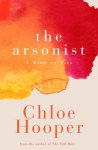
 It may not have been the most sensible decision to read Chloe Hooper’s book, The arsonist, during Australia’s worst-ever bushfire week, but in fact I picked it up a few days before the crisis became evident, and once I started I couldn’t put it down. The arsonist tells the story of the man arrested and tried for one of the major fires in the Black Saturday series of bushfires that ravaged much of Victoria in February 2009. I have often wondered how you identify how and where a fire started. Hooper answers much of this.
However, what made this book unputdownable was that Hooper adopted, as she did in The tall man, the narrative (or creative) nonfiction style to tell her story, and proved herself, again, to be a skilled exponent of this genre. For those not sure about this genre, Lee Gutkind’s definition, quoted in Wikipedia, is a good start: “Ultimately, the primary goal of the creative nonfiction writer is to communicate information, just like a reporter, but to shape it in a way that reads like fiction.” In other words, the information must be true or factual, but presented like a story.

Bush, eastern Victoria, 9 mths after Black Saturday, 2009
Hooper structures her story like a classic three-act drama: I The detectives, II The lawyers, III The courtroom, followed by the Coda. She provides the facts – the whos, whens, wheres and whys – as much as they are known, but forms them into a narrative. So, after an opening paragraph which evocatively describes a fire-destroyed bush landscape, the second paragraph reads:
At the intersection of two nondescript roads, Detective Sergeant Adam Henry sits in his car taking in a puzzle. On one side of Glendonald Road, the timber plantation is untouched: pristine Pinus radiata, all sown at the same time, growing in immaculate green lines. On the other side, near where the road forms a T with a track named Jellef’s Outlet, stand rows of Eucalyptus globulus, the common blue gum cultivated the world over to make printer paper. All torched, as far as the eye can see. On Saturday 7 February 2009, around 1.30pm, a fire started somewhere near here and now, late on Sunday afternoon, it is still burning several kilometres away.
You can see, in this, that we are being invited in to see what her “character” Detective Henry is seeing, but we are also given very specific facts. The next paragraph, provides some personal background to this first “character” in her story:
Detective Henry has a new baby, his first, a week out of hospital. The night before, he had been called back from paternity leave for a 6 am meeting …
As Part I progresses, we meet other police officers and forensic experts; we travel with them as they investigate the fire itself and then follow leads to the most likely suspect; and we are with them as they interview this suspect and arrest him for the crime. We also meet many victims who lost family members and/or property. Their stories are heartrending – excruciating, in fact, as I wrote in the margins – and were particularly hard to read, with similar losses occurring in Australia right now.
Using a similar narrative technique in Part II – providing facts, and describing the “characters” and their feelings – Hooper then introduces us to the Legal Aid lawyers, or one lawyer in particular, brought in to defend the accused. As she does this, our allegiance and sympathies shift a bit from the hardworking police to the hardworking lawyer – and, perhaps even, to her client who, only now, at this point in his life, is finally diagnosed as autistic, which provides a previously missing context for his strange responses and behaviours. And then, finally, in the third “act” or part, these two – the police and the legal team – come head to head in court, with our allegiances swaying between the two as they tussle it out, until the jury delivers its verdict.
The Coda, “set” some years later, contains Hooper’s reflections on the aftermath and some commentary on the process. For example, it’s clear that she had researched the case, had visited the fire region many times, including soon after the arrest, and had interviewed many of the participants, but, like Helen Garner in her three major narrative nonfiction works, had not managed to speak to the person at the centre, in this case, Brendan Sokaluk, the arsonist. Her request is refused, for understandable reasons. She was, she writes, both “disappointed” and “relieved”. Would speaking to him, she wonders, answer the book’s central question of “why”, and, even if he were able to explain why,
would understanding why Brendan lit a fire make the next deliberate inferno any more explicable? Or preventable? I now know there isn’t a standardised Arsonist. There isn’t a distinct part of the brain marked by a flame. There is only a person who feels spiteful, or lonely, or anxious, or enraged, or bored, or humiliated: all the things that can set a mind – any mind – on fire.
And there, I suppose, is the multiple tragedy of this story: the tragedy of a man ridiculed and bullied all his life for being different; the tragedy of a community that isn’t very good at managing people who are different; the tragedy of the conflagration (in this case a fire, but it could be anything) that can result when the two collide; and the overriding tragedy that there are no simple answers to arson.
Now, I fear you might think that I have given the “story” away and that you therefore need not read it. But, you don’t read The arsonist for the “story”. After all, this is nonfiction and the basic “story” is known. You read it for the insights that a fine mind (not a mind on fire!) like Hooper’s can bring to the situation. What she brings is both clarity about the facts and a nuanced understanding of what they mean. The arsonist is, as everyone’s been saying, an excellent read.
Lisa’s (ANZLitLovers) review of this book includes information from a festival conversation session featuring Hooper.
 Chloe Hooper
The arsonist: A mind of fire
Hamish Hamilton, 2018
254pp.
ISBN: 9780670078189
 I haven’t read many books by Singaporean authors. Nevertheless, I am always keen to read
 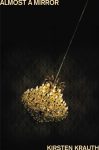 Kirsten Krauth
 And some “new” short story voices:
 Subhash Jaireth’s Spinoza’s overcoat: Travels with writers and poets (February, Transit): on writers and writing
 I’m starting this year the same as I did last year, that is, with Kate choosing a book I haven’t read. Indeed I haven’t even heard of Taylor Jenkin’s Reid book, Daisy Jones and the Six, which is a novel about the rise and fall of a fictional 1970s rock band.
 For my first link, I’m sticking with the theme of rock music, and choosing Nigel Featherstone’s novella, The beach volcano (
 Featherstone’s Canning returns home because he wants to improve his relationship with his family, and father. Not so for Édouard Péricourt in Pierre Lemaître’s The great swindle (
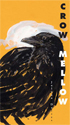 And here, sticking, unusually for me, with content, I’m going to link on something a bit tenuous. Édouard Péricourt was so disfigured in the war that he wears increasingly bizarre but often beautiful masks rather than let people see his face. Masks feature in Julian Davies’ novel Crow mellow (
 Crow mellow belongs, then, to a sub-genre known as country house novels. While you couldn’t call my next link a country house, exactly, but the characters in Charlotte Wood’s The natural way of things (
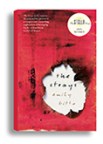 The natural way of things won the Stella Prize in 2016. The 2015 winner was a sort of country house novel too, Emily Bitto’s The strays (
 So, where to from here? How about another book which was inspired by artists, albeit of a different type? Dominic Smith’s The electric hotel (
 Here’s my 2019 Top Ten, by number of hits:
 I also like to note how well the posts actually written in the year ranked. Last year the first one came in at 23. This year, the winner, my Boy swallows universe post, romped in at number 1, with more than double the hits of the second ranked post. My next most popular 2019-written posts ranked 15th (
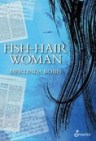 Australia, the USA, and Britain, in that order, were the top three countries visiting my blog, as in 2018. In 2017, India was fourth and Canada fifth, while in 2018, the order was reversed. This year, India regained its upper hand over Canada! The Philippines remains 6th for at least the third year, largely, I think, because of interest in Merlinda Bobis’


 For some years now, I have devoted my last Monday Musings of the year to the Australian Women Writers Challenge* – and this year I am continuing that tradition! Sorry, if you hoped for something else. With the New Year – I love the sound of 2020 – just two days away, I wish all you wonderful Whispering Gums followers a wonderful year to come in whatever form you would like that to take.Thank you, too, for supporting my blog with your visits and comments.
 FICTION
 SHORT STORIES
 CHILDREN’S PICTURE BOOKS
 This year, fiction (including short stories) represented around 57% of my AWW challenge reading, which is similar to last year. I read no poetry or verse novels again this year, and I read fewer Classics than last. However, I did read three classic short stories by Capel Boake for
  I was keen to read Melanie Myers’ debut novel, Meet me at Lennon’s, because it is set during the Brisbane of my mother’s early teens, that is, wartime Brisbane when her school,
  always save the receipt, the reason being that if you have chosen a book you’ve thought to be the perfect present for someone, so probably have others. Fortunately, my mother had saved the receipt for the book she gave me this Christmas, Helen Garner’s Yellow notebook, because I already have it (albeit as a review copy, not a gift.)
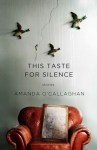
 choose for the recipient rather than what you think they should read! Now this, to me, is a no-brainer. Surely the aim is to give your recipient something they’ll enjoy and remember you fondly for! I’m really hoping my toddler grandson likes Pamela Allen’s Mr McGee. And I was very confident that my lexicographer-grammarian mother would like John Sutherland’s How good is your grammar. The article notes that giving books can signal your own taste, and touches on the pros and cons of this and of giving books you love. It suggests if you can’t overcome the influence of your ego when choosing books, ask the advice of a knowledgeable (often independent) bookseller! Good suggestion. This year, as in most years, I gave some books that I’ve loved – like Tim Winton’s The shepherd’s hut to Son Gums and Amanda O’Callaghan’s This taste for silence to Brother Gums’ partner – because I think the recipients will like them. But, I have also given books I haven’t read, for the same reason. Horses for courses, as they say.
 The
The  Louise Allan
 Amanda Curtin
 Nigel Featherstone
 Irma Gold
 Michelle Scott Tucker
 Whispering Gums