Stella Prize 2020 Shortlist announced

Well, lookee here, the Stella Prize shortlist was announced this morning while I was at Tai Chi so I am just getting to it now. And, I am rather pleased because, although I’ve only read one of the six, I am currently reading another, and have a third on my reading group schedule, so that’s half of them without really trying! Not that I don’t WANT to try, but my reading schedule is so packed that I find it HARD to try. I therefore love it when the listed books are ones I plan to read anyhow.

So …

Book coverThe shortlist:

  • Jess Hill’s See what you made me do (nonfiction)
  • Caro Llewellyn’s Diving into glass (memoir)
  • Favel Parrett’s There was still love (novel) (will be read in May) (Lisa’s review)
  • Josephine Rowe’s Here until August (short stories)
  • Tara June Winch’s The yield (novel) (reading now) (Lisa’s review)
  • Charlotte Wood’s The weekend (novel) (my review)

After a rather “out there” longlist, which included several books many of us had not heard of, the shortlist, as often happens with the Stella I think, has narrowed down to a less surprising list. Would most you you agree with that? This is not being critical of the longlist – because I hadn’t read most of those books – but simply saying that the shortlist seems more geared to the books that have been generally well received critically. I like to think that that’s because they shine out …

Anyhow, the judges’ chair, Louise Swinn commented on the shortlist that:

Writers across the gamut of their career appear on the 2020 Stella Prize shortlist, which includes authors who are household names alongside some we are just getting acquainted with. The six books on this year’s shortlist are all outward-looking, and they tell stories – of illness, family life, friendship, domestic abuse, and more – in remarkable ways. If language is a tool, or a weapon, then these writers use their skills with tremendous courage. We found a lot to be hopeful about here, too – not just at the stories being told, but at the quality of the art being produced.

The winner will be announced on April 8.

Any comments?

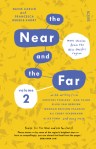
David Carlin and Francesca Rendle-Short (eds), The near and the far: More stories from the Asia-Pacific region, Vol. 2 (#BookReview)

Book cover

This anthology, like the first The near and the far volume, stems from a project called WrICE (Writers Immersion and Cultural Exchange), an intercultural and intergenerational program which “brings together Australian and Asia-Pacific writers for face-to-face collaborative residencies in Asia and Australia”. The most recent residencies have been in Indonesia (2018), The Philippines (2017) and China (2016). The editors write in their Introduction to this volume that these residencies provide a safe space in which writers come to trust “in a way that is powerful and unusual, that their bumbling work-in-progress and their wild hopes will be met with kindness.” This is probably why, as Maxine Beneba Clarke describes in her Forward, “the writing in this book veritably sings: it is a cacophony of poetry, essay-writing, fiction and nonfiction”.

This volume is structured similarly to the first, starting with the foreword and introduction, and concluding with some notes on WrICE and a list of contributors with mini-bios at the back. There is also, in this one, a conversation between the two editors. The works are again organised into three sections, this volume’s being Rites of passage, Connecting flights, and Homeward bound. For some reason, I enjoyed more of the pieces in first and third sections, than the second. There are 27 stories, with a little over half being by women; three are translated. As in the first volume, each piece is followed by a reflection by the author – on the writing process, their goals and/or their experience of WrICE.

To tame words with ideas (Nhã Thuyên)

Now the stories. Given the project, the writers are of course a diverse group, coming from Australia (including two First Nations writers), Vietnam, Indonesia, the Philippines, and elsewhere. I knew the Australians – Ali Cobby Eckermann, Alice Pung, Christos Tsiolkas, Ellen Van Neeerven – but most were new to me, which feels embarrassing, really.

I’m not sure I could ascertain a strong theme running through this collection as I did last time, but there is an overall sense of writers trying “to tame words with ideas” (“Utterances, by Nhã Thuyên, tr. by Nguyên-Hoàng Quyên), of trying to find the right words to articulate their ideas across diverse cultural spaces. I like this image of taming words with ideas. It suggests to me many things, including that words are hard to pin down, and that ideas/emotions/passions are hard to communicate in words. It is certainly something that you feel the writers working at in this book, some of them consciously, overtly, sharing their struggles with us.

I particularly liked the first section “Rites of passage”, with its pieces about, essentially, identity, though the subject matter includes issues like aging, coming out, postnatal depression, father-son relationships. Christos Tsiolkas in “Birthdays” writes of a gay man, grieving after the break-up of a longterm relationship, and facing aging alone. Told third-person, but with an immediacy that has you identifying with the narrator’s unhappy restlessness, his questioning of who he is, and where he is going, makes a perfect, accessible first piece for the anthology.

In “Eulogy for a career”, Asian Australian, Andy Butler explores the challenges of identity in white Australia, of finding his place, particularly as a young Asian-looking boy wanting to ballroom dance! He cynically notes that, after years of ostracism, he is suddenly, in this new pro-diverse world, being offered opportunities. “Progressive white people,” he writes, “can’t get enough of us”. But, he knows and we know how fragile this foundation is likely to be. First Nations writer Ellen van Neerven closes out this section with small suite of poems, “Questions of travel”, riffing on Michelle de Kretser’s novel of the same name. “When we travel”, she writes, “we walk with a cultural limp.” Our identities can be fluid or feral or freer – when we travel – but there are no easy answers to living and being.

In the second section, “Connecting flights”, the pieces are loosely linked by explorations of place and self. Mia Wotherspoon’s Iceland-set short story, “The blizzard”, exposes the moral and ethical complexities of contemporary political activism, while Steven Winduo’s “A piece of paradise” crosses continents, with characters from Papua New Guinea, Australia and the US pondering the possibility of intercultural relationships. Han Yujoo’s “Private barking” is one of the pieces that overtly addresses that challenge of taming words. “Sometimes we need a knife to write. (Or teeth)”, says Korean Yujoo, trying to write with her “little English”.

First Nations author, Ali Cobby Eckermann opens the last set with “Homeward bound”, a home-grounded poem set in a cave where self finds home in place, but knows it’s not secure. Else Fitzgerald’s  “Slippage” is a cli-fi short story, in which grief for the environment is paralleled by grief for a lost love. The very next story Lavanya Shanbhogue Arvind’s “A long leave of absence” is also about a lost love, this one due to a father’s forbidding the marriage, resulting in the narrator turning to alcohol. For each of these writers, home is fraught.

There are several pieces in this section that I’d love to share, but the one I must is deaf writer Fiona Murphy’s “Scripta Continua”. I must share it because it reiterates much of what Jessica White writes about in Hearing Maud (my review). This five-part piece takes us from the idea of “conversations”, which Murphy often feels like she is “peering into, rather than partaking in”, through the “spaces” (and silences) deaf people frequently inhabit, the fatiguing “attention” so necessary for communication, and the “writing” that helped her start to understand herself better, to “Auslan”, the sign language system that brings new, less fatiguing, ways of conversing and inhabiting space!

The final piece, “Wherever you are” by Joshua Ip, is a real treat. A long poem comprising 28 quatrains, it consistently flashed my memory with phrases and ideas that sounded familiar. Well, of course they did, because, as he explains in his closing reflection, “Each quatrain is a response to each writer’s gift, in sequence”! So 27 pieces, 27 quatrains in response, with a concluding one of his own. How clever, and what respectful fun many of them are. “Words span and spin the globe”, he writes. If you are interested in such words – touching, probing, confronting ones – I recommend this book.

Challenge logo

David Carlin and Francesca Rendle-Short (eds),
The near and the far: More stories from the Asia-Pacific region, Vol. 2
Melbourne: Scribe, 2019
295pp.
ISBN: 9781925849264

(Review copy courtesy Scribe)

Monday musings on Australian literature: The Guardian Australia’s Unmissables

Although I’d seen it before, it was BookJotter Paula’s latest Winding Up the Week (#110) post that reminded me of The Guardian Australia’s Unmissables series. Initiated last March, Unmissables aims to highlight 12 new releases they deem “significant”.

Before I share the books highlighted to date, though, I’d like to talk about the project’s funding because, as most of you know, how quality journalism is paid for is, currently, a critical issue. The Guardian, unlike some other newspapers online, is not paywalled. Instead, it asks readers to support them financially, by either subscribing, which I do, or, “contributing”, which, in effect, means donating without tax deductibility. Clearly, though, that’s not enough to produce the breadth and depth of content that we readers like. Consequently, they also turn to “outside” sources. They have at least three models: “supported by”, “paid content/paid for by”, and ‘”advertiser content/from our advertisers funding”. Unmissables comes under the first one, and is “supported by” the Copyright Agency Cultural Fund. This method is, unlike the other two, “editorially independent”. They say:

Before funding is agreed with a client, relevant senior editors are consulted about its suitability and the editor-in-chief has the final say on whether a funding deal is accepted. A client whose branding appears on editorial content may have a role in suggesting what kind of topics are covered, but the commissioning editor is not obliged to accept ideas from the funder. The content is written and edited by Guardian and Observer journalists, or those approved by GNM [Guardian News and Media], to the same standards expected in all of our journalism. GNM will not show copy to funders for approval.

I’ve written about the Copyright Agency’s Cultural Fund a few times before, including in a dedicated Monday Musings post. From my observer’s point of view, it seems like this fund is doing some good things to support and promote our literary culture.

Now, though, the books …

Author event: Heidi Sze on her book Nurturing your new life

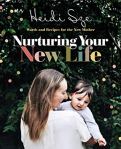
Book coverA book primarily intended for postpartum mothers is not really the sort of book Whispering Gums’ readers would expect to see here, but let me explain. Melbourne-based Heidi Sze started her food blog, Apples Under My Bed, the same year I started mine. However, that’s not our link. Rather, it’s that later that year, Daughter Gums also started a blog, through which she met Heidi – first online, then in person. Through that connection, a few years on, Daughter Gums ended up working in the Melbourne-based company co-founded by Heidi’s husband. Got all that?

Anyhow, the point is that over the last few years, I have been following Heidi, mainly via her Instagram account heidiapples. I have watched her gorgeous two children come into being – and then her third “darling child” (as Jane Austen would call it), her book Nurturing your new life: Words and recipes for the new mother. Note the double meaning of the title, “new life” referring both to a new child, and to a woman’s new life as a mother. “Matrescence, the process of becoming a mother” is, in fact, what the book is about.

Consequently, when I received Paperchain bookshop’s email announcing Heidi’s author tour event there, I knew I had to go and meet her in person. (Of course, Daughter Gums had already given me the heads-up, so I wasn’t going to miss it.)

The event …

I arrived early, hoping to say hello to Heidi before it started, as I had to get off promptly afterwards. I recognised her immediately, and was thrilled to be so warmly greeted when I introduced myself. An added bonus was that her two children, Joan (4) and Walt (18 months), and husband Ben were there too, so I got to meet the whole lovely family. Joan, though, as she should in a book shop, was more interested in finding out where the children’s section was. I approved!

The event basically comprised Heidi telling us about herself, how the book came into being, her intentions for the book, and how she structured and wrote it to meet those intentions. It was a small audience, comprising mostly mums and dietitians/nutritionists, given Heidi is a professional dietitian with a Bachelor of Nutrition and Dietetics from Monash University.

Would-be authors might be interested to know how she came to write this, her first book. She explained that a literary agent, who had been reading her blog and liked what she was writing, contacted her and suggested she write a book! Obviously, this isn’t going to happen to every blogger, but it shows that well-written clearly focused blogs can lead to other things – in Heidi’s case, also to being a recipe columnist for ABCLife (a lovely editor of which I also met at the event.)

Back to the book, though. It took Heidi seven months to prepare her book proposal, which included planning out the chapters and what each one would cover. She obviously did a thorough job because she got a book contract with HarperCollins.

Heidi also shared her career trajectory, explaining how, after the birth of her first child, she moved from general nutrition to a pre and postpartum focus. She also explained how in her early private practice she found she was doing as much counselling as specific nutrition advice. Through this, she had become increasingly aware of the damage that diet culture does. With her awareness of this and of the hard time women give themselves in general, Heidi underpins her book with one important message – that no two experiences are the same, so comparing yourself with others is not helpful. (A message relevant not just to new mums, eh?) She recognises, however, that it’s hard to live by this with “all the noise out there”.

Heidi supports this message in her book with practical advice for new mothers, two of which are that new mothers need support (Chapter 3) and that self-care is critical (Chapter 4). “We are not meant to do this alone”, she realised early in her new-motherhood. Indeed, the trickle-down effects of no support are immense, she said. And she’s right of course. Each generation does it differently, but each generation needs to recognise this important fact. It does take a village to raise a child. You are not a failure as a woman or a mother, if you can’t do it all because, in fact, you CAN’T do it all.

Related to the idea of support is the idea that new mothers need to take care of themselves, that fitting in self-care is not a luxury, but “a necessity and should be treated as such”. So, to tak self-care as an example of how the book works, Heidi not only provides sensible suggestions for how to achieve it, but, understanding from her own recent experience how hard it can be, she nurtures her readers along, encouraging them not to reach for the stars but to work out what’s manageable for them. Analyse your day, she says, to work out when you might slot in some time for yourself; think about when and how your partner can help; and so on. Self-care, she says, can be as simple as having a quiet rejuvenating shower. It’s partly in the mindset. In the end, she says:

Just do what you can and pray the stars align more often than not. And remember, you may need to make sacrifices – be it accepting piles of laundry or cancelling non-essential obligations – so that you don’t sacrifice yourself.

I didn’t find it hard to let the housework go, I must say!

Of course, being a nutritionist/dietitian, she includes recipes. Heidi said her goal was to create recipes that were easy and nutritious, that provided left-over opportunities for later meals, and that use up ingredients to reduce shopping expeditions. The recipes are great, and include things like banana oat smoothie, kedgeree (something I love), and slow-cook beef casserole.

If you have a new mother in your life, this warm, practical, non-judgemental book is for her – and, it wouldn’t hurt dipping into it yourself for ways to help. And, of course, if you are a new mother, this book is definitely for you.

Challenge logoAuthor Event: Heidi Sze on Nurturing your new life
Paperchain Bookstore, Manuka
27 February 2020

Carmel Bird, Field of poppies (#BookReview)

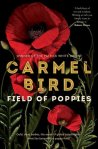
Book coverThere are some writers whose personalities shine through so strongly that I have taken to characterising them in just a word or two. Jane Austen, for example, I think of as wickedly witty, and Helen Garner as heartbreakingly honest. Carmel Bird is another of these. I describe her as seriously cheeky, by which I don’t mean she is really cheeky, but that there’s seriousness beneath her surface cheekiness. The cheekiness makes me chuckle, but ruefully, suspiciously so, because I know that waiting nearby is very often a skewer of some sort. Her latest novel, Field of poppies, is no exception. Even the title is paradoxical, alluding as it does to both Monet’s pretty painting, Field of poppies in Argenteuil 1873, and the poppy fields of Flanders.

Field of poppies, then, has all the hallmarks of Bird’s writing – a light tone, and all manner of allusions and digressions, underpinned by a clearly-focused intelligence. If you are lulled, early on, by narrator Marsali’s chatty, friendly tone, you’d be advised to check the epigrams and preface. The very first epigram tells you, in fact, exactly what this novel is all about:

We are within measurable, or imaginable distance of real Armageddon. Happily there seems to be no reason why we should be anything more than spectators. (Henry Asquith, Secretary of State for War, July 24 1914)

Can’t say plainer than that. The epigrams, which include one by Bird’s signature fictional novelist Carrillo Mean, are followed by an incisive preface which offers a vision of the modern world and where it’s heading. Mixing visions of disaster (“Crops failed, dried out, withered, died”) with those annoyances we love to comment on (“People forgot how to punctuate or spell”), it further cements the book’s intention.

The novel is told first person by retired interior designer Marsali Swift who, with her husband, the semi-retired doctor William, made a tree-change to the perfectly named, prosperous ex-goldfields town of Muckleton. I mean, Muckleton! That suggests something too, doesn’t it? However, in the opening paragraph, Marsali also tells us that she and William had given up their country idyll after seven years and now live in a high-rise apartment in Melbourne, called, ironically, the Eureka. The tree-change hadn’t met their expectations, because of two events, a robbery at their loved home Listowel, and the mysterious disappearance of local eccentric musician, Alice Dooley. The arrival of a new gold-mine doesn’t help, either, with its disruptions and environmental threat.

Now, if you know Bird’s writing, you will know what to expect, but if you don’t, let me say that this is not a book you read for plot – though there is a plot about the missing Alice. Rather, it’s one you read for the joy of engaging with a lively but concerned mind and all the insights such a mind can offer. Isn’t that, really, what we read for? As one member of my reading group described it, reading this book is like having “a conversation with a quirky, artistic, intelligent friend”. That’s exactly how I feel when I read Bird. I feel my mind engaging with hers, pondering where it’s going and what it’s trying to tell me, and really enjoying the ride. She can be so sly, such as this about the missing Alice’s Silver Sisters group of witches:

The Silver Sisters still exist, to the best of my knowledge but Alice certainly does not. I understand the SS were always a harmless lot …

Whoa? The SS, harmless? Well, of course, the Silver Sisters were, but referring to them as SS can’t help but remind us of another SS, can it? This is what Bird does – and I love it. She makes me feel alive as a reader.

“Such a state of affairs is clearly a fantasy”

Various motifs run through the novel, including the aforementioned poppies, dreamhouses, and Alice in Wonderland. Each contributes in its own way to the idea that all is not as it seems, that we may, in fact, be living a fantasy. Marsali spends some time dissecting Monet’s painting, but as she draws us into its seemingly idyllic beauty, she inserts something sinister – not only the poppies and their dark reminder, but the possibility of a gun pointing out of a window in the lovely house nestled in the background. Bird’s meaning is clear: our dreamhouses, our country idylls, may not be what they seem at all. Dreams, she says early in the novel, are dangerous. For a start, they can lure us away from reality.

Later in the novel, Marsali’s description of returning to Muckleton for bookgroup makes her meaning clear:

When I go there for Mirrabooka nights I drive past the gate to Listowel and catch a glimpse of the house itself behind the trees. It’s really so very like the house in the distance in the Monet, the dangerous fool’s gold of the old lost dream house.

For Marsali, there are glimmers like these of the truth beneath the fantasy, but will she and William – who, we must see, stand for many of us – really change their ways?

Bird also refers in the novel to several literary texts, and in particular to Alice in Wonderland. Carroll’s Alice works beautifully as a foil for the missing Alice Dooley. Without spoiling the ending too much, both disappear into the deep, but Alice in Wonderland survives while Alice Dooley doesn’t. However, this foil isn’t a case of simple opposites, because, although Carroll’s Alice survives, the world she enters is chaotic.

“This is my memoir”

Another thing Bird does in this book is play with the idea of fiction. Marsali keeps reminding us that this is her memoir. It’s dangerous, she writes, for fiction writers to include dream sequences in their narratives, but as this is her memoir, she will include some! Similarly, “it’s hard to make coincidence work in fiction”, but again, because this is her memoir, she has them since “coincidences happen quite naturally in real life”. It’s “a nice coincidence”, Marsali writes, that Alice Dooley was called Alice! She pushes our acceptance of coincidence even further by not only involving kangaroos in the two road accidents that start and end the book’s drama, but also having the second accident’s driver spending time at a pub called The Kangaroo before he sets off on his fateful drive:

Look, it was called The Kangaroo. I can’t help that. It just was.

Well, look, that made me laugh. She is so blatantly cheeky.

I’d love to go on, because this book is rich in commentary, satire and jokes about contemporary life – and I’ve barely touched them.

However, I will close here, and will do so on this from the book:

Beauty always falls in love with the Beast, who always turns out to be the Prince, but that’s only the end of the telling, not the end of the lives of Beauty and her Beast-Prince. Life goes on until it doesn’t. Cinderella died in the end, and so did Snow White.

Fantasy, fairy tales, even fiction, in other words, are just that. They do not tell the whole story. Which world are Marsali and William living in, and which, indeed, are we?

Lisa (ANZLitLovers) also enjoyed this novel.
Challenge logoCarmel Bird
Field of poppies
Melbourne: Transit Lounge, 2019
241 pp.
ISBN: 9781925760392

Review copy courtesy the author.


Monday musings on Australian literature: Recovering Australia’s Indigenous languages

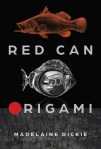
In my recent Delicious Descriptions post on Madelaine Dickie’s Red can origami, I referred to last year’s UN International Year of Indigenous Languages. It occurred to me that while I’ve referred to Indigenous Australian languages several times in this blog, I’ve never specifically posted about them. Now seemed a good time, particularly given interest the year generated. As local Canberra newsreader Dan Bourchier wrote last year, ‘to the UN, language is more than a method of communication, it’s a “repository for each person’s unique identity, cultural history, traditions, and memory”.’

Late last year, The Conversation published an article on “the state of Australia’s indigenous languages”. They started with some facts: in 1788 there were between 300 and 700 Indigenous languages spoken across Australia as shown by anthropologist Norman Tindale’s 1974 map, but by the 2016 Census, only around 160 of these languages were reported as being spoken at home, and of these, only 13 traditional Indigenous languages were still spoken by children. The article then lists the languages and the number of speakers recorded in the Census. Do read the article, if you are interested, as it also discusses the challenges involved in obtaining a true picture of the situation. Here, though, I want to move onto the recovery of language – assuming, of course, that readers here agree that recovering language is important, critical, to people and their culture.

Noongar language (Daisy Bates)

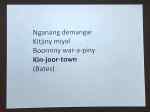
Noongar language (recorded by Daisy Bates)

Certainly, it’s clear that Indigenous people want to revive heritage or original languages, and many are doing so “from old recordings and documents, and sometimes from elderly speakers”. In 2017, I wrote a post on Indigenous Australian author, Kim Scott’s Ray Mathew Lecture “A paradox of empowerment” which was about  “how reclaiming Aboriginal language and story may offer a narrative of shared history and contribute to social transformation.” Scott talked about a project he’s involved in to regain and claim Noongar language, and he described how they were doing that. One way is through archival sources, and – Bill (The Australian Legend) will like this – he used a story recorded by Daisy Bates as an example. It shows something that Dickie alludes to in her novel, which is that Indigenous languages, like English, change – so Bates recorded the Noongar people incorporating the the name of the settlement, King George Town, into their language, Kin-joor-town. Book cover

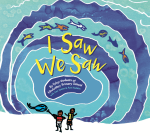
So, there is a quite a lot going on in specific Indigenous communities to revive languages that have died or nearly died (as the Noongar are doing) and to maintain languages that have survived (as the Yolngu are doing). There are indigenous publishers, like Magabala Books and the Indigenous Literacy Foundation (ILF), who are publishing books in language. (I reviewed the English edition of the ILF’s picture book, I saw we saw, which was first published in language.) There are Indigenous singers, like the late Gurrumul*, who sing in language. Red Room Poetry has a Poetry in First Languages project. And, slowly, Indigenous languages are being taught in schools and universities. Saying all this, though, is not say the job is done. It simply says that things are happening – and, seemingly, increasingly so.

But I also wanted to say something about the relevance of all this to non-Indigenous people. Right now, many Indigenous people are not keen for non-Indigenous people to learn their languages – not while their own people are not proficient, as this could easily become a new form of dispossession. However, reconciliation and respect are helped, as many like Scott and Stan Grant believe, by non-indigenous Australians becoming more familiar with Indigenous languages. For some time now, significant Australian sites have returned to their local Indigenous names – Uluru (Ayres Rock), Kata Tjuta (The Olgas), Watarrka (King’s Canyon), Nitmiluk (Katherine Gorge), Kati Thanda (Lake Eyre) and Purnululu (The Bungle Bungles) are some examples. This recognises that these places have a history long preceding that contained in the names given them by settlers.

Sign in Arnhem Land

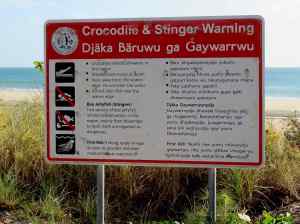
Signage around Australia is increasingly recognising local Indigenous culture. Welcome signs to many towns now include the name of the local Indigenous nation. I have also come across some bi-lingual signs in larger Indigenous communities, though this is rare. You can now buy clothing displaying Indigenous language, such as the t-shirt we bought our grandson. It featured an echidna with the Indigenous label biggi billa. And, excitingly, our Canberra newsreader now starts the evening news bulletin with “Yuma, Good-evening” and closes with “Yarra, Good-night”. We all know greetings like Caio and Au-revoir. Why not Yuma and Yarra? Or, whatever it is, where you live? Indigenous author Tara June Winch said in a conversion I attended last year that it’s a sign of respect to use local words when we travel overseas, so why not the same here? Fluency, she said, isn’t necessary to show such respect.

Book coverFinally, on the subject of authors, Indigenous words are increasingly appearing in contemporary fiction – in, for example, Melissa Lucashenko’s Too much lip (my review), Tara June Winch’s The yield (a novel about language, in fact), and, yes, Madelaine Dickie’s Red can origami. Just a few words here and there – and being done in a way that doesn’t exoticise language but, rather, assumes it is part of the culture.
Dan Bourchier, in the article linked in the opening paragraph, quotes Stan Grant:

Indigenous languages also present a tantalising opportunity for all the people of Australia to find a deeper sense of belonging. The empty space of terra nullius could be filled with the voices of people of all backgrounds speaking the first languages of this land. It is a space to truly build a nation.

I’m loving all these initiatives. What about you? And do you have any examples to share?

Delicious descriptions: Madelaine Dickie on Indigenous language and Uranium

Book coverMy recent post on Madelaine Dickie’s Red can origami was getting too long – and I just couldn’t cover in detail all that I wanted to, so I’ve decided to do one of my rare Delicious Descriptions posts to expand some ideas from the book.

Concluding my post, I commented that the novel is an effective consciousness-raiser as well as a great read. One of the many points Dickie makes concerns the intrinsic significance of language to cultural identity. (This issue, in fact, was discussed much during last year’s International Year of Indigenous Languages.) Here is Dickie in Red can origami (and do note the second person style – “you’re invited to sit …”):

You’re invited to sit in on a Burrika language session at Gubinge District High. It’s the first week of term one and the session’s being funded through the community benefits package. The language teacher is fishing-club-Keith’s wife Kylie, an intimidating, bearded old girl, with a deep wrinkle line between her eye. She stands in front of a class of teenagers. She explains that in Burrika, there are six words to describe anger, four words to describe jealousing and that there’s even a word for someone who’s a serial liar. Here, she looks pointedly at a young woman wearing heavy eyeliner. Then she says some people think the Burrika language is only used to describe things like berries and barramundi. Here, she looks pointedly at you.

Language comes from country, she tells the kids. Language comes from the rocks, the desert waterholes, from the creeks that twist through the mangroves. Language comes from the sky. When you don’t know your language, you can’t tell country you are coming, and you can’t look after your country. (p. 195)

With Indigenous language revival programs popping up around the country, some of which I’ve mentioned in my blog, Dickie was spot on to make this point in her book.

The issue of uranium mining and its potential for problems, if not disaster, underpins the novel’s plot. It also provides a good example of how Dickie teases out different attitudes from the various stakeholders – the Indigenous people, protesters, the people of Gubinge, the mining company employees, and Ava herself as she navigates spin versus facts and reality. And as Ava ponders the issue, the second person voice brings us on her journey with her. Whenever we hear “you”, there’s that little initial reaction, “who, me?” Anyhow, Burrika leader Noah patiently tells a radio presenter,

No-one wants to see a uranium mine on their country. Not the mob at Jabiluka, not the mob in South Australia, and not the people in Gubinge. But when you’re under duress, when you are given a choice between something and nothing, you choose something.

These are the sorts of real-world challenges that are posed by the novel.

At the book’s launch, Dickie referred to Japan’s involvement in uranium mining in Australia, and mentioned the Fukushima disaster. She quoted from the letter written in 2011 by Yvonne Margarula of Kakadu’s Mirarr people to UN Secretary General Ban Ki Moon concerning the Fukushima disaster:

Given the long history between Japanese nuclear companies and Australian uranium miners, it is likely that the radiation problems at Fukushima are, at least in part, fuelled by uranium derived from our traditional lands. This makes us feel very sad.

The sense of extended community responsibility expressed in this letter is surely something we could all learn from – and this, I’m sure, is what Dickie hopes her book will encourage its readers to consider.

Madelaine Dickie, Red can origami, Fremantle Press, 2019.

Madelaine Dickie, Red can origami (#BookReview)

Book coverSome writers, I understand, suffer from a thing called “second novel syndrome”, which describes the fear of writing a second novel after a successful first one. Well, it’s clear that Madelaine Dickie, who won the TAG Hungerford with her first novel Troppo (my review), hasn’t suffered from this particular disorder, because her second novel, Red can origami, is not only another good read but it presents as a confident work from an author who knows exactly what she wants to do.

A confident work

Let’s start with the plot. Red can origami is set primarily in a town in Australia’s north-west called Gubinge, to which Melbourne-based journalist Ava has gone for a job as a reporter. Fairly soon, though, she is offered a significantly better paid job as an Aboriginal Liaison Officer by the Japanese uranium mining company, Gerro Blue, who wants someone to help them negotiate an exploration licence with the local native title owners. Already you can see, I’m sure, some red flags, because this plot is going to require Dickie to create Indigenous Australian characters and, thus, to speak for them. This, of course, raises once again that thorny question of who can write what.

Now, I attended this novel’s New South Wales launch at the south coast just before Christmas (and just before the bushfire situation got out of control). I hadn’t met Dickie before, but her mother-in-law, who held the launch, is a good friend and one of my reading group’s original members. Dickie gave a wonderful speech in which she addressed this question head-on. She quoted Anita Heiss’s statement that the Australian novel needs to be inclusive; she reminded us that there were many Indigenous writers, like Alexis Wright in Carpentaria and Tara June Winch in The yield, who are telling their stories well; and she quoted non-Indigenous author Stephen Hawke who writes Indigenous characters and argues that you need to write well and be respectful. In addition, she, who has lived in the Kimberleys where the novel is set, described some of the work she’s done in recent years for traditional owners, including going “on country with old people”. Her arguments and credentials seem fair enough to me – though of course, in the end, it’s up to each reader, Indigenous and non-Indigenous, to decide for themselves.

The other point I want to make about the confidence of this work is its voice, because it is told second person. This too Dickie confronted in her speech. She was leaving no stone of potential contention unturned. I was impressed. Anyhow, essentially, she said that she’d tried writing it third person but it flowed better when she switched to second. That was her writerly judgement – and certainly I found it easy to read. However, she also had a political reason for this choice, and it’s this, she wanted to involve if not implicate the reader in what’s happening. Second person does this very effectively – at least it does in this book. I won’t spoil the ending, but I’ll just say that the second person voice makes the last line an inspired one.

About the book

So now, I’ve talked a lot around the book, but not a lot about it. Another thing Dickie said in her speech was that she wanted the book to be a page-turner – and that it is. The novel moves at a good pace, as did Troppo, and covers a lot of ground in its 220 pages. It starts with Ava arriving in town and building up a little band of both Indigenous and non-Indigenous friends and aquaintances. These characters include Lucia, an Indigenous reporter on the same paper as she; Ash, a non-Indigenous local TAFE lecturer who is soon attracted to Ava, and who shows her the ropes, taking her fishing and to the local bars in particular; and Noah, an Indigenous station-manager and local Indigenous leader, to whom Ava is attracted. Ava quickly falls in love with the land and the life of the Kimberleys, but equally quickly she becomes aware of local politics – and, with her reporter’s eyes, she notices some suss things going on. Is Gerro Blue already working on the land they haven’t yet obtained the licence to do? What are those bones they’ve disturbed?

It is in this environment that Ava, who has already shown sympathy towards the Indigenous owners, is wooed by Gerro Blue’s smooth CEO, Yuma Watanabe, to be their Aboriginal Liaison Officer. If there is a plot fault in the novel, it could be this – why would she take such a job – but Dickie makes us believe. Not only is Watanabe a shrewd employer, but Ava genuinely, albeit uncertainly, believes she can help the local Burrika people. After all, she thinks, “better you, with your olive-green heart, than someone else”. However, she also admits that being paid real money rather than a reporter’s salary, would set her up. She is, then, a real or flawed character, just as we like our characters to be.

As the book progresses, conflict increases. The traditional owners disagree over whether to grant Gerro Blue the licence, particularly given it’s for uranium mining, with all its implications. (Dickie has specifically set her novel around 2011, the year of the Fukushima disaster.) They don’t all trust Ava either. Protesters, from within and without the Indigenous community, make their own waves. Dickie navigates well this tricky, but real – and not at all unusual – situation in native title negotiations. She clearly knows whereof she speaks. Anyhow, while all this is going on, Ash is keeping an eye out for Ava, while Ava is keeping her eye on Noah. It all, of course, comes to a head, with a powerful ending that is entirely appropriate to the story being told.

And then there’s the writing. This is a novel written in the voice of a young woman living in remote Australia. The voice is, thus, earthy, but also fresh and authentic. Dickie’s writing is expressive, and has been pared to the essential, which is not the same as saying it is bare and plain. It is anything but. Here is Ava describing her sophisticated Melbourne sister:

Imogen’s voice is all sparks. It holds the drunken sequin shine of a Melbourne night.

And here a boab tree in Perth, far from its home (like Ava):

The boab’s bark is cracked, its leaves are withered, and its roots strain from the soil, as if it’s planning on splitting town, hitching north.

So, Red can origami is a good read, as Dickie intended, but it also has an underlying purpose. Dickie is passionate about northwest Australia, and about the challenges faced by Indigenous Australians – and she wants all Australians to understand this better. Red can origami sits within that contemporary literature space comprising works which explore Indigenous and non-Indigenous Australian relationships and interactions. Like Lucashenko’s Too much lip, and similar novels, Red can origami works beautifully as a consciousness-raiser, because it wraps authentic situations and issues in an engaging, page-turning story. In doing so, it teaches us about the beauty of northwest Australia, about the complexities of native title legislation and practice, about the nastiness that happens when politics and business get together, about direct and indirect racism, about dispossession, and, above all, about the diversity of human beings and the challenges we face in getting along together. A book for now.

Lisa (ANZLitLovers) was also impressed by the book, and teases out some different angles.

Challenge logoMadelaine Dickie
Red can origami
Fremantle: Fremantle Press, 2019
221pp.
ISBN: 9781925815504

Monday musings on Australian literature: Musician’s memoirs

Book coverI had been toying with a different topic for today’s post, but Brian’s (Babbling Books) comment on my post on Anna Goldsworthy’s memoir, Piano lessons, sent me off in a different direction. Brian said that he was “interested in the lives of artists”, that “there is something about the subject that is inherently fascinating”. He also said that he’s attracted to “both fictional and non fictional accounts”.
I related to all of that, and I suspect that many readers here do too. One of the reasons I read is to learn about – and experience vicariously – the lives of others, and the lives of artists are among those that most fascinate me. I am fascinated and impressed by the combination of passion, dedication and talent that enable them to do what they do. For this reason, I love reading about writers, but in this post I’m talking about another group I love to read about, musicians. And although, like Brian, I’m happy to read both fiction and non-fiction, I’m focusing here on memoirs.

However, there are many, many musician’s memoirs out there. They cover the whole gamut of music – rock, folk, classical, and so on – and different types of musicians, from performers, and composers, to composer-performers like singer-songwriters. During my research, I came across an article in beat.com.au discussing two memoirs by two members of the band The Smiths. The article starts:

The musician’s memoir is a salacious sanctity in which readers are afforded a rare, fly-on-the-wall type glimpse at debaucheries, creative methods and inner-workings to which they wouldn’t be otherwise privy, and no matter the author’s prowess for prose, there is usually much to be learnt between the pages.

Here is my problem. I’m not particularly interested in salaciousness (even if in a sanctity!) or debaucheries. Indeed, these are among the reasons I tend to be hesitant about memoirs in general, but I am interested in those memoirs which explore being an artist, or which tackle the musical and/or other challenges an artist has faced. The books I’m sharing below do, I believe, offer these learnings and insights. They are just a selection – a diverse one in form, approach and content – of those that have been published in the last decade or so.

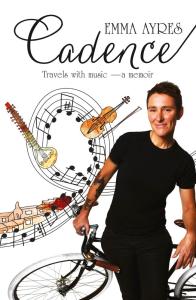
Emma Ayres, CadenceEmma Ayres, Cadence: Travels with music – A memoir (2014) (my review): Classical music string player and broadcaster Ayres wrote this travel memoir about her year-long bicycle journey from England to Hong Kong, accompanied by her violin. Like all good travel memoirs it is about more than travel, meaning in her case that it includes her childhood, her reflections on her life as a musician, her analyses of classical music, and gender identity and how it played out during her travels. She also talks about playing music along the way, and how it brings people together.
Jimmy Barnes, Working class boy: A memoir of running away (2016): You won’t be surprised to hear that I don’t gravitate to rock musician memoirs, so I haven’t read Australian rocker Jimmy Barnes’ memoir. However, I’m including it here because it isn’t apparently your traditional celebrity memoir, and, in fact, finishes before Barnes makes it big with Cold Chisel. It is about his difficult childhood and the neglect, violence and abuse suffered by him and his siblings. It could be a misery memoir, but I believe it is more than that.

Andrew Ford, The memory of music (2017): Ford is well-known to many Australians as the presenter, since 1995, of Radio National’s weekly program, The Music Show, but he is also a classical music composer. Publisher Black Inc says that Ford “takes us from his childhood obsession with the Beatles to his passion for Beethoven, Brahms, Vaughan Williams, Stockhausen and Birtwistle, and to his work as a composer, choral conductor, concert promoter, critic, university teacher and radio presenter”. They also say, and here’s what interests me, that it is “more than a wonderful memoir – it also explores the nature and purpose of music.” The smh’s review of the book provides a good overview.

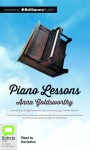
Anna Goldsworthy, Piano lessons (2009): The book that inspired this post, this takes the form of a musician’s coming-of-age memoir, telling of the author’s years of learning music, from the age of 9 to becoming a concert pianist and professional musician by her early to mid 20s. There is much to learn here about hard work and talent, about the role of exams and competitions, about dedicating one’s life to a passion, and, also, about what the arts mean.

Maureen and Leora O’Carroll, Maureen O’Carroll: Musical memoir of an Irish immigrant childhood (2019): This is the left-field addition to my list for a couple of reasons: it was self-published, and was written by Maureen’s daughter who posthumously credited her mother as co-author. I haven’t heard of Carroll, but, according to a review, she was “an acclaimed cellist, who played in the Sydney, New Orleans and Seattle Symphony Orchestras, the New Zealand National Orchestra and others”. She also played for Tony Martin and Frank Sinatra, not to mention singer Dame Joan Sutherland and composer Aaron Copeland. However, this memoir covers much more, including her Catholic Depression-era childhood in Sydney.

Book coverArchie Roach, Tell me why: The story of my life and my music (2019): Now, this book by Indigenous Australian singer-songwriter, guitarist, and activist, Roach, is one I should read in July for Lisa (ANZLitLovers) 2020 Indigenous Reading Week. Roach’s significance in the Australian music scene can be exemplified by the fact that one of his most famous songs, “Took the children away”, was written long before the term “stolen generations” was common parlance for Australians. It has become one of the anthems of that part of our history. Roach’s memoir, is, I gather, as much about his life – and thus works as a consciousness-raising book for Australians about indigenous people’s lives – as it is about his music, though music is and has always been, an integral part of his life.
So, there are musicians here who had comfortable childhoods, and those who didn’t; there are immigrant musicians and a First Australian; there are classical musicians, rock musicians, and alternative rock/folk/protest musicians; and there’s a travel memoir, a self-published one, and some that verge on the “misery memoir”. All, though, are by musicians passionate about what they do. I’ve stopped at six, but others  include Clare Bowditch Your own kind of girl; Peter Garrett’s Blue sky; Chrissie Hynd’s Reckless; Paul Kelly’s How to make gravy; Linda Neil’s All is given: A memoir in songs (my review); Tim Rogers’ Detours; and John Paul Young’s JPY: The autobiography.

Have you read any of these, or, do you have any favourite musician memoirs to share with us?

Anna Goldsworthy, Piano lessons (#BookReview)

Book coverEver since Anna Goldsworthy’s memoir, Piano lessons, was published, I’ve hankered to read it, but somehow never got around to acquiring a copy. So, when I was casting around for our next road trip audiobook and this one popped up serendipitously in Borrowbox, I grabbed the opportunity.

Now, I have to admit that although I did play drums and fife, briefly, in a primary school band, I have never had formal music lessons. Ballet was my thing as a child. However, Mr Gums learnt piano to Grade 7, and I sat in on our kids’ music lessons, especially their piano ones, for years. I loved it, because I learnt so much about music (and music teachers) as a result. I was consequently primed for this book about the author’s piano lessons and her relationship with her Russian-born piano teacher, Mrs Sivan. Being on the Liszt List, that is, someone whose student-teacher lineage reaches back to Liszt, Mrs Sivan initially comes across as formidable, but very soon her warmth and generosity come to the fore.

Essentially, this memoir is a coming-of-age story. It covers Goldsworthy’s life – specifically her piano-playing life – from the age of nine until her mid-late twenties. It is not, however, the traditional coming-of-age story, but her coming-of-age as a musician and, along the way, as a wiser more rounded person. We see Anna coping with the humiliation of failure, when she gets a C in an important piano exam having been used to always getting As. We see the point at which she realises that, if she is to achieve her concert pianist dream, practising for barely two hours a day is not going to cut it. We see the naiveté of a young woman who, not prepared for a journalist’s questions, manages to hurt the people closest to her, learning, in the process, the importance of “humility and gratitude”. And, we see the brilliant pianist and school dux learning that a “perfect score” is “not proof against disaster”.

But, we also hear the wisdom of her piano teacher who doesn’t just teach her the techniques of playing piano, but also the meaning of music, the value and role of the arts and, more, a deeply humane philosophy of life, one that recognises, for example, the value of competition for learning but not for measuring one’s achievement or worth. Indeed, she tells Anna that she is “not teaching piano playing”, she is “teaching philosophy”. It is some years, of course, before Anna stops seeing piano playing as “obstacle courses for fingers” but as something you feel and express.

Goldsworthy describes this piano teacher, Mrs Sivan, as “less a character than a force”, and she conveys this sense largely through reproducing her teacher’s rapid-fire broken English. This might have been worked well in text, but in the audiobook – which was read by Goldsworthy herself – it was frequently difficult to listen to and was sometimes so fast that we missed words. Unfortunately, I don’t have the text to give you an example, but I found one tiny quote on GoodReads. Here is Mrs Sivan telling student Anna about Chopin:

I tell you a secret about Chopin, piano is his best friend. More. He tells piano all his secrets.

Mrs Sivan preceded this by saying that George Sand was not Chopin’s great love, the piano was! One of the real pleasures of this book is the insight provided into several musicians, particularly Bach, Mozart and Chopin, but also Beethoven, Shostakovich and others. Mrs Sivan knows them and their music so well, and impresses upon Anna that musicians must understand the composer and their lives to understand their music. Mozart, for example, “was born with happy of everything”.  I found her adamance about this interesting, because, in the literary arts, there are those who argue that the author’s life is irrelevant and should not be considered at all. I think there’s a place for it.

Piano lessons is not a long book – just 240 pages or so – but the writing and the structuring of the story are so tight that Goldsworthy conveys this coming-of-age to some depth despite the book’s brevity. She does this by never labouring her points, by knowing which stories to tell and how much to tell of them, and by imbuing it all with a light touch. Sometimes you think you are left hanging – “did she win that audition?” – but the answer always comes directly or indirectly a little later.

There is more to this book about music and musicians, about fostering talent, about forging a meaningful life as a musician, and about teaching being “the highest calling”, but not having it on hand, I’ll close here by sharing Mrs Sivan’s words about the arts. She told Goldsworthy that the arts must be “aesthetically and ethically grounded” and that they embody “unlimited flying of imagination”. I like both of these ideas – particularly that about the arts needing to be both aesthetic and ethical. In one sense, I don’t like to think that the arts “should” be anything, but I also believe that being ethical about what we do – whatever that is – is important. I think I would have liked Mrs Sivan.

Lisa also (ANZLitLovers) loved this book.

Challenge logoAnna Goldsworthy
Piano lessons (Audio)
(Read by Anna Goldsworthy)
Bolinda Audio, 2015 (Orig. pub. 2009)
2:23 e-audiobook (Unabridged)
ISBN: 9781489020260