I have now written three posts on last weekend’s Yarra Valley Writers Festival (which you can find on this linked tag). Lisa (ANZLitLovers) also wrote up several sessions. Given Lisa has also covered the last three sessions I have yet to cover, I will, as I did in my last post, try to focus on a few key ideas or thoughts that I came away with, mainly to document them for my own benefit.
The three sessions are:
- Place in the New World Order: Alice Robinson (The glad shout), Meg Mundell (The trespassers), Karen Viggers (The orchardist’s daughter), with Elizabeth McCarthy
- How Weird Does Your Family Need to Be?: Alice Pung (Her father’s daughter), Rick Morton (One hundred years of dirt), Richard Glover (Flesh wounds), with the ABC’s Michael Mackenzie (and again, I missed the beginning of this one)
- The Weekend: Charlotte Wood (The weekend) with the ABC’s Amanda Smith
(Links on the author’s names will take you to my posts on them.)
Place in the New World Order
Place is one of those aspect of literature that most interests me, so I loved this session.
On COVID-19’s effect on the writers. All said it has affected their creative output. Viggers admitted to feeling “stymied”, while Robinson finds her time limited by needing to care for her primary school-age children. Mundell said she feels less isolated because she is now surrounded by people. She’s not getting any creative writing done but is writing grant applications because “things have fallen over”. Mundell’s latest book is about a pandemic. She initially felt guilty for writing entertainingly about something so serious, and said it feels “surreal”.
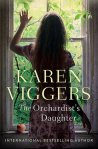 On whether the pandemic is affecting their thinking about their writing. Viggers, a practising vet, said she is still consumed with the summer bushfires. She is interested – horrified? – to see how politicians have engaged with scientists on the pandemic, when they haven’t done so regarding climate change and bushfires. Her writing content is not really affected. Robinson said it’s tricky trying to write about something unfolding at present, and she feels sheepish saying she’s trying to write about it. Mundell commented that she’s been obedient when she’s usually not, and has felt paranoid when others haven’t been doing the right thing. This made me laugh, as I tend to be obedient but I haven’t felt at all paranoid!
On how place impacts their writing. Viggers, saying that place is vital in a lot of writing, also said that place can be things like a location, an event, a home, a community. She uses place to orient herself as a writer, and then to explore our connections and help us to reengage with the natural world and each other. One of the great challenges is to bring readers in and engage them with ideas they may find uncomfortable. Robinson said that Anchor Point was based on landscape she grew up in. She was interested in how we have engaged with the landscape, and how we have failed to care for it. Mundell said she related to both Viggers’ idea of place as being what gets you in, and Robinson’s idea of place being where you start. She’s currently interested in an iconic place, a quarantine station which, being a border, is a place that contains memories. She’s also interested in “home”, which she explored in the anthology on homelessness she recently edited. She’s interested in the dynamics of places.
On enmeshing social justice in their writing, in a way that feels native to the text, not didactic. Robinson admitted she had to push the ideas – climate change, indigenous-settler issues, gender roles – to the back, recognising she needed to show her ideas through character’s relationships. Her second novel, The glad shout, was easier: the ideas started to manifest in the story and she found it easier to illustrate them metaphorically, or allegorically. A story, she said, can convey the ideas so the reader will feel them. Viggers agreed. You can’t tell readers what you want them to think, but you take them on a journey. In most cases, she presents a values argument regarding, say, the ethics of animal rescue (The stranding) or of kangaroo culling (The grass castle). She likes to use the different perspectives of her characters to convey different ideas, and gently add information the readers may not know! (I love that! I like to learn “stuff” from novels, though I also recognise that we readers need to assess what “stuff” authors tell us is fact and what is fiction.)
On ability to focus on reading right now (a problem I’m facing though not because of COVID-19). Mundell said she can’t sleep without reading Jennifer Egan’s Manhattan Beach, and that she mixes it up with more gruelling books. Viggers is finding reading a bit of a struggle, but is reading Mundell’s and Robinson’s books.
There was a Q&A, including:
- one responder suggesting to Mundell that grant writing is creative writing.
- positive takeaways from the current lockdown: our writers suggested appreciating small things, like relationships, that you matter to friends, and the connections people have made (Mundell); the creative ways people have connected, and that people might think about how we’ve learnt not to consume too much, to touch lightly (Viggers).
- Tasmania’s Gothic setting suited to Viggers’ novel: she said she loves the south, loves southern light and atmosphere. It speaks to her but she doesn’t think of it as gothic.
- stories about COVID-19 appearing: Mundell thinks there may not be so many COVID stories, but she’s interested in some of the themes that have come up, in the stories we haven’t heard, the people left behind (like the homeless). Viggers commented that it is hard to write when you are deep in a lived experience.
How Weird Does Your Family Need to Be?
I missed the beginning of this session, unfortunately, and, time being what it is, I have not managed to catch it up via the link sent me, but Lisa covered it in her post (see my opening paragraph.)
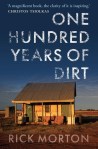 I joined during the discussion of intergenerational trauma. Morton shared his mother’s statement, “I don’t hate your father, I feel sorry for him”. You do inherit these things, he said. He wrote his book carefully because he wanted to show the impact on him but didn’t want to make his father a villain. (How generous and understanding!) That said, he, his mother and sister have determined they “will never let this cycle of abuse continue”.
Glover talked about his mother not being an affectionate person. She eloped with his English teacher, after which his father fell apart and left home! Rick’s story, he said, is Angela’s ashes, while his isn’t, as he was left with a big house and a pool. A friend said, “Richard never really left home, home left him.” Glover talked about the man his father organised to look out for him, Steve Stephens (sp?) who was a “huntin’, shootin’, poetry writing Australian man”. This man looked out for him many times through his life.
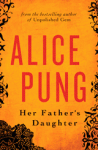
Pung, whose brother committed suicide, talked about how love can’t save a person. She noted, however, that your love is often imbued with your own fears and insecurities. Regarding how her brother’s suicide has affected her own parenting decisions, she said it has made her reprioritise, to look at the nature of love, and, most of all, to let children be who they are and grow into who they’ll become.
A favourite scene in Glover’s book is a short speech from his sister about their father. She said, “If you knew what my father had been through and yet how beautiful he had been to all of us,” and then burst into tears. That’s life, he said, “to turn darkness into light”. This sort of philosophy appeals to me.
The Weekend
Interviewer Amanda Smith started by quoting a description of Wood as “one of our most original and provocative novelists”.
On whether friendship in your 30s is easier than friendship in your 70s. Wood saw the novel as a sort of cautionary self-portrait re what kind of older person she wanted to be. When you are young friendships are fluid, she said. There can be a chemical attraction and romance with friends when you first meet them, but after a while you find flaws. You go through stuff together, some people change before others, and some don’t want others to change at all. We want to hang onto our friends the way we know them. She also talked about observing older women who are friends, and the frictions she sometimes sees. They are enmeshed, and behave much like they might with their siblings.
 On whether the women are true friends given the evident tensions. This is an issue discussed in my own reading group, but we felt exactly the way Wood responded. Yes, she said, they love each other. Their remarks about each other are a reflection on their own anxieties. Some readers, she said, don’t think her characters are likeable. Grrr … this is an issue that really bothers me. Why do characters have to be likeable? Smith asked the right follow-up question …
On whether fictional characters have to be likeable. Wood said it depends on what you think is likeable! She likes “spiky people”. Also, she said, there are all sorts of layers to our relationships with each other. Her characters are all grieving, they are like a three-wheeled car. She likes her characters (as do I.) She talked about how women she meets associate with the characters, with many telling her “I’m Jude”! Some say they are Wendy. (It didn’t seem like many admit to being Adele!)
On what vicarious experience of ageing Wood brought to the novel, given she’s only in her early 50s. Sometimes you don’t understand what you are writing until you get to the end of the book, Wood said. Both her parents died in their 50s, so she’d never really considered what it would be like to be 70 or 80. She wanted to enter the imagined space of being old. One of the reasons she writes is to understand how to live, to work out how to be in the world. In this book, this concerns how to be if you live to 70 or 80. (I must say that with a nearly 91-year-old mother and a 100-year-old father, I don’t see 70 as old!!)
Wood said that a Jungian philosopher says that the purpose of ageing is to become our real selves. What, she said, does that mean for friendship.
On women transitioning out of careers. All her characters have been defined by magnificent careers but don’t seem to have accepted the end of those careers; they haven’t reimagined themselves, or found their essential selves. Wood said she wanted to write about women getting older who weren’t defined by their families, because most representations of older women are as mothers, grandmothers, matriarchs, in their family hierarchy. She wanted to write about women who were not like that. Only Wendy is a mother, but she doesn’t really get on with her children. These women still feel they have work to do, still have their faculties, but the world is moving on from them.
This led to a discussion about self-delusion. People can be exceptionally self-deluded throughout their lives, but these women confront some of their self-delusions. Wood said that this generation of women belong to the first group of women to face the end-of-career challenge that men have been facing for a long time. Interesting point. I hadn’t really thought of that.
On Finn (the ageing dog). Wood talked about her Judy Harris Fellowship, which involves a writer working with scientists. She said Finn was a response to a scientist saying he’d like to see some evolutionary biology in her novel. He mentioned how ageing is more accelerated in animals than in humans. She wanted to write about ageing she said, but her women didn’t think they were ageing, it was irrelevant to them, so how talk about it? An old dog could do that, she realised. Each character has a response to his decay, each also has an epiphany related to Finn. Finn creates tension between people but he also became a useful thematic/narrative device.
On the role of the house. Wood said that houses are really wistful in novels: they can convey a primitive sense of self, also a sense of turf and territory. However, this house does not belong to any of the characters, though each feels a kind of kinship with the house, and thinks the others aren’t doing it right. The house is not fancy, in fact it’s quite ramshackle. Wood felt she could “do stuff about oldness and newness, what is salvageable”. (Oh! My reading group and I didn’t pick this up!) She talked about the fancy white sofa that Jude had bought for Sylvie (the dead house owner.) Wendy thinks the sofa spoils the house, while Jude thinks the house spoils the sofa. Great point!
There was a Q&A but I’ll leave it here … and conclude my posts on the wonderful Yarra Valley Writers Festival!
From Yarra Valley Writers Festival 2020 (Online)
9 May 2020, 9:30 AM – 7:30 PM
Livestreamed
 I said, when I introduced this series, that Sue began writing Whispering Gums in May 2009. It seems that once begun she could not stop. There are WG posts for May 2,4,5,6,10,14,15,16,19,21,22,27,28,30,31. The May 31 post is titled, prophetically, “When too much Jane Austen is barely enough”, and is in fact the third Jane Austen post for the month. Today I reprise the second. But there will be more.

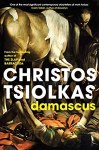 I have reviewed (and enjoyed) two of Christos Tsiolkas’ books since blogging –
  My first choice is Sue’s review of Eve Langley’s masterpiece The Pea Pickers. One day Australians will overcome their cultural cringe and realise that in Joseph Furphy’s Such is Life and Eve Langley’s mostly unpublished eleven journals and novels we have writing that should be ranked alongside Ulysses and Rembrance of Times Lost. That’s my opinion and not necessarily Sue’s, but I think she still ranks The Pea Pickers pretty highly, and while she says she might now have written this piece a little differently – it was in fact her first review – I think you’ll agree it stands the test of time.
 In the 1870s and 1880s Melbourne was both Australia’s largest and wealthiest city and its literary centre – around figures like Marcus Clarke, George McCrae (son of Georgianna), Adam Lindsay Gordon, Henry Kendall, Ada Cambridge, Tasma.
 Elizabeth Jolley’s My father’s moon (1989) (
 Eleanor Limprecht’s Long Bay (2015) (
 I loved that this session, which followed forest ecologist David Lindenmeyer’s keynote address, included an historian, Tom Griffiths, as well as fiction writers, Tony Birch and Alice Bishop.
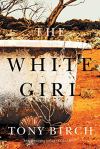 Regarding optimism for the future, Birch said he is concerned about our lack of foresight, about the fact that thinking does not extent beyond the next election cycle. Griffiths said the recent school protests give him hope but, like Birch, he is pessimistic about federal leadership. Bishop said she had hope in stories, but not much in leadership!
 Most readers, and I am one of them, love hearing about the writing process. Hastrich said that she was “not a fluid writer”. She finds “a few good sentences and images and writes around that”. She is obsessed with her 1964 Roget’s thesaurus, because the way it groups meanings under words helps you find the exact word you need. (I still remember when I fell in love with my 1962 edition.)
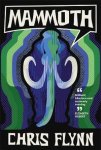 I won’t talk a lot about Mammoth – it is on my TBR, so I’ll get to it soon-ish – but in terms of his inspiration for the story, Flynn said he thought about these massive creatures observing what was going on around them and how all of that was lost when they died. He loved the idea that all that information could be retained in the fossil.
 Hills talked about how she wrote quickly on the road. Typing in the car, though, was not easy, so she used voice recognition software, party because it also enabled her to capture a storytelling tone. However, this software had unexpected benefits. Firstly, it would sometimes guess her words, and that guess was sometimes more poetic than her own language. Most fascinating though was that the software would pick up other sounds – birds, the wind – and turn them into words too. Not only did this help her – teach her to – listen to country, but it added another layer to the writing, resulting, for example, in wind sounds and a talking bird featuring in her story. The process, then, became part of the content of the book. Writing this way has given her new ways of relating to the natural world, so she no longer feels separate from it.

 Whispering Gums