Monday musings on Australian literature: Creative Australia Awards in Literature

Creative Australia is the – how shall we say it – rebranded Australia Council for the Arts / Australia Council. Under whatever name it has, this is the body that serves as the major arts funding and advisory body for the Australian Government. You can read its history on Wikipedia if you are interested.

The Australia Council Awards were established around 1981, and over time have been offered in various categories, but Literature has been one of them since at least 1987, again under different guises. These awards recognise outstanding and sustained contributions to arts and culture across a range of disciplines, including literature, music, dance, but sorting out a full and proper history of these awards is not easy. They are now named under the Creative Australia umbrella. The writers who have been given these awards include novelists, poets, nonfiction writers and children’s literature writers. They include First Nations Writers, like Ruby Langford Ginibi, Herbert Wharton and Bruce Pascoe as well as Alexis Wright.

In the lists below, links are to posts I have written on the writers.

Creative Australia Awards for Lifetime Achievement in Literature

As far as I can gather, the “Creative Australia Awards for Lifetime Achievement in Literature” dates just from 2023, and acknowledges “the achievements of eminent literary writers over the age of 60 who have made an outstanding and lifelong contribution to Australian literature”.

Australian Council Awards for Lifetime in Literature

ArtsHub calls the 2021 award that went to Arnold Zable a “Lifetime Achievement in Literature” award, and says he follows writers like Malouf and Garner in receiving this award. Earlier research I did suggested that in 2015 it was also called a “Lifetime Achievement award”.

Previous Award Recipients

You will see that this section of my list includes “awards” and “fellowships”. I could have just included the “award” but decided the fellowships might be interesting too. You might notice that some women are listed under their “married name”, like Judith Wright as Judith Wright McKinney, and Mary Durack as Mark Durack Miller. In the 1990s!

  • 2013: Australia Council Award for Lifetime Achievement in Literature: Frank Moorhouse
  • 2012: Australia Council Award for Lifetime Achievement in Literature: Herbert Wharton
  • 2011: Emeritus Award: Robert Gray
  • 2010: Emeritus Award: Peter Kocan
  • 2007: Emeritus Award: Christopher Koch and Gerald Murnane
  • 2006: Emeritus Award: Alice Wrightson
  • 2005: Emeritus Award: Ruby Langford Ginibi
  • 2004: Emeritus Award: Margaret Scott
  • 2003: Emeritus Award: Don’o Kim and Barry Oakley
  • 2001: Emeritus Award: Dimitris Tsaloumas and Amy Witting 
  • 2000: Emeritus Award: Donald (Bruce) Dawe and John Hooker
  • 2000: Emeritus Fellowship: Eric Charles Rolls
  • 1999: Emeritus Award: James Henderson and Eleanor Witcombe
  • 1998: Emeritus Award: Peter Porter
  • 1997: Emeritus Award: Boro Wongar
  • 1996: Emeritus Award: Rosemary Dobson and David Martin
  • 1996: Emeritus Award: Dorothy Hewitt
  • 1995: Emeritus Fellowship: Victor Beaver, Michael M Cannon, Barbara Jefferis, Ray Lawler, Vincent Noel Serventy, Ivan Southall, and Maslyn Williams
  • 1993: Emeritus Award: Ivan Southall and Judith Wright McKinney
  • 1993: Emeritus Fellowship: Hugh Geddes Atkinson 
  • 1992: Emeritus Award: Mary Durack Miller
  • 1992: Emeritus Fellowship: John Blight, Beatrice Bridges, David Rowbotham, Harold Stewart
  • 1990: Emeritus Fellowship: Dorothy Green and Roland Robinson
  • 1989: Emeritus Fellowship: Jack Lindsay
  • 1987: Emeritus Fellowship: Olaf Ruhen

The Story of the Oars

Back in 2018, I wrote a post on local author Nigel Featherstone’s first theatrical work, an art-song piece titled The Weight of Light. Seven years later, his second work of theatre, The Story of the Oars, has just finished its short season at The Street Theatre. Having just got back from Japan on Friday afternoon, Mr Gums and I managed to get to the last show this afternoon. For those of you who are not regular readers here, Nigel Featherstone, who has written several novellas/novels and has started spreading his wings into theatre, music and poetry, has featured on my blog several times. However, as I wrote in my post on The Weight of Light, I’m not an experienced theatre reviewer. I don’t have the language, and, as a reader, I find it challenging seeing something only once, and not being able to go back to check something out, as you can with a book! But, I do want to share something about this work.

The Story of the Oars

Promotion, designed by Tobi Skera

People from the Canberra region might get a hint about the setting of this play from the gorgeous graphic used to promote it. The setting, in other words, is Weereewa (in Ngunnawal language) or Lake George (as settler society named it), a lake that appears and disappears with changes in the weather. Over the 50 years I have lived in Canberra, I have seen it empty, full and in between several times.

So, this mesmerising lake and its behaviour is the setting for The Story of the Oars, which The Street’s promotion describes as “a play with spoken-word songs and music”. As the play opens, the lake is dry, and a father (Clocker) and son (Tom), played by Craig Alexander and Callum Doherty, have stopped to have a look. There is much intergenerational humour in the opening dialogue between these two as they spar about how much time to spend there, where to next, and so on. It’s “normal” Aussie stuff, until two women, played by Louise Bennet and Sally Marett, appear, and it soon becomes apparent that there’s a mystery involving Clocker that his son doesn’t know about. This mystery, and Clocker’s reluctance to admit to his son that he knows the lake, underpins the story. What Clocker learns though is, you can’t come back without the truth coming out …

“I am fictitious history” (Clocker)

The story draws on some familiar tropes – a father-son road trip, mysterious deaths in which bodies are never found, the master-servant class and privilege dynamic, a return from the past – but these are not heavy-handed. Instead, they are subtly revealed through a script which shifts smoothly back and forth between natural dialogue, with its humour and recognisability, and poetic soliloquies, with their strong rhythms. This is powerful, not only because the shifts between the two “forms” create breaks in intensity, but also because the natural dialogue conveys the main narrative thread, while the poetic pieces embody more of the emotional and thematic power. The language is beautiful, and it’s accessible, which frees the audience to focus on thinking about the themes and responding to the ideas rather than on trying to understand what’s being said and told.

Then there’s the music, which was composed and played by Jay Cameron on a partly dismantled piano that remained centre stage throughout. We attended a Meet the Makers panel before the performance, and the discussion about the music was particularly relevant. Nigel, for whom text and music are dual passions, had written the initial music, but then Jay was brought in for further development. They thought about the theme of revealing truth, of opening up things, and wanted a radical or physical approach to the music to support this. Then they had the idea of “opening up” the piano. The play commences with the piano’s boards or panels being removed, exposing its working parts. This is the condition in which it is played throughout. The music is minimally percussive at times, or softly melodic or intense at others, always supporting the prevailing emotions without dominating them or being cliched. We loved it.

It was clear from the panel discussion that much thought was given to the piano. It was seen as a core part of the show not just in terms of its role as music maker, but regarding its relationship to the actors, and to the lake. Which brings me to the staging. The stage itself represented the lake and all the action took place there. The titular oars – represented by two light rods – were also permanently on the stage. The lighting of the rods, of the lake’s outline on the floor, and of the backdrop, all changed dynamically to reflect who was in focus, or what was happening between the characters. The stage-lake, like the real one, thus came across as a living thing, a place within which people operate, to which they relate, and which can create fear or sustain or heal.

I wondered as we watched this show, how well it would translate to another place. Weereewa has such meaning for the Canberra region – physically and spiritually. Even if we understand the science behind its behaviour, we still respond to its mystery, to the way it dries up with what lies beneath being revealed only to be inevitably covered up again. Like truths and lies, perhaps. The universals – the narrative tropes and themes – would translate, but would the power of the place? It would all depend on the direction.

The story of the oars doesn’t resolve all the questions it poses about the decisions we make, the truths we withhold or reveal, but it ends on a moment in time when hope is a possibility. We liked that too. It’s a heartfelt, thoughtful and accessible work. It would be great to think that all this work doesn’t end here.

The Story of the Oars
Words and story by Nigel Featherstone
Music by Jay Cameron
Directed by Shelly Higgs
The Street Theatre, 19-21 September 2025

Monday musings on Australian literature: Trove treasures (14), Louise Mack, the “colonial”

Help Books Clker.com
(Courtesy OCAL, via clker.com)

Early in 2023, I created a Monday Musings subseries called Trove Treasures, in which I share stories or comments, serious or funny, that I come across during my Trove travels. Having posted on her two sisters the last two Mondays, I thought it might be fun to round off the series with two references made to Louise Mack in contemporary newspapers, regarding her being a “colonial writer”. They are interesting because of what they directly and indirectly say about Australians as colonials.

The first is a review of her debut novel, The world is round, which was first published in 1896 and which I have reviewed. Published in Hobart’s The Mercury on 17 June 1896, It is scathing:

Louise Mack, The world is round

A very different book, though also of colonial authorship, is “The world is round,” by Louise Mack, of Sydney, with which Mr. T. Fisher Unwin, of London, commences a new series of short sixpenny novels. It is a mere skeleton of a story, trivial and disconnected, and making use of that cheap criticism of society foibles, of which shallow natures are so fond, to quite a nauseating extent. Whole pages of misspelt words are given to show, most superfluously, how the young Englishman, and colonials who imitate him, mispronouce the mother tongue, while the caricatures of people themselves are, it seems likely, reproductions of those whom she has really met in society, and for which she certainly deserves all-round ostracism. The book is only 6d., but is not worth that small sum.

Not all thought this. As I shared in my post, another commentater at the time said that “The reader’s report” for this novel called it a “brilliant little study of two men and two women, sparkling and witty, and told in a graphic style”. I wonder who was that reviewer in The Mercury? (The previous paragraph comprises high praised for another Australian novel, Lockwood Goodwin: A tale of Irish life by L. Anderson. It has pretty much disappeared from view, though Amazon has it in a British Library digital edition.) Meanwhile, looking at The world is round from over a century later, I found it a delightful read that still had plenty to offer.

Anyhow, writing about her after her death for Melbourne’s Advocate on 4 December 1935, “P.I. O’L” (the journalist and poet, Patrick Ignatius Davitt O’Leary) included this paragraph:

“One of the best of colonial writers,” was the description English critics in a hurry used to apply to Louise Mack. The term “colonial” was a sort of separative mark. It was meant to indicate that she was not up to the “home” standard, and this in the face of the strident fact that many English writers, men and women alike, inferior to her were accorded an acclaim which she merited much more than they. And speaking of this term “colonial” — English critics still use it. Sir John Squire, for instance, is apt at any moment to think that it really applies. Such a thought, of course, manifests one of the numerous limitations of English critics of Australian authors. 

A back-handed compliment from the English, but Australian-born O’Leary makes no bones about his thoughts on the “colonial” matter.

I have talked about the “cultural cringe” before. These two examples demonstrate the sort of thinking that Australians were reading, and that fed into this cringe.

2025 Mark and Evette Moran Nib Literary Award shortlist

This is a quick post because I’m on the road in Japan, but I do like the Mark and Evette Moran Nib Literary Awards, and their shortlist has just been announced, so here is a quick post.

Just to recap if you don’t recollect my previous posts on this award, it is not limited by genre or form – that is both fiction and non-fiction are eligible. The judging is based on “on literary merit, research, readability, and value to the community”. Research and value to the community are interesting criteria. I have written about it before, so if you are interested in its origins and intentions please check that link. Previous winners include historians Alison Bashford and Claire Wright, biologist Tim Low, novelists Helen Garner and Delia Falconer, and journalist Gideon Haigh.

Each of the six finalists receive the $1500 Alex Buzo Shortlist Prize and are eligible for the $4,000 Nib People’s Choice Prize, which, by definition, is awarded by popular vote. The winner will receive $40,000.

The judges for the 2025 award are Sydney based writer, editor and arts producer Lliane Clarke, publisher and award-winning editor Julia Carlomagno, and author and publishing professional Angela Meyer (whom I’ve reviewed a few times here). They said, according to the email I received from Waverley Council which manages the award:

“In reading the nominations this year, we noted the effort, dedication and often bravery required to delve with such depths into topics of personal, political and cultural significance. The shortlisted books display great passion and commitment on the part of the authors and publishers, often years and decades of work, and they are all thoughtfully constructed, absorbing, moving works of literature with great value to the community”.

The email also said that this is the Award’s 24th year, and describe it as “one of Australia’s most high-profile and valuable book prizes, celebrating the most compelling research-based literature published annually”.

The 2025 shortlist

Last year I had, unusually for me, read two of the six shortlisted books, but this year we are back to the status quo! That is, I’ve read none, though most interest me. There were 174 submissions.

  • Helen Ennis (ACT), Max Dupain (biography)
  • Amy McQuire (Qld), Black witness (nonfiction/essays)
  • Rick Morton (NSW), Mean streak (nonfiction)
  • Samah Sabawi (Vic), Cactus pear for my beloved (memoir) 
  • Martin Thomas (ACT), Clever men (history)
  • Tasma Walton (WA), I am Nannertgarrook (historical fiction)

This list seems to be a bit broader, as in less life-writing heavy, than it has sometimes been, but like last year, there is just one work of fiction.

You can vote for the People’s Choice award at this link, but voting closes on October 9.

Have you read any of these books?

Monday musings on Australian literature: Forgotten writers 14, Gertrude Mack

Gertrude Mack is the third of the Mack literary sisters, and by far the least known, though at the time she was well-recognised, with her activities and thoughts frequently reported in the newspapers. Her “disappearance” from view is most likely because, unlike her sisters, all her writing was for newspapers and magazines. She did not have one published book to her name. It makes a big difference to a writer’s longevity in the literary world.

As with many of my Forgotten Writers posts, I researched Gertrude Mack for the Australian Women Writers’ blog. This post is a minor revision of the one I posted there. So, who was she …

Gertrude Mack

Gertrude Mack (?-1937) was an Australian journalist and short story writer. The youngest of thirteen children – who included five daughters – Mack was born in Morpeth, New South Wales, to Irish-born parents, Jemima (nee James) Mack and the Rev’d Hans Mack. As a child, she lived in various parts of Sydney including Windsor, Balmain and Redfern, and was educated at Sydney Girls’ High School. Two of her older sisters also had literary careers, Louise Mack (see my posts) and Amy Mack (whom I featured last week). These sisters have been documented in Dale Spender’s Writing a new world: Two centuries of Australian women writers (1988) and by their niece Nancy Phelan in the Australian Dictionary of Biography, but neither Spender nor Phelan mention Gertrude. According AustLit, a diary of Mack’s is included in Phelan’s papers at the State Library of New South Wales. Curious.

This dearth of formal biographical information meant relying heavily, for this post, on Trove, where articles written by Mack abound. They tell of a curious and adventurous woman who was able to report firsthand on those challenging 1920s and 30s in Europe and the Americas. For example, in 1924, four years after the Mexican Revolution, she decided to go to Mexico City, something her American friends thought “a wild whim”. She writes for The Sydney Morning Herald (22 November 1924), that “according to American newspapers, it did seem a risk, but I knew their way of making any Mexican news appear hectic”. In the end, it does prove difficult, and she fails on her first attempt. She admits that she was not prepared for the poverty she sees in Juarez, just over the border from El Paso, and “was not yet accustomed to the unshaven Mexican”, but she later wrote admiring pieces on the country.

Mack spent eight years in London from around 1929 to 1937, and returned at least once for a few weeks in 1933. It was a difficult time in Europe, and The Sun (18 June 1933) reports that she had found “the same sense of strain in all the European countries, and this has been intensified more recently by the war menace, which seems to be very real.” I have not been able to find an image of her, but during this visit, sister Louise described her in “Louise Mack’s Diary” in the Australian Women’s Weekly (17 June 1933):

Tall, very slight and svelte, in a smart black frock of her own making, her hair marcelled, her big, grey eyes looking big-ger than ever under the glasses she had taken to lately. Elegant? Yes, certainly.

An interesting little fact which came up in a couple of the newspaper reports of this 1933 visit was that on her voyage she, and two other “matrons” had been in charge of 48 children, who had been selected for the Fairbridge Farm School to be taught various branches of farming. Sydney’s The Sun (June 18) explained that “the children, whose ages ranged from eight to twelve years, included both boys and girls, and were chosen by the selection committee of the Child Immigration Society, which body exercises the greatest care in choosing only suitable potential citizens for Australia, says Miss Mack”. If you haven’t heard about Fairbridge, check out Wikipedia. Miss Mack might have had faith in it, but the whole scheme was marred by dishonesty, and worse, child abuse.

Gertrude returned again to Australia in 1937. There was much interest in her return, with newspapers reporting on her thoughts from the moment she first touched the continent in Western Australia. The West Australian (3 March 1937) wrote that she had passed through Fremantle in the “Orama”, and quoted her as saying Australian writers were doing well in London. “Henry Handel Richardson was acclaimed by many critics as the finest writer of the day”; and Helen Simpson (my first Forgotten Writer) “had taken up broadcasting work in addition to her writing”. She said Nina Murdoch had had success with Tyrolean June and Christina Stead with Seven poor men of Sydney. The paper observed, tellingly, that “undoubtedly Australian writers were getting more recognition in London than in their own country”.

It also quoted Mack as saying she believed England was interested in stories about Australia, but that their interest depended “entirely on the topic of the story.” Unfortunately Australian writers “usually presented the drab side of the life of the country and laid too much stress on the droughts and the drawbacks” and “the frequent descriptions of struggles against drought and the hardships of Australian life gave readers a wrong impression of the country”. Consequently, readers “did not realise that the country had a normal life, with a bright social side, and the mass in England seldom knew that there was very fertile land in Australia”. According to Mack, “German people knew more about Australia and were more interested than the people of any other country”.

Adelaide’s News (6 March 1937) took up the issue of how Australia is viewed, but with a slightly different tack, writing:

“It would be difficult,” said Miss Mack, “to make the average uneducated English man or woman believe that there is, in Australia, such a thing as culture. English people would be surprised if they could have a glimpse of real country life on a big station.
The only way to overcome this wrong idea.” she said, “is by our literature, which has not yet developed fully.”

Although she was talking about staying in Australia for just 6 months, it appears that Gertrude Mack was seriously ill when she returned in 1937. She visited her brother C. A. Mack, of Mosman, but died in a private hospital in Darlinghurst on Wednesday 31 March and was buried at the Northern Suburbs Crematorium on the Friday.

A few days later “an appreciation” written by “W.B.”  appeared in The Sydney Morning Herald (6 April). W.B. It’s a moving tribute:

To those of us who had the happiness and the privilege of an intimate association with Gertrude Mack over a long period, abroad and in Australia, her death has meant a very poignant personal loss and sorrow. Her happy outlook on life, her faculty for perceiving the humorous side of things, and her sensitive reactions to atmosphere, made her a delightful companion, and she made friends among every class of people, whether they were foreigners or people of her own race. She had an unusual flair for getting at the heart of the interesting aspects of life and affairs, and this, added to her other gifts, enabled her to write such charming and interesting sketches, stories, and interviews. Her short stories and sketches were invariably the outcome of personal contacts. She could paint engaging pictures of people and places, and make them real to her readers. She also possessed outstanding musical ability, and might have won distinction as a pianist had she elected to take up music as a profession, for she had a fine critical perception and a rare appreciation of the true values in music.

She also translated stories from Russian, collaborating with Serge Ivanov to publish in English a volume of N. A. Baikov’s tales for children. Gertrude Mack was a fascinating woman, and would be a worthy subject for a biography – either on her own, or as part of a larger biography on the Mack sisters.

Sources

Six degrees of separation, FROM Ghost cities TO …

Last #SixDegrees I was driving to the Wurundjeri Wandoon people of the Greater Kulin Nation, that is in my part of Melbourne, but this month, I’m somewhere exotic – Japan. When this post is published, I expect to be on a train between Tokushima, in northern Shikoku, to Hikone, near Lake Biwa in Honshu. I may not manage to respond quickly to all your posts but will do my best. Meanwhile, the meme. If you don’t know how the #SixDegrees meme works, please check host Kate’s blog – booksaremyfavouriteandbest.

The first rule is that Kate sets our starting book. And this month it is another I haven’t read, but should, given it recently won this year’s Miles Franklin Literary Award in Australia, Siang Lu’s Ghost cities.

With Australia’s National Poetry Month (see my Monday Musings) having just ended, it seemed right to try another #SixDegrees title-poem for my this month’s chain. I had fun with it too:

Ghost cities, where
A superior spectre
Seeking The great unknown
Floats down Ghost River
to A place near Eden
Called Cloud Cuckoo Land
And joins The infinities.

With thanks to Siang Lu, Angela Meyer (first as author then as editor), Tony Birch, Nell Pierce, Anthony Doerr, and John Banville for helping me produce a chain of books whose titles – even if their content doesn’t always – invoke other worlds and other worldliness!

I am proud of myself for using very few filling words in this “poem”.

We’ve travelled in and out of the real world this month, with Australian writers of diverse backgrounds, and an American and an Irish writer – and I’m 50:50 on author gender. How good is that?

Now, the usual: Have you read Ghost cities? And, regardless, what would you link to?

Monday musings on Australian literature: Forgotten writers 13, Amy Mack

In the first decades of the 20th century, a family of sisters made some splash on Australia’s literary scene. I have already written about the eldest of them – Louise Mack – but there were also Amy (this post’s subject) and Gertrude, all of whom appeared in newspapers of the time as writers of interest. They were three of the thirteen children of their Irish-born parents, Rev. Hans Hamilton and his wife Jemima Mack. As with many of my Forgotten Writers articles, I researched Amy Mack for the Australian Women Writers’ blog, where we have several posts devoted to her.

Amy Mack

Amy Eleanor Mack (1876-1939) was a writer, journalist, and editor. She was six years younger than the more famous Louise, and, says Phelan in the Australian dictionary of biography, was “less temperamental … and lived more sedately”, which is not to say she lived a boring life.

Mack began work as a journalist soon after leaving school, and from 1907 to 1914 was editor of the ‘Women’s Page’ of the Sydney Morning Herald. She married zoologist Launcelot Harrison, in 1908, and in 1914, they went to England where he did postgraduate work at Cambridge, before serving in Mesopotamia as advisory entomologist to the British Expeditionary Force. While he was away, Mack worked in London as publicity officer for the ministries of munitions and food.

The couple returned to Sydney after the war, with Launce becoming professor of zoology at the University of Sydney, and Amy continuing her literary career among other roles and activities. They did not have children. According to Phelan, after her husband died she continued to publish occasional articles, but her impulse to write faded as her health declined. She died of arteriosclerosis in 1939.

Works

Amy Eleanor Mack’s subject was nature, and she wrote about it in newspapers and books, for adults and children. Australian ecologist, Manu Saunders, writes on her blog that:

Australia has a wonderful heritage of nature writers, many working before nature writing was ‘a thing’. The national collection of Australian children’s books about native wildlife is inspiring. Even more inspiring, many of Australia’s best nature stories were written in the early-mid 19th century, and mostly by women.

And one of those women, she continues, was Amy Eleanor Mack. (I have written before on one of our early colonial nature writers, the pioneering Louisa Atkinson.)

Book cover for Bushland stories

Mack’s first publications were two collections of essays, A bush calendar (1909) and Bush days (1911), which were compiled from articles she’d written for the Sydney Morning Herald. She also wrote two popular children’s books, Bushland stories (1910) and Scribbling Sue, and other stories (1915). Wikipedia lists 14 books, many of which were first published in newspapers, but all of which have nature-related titles, like The Fantail’s house (1928) and The gum leaf that flew: And other stories of the Australian bushland (1928).

Her books were well-reviewed in the newspapers of the time. Her first, A bush calendar, was described by Sydney’s The Farmer and Settler (26 November 1909), as charming, “a sympathetic review of bird life and plant life in the Australian bush during the four seasons of the year”. But what is interesting is what they say next:

It is the kind of book that ought to be on every girl’s bookshelf, and every thoughtful and intelligent boy’s also, being not only an exceedingly pleasant thing to look at and to read, but one calculated to induce in many a desire to get to know more of nature in some of her sweetest phases.

I’m intrigued by the gender differentiation – “every” girl, but only “every thoughtful and intelligent boy”. These sorts of insights into other times make researching Trove such a joy. Anyhow, the review also suggests that it would be “a delightful remembrancer for Australians abroad”. A year later, on 26 November 1910, Sydney’s The World’s News, reviewed Mack’s children’s book, Bushland stories, calling it an improvement on A bush calendar. It comprises a “collection of fables, allegories, fairy tales, or whatever one chooses to call them” which, the News says, has “created a folklore for young Australians”. In it, Mack personifies nature, with birds, beasts and fish all acting and speaking “like rational beings”. Each story has a moral but there is none of the “preachiness, which many youthful readers shy at”.

Reviews of later books continue in a smilier vein. In 1922, on 6 December, Lismore’s Northern Star writes about Wilderness, which, it says,”tells in a most interesting way of the fascinations of a piece of land which once had been a garden, planted with fruit trees and roses, but which has been neglected until the bush reclaimed it for its own”. This is the book that Saunders writes about in her blog in 2017. The book had been originally published in three parts in the Sydney Morning Herald. Saunders explains that it

tells the story of an unnamed patch of wild vegetation in Sydney (Mack never names the city, but given the original publisher and the wildlife she describes, it seems pretty obvious). Mack describes the plot so vividly and intimately that you imagine yourself there. You can visualise Nature reclaiming this plot of land, left untended after the keen gardener who owned it passed away.

Saunders then describes its content, including examples of the nature Mack describes, as well as her attitude to it and her observations. Saunders was surprised but “weirdly” comforted to find conservation messages that are still relevant today embedded within the book.

Legacy

Australian feminist Dale Spender, in her book Writing a new world, says a little about Amy Mack, though she spends more time on Louise. However, she makes a point about the Mack sisters and their peers, Lilian and Ethel Turner:

Lilian and Ethel Turner, Louise and Amy Mack were part of a small group of spirited literary pioneers who at very early ages adopted public profiles in relation to their work. When they moved into the rough and tumble world of journalism – when they entered competitions, won prizes, and published best-selling novels before they were barely out of their teens – they broke with some of the long-established literary conventions of female modesty and anonymity. They sought reputations and in doing so they show how far women had become full members of the literary profession: they also helped to pave the way for the equally youthful and exuberant Miles Franklin whose highly acclaimed novel, My Brilliant Career (1901), was published when the author was only twenty-one.

Ever political, Spender argues that had it “been brothers (and ‘mates’)” who created the sort “colourful and creative community” these sisters did, and achieved their level of literary success, we would have heard of them. Books would have been written about ‘their “literary mateship” and they would have been awarded a place in the readily accessible literary archives’. But,

because these writers were women, and because they have been consigned to the less prestigious categories of journalism and children’s fiction (both a classification and a status with which I do not agree) they, and their efforts, and their relationships – to rephrase Ethel Turner – go unsung.

Amy Mack is less well-known now than her sister Louise, and certainly less well-known than Ethel Turner, but in her time she was much loved. However, even then, she didn’t always get her due, as a reader wrote to The Sydney Morning Herald on 16 April 1935:

With reference to the articles on Australian women writers in the Supplement, one is surprised at the omission of Amy Eleanor Mack, who surely wrote two of the finest books for children ever published in Australia. In “Bushland Stories” and “Scribbling Sue” the true spirit of our bushland has been preserved with a charm and sincerity all its own, and I think I am right in stating that, with the exception of Miss Ethel Turner’s “Seven Little Australians,” no books published in Australia for children had greater sales.

Four years later, announcing her death on 7 November 1939, The Sydney Morning Herald said that her work “had a mark of reality about them that found for her an increasing circle of readers”, but it was “A.T.” of North Sydney, who wrote to this same paper on 8 November, who captured her essence:

Her culture, wit, and broadmindedness, and her marvellous sense of humour made her a figure in the northern suburb in which she resided.

Sources

Nancy Phelan, ‘Mack, Amy Eleanor (1876–1939)‘, Australian Dictionary of Biography, National Centre of Biography, Australian National University, published first in hardcopy 1986.
Manu Saunders, “The wilderness: Amy Eleanor Mack“, ecologyisnotadirtyword.com, 4 March 1917
Dale Spender, Writing a new world: Two centuries of Australian women writers, originally published by Pandora Press, 1988 (sourced in Kindle ed.)

Monday musings on Australian literature: Michael Crouch Award

The Michael Crouch Award is part of the National Biography Award (NBA) suite of prizes. I have written about the NBA before, but have never specifically focused on the Michael Crouch Award.

But first, a quick recap … the National Biography Award has been going since 1996, and celebrates excellence in life writing, that is, in biography, autobiography and memoir. It is, apparently, Australia’s richest prize for Australian biographical writing and memoir, with the prize-money being:

  • $25,000 for the National Biography Award winner
  • $2,000 for each of the six shortlisted authors
  • $5,000 for the Michael Crouch Award

Michael Crouch Award

Michael Crouch was one of the original sponsors of the NBA, but died in 2018. In 2019, the award came under new sponsors, who not only increased the prize money for the shortlisted authors, but also created a new prize to honour Michael Crouch. Named, obviously, the Michael Crouch Award, it is for a first (debut) published biography, autobiography or memoir by an Australian writer. It has been awarded since 2019, but most of the NBA reporting focus has continued to be the “main” award.

So, to give these writers some extra air, I’m listing here all its winners to date:

Book cover
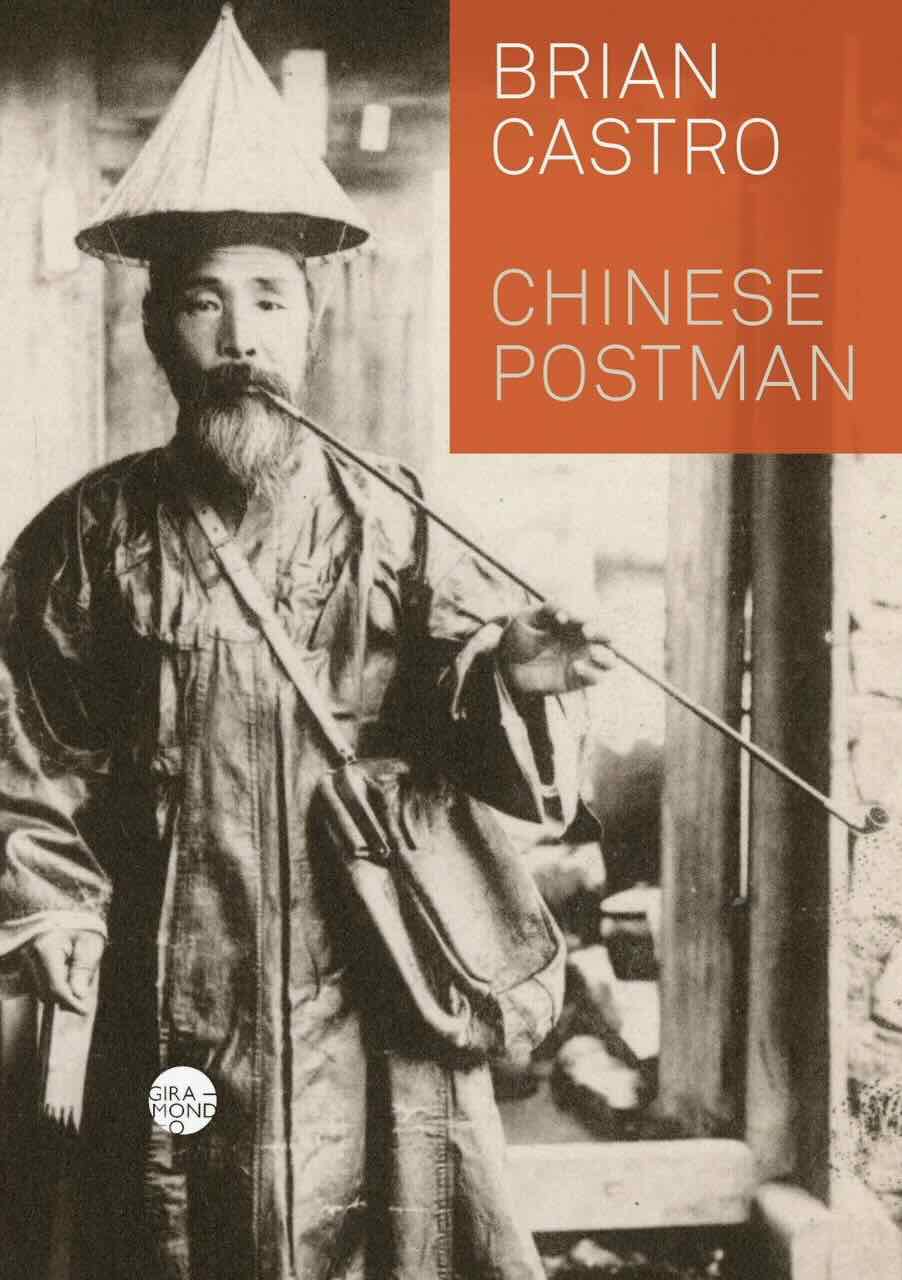
  • 2025: Nikos Papastergiadis, John Berger and me (Giramondo Publishing, biography/memoir)
  • 2024: Jillian Graham, Inner song: A biography of Margaret Sutherland (Melbourne University Press, biography, Lisa’s review)
  • 2023: Tom Patterson, Missing (Allen & Unwin, biography)
  • 2022: Amani Haydar, The mother wound (Pan Macmillan, memoir, Kate’s review)
  • 2021: Andrew Kwong, One bright moon (HarperCollins, memoir)
  • 2020: Jessica White, Hearing Maud (UWA Publishing, biography/memoir, my review)
  • 2019: Sofija Stefanovic, Miss Ex-Yugoslavia (Atria Books, memoir)

It’s interesting, but not surprising, that the memoirs have it.

Having read several hybrid biography/memoirs, including Jessica White’s, I am particularly interested in this year’s winner. I enjoy the process – if done well of course – whereby a writer explores another person through some prism of their own life, though this prism varies widely. In some cases, the writer and subject are related (like mother and daughter), or they are friends (like Papastergiadis and Berger), or they have something in common (like deafness in the case of Jessica White and her long-dead subject, Maud Praed). If you want pure biography, these don’t do the job, as they tend not to be comprehensive. But, what I like about these hybrids, is how the writer explores some aspect of their subject’s life story alongside, or through the prism of, their own perspectives or experiences. Done well, and particularly if both writer and subject are interesting, this form can be satisfying – and illuminating.

This was the case with Jessica White’s Hearing Maud, as I discussed in my post, and I can understand its being the case with Papastergiadis’s book. The judges called it “an original hybrid form”. The website continues:

The judges chose John Berger and Me for the Michael Crouch Award for a Debut Work for its originality and clever, non-linear but accessible structure. The quality of the author’s perceptive, lyrical, subtly humorous prose also stood out among a highly competitive field of debut books. A unique and highly readable blend of biography and memoir.

And there, I think, is a major reason why I enjoy reading these hybrids, the fact that there is no set form or formula. Each one can reinvent the wheel, with authors free to choose the approach that best suits the story they want to tell, the ideas they want to explore. It’s exciting to read books like this where authors have to work out from scratch how to start, proceed, and finish!

As for this latest winner, I am particularly interested, because John Berger’s Ways of seeing made a lasting impression on me when I read it – and saw the BBC series – in the late 1970s. I can imagine why such a man would interest a sociologist like Papastergiadis, but I think their friendship and points of contact ended up being far deeper and broader than just sociology. I’m so tempted.

Have you read any of these winners – and/or are you interested in hybrid biography/memoirs?

Helen Trinca, Looking for Elizabeth: The life of Elizabeth Harrower (#BookReview)

Elizabeth Harrower The watch tower

Like many, I was astonished when I read Elizabeth Harrower’s The watchtower (my review), upon its publication by Text Classics in 2012. Astonished not so much for its writing, though that is excellent, but for its subject, which is what we’d now call coercive control. The astonishment comes from the fact that The watchtower was first published in 1966, at a time when domestic abuse was hidden. Harrower recognised it, however, and called it out. The book made a splash at the time, but then disappeared from public view, though not completely from academia. Then, in 2012, Michael Heyward and his Text Publishing Company decided to publish it, and so began what biographer Helen Trinca calls, her “second act”.

Looking for Elizabeth is the second literary biography I’ve read by Trinca, the first being Madeleine: A life of Madeleine St John (my review). Trinca must like challenging subjects, because Harrower, like St John, was challenging to write about, albeit in Harrower’s case, Trinca had the benefit of knowing her.

So, what made Elizabeth Harrower such a challenge? Trinca had many conversations with her from 2012 on, including formal interviews for newspaper articles, and Harrower had placed her papers (including letters, reminiscences, and novel drafts) with the National Library, to which Trinca apparently had full access. But interviews and papers don’t tell the full story, particularly if the subject has spent her life “curating” or shaping it, destroying many of her papers along the way, including, as she told Text editor David Winter in 2013, “more than 400 foolscap pages of literary thoughts – part journal, part stories, part eye-witness accounts, secrets and so on”.

Trinca’s biography draws on a variety of sources, which she documents in her Author’s Note. Besides her personal connections with Harrower, which included meetings, phone calls and emails, and Harrower’s papers, she used the papers of others (including Shirley Hazzard, Kylie Tennant, and Judah Waten), all sorts of other records, and interviews with family and friends. Gaps in information are frequently noted within the text – and are sometimes speculated about using that thing that many literary biographers do, the works themselves. How much can – and do – they tell us about the person who held the pen?

Many writers say they begin their project with a question. In Trinca’s case, the framing question seems to have been, Why did Elizabeth Harrower stop writing at the height of her powers? Because, this is indeed what she did. Having written and published four well-received novels – Down in the city (1957), The long prospect (1958, my review), The Catherine wheel (1960), and The watchtower (1966) – she withdrew her fifth completed novel, In certain circles, from publication in 1971, and never published a novel again, despite many encouragements from her friends including Patrick White and Christina Stead. She wrote a few short stories, but gave up writing altogether by the end of the 1970s.

From this literary trajectory, Trinca weaves a moving and interesting story about a fascinating woman. Like Madeleine, this is a traditional, chronologically told biography. It is well-documented, using clear but unobtrusive numbers pointing to extensive notes at the end, and there is a decent index.

“I’ve lived dangerously” (Elizabeth Harrower)

I am not going to tell the story of Harrower’s life, because the biography does that. Essentially, she was born in industrial Newcastle in 1928, and lived with her grandmother after her parents divorced, before joining her mother in Sydney. She never got over, it seems, being “a divorced child”. It dislocated her. Her mother remarried, and Trinca suggests that her stepfather was behind men like The watch tower’s Felix Shaw. She lived in London from 1951 to 1959, before returning to Australia, rarely leaving Australia after that. She did not marry, but had an intense, emotional relationship with the older, married Kylie Tennant, which raises questions that Trinca isn’t able answer, though she points to other “crushes” on older women. Do we need to know?

Through Harrower’s life she mixed with some of Australia’s significant people, including writer Patrick White, politician Gough Whitlam, and artist Sid Nolan. She had a long correspondence with Shirley Hazzard (about which I wrote after attending the launch of a book of those letters.) She died in 2020, suffering from Alzheimer’s. (Her life dates closely mirror my own mother’s.)

Now, rather than detailing this life more, I’ll share some of the threads that run through Trinca’s story, as they provide insight into who Harrower was, and what makes her writing, and her persona, so interesting. They also give the biography a narrative drive.

These threads include that aforementioned one regarding why she stopped writing. Another concerns what drove her to write. Trinca writes about an interview Harrower had with broadcaster Michael Cathcart in November 2015:

She reprised a comment she had often used in the past: ‘I always had an alarming and dangerous interest in human nature. And so recently, I think I was answering some questions, and I said that I felt I had urgent messages to deliver. I wanted to tell people things’.

These things are the emotional truths we find in her books. In an interview with Jim Davidson for Meanjin in 1980, she discouraged people from finding her life in her books, saying that the “emotional truth” is there but “none of the facts”:

None of the books are actual accounts by any means. They are less extreme than reality because reality is so unbelievable. Besides which, people can only take so much. You don’t want to frighten them do you, or do you?

This is the “wounded wisdom” that critics like America’s James Wood identified. It’s not surprising, given the life that led to this “wisdom”, that Harrower was wary, guarded, in her dealings with people, which is another thread that runs through the book. Harrower was polite and genuinely interested in people – “she listened with intent” – but always turned questions back on them rather than give herself away. In 1985, she admitted that, in interviews, “my whole intention seemed to be to give nothing away, to disguise myself”.

Which brings me to the final thread I want to mention, the idea of having “lived dangerously”. Several times through the biography, Trinca refers to Harrower’s saying that she had lived dangerously, but what did she mean? It seems she meant something psychological, metaphysical even. In 2012, she said to Trinca:

In my own mind I have lived dangerously, dangerously in the sense of finding out more and more about human nature. … At this age, you are aware of some very contrary and dangerous things you have done with your life as if you were going to be immortal. This is the irritating thing, now it is dawning on me that I am not immortal.

She said something similar in 1985, “I consider that in my life I’ve lived dangerously, and I haven’t lived a self-protective sort of life”.

“To have lived dangerously”, writes Trinca near the end of her book, “was a badge of honour for Elizabeth”. I read this as Harrower believing that, for all her wariness, she had let herself be open to life and its difficult emotional challenges.

What it actually means probably doesn’t greatly matter, despite Trinca’s “looking”. Nor do the gaps. What matters is the body of work she left, however she lived her life. It’s beautiful, unforgettable, precious, and Trinca tells that story so well.

I now look forward to Susan Wyndham’s biography which is due out soon. How will she fill in the gaps? Will she delve more into Harrower’s political leanings, and what conclusions will she draw about Harrower, who she was and why she wrote what she did?

Helen Trinca
Looking for Elizabeth: The life of Elizabeth Harrower
Collingwood: La Trobe University Press, 2025
309pp.
ISBN: 9781760645755

Monday musings on Australian literature: Finlay Lloyd’s 20/40 Publishing Prize, progress report

Nearly three years ago, I reported on a new literary prize, the 20/40 Publishing Prize which was being offered by the non-profit publisher, Finlay Lloyd. It has now been awarded in both 2023 and 2024, and preparations for announcing the 2025 winners are well under way.

Briefly, the aim of the award is to “encourage and support writing of the highest quality” by offering publication rather than cash. It has a specific criterion, however, as conveyed by its title: the works, which can be fiction or nonfiction, must be between 20,000 and 40,000 words. The submissions are read blind, and the judging panel includes the previous year’s winners. This means the judges for the 2025 award are Sonya Voumard, Penelope Cottier and Nick Hartland, alongside publisher, Julian Davies, and longtime Finlay Lloyd supporter (and writer), John Clanchy. 

The winners to date have been:

  • 2023: Rebecca Burton, Ravenous girls (fiction, my review)
  • 2023: Kim Kelly, Ladies’ Rest and Writing Room (fiction, my review)
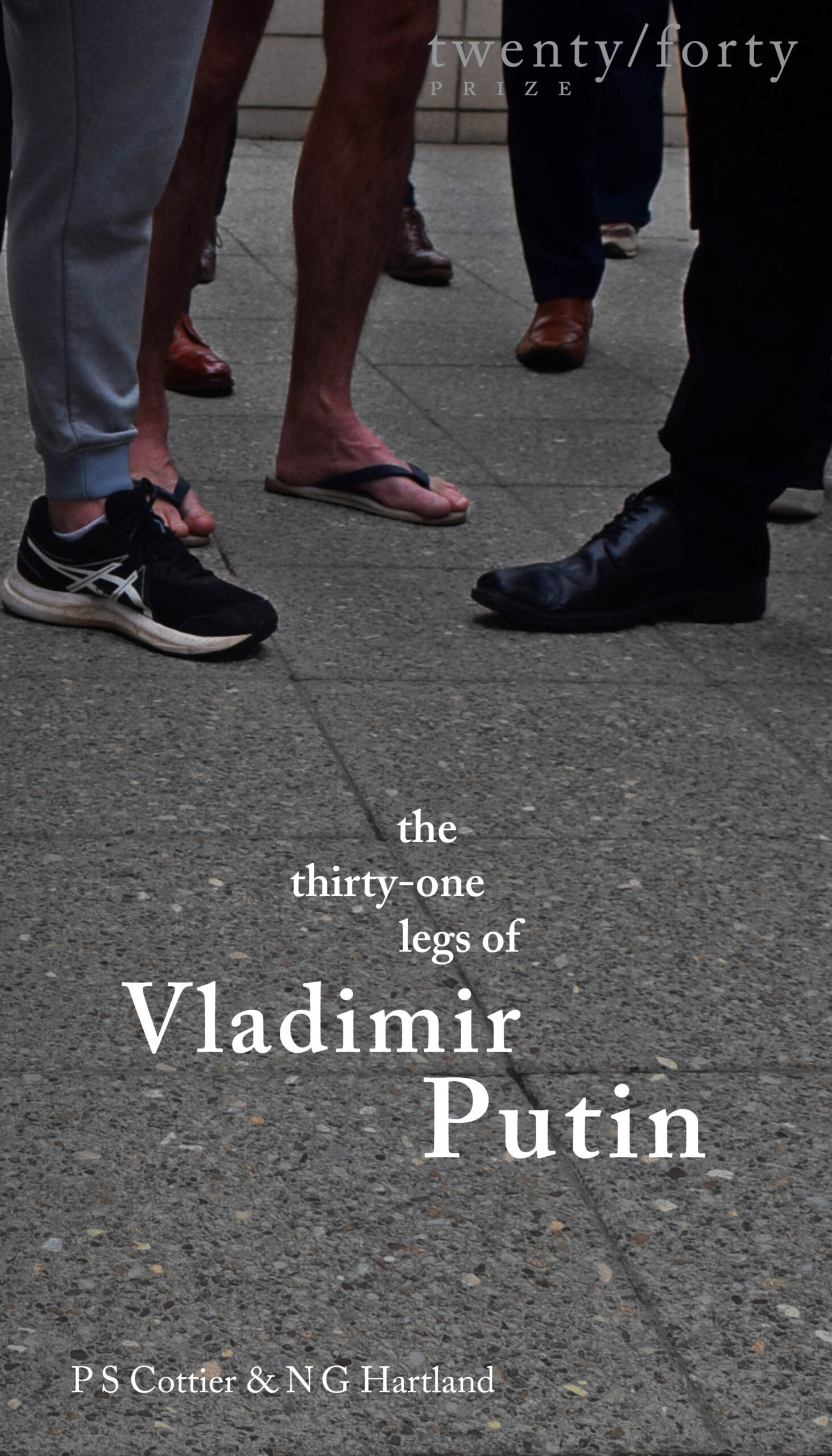
  • 2024: PS Cottier and NG Hartland, The thirty-one legs of Vladimir Putin (fiction, my review)
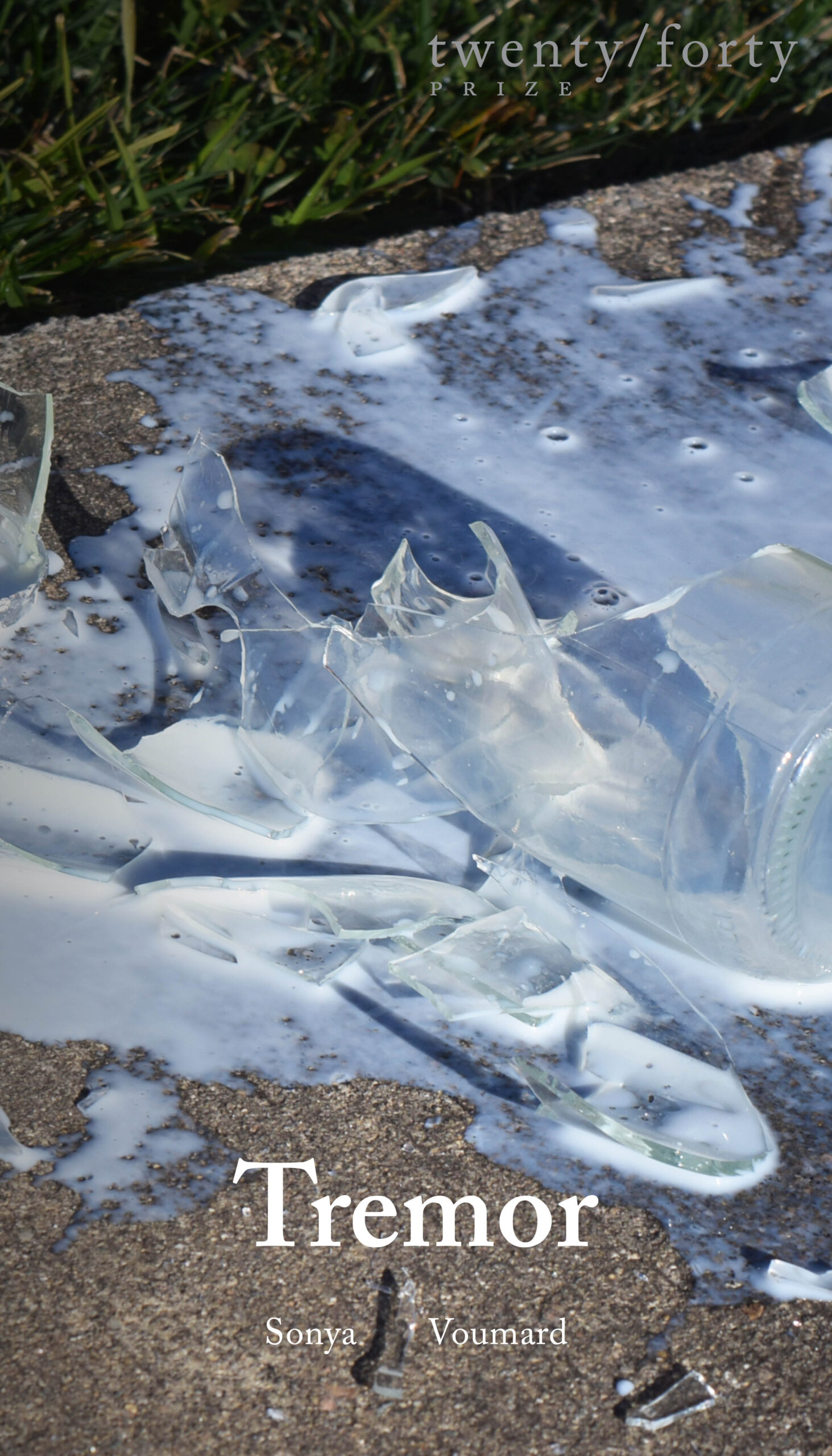
  • 2024: Sonya Voumard, Tremor (nonfiction, my review)

Most awards, particularly those coming from a small organisation, take time to build – and some disappear into the ether. So I worried that this award might not last – not only because Finlay Lloyd is small but also because this shorter form is not popular with everyone. I am therefore thrilled to hear that the third annual winners are on track for announcement, and that Finlay Lloyd is now calling for entries for the 2026 prize.

This is where today’s post comes in. I don’t make a practice of announcing calls for competition entries, but this attracted me for a couple of reasons. First, I often wonder what difference awards make to authors and their sales. Well, while I don’t know what the initial print runs were, Finlay Lloyd says that The thirty-one legs of Vladimir Putin has been reprinted twice since its first run, and Tremor is about to go into reprint. This must be encouraging, surely, for writers?

The other relates to the fact that Finlay Lloyd wants to offer a fiction and a nonfiction award each year. This didn’t happen in 2023 because they did not receive enough quality entries, but it happened in 2024. Sonya Voumard’s Tremor is an excellent example of novella-length (is there a better description for this) nonfiction.

In my report on the Winners Conversation last year, I shared Voumard’s discussion about length. She said that there’s “the assumption that to be marketable you need to write 55,000 plus words”. She had the bones of her story, but had then started filling them out, when, in reality, it was just “flab”. The competition, and then Julian Davies’ editing guidance, taught her that she had a good “muscular story”. So she set about “decluttering”. The end result is interesting, because this book doesn’t have that spare feeling common to short works, which is not at all a criticism of spare writing. However, Tremor feels tight. It has little extraneous detail, but it’s not pared back to a single core. I found it informative but also a personal and moving read, and I bought a few copies as gifts last year. I would love to read more shorter-length works of nonfiction.

All this is precursor to sharing that last week, I received a Media Release from Finlay Lloyd, in which publisher Julian Davies says:

As 20/40 builds momentum, our enthusiasm for encouraging this compact scope for both fiction and nonfiction has continued to grow. The length of 20,000 to 40,000 words allows for the rich development of an imaginative story or factual concept while being tight enough to encourage focus and succinctness. It’s a form we love and believe is apt for our moment in the history of thought and invention.

Each year we support the winning authors through a close and probing editorial process that works towards finding the best possible version of their book. We also take delight in a design process where books are created that feel like artefacts, that ask to be picked up and engaged with.

Submissions for 2026 will open in December. The prize is open to emerging and established writers, but they must be Australian citizens, permanent residents, or valid visa holders. It is a prose prize, but is open to all genres – as the winners to date demonstrate – including hybrid forms.

The original NaNoWriMo might have ended, but that doesn’t mean November (or any month of your choice) isn’t a good month for giving writing a go, particularly if there’s a publisher out there waiting for your work. For more information, check the prize’s webpage.