Monday musings on Australian literature: Melbourne Centenary literary competitions, 1934

I came across a reference to the 1934/35 Melbourne Centenary literary competitions quite by accident, but they intrigued me so I decided to investigate further. Here’s what I found …

Melbourne Centenary

According to an article in the La Trobe Journal (no. 34, October 1984), there was much discussion about whether to celebrate the centenary in a major way or not, but it was eventually decided to go ahead because of its importance, and because visitors “would circulate money and create jobs”. A valid reason, given, as the article says, that “Australia was slowly recovering from the world-wide depression”.  Unemployment was falling, it says, but was “still at a serious level.”

So, a celebration was planned, to span last six months, starting with a Henty celebration at Portland in October 1934 and finishing with “the anniversary of the Batman and Fawkner settlements at Port Phillip in 1935.” The celebrations included, among other things, several competitions including the MacRobertson Centenary Air Race and the Melbourne Centenary Grand Prix.

The article also mentions that the Centenary Council sponsored The Centenary gift book. Edited by Frances Fraser and Nettie Palmer (who has appeared here before), it was, apparently, entirely written and illustrated by women. The things you learn.

Literary Competitions

There were four literary competitions – for a poem, short story, novel and war-novel. Before I discuss them, though, I’d like to share a comment about the competition which I found in the notes accompanying a 2007 exhibition mounted from the Monday University Library’s Rare Book Collection, Australian Women Writers 1900-1950. The comment comes from writer Marjorie Barnard (who has also appeared here before):

Marjorie Barnard pointed out to Leslie Rees with some irony that the 1934 Victorian Centenary literary competition was worth £200, while the golf championship attracted five times that amount.

Plus ça change, eh?

Poetry

The first prize awarded was for the Poem, announced in August 1934. It was worth £50, and there were 179 entries. The winner was Furnley Maurice, pseudonym of Frank Wilmot who apparently founded the Melbourne Literary Club in 1916. His winning poem was ”Melbourne and memory”.  Ninety-six lines long, it was described by the judges – W. F. Wannon, Nettie Palmer, and Enid Derham – as “a work of beauty and permanence.” The announcement in Adelaide’s The Advertiser (11 August) says it “consists of irregular but cadenced and rhymed verse”, and describes its theme as “the impact of Melbourne today upon a sensitive observer.” I like the “sensitive observer” bit!

Commentators describe it as “an early attempt to capture the everyday life of a city through references to familiar places.” It opens Maurice’s collection, Melbourne odes. The Oxford companion to Australian literature says that the odes overall “deal with places and events familiar in the life of the city: the Victoria Markets, the annual agricultural show and orchestral concerts in the Melbourne Town Hall”. One, “Upon a row of old boots and shoes in a pawn-broker’s window”, describes the plight of the unemployed, and is, the Companion says, “a powerful radical commentary on the economic misery and injustice of the time.”

Short story

The Short Story prize, also worth £50, was announced next, in September. For the short story and novel prizes, entries had to be submitted under a pen-name, to ensure blind judging. The announcement in the West Australian (29 September) said the winner was “‘Caspar Dean’ for the story entitled ‘Sea Hawk.'” ‘Caspar Dean’, they then divulge, was none other than novelist Vance Palmer (whom you’ve also met here). There were 119 entries.

Brisbane’s columnist, “The Bookman”, in The Courier Mail (6 October) is more expansive:

In the writing of a short story, many attempt but few succeed. It is an art that requires both study and practice, for a good short story is the concentrated essence of incident and character, dovetailed in a manner that carries conviction. Mr. Vance Palmer is the present-day master of the short story in Australia, so it is not surprising that he won the prize for the best story in the Melbourne Centenary Short Story Competition. It is said that Henry Lawson’s outstanding success as a writer of short stories was that he hung a lamp on every place that he wrote about. Vance Palmer has many of the characteristics of Lawson, but he is less dramatic; he has a far greater vocabulary, a more polished style, and a better knowledge of the world. Sincerity is his strong suit in novels, stories, plays, or poetry.

Fiction

In November, it was the Novel’s turn, and the result was more surprising. Firstly, there were joint winners, and secondly one of the winners was unknown. The prize, donated by “Mrs James Dyer”, the sister of Melbourne’s Lord Mayor, was worth £200. There were 153 entries, and the judges were, said Melbourne’s The Age (24 November), Enid Derham (senior lecturer in English at the University of Melbourne), H. W. Allen (Vice-master of Ormond College) and Frank Wilmot (Furnley Maurice who won the Poetry prize). The winners were ‘Redhead’ (Frederick Sydney Hibble) with his novel Karangi, and ‘Ivan Power’ (Vance Palmer) with The Swayne family. Sydney-based Hibble set his novel in country New South Wales, while Palmer’s was set in Melbourne.

The Age’s report says – somewhat politically incorrectly now – that:

… Mr. Hibble was overjoyed. He said he had written the book hurriedly, having spent only four weeks on it. Mr Hibble is a cripple, and in receipt of an invalid pension. Mr. Hibble has written a number of short stories, and had his book sub-edited by a Sydney woman journalist.

Hibble apparently became disabled in 1919 “after suffering an illness during the flu epidemic.”

Now, I’ve never heard of FS Hibble, but “Pegasus”, writing in the Book Talk column in Rockhampton’s Morning Bulletin (26 January 1935), is highly impressed:

The Swayne Family, by Vance Palmer, which I dealt with a few weeks ago, was an outstanding novel of its kind, and Karangi, by F. S. Hibble … which I have just read, is as fine a piece of well-balanced realism as has appeared in the history of the Australian novel … the beauty of both books, to a great extent, lies in the fact that the setting is not emphasised, as has been the tendency in many Australian books, but just taken for granted, as it should be, and treated as a strictly subordinate part in the creation of a work of art. Both take their vitality from the vividness of their characterisation, and the deft working out of relations between these characters; but, whereas The Swayne Family depends for its interest for the wide sweep which it takes over the various members of three generations, Karangi is a much more detailed study of the working out of one particular character upon the background provided by scarcely more than a dozen characters in all.

S/he goes on to say that while both are “outstanding” novels,

I think “Karangi” by far the finer achievement. If the writer’s hand appears to lack the mature experience of Vance Palmer, the depth of his insight into human nature might appear to be greater, his capacity to make the very ordinary people he has chosen for his characters appear unique, his handling of the development of the character through pressure of the emotions, and his sense of the dramatic in his presentation of the tale betoken an author who will yet go very far.

And yet, as happens surprisingly often, this was Hibble’s only book, though he had several short stories published.

War novel

Finally, the War Novel. This prize, also worth £200, was made by the Victorian branch of the Returned Sailors’ and Soldiers’ Imperial League as its contribution to the Centenary. The conditions, according to Hobart’s The Mercury (March 1934), were that:

Candidates must be persons who served abroad during the war as members of the Australian Imperial Force, the Royal Australian Navy, or the Australian Nursing Service. The novel must deal with the life of the Australian soldier in the war, and his reaction to the various conditions, environments, and the experiences through which he passed. The sequence of the story and the descriptive matter must be accurate historically and geographically, a condition which certainly will distinguish any war novel from any other one has read.

Hmm, so a Nurse could enter but the subject had to be a “he”, “the Australian soldier”?

JP McKinney, CrucibleThe winners were announced in Melbourne’s The Age on, appropriately, Anzac Day in 1935. I say winners because first (£150) and second (£50) prizes were awarded. The first went to Over the top by ‘Sar-Major’ (pen-name for JP McKinney, Surfers Paradise, Queensland), with the second going to Summer campaign, by ‘Roger Walters’ (C.W.W. Webster, Melbourne). There were over 50 entries, with the judges being Sir Keith Murdoch, Sir Harry Chauvel, and Mr. Phillips (a Melbourne barrister). A note in Miles Franklin’s papers at the State Library of NSW, states that her novel All that swagger “was entered in the Melbourne Centenary Prize Competition in 1934”.

Over the top was published by Angus and Robertson as Crucible.

But, JP McKinney of Surfers Paradise rang a bell. The newspaper reports didn’t help, though, because the reason I recognised his name came later. Yes, he’s the man who became the husband of one of Australia’s most famous poets, Judith Wright. The things you learn, as I said before!

Marie Munkara, Of ashes and rivers that run to the sea (#BookReview)

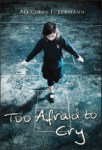
Marie Munkara, Of ashes and rivers than run to the seaThe stories keep on coming, the stories, I mean, of indigenous children stolen from their families and what happened to them afterwards. I’ve posted on Carmel Bird’s compilation of stories from the Bringing them home report, The stolen children: Their stories, and also on Ali Cobby Eckermann’s memoir Too afraid to cry. Now it’s Marie Munkara’s turn with her excruciatingly honest, but also frequently laugh-out-loud-funny memoir, Of ashes and rivers that run to the sea.

Late in her memoir, Munkara learns that she was born “under a tree on the banks of the Mainoru River in Western Arnhem Land.” But, what she writes next is shocking

‘Too white,’ my Nanna Clara said as they checked me out by the camp-fire light, and everyone knew what that meant. Back in those days any coloured babies in my family were given to the crocs because dealing with these things right away saved a lot of suffering later on. It was better that we die in our own piece of country than be taken by the authorities and lost to our families forever.

Does that remind you of anything? It did me – of Toni Morrison’s novel Beloved, and the slave mother’s decision there. Anyhow, knowing what we know now about the lives of many stolen children, we can surely understand her indigenous family’s actions. Luckily, though, for Munkara – and us – Nanna Clara saw something “special” in her, and she was kept. That was in 1960. Three years later, now living on the Tiwi Islands, the inevitable happened and she was taken from home one day when her mother was at work at the mission laundry. Her mother begged for her to be returned, to no avail.

All this, however, we learn near the end of the book. Munkara starts the book when, at the age of 28 and quite by accident, she came across her baptismal card tucked in a book in her parents’ library. It told her that she was born in Mainoru in Arnhem Land. “In the space of an instant,” she writes, “excitement was replaced with mortification as old geography lessons began to resurface” about a “wild and untamed place where Aborigines hunted kangaroos and walked around butt-naked.” However, she decides to find out more, and soon discovers that her mother was still alive and still living in the Tiwi Islands. She decides to go meet her, with no advance notice.

To say that she was shocked by what she found is an understatement. “This is not the tropical island I had imagined,” she writes, “with luscious vegetation and cute little palm-frond houses. It is a dump.” She tries hard to enjoy her time there, but hates it and three days later returns home. However, it’s not long before she realises that she has to return. This ends Part 1 of the four-part book. In Part 2, she goes back in time and tells of her life as the foster child of two unhappy but highly religious people. Her mother was strict, and cruel, but her father was worse. He molested her for many years. A sad, sad upbringing but Munkara, as she admits herself, is a survivor:

But aren’t human beings amazing creatures and even at an early age we can choose to let the bad things in life devour us and we sink or we can make the most of the good bits and swim. … I chose to swim.

Part 2, then, makes for hard reading, but Munkara’s sense of humour, her ability to believe that things will work out, and her independent mind bring her, and us, through. She’s a great story-teller, which makes this section more manageable than you might expect – but it still leaves you angry!

And then we come to Part 3 in which she tells of her return to Bathurst Island. This is where the real interest of the book lies because it is here that Munkara takes us on her journey into another culture. She is us – to a degree. She has been brought up white – albeit “a dusky maiden” version – and her expectations and initial reactions are very much as ours would be. She describes how she tries to apply her whitefella ways to her new life with her Aboriginal family. She expects privacy, cleanliness, order and, most of all, respect for her possessions. None of these sit well with traditional indigenous values as she found them on Tiwi, but she’s determined nonetheless. We can feel her horror and frustration – but she’s telling this story long after the events, and imbues them with a light touch of self-deprecation and a warmth for her family which encourages acceptance rather than judgement (in herself and us).

Some examples:

I spend the day scrubbing the kitchen and neatly place all my things by themselves on a shelf so everyone can see they belong to me, and then I have a well-earnt nap. I sleep soundly and wake up to the smells of cooking. Stretching and yawning I make my way to the kitchen to put on the billy for tea only to stop at the doorway in horror, my mouth still open from the yawn. The room in an absolute shithole of a mess. My stuff is strewn everywhere […] Everyone tiptoes around me now they know I’m in a bad mood and I’m fine with that, maybe they’ll learn not to touch things that they shouldn’t.

and

They are instantly awake when they see that I’m only dressed in my bra and underpants. Thankfully my underwear is matching…

Haha, as if they’d care! And,

… after going to the footy on the weekend with my family for protection I’ve gotten over my fear of big crowds of black people. I now feel quite foolish for thinking they could be harmful to me and reckon I must have gotten this irrational fear from my white parents.

So much of this section resonated with me because it reflected many of the things Mr Gums and I were learning and experiencing as I was reading it. I’ve already posted on the cars, but there’s also the mess, the confusing kinship (including her having to call various dogs her brother, her son, her uncle and so on), the trust in spirits, the lack of concern for possessions, all of which can result in decisions and behaviours mystifying to us whitefellas.

But Munkara also learnt more seriously confronting things, such as that her mother’s damaged leg was caused by leprosy, something she’d thought only happened in the Bible and poor countries:

I slide my ill-informed thoughts into the rubbish bin and slam the lid down tight, angry that our First World country can live in ignorant bliss of our Third World problems. … I bet there wouldn’t be too many white people afflicted with leprosy in Australia because if there were it would be front-page news.

However, while the memoir is, for us, an eye-opening, necessary journey into another culture, it is, ultimately for Munkara, a journey to her self. By the end of Part 3, she has come to a better understanding of who she is:

But they don’t realise that there is no stolen and there is no lost, there is no black and there is no white. There is just me. And I am perfect the way I am. And I know now that I have to leave this place because I’ve learnt all I can for the time being and this lesson is over now.

She only leaves as far as Darwin, however, so she can remain in contact with her family. And so it is that, late in the book, Munkara writes about her (biological) mother’s dying:

When I asked her if she had any regrets she said there were no words in any of our family languages for regret. To regret something was a waste of time so why make a word for something that you didn’t need.

Munkara’s mother’s comment that her language doesn’t have a word for “regret” encapsulates for me the value of reading this book, which is its chronicling of the meeting of two opposing cultures. I thoroughly recommend the book, because understanding what divides us is critical to reconciliation – and because it is a darned good read. She can tell a story, that one!

ANZLitLovers ILW 2018Lisa (ANZLitLovers) has reviewed this book, as has French blogger Emma (Book around the corner) and the Resident Judge. Read for Lisa’s (ANZLitLovers) Indigenous Literature Week.

AWW Badge 2018

Marie Munkara
Of ashes and rivers that run to the sea
North Sydney: Penguin Random House, 2016
179pp. (print version)
ISBN: 9780857987280 (eBook)

Monday Musings on Australian literature: Three Top End explorers

Well, folks, I’m back on the grid, but still in the Top End holidaying, so I’m going to make this one as short and sweet as I can.

As we traveled through Arnhem Land we learnt about various early 19th century explorers in this region, particularly Phillip Parker King (who makes an appearance, if I remember correctly but can’t check here, in Michelle Scott Tucker’s Elizabeth Macarthur: A life at the edge the world) and Ludwig Leichhardt (who inspired Patrick White’s Voss). Journals of these two, plus of Matthew Flinders, are available at Project Gutenberg Australia, and this is what I’m sharing today (for my benefit as much as yours, as I plan to come back to them!)

Matthew Flinders (1774-1814)

A Voyage to Terra Australis undertaken for the purpose of completing the discovery of that vast country, and persecuted in the years 1801, 1802 and 1803, in His Majesty’s ship The Investigator, and subsequently in the armed vessel Porpoise and Cumberland schooner. With an account of the shipwreck of the Porpoise, arrival of the Cumberland at Mauritius, and imprisonment of the commander during six years and a half in that island. By Matthew Flinders Commander of The Investigator. In 2 volumes with an atlas. London: Printed by W. Bulmer and Co. Cleveland Row, and published by G. and W. Nicol, booksellers to His Majesty, Pall-Mall, 1814.

Whew. They wrote long title pages, some of these explorers.

Anyhow, it is in Vol. 2 Ch IX, that Flinders writes of this region, and it is 1803. He describes the landscape, the plants, sightings of indigenous people. This description which seems to refer to Melville Island (part of the Tiwi Islands) particularly appealed because of our own experiences:

No inhabitants were perceived, nor any fresh traces of them; but as dogs were seen twice, it is probable the natives were watching us at no great distance; they had visited all the places where I landed, and should therefore seem to possess canoes. Traces of the same strangers, of whom mention has been so often made, were found here; and amongst others were partitions of frame work and part of a large earthen jar. Kangaroos appeared to be rather numerous in the woods, brown doves and large white pigeons were tolerably plentiful, and a bird nearly black, of the size and appearance of a hen, was shot; there were also cockatoos, both black and white, and a beautiful species of paroquet not known at Port Jackson. The aquatic birds were blue and white cranes, sea-pies, and sand-larks. Besides fish, our seine usually brought on shore many of the grey slugs or sea cucumbers, but not so abundantly as in Caledon Bay.

Australian Green Ant Gin and Tonic

Australian Green Ant G&T

We were not here pestered so much with the black flies as before; but the musketoes and sand flies were numerous and fierce. Most of the bushes contained nests made by a small green ant; and if the bush were disturbed, these resentful little animals came out in squadrons, and never ceased to pursue till the disturber was out of sight. In forcing our way amongst the underwood, we sometimes got our hair and clothes filled with them; and as their bite is very sharp, and their vengeance never satisfied, there was no other resource than stripping as expeditiously as possible.

We, too, were pestered by mosquitoes in the Top End, but what Flinders didn’t know is that those Green Ants make good bush food and medicine. I tried a gin and tonic made with Australian Green Ant Gin, and ate a fresh green ant off the real rocks as well! Can’t believe I did that, actually, but when in Arnhem Land …

Phillip Parker King (1791-1856)

Narrative of a survey of the intertropical and western coasts of Australia. Performed between the years 1818 and 1822. By Captain Phillip P King, R.N., F.R.S., F.L.S., and Member of the Royal Asiatic Society of London. With an Appendix, containing various subjects relating to hydrography and natural history. In Two Volumes.

Phillip (two “ll”) Parker King was the son of the Australian colony’s second governor, Philip (one “l”) Gidley King.

Anyhow, in Vol. 1 Ch 2, for example, we are in April 1818, and King discusses Port Essington which he named for a “lamented” friend. This later became the short-lived settlement of Victoria, 1838 to 1849, partly on the basis of his recommendation:

During our examination of Port Essington, we found no fresh water, but our search for it did not extend beyond the precincts of the sea-beach, since we were not in want of that article, having so lately completed our stock at Goulburn Island; but from the number of natives seen by us, and the frequency of their traces, which were encountered at every step we took, there must be fresh water; and had we dug holes, we should doubtless have succeeded in finding some, particularly in the vicinity of the cliffs.

Wood is abundant and convenient for embarking, but the trees are generally small: the waters are well stocked with fish.

As a harbour, Port Essington is equal, if not superior, to any I ever saw; and from its proximity to the Moluccas and New Guinea, and its being in the direct line of communication between Port Jackson and India, as well as from its commanding situation with respect to the passage through Torres Strait, it must, at no very distant period, become a place of great trade, and of very considerable importance.

Victoria Settlement

Victoria Settlement

We toured the ruins of Victoria, and were shown the plants that indigenous Australians use to find fresh water!

In this chapter King refers to altercations with “natives” in which he and his men used muskets to scare them off. I need to read more regarding King’s experiences with “the natives”, but perhaps if he hadn’t been so fearful he may have found some water.

Ludwig Leichhardt (1813-1848)

Journal of an overland expedition in Australia: from Moreton Bay to Port Essington, a distance of upwards of 3000 miles, during the years 1844-1845 by Ludwig Leichhardt (1813-1848).

Leichhardt’s Ch 15 covers his arrival at Port Essington. I’ve only dipped into it, but it seems to confirm our tour guide’s comment that Leichhardt was known to speak well of indigenous Australians (and was not popular for it). Leichhardt was also keen to document local plants, which is also evident (though all the explorers did this to some degree I think.)

Anyhow, here is a description of a meeting with “natives” on 2 December 1845, 15 days before he reached Port Essington:

The natives were remarkably kind and attentive, and offered us the rind of the rose-coloured Eugenia apple, the cabbage of the Seaforthia palm, a fruit which I did not know, and the nut-like swelling of the rhizoma of either a grass or a sedge. The last had a sweet taste, was very mealy and nourishing, and the best article of the food of the natives we had yet tasted.

I’d love to share more of these journals – and of how they relate to the experiences we’ve had and the knowledge we’ve gained, but time is short. Who knows, I may explore them in a little more depth in the future.

Delicious descriptions: Marie Munkara on cars

Marie Munkara, Of ashes and rivers than run to the seaI don’t usually post Delicious Descriptions before I review a book but this one seems apposite. Yesterday, we did a tour of the Tiwi Islands – of Bathurst Island in particular. This is where Marie Munkara’s memoir Of ashes and rivers that run to the sea, which I mentioned in my last Monday Musings, is set.

So, the tour … we disembarked from the ferry, wandered up the beach to wait for our local guide, and soon saw a car pull up. One of the other tour members exclaimed, “Look, it’s got no windows!” And no, it hadn’t. Well, that’s not quite true, it had a broken front windscreen. However, it had no side or back windows. Regardless, a horde, seemingly, of locals, climbed in. Now, if you’re an Aussie, particularly if you’ve also seen the TV documentary series Bush Mechanics, you’ll know a bit about indigenous people and their relationship with cars – demonstrating both their resourcefulness and their lack of concern about material things. We saw and heard much evidence of this during our trip.

Anyhow, Marie Munkara certainly learnt about it, the real way – that is, through personal experience. This excerpt comes from the occasion when she agreed to go buffalo shooting …

I can deal with the early start, it’s just the vehicle he’s driving that leaves me dumbfounded. It defies description. I can tell from the rusted skeleton before me that it was once a 4×4 but I wouldn’t have a clue what make it is. A cloud of black smoke billows from the truncated exhaust, and the motor sounds like it’s running on one cylinder. There are no mudguards and the bonnet appears to be borrowed from another car and held in place with fencing wire. There is no tray left on the back anymore –time, salt-water and bad driving have taken care of that. Instead my four brothers are perched on packing crates that have been lashed onto the subframe. They busily light up rollies and shiver in the cool dawn air while early-morning sunlight filters through the bullet-holes in the roof above Colin’s head. My face must be registering concern as I look at the packing crates because Colin laughs and tells me that I have the seat of honour in the cabin. The door is rusted shut so I clamber in through the open window (there’s no glass anyway) and promptly go through the floor. I look down to see myself standing on the road. They were all waiting for that and laugh uproariously as I inspect the gaping hole and wonder where I’m supposed to put my feet. I see that Colin has a similar problem, both floors are totally rusted out.

‘Look there,’ says Colin and I see the rope tied from the window-winder to the steering column that I can rest my feet on as we drive along. Feeling a breeze on my neck I turn to see a gaping hole behind me: the rear window is also missing. Colin explains that this happened when he pulled up and Danny’s arse went through the window and got stuck. How Danny managed to get jammed in that space is beyond my powers of comprehension so maybe Colin’s pulling my leg. I test my foot-rest and it holds, though the thought of what might happen if one or both of my feet come off it as we are driving along almost makes me climb back out again. But I think of what I might miss if I did so I stay. I pretend I haven’t noticed there isn’t a seatbelt and off we go.

I have no idea how fast we’re going because none of the gauges are working, but I can tell it’s fast as we glide over the corrugations in the dirt road like it was smooth bitumen. Colin hoons around the corners like a racing-car driver and I hang onto the seat for dear life and push my feet hard against the rope. I manage to screw my head around without falling down the hole in the floor and look out the rear window. Despite the clouds of dust that enshroud them and Colin’s crazy driving, my brothers are still there, no one has fallen off their packing crate yet.

And that was only the start of an adventure which saw them all limping home, in the rain, after the car ran out of fuel, an event which didn’t surprise Munkara and which our Arnhem Land tour driver seemed to suggest is a common occurrence.

The thing about Munkara is that she’s laugh-out-loud funny. She’s also willing to giving things a go (mostly, anyhow!), and most of all she writes with respect and affection. All being well, I’ll post my review next week.

Delicious descriptions: Elizabeth Jolley on the value of libraries

Elizabeth Jolley, The orchard thievesRegular readers will know that in June I joined in Lisa’s (ANZLitLovers) Elizabeth Jolley Week by posting two reviews, one of which was for the novella Orchard thieves. In that post I mentioned the sly humour, but I didn’t really share a quote to demonstrate it. However, I knew that I could always write a Delicious Descriptions post, so here it is.

It comes when the grandmother is walking home from the library. She had urged one of her extra library-book tickets to another library patron because “she knew how awful it was to get home only to discover that the books were familiar, having been read before.” As a librarian by profession, I loved it.

Anyhow, our grandmother is also a bit of a worrier, regularly thinking about various disasters that could befall her or her family:

On the way home the grandmother thought about the special kind of wealth there was in the possession of library-book tickets. They were reassuring and steady like the pension cheque. She never went anywhere without her purse. You could never know in advance what the day had in store. There might come a time when it would be necessary to offer all she had to appease an intruder. She knew of women who spread crumpled and torn newspapers all round their beds at night so that they would hear an intruder coming closer. Or, she might be held at knife point by someone in the street. She would offer all she had in her purse, small change, pension cheque and the library-book tickets. There would be absolutely no need for the villain to either strangle or stab her in order to snatch her purse. She would hold it out to him and tell him he could have it and be off. She would tell him this in plain words. The library-book tickets might even make a changed man of him, especially if he had never had a chance to use a public lending library during a life with all the deprivation brought about by being on the run.

I mean, really, don’t you love it?

Australian Women Writers 2018 Challenge completed

Mirandi Riwoe, The fish girlAs in previous years, I’m writing my completion post for the Australian Women Writer’s Challenge, around the middle of the year, even though I will continue to contribute until the year’s end. However, I like to get the formal completion post out of the way, so I can relax!

I signed up, again, for the top-level, Franklin, which involves reading 10 books and reviewing at least 6, and again I’ve exceeded this. In fact, by June 30, I had contributed 18 reviews to the challenge.

Here’s my list in alphabetical order (by woman author), with the links on the titles being to my reviews:

AWW Badge 2018There’s a significant difference between this year’s completion post and those of recent years – and that’s in the proportion of fiction to nonfiction. Last year, as you may remember from my 2017 Reading Highlights post, I read an unusually large proportion of nonfiction books (47%) and this was also reflected in my AWW Challenge reading. I said I wanted to recalibrate this in 2018 towards more fiction, and so far I’ve been achieving that (in my AWW Challenge reading and overall).

I don’t have specific goals for the rest of the year, except that I’d like to read more indigenous writers (besides Claire G. Coleman), at least one more classic (in addition to Tasma), and more from my TBR pile (besides Helen Garner and Elizabeth Jolley).

My 2018 AWW Challenge wrap-up post will tell the story!

Monday musings on Australian literature: about Arnhem Land

When this post goes live (during NAIDOC Week) I will be in Australia’s Top End, touring a region called Arnhem Land – and will most likely be incommunicado. Located in the north-east of the Northern Territory, it is named after the ship captained by Dutchman William van Colster who visited the area in 1623. The ship, the Arnhem, was named for the city of the same name, in the Netherlands.

According to Wikipedia, the region has a population of around 16,000, of whom 12,000 are Yolngu, the traditional owners. The main town is Nhulunbuy, with other major population centres being Yirrkala, Gunbalanya, Ramingining, and Maningrida. Mr Gums and I will be visiting most of those places during our 12-day tour. Arnhem Land is known for the fact that a large percentage of its indigenous people live on small outstations on their traditional lands, with minimal western cultural influence. Arnhem Land is almost like a separate country – and visitors need a permit to enter.  Many of its leaders continue to push for a treaty that would allow the Yolngu to operate under their own traditional laws.

East Alligator River, western Arnhem Land

Arnhem Land borders, on its west, Kakadu National Park, which we have visited twice in the past. On both occasions we have done short indigenous-led tours of that border area – one on the East Alligator River, and the other into the country as far as the Injalak Art Centre. Those tours introduced us to some of the culture – the law, the art – of the people. It’s gratifying to feel our understanding of our country growing through these experiences.

However, for my Monday Musings of course, I want to share something of the region’s literary heritage, which given that the traditional culture there is oral, includes song. This list is very little, highly eclectic and very selective.

Some musicians

Yothu Yindi

Probably because I lived some of my childhood years in northwest Queensland, Arnhem Land was familiar to me, but it didn’t really, I think, become known to many Aussies until the band Yothu Yindi burst on the music scene in the early 1990s. The group was formed in the mid 1980s, but it was their song “Treaty” (I did mention of treaty in my intro, after all!) from their album Tribal Voice which brought them to national attention in 1991. The lead singer was Mandawuy Yunupingu and his nephew Dr G Yunupingu, about whom I posted last week, was an original member. The song “Treaty” was a collaborative work by the two Yunupingus, and other members of the band, and non-indigenous museum Paul Kelly. “Treaty” has gone on to become one of Australia’s most significant songs, being named in 1991 by Australasian Performing Right Association (APRA) as one of the Top 30 Australian songs of all time, and being added, in 2009, to the National Film and Sound Archive’s Sounds of Australia registry.

Yothu Yindi could occupy a whole post to themselves, so please check the link I’ve provided if you are interested. They have played a major role in promoting and developing Yolngu culture, to both Yolngu and wider Australia’s benefit.

There are many performances of the song, which includes words in language and English, on YouTube, including this one published by mushroomvideos. Here are a few lines:

This land was never given up
This land was never bought and sold
The planting of the union jack
Never changed our law at all

Dr G Yunupingu

I won’t add much here, because I spoke about his legacy in my above-mentioned post on Gurrumul, the documentary film about him. Besides the fact that his music is beautiful, and that he sang about his culture (and lived his culture for all to see), Dr G also made a significant contribution to Australian culture by writing and performing most of his songs in the languages of his region. The pride in culture that singing in language gives to his people can’t be underestimated.

A writer from Arnhem Land

Marie Munkara

Marie Munkara, Of ashes and rivers than run to the seaA member of the Stolen Generations, Munkara was born on the banks of a river in Arnhem Land, but she was taken, at the age of three, to a mission at nearby Melville Island (part of the Tiwi Islands). From here she was passed on to European foster parents, and didn’t see her mother again until she was 28 years old. You can read some of her story at SBS. I have reviewed her glorious David Unaipon Award winning book, Every secret thing, and plan to read her memoir Of ashes and rivers that run to the sea while I’m in Arnhem Land (for Lisa’s ANZlitLovers Indigenous Literature Week which coincides with this year’s NAIDOC Week. This year’s theme is, appropriately, Because of her we can.)

A blast from the past

Of course, I had to check out the digitised newspapers in Trove, and by narrowing my search to “Arnhem Land Literature” I retrieved a small number of hits, all from the 1930s, only two of which specifically related to Arnhem Land. Both were short stories by non-indigenous writers about Japanese pearlers in the region. I’ll just share one, because it’s by one of Australia’s most popular authors of the day, Ion Idriess (1889-1979). According to Wikipedia (the link’s on his name), he spent some time, after returning to Australian after World War I, travelling in the remote Cape York region, and working with pearlers and missionaries in the Torres Strait islands.

His story, titled “The massacre on the No Gawa Maru”, was published in Sydney’s The Sun on July 11, 1936, and clearly draws from his knowledge of pearling. It’s about a Japanese pearl-shell poacher, Captain Toyama of the “No Gawa Maru”, who “knew he was cruising here against the laws of his own Government and the Australian.” He knows about the Three-Mile limit, and he’s also aware of the Australian patrol boat, the “Larakia”, with its machine gun. It’s “nervy” business this pearl-shell poaching, but they are driven by “fatalism and greed and hope”, the idea of “easy wealth, quickly won.” (Something Idriess likens to the Australian gold field mania which also sent men to “lonely graves”.)

Anyhow, Idriess sets the scene:

They had passed Groote Eylandt lying away eastward with its hills rising as if from a great grey cloud upon the sea. Captain Toyama now stared for’ard where along the Arnhem Land coast islands were taking shape in silhouettes of tree-tops. Presently he saw the sun sheen on straw-colored grass.

Toyama’s crew tell stories of brutal indigenous attacks on boats, too, and of indigenous men selling their women “cheerfully” and the women going “eagerly”, but to accept this “is a death trap. Their women are only a snare. They kill for blood lust and loot.” He refers here to King Wongo of Caledon Bay, who was a real person. Idriess’ story is a gruesome, dramatic story about an indigenous attack on Toyama’s boat. According to the Australian Dictionary of Biography (ADB), it appears that Idriess bought into the idea of Wonggu/Wongo as an “evil genius” behind this sort of brutality, but not all agreed. ADB’s article on Wonggu concludes:

A man of influence, authority and charisma, he represented a romantic and little known aspect of Northern Territory history. More importantly, the events in which he was involved drew attention to the issues of Aboriginal justice and rights to land.

Trove, which I’ve only dipped into about this, certainly includes some very positive articles about Wonggu/Wongo.

The other story is by Keith Ellis, and is called “Sampans”. You can read it online if you like.

I hope that by the time we’ve ended our Arnhem Land tour we’ll know not only more about contemporary culture, but about some of its history and past characters too. I’ll report back if we do!

PS: There’s a good chance I will not manage to post a Monday Musings next week. Enjoy the break!

Six degrees of separation, FROM Tales of the city TO …

It’s July – a cold month in my city – but when this post is published I won’t be there. I’ll be in the far north, about to start a 12-day tour of Arnhem Land which is not only a fascinating place to visit, but a warm one! However, I didn’t want to miss this month’s Six Degrees of Separation meme, particularly since I’ve read the starting book. A rare occurrence. Some background first on the meme: it’s currently hosted by Kate (booksaremyfavouriteandbest). Clicking on the link on her blog-name will take you to her explanation of how it works.

Armistead Maupin, Tales of the citySo now, the meme. The book Kate chose for July is Armistead Maupin‘s Tales of the city. Not only have I read it but – unusually for me – I’ve read the whole series. I still remember the glorious weekend nearly three decades ago in which, for some reason, I had the opportunity to read and read – and this series is what I read. I had read novels by gay authors before, including EM Forster’s Maurice, which he would not let be published until after his death, but Maupin’s series spoke of lives contemporary to mine – albeit lived in San Francisco – and I loved the open, warm way he shared the lives and experiences of his characters.

Featherstone, I'm ready now, book cover

Because gay writers on gay subjects are still underrepresented in our literary milieu, I’m going to stick with this theme and shout out to local writer Nigel Featherstone and his novella, I’m ready now (my review). It revolves around Gordon, a gay man turning 30, who is coming to the end of his Year of Living Ridiculously, a year of rather self-destructive high living that he designed for his 30th year. It’s a lovely book about coming to terms with the past, and about, as Featherstone says, “living imaginatively.”

Jay Griffiths, A love letter from a stray moon coverNext, I’m going to change tack, and look at form. Nigel Featherstone will understand, because he, like me, likes novellas – so it is to another novella that I’m linking next. I’ve read and reviewed many novellas on this blog, so I’m choosing a beautiful one that I don’t think I’ve used before in Six Degrees, Jay Griffiths’ A Love letter from a stray moon (my review). It’s a gorgeous, moving story told in the voice of the Mexican artist Frida Kahlo, someone who could also tell us something about “living imaginatively!” (And just look at that cover.)

Banana Yoshimoto, The lakeYou might think that from here I’d move to another novel about an artist, but this month I’m in the mood to discombobulate … so, here’s the thing. I read Griffiths’ novel while I was travelling in Japan, which reminds me of all the Japanese authors I like (and how I haven’t read enough of them since starting this blog.) One I’ve read though is Banana Yoshimoto’s The lake (my review).

Alan Gould, The lakewomanThe lake is about a few things, but one of the main ones is about a daughter coming to terms with the loss of her mother. Another book involving a lake and a sort of loss – though not of a mother – is Alan Gould’s The lakewoman (my review). It’s a lyrical and clever book about love and connection, despite distance.

That’s lakes done. I could, in fact, link to another lake book, as I have a few in mind, but that’s a bit boring, so I’m going to switch gears again and link on authors who’ve attended my reading group meetings. Alan Gould was one, and Biff Ward was another. We were all moved by her clear-sighted memoir, In my mother’s hands (my review), and loved the additional insights she provided at our meeting. It is always a treat having authors present at meetings.

Georgia Blain, Births deaths marriagesFor my final book, I’m staying with form and content. Ward’s book is a memoir about living in a complicated family, and so is Georgia Blain’s Births deaths marriages: True tales (my review). In Blain’s case the difficulties came more through her father, but both authors document beautifully the challenge children can have navigating tricky relationships or situations.

Wow, I think I’ve excelled myself this month in terms of travels. We have been all over the place – from the USA (in the starting book) to Australia, and then winged our way to Mexico, Japan and France, before returning to Australia. As for gender balance, four of my six books are by women, which is about average for my Six Degrees posts.

And now, my usual question: Have you read Tales from the city? And regardless, what would you link to? 

Michelle Scott Tucker, Elizabeth Macarthur: A life at the edge of the world (#BookReview)

Michelle Scott Tucker, Elizabeth MacarthurThere’s something special about reading a good, engaging history – and this is how I’d describe debut author Michelle Scott Tucker’s biography Elizabeth Macarthur: A life at the edge of the world. There are, in fact, three prongs to my statement, namely, it is history, it is good history, and it is engaging history. I plan to tease out each of these in my post.

First though, a bit about Elizabeth Macarthur, particularly for non-Australians who may never have heard of her. She arrived in Australia on the Second Fleet in 1790, at the age of 23, with her husband John Macarthur who had an army commission with the New South Wales Corps. Their aim was for John to gain a promotion, and then return to England. However, they soon started making their mark in the new colony as farmers – including pioneering the Australian wool industry – and Elizabeth never did return to England, though John did twice. The first time (1801 to 1805) was to stand trial over a duel with Colonel Paterson, and the second (1809 to 1817) to stand trial again, this time for his role in the rebellion against Governor Bligh. Now, have you noticed those dates? Four years away and then eight years. So, who ran the famous pioneer farming enterprise? Yes, Elizabeth of course. It was partly to correct the longstanding image of Elizabeth as helpmeet to her husband that inspired Tucker to write this biography.

Now, my three prongs, starting with that it is history. This is easy to explain. In form this is a biography, but like most biographies of historical figures it also operates as history, because the reason it has been written, the reason we are interested, is the subject’s role in an historical period. This is somewhat different from literary biographies which don’t necessarily engage with wider historical issues relating to the subject, though you could argue, I suppose, that all biographies are history. I’m good, you’ve probably learnt by now, at this on-the-one-hand-but-then-again-on-the-other sort of argument! Still, the story of Elizabeth Macarthur is ingrained in the history of the early British settlement of Australia.

Next, that it is good history. Now, I readily admit that I’m not a trained historian. I did a little history at university – in fact just one subject on historiography – but I’m interested in history and like to read it when I can. So, what do I mean by “good history”? I mean that the history is, or at least appears to my lay eye, to be trustworthy. For it to appear this way, it needs to be well-researched, well-documented and well-presented. And this, Elizabeth Macarthur is. That it is well-researched is evidenced by the extensive bibliography containing significant primary and secondary sources, many of which I am aware and know to be authoritative. That it is well-documented is evidenced not only by this bibliography, but by the comprehensive, but unobtrusive end-noting. Very few facts that I wanted to check were not supported by a source. I read this book with a bookmark at the end-notes so I could easily check sources (or additional explanatory notes), which I did fairly frequently, not because I didn’t trust Tucker but because I was interested to know where she’d got her information. As for the presentation, this is also excellent with evocatively titled chapters, each headed with a quote, usually from Elizabeth or John’s own writings; the detailed index and the use of end-notes rather than foot-notes; and the sensibly selected and ordered pics.

These aren’t all that make it good history, though, because of course the “story” needs to be well-argued, and it is. Tucker marshalls the facts together clearly and logically to prove Elizabeth’s significant role in the family’s farming, but what I particularly liked was the way she handles her sources, and, in particular, the gaps, because of course there are gaps. There are, for example, letters not kept, information not documented in private journals, personal conversations not, of course, recorded. Tucker is careful to flag these, with words like “probably” and “maybe”, making it clear when she is presenting her own assessment of the situation. On one occasion when the frequently disputatious John Macarthur sends off a messenger with an inflammatory letter, that messenger is waylaid by his son Edward. Who sent the son, Tucker asks before exploring the possibilities, deciding in the end:

No. The most likely source is Elizabeth Macarthur, once more trying to mitigate her husband’s wilder misjudgements. But we have to imagine it: a hushed yet heated conversation with Edward to send him flying out after Oakes and then a vain attempt to placate and soothe John …

And finally, the last prong – that it is engaging history. It’s engaging partly because of the subject. Elizabeth Macarthur is an interesting woman, who lived long, achieved much, and left enough documentation for a story about her to be told. She was a woman of her times, as Tucker makes clear. She was aware of her social status, and wasn’t much into “good works” like some of the other leading women of the colony, but she and John were known to treat employees well. She was well-respected in the colony, and many times played conciliatory roles, but she and John were always driven, in the end, by money. And, of course, she was an excellent farm manager.

It’s also engaging history because of the writing. This story has a large cast. Elizabeth had seven children, for a start, but also, she lived in the colony for 60 years, so knew a large number of the often-revolving movers and shakers of colonial society. Tucker manages to keep the story moving despite all this, using some of the techniques more often found in fiction, including foreshadowing, clear character development, and succinct but evocative turns of phrase:

Yet for all their emphasis on the rewards of heaven, the gentlefolk of Georgian England maintained a steely gaze on the rewards of this earthly life.

AND

When the court sat at 10am the scene was more circus than circumspect.

Why, though, should we read this now? Well, there are several reasons, the main one being to re-balance the historical record to properly recognise women’s roles. There’s also the discussion about indigenous relationships in the colony, with Tucker chronicling the Macarthurs’ early good relations with local people followed by their changing attitudes as “their” land and livelihood began to be threatened. There’s John Macarthur’s mental health and the role it played in his behaviour (and thus history.) Did he suffer, for example, from bipolar disorder as Tucker and others suggest? And then, there’s the insight Tucker provides into the daily life of the early colony – the relationships in such a close community, the economic ups and downs, the communication challenges caused by distance from England, and so on. If you like social history, there’s much here for you.

I did laugh at Tucker’s concluding comments that Elizabeth Macarthur, born 9 years before Jane Austen, is “a real-life Elizabeth Bennet who married a Wickham, instead of a Darcy – albeit one who loved her as much as he was able.” I’m not sure I agree, but I applaud her for taking on the Austen fans of the world this way!

Meanwhile, for other bloggers’ reviews of this book, do check out Lisa’s (ANZLitLovers) and Bill’s (The Australian Legend).

AWW Badge 2018Michelle Scott Tucker
Elizabeth Macarthur: A life at the edge of the world
Melbourne: Text Publishing, 2018
xxxpp.
ISBN:

(Review copy courtesy Text Publishing)

Monday musings on Australian literature: New Territory 2018

New Territory LogoLast year, some of you will remember, I was a mentor for the ACT Writers’ Centre ACT Lit-bloggers of the future program. It was great fun, and I really enjoyed working with Angharad and Emma over the six-months the program lasted. I wrote a couple of posts about the program, but if you’d like to refresh yourself, this one soon after it started would be a good place to start.

Well, it’s on again this year, but newly branded as New Territory: Adventures in Arts Writing, and with the Street Theatre joining the ACT Writers Centre and the National Library of Australia as program partners. The program, as last year, provides for two emerging ACT-region writers to attend events at the National Library of Australia, the Street Theatre and, in fact, the Canberra Writers Festival, and post their responses on the Writers Centre’s Capital Letters blog.

The ACT Writers Centre’s advertising of the program described it as follows:

[It] is a program that is committed to developing a deeper conversation about the arts: why we make art, how do we engage in art, and to what end? We aim to develop the arts writers, thinkers and provocateurs of the future.

In other words, the writers are encouraged to explore the arts in Canberra – and particularly the events offered by the partner organisations, which they can attend at no charge.

The two writers were chosen in June, and the program is now officially under way, so I’d like to introduce this year’s bloggers to you:

  • Amy (armchaircriticoz): like last year’s Angharad, Amy has a full-time job, and is developing her blog and critical writing skills on the side. Currently her blog roams across film, television, exhibitions, books and other topics that grab her fancy. Do check it out.
  • Siv Parker (On Dusk): and like last year’s Emma, Siv has some writing credentials behind her. Indeed, she won the  David Unaipon Award in 2012, and, in fact, I mentioned her twitter fiction piece in my post on the Writing back anthology last year. She is keen to rekindle her writing career, particularly in this arts writing area, and wants to explore how social media can be harnessed to this purpose. Check out her blog too.

I have asked Siv and Amy whether they’d like to write a guest post here during the program, as Emma did last year, and both seemed keen so you will hopefully see them here sometime in the not too distant future.

I will report back mid-program and point you to some of the work Amy and Siv have been doing, but meanwhile please do check out their blogs and Capital Letters (links above).

Until then, thanks again to the ACT Writers Centre, the NLA and the Street Theatre for sponsoring this program – and a special thanks to author Nigel Featherstone for overseeing this program and gently, encouragingly, shepherding us all through it. I am thrilled to be involved again. I loved getting to know, and spending time with, Angharad and Emma, and look forward to developing a similar relationship with Amy and Siv. Writers – of all sorts – are such fun to be around.

We’d love to hear if you know of any similar programs in your neck of the woods.