Trent Dalton, Boy swallows universe (#BookReview)

Trent Dalton, Boy swallows universe

Two books came to mind as I was reading Trent Dalton’s debut novel Boy swallows universe. One was Steve Toltz’s out-there book about fathers and sons, A fraction of the whole (my review), and the other was Tim Winton’s Breath (my post), which explores what it is to be a good man, but more on these anon.

I had three reasons for wanting to read the book. Firstly, it was my reading group’s first book of the year, and secondly, it was recommended by two people whose literary tastes often match mine, my brother and an ex-reading group friend. Finally, there was its Brisbane setting. I spent six special years of my childhood in the Sandgate area of Brisbane, where, I’d read, Dalton had also lived while growing up. Fortunately, all these reasons were justified as this novel is an excellent read – engrossing in content and intriguing in style.

Boy swallows universe covers around six years of its protagonist Eli Bell’s life, starting in 1985 when he is 12 years old and living with his mother, Frankie Bell, and stepfather Lyle. He and his mute older brother August are regularly babysat by Slim (based on the real criminal, convicted murderer Arthur Ernest Halliday) while Frankie and Lyle are out dealing drugs. Slim, for all his apparent criminality, turns out to be one of the most important wise people in Eli’s life – and, while he isn’t always around as Eli grows older, it is to Slim that Eli often speaks, consciously or subconsciously, drawing on his ideas and advice, as he faces life’s challenges. Eli’s relationship with Slim is just one of the threads and refrains that hold this big book together.

a genre-bending coming-of-age crime novel with a touch of magic

Terrible things happen in the book – and Eli and August are pushed around, buffeted by the things that happen in the adult world and over which they have little or no control. Part way through the book, having lived most of their lives with Frankie and Lyle in Darra (Brisbane’s southwest), they find themselves dumped with their damaged alcoholic father Robert Bell, whom they don’t know, and who lives in Bracken Ridge (Brisbane’s north in the Sandgate electorate). While Frankie and Lyle, for all their illegal doings, provide a generally stable home-life, the one provided by Robert is erratic, affected by his alcoholic binges. And yet, here too, the two resourceful boys find love – and more, support.

All this probably suggests to you a straightforward book about dysfunctional families, of which there are many these days. But, you would be wrong, because wrapped around the domestic is a story of drug dealing, drug double-dealing and violence, that takes this book into a whole other realm. In fact, the best way to describe it is as a genre-bending coming-of-age crime novel with a touch of magic. You with me?

Now, I’m going to shift gear a bit and return to those two books I mentioned in my opening paragraph. The book’s opening line is “Your end is a dead blue wren”, and we soon discover that these words have been written in air by August, who is sitting on their brown brick fence while Eli is being taught to drive by Slim. There’s a bizarre edge to all this which, in addition to the fact that the book is mostly about men and boys, fathers and sons, made me think of Toltz’s A fraction of the whole. However, while Toltz’s “bizarre” lies more in the absurd area, Dalton’s is more magical. There’s a red telephone in a secret room, for example, that always seems to ring when Eli is around. Who is at the other end? August at one point says it is he, but is it really? It doesn’t really matter, in fact, because the phone seems to be more about deflecting or, perhaps, relocating fear and trauma than about reality. It works because Eli’s voice and the sort of jaunty in-the-moment tone make it work.

More interesting to me, though, is the link with Winton’s Breath. They are very different books. For a start, Breath is more novella, while Boy swallows universe verges on the big, baggy monster. But, both books are fundamentally about what makes a good man – and, in neither case is the answer simple. In fact, it comes more often than not from flawed, if not sometimes bad, men. From early on in Dalton’s novel, Eli asks various men – family, friends, criminals, strangers – “are you a good man?” Many are surprised and know not what to answer. Gradually though Eli puts together his own picture from their answers and bevaviours, until, near the end, he says (addressing Slim in his mind):

This is what a good man does, Slim. Good men are brash and brave and fly by the seat of their pants that are held up by suspenders made of choice. This is my choice, Slim. Do what is right, not what is easy … Do what is human.

Now, before I get onto the writing, a bit about this genre-bending novel’s plot. As I mentioned above, the novel’s plot-line relates to drug double-dealing. This results, at the end, in quite a suspenseful, page-turning adventure that was much enjoyed by many in my reading group. But, not so much by me who finds reading action pretty boring. Indeed, if I have one question about the book, it’s whether it really needs the final chase. I think the point would have been made had the novel concluded just before it – but that final adventure will help the novel adapt well to film, and to a film that many will want to see, so I won’t be too churlish about it.

And, anyhow, it’s a small criticism because I greatly enjoyed the book. It is so well constructed. Little details dropped in one place are picked up in another; little verbal refrains recur adding both poetry and meaning without being heavy-handed. Even the curious, often cryptic, three-word chapter headings, like “Boy writes words”, “Boy steals ocean”, and “Boy masters time”, are explained late in the book when the Courier Mail editor asks Eli to tell his life in three words.

There’s also lovely descriptive, sometimes lightly satirical writing, such as this from the Vietnamese restaurant scene:

There’s two more tanks dedicated to the crayfish and mud crabs who always seem to resigned to the fact they’ll form tonight’s signature dish. They sit beneath their tank rocks and their cheap stone underwater novelty castle decorations, so breezy bayou casual all they’re missing is a harmonica and a piece of straw to chew on. They’re so unaware of their importance, so oblivious to the fact they are the reason people drive from as far away as the Sunshine Coast to come taste their insides baked in salt and pepper and chill paste.

Then, of course there’s the characterisation, and the first person voice. Eli is such a kind and likeable character. His coming-of-age is a tough one, but he’s positive, loving, open-minded and willing to learn. He’s also courageous. It could almost be schmaltzy except that you see the grit and know that he has been tested. More cynical readers might think Eli is too good to be true, but the book’s light tone and touch of magic remind us that this is not social realism. It’s “true” to the heart of what Eli (and I believe Dalton) experienced, but it’s not fact. It’s about surviving trauma. Dalton has, I’d say, found a perfect recipe for conveying dysfunction and accompanying trauma while also showing how it can be mentally and spiritually survived.

A good read, and a meaningful book that got my reading group off to a rip-roaring start for 2019.

Trent Dalton
Boy swallows universe
Sydney: Fourth Estate, 2018
474pp.
ISBN: 9781460753897

Monday musings on Australian literature: Australian Media Hall of Fame

When I was a young twenty-something library student, I learnt a new word – serendipity. It, means, essentially, finding things by accident, and was apparently coined by Horace Walpole back in 1754. It’s one of the best things about research I think – unless, of course, you are so focused you have no time for accidental discoveries.

Louise Mack, 1890s

Louise Mack, by Kerry & Co, 1890s (Photo:
National Library of Australia, nla.pic-an23474744)

However, this is not a post on serendipity, per se, but on a serendipitous find I made while doing some research for one of my posts for Bill’s AWW Gen 2 week. The post was on Louise Mack’s book Girls together, and in my searching I found an entry for her on a website that was new to me, the Australian Media Hall of Fame. So, I checked it out, and found it an interesting and rich site.

The Hall of Fame was created in 2011 by the Melbourne Press Club. Its About Us page says it

comprises reporters, editors, broadcasters, photographers, cartoonists and commentators that have made a significant contribution to the development of Australian media.

This is beautifully broad I think.

My rough count shows that it currently has around 240 inductees, of whom, I estimate, less than 15% are women. Not good, but probably reflective of the period it covers?

Anyhow, its aim is (and I’m paraphrasing) to

  • highlight the work of these media legends,
  • show the historical importance of strong and independent journalism, and
  • ensure that such journalism continues.

I’m not sure how well publicised it’s been outside of the profession, but given it’s on the ‘net, I guess more and more people will discover it. Meanwhile, I’ll do my best to raise some awareness. It’s a nicely presented site – at least in terms of what I look for …

About us

I like sites that tell you clearly who they are and what they are about. The About us page doesn’t really tell you who the Melbourne Press Club is, but it tells you what you need to know about this work it’s doing. It also tells us who the judging panel is, and who they want to honour:

people who have made an impact. Inductees must have helped shape the history of a significant news organisation, the craft of journalism, a  town, city, State, nation or the world. Sustained excellence helps, but is not enough. The Hall of Fame identifies game-changers. The Hall is open to journalists, editors, publishers, broadcasters, producers, artists, photographers or others who have had a significant impact by working in the media. Individuals have been inducted for a truly memorable single piece of work or for six decades of outstanding journalism; at each extreme they have made a big impact.

Finding inductees

Of course the main reason for coming to this page is to check out the Inductees, and I like this section of the site. The main Inductees page has an introduction, followed by an alphabetical portrait display of the inductees. If you are looking for a name you can find it easily.

However, it also has an excellent search (filter) function – by genre, era, and region – which enables you to refine your search to an area that specifically interests you and which also facilitates serendipitous finds!

The Genre filter is particularly interesting. It really means, in my words, the professional area the inductees have been honoured for, which are:

  • Broadcasters
  • Business journalists
  • Cartoonists/illustrators
  • Commentators
  • Editors/publishers
  • Photographers/cinematographers
  • Reporters
  • Sports journalists
  • War correspondents

The Eras are: pre 1900; 1900-1918; 1918-1948; 1945-1980; post 1980. The era seems to draw from the date of birth of the inductee, not their era of main activity. Given some have very long careers, this makes some sense … but it has its limits.

The Regions reveal that this is, not surprisingly given its origin, primarily an eastern-states activity: NSW, Victoria, ACT, Other.

So, a pre-1900 search produces some names of interest to me, including suffragists Louisa Lawson and Catherine Spence – but, I didn’t stop there and had fun with all sorts of searches

Information

However, while a decent searching capability is important, it’s only worth doing if the information provided is useful – and I’d say it is. The information can vary a little depending on the person but it usually includes a brief outline of the inductee’s career, a longer biography, still images, and recommended further reading, including links, such as to their Australian dictionary of biography entry if there is one. For some there is also a video of their induction (regardless of whether they were present, as some have long gone).

Take, for example, Catherine Spence. She is described as “a leading suffragist, a social and political reformer, novelist and journalist” and can be found under the Genre of “reporter”. Her page includes a biography by Women’s Studies academic, Susan Magarey, four lovely images, and a list of Further Reading.

Besides the actual information provided about the inductees, the value of sites like these also lies in who is included – in terms of quantity and quality. My sense is that the site – and people are added each year – includes many of the names I would expect to find there – and then some. I loved, for example, finding combat cameraman and cinematographer, Damien Parer, who filmed Australia’s first Oscar-winning film, Kokoda Frontline, listed. It really is a fun site – for Aussies anyhow – to potter around.

But look, my aim here is not to list all the treasures there are to find here (nor share all my trips down memory lane much as I’d like to), but to just tell you that the site exists. Do check it out if you are interested.

Deborah Hopkinson, Ordinary, extraordinary Jane Austen (#BookReview)

Deborah Hopkinson, Ordinary, extraordinary Jane AustenWriting biographies for young children – like, for example, Deborah Hopkinson and Qin Leng’s Ordinary, extraordinary Jane Austen – is an interesting concept. Interesting, but not new. So, when I was given this gorgeous Jane Austen one for Christmas, I decided to research the topic – and what I discovered is that the picture book biography is a well-recognised genre. I shouldn’t have been surprised, I suppose, given the number I bought for the young Gums way back when.

Still, it got me thinking. A quick search of the ‘net retrieved a few interesting articles (mostly including lists of recommended books). In 2016, The Guardian writer Amy Coles wrote how “picture book biographies peel back history and bring to life the true stories of iconic figures for a younger generation of readers”. An obvious aim, I suppose, but there’s more to it than just knowing these people’s stories, as Coles continues:

there is a lot to be learnt from the trailblazing achievements of history’s most renowned and respected figures. But how did these inspirational figures reach their goals and what prompted them to act the ways they did?

Coles provides a list of ten books that cross “nationalities, careers and cultures”, books about well-known people like the inspiring young Malala Yousafzai and Nelson Mandela, and lesser-known ones (to me, anyhow) like Wangari Maathai, who is “credited with planting over 30 million trees in Kenya”.

I love the idea of these non-fiction picture books, but how popular are they, really? Well, it just so happens that they have quite a wide readership.

Writers Rumpus is the website and blog of a group of children’s book writers and illustrators from the Boston area. Their blog began with “a lively, opinionated, humongous rumpus of a critique group” that (still I gather) meets monthly in a library. Back in May last year, they wrote this (as an introduction to a list of new releases from the previous year):

We live in a most exciting time, one of abundant picture book biographies! At my library, patrons of all ages check out these books. One adult recently told me he found it an excellent way to learn about famous people—past and present—without spending precious time reading a full biography on each person. With their lavish illustrations and informative back matter, this is no surprise. Authors and illustrators of picture book biographies put in a lot of research time to make sure their facts are correct, recorded, and shared in an entertaining manner.

The list is appealing – and includes books about the composer Bach, the “father of children’s literature” John Newbery whose name now graces a significant American children’s literature award, the black woman ex-slave-cum-anti-slavery-activist Harriet Tubman, the Mexican artist Frida Kahlo, not to mention a whole raft of scientists, sports people and creators of all sorts.

Julie Just, writing in The New York Times last November, also praised picture-book biographies, stating that modern publishers are producing

beautifully illustrated and closely researched nonfiction books about unsung heroes as well as heroes we can’t read enough about. Best of all, if you like true stories, they include superbly detailed endnotes and suggestions for further reading.

And this brings me to the Ordinary, extraordinary Jane Austen, which is just such a book. The front cover flap describes the book as a “gorgeous tribute to an independent thinker who turned ordinary life into extraordinary stories”.

The book’s epigraph from Pride and prejudice – “For what do we live but to make sport for our neighbours and laugh at them in return” – will probably not make sense to its 4 to 8-year-old intended audience, but should give its adult readers a wry laugh. The book proper opens – not totally originally (!) – with

It is a truth universally acknowledged
that Jane Austen is one of our greatest writers.
But it might surprise you to know that
Jane lived a simple life.
She wasn’t rich
or even very famous in her time.

This would, I think, push the young reader a bit. How many would even have heard of Jane Austen to wonder whether she was rich or famous? Still, from the opening page they learn some basic facts about her. This first-page text is accompanied by a lovely sketch-illustration of our Jane writing at her famous little round writing table. The book goes on to provide the important facts of her biography. It gives a sense of Austen’s personality, including her love of humour, particularly at the “foolish things people sometimes did and said”. It tells us about the life of her times, including how people entertained themselves, which of course would interest children. It also explains how Austen wanted to write more realistic stories about the ordinary world, representing a significant break from the popular novels of the time – adventures and romances. Its conclusion, suggesting that Austen may have stood in her father’s library one day and thought to herself, “I can do this”, is nicely aspirational (as Coles suggests these books can be.)

The book concludes, as Julie Just notes many such books do, with some useful end matter: a basic but detailed enough timeline; a description of each of her novels including when it was published, and some “famous quotes”; some Internet sources to research; and a few books about Austen that the author used in her research.

You won’t be surprised to learn that this book didn’t teach me anything new, but as the friends who gave it to me know, I love adding to my Jane Austen collection of books, videos, CDs and other merch!

Do you have any favourite picture book biographies?

PS I should note that the annual Children’s Book Council of Australia Awards includes the Eve Pownall Award for Information Books, which would include picture-book biographies in its purview.

Deborah Hopkinson
illus. Qin Leng
Ordinary, extraordinary Jane Austen: The story of six novels, three notebooks, a writing box and one clever girl
New York: Balzer + Bray, 2018
ISBN: 9780062373304

Jennifer Down, Pulse points (Guest post by Amanda) (#BookReview)

Amanda is on a roll, reading several Aussie women writers, so when she offered me a review of Jennifer Down’s collection of short stories, Pulse points, of course I said yes. I love her opening explanation of why she loves short stories – I couldn’t have said it better myself.

Amanda’s review

Jennifer Downs, Pulse pointsI love short stories. They can be an introduction to literature, restore your faith in fiction and inspire awe in a mere few pages.  The good ones shed light on the human condition – who we are, what we do and why we do it. The great ones perceive and portray human complexity in original and vivid colours.

Pulse Points is a collection of 14 short stories by Jennifer Down, pulse points being the metaphor for emotional life changing moments. The stories are of varying quality. At best Down has a keen ear for dialogue, well-rounded characterisation and with sensitive depiction of issues. The stories are not plot driven, they do not deal with large macro political issues, no biting satire, no morphing magical realism and no laugh out loud moments. That is not a bad thing. That is just not Down’s style.

Instead the stories are focused on brief periods, sometime even moments, of the characters’ lives which are used to explore universal themes: loss, mourning, the treatment of women, rural isolation, disfranchisement and childhood neglect appear several times. These are stories about humanity.

Down utilises a traditional treatment of the short story form, the timeframe is largely linear with some flashbacks. The voices are polyphonic, switching between first and third person.

For my tastes, there were too many discordant stories and the linkage between the main title and the stories was too loose. I have been influenced by the style of Elizabeth Strout where characters in her short stories (Olive Kitteridge and Anything is possible) not only appear consistently though the novel linking one story to another but also providing an alternate prospective. Similarly, Jhumpa Lahiri (Interpreter of maladies) can write distinct, unconnected short stories but her ability to stick to an overarching theme is more disciplined.

As such Pulse points is best treated as a “pick and mix” rather than being read as a whole in one sitting.

In an interview with the Sydney Morning Herald, Down is quoted as saying “If I’m trying to bring attention to a particular moment, a point of tension or an image, you need to let it have a bit of space, to let it breathe. So, for me, having a more economical approach to language is one way of trying to achieve that.” Pulse points is populated with pared-down prose, but that is different from narrative restraint.

To that end, I prefer the stories in the collection that do not rely on melodramatic plot devices, sudden improbable violence or tragedy to propel the narrative. In some cases, the violent event jars the pacing of the story and interrupts the crescendo, distracting the reader and making one question the focus of the story (the eponymous “Pulse points” and “Vaseline”). For deft pacing and the seamless use of fictional violence (or the threat of) – George Saunders (Victory lap) and Flannery O’Connor come to mind.

Down’s strongest pieces are gentle, subtle explorations of profound themes using quotidian details and sound so authentic, they could be autobiographical:  in “Convalescence” dealing with the imbalance in a relationship, the sifting power balance and the sacrifice both partners endure. In “Pressure okay, Down manages to convey the gently mourning of the loss of a spouse who served as the conduit for an endearing father to understand his feisty adult daughter. “Turncoat” similarly explores the slow burn of mid-life crisis. Like most readers, I love recognising myself in characters, creating empathy and the sense of being understood.

She is at her best when dealing with sensitive, analytical, educated characters; less so when she tries to portray the mindless rage and violence of teenage boys in “Dogs” (the weakest piece). The narrative is too brief and too horrific to allow any three-dimensional view of the characters or their motivation.

Similarly, those stories set in Australia or dealing with Australians aboard (“Convalescence” and “Aokigaraha“) resonate more than pieces set in the US (“Vaseline” and “Eternal father”) where Down does not have the vernacular or familiarity to make the characters sound genuine. As a reader I was grappling for place names or dialogue to try to identify which country the story was taking part in to give the mind a sense of location and what to expect of the characters.

Some of her writing is wholly original, comparing the contents of a women’s handbag to the movements at the bottom of the seabed and at other times – “she dyed her hair the colour of sunshine” – her writing is more prosaic. Frequently, her stories end too abruptly, another paragraph or two even in a vignette could provide direction and closure for the reader.

A reader can tell that a lot of work has gone into crafting and refining these stories and it shows. But Down is still a very young writer and compared to more assured short story collections this falls short. This is Down’s second publication. Her first, the Magic hour is a widely acclaimed novel. I look forward to her future works.

AWW Challenge 2019 BadgeJennifer Down
Pulse points
Melbourne: Text Publishing, 2017
240pp.
ISBN: 9781925355970

Monday musings on Australian literature: Older women protagonists

This post was inspired by Book Word’s “older women in fiction” project, which involves her reading and posting reviews for books with older women protagonists as well as encouraging others to read these books and sharing them with her. She has quite a list on the page I’ve linked above, and is adding to it all the time. As I write, the list was updated in December 2018.

Now, her list does include a few Australian books, which I was thrilled to see, but I thought I would share my own list. It’s not a complete one – that would be impossible – but it’s intended to be indicative of what’s out there.

Of course, the big question is how do we define “older” women? Book Word uses 60+ as her definition. I think that’s a fair enough definition, so will use it too. However, I’ve had to guess at times, because in most cases, even if the age has been given I haven’t necessarily specifically noted it. Forgive me if a couple of the women below are not quite 60 yet!

My list is in alphabetical order by author (with links being to my posts). I have all of the books I list, except for Maria’s war, but some before blogging.

Older women protagonists

  • Jessica Anderson, Tirra Lirra by the river: Seventy-year-old Nora Porteous returns to her childhood home reconnects with the community she left, while also reflecting on the decisions she’d made.
  • Thea Astley, Coda: Kathleen, who’s “losing her nouns” describes herself as a “feral grandmother” and she’s not about to be pushed around by her selfish children.
  • Carmel Bird, Family skeleton: I’m not sure that Margaret O’Day’s age is given, but she’s a grandmother so let’s assume she’s in our ballpark. This book satirises middle-class family life, as Margaret works desperately to “save” the family’s image.
  • John Clanchy, Sisters: Three late middle-aged sisters get together at the request of the eldest who has more than one secret to share.
  • Brooke Davis, Lost and found: Seven-year-old Millie is joined by 82-year-old Agatha Pantha and 87-year-old Karl the Touch Typist on a wacky journey in which they all discover what it means to be human, no matter what your age.
  • Glenda Guest, A week in the life of Cassandra Aberline: Sixty-something Cassie has been diagnosed with early-onset dementia, and before she loses her mind altogether she wants to revisit her past, and make amends if amends are indeed needed.
  • Marion Halligan, The fog garden: Writer Claire’s age is not given, and she might still be in her 50s, but her husband of 30 or so years has died and she’s confronting her grief, life as an older woman without a partner, and the opinions of others.
  • Elizabeth Jolley, Orchard thieves: An unnamed seventy-something grandmother watches over her somewhat fractious family, remembering her youthful passions and quietly hoping to impart some of the wisdom of her age.
  • Eleanor Limprecht, The passengers: Eighty-something war bride Sarah journeys to the USA, with her grand-daughter, to reconnect with her past as well as putting right some lies.
  • Margaret Merrilees, Big rough stones: Sixty-something Ro is dying of cancer, and we look back at the decisions she made, the causes that drove her and, most of all, the community of friends she has built.
  • Fiona McFarlane, Night guest: Ruth, in her mid-seventies, lives alone, having been recently widowed – until her sons arrange for a carer.
  • Amy Witting, Maria’s war: Living in a retirement home, Lithuanian migrant Maria remembers the past, and the traumas of her war experiences.

This slideshow requires JavaScript.

A few observations. The themes and subject matter are generally what you’d expect – illness (dementia and cancer being the main ones) and resolving/atoning for/amending the past. That pull is interesting, isn’t it, to reflect on and put right (with yourself and/or with others) the things you did, the hurts you inflicted, the decisions you made. Several of the stories use the journey motif to convey their characters’ mental or psychological journeys to self-discovery. And … only one of the authors (in my list anyhow) is male.

Finally, I struggled to find Australian books written before the 1980s that feature older women protagonists. There must be some, but, on the evidence I have here, I can only think that the second wave of feminism has resulted in a recognition of the importance of all stories.

And now, you know what I’m going to ask! Can you add some books to the list – Aussie if you’re Aussie, or your own nationality if you’re not?

Capel Boake: Three short stories

Capel Boake, no date, presumed public domainHaving written about Capel Boake in my last Monday Musings, I couldn’t resist checking out some of her short stories. Bill’s AWW Gen 2 Week concluded yesterday, but I hope he’ll accept this post as a contribution.

Boake’s stories are easily accessible in Trove. In fact, I was spoilt for choice, so just picked three at random. By the time I’d edited three – that is, corrected the multiple OCR errors* – I felt I’d done my bit for a while and so stopped there. I can’t say whether my three chosen stories are representative of her whole output – she wrote many short stories and poems – but I’m assuming they are. All appear in newspapers – in the days when newspapers published short stories – and most were syndicated. This means the version I edited is not necessarily the original publication, but I decided not to spend time identifying this.

AWW Challenge 2019 BadgeThe three stories (linked to their newspaper text) are:

  • The brothers (Canowindra Star and Eugowra News, 9 January 1920): a brother returns from the war, under a cloud, having been accused by his father, before leaving, of stealing money from the family farm business. He hadn’t, but he’s not going to dob in who did.
  • The necessary third (The Australasian, 28 August 1926): a wealthy young man meets, on a steamship trip from South Africa to Melbourne, a not so well-heeled young woman, and her mother, who is ambitious for a good marriage for her daughter.
  • Jenny (Weekly Times, 21 June 1930): a poorer young woman, “a State child”, is helped by a young man to make her career as a world-famous dancer.

A propos my point above re syndication, “The brothers”, for example, was first published, according to the subscriber-only AustLit database, in The Australasian in 1919.

These are generally straightforward stories, which is not surprising given they were published in newspapers and therefore intended for a broad audience. They lack the punch of, say, Barbara Baynton’s turn-of-the-century stories, but they make interesting reading nonetheless.

Two of them are romances – or, what the Western Mail reviewer I quoted in Monday Musings called “sex stor[ies] created on conventional lines”. They draw on traditional tropes – the poor young woman with the pushy mother, and the poor young woman who becomes a star thought the assistance of a young man who loves her. And yet, these young women are not pawns, and they do exercise some agency. Paula (“The necessary third”) takes things into her own hands to protect her self-respect, while Jenny (“Jenny”) takes action to ensure that she gets what she really wants (even if what she really wants is traditional!)

The stories also provide some insight into the times. I was particularly intrigued by this comment in “Jenny”. It’s told through the eyes of the young man, and here he is watching her, now a world-renowned star, dance on her home stage:

Glancing at the absorbed faces around him, their parted lips and shining eyes, he saw she had the same effect on them. Release . . . release . . . their spirits were free for once from the tyranny of the mechanised age that had gripped the world with relentless fingers.

This, then, is not “bush realism”, but a commentary on the modern urban world. However, it was also written in 1930 – Capel Boake straddling Bill’s Gen 2 and Gen 3 periods.

A neglected woman writer

Capel Boake has been identified as one of three neglected women writers of the 1930s by Gavin De Lacy in the La Trobe Journal (vol. 83, 2009), the other two being Jean Campbell and ‘Georgia Rivers’ (pseudonym for Marjorie Clark). De Lacy says that while they were all prominent in the Melbourne literary scene in the 1930s, they have been, with the odd exception, overlooked in significant studies of Australian literature. (He’s right. I found little about Boake in my little collection of books.)

Unfortunately, for whatever reason, Boake did not write many novels. Painted clay (1917) was highly praised, but only two more novels were published in her lifetime – The Romany mark in 1923 and, 13 years later in 1936, The dark thread. De Lacy quotes a contemporary critic as saying The dark thread had some shortcomings which “constant practice in the novelist’s art might have been expected to overcome.” Another critic, Frank Wilmot (writing as Furnley Maurice), compared it with Dreiser’s An American tragedy. Nettie Palmer, however, said that it wasn’t “quite a Dreiser, as Furnley suggested … but it’s very respectable.” More interesting to us, though, is contemporary critic Susan Sheridan who argued that it

provides a salutary corrective to the bourgeois family sagas of the period.

Another reason for revisiting Boake in Gen 3!

De Lacy notes that Boake, Campbell and Clarke haven’t been revived as “forgotten authors despite the recent interest in Australian women writers”. Not only are most of their books long out of print, but are “virtually unprocurable in second-hand bookshops”. An option for Text Publishing perhaps”?

He offers various reasons for this, including publishing practices at the times, but he also says that the 1930s was a “radical literary and political decade” and these three women’s novels don’t quite fit “the prevailing orthodoxy and literary preoccupations and myths of the ’30s.” Also, he says, the writers who have been remembered were mostly Sydney-oriented and associated with the New South Wales section of the Fellowship of Australia Writers. Kerr, Campbell, and Clark belong to the same period, but they

were Melbourne authors, setting their novels in that city. They were among the earliest prewar Australian writers to fictionalise an urban environment, ignoring the bush as a theme, and preceding most of their better known contemporaries in writing about the city.

Including them in our study of the era would, as he says, deepen our understanding of the history of women writers (and, thence, I’d argue, of Australian literature.) Gen 3, here we come.

* The original image of “The brothers” is so bad that I was unable to fix all the errors – that happens sometimes in Trove, newsprint not being the best quality medium for preservation.

Louise Mack, Girls together (#BookReview)

Louise Mack, Girls togetherWell, that was, surprisingly, genuinely enjoyable. Louise Mack’s Girls together is a sequel to her novel Teens (see Bill’s review), and features protagonist Lennie (Elinor) Leighton. It shouldn’t have been a surprise, given I know something about Mack, through my Monday Musings on her and my review of her debut novel The world is round, but it was, because …

The novel starts with this paragraph:

Square and solid as ever, stood the old brown school, with the fig-trees standing in its playground. The wooded staircase was as firm as even under the rush and onslaught of hurrying feet; the sturdy gate still bore with patience the cruel slammings of girls, big and little, rushing in late when the bell had finished ringing, or hastening homewards before half the school had left the classrooms.

It goes on to describe the chaos and disorganisation attending Lennie who is running late for her train home, and has, besides, lost her ticket. I thought that I was in for a pretty traditional school story. School stories were my favourite stories when I was a young reader, but now, of course, my interests are very different. I was prepared to persevere, however, because I was reading the book for Bill’s AWW Gen 2 Week and because this is a classic written in 1898 by a too-little known Australian woman writer. (You may wonder why I specifically chose it, but it was a serendipitous decision, being one of the books I found in my late aunt’s house when I was managing her estate. Bill’s week proved the perfect opportunity to read it.)

As it turned out, the book is not a traditional school story. School is part of it, but the focus is 16-year-old Lennie at a point of transition in her life – and her relationship with her 18-year-old friend Mabel, who returns in the opening chapters from Paris and is training to be an artist. Now, Lennie belongs to the tradition of some other famous sisters – like Judy in Ethel Turner’s Seven little Australians, Jo in Little women, and even, in a way, Elizabeth in Pride and prejudice. She’s impulsive more than sensible, but is loyal and generous of heart to those whom she loves. She lives with her parents (the Mother and the Doctor), her big brother Bert who is at University, and her little sisters, sensible Floss, gentle obedient Mary and the youngest, 11-year-old Brenda, who is observant, quick and a bit naughty. I’m sure you can recognise some of these “types”.

There is a marriage plot – but not for Lennie. This is more a coming-of-age book than a romance: it’s about Lennie’s transition from self-focused girlhood to adulthood and its associated more mature world-view. This, Mack handles nicely. Her characters may be recognisable types – but they are also individualised. Mack captures how girls feel, how they relate to each other authentically. Here is Lennie meeting her friend Mabel after two years’ separation:

You see they merely hovered on the outskirts of all they meant to say, touching things lightly, with the shyness of their reunion still lingering around lips and eyes. But as the twilight deepened, and darkness came softly into the bedroom, laughs grew more and more frequent with them.

But, there are many writers who capture relationships and communication well. What makes this book particularly interesting to read for us, now – and here I’m repeating the point made by Bill – is the social history, the picture Mack paints of 1890s Sydney, including a reference to the Banking Crisis of 1893.  The reference is brief, but it is used as a plot point in the trajectory of Lennie’s life.

More interesting, though, is the discussion of gender. Louise Mack was not, I understand, an activist in the Australian suffrage movement but she was part of the “women-oriented culture” which was becoming increasingly visible from the 1890s. Gender issues, sometimes directly, sometimes indirectly, underpin much of what happens in Girls together. Indirectly, it’s there, for example, in an assumption that “girls” can go to university. Whether they should or shouldn’t isn’t even discussed. It’s just assumed that they can. Direct references, though, abound. Mabel’s art teacher in Paris tells her:

‘When you go back to Australia, Mees, you just take care you do not marry, for eef you marry you will never paint better than you do now.’

And the girls themselves frequently discuss gender issues, sometimes with Lennie’s brother Bert. There’s a discussion about ambition where Bert suggests that Mabel and Lennie talk about it constantly while men, he says, never do. Does this reflect women’s increasing awareness that they can have goals beyond the domestic? There’s a reference to Lennie’s mother’s anxiety about the potential for girls failing in their push for “public” careers, and, being a woman of her times, she “would have kept them back from success rather than let them face the chance of failure.” All this is told naturally, not melodramatically, giving a realistic sense of a normal family facing changing times. We see parents having their thoughts and concerns, but supporting their children, rather than opposing them.

Nonetheless, this is a book of the 1890s. So, when Lennie is told by Mabel’s art teacher – a character respected in the novel – that “It’s better to be a good woman than a great one, little girl … unless you can be both”, I wondered what Mack really saw as options for her heroine.

All I can say is that the novel has an open ending. This may be because Mack planned to write more about the family – and she did write a third novel, Teens triumphant, in 1933 – but perhaps it also reflects an awareness that girls’ lives aren’t complete at the age of 17 or so, and that Lennie still has a chance at greatness!

Finally, there are lovely descriptions of Sydney, but again this is not overdone. In this week’s Monday Musings, I quoted a reviewer writing in 1917 that Capel Boake had “not made the mistake, very common with our writers, of painting in the ‘local colour’ so heavily that the human element in the picture is lost in what we may call a superficial provincialism of incident and characterisation.” Well, neither did Mack make this mistake, some twenty years earlier. The colour is there and is lovely, but is used sparingly to set the scene – and perhaps convey some attendant emotions:

The year was at September, when suddenly Summer came stepping down from her niche among the seasons, and ousted Spring before her time was well begun. The hot winds from the great inland plains of New South Wales blew down over the mountains to this city at the Harbour’s edge, and suddenly everyone woke from their winter cosiness, and furs and fires, and delightful nights, to find that the time for sleeping was over, and the restless nights and long, trying days of the Australian summer-time had come again, long before their time was due.

Girls together is an entertaining, refreshingly written story that clearly draws on Mack’s own experiences and concerns. It also reflects the social consciousness for which the period is well-known and, as an urban novel, it offers an antidote to the “bush realism” school which largely typifies Bill’s Gen 2 period. Well worth reading if you get the opportunity.

AWW Challenge 2019 BadgeLouise Mack
Girls together
London: The Pilgrim Press [n.d]
[first pub. 1898]
220pp.

Jamie Marina Lau, Pink Mountain on Locust Island (Guest post by Amanda) (#BookReview)

Late last year I hosted a review of Maria Tumarkin’s Axiomatic by Amanda who had responded to my call on the Australian Women Writers Challenge for reviews of it and Jamie Marina Lau’s Pink Mountain on Locust Island, which won the 2018 Melbourne Prize for Literature’s Readings Residency Award, and was shortlisted for the Readings Prize for New Australian Fiction.  Amanda offered to write reviews of both, and so, as with Axiomatic, I am hosting Amanda’s review, so that it can then be added to the AWW database. Thanks very much – again – Amanda!

Synopsis of Pink Mountain on Lotus Island

From publisher The Lifted Brow’s website:

“Monk lives in Chinatown with her washed-up painter father. When Santa Coy—possible boyfriend, potential accomplice—enters their lives, an intoxicating hunger consumes their home. So begins a heady descent into art, casino resorts, drugs, vacant swimming pools, religion, pixelated tutorial videos, and senseless violence.”

Amanda’s review

Jamie Marina Lau, Pink Mountain on Lotus IslandTwenty-year-old Lau’s debut novel is simultaneously innovative, surreal, disjointed and funny. At her best she writes like a stand-up routine; at her worst, though, she veers into the bizarre and nonsensical: “cardigan metropolis and a hushed voice millennia”; “he was in a creme brulee mood”. I don’t get it either. The chapters are divided into numerous short vignettes and sequences, some only a sentence long and follow a linear timeline. It’s a book for the social media and internet age – perhaps written for those just getting used to reading serious prose after the word limits on Twitter.

Its protagonist Monk is 15, and living with her Xanax-addicted former Art lecturer Dad after the departure of her Mum. It could be set in any urban metropolis with a bustling Chinatown. Along comes the love interest Santa Coy (also a developing artist) and then things get complicated.

There is a narrative though that can be followed, and it is cinematic so you can visually follow her discussions around what makes Art and what people will sacrifice for it, the difficulties of human relationships, and cross cultural complexities.

Food is another obsession – its preparation, consumption, description of, e.g. Yum Cha – and some bizarre discussions. What is the difference physically and philosophically between turnips and yams? Turnips are lively and yams are brooding. Obviously, if you didn’t know this you have to visit the same supermarkets as Monk does. [Haha, love this Amanda.]

Some plot twists are unbelievable and her non-traditional use of metaphors and language often fall flat. Lau (who also makes music under the pseudonym ZK King, hence the musical references in the novel) stated in an interview that she often has several browsers open while writing – reading articles, listening to music etc – and this multimedia multi-tasking is what comes across in her writing and original use of language.

Lau described Monk as the most sincere female character she had created – and that is the strength of this novel, Lau’s authentic portrayal of her teenage Monk as a composite of angst, joy, confusion, curiosity and strength. You just need to get through some bizarre distractions to discover this.

AWW Challenge 2019 BadgeJamie Marina Lau
Pink Mountain on Locust Island
Brow Books, 2018
244pp.
ISBN: 9780994606884

Indie Books Awards shortlist, 2019, announced

And so it, starts, the Literary Awards trail! Early in the year will be the Stella Prize, but first up is the Indie Book Awards. These are lovely awards, because they are run by Australia’s Independent Booksellers – who are members of Leading Edge Books – and we love to support them don’t we? Consequently, I’ve decided to share them this year. (I don’t list every award, every year, but just select a few to give a flavour to the year’s Awards scene!)

The Press Release I received reminds us of the Awards’s role and history. They were established in 2008, and, they say, have developed “a well-deserved reputation for picking the best of the best in Australian writing”. They “recognise and celebrate this country’s incredible talent and the role independent booksellers play in supporting and nurturing Australian writing.”

Past Book of the Year winners have gone on to be bestsellers and win other major literary awards, and include Charlotte Wood’s The natural way of things by Charlotte Wood (my review); Don Watson’s The bush (on my TBR); Richard Flanagan’s The narrow road to the deep north (my review); Anna Funder’s All that I am (still on my TBR); Craig Silvey’s Jasper Jones (read before blogging); and Tim Winton’s Breath (my post).

The shortlisted books have been nominated by independent booksellers, but the winners in each category will be selected by judging panels. The booksellers, though, get to vote for their favourites in each category too. And, there is also an overall Book of the year which is what those examples I mentioned above won.)

The list seems a reasonable one though we could make the usual comments about diversity. There’s not a lot of it here, though indigenous writers (Marcia Langton, and Ambelin Kwaymullina & Ezekiel Kwaymullina) appear in the categories I haven’t listed here.

The shortlist

Fiction

  • Jane Harper’s The lost man (Macmillan Australia)
  • Kristina Olsson’s Shell (Scribner Australia) (Lisa’s review)
  • Tim Winton’s The shepherd’s hut (Penguin Random House Australia)
  • Markus Zusak’s Bridge of clay (Picador Australia)

 Non-Fiction

  • Richard Glover’s The land before avocado (ABC Books, HarperCollins Australia): Mr Gums is reading this now
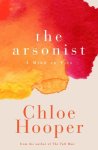
  • Chloe Hooper’s The arsonist (Penguin Random House Australia) (Lisa’s review)
  • Bri Lee’s Eggshell skull (Allen & Unwin)
  • Leigh Sales’ Any ordinary day (Penguin Random House Australia)

Trent Dalton, Boy swallows universeDebut fiction

  • Trent Dalton’s Boy swallows universe (HarperCollins Australia): (my review)
  • Chris Hammer’s Scrublands (Allen & Unwin)
  • Heather Morris’s The tattooist of Auschwitz (Echo Publishing) (Lisa’s review)
  • Christian White’s The nowhere child (Affirm Press)

There are also shortlists for Illustrated non-fiction, Children’s and Young Adult. For the full list, check out the website

The Winners will be announced on Monday 18 March, 2019 at the Leading Edge Books Annual Conference Awards Dinner, in Adelaide, SA.

The Indie Book Awards list their main sponsors for these awards: Peribo, Pan Macmillan Australia, Affirm Press, Allen & Unwin, Thames & Hudson Australia, Hardie Grant Egmont, Text Publishing, and Awards partner: Books+Publishing.  

Good Australian writing needs good Australian bookshops to prosper. Without them Australian writers are one more endangered species whose bush has been bulldozed.
(Richard Flanagan, Indie Book Awards 2014 Book of the Year,
The narrow road to the deep north)

Monday musings on Australian literature: Capel Boake

This week Bill (The Australian Legend) is following up last January’s Australian Women Writers Gen 1 Week with a Gen 2 Week, this one highlighting Australian women writers from 1890 to 1918. He takes his inspiration from HM Green’s A history of Australian literature, which characterises 1890-1923 as a period of “Self-conscious Nationalism”, the time of “bush realism”.

Anyhow, I will, of course, be contributing a review for this, but later in the week. In the meantime, as I did last year, I’m devoting a Monday Musings to a writer of the period, though unlike last year, not for the writer I’m reviewing. That’s because she, Louise Mack, already has a Monday Musings to her name. Today’s featured writer, then, is the unusually named Capel Boake.

Who was Capel Boake?

Capel Boake, no date, presumed public domainLike last year’s Tasma, Capel Boake is a pseudonym. Her real name was Doris Boake Kerr. She was born in Sydney in 1889, to Australian-born parents, and died in Victoria in 1944. She wrote under two pseudonyms, Capel Boake and Stephen Grey (the latter for collaborative works with poet, Bernard Cronin).

Although born in Sydney, she apparently spent most of her life – including most of her childhood – in Melbourne. She left school early, and worked as a shop assistant, secretary, librarian and book-keeper. Arnold in the Australian dictionary of biography, quotes Boake as saying that she was “self-educated at the Prahran Public Library”.

Her uncle was the respected poet, Barcroft Boake, who committed suicide in 1892 at the age of 26. His father, and Boake’s grandfather, was Barcroft Capel Boake, the Capel apparently reflecting their Welsh heritage.

Boake never married, and lived in the family home in Caulfield. The Australasian article, cited under Sources below, says that she liked swimming, fires and grilled chops on the beach, billy tea, and gardening.

Most relevant to us though is that, as another article says, she was “well-known in literary circles.” This included being active in P.E.N. International, the Fellowship of Australian Writers, and a foundation member of the Society of Australian Authors. She worked at one stage as a secretary to J. K. Moir about whom I’ve written before: he founded Melbourne’s Bread and Cheese Club, and was an impressive book-collector who created “one of the finest private libraries of Australian literature ever assembled”.

What did she write?

There is far less written about Boake, than there was about last year’s Tasma, but I did find some info in Trove, particularly in The Australasian’s Australian Writers Series (cited below). It reports that

Writing has always been in her blood, and from her earliest years she has felt the urge to express herself through the written word. But she remembers her first published story, which appeared in “The Australasian” in 1917. From then on she wrote a number of stories and poems for “The Australasian.”

So, she wrote short stories, poetry, and articles, but her favourite medium was apparently the novel. Her first, Painted clay, brought her “definite recognition as a serious writer”. Yet, she only wrote four novels, one of which was published posthumously:

  • Painted clay (1917, reprinted by Virago, 1986)
  • The Romany mark (1923)
  • The dark thread (1936)
  • The twig is bent (Sydney, 1946, posthumous)

Wikipedia says that her “subject matter included the options available to women in the early twentieth century, circus life, and early Melbourne history.” What Wikipedia doesn’t say, but The Australasian does, is that The dark thread 

tells of the growth of Jewish national feeling in a boy, the son of a Jewish father and Christian mother, who, living in Australia but going to the war and later learning of the establishment of the Jews in Palestine, felt the urge to go there as a unit of the Jewish nation. The idea of the theme came to Capel Boake when staying in the country, in hearing from a Jewish hawker some of his hopes and aspirations.

Interesting, huh?

Painted clay

Capel Boake, Painted clayGiven Painted clay is the only novel that officially falls within Bill’s Gen 2 period, I’ll conclude with two contemporary comments on it. The Western Mail describes it thus:

It is a sex story created on conventional lines. If there be still a demand for this type of fiction, this new nation under the Southern Cross may as well make its contribution. This is a story of city life, every word of which might well be true. It is original only in the sense that every individual life is original, and a bringing together of a number of lives in a novel may be done without either much originality or imagination. Neither of these qualities are conspicuous, yet the story is well written and suggests talent for better things. Helen is a really fine character, and capable of better things than the author gave her to do.

Positive, but not completely so. Interestingly, the article seems to pretty much tell the whole story. No worries about spoilers then?

The Australasian’s reviewer was a little more expansive, albeit also noting faults. S/he starts, however, by mentioning that the novel is wholly a product of Australia and says that its typography and format are “a credit to its publishers”. S/he then continues:

As might be expected in a first effort of the kind, the story is not free from certain crudities of thought and occasional lapses in craftsmanship, but it has, on the other hand, decided merits which raise it far above the average of Australian novels, and justify one in expecting much from Miss Boake in the days to come. It is a real attempt to present a faithful picture of life in a Melbourne setting. The authoress has not made the mistake, very common with our writers, of painting in the “local colour” so heavily that the human element in the picture is lost in what we may call a superficial provincialism of incident and characterisation. [my emphasis] In other words, while rightly choosing for her story a setting with which she is familiar, she uses the setting merely as a medium for explaining general truths of the interaction of human nature and life experiences as she understands them. It follows, therefore, that the interest of her story does not lie in sensational happenings or in the surface peculiarities of habits or manners on this continent or any particular part of it, but in the quality of her characters and the manner in which they react to their environment. The defects in her work are obviously the result of her own as yet somewhat restricted experience of life, and not of wrong method of attack, or misguided imagination, or a striving after meretricious effects. Their cause is consequently one that time should cure.

Such a lovely detailed analysis.

Anyhow, it sounds like Boake is worth checking out. How great that Virago reissued her, choosing this novel, I presume, because, as ADB’s John Arnold writes, it’s about “a shop assistant’s fight for independence in a period when menial work or marriage were the only choices for a majority of young women.” Not all Gen 2 writers were about “bush realism” it seems.

Sources

Arnold, John. ‘Kerr, Doris Boake (1889–1944)’, Australian Dictionary of Biography, National Centre of Biography, Australian National University, 2000.

‘Australian Writers Series: Doris Kerr, as “Capel Boake,” adds lustre to a name already known in literature’, The Australasian, 27 May 1939.