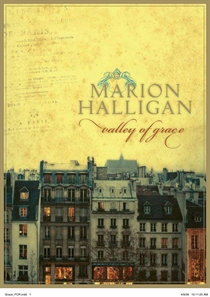
Marion Halligan, Valley of grace

Valley of Grace book cover (Courtesy: Allen & Unwin)

Valley of Grace book cover (Courtesy: Allen & Unwin)

Delicious but sly are the first words that come to mind when I think about Marion Halligan’s latest novel, Valley of Grace. Take this for example:

You know, people think flowers are pretty. Sentimental. Frivolous even. But the fact is, everything begins in the garden. Humans. Society. Civilisation. Evil. Things bud, bloom, weather, age, die. There is as much decay as there is burgeoning. Gardens offer emblems of our passage through the world.

Sly because you know she is alluding to the Garden of Eden here but, without the snakes, apples or trees, the garden symbolism is wider, more encompassing than the simple biblical Fall of Man. Delicious because the language flows so beautifully – and it’s typical of the sure writing that’s found throughout the book. The style is relaxed and flowing, even when it is staccato (if that makes sense). It feels conversational, and yet it is not colloquial. And, it contains Halligan’s hallmarks – wonderful descriptions of food and wine, of home and gardens.

The novel is set in contemporary Paris and chronicles a few years in the life of Fanny and her family and friends. At the beginning of the novel she is 25, single, and working with the gay Luc in his antiquarian bookshop, but very soon she marries builder and restorer of old buildings, Gérard, who is 38. There’s no mystery about this – you can see it coming and it comes. What doesn’t come after that is a baby.

There are no big dramas in this book so if that’s what you like, this is not for you. It is however the book for me, because while I can enjoy a book with drama, that’s not what I read books for. I read them for the very things that I got out of this book: astute observation of humans and how we think and behave, combined with writing that delights, inspires and grabs. Valley of Grace explores all the sorts of things that make up human experience – love and friendship, betrayals, secrets, appearance versus reality, and more besides – but most of all it is about babies and children. The having of them, the not having of them, the healthy and the damaged, the child and the god-child, and the wild child are all covered in this neat little book.

And, in fact, as Halligan told us at our bookgroup meeting tonight (to which we’d invited her and she’d wonderfully accepted), children were a major inspiration for the book. She lived in Paris in 1989 and, from her apartment window, could see the church, Val de Grâce, which was built by Anne of Austria as her part of a bargain with God to give her a child (Louis XIV, no less). This story fed into Haligan’s thinking about fertility (the presence of it and the absence of it) and about how in the past women came to “a bad end” if they didn’t have a baby or had a baby at the wrong time. She said that in the 1960s we thought this would all change but in fact it hasn’t quite turned out that way because women are having babies later and the result is more problems (such as infertility, increased miscarriages, “damaged” babies). This book is, then, her meditation on children – who they are, what they mean to us. And the following will show you just what Halligan thinks they mean:

Taking an angry or maybe anguished baby and changing it from a stiff protesting awkward bundle into a relaxed kitten-like creature seems to Fanny as important a thing as anybody could ever do.

The novel is told in third person but from different perspectives in different chapters – with some wonderful set-pieces, such as the story of Sabine and her arrogant philosopher husband Jean-Marie to whom she delivers “the pavilion girls”. Halligan said that telling the story this way replicates the way life goes – we are the heroes of our own stories, but bit-players in those of others. This makes sense – and certainly works well in the book.

There is a luminous quality to the book, conveyed largely through imagery to do with light and colour (mainly yellows). Mostly it is comforting, but sometimes it is not. Here is Fanny in the Val de Grâce:

She looks up at the immensity of the pale grey stone. Even with all the decoration, the cherubs, the frescos, the marble and gilt columns, it has a bareness, a coldness. It’s the colour of concrete, There’s no stained glass. The light is silvery; when the sun shines, lemony. There is no comfort in it, as there is in her house.

And then in her apartment:

She looks at the graceful space of the apartment. At the light, greenish gold today with summer sun and the fresh leaves on the chestnut trees, their milky white flowers buzzing with bees.

It’s a short book – just under 250 pages – and a rather gentle one. It’s sometimes a little sad, but other times it has a wry humour.  It’s well researched, but the research hangs lightly on it. Its ending is one of the most inspired I’ve read for a long time – but you’ll have to read it yourself to see if you agree.

I have read a few Halligans over the years – Lovers knots, The golden dress, The fog garden and The point – and have enjoyed them all. I’ll close this post with a favourite line from The fog garden because I think it describes this book to a T:

Read a wise book and lay its balm on your soul.

Maile Meloy, Liliana

[WARNING: SPOILERS IF YOU CARE]

Fun but flimsy was my first reaction on reading the short story Liliana by American writer Maile Meloy. But, after reading it a couple of days ago, I found that it kept popping back into my head. What seemed at first to be a funny little story – about a grandmother who returns from the dead – turned out to have a few things to think about.

It is, I guess, both an inheritance and a second-chance story but with a difference. It is told first person by the thirty-something grandson, recently laid-off work and so functioning as house-father. Inheriting a little of Liliana’s millions would not be unwelcome (to him, anyhow). However, Liliana, the flamboyant independent one has left her money to the RSPCA – that is to animal welfare! When Liliana turns up on our narrator’s doorstep alive and well – at the beginning of the story – our narrator clearly thinks he’s still in with a chance.

In the next few pages – it’s a tight little story – we learn about the complexities of family, about need/neediness and about, really, the failure of imagination. We learn that if you don’t make it on the first chance, you are unlikely to make it on the second – particularly if neither situation is based on sincerity…and our narrator is not exactly dripping with that particular virtue:

…I thought about Jesus and Elvis. People had wanted them back, badly, and still do. But who would have willed Liliana back…

and

My wife, whose family is Jewish, says that I tricked her into falling in love with me by withholding my grandmother’s Nazi-movie past until it was too late, which is entirely true – I’m not an idiot.

Get the picture? This is a man who thinks he might get a job simply by using “new fonts with which to express my accomplishments”.

And so, our narrator, who had lived a somewhat Bohemian life as a child but had yearned for and created a “buttered saltines in front of TV” sort of life, is not the sort of person to engage his grandmother. “Well, you aren’t very much like your father, thankfully … But you aren’t very much like me either”. The story therefore ends much as it begins – no grandmother, no inheritance and no job. He knows he failed, but does he know why? Meloy doesn’t really answer this – and perhaps that’s part of her skill. She drops some choice words, and the rest is up to us.

(PS As well as being published online, “Liliana” appears in Meloy’s latest collection, Both ways is the only way I want it.)

Kath Walker aka Oodgeroo Noonuccal

I fell in love with Kath Walker, as she was known then, in my teens and bought her book of poems, My people. I loved her passion for her people and the intensity but accessibility of her poems. Every now and then I look at them again. Today, however, my mum gave me a dear little illustrated book produced by the National Library of Australia called Little book of dogs. It contains a small selection of Australian poems on, well, dogs. One of them was also in My people, and is called “Freedom”. It’s a powerful little poem about man’s (and the implication is white man’s) desire to tame “all things wild and tameless”.

Brumbies on the run in Central Australia

Brumbies on the run in Central Australia

For copyright reasons I don’t believe I can quote the whole poem – it only has four verses – but here is the first verse:

Brumby on the wild plain
All men out to break you,
My warm fellow-feeling
Hopes they never take you!

Simple stuff really but, if you have a message you must get across to as many people as possible, simple is sometimes best.

Elizabeth Jolley, My father’s moon

‘No one,’ she says, ‘can write anything till they’ve had experience. Later on perhaps. You will write later on.’ (Elizabeth Jolley, My father’s moon, 1989)

Although fiction demands imagination, it must be based on  some kind of genuine experience. (Elizabeth Jolley, “Only Connect”, essay first published in Toads, 1992)

My father’s moon is the first book in Jolley’s semi-autobiographical trilogy, the others being Cabin fever and The George’s wife. It won The Age Book of the Year Award in 1989.

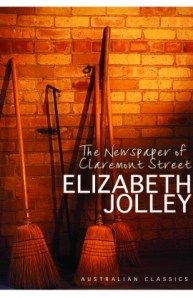
I am an Elizabeth Jolley fan – and, along with Helen Garner, another Jolley fan, I enjoy the way she repeats and revisits stories and characters from one book or story to another. In this book is the chapter, “Night Runner”, which was published as a short story in Meanjin in December 1983, and again in a short story anthology, Room to move, published in 1985. The narrator of the story – and of the novel – typifies Elizabeth Jolley’s alienated protagonists and their often peculiarly self-centred and self-deluded ways of coping with their loneliness. Clearly Jolley decided that this was a character she wanted to develop further. And clearly she also drew a lot from her own experience to develop this character. Like Vera, Jolley was brought up as a Quaker, her parents sheltered refugees before and during the Second World War, and she trained as a nurse. Like Vera, Jolley probably experienced loneliness and alienation. However, this is fiction and so we need to be careful about how far we take these analogies between Vera and her creator. Much as I can empathise with Vera’s predicament, I must admit that I would hate to think she is Elizabeth Jolley.

It’s an uncomfortable novel. Vera, the first person narrator, is not a highly sympathetic character but neither is she totally disagreeable either. What she is, though, is lonely. The book has a somewhat challenging structure – and I had to concentrate to keep track of where I was. It starts with Vera, a single mother, leaving her parents’ home, with her young daughter, to live and work in a boarding school. Her hopes for a lovely life there among people “who feel and think as I do” are dashed. Such people “are not here as I thought they would be … I am by my own mistakes buried in this green-leafed corruption and I am alone”. In this first chapter are flashbacks to the past, and gradually the book moves into the past, providing us with insights into her character and how she has ended up where she is. Most of this past takes place in the hospital where she trains as a nurse during the war. The book finally returns to the beginning of the novel with Vera resolving to make a step towards alleviating her loneliness. However, we are by no means convinced she will.

Moon, by atomicshark @ flickr, licensed under Creative Commons CC-BY 2.0

Moon, by atomicshark @ flickr, licensed under Creative Commons CC-BY 2.0

The book comprises titled chapters, many if not all of which could be (and some have been) published separately as short stories. This gives it a somewhat disjointed feel – but seems appropriate for the story of a person like Vera. It is full of wonderfully drawn characters, with some very funny (if often dark) scenes and dialogue. Just think nurses and hospitals! There are many references to music – something that is common in Jolley’s works. Music is usually a comforting force for her characters, offering them respite from what is often a cruel world – and this is the case here, with Vera being drawn to characters who love and play music. There is a lot of irony, some of it subtle, some of it less so as in Magda’s comment to Vera who has fantasised about an affair with her husband: ‘You are so innocent and good … Don’t ever change’. Naive perhaps, innocent no!

So, what about the title? Funnily enough(!), it refers to Vera’s relationship with her father, a major stabilising influence in her life. He tells her throughout her childhood that wherever she is she can always look at the same moon he is looking at, ‘And because of this … you must know that I am not far away. You must never feel lonely’. A lovely concept and one to which Vera regularly returns in the book.

My father’s moon is not, I think, the easiest Jolley to read, and there are some things that might become clearer on a second reading. However, its concerns are very representative of her work – loneliness and alienation, homosexuality, parenting, memory, music and religion. While Vera is deeply lonely, while she often behaves selfishly, she can also be kind. She is also no quitter. For that I rather like her.

Toni Jordan, Addition

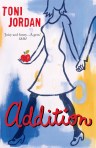
Addition Pb cover, Courtesy Text Publishing

Addition Pb cover, Courtesy Text Publishing

(SPOILERS: FOR WHAT IT’S WORTH)

Looks like, feels like, is it? Chick lit, that is. Toni Jordan’s first novel Addition has all the hallmarks of chick lit. The cover design with its line drawing of a female form invokes chick lit – albeit chick lit with an edge as the heels aren’t quite high enough and the colours not quite girly enough. The plot though is pure rom com and pretty much standard chick-lit: girl meets boy, girl loses (kicks out) boy, girl gets boy back. So why has this book garnered more attention and positive critical response than its sisters?

Well, Jordan is no Jane Austen (who is sometimes called the mother of chick lit) but she has produced something a little fresh. Her heroine, Grace, is not quite the standard chick lit heroine. She has had a breakdown, she is not in employment, she is not upwardly mobile and she is not focused on fashion and appearance (though it has to be said that she’s not oblivious to these latter either). Instead, she’s an ex-primary school teacher (not the most fashionable career, anyhow, in the world of chick lit) and she suffers from an obsessive compulsive disorder that results in her need to count, anything and everything, in order to maintain control over her life. And her hero, Seamus, a happy, ordinary dresser in an ordinary go-nowhere job, is “average”. Fortunately, though, with the help of her smart young niece, Grace realises at the end “that average can actually be unique”.

Grace’s voice is chick-lit-sassy and the book is genuinely funny a lot of the time, but there are also times when it is forced and tips over into being smart-alecky, such as her reactions to the psychiatrist and therapist. Her other hero is Nikola Tesla, the not-properly recognised famous inventor of many things electrical, who also had an obsessive compulsive disorder relating to numbers. It is the presence of Nikola in Grace’s life which sustains her at the beginning, helps ground her at the end and gives the book its real hook – that is, that being different is to be cherished and encouraged, as long as it doesn’t drag you down.

Jordan has a nice flair for language too. I liked the change in tone and pace when Grace’s panic rises, and a similar change in Jill’s speech to Grace when they are in hospital discussing their mother’s future. She’s lightly ironic in places and includes the odd bit of wordplay. It will be interesting to see where she goes next.

In addition (excusez-moi!) to its trying sometimes to be a bit too funny and its somewhat preachy ending (“Listen … Life is ..”), the book’s main problem is it’s too close adherence to the formula. You know she is going to lose him and you know she is going to get him back. It’s just a matter of how. Some level this same criticism at that favourite author of mine, Jane Austen, but her books encompass way more than plot to say some fundamental things about the human condition. I can read her again and again and see something new, or take away another perspective. I can’t see anything in Addition, as delightful as it is, that would afford me that pleasure on multiple readings.

So, read it, enjoy it – as I did – but if you want something a little more sustaining, try Jane.

Alice Munro, Dimension

Alice Munro, from Random House Australia

Alice Munro, from Random House Australia

Alice Munro won this year’s Man Booker International Prize. You probably know that she is a Canadian short story writer. I have read many of her short stories over the years, though not as many as I would like.

WARNING: SOME SPOILERS!

Her short story “Dimension” was published in the New Yorker in 2006, and was then included in the 2007 edition of Best American Short Stories. In some ways, particularly in its tone, it reminded me of Lionel Shriver’s We need to talk about Kevin. Like “Kevin” it deals with the build up and fallout after a terrible tragedy caused by a family member, but the details of the tragedy and the focus of the story is different.

Munro clues us in very early that something terrible has happened. In the second para she writes this about the main character through whose point of view we see the story: “She liked the work – it occupied her thoughts to a certain extent and tired her out SO THAT [my emphasis] she could sleep at night”. Ah, we think, why does she have trouble sleeping? And then at the end of that paragraph is: “She didn’t want to have to talk to people”. The next para is more clear that she has been involved in something terrible: she had been “in the paper”. In this paragraph we get the first mention of “he”. “He” is nameless in the first few mentions, conveying to us a sense of mystery and, yes, menace. Not naming him at this point also depersonalises him; it makes him “other” to we named people.

This, then, is a story about one of those terrible family tragedies that we see in the news and wonder about: how did it get to that point, how does the mother (or whoever is left) keep going, etc? Munro explores these questions sensitively, conveying how Doree’s youth and inexperience resulted in her making a poor decision at a vulnerable time in her life which then stunted her further development of self – with devastating consequences. And, she does a good job of building up a picture of a controlling man (the husband Lloyd), but through Doree’s eyes so that we see her growing awareness of his nature. Her awareness though is accompanied by an uncertainty born of someone who does not know enough to judge properly, to know what is “normal” and what isn’t. Munro also makes us believe in Doree’s post-tragedy path – her going-through-the-motions distance from those around her and her tie to the perpetrator who is the only person to offer her a “refuge” peculiar though that refuge is. Munro’s resolution to all this could be seen as a little melodramatic, but it is clever…and, reassuringly, somewhat hopeful.

In other words, like all Munro’s stories, this is well worth a read.

Favourite writers: 2, Elizabeth Jolley

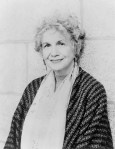
Not , unfortunately, being a time-traveller, I haven’t managed to see or hear Jane Austen in person. I am, however, far more fortunate in this regard when it comes to the subject of my next favourite writers post – Elizabeth Jolley. I did get to see and hear her at a literary lunch at the height of her career. My reaction was the same as many others – her “little old lady” appearance and voice belied her sharp wit and earthy worldliness.

Elizabeth Jolley (Photo: Courtesy Fremantle Arts Centre Press)

Elizabeth Jolley (Photo: Courtesy Fremantle Press)

It’s not surprising that she is one of my favourite writers: I call her my antipodean Jane Austen. She is witty and ironic, she is wicked (though blacker than Austen), and she tends to write about a small number of people in a confined, often domestic, situation. But here the similarity ends. While the “character” of Austen’s characters play a role in what happens to them – there’s a reason why Elizabeth not someone like Lydia “gets” Mr Darcy – Austen’s main interest is in the social and economic constraints on her characters. Jolley on the other hand focuses more on the interior. She explores loneliness and alienation. She looks at the disturbing or unsettling sides of relationships, the ‘feelings’ people have but often don’t admit to such as those for a person of the same sex or for a person for whom they should not have feelings for (due, for example, to age differences, power differences, or infidelity). She shows how difficult it is to maintain a long-term intimate or deep relationship that is equal on all levels (physical, intellectual, social, material, etc).

In the Australian and New Zealand Journal of Psychiatry (Vol. 25, No. 1, 1991), Jolley writes:

In my own writing I have been interested in the exploration of survival (perhaps emotional survival), resilience and responsibility. (I only know this now after several books are written).

How very Jolleyesque that aside is – humble but a bit sly at the same time. She continues a little later to say:

…for the most part my characters are perplexed, anxious, often frightened with perhaps one redeeming aspect in their personalities – that of optimism which might for a time, until it gets out of hand, keep them from the specialist’s doorstep.

Photo: Courtesy Fremantle Press

Photo: Courtesy Fremantle Press

The first Jolley I read was the short story, “Night runner”, in an anthology titled Room to move. It introduced me to her concept of alienation and rather black notion of survival, her particular brand of irony, her portrayal of characters who more often than not suffer from some level of self-delusion, and her dark humour. I went on to read Miss Peabody’s inheritance, The newspaper of Claremont Street, The well, The sugar mother, and An innocent gentleman, among others, and have never really been disappointed. I enjoy her use of repetition and self-referencing, the motifs and the characters, even, that reappear in different works.  She gets me in the pit of my stomach with her vulnerable but often unkind or downright cruel characters, but makes me laugh at the same time with her depictions of their attempts at survival. You just have to see Ruth Cracknell playing The woman in a lampshade to know what I mean!

I have not yet read all of Jolley’s works. Just as for a long time I kept back one Jane Austen novel because once I’d read it I’d have read them all, I am now doing the same with Jolley. Her books are so delicious they need to be savoured. I’m sure this is not the last post I’ll be writing about her.

Jane Austen’s letters, 1814-1816

By 1814, Jane Austen had published Sense and sensibility (1811) and Pride and prejudice (1813).  Mansfield Park (1814) was about to be published, and Northanger Abbey had been written many years previously but was not yet published. She was over half way through her major published oeuvre of 6 books and had less than 4 years to live. Tragedy!

Jane Austen's desk with quill

Austen’s desk, Chawton. (Courtesy: Monster @ flickr.com)

There have been several editions of her letters, the most recent being Jane Austen’s letters, published in 1995 and edited by Jane Austen scholar, Deirdre Le Faye. Of the estimated 3000 letters she wrote, only about 160 survive so it is well to savour them slowly. I have just (re)read the letters from 1814 to 1816, and found much to delight a Janeite. They contain some of her most famous quotes regarding her subject-matter and style, advice to her nieces on novel-writing, criticisms of other writing which provide insight into her own writing, as well as a lot of detail about her daily life.

One of her most famous comments was made to her niece Anna (nèe Austen) Lefroy in September 1814:

You are now collecting your People delightfully, getting them exactly into such a spot as is the delight of my life – 3 or 4 families in a Country Village is the very thing to work on.

Somewhat less well known is her response to James Stanier Clarke, the Prince Regent’s chaplain and librarian, who suggested she write a novel about an English Clergyman. She writes:

The comic part of the character I might be equal to, but not the Good, the Enthusiastic, the Literary. Such a Man’s conversation must at times be on subjects of Science & Philosophy of which I know nothing  […] A Classical Education, or at any rate, a very extensive acquaintance with English Literature, Ancient and Modern, appears to me quite Indispensable for the person who would do any justice to your Clergyman. And I think I may boast myself to be, with all possible Vanity, the most unlearned, & uninformed Female who ever dared to be an Authoress. (December 1815)

False modesty perhaps, but she she knew what she was comfortable writing and this was not it. She makes clear in her letters exactly what she thinks makes good writing and one of those things is to write what you know. She tells Anna that it is fine to let some characters go to Ireland but not to describe their time there “as you know nothing of the Manners there” (August 1814). Interestingly, it would have been around this time that she was writing Emma – some of whose characters go to Ireland but no details are given of their life there. She also tells Anna that fiction must appear to be realistic as well as be realistic when she says:

I have scratched out Sir Tho: from walking with the other Men to the Stables &c the very day after his breaking his arm – for though I find your Papa did walk out immediately after his arm was set, I think it can be so little usual as to appear unnatural in a book. (August 1814)

In other words, truth is allowed to be stranger than fiction!

In the September 1814 letter referred to earlier, she advises Anna to keep her characters consistent, and to be careful about providing too “minute” descriptions.  And in another letter written that same September she warns Anna off “common Novel style” such as creating a character who is “a handsome, amiable, unexceptionable Young Man (such as do not much abound in real Life)” and to not have a character “plunge into a ‘vortex of Dissipation’ … it is such thorough novel slang – and so old, that I dare say Adam met with it in the first novel he opened”!

There is a lot in these letters – about writing and getting published, the weather, fashion, health, and the like. However, in the interests of brevity I will close with something completely different but which, given the current popularity of Christos Tsiolkas’ The slap, seems very apposite. She writes this in 1815 about a young boy of her acquaintance: “we thought him a very fine boy, but in terrible want of Discipline – I hope he gets a wholesome thump, or two, whenever it is necessary”. If Jane thinks it’s a good idea, who are we to argue?

Favourite writers: 1, Jane Austen

This will (may?) be an occasional series of posts on my favourite writers. I will do them in no particular order of importance, with one exception, this first one. Jane Austen is the writer who turned my newly adolescent self from being a reader to a Reader. She is the one novelist whom I regularly re-read – whether it is to escape from humanity or delve more deeply into it.

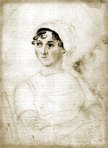
jane2So, what is it about Jane Austen that so appeals? Charlotte Bronte famously criticised Austen saying that “She ruffles her reader by nothing vehement, disturbs him with nothing profound”. Bronte though misses the point. A child of the Romantic era, she views the world through feeling and passion, whereas Jane Austen who transitions the Classic and Romantic eras saw the world far more rationally. She turns a more Pope-ish eye to her subjects and laughs at the foibles of humanity. I believe it is her light-with-bite touch that makes her, along with Shakespeare, the most widely read, studied and adapted of western authors today. As she wrote in Mansfield Park:

Let other pens dwell on guilt and misery. I quit such odious subjects as soon as I can, impatient to restore everybody, not greatly in fault themselves, to tolerable comfort, and to have done with all the rest.

Austen can perhaps be seen as the mother of the romcom but her romcom has bite. Like all romcoms her stories end happily for her main characters but unlike most modern romcoms (movies in particular) she is unsentimental, seeing even her main characters through clear analytical eyes. Her novels are not simply a matter of boy-meets-girl, boy-loses-girl, and boy-gets-girl again. They present a thorough analysis of the challenges women face in trying to make a self-determined way in a male-dominated world. The circumstances of women’s lives may have changed today but the truths of their lives haven’t necessarily. And so, while on the surface I enjoy her romcom, underneath it’s her feminism that keeps me coming back.

But there is more to Austen than her feminism. She is a keen observer of humanity and satirises – both through well-chosen words and phrases, and comic set pieces – pomposity, snobbery, stupidity, arrogance, hypochondria, greed and indeed any personality trait you can think of. And this is another reason why I love to re-read her because the more of the world I experience, the more I see in her work.

Then of course there is her writing. For some her long sentences and early 19th century language get in the way of understanding, but for me her language shines. She is terse and to the point. Her dialogue sparkles and she wastes little time on description. She makes me laugh, but she also makes my heart race.

I could spend time here describing each of her six novels but perhaps I’ll save those for separate reviews. So I will end here with just one of Jane’s observations:

The more I see of the world, the more am I dissatisfied with it; and every day confirms my belief of the inconsistency of all human characters, and of the little dependence that can be placed on the appearance of merit or sense.

This is Elizabeth Bennet caught at a bad time but you have to admit that, having seen Charlotte marry the silly Mr Collins and Mr Bingley talked by Mr Darcy and his sister into leaving the lovely Jane, she has a point.

Joan London, The good parents (Spoilers, sort of)

I was looking forward to reading Joan London’s most recent novel, The good parents, because I loved her Gilgamesh, not only for its engrossing story but also for its evocation of place and period and its spare writing. The plot of The good parents is a simple one. Maya, Jacob and Toni’s 18 year-old daughter, disappears just before they arrive in Melbourne to visit her, and the book chronicles the way they go about locating her and bringing her home. It is not, however, a mystery or detective novel but an exploration of “family” and particularly of parents and parenting.

London looks at these subjects through her various characters and their stories: Jacob and his mother Arlene, Toni and her parents Beryl and Nig, Maya’s housemate Cecile and her adoptive parents, Toni’s previous husband Cy and his mother, and so on. And from these she uses parallels in their stories to tease out similarities and differences. For example, both Toni and Maya run away with “unsuitable” men, Jacob and Cy are both products, essentially, of single mother families. It is, in fact, a cleverly constructed book, with links and refrains criss-crossing the narrative.

The book also seems to be about the life you choose for yourself and about how to find meaning in that life: Jacob has “the fear of dying without ever having been able to give expression to what it meant to live”; Toni is concerned that she and Jacob “opted for the small life”. I’m not sure that London quite marries these two themes together – and perhaps she doesn’t need to. I did find it hard to get a grip on Maya’s story – it’s an age-old story and yet it felt a little forced. But, Jacob’s and Toni’s stories are well told and she sensitively portrays a wide range of parents and parenting and the accommodations people do and do not make in their lives regarding their families. The book is called The good parents. By the end, I wasn’t quite sure whether we are supposed to read this somewhat ironically (as in “you call that good?”), or straight, implying that parents in general do their best, even if the end result may not be exactly what they might have wanted. I suspect it’s a bit of both, showing London’s capacity to be wry and compassionate together.

It’s a very open book, with no neat conclusion and no apparent authorial judgment. Cy is not brought to book for his behaviour, nor is Maynard for his. Other characters will survive their affairs and misdemeanours. And so on. It is a book about the mistakes of youth and the messiness of life.

I like books that are generous or forgiving of their characters. This is not to say that I don’t like gritty, hard-hitting books too, but I also like generosity and this book is generous. London allows us to look at her characters, warts and all, and to draw our own conclusions. I guess, in the end, it is a “slice of life” novel … but a tightly controlled one for all that.