Djuna Barnes, Come into the roof garden, Maud (Review)

English: Djuna Barnes, writer

A stylish Djuna Barnes (Presumed Public Domain, via Wikipedia)

Okay, I’ll admit it, I’ve never heard of Djuna Barnes (1892-1982). However, I was intrigued when I saw her pop up in the Library of America‘s (LOA) Story of the Week program last month, and so decided to investigate. I discovered that, while I didn’t know her, many did, such as, oh, ee cummings, TS Eliot, Carson McCullers, and other contemporary literary luminaries. She even interviewed, apparently, James Joyce. She was a modernist writer, and, according to Wikipedia, a key figure in 1920s-30s Bohemian Paris.

LOA’s notes state that she wrote around 100 articles for various newspapers, and that these articles “straddle the line between fiction and journalism”. That’s certainly how I’d describe “Come into the roof garden, Maud”. I decided to categorise it, according to my minimal blog taxonomy, “Review – Essays”. It’s an uncomfortable fit, but it’ll do!

Anyhow, to the article I’m reviewing today. LOA’s notes describe it as “fictionalised, comic snapshots of the fashionable crowd chasing the latest craze of the 1910s: rooftop dancing”. I did enjoy it – partly because reading about New York in the early 20th century is a treat in itself, but mainly because it is so deliciously satirical and I do like a bit of satire.

I don’t usually do this, but I think I’ll quote the beginning paragraphs of the article:

First of all, enter the atmosphere.

And this, the atmosphere of a roof garden, is 10 per cent soft June air and 10 per cent gold June twilight, and a goodly per cent of high–hung lanterns and the music of hidden mechanical birds, swinging under the tangle of paper wistaria, fifty feet above, where, between guarding panes of glass, shine electric signs, plus a few stars, of Broadway.

A good deal of the grace of God is there, too. It is a majestic something that keeps a distance east of the champagne bucket, and goes out upon the dancing space not at all.

The thing that is really lacking is a sense of humour. There are not ten people with a really good laugh in their systems in a whole evening on a roof garden.

Doesn’t this – together with the clever title – want to make you read on? It did me …

She goes on to describe the “beautiful people” (though that’s my term, not hers of course) who frequent the roof gardens, skewering their superficiality and inability to have a good time because they are too “hung up” (oh, dear, another anachronistic 1960s term from me) on appearance and being seen. Her language and writing are delicious as she describes this one and that one attending roof garden events. Dancing is a big thing in (or is it “at” or “on”) roof gardens. I loved this description of a band conductor:

The conductor, a great, towering figure in white flannels, stands knee-deep in green foliage, which may or may not be false, but which looks extremely like asparagus gone to seed, fine and green and feathery – a soft accompaniment to a fearsome pair of legs.

And her description of those women “who can come in without looking interested – the very essence of refinement”. (Hmmm … Is this still the case? Are “refinement” and “enthusiasm” mutually exclusive? I fear they may be, at least in the eyes of those who define “refinement”.) There is, though, a couple who throw themselves into dancing … but they’re not American. Her criticism of refined New York is a little reminiscent of Edith Wharton – but reminiscent only. Wharton was three decades older, and her style rather different.

Do read the story: the link is below.

Meanwhile, my question to you is: Have any of you read Djuna Barnes, in particular, her novels? If so, I’d love to hear what you think.

Djuna Barnes
“Come into the roof garden, Maud”
First published: New York Press, July 14, 1914
Available: Online at the Library of America
Australian Women Writers 2012 Challenge completed

Australian Women Writers Challenge 2012 Badge

Australian Women Writers Challenge (Design: Book’dout – Shelleyrae)

I am not a blogger who takes part in challenges, until, that is, this year when Elizabeth Lhuede set up her Australian Women Writers 2012 Challenge. It didn’t take me long to break my non-challenge rule, because this challenge focuses on my two main reading passions: Australian Literature and Women Writers. This was the challenge for me!

And so I signed up for the top level: Franklin-fantastic. This required me to read 10 books and review (at some depth) at least 4 Of them. I decided that I would also attempt the criss-crossing Genre Challenge of Dabbler which required me to read “more than one genre”. I can’t pretend that I actively pursued the “top” Genre Challenge of Devoted Eclectic which required reading “as many genres as you can read”.

This week I posted my 10th review and became the 30th person to complete the challenge (at least, my name is the 30th on the Completed section of the challenge page). I will continue – of course – to read Australian women writers and will add those reviews to the Review section of the challenge page, but in the interests of formal closure, here are my 10 books (with links to the individual reviews):

See! More than one genre, but I’d be cheeky to claim Devoted Eclectic. I hope, however, that Elizabeth (a true devoted eclectic) is happy. I certainly thank her for this great initiative. It’s been fun and has certainly attracted a lot of interest. If you haven’t taken part, there’s time yet: Australian Women Writers 2012 Challenge.

Jeanine Leane, Purple threads (Review for Indigenous Literature Week)

What I especially like about Jeanine Leane’s book, Purple threads, is how well she draws the universal out of the particular. That she does this is not unusual in itself. After all, this is what our favourite books tend to do. The interesting thing about Purple threads, though, is that the particular is an Indigenous one. Even as I write this post my mind is flicking back-and-forth between thinking about the Indigenous Australian themes in the book and the more universal ones about family and relationships. More on that anon. First, I want to say a little about the book’s form, because ….

I’m not sure whether to call Purple threads a novel or a book of connected short stories, except I don’t think it matters much. What is significant is that the stories revolve around a mostly female-only Indigenous Australian family living on a small piece of land in the Gundagai area of New South Wales in the 1950s to 1960s. The main characters run through the whole book, and the stories are told pretty much chronologically. There could even be a plot line or two, but they are not strong and are not what drive us to read on. This form had an eerie familiarity as I was reading and I realised it was because it reminded me of another David Unaipon Award winning book I have reviewed here, Marie Munkara’s Every secret thing. Is this a coincidence – after all, there are similar books by non-Indigenous writers – or should I go out on a limb and wonder whether this form reflects an Indigenous Australian way of story-telling? In addition to this similarity in form, these two books share a particular style of humour. Munkara’s is probably more belly-laugh, and is definitely more gut-wrenching, but both have a self-deprecating element, a willingness and ability to laugh at themselves, to see the absurd. It’s a form of humour we also see in Alexis Wright‘s Carpentaria. Okay, enough of that, back to the book itself.

The stories are told first person by Sunny (Sunshine) who lives with her sister Star, and her grandmother, Nan, and aunts, Boo (Beulah) and Bubby (Lily). Her mother, father, grandfather, more aunts and uncles, and others in the community, also appear in the book, but these five named characters are the focus. They are well differentiated. Nan is the down-to-earth matriarch of the group who doesn’t know how to read but “sure as hell know[s] how ta think”. Boo is independent and feisty, the one who takes action when action is needed. She loves the ancient Romans, particularly Empress Livia “who knew how to work behind the scenes”. Bubby, on the other hand, is the gentle, romantic one, who loves Emily Bronte and Wuthering Heights. The stories chronicle the first two decades of Sunny’s life in this female-dominated household. There are anecdotes about walks with Aunty Boo, about spoilt Petal (Sunny and Star’s mother), and about interactions with neighbours, teachers and others in the community. Most of the stories are light, albeit with a good degree of bite, but some are dark, such as the story of the young white neighbour, Milli, who is regularly beaten by her husband. This story, in fact, forms a minor plot line in part of the book.

The universal themes are about the way families comprise different and sometimes conflicting personalities and yet manage to love and support each other to ensure their joint survival. The particularity, though, has to do with being Indigenous, with being lesser, in a rural community. Leane handles this cleverly, using, for example, the Christian symbol of “the black sheep” throughout the book to tease out the ironies and complexities packed into this idea when it is played out in a sheep-farming community. The symbol is explicitly introduced to us in “God’s flock” where Sunny talks about going to church and being taught the story of “the black sheep”:

‘ … But Jesus, if we pray to him [the priest says], will find all the lost sheep and return them to the fold, even the black sheep that no one  else wants or loves.’

At least this bit made sense to us. Apart from Jesus, we didn’t know any other sheep farmer who loved black sheep. Most hated them, in fact. That’s why every year my Aunties always ended up with a few black lambs to raise ….

Leane shows how Nan and the Aunties navigate life in a world where “black was not the ideal colour” and in which “women livin’ by themselves are always easy targets”. They navigate it with dignity, often by pretending to go along with white society’s ways while staying true to their own values, which involve respecting and caring for other people and creatures and for their little bit of land.

Purple threads, apparently drawn from Leane’s life, provides an engaging but uncompromising insight into a life most Australians know little about. I hope I’m not being too pompous when I say that we need more books like this, and they need to be read by more people, if we non-Indigenous Australians are to have a chance of truly comprehending the experience of being Indigenous in our nation.

Read for ANZLitLovers Indigenous Literature Week, for which Lisa has also reviewed it.

Jeanine Leane
Purple threads
St Lucia: University of Queensland Press, 2011
157pp
ISBN: 9780702238956

(Review copy supplied by University of Queensland Press via ANZLitLovers blog giveaway. Thanks Lisa. Thanks UQP)

* I have assumed copyright permission for this cover on the basis that the book was provided by UQP

Vale Rosemary Dobson (Australian poet)

Last time I wrote about poet Rosemary Dobson was in my post on Australian literary couples but my post today is a sadder one as Dobson died this week, just a week or so after her 92nd birthday. She had a long career as a poet, starting soon after World War 2. When she first came to recognition, winning awards in the 1940s, she was described as the granddaughter of English poet and essayist, Austin Dobson, who was well-known in his time.

Dobson moved to my city – well, she was here first, in fact – in 1971 when her husband Alec Bolton became the National Library of Australia’s first Director of Publications. I knew Alec, as his office was next to mine for a few years in the late 1970s. He was a charming, lovely man who, first as a hobby and then a retirement project, managed his own small press which printed, among other works, some of his wife’s poetry. It’s nicely fitting that the poem used in our newspaper’s front page article on her death is one she dedicated to him:

The kitchen vessels that sustained
Your printed books, my poems, our life,
Are fallen away. The words remain –
Not all – but those of style and worth.

(from “Divining Colander”)

The poem goes on to use the “colander” as a metaphor for sifting out the bad from the good.

Dobson was active in Canberra poetry circles and well-known to our poets, some of whom I’ve written about here, such as Geoff Page and Alan Gould. But, she was known more widely too, having won several significant literary (and other) awards, including:

  • Patrick White Award for Literature (1984)
  • Grace Leven Prize for Poetry (1984)
  • Order of Australia for Services to Literature (1987)
  • Australia Council’s Writers’ Emeritus Award (1996)
  • The Age Book of the Year Award for Untold lives (2001)
  • NSW Premier’s Special Award (2006)

In a review of a recently published collected edition of her work, titled, Collected, Australian writer David Malouf described her as “the last of a generation of Australian poets – Judith Wright, David Campbell, Gwen Harwood – who in the 1940s and ’50s remade Australian poetry, and then, by remaking themselves, helped remake it a second time in the ’70s.” He also refers to a poem of hers which appears in The Penguin Book of Australian Women Poets (1986) which I like to dip into every now and then. The poem is dedicated to Christina Stead, whom Dobson knew, and is about Stead’s dying:

I sit beside the bed where she lies dreaming
Of Pyrrhic victories and sharp words said

[…]

Suppose her smouldering thoughts break out in flame,
Not to consume bed, nightdress, flesh and hair
But the mind, the working and the making mind

That built these towers the world applauds

(from “The Nightmare”)

I reckon that effectively conveys Stead’s strength and feistiness – and Dobson’s affection and admiration for her. “The Nightmare” is one of five poems of hers, from her mid career I think, included in the anthology. They demonstrate some of Dobson’s variety, her seriousness and her humour, but there’s no way I can do justice to her career here, now. Before I conclude though, I must say that what I found interesting, when I researched her life a little a few years ago, was that she and poet David Campbell, also produced anthologies of Russian poetry that they had translated.

For a lovely, brief summary of her life and contribution to Australian poetry, check out the podcast from ABC Radio’s Books and Arts Daily.

Australian poetry will miss her …

Elizabeth Harrower, The watch tower (Review)

Elizabeth Harrower The watch tower
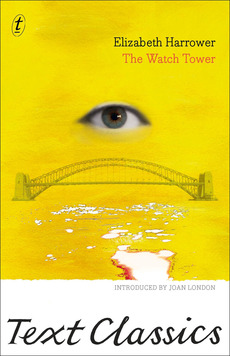
Cover for The watch tower (Courtesy: Text Publishing)

Elizabeth Harrower’s fourth and final novel, The watch tower, is a rather harrowing (couldn’t resist that) read. It is also an astonishing read, and I wonder why it has had such little recognition over the decades or so since its publication in 1966. Thanks to Text Classics, though, it now has a second chance. It deserves it. In fact, I’d say it is one of the best books I’ve read this year (to date, of course!)

What makes it so is the writing. It has a Patrick White-like intensity – and I can see her influence in writers like Joan London and Shirley Hazzard*. But first, a little about the content. It is set in Sydney and spans roughly the mid-1930s to around 1950. The plot is slim. It concerns two sisters, Laura and Clare, who are abandoned twice – first, albeit inadvertently, by their father (through his death when Laura is about 16 years old, and Clare, 9) and then a few years later by their selfish unloving mother who decides to return to her family in England, without them. What happens to them from this point is Harrower’s subject and it all centres on the ironically named Felix, Laura’s first and only boss, who comes to the rescue, or so it seems, when mother leaves the scene.

Laura had been a girl of dreams with the ability to achieve them. She aspired to be a doctor, but when tragedy strikes and she is taken from school, she’s not overly concerned. She “had read books” and in all but those with “circumstances ridiculously removed from hers, everything ended happily for young heroines.” And yet she also

had a sensation of having mislaid a vital pleasure that she could not remember, or a piece of herself.

Clare is younger and is less affected by having to leave boarding school, but life with their mother is no picnic. She expects her daughters to “take over”, to, in effect, run the house as well as go to school, for Clare, and business college then work for Laura. And so Laura’s life of servitude to one master or another begins, while Clare takes on the role of helper and watcher. Laura gets on with the job, generously and to her detriment, particularly when the misogynistic power-hungry Felix enters the scene. Clare sees what is going on, and expects more of life, but soon realises she

had really nowhere to go. Caught, not safe, cold – There were no reliable people.

From these premises, Harrower builds a story of psychological and physical entrapment in which both girls become caught in Felix’s malevolent net. Laura, ever the Pollyanna who believes noone would be consciously mean or vicious, becomes complicit in the destruction of her self while Clare, physically caught, maintains a vision of something better and does her darnedest to get Laura to see it too.

Harrower develops all this with a slow drip-drip, through language that is tightly pared to the essentials, through a simple but not even chronology that moves in fits and starts, and through a narrative voice characterised by subtle shifts in point of view. The focus is inwards  – on a small number of characters and their relationships with each other that rarely lets outsiders in. The result is a claustrophobic tone – and a slow build up of tension and suspense. Take this description, for example, of the women upon hearing Felix, drunk, coming down the path:

Breaking their poses like trees snapping branches, the women urgently regarded each other, cleared away all signs of work in an instant, examined their souls for defects, in a sense crossed themselves, and waited.

Acts of violence do occur, but are reported in retrospect. This seems to lessen our focus on the specific event and emphasises instead the response of the two young women. Will they decide to leave this time?

Late in the novel a fourth person, 19 year-old Dutch migrant, Bernard, is thrown into the mix, creating the catalyst for the denouement. For Laura, he provides a diversion for “poor Felix” and hopefully another chance for him to show a decent side. For Clare, he shows her that for all her suffering she can still be a useful person. For Felix, he of the “cold smile” and “deaf look”, well that would be telling… And as for Bernard himself, the question is whether he will survive his Felix experience intact.

And this brings me to my final point. While she doesn’t expressly say it, and in addition to her study of power and control, Harrower seems to be exploring ideas about the soul (a person’s essence) and character. Where does one end and the other begin? How do they act upon each other, and is change possible? This is a book I won’t quickly forget.

POST-SCRIPT, 2025: I wrote here about “power and control”, because the term “coercive control” by which it would now be known, was not in public parlance.

Elizabeth Harrower
The watch tower
(with a new introduction by Joan London)
Melbourne: Text Publishing, 2012
335pp.
ISBN: 9781921922428

(Review copy supplied by Text Publishing)

* Hazzard is only 3 years younger than Harrower but her first novel was published, I believe, in 1966, the year this, Harrower’s last, was published.

Kate Chopin, After the winter (Review)

Kate Chopin

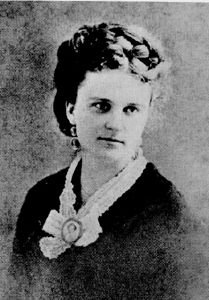
Kate Chopin (Public domain, via Wikipedia)

I am, as many of you know, a Kate Chopin fan and I therefore tend to keep an eye out for her in the Library of America‘s (LOA) Story of the Week program. “After the winter”, one of her earlier works, was an LOA story in April and so here I am for the fourth time writing about Kate Chopin.

According to LOA’s notes, “After the winter” was written in late 1891, expressly for Easter, and was bought by Youth’s Companion. However, they never published it. LOA writes:

Chopin’s story includes a mention on the very first page to [?] the calamity that had turned the main character into a misanthrope; while he was away fighting in the Civil War, his wife had grown “wanton with roaming” and had left him. It was Chopin’s first reference in her fiction to an unfaithful spouse, and it’s possible, one biographer [Emily Toth] suggests, that youth in the 1890s needed to be protected from even a passing reference to adultery – especially one that describes “women whose pulses are stirred by strange voices and eyes that woo”.

Chopin sold it again a few years later and it was finally published in 1896.

Despite the apparently risqué reference to “wanton” women, “After the winter” is a lighter story than most of her work that I’ve read. It is also a more straightforward read, but this doesn’t mean it’s not a good read. Chopin has a wonderful ability to engage readers with strong characters and effective imagery.

The story is set at Easter, which of course symbolises rebirth. As we read the story, we wonder whether this symbolism is going to play out literally or ironically, and Chopin manages to maintain our interest and suspense about this right to the end. The plot is fairly simple. Monsieur Michel had returned from the Civil War some 25 years prior to the time of the story to find his wife gone and his child dead

But that was no reason, some people thought, why he should have cursed men who found their blessings where they had left them

or, indeed, why he should have “cursed God”. However, he did and still does, so that by the time of the story he is living pretty much as a hermit, engaging with people as little as possible. Consequently, exaggerated stories had built up about things he’d done and was capable of doing. Enter a young girl, Trézanine, who has no flowers to contribute to the Easter church service. She ventures to the area around Monsieur Michel’s hut and picks all the flowers there, setting off a reaction in Michel that leads us to the story’s conclusion (which I’ll not divulge here).

What this story shows is Chopin’s writing skill and ability to develop a plot, maintain reader engagement, and use effective imagery to convey meaning and tone. The title, for example, is also both literal and metaphoric. Easter, of course, comes after winter, but our misanthrope’s life has, for 25 years, been a wintry one. Chopin makes a clever and ironic link between spring-affected Trézanine and winter-bound Michel. She needs to go hunting for flowers because none can grow in the “bleak, black yard” of her father’s blacksmith shop, while his “low, forbidding” “kennel” that seems to “scowl” is surrounded by “brilliant flowers”.

The story is told in three short acts. In the first we are introduced to Trézanine and Michel, and learn of Trézanine’s plan to go flowerpicking. In the second, Trézanine picks the flowers and Michel comes into town to confront the townspeople, whom he finds in church for the Easter service. The final act resolves the tension … but I won’t give that away except perhaps to say that it has biblical elements.

Another good story from Chopin that I’d happily recommend.

Note: My other Kate Chopin reviews are A respectable womanDésirée’s baby and Morning walk

Kate Chopin
“After the winter”
First published: New Orleans Times-Democrat, April 5, 1896
Reprinted in the story collection A night in Arcadie (1897)
Available: Online at the Library of America

Susan Johnson, Life in seven mistakes (Review)

By coincidence, really, my local reading group finally got around to reading Susan Johnson’s Life in seven mistakes just as her next novel, My hundred lovers, is to be published. Johnson has written several novels now, though I’d only read one, The broken book based on the life of Charmian Clift, before this. I loved that book and I liked this one.

Life in seven mistakes is a book targeted squarely at middle-class, middle-aged Australian baby boomers – a bit like, perhaps, Jonathan Franzen‘s The corrections was for Americans. It’s about a family – parents Nance and Bob who have retired to Australia’s answer to Miami, Surfers Paradise, and their three middle-aged children, Elizabeth, Robbo and Nick. They are not a particularly well-functioning family (says she, in an understatement). Johnson sets out to analyse how such families come to be … and how, or if, they can be rectified.

There’s not, as is common in books like this, a strong plot.  The main story is set over a few days encompassing Christmas. Robbo and Elizabeth, with their families, have come up to Surfers Paradise from their respective big southern cities to celebrate Christmas and their parents’ 50th wedding anniversary. Nick is absent, being in prison for a minor drug related offence, but his life has been off the rails for some time. The atmosphere is charged with long-unspoken tensions – and a crisis, of course, occurs – but I won’t spoil that main plot point.

Like The corrections, this book chronicles the family’s past while also telling a story about the present gathering. Johnson does this by using alternating the chapters to tell two chronological stories. The present one starts a couple of days before Christmas with the family already gathered, while the past story starts at the time Nancy meets Bobby, and progresses until it pretty much meets the present. This structure works well. It is easy to follow and enhances our understanding of the characters without interrupting the flow of what’s happening now. The chapters have pointed titles like “On top of the mountain” in which Elizabeth sees Australia’s Great Dividing Range in symbolic terms:

As she drives, Elizabeth fancifully pictures the mountain range as forming the backdrop to their lives, and for one fantastical moment she imagines time strung end-to-end along it, her father in his working boots, aged twenty-five, at one end of the mountains, and his son Nick, aged forty-five, at the other. She sees her father at the very top of the mountain, moving trees with his bare hands, and her brother at its very base. Did her father want to remain forever elevated, was that it?

Johnson has a keen eye for family dynamics and most readers (at least from the target group I described) would have moments of recognition here even if, hopefully, the whole is not their experience. It is this, together with Johnson’s sharply observed language, that makes this book somewhat of a page turner. You can’t help wanting to know how this motley crew came to be and what they are going to do next. Will Elizabeth, the successful ceramicist about to have her first one-woman show in New York, grow up and finally stop feeling “infantilised” around her family? Will Nancy relax her drive for perfection and let her family in? Will Bob engage with his family rather than stick to his position as “star of the story”?

I must say I loved the language. Almost every page contains something that makes you stop and think, yes, she’s got it. But – there is a but – somehow the book didn’t work for me quite as well as The broken book did. I’m not quite sure why because, really, it’s the sort of book that is normally right up my alley – and by this I mean the subject matter, the setting (much of which was very familiar to me) and the language.  And yet, it didn’t totally sing for me. One reason may be that the novel is billed as “funny” and “ironic”. Whilst there is humour here, I didn’t find it a funny novel, and I didn’t really see it as ironic. It read more like a serious, straight drama to me. This can’t be my main concern though, because a novel shouldn’t be judged by how it is described by others.

My bigger issue is probably more to do with the “voice”. The novel is told third person – mainly third person, limited.  And this limited point of view is predominantly Elizabeth’s. It’s her pain, her inner conflict, that we are mostly privy to. But the point of view does shift at times. It has to, for example, in the chapters about Bob and Nancy’s marriage because Elizabeth can’t know their story. And so, there are subtle shifts between Elizabeth’s, Bob’s, Nancy’s and sometimes an omniscient viewpoint. This, I think, spreads our engagement a little thin. The book feels like it’s meant to be Elizabeth’s, but it isn’t totally, and so when the resolution comes it feels a little, well, limited.

It was nonetheless a good read … and I would certainly read more Johnson. Can’t say  better than that!

Lisa at ANZLitLovers loved it. Resident Judge enjoyed it too, and like me, saw some similarity to The corrections.

Susan Johnson
Life in seven mistakes
Sydney: Bantam, 2008
346pp
ISBN: 9781741669190

Jane Austen’s letters, 1801-1806

The  years from 1801 to 1806 were somewhat unsettled if not downright traumatic years for Jane Austen. In December 1800 her father retired and her parents decided to move themselves and their two daughters to Bath. And then in 1805 her father died, suddenly. She writes to her brother, Francis, on 21 January (Letter 40) that “I wish I could have given you better preparation-but it has been impossible”. The impact, though, was greatest on the women. It left them in a difficult and dependent financial position.

Austen writes about the above events in the letters, but there are others about which she is silent. This could be because she and her sister Cassandra, the main recipient of her letters, were together, but it could also be because Cassandra destroyed selected letters after Jane’s death in 1817. One event not in these letters is the famous proposal by Harris Bigg-Wither in 1802. Austen accepted the proposal but the next day changed her mind, and promptly left the Bigg-Wither home with Cassandra. It was a distressful situation, as the Bigg-Withers were family friends.

Something else she doesn’t talk about in this selection of letters is her writing. She didn’t write a lot during this time, and nothing, as far as we know, from the time of her father’s death until they settled in Chawton in 1809. But, she did revise Northanger Abbey (then called Susan) in 1802, selling it to a publisher in 1803, and she started her (unfinished, as it turned out) novel, The Watsons, in 1804.

So, there’s quite a bit she didn’t talk about – in the surviving letters – but there’s still plenty to interest here. These letters were written when Austen was aged 25 to 30 years old, years when she was still relatively young but old enough to have some experience of the world. As with the later letters, there’s a lot of gossip and chat about family and friends, but there are signs of the novelist she was becoming, in addition to insight into life in Georgian England.

As with my last post on her letters, I’ll use headings to structure my discussion.

Georgian England

Jane Austen wrote novels about her own era and in many ways her letters replicate in reality much of what we learn from her fiction. She describes, in these letters, modes of transport and particularly travelling arrangements for women, the boats her Naval brothers worked on, accommodation hunting in Bath, fashion, card games, balls and food. All of these we find in her novels – sometimes with barbed effect.

I particularly liked her descriptions of place. Here is Bath, soon after her arrival:

The first view of Bath in fine weather does not answer my expectations; I think I see more distinctly through rain. The sun was got behind everything, and the appearance of the place from the top of Kingsdown was all vapour, shadow, smoke, and confusion, (Letter 35)

And a little town called Appleshaw:

that village of wonderful Elasticity, which stretches itself out for the reception of everybody who does not wish for a house on Speen Hill (Letter 30)

How could someone who writes that not be a novelist!

Lyme, as Austen readers will know, is where a major scene occurs in Persuasion. What, though, do you think she thinks of the place when you read this description of

a new odd-looking man who had been eyeing me for some time, and at last, without any introduction, asked me if I meant to dance again. I think he must be Irish by his ease, and because I imagine him to belong to the hon(ble) Barnwalls, who are the son, and son’s wife of an Irish viscount, bold queer-looking people, just fit to be quality at Lyme

On her self

Not surprisingly, we learn quite a lot about Austen, directly and indirectly, through these letters. We learn much  about her likes and dislikes. She’s interested in fashion but she doesn’t like “tiny” parties with only a few people “to talk nonsense to each other”. She spanned the Age of Reason and of Romanticism, but she’s more a child of the former: she highly values “wit”, a word that appears repeatedly in her descriptions of people, often defining whether she likes them or not, and she approves rationality. “To be rational in anything”, she says, “is great praise” (Letter 43).

We also learn something about her character. She’s stoical, for example, writing about a disappointment that “there is nothing which energy will not bring one too.” (Letter 33).

Clergy

If you’ve read Jane Austen you know that she has pretty definite ideas on the clergy. She ridicules pomposity (Mr Collins in Pride and prejudice) and vanity (Mr Elton in Emma). She admires sense and responsibility (Edmund in Mansfield Park). I had to laugh, then, when I read this in her letter:

You told me some time ago that Tom Chute had had a fall from his horse, but I am waiting to know how it happened before I begin pitying him, as I cannot help suspecting it was in consequence of his taking orders; very likely as he was going to do Duty or returning from it.  (Letter 44)

How I wish I could write letters like this!

Observations of people

It is her observations of people, however, that most delight readers of her letters and show us her novelistic eye in the making. In this group of letters, for example, is a wonderful description of an older woman that doesn’t take much to remind us of Emma’s Miss Bates:

Poor Mrs** stent! it has been her lot to be always in the way; but we must be merciful, for perhaps in time we may come to be Mrs** stents ourselves, unequal to anything & unwelcome to everybody. (Letter 44)

I would not have wished our Jane to have ended up as impecunious as poor Miss Bates, but I do wish she’d lived a bit longer to give us more novels and more letters to enjoy.

Note: This is my fourth post on Austen’s letters. The first covered her letters from 1814 to 1816, the second from 1811 to 1813, and the third from 1807 to 1809.

Deborah Robertson, Sweet old world (Review)

Sweet Old World by Deborah Robertson cover image

Cover (Courtesy: Random House Australia)

I may not have read Sweet old world by Deborah Robertson if Random House Australia had not suggested it to me – but I’m rather glad I did. Why do I say this? Because it isn’t the sort of book I usually like to get my teeth into. It doesn’t play with form, or voice, or style. It is, instead (“hallelujah” some might say), a single voice, third person, chronological novel. In other words, it’s a traditionally told tale – but is well done.

Before I continue, though, I must mention a surprising synchronicity. I read today, in Random House’s publicity sheet, that in 2006 Robertson had won the Colin Roderick award (for her first novel Careless, 2006). Now, if I’d read that before writing this week’s Monday Musings, that name (and therefore award) would have passed me by. Some things are clearly meant to be! I should add that, with the same book, she also won the Nita Kibble Award, and was longlisted for the Orange Prize and shortlisted for the Miles Franklin Award. She is a writer to watch.

So, onto the book. Sweet old world is about journalist and part-guesthouse owner, David Quinn. He’s 43 years old, single, childless, and lives on Inishmore Island, one of those beautiful but harsh Aran islands off Galway. David is your quintessential SNAG (Sensitive New Age Guy), but I say that without any sense of satire. He is a genuinely nice guy who desperately wants to be a father, something he, as a man, feels unable to talk about “although he’s not exactly the silent type”.

At the start of the novel, the closest he is to achieving this goal is to be the involved uncle of his sister Orla’s three sons. They are not central to the plot though. A woman is. Early in the novel, after dining at his house, 17-year-old Ettie has an accident on her bicycle and ends up in hospital in a coma. Her mother, 38-year-old Tania, flies out from Western Australia (whence David had also originally come) to watch over her daughter … and you can guess the rest. Or can you? I’ll say no more on the plot, to avoid spoilers.

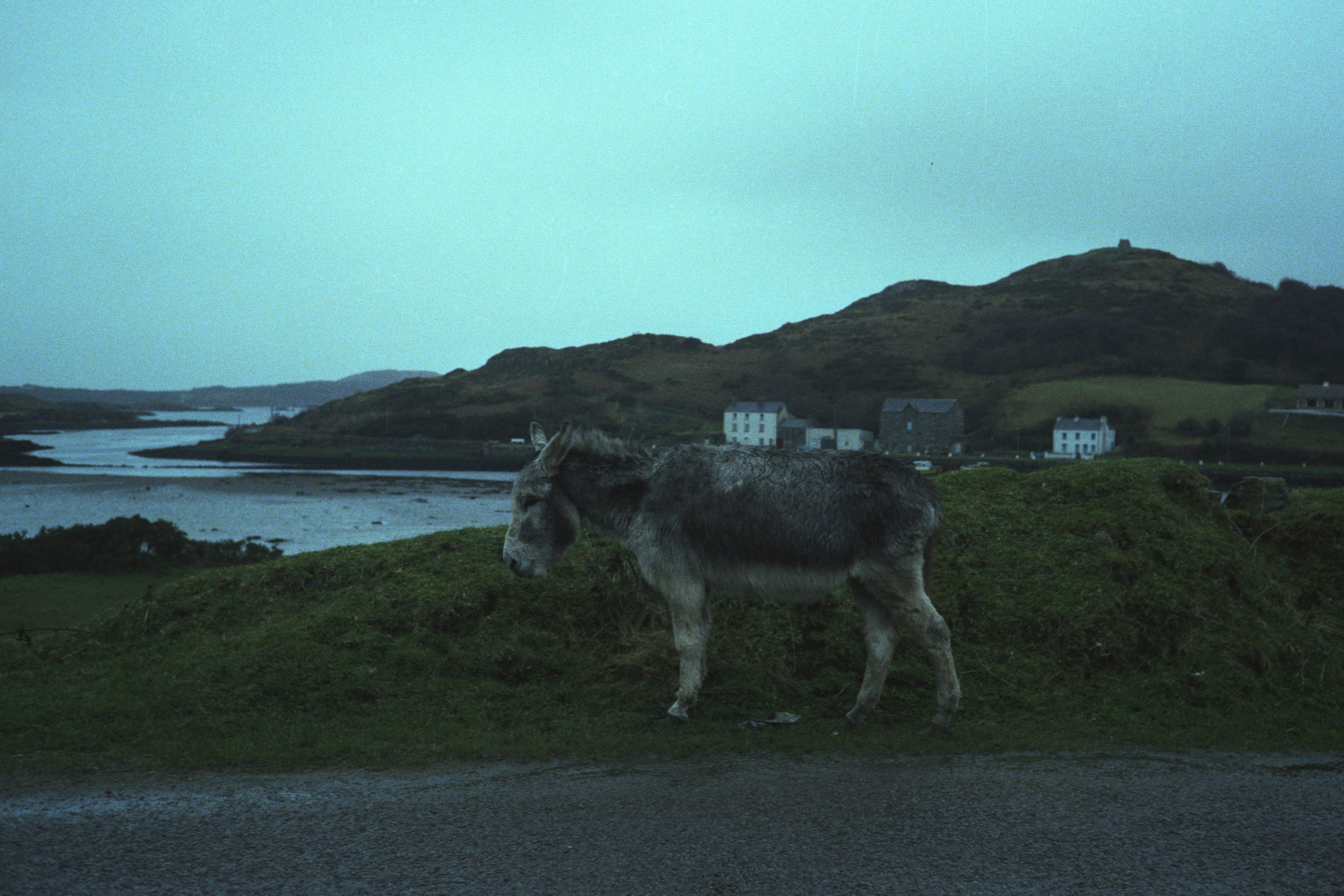
Connemara Donkey, Galway, 1980

Connemara donkey, Galway, 1980

What is lovely about this book is Robertson’s ability to describe place and get to the heart of a character. I loved her description of Inishmore and Galway (which I have visited). There’s rain, and more rain, there’s the wild terrain, but there are also blue skies and mild, warming weather. David’s relationship with nature charts his emotions, but not in a heavy-handed way. The first section of the novel (there are no numbered chapters) ends with:

He pushes the door wide open … and steps out into the day of salt-scented sunshine.

Later in the novel, “he gives into the sun and the excitement inside him” but, in a down period, “rain blackens the island’s limestone”. Another time, the island makes him feel “subtly undermined”. Out of context, these seem too obvious, but within the text they effectively support the tone.

What also charts David’s emotions is his bad back. When things aren’t going well, he is laid (seriously) low. This bad back also plays a role in the plot. It brings Tania to him – and it reminds us, and him, that he is on the wrong side of 40 (particularly in terms of his fatherhood goals), and “that, one day, time would suddenly contract; tighten around him”. It’s an effective and believable motif.

Like most chronologically told stories there are flashbacks to fill out the picture. We hear about David’s past failed relationships and about his previous job as a journalist for Agricultural Times which saw him writing about the Animal Liberation Front. We discover that Orla may be right about David being “a truth-seeking missile for hurt”.

If there’s a weakness in the novel, it’s in the plot. I found it a little contrived, particularly regarding the crises in the relationship. While the story is told in third person, it’s limited to David’s point of view. If we are to believe him, and I think we are meant to, then his actions make sense.  And yet Tania keeps falling over one issue – her uncertainty regarding his very brief and, from what the reader saw, innocent time with her daughter. I found Tania’s uncertainty understandable, somewhat, the first time, but less so thereafter. It all hinges on David’s credibility …

Technically, though, the plot is well-constructed, and teases us to second-guess where it’s going. Take, for example, this description of David’s nephews’ comic project which, sometimes

turns out to be the genuine item, that rare thing – a romantic comedy with injuries, tears and forgiveness, as well as real jokes.

Whether Sweet old world meets this description is something for you to discover. I will simply say that despite my initial statement, there is something fresh in this novel. I loved her descriptions, and the occasional flashes of whimsical humour. Robertson has created in David an interesting and psychologically-comprehensible character, and she has given real voice to men who long for children. There’s much to enjoy here.

Lisa at ANZLitLovers enjoyed it too, but also has some questions.

Deborah Robertson
Sweet old world
North Sydney: Vintage Books, 2012
291pp.
ISBN: 9781741668254

(Review copy supplied by Random House Australia)

Willa Cather, My Antonia (Review of eNotated edition)

Portrait Willa Cather 1936

I am a Willa Cather fan, and have read some of her novels and short stories, so was intrigued when eNotated Classics offered me an eNotated version of Cather’s My Ántonia for review. eNotated? That sounded like something worth exploring so, although I’ve read the novel before, I decided to read it again. I wasn’t sorry. It’s still a wonderful read.

My aim here is not so much to review the book, though I won’t be able to resist saying a little, but to explore this eNotated edition that I read on my Kindle. I understand from the website that eNotated Classics produces books for the Kindle, the Nook and iBooks. The company’s aim is to take “advantage of eBook technology to extend and enrich books in a way that increases understanding, engagement and reading pleasure”. Did they achieve this aim for me? That is the question!

I’d say yes and no – and will explain by discussing what I see as the three main components of the eNotated version.

eNotation links

These are underlined text (words or phrases) that you click for added information, which can be dictionary-style definitions, brief encyclopaedic-like descriptions, or interpretations. The eNotations can also be read as a group by clicking a single link at the beginning and end of each chapter, and they appear at the end of the book. In fact, the novel finished at the 77% mark in the book, with the last 23% comprising the eNotations and other material.

I was disappointed that many of the eNotation links contained the same information that the Kindle dictionary contains. Since the latter is faster to access by simply moving the cursor to the word to be looked up, those eNotations were rather superfluous. However, perhaps this depends on the dictionary the e-reader accesses, making the experience different with different e-readers.

There were a few of the more interpretive style and I appreciated those. One concerned the relevance of the play Camille which the narrator Jim sees with Lena. This sort of notation can be useful to students who may not, for example, know the play.

A useful feature is their identification system, which comprises a bracketed number at the end of each paragraph and each eNotation, making them easy to cite and to find. The number is obvious as you read, but you soon get used to it.

Theme indications

Now this one bothered me somewhat. See what you think: here are the first lines of the novel as they are presented in this eNotated version:

Last summer I happened to be crossing the plains of Iowa (TIME) in a season of intense heat, and it was my good fortune to have for a traveling companion James Quayle Burden – Jim Burden as we still call him in the West.

Throughout the novel sentences or phrases are treated like this – formatted in italics followed by (TIME), (NARRATOR) or (ELEGIAC). The “How to read this book” section at the beginning of the book explains that these italicised passages are cited in the relevant theme essay – Time, Narrator or Elegiac – at the end.  These are not really “themes” in the literary analysis sense: “Time” is a theme but “Narrator” relates to voice, and “Elegiac” relates to tone. I did find these a little intrusive and wonder whether they would have been better handled as links to the essay they occur in without the bracketed upper case word to show the way.

Additional information

At the end of the book are several items designed to add value. Most of these are not unique to e-Books. They are the eNotations (which you can click on to go back to the text), the three theme essays, a History of Nebraska, a Willa Cather Timeline, a Key Event Timeline, a Bibliography and Images. These are all useful value-adds. I liked the fact that the 12 images can be enlarged, something I can’t do with maps and images in the travel guide I bought last year. It was fascinating to see an image of a Dugout house in Nebraska, though photo credits next to the captions would have been good.

I’m not a Cather expert, but I found the Theme essays interesting – and expect they’d help both students and general readers. The bibliography is short and looks useful, though the most recent citation is dated 1987 which seems a little old. The novel might be a classic, but scholarship continues …

And now to the book itself

How do I love this book? Let me count the ways! I love its meditation on the past, on how the past intrudes into the present. Jim Burden is, really, “burdened” by his past. He meets Antonia when he is a 10-year-old orphan arriving in Nebraska to live with his grandparents, and she a 14-year-old Bohemian immigrant arriving with her family to settle there.  They end up on neighbouring farms and become friends when her father asks Jim to teach Antonia how to speak English. The novel then follows the next 30 or so years of their lives – the first four “books” cover 10 years from the novel’s opening, while the last “book” jumps to 20 years later. Jim, the narrator, keeps an eye on what happens to “my” Antonia over the years, but the book is as much about him and his inability to move on from the past. He says near the end:

In the course of twenty crowded years one parts with many illusions. I did not wish to lose the early ones. Some memories are realities, and are better than anything that can ever happen to one again.

 I love its language and tone. It’s delicious to read. I’d probably describe it as “melancholic” or “meditative” but I wouldn’t argue with Bedell’s “elegiac”. Here is an early description as Jim arrives in Nebraska from the greener, more lush Virginia:

Between that earth and that sky I felt erased, blotted out. I did not say my prayers that night: here, I felt, what would be would be.

Lovely, simple, spare writing.

And I love Cather’s description of pioneer life, and pioneer characters. Much of what she writes could easily apply to 19th century Australia. The landscape is different – but is similarly bare and harsh – and the ethic mix is different – but the experiences and hardship are universal. It’s a life and environment in which character is writ large – and Cather draws her characters beautifully. Even the minor ones – such as farm hands Jake and Otto who disappear early in the novel – are vivid. Here is Jim on Ántonia, late in the novel:

She lent herself to immemorial human attitudes which we recognize by instinct as universal and true. I had not been mistaken. She was a battered woman now, not a lovely girl; but she still had that something which fires the imagination, could still stop one’s breath for a moment by a look or gesture that somehow revealed the meaning in common things.

This is one of those novels that stays with you and I’d recommend it to anyone. Would I recommend this eNotated edition? Yes. It’s a good attempt to take advantage of the eBook format and, while there are features that didn’t  work perfectly for me, at USD5.99, it’s hard to beat.

Willa Cather
The eNotated My Ántonia
eNotated by Barbara Bedell
eNotated Classics, V1.00 12/1/2011 (based on 1918 edition)
Kindle edition
ISBN: 9780982744864

(Review copy supplied by eNotatedClassics.com)