Carolyn Collins and Roy Eccleston, Trailblazers: 100 inspiring South Australian women (#BookReview)

South Australia, say the authors of the beautiful coffee-table book Trailblazers, “was an early leader in women’s rights, so it’s no surprise that it has produced an army of trailblazing, inspirational women”. However, they continue, their stories are not well enough told or known, hence this book!

As with any endeavour like this, it was a challenge to limit themselves to 100, but they did. The women they chose cover “an array of fields – from vineyards to laboratories, from the judiciary and politics to schoolrooms, charities and the stage”, with their influence ranging from local communities to the international stage. They make the point that not all the women they chose were born in South Australia or, alternatively, not all those who were born in South Australia made their mark there. They also make the point that although South Australia was the first Australian jurisdiction to grant women the vote and the right to stand for election, back in 1894, “the fight for a ‘fair go’ continues today”. This means, I’d argue, that the women in this book serve as both a record of what has been achieved and as inspirations for what still needs to be done.

Book cover

The women are ordered alphabetically, which is clever as it saves the need of an index (though an index would be good if you seek other information, like writers, politicians, activists, etc. There is an excellent bibliography at the back, organised by subject, so you can quickly check what sources were used for each woman. I was pleased to see, for example, that Desley Deacon who wrote the authoritative (I’d say) biography of Dame Judith Anderson (my review) was used for the Anderson piece. The sources include primary sources, like newspaper articles, from the subject’s time. The book – a heavy tome I must say – is also beautifully illustrated with plentiful photographs.

So, who is here? There are the feminists, of course, including 19th century born Muriel Matters (who was featured in Clare Wright’s You daughters of freedom) and 20th century born Anne Summers (author of Damned whores and God’s police). There are the social reformers, such as Catherine Helen Spence who was also an early Australian woman “novelist, journalist, preacher and teacher”. Born in 1825, she was, as well, an early campaigner for women’s rights. On her 80th birthday in 1905, she described herself as “an awakened woman”:

Awakened in the sense of capacity and responsibility, not merely to family and the household, but to the State; to be used not for her own selfish interests, but that the world may be glad that she had been born.

South Australia has produced many women who have made significant political careers in Federal politics, such as, from recent times, Julie Bishop, Julia Gillard, (the late) Janine Haines, Natasha Stott Despoja and Penny Wong (listed alphabetically to avoid bias!). What a powerhouse of women. What is in South Australia’s water?

There are Indigenous Australian women, such as the activists Ruby Hammond and Lowitja O’Donoghue, Alice (Alitya) Rigney, Australia’s first female Aboriginal school principal, and Faith Thomas, the first Aboriginal woman selected for an Australian sporting team (cricket)

Australia’s beloved cook, Maggie Beer, and fashion icon, Maggie Taberer, are included, as is the Olympian, “Lithgow Flash” Marjorie Jackson, who, among other achievements, was South Australia’s governor from 2001 to 2007.

Book cover

And there are the writers, artists and performers. Mem Fox, author of the children’s classic Possum magic is an example. She was, writes the authors, “fired up over the need for more Australian stories for children”. But also included are the aforementioned actor Judith Anderson, writer Nancy Cato, artists Nora Heyson and Margaret Preston, composer Miriam Hyde, to name just a very few. I knew some of these were South Australian, others, like Margaret Preston, surprised me.

However, there are also the unsung, or lesser-known achievers. Medical workers, lawyers, educators, charity workers, activists and campaigners of all sorts, churchwomen, and more. I’ve never heard of environmentalist Barbara Hardy, or Pearl Wallace who became Australia’s first female riverboat captain in 1947 after passing “a gruelling three-day examination”. Gladys Sym Choon, described, simply, as an “entrepreneur”, was born in Unley in 1905 to Chinese parents. She opened her own store in Rundle Street, Adelaide, in 1923, believing herself to be the first woman in South Australia to incorporate. Doris Taylor, the founder of Meals on Wheels, was called “one of the great unsung heroines of Australia” by the late South Australian premier Don Dunstan.

There are so, so many stories here of women who have strived and achieved, often, of course, against immense odds. Because of its alphabetical arrangement, Trailblazers works more as a reference book, or one to dip into, rather than one telling “a story”, which it might have been under, say, a chronological arrangement or if ordered by spheres of activity or influence. The approach is, in a sense, encyclopaedic, providing brief biographies relevant to each woman’s reason for inclusion. This is not the place for whole-of-life, warts-and-all stories. Nor should it be, as that’s not its intention. However, the writing is bright, engaging and accessible. These authors want you to read about these women, so the pieces launch right in:

Living eight months a year on the Nullabor Plain while your dad hunts foxes and rabbits gives you a great backstory if you’re a kid with ambitions to be a country singer. (Country-singer Kasey Chambers)

OR

When Mary Miller went to work for the war effort in 1942, she was surprised to find her co-workers at the munitions factory were more afraid of their bosses than of the explosives. (Unionist, activist and teacher)

Published just days before last Christmas, Trailblazers probably didn’t make it under many trees, but it would be a great Christmas present for anyone interested in Australia’s trailblazing women, in South Australia’s settled history, or, in fact, in that of Australia as a whole. An enjoyable read.

Challenge logo

Carolyn Collins and Roy Eccleston
Trailblazers: 100 inspiring South Australian writers
Mile End: Wakefield Press, 2019
311pp.
ISBN: 9781743056905

(Review copy courtesy Wakefield Press)

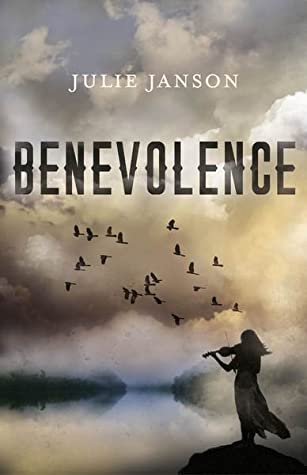
Julie Janson, Benevolence (#BookReview)

In a rather curious synchronicity, the last three books I’ve read have all had single word, multiple-meaning, titles, all relating to the colonial settlement of Australia – Gay Lynch’s historical fiction Unsettled (my review), John Kinsella’s memoir Displaced (my review), and now Julie Janson’s historical fiction Benevolence whose title drips with irony.

Recently, I commented that it would be good to see an Indigenous Australian novel responding to Kate Grenville’s The secret river. Well, it appears that Benevolence is that novel. In her Acknowledgements, Janson, of the Darug Nation, writes that Benevolence is “a work of fiction based on historical events of the early years [1816-1842] of the British invasion and settlement around the Hawkesbury River in Western Sydney, New South Wales”. Protagonist Muraging, renamed Mary by the colonisers, is based on the author’s ancestor, Mary Ann Thomas, just as Grenville’s novel, set around the same place and time, was inspired by, though not exactly based on, her ancestor, Solomon Wiseman. There, of course, the similarity ends, because while Grenville’s protagonist becomes a “big” man in colonial Sydney, Muraging’s experience is very different.

Benevolence starts in 1816, when the motherless Muraging is “about 12 years old” and handed over by her father to the British to be taught English at the Parramatta Native Institution. She is, says her father (naively we now know), “to be an important part of helping their people and she must learn their language and their ways”. Thus begins Muraging’s life of being caught between two cultures. Early on “she thinks she can be in two worlds and not have to choose”. However, she is never properly accepted by the British (of course) and, while accepted by her own Darug people, it is clear very early that Indigenous culture is being dismantled by dispossession, dispersal and death (through disease, murder and massacre), resulting in Indigenous people’s lives (already) becoming one of survival rather than of living fully.

And so, as the novel progresses through the years, we follow Muraging as she leaves or escapes the British settlement to find comfort, support and/or protection within Indigenous communities, only to return for one reason or another to the settlement, with the cycle starting all over again. Each time she returns to the settlement, the brutality and humiliations ratchet up. It’s a terrible story, but a credible one based on Janson’s detailed research, part of it done while she worked as a senior researcher for Professor Peter Read at the University of Sydney. This research resulted in the creation of the History of Aboriginal Sydney website.

However, this book is not history but historical fiction, so the characters are inspired by a mixture of historical fact and Janson’s imagination – and it is her imagination that brings these characters to life as authentic beings, particularly Muraging, her mixed-up friend Mercy, the weak-if-well-meaning reverend Henry Smythe, and to a lesser degree Captain Woodrow. The grotesque reverend Masters is another matter altogether.

Muraging is established from the start as a person with agency. She does not want to be a “servant” or “a fine maid”. Rather, she wants, she says, to ‘”improve my situation” … but she is ignored’. She never gives up her search for an independent life, and, though she makes poor decisions at times, she behaves courageously, loyally (sometimes at great risk to herself), and in a way determined to be true to herself and her people.

“You have no home” (Masters)

While the personal implications of colonialism and dispossession are conveyed through Muraging’s story, Janson reinforces this with historical fact, including references to documented massacres, discussions between characters about current events, and the occasional appearance of a governor (like Macquarie, like Gipps.) Janson also opens selected chapters with specific historical information. Chapter 4 (“1818: White people things”), for example, begins with an excerpt from the Sydney Gazette reporting massacres from, of course, the settler perspective. Chapter 20 (“1835: Deerubbin, The Hawkesbury River”) commences with a statement about Governor Bourke passing “the Proclamation of terra nullius”. And so on. These occasional documentary facts anchor Muraging’s story in the historical timeline.

The biggest villain of the piece is the appropriately named Reverend Masters. He represents the worst of British power, conveying or enacting British policy with little thought for the humanity of those he deals with. Like a certain world leader today, it’s all about him.

And this brings me to the writing. Janson’s descriptions are beautifully lyrical, though not always simply so. The novel opens with:

The grey-green eucalypts clatter with the sound of cicadas. Magpies and currawongs warble across the morning sky as the sun’s heat streams down. It is eaglehawk time …

Almost idyllic Australia, except “eaglehawk” time suggests the idea of violence … of hunter and prey!

There are also wry ironic touches, such as Captain Woodrow’s comment, “I have fought savages on the Indian frontier and I know that no honour exists among savages”. Hmm, who are the savages without honour here? Or, good guy ex-convict Ferdinand, with his Darug wife, defying Masters with “This is my land. My grant.” Whose land? In such ways, Janson encourages us to think behind the words of waibala people.

I also like the way Janson used local Indigenous language throughout the novel, enough to convey (and promote) local culture and language, but not so much as to impede understanding.

I was less comfortable, however, with the writing about actions and events. It can be quite cut-and-dried, with a disjointed or staccato feel that, for me, broke the flow of my reading. Maybe this was intended, as Lisa (ANZLitLovers) has suggested, to convey the violence – or, at least, the instability – of that world. I can see that, though I’m not sure it fully worked that way for me.

And finally, of course, there’s that powerful title. Who thinks they are benevolent, who pretends to be benevolent, who really is benevolent, not to mention what is benevolence anyhow, are the questions that confront us on every page of this timely novel.

“You won’t win, you know” (Masters)

Benevolence, then, is a compelling and worthwhile read. The history is good, offering First Nations readers something that more closely accords with their understanding of what happened, and non-Indigenous readers a corrective to the history we’ve been fed most of our lives. The story is engaging, with Janson treading a fine line between utter negativity and unrealistic hopefulness. I particularly liked the tone struck by the ending, but that’s for you to find out!

We need more books like this …

Challenge logo

Julie Janson
Benevolence
Broome: Magabala Books, 2020
345pp.
ISBN: 9781925936636

(Revieve copy courtesy Magabala Books)

Yarra Valley Writers Festival 2020 (Online): New Release Sundays: Ramona Koval

Four weeks ago I posted on another session from the Yarra Valley Writers Festival’s New Release Sundays, the one with Robert Dessaix talking about his book about growing older, The time of our lives. In that post, I mentioned that Dessaix had presented a couple of radio programs on ABC RN, including Books and writing. Well, coincidentally, this weekend’s program features Ramona Koval who presented, for five years, a successor to that program, The Book Show (which I also loved.) Her new release is the intriguingly titled A letter to Layla: Travels to our deep past and near future.

Layla is her granddaughter, and the book, as the session’s promo says, explores the following questions: How might the origins of our species inform the way we think about our planet? At a point of unparalleled crisis, can human ingenuity save us from ourselves? Sounds like a huge task to cover in 300 pages. Unfortunately, I had a little technical problem resulting in my getting two soundtracks, one with a 10 second delay, so I missed much of the first 15 minutes!

The conversation

Convenor – and journalist – Fiona Gruber started by asking the obvious question, who is Layla, which of course I’ve answered above. As far as I could gather via the garbled soundtrack I was listening to (until I got it sorted), this grand-daughter, together with her own realisation of, for example, climate change, got science-trained Koval thinking about what’s going to happen in the world. She noted her interactions with Layla – which I believe thread through the book – saying that “interaction” was elemental to the things she wanted to think and talk about.

Unfortunately, at this point, I was trying to work out what was going on with my system, so I missed much of the early conversation, which dealt with primates. By the time I had it sorted, we were nearly done with them – but I did get a few things!

Such as, that Koval likes to start at the beginning, but in this case she couldn’t start with unicellular organisms, hence the primates, hominids and hominins!

She talked about going to Georgia to see the homo erectus skulls at Dmanisi. She went there rather than Africa, the accepted “the cradle of civilisation”, because Africa is less safe, she said, and no-one would pay a ransom for her! Hmm … Anyhow, she told a very entertaining story about her Georgian tour, which I won’t repeat here, except to share that at the end of a long day, she was surprised that the scientist, whose name I didn’t capture, wanted to talk about the soul rather than the famous skulls!

She commented at this point that everyone she met gave her something different about being human than she’d expected. Anyhow, Gruber asked about the soul and what evidence there is for its existence. In art, she asked? Or ritual?

“we just measure”

Koval said she’s not religious, nor an ideologue, being more interested in where evidence takes her. She talked about being taken 700 metres deep into France’s Niaux cave. This would have been dangerous, she said, in the days without modern torches etc, so why? Her scientist didn’t want to answer. “We just measure”, he said, because they can’t know why. However, when asked, modern hunter-gatherers suggest that when people do things like this it’s because they wanted to go into “another world”.

This led to quite a discussion about scientists. Gruber suggested that this French scientist’s comment suggested a lack of imagination in scientists. She noted that there is consensus that cave paintings are spiritual, but that Koval found little consensus among her scientists. Koval responded that she didn’t see scientists as unimaginative – meaning, I think, that they have different imaginations. She also doesn’t think a lack of consensus is a problem. These disagreements, she suggested, are just “steps on the way to understanding”. One of my strong takeaways from this session was that Koval is curious and open-minded.

Koval talked about disagreements between scientists, citing one anthropologist Bernard Wood has had with other researchers, particularly in terms of process. The details are not my point here, though. After some discussion about this, Koval shared that Wood had told her that if he had his time over he wouldn’t do science at all because it’s all changing too quickly, and it’s hard to keep up. (This made me laugh because Mr Gums sometimes said the same about his career in electronic communications!) The interesting thing is what he said he would study – how humans make decisions. Koval liked this, saying this is the critical thing.

Gruber then raised race which led to the next most interesting point for me: University of New England’s Iain Davidson’s point that the original colonisation of what is now Australia is the first evidence of modern human thought. Such ability was probably evident before, but this act – the planning, etc, it involved – is the “first” evidence of such thought.

How interesting! I guess those of you who read in this area knew this, but I didn’t. Koval noted that these ideas are fraught with conversations about race and eugenics – but it is important to confront all ideas and continue being curious.

At this point, with around 10 minutes to go, Gruber turned to the second – and future-focused – part of the book. I won’t spend much time here, but Koval talked about cryogenicists and their perspective that nature is not our friend, that ageing is a disease to be cured. Some of these people are disdainful of our humanness, she said. However, many people are working on life-extension.

There was also some talk about computers, robots, AI, and whether they can ever replace us – and about computers and consciousness, and the idea of “singularity“. I’ll leave this here, except to report that Koval said that we are still in charge of things. No-one has, yet, made a computer capable of doing the complexity of what humans can do. Cooperation, for example, is fundamental to human endeavour and achievement, which is something computers can’t do (now anyhow, I suppose, is the caveat.)

Concluding discussion

Towards the end, Gruber asked more about the book itself. Did Koval aways plan it to be in the two parts. Koval replied that she was interested in all the ways people are thinking. She did her research, and the book, including the Layla parts, essentially self-assembled.

On whether the book changed her, an initially stumped Koval said that it made her admire humans’ need to understand, and desire to connect. It also made her think her next book should be about just ONE thing!

Gruber concluded by describing the book as one full of rabbit holes, good questions, and encounters with interesting people. I get the sense, from the review excerpts on Text Publishing’s website, that we only touched the edges of this wide-ranging book. I can’t imagine how you could achieve more in an hour’s conversation. I certainly found it an engaging conversation.

I thank the Yarra Valley Writers Festival for offering this session free of charge. This was the Festival’s first year, I believe. I’m impressed with what they have achieved and offered. I wish them well – for their sakes and mine – in 2021 and beyond.

From Yarra Valley Writers Festival 2020 (Online): New Release Sundays
29 November 2020, 4:00 – 5:00 PM
Livestreamed

Jane Austen, Juvenilia, Volume the first (#Review)

Book coverJane Austen’s Juvenilia, which range over three manuscript notebooks, contain twenty-seven items, which, says Austen scholar Brian Southam, she put together “as a record of her work and for the convenience of reading aloud to the family and friends.”

While only four of the pieces are specifically dated, Austen scholars have worked out an order of writing. Most of those in “volume the first” date from 1787 to 1790 (from when Austen was 11/12 to 14/15.) The few pieces which she added at the end of this first volume come from 1793.

Why read the Juvenilia?

There are many reasons for reading an author’s juvenilia, which Juvenilia Press defines as “early writings by children and adolescents up to around 20 years of age”. They probably vary depending on the author and reader in question, but, for me, the reasons for reading Austen’s Juvenilia include for

  • insight into her development as a satirist;
  • insight into her understanding of the “depths of human perversity” (RF Brissenden);
  • insight into her understanding of the machinations of society, such as the nexus between marriage and money, and the place of women;
  • insight into her linguistic skill and wordplay;
  • insight into her writing development, including toying with forms like memoir, epistolary novels, adventures, plays, poems;
  • fun, because, depending on your sense of humour, they are a hoot.

If you love Austen, one of the reasons you love her is for her wit. In her Juvenilia, we see the origins of what later became a sophisticated (and arch) use of wit. In her Juvenilia, though, the humour is more variously described as nonsense, absurd, burlesque, farce, melodrama, parody, satire, comic, and so on. The humour is broad and realism absent, but oh, such fun.

For some recent thoughtful discussions of the Juvenilia, check out:

Meanwhile, I’m going to share, somewhat randomly, some of the things I enjoy!

Themes

Like many, I’m interested in the “proto-feminist” ideas in Jane Austen’s novels, and love that they are already apparent in the Juvenilia. Volume 1 is replete with heroines who are active, have agency, go on adventures, and drink with the best of them! Things may not always work out for them, but you can’t say they don’t give it a red hot go!

Take, for example, the resourceful Eliza (“Henry and Eliza”), whose “happy Junketings”, despite various misbehaviours, end up well in the end. Or Cassandra (“The beautiful Cassandra”), who runs off with a bonnet (rather than a man), gets into various scrapes, but returns home feeling she’s had a “day well spent”. (She reminded me, stupidly I suppose, of Pat Hutchins’ Rosie, in the picture book, Rosie’s walk. In fact, my Jane Austen group felt that “The beautiful Cassandra” would make a fine picture book”)

There are exceptions, though, like Mary in “The three sisters – a more sombre, and longer, work pointing to the adult Austen. Mary, the eldest of three sisters, receives “an offer of marriage” from a man she does not like. The problem is that he will marry one of her sisters if she doesn’t! She wants the “triumph” of marriage, but not the man. Mary’s superficial self-centredness reminded me of Sense and sensibility’s Mary Musgrove and, as one in my group said, of Pride and prejudice’s Lydia.

This brings me to a major theme found in the Juvenilia, that ongoing one in Austen’s novels, which I call “the marriage project”. It encompasses her understanding of the social and, particularly, economic factors affecting people’s marriage choices, and her support for marriages based on mutual affection and respect. Several of the stories are about marriage, and while the stories are frequently absurd, there is no doubt about the ideas lying behind them.

We also see in the stories, examples of hypocrisy, vanity, gullibility, deception, pomposity and greed – all of which appear, more subtly, in the novels. We see commentary on the times, suggesting Austen was a keen observer of what was going on around her. There are reference to the education of young women “in the Paths of Virtue” (by a Governess who elopes with the Butler!) (“Jack and Alice”); to large families which we know Austen saw as problematic, particularly for the poor child-bearing women; and to the preference for male children.

Something we don’t find so much in the Juvenilia are the delightful aphorisms that pepper Austen’s adult novels. The Juvenilia are, generally, too over-the-top to contain these more measured pronouncements. But, I did find a couple. In “Edgar and Emma”, there’s a couple who “were indeed very sensible people & tho’ (as in this instance) like many other Sensible people, they sometimes did a foolish thing …” The later Austen would have worked this up into something more general, but you get the gist.

And, in “The three sisters”, is:

he hates dancing & … what he hates himself he has no idea of any other person’s liking …

So wise so young! (And reminiscent of “One half of the world cannot understand the pleasures of the other.” Emma)

Style

The best fun though comes from the writing itself. It can be so absurd, so exaggerated, that you can’t help but feel what fun the young Austen had writing them, and how much laughter there must  have been when they were read in the family circle.

In the play, “The visit”, there is a dinner party for 8 people but, wah!, there are only 6 chairs:

Miss F: Pray be seated. [They sit] Bless me! there ought to be 8 Chairs & there are but 6. However, if your Ladyship will but take Sir Arthur in your lap, & Sophy my Brother in hers, I believe we shall do pretty well.

Lady H: With pleasure

The absurdity here is two-fold – not only do we have guests being asked to sit in each other’s laps, but men are asked to sit in women’s laps. How subversive the young Jane was!

Much of the fun, in these pieces, is situational, like the lap-sitting above, but these is also much evidence of Austen’s linguistic ability, her love of words and language. There are silly place names, like Crankhumdunberry (“Frederic and Elfrida”) and Pammydiddle (“Jack and Alice”). There’s alliteration, like Rebecca being “surrounded by Patches, Powder, Pomatum & Paint” (“Frederic and Elfrida”). There’s wordplay, like “variety of variegated flowers” (“Frederic and Elfrida”).

Exaggeration is a favourite technique in the Juvenilia, and is fundamental to much of the humour. We have a marriage not being supported in “Frederic and Elfrida”

on account of the tender years of the young couple, Rebecca being but 36 & Captain Roger little more than 63. To remedy this, it was agree that they should wait a little until they were a good deal older.

They waited 7 days! (And, note the inversion of the two ages.)

We have a young woman’s leg being caught in a steel trap (“Jack and Alice”). It is set by Lady Williams “with great skill which was the more wonderful on account of having never performed such a one before.” Even more miraculous is that the young lady “then arose from the ground” and found herself able to “walk with the greatest ease”.

We have another young woman, who, unrequited in love, retires to her room and “continued in tears for the remainder of her Life” (“Edgar and Emma”).

Austen also uses puns and irony. In “Henry and Eliza”, a ridiculous story is accepted as a “rational and convincing account”. And, of course, there’s melodrama with suicidal drownings, shootings and poisonings – all very un-Austen-like.

The overall effect is one of exuberance, of a precocious and confident young writer, enjoying and exploring her talent.

But … what to make of it all …

What conclusions though can we draw? Are these often silly tales pure nonsense – which White suggests is antithetical to moral imperative – or do they point to the development of Austen as the moral commentator that many of us see? The truth probably lies somewhere in the middle. In the Juvenilia – in the first volume anyhow – I’d argue that both are at play. Many of the stories could very well be seen as pure nonsense, written in great fun by a young woman working out what and how she could write. But others, like “The three sisters”, undeniably point to the Austen we know. Let’s see what I find when we do the second and third volumes next year.

Meanwhile. I’ll leave you with Devoney Looser’s assessment which accords perfectly with mine:

the juvenilia shows that Austen was a child-writer of great, raucous, gender-role-defying fun, an irreverent observer of life’s ridiculous conventions and fiction’s silly habits.

Jane Austen
“Juvenilia. Volume the first” (ed. R.W. Chapman & Brian Southam)
in The Oxford illustrated Jane Austen. Vol VI, Minor works
London: Oxford University Press, 1969 (revision)
pp. 1-75
ISBN: 19 254706 2

Julia Baird, Phosphorescence (#BookReview)

Book cover

Much as I love watching Julia Baird on The Drum, and much as Mr Gums and I worried about her multiple cancer diagnoses and her extended journey to recovery over recent years, I’m not sure I would have read her book, Phosphorescence: On awe, wonder and things that sustain you when the world goes dark, if my reading group hadn’t scheduled it. However, we did schedule it, and I did read it. I found many of its ideas affirming or confirming, or, if not those, thought-provoking. In other words, although it feels like a self-help book which I usually avoid, I’m glad I read it.

Why? Her hope, which she shares late in the book, is pretty straightforward:

I wrote this book in the hope that it might be a salve for the weary, as well as a reminder of the mental rafts we can build to keep ourselves afloat, the scraps of beauty that should comfort us, the practices that might sustain us, especially in times of grief, illness, pain, and darkness. (p. 274)

She goes on to say that she understands that the things she’s shared, “stillness, kindness, the sea and ancient trees can hardly be a universal panacea for all the suffering on the planet”. This is true, but there is more to the book. In the Prelude, she describes her intention as being ‘to search for “the light within”, for what makes people shine’. What she shares, I’d say, will speak to each reader differently, according to our personal values, beliefs, and life experiences.

The book is divided into four main parts, focussing in turn on awe, wonder and silence; the importance of accepting and valuing failure and imperfection; the art and value of friendship; and the practice of looking and savouring, of paying attention to our inner strengths. Each of these explores its topic from three perspectives: documentary evidence from researchers, writers, philosophers; anecdotal evidence from people Baird knows or has spoken to; and, of course, her own personal experience.

It is an unusual hybrid of a book. Part book of essays, part memoir, and part quest (for “phosphorescence” or “the light within”), it sometimes felt more like a collection of random thoughts and ideas than the coherent argument I was expecting. This may be partly because several of the essays originated in previously published pieces, whose links are not immediately obvious. However, while this uncertainty was at the back of my mind as I was reading, it didn’t stop me enjoying each essay as it came along, because each had something interesting – and often heartfelt – to offer.

So, for the rest of this post I’m going to share some of the ideas that appealed to me and why.

Japanese thought, friendship, imperfection and doubt

First was the frequency with which she references Japanese thinking and aesthetics – and many of you know how much Mr Gums and I like Japan. The ideas, which are hard to put into Western words so my descriptions are loose, are Shinrin-yoku (or forest-bathing, the physiological/psychological benefits of being in the forest); Yūgen (mysterious or sublime, perhaps, experiences of beauty); Wabi-sabi (beauty in imperfection or transience, often characterised by asymmetry, roughness); Kintsugi/Kintsukuroi (repairing broken pottery visibly, so that the damage becomes part of its history and beauty); and Moai (the groups created among newborns in Okinawa to provide lifelong social support).

It’s not surprising that a nation that is generally known for values like stillness and stoicism, for preferring what novelist Juni’chirō Tanizaki calls “a pensive lustre to a shallow brilliance”, might have ideas relevant to a search for our “inner light”.

Moai is discussed in the section on friendship which is titled “We are walking each other home” (after Ram Dass). If there’s one image from the book that moved me it was this, the idea of “walking each other home”. It speaks of grace, tenderness and care, and of the way I’d like to think my friends, family and I are with each other. Baird’s section on friendship is beautiful.

In another evocatively titled section – “We are all wiggly” – Baird discusses failure and imperfection. Again, as in the other sections, she ranges over a wide range of ideas and examples, which are too numerous to share here, but they include honouring our failures, letting ourselves go (appearance-wise), and appreciating impermanence.

In the fourth section, Baird, a Christian, writes about faith and doubt. While I appreciated her discussion of her faith and what Christianity means to her, I most enjoyed her discussions of other forms of faith, hope and stoicism, and its corollary, doubt. Embracing doubt is valid, she argues, though she adds this aside:

(Although, seriously, if you can’t accept what the vast majority of scientists have to say about climate change, it’s not doubt that is your problem.)

I also enjoyed her exploration of the importance of searching for our “ert” (a term coined by marine biologist Lisa-ann Gershwin to oppose “inertia”).

In this section she also refers to Helen Garner and Tim Winton, Australian writers for whom faith is important, but whose thinking about it is personally rather than institutionally focused.

Setting a “low bar”

However, what struck me most was her articulation of a philosophy that I live by. It is, as described by psychologist Barry Schwartz, that “the secret to happiness is low expectations”. Or, at least, Baird adds, “realistic ones, erring on the low side”.

When it first dawned on me that this was how I managed my life, I was surprised. It didn’t seem to accord with my view of myself as an idealist, but I then realised that the two were not mutually exclusive. I could have high ideals of how we should all behave and treat each other but I could also not expect that we all would (all of the time). I worried that this might sound snooty, or holier than thou, but hoped not. For me, this approach encompasses the realisation that we don’t all come from the same place; we don’t all have the same experiences or values; we have not all had the same opportunities; and, perhaps most critically, many of the things that affect us are out of our control and that, to remain sane, I need to be able to accept them.

As I’ve been writing this post, it’s become clear to me that the book does, in fact, satisfy Baird’s goal of searching for “the light within” – even though, while reading it, I sometimes felt I was losing the overall plot as I followed her down multifarious paths. In retrospect, I’ve decided that this could be the book’s strength. Not only does it offer a variety of experiences and thinking, but it enables us to choose paths most suitable for us, paths that may change depending on our circumstances. I won’t be swimming with giant cuttlefish like Baird, but I’m very happy to bathe in the forest.

Challenge logo

Julia Baird
Phosphorescence: On awe, wonder and things that sustain you when the world goes dark
Sydney: Fourth Estate, 2020
310pp. (including 23 pages of Endnotes)
ISBN: 9781460757154

Book (Re)Launch: Sara Dowse’s West Block


Sara Dowse West Block

Way back when, I read Sara Dowse’s debut 1983-published novel West Block. It ticked all the boxes – it was by a woman, by a feminist, was set in Canberra (a rare thing), and was about the Public Service within which I also worked. I enjoyed it immensely and have often wanted to re-read it. I was therefore thrilled to hear that it was being re-published – and with a new introduction by Dowse.

This new edition, by For Pity Sake Publishing who published Dowse’s latest novel, As the lonely fly (my review), was virtually launched at a COVID-19-determined Zoom Event today.

The launch …

The launch comprised a conversation between Dowse and Michele Seminara who is a poet and managing editor at the Canberra-founded creative arts journal Verity La.

Sara Dowse, West Block

Seminara commenced by describing Dowse as a “legend of Australian literature”. She was also one of the Canberra Seven, about whom I have written before. The conversation, though, focused mostly on the book’s subject matter …

West Block, for the non-Canberrans here, is one of the original buildings in our Parliamentary Triangle. Built in 1926 it, and East Block, flanked what is now known as Old Parliament House. These buildings were the home of the public service.

So, Dowse’s novel, West Block, is about the bureaucracy. From 1974-1977, Dowse was the inaugural head of the women’s affairs section established to support PM Gough Whitlam’s first women’s adviser, Elizabeth Reid. Dowse became, she believed, the first femocrat.

Dowse spoke about her intentions for the novel which she started writing a couple of years after the 1975 Dismissal. She wanted to tell the story of what happened and how public servants coped in the aftermath. She wanted it not to be “just” a women’s story but a story about what women saw, about how women perceived government. “I wanted to nail them”, Dowse said, meaning she wanted to write about the male world from a feminist perspective.

The conversation, not surprisingly, also covered the politics then and now, particularly in terms of what was achieved and what has lasted. Dowse, describing the times as “unbelievably exciting”, talked about their focus being issues like child care. She said many reforms were introduced. Some were “tweaked” by the Hawke government, but they’ve been gradually whittled away since the Coalition returned to power.

She talked about the Australian federal public service, and of admiring its commitment to serving the people. She saw this public-good oriented value as being distinctively Australian, including amongst conservatives. (She couldn’t understand the antipathy with which Australians would speak of Canberra, their national capital.) However, she said, much of this value has been lost since PM John Howard turned governing into a business-style, economic rationalist, model. She talked about how private sector inflated salaries are being given as a reason why you can’t get good people into the public service, but her belief is that good people who know that the measure of their worth is not purely monetary will still work in the public service. (They’re not poor, in any event, she said.)

Dowse also told us that the main character, Cassie, is based on her, though Cassie is Australian – and unlike her, has red hair and green eyes! The joy of being a writer is that you can create characters you’d like to be! Cassie, like Dowse was, is also a single Mum juggling work and parenthood.

Seminara asked Dowse about her book’s structure with its five chapters focusing on different individuals. Dowse said she was influenced by two John Dos Passos works, Manhattan transfer and the USA trilogy. She was inspired by his telling a big story through overlapping individual stories, though he also married fiction with nonfiction which she didn’t do.

A point that came up a few times through the conversation related to the publishing and literary environment in Australia at the time she was publishing this book. For example, a fiction-nonfiction blend would not have been accepted then (though it would now.) She was also inspired by Dos Passos’ experimental writing, but that too she had to tone down for Penguin to publish the work. Upon the book’s release, one of the common questions posed about it was “is it a novel or is it stories?” This question is still with us, I believe, though writers are increasingly playing with this form (such as, most recently on my blog, Carol Lefevre’s Murmurations, my review.)

Seminara commented that she loves Dowse’s characters, with their commitment to public interest. They are, she said, “admirable as characters, flawed as people.” She also spoke of how Dowse had managed to make art out of traditionally boring subject matter. More art is now being made of such subjects, but Dowse, she said, was one of the first here to put humanity and drama into it.

Dowse briefly talked about this new edition, which was suggested by publisher Jen McDonald. Dowse said that this was her apprentice novel, and wondered how she would face having it out in the world again. However, she did not want a word changed. It had, she said, to live on its record. I am greatly looking forward to reading it again – and I fully expect it to appeal to me all over again, albeit with older eyes and understanding of how the world works.

Q&A

Dowse also read from the book, and answered a couple of emailed-in questions:

  • John Dos Passos’ influence. Dos Passos, she said, wanted to deal with the coming of mass society, and he did it by oscillating within a group of characters to build up a picture of society. This encompassed both the personal and the political, which, she reminded us, had been the feminists’ mantra: the personal is the political.
  • Susan Ryan‘s recent death and what has been left unfulfilled by it. Dowse expressed great sadness at Ryan’s death, as they had worked closely together. She said young girls now have the right to big dreams but there are still barriers. She believes the feminist voice has been rekindled through awareness of these barriers, injustices, domestic violence, and the ongoing childcare issue. While many things that were started under Whitlam have been truncated, whittled down, Ryan had achieved much, she said, including getting the ALP to accept Affirmative Action.

This was an excellent launch, and I’m glad it was on at a time that I could make. Do consider reading the book. It has much to offer.

Launch of West Block new edition
Online Zoom event by Barbie Robinson of Living Arts Canberra
25 October 2020

Gay Lynch, Unsettled (#BookReview)

Coincidentally, my first review after this week’s Monday Musings on historical fiction happens to be a work of historical fiction, Gay Lynch’s cleverly titled Unsettled. Consequently, I’m going to start there, that is, talking about the form.

Well, more or less, because I should at least give you a sense of its subject. It is set primarily in South Australia’s Gambierton (later Mt Gambier) from the 1859 to 1880, with most of the action taking place in the 1860s. It’s the story of an Irish family, the Lynches, who migrated to Australia in 1848. The Lynches, as you might have guessed from the author’s name, are based on her husband’s family. Unsettled explores their story primarily through two fictional characters, Rosanna and her younger brother Skelly.

… in the spirit of the story

Which brings me to the genre. In her Acknowledgements, Lynch provides some useful insights into the book. Firstly, regarding intention, she says that she specifically wanted “to materialise Lynch girls, absent from every family anecdote and official documents, church, state and school, apart from their birth documents … the girls’ lack of documentation and therefore their invisibility reflect their early settlement status on the frontier.” The challenge, of course, in “materialising” invisible characters from the past is to make them real, and avoid anachronism. This is difficult when records are few, but I think there are enough records of frontier women in general to validate Lynch’s conception here.

Lynch also addresses where she has changed Lynch family “facts”, such as their and their employers’ names. She also says that her two main characters, Rosanna and Skelly, “exist only in [her] imagination”, but “her lived experience as Lynch wife and mother, verifiable historical events, and historical Lynch antecedents” offered her “the connective tissue” needed for their fictional lives.

She goes on to say that “in the spirit of historical fiction” she has kept close to official records so that the characters drawn from life are as “true” as she can make them, but that “in the spirit of story, some events may not be verifiable”. That, of course, is historical fiction; it’s about fleshing out lives and times with story, where the facts are not known or are minimal.

Finally, she addresses her inclusion of the local Boandik people, an issue we often discuss here. She writes that they “tell their own South-East story – they still live on that once dangerous frontier, on land they never ceded – of their attempted eviction and genocide”. She says she “benefitted from knowledge shared by Boandik custodian Ken Jones”, conversed “with Boandik linguist linguist David Moon”, and was supported in addressing “important questions about voice and Indigenous historicity”. As I’ve said before, it’s really up to the Boandik people to say whether they agree with their representation, but Lynch has, it seems, done the right thing: she has included them in her narrative (in an appropriate way) and has conferred with the people she ought about doing so.

I’ve spent a bit of time on this I know, but it’s important with historical fiction to be very clear about what it is we are reading. I’m not an expert in South Australian settler history, but I feel Lynch has provided me with enough here, in addition to the knowledge I do have, to reassure me that her story is a valid one, so let’s get to that …

“now that the country is settled”

Nearly halfway through the novel, Rosanna converses with her employer, the hard, English station-owner, Mr Ashby. He is searching for some local Indigenous people who, he believes, have been “filching” from him. Rosanna, who has befriended the young local woman, Moorecke, tells him that Moorecke “belongs on this land”. She adds, hoping to throw him “off the scent”, that she rarely sees “Blacks, now that the the country is settled.”

Here, and throughout the novel, Lynch layers meanings in brief exchanges. Implied in this little scene, for example, are multiple power imbalances – between settlers and the original inhabitants, between the landowning English and the oppressed Irish, and between man and woman. And of course, overlaying this is the fraught idea of being “settled” and all its connotations, political and personal, physical and emotional. “Now that the country is settled” implies of course that it was “unsettled” before. This novel, with its title, “Unsettled”, keeps this foundational wound front and centre in our minds, which, dare I say, “unsettles” us.

This layering of meaning is one of the reasons I found the book an enjoyable read, because I enjoy such thoughtful, provocative writing, but the enjoyment here is compounded by the characters, particularly Rosanna and Skelly. Both are well individualised, with the novel’s third person perspective shifting mainly between them.

Over the course of the novel, Rosanna is our guide to what happens on the frontier. She works for the landowning Ashbys; she spends time with and learns from Moorecke of the Boandik people; she rides with the poet Adam Lindsay Gordon and confesses to Father Tenison Woods. She falls in love naively, makes many mistakes big and small, can be mean and tender, but she is a warm, courageous young woman who is determined to make her way authentically through a world which pays little attention to the dreams, let alone rights, of women. A world, in fact, in which “men are dangerous creatures if thwarted”.

Skelly, her sensitive and somewhat frail younger brother, is both foil and support to Rosanna. Their relationship contains the typical sibling tensions, but love and loyalty underpin it. It is what happens to Skelly at a school in Melbourne that propels Rosanna’s actions which provide the novel’s opening drama.

As is common in historical fiction, Lynch uses a family drama to drive the narrative forward and engage our emotions and interest. Lynch also imbues her story with references to both Australian and English literature of the times. For keen-reader Rosanna, Anthony Trollope’s Irish heroine Feemy Macdermot, from his first novel The Macdermots of Ballycloran, offers lessons to heed.

The main work that threads through the novel, however, is Edward Geoghegan’s play The Hibernian father, which was a popularly performed tragedy in mid- to late-nineteenth century Australia. It tells a tragic story of the Lynches of Galway, whence our own Lynches had come. The tragedy distresses our young Lynches, and threatens to destabilise them as they struggle to forge their lives without failing in the same catastrophic way. Rosanna’s father Garrick Lynch reassures his family that “it’s an ancient story … from bloody times”, but the irony is that “bloody times” are still with them.

In the end, all of this has one goal, to serve the real point of Lynch’s story, the complicated politics of settlement, oppression and dispossession, the injustices of colonialism. As Rosanna becomes aware, during an interaction with her employer Mrs Ashby, “living on the edge of civilisation unsettles everyone”. Gay Lynch’s book does the same – and that, I’m sure, was her intent.

Challenge logo

Gay Lynch
Unsettled
Balmain: ligatu.re, 2019
421pp.
ISBN: 9781925883237

(Review copy courtesy the author.)

Fannie Barrier Williams, Women in politics (#Review)

It’s been months since I posted on a Library of America (LOA) Story of the Week offering, but this week’s piece by African American activist, Fannie Barrier Williams, captured my attention. Several LOA offerings this year have been relevant to the times – including stories about infectious diseases – but this one is so spot on for so many reasons that I could not pass it up.

Fannie Barrier c1880, photographer, public domain via Wikipedia

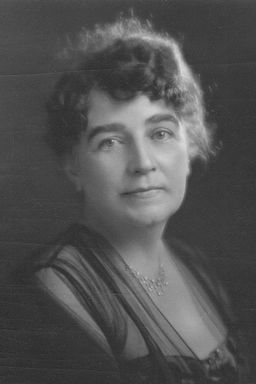
Fannie Barrier Williams (1855-1944) was, according to Wikipedia (linked above), an American political and women’s rights activist, and the first black woman to gain membership to the Chicago Woman’s Club. According to LOA, she was also the first African-American to graduate from Brockport Normal School and “quickly became part of Chicago’s black elite when she moved there with her lawyer husband in 1887”. She was a distinguished artist and scholar.

However, it’s her activism that is my focus here. Wikipedia says that “although many white women’s organizations did not embrace their black counterparts as equals, Barrier Williams made a place for herself in the Illinois Woman’s Alliance (IWA).” She represented the viewpoint of black Americans in the IWA and “lectured frequently on the need for all women, but especially black women, to have the vote”.

And so we come to her little (in size not import) piece, “Women in politics”, which was published 1894. It concerns women voting. Universal suffrage was still some way off in the USA, but Barrier Williams commences by arguing that the “fragmentary suffrage, now possessed by women in nearly all states of the union”, will certainly and logically lead to “complete and national suffrage”. So, with this in mind, she, says LOA’s notes, “challenged women to use their newfound political power wisely”. She asks:

Are women ready to assume the responsibilities of this new recognition of their worth? This question is of immense importance to colored women.

She then poses, provocatively,

Must we begin our political duties with no better or higher conceptions of our citizenship than that shown by our men when they were first enfranchised? Are we to bring any refinement of individuality to the ballot box?

Her concern is that women – but we could read anyone really, giving it broader relevance – should not vote on partisan lines. Her concern is that voting along party lines will achieve nothing, and that

there will be much disappointment among those who believed that the cause of temperance, municipal reform and better education would be more surely advanced when the finer virtues of women became a part of the political forces of the country.

Hmmm … this seems to trot out the belief that women will bring “womanly” virtues, those more humanitarian-oriented values, to politics, which history has not necessarily borne out. However, this doesn’t belie the main point about voting thoughtfully.

She then discusses the opportunity for women to vote in Chicago for the trustees of the state university, but notes that the two women candidates have aligned themselves, respectively, to the republican and democratic tickets. She says that “so far the campaign speeches and methods have not been elevated in the least degree above the dead level of partisanship”. She doesn’t want to discredit these women’s good motives but argues that

this new opportunity for self-help and advancement ought not to be lost sight of in our thirst for public favors, or in our eagerness to help any grand old “party.” We ought not to put ourselves in the humiliating position of being loved only for the votes we have.

It seems that these two women candidates were white women. What she says next reminds me of Aileen Moreton-Robinson’s Talkin’ Up to the White Woman: Indigenous women and feminism (2000)which Angharad of Tinted Edges recently reviewed. Angharad writes that “Moreton-Robinson argues that because of feminism’s inherent but insufficiently examined white perspective, Indigenous women are excluded, minimised or merely tolerated conditionally. She argues that because race is considered to be something that is “other”, white feminists are unable to acknowledge their own race and associated privilege, their own role in perpetuating racial discrimination and are therefore unwilling to relinquish some of that power.”

A similar point was made over 100 years earlier by Barrier Williams:

The sincerity of white women, who have heretofore so scorned our ambitions and held themselves aloof from us in all our struggles for advancement, should be, to a degree, questioned. It would be much more to our credit if we would seek, by all possible uses of our franchise, to force these ambitious women candidates and women party managers to relent their cruel opposition to our girls and women in the matter of employment and the enjoyment of civil privileges.

She continues that “we should never forget that the exclusion of colored women and girls from nearly all places of respectable employment is due mostly to the meanness of American women” and that voters should use the franchise to “check this unkindness”. She urges voters not to focus on “the success of a party ticket for party reasons”. This would make them “guilty of the same folly and neglect of self-interest that have made colored men for the past twenty years vote persistently more for the special interests of white men than for the peculiar interests of the colored race”.

Strong words, but history surely tells us true ones. So, she asks voters “to array themselves, when possible, on the side of the best, whether that best be inside or outside of party lines”.

For Barrier Williams, as for many who fought for women’s suffrage, the vote was not just about equality but about what you could do with the vote. It was about having the opportunity to exert “a wholesome influence in the politics of the future”. The words may be strange to our 21st century ears, but the meaning still holds true – and is a timely one to consider now!

Fannie Barrier Williams
“Women in politics”
First published: The women’s era, 1894
Available: Online at the Library of America

Monday musings on Australian literature: Alison Lester

Saturday, as I noted in my Six Degrees of Separation post, was National Bookshop or Love Your Bookshop Day in Australia (and in Great Britain too, it seems). For last year’s day, I wrote a post on author-owned/managed bookshops, most of which were located in places other than Australia. The exception was Australian children’s author and illustrator, Alison Lester, so I thought she deserved a little feature post today.

Alison Lester has appeared in my blog a few times, but the first was the most significant, because it was when she and Boori (Monty) Prior were named our first two Children’s Laureates. She was also mentioned briefly in my post referencing the 2018 National Bookshop Day, when Daughter Gums bought a Lester book for a baby shower she was attending! It’s time, then, to give her a little bit of a profile here, even though children’s literature is a sideline focus here.

As I wrote in my Children’s Laureate post, I first became aware of Lester through my own children. As I wrote then, she’s an author/illustrator best known for her picture books, though she has also illustrated chapter books for other writers and written a couple of young adult novels. The first book that she both wrote and illustrated herself was 1985’s Clive eats alligators.

Book cover

This means that Lester was just starting out when my children were young, so most of her children’s books have been published after my children left that stage of their reading lives. But, we did have some favourites, including Rosie sips spiders (1988), Imagine (1989) and Magic beach (1990). As our children grew we also enjoyed Robin Klein’s chapter book, Thingnapped, which was illustrated by Lester.

Lester, like all the best children’s book authors and illustrators has a lovely sense of fun while also conveying important values to children, such as respecting difference, a critical value at a time when rejecting other seems to be on the rise again. Indeed, as her website says, “her picture books mix imaginary worlds with everyday life, encouraging children to believe in themselves and celebrate the differences that make them special”.

Jonathan Shaw of Me fail? I fly has discussed Alison Lester’s books several times on his blog in his Ruby Reads series where he discusses the books he reads to his granddaughter. Lester’s books featured by Jonathan to date are:

  • Clive eats alligators (1985), which features seven children going about their daily lives, except that “Clive eats alligators”. You’ll have to read it to discover that that means! Jonathan says that the fun in this book lies in tracing any one of these children through the book to see “how their interests play out in the different contexts: the girl who loves horses, the bookish boy” and so on. Rosie sips spiders, which Daughter Gums loved, follows the same children in more adventures through life. Lester fans will get a giggle when, in this Rosie book, they read that “Clive jumps in Alligator Creek.”
  • Are we there yet? (2005), a picture book about – yes, you’ve guessed it – family car travel. Jonathan says that her images are “completely beguiling”. Maybe this is why it was the first book given to a child from Dolly Parton’s Imagination Reading Library.
  • Kissed by the moon (2013), about a baby, the night, and nature. Jonathan writes that “pragmatically speaking, I guess it’s a bedtime read, but Alison Lester knows how to put words together, and how to make images, that reach in and touch your heart”.
  • My dog Bigsy (2015), which is one of those books in which the feature character wanders around a farm, meeting other animals, like, for example, Pat Hutchins’ fabulous Rosie’s walk. I haven’t read this Lester yet, but Jonathan says that Lester does it well. I think I’ll be getting it for Grandson Gums.

Thanks Jonathan for posting on these books – for the Australian Women Writers’ Challenge where we have appreciated these posts, and so I could use them here! Very thoughtful of you!

Lester has been shortlisted for, or won, Children’s Book or Picture Book of the Year awards several times over the years. She has also won the Dromkeen Medal for services to Australian literature, and was the first children’s writer to be awarded the valuable Melbourne Prize for Literature. She has been shortlisted for the international Astrid Lindgren Memorial Prize. And, of course, she is an active promotor of Aussie children’s literature, including being that Children’s Laureate role and being an Ambassador for the Indigenous Literacy Foundation.

Lester, born 1952, was a farm girl, and still rides a horse when she can. Adventure, that features in her stories, is in her DNA it seems (something I think I missed!) So, I wasn’t surprised to read that in 2005 she went to Antarctica as an Australian Antarctic Arts Fellow. You can read her Antarctic Diary on her website.

Alison Lester Gallery

Now to Lester’s bookshop. It is, I have to admit, not like the others. Located in the gorgeous Victorian town of Fish Creek, near where Lester was born, it is more a “gallery” than a bookshop, and is devoted solely to her work. We have been there, and it is a light, airy, welcoming place that sells her books, cards and other merchandise, and also prints of many of her illustrations. It also has lounges where you can sit and read her books.

So, a rare post for me, given its focus is children’s literature, but most of us here started our reading lives when we were very young, and if we’ve had children or grandchildren we’ve done our best to share that love down the generations.

I’d love to hear about your favourite children’s authors. Who did you love as a child and/or who have you loved reading to children in your life?

Balli Kaur Jaswal, Erotic stories for Punjabi widows (#BookReview)

Book cover

Broadly speaking, Singaporean author Balli Kaur Jaswal’s third novel, Erotic stories for Punjabi widows, reminds me of Anita Heiss’ choclit books like Paris dreaming (my review). By this I mean it presents as an escapist romcom genre novel but within it is some serious intent. In this case it relates to the oppression of women, particularly widows, and, more specifically, the problem of honour killings, in Britain’s Punjabi Sikh community.

The story concerns the “still searching for her calling” Nikki, who, twenty-two-and-a-half years old with half a law degree behind her, obtains a job teaching writing to immigrant Punjabi widows in Southall, the heart of London’s Punjabi community. Except, what she finds is that these widows do not want to learn to write:

I’ve survived all this time without reading and writing; what do I need it for now?’

What they want is to tell stories – erotic ones – to each other. What they want, really, is companionship and a safe place to be themselves, away from the oppressive eyes of a traditional community dominated by the self-appointed “morality police”, the Brothers.

And here is where some darkness comes in, because within this community, several young women have died. Officially, these deaths are recorded as accidental or suicide, but it gradually becomes apparent that all may not be as it seems and that murder and honour-killing may be involved. Widow Sheena chillingly says later in the book that “in this community I’m suspicious of accidents.” The novel, therefore, is a romcom-cum-crime mystery.

Paralleling this story of the widows and their writing class is that of Nikki and her nearly 25-year-old sister, Mindi. Born in England to Punjabi immigrant parents, they represent the other side of the cultural coin – to a degree, anyhow, because Mindi, a nurse and (still) unmarried, is considering “embracing our culture” and going the traditional arranged marriage route. This shocks the freer wheeling, English-to-a-core-she-thinks, Nikki, who tells Mindi:

This is what young women do in Britain! We move out. We become independent. This is our culture.

Even so, our modern Nikki does sometimes feel “split in two parts. British, Indian.” Fortunately, Nikki meets a man the more usual way – by serendipity – and love starts to bloom. But, this is a rom-com so, as you’d expect, the course of true love doesn’t run smooth and soon enough Nikki finds herself wondering why this man is behaving a little strangely.

As with Anita Heiss’s choclit books, what lifts Erotic stories for Punjabi women out of the straight chick lit genre, is its interrogation of social issues. Besides the above-mentioned mystery concerning a young woman’s death, two other issues are reflected in the lives of these characters, one being the challenges faced by young first generation women, and how they navigate the two cultures they find themselves straddling. By having Nikki and Mindi handle this quite differently, Jaswal reveals the complexity of what this generation faces. Then we add in Nikki’s new love, Jason. I don’t want to spoil anything, but let’s just say that his experience of being a first generation Sikh man from the USA, and the expectations placed on him, adds commentary to Nikki and Mindi’s thoughts about life, love and marriage.

The other main issue is the oppression of Punjabi Sikh women, particularly but not only widows, within their own culture and in the culture of their adopted home. Our widows are invisible in their own community. Without their husbands they are seen as and feel “irrelevant”. However, these Punjabi women overall haven’t made any inroads into the English community either, feeling the English “haven’t made their country or their customs friendly” to them. “Britain”, Nikki realises, “equalled a better life and they would have clung to this knowledge even as this life confounded and remained foreign.”

There is, then, a lot going on here, but Jaswal, whose first novel, Inheritance, earned her a Sydney Morning Herald Best Young Australian Novelist Award, knows how to construct and move along a plot. She also knows how to entertain. The erotic stories are a bit of a hoot. With our widows finding creative synonyms for certain body parts, you may never look at a cucumber the same way again. It’s laugh-out-loud funny at times, which my reading group enjoyed, and there are some lovely touches of irony. For example, the earnest Kulwinder, interviewing Nikki for the writing class, starts to sense that Nikki’s idea and her own may not be aligned:

It dawned on Kulwinder that she had advertised for something she did not understand.

The joke, though, is on Nikki too, because for all her “passion to help the women”, little did she expect just how that “passion” might play out!

My favourite books are those which touch the heart and challenge the mind. Erotic stories for Punjabi widows, for all its serious intent, primarily meets the former. It ticks all the boxes: it’s fun to read, has likeable characters, and its message is valid and relevant. For me, though, it’s a little too obvious and predictable, and the resolution is too neat to give the book the sort of gritty, punchy power I love. However, I enjoyed the read and recommend it to anyone wanting an enjoyable romp of a read with a little meat on its bones.

Lisa (ANZLitLovers) also enjoyed this book.

Balli Kaur Jaswal
Erotic stories for Punjabi widows
London: HarperCollins Publishers, 2017
ISBN: 9780008209902 (eBook)
299pp.