Elizabeth Jolley, Hilda’s wedding (#Review, #1976 Club )

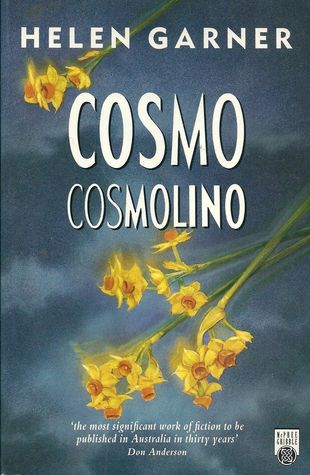
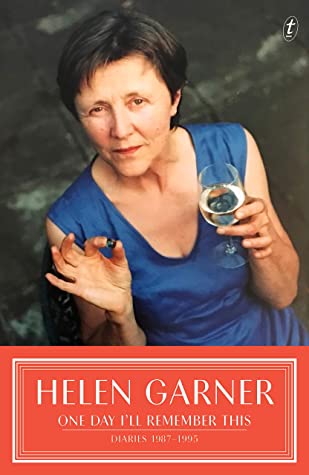
One of Elizabeth Jolley’s biggest fans is Helen Garner, as I have said before. Garner often mentions Jolley, and my current read, the second volume of her diaries, One day I’ll remember this, is no exception. She writes:

Elizabeth Jolley’s new novel, My father’s moon [my review]. She re-uses and reworks images from her earlier work, brings forth experiences that she’s often hinted at but never fully expressed. I can learn from this. I used to think that if I said something once I could never say it again, but in her book I see how rich a simple thing can be when you turn it this way and that and show it again and again in different contexts.

This is not the only reason Garner admires Jolley, but the reasons are not my topic for today! I will add, though, because it is relevant to my topic, that another thing Garner appreciates about Jolley is that both draw closely from their own lives in their writing.

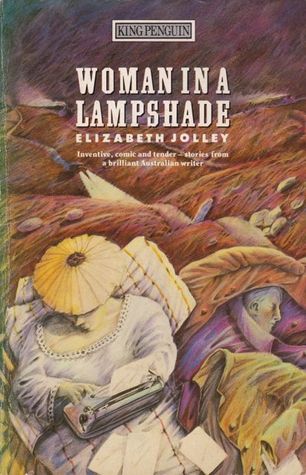
So now, “Hilda’s wedding”, which I read for the 1976 Club, hosted by Kaggsy’s Bookish Ramblings and Stuck in a Book. It’s not the short story I had planned to read, but I couldn’t find that one – also a Jolley – in my collection or online. Fortunately, during my hunting, I found this one from the same year, and it exemplifies the two points I made at the beginning. Firstly, it features a character, Night Sister Bean, who appears in other Jolley works, including the first of hers I read, the short story “Night runner”. And, being a hospital-set story, it draws on (let’s not say “from”) her own experience of nursing.

“Hilda’s wedding” is a rather bizarre or absurd story – which, again, is not a surprise from Jolley. In it, the narrator, who is a relieving night nurse – so somewhat of an outsider – organises an on-the-spot wedding for the very pregnant, apparently unmarried, kitchen maid Hilda. The various roles – husband, celebrant, parents of the bride, pages – are played by night staff including the cook, cleaners and porters. The bride is dressed, with a veil made of surgical gauze and a draw sheet as her train (which contains a hint of the Gothic that we can also find in Jolley’s writing). Immediately after the ceremony, Hilda goes into labor and gives birth in the elevator.

What does it mean? I’m not sure, but this little story about an impromptu wedding sounds like children’s play-acting. It’s a game which uses imagination and creativity, which provides a sense of fun in a grim place, and which brings a little joy to Hilda, whose “melon-coloured face shone with a big smile”. Melons, as you may know, are often associated with pregnancy and fertility. However, injected into the story at various points is the real world, one characterised by rules and impersonality. There’s also the unresolved mystery about Sister Bean and rumours about her negative impact on transfusions/drips. Is she a witch, they wonder?

Sister Bean opens and closes the story, but otherwise appears only occasionally. There are various ways we could read her. One could be people’s need to find a reason or explanation or scapegoat for the bad things that happen in a world where you have little control. In the third last paragraph, our narrator comments on the early morning, and the city waking up:

A thin trickle of tired sad people left the hospital. They were relatives unknown and unthought about. They had spent an anonymous night in various corners of the hospital waiting to be called to a bedside. They were leaving in search of that life in the shabby world which has to go on in spite of the knowledge that someone who had been there for them was not there any more.

It is against this backdrop of sadness that our nurse narrator was there for Hilda. In the next and penultimate paragraph, the narrator is standing outside, taking “deep breaths of this cool air which seemed just now to contain nothing of the weariness and the contamination and the madness of suffering”.

In this story, as is typical of Jolley, there is humour alongside sadness, comedy next to tragedy, unreality bumping up against reality, and, appropriately, no resolution at the end.

In Central mischief – a collection of Jolley articles, talks and essays compiled by her agent Carolyn Lurie – is a talk Jolley gave to graduating nurses in 1987. Before I get to my concluding point from it, I’ll just share something else she says, which is that “for me fiction is not a form of autobiography”. This is an important distinction, which I think Garner would also make. Writers like Jolley and Garner may draw on their own experiences, but what they write is something else altogether.

But now, I want to conclude on this that she tells them:

There is a connection between nursing and writing. Both require a gaze which is searching and undisturbedly compassionate and yet detached.

What a clear-eyed view – and how hard to achieve. What do you think about this?

Challenge logo

Elizabeth Jolley
“Hilda’s wedding” (first pub. 1976, in Looselicks)
in Woman in a lampshade
Ringwood, Vic: Penguin Books, 1983
pp. 139-46
ISBN: 0140084185

Shirley Jackson, The lottery (#Review)

As a lover of short stories, I have wanted to read Shirley Jackson’s “The lottery” for some time. With Kate selecting it as October’s Six Degrees starting work, now seemed the perfect time!

Shirley Jackson (1916-1965) pops up on blogosphere with some consistency, and is clearly well-regarded. Her career spanned two decades and, during that time, as the thorough Wikipedia article says, she wrote six novels, two memoirs, and more than 200 short stories. Her debut novel, The road through the wall, and “The lottery”, were both published in 1948, though she had had short stories published over the preceding decade.

It was “The lottery”, however, which established her reputation – particularly as a master of horror stories. Wikipedia says it resulted in over 300 letters from readers, many “outraged at its conjuring of a dark aspect of human nature”. In the San Francisco Chronicle of July 22, 1948, Jackson responded to persistent queries from her readers about her intentions:

“Explaining just what I had hoped the story to say is very difficult. I suppose I hoped, by setting a particularly brutal ancient rite in the present and in my own village, to shock the story’s readers with a graphic dramatization of the pointless violence and general inhumanity in their own lives.”

Many of you probably know the story, but, just in case, I’m not going to “spoil” it beyond that. I will, however, make a few comments.

I’ll start with Wikipedia’s succinct synopsis: it is about ‘a fictional small town which observes an annual rite known as “the lottery”, in which a member of the community is selected by chance’. It’s a great read, because the build-up is so good and the ending so powerful. If you were not forewarned, you’d have no idea you were reading a “horror” story, because there’s nothing Gothic about the setting, no eeriness, no overt build up of fear even. Instead, there’s the coming together of this village’s 300 people coming for this annual event. It’s summer, “the flowers were blossoming profusely and the grass was richly green”. Idyllic, in other words, or, so we are set up to see it is (or, could be?)

The children are described, then the men and women. It all seems benign, though there are tiny hints of something else, that you may not notice if you’re not expecting it. The emcee of “the lottery” is the ironically named Mr. Summers, who has the “time and energy to devote to civic [my emph] duties”. Many of the names in the story sound normal, but they also carry symbolic weight – Graves, Adams, Delacroix (pointedly, as it turns out, perverted to Dellacroy by the townspeople).

Anyhow, there is a long discussion of the “black box” that is used for the lottery, but, although it is “black”, it sounds quaint and unimportant. No great care is taken of it between lotteries. There’s a bit of camaraderie and joking between the townspeople; there’s confirmation of the formalities; but, slowly tension builds. Mr Summers and the first man to draw from the black box, grin at each other “humorlessly and nervously”. We are now half way through the story, and there’s nervousness among the attendees.

Then, plopped in here, is a little discussion about some villages – because this is not just this village’s tradition – having given up, or talking of giving up, the lottery. However, Old Man Warner (another interesting name), who has been through 77 lotteries, doesn’t approve of change. He sees “nothing but trouble in that”. When you know the end, you wonder what sort of person he is! Certainly not the archetypal dear old man, grandpa to everyone! Meanwhile, anxiety slowly builds, with another townsperson saying to her son, “I wish they’d hurry”.

The “winner”, when identified, doesn’t behave like a winner, which provides another dark hint, but which causes our aforementioned Old Man Warner to pronounce that “people ain’t the way they used to be”.

The final line of the story is shocking, but by then you have worked out what winning means, so it adds an extra layer to the story’s meaning (as you’d expect in a good short story).

You can find in Wikipedia, and elsewhere on the web, all sorts of critical reactions and theories about what it means, but I’d like to return to Jackson’s comment that she intended a “graphic dramatisation of the pointless violence and general inhumanity“. Why do the townspeople accept “the lottery”? What makes some villages give up the ritual and others not? Why do some in this town act with relish and others not? It recalls, for me, Christos Tsiolkas’ The slap. Yes, it’s a novel and a very different story, but I saw it as being fundamentally about the violence that seems to be be lying too near the surface of our so-called civilised society. I’ll leave it at that, but it makes me think, plus ça change.

Image credit: Shirley Jackson, New York City. 1940s. Contact: photography@magnumphotos.com. Low resolution version from Wikipedia, used under Fair Use.

Shirley Jackson
“The lottery”
First published in The New Yorker, June 26, 1948

Avalailable online at The New Yorker.

Maggie O’Farrell, Hamnet (#BookReview)

Book cover

Not unusually, I’m late to this book that was all the talk in 2020 – and, I may not have read it at all if it hadn’t been for my reading group. I’m talking, as you will have guessed from the post title, of Maggie O’Farrell’s Hamnet.

As most of you will know, Hamnet’s plot draws from the life of Shakespeare (never named in the novel) and Anne Hathaway, and the death of their son Hamnet at the age of 11. There was an older sister, Susanna, and Hamnet’s twin sister, Judith. O’Farrell explains her interest in her Author’s Note:

Lastly, it is not known why Hamnet Shakespeare died: his burial is listed but not the cause of his death. The Black Death or ‘pestilence’, as it would have been known in the late sixteenth century, is not mentioned once by Shakespeare, in any of his plays or poetry. I have always wondered about this absence and its possible significance; this novel is the result of my idle speculation.

Because this book has been well-covered already online, I’m going to take a slightly different tack with this post, and focus on a couple of questions.

“She herself might tell a different story”

With all books, but particularly with historical fiction, one of my questions is, why did the author choose to write their story. O’Farrell partly answers it in her Author’s note. However, there is also, surely, a feminist reading, because, although the novel is titled Hamnet, it is primarily about his mother Agnes (as Anne is named in Shakespeare’s will). Early in the novel, O’Farrell writes “This is the story, the myth of Agnes’s childhood. She herself might tell a different story”.

The thing is, we don’t know a lot about Agnes Hathaway which makes her ripe for historical fiction. What we do know is that women’s stories were – and too often still are – rarely told, but that that doesn’t mean their lives were unimportant. It means that importance hasn’t been placed on them. Whoever Agnes really was, O’Farrell has created a wonderful, eccentric character, who is perceptive, warm, independently-minded, a little flawed but engaged in the life of her family and community. She is fun to read about.

Besides telling a story about her, though, O’Farrell also presents, through her, a story about grief, and this, for me, was one of the strongest aspects of the novel. Agnes’ thoughts about burying her son, her astonishment that people can complain about their children, her utter discombobulation were so real:

Agnes is not the person she used to be. She is utterly changed. She can recall being someone who felt sure of life and what it would hold for her …

This person is now lost to her for ever. She is someone adrift in her life, who doesn’t recognise it. She is unmoored, at a loss. … Small things undo her. Nothing is certain any more.

So real …

Hamlet?

Warning: Spoiler of sorts

Given the novel is titled for Hamnet, rather than for its main protagonist, Agnes, it’s worth considering why, and this leads us to the play Hamlet. The novel ends with Agnes attending a performance of her husband’s play, which confirms the significance of this play to the novel. The epigraph to the novel’s second part is a quote from Hamlet (V:ii): “Thou livest;/ . . . draw thy breath in pain,/ To tell my story”. But, Hamlet could scarcely be seen to be Hamnet’s story, though I did have a little laugh at the point in the novel where Hamnet chooses to die:

They cannot both live: he sees this and she sees this. There is not enough life, enough air, enough blood for both of them. Perhaps there never was. And if either of them is to live, it must be her. He wills it. He grips the sheet, tight, in both hands. He, Hamnet, decrees it. It shall be.

Eleven-year-old Hamnet seems, here, to be far more decisive than his namesake who is known for his prevarication. This, however, is not what we are expected to take away from the novel I’m sure!

So, what else? Well, there’s the grief theme, which Hamlet can be seen to “resolve” in the novel. Agnes, devastated after her son’s death, can’t understand her husband returning to work – and writing comedies:

His company are having a great success with a new comedy. They took it to the Palace and the word was that the Queen was much diverted by it.

There is a silence. Judith looks from her mother, to her sister, to the letter. 

A comedy? her mother asks.

She is even more devastated though to learn that her husband has gone on to write a play using their son’s name – Hamnet and Hamlet being interchangeable – so she goes to London to confront him. What happens is something else. Initially, she feels eviscerated:

How could he thieve this name, then strip and flense it of all it embodies, discarding the very life it once contained? 

But then, as she sees the ghost father and living son, she starts to see something else:

He has, Agnes sees, done what any father would wish to do, to exchange his child’s suffering for his own, to take his place, to offer himself up in his child’s stead so that the boy might live.

My reading group discussed the question of the play a little, though we didn’t come to any particular conclusion, which I rather like. However, we did talk about how Shakespeare wrote his darkest, strongest plays, including the four great tragedies, after Hamnet’s death, which suggests that his son’s death had a big impact on him. A member also raised the play’s existential nature, seeing it exploring the fragility of life – “to be or not to be” – and how you go on in the face of bleakness.

Now, I could go on and talk about the style (language, use of present tense, symbolism), the decision not to name Shakespeare, and the dual storyline structure, as I normally would, but I’m sure they’ve been discussed elsewhere, so I’m leaving it this time. There were aspects of the novel that I question, but the truth is that I fell for Agnes and her story.

So, I’m going to leave you with two quotes, one from the husband, one from the wife.

It is so tenuous, so fragile, the life of the playhouses. He often thinks that, more than anything, it is like the embroidery on his father’s gloves: only the beautiful shows, only the smallest part, while underneath is a cross-hatching of labour and skill and frustration and sweat. 

Gardens don’t stand still: they are always in flux. 

These relate to their spheres of activity, but they also say something about life, don’t you think?

Maggie O’Farrell
Hamnet
London: Tinder Press, 2020
310pp.
eISBN: 9781472223814

Irma Gold and Susannah Crispe, Where the heart is (#BookReview)

I don’t normally review children’s books, particularly children’s picture books, but I do make exceptions, one being Irma Gold. I have multiple reasons for this. Irma Gold is local; she is one of the Ambassadors for the ACT Chief Minister’s Reading Challenge; she writes across multiple forms (including, novels, short stories and children’s books, in all of which I’ve reviewed her); and, if you click my tag for her, you will get a sense of just how active she is as a writer, editor and supporter of literary culture, particularly in the ACT. Hence this exception!

But, there is another reason too, which is that Where the heart is not only a delightful book but it slots very nicely into her growing oeuvre. Before I discuss that, though, I’ll describe this, which is her most recent book. Gold explains on its opening page that it was inspired by the true story of Dindim, a Magellanic penguin which, in 2011, was washed up on an island village outside Rio de Janeiro. The bird had been caught up in an oil spill. The fisherman who found him, Joao, cleaned and cared for him until Dindim returned to the wild. However, ever since then, Dindim has returned, annually, to Joao to spend several months of the year with him. There are questions about where he goes, but in Gold’s story it is Patagonia. Patagonia is one of the theories, because it is a major breeding ground for these penguins.

This sort of detail, however, is not critical to the story. It is fiction after all. What is critical to the story is that it tells of the potentially disastrous impact of oil spills on animals. It also tells of the importance of wild animals being free. This is what Joao believed. He brought the penguin back to health and set him free. It’s just that the penguin had other ideas. It also tells of the friendship that can develop between humans and wild animals.

What makes this a gorgeous book is the way Gold tells the story. It’s simply told but the language is not condescending, and it naturally incorporates local culture. Joao and the penguin mend nets, eat sardine sandwiches, and go shopping together, with this “shopping” being at a village market stall. It’s also warm-hearted. It encourages us to think about kindness, tenderness and loyalty, making it a feel-good read. Yet, there is also a narrative arc that encompasses a variety of emotions, including a sense of fear and drama as Dindim journeys back.

Not far from Joao’s beach, the sky swelled and lightning jagged. Dindim rode waves and wondered if he would make it. He was exhausted.

A little bit of drama makes it fun to read aloud to littlies, which I look forward to doing when lockdowns end and I’m able to see our little grandson again!

However, this is a picture book, so for it to succeed the illustrations have to be good as well. Fortunately, they are. I think this is illustrator Susannah Crispe’s first book, though she has another coming out this year. I’m not surprised she has, because she has done a beautiful job with this one. The colours are bright and inviting, but are conveyed with a warmth and softness that support the story. This is nowhere more obvious than in the two facing pages that contain only penguins. The expected intense black-and-white of the penguins is there, yet muted, and the white space surrounding Dindim visually conveys the text’s description of the “ache” in Dindim’s heart. Crispe also incorporates lovely little details from nature in her illustrations, like hummingbirds, butterflies, turtles and albatrosses. These all support the story by adding to its sense of place, but they also create interest when reading to littlies. “Can you find the turtle”, etc!

What I’m saying, in other words, is that this picture book is just the right package.

Irma Gold Craig Phillips Megumi and the bear book cover

And there I’ll leave it to return to my opening comment on Gold’s oeuvre, because I am seeing a pattern. The obvious one – from her previous picture book Megumi and the bear (my review) and The breaking (my review) – is her interest in wild animals, and in the relationship between humans and animals. Closely related to this is an interest in conservation, animal rights and the environment. And then – yes, there’s more – overlaying all of this is the importance of friendship, between humans, and between animals and humans. There’s a quiet joy in this, which is something Gold said, in a recent conversation, that she wanted to convey. I believe she has, and look forward to what comes next.

Challenge logo

Irma Gold and Susannah Crispe (illus.)
Where the heart is
Chatswood: EK Books, 2021
[32pp.]
ISBN: 9781925820874

Marie Younan with Jill Sanguinetti, A different kind of seeing: My journey (#BookReview)

In many ways, Marie Younan’s A different kind of seeing: My journey is a standard memoir about a person overcoming the limitations of her disability which, in this case, is blindness. It’s told first person, chronologically, from her grandparents’ lives through her birth in Syria to the present when she is in her late 60s and living in Melbourne. However, there are aspects of her story which add particular interest, and separate it, in a way, from the crowd.

One of these aspects is that Younan’s story is not only a story about blindness, but about migration and cultural difference. Younan is Assyrian, and was born, the seventh of 12 children, in the small village of Tel Wardiyat in northeast Syria. Her maternal and paternal grandparents moved, variously, through Turkey, Iran, Russia, Greece and Kurdistan escaping genocide and persecution before they all ended up in Tel Wardiyat. In her own life, Younan’s family moved to Beirut, but with some of the family having already migrated to Melbourne and with civil unrest increasing in Lebanon, more of the family applied to migrate to Australia. Younan herself was initially rejected because of her blindness, so, while her parents left for Melbourne in 1975, she returned to Syria, before moving to Athens to an older sister. Finally, in 1978, and now in her mid-20s, she was granted a visa for Australia joined her parents and family. (What a kind nation we are!)

If this wasn’t enough challenge, Younan’s life was also affected by her conservative upbringing. The book starts with a little prologue chapter describing how, at the age of 7, she came to properly understand her difference, that she is blind:

it dawned on me that there was a ‘thing’ called seeing that everyone else could do except me […]

It was the day my life as a blind person began.

We gradually come to realise that Younan was, as a child, doubly disadvantaged, because while she was brought up lovingly, nurtured by parents and siblings, she was excluded from so much that could have helped her develop as a person. She was not allowed to go to school; she was not allowed to go to big family events like weddings; and when a doctor suggested a corneal transplant for her when she was 10, her grandmother and father refused, because they didn’t believe such a thing was possible. Further, when she was 12, a relative offered to take her to a boarding school for blind girls – so she could “learn something and grow up with knowledge” – but her grandmother and father again opposed it. Her father said,

‘I’ve got 12 children, and I’m not sending one to boarding school, especially if she’s disabled.’

She was heartbroken, asking her mother why not. She didn’t “know anything about the world, or about life”, and badly wanted to. Yet, she expresses no bitterness in the book towards her family. Indeed, she dearly loves and respects them.

Anyhow, she arrives in Australia, highly dependent on her family and functionally illiterate.

I have spend a lot of time on this first part of the book because not only is her early life so interesting in its difference from my own life, but because it lays the groundwork for the astonishing changes she made in her life, with the help and inspiration of others, after her arrival here. I’m not going to detail all that. I’ll simply say that, largely through the mentorship of a man called Ben Hewitt (to whom the book is dedicated), she was introduced to various services, organisations and people that resulted in her learning to read; learning Braille; studying psychology and later interpreting; travelling around Victoria speaking on behalf of the Royal Victorian Institute for the Blind; and working as an interpreter, including for refugees through Foundation House. It’s an amazing trajectory – and one told quietly, and with humility and respect for her family and for all who helped her on the way.

It’s not surprising that she’s been described as “Ben’s biggest challenge and his best success story”. His role in encouraging her, in turning around her thinking from “I can’t” to “I can” cannot be underestimated, because, by the time she met him, Younan had a desire to learn but very little confidence in her ability to do so.

For all its straightforwardness, though, her story does have a little mystery. Younan was not born blind, but became blind when she was a few months old. Just what caused her blindness is a little question that runs through the book, and I’ll leave it to you to discover, but well-intended actions by a much-loved grandmother were involved. It’s a heartbreaking story of mistakes, accidents and missed opportunities, but Younan, if she resents any of it, has the grace to focus on what she has, not what she hasn’t or what might have been.

Now, you may have noticed that this book was written “with” Jill Sanguinetti, who has appeared here before with her own memoir. Younan met Sanguinetti around 1988 at the Migrant Women’s Learning Centre, when she joined sighted migrant women in a Return to Learning class. Sanguinetti was the teacher, and explains in the her Introduction to the book how she and Younan had stayed in touch after the class finished. Some years later, they “decided to work together to write the story of Younan’s life and educational journey”. Younan is, she writers, a “mesmeric storyteller”, but with one thing and another, it took 8 years to finalise the book. There were “many cycles of telling and writing, re-telling and re-writing”, and it shows in the end product, which is tight and keeps focused on the main theme of Younan’s journey from a dependent, innocent young girl to the independent achiever she is today.

A good – and relevant – read.

Challenge logo

Marie Younan with Jill Sanguinetti
A different kind of seeing: My journey
Melbourne: Scribe, 2020
214pp.
ISBN: 9781922310256

(Review copy courtesy Scribe.)

Sara Dowse, West Block (#BookReview)

The decision to republish, last year, Sara Dowse’s pioneering 1983 novel, West Block, was prescient. Think about this. In last weekend’s The Saturday Paper (14 August 2021), journalist Karen Middleton wrote about an issue involving the Department of Prime Minister and Cabinet. In her article, she shares some comments made about this Department by law professor Anne Twomey. Twomey, Middleton writes, called

the department “disorganised, shambolic and disrespectful of the legal process”.

“In days gone by, the department was full of extremely competent people – the traditional mandarins,” she says. “Look what’s coming out of it now.”

Now, this is the Department Sara Dowse worked in during the 1970s. It was housed in a wonderful old Canberra building called West Block, and it’s this building, and Dowse’s work there, which inspired her eponymous novel. I read it back in the 1980s, and loved it, but have always wanted to read it again. How would it stack up – as a novel, and as a document about Canberra and the public service – decades later? Having now reread it, I think it stacks up very well, and clearly so did For Pity Sake Publishing.

This new edition is prefaced by an Author’s Note, in which Dowse provides a background to the novel, including her career trajectory which inspired it. Dowse headed up the Whitlam government’s new Women’s Affairs Section, from 1974 to 1977. Dowse resigned partly in protest at the section’s removal from the Department by the Fraser Government, but partly also because what she really wanted to do was write.

But, what to write about? She was American-born, living in Australia at a time when Australian women’s writing was flowering – with Australian stories. Although she’d been in Australia since 1958, it was her experience working in West Block, that gave her such a story:

The building itself galvanised me. The minute I walked into it, I wanted to write its story, but now that I was in a position to, I was up against the prejudice against Canberra, most particularly, Canberra’s public service.

As a Canberran and a public servant myself – albeit a librarian/archivist rather than a bureaucrat – I know whereof she speaks.

‘Nuff said, so I’ll return to my opening description of the novel as “pioneering”. Some of you may have wondered about that call. First, few novels had been set, to then anyhow, in Canberra. There’d been some, like M. Barnard Eldershaw’s Plaque with laurel, but not many. That has changed, since, due partly in fact to Canberra’s group of Seven Writers, of which Dowse was a member. Second, not many novels had been written about the workings of the public service, particularly Australia’s. And finally, Dowse’s writing, particularly the structure she used for her novel, was innovative. Dowse said in the book’s zoom launch I attended last year, that one of her inspirations was John Dos Passos, and how he can tell a big story through overlapping individual stories.

All this makes West Block an excellent and meaningful read, not just for Canberrans, but for Australians and readers of thoughtful novels anywhere.

Servants of a nation (Harland)

With that long preamble, let’s now get to the book. Set in 1977, it tells the intersecting stories of five public servants: conservative, “sober-faced” bureaucrat George Harland; passionate, progressive Henry Beeker; socially conscious, dedicated but lonely Catherine Duffy; young, up and coming economist Jonathan Roe; and the femocrat, Women’s Equality Branch head, Cassie Armstrong, whose story bookends the novel, making her its main and unifying character. While each character’s story occupies a separate chapter, giving each centre stage in turn, they do occasionally appear in each other’s stories, and they all work in West Block to Departmental head, Deasey.

Through these characters we see the workings of government, and here, as a plus, we also gain insight into the issues of the time which, besides women’s affairs, included Australia’s uranium policy and Vietnam. Dowse uses these big issues to show what happens behind the scenes – trips overseas to negotiate with other governments, the IDCs (interdepartmental committees) and argy-bargying between departments as public servants try to find compromise between their various political masters, relationships between politicians and bureaucrats. Underpinning these is the daily life of public servants as they navigate the ethics of public service and their career ambitions alongside their jobs. We see tensions between different perspectives and approaches – the sober conservatives like Harland versus the crusading progressives like Beeker – of service. Dowse gives both their due.

This sounds dry, but it’s not because Dowse infuses her story with humanity. Her characters are not just public servants, but human beings with lives, and feelings. At the launch I attended, interviewer Seminara said she loved the characters for their commitment to public interest and because they are “admirable as characters, flawed as people.” Harland struggles to understand his daughter who has left her husband and children; Catherine confronts the ethics of personal relationships that intrude into work life; and Jonathan reacts poorly to his girlfriend’s unplanned pregnancy, for example.

Cassie, the main character, is not Dowse but is clearly inspired by her. The angst is palpable as she and her staff struggle to get their voices heard and women’s agenda on the table. There is a telling scene with Deasey that says it all. She presents him with her Branch’s thorough report into women’s needs cross-government. He’s not impressed:

‘Seriously now. We’ve had enough of your fingers poking in every pie. Causes no end of trouble. I can’t allow it, do you hear? It’s no way to run a department. So, be a reasonable girl. Pick out one, two, maybe three things to concentrate on.’ He stopped for breath. ‘Discrimination legislation, for instance.

“Girl” eh! Would he have said to Harland, “be a sensible boy”? I reckon not.

There are two more crucial characters in this novel, Canberra and West Block. They breathe life into and enrich the read immensely, but this is getting long, so watch for a Delicious Descriptions in a couple of days

While West Block’s style and structure is not as unusual as it was in the 1980s, it will likely still challenge those who like straightforward chronological narratives with deeply interacting characters. For me, though, there is a overarching narrative arc concerning Cassie’s devastated realisation that she is not going to effect the change for women she’d envisaged – and I enjoyed every beautifully-delineated character.

Ultimately, West Block pays tribute to the public servants who understand that their role is to be “servants of a nation” not of their political masters. This is the role of the public service, no matter how much its political masters would like to make it otherwise. Unfortunately, this fundamental principle has been increasingly tarnished over recent decades, which makes re-publication of this novel, now, all the more relevant and, dare I say, necessary.

Challenge logo

Sara Dowse
West Block
Book designer: Barbie Robinson
For Pity Sake Publishing, 2020 (New Edition, Orig. ed. 1983)
348pp.
ISBN: 9780648565789

Review copy courtesy For Pity Sake Publishing and the author

Claudine Jacques, The Blue Cross/La Croix bleue (#Review, #WITmonth)

I haven’t taken part in Women in Translation month (#WITmonth) before but decided to dip my toes in this year with a translated short story. I hoped to find one online and I did, “The Blue Cross” (or, in its original French, “La Croix bleue”) by New Caledonian writer Claudine Jacques. Coincidentally, I found it was translated by Patricia Worth who now, apparently, lives in Canberra. She translated it as part of her Master of Translation Studies. It was published in The AALITRA* Review, with the English presented alongside the French.

I didn’t know Claudine Jacques, but Worth provides some information on her website. Jacques was born in Belfort, France, moving to New Caledonia as a sixteen-year-old with her parents. She’s lived there ever since. She ran a vocational training centre, before establishing a publishing company, but she now, says Worth,”devotes herself almost exclusively to writing”. She and other authors founded the Association des Écrivains de la Nouvelle-Calédonie (New Caledonian Society of Authors) in 1997.

Literary Bureau Trames adds that Jacques lives “in the bush”, and has run the local village library for 20 years. She also runs the Boulouparis comic strip festival, is involved in writing workshops for schoolchildren and in an initiative of the Association Écrire en Océanie (Writing in Oceania) which has identified talent in young Caledonians.

Worth says she finds Jacques’ writing “compelling” and is particularly interested in “the social problems laid out in her stories”. She “was surprised to find numerous similarities between the histories of Australia and New Caledonia”. Her favourite Jacques novel is Cœurs barbelés, which is about the “painful experiences of white Caledonians and the indigenous Kanak people trying to live harmoniously on an island”.

Worth has translated several of Jacques’ short stories, with three available online. “The Blue Cross” is the first I found. It comes from a collection, Le cri de l’acacia. Google translate summarised the description I found: “The cry of the acacia or all those cries that you can’t hear! Because they would be too strong, too present, too throbbing … hear the life that endures in banal tragedies or squeaky comedies, universal deep down in the intimate and the tiny, the grandiose and the derisory. All these crumpled fates are those of everyday heroes” who are the “valiant men and intrepid women with extraordinary courage … in the face of violence, alcohol, pornography and the addiction of their own lives”.

“The Blue Cross”** certainly fits this description. Its story is one of those universal, banal, domestic tragedies, one with alcohol at its centre, and a courageous woman who does the right thing. Jéhovana, the woman and wife at the centre of the story, is married to an alcoholic who is no longer fully employed due to his drinking. She has tried to maintain appearances:

She wasn’t used to making certain judgements and, out of decency, put them off. What would the neighbours and the family say, seeing her speaking and acting for him? Yet at the last family meeting it was to her that they spoke; she had given her opinion while stating plainly that it was for both of them and that she was doing it under her husband’s control, but it seemed to her that no one had been fooled.

She’s behaving as a widow would and wonders if she’d be better off if it were true

freed from all these constraints, this waiting, this shouting, these beatings, this fetid washing stinking of vomit and alcohol, and especially from the shame that she and her children bore! 

For his part, he is conflicted. She is no longer interested in him, “had banished him” from her bed.

Now and then he forced himself on her, he had the right, she was his wife, but he had less and less strength and his desire for her had softened with time. And then he didn’t like to see her sad preoccupied look; she was so happy at the beginning of their marriage but now would often cry. How could he continue to desire a woman who cries?

It all comes to a head at their son’s Communion celebration. She begged him to not drink, but, well, of course he’s an alcoholic and is unable to keep his promise. What happens next is not particularly surprising, but the resolution is, perhaps, though, then again, perhaps not. The story certainly conveys, without telling, the complexity of situations like this – particularly for women.

It’s hard to comment on the writing, given I’m reading a translation, but I enjoyed reading the story. It is told well, giving us just enough information for us to get a sense of the two main protagonists, and just enough description to set the scene for us. The most interesting thing about the choices the author has made is to name the woman, Jéhovana, but not the man. Does this suggest that he stands for all such men, while Jéhovana’s situation and decisions are individual? And Jéhovana’s name? I don’t know it, but it does bring to mind the God, Jehovah. Does this give us a hint regarding her character?

In all, an interesting story. I can see why Worth likes Jacques’ work.

Notes on the translation

Worth prefaces her transaction with some comments. She says that she left in the text “culture-specific expressions – from New Caledonian-French, Wallisian and Polynesian languages – whose meanings were clear, feeling this added “richness to the story in the way Jacques allowed them to enrich her French”. That makes sense. She includes a glossary, as Jacques did. In some cases, however, she expanded where a French expression has a specific cultural meaning in New Caledonia.

I can’t really comment on the quality of the translation, as my French isn’t up to that, but I did notice that Worth changed some of Jacques’ punctuation. For example, there’s one long sentence in French, with just commas separating the different parts, that Worth breaks into two sentences, and uses a semi-colon. It looks sensible to me, but I wonder if it says something about French style versus English style. Does anyone have any ideas on that?

* AALITRA: The Australian Association for Literary Translation.

** The Blue Cross: an international organisation “engaged in the prevention, treatment and after care of problems related to alcohol and other drugs”.

Claudine Jacques
“The Blue Cross” (“La Croix blue”) from Le cri de l’acacia (2007)
(trans. Patricia Worth)
in The AALITRA Review Vol. 0 No. 2 (2010)

Avalailable online at LaTrobe University’s Open Journal Systems site.

Bill curates: Mary Church Terrell’s What it means to be coloured …

Bill Curates is an occasional series where I delve into Sue’s vast archive, stretching back to May 2009, and choose a post for us to revisit. In 2011, when today’s post was first published, Barack Obama was in his first term as President and then Senate Majority Leader, Republican Mitch McConnell, was pursuing a scorched earth policy of refusing to even allow Democrat legislation to be debated, with the stated aim of making Obama a one-termer. Obama got a second term, but then there was Trump, and racism in America seemed to take a giant step back into the light, giving new relevance to this talk from 1907.

This is the last Bill Curates post he sent me a few months ago. I intended to publish it then, but life, reading and blogging got busy, and I tucked this away in my drafts folder for another time. I think now is the time to post it and to thank Bill for the wonderful support he gave my blog through my dark year. It was so appreciated. Thank you Bill, you helped save my sanity.

______________________________

My original post titled: Mary Church Terrell, What it means to be colored in the capital of the United States

Mary Church Terrell. Public Domain, National Parks Service, via Wikipedia

I heard a radio interview this week with Jane Elliott of the brown-eye-blue-eye experiment fame, and she suggested that racism is still an issue  in the USA (through the efforts of a vocal minority) and is best demonstrated by the determination in certain quarters that Barack Obama will not win a second term*. It’s therefore apposite (perhaps) that my first Library of America post this year be on last week’s offering, “What it means to be colored in the capital of the United States” by Mary Church Terrell (1863-1954). This essay originated, according to LOA’s introductory notes, in a talk Terrell gave at a Washington women’s club in 1906. It was then published anonymously, LOA says, in The Independent, in 1907.

Now, I’d never heard of Terrell, but she sounds like one amazing woman. Not only did she live an impressive-for-the-times long life, but she had significant achievements, including being, it is believed, the first black woman to be appointed to a Board of Education (in 1895). She also helped found the National Association of Colored Women. On a slightly different tack, she was a long-time friend of H.G. Wells. Interesting woman, eh?

I have a few reasons for being interested in this essay, besides Jane Elliott’s comment. I lived in the DC area – in Northern Virginia – for two years in the early-mid 1980s and was surprised by some of my own experiences regarding race there. And, as a teen in the 1960s and early 1970s, I was aware of and fascinated by the Civil Rights movement in the USA. I was surprised but thrilled to hear, late last year, an audio version of John Howard Griffin‘s book, Black like me, that I read and loved back in those days.

But enough background. To the essay… I’ll start by saying that I’m not surprised that it began as a talk, because it seemed to ramble a bit. However, as I read on, some structure did start to appear. She starts by listing the various areas in which she, as a black woman, was (or would have been if she’d tried) discriminated against in the national capital. These include finding a boarding house and a place to eat, being able to use public transport, finding non-menial employment, being able to attend the theatre or a white church, and gaining an education. She introduces her section on transport as follows:

As a colored woman I cannot visit the tomb of the Father of this country, which owns its very existence to the love of freedom in the human heart and which stands for equal opportunity for all, without being forced to sit in the Jim Crow section of an electric car …

The irony here is not subtle – but she’s in the business of education where subtlety would not get her far!

She then returns to many of these issues – and this is where I started to wonder about her structure – but what she does is move from introducing the issues by using herself as an example to exploring each one using real examples of people she knows or has heard of. She describes, for example, how employers might be willing to employ a skilled black person, but are lobbied by other staff and threatened with boycotts by clients and so take the easy path of firing (or not hiring) the black person in favour of a white person. In one case the employer is  a Jew,

… and I felt that it was particularly cruel, unnatural and cold-blooded for the representative of one oppressed and persecuted race to deal so harshly and unjustly with a member of another.

You can guess why, in 1907, this was published anonymously!

Anyhow, I won’t repeat all the examples she provides to demonstrate the extent of prejudice at play, because you can read the essay yourself. I will simply end with her conclusion:

… surely nowhere in the world do oppression and persecution based solely on the color of the skin appear more hateful and hideous than in the capital of the United States, because the chasm between the principles upon which this Government was founded, in which it still professes to believe, and those which are daily practiced under the protection of the flag, yawns so wide and deep.

Some 100 or so years later, the US sees itself as the leader of the free world and yet it seems that this chasm is still rather wide. What are the chances that it will completely close one day?

* Please note that this is not a holier-than-thou post. We Aussies have our own problems with racism and prejudice, and so I am not about to throw stones at anyone else.

___________________________

I love that Bill decided to choose a non-Australian post for this BC. It’s so depressing to think that no improvements seem to have been made in the decade since I wrote this – there, or I fear in most countries. Certainly, statistics coming out here in Australia are showing no improvement in important measures, like life expectancy and incarceration. Indeed there’s been some sliding. This is not good enough.

Thoughts?

Nardi Simpson, Song of the crocodile (#BookReview)

Nardi Simpson’s Song of the crocodile is a tight multi-generational saga set in the fictional town of Darnmoor over the last decades of the twentieth century. It tells the story of the people of the Campgrounds, who are ostracised, exploited and abused by the white townspeople. Between the Campgrounds and the town proper, with its ironically named Grace and Hope Streets, is the tip, which was created by knocking down “strangely scratched gums” on the old bora grounds. The road to the tip, and on to the Campgrounds, is Old Black Road. The stage is set …

“trespassers on their own country”

The story is told in three parts which span three generations of the Billymil family – Celie, her daughter Mili, and Mili’s eldest son Paddy. Celie’s part starts, however, with her mother, Margaret. Margaret not only runs the town hospital’s laundry, but also undertakes the major load of nursing the hospital’s First Nations patients. They are housed on “the back verandah” and are mostly ignored by the hospital’s medical staff. In this way, very early in the novel, we get the picture loud and clear about how the town’s Indigenous people are treated. The racism, the omniscient narrator tells us, is “hidden yet glaring. It’s the Darnmoor way”.

But there is a parallel story going on here, too, that of the spirits and ancestors, the “knowledge keepers”, who reside among the stars. They “wait for their loved ones to arrive” but they also introduce an important idea underlying this story – the “connectedness” of “all living or once lived things”. This connection is symbolised in the novel by threads and ropes that join sky and earth through birds and trees to the roots underground. I loved that Simpson shared this, that she trusted her readers to respect a worldview that’s foreign to many of us.

Intrinsic to this connectedness, of course, is the land. Some of the book’s most lyrical writing comes from descriptions of the country – rivers, trees, birds – in which it is set. This country is the freshwater plains of northwest New South Wales, the traditional lands of Simpson’s Yuwaalaraay heritage. In her novel its main feature is the Mangamanga River, “known by some as the wide-bodied, liquid boss of the plains.” It is to this river that Mili and/or members of her family go to refresh their spirits, but the men of Darnmoor want to control it, and protect themselves, by building a levee between the town and the Campgrounds.

Essentially, then, Song of the crocodile is the story of people who are made to feel “trespassers in their own land”. But, it’s also the story of strong, resilient women who forge a community on the Campgrounds. With guts and confidence, Celie turns her mother’s laundry skills into a business called the Blue Shed, providing work for herself and the other women. These women are a joy to read about, but they and their families are barely tolerated by the town, which ensures they know their place. When Mili’s bright young friend Trilpa wins a mathematics prize she is disqualified on trumped-up grounds, and when Mili, herself, applies for permission – permission, would you believe – to continue school past the age of 15, she too is brought down, by Mayor Mick Murphy, in the worst way.

“threads of broken lore”

Needless to say, it’s a difficult story. Too many people, people we’ve come to love, “pass” too young. As the oppression of those left behind builds, creating “hopelessness and grief”, the beast – Garriya, our titular crocodile – starts to stir. Regular hints of his rumbling imbue the novel with a sense of foreboding.

The crocodile is apparently a creator being in Yuwaalaraay country, but his evocation in this novel, as Garriya, is unleashed by the evil that has been visited upon the Campground people, evil that has broken the country’s lore. We feel him coming, and Mili’s alienated son Paddy is the conduit. Desperate to counteract this, spirit songman Jakybird wants to reconnect the “threads of broken lore”. He prepares his spirit “choir” for one last, powerful song, Garriya’s cycle. The climax is shocking, but the ending is cheekily open.

All this sounds grim, but I didn’t find it hopeless. There is delightful warmth and humour in the interactions between the Campground women, and there is humour and hope in the spirit world. Through these, Simpson gives us a complex story of oppression and survival. For all the misery suffered by the Billymils and their community, there is hope in their resilience, in their ongoing connection to country, and in their determination to keep passing on culture. Early in the novel, laundry worker Joyce addresses the parcels for delivery, using drawings that convey “a belonging, a knowledge, a truth of the place on which they walked and worked”:

In most cases the recipients failed to notice the mark, tearing the paper off and crushing it into a ball. It didn’t matter that eventually it was taken to the tip and returned to the earth. What mattered were the boys on the bikes that delivered them, that read the symbols then read the land. The drawings and the washing restored old journeys, countrymen walking on places they knew.

Simpson also, as First Nations writers are increasingly doing, uses Yuwaalaraay language throughout. She doesn’t directly translate it and there is no glossary. This bothered some of my reading group, while others of us felt the meaning was always clear – or clear enough. Here, for example, is Margaret in Chapter 1:

“Yaama. Dhii ngaya gaagilanha. Who wants a cuppa?” Margaret pushed open the door to the hospital’s back verandah, its hingers squealing as she entered. “How are we all today?”

Song of the crocodile was my reading group’s July book, and it resulted in one of our liveliest discussions this year, as we defended our diverse responses to its ideas, style, characters and tone.

For me it was an absorbing read. It is uncompromising in its portrayal of the insidious racism that First Nations Australians confront and the devastating impact of that on the spirit, but it also shows resilience in the face of that, and it affirms that culture is strong. That has to be a positive thing?

For Lisa’s and other blog reviews, check her ILW Fiction Reading List.

Challenge logo

Nardi Simpson
Song of the crocodile
Sydney: Hachette Australia, 2020
401pp.
ISBN: 9780733643743

Monday musings on Australian Literature: Stilettos and Sponsors

Has that got your attention? If it has, I’m sorry if you think I’m going to talk about high society fund-raising parties. I’m afraid it’s a bit more mundane than that … but interesting I hope.

The Stilettos

I have in fact written about the Stilettos before, the Scarlet Stiletto Awards to be exact. To recap, they are Sisters in Crime Australia’s annual awards for best short crime and mystery stories by women writers. This year they are offering a record $11,910 in prizes this year. As Carmel Shute, secretary of Sisters in Crime, says

“Crime does pay – at least on the page. And writing is a lot safer than holding up your local service station, especially during a pandemic.”

Fifteen awards are offered:

  • Swinburne University Award, 1st Prize: $1500
  • Simon & Schuster Award, 2nd Prize: $1000
  • Sun Bookshop & Wild Dingo Award, 3rd Prize: $600

  • Affirm Press Award for Best Young Writer (under 19): $500
  • Monash University Award for Best Emerging Writer (19-25): $500
  • Melbourne Athenaeum Library ‘Body in the Library’ Award: $1250 (plus $750 for runner-up)
  • Booktopia Publisher Services Award for Best Environmental Mystery: $750
  • Clan Destine Press Award for Best Cross-genre Story: $750
  • Every Cloud Award for Best Mystery with History Story: $750
  • Kerry Greenwood Award for Best Malice Domestic Story: $750
  • Viliama Grakalic Art and Crime Award: $750
  • Writers Victoria Crime and Punishment Award for the Story with the Most Satisfying Retribution: $660 (Studio Residency, Old Melbourne Gaol)
  • HQ Fiction Award for Best Thriller: $500
  • ScriptWorks Award for a Great Film Idea: $500
  • Liz Navratil Award for Best Story with a Disabled Protagonist Award: $400 

There’s a lot of opportunity here, as you can see, for different sorts of stories – and past winners have included writers I’ve reviewed or mentioned here, like Angela Savage. The monetary amount isn’t huge, but it’s something, and, as Shute says:

Since the awards began 28 years ago, 3896 stories have been entered and 30 winners – including winners of the Shoe and category winners – have gone on to have books published.

The closing date for entering this year’s awards is 31 August, 2021. There is an entry fee of $25 (less for Sisters in Crime members), and stories must be 5000 words or less. More information and the entry form can be found at Sisters in Crime.

The awards will (hopefully) be presented in Melbourne in late November.

The sponsors

From the above list of awards, you’ve probably guessed the inspiration for the second part of this post – the sponsors. Most awards – literary or otherwise – are sponsored. Some, like the Prime Minister’s and various Premier’s literary awards, are funded by governments, but many are offered by individuals and organisations. The Miles Franklin Literary Award, the Barbara Jefferis Award and the Kibble Literary Awards, are all funded by bequests which identified the purpose of the award. Other awards or prizes are funded by a range of people and organisations, including philanthropic people and foundations, and like organisations (such as publishers and bookshops).

But, keeping awards funded is a challenge, and something I have planned to write more broadly on for some time. I will still do that. However, Sisters in Crime provided a good introduction to the subject in their promotion of this year’s award, because they say that only one sponsor pulled their funding “despite these financially fraught times” and “two new supporters” came on.  Excitingly for them, several sponsors not only continued their awards but increased the amount.

Watch for a future Monday Musings on this and related issues – but no promises when!

Meanwhile, any thoughts?