Monday musings on Australian literature: Some Australian travel writing

At luggage carousels one can question travelling (Donald Horne, The intelligent tourist)

Having just returned from our trip to Hong Kong, I thought this would be a good opportunity to post about some Australian travel writing. Hmm … good idea, but where to start? The first problem is that while I usually enjoy travel literature when I read it, I don’t read it often. And the second one is the focus: should I post on Australians writing about travel or on anyone writing about travel in Australia? I’ve decided on the former, which means that while the writers will be Australian, their subjects will not necessarily be so. Travel writers, as you probably know, are a varied lot: some only write travel, but many are novelists, journalists and other sorts of writers who have, for some reason, written travel books.

To keep it simple, I’ve chosen 3 fairly recent examples that represent different types of travel writing.

1. Robyn Davidson‘s Tracks (1995)

Robyn Davidson has to be the Australian travel writer most contemporary Australians would first think of when asked. Tracks is Davidson’s first travel book and it chronicles her 1,700-mile trek across the central and west Australian deserts using camels. It resulted in her being dubbed “The camel lady”. It also resulted in her developing a fascination for deserts and nomadic life, and in 2006 she wrote an essay titled “No fixed address” for the Quarterly Essay. Her book is an example of what I would call adventure travel literature. There are many more examples of this type – from walkers, sailors, mountaineers and so on.

2. Thomas Keneally‘s The place where souls are born (1992)
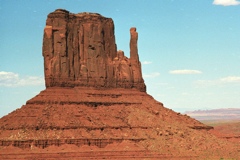
Monument Valley

In Monument Valley, one of the areas that inspired Keneally

Australian novelist Keneally’s book is about the American southwest. It is one of my favourite pieces of travel writing because I lived (and travelled) in the area for three years and fell in love with it, and because Keneally writes about it so evocatively. He matches criticism with reverence, and shares the area’s history and culture with us alongside his own personal reaction to it. What more  do we want in travel writing? This book is from Jan Morris‘s Destinations series. Keneally says he considered Sudan (“that bitter, lovely republic”) and Australia before settling on the Southwest. He sees the Southwest the same way I do, as being different (“the space of enormous elevations of mountains, of canyons deep enough to make the brain creep and waver”) from Australia but also similar. He says:

An Australian has to keep on referring to the snow and the heights to remind himself that this is not some town in western New South Wales. It is as if similar passions have run through the earth’s crust and core and made an organic link between the two places.

I’d put this in the category of traditional travel literature – it’s both descriptive and reflective of place and people, and it shows what is individual to the place in question while also revealing the universals. He concludes the book with:

But, in the spirit of the book, it is the chanting [from the Pueblo] we fix on, going away with it more or less in our ears. I take to the road strangely assured that someone is singing for us, celebrating matters we have got out of the way of celebrating for ourselves. The eternity of things. Even of our own spirits.

3. Don Watson‘s American journeys (2008)

Don Watson has impeccable writing credentials. Not only has he written about cant, jargon and weasel words in Death sentence and Watson’s dictionary of weasel words but, with American journeys, which covers his travels in America, post-Hurricane Katrina, he won the Age Book of the Year and the Walkley Award for best non-fiction book. “To journey in America,” he says, “is to journey in language”. While the book is a little repetitive at times – because the same issues keep cropping up as he travels – it captures the paradox that is America. He sees how its wonderful can-do-ism is offset by a focus on individualism that refuses to see that sometimes individualism needs to be over-ridden for the common good, that there are some things that government should do to ensure that all its citizens are well cared for.  Katrina ably demonstrated this. Watson says:

… if it is true that private businesses are efficient because it is in their nature to seek and maximise profit – which is to say their self-interest – then the pursuit of the public interest is not in their nature, and one may as well look to a rattlesnake for kindness as to corporations for the rebuilding of a city full of people. It is pointless; and it follows that it’s just as pointless to imagine that a country governed by the principle of private interest is capable of fixing problems in the public interest – be they local, like New Orleans; national, like poverty; or global, like the environment or peace …

He goes on to say that while American churches, corporations and the nation as a whole

do good and selfless works at home and abroad, it is also true that, in these days of culture wars, the idea of government being the principal agent of such works is faded. That is what New Orleans revealed …

Watson’s book is in a category I’d call socio-political travel literature. This sort of writing tries to understand how a society works, what makes it what it is.

The travel writing I like best:

  • is generous towards its subject matter, that is, it doesn’t whitewash the negatives but neither does it refuse to understand them
  • uses language that captures my imagination
  • has a sense of humour (though not necessarily laugh-out-loud funny)
  • illuminates place and people – that is, it looks beyond the clichés

In his book The intelligent tourist, Donald Horne (known to most Australians as the author of The lucky country and The education of young Donald), suggests that tourists “give up sight-seeing for sight-experiencing“.  This sense of “experience” is what I look for in travel writing – as well as in my own travelling.

Do you have favourite pieces of travel writing?
Feng shui and fortune in Macau

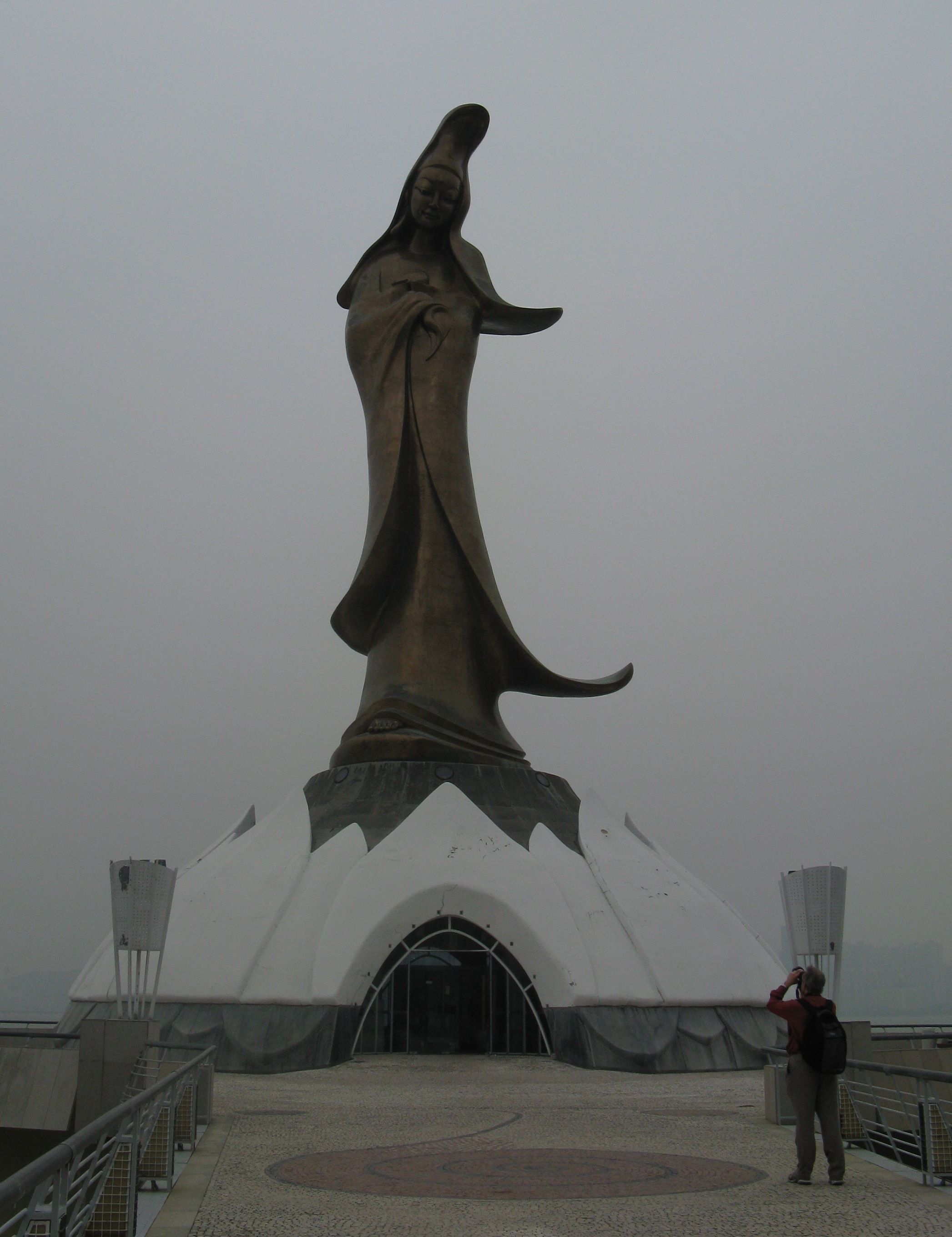
Feng Shui, as most westerners probably know by now, is an important consideration in Chinese life. The correct placement of objects is critical to the well-being of those who live or come within the orbit of that object (which could be a bed in a bedroom, the house itself or, as in the case I raise today, a statue).

Guan Yin, Macau

Guan Yin, Macau

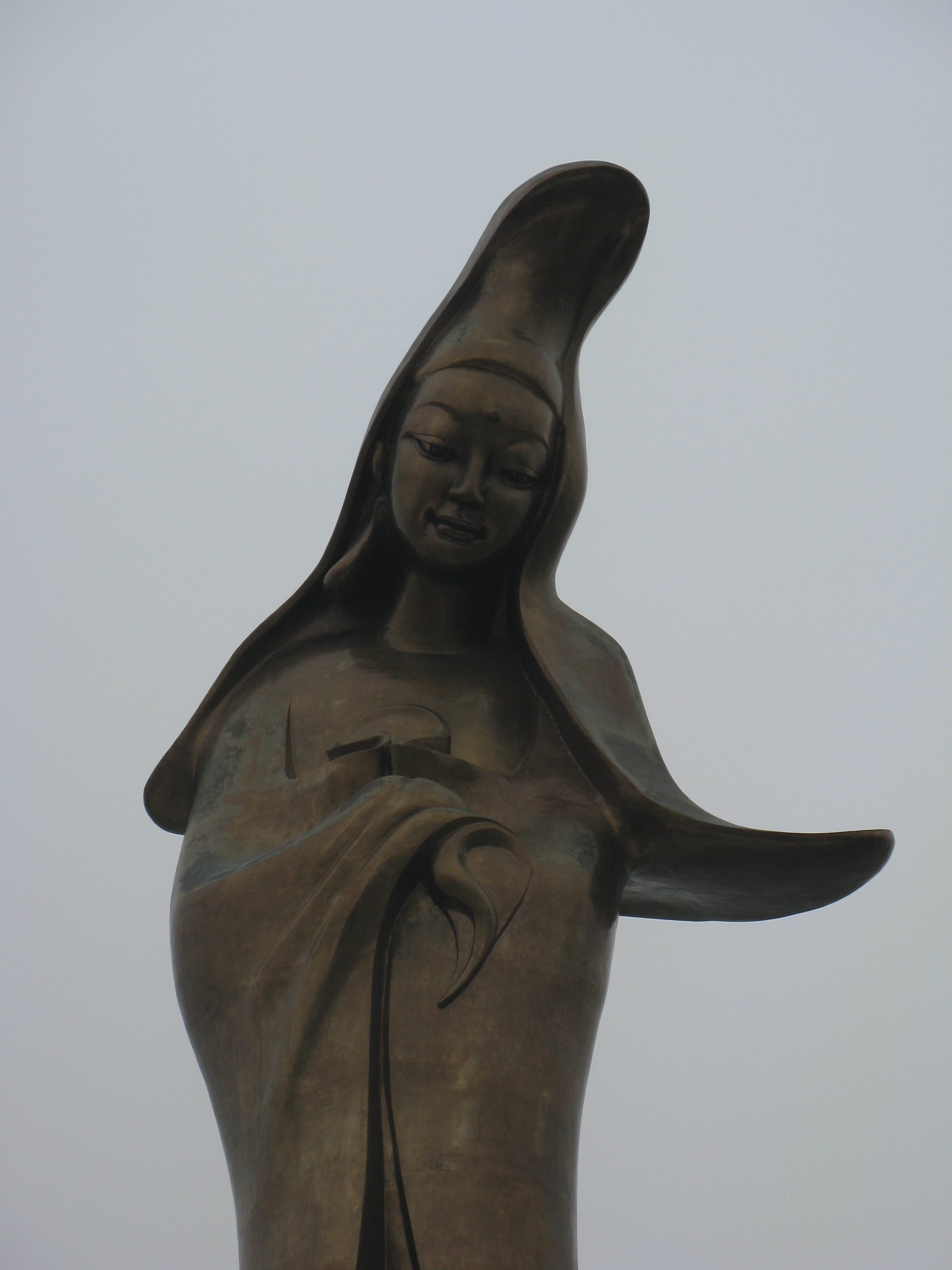
Macau is the former Portuguese colony which was returned to China in 1999. It therefore has a fascinating blend of Chinese and European culture. I’m not going to go into long details about that now but thought I could convey some sense of it all through the example of the Guan Yin Chinese Goddess statue which stands by the Macau Harbour. She is, we were told, rather disliked by the Chinese of Macau. The reasons are:

  • she faces the mountain with her back to the sea, which is the exact reverse of good feng shui (and where else would you need good feng shui but in the world’s gambling capital, eh?);
  • she stands on a closed lotus flower but buddhas, bodhisattvas and other gods/goddesses are traditionally set on an open flower, which symbolises abundance and prosperity;
  • Guan Yin, Macau, close-up

    Chinese goddess? Or, Mary?

    she looks more like Mary (that, is the Mother of Jesus) than a Chinese goddess; and, to add insult to injury,

  • she was created and built off-shore resulting in the megamillion dollars paid for her going off-shore.

The things you learn when you travel. I have chosen this as my post to represent our week in Hong Kong/Macau because it reminded me of just how complex culture is and how important cultural knowledge is to our enjoyment and appreciation of the arts. It also demonstrates how easy it is to not quite get it right!

(Oh, and please excuse the photos. It was a grey old day in Macau so her gorgeous “bronzeness” was not well on display the day we saw her.)

On the literary (cultural) road, in the Top End

Last month, Mr Gums and I holidayed in the Top End (of Downunder). I’m not quite sure where the Top End ends as it is a loose description for the northern part of Australia’s Northern Territory, but I believe it encompasses all the areas we visited. For ten days, we explored Katherine and Nitmiluk National Park for the first time, and re-visited Kakadu National Park and Darwin. Besides the fact that we love exploring Australia, it provided a good opportunity to escape the cold. The maximum in our city the day we left was 7.8degC. In Darwin, that same day, it was 32degC. A little different, n’est-ce pas?

Katherine Gorge

Gorgeous gorges in Nitmiluk National Park

Landscape

The landscapes here are ancient (dating back 1650 million years and more) and are home to some weird and wonderful flora and fauna, of which the crocodile is probably the most (in)famous. Like most landscapes, they have inspired many artists: writers, painters, songwriters, filmmakers (think Jedda and Crocodile Dundee for a start) and so on. And there is a rich and fascinating indigenous culture to learn about.

Jedda Rock

Jedda Rock, Nitmiluk National Park, taken from a helicopter

We didn’t really spend much time tracking white culture in the area, as I have in my other “literary road” posts, so I will just mention Charles Chauvel’s film, Jedda. Jedda (1955) is notable for a couple of reasons. Firstly, it was the first Australian film shot in colour. But, more significantly, it was the first to use indigenous actors in leading roles – and to confront some of the implications of white colonisation on indigenous Australians. It was shot on location in the Northern Territory, with the final tragic scene being shot at what is now called Jedda Rock at Nitmiluk. However, that footage was lost in a plane crash, and the scene was re-shot in rather different landscape – the Blue Mountains just west of Sydney! As a retired film archivist, it was special to me to see this rock.

Indigenous culture

Sign re Jarwoyn Rock Art in Nitmiluk

There are stories here ...

We took as many opportunities as we could to learn more about indigenous culture, as there are far fewer prospects for doing so down south.

The best way for short-term tourists like us to do this is to join tours, particularly those which have indigenous guides – and so this is what we did. The most interesting of these tours were:

Through these, we added to our slowly growing knowledge of how indigenous people relate to country and of their food and cultural practices. We dug for yams, threw spears and ate green ants. It was all good!

As KevinfromCanada wrote in one of his posts, indigenous people tend to have a strong oral story-telling tradition, and this is the case with indigenous Australians. No only did we hear some of their creation stories – and saw rock art depicting these stories – but we also heard more recent life stories, some humorous, and some not so. This story-telling reminded me of a rather infectious book recently reviewed at Musings of a Literary Dilettante, Every secret thing by new Australian indigenous writer, Marie Munkara. I have dipped into it, as it’s currently next to my bed, and it reads like an orally told story. Anyhow, it was a real privilege to have these stories shared with us.

… and in conclusion

Crocodile in the Katherine River

...but he can smile at you!

This was our second trip up north and won’t be our last. I could ramble on more about sites seen and lessons learnt but I’d rather leave you wanting… And so, because you know I like a bit of nonsense, I will finish here with the following, rather apposite words for the Top End:

Never smile at a crocodile!
No, you can’t get friendly with a crocodile;
Don’t be taken in by his welcome grin;
He’s imagining how well you’d fit within his skin!
Never smile at a crocodile!
(Words by Jack Lawrence)

On the literary road, in north-east Victoria

Last year I wrote a couple of posts about places of literary interest that we passed through on a road trip. Here is another such post, again using The Oxford literary guide to Australia as my main source.

Yarrawonga, Vic

Lake Mulwala at dusk

Lake Mulwala at dusk

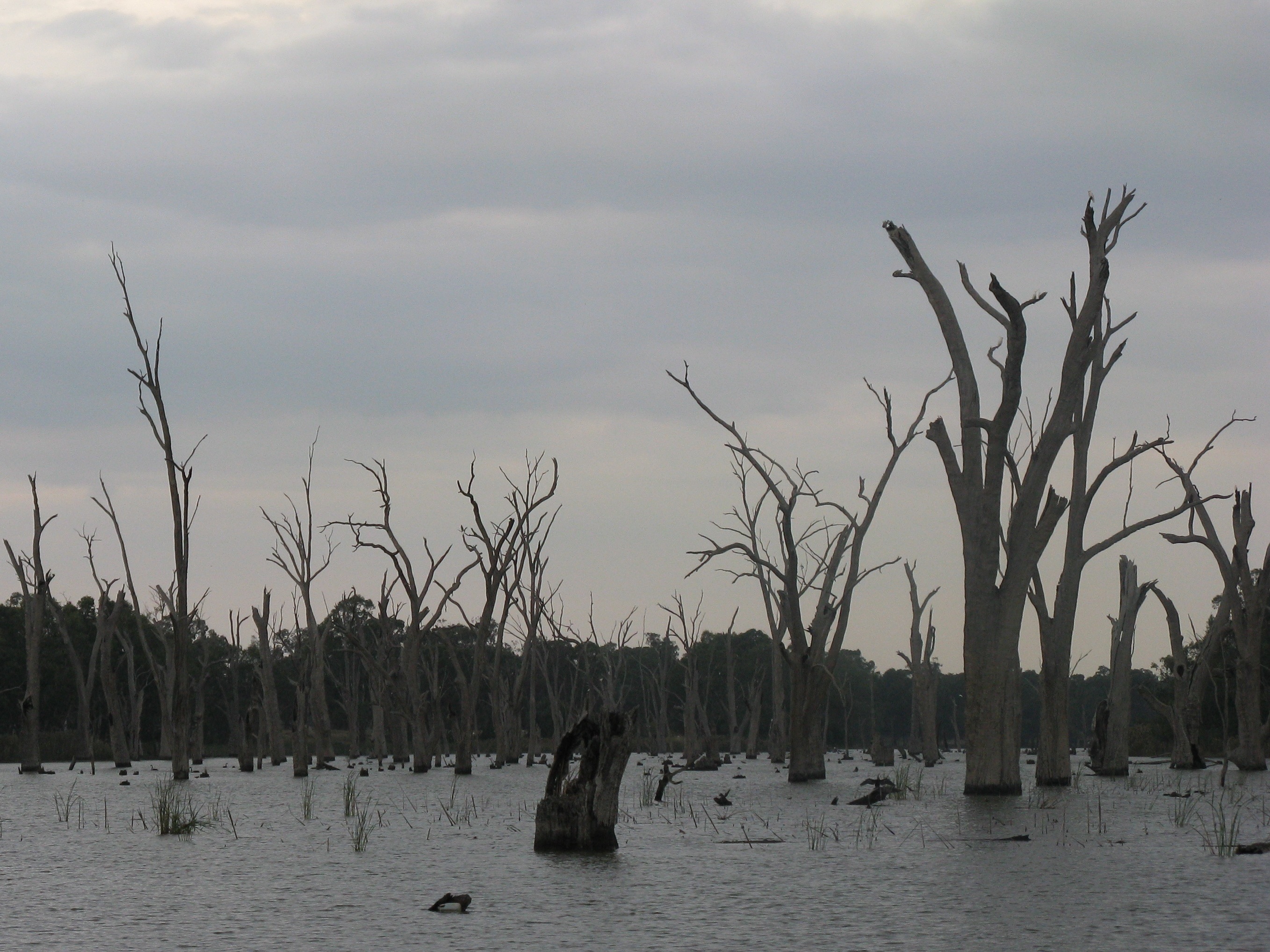
Yarrawonga was where, on this trip, we hit Victoria first. It is a twin town with Mulwala which is on the New South Wales side of the border. The border, here, is formed by Lake Mulwala which was created by a dam built on the Murray River in 1939. This lake is rather eerie due to the dead tree trunks protruding from its waters. This however is not its literary connection, which is, really, a bit of a far fetch. The town features in the poem, “Night vision, Yarrawonga” by Christine Churches who, from what I can see, never really lived there.  Oh well, it gets the town in the book – and these lines are rather evocative of the slow flowing Murray and its eucalyptus lined banks:

At sunset we came to the river
slow water feeding through the trees

Chiltern, Vic

Lake View House, Chiltern (built 1870)

Lake View House, Chiltern (built 1870)

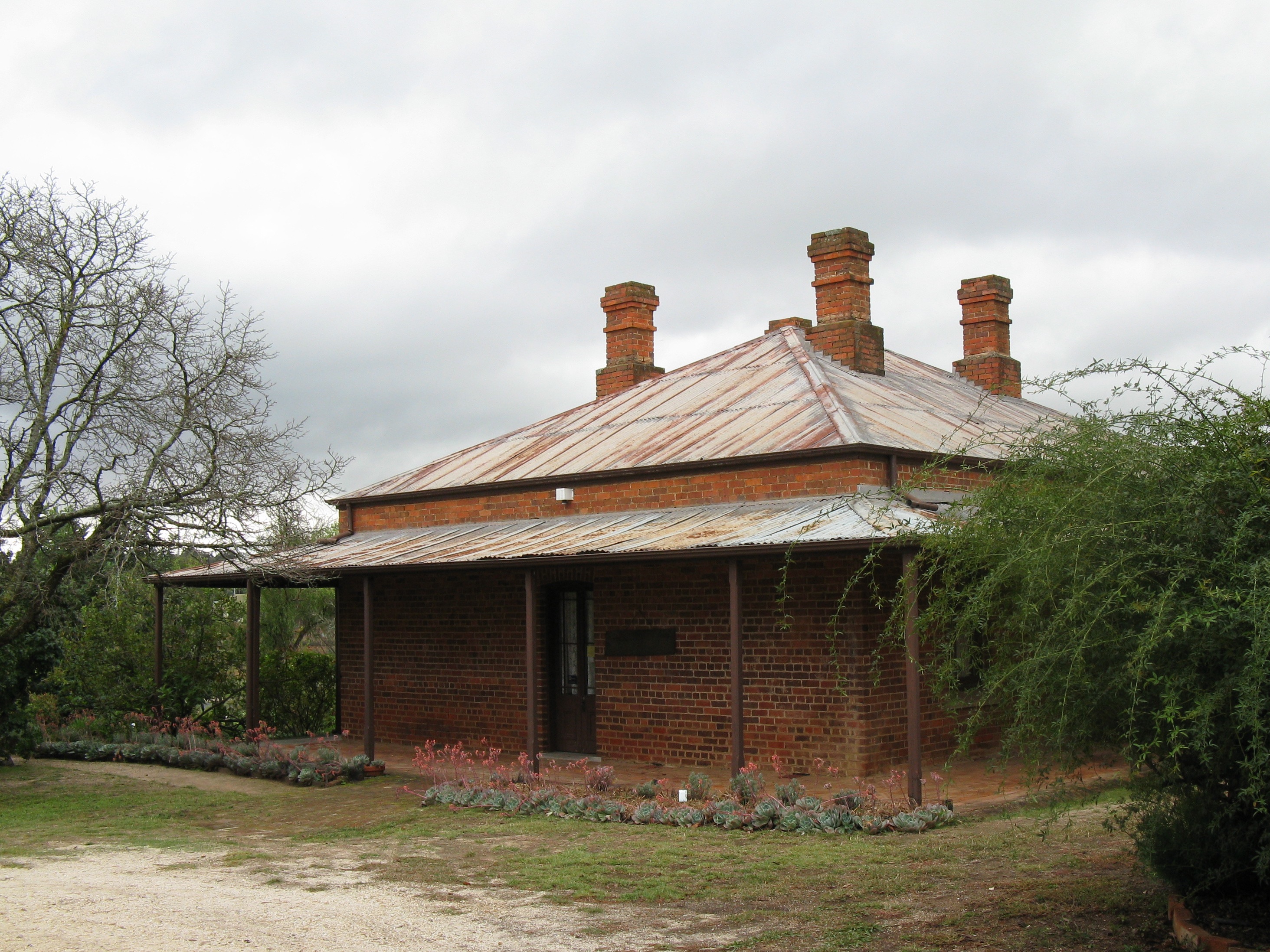
This pretty little town’s literary credential is far less arguable as the significant Australian writer Henry Handel Richardson spent part of her childhood here, and the house, Lake View, in which she lived, still stands. In her autobiography, Richardson says this is where she first smelt wattles in bloom. (For more on Henry Handel Richardson in Victoria, check out ANZLitLovers here).

Beechworth, Vic

Beechworth Courthouse

Beechworth Courthouse, est. 1858, where Ned Kelly was committed to stand trial for murder

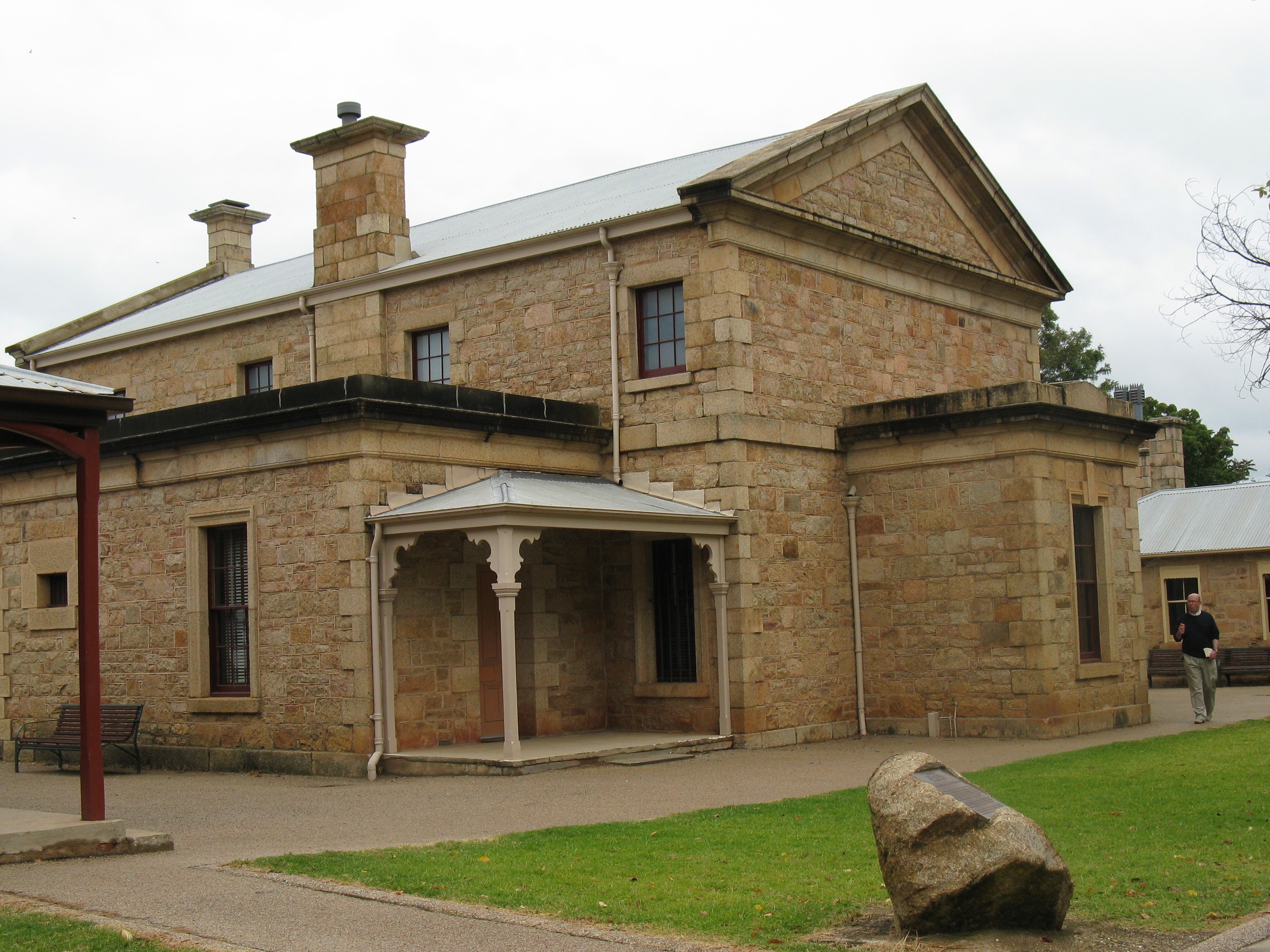
Beechworth’s big claim to fame is that the Australian outlaw, Ned Kelly, was first jailed here! However, it also has “real” literary connections as several novelists lived or visited here, including Henry Kingsley (brother of the English novelist Charles Kingsley), Mary Gaunt, Ada Cambridge, Ronald McKie and David Martin.

I’ve only read one of these, Ada Cambridge. She was a prolific writer but, like many of our early (turn of the century) women writers, receives far less attention than she deserves. She was a strong woman who often tackled issues that were close to women’s hearts but not deemed proper for the clergyman’s wife that she was. I was surprised and delighted when I first read her in the 1980s – and horrified that I had not known of her before.

Here ends the formal literary highlights of this most recent trip! Informal “literary” highlights had more to do with signs and town names. I will leave you with just one that tickled our fancy:

Road sign for Burrumbuttock

Road sign for Burrumbuttock (Photo: Courtesy Carolyn I)

Burrumbuttock, NSW, is, apparently, affectionately known as “Burrum”. Seems sensible to me!

Peter Pierce (ed)
The Oxford Literary Guide to Australia
Oxford: Oxford University Press, 1983 (rev ed)
501pp.
ISBN: 0195536223

Richard Allen and Kimbal Baker, Australia’s remarkable trees

It’s odd, don’t you think, that a poem by Thomas Hardy is used to introduce a book titled Australia’s remarkable trees? The poem, “Throwing a tree”, starts with a line that leaves you in no doubt as to the poet’s sympathies:

The two executioners stalk along over the knolls

… and concludes with the poignant, nay tragic:

And two hundred years’ steady growth has been ended in less than two hours.

Relevant? Yes. But there are Australian poems that would have done the job, such as, for example, David Campbell’s “The last red gum”, which concludes:

So we stand, me and my brothers, just the bones of ancient trees
that have lined the riverbank since time began.
In a bare and barren landscape, fed by the red dust on the breeze,
We’ve been ravaged by the careless hand of man.

I’m being churlish though I know, as this is a gorgeous book. The best way to describe it, I think, is as the tree equivalent of a dictionary of biography: it documents 50 trees from all over Australia, through photographs (Baker) and text (Allen). The trees are categorised under six chapters:

  • Magnificent natives
  • Old curiosities
  • Foreign invaders
  • Historic trees
  • Private trees
  • Local giants

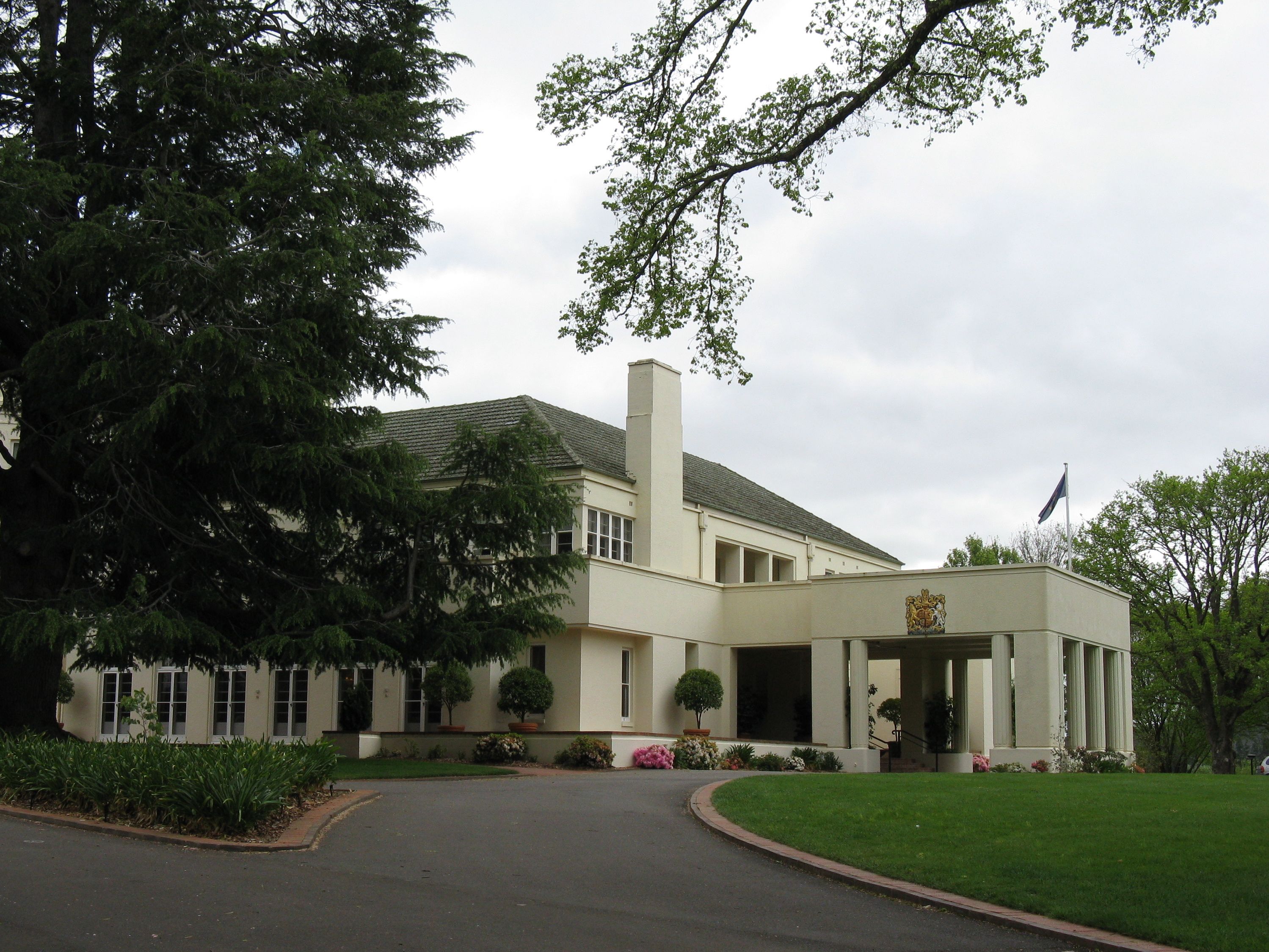
Not surprisingly, gum trees (22 of them) feature heavily in the book, with four of these being the River Red Gum . In his text – a page or two for each tree – Allen provides some background to the tree (the specific tree photographed, its species, and its location). Just enough information to whet the appetite. Take, for example, the Himalayan Cedar (Cedrus deodar) at Government House in Canberra.

Himalayan Cedar (Deodar cedrus)

Himalayan Cedar (left), Government House, Canberra. (If I’d known I was going to write about it I would have featured it more!)

This tree was 5 years old, when it arrived in Australia, from Britain, in 1837 and was planted on what was then a sheep station called Yarralumla (now the name of its suburb). It is HUGE and one limb is now supported by a steel cable, but it is still surviving and, Allen says, could live another 100 years. When I did a tour of the garden last year, the gardener told us that they are propagating from it: it is clearly of good stock, and propagating it will ensure that it continues to be part of the Government House landscape when it does finally die.

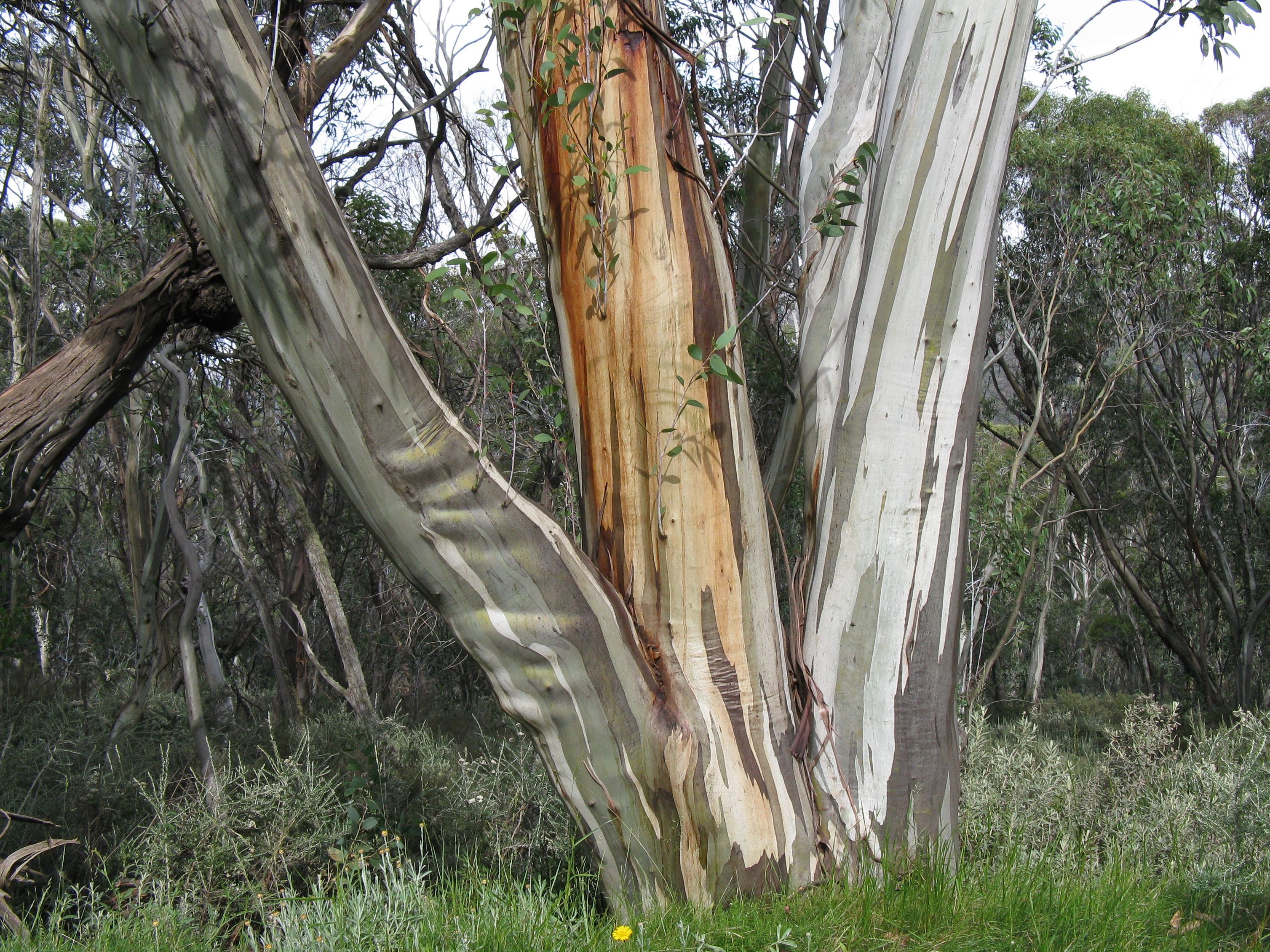
Snow gum (Eucalyptus pauciflora)

Snow gum on Merritt’s Traverse, Kosciuszko National Park, Thredbo

Among the gums featured is one of my favourites, the Snow Gum (Eucalyptus pauciflora). The one chosen for the book is from the Bogong High Plains in Victoria. It has the tortured, twisted formation typical of those that live in high altitudes. And, like my younger less tortured one here, it also has the gorgeous multicoloured ribbon marking that is characteristic of these trees.

These are just two of the trees presented in this book. There are many more gums (and other natives) and more exotics, there are the giants (such as Western Australia’s Karri) and the strange ones (like the Boab and the Banyan Fig), and of course there is the famous, recently discovered (1994) “living fossil”, Wollemi Pine (Wollemia nobilis).

This book has a lot to offer if you are interested in trees – for themselves, and for how they relate to landscape and our sense of place – and if you believe passionately, as the authors do, that preserving them is key to our future. John Muir would be proud. But again, strangely, the book ends not with an Australian reference but a quote from American architect, Frank Lloyd Wright, who apparently said “The best friend on Earth of man is the tree”. I think, though, that I will end with something a little more mystical. It’s from “Scribbly Gum”, by Judith Wright:

The gum-tree stands by the spring.
I peeled its splitting bark
and found the written track
of a life I could not read.

Richard Allen and Kimbal Baker
Australia’s remarkable trees
Carlton: The Miegunyah Press, 2009
254pp.
ISBN: 9780522856699

Coffee-time counsel

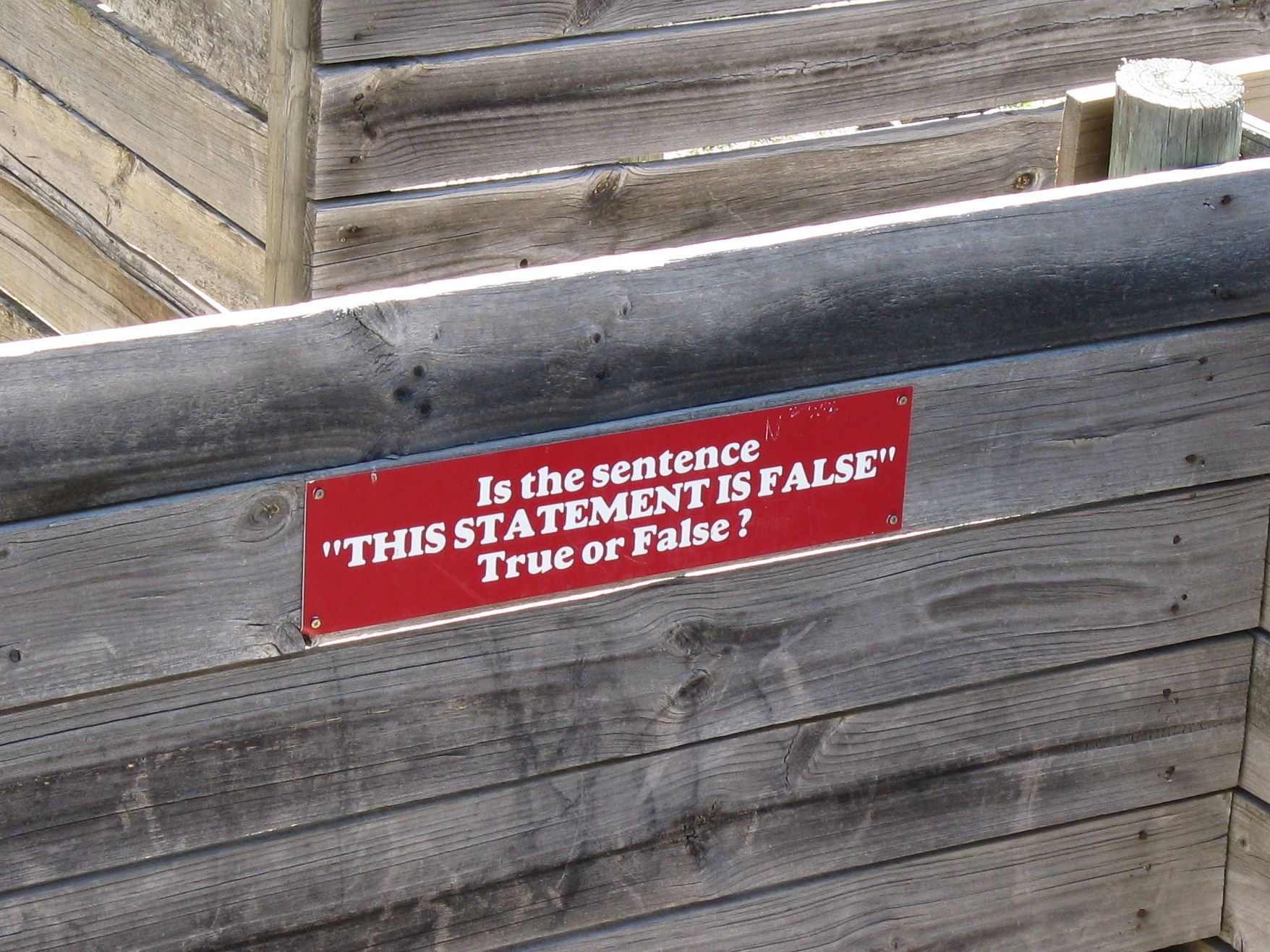
Crackenback Cottage Maze

Sign on part of maze

En route to our hedonistic hiking location we traditionally stop for lunch at the historic and delightfully rustic Crackenback Cottage and Restaurant. We’ve noticed over the years that they seem to like to tease their guests with words and ideas…and of course these particular guests are not averse to that!

My first example though comes not from the restaurant but from the maze on its doorstep (in the same complex): See right. Now, that’s a bit too deep for me at lunch time!

But, back to the restaurant. Some years ago, under previous owners, the restaurant’s paper napkins contained the fun little promotion:

There being no place, like this  place, near this place, this must be the place.

And then this year, with the current owners also clearly interested in entertaining their guests, our coffees came with a little quote tucked under the cup. Here are the two we received:

Use soft words and hard arguments. (English proverb).

Fair enough…but then…

Use your enemy’s hand to catch a snake. (Persian proverb)

Oh dear – not such lovely counsel from a pretty cafe! Anyhow, from what I am reading now about the English in Hilary Mantel’s Wolf Hall it would not have surprised me if the latter one had been ascribed to the English. Here is Mantel:

The English will never be forgiven [by the French at least] for the talent for  destruction they have always displayed when they get off their own island…

…and she goes on to chronicle the havoc wreaked by English armies not only against armies but civilians. But this is a long way from coffee-time and hedonistic hiking, and so I shall leave that for another day …

Hedonistic hiking

Dead Horse Gap, Kosciuszko National Park

Above the treeline, Dead Horse Gap, Kosciuszko National Park

“Hedonistic hiking” is the title of an article in a glossy little (“free at selected tourist outlets in Australia” but otherwise  $24.95pa) magazine I picked up in Melbourne a couple of months ago. The mag is called essentials magazine: culture, culinary, adventure. Can you tell me how the word “culinary” fits in there syntactically? The issue I picked up (free at some selected outlet obviously) was its – and I quote – “issue 15 mid-spring ‘Chrissy issue’ 2009” edition. What is that? Who is this magazine geared to? Anyhow, the article is essentially (ha!) a promo for gourmet hiking tours in Europe. It caught my eye though because it’s a term that could apply to our annual Thredbo sojourn. We are not campers – and we don’t eat gourmet food on our walks. Rather, we love to bushwalk and then go out and eat (well). Thredbo caters for this predilection of ours in a setting that is both beautiful and compact. We arrive, park our car, check into our lovely studio apartment with its view of the mountains, and then walk and eat to our heart’s delight.

But of course, there is more to this area than hedonism and hiking. Thredbo is in the Snowy Mountains of Australia, the mountains famous for AB Paterson’s “The Man from Snowy River” and Elyne Mitchell’s Silver Brumby series of books to name just two cultural icons from the region. Nearby is the town of Jindabyne, the setting for the rather gut-wrenching Australian film of the same name. It was loosely adapted from a Raymond Carver story titled “So much water so close to home”. As lovely as the mountains are, wireless connection here is iffy so I shall sign off, sit back and sip my Chardonnay while I enjoy the sun setting on Crackenback.

POSTSCRIPT: And there are nods to the cultural heritage here, such as Banjo Drive and the Silver Brumby Lodge in Thredbo, and the Man from Snowy River Hotel in Perisher. It’s rather subtle though – the hints are there but it’s not overdone. And there’s nothing wrong with that in a place that wears its commercial side rather lightly too.

The magnificent River Red Gums

River Red Gum

River Red Gum, Valley of the Winds Walk, Kata-Tjuta

River Red Gums, or Eucalyptus Camaldulensis, are among our most ubiquitous of gum trees, but that doesn’t mean they’re a boring tree. As their name implies they grow along watercourses – including ones that are very very dry such as those you find in Central Australia. They are also a significant part of what makes the Murray River such a gorgeous old river. Apparently, though, they are not found in Tasmania.

One of the well-known places to see these gums is the beautiful Barmah Forest of the Murray-Darling Basin. It boasts trees that are over 500 years old. Sadly, though, there are concerns that due to the extended drought that area has been experiencing, many trees are threatened, if not already dying. I’ve been to this forest and it is a treasure – it would be tragic to lose it.

Being ubiquitous – and beautiful – they feature regularly in Australian arts (in poetry, song, fiction, and art). Of course, they feature in Murray Bail’s captivating novella Eucalyptus:

River Red Gum

Warty River Red Gum, Jessie Gap, East MacDonnells

Over time the River Red Gum (e. camaldulensis) has become barnacled with legends… there’s always a bulky Red Gum here or somewhere else in the wide world, muscling into the eye, as it were: and by following the course of rivers in our particular continent they don’t merely imprint their fuzzy shape but actually worm their way greenly into the mind, giving some hope against the collective crow-croaking dryness. And if that’s not enough the massive individual squatness of these trees, ancient, stained and warty, has a grandfatherly aspect; that is, a long life of incidents, seasons, stories.

River Red Gum

River Red Gum, Bond Gap, West MacDonnell Range

Too many poets to mention have written about this gum. I thought I’d choose just two. First is David Campbell, who addresses the threat to their continuation. Here are some lines from his poem “The Last Red Gum”:

So we stand, me and my brothers, just the bones of ancient trees
that have lined the riverbank since time began.
In a bare and barren landscape, fed by red dust on the breeze,
we’ve been ravaged by the careless hand of man.

Second is Lisa Bellear, an indigenous poet who, in her poem “Beautiful Yuroke Red River Gum”, uses the Gum to symbolise the post-colonial history of Aboriginal Australians. The poem starts:

Sometimes the red river gums
rustled
in the beginning of colonisation
when
Wurundjeri
Bunnerong
and other Kulin nations
sang and danced
and
laughed
aloud

Not too long and there are
fewer red river gums, the
Yarra Tribe’s blood
becomes
the river’s rich red clay

If this isn’t poignant enough, the poem concludes with:

Red river gums are replaced
by plane trees from England
and still
the survivors
watch.

What more can I say?

On the literary road, in Gippsland

The Gippsland area of Victoria is a particularly rich one in terms of Australia’s literary history. It is also an area I’ve never visited before and so this week we decided to return home from Melbourne via the less common path, that is via Gippsland. Unfortunately our trip through the region was a quick one, with just one overnight stop at the pretty little fishing and tourist town of Lakes Entrance. It has whetted my appetite for a more leisurely exploration of the area in the future. Gippsland is a diverse region with plains, lakes, rivers, mountains and coastal landscapes – the sort-of “something for everyone” place that tourist guides like to promote.

Some of the authors commonly associated with Gippsland are Eve Langley, Mary Grant Bruce, Katharine Susannah Prichard and Hal Porter … Some were born there (such as Porter) and some visited there (such as Katharine Susannah Prichard), but all wrote about the region. The English writer, Anthony Trollope, also visited the area in 1872.

Eve Langley, whose novel The pea-pickers was the subject of one of my early posts, was particularly well known for extolling the virtues of Gippsland. In The pea-pickers, her two main characters travel through Gippsland – to places like Bairnsdale and Lakes Entrance – working as agricultural labourers. Steve, the main character, yearns to return to her family’s glory years as “princes” of Gippsland.

One of my favourite – though rather politically incorrect these days – childhood authors was Mary Grant Bruce. She set several of her lesser novels in the region and drew on her experiences there for her children’s series, The Billabong novels. My literary guide suggests that “the sense of escape and immersion in untouched nature”  are evident in Bruce and Langley. While clearly there is more settlement now than there was in the early to mid twentieth century when these writers were writing, there are still many wild and natural spaces to enjoy in the Gippsland.

One discovery – and a rather embarrassing one for a person who prides herself on her knowledge of Australian geography – was that it is in Gippsland that the Snowy River, of Banjo Paterson fame, has its mouth. How did I not know that? Anyhow, I was pleased to see it at its quieter end!

Gum tree, Orbost

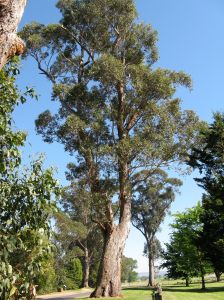
Towering gum tree, Orbost

None of the region’s literary heritage was evident to the casual traveller – how I wish we celebrated our writers more. I will finish though with some lines from a poet of the region, Jennings Carmichael, as quoted in the guide under the entry for the town of Orbost:

Each soaring eucalyptus, lifted high,
The wandering wind receives;
I watch the great boughs drawn against the sky,
Laden with trembling leaves.
A soft harmonious music, full and rare,
Murmurs the boughs along–
The voice of Nature’s God is solemn there,
In the deep undersong.

On the literary road

Back in the mid 1990s I bought The Oxford literary guide to Australia. Having not looked at it for a few years, I decided to take it on our current little road trip. Two days ago, for example, we drove through Gundagai and Tarcutta, both of which appear in the guide.

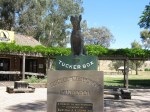
The Dog on the Tuckerbox, GundagaiGundagai, NSW

Most Australians will have heard of Gundagai – there is the famous Dog on the Tuckerbox (which features in many songs and poems) and the well-known song, “Along the road to Gundagai”, by Jack O’Hagan. Its lines include:

where the blue gums are growing and the Murrumbidgee flowing.

The funny thing is that Jack O’Hagan apparently never visited Gundagai! This didn’t stop him writing other songs about the town too including “When a boy from Alabama meets a girl from Gundagai”.

There are several other songs and poems featuring the town – including by Banjo Paterson and Henry Lawson –  but the Guide says it is a mystery as to why this particular town “was such a popular inspiration for songs”. If they don’t know, I don’t know either … but it is a pretty town with a famous old bridge.

Tarcutta, NSW

Not all that far down the road from Gundagai is Tarcutta. According to the Guide it is a popular truckies stop. It also features in the poem “Under way” by Bruce Dawe:

…there would be days
banging open and shut like the wire door of the cafe in Tarcutta
where the flies sang at the windows…

Ah, the flies! Apparently in 1961 Les Murray wrote his poem “The burning truck” in the same cafe. Unfortunately, having already had coffee at Bullocky Bill’s near the Dog on the Tuckerbox, we did not test our muse in Tarcutta.

And yesterday we drove through other towns, including…

Emerald, Vic

Down in the Dandenongs east of Melbourne is the pretty little town of Emerald – quite different from the somewhat drier and dustier Tarcutta and Gundagai. It was a gold town – hmm, wonder then why it was called Emerald! Apparently Katharine Susannah Prichard spent her honeymoon here with Hugh Throssel in a cottage owned by her mother. She wrote her novel Black Opal (1921) while staying in the town in another cottage.

Vance and Nettie Palmer lived there in the early 1920s. Nettie wrote:

You could easily imagine yourself taking root there, developing a local patriotism, bringing up your children to know its history and become attached to its soul.

Having passed through, I can think of worse places to live. Vance Palmer’s novel, Daybreak (1932) is set here and in the Dandenongs in general.

Peter Pierce (ed)
The Oxford Literary Guide to Australia
Oxford: Oxford University Press, 1983 (rev ed)
501pp.
ISBN: 0195536223