Capel Boake: Three short stories

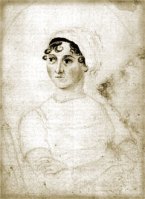
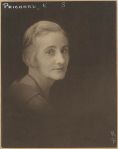
Capel Boake, no date, presumed public domainHaving written about Capel Boake in my last Monday Musings, I couldn’t resist checking out some of her short stories. Bill’s AWW Gen 2 Week concluded yesterday, but I hope he’ll accept this post as a contribution.

Boake’s stories are easily accessible in Trove. In fact, I was spoilt for choice, so just picked three at random. By the time I’d edited three – that is, corrected the multiple OCR errors* – I felt I’d done my bit for a while and so stopped there. I can’t say whether my three chosen stories are representative of her whole output – she wrote many short stories and poems – but I’m assuming they are. All appear in newspapers – in the days when newspapers published short stories – and most were syndicated. This means the version I edited is not necessarily the original publication, but I decided not to spend time identifying this.

AWW Challenge 2019 BadgeThe three stories (linked to their newspaper text) are:

  • The brothers (Canowindra Star and Eugowra News, 9 January 1920): a brother returns from the war, under a cloud, having been accused by his father, before leaving, of stealing money from the family farm business. He hadn’t, but he’s not going to dob in who did.
  • The necessary third (The Australasian, 28 August 1926): a wealthy young man meets, on a steamship trip from South Africa to Melbourne, a not so well-heeled young woman, and her mother, who is ambitious for a good marriage for her daughter.
  • Jenny (Weekly Times, 21 June 1930): a poorer young woman, “a State child”, is helped by a young man to make her career as a world-famous dancer.

A propos my point above re syndication, “The brothers”, for example, was first published, according to the subscriber-only AustLit database, in The Australasian in 1919.

These are generally straightforward stories, which is not surprising given they were published in newspapers and therefore intended for a broad audience. They lack the punch of, say, Barbara Baynton’s turn-of-the-century stories, but they make interesting reading nonetheless.

Two of them are romances – or, what the Western Mail reviewer I quoted in Monday Musings called “sex stor[ies] created on conventional lines”. They draw on traditional tropes – the poor young woman with the pushy mother, and the poor young woman who becomes a star thought the assistance of a young man who loves her. And yet, these young women are not pawns, and they do exercise some agency. Paula (“The necessary third”) takes things into her own hands to protect her self-respect, while Jenny (“Jenny”) takes action to ensure that she gets what she really wants (even if what she really wants is traditional!)

The stories also provide some insight into the times. I was particularly intrigued by this comment in “Jenny”. It’s told through the eyes of the young man, and here he is watching her, now a world-renowned star, dance on her home stage:

Glancing at the absorbed faces around him, their parted lips and shining eyes, he saw she had the same effect on them. Release . . . release . . . their spirits were free for once from the tyranny of the mechanised age that had gripped the world with relentless fingers.

This, then, is not “bush realism”, but a commentary on the modern urban world. However, it was also written in 1930 – Capel Boake straddling Bill’s Gen 2 and Gen 3 periods.

A neglected woman writer

Capel Boake has been identified as one of three neglected women writers of the 1930s by Gavin De Lacy in the La Trobe Journal (vol. 83, 2009), the other two being Jean Campbell and ‘Georgia Rivers’ (pseudonym for Marjorie Clark). De Lacy says that while they were all prominent in the Melbourne literary scene in the 1930s, they have been, with the odd exception, overlooked in significant studies of Australian literature. (He’s right. I found little about Boake in my little collection of books.)

Unfortunately, for whatever reason, Boake did not write many novels. Painted clay (1917) was highly praised, but only two more novels were published in her lifetime – The Romany mark in 1923 and, 13 years later in 1936, The dark thread. De Lacy quotes a contemporary critic as saying The dark thread had some shortcomings which “constant practice in the novelist’s art might have been expected to overcome.” Another critic, Frank Wilmot (writing as Furnley Maurice), compared it with Dreiser’s An American tragedy. Nettie Palmer, however, said that it wasn’t “quite a Dreiser, as Furnley suggested … but it’s very respectable.” More interesting to us, though, is contemporary critic Susan Sheridan who argued that it

provides a salutary corrective to the bourgeois family sagas of the period.

Another reason for revisiting Boake in Gen 3!

De Lacy notes that Boake, Campbell and Clarke haven’t been revived as “forgotten authors despite the recent interest in Australian women writers”. Not only are most of their books long out of print, but are “virtually unprocurable in second-hand bookshops”. An option for Text Publishing perhaps”?

He offers various reasons for this, including publishing practices at the times, but he also says that the 1930s was a “radical literary and political decade” and these three women’s novels don’t quite fit “the prevailing orthodoxy and literary preoccupations and myths of the ’30s.” Also, he says, the writers who have been remembered were mostly Sydney-oriented and associated with the New South Wales section of the Fellowship of Australia Writers. Kerr, Campbell, and Clark belong to the same period, but they

were Melbourne authors, setting their novels in that city. They were among the earliest prewar Australian writers to fictionalise an urban environment, ignoring the bush as a theme, and preceding most of their better known contemporaries in writing about the city.

Including them in our study of the era would, as he says, deepen our understanding of the history of women writers (and, thence, I’d argue, of Australian literature.) Gen 3, here we come.

* The original image of “The brothers” is so bad that I was unable to fix all the errors – that happens sometimes in Trove, newsprint not being the best quality medium for preservation.

Katharine Susannah Prichard, Christmas tree (#Review)

Katharine Susannah Prichard

Prichard, by May Moore (Presumed Public Domain, State Library of NSW)

Commenting on my recent post on Katharine Susannah Prichard’s short story “The bridge”, Prichard biographer Nathan Hobby, pointed us to an online version in Trove of her short story, “Christmas Tree”, which he describes as the best of her early work. It’s about farmers, droughts and banks. Seemed very appropriate (to us in Australia right now, anyhow) so of course I checked it out. (And I corrected the OCR-introduced errors while doing so – hope I caught them all.)

So, “Christmas tree”. Published in The Australasian in 1919, it was, according to writer Glen Phillips, the first of Prichard’s stories to be translated – into Chinese in the 1920s! Fascinating eh? It would be interesting to know who read it and what they made of it.

“Christmas tree” tells the story of Western Australian wheatbelt famers Jinny and George Gillard, and is told third person, primarily through the eyes of Jinny who, at the start, is standing at her back door, reminiscing about their thirty years on the farm. The story starts:

Against the dim blue of the summer sky the Christmas trees had thrown their blossoming crests; they lay along the horizon like a drift of clouds, fluted and curled, pure gold.

The trees stood irregularly in the dry, scrubby land of the plain beyond Gillard’s fences to the north of Laughing Lakes homestead. Their trunks were not visible from the backdoor of the house to where Jinny Gillard stood, her eyes on that distant line of yellow blossom. But she was not thinking of the dark, heavy trees which put on an appearance of such opulent beauty at Christmas time. Her thoughts glanced from them and wandered listlessly, ravelling and unravellin, fretted, anxious, thoughts, old hopes, despairs, bitter, weary, and faint, sweet memories.

This year’s crops were, in fact, better than they had been for years, but it’s all too late – it is not they who will be benefiting from this year’s wheat but the bank.

It’s a sad story, but realistic rather than melodramatic. It’s about hard work and bad luck. Jinny knows they are not the only ones who have struggled. Some have had better luck than George who had sown “lightly when a good season happened along, or heavily when the rain kept off, and so had lost both ways” but some are also in George and Jinny’s predicament. The second part of the story concerns a Christmas party underwritten by one Christopher Tregear, who was chairman of the Great Western’s board of directors and “supposed to be one of the wealthiest men in the State”. Many farmers did business with Great Western, “thinking Tregear’s position in it would guarantee them from harsh treatment. But it had not.” Not for George, not for many others, and yet, here they all are, sees Jinny, dancing and singing with him, though “he was not a good friend of theirs.” Of course, we don’t get Tregear’s point of view, but there’s a sense that with the good season coming, compromises could have been reached.

This story is enjoyable on several fronts. Its realism means it conveys the facts without the histrionics that can sometimes distance readers. The realism also makes more effective the underlying theme that with more loyalty and less greed from the men with money, more farmers could survive the bad seasons. But it’s also enjoyable because of the tight, focused writing – from the sly irony behind the parasitic Christmas trees, and the names of the Gillards’ properties, Laughing Lakes and Everlasting, through the evocative descriptive writing, to the pointed repetition of the Gillards’ mantra “Crack hardy … I’m crackin'”.

“Christmas tree” is a story that hasn’t dated. It’s as relevant now as it was 100 years ago when it was first published – stoicism and dignity never go out of date, and we are still challenged by the role capitalist structures play in people’s lives and livelihoods. Another good read from Prichard – but that’s not surprising.

AWW Badge 2018Katharine Susannah Prichard
“Christmas tree”
First published: The Australasian, 20 December 1919
Also published in Potch and colour, Angus & Robertson, 1944
Available: Online at Trove

Apology: I posted this an hour or so ago with the wrong short story title, so have deleted that post, and republished with the right title, otherwise we’ll all get confused (including Google!)

Katharine Susannah Prichard, The bridge (#Review)

Time for another post on a short story available online, but not, this time, from the Library of America. Indeed, it’s not even American, but one of our own – Katharine Susannah Prichard’s (KSP) “The bridge”. As far as I can tell it has been published at least three times: in 1917 in the Weekly Times Annual; in 1940 in The ABC Weekly, which is where I found it; and in 1944 in a collection titled Potch and colour, about which Prichard biographer Nathan Hobby has posted.

Writing about Potch and colour, Hobby says that

Katharine wrote some incredible short stories. I would go as far as to say that I think the form suited her better than the novel, even if she is not as remembered for it. This collection mainly includes stories originally published in journals after her first collection, Kiss On the Lips (1932), but the first appearance of some of them still needs to be established. One story, at least, is quite early – “The Bridge”; I found a newspaper copy of it on Trove from 1917 (unfortunately, it’s not one of her “incredible” stories…).

Hobby then identifies three short stories from the collection as particularly worth commenting on. The first is titled “The siren on Sandy’s Gap” and Hobby says it “manages to be both humorous and an astute critique of marriage.” It’s about Susan – the siren – and her refusal to do “what they [men] say.” The second, “Flight”, is about the forced removal of mixed-race Aboriginal children from their homes, and the third, “The Christmas tree”, is about banks failing wheatfarmers during the Depression.

Now, before I get to “The bridge” a little from KSP herself. In 1967, Angus and Robertson published Happiness: Selected short stories by Katharine Susannah Prichard. It includes two of Hobby’s favourite stories from Potch and colour, but not “The bridge”. Most interesting, though, is Prichard’s Foreword. She talks of her various inspirations, including Thomas Carlyle, and says that Guy de Maupassant’s “Contes Normands” gave her “the short story technique, which, more or less unconsciously” influenced her story telling.

Defending herself against a criticism of her “loose and slipshod English”, she says that she purposefully used “the living speech of our people … making the context of a sentence give the meaning of an unusual word or phrase.” She quotes a Professor Holme who praises her style as responding to the need of her characters, and Nettie Palmer’s statement that her writing “made us remember that there was nothing so well worth writing about as the loves, conflicts, and sufferings of our own people”. Including all this in her short Foreword suggests that she felt the need to defend herself. Anyhow, she concludes with:

All the stories were inspired by an intimate sympathy with men and women in the comedy and tragedy of their lives.

So, “The bridge.” It’s not, perhaps, “incredible”, but it is moving – and reminds me, a little, of some stories by Kate Chopin and Edith Wharton. It’s a brief story about the building of a bridge in southeast Victoria by a young man called Bryant and his off-sider Charley. The main action concerns the opening of the bridge, and the wedding that takes place immediately afterwards.

The story commences with Bryant and Charley reminiscing about some of the challenges they faced in building the bridge. It had taken a year to build, and without any loss of life:

“They’ve got a notion in some parts of the world, a life’s got to go into a bridge if she’s to going to wear,” he [Bryant] mused. “I’m mighty glad no one’s been killed or hurt on our bridge, Charley … and she’s a good bridge … as good a little wooden bridge as there is in the country.”

However, a flood crisis had threatened the bridge. To save it, Bryant needed horses but local farmer Joe Gaines would not help out – until Bryant tried a bit of psychology involving a pretty young woman working in Gaines’ kitchen. He got his horses, but at a great cost to that young woman, unbeknownst to him but discovered by Charley later at the wedding.

It’s a tight little story – about single-minded ambition and sexual jealousy set against female generosity and sacrifice – with a sting in the tail that ironically comments on Bryant’s belief about his bridge. I can see the influence of Guy de Maupassant here – and Prichard’s interest in the lives of women. You can read it at the link below.

AWW Badge 2018Katharine Susannah Prichard
“The bridge”
First published: Weekly Times Annual, 3 November 1917
Also published in The ABC Weekly, 24 August 1940, and in the collection,
Potch and colour, Angus & Robertson, 1944
Available: Online at Trove

HC Gildfind, The worry front (#BookReview)

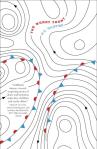
HC Gildfind, The worry frontThe first thing to note about HC Gildfind’s short story collection, The worry front, is its striking, inspired cover. Designed by Susan Miller, it features a weather map which captures the central motif of the title story, but it also suggests the unsettled lives which characterise the book. Gildfind, however, writing a post on the publisher’s blog ascribes another meaning too, noting the link between maps and stories. She says that both “guide us: they locate us in the present by showing us where we have been and where we might go in the future.” Both can also represent the abstract and concrete domains in which we live and operate – and where they might intersect.

But now, the book. It contains ten short stories and a novella, titled “Quarry”. All but one of the stories have been published before – in respected literary journals like Meanjin, Griffith Review, Westerly and Southerly. “Quarry” in fact appeared in the Griffith Review’s novella edition back in 2015. Gildfind then is an accomplished writer, and yet I hadn’t been aware of her. I am now, though, and I’m impressed.

I wasn’t completely sure that I would be, however, when I started the collection. “Ferryman” is a grim, gritty story about an angry man. I wasn’t sure that I was ready for such anger, albeit understandable in the circumstances – but the writing, particularly the rhythm and poetry of it, appealed, so I kept on reading. I’m glad I did, because the next story, the title story – “The worry front” – got me in completely. While the first story is told third person through a man’s eyes, this one is first person in the voice of an eighty-year-old woman. Like “Ferryman”, it’s a powerful story – but this time about a widowed woman who, all her life, has been dogged by “the worry front” but who, when confronted with the realisation that she has cancer, takes matters into her own hand with a breathtakingly original plan. It’s one of those stories where, at the start, you think, “is what I think is happening, what is really happening?” Well yes, it is.

And so the stories continue – varied in gender and voice, but often about something a little out of the ordinary or from a slightly offbeat point of view. The third story, “Gently, gently” is, for example, told second person. It’s a woman speaking about herself, but the second person voice engages us intimately in her life and feelings, drawing us in. It’s about a couple and the three hens they acquire. A chook goes missing – and the couple’s reactions highlight the tension in their relationship. Violence ensues. Like other stories in the book, it treads familiar ground but then turns a corner that forces us to see it from different angles. The relationship dynamic is not as simple as it might have first seemed. The next story, “Eat. Shit. Die” is told in two alternating voices – Leo’s in first person, and Nina’s in second. Both are lonely, and both have – hmm – gut troubles. Nina can’t stop eating, and Leo is having trouble with his s******g, but these are, as you might expect, also symptomatic of something else.

The birds and other animals, and food and eating, that appear in these two stories, recur in many of the book’s stories. Sometimes they reflect emotional states and other times they provide conduits for resolution. In the novella, “Quarry”, a stray black dog kickstarts our damaged protagonist Luke’s return from his agonising loneliness.

These recurring motifs underpin, as you’d expect, recurring themes. One is the interrogation, sometimes explicit, sometimes not, of what is normal. And another is that universal human one of longing for meaningful connection. Some characters eschew it because it hasn’t proven positive (“The wished for”), some are resigned to not having it because they feel unloved or unlovable (“Quarry”), and some actively seek ways of achieving it (“Solomon Jeremy Rupert Jones”). In most cases, this meaningful connection means a relationship with someone of the opposite sex, which, not surprisingly, raises the spectre of gender differences – which issue does run through many of the stories. There’s violence, direct or indirect, in several – but there’s nuance here rather than reliance on standard tropes or simple explanations.

Margaret River Press has produced Book Club Notes for the book. I’m not usually interested in such notes, because they don’t usually address my reading interests, but these are good. There are thoughtful questions for each story, ones that ask for the meaning or significance of events, symbols, actions, and/or characters, rather than the more simple “what would you do” sort of question that you often see.

There are also some general questions for the overall collection. One of these is: “Do you think it is important to ‘like’ a character when reading fiction?” This is a good question because it confronts this problematic issue head on. The worry front does not have many immediately likeable characters – but most characters ring true, and that’s the critical thing for me. We may not, for example, decide to do what the woman in “The worry front” does, but her feelings of dismay, and her resignation to and acceptance of things she can’t change, are true.

Another general question asks “which stories – or characters – provoked the strongest thoughts and feelings in you?” What a good question! I love that it doesn’t ask which one/s you like the best. For me, three stories in particular stand out – “Ferryman” because its anger was so viscerally shocking, “The worry front” because its protagonist’s plan is so surprising while her feelings are so comprehensible, and “The quarry” because Luke’s predicament engaged my heart from the start.

Not all stories grabbed me equally, but there are other memorable ones, including “What there is”. I related to its narrator’s searching for “the body-jolt of recognition” in books. Ironically, a significant jolt that she receives comes from another character, not a book:

You can never change the past. But you can always change how you feel about it.

However, it did come from a book, for me!

It’s hard to do a collection like this justice, but I liked it. I liked its surprising situations. I liked having my expectations unsettled. I also liked its design, and its careful order. It starts and ends with angry men, both of whose anger is caused by the actions of others, by, as Luke sees it, “f*****g men and f*****g women f*****g everything up for everyone forever” (“The quarry”). While it’s uncertain whether our first man will recover, Gildfind does leave us with a sense of hope at the end. I like that too.

AWW Badge 2018HC Gildfind
The worry front
Margaret River Press, 2018
288pp.
ISBN: 9780648027577

(Review copy courtesy Margaret River Press)

Elizabeth Jolley, Poppy seed and sesame rings (#Review)

In her introduction to Learning to dance: Elizabeth Jolley, her life and work, a book that was intended to comprise only non-fiction to create a sort of autobiography, literary agent Carolyn Lurie wrote that Jolley would sometimes “draw so directly on her life” for her stories “that it seemed illuminating to include a small selection of her fiction.” From what I know of Jolley, this seems like a sensible decision.

For example, in “Poppy seed and sesame rings”, the first person narrator says:

I often heard Mother crying in the night. When I called out my father always explained in a soft voice, ‘She is homesick, that is all.’ So I always knew what was the matter.

Compare this with the opening piece in another compilation, Central mischief: Elizabeth Jolley on writing, her past and her self, which contains only non-fiction. The piece is titled “What sins to me unknown dipped me in ink”, and in it Jolley writes that “because of her marriage, my mother was an exile. I remember that her homesickness lasted throughout her life.”

Anna Gibbs, FrictionsHowever, before I discuss the story itself, a little about its background. Jolley, born in 1923, started writing novels and short stories very early in her life. Although her first book wasn’t published until 1976, she’d written her first novel around 1939, and had had short stories published by the 1960s. As far as I can tell from a list of her papers at the University of Western Australia, the story “Poppy seed and sesame rings” was written around 1965, and was initially titled “Pumpernickl, poppy seed and sesame rings”. So, it was an early story, and has been published at least three times, twice in anthologies and once in a collection of her stories, and has also been broadcast on radio:

  • Frictions: an anthology of fiction by women, edited by Anna Gibbs, Alison Tilson (1982) (contains three Jolley stories)
  • The Oxford book of Australian stories, edited by Michael Wilding (1994)
  • Fellow passengers: collected stories: Elizabeth Jolley, 1923-2007 (1997)
  • Read on BBC Radio 4, by Kerrie Fox, 26 Oct 1997

I wonder how many of Jolley’s other stories have had such exposure?

And now, the story. As I said above, it’s clearly autobiographically based, but of course that doesn’t mean that what happens in the story happened in real life. It simply means that the story’s broad outline and main themes draw from Jolley’s experience of being the daughter of an Austrian immigrant mother. In the story, the family, comprising her father, mother, aunt and grandmother, has migrated to the “New Country” from an unidentified Germanic country. In reality, Jolley was born in Birmingham to an English father and an Austrian immigrant mother.

The main theme of the book is the immigrant experience, and particularly the mother’s homesickness. Initially, the mother tries to make it work. She is generous with their shop’s customers in a desire “to be accepted”, and she feels supported by the company of her sister and mother. However, gradually things deteriorate. The sister and mother die; her daughter (our first-person narrator) leaves home for nurse training; she continues to miss her favourite foods like “poppy seed bread and sesame rings”; and the shop struggles to make a living so her help is not needed. Her life becomes a lonely one, spent largely “in the dingy room at the back.” She becomes more set in her old ways and attitudes while the daughter, finding her own way in the world, feels less and less inclined to visit. It’s a common story in migrant families.

There are other things in this story, though, besides these ideas of exile and loneliness, that give it the Jolley imprint. The story starts with the sudden death of the narrator’s aunt while the two are visiting an Art Gallery and Museum. The daughter describes her aunt’s death on the steps of the museum:

I tried to pull her from the step but she only sighed and, making no attempt to get up, she simply leaned forward and died. I ran straight home leaving her there with the pigeons and the coming darkness.

‘Tante Bertl wanted to walk,’ I told them so they did not expect her for a time.

This sort of shocking moral failure – plainly stated, and often never discovered – is not uncommon in Jolley, and reflects her acknowledgement of our darker natures. It’s part of the surprise of her work – and so at odds with her appearance! Such a sweet-looking, unassuming little old lady in a cardigan, she was!

There’s also a hint of lesbian attraction. The daughter brings a friend, Marion, home to cheer up her mother, a “friend” she “hardly knew” and “had chosen … because she looked healthy and very clean and the nearest one to speak to in the hospital administration department.” The visit goes badly, due to the mother’s refusal to be welcoming to the visitor. Afterwards, the daughter finds herself thinking about Marion:

Upstairs I sat at my table and tried to read and write and study but I kept writing Marion’s name everywhere.

I thought about her. I kept thinking about her without being able to do anything about it.

These thoughts cause her to digress from her nursing study to write from her heart “about quiet lakes and deep pools which have no reflection and no memory”, to express the “unknown store-house of feelings” she had found within herself. There’s a double whammy here, it seems – a discovery of attraction and also, perhaps, of the power of writing. No wonder this early story has had several outings.

Read for Lisa’s (ANZLitLovers) Elizabeth Jolley Week.

AWW Badge 2018Elizabeth Jolley
“Poppy seed and sesame rings”
in The Oxford book of Australia short stories (ed. Michael Wilding)
Melbourne: Oxford University Press, 1994
pp. 177-183
ISBN: 9780195536102

Kate Chopin, Her letters (#Review)

Kate Chopin

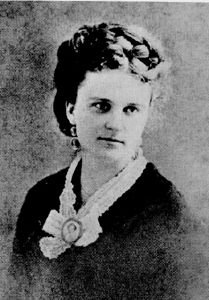
Kate Chopin (Public domain, via Wikipedia)

There are a few American authors who, when they pop up as a Library of America (LOA) Story of the Week, I try to read. These include Edith Wharton, Willa Cather and Kate Chopin. I don’t always manage to read them, but I have read the latest Kate Chopin story they’ve published, “Her letters”. And my, what a powerful one it is. Yes, I know, most of her stories are powerful, but this is certainly up there.

The story is pretty simple, plot-wise, though I shall avoid spoiling it as you may wish to read it from the link below. It starts with a woman, sitting by a “generous wood fire … in an ample fireplace” though outside is “a leaden sky in which there was no gleam, so rift, no promise”. She’s decided that she needs to destroy some letters that, we soon realise, relate to an adulterous affair. She’s been meaning to do this for four years in fact, but they’ve “sustained her … kept her spirit from perishing utterly”. However, she believes her days are numbered and, like many diary-writers and letter-owners, she fears their impact on those left behind, particularly on one “near to her, and whose tenderness and years of devotion had made him, in a manner, dear to her.” Her husband, in other words. The “in a manner” here is telling, isn’t it?

But, she can’t do it. Chopin’s description of her pain at the idea of losing them is visceral. What should she do? She lights on a solution, which is to leave them “in charge of the very one who, above all, should be spared knowledge of their contents.” So, she ties them back up, and leaves them with this note:

“I leave this package to the care of my husband. With perfect faith in his loyalty and his love, I ask him to destroy it unopened.”

Of course, she does die first, and he finds the bundle of letters with the note. (On a day much like that day we’d met her: “The day was much like that day a year ago when the leaves were falling and rain pouring steadily from a leaden sky which held no gleam, no promise.”) What do you think he does?

It’s another powerful story from Chopin, about love, passion, adultery – and also honour and trust. It is a story of its time, but there’s a universality to it too. What is so good about it, though, is the controlled way Chopin unravels the plot, and her language. It’s a little full-blown to our ears, perhaps, but she sustains melancholic tones so well, while at the same time conveying character and emotion.

Without spoiling the ending, I’ll share another excerpt. When the husband finds the bundle of letters, he guesses, of course, that they contain a secret, one that may unlock to him something about this wife whom he’d known “to have been cold and passionless, but true, and watchful of his comfort and his happiness.” He’s affected, but he ponders:

… she had embodied herself with terrible significance in an intangible wish, uttered when life still coursed through her veins; knowing that it would reach him when the annihilation of death was between them, but uttered with all confidence in its power and potency. He was moved by the splendid daring of the act, which at the same time exalted him and lifted him above the head of common mortals.

The conclusion is predictable when you get there, but Chopin leads you carefully along with the husband as he works through the problem. The story has no simple answer, and certainly no condemnation, which is Chopin’s way. She doesn’t judge or pontificate. Rather, she leaves it open for (or, forces!) the reader to consider the ways in which our actions affect others, not to mention the issue of love, passion and marriage, and the accommodations we do or don’t make.

As with other stories by her – including “Fedora”, the last one I reviewed – Chopin didn’t immediately find a publisher for “Her letters”. LOA says:

When she finished the story in December 1894, Chopin sent it off to The Century, which had published several of her previous submissions. By this time Chopin was a well-known and respected writer, but the story was rejected—almost surely because it dealt with a woman’s adulterous affair. The magazine’s editor, Richard Watson Gilder, “felt that fiction should be pleasant and avoid the horrifying, the indelicate, or the immoral,” as Chopin scholar Per Seyersted puts it.

Vogue, though, had no such compunctions – and published it as they had other previously rejected stories of hers. One day I’ll read a biography of her …

Let me know what you think, if you read it (just 8 pages) at the link below.

Note: My other Kate Chopin reviews are A pair of silk stockings, After the winterA respectable womanDésirée’s baby, Morning walk and Fedora.

Kate Chopin
“Her letters”
First published: Vogue, April 11 and 18, 1895
Available: Online at the Library of America

W. Somerset Maugham, The four Dutchmen (#Review)

W. Somerset Maugham, Collected Short Stories Volume 4Finally, an excuse to mention W. Somerset Maugham here – and the excuse is, as Aussie literary fiction followers will probably know, that Mirandi Riwoe’s Stella shortlisted novella, The fish girl, is a response to (was inspired by) Maugham’s short story “The four Dutchmen”. I don’t usually feel I need to read the original work in these situations but given the original here was a short story and given it gets Maugham into this blog, I decided to read it.

Before I get to the story, I must explain that one of the reasons I’d like Maugham here is because I was astonished some years ago to discover just how many of his novels, short stories and plays had been adapted to film. Wikipedia says that he was “one of the first authors to make significant money from film adaptations”. So, having seen several of the films and read a few of his books, I’ve wanted him here – albeit Maugham described himself as “in the very first row of the second-raters”!

“The four Dutchmen” has not, as far as I know, been adapted to film, but it makes interesting reading. In his introduction to the volume of collected stories which includes this one, Maugham says that “most of these stories are on the tragic side. But the reader must not suppose that the incidents I have narrated were of common occurrence.” He then describes how the majority of the people in the Asian regions from which the stories come are decent hardworking people, but

they are not the sort of people I can write stories about. I write stories about people who have some singularity of character which suggests to me that they may be capable of behaving in such a way as to give me an idea that I can make use of, or about people who by some accident or another, accident of temperament, accident of environment, have been involved in unusual contingencies.

The four Dutchmen – a captain, chief officer, chief engineer, and supercargo on a Dutch tramp – are such people. The four fattest men our narrator ever knew,

They were the greatest friends, all four of them; they were like schoolboys together, playing absurd little pranks with one another.

And in such a way, the first person narrator (ostensibly the author) sets them up as jolly, cheery men for whom having a good time was more important, say, than winning money from each other at bridge. After all,

‘All friends and a good ship. Good grub and good beer. Vot can a sensible man vant more?’

But,

… the captain was very susceptible to the charms of the native girls and his thick English became almost unintelligible from emotion when he described to me the effect they had on him. One of these days he would buy himself a house on the hills in Java and marry a pretty little Javanese. They were so small and so gentle and they made no noise, and he would dress her in silk sarongs and give her gold chains to wear round her neck and gold bangles to put on her arms.

The last two sentences here comprise the epigraph Riwoe uses to open The fish girl – but more on that next week.

What happens is that the captain brings a Malay girl on board, against the wishes of his friends, and tragedy ensues – as our narrator pieces together from later newspaper reports and the hotel manager. It’s a story about friendship and loyalty, envy (probably) and revenge. But it’s also about colonial attitudes to local inhabitants, and about men seeing women as objects or toys to be played with and discarded at will.

The interesting thing is Maugham’s attitude. What is it? This is not a didactic story. The first person narrator makes no specific commentary on the rights and wrongs of the four men’s behaviour, but seems to act rather as observer and reporter. However, I think we can glean some opinion. He initially finds them fun to be with, but there are hints that he sees them lacking in substance. At one point he says “to me not the least comic part of them was their serious side” and a little later he comments ironically, after the chief had made an egregious statement, that he “had a philosophic soul”. His, the narrator’s, concluding comment seems off-hand – as if it’s just another story about characters he’s met. And maybe that’s all it is to him, but I’d say there’s ironic intent behind the reference to the “comic and celebrated friendship”.

It’s somewhat more difficult to pin down his attitude to the young woman who is first referred to as “pretty little Javanese”, then “a little thing” and “Malay girl”, before finally being characterised as “brazen hussy”, “bad rubbish”, and “trollop”. She has no voice at all in “the story” – but these descriptions of her are reported rather than his own, so again I’d say he is asking us to consider the attitudes and values he portrays. Anyhow, next week I’ll review Riwoe’s post-colonial response to the story.

Meanwhile, I’d love to know what you think of Maugham (if you’ve read him)?

W. Somerset Maugham
“The four Dutchmen” (1928)
in Collected short stories, Vol. 4
(Selected by Maugham himself)
London: Vintage Books. (Orig. pub. 1951)
ISBN: 9781409076421 (ePub)

M.L. (Mollie) Skinner, The hand (#Review)

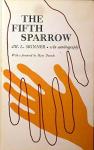
ML Skinner, The fifth sparrow

ML Skinner, The fifth sparrow: An autobiography

Pam of Travellin’ Penguin blog read ML Skinner’s short story “The hand” for a challenge she was doing, and, when I expressed interest in it, very kindly sent me a copy. “The hand” is a mysterious little story – and by little, I mean, little in that it takes up less than 7 pages of the anthology, Australian short stories, that she found it in.

Now, the story is a bit tricky, and I think is best understood within the context of Skinner’s biography. She was born in Perth in 1876, but the family moved to England and Ireland in 1878. Mollie was a keen student and reader but had to abandon formal education in 1887 because of an ulcerated cornea, which resulted in her spending much of the next five years in a darkened room with bandaged eyes. After cauterisation partially restored her sight, she started to write poems and stories. Presumably this was around 1892 (ie 5 years after 1887?) when she was about 16 years old. Later she trained as a nurse, which gave her her main living. And then, the ADB biography (linked to above) says something interesting in terms of our reading of this story:  “she recognized within herself an intuitive power, or sixth sense.” A little later in the biography, we are also told that “Mollie believed that God’s hand on her shoulder guided her life. She dabbled in the occult”. She returned to Australia in 1900, though returned to England later to study. She also travelled to India, and served there and Burma during World War 1.

So to the story, which was first published in 1924. It is set in a “mining hospital back there in the west.” As there was “little doing” and the light too dim to read by, the Matron is encouraged to tell a story which she is “good at” doing. They – presumably the off-duty staff – ask her about her life in “those posts way back in the interior”. Was she ever frightened, they ask?

‘Of what?’
‘Well–the loneliness. And bad white men, and bad blacks. Of patients in delirium. Or some awful maternity case you couldn’t handle.’
‘I didn’t think about it. I did what I could. I was frightened once, though: and that, really, by a nurse screaming. A nurse shouldn’t scream.’

Interesting, the “bad white men, and bad blacks”, but I’ll just take that as another of those ways in which contemporary stories provide us insight into the times, and move on with the story. She then tells the story of the scream. She describes the small outback post, the sense of community they had, and the little L-shaped hospital which was open to the bush on one side, and the road and railroad on the other. There were two other nurses besides herself, one being Nurse Hammer “a regular town girl, very attractive, but unstable, untried.” On the night of the scream, our Matron story-teller was doing accounts while the two nurses were chatting with the patients. Our Matron’s mind kept wandering she says. She’s

very practical, really, and then liable to feel things in the air, things that other people don’t seem aware of. My father called it “unwarranted interference”; and told me to taboo it. But it gets hold of me sometimes: and this evening I was uneasy, aware of “something”. There seemed to be a sound.

But, she can’t identify anything, so continues to try to work. She hears Nurse Hammer go to bed, and then – the scream. The rest of the story concerns locating the scream – it was Nurse Hammer – and working out the cause of it – a hand has grabbed Hammer’s leg.

In the end, there’s a practical explanation for “the hand” but along the way there’s a sense of an awakening or at least, a growing up, for Nurse Hammer. Initially, the Matron is

conscious, not only of Hammer’s terrible fear, but of a deeper source, dark and secret within herself. I remembered how lovely she was. How men in the wards watched with furtive eyes as she walked past. I remembered the way she walked–how she avoided those eyes. I knew then that the girl had herself been tempted, that she was powerless, now, in this dark room, because in her own life she was passing through crisis.

The Matron finds herself praying that “whatever we found in this room would not be evil.”

Skinner builds up the suspense well, the darkness, the lantern going out, until eventually the cause of the scream is determined. Before it is fully explained though, Nurse Hammer has a little more to endure, but, says Matron,

I glanced at Hammer. The Nightingale light was flooding her face …

And the Matron goes on to use words that imply a biblical aspect to Hammer’s enlightenment – but if I say more, I’ll give away the story which I’m not sure I want to do (though unfortunately the story does not seem to be available online).

Interestingly, Skinner attracted the attention of DH Lawrence … but I think I might make this the subject of tomorrow’s Monday Musings! Meanwhile, I think the story is to be understood in the sense of a divine intervention intended to test and try Nurse Hammer, from which she emerges, in a sense, reborn and now a real nurse, like Florence Nightingale. (But, I could be wrong.)

AWW Badge 2018ML (Mollie) Skinner
“The hand” (1924)
in Australian short stories (1951)
ed. by Walter Murdoch and Henrietta-Drake Brockman
(pp. 148-154)

Ben Smith Noble, The sands of time (#Review)

Tasmania 40 South Issue 78Ben Smith Noble is the second young writer I have reviewed here, the first being Leah A with her 10 silly poems by a ten year old (my review) which came to my attention via Son Gums. Ben Smith Noble’s short story “The sands of time”, on the other hand, came to me from Mother Gums via Brother Gums who lives in Tasmania and knows the young writer. Indeed, I believe I’ve met him too, but that was nearly ten years ago, when he was probably around 6!

Many moons have passed since then and it appears that Ben Smith Noble is becoming quite the writer. “The sands of time”, which unfortunately is not available on-line, won the Junior Section (Years 7-9) of the 2015 Young Tasmanian Writers Prize – and what a delightful story it is. It’s a time-travel story about a man who dies suddenly and mysteriously finds himself in a coffin that had been used in England in 1122, during the time of the Crusades. What happens next, as I’m sure you’ve guessed, is that he finds himself in the Holy Land in 1098 “standing between two armies that had a very certain view on who was right”:

The hot sands swirled around Mr Smith as the two armies gave a roar and started moving towards each other at a speed that suggested the sides shared an intense hatred for each other, and further suggested to the out-of-place Tasmanian the idea of being impaled on a lance or scimitar.

He dearly wished he was somewhere else. Heaven for example.

In the next paragraph, things are getting dangerous: “An arrow drifted by in what seemed slow motion, and hit a nice young man who would probably have got along well with his killer had his killer not been holding a bow”.

Mr Smith is not impressed, and starts to run:

He wasn’t sure where he was going, but he was sure anywhere would be better than here.

However, he soon finds an English knight and a Saracen warrior approaching him on horseback from different directions, so he does the only sensible thing he can think of. He calls, “Stop!” The denouement, from this point, is beautifully and succinctly told, and conveys a message about war – something that “happens when people with small brains get big ideas” – that is pure and sensible. It’s an entertaining read.

What is impressive about the story is Noble’s grasp of language, of rhythm and pace, of voice, and of structuring a plot. We are told in the first paragraph that Mr Smith had “a guilty love of Doctor Who” which sets up the time-travel idea, but we are also told in the same paragraph that he likes “staying in the here and now”, and hadn’t, in fact, been anywhere further than Burnie. In other words, he’s a simple, ordinary man, and Noble sets this up effectively in the first paragraph. He also establishes his light tone in this paragraph, and sustains it through to the end. The story made me laugh – at the right times – and yet it has a serious message that’s relevant today. I don’t have a benchmark for what young writers are capable of these days, but this story would not embarrass its creator in adult company.

A search of the Tasmania 40° South revealed that Ben Smith Noble won the Senior Section (Years 10-12) prize last year, with a story titled “Napoleon, or, the musings of Mr Pink”. Clearly someone to watch. You heard it here first, folks!

Ben Smith Noble
“The sands of time”
in Tasmania 40° South, Issue 78?, pp. 85-86

Carmel Bird, The dead aviatrix: Eight short stories (#BookReview)

Carmel Bird, Dead aviatrix

Carmel Bird, whose latest short story collection, The dead aviatrix: Eight short stories, I’m reviewing here, has to be the consummate writer. She can turn her hand to fiction and nonfiction, to short and long form writing, to formal and more informal voices, and to both serious and witty or satiric tones. She’s also an editor/anthologist in addition to being a writer. And now she’s experimenting with a digital platform. So, when she hesitantly offered me The dead aviatrix to read and review, there was only one answer, yes.

Her hesitation related to its e-book form. She feared that we Gums’ people aren’t much interested in ebooks, but, she wrote, “they are a growing part of the literary landscape”. Then, using a very Bird-like expression, she continued, “so maybe one day you will write a bit about them, and if and when you do, The Dead Aviatrix will be idling on the tarmac.” Well, how could I resist, even if I had wanted to, an aviatrix idling on the tarmac? And anyhow, as you know, I do read and write about e-books. Annabel Smith’s The ark (my review) is a good example, but I’ve reviewed several e-books here including Dorothy Johnston’s Eight pieces on prostitution (my review).

Like Dorothy Johnston’s book, which was a digital publishing initiative of the Australian Society of Authors, The dead aviatrix is the first Capsule Collection, a new platform by digital publisher Spineless Wonders. Subsequent titles in the series will, the book’s “About” says, include works “selected from The Carmel Bird Digital Literary Award”. You clearly can’t keep a good writer down. I love that this doyenne of the Australian literary scene is still exploring and experimenting.

However, it’s all well and good to explore and experiment with form, delivery platform, and so on, but in the end you need to produce the goods, and this Bird has done with her eight stories. I should say, before discussing them, that all have been published before – in publications like Southerly, Island Magazine, and Review of Australian Fiction.

So now, at last, the stories themselves. They are a wonderful lot. Bird regularly makes me laugh, and she does so again here. It’s not empty laughter though, because her targets are serious. It’s just that she frequently presents her ideas with a cheeky, often satirical approach.

The first story is “The dead aviatrix and the Stratemeyer Syndicate”. It’s written in the sort of style Bird used in Fair game, her memoir of Tasmania (my review). By this I mean it digresses or, as she says, becomes “productively sidetracked”. However, as “The dead aviatrix” is “a publishing story”, the opening digression about the prolific Edward Stratemeyer – creator of a childhood favourite of mine The Bobbsey Twins – is relevant in a way (of course!). Actually, it’s very relevant because she finds a quote about an aviatrix in a Stratemeyer book, and uses it to springboard her story. Oh, she’s a character! The tone of the story, like several in the book, is chatty. She talks directly to us, the reader, leading us along, often lulling us into a false sense of security. In this case, it’s a little satire on the publishing industry – on proofs going astray, on distracted publishing interns – but along the way it invokes or references all sorts of ideas, including the Australian aviatrix Nancy Bird Walton who “unlike the great and mysterious Amelia … did not disappear in the skies.” Sometimes it is hard to keep up with Bird (our Bird, I mean!) but I love trying. This story is, partly, about the art of writing stories.

The second story, “The Whirligigge of time brings its revenges”, draws from a Shakespeare quote, and is also a publishing story, this one more satirical about first and second novels, the notion of “literary” novels, awards, and not using agents. Again, it has a similar, chatty story-telling tone. Here’s an example:

The history of this novel (The Heat of Summer) is the real subject of my tale. That, and the wheel of fortune and the quirks of fate. The book takes its first inspiration from Camus’ famous L’Etranger, and its content is drawn from the aforementioned history of Joseph Tice Gellibrand, the disappearing Attorney-General of Van Diemen’s Land. Well, you can see that what Frankie was doing here was risky. It was what is often described as literary fiction.

There’s more delicious satire about publishers and their slush piles, but I’ll finish with a quote about promotion:

The media hype for The Heat of Summer is huge, what with the glamour of Frankie’s Paris life, and the deep fascination with gothic Australian bush stuff and so forth. Based around the tragic life of her ancestor. Smash hit. Frankie turned out to be a publicist’s dream, having, as well as the attributes I have alluded to, long legs, a face that could sell cosmetics and airline tickets, and an engaging lisp.

Delicious isn’t it?

And so the stories continue, addressing issues like missing children (“Cold case”), dying towns and New Age shops (“Cactus”), shallow suburbanites and their prejudices (“The matter of the mosque”), surrogacy (“Surrogate”), and species extinction (“Letter to Lola” and “The tale of the last unicorn”). All the stories could be lessons in writing – in tone, in varying form, in how to make words and language work for you, in being absurd without being absurd (if you know what I mean), in addressing serious matters with a light but pointed touch. I enjoyed every one.

While several stories are written in the chatty, satirical tone of the first two. Not all are. “Dear Lola” takes the form of a love letter from a Spix’s Macaw to his lost mate. It’s sad, and pointed, but the whole idea of a bird writing to its lover gives it a whimsical touch too. “The matter of the mosque”, on the other hand, is written in little scenes, comprising mostly dialogue between two mothers in which it’s clear that whether to use hairspray or mousse is more important than opening their minds to different ways of being. Bird’s control of language and narrative here, together with her use of repetition and recurring ideas or images, makes this a little gem.

Now, I know many of you aren’t short story readers, because you want to get lost in character. These stories won’t give you that. However, what a mind, what ideas, what fun and, ultimately, what heart, you miss by ignoring a book like this. It’s only available in e-format and costs a whopping $4.99! Why not give it a go?

AWW Badge 2018Carmel Bird
The dead aviatrix: Eight short stories
Spineless Wonders, 2017
50pp.
ISBN (e-version): 9781925052343

(Review copy courtesy the author, but available from Spineless Wonders)