Madelaine Dickie, Troppo (Review)

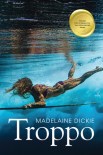
Madelaine Dickie, Troppo“Write what you know” is the advice commonly given to writers, and this is exactly what Madelaine Dickie has done in her debut novel, Troppo, which won the City of Fremantle TAG Hungerford Award. For readers, on the other hand, the opposite could be true, as in “read what you don’t know.” This is certainly what I’ve done by reading Dickie’s novel because I’ve barely travelled in southeast Asia, where the novel is set, and all I know about that risky business of surfing, which frames the novel, comes from Tim Winton’s Breath (my review).

So, where to start? Well, to begin with, it’s a while since I’ve read what I might call a “youth culture” novel. I’ve read novels by young authors, such as Hannah Kent’s Burial rites (my review), Brooke Davis’ Lost & found (my review) and Tara June Winch’s Swallow the air (my review), but these novels have different drivers. One is historical fiction, one was inspired by grief over a mother’s death, and the other explores indigenous identity issues. The closest to Troppo that I can recollect reading is Andrew O’Connor’s The Australian/Vogel Award-winning Tuvalu, about a young Australian teaching English in Japan, but I read that long before blogging.

I say all this to give Troppo a context – a sort of sub-genre, if you will – of young writers writing about a young person’s experience of the world, an experience that is post-coming-of-age but encompasses a degree of uncertainty about one’s place. I don’t intend this to mean, though, that the novel is autobiographical. While it obviously draws on Dickie’s knowledge of southeast Asia and surfing, for example, I wouldn’t presume to say protagonist Penny is she. Indeed, in an interview on the publisher’s website, Dickie says that:

Some of the anecdotes are almost true, certainly stemming from my own experiences as a traveller and surfer … The texture of Troppo is also very true, the intoxicating smell of kretek cigarettes, the nights bleary on Bintang beer, and the way the call to prayer from the mosques drift down through mountain valleys.

Further, “the characters are entirely fictional”, she says, as is the setting, Batu Batur.

But now, preamble done, let’s get to the book. Set in southwest coastal Sumatra, it starts a couple of months after the bombing of the Australian Embassy in Jakarta in September 2004 and ends just after the tsunami hit Aceh on 26 December 2004. Penny, around 22 years old, had lived in Indonesia as a teen, but is returning to have “a break” from her significantly older boyfriend Josh. She has lined up a job on a surfing resort run by expat Shane, but arrives early to have a holiday. That’s the set up. The novel then explores the personal and political relationships that develop (or pre-exist) between the locals and the expat community, and within the expat community itself, in a tense situation where corruption and bullying is rife, and fundamentalist Islam is on the rise, threatening a culture that has traditionally accommodated different values and beliefs.

Troppo is a good read that gets you in quickly. Its fresh, lively but also reflective, first-person voice is engaging, and the various supporting characters are well-drawn. They include Ibu Ayu, the manager of the tourist bungalows where Penny stays in the beginning; young Cahyati, her niece; Penny’s soon-to-be-boss, Shane; and the “hot” but somewhat mysterious expat Matt. We soon sense mystery, with the locals not liking Shane, and the expats suggesting he won’t be around much longer. There’s a thriller element to the novel, but it’s not “just” thriller.

The novel’s over-riding concern is Penny’s uncertainty about her life. She’s not sure, exactly, why she’s fled Josh (except that his routine stultifies her), or why she’s “always jerked along by whim and the conviction there’s something better just ahead”. And yet, we readers know why, just as Belle in Disney’s (original and recently remade) Beauty and the Beast does!

I want much more than this provincial life,
I want adventure in the great wide somewhere.
(lyrics by Howard Ashman)

It’s not our culture (Matt)

In addition to the personal, however, the novel also explores social and political themes. One concerns tourists and cultural differences, expats and First World guilt. Penny sees “men whose bodies are halved over new rice” and “old women buckled under bundles of sticks” while she and friends are “off to surf, off to play and play and play, for months if we want.” It’s two-edged of course: the tourists bring money but their lives can inspire resentment.

Another theme concerns changing politics in Indonesia. When asked in the interview (linked above) about the novel’s timing, Dickie responded that:

Troppo is set two years after the Bali bombings, a year after the bombing outside the JW Marriott Hotel, and two months after the bombing of the Australian embassy in Jakarta. This context is important for Troppo, as some of the themes explored are the rise of fundamental Islam and the coexistence of Islam and traditional beliefs. … I was also aware of the two dimensional depictions of Islam in the media, and wanted to create rounded characters and discussions based on some of the stickier topics I liked to discuss with my Muslim friends. Has the relationship changed? Of course, things are always in a state of flux. However, our news media is now less concerned with Jemaah Islamiyah, and more concerned with the rise of Islamic State, which no one had heard of ten years ago. So the shape of fundamental Islam has also changed.

This theme pervades the novel through a growing sense of menace, not only against the corrupt expat, Shane, but against the “bule” (foreigner) in general. Moreover, Marika, a young New Zealander who runs an internet cafe, tells Penny that “the vibe has changed”, Matt tells her “there are bigger issues at play”, and locals in a bar tell her of imams “only wanting mosques, not churches”. Dickie handles this well. Suspense builds slowly – in fits and starts – and the plotting is sure. The crisis, when it comes, is swift but believable because the groundwork has been done.

Overall, in fact, Dickie proves to be a skilled writer. The novel feels tight and honed. Sometimes first-time novelists can overdo imagery, but Dickie keeps it under control, mixing up evocative descriptions with dialogue and action. It’s the lovely little descriptions that pop out of nowhere which delight the most, like this of a middle-aged expat’s hands being “like sea-creatures that have been left out on the sand. Dried out and peppered with sunspots”. Or this, “The night is young. The mozzie coil has only just begun its inward inch.”

Dickie also handles well that challenge of writing a story about a place whose language is different from her own. Her strategy is to sometimes translate Indonesian words and phrases, but other times to let the context make it clear. This can be an effective approach, and Dickie makes it work, using enough local language to convey place, but not enough to stall our reading.

Partway through the book, Penny says that “Risk always makes things sharper, throws into contrast the highs and lows, gives clarity”. Troppo, in the end, is about this. Yes, it comments on tourist and expat life, and yes, it exposes the beginnings of a dark political underbelly in the region, but the main point, really, is the personal. Penny recognises by the end that she is “living, by choice, on a fault line”. She finds living in “extreme places, among extreme people”, “intoxicating”. The challenge, I’d say, is how to live such a life authentically and respectfully. I’d love to see Dickie explore this theme further.

aww2017 badge

Madelaine Dickie
Troppo
Fremantle: Fremantle Press, 2016
263pp.
ISBN: 9781925163803

DISCLOSURE: I have not met Madelaine Dickie, but her fiancé is the son of one of the founding members of my bookgroup (not to mention of my now long-past playgroup and babysitting groups).

Northanger Abbey musings (2)

A month ago I posted some musings arising from the first part of my current slow read of  Northanger Abbey with my Jane Austen group. In this post I’ll share some reflections on the rest of the novel, Chapters 20 to 31, which is the part that encompasses our “heroine” Catherine’s arrival in and departure from the Abbey.

On the art of fiction

In my previous post, I discussed how Northanger Abbey spoofs or parodies Gothic novels. Northanger Abbey also contains Austen’s famous defence of the novel. These contribute to one of the pleasures of this novel, which is the joy Austen seems to be having in being an author. She intrudes regularly with her own voice, not only commenting on the characters but on fiction itself. It’s the new novelist having fun, flexing her muscles, and making an argument for more “realistic” fiction over the Gothic novel that was popular in her time.

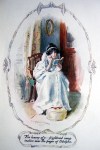
Northerner Abbey illus br Brock

So, for example, here is Catherine, at the Abbey, deciding that the General had been up to no good regarding his late wife:

His cruelty to such a charming woman made him odious to her. She had often read of such characters, characters which Mr. Allen had been used to call unnatural and overdrawn; but here was proof positive of the contrary.

Mr Allen is the sensible neighbour who, with his wife, had taken Catherine to Bath. One of the things Austen does in this novel, and particularly in the second half, is satirise readers of Gothic novels, readers who let their imaginations run away with them. Catherine, our narrator tells us, is too “well-read” to let the General’s “grandeur of air” and “dignified step” dissuade her from her belief about his dastardliness. And so, when at last she is proved wrong (though the General does prove villainous in other ways), Henry admonishes her:

What have you been judging from? Remember the country and the age in which we live. Remember that we are English, that we are Christians. Consult your own understanding, your own sense of the probable, your own observation of what is passing around you. Does our education prepare us for such atrocities? Do our laws connive at them? Could they be perpetrated without being known, in a country like this, where social and literary intercourse is on such a footing, where every man is surrounded by a neighbourhood of voluntary spies, and where roads and newspapers lay everything open?

There is so much to tease out here besides Austen’s satirising the Gothic sensibility … but let’s save them for another re-read, and move on.

Soon after, Catherine considers Henry’s admonition, and thinks:

the whole might be traced to the influence of that sort of reading which she had there indulged. Charming as were all Mrs. Radcliffe’s works, and charming even as were the works of all her imitators, it was not in them perhaps that human nature, at least in the Midland counties of England, was to be looked for.

So, it is human nature that most interests Austen – not the one-dimensional “angel” and “fiend” characters of the Gothic novelists.

Late in the novel, as our hero and heroine are coming together, Austen writes:

Henry was now sincerely attached to her, though he felt and delighted in all the excellencies of her character and truly loved her society, I must confess that his affection originated in nothing better than gratitude, or, in other words, that a persuasion of her partiality for him had been the only cause of giving her a serious thought. It is a new circumstance in romance, I acknowledge, and dreadfully derogatory of an heroine’s dignity; but if it be as new in common life, the credit of a wild imagination will at least be all my own.

Here, I’d say, there are two main things going on. One is the cheeky novelist teasing us with her “new circumstance in romance” undermining the conventional idea of romantic love between heroes and heroines in novels. The other is the more serious Austen making a rather subversive observation about the realities of love and human relationships, because she was a pragmatist at heart. She believed in love, but she also understood the implications of the marriage market.

If all this sounds a little confused, that’s probably because it is. Austen plays around in this novel with ideas about fiction versus reality, Gothic (European) sensibility versus more ordered (English) values, and reading versus readers. To do so, she slips in and out of different modes of narrative, daring us to keep up with her. No wonder it’s the book that has proven the hardest to adapt to film.

More word teasing from Henry

In my last post, I shared Henry’s little tirade about the word “nice”. I can’t resist sharing another little tirade from later in the novel:

“No, and I am very much surprised. Isabella promised so faithfully to write directly.”

“Promised so faithfully! A faithful promise! That puzzles me. I have heard of a faithful performance. But a faithful promise—the fidelity of promising! It is a power little worth knowing, however, since it can deceive and pain you…

Love it …

And here endeth my reflections on my most recent re-read of Northanger Abbey. What a delight it has been, yet again. It may not have the romance of Pride and prejudice or the complexity of Emma, but it has the lively, fresh mind of an author who wants to engage with her readers about the very thing she is doing, writing a novel. I find that irresistible.

Picture credit: From Chapter 9, illus. by CE Brock (Presumed Public Domain, from solitaryelegance.com)

Mena Calthorpe, The dyehouse (Review)

Mena Calthorpe, The dyehouseMena Calthorpe’s novel The dyehouse was, as I wrote in a post last year, Text Publishing’s choice for its 100th Text Classic, which surely says something about its quality or worth, wouldn’t you think? And yet, as Lisa (ANZLitLovers) pointed out in her post, it is not mentioned in recent books discussing the history of Australian literature, such as Geordie Williamson’s The Burning Library and Jane Gleeson-White’s Australian Classics.

However, it is listed in bibliographic and encyclopaedic works like Debra Adelaide’s Australian women writers: A bibliographic guide, Joy Hooton and Harry Heseltine’s Annals of Australian literature, and William Wilde, Joy Hooton and Barry Andrews’ The Oxford companion to Australian literature. It has also captured the attention of others, including Introduction-writer Fiona McFarlane (whose The night guest I’ve reviewed here). She writes of coming across a secondhand copy in a Sydney bookshop and says that she’d never heard of Mena Calthorpe, but as soon as she’d read the opening sentences, she decided to buy it. I can understand that. I would have too.

Now, before I get to the book, I’m going to bore you a little more with what people have or haven’t said about the book. In my above-linked 100th Text Classics post, I noted that while most reviewers were favourable, one from my city’s paper was less so. S/he, RR, called it “badly written and pretentious”, though conceded that if Calthorpe focused on “telling a story simply, economically, and honestly” she could be “a force … on the Australian literary scene”. Marian Eldridge, reviewing a reprint in the same paper, two decades later, had quite the opposite opinion. She praised Calthorpe’s “spare, clear prose and jaunty dialogue”, and called the book …

“a fine example of the social realist genre”

Well, I’m with McFarlane and Eldridge. The book got me in from its first paragraph, and I enjoyed it immensely. It is, what Lisa would call, a book that matters because its subject is, to put it broadly (and baldly!), the impact of capitalism-at-all-costs on workers. That could make for a dry, didactic book, but Calthorpe’s writing and characterisation bring the story to life. Her political message is unavoidable but it’s tempered by a cast of believable people (ranging from the cold chairman-of-the-board to the lowliest labourers), a well-controlled story that contains tragedy and romance without turning into melodrama, and writing that’s fresh and lively.

I’ll start with the writing first. The novel starts in 1956 and takes place over about a year. It’s told third person, in short chapters which move between the many, but not hard to keep track of, characters. It starts with Miss Merton arriving at the Dyehouse and meeting the on-site boss, Mr Renshaw. In chapter 2, we meet the Chairman of the Directors Harvison, the General Manager Larcombe, and Company Secretary Cuthbert. They’re discussing problems in the Dyehouse: it’s not keeping up with production. We quickly get a sense of the characters of these three men. Harrison’s lips tighten as he wonders “Where’s the firing squad?” Larcombe is ineffective – wary, unexciting, and full of excuses – while Cuthbert is “sharp-featured, pleasantly mannered”. We soon learn that he has some humanity, some empathy, but too easily lets his accounting distract him from troubling people issues. Then, in the same chapter, we shift to the General Office, and this (which McFarlane loved too):

Clack! Clack! Up came the carrier and ejected papers onto Mr Dennet’s table. There they lay: the Fanfolds! the Ledger Copies!
The Debits!
Mr Dennet took up his pen and began entering into the Control Book. The Comptometers sprang to life. Two young women with painted nails fell upon the papers.
Tic-tac, tic-tac. Now over to the files.
OK, Miss Brennan, you sort them out. City, Country, Government. Now break them up. A to K, L to Z, and then into the files with them.

There are other short interludes like this – a paragraph on worker Barney running for the morning train, for example – which break up the rhythm and convey the life better than any straight descriptive text could do. I have no idea what RR was thinking. Pretentious? No! Instead, I’d agree with McFarlane’s description of it as “formally experimental … with its episodic structure and its restrained lyricism …  its playful attention to sound.” It all makes for delicious reading.

“The trap’s set for us all” (Miss Merton)

Next, the well-controlled story. Told over a year, Calthorpe explores how the Dyehouse manages with its production crisis. We see Renshaw scapegoating the skilled, experienced but not certificated Hughie, moving him from his beloved dye-room to working on the vats. We also see Renshaw sexually preying on pretty young women in his employ, including the initially gullible Patty. We see the workers, their lack of security – those on “Staff” versus those brought in as needed – and their struggle to sustain their lives. We see the bosses turning a blind eye to the struggles of their people, or, not even noticing these struggles. We see nascent attempts to “organise” for better conditions. Along the way there’s an unplanned mid-life pregnancy, a tragic death, physical assaults and sexual abuse. The novel is nicely structured, beginning and ending with the calm, mature Miss Merton.

All this might suggest that the characters are stereotypical, designed simply to serve the “idea” but, while they do serve the idea, they come across as real, authentic human beings. Larcombe and Cuthbert, for example, are not simple villains. They are, in Larcombe’s case, for example, a bit lazy, a bit self-protective, a bit uncertain, resulting in his being a bit ineffective! Even the biggest villain of the piece, Renshaw, is shown to to have the odd ounce of humanity. Similarly, the workers. Hughie, Barney, Patty, Miss Merton and Oliver Henery, to name a few, are all rounded out with succinctly presented backstories, which establish their authenticity while also adding depth to the plot.

It is, essentially, an ensemble cast, but the stories of two characters primarily carry the plot – Hughie (whose love of his job “had given purpose and dignity to his labour”) and Patty (a naive young women who believes Renshaw will marry her, until she discovers otherwise).

The ending, which I won’t give away, is inspired, striking the right balance between realism and hope.

I really can’t recommend this book enough. It slots well into other books exploring the struggles of the working poor of the early post-war period, like Ruth Park’s Harp in the South series. And it is a thoroughly engaging read which is relevant today, not only because its humans reflect universals of human behaviour as well as the life of the period, but because we are currently seeing new threats to worker security which ensures that this book’s concerns do not feel dated. A worthwhile read on multiple counts, in other words.

Mena Calthorpe
The dyehouse
Melbourne: Text Publishing, 2016 (Orig. pub. 1961)
299pp.
ISBN: 9781925355758

(Review copy courtesy Text Publishing)

Graham Greene, Travels with my aunt (Review)

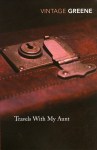
Graham Greene, Travels with my auntEvery year, my reading group aims to do at least one classic – usually something from the nineteenth century – but this year someone suggested Graham Greene. Yes, we all responded, why not? But which one? For reasons I don’t recollect, Travels with my aunt was suggested and given none of us had a burning desire to do another, it was scheduled. This suited me as I hadn’t read it before.

It surprised me a little. I was expecting something lighter because I’d understood that it was  a comedy, a bit of a romp, and it is – but I found layers too. Wikipedia says of Greene’s work, overall, that “he explored the ambivalent moral and political issues of the modern world, often through a Catholic perspective”. Travels with my aunt might be a fun book but this description is relevant to it too – though I’m not an expert on “the Catholic perspective” bit.

Anyhow, let’s start with the plot. It concerns middle-aged retired banker Henry Pulling’s travels in Europe and South America with his septuagenarian Aunt Augusta whom he only gets to properly know after his mother’s funeral. Henry is a bachelor whose hobby is growing dahlias. It’s a quiet, English sort of life. His aunt, though, is a completely different kettle of fish. She appears at her sister’s funeral, whisks Henry off to her flat where she lives with her valet-cum-lover, the black Wordsworth. She tells him that his mother was not his mother, but had married his father and faked pregnancy in order to take on his care when he was born to… Well, of course, we can guess who the birth mother is can’t we? From this point on, she engages Henry in her various travels which, it has to be said, become increasingly morally suspect. When she says that “sometimes I have the awful feeling that I am the only one left anywhere who finds any fun in life”, she’s not joking, but her fun can have a more than questionable edge.

The story is told first person by Henry. I’d call him a naive, rather than an unreliable, narrator – I think there is a subtle difference. This is one of the jokes of the book. We know or suspect things that Henry, in his inexperienced not to mention conservative British way, doesn’t immediately cotton on to. Part of the story’s enjoyment is the tension Greene creates between Henry and his free-wheeling Aunt. This tension provides one of the layers I referred to.

Another layer I’ll tentatively suggest was inspired by discovering that Greene’s full name was Henry Graham Greene. This made me wonder whether there is a little of the autobiographical in the book. There’s certainly not in the literal sense, because Greene, who left his wife and the associated traditional, domestic, settled life, led a peripatetic and adventurous life, one closer to Aunt Augusta’s. But the ending, which I won’t give away, poses some interesting questions when looked at from this perspective.

Other layers relate to various issues Greene refers to or hints at along the way, such as American imperialism, particularly in South America; World War 2 and the actions of collaborators; the impact of the pill (resulting in pregnancy now being the girl’s fault); Catholicism and its role (or not) in personal value systems; and, I think, some critique of “Englishness”.

However, I don’t want to make it sound too serious. The book is a romp. There’s no doubt about that, as we follow Henry and his aunt to Brighton, France, Istanbul via the Orient Express and, eventually, to Paraguay. The activities his aunt engages in, not to mention the stories she tells Henry about her past shenanigans, are funny, outrageous, sometimes farcical, and not always legal. You do have to keep up with a rather large cast of colourful characters, including the young Tooley and her is-he-a-CIA-operative father O’Toole, the Nazi war criminal and love of Augusta’s life Mr Visconti, various policemen and military personnel, and the put-upon Wordsworth who calls Augusta his “bebi gel”.

Greene’s writing is frequently funny. Here is a description of an American tourist having a cuppa in Europe:

One of them was raising a little bag, like a drowned animal, from his cup at the end of a cord. At that distressing sight I felt very far away from England, and it was with a pang that I realized how much I was likely to miss Southwood and dahlias in the company of Aunt Augusta.

Then there’s Aunt Augusta on her plans to fund their trip to Istanbul:

“I hope you don’t plan anything illegal” [says retired banker Henry!]
“I have never planned anything illegal in my life,” Aunt Augusta said. “How could  I plan anything of the kind when I have never read any of the laws and have no idea what they are?”

And there’s this on the is-he-CIA O’Toole:

“Are you in the CIA like Tooley told me?”
“Well … kind of … not exactly,” he said, clinging to his torn rag of deception like a blown-out umbrella in a high wind.

There are also many delightful set-pieces, such as the description of a Christmas lunch for the lonely, and some ridiculous confrontations with various policemen.

This book is too well-known for me to write something more comprehensive, so I’m going to leave it here, and let you tell me what you think.

Meanwhile, I’ll conclude on a quote from early in the book. It’s Henry reflecting on his mother’s life:

Imprisoned by ambitions which she had never realised, my mother had never known freedom. Freedom, I thought, comes only to the successful and in his trade my father was a success. If a client didn’t like my father’s manner or his estimates, he could go elsewhere. My father wouldn’t have cared. Perhaps it is freedom, of speech and conduct, which is really envied by the unsuccessful, not money or even power.

Without going into what he meant by “successful”, I think this notion of freedom – particularly “of conduct”, which is an interesting take – is what’s at the bottom of this book, the freedom to choose how you will live your life. In the end, Henry realises he is free to choose. Whether he makes the “right” or “best” choice is up for discussion, but it’s the freedom that’s the point.

Graham Greene
Travels with my aunt
London: Vintage Books, 1999 (Orig. pub. 1969)
261pp.
ISBN: 9780099282587

Northanger Abbey musings (1)

Northerner Abbey illus br Brock

Ch 9, illus. by CE Brock (Presumed Public Domain, solitaryelegance.com)

My Jane Austen group is reading Northanger Abbey – again – because this year is the 200th anniversary of its publication. However, I did write about the novel when we did it in 2015, so what to do? Well, the thing is that every time I read Austen something else pops into my mind to think about – and I’d love to share a couple of them.

Now, my group often does slow reads of the novels, and we are doing Northanger Abbey in two parts: up to Chapter 19, which is just before Catherine leaves Bath; and from Chapter 20 to the end which encompasses her arrival in and departure from Northanger Abbey. My comments in this post relate to the first part.

On heroes and heroines

Northanger Abbey, as you may know, spoofs or parodies Gothic novels, which were popular at the time. One of the clues to the parody is the frequency with which Austen refers to her heroine Catherine’s likeness (or not) to “heroines”. The novel commences:

No one who had ever seen Catherine Morland in her infancy would have supposed her born to be an heroine…

And Austen goes on the describe why Catherine is not heroine material. She’s a simple country girl living in an ordinary family in which nothing dramatic happens. Her father is a “very respectable man” who is “not in the least addicted to locking up his daughters”. There are no lords or baronets in the vicinity to create hero intrigues … and so it goes.

However, it’s not this Gothic spoof that I want to discuss, but the whole concept of hero/heroine. It occurred to me as I was thinking about the heroine thread during this read that when I was a student writing essays I always referred to the protagonists of novels as the “hero” or “heroine”. I don’t do this so much now, preferring something like “main character”. I’m guessing this is part of our post-modern world.

But, this is not what I want to talk about either! My question to myself was where did this concept of “hero” and “heroine” come from, so I did a little digging. And here’s my disclaimer, because it was just a little digging that I did. I discovered a couple of things. One is that the poet-playwright-critic Dryden was the first to use the word “hero” in this way in 1697. The site on which I found this went on to say that “it is still commonly accepted as a synonym for protagonist, even when the protagonist does nothing particularly heroic”. Yes!

Britannica.com told me that:

The appearance of heroes in literature marks a revolution in thought that occurred when poets and their audiences turned their attention away from immortal gods to mortal men, who suffer pain and death, but in defiance of this live gallantly and fully, and create, through their own efforts, a moment’s glory that survives in the memory of their descendants. They are the first human beings in literature …

This must be what Dryden was picking up on – a move from a focus on gods to people and their agency in their own lives. Another site (whose link I didn’t capture) said that:

The Novel was a new genre. Contrary to the epic or the drama, the Novel places the hero at the heart of its reflections. For the first time, we have access to the thoughts and feelings of the hero.

I’d argue that Austen, in presenting Catherine to us as she does, is drawing our attention to a transition from the notion of “hero” (or “heroine”) as someone who “live[s] gallantly and fully, and create[s], through their own efforts, a moment’s glory that survives in the memory of their descendants”, like a Gothic novel hero, to more realistic stories about ordinary human beings that she wrote. This is not to say that ordinary human beings can’t be heroic, but it’s a different sort of heroism, nest-ce pas? This is simplistic, I realise, in terms of analysing the “hero” in literature, but it’s given me something to hang my thinking on to.

On “nice”

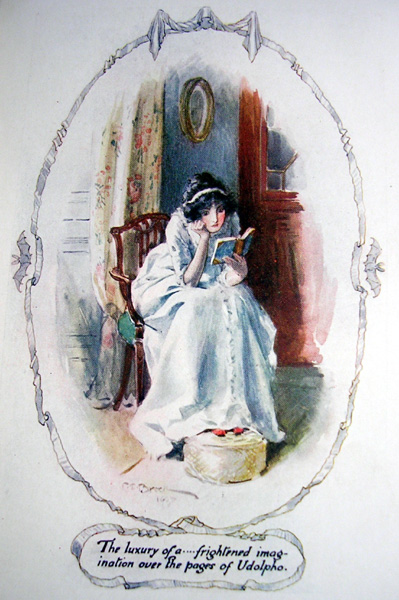
In a conversation with hero (!) Henry and his sister Eleanor, Catherine asks Henry “do not you think Udolpho the nicest book in the world?”

Now, if you went to school when I did, you were probably told not to use the word “nice” because it’s over-used and meaningless. Well, this is what Henry teases Catherine about. He replies (teasingly, cheekily, condescendingly, depending on your attitude to our hero), “The nicest—by which I suppose you mean the neatest. That must depend upon the binding.”

At this point sister Eleanor steps in and tells Catherine that

“He is forever finding fault with me, for some incorrectness of language, and now he is taking the same liberty with you. The word ‘nicest,’ as you used it, did not suit him; and you had better change it as soon as you can, or we shall be overpowered with Johnson and Blair all the rest of the way.”

“I am sure,” cried Catherine, “I did not mean to say anything wrong; but it is a nice book, and why should not I call it so?”

“Very true,” said Henry, “and this is a very nice day, and we are taking a very nice walk, and you are two very nice young ladies. Oh! It is a very nice word indeed! It does for everything. Originally perhaps it was applied only to express neatness, propriety, delicacy, or refinement—people were nice in their dress, in their sentiments, or their choice. But now every commendation on every subject is comprised in that one word.”

“While, in fact,” cried his sister, “it ought only to be applied to you, without any commendation at all. You are more nice than wise…”

I loved reading that this injunction we all heard in the mid-late twentieth century was “a thing” back in the very early nineteenth. “Nice” has such a fascinating semantic history that I’m not going to explore here – but I can’t resist telling Henry that he’s wrong because my Shorter Oxford Dictionary says that, back around 1500, it originally meant “silly” or “stupid”. Did Austen know that too, and is having a joke on Henry?

What fun Austen is to read …

William Lane, The salamanders (Review)

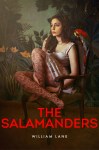
William Lane, The salamandersWilliam Lane’s latest novel, The salamanders, is a book that keeps you thinking from beginning to end. As I started it, I was thinking of it as a cross between Julian Davies’ Crow mellow (my review), a satirical novel about a house party for artists and their patrons, and Emily Bitto’s The strays (my review) about an artist colony, focusing particularly on the founding family. A few comparisons could be drawn, but I soon discovered that this is its own book.

I hadn’t heard of this* William Lane before, but The salamanders is his third novel. In a different version, with a different title, it was apparently shortlisted for the Vogel Prize. The book’s author bio also told me that Lane did his doctorate on Christina Stead. So, he’s been about the place – just not the places I’ve been haunting, clearly!

But now to the book. It starts during a beach holiday on the New South Wales coast. There’s the obsessed artist Peregrine, his ex-wife Naomi, their daughter Julia, his sons, David, Arthur, and George, from his previous relationship – and the adopted Rosie. There are also some visitors, including friend Elizabeth and her husband Johnno. The children range in age down from the 14-year-old David. Arthur, aged around 11, has a crush on the slightly older Rosie, and George and Julia form a happy play unit. Lane sets up the idyll – Naomi says they are “enjoying one another’s company far more than when we were married” – and then gradually pulls it apart, exposing past and present cracks. By the end of the first chapter – the book is told in 5 chapters – the idyll has broken, mostly due to Peregrine’s arrogant and self-involved behaviour, and Naomi departs with the two girls. Chapter 2 jumps 15 years or so. Arthur is around 27 years old, and is back at the beach-house living alone. Rosie comes to visit.

The rest of the book focuses primarily on Arthur and Rosie as they circle each other, coming together, separating, all the while trying to come to terms with their lives, their pasts and their desires for the future. Lane doesn’t over-explain, preferring to show not tell, so we are left to guess exactly what had happened on that holiday and just after, which resulted in changes to the family units. All we know is that the fallout has had long-lasting impact and that Rosie is coming from England, to which she’d run away. She refuses to eat with Arthur. This eating behaviour of hers is one of the motifs running through the novel, and represents an inner discordance, despite the refrain that what happened wasn’t their fault.

Other motifs run through the book. One is the indigenous rock art image, in a cliff near the house, of a falling man. It mesmerises Arthur, and represents his emotional state. The other main motif relates of course to salamanders – and various members of the somewhat-related lizard and snake families. These creatures occur both literally and metaphorically. Rosie, in Chapter 2, says to Arthur:

‘Skinks, salamanders, geckos, frill-necked lizards, water dragons,’ laughed Rosie in her burred and husky way, ‘this is the land of the lizard. When I see a lizard, I think of this country. I never realised that its surface is so lizard-like. That’s what I saw from the plane.

This motif is complex, conveying a range of ideas, many of them unsettling:

… Peregrine glittered, and his eyes grew milky. He might be covered in scales, with discreetly expanding gills. With an absolute, self-preserving, inward rush of energy, Elizabeth removed herself from him.

Lizards also represent the antiquity of the continent – “the young lizard … considered them from some million years ago”. And in this, they also represent resilience. “Lizards are tough”, says Rosie, and toughness, the ability to grow and move beyond their youth, is what Rosie and Arthur are working to achieve.

There’s an underlying Gothic sense to the novel which imbues it with an overall eeriness. Peregrine creates strange paintings in caves. There are mysterious shapes or shadows which appear out of the blue – “Something scurried outside the glass. He looked up, but did not catch its form” or “A liquid slithering passed along the glass of the house …” or “Then that scrabbling again. Something ancient was trying to get in”. There’s Arthur and Rosie’s roadtrip into Australia’s interior, and their uncertain relationship with each other. Not blood-related but brought up as brother and sister, they mystify and concern others.

So, where does all this go? I’m not sure it’s a book you can easily comprehend in one reading. The road trip to the interior and Peregrine’s bizarre painting projects in caves within caves suggest some sort of psyche-seeking but it isn’t completely resolved in my mind. Need it be?

Overall, then, it’s one of those mesmerising books that can be read in different ways, making it a little disconcerting. The first chapter felt a little over-written at times and I feared a clichéd story about dysfunctional artists’ colonies, but it then shifted into something more mysterious, less-defined, slippery, something incorporating a broad, abstract story about our relationship to art, place and nature, and a more personal story about identity and family.

According to myth, salamanders are born of and resistant to fire. Rosie says during her road-trip with Arthur that “we’re salamanders – we don’t feel the fire”. And that, in a way, is the point of the novel, surviving the fires that confront us.

William Lane
The salamanders
Melbourne: Transit Lounge, 2016
255pp.
ISBN: 9780994395849

(Review copy courtesy Transit Lounge)

* I allude to the late nineteenth-early twentieth century Utopian of the same name, whose The workingman’s paradise I’ve reviewed.

Olive Ann Burns, Cold Sassy Tree (Review)

Olive Ann Burns, Cold Sassy TreeAs I explained in my post last year on Annie Dillard’s The Maytrees, we are slowly listening to some of the audiobooks we gave Mr Gums’ mother in the last years of her life, and have just finished Olive Ann Burn’s epic-length, Cold Sassy Tree. From what I’ve read in Wikipedia, Olive Ann Burns was another late bloomer (albeit not an Australian one of course). Born in 1924, she didn’t publish Cold Sassy Tree, which was her only completed novel, until 1984. It was so successful that her readers pleaded for more, for a sequel, that is. She started it, but died of a heart attack in 1990 before finishing it. It, Leaving Cold Sassy, was apparently published unfinished, but with her notes, in 1992.

Now, when authors write historical fiction – particularly one that is not about a specific event, like, say, World War 2, or a person, like, say, the ever popular Ann Boleyn – my first question is why have they decided to write about a past time? Cold Sassy Tree is set in the American South in 1906, though if I remember back to the first CD correctly, the first person narrator, Will Tweedy, is telling the story some 8 years later (which would make it on the verge of the World War 1 – not that that is relevant given the USA’s delayed entry into the war.) According to Wikipedia, Burns was a journalist and columnist, and it wasn’t until 1971 that she “began writing down family stories as dictated by her parents. In 1975 she was diagnosed with lymphoma and began to change the family stories into a novel that would later become Cold Sassy Tree”. So, I guess, there’s my answer: she was capturing the stories from her family’s past. Will Tweedy, I believe, is based on her father. And it is, fundamentally, a simple, but charming, family story.

But, like all family stories, there is a little more to it than that. The American South is – or was, particularly, at the turn of the twentieth century – conservative, religious and prejudiced against other (coloured folks, poor folks, and so on). This is the society that Will Tweedy is born into. Luckily for him, he was also born into a family with an independent-thinker, live-by-his-own-rules, grandfather, E. Rucker Blakeslee. Early in the novel, Cold Sassy Tree (for that’s the name of the town), and particularly Will’s mother and aunt, are thrown into turmoil when 60-odd-year-old Rucker, just three weeks widowed to a wife he clearly loved, ups and marries the 33-year-old Yankee, Miss Love Simpson, who was working as a milliner in his general store.

Will, just entering adolescence, is the perfect narrator in what is, partly, a coming-of-age novel. He adores his grandfather, and becomes a sometime confidant, sometime unwitting but not unwilling eavesdropper, of the newly married couple. He has a mind of his own but is still obedient enough to mostly do what he is told. He soaks up what is going on around him, and is prepared to take risks and listen to new ways of doing things while also maintaining some of that level of shock about change that his parents have.

I’m not going to write a long post on this, partly because I listened to it over a long period of time and partly because, having listened to it, I don’t have good quotes to share. Burns has written the book in southern dialect, but it’s not hard to follow, and she uses some lovely fresh appropriate imagery – similes, in particular – which adds to the enjoyment. The coloured man, Loomis, for example says that religion is “like silver”, you “must keep polishing” it.

Besides the main story of this “shocking” marriage – which has its own trajectory to which Will becomes privy – we see the introduction of motor cars to the small town, the lack of opportunity for the children of the poor working class, the changing role of women, the economic challenges faced by small towns, and the stultifying effect of narrow religious beliefs. It’s not, in other words, all light. There’s drama – a near train accident, a returned would-be lover, a suicide, to name a few. There is also awareness of racism, but Burns glosses over this a little, preferring to show, overall, positive, more humane attitudes. She doesn’t necessarily gild the situation, but she doesn’t draw out the ugliness either.

This is not, probably, a book I would have picked up and read of my own accord, but as a book to listen to during hours on the road it did an excellent job with its engaging characters, its light touch, its warm but clear-eyed view of small-town life, and its sense that although times have changed people haven’t all that much.

Olive Ann Burns
Cold Sassy Tree (audio)
(read by Tom Parker)
BlackstoneAudio, 1993
12H 30M on 11 CDs (Unabridged)

Louise Mack, The world is round (Review)

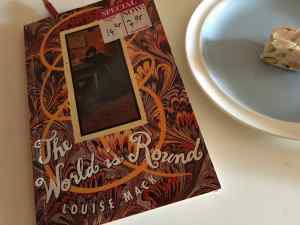
Louise Mack, The world is roundI’ve had Louise Mack’s debut novel, The world is round, on my TBR for about 20 years. Published in 1896, when she was 26 years old, it’s a fairly straightforward tragicomedy about a young well-to-do 21-year-old girl, Jean, who aspires to be a writer, and the two men who love her, the 30-plus-year-old self-confident, successful lawyer-and-writer Musgrave, and the around-25-year-old, shy and financially struggling Harrison. It’s a short work, a novella really, being just 93 pages in my edition.

Now, when I was searching Trove for information about Mack for this week’s Monday Musings, I found a couple of articles about her writing, amongst a myriad about her lecture tours. One was written in 1895, before this novel was published but after some of her verse and short prose pieces started appearing in journals like the Bulletin. The article quotes Mrs Bright, editor of Cosmos:

In these early days it is not possible to predict the place that Miss Mack is destined to fill in Australian literature. At present she shines chiefly in dialogue and a quaint, satirical style; peculiarly noticeable in sketches like “A study in Invitations.” In time she may develope [sic] a faculty for descriptive writing, which will supply the only quality now lacking to ensure her high rank among the popular novelists of the day.

The other was written in 1896, soon after the publication of her novel. The writer says:

Miss Mack has a particularly taking satirical style, but her descriptive writing is hardly up to her ability in the other department. Were she to but slightly improve in that qualification it would enhance the already strong position she has attained in the ranks of popular writers.

So, the praise is qualified. Her niece, the writer Nancy Phelan who wrote the introduction to my edition, discusses her not living up to this early potential. She notes that a common view is that she was “praised too soon, told she was good and encouraged to rush into print” when she needed time to sit back and think, and “be disappointed”. Phelan writes:

She wrote instinctively … but without proper guidance and criticism her work too often became facile. Facility, with a fertile imagination and love of inventing stories, made her a successful romantic novelist but it eroded her talent, and years of formula writing elbowed aside the poet. She never lost her poetic awareness but had little occasion to use it. Haste, lack of reflection, putting words on paper before they were ready robbed them of their true value; it was quicker and easier to write of trivial events than to try to address deep, difficult thoughts and emotions.

Yet in all Louise’s books there are glimpses of the writer she might have been. Even in her most idiotic novels there are occasional patches of true feeling or sensitive descriptions …

Why have I written all this? Well, partly because it might explain why this particular writer from the past has sunk from view. However, I’d argue that The world is round is worth reading – for a couple of reasons. One is that it is a good read, in which you can see why she received early praise. As our 1895 and 1896 writers above say, her dialogue is good and she has a lovely, light, satirical eye. (I’m going to share an excerpt which shows both of these in a Delicious Descriptions next week.) The other is that it is a good example of why “classics” (or older works) are worth reading. I’m going to focus my post on these two points.

a “brilliant little study”

The 1896 writer notes that “the reader’s report” for this novel described it as a “brilliant little study of two men and two women, sparkling and witty, and told in a graphic style”. It is a fun read, still today. It has a light touch, never wallowing in the issues it raises, and not weighed down with long explication or too many adjectives that you sometimes find in debut novelists. There are moments of sadness or pathos – obviously at least one of the would-be lovers is going to be disappointed, for a start – but Mack never becomes sentimental. (You can see this skill in those columns I referred to in my Monday Musings.)

The story is told third person, chronologically, in named chapters – “Musgrave”, “Jean”, “In which a friend is brutal” – and takes place in various interiors, such as James Musgrave’s chambers, Harrison’s classroom, and Jean’s home. Mack draws on the life she knows, presenting a picture of a small group of characters moving around each other in a small environment. This is very reminiscent of Jane Austen, to whom there is a tongue-in-cheek allusion in this conversation between Jean and Musgrave:

“I don’t suppose I will ever be a George Eliot, or a Thackeray, but perhaps I may be a–”
“Miss Austen.”
Miss Austen! oh, surely I’ll be something b–I mean surely I won’t be like her.”
“She did some good work.”

I mean to say! Anyhow, Mack’s descriptions of her small group of people and their interactions ring true, while also drawing on standard literary tropes, like the well-to-do heroine and her poor friend, the experienced confident suitor and the awkward poor one. The plot plays out, perhaps more through little vignettes than a flowing narrative, but it is enjoyable to read, largely because these vignettes are well-drawn, and confidently mix a light tone with the occasional darker one. I’ll leave the story there.

on reading “classics”

As I was reading this old book or forgotten “classic” (let’s not get into the definitions of “classic” here now), I started thinking about why we read such books. It’s easy to explain those classics that belong to the canon: they address the big universal themes or ideas, their writing is skilled and timeless, and, often, they have innovated or contributed something to literary culture. But, what about what we might call the second rung, books like Mack’s The world is round? Are they really worth reading over contemporary writers? I’d say yes, and one of the justifications is in the first line of Mack’s novel. It starts:

Sydney was revelling in the clear, cold weather of June, the most delicious month of the Australian seasons.

Now, that is not an attitude most Australians would have today, but is clearly how the colonials, those transplants from mild temperate Britain, felt about Australia’s climate. In other words, books written in a different time can provide a fascinating insight into the attitudes and values of that time. They might be fiction, but they can’t help also betraying their era. For students of colonial Australia, Mack’s novella offers some delightful insights into “the life and times”.

I don’t want to bore you with details, but will just share one more example. It concerns the poor friend who tells Jean that she “can’t write about Australia, it doesn’t appeal” to her. She admits she’s a “Colonial” but she knows nothing of bush life. She says, “I’ve never taken my country into my soul, and never will until I get away from it”. However, she’s poor, and is offered a job governessing in the bush on a cattle station. She learns to love the Bushies and to prefer them over “the posturing, pseudo-intellectual Sydney set”. She writes several pages to Jean on the subject. Now, this friend plays a role in the plot in terms of providing a counter assessment of Jean’s literary skills and there’s a plot reason for sending her away, but I can’t see much reason for this little outburst, except for Mack to make some point about colonial society and its values.

So, there you have it. This is less review, more wandering reflections, but I hope I’ve convinced you that Louise Mack is a worthy addition to the list of past writers who should be kept alive.

aww2017-badgeLouise Mack
The world is round
Pymble: Angus & Robertson, 1993 (orig. pub. 1896)
93pp.
ISBN: 9780207180163

Elizabeth Jolley, An innocent gentleman (Mini-Review)

Elizabeth Jolley, An innocent gentlemanNote: this is a mini-review compiled from the notes I made when I read Elizabeth Jolley’s An innocent gentleman before blogging. I found them on some scrappy pieces of paper while decluttering and figured my blog is the best place to keep them … not floating in some drawer somewhere!

Most if not all of Elizabeth Jolley’s books that I’ve read deal with the difficulties in forming and maintaining meaningful human relationships. Of course, a lot of writers do this – after all people and their relationships are the stuff of life. But Elizabeth Jolley tends to deal with the disturbing or unsettling sides of our relationships. She explores the ‘feelings’ people have but often don’t admit to, such as feelings for a person of the same sex or for a person for whom they should not have feelings. This might be because of age or power differences or infidelity. She shows how difficult it is – though we desire it so – to maintain a long-term intimate or deep relationship that is equal on all levels (physical, intellectual, social, material, etc). And she usually does it with a deep sense of irony. In this, she is, to me, a contemporary Jane Austen.

And so, in An innocent gentleman, Jolley’s last novel, we have three main characters – Henry, Muriel and Mr Hawthorne – who have a complicated set of relationships with each other based on wishes and desires for something deeper, happier. The setting is World War 2, and the woman, Muriel, has married ‘down’ according to her mother. Henry is her husband, and Mr Hawthorne is the ‘classy’ man they meet. If you suspect the “eternal triangle” you’d be right, sort of, but in Jolley’s hands it doesn’t play out to script. The relationships that develop are complex … and play, for one thing, on the notion of innocence.

There is an autobiographical element to this too. In her essay collection, Central Mischief, Jolley writes about her mother’s long-running adulterous relationship, which her husband, Jolley writes, “grudgingly accepted”. He was an older, more well-off man. It’s not surprising, really, that Jolley explored complex, odd-to-many-of-us relationships.

Anyhow, besides these three, there are some secondary characters – Muriel’s mother, their neighbours the Tonkinsons, the two little daughters, and Victor and Miss Morton – who circle around these characters, being affected by or affecting the central relationships. This is very Jane Austenish too, in fact, this focus on a small range of characters operating in a small sphere, which comprises, in this case, a town in the midlands and a trip to London. In Jolley’s hands, though, there’s often a suffocating sense of lives too well controlled, too small, and of a desire, sometimes, to break out.

Jolley quotes Wordsworth: ‘…There is a dark/Invisible workmanship that reconciles/Discordant elements, and makes them move/In one society’. And so, as in most of her books, there is not a final resolution where the characters find their place, resolve their issues. There is just a point in time where they have learnt something about themselves and resolve to keep on going, doing the best they can ‘in one society’, but what that best entails is another thing.

Lisa at ANZLitLovers is also an Elizabeth Jolley fan, and has reviewed this book.

AWW Logo 2016Elizabeth Jolley
An innocent gentleman
Ringwood: Viking, 2001
258pp.
ISBN: 9780670912155

Pierre Lemaitre, The great swindle (Review)

Pierre Lemaitre, The great swindleAs I was reading Pierre Lemaitre’s literary page-turner, The great swindle, I started to wonder about the endings of books, what I look for, what I most appreciate. What I don’t look for is neat, happy conclusions. There are exceptions to this of course. Jane Austen, for example, but she was writing at a different time when the novel was in an earlier stage of development. In contemporary novels, I look for something a little challenging, something that suggests that life isn’t neatly wrapped up. Fiction isn’t life, I know, but its role, for me anyhow, is to reflect on, and thus make me think about, life. So, Lemaitre’s The great swindle? How does it end? I’m not going to tell you – it’s not the done thing in reviews – but I will say that it’s satisfying, even though it does have one of those many-years-later wrap-ups that I’m not convinced is needed.

There, that’s an unusual opening for me, isn’t it, to start with the end? Where do I go now? Back to the beginning I think. The novel is divided into sections: 1918, November 1919, March 1920, and Epilogue. It starts in the trenches on 2 November 1918, just days before the First World War ends. One of our two main characters Albert Maillard is there, wanting a quiet, safe time until the war ends, but his commanding officer, Lieutenant Henri d’Aulnay-Pradelle, has other ideas, setting off a series of events that reverberates through all their years.

This is, in fact, quite a plot-driven novel, despite having many strings to its bow. And you all probably know how much I hate describing plots, so I’m going to keep it simple. After a devastating opening which leaves soldier Édouard Péricourt with a severely damaged face and Albert, for good reasons, taking responsibility for his care, the novel focuses on life in Paris in the immediate aftermath of war. While our two soldiers struggle to survive, Pradelle has been demobbed a Captain, as he’d orchestrated, married a wealthy young woman, Madeleine, who happens to be Édouard’s sister, and is engaged in the business of providing coffins and burying soldiers in cemeteries around France – focusing more on the money he can make than on whether, say, the right soldier ends up in the right coffin. You getting the picture of this Pradelle by now?

There are several other characters – this is a big story that owes much to the 19th century novel – but I’ll just mention a couple more: Monsieur Péricourt, Madeleine and Édouard’s father, a tough businessman who had never had time for his artisitic, effeminate son, and Merlin, the dogged, bottom-rung, about-to-retire civil servant who is given the job of reporting on the cemetery project.

Finally, just two more things you should know before I leave the plot. One is that Édouard did not want to return home after the war, so in the military hospital Albert manages to swap his identity – in a swindle, you might say – with a dead soldier, resulting in Édouard Péricourt becoming Eugene Lariviere. His father and sister, therefore, do not know he is alive. The other is the war memorial swindle concocted by Édouard (Eugene), which he finally manages to convince the “even when well-intentioned, lying was not in his nature” Albert to support.

The novel, then, has a complex plot with a rather large cast of characters, but Lemaitre, who is apparently known for his crime novels, handles it all very well so you never feel lost. One of the ways he does this is through vivid characterisation. Every character, from the main “cast” (it’s to be filmed I hear) to the supporting characters, is so strikingly portrayed that you feel you are there in postwar France – there in the streets where poor, injured returned soldiers struggle to make a living, there in the houses of the well-to-do where money is king, there in the cemeteries where Pradelle’s exploited Arab, Chinese and Senegalese workers do what they can to survive.

Another is through the clever set pieces which illuminate the characters, such as Edouard/Eugene’s increasingly bizarre masks – from horse-head to budgerigar – which he creates and wears to cover his horrendously disfigured face. Or the more gruesome scenes in which the taciturn, not very agreeable, but diligent public servant Merlin tramps around cemeteries investigating coffins. Using these set pieces, many of which border on farce, alongside controlled doses of satire and irony, Lemaitre creates a tragicomic tone – but to what end?

“will this war never be over?”

Early postwar, concerning Pradelle’s cemetery plans, the (mostly omniscient) narrator says:

To an entrepreneur, war represents significant business opportunities, even after it is over.

War, then, is the over-riding theme – but war is a big canvas. Lemaitre’s focus is war’s aftermath. What does it mean for those who went and those who stayed, and for the new world they must forge, preferably together. At one point Albert, worn down by his cares and responsibilities, and facing yet another hurdle, wonders, “will this war never be over”. But, as ordinary citizens get back to life, the needs of the returned are forgotten:

ex-soldiers were all the same, forever banging about their war, forever giving little homilies, people had had just about enough of heroes. The true heroes were dead!

A ripe environment, in other words, for cemetery and war memorial scandals, for profiteering – particularly when you add that it was a time of great social change in France, one where the nouveau riche (represented by M. Péricourt) were getting the upper hand over the often money-short aristocracy (represented by Pradelle).

Opposing this almost obsessive focus on money is a sense of resignation. It can be seen in Madeleine who marries the execrable Pradelle. “We each settle down as best we can”, comments our narrator. For many, there is a sense of “emptiness”, this word appearing several times in the novel. They were tough times – the time of “the lost generation” or what the French called “the génération au feu” – for which society was not equipped to cope. So, in the end, what Lemaitre has painted is a picture of a society under stress, a picture which is conveyed most directly through our “everyman”, our struggling returned solider Albert who just wants to make a life for himself but who is also loyal to those who need him:

War had been a lonely business, but it was nothing compared to the period since demobilisation that was beginning to seem a veritable descent into hell …

The novel, as you will have gathered, is replete with swindles, but the greatest of all, Lemaitre is saying, was the abominable treatment, upon their return, of the ordinary soldier.

This is one of those novels which uses a light touch to tell a heavy story. No wonder it won France’s main literary prize, the Prix Goncourt.

Lisa at ANZLitLovers also enjoyed this book.

Pierre Lemaitre
The great swindle
(trans. by Frank Wynne)
London: MacLehose Press, 2015
ISBN (eBook): 9781848665804