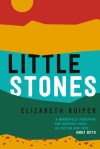
Elizabeth Kuiper, Little stones (#BookReview)

Book coverAnnouncing their 2019 longlist back in February (see my post), the Stella Prize judges said that they “wished for more representations of otherness and diversity from publishers: narratives from outside Australia, from and featuring women of colour, LGBTQIA stories, Indigenous stories, more subversion, more difference”. Elizabeth Kuiper’s debut novel, Little stones, may not exactly fulfil this wish for subversion and difference, but it is set in Zimbabwe, and that’s certainly a start.
The main story concerns 11-year-old Hannah’s life as the daughter of divorced parents – and what ensues when her mother decides to leave Zimbabwe, wanting to take her daughter with her. Her father’s up till then somewhat controlled anger against her mother intensifies, and he does all he can to prevent this happening, despite the fact that he has shown little commitment to the real business of loving and rearing a child.

It’s not a particularly new story, but this one has an added layer; it’s the early 2000s and Hannah and her parents are middle-class white Zimbabweans living under Robert Mugabe’s increasingly violent regime. Life is not easy for her family, which includes her tobacco-farmer grandparents, with African nationalism ramping up against what Hannah comes to recognise as “crushing colonisation”.

The story is told first person by Hannah, and this is both its strength and weakness. Strength because Hannah, though intelligent and observant for her age, is a naive narrator. She can only see through an 11-year-old’s eyes, while we, of course, know or can guess what is really happening, whether this is the political violence and corruption happening in the background (and sometimes even closer) or the more personal conflict happening between her parents. So, for example, early in the novel she hears her mother and grandparents talking, yet again, about the Warvets, whom she understands to be “a big family who wanted to steal farms from everyone in Zimbabwe”. Finally, she insists on being heard:

Mum,’ I insisted. ‘I don’t want us to give our farm away to another family.’
‘Another family?’ Mum sought clarification.
‘The Warvets.”
Mum looked around the room, first at Nana, then Grandpa, and let out a sigh. She explained to me that the War Vets were not an extended family. They are a large group of people called the ‘War Veterans’ who mobilised to take back what they saw as their land.

The naive narrator voice achieves a few things. It conveys how unsettling it is for children to be living under stresses that they don’t fully understand, but it can also keep the tension down a little because the full horrors are not made explicit to us (albeit we can guess them.) Hannah is a lovely character, whose special and sustaining relationships with her best friend Diana Chigumba and the family’s Shona housekeeper (not “maid” says her mother) Gogo, are delightfully conveyed. She can, being 11, be naughty, but she’s at heart a sensitive, loving, well-adjusted child.

However, this voice can be a weakness too. It’s difficult to sustain the voice of a child – and unfortunately, perhaps, I’ve just read Tim Winton’s The shepherd’s hut which does it extremely well. Here, I felt that at times Kuiper’s Hannah used language and concepts that an 11-year-old would not use. We are told she’s intelligent, and good with language, but still I wasn’t always convinced. Here, for example, she talks about the guardianship court case her mother is fighting:

In the past, I would have tried to offer whatever morsel of advice I could manage, but as the court case progressed I came to realise that most of the time she was talking about herself, and so I absorbed her rhetorical questions as a necessary and cathartic part of the process for her.

This, and examples like it, seem rather sophisticated to me in both expression and idea. The question is, are we supposed to believe that this is 11-year-old Hannah telling the story as it happened or older Hannah telling the story? I’m not sure it’s always completely clear, but I felt it was intended to be the former.

All this brings me to the question of whether Kuiper’s story would have been better told as a memoir, because I understand that the novel is, like most debut novels, autobiographical. Of course, I don’t know where the facts of her life end and the fiction begins, but it’s a question that I pondered as I read. And, also of course, memoir would bring its own challenges for Kuiper that she may not have wanted to confront. I don’t blame her for that.

Anyhow, this is a minor quibble if you are prepared to go with the flow, which I decided to do. Kuiper handles well the challenge of conveying the difficulty of the situation for Hannah’s family as white Zimbabweans in an increasingly tense and dangerous atmosphere. She shows that it’s not all about race, or simply about race. There’s the issue of different races – Shona versus Matabele – and there’s class. Hannah’s best friend Diana, for example, comes from a well-to-do black family. Kuiper also handles convincingly the parallel, and perhaps most significant for Hannah, issue of separated parents wrangling over their daughter. The descriptions of Hannah’s father’s increasing manipulation of the system to get his way are infuriating if not chilling – but oh so real. Hannah, in fact, has to grow up fast if she is to survive this dual personal and political unrest she finds herself in.

Little stones is, then, essentially, a coming-of-age story, which also works as a Young Adult-Adult crossover novel. It offers something special to readers in both these areas because its perspective is a rare one for us to read here; because it is told with a lovely vitality and attention to the details of a life lived under complex political and personal circumstances; and because it manages to tread that fine line that shows rather than judges. And that, I think, is impressive.

Lisa (ANZLitLovers) also enjoyed this book.

AWW Challenge 2019 BadgeElizabeth Kuiper
Little stones
St Lucia: UQP, 2019
264pp.
ISBN: 9780702262548

(Review copy courtesy UQP)

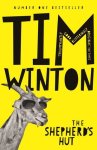
Tim Winton, The shepherd’s hut (#BookReview)

Book coverTim Winton and Christos Tsiolkas have to be Australia’s foremost contemporary writers about men and boys, Tsiolkas doing for urban/surburban males what Winton does for small town/rural ones. Winton’s latest novel, The shepherd’s hut, continues his exploration of males in extremis. It’s strong, gritty, page-turning, and yet reflective too, which is not easy to pull-off.

The shepherd’s hut is the story of a teenage boy who goes on the run after finding his violent father dead, crushed under the car in the garage. He thinks he’ll be blamed, and he’s not hanging around to find out. With the exception of Lee who lives in Magnet – she’s symbolically and literally his magnet – he’s friendless, so it’s to Magnet that he heads, on foot across the Western Australian desert. And thus the adventure begins, except that the novel starts at the end of that adventure – or the beginning of the next adventure – take your pick. Here are the last few sentences of the opening two pages:

For the first time in me life I know what I want and I have what it takes to get me there. If you never experienced that I feel sorry for you.

But it wasn’t always like this. I been through fire to get here. I seen things and done things and had shit done to me you couldn’t barely credit. So be happy for me. And for fucksake don’t get in my way.

What an impressive opening. The tone, and thus the character, is defiant. There’s the hint of trials that have been confronted. There’s the in-your-face vernacular language. And there’s the sense of something ending and something else beginning. Where is this book going to go, we wonder, so we turn the page – and we find ourselves in the past, at the beginning, we suspect, of whatever it is that he has just come through.

Soon enough, we learn that our boy is Jaxie Clackton, that his mother had died not too long ago from cancer, and that he is living with his violent father. Jaxie himself is, not surprisingly, prone to bullying and violence himself, but, really, all he wants is peace:

all a person wants is feeling safe. Peace, that’s all I’m after.

Can this angry boy, can anyone who has grown up surrounded by violence, really remake themselves? That is the question.

The shepherd’s hut is, essentially, a road story, albeit one done on foot. Jaxie heads out into the wheatbelt, steering clear of the highway. The exposed, pared-back landscape provides the perfect backdrop for Jaxie’s emotions as he struggles to survive in the wheatbelt-mining-desert country in which he finds himself. It’s not easy to hide out there where “you stick out like a rat on a birthday cake”, let alone find food and water, but Jaxie has to survive, physically, mentally and spiritually, if he is to achieve his goal. Winton’s descriptions of Jaxie’s journey – the landscape, what he needs to do to sustain himself – are graphic and visceral.

Eventually, Jaxie finds another human being out there, exiled Irish priest Fintan MacGillis. Jaxie is naturally suspicious – given all he’s heard about “pedos” and “kiddy-fiddlers” – but gradually a bond, sometimes uneasy but nonetheless strong and mutually beneficial, forms between these two outsiders. Jaxie’s energy and passion provide a foil for Fintan’s wiser more experienced understanding of the world. There is a sort of biblical feeling to all this – a forty-days-in-the-desert vibe – as these two serve out their “exiles”.

There is a lot we are not told. Exactly why Fintan is there is never fully explained (but it’s not for kiddy-fiddling), and whether anyone is really after Jaxie is never confirmed. This information is not important to the story being told, which is … well, what is it about?

“I know what I am now” (Jaxie)

On the surface, it is about violence – particularly about domestic violence and its impact on those so abused, like our Jaxie. But, this is Winton, and while his novels chronicle social conditions, exposing society’s failings, his main interest tends to something deeper – call it biblical, theological, or spiritual. So, to focus on Jaxie, our protagonist, I’d argue that his time in the desert – both alone and then with Fintan – do result in some spiritual  growth for him. One of the motifs running through the book concerns goats – why? Well, we could read Jaxie as a scapegoat. Literally, and perhaps even symbolically. We know he’s on the run because he believes he’ll be blamed for his father’s death, but is it going too far to also read him, damaged young man that he is, as a scapegoat for the violence enacted by society? We can certainly read the outcast, somewhat flawed priest Fintan, who, significantly, lives in the titular shepherd’s hut, as his spiritual guide. Indeed, Fintan describes the landscape in which they find themselves as “penitential”.

In the novel’s opening two pages, Jaxie, on his way out of the desert, describes himself as having “hoofed it like a dirty goat all these weeks and months”, but, he says, “I’m no kind of beast anymore”. It is both his time in the desert and the, dare I call it, ministrations of Fintan, which bring him to this new sense of self. Late in the novel, before the final drama that brings their time in the desert to its conclusion, Fintan says to Jaxie, “I suspect that God is what you do, not what or who you believe in”. When the crisis comes, Jaxie sees himself as an “instrument of God”, but my, it’s not a particularly pretty one!

In other words, none of this is as neat as we might like. Fintan is a complex shepherd, and Jaxie a problematic subject of his shepherding. There are no simple solutions, and there are no perfect beings, but there are people who are prepared to go through fire (or the desert, as the case may be) in order to come to a better understanding of themselves. “I know what I am now”, Jaxie says at the end, but whether he achieves the peace he believes is coming, whether he, with his “for fucksake don’t get in my way” attitude, is truly capable of achieving it, is the question we are left with. I’d like to think so.

Jaxie, then, is an original, compelling character whose edgy energy wins you over despite yourself. He challenges us to consider how violence plays out in contemporary society, and forces us to confront what this violence does to us. Through him, Winton asks whether redemption is possible and, more importantly, what that might look like. The shepherd’s hut is a book I could read many times and find something new to consider every time. That makes it a special read.

Tim Winton
The shepherd’s hut
Penguin Random House Australia, 2019 (orig. ed. 2018)
266pp.
ISBN: 9780143795490

Dominic Smith, The electric hotel (#BookReview)

Book coverI admit to a brief feeling of déjà vu when I started Dominic Smith’s latest novel, The electric hotel, because it starts by telling us that its protagonist 85-year-old Claude Ballard has been living in the Knickerbocker Hotel in Los Angeles for over thirty years. Not another man living in a hotel like our gentleman in Moscow? Very quickly, though, I realised that this was a very different book. Towles was inspired by the idea of people living in hotels, while Smith was inspired by something completely different, the idea of lost films. The Library of Congress, he says, believes that over 75% of silent films have been lost forever. A figure familiar to retired film archivist me.
What’s the hotel got to do with all this? Well, apparently, the 1929-built Knickerbocker was, for much of its life, closely connected with the film industry. As Claude remembers in the novel, costume designer Irene Lentz committed suicide by jumping from the 11th floor, and silent film director DW Griffiths collapsed in the lobby. Moreover, at least one person, the character actor William Frawley, did live at the hotel for thirty years. However, Smith’s story, unlike Towles’, spends very little time in the hotel. Instead, it follows the life and career of fictional silent filmmaker Claude Ballard, focusing on his most famous film, The electric hotel, which sent him, and the production team, bankrupt, not because it was a failure but because the film inventor Thomas Edison threatened to sue for illegal use of his patented film stock. While Claude and his film are fictional, Edison was a shrewd businessman who did try to control the film industry. Smith’s research, then, looks good, and while I’m not an expert in the silent era or its technology, I felt pretty comfortable with the history – right down to the concerns about the vinegar smell in Claude’s room, although I don’t think the term “vinegar syndrome” was much used in the early 1960s.

For a (retired) film archivist like me, The electric hotel offers a step down memory lane. Indeed, the framing story is that film historian Martin, who is writing his dissertation on innovation in early American silent film, has become interested in Claude’s career. We are neatly given the shell of Claude’s career in the first chapter via his first meetings with Martin. This segues to Chapter 2 and the largest portion of the novel which takes us from the young Claude’s meeting the pioneering Lumière Brothers in the mid 1890s, through to the heyday of his career when he worked with American producer Hal Bender, French actor Sabine Montrose, and Australian stuntman Chip Spalding, and which peaked with the release of The electric hotel in 1908. They are artists, entrepreneurs, adventurers, and together they make something quite astonishing. Gradually, however, and for various reasons that I won’t spoil now, they go their separate ways. We follow them through to the end of World War 1, with a couple of forays back to the novel’s original time setting, 1962, where we also end up.

It’s an engrossing read. Smith creates vivid characters, and conveys well the excitement and energy of the early film industry pioneers – Claude’s early fin-de-siècle days in Paris, his travelling around the world with the Lumières’ cinématographe, the development of his career in New York with Hal and Chip, and the war years. It’s a complex story, with a fair share of twists and turns, about art and money, success and failure, and, yes, an artist (Claude) and his muse (Sabine).

What, though, is the book really about? Besides being inspired by the idea of lost films, I mean? Smith himself says, as quoted in the press release, that his ongoing interest is “the gaps and silences of history”.  What does he say about these gaps and silences? I’m not sure, really. I think that perhaps he’s not so interested in commenting on the gaps, as dabbling around in them and bringing them to our attention. This is what he does for silent film, anyhow, but in doing so he also explores the increasing realisation of the power of this new movie medium. Early on Claude tells Sabine that “it turns life into moving pictures”, and a little later, Sabine’s coach and devotee of naturalism, Pavel, says that Claude had “managed to trap real life”. It’s in the war, though, that film’s darker potential becomes obvious, as German soldier Bessler forces Claude to produce the perfect propaganda movie, The victor’s crown. Claude, however, manages to subvert it to his own ends, proving to Bessler’s detriment that, indeed, “the camera sees the truth”!

The book is also an ode to the drive, the obsession, to produce art – and to the price paid by those who have this drive. Claude, who never goes anywhere without his camera, keeps his most personal negatives undeveloped because “until that second they hit the chemical bath, every image is perfect in my mind”. I’m sure many creators understand this.

But the book also has a personal dimension. It’s about love and loss, about escaping, hiding, and stalling. Claude’s personal life is peppered with loss, from which he never really recovers. He tells Martin, “I had every intention of starting over. It was like an errand I meant to run for fifty years.” And, late in the novel he says:

… the past never stops banging at the doors of the present. We pack it into watered suitcases, lock it into rusting metal trunks beneath our beds, press it between yellowed pages of newsprint, but it hangs over us at night like a poisonous cloud, seeps into our shirt collars and bedclothes.

It’s good writing – expressive, but controlled, and never overdone.

The smug German Bessler tells Claude that “art is art wherever it blooms”. The electric hotel explores that in all its glorious messiness.

Dominic Smith
The electric hotel
Sydney: Allen & Unwin, 2019
349pp.
ISBN: 9781760528621

(Review copy courtesy Allen & Unwin)

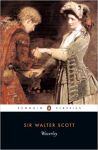
Sir Walter Scott, Waverley, Vol. 1 (#BookReview)

I admit it, I’m defeated – not because I’m not enjoying it, but because it needs more attention than my distracted brain can give it right now. Consequently, I am posting on just the first volume of Sir Walter Scott’s first novel, Waverley. I read it for my Jane Austen meeting last weekend. We did Scott for two reasons: he was highly impressed by Austen’s writing, and Austen liked his!

Waverley was published in 1814, and Austen mentioned it in a letter to her niece Anna Austen that year (which was just three years before she died). She said, in her inimitable Austen way:

Walter Scott has no business to write novels, especially good ones. – It is not fair. – He has Fame & Profit enough as a Poet, and should not be taking the bread out of other people’s mouths. – I do not like him, & do not mean to like Waverley if I can help it – but fear I must… (28 September 1814)

And I must too, really, I must, notwithstanding my decision to not continue!

And Walter Scott is worth liking, because he liked Austen! Here are three references he made to Austen in his journal a decade after she died:

Also read again, and for the third time at least, Miss Austen’s very finely written novel of _Pride and Prejudice_. That young lady had a talent for describing the involvements and feelings and characters of ordinary life, which is to me the most wonderful I ever met with. The Big Bow-wow strain I can do myself like any now going; but the exquisite touch, which renders ordinary commonplace things and characters interesting, from the truth of the description and the sentiment, is denied to me. What a pity such a gifted creature died so early! Journal, 14/3/1826)

AND

The women do this better – Edgeworth, [Susan] Ferrier, Austen have all had their portraits of real society, far superior to anything man, vain man, has produced of the like nature. (28/3/826)

AND

Wrote five pages of the _Tales_. Walked from Huntly Burn, having gone in the carriage. Smoked my cigar with Lockhart after dinner, and then whiled away the evening over one of Miss Austen’s novels. There is a truth of painting in her writings which always delights me. They do not, it is true, get above the middle classes of society, but there she is inimitable. (Journal, 18/9/1827)

Waverley

Waverley book cover

Waverley is regarded as the first work of historical fiction. Its subtitle, “Or, Sixty years since”, tells us its historical setting, which is, specifically, the Jacobite uprising of 1745. The plot concerns Edward Waverley, an idealistic, impractical young man who joins the army, and is sent to the Scottish Highlands. He meets passionate Scottish patriots, Fergus and his sister Flora, who support Prince Charles Edward Stuart (aka Bonnie Prince Charlie), and is attracted to their cause. Not a wise move! Initially published anonymously, Waverley was a big success, marking, says Penguin’s blurb, “the start of his extraordinary literary success”.

So, why do I like it, and yet am not planning to finish it? I like it for its humour and Austen-like observations on human nature. I like the way the novel starts with Scott, as first person narrator, explaining why he chose his character Waverley’s name (“an uncontaminated name, bearing with its sound little of good or evil, excepting what the reader shall be hereafter pleased to affix to it”), and clarifying what sort of novel he was writing. He lists various possibilities – including Gothic, Romance, Sentimental – and then concludes:

By fixing then the date of my story Sixty Years before this present 1st November, 1805, I would have my readers understand that they will meet in the following pages neither a romance of chivalry, nor a tale of modern manners; that my hero will neither have iron on  his shoulders, as of yore, nor on the heels of his boots, as is the present fashion of Bond Street; and that my damsels will neither be clothed “in purple and in pall,” like the Lady Alice of an old ballad, nor reduced to the primitive nakedness of a modern fashionable at a route. From this my choice of an æra the understanding critic may farther presage, that the object of my tale is more a description of men than manners.

Examples of his Austen-like observations, include:

Where we are not at ease, we cannot be happy; and therefore it is not surprising, that Edward Waverley supposed that he disliked and was unfitted for society, merely because he had not yet acquired the habit of living in it with ease and comfort, and of reciprocally giving and receiving pleasure; (Ch. 4)

AND

There is no better antidote against entertaining too high an opinion of others, than having an excellent one of ourselves at the very same time. (Ch. 5)

There are many satirical or humorous comments made in this first volume, such this to the modern “soft” education methods:

I am aware I may be here reminded of the necessity of rendering instruction agreeable to youth, and of Tasso’s infusion of honey into the medicine prepared for a child;

Unfortunately, this method, he argues, did not serve our young hero well:

With a desire of amusement therefore, which better discipline might soon have converted into a thirst for knowledge, young Waverley drove through the sea of books, like a vessel without a pilot or a rudder.

Don’t you love that image, “like a vessel without a rudder”? Anyhow, he then elaborates on the ills of unstructured, uncritical reading.

Later, he describes Waverley’s arrival in the Highlands:

Three or four village girls, returning from the well or brook with pitchers and pails upon their heads, formed more pleasing objects, and with their thin short-gowns and single petticoats, bare arms, legs, and feet, uncovered heads and braided hair, somewhat resembled Italian forms of landscape. Nor could a lover of the picturesque have challenged either the elegance of their costume, or the symmetry of their shape, although, to say the truth, a mere Englishman, in search of the comfortable, a word peculiar to his native tongue, might have wished the clothes less scanty, the feet and legs somewhat protected from the weather, the head and complexion shrouded from the sun, or perhaps might even have thought the whole person and dress considerably improved by a plentiful application of spring water, with a quantum sufficit of soap. The whole scene was depressing, for it argued, at the first glance, at least a stagnation of industry, and perhaps of intellect.

This paragraph has so much in it: the cheeky reference to the mania for “the picturesque“, the “dig” at the English (and their preference for comfort, and, by implication, for “niceness”), and the social commentary regarding the poverty of the peasants.

Now, I know some people don’t like authors who talk to you. I understand it destroys their engagement – the fantasy that what they are reading is “real” – but I don’t feel that way. It could be argued, I think, that this style particularly suits historical fiction because it can remind us that this is someone telling us a story and that we need to think about what we are being told? Anyhow, I did start Volume 2, which opens:

Shall this be a short or a long chapter?—This is a question in which you, gentle reader, have no vote, however much you may be interested in the consequences; just as probably you may (like myself) have nothing to do with the imposing a new tax, excepting the trifling circumstance of being obliged to pay it.

Haha, eh?

However, the book is slow reading. There are so many long descriptions, and, in my Kindle version, the frequently appearing blue-links to footnotes kept distracting my eye, regardless of whether I decided to click on them or not! I just can’t love it enough, right now, to finish it.

So, I’ll leave you with Penguin’s praise that “with its vivid depiction of the wild Highland landscapes and patriotic clansmen, Waverley is a brilliant evocation of the old Scotland – a world Scott believed was swiftly disappearing in the face of a new, modern era.” Scott’s heart was in the right place. He treated his oppressed characters (peasants, for example) with respect, and he recognised that defeat was often accompanied by loss of culture. He is worth reading!

Sir Walter Scott
Waverley, Vol. 1
Penguin Classics, 2004 (Orig. pub. 1814)
388pp.
ASIN: B002RI9IQU
ISBN: 978-0140430714

Louise Erdrich, The bingo palace (#BookReview)

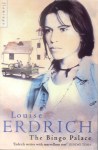
Book coverWhen I bought Louise Erdrich’s The bingo palace in 1995, I never expected it to take me 24 years to read it but, there you go. Time flies, and suddenly it was 2019 and the book was still sitting on the high priority pile next to my bed! Truly! It took Lisa’s ANZLitLovers Indigenous Literature Week to make me finally give it the time it deserved – and even then I’m late. Oh well.


I have read Louise Erdrich before, back in 2000 when I read The crown of Columbus with my reading group. She it wrote with her then husband, the late Michael Dorris. While it was an enjoyable read, it didn’t make a big impression. However, I have always remembered it because of her. So now, her!

Erdrich is an enrolled member of the Anishinaabe nation (also known as Chippewa), and it is among the people of this nation that The bingo palace is set. One of the reasons the novel captured my attention all those years ago is because when we lived in the USA, we became aware of the importance of gambling as a major source of income for many Native American communities. Erdrich’s narrative draws from this fact, but it also provides her with the “luck” or “chance” metaphor – “the drift of chance and possibility” – which underpins the novel. One-third of the novel’s twenty-seven chapters, in fact, include the word “luck” in their titles, as in “Lipsha’s luck”, “Shawnee’s luck”, “Lyman’s luck”, and so on. Luck, good and bad, is a constant in the novel, and Erdrich constantly puts her characters to the test, as they navigate their rocky worlds. How much “luck” is of their own making is a question for them, and us the readers, to consider, I think.

Anyhow, the story centres on an unsettled young man, Lipsha Morrissey, and his love for Shawnee Ray, who has had a baby with Lyman Lamartine, manager of the titular Bingo Palace. The novel contains a complex web of relationships, which takes a while to unravel, but for which we are prepared in the first chapter:

The story comes round, pushing at our brains, and soon we are trying to ravel back to the beginning, trying to put families into order and made sense of things. But we start with one person, and soon another, and another follows, and still another, until we are lost in the connections. (p. 5)

Now, you might have noticed something interesting about the voice in the above paragraph – it’s a first person plural voice. This voice – which operates a bit like a Greek chorus, though here it’s the tribal Chippewa – disappears for most of the novel, reappearing near the end in chapters 25 and 27. The other chapters are told in first person for Lipsha’s story, and third person for all the other stories. This is tricky, daring stuff, but it works, partly because of the power of the stories being told, partly because of its unusual tone (to which I’ll return), and partly because of the language. Erdrich’s language is arresting:

As a baby, Lipsha knew how to make his hands into burrs that would not unstick from Marie’s clothing. (p. 28)

AND

Unwilling, I followed him out to the barn, placing no in my mouth like a pebble to throw. (p. 47)

AND

Albertine could see that Shawnee Ray bent her strength like a bow to the older woman’s need. (p. 210)

AND

We get into the car, pull into the pitted road, and I try not to brush too hard against my sorrows. (p. 215)

Now, back to the story, which concerns Lipsha’s attempts to win Shawnee Ray’s love, after being called back to the reservation by his grandmother, Lulu Lamartine. Life is not simple on the reservation, and as we follow Lipsha’s desperate quest, we are introduced, through a wonderful array of characters, to reservation life – to the tension between old traditions and new businesses, between spiritual life and the material one. Lipsha tries them all – he is initially lucky at bingo and wins a van, only to lose it to some white Montana boys. With a degree of easy-come-easy-go nonchalance, he then seeks out his great grandmother, Fleur Pillager, for love medicine. She lives on sacred land around Lake Machimanito, that Lyman has managed to have set aside for another bingo palace. Lipsha also, with Lyman, tries a spiritual retreat run by ceremony man, Xavier Toose.

All this is told with a tone that veers between resigned realism and sudden visions, a tone that effectively conveys the paradoxes involved in trying to retain tradition while surviving in a modern world. Lyman puts his faith in bingo entrepreneurship, while Shawnee sees education as her way. Zelda, on the other hand, has tried for decades to deny love and passion, while Fleur puts her faith in land and spirit.

Near the end, Lipsha, who has his moments of insight, says:

It’s not completely one way or another, traditional against the bingo. You have to stay alive to keep your tradition alive and working. Everybody knows bingo money is not based on solid ground […]

And yet I can’t help but wonder, now that I know the high and low of bingo life, if we’re going in the wrong direction, arms flung wide, too eager. The money life has got no substance, there’s nothing left when the day is done but a pack of receipts. Money gets money, but little else, nothing sensible to look at or touch or feel in yourself down to your bones … Our reservation is not real estate. Luck fades when sold … (p. 221)

Of course, as I read this, I wondered whether I could see any comparisons with indigenous lives and literature here, and one book immediately came to mind, Alexis Wright’s Carpentaria (my review). The likeness is loose, but both books have a wildness about them. Both confront the challenge of marrying tradition with contemporary life, and both do it by slipping easily between concrete reality and what we non-indigenous readers see as something more magical, but which for many indigenous people is all part of one spectrum. Both books are exhilarating, mind-expanding, to read.

Our “Greek chorus” tells us near the end, when “the federals” try to get the truth out of Lulu:

anyone of us could have told them they were getting into mazy woods when talking to that woman. (p. 265)

As you’d probably expect, there is no simple resolution at the end. Instead, there is, as the “chorus” says, “more to be told, more than we know, more than can be caught in the sieve of our thinking”. Like “the federals”, I got lost at times in the “mazy woods”, but I thoroughly enjoyed the humour and inventiveness, the warmth and heart – along with the challenge – to be had in reading this novel.

Canadian blogger Buried in Print has also reviewed this novel.

BannerLouise Erdrich
The bingo palace
London: Flamingo, 1995 (orig. pub. 1994)
274pp.
ISBN: 9780006547099

Tony Birch, The white girl (#BookReview)

Book coverWe need more novels like Tony Birch’s The white girl and Melissa Lucashenko’s Too much lip. This is not to say that we don’t need all the wonderful Indigenous Australian literature I’ve read and reviewed here over the years, but some of the books, as excellent (and as beloved by me) as they are, can be more challenging to read. The white girl and Too much lip, on the other hand, are accessible, page-turning novels that have the capacity to reach a wide audience, but will they? I sure hope so, because the truths they tell are crucial for all Australians to know if we are to ever become a more mature and united nation.

In other words, it’s not only for their page-turning quality, that I paired these two novels. They have some other similarities, which I’ll briefly address before focusing on The white girl. Both novels are set in rural areas, though Birch’s novel also spends some time in the city, and both have female protagonists, though Birch’s Odette is a grandmother while Lucashenko’s Kerry is a 30-something, not-yet-settled woman. Most importantly, though, both reference long-term issues (the aforementioned truths) that have affected indigenous lives for generations, including, of course, the stolen generations, dispossession and powerlessness, past atrocities, and entrenched institutional discrimination.

However, beyond these, the novels are very different. For a start, Birch’s The white girl, being set in the 1960s, fits into the historical fiction genre whilst Lucashenko’s novel is contemporary. Moreover, Lucashenko’s is more complex and has more humour, albeit of the black sort, than Birch’s more straight drama, so let’s now get to it. Unlike Birch’s previous novel, Ghost river, which is set in Melbourne, The white girl, is set in a fictional town, Deane, and an unnamed city. This effectively universalises the story to suit any part of Australia, making it difficult to shrug off the issues as not relevant to our own places.

The basic plot of The white girl concerns Odette’s determination to save her grand-daughter, Sissy, from falling under the control of white authorities, because this novel is set at a time in Australia when indigenous people came under the Act, an act which meant they could not travel away from where they lived without permission. It also meant that the state was legal guardian of children like Sissy. Things come to a head for Odette and Sissy when a new and more officious policeman, Sergeant Lowe, comes to town to replace the alcoholic, and generally more laissez-faire Bill Shea. Odette feels the time is ripe to reunite Sissy with her mother, Lila, who had left soon after Sissy was born, and who, Odette realises some way into the story, had good reason to disappear.

Birch has set his novel at a time of transition. It’s well into the Menzies era, and indigenous people are becoming more actively engaged in fighting for their rights. Sergeant Lowe, though, is not impressed. When Odette approaches him for the necessary permissions to travel, he refuses, telling her (with the about-to-retire Shea also in his hearing):

‘The whole business of native welfare has been neglected in this district for many years. I will not allow it to continue. Your people need certainty, just as we do, as officers of the Crown. None of this is helped, of course, by those trouble-makers arguing for citizenship of behalf of your people.’

The divisive language (“your people”) and the assertion of absolute power (“I will not allow it to continue”) reflect classic colonial behaviours that ramp up the level of threat felt by Odette. This threat is exacerbated by the presence of a brutal white family in the district, the Kanes, comprising a father and two sons. Lowe is somewhat aware of their trouble-making, but only insofar as it affects another white person in the district, the gentle, brain-damaged Henry who owns the local junkyard. To some extent the book’s characters are stereotypical, but Birch’s story-telling is such that they don’t become – at least not unreasonably so – caricatures. This is partly because they are fleshed out with back-stories. It’s not particularly complex story-telling – the back stories, for example, are common ones – but the novel is believable, perhaps because they are common.

As Lucashenko does in Too much lip, Birch also references traditional culture and its ongoing role in people’s lives. Odette, like many indigenous people, listens to messages from birds (“a morning doesn’t pass without one of them speaking to me”) and to the “old people” from whom she believes her strength comes. Birch also beautifully conveys indigenous people’s resourcefulness in the face of a dominant white culture. For example, Odette’s father tells her, when she’s a young girl, why she should sing in the mission church even though they don’t believe in “their God”:

‘Because it’s best to keep them fellas happy, keep their meanness down.’

And Odette’s response, when asked for her “tribal name” by a patronising white woman who offers her piece-work employment as a card artist, provides a typical example of indigenous response to such self-interested nosiness:

It never failed to surprise Odette how white people were always going on about uplifting Aboriginal people, yet they would demand information about the old ways when it suited them. She looked over to the honey jar sitting on the bread board and read the label to herself. It sounded tribal enough. ‘We’re the Bilga people, ‘ she explained. ‘That’s my tribe. The Bilgas.’

What Birch shows, then, is that survival for indigenous people was (and mostly still is) quite a cat-and-mouse game. It involves “taking a chance with these white people”. This is a risk, Odette and her friends realise, but is often all they have. And that, I think, is the main message Birch wants to leave with his non-indigenous readers. The question is, can we rise to the challenge, and be trusted? Are we prepared to heed the truths being shared? So far, I’d say, the jury is still out.

Lisa (ANZLitLovers) also liked this book. Read for ANZLitLovers ILW2019.

Banner

Tony Birch
The white girl
St Lucia: UQP, 2019
265pp.
ISBN: 9780702260384

(Review copy courtesy UQP)

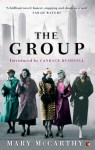
Mary McCarthy, The group (#BookReview)

Book coverMy reading group has a few loose “rules” for choosing our reads, but one of the more rigid ones is that each year we like to read at least one classic. This year’s first classic – yes, another is coming – was Mary McCarthy’s The group. As I wrote in last week’s Monday Musings, it was published in 1963 and became a New York Times best-seller. I was initially uncertain about this choice, because I had read it and there are so many classics I still haven’t read, but, as it turned out, I was glad to read it again. This is because it is a true classic, by which I mean it’s a book that you can read again, at a different time in your life, and find new richness.

For those of you who don’t know the story, it centres on the lives of eight women from Vassar College’s Class of ’33 (of which McCarthy herself was a member, so she knew whereof she wrote – Bill!) The novel follows their lives for the next seven years as they, variously, marry, divorce, have children, find jobs, and in the case of one, die. In doing so, it also evokes their era beautifully. This was a time when America was coming out of the Depression, when women’s expectations about their lives were starting to change, when medicine was starting to assert its authoritarian self, when Trotskyism was attracting the radical intelligentsia, and when Europe was moving into World War 2. Our eight women – Kay, Lakey, Polly, Dottie, Priss, Libby, Pokey and Helena – having received a liberal Vassar-style education, are engaged in the issues of their day. Indeed, the role of education is one of the themes of the novel. Early in the novel, Kay recognises that:

That was the big thing they taught you at Vassar: keep your mind open and always ask for the evidence, even from your own side.

Late in the novel, Norine, a friend of the group, and also Vassar ’33, voices the challenge their education has posed for them: “our Vassar education made it tough for me to accept my womanly role”. Some, of course, found it easier to accept than others.

[SLIGHT SPOILER ALERT FOR THE NEXT PARAGRAPH ONLY, BUT THIS IS A CLASSIC SO I’M INCLUDING IT]

I loved the novel – the satire, the writing, the details, the individuation of the characters. What was not to like? Well, there are flaws for some readers. It doesn’t have a strong plot, and the structure is episodic, so that just as you get into one person’s story, you leave her to move onto another. This can be alienating for readers who love to emotionally engage with their characters. I can see all this but, for me, they are not overriding issues. Firstly, while there isn’t a strong plot, there is a narrative trajectory that sees relationships develop and change over time as the girls mature from new graduates to experienced women. Also, the novel commences with the wedding of a character, who recurs more frequently than do others as the book progresses, and it neatly concludes with her funeral. Secondly, despite the episodic approach, I engaged with the lives of each character as she came into focus for a chapter or so. Of course, some engaged me more than others, and, in fact, McCarthy gives some more time than others. What made McCarthy’s approach work for me were the ideas being explored through the various characters, and the writing used to do this. Evocative and/or witty writing expressing interesting ideas or viewpoints will get me every time.

So, for example, the book contains wonderful set pieces that seem to just keep coming, including Dottie’s deflowering and the sociology of the “pessary”, Priss’s (shock! horror!) breast-feeding in hospital under the instruction of her paediatrician husband, Priss versus Norine on child-rearing, Hatton the butler’s management of “his” family, Kay’s time in a mental hospital, to name just a few. These vignettes – which provide such insight into the lifestyles, the political interests, health and medicine, and so on, of these women – make the novel a rich source for social history of the times. Being educated, and generally of a liberal bent, most of the group are actively engaged in the political issues of their day. Some support Roosevelt’s New Deal, while those more radical become involved in socialism, Trotskyism in particular. There are references to World War 2, and the tensions between the America Firsters (sound familiar?) and those who thought America should join the war.

Gender is also an issue. Educated they may be, but these women find themselves, more often than not, controlled by men in what was still a patriarchal society. The women believe that:

It was very important … for a woman to preserve her individuality; otherwise she might not hold her husband.

But the truth is somewhat different. Kay is mischievously committed to a mental hospital by her husband, without her knowledge, and finds she needs his agreement to be discharged, while Priss

did not recommend sacrifice, having meekly given up her job and her social ideals for Sloan’s sake. It was now too late, because of Stephen [her son], but she was convinced she had made a mistake.

And then, as you expect from a classic, these more temporal concerns are wrapped up in bigger, more universal themes, such as juggling love and friendship, managing relationships and work, balancing theory versus practice, or navigating the gap between appearance and reality. Our characters reflect the gamut of human nature, being, variously, conservative, radical, idealistic, pragmatic, confident, kind, empathetic, proud, manipulating, ambitious, pompous, opinionated, naive. You name it, you are likely to find it amongst the eight.

Besides its rich content is the writing. It’s so sly and satiric that it carries you on regardless of the story:

Now, in the chapel, they rearranged their fur pieces and smiled at each other, noddingly, like mature little martens and sables: they had been right, the hardness was only a phase; it was certainly a point for their side that the iconoclast and scoffer was the first of the little band to get married.

Moreover, McCarthy can skewer character with just a few words. Candace Bushnell, in her Introduction to my edition, writes that “Readers who desire ‘likeable characters’ in their fiction above all else may be disturbed to find that every one of her characters is flawed.” This is true, and is, in a way, what I liked best. There’s no perfection here, there’s just young women struggling to make lives for themselves with an education that didn’t always make it easy for them to live in the world they found themselves. Here are couple of McCarthy’s character descriptions:

she had an image of herself as a high-bred, tempestuous creature, a sort of Arab steed in an English sporting primitive. (Libby)

fat cheerful New York society girl with big red cheeks and yellow hair, who talked like a jolly beau of the McKinley period, in imitation of her yachtsman father. (Pokey)

a solemn, ashy-haired little girl who looked like a gopher and who felt it her duty to absorb every bit of word-of-mouth information that pertained to consumer problems. (Priss)

In the last chapter, Polly, the most sympathetic of the women, thinks “how young and superstitious they had all been … and how little they had changed.” Perhaps, though I think she’s being a bit hard and that some wisdom had been achieved. Regardless, the ending, when a certain male character gets his comeuppance, is delicious – and was loved by the members of my group!

Mary McCarthy
The group
London: Virago (Hachette Digital), 2009 (Orig. ed. 1963)
438pp.
ISBN: 9780748126934

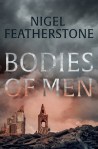
Nigel Featherstone, Bodies of men (#BookReview)

Nigel Featherstone, Bodies of menNigel Featherstone’s latest novel, Bodies of men, is a brave book – and not because it’s a World War 2 story about love between two soldiers at at time when such relationships were taboo, though there is that. No, I mean, because it’s a World War 2 story that was inspired by Featherstone’s three-month writer-in-residence stint at the Australian Defence Force Academy, in 2013. That’s not particularly brave, you are probably thinking, but wait, there’s more. What’s brave is that this novel, this story inspired by that residency, is about some darker sides of war – it’s about deserters, and violence from your own side, for a start … It’s certainly not about heroics, or, to be accurate, not the sort of heroics you’d expect. Courage, it shows, comes in many forms.

Here is what self-described pacifist Featherstone wrote in his blog two months into his residency:

I came here with the idea of exploring ‘masculinity in times of conflict’ …  Perhaps, like always, I’m being driven by that central question: what does it mean to be a good man, which, of course, is almost exactly the same as asking, what does it mean to be a good person?  But the military, especially the Australian kind of military, is all about men, isn’t it, the warrior, that iconic ‘digger’, that myth of our country, that brave saviour of everything we’re meant to stand for (whatever that is).

Those men who could do no wrong.  Except I don’t believe that for a second.

So, what did Featherstone actually write? It’s the story of two Australian soldiers from Sydney. William is from a conservative, well-to-do North Shore Sydney family, with a Member of Parliament father, while James comes from a poorer working class family, with a widowed mother who runs a shop but who’s also a socialist, a pacifist, and committed to helping homeless people. The boys had met and spent a few times together in their youth, but had lost touch for some years – until they find themselves in Egypt in 1941.

The novel opens with a reconnaissance that turns into an ambush. At an important moment, William, just off the boat, prevaricates, but James, there with a different military section, takes the initiative, and saves the day. The men vaguely recognise each other – “The officer”, thinks James, “does look familiar … but no it can’t be” – but have no opportunity to follow up, each returning immediately to their sections. From here the narrative, told third person from the alternating perspectives of William and James, follows the two men on their different paths. William, soon to be a lieutenant, is sent to manage a training camp in the desert. Believing he needs to redeem himself from that first experience of action, he sees this as an opportunity. He excels as a leader of men, finding the right balance between toughness and friendliness, but is dogged by his cold father’s voice, and worries about his ability to be the man his father expects. However, his mind is on that young man he glimpsed. Meanwhile, James goes AWOL on a military motorbike, which he crashes. Luckily, a family takes him in, a family which has its own tricky background and secrets, but James is just the right person to not rock their boat, so a warm relationship develops.

It’s not long before William works out a way of tracking James down. The story is told chronologically, but with frequent flashbacks which fill in that boyhood friendship. It was short, but intense. Both felt it, but William, in particular, struggled to understand it. It is therefore James, who, upon their renewed acquaintance, takes the lead – and the novel becomes, in part, a love story. Featherstone finds the right balance, here, conveying their tenderness and warmth, without sentimentality. We are never allowed to forget that this is war-time, and that both William and James are taking serious risks in their desire to be together.

However, this is not simply a boy-meets-boy, boy-loses-boy, boy-finds-boy again story. As mentioned above, Featherstone’s goal was to explore what it means to be a good man, against the backdrop of war. We do see some action, besides that opening scene, and there is an over-riding sense that something sinister could happen at any moment, but the main theme concerns men and their reactions to their circumstances – soldiers, men in hiding, men displaced, men in resistance. Each of these men provides the reader with a perspective on how men might choose to be. Courage and risk-taking, passion for a cause, recklessness, fear, commitment to helping others, tenderness and kindness – all of these come into play as the story progresses. And, as in all good novels, there are no simple answers. A love story this might be, but a genre romance or war-story it’s not.

How does Featherstone achieve this? Well, sometimes it’s hard to pinpoint these things, isn’t it? In a later post on his blog, Featherstone says that he wrote 38 drafts. You can tell this, and yet you can’t tell. You can tell, because you can feel the craft in the book. You can’t tell, because it also feels organic, not overworked. There’s skill in that. This skill includes the characterisation. William and James are sensitively fleshed out, well individuated, and grow through their experiences. But there are other characters too, including two strong women characters. James’ grounded, supportive mother is one, and open-minded Yetta, the woman who cares for James after his accident is another. It is she who articulates some of the novel’s main messages, including:

‘People must care for people. It’s not more complicated than that.’

There’s skill also in the narrative structure. The novel has a lightly episodic touch, with little breaks marked on the paper between “scenes”, but the story nonetheless flows. These breaks simply provide a way for the narrative to be progressed without unnecessary explication.

And, of course, there’s the writing. It’s spare, and yet perfectly evocative – of life at William’s desert camp, of the nervous busy-ness of war-time Alexandria where wells of quietness can also be found, and of William and James’ love. Here’s an example showing the edgy sort of tone Featherstone creates:

But now, something new: he was – he and James both were – sliding into the back seat of a car. They were being driven along one of Alexandria’s palm-lined boulevards; before long they were surrounded by blackness. William wound down his window and was about to yell, BUGGER THE WAR! – the night was getting away from him – but he managed to drag the words back down to where they belonged, in the pit of his gut.

Bodies of men, then, is a war novel that questions war. But, it is told with a generous touch that doesn’t undermine or betray those who choose to go. It’s a page-turner, underpinned by a fundamental understanding of humanity. It’s a very good read.

Nigel Featherstone
Bodies of men
Sydney: Hachette Australia, 2019
324pp.
ISBN: 9780733640704


Sayaka Murata, Convenience store woman (#BookReview)

Book coverConvenience store woman, which won Japan’s prestigious Akutagawa Prize, is Sayaka Murata’s 10th novel, but her first translated into English. Hopefully, it won’t be the last. A rather unusual book, it elicited a stimulating discussion at my reading group last week.

The convenience store woman of the title is 36-year-old Keiko Furukawa. She isn’t “normal”, and her family worries she will never fit in to society. However, when 18 years old, she obtains work at a newly opened Smile Mart convenience store, and quickly feels comfortable, undertaking routine daily tasks, and following the store’s rules. Eighteen years later, she’s still there. This is not seen as a valid situation for a woman of Keiko’s now mature age. Why isn’t she married? And why doesn’t she have a better job? Then she meets another convenience store worker, the also, but differently, nonconformist Shiraha, and she thinks she can solve both their problems by having him move in with her.

It’s a short book, at just 176-pages in the print edition, and is told first person. Now, for those of you who remember my recent discussion of first person voices, Convenience store woman is a perfect example of an effective use of first person. The main theme is the push for conformity, the push to follow the expected narrative of a life, but our narrator, Keiko, is not, for whatever reason, able (or willing) to conform. This theme is particularly relevant to Japan, which has a reputation for conformity and group behaviour, but it’s also universally relevant, because many societies, my own included, are not good at coping with people who stray from the “norm”.

So, Keiko is different. She’s been different all her life. She knows it, and she’s mystified. She’s particularly mystified by the way people often behave which seems counter to logic, and also by the way people cheer up when they think she’s behaving “normally”. An example of the former happens in her childhood, which she tells us via flashback. There’s a schoolyard fight. The kids call for the fight to stop, so she goes to the toolshed, gets a spade and bashes one of the kids with it. Everyone is horrified,

“But everyone was saying to stop Yamazaki-kun and Aoki-kun fighting! I just thought that would be the quickest way to do it,” I explained patiently. Why on earth were they so angry? I just didn’t get it.

An example of the latter occurs after she invites Shiraha to live at her place. Everyone assumes they are in a relationship. “They were all so ecstatic”, she wondered, she says, “whether they’d lost their minds”. Listening to her friends “go on”, she says,

was like hearing them talk about a couple of total strangers. They seemed to have the story wrapped up between them. It was about characters who had the same names as we did, but who had absolutely nothing to do with me or Shiraha.

There it is – the expected story or narrative of life!

Of her convenience store colleagues, she says:

I was shocked by their reaction. As a convenience store worker, I couldn’t believe they were putting gossip about store workers before a promotion in which chicken skewers that usually sold at 130 yen were to be put on sale at the special price of 110 yen. What on earth had happened to the pair of them?

As you can see there’s a good deal of humour in this book. You can also see why this story could only be told first person. Any other voice would risk undermining Keiko’s authenticity, her reality.

So, for Keiko, it’s “convenient” having Shiraha at her place. Everyone is happy for her, and she likes that “they’ve stopped poking their nose into my business”.

However, while Keiko, for all her strangeness, is a likeable character, Shiraha is not. He has no desire to work, and takes advantage of her wish to appear “normal”, even though it satisfies his need for the same. He excuses his laziness by criticising society and its unfair gender expectations on men:

“Naturally, your job in a convenience store isn’t enough to support me. With you working there and me jobless, I’m the one they’ll criticize. Society hasn’t dragged itself out of the Stone Age yet, and they’ll always blame the man. But if you could just get a proper job, Furukura, they won’t victimize me anymore and it’ll be good for you, too, so we’d be killing two birds with one stone.”

Worse, he’s arrogant and cruel:

“I did it! I got away! Everything’s okay for the time being. There’s no way you’ll be getting pregnant, no chance of me ever penetrating a woman like you, after all.”

Actually, he only “got away” because Keiko had the idea of his moving in. Fortunately, she has no interest in sex, so his comment falls on flat ears – but we notice it.

The novel, then, hinges on the idea of normality, with the word “normal” recurring throughout the novel. Early on, Keiko realises that “the normal world has no room for exceptions and always quietly eliminates foreign objects”. This is why, it dawns on her, her family wishes to “cure” her. She is therefore grateful for the convenience store, where she can operate as “a normal cog in society” – until her age makes it no longer “normal”. The charming Shiraha has his own take:

“People who are considered normal enjoy putting those who aren’t on trial, you know. But if you kick me out now, they’ll judge you even more harshly, so you have no choice but to keep me around.” Shiraha gave a thin laugh. “I always did want revenge, on women who are allowed to become parasites just because they’re women. I always thought to myself that I’d be a parasite one day. That’d show them. And I’m going to be a parasite on you, Furukura, whatever it takes.”

Shiraha shows us that Murata’s understanding of deviations from the norm is nuanced, not simplistic.

Anyhow, later in the novel, after her sister asks “How can we make you normal?”, Keiko comes to recognise that her sister is happier seeing her as “normal”, albeit with “a lot of problems”,

than she is having an abnormal sister for whom everything is fine. For her, normality—however messy—is far more comprehensible.

In the end, Keiko does resolve her conundrum regarding how to live in a way that is true to herself. It is inspired, in fact, by the convenience store, which I think we can read as a microcosm of society. She suggests that “a convenience store is not merely a place where customers come to buy practical necessities, it has to be somewhere they can enjoy and take pleasure in discovering things they like”. She can play a role in that.

Convenience store woman is a wonderful read. Perfect in tone and voice, and fearless in its exploration of the confining nature of “normality”, it forces us to look beyond, and imagine other lives and ways of being.

Sayaka Murata
Convenience store woman
Translated by Ginny Tapley Takemori
London: Portobello Books, 2016 (trans. ed. 2018)
eISBN: 9781846276859

Enza Gandolfo, The bridge (#Bookreview)

Book coverIf there are people I admire more than any others, it’s those who are able to empathise with, and forgive, someone who has done them great wrong. This complex question of forgiveness – of self and of others – is one of the issues explored in Enza Gandolfo’s Stella Prize short-listed novel, The bridge. However, it’s only one aspect of this intelligent, moving book.

Melburnians, and Australians of a certain age, will remember the West Gate Bridge disaster in 1970. The bridge collapsed during construction, killing 35 and injuring 18 of the 60 workers there at the time. It was, and still is I believe, Australia’s worst industrial accident, and it frames Gandolfo’s book. The novel starts in 1970, introducing us to 22-year-old Italian-born Antonello and his workmates, another Italian Sam, and Slav (whose nickname conveys his origins). Gandolfo quickly sets up the scene – the bonding between these men, and something of their lives and aspirations – before describing the collapse in the next chapter. She captures the horror of those hours in clear, descriptive, but not overblown language that perfectly captures the shock, panic and emotion of the event for all who experienced it – the workers, their families and those in the vicinity.

Antonello survives, but some of his friends don’t, and nor does his boss, Bob, who’d been “like a father” to him. Antonello, along with Bob and his mates, had started to realise that things weren’t right, but, as a rigger, he had no formal responsibility for what happened. However, guilt and trauma attach to him. His lovely relationship with his young wife Paolina survives, but is never quite the same. Gandolfo conveys so well how devastating to a life – to lives – a traumatic event can be, how life can change in a moment. You understand why, these days, counsellors are immediately sent in when tragedies occur.

The book then jumps, in Chapter 4, to 2009, and we meet 19-year-old Jo. Like Antonello she belongs to the working class. She lives in a rather dilapidated weatherboard house near the bridge, with her single supermarket worker mother, Mandy. She is in her last year of school, and has a best friend, Ashleigh, who comes from a comfortable middle-class family where the mother is a high school principal. Jo is the needier of the two, Ashleigh being more clever, more confident, and increasingly more involved with her boyfriend. Jo feels she’s losing her.

And now, here’s the challenge reviewers face. How much to give away of the story. What happens next, happens before a third of the novel is over, and you see it coming, but nonetheless it’s a shock, so I won’t give it away. (I note that some reviewers have, and some haven’t.) Let’s just say that a tragedy ensues and Jo is responsible – and, as it turns out, her friend Ashleigh is Antonello’s grand-daughter.

So, given I’ve decided not to spoil the plot, how best to discuss the rest of the novel, which still has over 250 pages to go?

Well, I could talk about the writing and characterisation. The novel is told chronologically, in third person, from multiple perspectives – from Antonello and Jo of course, but also Mandy, a legal aid lawyer Sarah, and a few others later in the novel. Gandolfo captures their feelings with such sensitivity and realism that by the time the novel is over we feel we know them. We experience their emotions, and go through their thought processes with them as they ponder what’s happened and whether they can possibly keep living in the face of their respective tragedies. It feels so true – and because of that, it breaks our hearts, more than once.

Then there’s the bridge. Its prime meaning here is literal, of course, but it is a gift to a writer because bridges can represent so many things – positive or negative, or, paradoxically both – that are reflected in this novel. They can symbolise progress, for example, but West Gate, which would bring two worlds closer together, was not seen positively by all:

“We don’t want those rich bastards coming over to the west”, was the general sentiment.

Bridges can also suggest connection and transition. In this novel, transition encompasses the idea of social mobility, which West Gate exposes, but it can also mean the transitions individuals make psychologically. It is this latter, often aided by the good connections that can occur between people, that ultimately brings some redemption in the novel.

This brings me to Gandolfo’s themes. Antonello, who has suffered from PTSD since the accident, realises late in the novel that his friend Sam, who had become a union activist, had made the more positive choice. It takes him a long time but finally he learns the lesson:

For years, the most persistent impulse was towards death; a desire to stop living … But life didn’t stop. It went on whether you lived it or not. You have to choose life. This is what he needed to tell them – if you stop living, you may as well die. If you stop living, you aren’t going to be able to love again, and everyone you know will pay for that, everyone.

Empathetic Paolina has always known this, but it’s a lesson that comes hard to the other characters. Anger, revenge, guilt – depending on their role in the events that occur – overwhelm them. And it is Antonello who is the lynchpin. He is able to help Jo, telling her that the best thing she can do is forgive herself and allow herself to live. Similarly, he encourages his own family not to succumb to the sadness, anger and bitterness which brought him such waste and pain.

Enza Gandolfo’s achievement is impressive. She presents us with a bunch of flawed – as in ordinary – characters, and she puts them in terrible but not unrealistic situations. She then has them experience all the emotions that you would expect. And she doesn’t judge. Instead, she makes us feel, confronting us to think about how we would react, and hoping that we will come to the same conclusion that Antonello does.

A character I’ve only briefly mentioned is Sarah, Jo’s legal aid lawyer. She talks about the storytelling aspect of trials:

That was the danger of a good story: you could elicit pity and empathy for even the worst sociopath … Sarah believed telling good stories, the ones people listened to and were swayed by, was a responsibility. It worried her that some people did not take it seriously enough.

It’s not a big leap, I’d say, to suggest that Gandolfo would extend this responsibility to novelists – and in The bridge, she shows what a responsible story can look like. Such a novel.

Lisa (ANZLitLovers) was also moved by this book.

AWW Challenge 2019 BadgeEnza Gandolfo
The bridge
Brunswick: Scribe, 2018
375pp.
ISBN: 9781925713015