Bill curates: Imre Kertesz’s Fateless or Fatelessness

Bill curates is an occasional series where I delve into Sue’s vast archive, stretching back to May 2009, and choose a post for us to revisit.

Sue reads some striking books and writes some (many!) striking reviews, of which this is one. I’m not sure I agree with her about Holocaust fiction, but I do appreciate that people who experienced the Nazi concentration camps, or their after-effects in the case of, say, Lily Brett, must write, just as we must read to honour their tribulations, and that a fictionalised account may be the way they choose to do this. Imre Kertész is another Nobel Prize winner I was unaware of. He died in 2016.
_______________________

My original post titled: “Imre Kertesz, Fateless or Fatelessness”

[WARNING: SPOILERS, of sorts]

Let’s get the first thing clear. I like holocaust literature – not because I enjoy the subject matter but because in it I find the most elemental, universal truths about humanity. Depending on the book, this literature contains various combinations of bravery and cowardice, cruelty and kindness, love and hate, self-sacrifice, self-preservation and betrayal, resilience and resignation, and  well, all those qualities that make up humanity and its converse, inhumanity. I have by no means read all that is out there but here are some that have moved me: Anne Frank’s The diary of a young girl (of course) and Anne Holm’s I am David, from my youth, and then books like Martin Amis’ Time’s arrow, Bernhard Schlink’s The reader, Marcus Zusak’s The book thief, and Ursula Hegi’s Stones from the river. There are gaps, though, in my reading, such as Thomas Keneally’s Schindler’s ark (I did see the film), the works of Primo Levi, and Elie Wiesel’s Night. I have, however, just added Imre Kertèsz’s Fateless to my list of books read.

Kertèsz adds a new spin to the universal truths explored by these books – it’s what he describes (in my 1992 translation anyhow) as “stubbornness” which seems to me to mean “resilience” or a determination to survive, and even to have, if possible, little wins against the system.

Anyhow, first the plot. The novel takes place over the last year of the war and concerns Gyorgy Koves, a 14-year old Hungarian Jew, who, one day, is suddenly called off a bus, along with all other Jews on the bus and transported to Auschwitz, and then Buchenwald, Zeitz and back to Buchenwald, before returning home at war’s end. It chronicles his experiences, his thinking, and the impact on him of his experience. He begins as the archetypal naive narrator…but by the end, though his tone has changed little, he is no longer naive. This is rather beautifully achieved as we see his youthful application of logic being changed into something more cynical and survival focused.

Gyorgy speaks with a strange sense of detachment borne, to start with, of an apparent unawareness of what exactly washappening to him and a disbelief that anything untoward would happen. And so, in the beginning, as events unfold he describes them as “natural” because of course, when they got to Auschwitz, it was sensible to inspect each person to see who was physically fit and capable of working. He didn’t know then what would happen to those not found physically fit. The horror gradually builds as reality sets in and he goes about making it through each day – through his share of beatings, the reduced food rations, and all the other deprivations that make up concentration camp life. In the first part of the book he uses the term “naturally” to mean some sort of normal logic but by the end it comes to mean, as he explains to a journalist who asks him why he keeps using the word for things that aren’t natural, that these things were natural in a concentration camp.

Early on in his captivity he says that they approached their life (and work) “with the best of intentions” but they soon discover that these “best of intentions” do not bring about any kindness from their overseers, and so his attitude to getting on, to surviving starts to change. As he starts to physically weaken, become emaciated and develop infections, he observes that “my body was still there. I was thoroughly familiar with it, only somehow I myself no longer lived inside it”. Always dispassionate, always matter-of-fact, while describing the most heart-rending things.

Towards the end, he is placed in a hospital ward and there he is treated better and, even, with a certain amount of kindness. This in its way is as shocking to him as the cruel beatings he experienced at Zeitz. He can see no logic, “no reason for its being, nothing rational or familiar”. He can only understand kindness in terms of the giver receiving “some pleasure” from it or having some “personal need” satisfied. Never is there any sense that altruism might come into play. His view of “justice” is based very much on survival. He says, when he is spared, “everything happened according to the rules of justice … I was able to accept a situation more easily when it concerned someone else’s bad luck rather than my own … This was the lesson I learned”.

And so, in the end he returns home, and finds it hard to explain to people just what happened and how he now views life. He describes getting through his time as “taking one step after another”, focusing just on the moment. He implies that if he had known his fate he would have focused on time passing – a far more soul-destroying activity than concentrating on getting through each day “step by step”. This brings us to the fate/fateless bit. He says at the end that:

if there is a fate, there is no freedom … if, on the other hand, there is freedom, then there is no fate. That is … that is, we ourselves are fate.

I find this a little hard to grasp but he seems to be saying that we are free to make our own choices, even in a concentration camp – we are not fated but make our own fate. He was and is not prepared to accept any other approach to life. But life will not be easy:

I am here, and I know full well that I have to accept the prize of being allowed to live … I have to continue my uncontinuable life … There is no impossibility that cannot be overcome (survived?).

And yet, at the very end of the book, he says “and even back there [in the concentration camp], in the shadow of the chimneys, there was something resembling happiness”. Wow! This is an astonishing book – it charts horrors with a calmness that is quite shocking, and it is particularly shocking not because Gyorgy is unfeeling but because he can’t quite grasp what is happening to him. This is the fundamental irony of the book, and the fundamental truth of a naive narrator: we the reader know exactly how it is even as Gyorgy tries to make sense of it using logic and reason. I must read this book again – and preferably the newer more highly regarded 2004 translation by Tom Wilkinson.

Imre Kertész
Fateless
Translated by Christopher C. Wilson and Katharina M. Wilson
Northwestern University Press, 1992 (orig. ed 1975, in Hungarian)
191 pp.
ISBN: 9780810110496

____________________

I looked in my bookshelves when Bill sent through this Bill Curates post, and discovered that the edition I own is the later Tom Wilkinson one. I must have bought it with the intention of reading it, but I haven’t yet. Oh, the dreams of an everyday reader!

Bill will, I hope, explain his introductory comment regarding Holocaust fiction. We’d love to know what you think – and/or read.

Bill curates: Elizabeth Jolley’s My father’s moon

Bill curates is an occasional series where I delve into Sue’s vast archive, stretching back to May 2009, and choose a post for us to revisit.

Elizabeth Jolley is one of the greats and I am sorry that I have only read her in fits and starts. I have had, unread, Brian Dibble’s biography of her for so long now that I wonder if I should just hurry up and read all these fictionalised accounts of her life first, uncontaminated by knowing what she ‘really’ did.
_______________________

My original post titled: “Elizabeth Jolley, My father’s moon”

Book cover‘No one,’ she says, ‘can write anything till they’ve had experience. Later on perhaps. You will write later on.’ (Elizabeth Jolley, My father’s moon, 1989)

Although fiction demands imagination, it must be based on  some kind of genuine experience. (Elizabeth Jolley, “Only Connect”, essay first published in Toads, 1992)

My father’s moon is the first book in Jolley’s semi-autobiographical trilogy, the others being Cabin fever and The George’s wife. It won The Age Book of the Year Award in 1989.

I am an Elizabeth Jolley fan – and, along with Helen Garner, another Jolley fan, I enjoy the way she repeats and revisits stories and characters from one book or story to another. In this book is the chapter, “Night Runner”, which was published as a short story in Meanjin in December 1983, and again in a short story anthology, Room to move, published in 1985. The narrator of the story – and of the novel – typifies Elizabeth Jolley’s alienated protagonists and their often peculiarly self-centred and self-deluded ways of coping with their loneliness. Clearly Jolley decided that this was a character she wanted to develop further. And clearly she also drew a lot from her own experience to develop this character. Like Vera, Jolley was brought up as a Quaker, her parents sheltered refugees before and during the Second World War, and she trained as a nurse. Like Vera, Jolley probably experienced loneliness and alienation. However, this is fiction and so we need to be careful about how far we take these analogies between Vera and her creator. Much as I can empathise with Vera’s predicament, I must admit that I would hate to think she is Elizabeth Jolley.

It’s an uncomfortable novel. Vera, the first person narrator, is not a highly sympathetic character but neither is she totally disagreeable either. What she is, though, is lonely. The book has a somewhat challenging structure – and I had to concentrate to keep track of where I was. It starts with Vera, a single mother, leaving her parents’ home, with her young daughter, to live and work in a boarding school. Her hopes for a lovely life there among people “who feel and think as I do” are dashed. Such people “are not here as I thought they would be … I am by my own mistakes buried in this green-leafed corruption and I am alone”. In this first chapter are flashbacks to the past, and gradually the book moves into the past, providing us with insights into her character and how she has ended up where she is. Most of this past takes place in the hospital where she trains as a nurse during the war. The book finally returns to the beginning of the novel with Vera resolving to make a step towards alleviating her loneliness. However, we are by no means convinced she will.

The book comprises titled chapters, many if not all of which could be (and some have been) published separately as short stories. This gives it a somewhat disjointed feel – but seems appropriate for the story of a person like Vera. It is full of wonderfully drawn characters, with some very funny (if often dark) scenes and dialogue. Just think nurses and hospitals! There are many references to music – something that is common in Jolley’s works. Music is usually a comforting force for her characters, offering them respite from what is often a cruel world – and this is the case here, with Vera being drawn to characters who love and play music. There is a lot of irony, some of it subtle, some of it less so as in Magda’s comment to Vera who has fantasised about an affair with her husband: ‘You are so innocent and good … Don’t ever change’. Naive perhaps, innocent no!

So, what about the title? Funnily enough(!), it refers to Vera’s relationship with her father, a major stabilising influence in her life. He tells her throughout her childhood that wherever she is she can always look at the same moon he is looking at, ‘And because of this … you must know that I am not far away. You must never feel lonely’. A lovely concept and one to which Vera regularly returns in the book.

My father’s moon is not, I think, the easiest Jolley to read, and there are some things that might become clearer on a second reading. However, its concerns are very representative of her work – loneliness and alienation, homosexuality, parenting, memory, music and religion. While Vera is deeply lonely, while she often behaves selfishly, she can also be kind. She is also no quitter. For that I rather like her.

Elizabeth Jolley
My Father’s Moon
Melbourne: Viking, 1989
171pp.
ISBN13: 9780670822676

 ____________________

I have written several posts on Jolley over the years, including reviews of a couple of novels, a sort of memoir, and a short story, but I had hoped to have read and posted on more of her work by now. Instead, a few of her novels – along with that Brian Dibble biography Bill has – still languish on my TBR pile.

Have you read any Jolley? If so, do you have any favourites?

Bill curates: JM Coetzee’s Diary of a bad year

Bill curates is an occasional series where I delve into Sue’s vast archive, stretching back to May 2009, and choose a post for us to revisit.

When Sue wrote this review in July 2009 – yes I am progressing only slowly, but there is so much to choose from!  – Diary of a Bad Year was Coetzee’s most recent work. I read it only a year or so ago and it impressed on me how lucky we are in Australia that Coetzee chose to live here.

_______________________

My original post titled: “JM Coetzee, Diary of a bad year”

Book coverJ.M. Coetzee is one of those rare novelists who pushes the boundaries of what a novel is. The progression from his mid-career novel, the spare but terrifying Disgrace (1999),through Elizabeth Costello (2003) to Diary of a bad year (2007) is so dramatic that there are those who question whether these last two are even novels. It’s actually been a year or so since I read Diary of a bad year but it is currently being discussed by one of my reading groups so now seemed to be a good time to blog about it here.

One of the first things to confront the reader who picks up Diary of a bad year is how to read it. It has three (two to begin with) concurrent strands running across the top, middle and bottom of the page. Some readers try to read the three strands as concurrently as possible while others read the strands sequentially. Following this latter path, though, means you risk missing the way the strands comment on each other. The three strands are:

  • the narrator’s formal voice, basically taking the form of essays he is writing
  • the narrator’s informal voice in which he talks about his life as he is writing the essays
  • the voice of Anya, his “little typist”, and, through her, of her boyfriend, Alan

The three characters represent three modes of viewing the world: the narrator’s is primarily theoretical, while Anya’s is more pragmatic and Alan’s rational. Through these modes, Coetzee teases out the moral conundrums of the early 21st century both in terms of the political (the events confronting us) and the personal (how are we to live).

Towards the end, Coetzee refers to his love of Bach. To some degree the book is a paean to Bach: its three-part structure in which each part counterpoints the others seems to be a textual representation of Bach’s polyphony. The essays running across the top of the page, while a little uneven and dry on their own, are counterpointed by the views of the characters in the other two strands, resulting in our being presented with different ways of viewing the same world.

The characterisation is interesting: Senor C, the writer of the essays, is the logical, moral but somewhat pessimistic thinker; Anya is practical, down to earth, but with a strong moral sense; and Alan is the economic rationalist for whom money is essentially everything. The views of the two men are strongly contrasted, while Anya is caught in the middle. There is a Darwinian sense in Alan of the survival of the fittest, while Senor C spurns competition as a way of life, preferring collaboration. For all his “moral” views, though, Senor C is not presented as a paragon and we are discomforted at times by his attitude towards the beautiful Anya.

The overall theme seems to be how do we live in a world full of paradoxes and contradictions, a world that seems to be pervaded by dishonour and shame (the things Senor C explores in the essays). He talks about ordinary people and how they (we) cope with things they (we) don’t approve of. He wonders why they (we) don’t do something about it, but suggests in the end that they (we) practise “inner emigration”. He says:

The alternatives are not placid servitude on the one hand and revolt against servitude on the other. There is a third way, chosen by thousands and millions of people every day. It is the way of quietism, of willed obscurity, of inner emigration.

I like that concept though it does smack of burying one’s head in the sand. He also talks about collective guilt, and about bearing the dishonour of what’s gone on before. Through choosing a “novel” form like no other, one which blends but in no way harmonises fact and fiction, Coetzee shows in a very concrete way that difficult times need new ways of presenting ideas. He offers no neat conclusions, no easy outs; he is quite subversive really. Late in the book he ponders the value of writing, and says:

Are these words written on paper truly what I wanted to say?

This then is another step in Coetzee’s path of trying to find the best, perfect perhaps, way of saying what he wants to say. I, for one, will be ready for his next step.

JM Coetzee
Diary of a Bad Year
Melbourne: Text Publishing, 2007
178pp.
ISBN: 9781921145636

____________________

I said in this July 2009 post that I was ready for his next step, but in fact other reading got in the way and I have not read any more Coetzee since then. However, like Bill, I’m very glad he chose Australia to be his home. I will try to read more of him in coming years because I enjoy his exploration of the novel-form itself, as well as being interested in his ideas.

Have you read any Coetzee? If so we’d love to hear what you think about his writing.

Bill curates: Orhan Pamuk’s Snow

Bill curates is an occasional series where I delve into Sue’s vast archive, stretching back to May 2009, and choose a post for us to revisit.

Sometimes I think I am well read and sometimes I come upon a post like this and realize just how far I have to go. Pamuk, I discover, is a famous Turkish novelist and the winner of the 2006 Nobel prize.

_______________________

My original post titled: “Orhan Pamuk, Snow”

Book coverOne of my rules of reading is that when I have finished a book I go back and read the first chapter (or so) and any epigraphs the author may have included. These can often provide a real clue to meaning. This rule certainly applies to my latest read, Snow, by Nobel Prize winner, Orhan Pamuk.
(WARNING: SOME SPOILERS)

Snow, in fact, has no less than four epigraphs:

  • lines from Robert Browning’s “Bishop Blougram’s Apology” describing the paradoxical nature of things: “the honest thief, the tender murderer,/the superstitious atheist”;
  • a quote from Stendhal’s The charterhouse of Parma which warns about the ugliness of “politics in a literary work”;
  • a quote from Dostoevsky’s Notebooks for the Brothers Karamazov which suggests ideals like the European Enlightenment are “more important than people”; and
  • Joseph Conrad’s statement in Under Western eyes that “The Westerner in me was discomposed”.

These four epigraphs pretty well sum up the concerns of the book. What about the title? The second chapter begins with:

Veiling as it did the dirt, the mud and the darkness, the snow would continue to speak to Ka of purity, but after his first day in Kars, it no long promised innocence.

Here then is the first paradox: snow is pure but not innocent, and it covers dirt, mud and darkness. Already, you can see that this book is going to be ironic. Just how ironic though is a matter for contention but my suspicion is that its very foundation is ironic, as it grapples with what it means to be an artist in a political society, with how one is to live in a conflicted nation. The plot centres on a coup – a coup which is variously called a military coup and a theatrical coup! In fact, it is a coup by a theatrical group that is supported by the military! Art and politics could hardly be more entwined.

Snow though is not an easy read. It is my third Pamuk, but only the second one I have completed. I loved his memoir-cum-history Istanbul but could not, hard as I tried, finish My name is red.

What then is it about? The main action covers three days in the life of Ka, a Turkish poet recently returned from 12 years exile in Germany, who comes to Kars (in far east Turkey) ostensibly to write about the suicide epidemic among young women, but whose secondary (or perhaps primary!) reason is to fall in love with an old school-friend, Ipek. Soon after he arrives, however, the coup occurs and Ka is, rather unwillingly, caught up in the intrigue between the competing interests: the secularists, the Islamic fundamentalists, and the Kurdish nationalists. This sets the stage for exploring the art-politics nexus. Ka says to Sunay, the leader of the coup AND of the theatrical troupe that comes into town:

I know that you staged the coup not just for the sake of politics but also as a thing of beauty and in the name of art … you know only too well that a play in which Kadife bares her head for all of Kars to see will be no mere artistic triumph; it will also have profound political consequences.

Here then is one evocation of the second epigraph. The third and fourth epigraph refer to the running conflict in the book between European/Western values and Turkish/Eastern values. There is very much a sense that the people of Kars feel condescended to by European culture, but as a teen-ager says at one point, “We are not stupid! We’re just poor”. The people of Kars do not understand Western notions of individualism, and they see Western ideas of secularism and atheism as equating with immorality. Ka, as a Westernised Turk, acts as an uncomfortable, to him, bridge between the two worlds.

The core of the book is Ka. He is a sad and highly conflicted individual who, in his youth, had used words to argue that people should act for “the common good” but now finds himself using them to further his own happiness. Once politically active, “he now knew that the greatest happiness in life was to embrace a beautiful, intelligent woman and sit in a corner writing poetry”. The irony is that, for all his attempts to achieve this, he ends up with neither and dies four years after the coup a sad and lonely man.

The novel is interesting, stylistically and structurally. It is essentially a third person story about Ka but is told by a first person narrator, Ka’s friend, the novelist Orhan(!). This metafictional narrative technique, by adding another layer to the “conversation”, rather deepens the “artist in society” and art/politics themes of the book. Much of the story is foreshadowed: we learn of Ka’s death in Chapter 29, though the book has 44 chapters. The tone of the book is imbued with huzun, that very particular Turkish sense of melancholy that Pamuk explores beautifully in his book Istanbul. And, while it is about a coup and has a body count of 29, there are some very funny scenes, one being the political meeting at which the competing rebels prepare a statement about their beliefs for the Western Press. Anyone who has attended a political meeting will feel at home here!

All this said, the book is a challenge to grasp: there are a lot of characters, comings-and-goings, and ideas to track. Just why Ka is the way he is, just what did happen to him in the end, and just what Orhan is saying about art and politics are hard to pin down. I love the way the book is underpinned by paradox and irony – and yet at times the meaning can be a little tricky to discern. What is clear though is that Ka has found living by his political beliefs deeply unsatisfying but, ironically, is unable to bring about a situation in which he can live “happily” any other way.

Kadife, the leader of the headscarf girls, says (fairly early in the book):

…do not assume from this that our religion leaves no room for discussion. I will say that I am not prepared to discuss my faith with an atheist, or even a secularist. I beg your pardon.

Oh dear! Some reviewers call it a brave book. With its fearless exploration of the tensions in modern Turkey, it certainly feels that way. I am very glad that I put in the effort to read it.

Orhan Pamuk
Snow
Translated by Maureen Freely
London: Faber & Faber, 2005 (orig. Turkish ed. 2002)
426pp
ISBN: 0571218318

____________________

I know what Bill means. I too keep stumbling across authors I should know but have never heard of. I would like to read more Pamuk, including The museum of innocence which is on my TBR. Meanwhile, though, my heart really belongs to his mesmerising memoir, Istanbul. I’d love to read it again.

Have any of you read Pamuk? If so we’d love to hear what you think about his writing.

Anne Tyler, Redhead by the side of the road (#BookReview)

Book coverIn the last couple of months of my Mum’s life I bought her a few novels that I thought would give her pleasure. Although we didn’t know, then, how dire her health was, I did know that she was tired and needed good but not overly demanding or depressing reads. So, for Easter, I gave her Pip Williams’ The dictionary of lost words; for Mothers Day, I gave her Sulari Gentill’s A few right thinking men and Anna Goldsworthy’s Melting moments; and, then, when she went into hospital, I bought her Anne Tyler’s Redhead by the side of the road. Being the lexicographer she was, she loved The dictionary of lost words. She took A few right thinking men into hospital and read two-thirds of it before tiredness defeated her. She was finding the historical background really interesting, but she was keen to get onto Tyler whose books she’d read before. Unfortunately, she never did, but I picked it up as I sat by her bed on the last day of her life. It’s a long time since I’ve read Tyler, but it turned out to be the perfect book for my current state of mind. Even so, it took me two weeks to read it …
Anne Tyler has created some memorable characters and/or situations. I loved The accidental tourist with its travel writer aiming to show American businessmen how to travel without feeing they’d left home – the antithesis of how Mr Gums and I like to travel. I remember the opening of Breathing lessons with the couple squabbling about navigating as they drive to a funeral under pressure. And, her empty-nest-fearing character in The ladder of years who just ups and leaves in the middle of a family holiday is such a wonderful conceit. If she were Australian, we’d probably describe her work as quirky.

What makes Tyler’s novels so enjoyable, then, are her characters and her writing. Her characters are believable but just a little off-centre, and her writing is accessible, but tight and evocative. Her novels are character rather than plot-driven, but they don’t wallow in her characters’ lives. She keeps the story moving.

So, in Redhead by the side of the road, we have 41-year-old Micah Mortimer, “such a narrow and limited man; so closed off.” Routine is his mantra, and you could pretty much set your clock by it. He’s not particularly socially astute, and doesn’t understand the jokes his four older sisters make about him, particularly when he tells them that it looks like his latest girlfriend, Cass, has broken off their relationship. He doesn’t explain that the cause was his inept response to her announcement that she feared she was about to lose her flat – because he hasn’t realised it himself. This is one of the catalysts that forces him to reconsider his life. The other is the sudden appearance on his doorstep of college freshman, Brink, who thinks Micah might be his father.

Now, Brink is the son of his first serious girlfriend Lorna. Micah knows for a fact that Brink is not his son but he accepts this young man into his home and tries, in his own way, to help. While all this is going on, he also keeps an eye out on his apartment building where he “moonlights as a super” and he attends calls for his sole-trader business, Tech Hermit. I must say that, living with my own tech expert, I loved Micah’s interactions with his clients, so many of which I’ve heard Mr Gums have with various friends and family members. “Have you turned it off and then on again?”, for example. The password-finding escapade for a young girl who had inherited her gran’s home and computer is particularly entertaining.

However, that’s not the subject of the novel. What is, is Micah’s slowly growing awareness of life not being as he has seen it, of realising that striving for predicable order does not necessarily make you happy. When Lorna explains why their relationship had ended, our routine-focused Micah, who has never been good at seeing things from other perspectives, has “to adjust to this altered view of the past”. The novel’s title provides a little insight into this:

He slowed to a walk on the last stretch approaching York Road. He momentarily mistook the hydrant for a redhead and gave his usual shake of the shoulders at how repetitious this thought was, how repetitious all his thoughts were, how they ran in a deep rut and now his life ran in a rut, really.

Micah, though, is not the only character muddling along. The thing I like about Tyler is that all her characters muddle along. She forces us to see below the surface, to see that while some may appear more successful than others, may have the trappings of success – like Lorna – all have their insecurities or uncertainties. The novel is full of gentle but no less pointed insights into relationships – Micah’s with his messy, chaotic family, for example, or, Lorna’s with her husband. And it has some sensible down-home philosophies, such as “what’s the point of living if you don’t try to do things better” and “try again, try again, and try again after that … because what else can a person do”.

All this might sound a bit cutesy, but the thing is that beneath Tyler’s apparent cutesiness, is a warm but clear-eyed view of human nature. She sees our foibles, our mis-steps, our little self-delusions, but she wants us to make our lives work. Redhead by the side of the road is no exception, and was just the right read for me for now. I must get back to reading Tyler.

Anne Tyler
Redhead by the side of the road
London: Chatto and Windus, 2020
178pp.
ISBN: 9781784743482

Bill curates: Tim Winton’s Breath

Bill curates is an occasional series where I delve into Sue’s vast archive, stretching back to May 2009, and choose a post for us to revisit.

Tim Winton is not my favourite novelist but as a Western Australian I feel obliged to read those of his books that I come across, and mostly they’re OK though a bit same-ish (boys growing up on WA’s south west coast). It seems Sue initially titled this post Tim Winton versus Thea Astley. Read on and you’ll see why.
_______________________

My original post titled: “Four time winner: Tim Winton wins 2009 Miles Franklin”

Well, it’s finally happened as I knew it must. Someone has equalled Thea Astley’s record number of four Miles Franklin Award wins, as tonight Tim Winton was announced the 2009 winner with Breath. I was seriously considering making Thea Astley my third favourite writers post – I think this means that I will now have to.

Winton has won the award for Shallows (1984), Cloudstreet (1991), Dirt music (2001) and now Breath (2009); and Astley for The well dressed explorer (1962), The slow natives (1965), The acolyte (1972) and Drylands (1999). Both writers are great stylists who use metaphor well, both tend to explore strong connections between character and landscape, and both are indubitably Australian! I think, however, that Astley’s pen ranged wider than Winton’s and she took more risks. That’s not to say that Winton doesn’t deserve his wins but I do think that Astley (she died in 2004) was and continues to be undervalued.

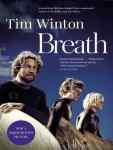
Breath

Tim Winton, BreathAnyhow, here is a brief recap of my thoughts on Breath which I read long before I started writing this blog. I’ll start with a quick plot summary just in case there’s someone out there who doesn’t know it! It is a first person, coming of age story told by Bruce “Pikelet” Pike. It starts with his boyhood friendship with Ivan “Loonie” Loon. As young boys, they dare each other to perform dangerous stunts in the local river, and then as teenagers, they take up surfing where they are encouraged into new levels of recklessness by a former professional surfer named Sando. As time passes, Pikelet’s friendship with Sando and Loonie disintegrates and is replaced by a rather equally scary relationship with Sando’s American wife Eva, an injured and therefore ex-skier.
I like the book. I like the way he sustains the “breath” metaphor throughout to represent various facets of life and life-giving (or life-taking) forces. Despite not being a surfer, I love his wonderfully visceral descriptions of surfing. I also like his exploration of the imperative to take risks that is so common in young men and that is often accompanied by a drive to “be someone”.

Book coverRelated, I suppose, to the coming-of-age issue is the theme of learning to accept being ordinary.  After Sando and Loonie leave the first time, Pikelet goes out and surfs Old Smoky: the first time he does it he’s so successful he feels he’s not ordinary, but then in his overconfidence he does it again and nearly does himself in…this is the beginning of his changing point of view. As he says a little later when he reviews his relationship with Eva, “No, Eva was not ordinary. And neither was the form of consolation she preferred. Given my time over I would not do it all again”. In other words, while he had originally equated not being ordinary with doing big risky things, with courting fear, by the end of the novel he realises that life is “a tough gig” and is about more than courting fear and taking big risks. This doesn’t mean that he can’t do and enjoy a job that provides an andrenalin rush (paramedic/ambulance driver) but it does mean that he no longer seeks to be anything other than himself and that he now goes for an adrenaline rush in “safer” more acceptable ways.
Before he gets to this point, though, he has to come to terms with his Eva experience and with the fact that he spent a big part of his life blaming her for his problems. He eventually comes to the conclusion that “people are fools, not monsters”. This closely resembles my own world-view: that is, that mostly(there are obvious exceptions) when people do the wrong thing they do it, at best, from the best of intentions, or, at worst, for reasons of laziness, selfishness or just plain obliviousness.

There’s no neat ending or pat conclusion: Pikelet recognises that he has been damaged by his life experiences and that he needs to manage himself – but he still loves to surf, that is, to do something “pointless and beautiful”. In this sense it is very much a book of its post-modern age: the lesson almost is that there is no lesson, that each of us has to find our own way. Pikelet says to Sando “maybe ordinary’s not so bad”. As one who is rather ordinary herself, I concur!

Tim Winton
Breath
Penguin Australia, 2008
224pp.
ISBN: 9780241015308

____________________

Bill is nothing if not observant! He noticed that the URL for my Breath post was “Tim Winton versus Thea Astley”. Being an early blogger when I wrote this post, I wasn’t completely clued into changing the URL if you change the blog title before you finally post it. The thing is, I was, at the time, really irritated that Astley was never being mentioned – certainly not in the general or popular press – for her Miles Franklin record. Even now, I think, many people do not realise just how significant she is!

Are any of you Winton and/or Astley fans? We’d love to know your favourites if you are. Or, alternatively, we’d love to know why you aren’t!

Bill curates: Christos Tsiolkas’ The slap

Bill curates is an occasional series where I delve into Sue’s vast archive, stretching back to May 2009, and choose a post for us to revisit.

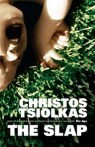
Tsiolkas is an author I admire and enjoy and yet I have not read The Slap. I remember that it caused quite a stir when it came out and if I was the sort of person who went to dinner parties I’m sure I would have joined in the discussions it gave rise to (I smacked my own children, but not other people’s). This is my third and final selection from May 2009. Notice how short it is. I wonder when her reviews began to get longer.
Christos Tsiolkas, The Slap, Allen & Unwin, 2008

_______________________

My original post

You could easily give yourself away when reviewing Christos Tsiolkas’ latest novel, The slap. For example, do you align yourself with the uncompromising, emotional earth mother Rosie or the rational, cool and collected but somewhat more willing to compromise Aisha? Do you rail against the liberal use of expletives, the relaxed attitude to recreational drug use, and the focus on carnal appetites more often in their ugly or elemental than their loving guise? Do you engage in the private versus public school argument? These are the sorts of things that confront Tsiolkas’ readers.

Courtesy: Allen & Unwin

In simple terms, The slap explores the fallout that occurs after a young child is slapped by an unrelated adult at a family-and-friends barbecue. This slap occurs in the first “chapter”, reminding me of Ian McEwan’s books which also tend to start with an event that triggers a set of actions and reactions. However, unlike McEwan, Tsiolkas does not build up a strong sense of suspense about “what will happen next”. In fact, the actual slap storyline is resolved about two-thirds of the way through the novel.

Rather, the book is about its characters and their relationships as spouse, parent, child, sibling, friend. At face level, most are not particularly appealing. They are often intolerant, narrow-minded and/or confrontational. Just as you begin to like, or at least understand, them they do something that changes your mind.  And yet, in all their imperfections, they do engage.

The book has an interesting though not unique structure. Like Elliot Perlman’s Seven types of ambiguity, the story is progressed through a sequence of different, third person, points of view covering three generations. This shifting of perspectives and stories has the effect of moving our focus from the plot to the content.  And the content ranges broadly across the things that confront families and marriages – love and hate, family versus friends, anger, loyalty, compassion and forgiveness. It has moments of real venom, but also of real tenderness.

Not surprisingly, violence features heavily in the book. Tsiolkas shows how pervasive violence is in western middle class society. Through the various characters’ stories we see a wide range of violent behaviour from domestic violence through consensual but aggressive sex to those seemingly casual expressions of violence such as “I wanted to kill her” about a person who annoys. We also see how deeply ingrained prejudice against “other” is, whether that other be racial, religious, cultural, sexual orientation or socioeconomic. In Tsiolkas’ world it feels as though only a thin veneer of civility covers our more primitive selves and the reader is never quite sure when or whether these selves will break through and wreak havoc. It is to the credit of the characters, and by extension us, that they rarely do, but we are left in no illusion that they could.

A critical aspect of the structure is whose perspective starts and ends the novel. Interestingly, again perhaps emphasising the minimal importance of plot, these are neither the slapper nor the “slappee”. In fact, the final voice is given to someone who starts out on the edge of the main action but is gradually drawn in. As an involved outsider, with issues of his own, he is able to resolve (as much as they can be resolved) the secondary plot lines and, as a person on the brink of adulthood, he can offer a sense of hope to what has been a pretty gritty story.

Wallace Stegner, the great American writer, wrote in his book, Angle of repose, that “Civilizations grow by agreements and accommodations and accretions, not by repudiations”.  This, taken at a more personal level, seems to be the point of the novel for as Aisha says in the second last chapter, “This finally was love … Love, at its core, was negotiation, the surrender of two individuals to the messy, banal, domestic realities of sharing a life together. In this way, in love, she could secure a familiar happiness”.

POSTSCRIPT: In 2011 The slap was adapted for television, for the ABC, and closely followed the novel’s narrative style with each episode being viewed through the eyes of a different character. The scriptwriters are, I think, a quality bunch:  Emily Ballou, Alice Bell, Brendan Cowell, Kris Mrksa, Cate Shortland. Interestingly, Tsiolkas is not among them.

_______________________

So, Bill likes Tsiolkas too, but, from his comment on my review of Damascus, it seems that that book’s subject matter doesn’t appeal to him much. Given Bill hasn’t read The slap nor Damascus, I’m guessing he’s read the earlier novels, which I haven’t – and should rectify.

Oh, and re length of reviews. I love that Bill noticed that. I started by wanting to keep my reviews to 800 words, but now my goal (not rigorously adhered to) is 1000-1200.

Anyhow, are any of you Tsiolkas fans and, if so, what is your favourite?

Favel Parrett, There was still love (#BookReview)

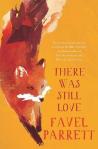
Book coverFavel Parrett’s third novel, There was still love, is one of those novels in which not a lot happens but has a lot going on. Just the sort of novel, really, that I tend to like. (It all started with Jane Austen!)
The novel revolves around the lives of two Czech sisters, one who ends up in Melbourne with the other remaining in Prague, but their story is mainly seen through the eyes of their grandchildren. Melbourne-based Malá Liška or “Little Fox” lives with her grandparents Máňa and Bill, while Prague-based Luděk lives with his Babi (grandmother). The novel is set mostly in 1980, and alternates between these two places, with occasional forays into other places and/or times to fill in some backstories. It’s a carefully constructed book, one that benefits from close reading, which is not to say it’s hard reading, because it’s not. It’s one of the fastest reads I’ve had in some time.

Now, if you know your European history, the above description will have suggested to you the book’s framework, and you’d be right. Separated during World War Two, with young Máňa going to England, the women’s lives are further up-ended by the 1968 Czechoslovakian Revolution. Through it all, although physically separated, they stay in touch, via letters and the occasional visits back to Prague by Máňa and Bill:

My grandparents saved their fifty-cent coins to buy aeroplane tickets. They managed to do this every four years, sometimes every three years if they were careful. If they saved very hard.

They bought the cheapest tickets.

They took the longest route.

Such is the call of home, about which more later.

The stories, as mentioned above, are told through the eyes of Malá Liška (in first person) and Luděk (in third person.) I suspect Malá Liška’s is first person because she is modelled on Parrett herself, thus providing a grounding authenticity. Luděk’s story is, the Author’s Note says, drawn from the experiences of her cousin Martin. The Prague scenes, she writes, “would be nothing” without his help. I haven’t visited Prague, but Parrett, through Luděk via Martin, brings it alive:

Luděk loved the mess, the decay. His city wasn’t clean, it wasn’t pretty. And there were wires everywhere in the sky and they crisscrossed like a million black lines. Everything was covered in stinking soot, in pigeon shit, covered in old rusted scaffolding … Prague was his city, the flat his whole world, and he loved it all.

Prague, and his grandmother’s flat, in other words, are his home.

There was still love is about many things, of which love, which survives upheaval and separation, and home, which you can make and remake throughout life while never forgetting your origins, are the two overriding ones. These are big themes, and yet the novel is just over 200 pages. I’m in awe of Parrett’s concision. There were some in my reading group who wanted the whole family saga – which I get – but I loved Parrett’s ability to convey a wealth of meaning and history in a phrase, a sentence or a short scene. Here, for example, is a scene between Luděk and his uncle Bill, in Prague:

‘I think that man is following us,’ he [Bill] said, and his eyes moved up the path towards another bench.

Luděk remembered how his Mama said they were always watching at the airport, watching, taking photos …

Babi told him never to say anything important on the telephone.

The reality of living under surveillance is conveyed quietly, thus, in a couple of pages, but we readers know exactly the fear and brutality that lie just behind these words.

Another example of this concision is a brief scene in a Melbourne shop during which Máňa is called a “stupid wog”. She walks out of the shop with dignity, but Malá Liška notices that “a tear, just a small one, spills down her soft, powdered cheek and she does not wipe it away.” Again, a brief scene, but we know that this is not the only time Máňa has been treated like this. Life, Parrett shows, can be difficult whether you stay or go.

Parrett also achieves concision through a “suitcase” motif. It is introduced in the gorgeous brief poetic prologue called “The suitcase”. Parrett describes suitcases being everywhere, evoking a powerful image of people on the move, of people escaping and of people not getting away. She writes:

You must close up tight, protect your most needed possessions … your heart, your mind, your soul. You must become a little suitcase and try not to think about home.

From here on, suitcases of all sorts are subtly dropped into the narrative to suggest various ideas – a suitcase in a roof space holding an old gymnastics blazer from a past life; “a suitcase with yellow eyes – a suitcase with a mouth like a big black hole” in a Czech Black Light Theatre performance in Melbourne; people arriving at airports, looking “dazed, pushing trolleys loaded up with suitcases”. The most powerful reference, though, comes from The Black Light Theatre Company’s Magician (based on the still living Jiří Srnec):

I put the broken in my suitcase and take them with me until they are ready to go home again.

There is still love.

There it is, home and love again. Luděk’s much missed mother travels with this company, and is tempted to defect to the free West.

Closely related to the idea of love and home is the story of refugees, of migration. In a little section devoted to him, Bill tells of changing his name from Vilém in 1942 England in order to fit in, while Máňa “works on her accent”. He shares the pain of leaving one’s home:

The only way to live now is to keep moving forward and not look back. It is the only way his heart can keep on beating and not break. He must look forward and not behind.

He must never look behind.

A common – and painful – experience for refugees.

Finally, There was still love is also a story about women, and particularly old women who carry on. It is Luděk, loving his grandmother and coming to care for another old women, who voices this:

The city was full of old women left behind, left to keep everything going – to carry the old goddam world by themselves.

My reading group briefly discussed the title, There was still love. What did “still” mean we pondered? “Still” as in ongoing, or as in continuing despite everything? Both, I think. Whatever the meaning, however, There was still love is a moving read that reminds us yet again that the most important things in life are home and love, wherever you find them.

Lisa (ANZLitLovers) also loved this book.

Challenge logo

Favel Parrett
There was still love
Sydney: Hachette Australia, 2019
214pp.
ISBN: 9780733630682

Christos Tsiolkas, Damascus (#BookReview)

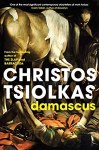
Book coverI have reviewed (and enjoyed) two of Christos Tsiolkas’ books since blogging – The slap and Barracuda – so I was of course interested when Allen & Unwin sent me his most recent release, until, that is, I saw its subject matter. Biblical history, or historical fiction set in biblical times, are not really big go-to areas of interest for me. However, it was Tsiolkas so, finally, when its turn came, I dived in.

What did I find? I hadn’t read reviews, but I had heard that it was pretty violent, and it certainly is in places. Indeed, it starts with the stoning of a woman – but it wasn’t gratuitous or dwelt on. The actual stoning was over in a couple of sentences, and, given Tsiolkas is a serious writer, I decided to trust that he was going somewhere interesting.

Damascus – the title referencing Saul’s (Paul’s) epiphany regarding Christ on the road to you know where – uses the story of Saul, his acolytes, and people he knew, to explore the first few generations of Christians and, through them, the foundations of Christianity. The media release which accompanied my copy says that the novel “explores the themes that have obsessed Tsiolkas as a writer: class, religion, masculinity, patriarchy, colonisation, exile.” Class is the first one to raise its head in the book, and is the one that encouraged me to keep going, because the book reminds us of Christ’s teachings about equality. A few refrains run through the novel, but the first one that captured my attention was “The first will be last, and the last will be first”. It is this teaching, this original Christian belief, that most infuriated Christianity’s opponents. That slaves, for example, should be treated as equal, should sit down at the table with others, was an affront. Given Christianity’s problematic history, I loved being reminded of this fundamental point.

The book, for me, explores two main issues. One is this Christian value of equality – accepting all people as worthy of love and attention. It dominates the first part of the book. However, another issue also raises its head fairly early – through another refrain that ends with “Truly, he is returning” – the Christian belief in the Resurrection. This theological concern occupies much of Saul’s thinking and dominates the book’s ending. In Angela Savage’s YVWF conversation with Tsiolkas, he said that he doesn’t believe Christ was resurrected. He doesn’t believe in an eternal kingdom, but that finding how to live a good life has to be worked out here and now. He therefore chose to include the character of Thomas, the doubter from the Gospel of John, to suggest another direction in which the church could have gone. His Thomas appears in the novel as the apocryphal twin of Jesus, thus giving flesh to the dichotomy between these two world views. This dichotomy is also neatly embodied in the love another of the book’s main characters, Timothy, has for both Saul and Thomas.

So, these were the two themes that kept me interested in the book, but what about the actual experience of reading it? Like many Tsiolkas’ novels, it is a multiple (or “roving”) point-of-view novel. It has a complex structure, comprising two chronologies, as you can see in the following list of the book’s parts:

  • Saul I 35 Anno Domini
  • Hope Lydia, Antioch 57 A.D.
  • Saul II 37 Anno Domini
  • Faith Vrasas, Rome 63 A.D.
  • Saul III 45 Anno Domini
  • Love Timothy, Ephesus 87 A.D.
  • Saul IV 57 Anno Domini

One chronology tells the life, thoughts and inner conflict of Saul, while the other explores the impact of Saul on others. Lydia appears in the biblical book of Acts as the first woman Saul brings to the new religion; Vrasas is his jailer in Rome and has a hatred of those he describes as “death-worshippers”; and Timothy, his companion in the Bible, had a pagan Greek father and a Jewish mother and so embodies, Tsiolkas said, “between world-ness”.

All this is rather complex, and if you don’t know your biblical history you need to concentrate hard on who is who, and where they are going, on the various belief systems and their suspicion if not hatred of each other. You also need to go with Tsiolkas’ view of Saul as a flawed man struggling with his own temptations, his lusts, pride and envy. Tsiolkas’ Saul is a man not a paragon, one who struggles even as he tries to bring the new religion to people on his travels. Here he expresses guilt over his love for Timothy:

Saul falls to his knees on the stony ground. He is sin, he is evil. The storm inside him rages and scorns. He will never conquer the serpent that coils around his loins–its poison floods his heart and mind. What arrogance to believe he is loved by the Lord! How vain to think that he has been chosen by the Saviour. (p. 264)

Inner conflicts like this are well-known, I believe, to Christians.

One of the major joys in reading this book is the characterisation. Lydia, whose first baby is abandoned on the mountains because she is an unwanted girl, is a powerful, but moving character who shares her life as a wife in a seemingly typical merchant family before she takes to the mountains herself. Vrasas, on the other hand, is a brutal character. His section is called, ironically, “Faith”. His faith is a brutal one, and his section contains some of the most brutal scenes in the book, starting with a sacrifice. The aforementioned Timothy, who loves both Saul and Thomas, is a particularly engaging character. His section, “Love”, contains another brutal scene, the punishment of a Jesus-follower by a pagan cult. Timothy, in a way, helps resolve the theological conflict between Saul and Thomas. He sees, I think, the essence of what they both believe. He comes to realise that the point is not the second coming, the cataclysm – though he believes it will come – but the love and hope that are conveyed in the Christian message.

Now, as you have probably realised, Tsiolkas, being Tsiolkas, does not hold back in his graphic descriptions of the brutality of the times. This is not a namby-pamby story but a gritty, mucky, one. It will offend some people in its physicality and viscerality, and it will offend others for its perspective on some much-loved biblical characters, but it is also suffused with one of the main metaphors of Christianity, light. When Saul is grappling with his conversion, “he marvels at the solace of light, the joy it brings him”. It’s a hard-won conversion. At one stage, conflicted by what Ananias’ group is saying, he prepares “to condemn the wicked circle” only to feel “that the light has gone.” Gradually, Ananias teaches Saul to see that Yeshua’s “words were a light” and that this light helps his followers shed darkness, hate, bitterness, cruelty. Light metaphors recur throughout the novel, sustaining characters whenever they feel its presence.

Damascus is not a novel for everyone. Its confronting exploration of the early Christians, alongside the complex history of times that many of us are no longer familiar with, make it a challenging read. However, I related to Tsiolkas’ heart, which aligns with Saul’s “misery at what the world is. At what the world can do”. If only we could recover those original Christian values of loving our neighbour, of treating every person we meet with equal respect, so much of that misery would be gone.

Christos Tsiolkas
Damascus
Crows Nest: Allen  & Unwin, 2019
423pp.
ISBN: 9781760875091

Review copy courtesy Allen & Unwin

Shokoofeh Azar, The enlightenment of the greengage tree (#BookReview)

Book coverI bought Shokoofeh Azar’s novel The enlightenment of the greengage tree when it was longlisted for the 2018 Stella Prize, for which it was also shortlisted. However, it was its shortlisting this year for the International Booker Prize that prompted me to finally take it off the TBR pile.

Born in Iran, artist and writer Azar was still a child when the Islamic Revolution started in 1979. She grew up there, and, as an adult, obtained work as an independent journalist. However, after being imprisoned three times, she fled Iran by boat, ending up on Australia’s Christmas Island, and was eventually accepted as a political refugee by the Australian government. She has written a children’s book and two short story collections, but The enlightenment of the Greengage tree is her first novel. Like many first novels, it feels autobiographical, though given the narrator is a ghost and Azar is clearly still with us, it is not exactly autobiography!

The story chronicles the lives, experiences, and reactions of a family caught up in the chaos and brutality of post-revolutionary Iran. This family comprises father Hushang, mother Roza, son Sohrab, daughter Beeta, and another daughter, the above-mentioned ghost narrator, Bahar. Following the 1979 Revolution, they flee Tehran for the remote village of Razan, which was untouched for years by the revolution, until it came there too during the Executions of 1988.

While the story is roughly linear, it does slide around a bit, so you need to keep your wits about you. It starts in Razan with Roza’s attainment of enlightenment “at exactly 2:35pm. on August 1988, atop the grove’s tallest greengage plum tree”, the same moment at which her son Sohrab is executed amongst hundreds of other political prisoners in Tehran. This, of course, is told to us by thirteen-year-old Bahar who, we don’t discover until chapter 5, had died in a fire set in her father’s library in 1979 by Revolutionary Guards.

Now, the book is described on its back cover as magical realist, but this is term I have been uncomfortable about ever since hearing Alexis Wright question it. I fear that with our rationalist Western minds, the description “magical” can carry a hint of condescension. Alexis Wright said that “Some people call the book magic realism but really in a way it’s an Aboriginal realism which carries all sorts of things.” Toni Morrison has spoken similarly. Azar, on the other hand, embraces the term, describing it like this: “People of old or ancient cultures sometimes seek the metaphysical solution for realistic problems”. That makes sense. I also rather like this description in Wikipedia by Mexican critic Luis Leal. He says “to me, magical realism is an attitude on the part of the characters in the novel toward the world” or, to be more specific, toward what happens to them. I guess it’s really a matter of a rose by any other name, and that the issue is less the term, than how we readers understand or approach what we read?

So, when I tell you that Roza finds enlightenment at the very top of a greengage tree, that the ghosts of 5000 executed people confront the Grand Ayatollah Khomeini in his bedroom, that Beeta becomes a mermaid and joins the merpeople to escape the sorrows of the world, that forest jinns place curses, or, even, that the novel is narrated by a ghost, I am accepting that this is how the characters experience their world.

The enlightenment of the greengage tree is, then, the story of people in extremis. The background is the repressive regime, but the book’s ambit is much bigger. It’s about life and death, love and loss, and how those play out in brutal, politically-charged times. While “most people”, says Hushang, “wanted to get used to everything”, his family heads to the jungle town of Razan, where they think, foolishly as it turns out, they will be safe. When the revolution does reach them, the people are unprepared, and are left

wondering how they’d ended up in a game whose rules they hadn’t written. The game of aggressor and victim. A game in which it didn’t take long for the victims to become the aggressors; become victim aggressors… it wasn’t long before they forgot their myths and dreams, their history and balance …

With Sohrab soon arrested, our family soldiers on, each reacting to the brutality they confront in their very different, beautifully differentiated, ways.

Roza leaves home early in the novel because:

… she wanted to lose herself.  She didn’t want to sit in her newly rebuilt house and look at the freshly-painted walls, and the new furniture and carpet, and imagine how Sohrab was killed or how I suffered as I burned.  She didn’t want to think about the future and what other calamities might befall Beeta and Hushang.  She wanted to run away from herself, from her fate.  She didn’t want to be wherever she was.

Beeta, on the other hand, who had stayed and struggled, eventually transforms into an aquatic creature, “so as to experience and live life with a freedom that had been impossible as a human”. Meanwhile, Hushang, who also stayed, reads. He had “a thirst for reading”, a desire to be “connected with the world’s thinkers”, to distance himself “from the contemporary world of intellectual midgets that had overrun his country.” Eventually though, his reading brings him to “contemporary Iranian history; the place where all his questions turned to bottomless chasms”.

History is, in fact, a constant thread in the novel, one that is pored over from every angle – including an attempt by the people of Razan to discard it altogether. Azar shows, graphically, the damage done by those regimes which try to quash people’s past, their heritage.

Late in the novel, there’s a confrontation between Hushang and his brother Khosro who had taken a mystical path. Hushang is furious, arguing that “this mysticism game” had done nothing against the various atrocities and traumas, and criticising “smart people” like Khosro for hiding “in the safety of temples instead of doing something to fight the corruption and injustice.” Khosro, though, believes, probably realistically, that nothing can be done to avert the ongoing destruction of Iranian culture. He argues that “all I can do is not become tainted by something I don’t believe in.”

The enlightenment of the greengage tree is a wonderful read if you like books which pose these sorts of fundamental questions about how to live in difficult times. It could be a grim read, given the brutality contained within, but it’s not. It’s tragic, of course, but it has a sort of unsentimental, slightly melancholic tone that doesn’t weigh you down. Two-thirds of the way through the novel, Beeta tells Bahar that “imagination is at the heart of reality”. A perfect description of what Azar has done in this book.

In the front matter, Azar expresses gratitude to the Australian people for accepting her “into this safe and democratic country” where she can “have the freedom to write” such a book. We, however, should be grateful, in return, to have such a creator in our midst.

Lisa (ANZLitLovers) also liked this book.

Challenge logoShokoofeh Azar
The enlightenment of the greengage tree
Translated by Adrien Kijek*
Melbourne: Wild Dingo Press, 2017
268pp.
ISBN: 9780987381309

* Translator’s name is a pseudonym; the European edition was published with translator as anonymous.