
The Young Victoria

As I wrote in a past post, I do love a biopic! And this week I saw another one, The Young Victoria. In many ways it covers much the same ground as the 2001 miniseries, Victoria & Albert. Both show Victoria’s lonely childhood, the poor relationship between her mother and Victoria’s uncle the King, her mother’s poor choice of adviser, and the political manipulations from Europe to forge a match between her and Albert. However, while Victoria & Albert, being a miniseries and therefore longer, takes the story up to Albert’s death, The Young Victoria stops at the point where Victoria recognises that she can and should give Albert a “real” role in the palace/the monarchy. The essence of the story is not really spoilt by stopping it here – and, anyhow, the film fills in the rest of their story through a few end-titles.

As a biopic, it’s a lovely romance. As a film, it’s a pretty traditional costume drama. That said, the acting is excellent – with Emily Blunt as Victoria and Rupert Friend as Albert being particularly convincing. The costuming and the sets are sumptuous. The script is crisp and natural.  The music is full and strong, but a little heavy-handed in places, a little too traditionally appropriate to an historical royal biopic, if you know what I mean.

From my knowledge, the film is pretty accurate historically, with just a few bits here and there exaggerated for dramatic effect. It deals lightly but clearly enough with the various political agendas running at the time – as they related to Victoria. All in all, it’s a thoroughly enjoyable film…and if it’s about anything (besides, that is, being the story of Victoria and her Albert) it’s about the idealism of youth. What a lovely pair they made.

Beautiful Kate?

Flinders Ranges (Photo: Georgie Sharp @ flickr, used under Creative Commons licence CC-BY-2.0)

Flinders Ranges (Photo: Georgie Sharp @ flickr, used under Creative Commons licence CC-BY-2.0)

[WARNING: SPOILERS, PROBABLY]

Well, I haven’t read the 1982 book by American novelist Newton Thornburg – in fact I hadn’t heard of it – but Rachel Ward has managed to produce out of it a stylish and engrossing film, aided by an excellent cast and gorgeous, often eerie, cinematography. It helps too that the film was shot in the remote but stunning Flinders Ranges of South Australia.

In case you haven’t heard, I’ll get it out now. The film deals with one of those big taboos – sibling incest. It is not sensational, it is not really voyeuristic; in fact it handles the topic with a great deal of sensitivity.  This is achieved partly by telling the story through flashback which, somehow, reduces the shock value and enables us to focus on the circumstances rather than the act. Forty-year old Ned (played with brooding but intelligent restraint by Ben Mendelsohn) returns to the family farm, with much younger fiancée (Toni, played by Maeve Dermody), to see his dying father (Bryan Brown). Also at the farm, caring for their father, is Ned’s younger sister, Sally (Rachel Griffiths). Ned, a writer, is clearly conflicted and has a prickly (to say the least) relationship with his father and so, as we’d expect, returning to the farm releases the ghosts of his past. This past includes a mother who died when he was young, a father who was rather harsh and domineering, and a twin sister (the Kate of the title played by Sophie Lowe) and older brother (Cliff), both of whom had died tragically in their teens. Mostly through flashbacks, the film explores the last summer in Kate and Cliff’s lives, and the events which led to their deaths, events which have reverberated for Ned ever since.

It’s not a particularly innovative film. The transitions between present and past are handled pretty traditionally – mostly fades triggered by an action, object or sound – but they are nonetheless smooth and subtle. The landscape, which is beautiful but stark and somewhat desolate, provides a perfect backdrop for the characters’ emotional lives. And the music, particularly Tex Perkins’, to use a cliché, haunting rendition of “This little bird”, supports the film superbly. The end result is a sureness in the direction belying the fact that this is Ward’s first feature – it might be fairly traditional in style but it is definitely not boring.

I do though have a small quibble with the story. I saw the film with two other people and all three of us struggled a little to understand Kate and the motivation for her behaviour. (Of course we are seeing it all through Ned’s eyes, but it does appear from other clues in the film that his eyes are reliable). Was it being motherless? Was it their isolation (their father insisted they be home-schooled through School of the Air)? Was it indeed this harsh remote father? Or, was it jealousy? This is a bit murky and spoils a little our full understanding of the situation – and, rightly or wrongly, it seems to lay much of the blame for what happens at her feet. That said, Kate is not demonised. Rather, she is presented (and played beautifully by Lowe) as charismatic, lively and risk-taking, but as trapped on a stage that is too small for her energies.

The resolution is pretty traditional but is not mawkish – we can’t help feeling glad that Ned comes to some rapprochement with his father, that he has put his ghosts to rest and that he may now move onto a more settled future. This is a gutsy feature debut for Ward – I look forward to her next one.

Disgrace-ful

Well, I finally got to see the film adaptation of J.M. Coetzee’s Disgrace today. Before seeing it, I was a little surprised that it only had an (Australian) M rating. From my memory of the book I was rather expecting an MA rating. I was slightly disappointed in the film: it’s not that I want to watch explicit “stuff” (in fact I often close – or half-close! – my eyes during realistic violent scenes on film) but I did feel that this adaptation somehow missed the full menace of the book. The book is hard to forget. The film, while engrossing, did not seem to have quite the same punch. I’m not quite sure why that is – it could simply be that having read the book, I was too prepared for what was to unfold for the shock value to work.

Interpretation of Disgrace, by Andre Pierre @ flickr.com, Creative Commons Licence 2.0

Interpretation of Disgrace, by Andre Pierre @ flickr.com, used under Creative Commons Licence 2.0

That said, I’m glad I saw it. But first, a brief synopsis. David Lurie, an English professor at a university in Cape Town, is forced to resign after some rather “improper” behaviour with a female student. He goes to stay with his daughter on her remote farm and while he is there they are brutally attacked. What then unfolds is how this impacts each of them – and in particular how he gradually sees the consequences of some of his own previous behaviours. Despite, though, some growth within Lurie, it is not a cheery film.

JohnMalkovich did a good job of portraying the complexity of David Lurie. Lurie is not an easy character to understand – after all, it seems he barely understands himself – but Malkovich goes a long way towards “explaining” him. Lurie is a man who, in his time, has “preyed” upon women taking advantage of the gender (and other) power imbalances between him and them, but who is forced to face (horrific) reality when he and his daughter become victims themselves of power imbalances. Ironically, rape (the ultimate expression of gender power imbalance) is used to usurp the racial power imbalance that is entrenched in South Africa.  The personal is clearly the political in this story. Newcomer Jessica Haines beautifully plays his daughter, conveying well the fragility that lies just below the surface of her strength. Her reaction to what happens to her and her decision regarding her future are hard for us to comprehend but, like her father, we do come to some understanding even if we’re not sure we’d do the same!

The cinematography is spare mirroring the spareness of the book. The landscape is beautifully rendered, but only to convey its harshness. The pace is measured – shots are unhurried, allowing the ramifications of the events to sink in slowly with us as they do with the characters. The score has a gravitas that adds force to the drama being played out. And yet, and yet … perhaps all this gives it an elegaic tone rather than the menace and despair I found in the book. Coetzee’s post-Apartheid South Africa is not a pretty place.

Early in the book – and the film – David uses the word “usurp” by which he means to intrude or encroach upon. This is the subject of the book: the fact that nations and people (black-white, male-female, teacher-student, parent-child, person-animal) usurp upon others/each other. While the film does not quite explore all of these with the richness of the book, it conveys enough for us the get the gist! I would imagine that Coetzee is not dissatisfied with the outcome.

(If you haven’t seen the film, see the trailer here.)

State of the investigative journo film

I really want to see the new Australian film, Last Ride, and the film of J.M. Coetzee’s Disgrace, but as State of Play is coming to the end of its run and we hadn’t yet seen it, that’s what we went to see today. Apparently, the film is an adaptation of a well-reviewed 6-hour British miniseries which aired in 2003. I didn’t see that and so don’t know what was cut out to create a 2-hour movie. We found it a perfectly entertaining political thriller but felt it really tells the same old story. Somewhat daggy newspaper journalist (played convincingly by Russell Crowe) investigates a story in which he has a relationship with a major subject. He has a young, ambitious rookie offsider. There are some love triangles (though admittedly our journalist does not bed the rookie). And, just when he and the rookie are resting on their laurels and you think the investigation is complete, he suddenly remembers something someone said that makes him rethink their resolution, resulting in, of course, a dramatic denouement (one that’s not necessarily expected but neither is it surprising).

I liked Crowe – I usually do like him in his films. The other members of the cast (Rachel McAdams, Ben Affleck, Helen Mirren, Jeff Daniels, Robin Wright Penn) were good too. All in all it’s a well-made and entertaining film, with the usual thriller twists and turns, but there was nothing that lifted it out of the ordinary. Margaret and David, of At the Movies fame, rated it 4 and 4 1/2 (out of 5) respectively. There’s clearly something wrong with me. I’d give it 3 1/2!

The challenge of the biopic

I do love a biopic – essentially, a movie dramatisation of the life of a real person – but I also know that I must always keep in mind that it is a dramatisation. That is, it is not a biography but more like a biographical novel. The challenge with this is that when I know the subject well – such as Jane Austen (have I told you I’m a fan?!) – I can tell where poetic licence has been taken in order to tell a good story. But, when I don’t know the subject well, I can walk away believing that what I have just seen are the facts.

A year or so ago, I saw the film Becoming Jane. It created quite a stir among Janeites because it took great liberties with her life: it took what our sources can only confirm as an attraction (possibly an intense one, but one that was quickly nipped in the bud) and created a highly romantic story that included a near-elopement. To the purists this took too great a liberty with her life. To the feminists it was “corrupt” in its implication that it was only as a result of this “romance” that Austen was able to write the love stories that she did. To the general public though it was a lovely period piece about someone who has become one of the century’s icons. Me? I thought it was a very entertaining movie – but it was not my Jane!

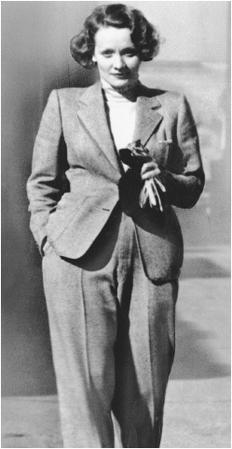
Coco Avant Chanel

Coco Chanel, 1920s
Coco Chanel, 1920s (Presumed public domain)

Anyhow, this brings me to the film I saw today, Coco Avant Chanel. I know next to nothing about Coco Chanel’s life and so I could easily walk away from this film believing that I know exactly how she got to be the fashion doyenne that she was, and exactly what role was played by two men – the Frenchman Balsan and the Englishman Arthur “Boy” Capel – in the development of her early career. That would, though, be a bit naive of me. And the film itself should clue me into that through the way it clearly skirted around some parts of her story. For example, at one point it showed Balsan treating her almost as a whore (or kept woman – “my geisha”) and then suddenly accepting her into his rather wild “fold”. It showed “Boy” as her first great love but glossed over the financial arrangement between them, something which the film implies compromised Coco’s sense of independence. It teased us with a close relationship with a sister but didn’t resolve that.

However, I did enjoy the movie. I liked the transition from 10-year-old Coco (then called Gabrielle) to the young woman peering through the curtains before going on to perform in a cabaret-style bar. It neatly gave us the sense that she was an outsider, watching and waiting to join in. The “outsider” idea is certainly one of the themes of her story as told in this film. Oh, and I loved the way it showed her subversive attitude to fashion – her blending of comfort (no corsets, looser fit, androgynous look) with style and elegance. A woman after my own heart, though I must admit that comfort rather than style is what I mostly achieve!

Co-producer of Becoming JaneGraham Broadbent, says of his film that ‘There are documented facts and we’ve joined the dots in our own Austenesque landscape.’ Should we care – does it matter – that we can’t all see the joins between the dots when we see a biopic?

Cute but not cutesy

Courtesy:CKSinfo.com

Courtesy:CKSinfo.com

Cute has become a much maligned word but it originated as a shortened form of acute and meant  “keenly perceptive or discerning, shrewd”. This, I think, works well as a description of Sarah Watt‘s latest film My Year Without Sex, particularly when combined with more recent meanings of the word such as “charming”.

(WARNING: SOME SPOILERS)

The basic premise of the film is how a couple copes when the thirty-something wife and mother, Natalie, nearly dies from a brain aneurysm and is advised, on her discharge from hospital, that one of the risk factors is sex! Natalie (Sacha Horler) and Ross (Matt Day) learn earlier than they expected just what those marriage vows, “in sickness and in health”, imply.

Not surprisingly from the title, the film is structured around the months of the year, each month introduced with a different graphic accompanied by a sexually suggestive word/phrase such as “foreplay”, “faking it”, “doggy style” and “climax”. This could come across as artificial and contrived – and it does break up the narrative a little – but its overall impact is whimsical and fun. And it shows off Watt’s roots in animation and design.

The film teases us at times by undermining what we have come to expect of drama – an overlooked scratchie does not turn out to be a winner, a strange older man talking to a young boy does not turn out to be a pedophile.

Sarah Watt has said that “I love the big ticket life questions writ upon small domestic stories”. This is what informed her previous feature, Look Both Ways, and what informs this film. The people are very ordinary: as Natalie says, in answering her child’s question about whether they are middle class, she would like to be a “bit closer to the middle of the middle”! They live an a small, messy suburban home and cope with the day-to-day issues of job insecurity, Christmas shopping, kids birthday parties, and friendships as well as the bigger issue of “what does it all mean”?

The film deals a lot with “chance” and “luck”, from the low-odds chance of experiencing an aneurysm and the luck of its occurring in a doctor’s office, to raffles, scratchies and playing the pokies. Probably life’s biggest lottery though is one’s choice of partner and this is where Natalie and Ross, in the end, discover their best luck lies.

My Year Without Sex is one of those delightful films that does exactly what I would like more films to do – tell Australian stories in a very Australian way, that is, down-to-earth but with a touch of cheeky humour.

A day of gritty viewing

I went to two films today: Mary and Max this afternoon and Samson and Delilah this evening. Hmmm…both films are named for their two main characters. What an interesting coincidence. Both films are also slow-paced aiming, I think, to give a sense of “real time” but, while Mary and Max is a highly verbal film, Samson and Delilah is almost silent. Both are powerful though.

The claymation Mary and Max is Adam Elliot’s first feature. If a film could be called an epistolary film then this would be it, as the film is primarily about the penfriend relationship between Mary in Australia and Max in New York, and much of the story is carried through their letters and voice-over narration. At the start of the film, Mary is 8 and living in a rather dysfunctional family, and Max is 48 and living alone. Max, it also becomes clear, has Aspberger Syndrome. The thing, though, that draws them together is that both are lonely and want a friend. Mary and Max’s individual lives are beautifully realised – exaggerated and yet real at the same time – in gorgeous claymation detail. The music – including Elena Kats-Chernin’s rather eerie Russian Rag (introducing Max’s life in New York) and Pink Martini’s jangling Que sera sera (at Mary’s crisis point) – is perfectly chosen to convey the darkness behind the comedy. While the film makes you laugh, it is not a cheery film – and yet, it is also strangely affirming. Its point at the end is that we are all imperfect but that if  we accept our own flaws and tolerate/forgive the flaws in others we can have meaningful relationships.

Samson and Delilah is another thing altogether. It is an amazingly sustained movie in which little is said and in which both a lot and at the same time very little happens. It is set in a tiny indigenous community in central Australia and tells the story of two teenagers and the relationship that develops between them in an atmosphere of dislocation and cultural breakdown. When circumstances result in Samson and Delilah hitting the road together, things go downhill rapidly as they struggle to survive in a town (Alice Springs?) unfriendly to those who appear to have nothing. The film covers a lot of ground including petrol sniffing, homelessness, violence, and exploitation of Aboriginal artists. While it has some light touches at the beginning, it is pretty unremittingly bleak: it is hard to retain dignity when you are given little respect and have nothing meaningful to do. Interestingly, the message seems to be that women are the strong(er) ones, and that they are (might be) the key to the future. But the film’s resolution is a qualified one – you do not leave this film thinking all is, or even will in the near future be, well.