George Orwell, Bookshop memories

I do like to read a bit of Orwell every now and then – and for that reason, though I have other books of his to read in my TBR pile, I recently bought his essay collection, Books v. cigarettes, in Penguin’s delightful Great Ideas series. I blogged about the first essay a couple of months ago. Tonight I decided to read the second essay, “Bookshop memories”, in which he draws on his experience of working in a second-hand bookshop. It was published in 1936.

There’s a nice little Wikipedia article about the essay, giving the background to his writing it and a brief summary of its content, so I won’t repeat all that again here. Rather, I’ll just comment on a couple of observations he makes that tickled my fancy, and these relate to one of the sidelines of the bookshop: its lending library. He says that in a lending library “you see people’s real tastes and not their pretended (my emphasis) ones, and so, he notes that:

  • “classical English novelists have dropped out of favour. It is simply useless to put Dickens, Thackeray, Jane Austen*, Trollope etc into the ordinary lending library; nobody takes them out”. Dickens, he says, “is one of those authors people are ‘always meaning to read'”
  • there is a growing unpopularity of American books (but he doesn’t give any reason for this)
  • people don’t like short stories because, for some, “it is too much fag to get used to a new set of characters with every story”. Orwell says on this one that the blame lies as much with the writers as the readers: “Most modern short stories, English and American”, he says, “are utterly lifeless and worthless”. Those that “are stories”, such as by D.H. Lawrence, are, he says, “popular enough”.

I don’t think the second point is true today (at least in Australia), but I suspect that the first and third still have some credence. Again and again I hear in bookgroups, “let’s not do a classic” and “I don’t like short stories”. Of course, there are exceptions (my bookgroup, for example, likes to do a classic a year!) but I think the rule still applies. Will it be ever thus?

* Have you noticed how Jane Austen is more often than not referred to with both her names while the fellas often aren’t? We comfortably talk about Shakespeare, Dickens, and Wordsworth, but far less so of Austen. Chivalry? Sexism? Odd isn’t it?

George Orwell, Books v. Cigarettes

George Orwell, 1933 (Presumed Public Domain, from Wikipedia)

George Orwell, 1933 (Presumed Public Domain, from Wikipedia)

We all do it! That is, we say we haven’t got the time to do something or we can’t afford something when in fact we really could if we changed our priorities. This idea is the inspiration for George Orwell’s essay titled “Books v. Cigarettes” (written in 1946). It all started when a newspaper editor told him of some factory workers who said that they read the newspaper but not the literary section because “Why, half the time you’re talking about books that cost twelve and sixpence! Chaps like us couldn’t spend twelve and sixpence on a book”. Orwell’s response is to examine what he believes is a widespread view (in 1940s England anyhow) “that the buying, or even the reading, of books is an expensive hobby and beyond the reach of the average person”.

He does this by attempting to ascertain how much his own reading costs him.  You can read the details in the essay (it’s a short one) here. In short, he decides that he averages £25 per year on his reading habit, but £40 on smoking. And this, he says, is based on buying not borrowing books which would of course significantly reduce the cost of his reading. He then tries to establish a relationship between the “cost” of reading and the “value” you get from it, but realises how difficult it is to apply a value across the board. As he says

There are books that one reads over and over again, books that become part of the furniture of one’s mind [my emphasis] and alter one’s whole attitude to life, books that one dips into but never reads through, books that one reads at a single sitting and forgets a week later…

How do you value these different experiences? He decides to avoid this tricky problem and just estimate what it costs to treat reading as simple entertainment, so he divides the average price of a book by the average time it takes to read one and discovers that this cost compares favourably with going to the cinema. And of course, he says, if you bought second hand books or borrowed them, the cost of reading would compare even more favourably.

Finally, he presents the rough estimate that only 3 books are bought per person per year in Britain. A woeful situation he says in a society which is nearly 100% literate. And his conclusion?

…let us admit that it is because reading is a less exciting pastime than going to the dogs, the pictures or the pub, and not because books, whether bought or borrowed, are too expensive.

Thanks to George Orwell, next time I go to buy that case of wine, I see that I will have to stop and think about whether I should buy a few books instead!

When is a sequel not a sequel?

Courtesy Cambridge University Press

Courtesy Cambridge University Press

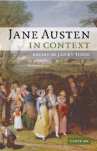
What Janeites call sequels, others, such as Elizabeth Paton writing in the June 2009 issue of  goodreading, call fan fiction. And, I guess, fan fiction is a little more accurate since what Janeites call sequels is, in fact, “fiction written by the fans, for the fans of a particular book”. In her essay titled “Sequels” in Cambridge’s Jane Austen in context that I referred to in a recent blog, Deidre Shauna Lynch commences with “the sequels, prequels, retellings and spinoffs that Jane Austen’s novels have inspired”. In other words, what Austen fans loosely call “sequels” are not necessarily sequels at all.

Paton’s description of fan fiction works well:

Fan writers shape or expand their favourite works, taking existing characters, settings or plots and creating their own stories. Fan writers may attempt to fill holes in the story or completely change the ending, add new characters or transfer original ones into different settings, tease out subplots or even merge the storylines of two different books.

She goes on to say:

In many of these stories, the imagination can take precedence over quality. Pornographic content is common, as are two-dimensional characters, illogical plots and poor sentence construction. … you may need to sort through a lot of dross to find fan fiction gold – but it is out there.

Writing generally on fan fiction, Paton provides a brief history of the genre and a wide range of examples from a 1614 sequel to Cervantes’ Don Quixote written by Alfonso Fernandez de Avellaneda to Geraldine Brooks’ 2006 Pulitzer Prize winning March which reimagines Mr March from Louisa May Alcott’s Little Women. She concludes her article describing in a little more detail “perhaps the most succesful sequels[!]”, “those rewriting or continuing Jane Austen’s Pride and prejudice“.

This brings me to Deirdre Shauna Lynch and her fascinating analysis of “sequels” in the Cambridge publication. Early in the essay she makes a rather apposite point:

the history of Austen sequels … seems to confirm a cynical understanding of sequel writing as the literati’s closest approximation to a get-rich-quick scheme.

However, she then delves a little more deeply into the phenomenon, asking why Austen’s novels have proven themselves so hospitable to sequelisation. She suggests there are two types of sequels:

  1. the kind (that I would call the “true sequel”) that goes past the original ending to recount what happens next. This kind she says feeds into the pleasure humans  “derive from gossip”. She suggests that “these narratives often feel like throwbacks to the Gothic and sentimental novels that Austen liked to burlesque”.
  2. the kind that finds other ways to return to Jane Austen’s world, such as reimagining a story from the point of view of another character, or combining characters from more than one book. These books, she says, sometimes explore unsettling undertones in the original, and can display “a kind of postmodern playfulness and predilection for insider joking”.

In her analysis she suggests that at least some of the “sequels” represent the very playing around with narrative conventions that Austen herself liked to do, what she calls Austen’s “unorthodox narratology” which includes repetitions, circularity and implied backstories (ie prequels).

I have to be honest here and say that while I have read Barbara Ker Wilson’s Jane Austen in Australia, I have never read an Austen sequel. I have been wondering lately though whether the best of them, particularly Lynch’s second kind, might operate a bit like a novel commentary: a good writer retelling Emma from Jane Fairfax’s point of view, for example, may very well jolt me into a new way of looking at Emma. And it’s never a bad thing to find a new way to look at a Jane Austen, or indeed any much-loved, novel.

Notes from a Wikipedian

Two years ago I made my first edit in Wikipedia … and got hooked. You see, as a young teenager I decided I wanted to write an encyclopedia. I did start one, but didn’t get very far. Life got in the way as I recollect. As with several of my early dreams, however, life has had a way of seeing them realised, almost without my being aware of it, and so to Wikipedia I came.

Like any communities – and Wikipedia is a community – it has its ups and downs. Within a couple of days I had incurred the wrath of the “copyright” patrol. Some young (I could tell from their user page) French Wikipedian slapped a “speedy deletion” notice  for copyright infringement on a page one hour after I had created it and while I was still working on it. You see, I had “copied”, with some minor changes, a couple of sentences from a website into a new article I had created. The article was about a conference and these sentences essentially said the conference was held biennially and rotated around the states.  There are only so many ways you can say that! As someone who had worked closely with copyright all my career, I didn’t think I’d breached anyone’s creativity in almost-but-not-quite copying those sentences and, anyhow, I was still working on the article. My initial reaction was, I have to admit, a high level of distress. Sitting quietly on my comfy sofa with my laptop on my lap I felt attacked – personally and professionally (in terms of my sense of self). But, I calmed down, decided to react sensibly and got through it: I politely left a message on the tagger’s user page explaining what I was doing and set about enhancing the article. Three hours later the tag was suddenly, and as mysteriously, removed. Phew! I relaxed. But I did learn some things from that experience:

  1. the Wikipedia quality police are out and about 24/7;
  2. the best way to react is calmly so that you don’t enflame the situation; and
  3. there is an “under construction” tag you can put on a new article to tell the police (and other eager editors) to lay off for a while.

All this came back to me as I read David Runciman’s review in the London Review of Books of a book by Andrew Lih called The Wikipedia Revolution. Runciman describes in some detail the way the Wikipedia community works suggesting that it reverses Gresham’s Law which states that “bad money drives out good”. He writes:

One of the remarkable achievements of Wikipedia is to show that on the internet Gresham’s Law can work in reverse: Wikipedia has turned into a relatively reliable source of information on the the widest possible range of subjects because, on the whole, the good drives out the bad.

And how do they do it? Via the police of course! Because the truth of the matter is that my French Wikipedian was simply doing his best to ensure that the high principles of Wikipedia were being upheld. He wasn’t to know I was an honest newbie still feeling my way.

Anyhow, read the article … Runciman says some interesting things and, along the way, does manage to talk a little about the book he is reviewing.

When too much Jane Austen is barely enough

Cover image: Courtesy Cambridge University Press

Cover image: Courtesy Cambridge University Press

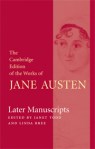
Okay, this is not going to turn into a Jane Austen blog but, nonetheless, you will probably find her the author I talk about the most. Today I read Frank Kermode‘s review in the London Review of Books of the recent Cambridge edition of the works of Jane Austen, Volume IX: The later manuscripts and Claire Harman’s Jane’s fame: How Jane conquered the world. Having reviewed, for a Jane Austen journal, another volume in the Cambridge edition, Jane Austen in context, I was interested to read Kermode’s take on what Cambridge has done. Not surprisingly he is impressed by the scholarship involved though recognises the end result is not necessarily geared to the lay reader (or even the lay enthusiast). Funnily, he talks more about other books in the series than the one he is reviewing. He spends a bit of time on Jane Austen in context, complimenting the range and level of commentary it provides. I heartily concur – it is indeed a wonderful book.

Cover image: Courtesy Cambridge University Press

Cover image: Courtesy Cambridge University Press

I’m not going to ramble on here about his review except to say that in his very dignified and scholarly way – I read that he turns 90 this year – he has a sly dig at that pehonomenon that so frustrates we Janeites, that is the Austen enthusiasts who haven’t read the books. He writes:

It is said that among the television audience there were some who saw Darcy’s emergence from his pond – an event omitted from her narrative – as the high point of the book.

Need I say more? Anyhow, this leads nicely to Claire Harman’s book, Jane’s fame. This fame is a matter of some controversy among Janeites. Do we love the fact that everyone loves her? Do we become frustrated that by focussing on the films (including such biopics as Becoming Jane and Miss Austen Regrets) many “learn” things about Jane and her books that are not, in fact, “true”. Do we hope that after seeing the films people will turn to the books? What do we make of Pride and prejudice being rewritten as a zombie story? Or made into a Bollywood film? Or a series of Marvel comics? Is there a point of no return and has it been reached?

These are not, though, the questions Kermode asks. Having tracked a little the rise of her fame as described by Harman, he asks a more basic one:

How many novels of merit, less fortunate, have disappeared forever, or to wait for scholarship, perhaps only for a moment, to revive them. And is it true, as Harman claims, that it is ‘impossible to imagine a time when she or her works could have delighted us long enough’?

Good questions. And I would answer that I hope if those works are out there they do not replace Janeism but produce more wonderful writers for us to read and delight in.