HL Mencken, The nature of liberty

I’ve said it before, and I’ll probably say it again: I am enjoying being introduced to classic American writers of whom I’ve heard but not read through the Library of America. This week it is HL Mencken, and you can read his satirical piece, “The nature of liberty” (1920), online at LOA. Mencken (1880-1956), according to the brief introductory notes that always accompany these LOA stories, was a highly popular figure in post World War 1 America*. The Library writes that this popularity gave him the freedom to write on subjects that no-one else would: he “supported woman suffrage, promoted African American authors, and championed the contribution of immigrants to American society. He inveighed against censorship, corruption, police brutality, the Ku Klux Klan, and (above all) Prohibition“. Well, I thought, this sounds like an interesting man.

And so, I read “The nature of liberty”. It is essentially a satirical essay on the limits of liberty, on the way the Bill of Rights has been “kneaded and mellowed” through the legislature and judiciary, on the tension between a person’s liberty and the law (aka the state). The example he uses is the use of violence by police. He imagines the story of an innocent citizen who resists arrest and is beaten, then arrested and investigated by the police. He shows how, once that citizen is proven innocent, the citizen’s rights of redress are severely limited because all those involved (police, detective, watchman) acted within the law. There is only one right that the citizen has, he says

…and the courts have jealously guarded it. You have a clear right, guaranteed under the Constitution, to go into a court of equity and apply for a mandamus requiring the Polizei to cease forthwith to expose your portrait in the Rogues’ Gallery among the murderers. This is your inalienable right…

The satire is obvious throughout the essay – but you can see it here, particularly in the use of emotive terms such as “Polizei” and “Rogues’ Gallery”, and legalese such as mandamus. At the beginning of the essay, he ridicules the Civil Libertarians, with whom he patently sympathises, as follows:

…the same fanatics who shake the air with sobs every time the Postmaster-General of the United States bars a periodical from the mails because its ideas do not please him, and every time Russian is deported for reading Karl Marx, and every time a Prohibition enforcement officer murders a bootlegger who resists his levies …

Mencken very effectively shows, in this essay, how “rights” can be so regulated that the ordinary citizen ends up, in effect, with few. Those of us living in the era of “the war against terror” are only too aware of how quickly rights can be eroded in the name of the “common good”, in which the rights of individuals can be overridden in the blink of an eye.

Mencken was a passionate libertarian. He was critical of democracy, seeing it as inherently paradoxical, and of course, as a libertarian, he disliked socialism. And yet, we are social beings who live in groups, and we therefore need to balance individual liberties against the needs of the group. Earlyish in the essay, he comments that the Bill of Rights “specified the rights of a citizen, but it said nothing whatever about his duties”.  This issue of “duties” is mentioned and then dropped. I wonder, for all the satire, what his attitude was to “duties” and the degree to which these “duties” might impinge upon individual freedoms? But that, I think, is a discussion for another day … perhaps via another LOA essay.

*He was apparently also the inspiration for Anita Loos’ Gentlemen prefer blondes!
William James, On some mental effects of the earthquake

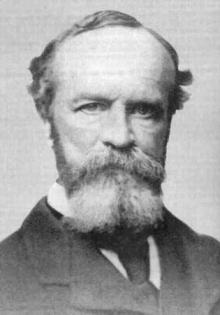
William James

William James (Presumed public domain, via Wikipedia)

There are a couple of reasons why I was intrigued to read this week’s Library of America offering. The most obvious is that it’s by William James. Not only is he a recognised American philosopher and psychologist, but he is also the brother of Henry James, and I have come across him several times in that context. For that reason alone, I was keen to read something by him, albeit a fairly small and very specific piece.

The other main reason, though, is more personal. In 1990, my family and I went to live in Southern California for a few years and, I have to say, there were several fears attached to this decision: guns, pollution, and earthquakes, not to mention the high probability that our kids would be kidnapped from under our noses in the queue for Disneyland! Well, the latter, you may be surprised to know, didn’t happen – and, while we were there during the Rodney King riots, we didn’t really have any run-ins with guns. We did, however, experience pollution. As for earthquakes, it just so happened that we were out of town on vacation for the two biggest that occurred during our time. All we experienced were a couple of tremors. Nonetheless, like all good Californians, we had our earthquake kit ready to go.

After that long introduction, let’s get to James. This essay, titled “On some mental effects of the earthquake” (1906), was written a few days after James and his wife, who were at Stanford University at the time, experienced the big San Francisco earthquake of 1906. He starts the essay with his east coast friend’s farewell statement: “I hope they give you a touch of earthquake while there, so that you may also become acquainted with that Californian institution”. Hmm … what’s that saying? What I’d say is: Be careful what you wish for?

As it turned out, the good people of Stanford were far enough away from the centre to feel the big shake (and quite a lot of damage) but minimal loss of life. James’s first reaction, once he realised what he was experiencing, was:

glee and admiration; glee at the vividness with which such an abstract idea or verbal term as “earthquake” could put on when translated into sensible reality and verified concretely [me: I think this means “at the excitement of experiencing an earthquake” don’t you!?]; and admiration at the way in which the frail little wooden house could hold itself together in spite of such a shaking. I felt no trace of fear; it was pure delight and welcome.

Ever the psychologist philosopher, he then analyses and articulates his early spontaneous non-fearful response. He said he “personified” it as having “animus and intent”, that it was easy to perceive it as “a living agent”. He goes on to say that he now understood how people mythologised catastrophe, that “it was impossible for untutored men to take earthquakes into their minds as anything but supernatural warnings or retributions”.  He also observes that most people slept outside the next few nights, not simply to be safer in case of a recurrence “but also to work off their emotion, and get the full unusualness out of the experience”. That makes sense to me and I rather like his way of articulating it.

In San Francisco proper, though, the situation was different (as we know). There was more devastation, and a lot of death. He managed to get to SF for the day and draws some conclusions from that too. As he says, his business is not with the “material ruin” but “with ‘subjective’ phenomena exclusively”. What he saw were people going about their business:

It was indeed a strange sight to see an entire population in the streets, busy as ants in an uncovered ant-hill scurrying to save their eggs and larvae.

And he is surprised, as were the officials, by the lack of criminal activity, besides petty pilfering. Is this the same now? Anyhow, this is not his main point. Two things, he says, stand out, and they are both “reassuring to human nature”:

  • “the improvisation of order out of chaos”: he notes that there are some people who are natural organisers (“natural order-makers”) and that at times like this they get to work. He suggests that while much of this was “American, much of it Californian” it would have happened in any country in crisis. In  fact, he says that “Like soldiering, it lies always latent in human nature”.
  • “universal equanimity”: he suggests that the expressions of horror and pathos came from elsewhere, but that the people experiencing the crisis just got on with recuperating. He writes that “the cheerfulness, or, at any rate, the steadfastness of tone, was universal. Not a single whine or plaintive word did I hear from the hundred losers whom I spoke to. Instead of that there was a temper of helpfulness beyond the counting”. And again, he suggests “it is easy to glorify this as something characteristically American, or especially Californian…But I like to think that what I write of is a normal and universal trait of human nature”.

I must say that I do like his lack of nationalism in all this, his suggestion that these positive and admirable traits are “human” rather than “American”. We have had many, many catastrophes and disasters since then, and I’d like to think that what James saw in 1906 has held true. But has it? Does more looting and crime go on now (as the media always implies)? Or, do the people on the ground immediately organise to help themselves and each other? Being one who likes to see the good us, I’d like to think so.

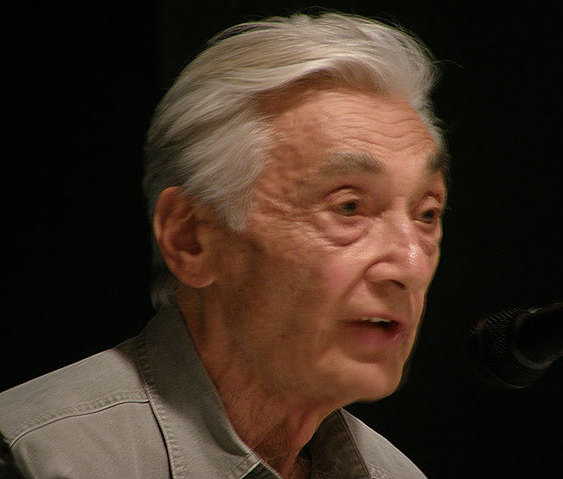
Howard Zinn, Finishing school for pickets

Howard Zinn

Howard Zinn, 2009 (Courtesy: B-Fest at Athens Indymedia, using CC-BY-SA 2.0, via Wikipedia)

I have been remiss lately with my Library of America reading. Busy-ness has taken its toll, but it just so happened that this week I was (briefly) between books and the LOA offering looked right up my alley, so I decided to read it over breakfast. “Finishing school for pickets” was published in 1960, making it the most recently written of the LOA items I’ve read to date. It was written by Howard Zinn (1922-2010), an American writer, historian, activist and all-round intellectual. You can read the essay yourself, online, at the Library of America site.

However, before I discuss this essay, a little background. In 1955, Rosa Parks refused to give up her seat to a white person on a Montgomery, Alabama, bus. She wasn’t the first to take such action but it was this particular occasion which sparked the Montgomery Bus Boycott whose aim was to end segregation on the city’s public transport. The battle was finally won in a Supreme Court ruling in late 1956. But, more importantly, it played a pivotal role in the fledgling Civil Rights Movement in the USA. Now, jump a few years and over the border to Atlanta, Georgia, and we are in the time and place of Zinn’s essay.

In 1960, Howard Zinn was chair of the history department at Spelman College, America’s oldest “black college for women” (Wikipedia). This college was well-known as, more or less, “a finishing school” for young black women. They were encouraged to “be nice, be well-mannered and ladylike”, to “not speak loudly” and not “get into trouble”. As Zinn says, “if intellect and talent and social consciousness happened to develop also, they were, to an alarming extent, by-products”. Here is the opening para of the essay:

One quiet afternoon some weeks ago, with the dogwood on Spelman College campus newly bloomed and the grass close-cropped and fragrant, an attractive, tawny-skinned girl crossed the lawn to her dormitory to put a notice on the bulletin board. It read: Young Ladies Who Can Picket Please Sign Below”. (Let’s not worry here about the “attractive, tawny-skinned” descriptor as Zinn’s heart was clearly in the right place).

Zinn goes on to chronicle various subversive actions being undertaken by the “still ‘nice'” but politically aware students. He says: “They are well-mannered, but this is somewhat tempered by a recent declaration that they will use every method short of violence to end segregation”. And so what do they do in the cause of desegregation? They sit in the front (aka white) area of buses; they occupy the white section of the Georgia Legislature’s gallery “in a pioneering show of non-violent resistance”; they show up “at the main Atlanta library in sufficient numbers to worry [my emphasis] the city administration into a decision to admit Negroes there” (what the? the librarian in me asks), and so on. Zinn writes that:

Spelman girls, more sheltered than women at the other colleges, were among the first to leave the island and to begin causing little flurries of alarm in the segregated outside world.

These activities, he says, may have bewildered the conservative matriarchy of Spelman, but they infuriated the “officialdom of the State of Georgia”. However, this did not stop the students of Spelman (and the other colleges of the Atlanta University Center) who continued their campaign even though, as Zinn describes it, many of them came from “the deep South … the Faulknerian small towns of traditional Negro submissiveness”.

It’s a highly readable essay, with light-handed use of various rhetorical devices to progress his argument, but it does not conclude on any great triumphs. After all, in 1960, there was (and, some would say, there still is) a long way to go in the cause of true racial equity. Zinn’s goal was, I assume, to raise some awareness amongst the white readers of The Nation. I can only hope he did so. As for him, he was fired from Spelman in 1963 “for insubordination” (his words), that is, for siding with his students in their fight for desegregation.

Zinn died earlier this year. Not long before he died he said that he would like to be remembered “for introducing a different way of thinking about the world, about war, about human rights, about equality,” and “for getting more people to realize that the power which rests so far in the hands of people with wealth and guns, that the power ultimately rests in people themselves and that they can use it. At certain points in history, they have used it. Black people in the South used it. People in the women’s movement used it. People in the anti-war movement used it. People in other countries who have overthrown tyrannies have used it.” (Wikipedia).

This essay is clearly just one tiny example of how he went about achieving this lifelong passion. I am indebted to the Library of America for making it available to us.

John M. Duncan, A Virginia barbecue

Now for something different from the Library of America – a little 3-page excerpt, titled “A Virginia Barbecue”, from Scotsman John M. Duncan’s Travels through part of the United States and Canada in 1818 and 1819, which was published in 1823. In it, Duncan describes a barbecue to which he was invited by Bushrod (what a name, eh?) Washington, who was apparently a favourite nephew of (the) George.

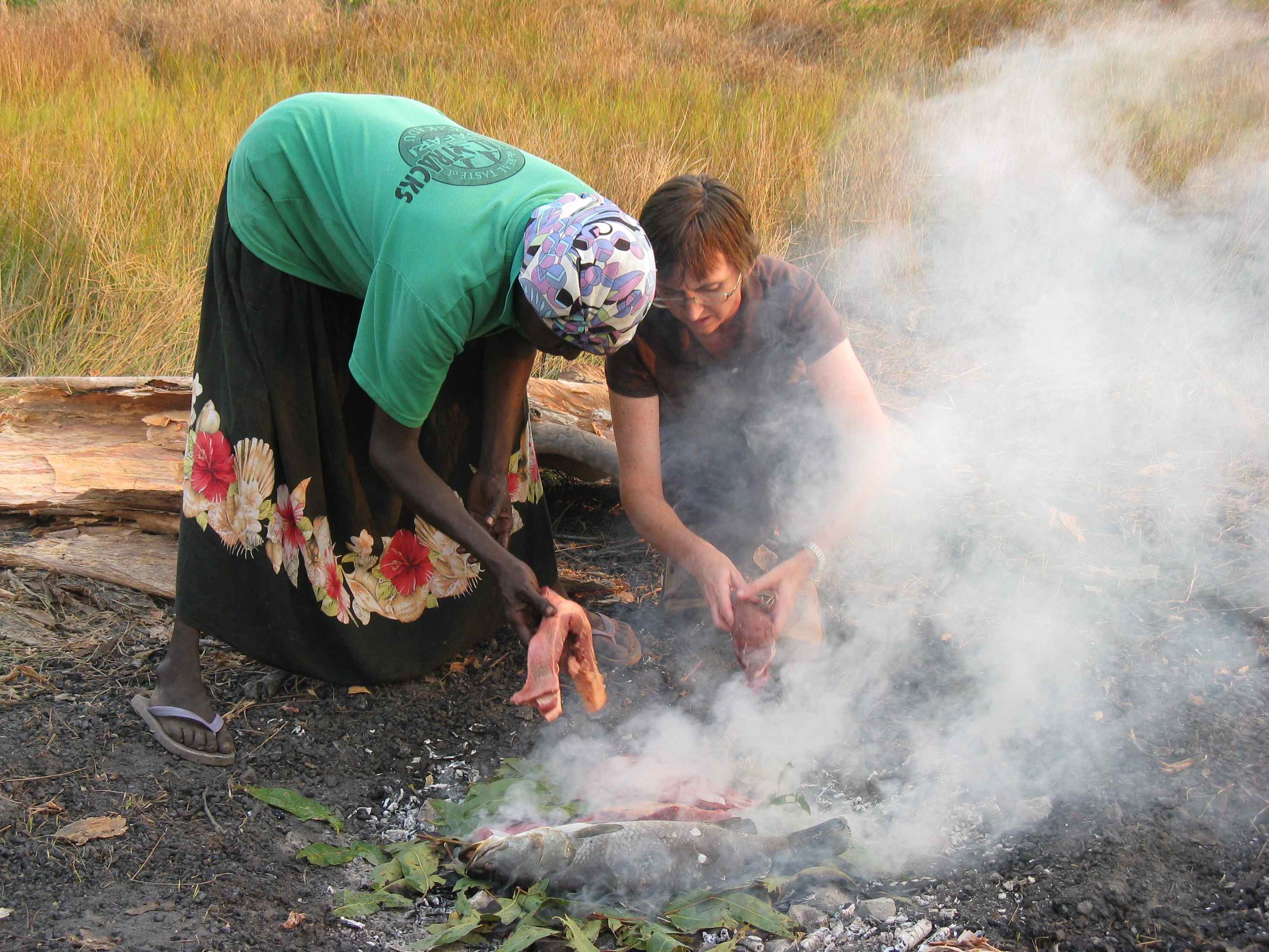
Ground oven cooking, Kakadu

The original barbecue: Ground oven cooking in Kakadu National Park (Photographer: Me)

I wanted to read this for a number of reasons: I like to read about food; I like travel writing; I lived in Virgnia for two years; and I wanted to see what he meant by “barbecue”. The thing about “barbecue” is that in my experience Americans mean something different by it than we downunder do. In the brief introductory notes to Duncan’s piece, Library of America informs us that by the middle of the 19th century regional differences were appearing and that “debates about the best meat (pork for the South, beef for Texans), the proper smoke (cool or hot), the best sauce (thick and tomatoey in the Mexican manner or vinegar-steeped with hot peppers in the manner of the Atlantic seaboard), and the appropriate accompaniments were already beginning to rage”. Duncan, however, was a bit early for this debate so he simply describes what he sees:

The meat to be barbecued is split open and pierced with two long slender rods, upon which it is suspended across the mouth of the pits, and turned from side to side till it is thoroughly broiled. The hickory tree gives, it is said, a much stronger heat than coals, and when it is kindled is almost without smoke.

And, anyhow, he is not specifically interested in describing the cooking itself but in conveying the whole experience. From our 21st century point of view, he seems completely unconscious of the disparity between the black workers slaving over the barbecues and the guests (presumably all white) dancing, eating and drinking. This is not totally surprising, given the period, although William Wilberforce, back in England, would have been full throttle on his abolitionist campaign. Here are some of the ways Duncan describes the black workers:

…a whole colony of black servants …

Servants? Or, slaves?

… black men, women and children, were busied with various processes of sylvan cookery…

“Sylvan” is, to me anyhow, a rather poetic word for forest connoting a sense of romantic idyll that is somewhat belied by the reality of the situation.

Leaving the busy negroes at their tasks – a scene by the way which suggested a tolerable idea of an encampment of Indians preparing for a feast after the spoils of the chase.

A more socially or politically aware writer would probably, even at that time, have seen the irony in this comparison, but I don’t think Duncan did. I’m not trying to play politically correct revisionist games here, but rather reflect on how writing like this can convey meaning that was not necessarily intended at the time. Such writing – in the way it documents practices and attitudes – can be a real mine for researchers!

Duncan then describes the dancing – mainly cotillion – and the dining arrangements. I found it a little confusing when he wrote that “few except those who wish to dance choose the first course; watchfulness to anticipate the wants of the ladies, prevent those who sit down with them from accomplishing much themselves”. That is, they don’t get to eat much. Being “too little acquainted with the tactics of a barbecue, and somewhat too well inclined to eat”, he joins this first course. I had to read this a couple of times before I realised (at least I think I’m right) that “first course” actually means “first sitting”. It appears that when the ladies arise, all are expected to “vacate their seats”. The “new levy succeeds” (that is, as I read it, the next sitting) and many of these diners contrive to sit through the next “signal” to rise, thereby managing to get a good feed!

He also describes the drinking but makes it clear that while there was “jollity”, he saw no “intemperance”. He specifically states that this is so for the members of the judiciary, such as Judge Washington, who were present. Duncan makes such a point of this that I wondered whether he “protesteth too much”. I’m guessing though that it’s more a case of having his eye on his market: there was a strong temperance movement in early 19th century Virginia.

This piece is included in an anthology titled American food writing: An anthology with classic recipes. It would be fascinating to read more…

Charles Dickens, On travel

Charles Dickens, On travel

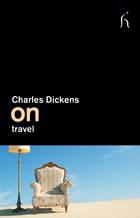
On travel bookcover (Hesperus Press, via LibraryThing)

In the 3rd essay in Hesperus Press’s lovely little volume On travel, which comprises a selection of Dickens’ travel essays, Dickens (1812-1870) makes a reference to Laurence Sterne’s character Yorick. In one of those lovely bits of reading synchronicity, Hungry Like the Wolf posted last week on Laurence Sterne’s A sentimental journey through France and Italy which features said Yorick. In it Yorick lists various types of travellers including Idle travellers, Vain travellers, and Sentimental travellers. Yorick’s type that best suits Dickens would, I think, be his Inquisitive type. However, I think Yorick needed another category to describe a traveller like Dickens: the Observant traveller. (Hmm…I wrote this before checking out the Introduction by Pete Orford. In the first para he praises Dickens’ “talent of observation”. Great minds, and all that!)

There are 6 essays in this slim but rather gorgeously produced volume – don’t you love the allusion to the “armchair traveller” on the cover?:

  • The last cab driver and the first omnibus cab (1836)
  • The passage out (1841)
  • By Verona, Mantua and Milan, across the Pass of the Simplon into Switzerland (1843)
  • A flight (1851)
  • The Calais Night Mail (1863)
  • Some account of an extraordinary traveller (1850)

Reading these reminds me yet again why I love Dickens. I enjoy his acute observation of humankind and his sense of humour. He makes me laugh. Regularly. And then there is his versatile use of the English language. The man can write.

Four of the essays describe train and boat travel, including to America, and to and through Europe. His descriptions of the actual experience of travel and of the various passengers (such as the Compact Enchantress, Monied Interest and the Demented Traveller) he meets on the way are highly evocative. You feel you are on the trains and boats with him because he captures that sense of being tossed about in the sea and of rushing in a train through landscapes and – “bang” (his word) – through stations. But it’s not all sensory – as engaging as that is. There is satire here too – against others, and against himself. For example, in “The Calais Night Mail” he sends up his own love-hate relationship with Calais as well as the behaviour of an English traveller who “thinks it a quite unaccountable thing that they don’t keep ‘London time’ on a French railway”. (It was ever thus, eh?)

The thing about his writing is its diversity – he mixes up his rhythm; he uses allusions, irony and metaphor; he plays with tense and punctuation; and he uses repetition, to name just a few of the “tricks” in his writer’s bag. Just look at the variety in the following examples.

A wickedly satirical description of a man who was transported twice to Australia:

If Mr Barker can be fairly said to have had any weakness in his earlier years, it was an amiable one – love, love in its most comprehensive form – a love of ladies, liquids and pocket handkerchiefs. It was no selfish feeling; it was not confined to his own possessions… (“The last cab driver and the first omnibus cab”)

On a rough crossing to Calais:

I am bumped rolled gurgled washed and pitched into Calais Harbour… (“The Calais Night Mail”)

A description of the Demented Traveller:

Faculties of second Englishman entirely absorbed in hurry. Plunges into the carriage, blind. Calls out of the window concerning his luggage, deaf. (“A flight”)

And then this little pointed comment written in 1863 but alluding to an earlier trip in 1843:

and I recognise the extremely explosive steamer in which I ascended the Mississippi when the American civil war was not, and only its causes were. (“The Calais Night Mail”)

Dickens was, as we realise from the last essay in the collection, more than aware of the horrors of slavery, not to mention the plight of “the fast-declining Indians”. His willingness to express such awareness did not always endear him to Americans but, as Pete Orford writes in the Introduction, Dickens was equally prepared to be satirical of home as abroad.

These essays provide a fascinating insight into how Dickens viewed his world and the people in it, and present wonderful exemplars of his writing. They also demonstrate how widely travelled he was, which, by broadening his understanding of humanity, must have fed his fictional muse too. Orford concludes his Introduction with some lines from the last essay. I can’t really think of a better way to end this than to repeat some of them too. Dickens wrote:

The more man knows of man, the better for the common brotherhood among us all. (“Some account of an extraordinary traveller”)

Some of Dickens’ words and allusions (though there are “notes” in this edition) may be a little obscure now, and some sentence structures are a little complicated to our modern eyes, but if you have any interest in Dickens or travel writing in general, you will enjoy this. I certainly did.

Charles Dickens
On travel
Hesperus Press, 2010
91pp.
ISBN: 9781843916123
(Review copy supplied by Hesperus Press via the LibraryThing Early Reviewers Program)

NOTE: I must apologise for once again hitting the Publish button too early and sending some half-finished gobbledy-gook to your various readers and email accounts. I should either take Tony’s advice and draft in Word or adopt Farnoosh’s recent “Slow down” admonition (to herself), because clearly I’m not getting it right at present! I beg your forgiveness.

James Thurber, The lady on the bookcase

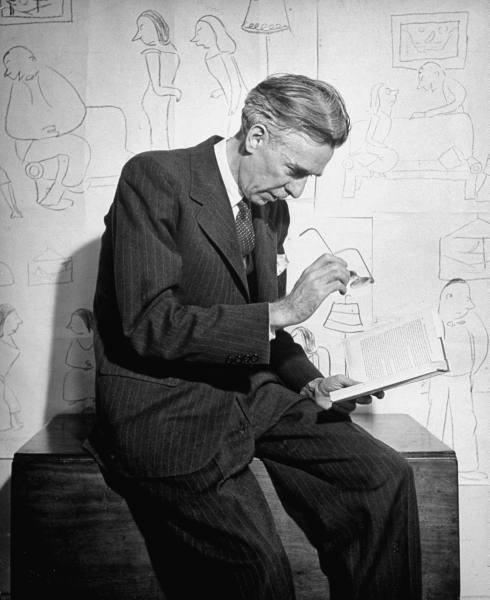
James Thurber, 1945

Thurber, 1945 (Courtesy: life.com, for personal non-commercial use)

If you like to think of yourself as a critic, read this. It is last week’s offering from the Library of America, and is an essay by James Thurber titled “The lady on the bookcase”; it was first published in The New York Times Magazine in 1945 under the title “Thurber as seen by Thurber”. I read it as a general spoof on the art of criticism; the Library of America says he “teases [his] colleagues and editors at The New Yorker.”

The scene is set in the first paragraph when he reports on a cartoonist complaining about being rejected:

“Why is it”, demanded the cartoonist, “that you reject my work and publish drawings by a fifth-rate artist like Thurber?” Ross came quickly to my defence like the true friend and devoted employer he is. “You mean third-rate”, he said quietly, but there was a warning glint in his steely gray eyes that caused the discomfited cartoonist to beat a hasty retreat.

Just this beginning, before I read any more, reminded me of why I had enjoyed Thurber in my baby-boomer youth when many of us read a bit of Thurber. Thurber was a writer and cartoonist, and in this essay he combines the two to poke fun at criticism … and at how editors tend to show a journalistic rather than a critical interest in his work by wanting to know the stories behind his work rather than analysing it.

He writes that:

I have never wanted to write about my drawings and I still don’t want to, but it occurred to me that it might be a good idea to do it now, when everybody is busy with something else, and get it over quietly.

… and, to continue his satire, he talks about “shoving” some of his originals around the floor until they “fell, or [he says archly] perhaps I pushed them, into five separate categories”. He goes on to describe the categories, illustrating each with some of his cartoons:

  • the Unconscious or Stream of Nervousness category
  • the space between the Concept of the Purely Accidental and the Theory of the Haphazard Determination
  • the theory of the Deliberate Accident or Conditioned Mistake
  • the Contributed Idea category
  • the Intentional or Thought-Up category

If you haven’t worked it out by now, you can’t take much of what he says seriously – and that is his point. Don’t, he tells us, try to categorise or apply psychological theories to someone’s work, go for a run instead. Then again, I wouldn’t take this too seriously either, because Thurber is also being disingenuous: in the tradition of the satirist, he sets us up at every point, only to pull us down again. After all, like any creative artist, he wants us to look at and respond to his work.

Have a look at it … I’m sure you’ll enjoy the ten cartoons reproduced even if you don’t want to read the essay.

Rudyard Kipling, An interview with Mark Twain

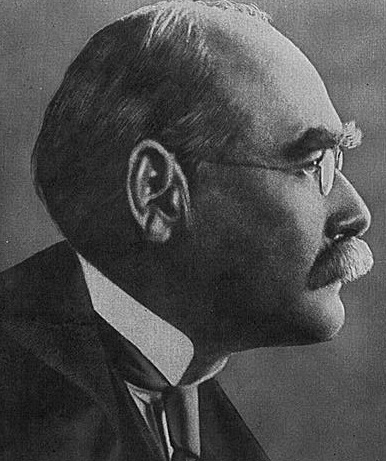
Rudyard Kipling

Kipling, somewhat older than 23! (Presumed Public Domain, via Wikipedia)

How could I resist reading this offering from the Library of America, featuring as it does two giants of the late nineteenth and early twentieth centuries? Both are writers I know well in a superficial way: I’ve really read only a little of their works. This essay, I thought, presented an interesting opportunity to get to know them from a different perspective.

“An interview with Mark Twain” was published in 1890, the year after Kipling, then 23 years old and on his overseas tour to Europe and the USA, interviewed the great man. Twain was 54, and staying in Elmira, NY, at the time. We know from the opening lines that Kipling idolises Twain:

You are a contemptible lot, over yonder. Some of you are Commissioners, and some Lieutenant-Governors, and some have the V.C., and a few are privileged to walk about the Mall arm in arm with the Viceroy; but I have seen Mark Twain … Understand clearly that I do not despise you, indeed I don’t. I am only very sorry for you, from the Viceroy downward …

Clearly this is going to be a positively reported interview! The essay starts though, rather humorously, with the challenges Kipling faced in locating Clemens (as he was known) but, one-third of the way into the essay, we finally meet Twain who, despite his grey hair (that “was an accident of the most trivial”) looked “quite young”.

Kipling’s next comment rather continues his hero-worship – and reflects the way many of we readers think when we think of our favourite writers:

Reading his books, I had striven to get an idea of his personality, and all my preconceived notions were wrong and beneath the reality. Blessed is the man who finds no disillusion when he is brought face to face with a revered writer.

You might think, from all this, that the rest of the interview will be rather hagiographic, with Kipling hanging on Twain’s every words. But, while there is an element of that, Kipling is delightfully self-conscious and there is a lovely sense of like minds engaging. Kipling reports on a conversation that ranges over a number of issues, including copyright, about which Twain has strong feelings, believing that a writer (and his heirs) should maintain control over “the work of his brains” (Kipling’s words) in much the same way as you might own “real estate” (Twain’s analogy). If you search the Internet, you will find a number of references to Mark Twain and copyright. As an (ex) librarian/archivist, I have a complicated relationship with copyright. I believe in abiding by it, I believe that creators need recompense for their work and that copyright is one way they can ensure that, but I also like people to be able to access the works they wish. According to my Internet research, Twain did not seek perpetual copyright, but enough to protect/provide for his immediate heirs. That sounds fair enough to me. And, it sounded fair enough to Kipling, though he was a little tongue-in-cheek in reporting that he saw Twain’s point, because he follows it up with “When the old lion roars, the young whelps growl. I growled assentingly”.

[If you are interested in copyright in the USA, check this timeline prepared by the Association of Research Libraries.]

Anyhow, they move on to discuss Twain’s books, and the possibility of a sequel to Tom Sawyer. Twain, teasingly, suggests that he hasn’t decided, that he could “make him rise to great honour and go to Congress” or he could “hang him”! This was too much for Kipling who says “I lost my reverence completely” arguing that Sawyer “was real”. Ah, fiction and reality I thought! This essay is speaking to me again.

Twain replies that Sawyer “is real … he’s all the boys that I have known or recollect” but then goes on to say that:

Suppose we took the next four and twenty years of Tom Sawyer’s life, and gave a little joggle to the circumstances that controlled him. He would, logically, according to the joggle, turn out a rip of an angel.

He calls this Kismet, and asks whether Kipling agrees. Kipling does to a degree, but suggests that Sawyer isn’t Twain’s property any more, “he belongs to us”. Hmmm…I’m not sure that this is the aspect of “reality” in fiction that interests me, but the discussion (which is not reported further) is interesting, if only because it reflects topics that engaged these two writers.

They they go on to discuss “truth and the like in literature” but the discussion focuses more on autobiography and Twain’s view that no matter how much an autobiographer may lie about him/herself, the “truth” will out. Ain’t that the truth! All of us writing blogs give ourselves away, regardless, I think, of how we may try to “present” ourselves… But, I think I’ll move on from this possibly murky mire!

And then, in a fascinating little discussion of novel-reading comes this point which may interest we bloggers. It’s about assessing novels. Twain says:

You see … every man has his private opinion about a book. But that is my private opinion. If I had lived in the beginning of things, I should have looked around the township to see what popular opinion thought of the murder of Abel before I openly condemned Cain. I should have had my private opinion, of course, but I shouldn’t have expressed it until I had felt the way.

Is he saying what I think he’s saying? A little later in the essay, and on a slightly different topic, Kipling says “and I am still wondering if he meant what he said”! Knowing a little of Twain, I must admit I’m wondering what was “true” in his comments, and what wasn’t … so much of his “truth” is behind rather than in his words.

Twain goes on to talk about fiction and fact, implying that he prefers the latter, that he doesn’t “care for fiction”. He then gives this advice which I love:

“Get your facts first, and” – the voice dies away to an almost inaudible drone – “then you can distort ’em as much as you please”.

I can’t think of a better point upon which to close this post … but, by way of conclusion, I found at The Huffington Post this comment made by Twain, many years later, about the meeting:

I believed that he knew more than any person I had met before, and I knew that he knew that I knew less than any person he had met before–though he did not say it, and I was not expecting that he would. . . . He was a stranger to me and to all the world, and remained so for twelve months, then he became suddenly known, and universally known.

George Jean Nathan, Baiting the umpire

I haven’t posted on the last few Library of America stories, mainly due to lack of time and the fact that they’ve been by well-known writers anyhow. However, the one that lobbed in this week, “Baiting the umpire” by George Jean Nathan, looked rather intriguing and so I read it. It is really an essay, but a satirical one, rather than a short story – and is about the “sport” of baseball.

According to the accompanying notes, George Jean Nathan (1882-1958) was an “acerbic theater critic” and worked, for some time at least, with “his partner in venom” H.L. Mencken.

Mad baseball player

Mad baseball player (Courtesy: OCAL, clker.com)

The essay starts with describing baseball as the “national side-show” and argues that “baiting umpires is the real big-tent entertainment”.  Using word play, hyperbole, rhetorical questions and mock-heroic comparisons (equating baseball with a Spanish bullfight and likening the “bleachers”/spectators to matadors, and in a cultural leap equating baseball promoters with Solons), Nathan goes on to suggest that the only reason Americans enjoy baseball is for the “sport” of baiting (“killing”) the umpire. He provides examples of countries where baseball hadn’t (we are talking 1909 here) taken off, such as Japan, and suggests that the reason for this is that the Japanese accept the umpire’s rulings!

In Australia, however, and here my ears picked up, he said they went about introducing baseball the right way:

In Victoria, Australia, where a determined effort is being made to popularize baseball, the prime movers in the campaign, appreciating full well the important and necessary relation that killing-the-umpire bears to the game, have tried the novel experiment of working up the hostile spirit towards the referee by playing the baseball contests – all or in part – before the huge football crowds. These crowds are demonstrative in the extreme, and it is hoped by the baseball promoters that part of the excess football emotional tumult may, in time, be directed against the umpires, thus insuring the success of the game…

Hmmm…well, 100 years later baseball is, I know, played here but I’m not sure to the extent that you’d call it a success. Maybe our football crowds decided they liked something more to their games than simply baiting the umpire! In fact, from my own admittedly superficial experience, I think it is a more popular game in polite Japan than it is here. His other example of a surefire success for baseball is the Sandwich Islands where … well, that will give away the punchline and I don’t want to do that. Read it … it’s short and will give you a chuckle if nothing else.

Meanwhile, I will conclude with one little observation. As an Australian, I have always been bemused by the notion of World Series baseball in which the only teams playing are from the USA and Canada. Now that would have been an interesting topic for Nathan to explore!

George Orwell, Confessions of a book reviewer

It’s been a while since I wrote on a George Orwell essay so it seemed – while I’m still reading my current read – to be a good time to do another. And what better, given my recent “how to write a book review” post, than to do Orwell’s essay on book reviewing.

Book Stack

Books (Courtesy: OCAL, from clker.com)

Orwell, as usual, makes you laugh. The essay starts off describing a rather seedy sounding person who is either malnourished or, if he’s recently had a lucky break, is suffering from a hangover. This person, Orwell says, is a writer. Could be any writer, he says, but let’s say he’s a reviewer. Yes, let’s, I thought, this could be interesting. This poor reviewer has a bundle of books from his editor who says that  they “ought to go well together”. They are:

“Palestine at the Cross Roads” [the essay is dated 1946! Oh dear], “Scientific Dairy Farming”, “A Short History of European Democracy” (this one is 680 pages and weighs four pounds [the satire is not necessarily subtle!], “Tribal Customs in Portuguese East Africa”, and a novel, “It’s Nicer Lying Down” (probably included by mistake).

(Note: Square brackets, me; round ones, George)

He goes on to say that, for a few of these, this reviewer knows little and so will need to read enough to avoid making some howler which will betray him to the author and the general reader. See my “How to review post” and the injunction to “Be accurate”! Harriet and I were serious! And then he describes how, at the last minute, just before the deadline, the reviewer will produce something:

All the stale old phrases – ‘a book that no one should miss’, ‘something memorable on every page’, ‘of special value are the chapters dealing with, etc etc’ – will jump into place like iron filings obeying the magnet.

Remember what Harriet and I said about adjectives? That goes for clichéd phrases too. He says that “the prolonged, indiscriminate reviewing of books … not only involves the praising of trash … but constantly inventing reactions towards books about which one has no spontaneous feelings whatsoever”.

To remedy this, he suggests that non-fiction books would be best reviewed by an expert in the subject and that novel reviewing could be done well by amateurs, but concludes that this is all too hard to organise so the editor “always finds himself reverting to his team of hacks”.

And then, here comes the crunch. He says:

None of this is remediable so long as it is taken for granted that every book deserves to be reviewed.

His preference is that we should ignore the majority of books “and give very long reviews – 1000 words is a bare minimum – to the few that seem to matter”.  He goes on to say that it is useful to publish short announcements of forthcoming books, but that 600 word reviews (even of books the reviewer likes) are “bound to be worthless”. (Phew, mine here tend to be around 1000 words, give or take! But, I do also think that there is something to be said for succinctness.)

There is a little more but this is the gist. Don’t you think Orwell would be rather fascinated to see today’s rather anarchic world of litblogs where amateur reviewers are doing exactly what he said – and where publishers, even if not newspaper and magazine editors – are starting to see the benefit of people reviewing books they want to review. Of course, he may not like the potential impact on his professional reviewer income stream, but them’s the breaks!

John Muir, A wind-storm in the forests

Giant Sequoia, Yosemite

Giant Sequoia, in the Sierras

Being rather partial to trees, I could not resist reading “A wind-storm in the forests” by Scottish-born American naturalist/enviromentalist John Muir (1838-1914) when it lobbed in by email today as this week’s Library of America story of the week. Anyone who has been to the stunning Yosemite – or visited the peaceful Muir Woods north of San Francisco – will have heard of John Muir.  Not only was he responsible for preserving many wilderness areas including of course Yosemite, but he founded the Sierra Club, an environmental organisation that remains today.

“A wind-storm in the forests” is more essay than story, but perhaps it is best described as a mood-piece: it uses a lot of musical imagery, not to mention sea imagery, religious imagery, and any other imagery that suits his purpose. And that purpose? To convey the grandeur and timelessness of the forests he loves and wants to protect. The story commences with a discussion of trees in the Sierra and how they variously respond to the wind, and then moves onto a description of a particular wind-storm during which he climbed a 100 ft Douglas Spruce to experience the storm first hand:

I kept my lofty perch for hours, frequently closing my eyes to enjoy the music by itself, or to feast quietly on the delicious fragrance that was streaming past.

Muir’s is a typically nineteenth century Romantic sensibility, and his prose is of the purple variety – but gorgeous for all that in its patriotic passion for the trees (“we are compelled to believe that they are the most beautiful on the face of the earth”) of the Sierras:

The waving of a forest of the giant Sequoias is indescribably impressive and sublime, but the pines seem to me to be the best interpreters of winds. They are mighty waving goldenrods, ever in tune, singing and writing wind-music all their long century lives.

AND

…the Silver Pines … wave like supple goldenrods chanting and bowing low as if in worship, while the whole mass of their long tremulous foliage was kindled into one continuous blaze of white sun-fire.

All eight pages or so are written in idolatrous prose like this. According to Wikipedia, Muir found writing hard, feeling that words were not really up to the task. Whether the problem is words or Muir himself, the prose is a little heavy-handed – and yet how wonderful it is to have the writings of such a man. We would, I think, have been the poorer without a written record of his passion.

POSTSCRIPT: Apologies to my Australian readers. I have no idea why, on Australia Day, I have chosen to write about American trees! I will, however, write one on a lovely book of Australian trees soon.