Jane Fletcher Geniesse, Passionate nomad: The life of Freya Stark (Review)

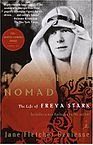
Jane Fletcher Geniesse, Passionate nomad, book coverMy reading group came to read Jane Fletcher Geniesse’s biography, Passionate nomad: The life of Freya Stark, by a somewhat circuitous route – and it started with my blog. One of our members had read my Monday Musings post on 19th century travellers, and suggested that we read a 19th century travel writer. Somehow, as the discussion developed, this morphed into reading a biography of a twentieth century travel writer. As young people say today, whatever!

Some of you probably know of Stark, but to clarify, she was a British-Italian travel writer, explorer/adventurer and historian, who was one of her time’s “most respected experts on the Arab world”. She lived and travelled in the Arabic states from the late 1920s to the mid 1940s, in particular, and was one of the first non-Arabians to travel through the southern Arabian deserts. Amazingly – well, it seems amazing when you’ve read the book and see what she experienced and endured – she lived until she was 100 years old, dying in 1993. Geniesse tells us that her parents both “placed a strong emphasis on stoicism”. She clearly learnt that lesson well!

Stark, Geniesse also tells us, moved among her era’s movers and shakers, including politicians, diplomats and a wide range of intellectuals. Geniesse shows her to be a strong, spirited, canny, resourceful and hard-working woman who took significant risks in order to achieve some remarkable, if not astonishing, feats. This is particularly impressive, given those highly gendered times when women had to fight for independence and recognition. She was, for example, one of very women to be accepted and recognised by the august Royal Geographical Society.

Geniesse traces in excellent, and well-documented detail Stark’s exploration of the Middle East, including, for example, her journeys into remote regions of Yemen which had seen few Europeans before. Unfortunately, the maps in my e-version are impossible to read and I didn’t have time to research every place she visited, so my comprehension of the detail is a little superficial. This excerpt, though, will give you a sense of Stark’s style and approach:

She reentered Luristan on a donkey, draped in native clothing, three Lurs at her side as guides. She bluffed her way past the border guards. (“The great and almost only comfort about being a woman,” she said, “is that one can always pretend to be more stupid than one is and no one is surprised”). (Ch. 8)

She spoke multiple languages, and was prepared to eat and drink what the locals did, sleep where they slept, and respect their beliefs, all of which facilitated her travel into remote, rarely visited lands.

Given the Middle East’s subsequent history, I was more interested in her theory about how the region should be “handled”. It was a theory she started developing when she was quite young, but further expanded over time. She promulgated it to the British and, in 1944 on a bruising British-government-suported lecture tour of the mostly pro-Zionist America. Stark wrote during this trip:

I have been thinking with more and more certitude on the wrongness of all our ways on becoming utilitarian at the expense of human relationships … the human relationship is what counts: and now that I have had time to think it all over, this has come to me so clearly that I feel I can lay hold on it as a definite philosophy and guide.

Respecting people’s sovereignty was a critical point for her, and she believed that any decisions had to be made with the Arabs’ consent. “We musn’t impose solutions,” was her mantra. That view, as we all know now, didn’t prevail.

Concluding the biography, Geniesse argues that while Stark

had not been able to affect British policy in a direct way, she had kept the flag aloft for decency, civility, and compassionate understanding.

Yet, Stark, like most people really, was a complicated person. She achieved a lot, but she also had her moments. One of the strengths of this biography is its even-handed portrayal of its subject. Geniesse shows Stark in all her glory – charming and petulant, wise and imperious, intelligent and petty – and does it with warmth, recognising Stark’s achievement and attraction for others, but also seeing her failings and sorrowing for their impact on her.

Geniesse argues that much of Stark’s paradoxical behaviour stemmed from growing up within an unhappy marriage that had broken up by the time she was 10 years old. She adored her self-centred mother, Flora, and yearned for her approval, but by the time she got it, with her successes in adulthood, the die was cast. She felt insecure about her appearance, and yearned throughout her life to be beautiful. She was also naive about some things, seemingly unaware for example, of the gay men in her midst and, disastrously accepting, later in life, a marriage proposal from one of them.

Stark made long-standing friends, and yet would also use people (and her health) to get what she wanted. She was surprisingly anti-feminist, like some other high achieving women before her, including (predecessor and self-imposed rival) Gertrude Bell. She preferred male company, and was keen to have male bosses (in preference even to being the boss herself, though she still fought for, and won, equal pay for herself from the British government). She was competitive and could be venomous, which her long-suffering but supportive publisher, in particular, tried to tone down.

Geniesse uses primary evidence – Stark’s letters, the writings of others, and interviews with people who knew her – to create her own psychological portrait of the sort of person she thinks Stark was, and why. As readers, we need to be aware that there could be other interpretations, but we can be comfortable, because the end-noting is there, that Geniesse’s picture is thoroughly researched and well-considered.

Geniesse also takes care in structuring her narrative. She starts with a Prologue summarising Stark’s significance, and then in Chapter 1 takes us to 1927/28 Lebanon when Stark was in her mid 30s and on her first trip to the Middle East. Having captured our attention by introducing Stark on the cusp of the grand adventure that became her life, Geniesse returns to her birth and childhood in Chapter 2 and thence tells the story chronologically. She uses foreshadowing, but not over-done, to make links between times and events “(“If Freya could only have known how close she now was to a fascinating life she might have been less depressed by the family responsibilities that again crashed down upon her”) or to focus the narrative (“but this was still a few years off”). Geniesse also finishes some “stories” even though Stark had left the picture, such as what happened post-war to the “ikwan” Stark had established in war-time Egypt to encourage local support for the British, and what happened to her husband after they separated.

In her philosophical book, Perseus in the wind, Stark wrote that:

the art of learning fundamental common values is perhaps the greatest gain of travel to those who wish to live at ease among their fellows.

I’ve really only touched on Stark’s life, and on Geniesse’s biography, but that’s all I can – or should – do. I’d certainly recommend it if you are interested in Freya Stark in particular, or in the Middle East, or in pioneer women travellers.

Jane Fletcher Geniesse
Passionate nomad: The life of Freya Stark
Random House, 1999
ISBN: 9781407053394 (eBook)
Karen Lamb, Thea Astley: Inventing her own weather (Review)

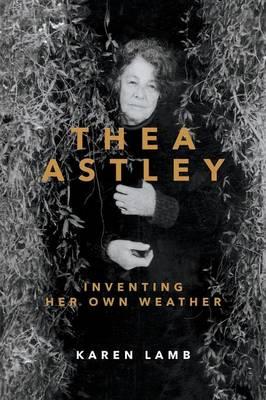
Karen Lamb, Thea Astley
Courtesy: UQP

One of the threads that runs through Karen Lamb’s biography, Thea Astley: Inventing her own weather, is Astley’s ongoing frustration about her work not being appreciated or recognised. On the face of it, this seems neurotic or, perhaps, paranoid. After all, she was the first writer to win the Miles Franklin Award four times, a feat only equalled to date by Tim Winton, and  she won pretty well every other major Australian literary award including the Christina Stead Award for Fiction and The Age Book of the Year Award. Yet, as I have often mentioned on this blog, I would agree that she is under-appreciated. Indeed, winning the Patrick White Award when she was 64 and had published 11 of her 16 books somewhat supports her case. It is awarded to a writer who has been highly creative over a long period but has “not received due recognition”. Lamb quotes her as saying “Ya know what it’s for, it’s for people who fail”! Not quite, if you look at the list of winners, but …

“a writer’s writer”

Why is this? Well, part of it could be gender-based. Astley’s satire and, yes, ferocity were not the fare “expected” of a woman. And part could be because, as author Matthew Condon put it, she’s a “writer’s writer”. This means, I’d say, that she doesn’t pull any punches to prettify her feelings and attitudes, her language is complex and imagistic, her works don’t necessarily neatly fit traditional forms, and she doesn’t dumb down. (It helps to have a dictionary nearby when you read her). But, she is so worth the effort, because she can move you to laughter or tears or just plain anger and shock with her way of expressing the world she saw. You may have heard her four ages of women – “bimbo, breeder, baby-sitter, burden” (Coda) – but what about her description of time as “the great heel”?

“My novels are 90% ME”

Let’s now, though, get to the biography. Why do we read author biographies? Why not just read – and re-read – more of their works? Is it simply a voyeuristic activity or can biographies add something of value to our understanding? And if the latter, what sort of understanding? Is it valid to try to understand an author’s works though his or her life, or, vice versa, to understand the life through the works*? These can be minefields for literary biographers, but they’re minefields Lamb has stepped lightly across. Astley’s statement that “My novels are 90% ME” helped, yet the question is still valid.

How has Lamb done it? For a start, she doesn’t attempt any pop psychology. She presents the story of Astley’s life, noting points of interest, of stress and tension – such as her very strict Catholic upbringing – but she doesn’t labour the point. She lets the reader make most of the assumptions or connections. Similarly, she situates the works in Astley’s time-line, describing what was going on at the time and drawing out themes and concerns – such as those of the outcast and misfit – that recur in her novels. She tracks changes in Astley’s thinking, such as her complex attitude to gender and feminism, through both her life and her work. Astley’s early works from the 1950s and 60s, for example, were mostly written from a male or “neuter” perspective, but later in her career, as times changed, she shifted to a female point of view.

Lamb tells the story, like most biographies, in a generally chronological manner. The book is logically organised into four parts – youth, early career, middle career, and later career – with gorgeously evocative chapter titles most of which come from Thea’s own words. Chapter 2, for example, is “Suspected of reading” from Beachmasters, and Chapter 9’s “I merely crave an intelligent buddy” is from a letter. Underpinning this chronology are recurring themes, including her anxieties about critical recognition and her ongoing battle with publishers to get a fair deal for literary writing; her awareness of her “difficult” style; her persistent focus on and interest in outsiders and misfits, gender, and male-female relationships; her smoking; her long, complicated but loving marriage; and what Lamb describes as her “twin modes of existence”, that is, her adoption of an insider-outsider role or persona. As the book progresses, all these appear and reappear, creating a coherent picture of Astley as a complex, idiosyncratic, frequently funny and often irascible, but oh so very human person.

I was, naturally, interested to read about Astley’s life. I loved that Lamb confirmed the Astley I thought I knew, while filling in the gaps and the backstory that helped me understand her better. I was thrilled, for example, to discover that Astley loved Gerard Manley Hopkins. That made complete sense, considering her style, but how I wish my love of Hopkins had the same effect on me! Anyhow, I was also, of course, keen to read about the writing and the publishing, about the works and how they fitted into her life. Lamb met this intelligently, slotting the works into the chronology, and explaining salient points, as relevant, about what inspired them, who edited and published them, what the critical response was, how they relate to her oeuvre, and so on. I’ll be returning to these – via the thorough index – as and when I read and/or re-read her works.

“It can be lonely at the bottom”

So far I have written mostly, as I should, about the biography itself, but, before I finish, I do want to shine a light a little more specifically on Astley and her work. One of the recurrent issues in Lamb’s book is Astley’s ongoing concern, mentioned earlier, regarding her lack of, or mixed, critical reception. Lamb suggests that, partly to defend herself from critics but partly also because it was how she wrote, Astley described herself as “intensely interested in style”, the subtext being that style was more important to her than plot. In this, Lamb suggests, she was like Patrick White and Randolph Stow. She could be hard on herself, saying early in her career that

It’s a fearful thing to have de luxe standards and be limited by technique and self. I know the country I want to explore but I only seem able to chart its coasts.

Yet she didn’t take (negative) criticism well. This is interesting, given she often opened herself up to it. Perhaps it is partly because she didn’t feel understood. It’s difficult to accept criticism when the basis of that criticism misses the mark, as it often did. Astley, for example, experimented with style and form throughout, but not everyone appreciated that. However, it is also very likely that gender played a role. In 1981 she wrote:

Perhaps it is because I am a woman – and no reviewer, especially a male one, can believe for a split infinitive of a second that irony or a sense of comedy or the grotesque in a woman is activated by anything but the nutrients derived from ‘backyard malice’ … the Salem judgement comes into play and the lady writer is more certainly for burning.

The other point I want to make relates to her themes. Lamb argues that Astley consistently explored outsiders and misfits, and ideas about gender, and male-female relationships, particularly in relation to power and responsibility. Her subject matter may have changed from her early treatment of “teachers, small towns and islands”, and then of suburban life, to wider social concerns about justice, development and indigenous dispossession, but her “obsessions” persisted. I think, as does Lamb, that by the end she’d come full circle, but to a more sophisticated expression, from the lonely, isolated teacher in 1958’s A girl with a monkey to a despairing Janet writing for the last reader in 1999’s Drylands. Such an impressive, tightly focused but never boring oeuvre.

I could say the same about this biography. At just over 300 pages (excluding the end-matter), it manages to be both extensive and intensive. It is tightly focused but never feels like a mere recording of facts. It is honest and affectionate but not hagiographic. It portrays that paradox typical of creators, the self-protective writer who lays herself bare. And it demonstrates that Astley’s concerns are as relevant today as they were when she died in 2004. Lamb’s biography goes some way towards according Astley the recognition she wanted and deserved. May it be just the start.

Lisa (ANZLitLovers) would agree.

awwchallenge2015

Karen Lamb
Thea Astley: Inventing her own weather
St Lucia: UQP, 2015
360pp.
ISBN: 9780702253560

(Review copy supplied by UQP)

* Carol Shields’ biography of Jane Austen is an interesting example, because it’s a case of a novelist writing about a novelist about whom little is known. Shields was upfront about using Austen’s work to fill in the gaps. It worked because she was honest about what she was doing.

Kate Grenville, One life: My mother’s story (Review)

Kate Grenville is one of Australia’s best known contemporary writers, and is one of that small band to have succeeded both critically and commercially. Most know her for The secret river, which was shortlisted for the Man Booker Prize among other awards. I enjoyed that, and the other novels of hers that I’ve read, with my favourite being The idea of perfection which won the, then, Orange Prize. I also loved her non-fiction work, Searching for The secret river, about researching for and writing The secret river. I was, consequently, keen to read her latest book, One life: My mother’s story, when I heard it was to be published this year.

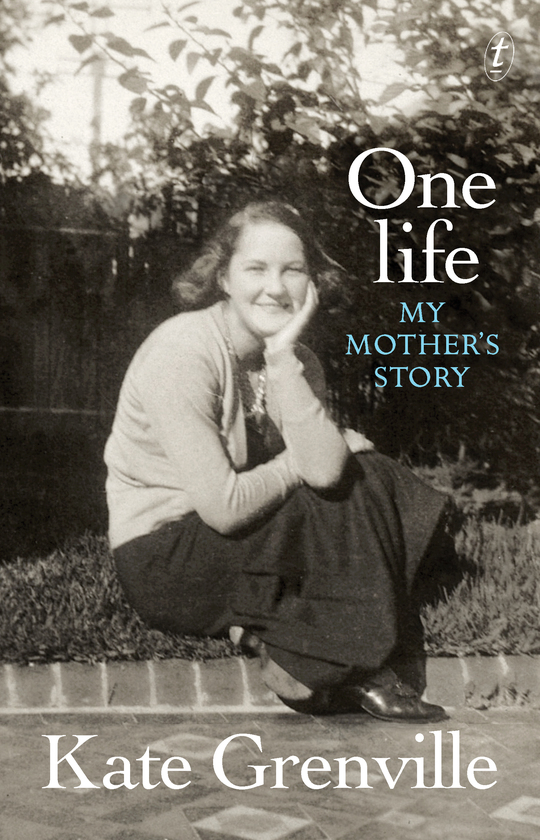
Kate Grenville, One lifeGrenville’s mother, Nance, was born in 1912, and died in 2002. Sorting through her mother’s papers later, Grenville discovered multiple notebooks containing her mother’s attempts to write her story. Nance apparently tried different ways of writing it – including, Grenville quotes, trying “to write it backwards”. However, her attempts always petered out, never going past her early forties “perhaps because by then she felt less need to look back and try to understand”. And so, Grenville’s book sticks to that, stopping (except for a short postscript) when Nance was 38 and pregnant with Kate. Wah! How disappointing not to be able to read about Kate’s childhood!

When I first heard of the book, I thought of Meg Stewart’s fascinating Autobiography of my mother, which I read a few decades ago. Stewart is the daughter of artist Margaret Coen and author Douglas Stewart (who, coincidentally, was born in 1913, one year after Nance). They are, however, very different books, not only because these two women led very different lives – one an artist married to a writer, and the other a pharmacist married to a lawyer – but because Stewart wrote her book in first person, as if she were indeed writing her mother’s autobiography, while Grenville opted for the more expected third person approach of a biography.

Given Grenville’s mother was not an artist or famous in any way, and given, as I’ve already said, she doesn’t write about her writer-daughter’s childhood, why is this book worth reading? Grenville, in her prologue, admits that her mother “wasn’t the sort of person biographies are written about” but argues that her story is worth telling because “not many voices like hers are heard. People of her social class – she was the daughter of a rural working class couple who became pub-keepers – hardly ever left any record of what they felt and thought and did.” The result, as Grenville – ever with an eye on history – says, is that “our picture of the past is skewed towards the top lot”. Grenville argues convincingly that the stories of people like her mother are well worth hearing, though I do think the argument has largely already been won. Many contemporary historians (and others, like museum curators) are, as we’ve seen in the books now being published and exhibitions being created, demonstrably interested in the lives of “ordinary people”.

The paradox, though, is that Grenville’s mother’s story is not at all an “ordinary” one. She was born to rather mis-matched parents, Dolly and Bert, whose marriage had been orchestrated, in 1910, by Dolly’s mother. Nance and her two brothers were “dragged” around the state as their parents worked on farms, in pubs, in the city, in country towns. Nance was sent away to a convent school, where she was very unhappy, wanting always to be part of a family. They experienced the Depression, and her parents lost their pub in Tamworth as a result. At the end of her teens, Nance wondered:

what would have happened if her parents had been unadventurous and contented with their lot. She’d have grown up in Gunnedah, left school at fourteen as they had, married a farmer and had six children … Yes, she wanted to meet someone, get married, have children. She wanted to be happy. But she knew now that she wanted something else as well.

What that “now” refers to is completing her first year of pharmacy studies in 1930. It is this, I think, that proves Nance, while never famous, to be no “ordinary” woman – but one who was “part of the world of the future, not the faded past”. So she becomes a pharmacist, and, after a few romantic adventures, some of which also prove her to be not quite “ordinary”, she meets Troskey-ite lawyer Ken Grenville Gee, the man she married and with whom she had three children.

It was not an easy marriage. Nance fell in love with Ken, but she gradually realised that he didn’t love her. He was a fair but remote man. He acknowledged women and respected Nance’s intelligence. He was happy for her to return to work – particularly when they needed the money! – though he, for all his forward thinking in some areas, never gave a thought to the necessary childcare arrangements or to the housework that still needed to be done. It might be a devoted daughter’s bias, but Grenville presents her mother as a loving woman, with a strong mind and a wonderful can-do attitude.

Running through the story of a woman is also the story of a time and place, of Australia in the first half of the twentieth century. Nance, from a working class background, comes to agree with middle-class-but-socialist Ken that ordinary people never have a chance. She realises that

what people called destiny was really the system everyone was part of. The ones on the top of the pile kept everyone thinking they could get ahead, when in fact ordinary people never had a chance.

War and the Depression taught her that. Nance also faces the challenges of being a woman in a patriarchal society. Not only was there the expectation that she would manage the domestic realm while working outside the home, but she was treated with unfairness and disdain when she applied for her pharmacist licence, despite having the required qualifications and paperwork.

I loved all this, but I did find it an odd book to read, and I think this is due to the voice, to the fact that while it’s not an autobiography it is far more intimate than the usual biography. Kate’s knowledge – or understanding – of her mother’s motivations and behaviour is so intense that I found the third person voice disconcerting at times, all the while enjoying the insights. Grenville’s prose is simple, straightforward, but not plain. Imagery is used with restraint, with the focus primarily on the story and Nance’s thoughts and feelings. Here’s an example, a description of Nance, always wanting family, returning home between her first and second year of pharmacy study:

Nance leaned on the windowsill of her old room, looking up at the washed-out green of the hill behind town. There was nothing for her here. Only that failing hotel, the cranky mother, the father muddled up with some other woman. If this had ever been any kind of home for her, it wasn’t one any longer.

One life is a fascinating, engaging book. Grenville’s insights into her parents’ marriage, and particularly her mother’s thinking, reflect the empathy you’d expect from a novelist. How much comes from Nance’s own words, and how much is extrapolation, is not clear, but the book is convincing – on both the psychological level and as a social history. It is well worth reading for both those reasons.

awwchallenge2015Kate Grenville
One life: My mother’s story
Melbourne: Text Publishing, 2015
260pp.
ISBN: 9781922182050

(Review copy courtesy Text Publishing)

Philip Butterss, An unsentimental bloke: The life and work of C. J. Dennis (Review)

Courtesy: Wakefield Press

Courtesy: Wakefield Press

If you are an Australian, particularly one of a certain age, chances are you studied some C.J. Dennis at school, most likely “The play” from his best-known book The songs of a sentimental bloke. I did, and then, not having read him for decades, I reviewed for this blog his second major book, The moods of Ginger Mick, when it was republished by Sydney University Press. I surprised myself by enjoying it more than I expected. And therein lies the rub. In many ways Dennis is dated. The language of his “larrikins” is unfamiliar to us now, and his people seem to belong to a different place and time. Yet he captivated me. I was therefore interested to read Phillip Butterss’ biography, An unsentimental bloke: The life and work of C.J. Dennis, when Wakefield Press offered it to me.

Butterss’ title sounds a bit cutesy, but it was, we must assume, carefully chosen because it conveys Butterss’ main thesis which is that, contrary to popular opinion, C.J. Dennis was not his character. First, though, a little about the man. Described by The Bulletin in 1913 as Australia’s “unofficial laureate”, Clarence Michael James (or Clarrie) Dennis was born in Auburn, South Australia, in 1876. His father was a hotelkeeper, so much of Dennis’ youth was spent in pubs. He showed interest in writing and the arts in his childhood, and his first poem was published in the Critic when he was 21 years old. From then until his death in 1938 at the age of 61 he wrote constantly, producing a large body of work, of which his published books are just a small component. But, my aim here is not, of course, to recount Dennis’ life, for that would be stealing Butterss’ thunder. Far better that you read the book.

I enjoyed the book, though Butterss doesn’t have the flair of, say, Hazel Rowley whose Franklin and Eleanor I’ve reviewed. By this I mean the book doesn’t have the sort of narrative voice and thrust that we see in “literary non-fiction”. Rather, its style is traditional, plain academic reportage. It doesn’t therefore drive the reader on, but it is, nonetheless, a fascinating read for the picture it provides of Dennis, for its analysis of his work, and for its exploration of wider themes to do with Australian culture and society and the role of the artist.

Like most biographies, the book has a chronological structure, with the chapters falling rather naturally into neat chunks of his life. I particularly liked the chapters “The Laureate of the Larrikin” and “The Laureate of the Anzac” which follow, respectively, the chapters on the writing and publication of his two most famous books, The songs of a sentimental bloke and The moods of Ginger Mick. Butterss’ analyses of how these books both reflect and explain the ethos of their times is thoughtful. He writes that “the Bloke” (published in 1915)

brings into the city and the twentieth century much of the ethos of the nineteenth-century bush legend, values such as egalitarianism, mateship and anti-authoritarianism. But if he represented a metamorphosis for the noble bushman, the transformation was not only of type and location. There was a shift in tone too. The Bloke was not a mythologised hero like the Man from Snowy River; he was an object of gentle humour. (p. 37)

Butterss goes on to explain that the Bloke also represents quite a “make-over” for the larrikin who, in colonial Australia, had been “street thugs”. He argues that this make-over, the way Dennis’ book “holds together incongruous elements”, “allowed it to smooth over deep faultlines and tensions in Australian culture”. He’s reminding us, I believe, that for all our claims of mateship and egalitarianism, we know it has never been quite so rosy in practice.

More poignant is the chapter “Ruin and Reburnishing 1920-1924” in which Butterss discusses changing “fashion” in literature – from “larrikin poetry” to “the more personal and intimate free verse of modernism”, and from poetry to novels. Dennis struggles from this point on to retain his popularity and standing – and it’s sad to see, because the effect is financial and emotional, which results in his returning to heavy drinking. He was one of Australia’s early celebrities, and Butterss shows what this meant – the positives such as recognition and money, and the negatives such as the difficulty of repeating the feat and unexpected things like being impersonated. Dennis was not the strongest of men, and many times in his life he fell on the support of others – including businessman Garry Roberts in his early years, publisher George Robertson (of Angus & Robertson), and his wife Biddy. He did not always treat them well in return.

There is another thread that runs through the book, and that is Dennis’ politics, which changed from a leftist-socialist orientation in his youth to a more conservative one after his success. I had not known about this aspect of Dennis’ life and I enjoyed reading examples of his early political writings in which he railed against free trade that closed factories, industries that chopped down gorgeous gums (“the mighty kings”), and politicians who turned their backs on working people. He might have become more conservative as he aged, but he continued to astutely comment on society and culture. His last poem satirises the ABC’s (Australian Broadcasting Commission) push to standardise Australian voices. Here are a few lines:

I have long sought the reason why all men should be as peas
In speech, in thought, in action, e’en in strife.
Uniformity around them
Serves further to confound them,
Since it washes all the colour out of life.

An unsentimental bloke concludes with two chapters that discuss Dennis’ reputation and legacy. Butterss writes that although Dennis, sales-wise, is “far-and-away the most popular of all Australian poets”, his place in Australia’s literary canon has been “marginal”. He quotes one David Carter who wrote in an essay in Southerly in 1997 that “the right kind of failure”, as exemplified by Christopher Brennan’s symbolist poetry, is often regarded more positively by critics than “the wrong kind of success”. In other words, if your poetry is accessible it is not regarded as good. TS Eliot, he writes, defended Rudyard Kipling saying “that people … are contemptuous of poetry which they understand without effort”. Hmmm … I suspect this is still so today – and it may explain why many people prefer not to read poetry at all. It’s safer that way. Meanwhile, it is somehow gratifying that two of Australia’s most significant and enduring literary-cultural icons – Paterson’s Man from Snowy River and Dennis’ Sentimental Bloke – come from poetry. I thank Butterss for fleshing out the story behind the man behind one of these!

Philip Butterss
An unsentimental bloke: The life and work of C. J. Dennis
Kent Town: Wakefield Press, 2014
287pp.
ISBN: 9781743052877

(Review copy supplied by Wakefield Press)

William Wells Brown, Madison Washington (Review)

William Wells Brown,

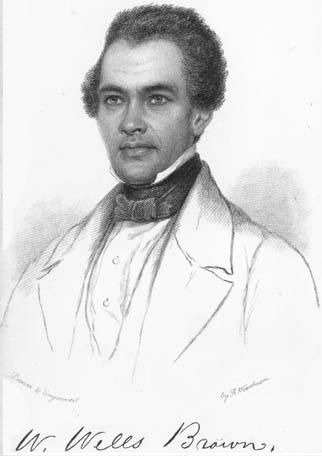
William Wells Brown, 1852 (Courtesy Project Gutenberg, via Wikipedia)

Having recently reviewed Harriet Ann Jacobs’ story “The lover” in the Library of America‘s (LOA) Story of the Week program – and also having seen the movie 12 Years a Slave – I couldn’t ignore William Wells Brown’s story, Madison Washington, when it appeared last month as an LOA offering.

Brown (1814-1884), like Jacobs, was born into slavery. He managed to escape to Canada when he was 19. LOA’s introductory notes tell us that within a decade he’d married, moved to Buffalo, and taught himself to read and write. He lectured against slavery in both Europe and the USA. In 1847, he published Narrative of a fugitive slave which apparently sold so many copies that four printings needed to be done in less than two years. Wikipedia tells me that his novel Clotel, published in England in 1853, is considered to be the first novel written by an African-American. He lived in England from 1849 to 1854, due to the increased risk of recapture posed by the 1850 Fugitive Slave Act.

During and after the American Civil War, Brown continued to publish fiction and non-fiction, earning a reputation as one of the most prolific African-American writers of his time. He apparently actively recruited black Americans to fight in the Civil War, and supported African-American migration to Haiti.

The story published by LOA is just one from his book, The black man: His antecedents, his genius, and his achievements, which contains sketches of the lives of individuals who, Brown writes in his “Preface”,

by their own genius, capacity, and intellectual development, have surmounted the many obstacles which slavery and prejudice have thrown in their way, and raised themselves to positions of honor and influence.

He concludes his Preface with:

If this work shall aid in vindicating the Negro’s character, and show that he is endowed with those intellectual and amiable qualities which adorn and dignify human nature, it will meet the most sanguine hopes of the writer.

The sketch chosen by LOA concerns Madison Washington. But, before I write about that, I must say something about his name. I’ve often been intrigued by how many African-Americans were, and are, named “Washington”. Presumably this has something to do with George Washington, but what exactly? According to the Huffington Post, the 2000 US Census reported 163,036 people with the surname Washington, of whom 90% were African-American. This is apparently a far higher “black” percentage than for any other common name. The article describes a rather complex situation regarding the name. It tells us that during the early post-abolition period, when slaves were allowed to have surnames, many chose Washington. This is most likely linked to the president. However, George Washington had, the article explains, a complicated relationship with slavery, and so the reasoning behind the use of the name is not totally clear. Interestingly, in the case of Madison Washington, his first name is also the name of a slave-owning president? Coincidence?

Now to “Madison Washington” the story! It starts with a description of the man:

Among the great number of fugitive slaves who arrived in Canada towards the close of the year 1840, was one whose tall figure, firm step, and piercing eye attracted at once the attention of all who beheld him. Nature had treated him as a favorite. His expressive countenance painted and reflected every emotion of his soul. There was a fascination in the gaze of his finely-cut eyes that no one could withstand. Born of African parentage, with no mixture in his blood, he was one of the handsomest of his race. His dignified, calm, and unaffected features announced at a glance that he was one endowed with genius, and created to guide his fellow-man.

The story proper then begins six months into his time in Canada when his employer, pleased with his work, realises that Washington is discontented. Upon his enquiry, the story comes out. Washington had a wife with whom he’d planned to escape, but the escape plans had gone awry and he alone had got away. His aim was to work hard, and save the money to purchase her freedom, but he’d begun to realise that it would take him five years to save the required money. So, what does he do? He decides to return to the south, ignoring advice to the contrary and risking recapture, to effect her escape. As Brown reports, “Liberty is worth nothing to me while my wife is a slave”.

Well, the inevitable happens, but Washington manages to escape again, this time by orchestrating a mutiny on the “Creole” which was carrying him and other slaves to the New Orleans slave market.  Via this mutiny, he effected the freeing of 128 slaves, resulting in what is recognised as the most successful slave revolt of the period, more successful than the more famous Amistad mutiny which freed only 53 slaves.

Brown’s telling of the story shows Washington to both a principled and resourceful man – principled because of his treatment of the sailors once the ship was under slave control and resourceful because of the careful planning he’d done to prepare for an escape. It is also, though, rather melodramatic, which is typical of the times, and involves the amazing coincidence of his wife, the “majestic, “beautiful and accomplished” Susan, being on the boat. According to LOA this is “an almost certain apocryphal addition” that appeared in an article a year after the mutiny. It makes for a good story, however!

Interestingly, in 1853, Frederick Douglass wrote a novella, The heroic slave, presenting a fictional account of Madison Washington. Wikipedia, which told me that Brown’s 1853 published Clotel is considered to be the first African-American-written novel written, also states that Douglass’s novella “is now considered the first known piece of African-American fictional literature”. Let’s let Wikipedia fight it out because, in the end, I don’t think it really matters. What matters is that African-Americans were writing and being published, and that we can still access to their works today.

William Wells Brown
“Madison Washington”
First published: In his book, The black man, his antecedents, his genius, his achievements, 1862.
Available: Online at the Library of America or in Documenting the American South

Helen Trinca, Madeleine: A life of Madeleine St John (Review)

Trinca, Madeleine
Madeleine (Courtesy: Text Publishing)

I wanted to read Helen Trinca’s biography Madeleine for several reasons. First, of course, being a reader, I’m interested in biographies and autobiographies of writers. Secondly, Madeleine St John belongs to that group of Australians, half a generation or so older than I am, that has made quite a mark on the literary and arts world. Her friends and acquaintances included Sydney University peers Clive James, Bruce Beresford, Robert Hughes, Richard Walsh, most of whom lived ex-pat lives like she did. Thirdly, her father Edward St John, was a controversial conservative politician (and then barrister) who fought injustice and whom Justice Michael Kirby described as “a contradictory, restless, reforming spirit”. And finally, I was hoping to find out more about what happened to Bruce Beresford’s plan to film her first novel, The women in black. Trinca covers all these bases and more in her biography.

Madeleine was – as Trinca ably, but fairly it seems, demonstrates – a complicated and difficult woman. She could be called a tragic figure if we define that as a person brought down by a flaw in their character or make-up. Trinca’s Madeleine, though, would probably not agree with that assessment. As far as she was concerned, her troubled life was solely caused by her father, “the ghastly Ted”. More on that anon. First I’d like to quote from a letter Madeleine wrote as she was trying to write her first novel:

I somehow feel (not for quite the first time) that life is beyond my capacities … meanwhile am trying to write some fiction, which is abominably difficult & and therefore terrific – but horrifying.

This quote says a lot about St John – about how hard she found life, and about the heightened way she lived it.

Madeleine was born in 1941 to Edward St John (Ted) and his lively, sophisticated wife Sylvette. Sylvette did not, for several reasons carefully explored by Trinca, adjust well to the life of wife and mother. She became an alcoholic and mentally unstable, to the point that Ted, apparently in order to protect his two daughters, placed them in boarding school in 1953. They didn’t understand, and were miserable. The next year their mother took her life, a fact which was not made clear to the girls at the time and which Madeleine never accepted. Ted remarried the next year a women ten years his junior, 27-year-old Val Winslow. Madeleine never accepted this either and at the age of 18 was told to leave home. While she saw and communicated with her family, on and off, for the rest of her life she never reconciled with them and believed to the end that they were the architects of all that was wrong with her life. We will never know the truth of course, and many records have been destroyed. However, while mistakes were made, partly due to individual personalities and family dynamics and partly as a consequence of the childrearing practices and patriarchal attitudes of the time, Ted and Val, Trinca argues, did their best to support Madeleine but she never gave them an inch, never saw things from any other perspective but her own. Tragic, really, however you define it …

… and making her, I think, a tricky subject to write about. Madeleine was, and there is documentation from a variety of sources to support this, a controlling and emotionally erratic friend who would, as one said, “just destroy everything, destroy a relationship”. She was, as we’d say now, high maintenance, and wanted, needed, to call the shots. And yet, people stuck with her, because she was witty, intelligent company, and also because people saw her need. Trinca handles this minefield with a clear, even-handed but sensitive eye, enabling us to feel Madeleine’s pain while being frustrated at her inability to lift herself out of it.

St John moved to London in the 1960s, leaving, more or less by mutual agreement, her first and only husband behind in the USA, and eventually took out English citizenship. She was horrified when, on being shortlisted for the Booker Prize in 1997 for her novel The essence of the thing, she was hailed as an Australian writer. She didn’t want to be aligned with the place, but she was the first Australian woman to be shortlisted for the Booker, so no wonder she was hailed that way.

Trinca’s biography is a traditional, chronologically told one. It’s tight, with little superfluous detail but enough examples to provide a good picture of Madeleine and her life. I particularly enjoyed the chapters covering the writing and publication of her novels. The book is very well documented, using clear but unobtrusive numbers linked to extensive notes at the end. In her acknowledgements, Trinca details what records she had available and where the gaps are. In addition to the oral history St John recorded (covering the first couple of decades of her life), Trinca had access to letters by and to Madeleine (though many were destroyed) and other documentation such as wills, and obituaries written by those who knew her. Trinca also interviewed many of the significant people in her life. I was intrigued to discover names familiar to me in other contexts, such as filmmaker Martha Ansara. The older we get, it seems, the more we discover our paths have crossed in interesting ways with others.

If you need any proof that Madeleine is worth reading, Clive James’ statement made in 2006, the year she died of emphysema, may convince you:

Sometimes, when I’m reading one of the marvelous little novels of Madeleine St John, part of whose genius was for avoiding publicity, I think the only lasting fame for any of the rest of us will reside in the fact that we once knew her. (quoted by Trinca from his memoir North Face of Soho)

A slight exaggeration perhaps, given who the “us” are, but James clearly believed that this complex late bloomer who produced four novels in six years deserved more recognition than she was getting. Thanks to Text Publishing, all four of her novels are back in print and we have this thorough and highly readable biography. All we need now is to see The women in black in film!

Helen Trinca
Madeleine: A life of Madeleine St John
Melbourne: Text Publishing, 2013
280pp
ISBN: 9781921922848

(Review copy supplied by Text Publishing)

Rod Howard, A forger’s tale: The extraordinary story of Henry Savery, Australia’s first novelist (Review)

Rod Howard, A forger's tale

Cover: courtesy Arcade Publications

“Name Australia’s first published novelist” is, I think, a question that would trick most Australians at a trivia night. Rod Howard, who wrote the biography, A forger’s tale, about this writer would agree, as would the writer in the West Australian in 1950 to whom I referred a couple of months ago. Henry Savery, in other words, is not a household name in Australia though, as Howard says in his Author’s Note, there are a couple of minor streets and a biennial short story competition named for him which prevent his complete slide into obscurity.

Why is this? Besides describing Savery as “a son of fortune undone by folly and fate”, Howard argues that the book, Quintus Servinton, received little attention during or in the years after his lifetime, partly because “it had neither the ghoulish titillation of a Newgate novel nor the fashionable allure of a society saga”. Moreover, its publication year, 1830, was a time he says “when public debate was dominated by Arthur’s Black Line* – a brutal but farcical attempt to corral the island’s remaining native inhabitants into the island’s southwestern corner”. Howard concludes, in the Author’s Note, that  “once you have become obscure it can be terribly difficult to enter the limelight”.

And so, as was also characteristic of the author’s life, the book’s poor “fate” was the result of a combination of factors – Henry’s own history (about which I’ll talk more next), the work itself, and external issues like the political and social situation of the day.

Who, then, was Henry Savery and how did he come to write the first “Australian-made novel”? He was born in England in 1791, the son of a generally respected country squire and magistrate. His father, Henry claimed, believed his son’s future had been foretold by a gypsy. Unfortunately, much of what the gypsy foretold did eventuate. Henry was three times “in danger of sudden or violent death”, by his own hand it must be said, and he did, at least three times, “undergo great reverses of fortune”, as much by his own poor decisionmaking, particularly regarding money, as by bad luck or the actions of others.

It’s a rather tortuous story characterised by politics, naiveté, poor decisionmaking, loyalty and betrayal. Howard manages to keep the narrative clear, though you do have to concentrate to keep all the characters straight. The Savery Howard presents is intelligent, hardworking, often foolish or imprudent rather than dishonest (though dishonest he was), and sometimes just plain unlucky. Right until near the end, he had influential friends who somehow managed to soften the legal impact again and again of his failures and misdemeanours. Howard’s book, in fact, provides an interesting and useful insight into the often grubby workings of 1820s-1840s colonial Tasmania, albeit through the specific lens of Henry’s life.

Fortunately (for us anyhow), Henry’s life was a colourful one. When young, he apprenticed himself as a gardener, but he was also interested in literature and demonstrated a capacity for business. However, it was the failure of an early business venture and a conviction for forgery that resulted in his being transported to Van Dieman’s Land in 1825 where his career, as it had been in England, continued its eclectic path and encompassed, among other things, various business enterprises alongside newspaper writing and editing.

Henry was, apparently, a good satirist. The columns he wrote anonymously for The Colonial Times while he was in prison in the late 1820s, and which were later published as The Hermit in Van Dieman’s Land, resulted in his employer being tried and imprisoned for libel. Although protected to the end by his employer, Henry of course lost the job. He couldn’t, it seems, take a trick. As soon as he got himself up, something would bring him down. Nonetheless, there were successes, one being that he established the colony’s first vegetable market. That gardening apprenticeship clearly came in handy. Howard writes at one point that “more lyrebird than magpie his situation provided ample scope for reinvention”. How, one wonders, could such a creative, hard-working man come to the ignominious end that he did? I suggest you read the book to find out more!

But now, the novel, Quintus Servinton (available at Project Gutenberg Australia) which was written in 1830 after a stint in gaol for debt. It is an autobiographical novel in which, Howard writes,

Henry had taken the Hermit’s merciless gun, and turned it, with deadeye aim, upon himself.

Henry, himself, writes in his Preface:

Although it appears under this shape,—or, as some may perhaps call it, novel,—it is no fiction, or the work of imagination, either in its characters or incidents. Not by this, however, is it pretended to be said that all the occurrences it details, happened precisely in their order of narration, nor that it is the mere recital of the events of a man’s life—but it is a biography, true in its general features, and in its portraiture of individuals; and all the documents, letters and other papers contained in its pages are transcripts, or nearly so, of originals, copied from the manuscript, which came into the author’s hands ….

In his Author’s Note, Howard writes of the challenges he faced in researching the book due to the paucity of primary source material. He recognises the dangers in mining fiction for fact but he discovered that “many important aspects of Quintus Servinton (subtitled A tale founded upon incidents of real occurrence) could actually be verified as fact”. Fact in fiction, fiction in fact. It was ever thus, eh?

I would love to report that after writing this – our first – novel, Henry went on to have the happy, successful life that he envisaged for himself in his book and as had in fact been foretold by the gypsy, but that’s not quite how it turned out. Henry, described as “a man of talent” by the last judge to try him, ended his days in the notorious Port Arthur gaol.

Despite being published in an unusual, diminutive format, A forger’s tale is a traditional biography. I appreciated the Author’s Note and list of sources at the end, but would have liked an index. This though is a minor quibble. Howard has an engaging style making the book an enjoyable read for anyone interested in Australian literature, colonial Australia, convict stories or Tasmanian history. Thanks Brother Gums for a great Christmas gift!

Rod Howard
A forger’s tale: The extraordinary story of Henry Savery, Australia’s first novelist
Melbourne: Arcade Publications, 2011
197pp.
ISBN: 9780987171481

* The Black Line has been the subject of some recent Tasmanian fiction, including Richard Flanagan’s Wanting and Rohan Wilson’s The roving party.

Brenda Niall, True north: The story of Mary and Elizabeth Durack (Review)

‘Of course we are mad,’ Bet wrote to Mary, ‘but we live in a mad place.’

Brenda Niall's True North
Brenda Niall’s True North (Courtesy: Text Publishing)

The mad place that Bet – Elizabeth Durack – refers to is the Kimberley region of north-west Australia and the book this quote comes from is biographer Brenda Niall‘s True north: The story of Mary and Elizabeth Durack.

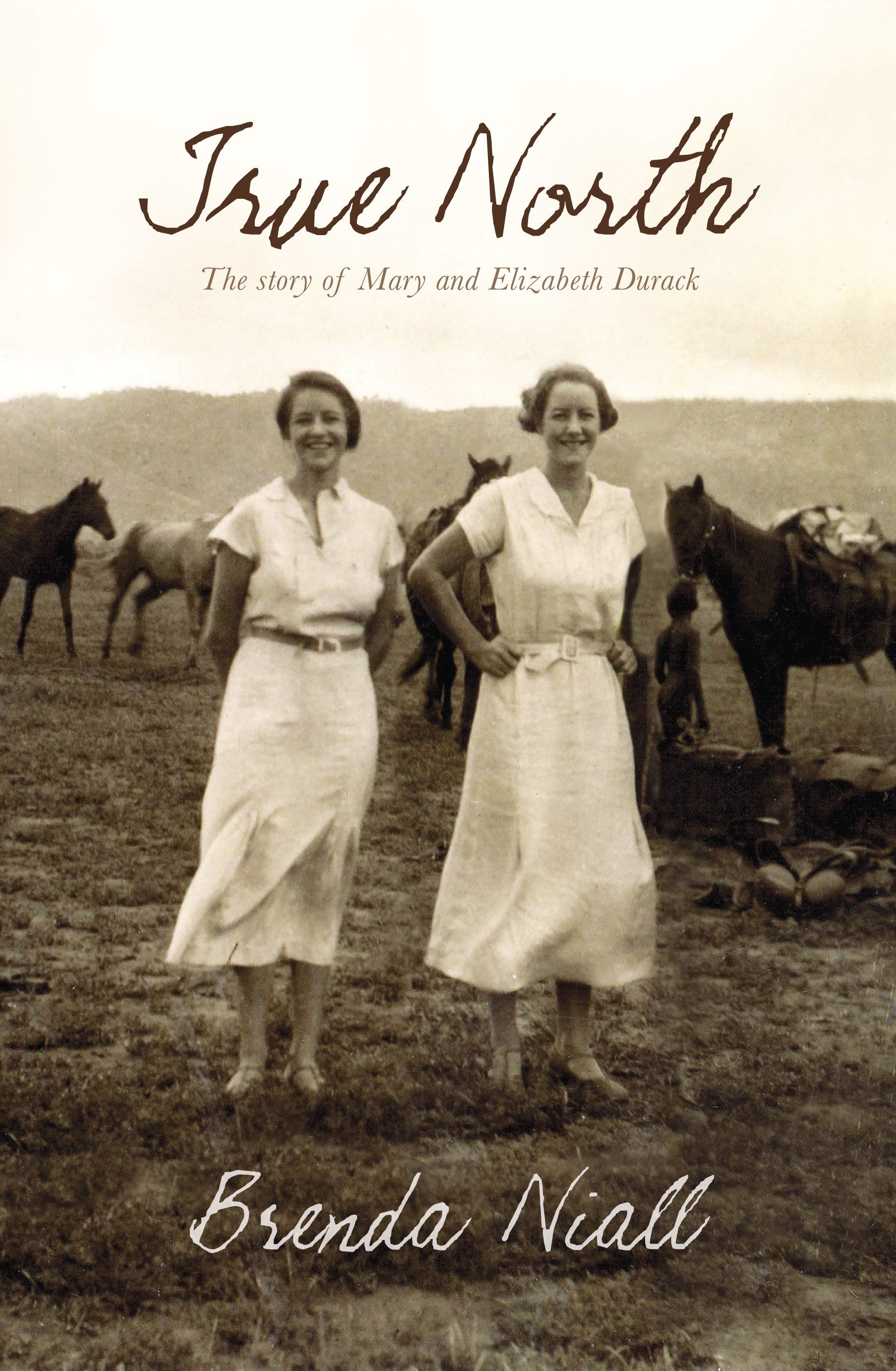
Brenda Niall, along with the late Hazel Rowley, is one of Australia’s best regarded biographers. True North, her most recent book, tells the story of writer Mary Durack (1913-1994) and her younger sister, the artist Elizabeth (1915-2000). I must say that it took me a long time to read this book. I was fascinated by the story but it lacked, in the beginning at least, some of the punch that I found in Rowley’s Franklin and Eleanor: An extraordinary marriage which I reviewed last year. I think this is because Niall’s style here is a little flatter, a little more like reportage, than I found in Rowley’s book. Both books have two people as their subjects and both books have an overriding theme – the Roosevelts’ extraordinary marriage for Rowley and the sisters’ fascination with the remote north for Niall – but, for me, Rowley’s had a stronger narrative drive which resulted in a more cohesive “argument”. However, I did settle into True North and, in the end, enjoyed it for what it did do.

Mary and Elizabeth, for those of you who don’t know, belonged to the pioneer pastoralists, the Duracks, who had  emigrated from Ireland in the 1850s. They farmed in Goulburn (NSW), then moved to Coopers Creek (Queensland) in the late 1860s, before droving their cattle nearly 5,000 kms cross-country to settle in the Kimberleys (WA) in 1882. Mary told this story in her best-selling (now classic) history, Kings in grass castles, and its sequel Sons in the saddles.

Niall’s book, though, is not about that, but about the two sisters and their lives in the 20th century. Mary and Elizabeth spent most of their childhood and youth in Perth, while their father managed the northern properties, returning south each year in the off-season. However, both separately and together spent time on their father’s properties, particularly in their late teens and early twenties. Niall’s title, “true north”, expresses the sisters’ identification with the north. In 1929, for example, Mary said she returned to the north “like a homing pigeon”. Elizabeth described it, a few years later, as “that wild, wonderful country”. The north was, in fact, the inspiration for their creative output.

Niall characterises the two sisters well. Mary was the calmer, more sociable, reliable one who struggled to find time to write between raising children, supporting various family members, and playing a significant role in the literary life of Perth. Elizabeth was more unsettled, more fiery and perhaps more ambitious. She was frequently poor and depended on the family, particularly Mary, for monetary and emotional support throughout much of her life. Theirs was a close relationship, and included several collaborative books for which Mary wrote the text and Elizabeth did the illustrations. Neither made wonderfully successful marriages – and both, despite their challenges, produced significant bodies of work.

Several themes run through the book, but the most interesting one for me concerns the Duracks’ relationship with Aboriginal people. From early on the family employed indigenous people. According to Niall, the sisters’ father, Michael Patsy Durack, “stressed their value as allies”. For the sisters, their early experiences were positive and resulted in a lifelong interest in and awareness of indigenous people and their issues. Elizabeth spoke many years later about “how lovely it was to go walking with them and to learn about the bush” while Mary wrote of being disturbed by “the shadow people in their humpies on the river banks, humbly serving, unknowing, unquestioning”.  Mary wrote a short story, “Old Woman”, about the harsh treatment of an Aboriginal woman by a station wife. It was published in The Bulletin in 1939 and nearly resulted in a libel suit. Elizabeth wrote in a letter, around 1935,

It’s a question of either opening one’s eyes to the situation and grappling with it with whatever instruments lie within one’s reach or shutting one’s eyes to the whole business and getting the hell out of it.

I don’t have time to fully explore it all now, but I was intrigued by this comment on Mary late in her life:

She found the Aborigines surprisingly objective about the past ‘recalling events with no hint of bitterness’, talking about the white people with neither praise nor blame.’

This brought to mind indigenous writer Kim Scott’s That deadman dance, which I reviewed last year and in which he presents (albeit in a novel but borne out by the records, I believe) a similar generosity or openness of spirit. But, back to True north. Niall argues that the Duracks were respectful and sympathetic employers and friends. Big brother Reg in the 1930s was aware of “the social injustice of use of Aboriginal labour”. Mary, in the 1960s, argued persistently for equal pay, and even though, when it came, indigenous station workers were displaced in droves, she still believed in the principle. Ah, that tricky conundrum: principle versus reality, idealism versus pragmatism.  Why are they so often at loggerheads with each other?

Elizabeth, however, did get into hot water later in her life when, going way further than Mary who wrote a poem in the voice of an indigenous woman, she took on the name and persona of an Aboriginal man, Eddie Burrup, as a nom de brush. Niall discusses the issue at some length teasing out artistic and personal issues versus cultural trespass. She is sympathetic in the end to Durack and her somewhat mixed motivations. The situation was certainly complicated and, while some of Durack’s motivations give me pause, I’d rather not pass judgement, except to say that in the late 20th century it was not a wise thing to do.

The insight Niall gives into an albeit specific pastoral family’s experience of and response to their relationship with indigenous people makes this book worth reading. We do of course only get Niall’s presentation of the Duracks’ experience. Besides a few scattered references to indigenous people’s responses, we know little of the indigenous perspective. The sad thing is that we may never know their side, since few people are left to tell it, and not much is likely to have been documented.

Oh dear, I’ve written a lot about one theme and there’s so much more to tell, but I won’t retain you much longer. Two other major themes permeate the book. One revolves around love of and identification with place, with how place can get under the skin and drive one’s life. The other concerns the challenge women creators face in serving their art while juggling families and the need for financial support.

While I didn’t find Niall’s book as compelling as I’d hoped, the more I think about it, the more I appreciate what she has attempted to do. The Duracks’ story is a complex and somewhat contradictory one. Mary, Elizabeth and their brothers were the children of a “cattle king”, and being such their public image was “one of effortless privilege”. The reality was, in fact, rather different – and it resulted in lives that were challenged and challenging. Niall’s book will not, I suspect, be the last we hear of them – but it makes a valuable contribution.

Brenda Niall
True North: The story of Mary and Elizabeth Durack
Melbourne: Text Publishing, 2012
Kindle edition
272pp (Print ed.)
ISBN: 9781921921421 (eBook)

Hazel Rowley, Franklin and Eleanor: An extraordinary marriage

First Family of the United States

Roosevelt Family, 1919 (Courtesy: Franklin D Roosevelt Presidential Library and Museum, via Wikipedia

I wonder what would make an Australian biographer decide to write about an American couple? And I wonder, having now read Hazel Rowley’s Franklin and Eleanor: An extraordinary marriage, what she would have made of, say, Joseph and Enid Lyons, Australia’s own political power couple. Unfortunately we’ll never know as Rowley died just around the time this, her latest biography, was released. There is, of course, good reason for writing this story: Franklin and Eleanor are an interesting couple, and they did have an impact on the international stage, as well as their national one.

In her acknowledgements at the end of the book, Rowley writes:

I learned quickly that all sources, both primary and secondary, were unreliable. There was so much that could not be said, even in private letters…

Therein lies the rub for the would-be biographer of Franklin and Eleanor Roosevelt. There’s a lot of primary source material available. They wrote copiously to each other and to others, others wrote copiously to them and to others about them. There are diaries written by many in the Roosevelt circle. There’s Eleanor’s newspaper column, My Day, which she wrote for nearly three decades. And there are memoirs, interviews, and sundry other items documenting their private and public lives. Indeed, even though it’s known that some significant letters were destroyed, the biographer of Franklin and Eleanor is challenged by a surfeit of records, unlike those poor biographers of Jane Austen who try to make a lot out of what is a rather small historical record.

And yet, there are still gaps. This is, in the end, what makes fact different from fiction, isn’t it? When you are writing about real people you cannot know everything in their hearts, you cannot be sure of their real motivations, and so whatever biography we read, no matter how thoroughly researched and well written it is, there are things we will never know. With fiction – and maybe I’m being a little ingenuous – the character only exists in the author’s mind and on the page. Whatever the author tells us is all we can know and we must work with that …

Enough intro, let’s get to the book. Franklin and Eleanor: An extraordinary marriage is an extraordinary read. The research Rowley did was clearly comprehensive – as the endnotes demonstrate. Rowley takes, she says, a different tack to the other biographies out there by choosing to focus specifically on the marriage. Her thesis is that it was not simply a patched up compromise (after Franklin’s betrayal with Lucy Mercer) or simply a political marriage, but “a joint endeavour, a partnership that made it possible for the Roosevelts to become the spectacular and influential individuals they became”.

And that’s certainly how she presents it … and, moreover, how the evidence she presents suggests it was, though we’ll never know, really, what interior compromises the couple made in terms of their personal happiness. Eleanor was devastated by Franklin’s love affair with Lucy Mercer in 1918, and divorce was apparently mentioned. Threats of disinheritance and of loss of his political career plus, it seems, his love for Eleanor resulted in reconciliation and the marriage continued. However, it did shift gear, particularly after Franklin’s polio attack in 1922, and began to encompass a variety of “romantic friendships” for both. Eleanor wrote, many years later in her book You learn by living that

You must allow someone else to meet the need, without bitterness or envy, and accept it.

That tells us, I think, that the “new” marriage was not easily come by. But it also tells us that it was come by. And so, in the mid-1920s during Franklin’s “recovery” from polio,

Franklin had Warm Springs [resort bought by FDR]; Eleanor had Val-Kill [cottage]. Franklin had Missy; Eleanor had Nancy and Marion. Both had Louis Howe.

The fascinating thing about the Roosevelts is the loyalty they inspired in the people who worked with them. Many of the long-standing friendships and relationships chronicled in the book are with the secretaries, body guards, campaign managers, journalists who were in their employ or worked alongside them. There are stories galore in the book about how they opened their homes, including the White House, to others, enjoying communal living way before the 1960s.

The book is, as I’ve already mentioned, well-researched. Most of what Rowley tells us appears to be based on primary records (that are well documented in the extensive endnotes at the back of the book), and she occasionally indicates when she thinks the “facts” have been modified with an eye on posterity. But there are also times when she makes assumptions, such as her belief that Franklin and Lucy did not have a real “affair” because they had little opportunity to be alone; because Lucy was Catholic, single and probably a virgin; because they would have feared pregnancy; and so on. All logical enough but the facts aren’t known.

While the book is about their marriage, we don’t learn a lot about their parenting style. However, their political life is told at a general level – FDR’s New Deal, CCC and Lend-Lease programmes, his relationship with Churchill, and Eleanor’s political works including her involvement in the creation of the United Nations. We learn a little of how Eleanor’s more radical ideas were tempered by the supportive but more political Franklin. I loved a government official’s description of Eleanor at the United Nations General Assembly:

Never have I seen naiveté and cunning so gracefully blended.

As a 21st century reader, I was also interested in the behaviour of the press and how the extent of FDR’s handicap was either hidden from the press or, sometimes, hidden by the press from the public:

From today’s perspective, it is astounding that the press stuck to the rules. Even journalists who disliked Roosevelt respected the dignity of a handicapped man.

They weren’t perfect though. Towards the end of his life when he was sick and convalescing in the South, FDR was driven in his car one day in front of the press simply to halt the rumours that had started to fly. He apparently said:

Those newspapermen are a bunch of God-damned ghouls.

Little did he know!

It’s a great read – for its analysis of the “extraordinary marriage” and for its picture of the times. I thought, as I read of Eleanor’s debut early in the book, that her young womanhood was somewhat close in time and place to the women who populate Edith Wharton’s novels, but Eleanor, through either luck or good judgement, escaped the lives and fate of those characters. How lucky, really, for the world that she did.

Hazel Rowley
Franklin and Eleanor: An extraordinary marriage
New York: Farrer, Strauss and Giroux, 2011
345pp.
ISBN: 9780374158576