Marie Younan with Jill Sanguinetti, A different kind of seeing: My journey (#BookReview)

In many ways, Marie Younan’s A different kind of seeing: My journey is a standard memoir about a person overcoming the limitations of her disability which, in this case, is blindness. It’s told first person, chronologically, from her grandparents’ lives through her birth in Syria to the present when she is in her late 60s and living in Melbourne. However, there are aspects of her story which add particular interest, and separate it, in a way, from the crowd.

One of these aspects is that Younan’s story is not only a story about blindness, but about migration and cultural difference. Younan is Assyrian, and was born, the seventh of 12 children, in the small village of Tel Wardiyat in northeast Syria. Her maternal and paternal grandparents moved, variously, through Turkey, Iran, Russia, Greece and Kurdistan escaping genocide and persecution before they all ended up in Tel Wardiyat. In her own life, Younan’s family moved to Beirut, but with some of the family having already migrated to Melbourne and with civil unrest increasing in Lebanon, more of the family applied to migrate to Australia. Younan herself was initially rejected because of her blindness, so, while her parents left for Melbourne in 1975, she returned to Syria, before moving to Athens to an older sister. Finally, in 1978, and now in her mid-20s, she was granted a visa for Australia joined her parents and family. (What a kind nation we are!)

If this wasn’t enough challenge, Younan’s life was also affected by her conservative upbringing. The book starts with a little prologue chapter describing how, at the age of 7, she came to properly understand her difference, that she is blind:

it dawned on me that there was a ‘thing’ called seeing that everyone else could do except me […]

It was the day my life as a blind person began.

We gradually come to realise that Younan was, as a child, doubly disadvantaged, because while she was brought up lovingly, nurtured by parents and siblings, she was excluded from so much that could have helped her develop as a person. She was not allowed to go to school; she was not allowed to go to big family events like weddings; and when a doctor suggested a corneal transplant for her when she was 10, her grandmother and father refused, because they didn’t believe such a thing was possible. Further, when she was 12, a relative offered to take her to a boarding school for blind girls – so she could “learn something and grow up with knowledge” – but her grandmother and father again opposed it. Her father said,

‘I’ve got 12 children, and I’m not sending one to boarding school, especially if she’s disabled.’

She was heartbroken, asking her mother why not. She didn’t “know anything about the world, or about life”, and badly wanted to. Yet, she expresses no bitterness in the book towards her family. Indeed, she dearly loves and respects them.

Anyhow, she arrives in Australia, highly dependent on her family and functionally illiterate.

I have spend a lot of time on this first part of the book because not only is her early life so interesting in its difference from my own life, but because it lays the groundwork for the astonishing changes she made in her life, with the help and inspiration of others, after her arrival here. I’m not going to detail all that. I’ll simply say that, largely through the mentorship of a man called Ben Hewitt (to whom the book is dedicated), she was introduced to various services, organisations and people that resulted in her learning to read; learning Braille; studying psychology and later interpreting; travelling around Victoria speaking on behalf of the Royal Victorian Institute for the Blind; and working as an interpreter, including for refugees through Foundation House. It’s an amazing trajectory – and one told quietly, and with humility and respect for her family and for all who helped her on the way.

It’s not surprising that she’s been described as “Ben’s biggest challenge and his best success story”. His role in encouraging her, in turning around her thinking from “I can’t” to “I can” cannot be underestimated, because, by the time she met him, Younan had a desire to learn but very little confidence in her ability to do so.

For all its straightforwardness, though, her story does have a little mystery. Younan was not born blind, but became blind when she was a few months old. Just what caused her blindness is a little question that runs through the book, and I’ll leave it to you to discover, but well-intended actions by a much-loved grandmother were involved. It’s a heartbreaking story of mistakes, accidents and missed opportunities, but Younan, if she resents any of it, has the grace to focus on what she has, not what she hasn’t or what might have been.

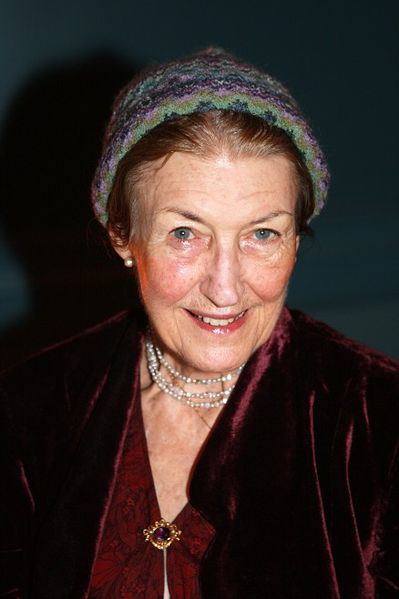
Now, you may have noticed that this book was written “with” Jill Sanguinetti, who has appeared here before with her own memoir. Younan met Sanguinetti around 1988 at the Migrant Women’s Learning Centre, when she joined sighted migrant women in a Return to Learning class. Sanguinetti was the teacher, and explains in the her Introduction to the book how she and Younan had stayed in touch after the class finished. Some years later, they “decided to work together to write the story of Younan’s life and educational journey”. Younan is, she writers, a “mesmeric storyteller”, but with one thing and another, it took 8 years to finalise the book. There were “many cycles of telling and writing, re-telling and re-writing”, and it shows in the end product, which is tight and keeps focused on the main theme of Younan’s journey from a dependent, innocent young girl to the independent achiever she is today.

A good – and relevant – read.

Challenge logo

Marie Younan with Jill Sanguinetti
A different kind of seeing: My journey
Melbourne: Scribe, 2020
214pp.
ISBN: 9781922310256

(Review copy courtesy Scribe.)

Bill curates: Best Young Australian Novelists

Bill Curates is an occasional series where I delve into Sue’s vast archive, stretching back to May 2009, and choose a post for us to revisit. Today, what I’d like to know is where do all the Best Young Novelists go? Emily Maguire, who’s featured in this post from 2013, wrote one about Gundagai a few years back that was well received (Ok, I criticised some of her truckie stuff), and Romy Ash – I know the name, but where are the others? 

______________________________

My original post titled: Monday musings on Australian literature: Best Young Australian Novelists

Back in May, the Sydney Morning Herald (SMH) announced its Best Young Australian Novelists awards. They have been doing this for 17 years, though I only became aware of them a few years ago. They are usually announced at or to coincide with the Sydney Writers Festival.

The judges this year were Marc McEvoy, SMH Literary Editor Susan Wyndham, and Melbourne author Kristin Krauth whom I’ve only become aware of through the Australian Women Writers Challenge. To be eligible, writers have to be “35 years or younger when their book is published”. So, the award is called “Best Young Australian Novelists” but it is apparently granted on the basis of a specific book.

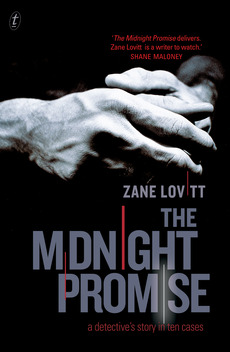
Zane Lovitt, Midnight Promise

This year’s winners are:

  • Romy Ash whose Floundering was short-listed for this year’s Stella Prize, Dobbie Literary Award, and Miles Franklin Literary Award, among others. An impressive achievement for her debut novel. She has also written short stories, and I’ve read one, “Damming”, which was published in Griffith Review Edition 39. I have not, though, read Floundering. It apparently explores “the menace of a hostile landscape”. I’m fascinated by the fact that the outback continues to be a significant presence or theme in Australian literature. Ash argues that while writing about the outback may seem a cliche, the point is that much of Australia is “not benign”. That surely is the point, and is what makes it so rich with dramatic possibility.
  • Paul D Carter for Eleven Seasons which won the 2012 Vogel Literary Award and was shortlisted for the UTS Glenda Adams Award for New Writing in the 2013 New South Wales Premier’s Literary Awards. The novel is apparently about “boys obsessed with football and the men who live by its rules”. Sounds like one that would be interesting ro read in the context of Anna Krien’s Night Games which I reviewed last month. Interestingly Carter’s day-job is teaching English in a Melbourne girls’ school.
  • Zane Lovitt whose Midnight promise I have – woo hoo – read and reviewed here. It’s more a collection of interconnected short stories, but there is a loose narrative thread running through it following the career of its  private detective protagonist.
  • Emily Maguire for Fishing for tigers. Maguire, unlike most of the winners, has quite a few books, including three other novels, to her name, and has won the Best Young Australian Novelist award before. She teaches creative writing, and it sounds like she’s well qualified to do so, doesn’t it? Fishing with tigers was inspired by Grahame Greene’s The quiet American, and is about “divorcee Mischa Reeve, 35, whose affair with Vietnamese-Australian Cal, 18, upsets her friends, including Cal’s father, Matthew”.
  • Ruby J. Murray whose Running dogs was, like Carter’s Eleven seasons, also shortlisted for the UTS Glenda Adams Award for New Writing in the 2013 New South Wales Premier’s Literary Awards. I hadn’t heard of Murray, I must admit, but this book sounds interesting. It’s set in Indonesia, which is a significant country for Australia, and like Maguire’s Vietnam-located Fishing for tigers, it is about an expat Australian aid worker. Murray, who worked in Indonesia in 2009, was horrified at how little Australians knew (know!) about Indonesia despite its importance to us economically and politically, not to mention being a major holiday destination for Australians.
  • Majok Tulba for Beneath the darkening sky. It, like Maguire and Murray’s books, is set outside Australia, in this case, in Sudan. And, like Romy Ash’s Floundering, it was shortlisted for the Commonwealth Book Prize. It’s narrated by an 11-year-old village boy and is “about child soldiers in Africa”. It’s fiction. Tulba says he used some experiences he and his brother had, but he was not himself a child soldier. Apparently Sudanese rebels tried to recruit him but he “failed the test – he was shorter than an AK-47 assault rifle“! Lucky him, eh?

They sound like an interesting bunch of authors and books, don’t they? And, I’m rather intrigued that half of them are not set in Australia, which reflects our increasingly multicultural society. It’s good to see our literature recognising this.In 2012, only three awards were made – Melanie Joosten for Berlin Syndrome, Jennifer Mills for Gone (which is waiting patiently in my shelves to be read), and Rohan Wilson for The Roving Party. Past winners have included Nam Le, Christos Tsiolkas, Chloe Hooper and Markus Zusak.

___________________________

Bill is right about Emily Maguire. In fact I have read and reviewed the book he mentions, An isolated incident (my review), as has Bill (his review) as you might have guessed from his comment. Moreover, she has a new book coming out this year, Love objects. I also wrote a second post about this award in 2020. But now, over to you …

Have you read any of these authors? If so, we’d love to hear what you’ve read and think.

Bill curates: Ruth Park

Bill curates is an occasional series where I delve into Sue’s vast archive, stretching back to May 2009, and choose a post for us to revisit. This is a most enjoyable project as I read every post and usually the comments too. Which is why I’m still only up to Oct. 2010. Today, because I can, I’ve chosen an AWW Gen 3 post on Ruth Park which I had previously overlooked.

______________________________

My original post titled: Monday musings on Australian literature: Ruth Park

The muddle-headed wombat by Ruth Park, book cover

For a New Zealander, Ruth Park is a very popular Australian! Not only did she write the much-loved (and studied) Harp in the south trilogy, but she also wrote the hugely popular (in its time) radio serial The muddle-headed wombat, was married to the Australian D’Arcy Niland (now deceased) who wrote The shiralee, and is mother to children’s author-illustrators Deborah and Kilmeny (now deceased) Niland. Ruth Park also won the Miles Franklin Award with her Swords and crowns and rings, and wrote two very popular autobiographies, Fence around the cuckoo and Fishing in the Styx. And this is not all – or even all of the best – that she’s produced in her long career.

Park was born in New Zealand in the early 1920s and first came to Australia in 1940 when she met D’Arcy Niland. She writes that Australian writer Eve Langley*, with whom she had a longstanding friendship, said of Niland:

‘That’s a good face … Do you know what it is saying?’
‘No, what?’
‘It says “Take me or leave me.” I like that.’

So apparently did Park. She returned to Australia in 1942 to work as a journalist, and married Niland. They worked at various jobs in rural New South Wales for some years before Park’s stories gained the attention of the Australian Broadcasting Commission (ABC) resulting in their decision to try to make a living from free-lance writing. They wrote, and wrote, and wrote – anything that would earn money. They wrote, for example, short stories, genre stories (such as romances and westerns), radio talks and radio plays, scripts for radio comics, all the while honing their skills for their more serious writing goals. And they lived during these early years in Sydney’s inner city slum, Surry Hills.

These experiences of living in rural areas and city slums are clearly evident in Swords and crowns and rings (the story of the dwarf Jackie, and his love Cushie Moy) and the Harp in the south trilogy (the story of the Darcy – ha! – family). The thing I love about these books – both of which span the first 4-5 decades of the twentieth century – is the way Park explores gritty issues like poverty, abortion, religious bigotry, unemployment and illness with a psychological and social realism that also encompasses warmth and humour. Her main characters tend to be the quintessential Aussie battlers, but their concerns transcend time and place. It’s not surprising, really, that these works keep being read, re-published, set for study, and adapted for television and film.

Realism though is not the only string to Park’s fictional bow. She wrote in several “genres” for a range of audiences, including fantasy for children. Her Muddle-headed wombat stories ran on the ABC Children’s Session from 1957 to 1971. I have to say that I never have really been one for anthropomorphism, and have read few children’s classics featuring animals (no, not even The wind in the willows) but even I would tune in for the wombat! Park also wrote a children’s time-travel fantasy Playing Beatie Bow, which is taught in schools and has been made into a film.

And yet, for all this, I’m sure she is little known outside Australia … if I am wrong, please let me know!

In the meantime, I will conclude with her description in her first autobiography, Fence around the cuckoo, of her first sighting of Australia as she arrived by boat:

What I saw were endless sandstone cliffs reflecting the sunrise. A chill ran over my skin, my ears buzzed as they had once done when I was about to experience uncertainty about something as yet unknown. The sea fled south, its malachite green changing to beaming blue; the sky was sumptuous with a sun hotter than I had ever known.

This was my first glimpse of Australia Felix, the ancient, indifferent, nonpareil continent that was to become the love of my life.

Ruth Park is not one of those ground-breaking writers who makes you go, wow!, but  she is an excellent story-teller who has an enviable ability to create and develop memorable characters who confront the real “stuff” of life. You could do far worse than read her if you want an introduction to Australian literature. If I haven’t convinced you, read Lisa at ANZLitLovers and Tony of Tony’s Bookworld on Harp in the South, and kimbofo at Reading Matters on her “Top 10 novels about Australia”.

*Park mentions Langley (whom I reviewed early in this blog) several times in Fence around the cuckoo. One concerns Park’s decision to stay with Eve to escape a Peeping Tom uncle but, when she arrived at the windmill in which she believed Eve to be living, she found no Eve but another woman who had heard of Eve but not for some years. “What had happened to that weird girl?”, the new windmill resident wondered. Poor Eve. She was indeed a bit weird and had a rather sad life, but that is another story.

___________________________

Book cover

It’s interesting for me to re-read these old posts of mine, and think about how I’d write them now! Regarding Park, my admiration has only grown for her warmth, humour and abiding sense of fairness. Check my Park posts here.

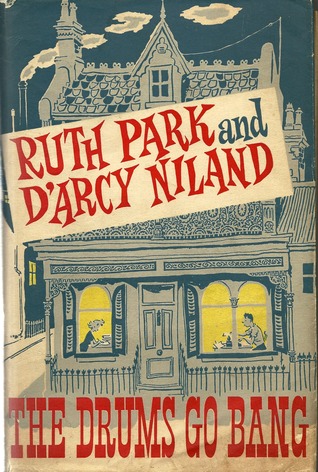
But, back to Bill. He says he’s not a fan of Park’s autobiographies but he does recommend, whenever he can, the Park/Niland memoir The Drums Go Bang, which we have both reviewed (Bill’s review) (my review). I enjoyed her autobiographies, but The drums go bang is very special.

Are you are Park fan? If so (or if not), we’d love to hear your thoughts.

Bill curates: Charles Dickens and Australia

Bill curates is an occasional series where I delve into Sue’s vast archive, stretching back to May 2009, and choose a post for us to revisit.

I’m such a fan of Monday Musings – I guess we wouldn’t be here if we didn’t all enjoy talking about books, and writing, and authors, and translators, and publishers – that all the posts that jump out at me, seem to be MMs. From Sept 2010 Sue discusses the Australianness of an author who was never in Australia. As Hannah Gwendoline D’Orsay Tennyson Bulwer [Last Name] wrote in Comments “I had no idea Dickens had such a connection with Australia.”

______________________________

My original post titled: Monday musings on Australian literature: Charles Dickens and Australia

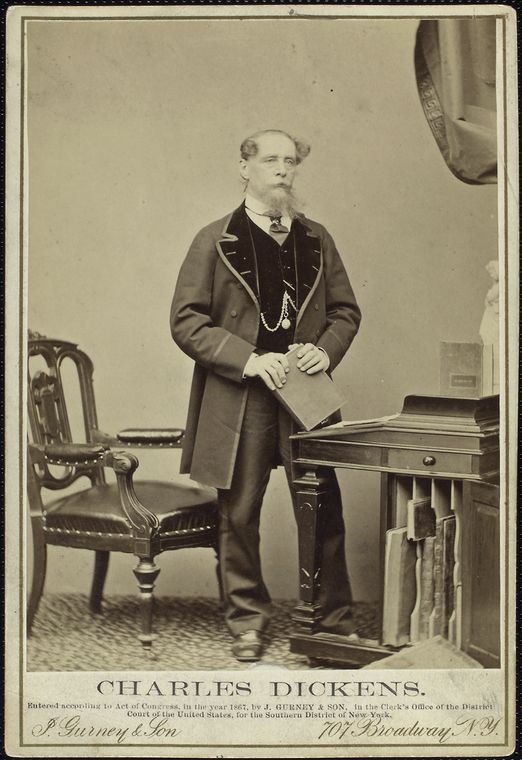
Charles Dickens, c1860

Here’s something completely different for my Monday musings! Not an Australian author, not even a foreign born author who came to Australia (though, being the great traveller he was, he did consider a lecture tour), but Charles Dickens does have a couple of interesting “connections” with Australia. These connections are supported by the existence of some letters written by him at the National Library of Australia.

On convicts and migration in general

Transportation of convicts to Australia – actual, implied or threatened – features in several of his novels. These include John Edmunds in Pickwick Papers (1836-37), the Artful Dodger in Oliver Twist (1837-1839), Mr Squeers in NicholasNickleby (1838-39), Alice Marwood in Dombey and Son (1846-48), and Magwitch (probably the most famous of all) in Great expectations (1861)not to mention Jenny Wren who threatens her father with transportation in Our mutual friend (1864-65). Dickens apparently learnt quite a lot about convict life, and particularly the penal settlement on Norfolk Island, from his friend Alexander Maconochie (to whom I refer in my review of Price Warung’s Tales of the early days).

Clearly, it was this knowledge which inspired the letter he wrote to the 2nd Marquess of Normanby (George Augustus Constantine Phipps), who was Secretary of State for the Home Office . He suggests

a strong and vivid description of the terrors of Norfolk Island and such-like-places, told in a homely narrative with a great appearance of truth and reality, and circulated in some very cheap and easy form (if with the direct authority of the Government, so much the better) would have a very powerful effect on the minds of those badly disposed … I would have it on the pillow of every prisoner in England. (3 July 1840, Original in the National Library of Australia, Ms 6809)

He offers to write this narrative, gratis. As far as I know, although Dickens and the Marquess were friends, nothing ever came of this offer.

While Dickens deplored the treatment of convicts in the penal settlements, he also saw Australia as a land of opportunity. The transported Magwitch, as we know, made his fortune in Australia. Mr Micawber, debt-ridden at the end of David Copperfield, emigrates to Australia and becomes a sheepfarmer and magistrate. But, perhaps the strongest evidence of Dickens’ belief in Australia as a place where people could get ahead, is the emigation of his sons.

On his sons

Two of Dickens’ sons – Alfred D’Orsay Tennyson Dickens and Edward Bulwer Lytton Dickens* (nicknamed Plorn) – emigrated to Australia, both with their father’s encouragement.

Alfred (1845-1912) migrated to Australia in 1865. He worked on several stations/properties in Victoria and New South Wales and as a stock and station agent, before partnering with his brother in their own stock and station agency, EBL Dickens and Partners. He died in the United States in 1912, having left Australia on a lecture tour in 1910. Dickens’  youngest son, Edward (1852-1902), went to Australia in 1869. He also worked on stations before opening the stock and station agency with his brother. He later worked as a civil servant and represented Wilcannia in the New South Wales Legislative Assembly in 1889-94, but he died, debt-ridden, in 1902 at Moree. Australia did not quite turn out to be the land of opportunity for these two that Dickens had hoped, but fortunately he was not around to see it!

A couple of Dickens’ letters to his sons are held at the National Library of Australia. One was written in 1868, not long before Plorn left England, and includes some fatherly advice:

Never take a mean advantage of anyone in any transaction, and never be hard on people who are in your power …

The more we are in earnest as to feeling religion, the less we are disposed to hold forth on it. (26? September 1868, Original in National Library of Australia, Ms 2563)

One does rather wish that Dickens had taken his own advice regarding not being “hard on people who are in your power” in his treatment of his poor wife Catherine.

Eighteen days before he died in 1870, he wrote this to Alfred:

I am doubtful whether Plorn is taking to Australia. Can you find out his real mind? I note that he always writes as if his present life were the be-all and end-all of his emigration and as if I had no idea of you two becoming proprietors and aspiring to the first positions in the colony without casting off the old connexion (1870, Original in National Library of Australia, Ms 6420).

These are just two of the many letters that he wrote to (and about) his sons in Australia. More can be found in published editions of his letters. I have chosen these particular ones purely because we have them here in Canberra. It’s rather a treat to be able to see Dickens’ hand so far away from his home.

Do you enjoy close literary encounters of the handwritten kind?

Image: Dickens, c. 1860 (Presumed Public Domain, via Wikipedia)

___________________________

What an interesting choice of Bill’s but I am glad to be reminded of this post as I have been wanting to read more of Dickens’ journalistic writings. Whether I will is another thing but, you never know.

Are you a Dickens fan?

Bill curates: Some Australian expat novelists

Bill curates is an occasional series where I delve into Sue’s vast archive, stretching back to May 2009, and choose a post for us to revisit. I’m a bit over seeing my name up the top here, but Sue has asked me to keep going for a little longer, and how could I possibly say no.

This one is from August 2010. My opinions on the topic are quite different from Sue’s, but I’ll save that for Comments.

______________________________

My original post titled: Monday musings on Australian literature: Some Australian expat novelists

Australia is the only country I have come across that divides its writers into residents and those who have dared to live elsewhere. Can one imagine Americans writing of Ernest Hemingway, or the Brits of Auden, thus? (Carmen Callil, Australian-born founder of Virago Press)

That answers one of my questions: that is, whether other nations talk about “expats” the way we do. Apparently they don’t. Is it the oft-quoted Australian cultural cringe? Is it envy? Perhaps I’ll just skirt the issue and say that Australians have a bit of a reputation for wanderlust, so I’m not surprised that we have our share of novelists who have gone overseas and stayed. One of those is Kate Jennings whose “fragmented autobiography”, Trouble, I reviewed last week. Kate Jennings went to New York in 1979, and has not returned (except for regular visits). In her book, she includes interviews with three other expat Aussie writers, Sumner Locke Elliott and Ray Mathew (both now deceased), and Shirley Hazzard. I thought it might be interesting to talk a little about some of our still-living novelists who reside in the USA.

But first, Ray Mathew, the least known of Jennings’ three interviewees. I hadn’t heard of him until a few years ago when he was the subject of one of the National Library of Australia’s (NLA) gorgeous little “A Celebration” books, using funds bequeathed in his name by his American friend and patron, Eva Kollsmann. The Ray Mathew and Eva Kollsmann Trust is a significant bequest which funds a number of initiatives at the NLA. One of these is the annual Ray Mathew Lecture which is to be given by “an Australian living abroad”. The first lecture was given in 2009 by Geraldine Brooks, and the second, this year, by Kate Jennings.

Shirley Hazzard
Hazzard, 2007 (Courtesy: Christopher Peterson, via Wikipedia, using CC-BY-SA 3.0)

For brevity’s sake – and because I’ve read each of these writers – I’ll just focus in this post on five Australian expat novelists based in the USA. Some of them are very well known internationally, moreso than many of our home-based writers. This is not surprising I guess: if you live in the USA and get published there your market potential is far greater than it would be at home. That said, the lure of increased fame and fortune is not the reason these writers moved overseas:

  • Geraldine Brooks: moved to New York in 1983 to study, met and married American journalist (Tony Horwitz), and now splits her time between Australia and the USA. Geraldine Brooks titled her Ray Mathew lecture, “The opportunity of distance”. She’s the youngest of these five and, perhaps, has the most uncomplicated view of her relationship with home. She has travelled widely and discussed in that lecture all the benefits that have resulted, but her final point is:

For all its opportunities, distance can still feel like a tyrant, sometimes, when a partner’s work or a kid’s schooling means we must spend more time there than here. The oscillation stalls, the roots start to dry out. It’s like a high stakes game of musical chairs. Round the world you go, and then the music stops and you have to sit down somewhere, but it’s not quite the chair you were aiming for.

  • Peter Carey: moved in 1990/91 to New York with his wife to work in their respective careers, and has remained there. Peter Carey, not surprisingly given his status, is often asked about his expat status. Here is what he said in an interview for the Paris Review:

Of course, there is a specially reserved position in Australian culture for the expatriate. The prime expatriates—people like Clive James, Germaine Greer, Robert Hughes—belong to an earlier generation than mine. When these people return to Australia, they are asked, What do you think of us? How are we doing? The expatriate is occasionally lauded and occasionally fiercely criticized for daring to come back and judge. I try to stay away from that as much as humanly possible. I don’t feel at all like an expatriate….

  • Shirley Hazzard (has died since I wrote this post back in 2010): moved to Hong Kong with her parents in 1947 when she was 16 years old, ending up in New York in 1951 where she has been mostly based since, though does spend time regularly in Capri, Italy. A webpage on Shirley Hazzard summarises her expat status in this way:

Hazzard does not reject her designation as an Australian writer but insists her temperament is not national. She only took out United States citizenship twenty-five years after she began living in New York, on the resignation of Richard Nixon. Eschewing nationalistic identifications, she does not consider herself as an expatriate, and emphasized that “to be at home in more than one place” (Gordan and Pasca). However, her novels are full of displaced Anglos in Hong Kong and Italy, or displaced Australians in London and New York.

  • Janette Turner Hospital: moved to Boston in the mid 1960s with her husband, and has lived in Canada and the USA. She now splits her time between these two countries and her home state of Queensland. In an early Griffith Review, Hospital commented on the impact of modern technology on being physically displaced, and wrote:

Place is unequivocal. But virtual communities and diaspora organizations suggest that you don’t always need to be somewhere to be a part of something. You can check the surf report, vote, play scrabble, watch the evening news, buy a car or be connected to country from the other side of the world. This new reality reflects an age-old truth: that home is where the heart is. It offers a new kind of citizenship. One we’re defining as we go.

  • Kate Jennings: as described above. She bookends Brooks nicely: not only because they gave the first two Ray Mathew lectures but because they both value travel highly but offer almost opposing conclusions. Here is Jennings from her lecture:

I have lived now in New York nearly as long as I lived in Australia. Heretical as it might seem, Australia is neither my country nor my home, as it is for Geraldine. It’s the place I started from, to paraphrase TS Eliot slightly. It shaped me, but so have my 30 years in New York city. I have, as Robert Dixon put it, ‘overlapping allegiances and multiple affiliations’.

Well, that lot provides enough to think about I reckon. I was going to talk a little about these writers’ works but I’ve taken up enough of your time for this Monday. More anon… Meanwhile, if you’ve lived away from “home” for any period of time, what do you think about all this?

___________________________

Thanks so much Bill for being willing to continue this series until I can get back to some semblance of normal reading and posting. I’m particularly pleased that he chose this one because given he has some different ideas to mine. I look forward to hearing them to seeing whether I agree, given I wrote this post over 10 years ago.

And, of course, we’d be interested to know what you think…

Bill curates: Dymphna Cusack’s A window in the dark

Bill curates is an occasional series where I delve into Sue’s vast archive, stretching back to May 2009, and choose a post for us to revisit. During the latter part of January we will look at some of Sue’s older posts which have relevance to my Australian Women Writers Gen 3 Week, Part II, 17-23 Jan, 2021

Dymphna Cusack was a central writer of the Gen 3 period. I (Bill) recently reviewed her Say no to death (1951) which with its focus on TB gives us some perspective on the plagues like Covid-19 which regularly sweep around the world. Here, in a post from 2013, Sue reviews Cusack’s memoir of her years as a teacher, written in the 1940s but published posthumously.

______________________________

My original post titled: Dymphna Cusack, A window in the dark

Dymphna Cusack‘s A window in the dark has been glaring at me from my TBR pile for many years now. Not being able to stand it any longer, I decided to sneak it in before my next reading group book, Michelle de Kretser‘s Questions of travel. Posthumously published by the National Library of Australia, A window in the dark is Cusack’s chronicle of her teaching years, spanning 1922 to 1943.

For those who haven’t heard of her, Dymphna Cusack (1902-1981) is an Australian writer best known for her collaborative novel (with Florence James), Come in spinner (1951), and Caddie, the story of a barmaid (1953), which was made into a successful feature film in 1976. According to Debra Adelaide‘s comprehensive introduction, Cusack was not interested in writing her autobiography but, in the mid-1970s, three decades after she finished teaching, she decided to write about this part of her life. While much has changed since 1975/6 when she wrote it (let alone 1944 where the story ends), A window in the dark – “my job was opening a window in the dark for the minds entrusted me” – is an interesting read. It is not, though, a typical writer’s memoir; its focus really is teaching and education.

The book is well produced with an excellent introduction and explanation of its genesis by Debra Adelaide (though I would have loved an index). It was prepared from the version included with her papers held by the National Library of Australia. This version is probably the final draft, but Adelaide believes that Cusack would have done more work on it, had it found a publisher. Certainly, it does have some rough edges, but not enough to spoil the content nor to prevent our getting some sense of Cusack as a person, as a writer, and of course as a teacher.

Cusack tells the story of her years as a teacher chronologically, starting with university and her decision to accept a bonded Teachers College Scholarship. However, a number of themes run through the book and I’m going to frame the rest of this post through some of them.

Format: Photograph Notes: Dymphna Cusack (1902...

“The sum total of my years of teaching in Broken Hill and Goulburn was the conviction that the high school curriculum was insane”

Cusack decided very early in her career that the curriculum she was required to teach was unsuitable for all but the minority who planned to go on to university. She rails, in particular, against the teaching of ancient languages (Latin) and against the focus on British history and English (as in from England) literature (both only to the end of the nineteenth century, what’s more). She criticises educational practice which relied heavily on examinations and argues against dependence on IQ assessment for identifying capable students. She is disgusted by corporal punishment. She does become a bit repetitive, as she moves from school to school, but that simply reinforces her passion for relevant education and humane methods. Being personally interested in local and contemporary history, she’s distressed that students weren’t taught about their own places. Students in Broken Hill were taught nothing about that city’s origins, nor its geology and botany. Students in Parkes learnt nothing about William Farrer and his pioneering work with wheat. And so on … Students learnt, well, I’ll let her tell you:

It was the same in every country town I lived in. An essential part of our history was ignored, whether massacres of whites by blacks or blacks by whites, while we got bogged down in the Hundred Years’ War or the Thirty Years’ War or the Seven Years’ War – all taught with no reference whatever to the basic economic causes underlying them.

She was happiest when, for various reasons, she was given non-examination classes to teach. Then she could teach what she thought was useful. A playwright herself, she was renowned for her drama classes, and the school plays she produced.

“I look so middle-class; it’s my nose”

Despite her ongoing frustrations (not to mention chronic health issues), she had, you can see from this quote, a sense of humour. Cusack belonged to that wonderful cohort of left-leaning writers in early to mid-twentieth century Australia, a cohort which included Miles Franklin (with whom she collaborated on books), Flora Eldershaw and Frank Dalby Davison.  She had a finely honed moral and social conscience, and was acutely aware of injustice. She was not above using her “middle-class” look to get a hearing on issues important to her. She was distressed that Australia, which, by the 1850s was

politically and socially the most advanced country in the world … should by the middle twenties be bogged down into a morass of social and sectarian bigotry and educational conservatism.

Cusack became convinced of the “wickedness of our economic system”, which could not fund milk for children of unemployed parents but could, somehow, find the “money for everything for war”. She abhorred the power those with money had over others. She became unpopular with the Department of Education for her outspokenness on social and economic justice issues, and was particularly critical of the treatment of “that much-maligned creature, the woman teacher”.

“What we want is the warmth, the humanity, the feeling for Newcastle that is inherent in everything you write about …”

So said BHP’s Newcastle manager Keith Butler to Cusack in 1943 as he offered to pay for a novel about Newcastle and the steelworks. Not surprisingly, Cusack would have none of it. She did, however, write her novel, titled Southern steel (1953), and it was, apparently, a positive portrayal. Cusack wrote throughout her teaching career – mostly plays, many of which were performed on the ABC but only some of which have ever been published. She tackled tricky-for-her-times issues such as racism, workers conditions’ and war. Her second novel, Jungfrau (1936), which explored young women, their sexuality and abortion, was runner-up in the Bulletin’s S. H. Prior memorial prize. It was shocking for its time.

“… I found in my teaching life teachers are sublime optimists – why, I never knew.”

And yet, she must have known, for she stuck to teaching through years of ill-health and poor treatment by those in power. She did it, partly of course to support herself, but partly too because she loved her students. She was still receiving thankyou letters from them in her last years. That surely says something.

Why, though, read a book written in the mid-1970s about education in the 1920s-40s? It is not, after all, a memoir, so there are gaps in the story of her life – particularly in terms of her significant relationships. And while she mentions some of the plays and novels she wrote during the time, she does this mostly in relation to something happening in her teaching life. Moreover, it’s not particularly interesting in terms of form. That is, she doesn’t play, as some writers do when writing non-fiction, with narrative style or voice or perspective. Yet, there are reasons for reading it. It works as social history and a history of education. It provides insight into the development of her political philosophy and social values. It shows off her skills as a writer, particularly her ability to evoke people and place. And, for all its seriousness, it contains many entertaining anecdotes.

I’m so glad I finally read what turned out to be a fascinating book about (and by) a compassionate, funny and feisty woman whose intelligence is displayed on every page. Would that every child had teachers like this.

Dymphna Cusack
A window in the dark
Canberra: National Library of Australia, 1991
175pp.
ISBN: 9780642105141

___________________________

Dymphna Cusack was an interesting woman who was passionate about economic fairness and social justice. For that reason, she fits in very well with the wonderful cohort of women writers who were active, particularly in the 1920s to 40s, such as Katharine Susannah Prichard, Marjorie Barnard, Flora Eldershaw, to name a few. I’m glad Bill chose this post to bring up the rear of “my” contributions to his AWW Gen 3 Week.

We’d love to know whether you’ve read any of Cusack’s novels or other writings, and what you think?

Wendy Scarfe and Allan Scarfe, A mouthful of petals: Three years in an Indian Village (#BookReview)

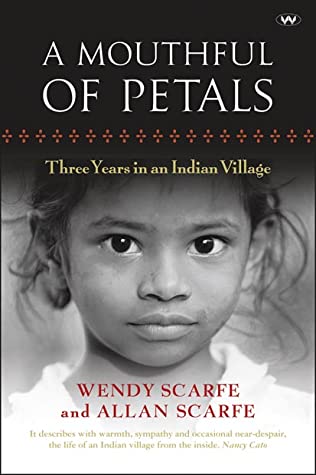
Husband and wife writers, Wendy and Allan Sharfe, first published A mouthful of petals, the story of their three years in the remote Indian village of Sokhodeora, in 1967. It is not, however, their only book. Wendy Scarfe has written poetry and several novels, two of which I’ve reviewed here, Hunger town and The day they shot Edward, while her late husband, Allan, also wrote some novels and short stories. Collaboratively, they wrote several books besides A mouthful of petals, including a biography of Indian independence activist Jayaprakash Narayan.

It was Jayaprakash, or JP as he was known, who invited the Scarfes to return to Sokhodeora in 1960, after their 6-month volunteering stint, because he believed serving India was in their hearts. Their service would, he wrote, be “of great value to us and would add to that international good-will and understanding that are so badly needed”. In their opening chapter, the Scarfes write poetically of the place that was to be their home for three years:

Sokhodeora is a dot that is part of the plain: beautiful, serene, full of a sense of continuity with the very beginnings of human civilisation.

But to enter the narrow, zigzag alleys between the congested houses is to lose much of the impression of beauty and to realise the antiquity of man’s anxiety, poverty and misery.

Their role was to be education-related, though on their arrival JP admitted that “frankly” he didn’t know “what specific, clear-cut work” to give them! Ah, the days before KPIs! (Or, more likely, as the Scarfes say, the difference between Western and Eastern world views.) The big picture, the ideal, was that education was needed, and that the villagers needed to see that education was about more than gaining Government employment, which, of course, most villagers would never do.

And so, the Scarfes set about developing their own goals and schedule of work, regularly calibrating with the supportive JP. Uppermost was starting a school for children and night classes for adults. However, they also responded to the practical reality of village life which was characterised by extreme poverty, which in turn meant problems like hunger and poor health. How can children learn, for example, if they are not reasonably nourished? When Jayaprakash comments on the villagers’ apathy, Wendy replies that she believed it was “nutritional”:

People can’t have physical and mental vitality on two meals of rice and pulse a day. A huge proportion of village women suffer from anaemia and they must be just dragging themselves around.

Here is where we realise that aid work like this requires not just the necessary professional skills – in this case, teaching – but resourcefulness and entrepreneurship. The Scarfes, for example, discovered the existence of a supply of powdered milk, and developed a program for its distribution. They wrote many appeals for foodstuffs, eventually landing a winner with the American Meals for Millions Foundation, which provided an awful-sounding but highly nutritional product called “Mysore Multi-Purpose Food”. Again, they were heavily involved in distribution and teaching how to use it. They looked at other issues too, including the provision of toilets, family planning, the building of a classroom, and so on. All this is macro-level. They also worked at the micro-level, supporting individual villagers in all sorts of ways, especially in obtaining the medical help and pharmaceuticals they needed. It’s no wonder that, as this edition’s Publisher’s Note says, this book served, for years, “as a primer for intending field workers”.

None of this was easy of course, and the challenge was exacerbated not only by the usual infrastructure problems – such as transport – but also by cultural and personal issues, particularly the challenge of engaging the villagers in an environment characterised by caste prejudice, gender inequality and inter-family quarrelling.

A mouthful of petals, then, has plenty of interesting content, but I would also like to comment on the writing. It’s a collaborative book, but what voice do you choose to write a book involving both authors’ lives? Ruth Park and D’Arcy Niland, in their memoir The drums go bang (my review), used first person plural when writing about joint experiences, and third person when writing about the experience of one of them. The Scarfes took a different approach, narrating the book in first person from Allan’s point of view, with Wendy spoken of in third person. It works, but I rather like Park and Niland’s approach.

Overall, the writing is straightforward, as it has to be to impart all the information it does, but there are lovely flourishes all the same, like the description of Sokhodeora I cited early in this post. The book is also enhanced by the people populating it. Not only are we given some insight into JP, but the Scarfes tell stories about several villagers, including the initially apprehensive but willing Mahadev who works for them from the start and the ultimately tragic Kesurwa whom they choose to train as their kindergarten teacher. These people give life to the bigger picture being told.

Now, when I read a book like this, by which I mean a book that is about a different place and time – after all, we are talking India of 60 years ago – I think about its relevance (beyond any intrinsic interest in the subject matter) to my place and time. This book provided a few such points, one being the importance of education. There’s literacy, of course, but the Sharfes specifically discuss the value of understanding cause-and-effect, of the ability to draw logical or useful conclusions from observation and experience – regarding pain and illness for example – and how this lack impeded village and villagers’ development. This made me think, rightly or wrongly, of what has been happening in the USA recently where there seems to be just that lack of ability in some of the populace. A failure of education?

Then there’s the big point: the idea of having global responsibility for each other. The Scarfes write:

We are all responsible for the human condition and those who are educated are responsible to those who are not.

I like the use here of “responsible to” not “for“. It shifts this idea of responsibility from a patriarchal notion to something more cooperative or service-oriented.

A mouthful of petals is a passionate book that still offers much to think about. It is well worth reading.

Lisa (ANZLitLovers) also enjoyed and reviewed this book.

Challenge logo

Wendy Scarfe and Allan Scarfe
A mouthful of petals: Three years in an Indian village
Mile End: Wakefield Press, 2020 (rev. ed. with Epilogue; orig. ed. 1967)
275pp.
ISBN: 9781743056844

Review copy courtesy author and Wakefield Press.

John Kinsella, Displaced: A rural life (#BookReview)

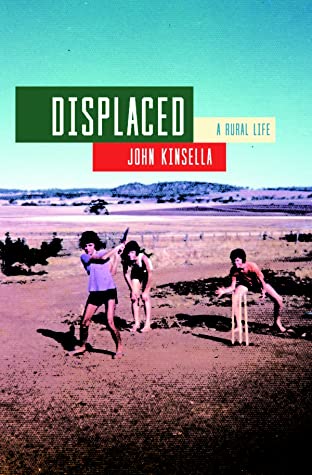
John Kinsella, Displaced

I haven’t talked about reading synchronicities for some time, but when I started reading John Kinsella’s memoir, Displaced, I couldn’t help but think of the book I had just finished, Gay Lynch’s historical novel Unsettled (my review). Both have one word titles which play with opposites; in both cases, those opposites refer to physical meanings and more abstract, intellectual, social and/or emotional ones; and, in both, these meanings draw significantly from the colonial act of settling Australia and displacing its original inhabitants. I enjoy such wordplay that forces us to consider multiple, and sometimes conflicting meanings because it encourages a deeper engagement with the ideas being explored.

Notwithstanding this, reading Displaced was a labour of love, because it is a demanding, and often confronting read. However, I wanted to know about this man who is one of Australia’s leading contemporary poets, so I persevered. My assessment? If you are interested in how one might live life as ethically as possible with regard to justice and the exploitation – of First Nations people and the environment – that is encompassed in the long tail of colonialism, Kinsella’s book is a good place to start.

This leads me, as I’m wont to do, to a consideration of form or genre. Displaced is characterised in promotions as a memoir, but I see it more as a manifesto with memoir elements. Events in Kinsella’s life underpin the book, including his stints in Ohio, Schull and Cambridge, but they are not the focus. Instead, they are used to explicate and exemplify his ethical beliefs and, more, to explore the paradoxes we all live with. These paradoxes provide the book’s main thread. They are expressed in such terms as “belonging and unbelonging”, finding a meaning for “home” that recognises Indigenous “dispossession” and doesn’t encompass the exploitative ideas of “ownership”, and feeling “displaced” while very definitely being in a place. He characterises this as “the ethics of presence”. It’s difficult to get your head around while also being very simple really. In other words, the idea is simple, but the living of it, not so!

Two-thirds through the book, Kinsella talks about conducting peace readings, and says that:

A poet has a job to do – art in itself is meaningless if it does not jolt us into self and collective action.

He then describes a sculpture in the British Museum comprising bits of AK-47s welded together. “The artwork,” he says, “jolts one out of apathy, if not out of complicity”.

For Kinsella then, art is not just for art’s sake. And so, here, this work of art, his “memoir”, has a very specific goal, to raise our consciousness regarding the lives we are living and how colonialism, and the accompanying capitalism, continue to damage both colonisers and colonised. He calls himself an “anarchist”, but not one who subscribes to chaos and disorder. His anarchism, he says, has

the social angle, it has the respect for individual difference. I do not attempt to tell people what to believe, but I do attempt to draw attention to the damage being done.

So now, let me return to my opening comment regarding the title and its multiple meanings. Early in the book, Kinsella talks about growing up in the Western Australian wheatbelt, and about the paradoxical, hypocritical love of nature and place he espoused. “Something didn’t add up”, he says, between the way he “felt about the world” and the way he “acted in it”, his actions drawing from “outdoorsmen activities and the attendant crisis of masculinity.” The things he did – farming, hunting, and so on – were counter to the things he loved. The book chronicles his realisation that

I was part of a colonial invasion force, and I belonged nowhere. What could I do about it? I wandered, displaced as an addict [literally as well as spiritually], and as someone trying to undo my own identity.

Learning a new way of being (“unbecoming what I was, becoming what I might be”) became his lifelong project, one he shares with his wife, the poet Tracy Ryan, and their son Tim. Kinsella puts this thinking into his work – in his writing (as mentioned above) and in his role as Professor of Literature and Environment at Curtin University. He speaks in the book of trying to create a new way of writing about place, “a system for working through the contradictions of presence, of time and space and catastrophe and catastrophising, of the failure of modernity and the consequences of colonial modes and modalities of presence”. That’s a mouthful, but it explains his wish to find a way of expressing how colonialism has negatively infiltrated our lives physically, spiritually and linguistically.

To explain his beliefs, he wanders between childhood, youth and adulthood, amongst relationships with other writers and thinkers, and between his current home, Jam Tree Gully back in the Wheatbelt, and those places he’s lived in overseas. Because – I think – of this to-and-fro structure, there is a lot of repetition of ideas and experiences, and these repetitions did become a little tedious at times. I get it John, I get it, I felt like saying a few times as I read. The other challenge for Kinsella was to not preach or virtue signal. He does come close, at times, but he makes clear that he understands the nuances – how does someone like him, for example, deal with feral cats or weed pests? “There’s plenty of mea culpa in my life”, he says.

In the end, this earnest, frank book is full of heart and commitment. One of the things I’ve taken away from it is a heightened awareness of how “colonialism” has infiltrated our language. Take, for example, an interpretive sign we recently saw on a bushwalk that described a tree trunk as providing “high rise living”. Or, a Wiradjuri country rural town’s proud sign promoting its “170 years of heritage”. Just 170 years? On its website, the Blayney Shire speaks more on this (colonial) heritage, and then mentions its natural environment and Aboriginal heritage. “Aboriginal relics and artefacts”, it explains, “are primarily protected under the provisions of the National Parks and Wildlife Act, 1974. Listed heritage in the Shire is mainly European in nature”. This sort of demarcation in thinking about heritage needs to change.

We can’t turn back the clock, which Indigenous Australians accept, I believe. However, they want and warrant the respect due any human being, recognition of their sovereignty and of their dispossession, and for us to listen to their wisdom and knowledge.

Kinsella, who believes that “poems can stop bulldozers”, includes many in this book. They make good reading. But I’ll end here on a positive note from halfway through the book:

The land is constantly being rewritten. We don’t have to be stuck with the damage. It can be undone.

John Kinsella
Displaced: A rural life
Melbourne: Transit Lounge, 2020
329pp.
ISBN: 9781925760477

Review copy courtesy Transit Lounge, via Scott Eathorne of Quikmark Media

Archie Roach, Tell me why: The story of my life and my music (#BookReview)

Book coverGood things come to those who wait! At least, I hope so, because Lisa has had to wait a long time for a review from me for this year’s Indigenous Literature Week. Finally, though, I finished the main book I chose for this year’s challenge, Archie Roach’s memoir, Tell me why: The story of my life and my music.

Most Australians will know who Archie Roach is, but international readers here may not. A member of the Stolen Generations, Archie Roach is an indigenous Australian singer, songwriter, guitarist, and political activist. The story he tells in his memoir, Tell me why, is not an unusual one in terms of people of his background and generation, but that doesn’t mean it isn’t worth reading, because not everyone can tell this story in the way that Roach can. Perhaps this is because he’s a songwriter, or perhaps, more correctly, he’s a songwriter because he can tell stories.

Roach starts his story with a Prologue set in 1970. He is 14 years old, and receives a letter from one of his birth sisters telling him that his birth mother had died. This is a surprise, because his adoptive parents had been told his parents had died in a fire. He then flashes back in Chapter 1 to tell us about his life, as he knew it, up to 1970. This life involved being stolen from his parents, and being placed in two foster homes, one abusive, before being placed, in 1961, with the Melbourne-based Coxes with whom he was still living in 1970. In Chapter 2 he picks up that point in 1970 when he received the letter, and tells his story chronologically from then on, with some flashbacks to fill in his family’s early life as he learns it himself.

Although Roach had had a good life with the Coxes, who had loved him and whom he loved, the discovery that members of his birth family were still alive brought with it a desire to learn who he was, and he left home. He managed to make contact with his family, but before that he was introduced to drinking (having “a charge”) and life on the streets. Not surprisingly, his story, like those of many young indigenous people who have lost contact with their culture and thus with their bearings, involves alcoholism and related illnesses, run-ins with the police, prison, unemployment, and all-round instability. Archie would obtain work, would be appreciated as a worker, but the demons would return and down he’d plummet again. It’s a common cycle.

However, Archie had a couple of big pluses in his corner. There was Ruby Hunter, whom he met while still a teen and who became the love of his life. It’s not that her appearance resulted in a miraculous turnaround. Real life is rarely like that. But she became the supportive base to whom he would return and who, eventually, did provide the stability that enabled him to turn his life around and become the success he now is. The other plus was music, to which he was first introduced by the Coxes, particularly Dad Cox who loved to sing and who gave him his first guitar. While the stories about his drinking life were distressing to read, the story about how music “saved” him, and how he gradually came to realise that he could tell stories through music, was moving and inspiring.

This brings me back to my opening comment that “not everyone can tell this story in the way that Roach can”. The memoir is beautifully constructed, from the Prologue that vividly takes us into the classroom where Roach receives the letter about his mother, to the use of song lyrics, most of them Roach’s own, to introduce each chapter. Roach uses foreshadowing at the end of several chapters to move the story on, such as this at the end of the chapter in which he arrives in Adelaide – “This would be the last hours before finding Ruby Hunter”. And this one at the end of the chapter where Jill Shelton is recommended to him as a manager – “Jill would end up saving my life at a time when I didn’t see there was any point in saving it.”

Roach also mixes up the narrative, commencing some chapters with the next part of the story, while others he introduces with something more reflective. I particularly liked the opening to the chapter in which Ruby dies:

Some people see time as a river with a steady current. Some people say we get in and move with that current, all of us ageing uniformly. I don’t believe that’s true, though. I’ve seen people age years overnight.

It happens to a lot of our people, and it happens to an awful lot of us drinkers. It doesn’t just happen while we’re drinking, either; we could’ve been years off the stuff and then something might change. We might lose a sister or a brother, and suddenly we have age in our face and in our step.

Sometimes it happens for no reason. Someone will be living their life and all of a sudden time will heap years on their shoulders.

Of course, Roach also talks about politics, about Indigenous opposition to the 1988 Bicentenary, about John Howard’s  opposition to a national apology and his criticism of the “black armband view” of Australian history, about Aboriginal deaths in custody, about the stolen generations, and more. It’s all told through the prism of his own personal experience or through his involvement in political action. Most readers will know these issues, but the personal stamp offered by books like this helps keep the issues real and in front of us. Roach, like so many Indigenous people, amazes me by walking that fine line between anger at what has happened to his people and generosity towards the rest of us.

In the end, Roach’s message is an inclusive one. His songs, he has found, speak to non-Indigenous people too, with many telling him that “that’s what happened to me”. Consequently, his songwriting, he says, now “feels more inclusive, more universal” because “it’s about all of us – you can’t write about yourself without including everyone.”

He writes:

For so long we have been divided by ‘isms’ – racism, sexism, fundamentalism, individualism – but when we come back to the place of fire, I believe we will discover there’s far more that connects us than separates us. I believe we will be one humanity again, that we will find release, healing and true freedom.

I love the hope in this but, let’s be clear, Roach is not letting us off the hook. That is, he doesn’t believe we are there yet. He is, though, choosing an aspirational path, and for that I thank him.

ANZ LitLovers logoArchie Roach
Tell me why: The story of my life and my music
London: Simon & Schuster, 2019
378pp.
ISBN: 9781760850166

Rick Morton, One hundred years of dirt (#BookReview)

Book coverWay back in the early 1970s when I was an undergraduate university student, I did some sociology, and one of our set books was The myth of equality by Tom Roper. It, and the courses around it, have informed ever since my understanding of how our society operates. Morton’s book One hundred years of dirt would have been perfect recommended reading for these studies. At the end of his first chapter he says this:

the single experience of my sister’s road to this point detonates the argument that equality of opportunity is stitched into our nationhood.

One hundred years of dirt, in other words, is not a simple memoir, as it might initially appear, but is, rather, a cry to Australians to see that the ideas, the myths we hold dear, are just that, myths.

But now, back to the beginning. Rick Morton, a thirty-something journalist, grew up tough. Born on a remote outback cattle station to a family of violent men, he experienced more than his share of trauma. Besides the intergenerational violence, he saw, when he was 7 years old, his older brother nearly burn to death and then, while his mother was away with that brother in hospital, saw his father carry on an affair with the governess. Not surprisingly, this caused a family breakdown, resulting in his mother leaving with her three children and no financial support. Poverty was theirs from then on. Morton speaks eloquently of the struggle to make ends meet, making it clear that families like theirs have no time to consider issues of the day, like climate change, when even a mooted $7 Medicare co-payment “could be the difference between eating or not for a person on the poverty line.”

Time, in fact, is an interesting issue – and one that resonated with me, too, as a feminist. Time is a commodity and how we choose to spend it – or are able to spend it – is political. Like hours at the hairdresser for example. (I know I am treading on sensitive toes here, but so be it.) Anyhow, as Morton says, “only some people have the time” to be “woke”. Just “living for so many people in Australia is exhausting“.

So, on the surface, One hundred years of dirt could be seen as your standard misery memoir: Boy from poor and violent background struggles against the odds to make it good as a journalist and successful author, with the help of a loving mother. It is that, superficially, but it’s much more too.

There is a general chronological movement to the story. It starts in the present, when that point quoted above about “equality of opportunity” is made. It then flashes back to the family’s origins on huge cattle properties in southwest Queensland, focusing particularly on grandfather George Morton and his hard, violent ways. From here, Morton moves more or less chronologically through his life, but each chapter is framed around a theme, so the chronology is not exact. The chapters, in fact, could be read as individual essays on their specific topic, such as drug (ice) addiction, mental health, being gay, class, and otherness or outsiderness. For some readers – as some in my bookgroup found I think – this departure from a more typical narrative flow may make the book feel disjointed. However, for me, the clear heralding in the first chapter that One hundred years of dirt was about more than one life had me engaged and ready, perhaps, for anything!

That anything turned out to be a personal exploration of how inequality plays out in contemporary Australia, supported by smatterings of socioeconomic data. Morton is, after all, a journalist, and so he brings his journalistic nose for facts to bear on his and his family’s personal experiences. In doing so, he provides example after example of how out of touch the knowledge class or “commentariat” is with the lives of those at the bottom end of the income stream. He discusses, for example, unpaid internships and the incomprehension that there are people who just can’t afford to take advantage of them. Journalism, which is rife with unpaid internships as a pathway in, has become one of “the most exclusive middle-class professions of the 21st century”. Morton describes the complete ignorance many in the middle-class have about their privilege:

There are those who have had the good fortune to never have felt other than the silkiness of privilege, their bubbles so perfect they cannot feel the gravel underneath.

He also writes:

As a nation, we have convinced ourselves that all of us has the same standing start, but this is neither true for the working class whites from broken families nor for those with black or brown skin. It’s not true for those without a proper education nor for those who were abused.

However, this book is not just bitter medicine. It has a spoonful of sugar. There are some genuinely funny moments – some of them black of course – and there are Morton’s wonderful turns of phrase which illustrate his meaning beautifully. He talks, for example, about working in a workplace surrounded by colleagues from “moderately wealthy and upper class families”:

… my colleagues [whom he did see as “dear friends”] could not fathom the life I had led. There were frequent attempts at empathy but it sounded a lot like people who were reading pre-prepared lines. Imagine a fish turning up to discover her psychologist is a Very Concerned sea eagle.

Love the fish analogy, but ouch, really, ouch! I feel I have a good understanding of inequality of opportunity and the ways in which it underpins disadvantage in Australia, but finding the right language in face-to-face encounters is not easy.

I have probably made this book sound like a sociological thesis or polemic. There is that, but it is still, at heart, a memoir. It’s simply that I have focused on what I see as the book’s main message. However, this message is wrapped up in a story about human beings, and particularly about Rick and his dearly loved mother Deb. He describes her as “the hero of this piece”, the mother who

sees boy as special, tells him he was sent here from that big night sky by beings unknown to report back on what he sees. She invented the aliens because she couldn’t see herself as the protagonist. She outsourced the explanation for her own success as a mother to the aliens out there.

Lovely Deb; thoughtful, provocative Rick. This is a powerful read.

Rick Morton
One hundred years of dirt
Carlton: Melbourne University Press, 2018
191pp.
ISBN: 9780522873153