The Story of the Oars

Back in 2018, I wrote a post on local author Nigel Featherstone’s first theatrical work, an art-song piece titled The Weight of Light. Seven years later, his second work of theatre, The Story of the Oars, has just finished its short season at The Street Theatre. Having just got back from Japan on Friday afternoon, Mr Gums and I managed to get to the last show this afternoon. For those of you who are not regular readers here, Nigel Featherstone, who has written several novellas/novels and has started spreading his wings into theatre, music and poetry, has featured on my blog several times. However, as I wrote in my post on The Weight of Light, I’m not an experienced theatre reviewer. I don’t have the language, and, as a reader, I find it challenging seeing something only once, and not being able to go back to check something out, as you can with a book! But, I do want to share something about this work.

The Story of the Oars

Promotion, designed by Tobi Skera

People from the Canberra region might get a hint about the setting of this play from the gorgeous graphic used to promote it. The setting, in other words, is Weereewa (in Ngunnawal language) or Lake George (as settler society named it), a lake that appears and disappears with changes in the weather. Over the 50 years I have lived in Canberra, I have seen it empty, full and in between several times.

So, this mesmerising lake and its behaviour is the setting for The Story of the Oars, which The Street’s promotion describes as “a play with spoken-word songs and music”. As the play opens, the lake is dry, and a father (Clocker) and son (Tom), played by Craig Alexander and Callum Doherty, have stopped to have a look. There is much intergenerational humour in the opening dialogue between these two as they spar about how much time to spend there, where to next, and so on. It’s “normal” Aussie stuff, until two women, played by Louise Bennet and Sally Marett, appear, and it soon becomes apparent that there’s a mystery involving Clocker that his son doesn’t know about. This mystery, and Clocker’s reluctance to admit to his son that he knows the lake, underpins the story. What Clocker learns though is, you can’t come back without the truth coming out …

“I am fictitious history” (Clocker)

The story draws on some familiar tropes – a father-son road trip, mysterious deaths in which bodies are never found, the master-servant class and privilege dynamic, a return from the past – but these are not heavy-handed. Instead, they are subtly revealed through a script which shifts smoothly back and forth between natural dialogue, with its humour and recognisability, and poetic soliloquies, with their strong rhythms. This is powerful, not only because the shifts between the two “forms” create breaks in intensity, but also because the natural dialogue conveys the main narrative thread, while the poetic pieces embody more of the emotional and thematic power. The language is beautiful, and it’s accessible, which frees the audience to focus on thinking about the themes and responding to the ideas rather than on trying to understand what’s being said and told.

Then there’s the music, which was composed and played by Jay Cameron on a partly dismantled piano that remained centre stage throughout. We attended a Meet the Makers panel before the performance, and the discussion about the music was particularly relevant. Nigel, for whom text and music are dual passions, had written the initial music, but then Jay was brought in for further development. They thought about the theme of revealing truth, of opening up things, and wanted a radical or physical approach to the music to support this. Then they had the idea of “opening up” the piano. The play commences with the piano’s boards or panels being removed, exposing its working parts. This is the condition in which it is played throughout. The music is minimally percussive at times, or softly melodic or intense at others, always supporting the prevailing emotions without dominating them or being cliched. We loved it.

It was clear from the panel discussion that much thought was given to the piano. It was seen as a core part of the show not just in terms of its role as music maker, but regarding its relationship to the actors, and to the lake. Which brings me to the staging. The stage itself represented the lake and all the action took place there. The titular oars – represented by two light rods – were also permanently on the stage. The lighting of the rods, of the lake’s outline on the floor, and of the backdrop, all changed dynamically to reflect who was in focus, or what was happening between the characters. The stage-lake, like the real one, thus came across as a living thing, a place within which people operate, to which they relate, and which can create fear or sustain or heal.

I wondered as we watched this show, how well it would translate to another place. Weereewa has such meaning for the Canberra region – physically and spiritually. Even if we understand the science behind its behaviour, we still respond to its mystery, to the way it dries up with what lies beneath being revealed only to be inevitably covered up again. Like truths and lies, perhaps. The universals – the narrative tropes and themes – would translate, but would the power of the place? It would all depend on the direction.

The story of the oars doesn’t resolve all the questions it poses about the decisions we make, the truths we withhold or reveal, but it ends on a moment in time when hope is a possibility. We liked that too. It’s a heartfelt, thoughtful and accessible work. It would be great to think that all this work doesn’t end here.

The Story of the Oars
Words and story by Nigel Featherstone
Music by Jay Cameron
Directed by Shelly Higgs
The Street Theatre, 19-21 September 2025

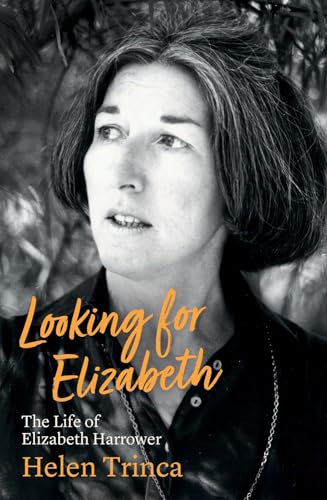
Helen Trinca, Looking for Elizabeth: The life of Elizabeth Harrower (#BookReview)

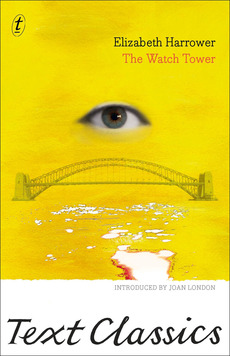
Elizabeth Harrower The watch tower

Like many, I was astonished when I read Elizabeth Harrower’s The watchtower (my review), upon its publication by Text Classics in 2012. Astonished not so much for its writing, though that is excellent, but for its subject, which is what we’d now call coercive control. The astonishment comes from the fact that The watchtower was first published in 1966, at a time when domestic abuse was hidden. Harrower recognised it, however, and called it out. The book made a splash at the time, but then disappeared from public view, though not completely from academia. Then, in 2012, Michael Heyward and his Text Publishing Company decided to publish it, and so began what biographer Helen Trinca calls, her “second act”.

Looking for Elizabeth is the second literary biography I’ve read by Trinca, the first being Madeleine: A life of Madeleine St John (my review). Trinca must like challenging subjects, because Harrower, like St John, was challenging to write about, albeit in Harrower’s case, Trinca had the benefit of knowing her.

So, what made Elizabeth Harrower such a challenge? Trinca had many conversations with her from 2012 on, including formal interviews for newspaper articles, and Harrower had placed her papers (including letters, reminiscences, and novel drafts) with the National Library, to which Trinca apparently had full access. But interviews and papers don’t tell the full story, particularly if the subject has spent her life “curating” or shaping it, destroying many of her papers along the way, including, as she told Text editor David Winter in 2013, “more than 400 foolscap pages of literary thoughts – part journal, part stories, part eye-witness accounts, secrets and so on”.

Trinca’s biography draws on a variety of sources, which she documents in her Author’s Note. Besides her personal connections with Harrower, which included meetings, phone calls and emails, and Harrower’s papers, she used the papers of others (including Shirley Hazzard, Kylie Tennant, and Judah Waten), all sorts of other records, and interviews with family and friends. Gaps in information are frequently noted within the text – and are sometimes speculated about using that thing that many literary biographers do, the works themselves. How much can – and do – they tell us about the person who held the pen?

Many writers say they begin their project with a question. In Trinca’s case, the framing question seems to have been, Why did Elizabeth Harrower stop writing at the height of her powers? Because, this is indeed what she did. Having written and published four well-received novels – Down in the city (1957), The long prospect (1958, my review), The Catherine wheel (1960), and The watchtower (1966) – she withdrew her fifth completed novel, In certain circles, from publication in 1971, and never published a novel again, despite many encouragements from her friends including Patrick White and Christina Stead. She wrote a few short stories, but gave up writing altogether by the end of the 1970s.

From this literary trajectory, Trinca weaves a moving and interesting story about a fascinating woman. Like Madeleine, this is a traditional, chronologically told biography. It is well-documented, using clear but unobtrusive numbers pointing to extensive notes at the end, and there is a decent index.

“I’ve lived dangerously” (Elizabeth Harrower)

I am not going to tell the story of Harrower’s life, because the biography does that. Essentially, she was born in industrial Newcastle in 1928, and lived with her grandmother after her parents divorced, before joining her mother in Sydney. She never got over, it seems, being “a divorced child”. It dislocated her. Her mother remarried, and Trinca suggests that her stepfather was behind men like The watch tower’s Felix Shaw. She lived in London from 1951 to 1959, before returning to Australia, rarely leaving Australia after that. She did not marry, but had an intense, emotional relationship with the older, married Kylie Tennant, which raises questions that Trinca isn’t able answer, though she points to other “crushes” on older women. Do we need to know?

Through Harrower’s life she mixed with some of Australia’s significant people, including writer Patrick White, politician Gough Whitlam, and artist Sid Nolan. She had a long correspondence with Shirley Hazzard (about which I wrote after attending the launch of a book of those letters.) She died in 2020, suffering from Alzheimer’s. (Her life dates closely mirror my own mother’s.)

Now, rather than detailing this life more, I’ll share some of the threads that run through Trinca’s story, as they provide insight into who Harrower was, and what makes her writing, and her persona, so interesting. They also give the biography a narrative drive.

These threads include that aforementioned one regarding why she stopped writing. Another concerns what drove her to write. Trinca writes about an interview Harrower had with broadcaster Michael Cathcart in November 2015:

She reprised a comment she had often used in the past: ‘I always had an alarming and dangerous interest in human nature. And so recently, I think I was answering some questions, and I said that I felt I had urgent messages to deliver. I wanted to tell people things’.

These things are the emotional truths we find in her books. In an interview with Jim Davidson for Meanjin in 1980, she discouraged people from finding her life in her books, saying that the “emotional truth” is there but “none of the facts”:

None of the books are actual accounts by any means. They are less extreme than reality because reality is so unbelievable. Besides which, people can only take so much. You don’t want to frighten them do you, or do you?

This is the “wounded wisdom” that critics like America’s James Wood identified. It’s not surprising, given the life that led to this “wisdom”, that Harrower was wary, guarded, in her dealings with people, which is another thread that runs through the book. Harrower was polite and genuinely interested in people – “she listened with intent” – but always turned questions back on them rather than give herself away. In 1985, she admitted that, in interviews, “my whole intention seemed to be to give nothing away, to disguise myself”.

Which brings me to the final thread I want to mention, the idea of having “lived dangerously”. Several times through the biography, Trinca refers to Harrower’s saying that she had lived dangerously, but what did she mean? It seems she meant something psychological, metaphysical even. In 2012, she said to Trinca:

In my own mind I have lived dangerously, dangerously in the sense of finding out more and more about human nature. … At this age, you are aware of some very contrary and dangerous things you have done with your life as if you were going to be immortal. This is the irritating thing, now it is dawning on me that I am not immortal.

She said something similar in 1985, “I consider that in my life I’ve lived dangerously, and I haven’t lived a self-protective sort of life”.

“To have lived dangerously”, writes Trinca near the end of her book, “was a badge of honour for Elizabeth”. I read this as Harrower believing that, for all her wariness, she had let herself be open to life and its difficult emotional challenges.

What it actually means probably doesn’t greatly matter, despite Trinca’s “looking”. Nor do the gaps. What matters is the body of work she left, however she lived her life. It’s beautiful, unforgettable, precious, and Trinca tells that story so well.

I now look forward to Susan Wyndham’s biography which is due out soon. How will she fill in the gaps? Will she delve more into Harrower’s political leanings, and what conclusions will she draw about Harrower, who she was and why she wrote what she did?

Helen Trinca
Looking for Elizabeth: The life of Elizabeth Harrower
Collingwood: La Trobe University Press, 2025
309pp.
ISBN: 9781760645755

Gertrude H. Dorsey (Browne), An equation (#Review)

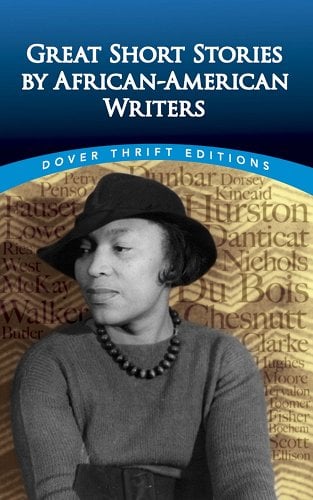
Gertrude H. Dorsey’s short story is the third in the anthology Great short stories by African-American writers, which my American friend Carolyn sent me. It presented an unexpected challenge.

Gertrude H. Dorsey (Browne)

The biographical note at the end of the anthology is one of the shortest provided by the editors. It goes:

Who was Gertrude H. Dorsey Browne? By the evidence of her published work between 1902 and 1907 in Colored American Magazine she was a clever writer of literary short fiction at the turn of the twentieth century; the little romance “An equation” is possibly her first published short story.

She does not appear in Wikipedia, and an internet search found very little, but it did find something, an article published in 2021 by two journalism students, Sarah Barney and Smelanda Jean-Baptiste. They write how an interest in Dorsey was sparked in a Newark reading group in 2017, when they met to discuss ‘a story, a witty romance titled “An Equation”’. Intrigued by the author’s apparent Newark connection, they decided to research her life. They discovered that she was born on 1 August, 1876/77, in Coshocton, Ohio, to Clement Dorsey and Martha Johnson Lucas, and that she died in April 1963 and was buried in an unmarked plot in Cedar Hill Cemetery.

Dorsey graduated from Coshocton High School in 1896, the only African-American student in a class of 11. She maintained honor roll throughout her years and was a member of the school’s Literary Society. While in high school, she had been a sales representative for the Black-owned Cleveland Gazette newspaper, and did this same work when she moved to Newark as a representative for the Colored American Magazine.

Further, the book club found that while Brown (as they spell her name) worked as a sales representative, she also wrote some stories for the magazine. Some was nonfiction but most was fiction, and her writing “often engaged with pertinent issues such as racism and Jim Crow through wry story plots”. They say her stories

transcend, but do not dismiss, class, race, and gender. They often speak to the hidden truths of what makes us human and the pride involved in shielding those commonalities. 

Not much else is known about her life, but the book club women recognised that “Brown had literary talent in a time when graduating from high school was a feat for women, especially Black women, and writing for a leading national magazine was an even greater accomplishment”.

“An equation”

“An equation” was, it seems, her first story. According to Barney and Jean-Baptiste, another story, titled “A case of Measure for Measure,” is about a group of white women who blacken their faces to attend a “blackface ball.” Afterwards, they discover that the paint won’t come off, forcing them to ride in the segregated car on the train, and thus “learn firsthand some hard lessons about racism and class”. 

“An equation” is not so overtly political – perhaps because it was her first – but, whatever the reason, it is a witty romance that slots into that idea of “the hidden truths of what makes us human”. The anthology’s editors say in their Introduction:

All of the stories in part or in whole are necessarily about the human condition, such as Gertrude H. Dorsey Browne’s “An equation”, in which the narrator declares that “the power of loving is not variable”.

It tells of a young 19-year-old woman, Grace, who obtains a job as an assistant to the Principal of her college and as a result meets 26-year-old school inspector, Raymond Turner, to whom she finds herself attracted. The story is told from her point-of-view and progresses through a series of mathematical jokes which start with her describing Turner as an “Unknown Quantity”. Unlike typical romance stories, this romance doesn’t really get off the ground before it seems to be over. In fact, it nearly doesn’t happen at all due to missed communications, hurt feelings and too much attention paid to mathematical theories and concepts like certainties and uncertainties. But, our lovers are brought together at the end and the story concludes with yet another mathematical joke.

Race is not an issue here, and class differences, while evident, are a background factor rather than a major player in the story. It does have interest, however, beyond being an enjoyable story. This relates to the fact that it was published in the Colored American Magazine, which was, according to an article I found, “a Black-owned, -published, and -operated magazine catering to a Black audience”. Tanya Clark, the article’s author, talks about CAM editor Hopkins’ pedagogical intentions for the magazine, which encompassed “challenging the status quo and elevating the race”. However, she also wanted “to provide African Americans with narratives that simply bring them gratification”. This is, I think, where Dorsey’s story comes in. It’s an entertaining and intelligently written story that could be about a romance between any young educated couple. That, of course, is a political point, but it’s subtly made by just being the story it is.

Clark also makes the point that under Hopkins, “CAM was a publishing forum for women writing poetry, fiction, and nonfiction articles”. These women included “seasoned and budding writers, … race leaders who wanted to try their hand at creative writing, … and friends and subscription agents of the magazine” who included Gertrude Dorsey Browne. Clark says “their woman-centered stories honored sisterhood among Black women, showcased Black women’s intellectual capacities, and praised Black women’s desires to work, organize, and fulfill hopes for domesticity”.

“An equation” is one of these “women-centred stories”. The love interest (the “Unknown Quantity”), the romance’s trajectory calling into play questions of probability, and the resolution, draw on mathematical concepts which assume an intelligent, educated readership. It did feel a little clumsy in its exposition, due perhaps to the inexperience of the author, but it has much to offer as an example of African-American writing of the time, besides its being a clever story. I mean, talking of love in such mathematical terms. Who would have thought!

Sources

Tanya N. Clark, “Hagar Revisited: Afrofuturism, Pauline Hopkins, and Reclamation in the Colored American Magazine and Beyond” in CLA Journal, 65 (1): 141-162 (March 2022)

Sarah Barney and Smelanda Jean-Baptiste, “Uncovering a Literary Treasure: Local Book Club Re-discovers Newark’s Gertrude Dorsey Brown”, in The Reporting Project, 20 February 2021

Gertrude H. Dorsey (Browne)
“An equation” (first published in Colored American Magazine, August 1902)
in Christine Rudisel and Bob Blaisdell (ed.), Great short stories by African-American writers
Garden City: Dover Publications, 2015
pp. 36-44
ISBN: 9780486471396
Available online in the digital version: scroll to page 278

Winnie Dunn, Dirt poor Islanders (#BookReview)

Book cover

When my reading group chose our books for the second half of the year, the shortlist for the Miles Franklin Award had not yet been announced. However, wonderfully, the three books we chose from the longlist, all ended up on the shortlist. One of those was Winnie Dunn’s debut novel, Dirt poor Islanders. It is the first novel published by a Tongan Australian, and adds a welcome strand to the body of Australia’s second and third generation migrant literature.

Dirt poor Islanders spans around a year when its protagonist Meadow is approaching 12 years old. It can, therefore, also be read as a coming-of-age novel. It is a raw, earthy, honest and sometimes confronting read that exposes the challenges faced by Australian-born migrant generations, who are caught between two worlds.

This is not a new story. However, what is impressive here is that Dunn, in her first novel, has found her own strong and clear voice. It’s there in the way she gets right into the head of her protagonist Meadow, who is, admittedly, modelled on herself. It’s there in the way she interweaves English and Tongan language, capturing the vitality in her migrant community. It’s also there in her use of repetition, some of it onomatopoeic, to give her writing rhythm and create a tone that’s sometimes melancholic, sometimes humorous. Dunn also doesn’t spoon-feed her readers. She expects us to go with the flow and make the necessary connections. It’s not hard reading, but it does require attention.

“this way of seeing myself as half … and never enough” (Meadow)

So, who is Meadow? She’s a young girl who lost her birth mother at the age of 4. At the novel’s opening she is the eldest of six children in a blended family comprising three children from her birth mother, one from her step-mother, and two from this second marriage. Another is on the way. Her father is 30 years old. Meadow is grappling with what it means to grow up Tongan, particularly one who is hafekasi (half-Tongan half-White) and feeling caught between two worlds, neither of which fully accept her. She is desperate for a mother, and feels closest to her namesake, aunt Meadow, who lives in Mount Druitt with our Meadow’s paternal grandmother and another four aunts.

We follow Meadow through a tumultuous year. Early on, she spends most weekends at her Nana’s house surrounded by the five aunts, but when her father buys a new house in Plumpton, he wants Meadow, her sister Nettie and brother Jared, to call that home. With her birth mother gone, however, Meadow feels “stuck” and insecure. Aunt Meadow, also known as Lahi, is her “mother-aunt” and her rock. The narrative is built around the wedding of this Lahi, who, Meadow believes, is more interested in women. She fears for her boyish aunt, but she also fears for herself, that she will lose this mother figure to whom she clings with all her being.

Now, Meadow wants to be a writer, so she’s an observant girl, well able to express her feelings. She sees the messiness – literal and figurative – of Tongan lives, and she shares the lessons she is learning about being Tongan, not all of which are pretty. For example, “Tongan meant dirty” (p. 37), “being a joke” (p. 73) and “second best” (p. 102). But, there are positives too. “Togetherness was what it meant to be Tongan” (p. 40) and “being Tongan meant eating together and being grateful to eat together” (p. 118).

Dirt poor Islanders, then, depicts a migrant family living under stress. Big families and low-paying jobs with long hours mean a chaotic home. Meadow’s scalp is nit-infested, and her home, decorated with second-hand goods, much picked off roadsides, is cockroach-infested. Her parents work hard to keep the family sheltered and fed, but the mess overwhelms. Flipping between maturity and immaturity, Meadow sees all this – the hard work, the exhaustion, the love – but she struggles to find her place, to accept her Tongan heritage.

It all finally comes to a head, and her father organises for her to go to Tonga, because, he says, “it’s time for youse to know what being a Tongan truly means” (p. 239).

Migrant literature encompasses both memoir and fiction, with the latter mostly being autobiographical or autofiction. Dunn confirmed in her Conversations interview that much of the novel’s family background comes from her life, but the novel diverges from real life in its narrative arc and the resolution of Meadow’s inner turmoil. This answered the question I had as I was reading, which was why Dunn had chosen fiction, like Melina Marchetta did in Looking for Alibrandi, over memoir, like Alice Pung did in Unpolished gem. It’s a choice. What matters are the truths conveyed, not the facts, and Dirt poor Islanders feels truthful.

This truth is not all raw and confronting as I may have implied at the beginning. It is also warm and humorous. Meadow, who doesn’t like rich, fatty Tongan food tells us:

If it came out of a can covered in sugar and sodium, Tongans were eating it. But back then, all I wanted was food that came out of a window. (p. 37)

Preferably at Maccas! There are also funny scenes, many relating to the wedding which occupies the novel’s centre, and which is another nod – besides the title and epigraph – to the book that clearly inspired Dunn, Kevin Kwan’s Crazy rich Asians.

“no one could live as half of themselves” (Meadow)

However, Dunn’s book is fundamentally different from Kwan’s, whose aim, he said, was, to “introduce a contemporary Asia to a North American audience”. Dunn did want to introduce Tongan Australian culture – and counteract the image presented by Chris Lilley in Summer Heights High – but through Meadow, she also explores the excruciating difficulties children caught between cultures face. By the end of the novel Meadow comes to understand a little more the “messy truth” of being an Islander, and that:

No one could live as half of themselves. To live, I needed to embrace Brown, pālangi, noble, peasant, Tonga, Australia – Islander. (p. 275)

Dirt poor Islanders is both shocking and exciting to read, which is probably just what Dunn intended. I feel richer for it!

Winnie Dunn
Dirt poor Islanders
Sydney: Hachette Australia, 2024
293pp.
ISBN: 9780733649264

Wayne Bergmann and Madelaine Dickie, Some people want to shoot me (#BookReview)

Having finally read Wayne Bergmann and Madelaine Dickie’s Some people want to shoot me, I am not surprised that it has been shortlisted in the Nonfiction category of this year’s Western Australian Premier’s Book Awards. It is moving; it is clearly written; and it is informative about big issues. Wayne Bergmann is a Nyikina* man and Madelaine Dickie a kartiya (white) woman, making this one of those collaborative novels I wrote about recently.

Before I continue, a little on its form. This is a work of nonfiction. It is essentially memoir, written in third person by Bergmann and his collaborator, Dickie. And, being a memoir, it has a specific focus. In this case, it is one underpinned by a powerful sociopolitical message concerning the right of First Nations people to survive and prosper on their own land.

“walking in two worlds”

So … Some people want to shoot me is about a man who realised he must walk in two ways – the kartiya way and the old people’s way, that is the white way and the way of his traditional culture. For his heart and soul he needed to walk the traditional ways, but in his head, seeing the suffering and the social and economic dysfunction caused by dispossession and powerlessness, he had to walk the kartiya way. The book exposes just what a tough balancing act this was – and is. It demanded (demands) strength, bravery, nous, clarity of purpose – and the support of family.

The book opens with a Prologue which sets the scene. It’s 2011 and Bergmann, who is at breaking point after years of negotiating on behalf of Kimberley Traditional Owners, walks out of a meeting with a mining company and heads, with his wife and children, back to country:

to the mighty Martuwarra, the Fitzroy River – lifeblood of Nyikina country, Wayne’s country, his children’s country – made by Woonyoomboo when the world was soft.

From here, the book starts in Chapter 1 the way memoirs usually do – at the beginning. For Bergmann, the beginning is Woonyoomboo who tasked the Nyikina people to look after country. This they did, until the arrival of white settlers in the late 19th century, when things “radically changed”. The first two chapters chronicle some of this change through the lives of Bergmann’s forbears. It depicts a world where the legacy of nuns, monks, ethnographers, pastoralists and miners “was still felt acutely”, where “frontier massacres had occurred within living memory”, and “where justice, under whitefella law, didn’t often grace Kimberly Aboriginal People”. Bergmann, who was born in 1969, saw this, felt this, and took on the pastoralists, mining companies and governments to “upend the status quo”.

Of course, such upending doesn’t come easily, and the people doing this upending aren’t always understood and appreciated, which is where we came in at the Prologue. The book details, chronologically, Bergmann’s work, from his early work with the KALACC (Kimberley Aboriginal Law and Culture Centre) and his realisation that for Aboriginal people to be empowered under Western law and able to make systemic changes, “they needed to understand the kartiyas’ law system inside out”. So, he did a law degree, and then, at the age of 33, became CEO of KLC (Kimberley Land Council) and here is where the really hard work started, and it was not pretty. It demanded every ounce of energy, intelligence and resilience, he could muster.

Bergmann had to be clear about the role, which was, as a native title representative body, “to facilitate a process and follow procedure in accordance with native law to allow Traditional Owners (TOs)” to make decisions “about their country”. This meant consulting with the TOs and ensuring they understood what they were being asked for and what was being offered. When stakes are high, emotions also run high. Some environmentalists, for example, would turn against TOs (and thus the KLC) when their views diverged, but sometimes TOs believed that some development was advantageous to their people. Then, of course, there were times TOs didn’t agreed with each other, or when there was disagreement between TOs and others in their communities. This is to be expected, of course. Do all kartiyas agree? But, it makes for very difficult times, and Bergmann was at the centre. As well as working with the relevant Kimberley TOs, Bergmann was also negotiating with the Western Australian government and, for example, the Woodside mining company, negotiating not only the actual agreements, but for money and resources to carry out consultations so that the TOs could come to the table well informed. All this is explained clearly in the book, making it well worth reading for anyone who has not followed native title cases closely. It’s both enlightening and chastening.

Bergmann made some significant deals, but it was a bruising time, so after a decade, wiser and with a clear view ahead, he moved on to establish KRED Enterprises. A charitable business, wth the tagline of “walking in two worlds”, its aim was (and is) to support cohesive Aboriginal economic development in the Kimberley, to encourage businesses run by and for Aboriginal people. The rest of the book covers Bergmann’s work – under the KRED umbrella and in other areas (including buying a newspaper, the National Indigenous Times) – all focused on the one goal, to pull his people out of poverty and disadvantage, to ensure they have the opportunities available to all Australians, and in so doing to improve their lives and outcomes. Nothing less will do.

We had to create some wealthy Aboriginal organisations, and wealthy Aboriginal people, so we could shape our own future, on our own country.

Woven through the accounts of Bergmann’s work are stories about his personal life, some good times but also the egregious attacks his wife and children faced at the height of his KLC work. We come to see the truth of Dickie’s description of him in her Introduction, as “demanding, smart, intensely political and visionary”. This is a man who puts himself on the line because he is driven to see First Nations Australians prosper.

Some people want to shoot me packs a lot into its 223 pages. That it covers so much, with great clarity and readability, is due to the writing. It’s well structured, and employs some narrative techniques, including evocative chapter titles and the occasional foreshadowing, which keep the story moving. At the end of the book is an extensive list of Works Cited and a Select Bibliography, which provide authority for what has gone before, if you need it.

Meanwhile, here are some words by another First Nations leader, Clinton Wolf:

One thing you’re going to get from Wayne is the truth. Some people like hearing it. And some don’t.

This book tells Wayne’s story, and I did like hearing it. It’s a great read about a great Australian, telling truths we all need to hear.

* First Nations cultures are orally-based, which results in inconsistent spellings when their languages are written. This post uses the spellings that Bergmann and Dickie use in their book.

Wayne Bergmann and Madelaine Dickie
Some people want to shoot me
North Fremantle: Fremantle Press, 2024
223pp.
ISBN: 9781760992378

Andrea Goldsmith, The buried life (#BookReview)

Titles are intriguing things, and we don’t always pay them the attention they deserve, but the title of Australian writer Andrea Goldsmith’s ninth novel, The buried life, is worth thinking about. It is the third novel I’ve read by Goldsmith, and, like the others, is a contemporary story focusing on relationships and the stresses her characters confront, stresses that we will know ourselves or recognise in those around us, stresses that make her characters relatable. The title, however, hints at the direction this novel will take, which is to look at the way these stresses can often be hidden for years. But they will out, one way or another.

This is a confidently written novel, using techniques I love. First, Goldsmith calls on music, art and literature to illuminate her ideas. What reader doesn’t enjoy that? And then, she uses a formal structure, comprising four named parts, each of which contains named chapters that open with a revealing epigraph. Part 3, for example, is titled “The buried life” and its first chapter’s epigraph comes from Matthew Arnold’s same titled poem:

But often, in the world’s most crowded streets,
But often, in the din of strife,
There rises an unspeakable desire
After the knowledge of our buried life

If we hadn’t realised it by this time, the point is clear. This novel, which explores big themes encompassing friendship, love and death, is also about the thoughts and feelings we bury inside – hidden from others, and sometimes also from ourselves. We have three people – 43-year-old Adrian, an academic specialising in Death Studies, his 28-year-old neighbour Kezi, an artist who makes paper by hand, and 57-year-old Laura, a social scientist who works in town planning. At the beginning of the novel, Adrian and Kezi are friends, and do not know Laura. However, a chance meeting between Adrian and Laura in a Melbourne city cheese shop brings her into the fold, and our trio is complete.

the “carefully constructed life”

Each of these characters has things that are buried, just waiting to resurface. For the “temperate” Adrian, suffering the break-up of a 10-year relationship, it’s his parents. They had died when he was very young and he was brought up by loving grandparents – so lovingly, in fact, that he had denied for decades the impact on his life, including his chosen career, of his parents’ early deaths. For the outwardly confident lesbian, Kezi, it is also parent-related. Rejected in her late teens by her highly religious – read fundamentalist – parents for her sexuality, she craves their love and acceptance. And then there’s Laura, a successful career woman who seems to have the perfect marriage. “Seems”, however, is the operative word because very quickly the reader realises that her narcissistic husband is dismantling her, “piece by piece”. But Laura cannot see that her constant modifications to keep Tony happy is self-destructive. It’s worth it, she feels, for what she believes he gives her.

Goldsmith slowly unfolds her characters’ stories in such a way that we, like others in their circles, understand their buried lives long before they do. Adrian’s academic colleague, Mahindra, not to mention his ex-lover, Irene, sees what Adrian doesn’t about his choice of a career in Death Studies, but Adrian continues to insist that his childhood was simply his “normal” and had nothing to do with it. Laura’s sister Hannah and friend Jules constantly point out to her the way her husband undermines her, and the harm it is doing, but, despite knowing she tiptoes around him, she is convinced “she had become a better person with Tony”. He is her “normal”. The younger Kezi is more in touch with her inner self. Her pain and desires are not so much buried as kept at bay. She “wanted her parents’ love … she wanted them to love her as she was, and not as they wanted to her to be”. This want is threatening to sweep away “her carefully constructed life”.

So, three characters, all waiting – in our minds at least – for the trigger that will reveal their inner selves in a way that can no longer be ignored, that will force them to “shed their old skins”. In Part 3, Adrian, thinking that whatever relationship he’d been building with Laura was over, walks to the cemetery, listening to Mahler, whom he has recently discovered. As he sits on a fallen log, the “past rushes in”. Memories of his father and the loss he’d endured come to the fore, and he finds himself “crying for the little boy, crying for the grown-up man … mourning the buried life”. Back home, he picks up Arnold’s poem and recognises that for him

it was not desire, as in Arnold’s poem, that had pulled up the past from ‘the soul’s subterranean depth’, rather he had been ambushed by what insisted on at last being acknowledged.

As the novel progresses from here, Laura and Kezi are also forced to acknowledge the truths they had been resisting. It’s a powerful novel about how hard we work to deny the truths right in front of us, and it works well because it does this through characters that are so utterly believable. We will them to work it out.

However, the novel is also about death. It is never far away, given Adrian’s research and the deaths that surround our characters. Indeed, the final epigraph, which comes from Philip Roth, tells us that “Life’s most disturbing intensity is death”. Those of you who know Goldsmith will know that she lost her beloved partner, the poet Dorothy Porter, back in 2008. Porter’s last poetry collection, The bee hut (my review) ends with a poem written just a couple of weeks before her death from cancer. It concludes with “Something in me / despite everything / can’t believe my luck”. Death is sad, but some writers can write about it with such beauty, as Porter does in this poem. Penelope Lively also does it at the end of Moon tiger. And Goldsmith does it at the end of this novel, because you won’t be surprised to know that in a book with this title and subject matter, someone does die. It brought me to tears, not so much the death, terribly sad though it is, but the writing of it. It is inspired.

The buried life is a moving read, one made even more so if, as you read it, you play some of those Mahler pieces Adrian loves. I dare you to be disappointed.

Andrea Goldsmith
The buried life
Transit Lounge, 2025
321pp.
ISBN: 9781923023253

(Review copy courtesy Transit Lounge via Scott Eathorne, Quikmark Media)

Elizabeth Strout, Olive Kitteridge (#BookReview)

Elizabeth Strout’s Pulitzer prize winning novel Olive Kitteridge has been around for 17 years, but it’s only now that I have managed to read it. And that’s because my reading group scheduled it as our June read. It’s not that I didn’t want to read it – I really did – but other books kept getting in the way. I realise now that I should not have let that happen because Olive Kitteridge is a wonderful read.

Now, how to describe it? The first thing is its form. It’s more like a collection of linked stories, or what its Wikipedia article calls a short story cycle. Although I’ve read many linked short story collections, I haven’t come across this term before. I’d like to explore it some time, but not now, because I’m keen to talk about the book. I will say, though, that some in my reading group found the episodic form somewhat disconcerting at first. However, despite this, almost all of us thoroughly enjoyed the book. Why? Well, as it turned out, the form is partly what makes it such a strong and moving read.

As most of you will know, the novel is set mostly in the late 20th and very early 21st centuries in the fictional small-town of Crosby, in coastal Maine. It comprises 13 chapters – or stories – that explore the life of retired schoolteacher Olive Kitteridge and her relationships with family and friends. In some of the chapters Olive is front and centre, but in others she makes a cameo appearance, sometimes just as a passing reference. The end result is as much a picture of a small town as it is of Olive, though Olive is our lynchpin. As one of my reading group members said, her question as she read each story was, “Where’s Olive?”

everyone thinks they know everything and no one knows a damn thing. (“River”)

So, while my reading group talked about the form and the gorgeous writing, we mostly focused on the picture painted of a small town – which, said one, provides an antidote to the “apple-pie” image we typically get of small-town America – and on the character of Olive. She is complex and not easy for readers to like, but we found her real, and most of us did like her. The opening story, “Pharmacy”, doesn’t pull any punches in its depiction of Olive. She comes across as curmudgeonly, uncompromising. She is cutting about her husband Henry’s new young pharmacy assistant and unwilling empathise with her. She is prickly and vengeful with her son’s new bride, Suzanne (“A Little Burst”), while Bob in “Winter Concert” wonders how Henry can “stand” her.

However, there are many occasions where Olive is kind and compassionate, where she sees need in others and helps or offers to help, where, as Henry describes it, “all her outer Olive-ness” is stripped away. For example, ex-student Julie remembers Olive telling a class

“Don’t be scared of your hunger. If you’re scared of your hunger, you’ll just be one more ninny like everyone else.” (“Ship in a bottle”)

And Rebecca recollects Olive saying to her at school, “if you ever want to talk to me about anything you can” (“Criminal”). Olive also quietly talks a young man, an ex-student, down from suicide (“Incoming tide”) and she and the truly “nice” Daisy try hard to help the young anorexic Nina (“Starving”).

Olive, too, can be insightful. In “Security”, for example, we read that sometimes she had “a sense of just how desperately hard everyone in the world was working to get what they needed”. And she suffers, especially from a “rupture” with her beloved son, and from grief over husband Henry’s massive stroke.

So, what we have is a character who can be tough and acerbic – even engage in a little schadenfreude – but also be sensitive and empathetic. This led me to see the book as being about more than a picture of a small town, much as that is a central and engaging part of it. The form – the interconnected short stories about life in the town – supports this view of the novel. However, this form also supports another way of looking at it, one encompassing something fundamental about our humanity.

In each story, we see characters confronting some crisis or challenge in their lives – some big ones, some quieter ones. We never see these stories fully through. They are vignettes, even those featuring Olive. This made me think about how little we know others, and perhaps even ourselves? We never fully know what others think of us, or what impact we have on others, but in this book – largely because of its form – we do see, for example, how Olive is, or has been, viewed or remembered, both positively and negatively. No one perspective is right, but each contributes to a picture of a person. This is how life goes. We see little parts of people’s lives, and sometimes we are little or big parts of people’s lives, but what do we truly know?

A bleak interpretation of this could be that it exposes our essential aloneness, but a more positive perspective is that it reminds us that we are all “real” people with good and bad, hard and soft selves. Books like Olive Kitteridge encourage us to look around corners, to not take one aspect of a person at face value, to be generous to others and ourselves. It also reminds us that we never stop learning about ourselves (or others). Certainly, at the end of this book, Olive, in her early 70s, is still discovering things about herself and her feelings. She isn’t giving up, no matter how tough things have become.

In my group’s opening discussion, I said that I thought the novel offered many truths, albeit often uncomfortable ones. For example, in “Tulips”, which is a story about things going terribly wrong, Olive reflects, “There was no understanding any of it”. But, my favourite occurs in “Security”, when some rapprochement is being made with her son, and Olive thinks

whatever rupture had occurred… It could be healed. It would be leaving its scars but one accumulated these scars.

One surely does!

There’s so much more to talk about in this book – the spot-on descriptions, the quiet humour, the many beautifully wrought characters and their trials, and the political references such as to 9/11 and George W Bush which provide context. But the main story is the human, the personal. The novel closes with Olive reflecting deeply on her life and her choices, on how much had been “unconsciously squandered”. She realises that, while

It baffled her, the world. She did not want to leave it yet.

I love getting inside the heads of characters like Olive, and so I loved Olive Kitteridge. I’ll be reading more Strout I’m sure.

Brona and Kate both read and enjoyed this long before I did!

Elizabeth Strout
Olive Kitteridge
London: Simon & Schuster, 2008
270pp.
ISBN: 9781849831550

Charles W. Chestnutt, Uncle Wellington’s wives (#Review)

Charles W. Chestnutt’s long short story is the second in the anthology Great short stories by African-American writers sent to me by my American friend Carolyn. I have come across Chestnutt before, in the Library of America’s Story of the Week program, but they haven’t published this one and I haven’t written about him before.

Charles W. Chestnutt

The biographical notes at the end of the anthology provide a brief introduction to Charles Waddell Chestnutt (1858–1932), whom they describe as the “first commercially successful African-American writer of fiction”. Born in Cleveland, Ohio, and growing up in North Carolina, he “became a teacher, married, and moved to New York City, before returning to Cleveland, where he studied law”.

Wikipedia, of course, provides more. They describe him as “an American author, essayist, political activist, and lawyer, best known for his novels and short stories exploring complex issues of racial and social identity in the post-Civil War South”. His racial background is interesting, and I will quote Wikipedia here (without the references/links which cite sources for descriptors we no longer use):

His paternal grandfather was known to be a white slaveholder. He identified as African-American but noted that he was seven-eighths white. Given his majority-European ancestry, Chesnutt could “pass” as a white man, but he never chose to do so. In many southern states at the time of his birth, Chesnutt would have been considered legally white if he had chosen to identify so. By contrast, under the one drop rule later adopted into law by the 1920s in most of the South, he would have been classified as legally black because of some known African ancestry, even in spite of only being one-eighths black.

The anthology says that some of his best-known – and popular-at-the-time – stories, reproduced the dialect of uneducated storytellers, and Uncle Wellington is one such. Like this anthology’s first author Alice Ruth Moore, Chestnutt wrote about the color line, oppression, and themes of racism.

“Uncle Wellington’s wives”

I was rather tickled when I started reading “Uncle Wellington’s wives” because it delightfully pairs with the novel I had just read, Percival Everett’s James (my review). It is set post Civil War and satirically deals with the lure of the freedom of the North. The anthology describes it as ‘one of his fine and wry stories about “the Color Line”, a line that had consequential legal and social repercussions’. It tells of Uncle Wellington who, “living in a small town in North Carolina … yearns for something beyond his comfortable home with his impatient, hard-working wife”.

According to Wikipedia, the collection from which this story has been taken, includes many themes explored by 20th-century black writers. One of these, “the pitfalls of urban life and intermarriage in the North”, underpins “Uncle Wellington’s wives”. The story is built around the trope of a disgruntled, and somewhat lazy, husband – the titular uncle Wellington – of a hardworking, practical woman who keeps the show on the road. It opens with uncle Wellington Braboy returning home from a lecture at a meeting of the Union League (see Wikipedia) on the topic of “The Mental, Moral, Physical, Political, Social and Financial Improvement of the Negro Race in America”. It’s a topic, says the narrator, that is common in “colored orators” because “to this struggling people, then as now, the problem of their uncertain present and their doubtful future was the chief concern of life”. But, there was hope, and this speaker had “pictured in eloquent language the state of ideal equality and happiness enjoyed by coloured people at the North”. Indeed, the “mulatto” speaker had “espoused a white woman”.

Chestnutt tells of how the now inspired uncle Wellington goes about getting to the North to experience this land of milk and honey, this seemingly “ideal state of social equality”. He goes to a local lawyer to find out whether his wife’s money is his to control. It is, and it isn’t, he learns in a wonderful discussion of the finer points of law. Later, this issue of law’s finer points comes into play again when, now up North, he wants to get out of a marriage. The satire on the law is delicious.

Indeed, the satire throughout this story is delicious as uncle Wellington comes to appreciate the truth of that adage that “life is not always greener”. There might be more legal equality in the North, but that doesn’t mean people are equal. People don’t change overnight. White people don’t suddenly all treat coloured people as “equal”, regardless of what the law says. Coloured people can’t immediately achieve “equal” jobs, because they don’t have the skills and/or the education and/or the contacts. This is not all spelt out in the story, but it’s apparent nonetheless through what happens to uncle Wellington.

I mentioned at the start that an underlying trope for this story is the disgruntled, lazy, husband of a hardworking, practical woman. However, there are other tropes, including the prodigal son story. There are also other themes, besides racial equality, including that of the problems of illiteracy and poor education. Uncle Wellington’s not being able to read, for example, lays him open to not understanding his rights, or the law, and so on. It doesn’t play out badly here but we see the pitfalls and the risks he faces.

In the end, this story – without spoiling it too much – is not a tragedy. Chestnutt is generous to his protagonist, and so uncle Wellington learns a lesson without suffering too much. We see the truth in his wife aunt Milly’s response to him early on

“I dunno nuffin’ ’bout de Norf,” replied aunt Milly. “It’s hard ’nuff ter git erlong heah, whar we knows all erbout it.”

For aunt Milly, life with the people you know in the place you know is hard enough. This truth is repeated, in a different way, by the coloured Northern lawyer:

“Well, Mr. Braboy, it’s what you might have expected when you turned your back on your own people and married a white woman. You weren’t content with being a slave to the white folks once, but you must try it again. Some people never know when they’ve got enough. I don’t see there’s any help for you; unless,” he added suggestively, “you had a good deal of money.”

For Chestnutt, I understand, there’s the issue of loyalty to your race or people, or, to look at it the opposite way, of racial treason. The point is that there are no simple answers. Life and living are complex. Equality is the goal, but it doesn’t come easily, and it doesn’t come by denying your own. It comes with mutual respect and equal opportunity. These don’t change overnight. The Chestnutt Archive writes that:

As a young educator in Fayetteville, Chesnutt had remarked on the “subtle feeling of repulsion toward the Negro common to most Americans”; and yet he concluded that “the Negro’s part is to prepare himself for recognition and equality.” 

These ideas quietly, without didacticism, underpin “Uncle Wellington’s lives”.

Charles W. Chestnutt
“Uncle Wellington’s wives” (first published in The Atlantic Monthly, 1898)
in Christine Rudisel and Bob Blaisdell (ed.), Great short stories by African-American writers
Garden City: Dover Publications, 2015
pp. 5-35
ISBN: 9780486471396
Available online at ClevelandStateUniversityPressbooks

Percival Everett, James (#BookReview)

Well, let’s see how I go with this post on Percival Everett’s Pulitzer Prize winning novel James. I read all but 30 pages of this novel before my reading group’s meeting on 27 May. I was not at the meeting as I was in Far North Queensland, but I wanted to send in some notes, which I did. The next day, our tour proper started and I did not read one page of any novel from then until the tour ended. So, it was some 15 days later before I was able to pick it up to finish it. I found it surprisingly easy to pick up and continue on but, whether it will be easy to remember all my thoughts to write about it, is another thing. However, I’ll give it a go.

I greatly enjoyed the read. The facts of slavery depicted here are not new, but Everett offers a clever, engaging and witty perspective through which to think about it, while also being serious and moving. In terms of form, it’s a genre-bender that combines historical and adventure fiction, but I would say these are overlaid with the road novel, a picaresque or journey narrative, those ones about freedom, escape and survival rather than adventure.

Now, I’m always nervous about reading books that rewrite or riff on other books, particularly if I’ve not read the book or not read it recently. I’m not even sure which is true for Huckleberry Finn, given I came across that book SO long ago. Did I read it all in my youth? I’m not sure I did, but I don’t think it mattered here, because the perspective is Jim’s, not Huck’s. More interesting to me is the fact that at times James reminded me of Toni Morrison’s Beloved, such as when James says “we are slaves. What really can be worse in this world” (pt 2, ch 1) and his comment on the death of an escaping slave, “she’s just now died again, but this time she died free” (pt 2 ch 6).

Before I say more, however, I should give a brief synopsis. It is set in 1861 around the Mississippi River. When the titular slave, James, hears he is about to be sold to a new owner some distance away and be separated from his wife and daughter, he goes into hiding to give himself time to work out what to do. At the same time, the young Huck Finn fakes his own death to escape his violent father, and finds himself in the same hiding place as James. They set off down the river on a raft, without a firm plan in mind. The journey changes as events confront them, and as they hear news of a war coming that might change things for slaves. Along the way they meet various people, ranging from the cruel and brutal through the kind and helpful to the downright brave. They face challenges, of course, and revelations are shared. The ending is satisfying without being simplistic.

“It always pays to give white folks what they want” (James)

All this makes for a good story, but what lifts it into something more is the character and first-person voice of James. Most of you will know by now that Everett portrays James as speaking in educated English amongst his own people but in “slave diction” to white people and strangers. On occasion, he slips up which can result in white people not understanding him (seriously!) or being confused, if not shocked, that a black man can not only speak educated English but can read and write. Given the role language plays as a signifier of class and culture, it’s an inspired trope that exemplifies the way slavery demeans, humiliates and brutalises human beings.

James – the book and the character – has much to say about human beings. There’s a wisdom here about human nature. Not all slaves, for example, see things the same way. Some are comfortable in their situation (or, at least, fear change), while some will betray others to ingratiate (or save) themselves. But others recognise that there is no life without freedom and will put themselves on the line to save another. We meet all of these in the novel. And, of course, we meet white people of various ilks too. Some of the most telling parts of the novel are James’ insights into the assumptions, values and attitudes of white people and into how slaves, and presumably coloured people still today, work around these. It would be funny if it weren’t so deadly serious:

“White folks expect us to sound a certain way and it can only help if we don’t disappoint them … The only ones who suffer when they are made to feel inferior is us. Perhaps I should say ‘when they don’t feel superior’ …” (pt 1 ch 2)

AND

It always made life easier when white folks could laugh at a poor slave now and again. (pt 1 ch 12)

Everett piles irony upon irony, daring us to go with him, such as when James is “hired” (or is he “bought”, he’s not quite sure) to perform with some black-and-white minstrels, and has to be “painted black in such a way as to appear like a white man trying to pass for black”:

Never had a situation felt so absurd, surreal and ridiculous. And I had spent my life as a slave. (pt 1 ch 30)

There are other “adventures” along the way of course – including one involving a religious revival meeting. James is not too fond of religion, differentiating him, perhaps, from many of his peers.

Is James typical of slaves of the time? I’m not sure he is, but I don’t think that’s the point. This is not a realist novel but a novel intending to convey the reality of slavery and what it did to people. James jolts us into seeing a slave’s story with different eyes. We are forced to see his humanity – and perhaps the joke is on “us” white people. Making him sound like “us” forces us to see him as “us”. We cannot pretend he is other or different. This is seriously, subversively witty, I think.

And this brings me to my concluding point which is that the novel interrogates the idea of what is a “good” white person. No matter how “good” or “decent” we are, we cannot escape the fact that we are white and privileged. No matter what we say or do, how empathetic we try to be, it doesn’t change the fundamental issue. James makes this point several times, such as “there were those slaves who claimed a distinction between good masters and cruel masters. Most of us considered such to be a distinction without difference” (pt 1 ch 15). I suppose this is “white guilt”, but I don’t really know how to resolve it. Talking about it feels like virtue signalling, but not talking about it feels like a denial of the truth. There were times when the book felt a little anachronistic, but that’s not a deal-breaker for me because historical fiction is, fundamentally, the past viewed through modern eyes. And how are we really to know how people felt back then?

I’d love to know what you think if you’ve read the novel (as for example Brona has!) 

Percival Everett
James
London: Mantle, 2024
303pp.
ISBN: 9781035031245

    Jane Austen, Emma (Vol. 2, redux 2025)

    EmmaCovers

    In April, I wrote a post on Volume 1 of Emma, sharing the thoughts that had come to me during my Jane Austen’s group’s current slow read of the novel. This month, I’m sharing some ideas that Volume 2 raised for me.

    I wrote in my Volume 1 post that, during this read, what popped out for me was the idea of young people lacking guidance. It relates to issues like character development and to themes like parenting (which Austen regularly explores in her novels.) The question with these slow reads always is, will an idea that pops up in one Volume continue in the next? Well, in this case my answer is yes and no.

    Jane Austen, Emma, Penguin

    What I mean by this is that this notion expanded for me in Volume 2 to encompass the idea of “nature versus nurture”. Now, I’m not saying that Austen was specifically engaging in that debate, but that she has a lot to say about both aspects of our character. Before I continue, I will just share that I did wonder when the “nature versus nurture” debate started?

    My searches, including via Wikipedia and two AI services, revealed that while ideas about innate (nature) vs. learned traits (nurture) can be traced back to ancient philosophy, the “nature versus nurture” debate, as a formal concept, began in the mid-1800s with Francis Galton, a cousin of Charles Darwin, who coined the term in his 1874 publication, “English Men of Science: Their Nature and Nurture”. In case you are interested, Chat GPT advised that philosophers like Plato and Aristotle debated discussed the role of “heredity and environment in shaping individuals” with Plato leaning towards nature (“innate knowledge”) and Aristotle towards nurture (“experience and environment”). And Wikipedia identifies Chen Seng having asked a similar question in 209 BCE. These aren’t the only people to have thought about the question, and Wikipedia’s article is useful if you are interested. But I’ll move on as the history of the debate is not my focus here.

    What kept popping up for me – as I looked to see how my guidance-of-young-people theme was developing – were various comments Austen was making about nature and nurture. I’ll share just a few.

    The first one to come to my attention in Volume 2, concerned Jane Fairfax, who was orphaned as a toddler and brought up, at first, by her grandmother, Mrs Bates, and aunt, Miss Bates. Austen describes her as a three-year-old

    her being taught only what very limited means could command, and growing up with no advantages of connection or improvement to be engrafted on what nature had given her in a pleasing person, good understanding, and warm-hearted, well-meaning relations.” 

    So, “nature had given her” a good start, and her relations had nurtured her as best they could with their “very limited means”. However, soon after, the Campbells (the family of a friend) had taken her in:

    “She had fallen into good hands, known nothing but kindness from the Campbells, and been given an excellent education. Living constantly with right-minded and well-informed people, her heart and understanding had received every advantage of discipline and culture”.

    And then, Austen seems to make the point that Jane Fairfax’s innate character, her disposition, was such that good nurturing had found fertile opportunity: “Her disposition and abilities were equally worthy of all that friendship could do…” Unfortunately, with no money, her destiny looked likely to be governessing, which the Campbells knew and did their best to prepare her for, but that’s another story …

    As for Frank Churchill, in my last post regarding guidance, I noted that Austen suggests that, with his guardian family (his aunt and uncle at Enscombe), he had been left to his own devices with little guidance other than “his own comfort”. In this volume, Austen says more about his nature

    “He seemed to have all the life and spirit, cheerful feelings, and social inclinations of his father, and nothing of the pride or reserve of Enscombe.”

    It seems that at least some of the Churchills’ nature had not been nurtured into Frank. Ironically, it’s Emma’s father, Mr Woodhouse, who identifies some flaws in his behaviour, calling him “not quite the thing”, though his reasons are fussy.

    And then there’s the third character whom we meet in Volume 2, Mrs Elton. These are Emma’s thoughts, and she is a snob, but nonetheless, she hones in on some points relevant to my thinking:

    and the quarter of an hour quite convinced her that Mrs. Elton was a vain woman, extremely well satisfied with herself, and thinking much of her own importance; that she meant to shine and be very superior, but with manners which had been formed in a bad school, pert and familiar; that all her notions were drawn from one set of people, and one style of living; that, if not foolish, she was ignorant, and that her society would certainly do Mr. Elton no good.

    We don’t know how much of this comes from Mrs Elton’s nature, but Emma does lay a much blame for her behaviour and character on her nurture.

    Then there’s sweet Harriet, whom we met in Volume 1, and whom Emma considered, then, “not clever, but she had a sweet, docile, grateful disposition” and only needed to be “guided by any one she looked up to”. In Volume 2, her nature is again referenced, in terms of “the many vacancies of Harriet’s mind”! Poor Harriet. What will happen to her? Wait for Volume 3!

    Finally, it’s Emma’s brother-in-law Mr John Knightley, who shows particular sense, when he provides these instructions to Emma on caring for his sons while he’s away:

    ” .. Do not spoil them, and do not physic* them.” 
    “I rather hope to satisfy you both,” said Emma; “for I shall do all in my power to make them happy, which will be enough for Isabella; and happiness must preclude false indulgence and physic.”

    [* Meaning, don’t medicate them as their mother, Emma’s sister, is wont to do.]

    There’s no reference here to specific moral, or any other education, but we can infer from this, and our knowledge of the man, that he is well aware of the importance of good nurturing to his sons.

    Of course, there were other issues that intrigued me in Volume 2, but these ideas are the ones I want to document this go round with Emma.

    Any thoughts?