Margaret Atwood, Negotiating with the dead: A writer on writing (#BookReview)

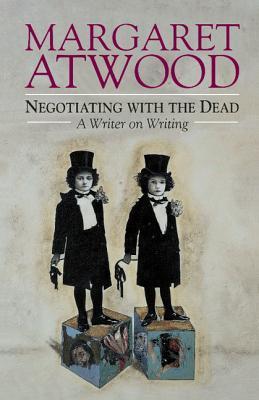
My reading for Buried in Print Marcie’s annual MARM month has been both sporadic and minimal, to say the least, but this year I finally got to read a book that has been on my TBR shelves for a long time and that I have planned to read over the last few MARMs. It’s Atwood’s treatise (or manifesto or just plain ponderings) on writing, Negotiating with the dead. Interestingly, in 2003 it won the Independent Publisher Book Award (IPPY) for Autobiography/Memoir. I hadn’t quite thought of it that way, though on reflection I can see it does have a strong element of memoir.

Its origins, however, are not in memoir but in the series of lectures she delivered at the University of Cambridge in 2000, the Empson Lectures, which commemorate literary critic, William Empson. (I recently – and sadly – downsized his most famous book, Seven types of ambiguity, out of my library). Atwood turned those lectures into this set of essays that was published by Cambridge University Press in 2002 (and that I leapt on when I saw it remaindered in 2010).

Subtitled “A writer on writing”, this book is probably not quite what most of us would expect, unless we really know Atwood. As she says in her Introduction, it is not so much about writing as about something more abstract, more existential even, about what is writing, who is the writer, and what are the writer’s relationships with writing, with the reader, with other writers, and with themself. It’s also about the relationship between writing and other art forms, like painting and composing. She says in her Introduction that “it’s about the position the writer find himself in; or herself, which is always a little different”. (Love the little gender reference here.) It’s about what exactly is the writer “up to, why and for whom?”

I rarely do this, but I’m sharing the table of contents for the flavour it gives:

  • Introduction: Into the labyrinth
  • Prologue
  • Orientation: Who do you think you are? What is “a writer,” and how did I become one?
  • Duplicity: The jekyll hand, the hyde hand, and the slippery double Why there are always two?
  • Dedication: The Great God Pen Apollo vs. Mammon: at whose altar should the writer worship?
  • Temptation: Prospero, the Wizard of Oz, Mephisto & Co. Who waves the wand, pulls the strings, or signs the Devil’s book?
  • Communion: Nobody to Nobody The eternal triangle: the writer, the reader, and the book as go-between
  • Descent: Negotiating with the dead Who makes the trip to the Underworld, and why?

There is way too much in the book for me to comment on, but I don’t want to do a general overview either, so I’m just going to share a couple of the ideas that interested me.

One of her main threads concerns “duality” and “doubleness” in writers’ lives. There’s a fundamental duality for a writer – a novelist anyhow – between “the real and the imagined”. She suggests that an inability to distinguish between the two may have had something to do with why she became a writer. This interested me, but it’s not what interested me most in this book. Rather, it was the idea of the writer’s “doubleness”, which she introduces in chapter 2, “Duplicity”, the idea that there is the person who writes and the other person who lives life (walking the dog, eating bran “as a sensible precaution”, and so on). She explains it this way:

All writers are double, for the simple reason that you can never actually meet the author of the book you have just read. Too much time has elapsed between composition and publication, and the person who wrote the book is now a different person.

It’s obvious, of course, but we don’t often think about it. Writers do, though. Take Sofie Laguna, for example. In the recent conversation I attended, she said she wished she’d kept a diary when she was writing her novel to capture the “dance” she’d had between the conscious and the subconscious as she worked through the issues she was confronting. In other words, the Sofie in front of us was not the Sofie who had written that book. In chapter 5, “Communion”, Atwood addresses this issue from a different angle when she talks about the relationship between writers and readers.

Back to the writer, though, Atwood talks about, gives examples of, how different writers handle this doubleness, the degree to which they consciously separate their two selves or don’t. This brought to my mind Brian Castro’s Chinese postman (my review) in which he regularly – consciously of course – shifts between first person and third for the same character, a character who owes much to Castro himself but is not Castro. This may be similar to the example she gives, Jorge Luis Borges’ short story “Borges and I”. It’s also something Helen Garner has often discussed, such as in her essay “I” published in Meanjin in Autumn 2002. Even in her nonfiction works, she “creates a persona”, one that “only a very naive reader would suppose … is exactly, precisely and totally identical with the Helen Garner you might see before you”. My point in saying all this is that I think Atwood is exploring something interesting here. Is it new? I don’t know, but it captures ideas I’m seeing both in statements like those of Laguna and Garner, and in recent fiction where I’m noticing an increasing self-consciousness in writers who are explicitly striving for new forms of expression.

Another double Atwood discusses – one related to but also different from the above – is that between the writer and the writing. The writer dies, for example, but the writing lives on. It brought to mind that murky issue concerning posthumous publication (which was discussed on 746 Books Cathy’s Novellas in November post about Marquez’s Until August). It’s a bit tangential, I guess, but Atwood’s separation of the writer and the writing, her sense of the doubleness of writers, puts another spin on this conundrum.

She discusses other issues too, including that of purpose, to which she gives two chapters (3 and 4), setting the art-for-art’s sake supporters against the moral purpose/social relevance proponents, and which of course touches on that grubby issue of writing to earn money!

It’s an erudite book, in that she marshals many writers, known and unknown to me, to illustrate her ideas, but the arguments are also accessible and invite engagement. I did have questions as I read, but she managed to answer most of them. A good read.

Read for Marcie’s #MARM2025

Margaret Atwood
Negotiating with the dead: A writer on writing
Cambridge: Cambridge University Press, 2002
219pp.
ISBN: 9780521662604
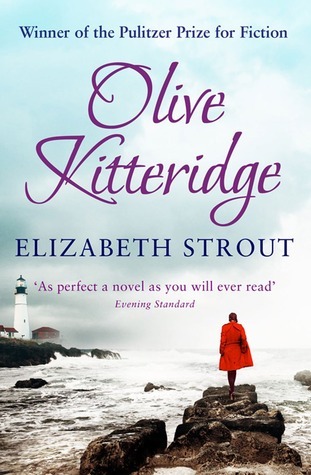
Elizabeth Strout, Olive Kitteridge (#BookReview)

Elizabeth Strout’s Pulitzer prize winning novel Olive Kitteridge has been around for 17 years, but it’s only now that I have managed to read it. And that’s because my reading group scheduled it as our June read. It’s not that I didn’t want to read it – I really did – but other books kept getting in the way. I realise now that I should not have let that happen because Olive Kitteridge is a wonderful read.

Now, how to describe it? The first thing is its form. It’s more like a collection of linked stories, or what its Wikipedia article calls a short story cycle. Although I’ve read many linked short story collections, I haven’t come across this term before. I’d like to explore it some time, but not now, because I’m keen to talk about the book. I will say, though, that some in my reading group found the episodic form somewhat disconcerting at first. However, despite this, almost all of us thoroughly enjoyed the book. Why? Well, as it turned out, the form is partly what makes it such a strong and moving read.

As most of you will know, the novel is set mostly in the late 20th and very early 21st centuries in the fictional small-town of Crosby, in coastal Maine. It comprises 13 chapters – or stories – that explore the life of retired schoolteacher Olive Kitteridge and her relationships with family and friends. In some of the chapters Olive is front and centre, but in others she makes a cameo appearance, sometimes just as a passing reference. The end result is as much a picture of a small town as it is of Olive, though Olive is our lynchpin. As one of my reading group members said, her question as she read each story was, “Where’s Olive?”

everyone thinks they know everything and no one knows a damn thing. (“River”)

So, while my reading group talked about the form and the gorgeous writing, we mostly focused on the picture painted of a small town – which, said one, provides an antidote to the “apple-pie” image we typically get of small-town America – and on the character of Olive. She is complex and not easy for readers to like, but we found her real, and most of us did like her. The opening story, “Pharmacy”, doesn’t pull any punches in its depiction of Olive. She comes across as curmudgeonly, uncompromising. She is cutting about her husband Henry’s new young pharmacy assistant and unwilling empathise with her. She is prickly and vengeful with her son’s new bride, Suzanne (“A Little Burst”), while Bob in “Winter Concert” wonders how Henry can “stand” her.

However, there are many occasions where Olive is kind and compassionate, where she sees need in others and helps or offers to help, where, as Henry describes it, “all her outer Olive-ness” is stripped away. For example, ex-student Julie remembers Olive telling a class

“Don’t be scared of your hunger. If you’re scared of your hunger, you’ll just be one more ninny like everyone else.” (“Ship in a bottle”)

And Rebecca recollects Olive saying to her at school, “if you ever want to talk to me about anything you can” (“Criminal”). Olive also quietly talks a young man, an ex-student, down from suicide (“Incoming tide”) and she and the truly “nice” Daisy try hard to help the young anorexic Nina (“Starving”).

Olive, too, can be insightful. In “Security”, for example, we read that sometimes she had “a sense of just how desperately hard everyone in the world was working to get what they needed”. And she suffers, especially from a “rupture” with her beloved son, and from grief over husband Henry’s massive stroke.

So, what we have is a character who can be tough and acerbic – even engage in a little schadenfreude – but also be sensitive and empathetic. This led me to see the book as being about more than a picture of a small town, much as that is a central and engaging part of it. The form – the interconnected short stories about life in the town – supports this view of the novel. However, this form also supports another way of looking at it, one encompassing something fundamental about our humanity.

In each story, we see characters confronting some crisis or challenge in their lives – some big ones, some quieter ones. We never see these stories fully through. They are vignettes, even those featuring Olive. This made me think about how little we know others, and perhaps even ourselves? We never fully know what others think of us, or what impact we have on others, but in this book – largely because of its form – we do see, for example, how Olive is, or has been, viewed or remembered, both positively and negatively. No one perspective is right, but each contributes to a picture of a person. This is how life goes. We see little parts of people’s lives, and sometimes we are little or big parts of people’s lives, but what do we truly know?

A bleak interpretation of this could be that it exposes our essential aloneness, but a more positive perspective is that it reminds us that we are all “real” people with good and bad, hard and soft selves. Books like Olive Kitteridge encourage us to look around corners, to not take one aspect of a person at face value, to be generous to others and ourselves. It also reminds us that we never stop learning about ourselves (or others). Certainly, at the end of this book, Olive, in her early 70s, is still discovering things about herself and her feelings. She isn’t giving up, no matter how tough things have become.

In my group’s opening discussion, I said that I thought the novel offered many truths, albeit often uncomfortable ones. For example, in “Tulips”, which is a story about things going terribly wrong, Olive reflects, “There was no understanding any of it”. But, my favourite occurs in “Security”, when some rapprochement is being made with her son, and Olive thinks

whatever rupture had occurred… It could be healed. It would be leaving its scars but one accumulated these scars.

One surely does!

There’s so much more to talk about in this book – the spot-on descriptions, the quiet humour, the many beautifully wrought characters and their trials, and the political references such as to 9/11 and George W Bush which provide context. But the main story is the human, the personal. The novel closes with Olive reflecting deeply on her life and her choices, on how much had been “unconsciously squandered”. She realises that, while

It baffled her, the world. She did not want to leave it yet.

I love getting inside the heads of characters like Olive, and so I loved Olive Kitteridge. I’ll be reading more Strout I’m sure.

Brona and Kate both read and enjoyed this long before I did!

Elizabeth Strout
Olive Kitteridge
London: Simon & Schuster, 2008
270pp.
ISBN: 9781849831550

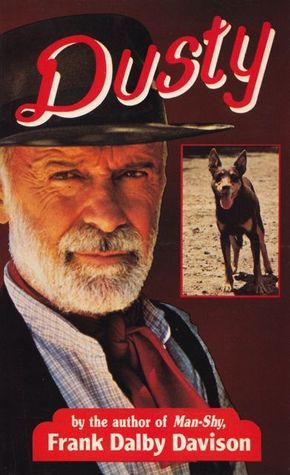
Frank Dalby Davison, Dusty (#BookReview)

It’s a strange coincidence that my second review for Bill’s Gen 1-3 Aussie male writers week is for a novel titled Dusty, when my first was for a short story titled “Dust”. One of those funny little readerly synchronicities. The title, however, is about the only synchronicity because, although both stories allude to the dusty Australian landscape, Casey’s short story is about miners’ lung dust disease while Davison’s novel is about a part-kelpie part-dingo named Dusty.

A bit about Frank Dalby Davison

Davison (1893-1970) was best known as a novelist and short story writer, and was a significant figure in Australian literary circles of his time. There are useful articles for him in Wikipedia, and the Australian dictionary of biography, and I plan to devote a Monday Musings to him soon. Meanwhile, as background to this post, it’s relevant to say that he was born and schooled in Melbourne, but left school in his early teens to work on his father’s farm near Kinglake. The family moved to the United States in 1909, when he was 16. After working there in the printing trade, he travelled more, eventually enlisting for World War 1 in England. After the war, he took up a Soldier Settlement selection near Injune, in central western Queensland. 

Davison wrote several novels, but his best known is probably Man-shy (1931), which won the Australian Literature Society Gold Medal. Featuring a red heifer, it was my introduction to Davison in my first year of high school in the 1960s. Dusty (1946) is also about an animal – this time a dog – and has been in my sights for some time. Both novels drew on his experiences in Injune. AustLit reports that the manuscript of Dusty, ‘entered under the title “Stranger”, and the pen-name “Tarboy”, won the Melbourne Argus and Australasian Post 500 pound Novel Competition in 1946′. 

Dusty

At the end of my edition of Dusty is a promotion for Man-shy which quotes from H.M. Green, the literary historian who inspired Bill’s “generations”. Green writes:

Although other novelists have made animals their principal characters and drawn them realistically, Davison is the first to make a serious attempt to get inside their minds. The red heifer and the mob of wild cattle to which she belongs stand for the spirit of freedom and dogged, untameable resistance; their struggle is made extraordinarily real to us … Davison has a genuine and individual talent.

This could equally apply to Dusty, which tells the story of a dog, sired by a kelpie to a dingo mother. Violently wrenched from his lair when he was a few weeks old, he is sold to a decent man, a bushman named Tom. Tom is no fool. He recognises the mixed blood, but also sees potential in the pup, and trains him to become a champion sheep dog. Their bond is strong but is tested when Dusty’s “dingo blood” starts asserting itself, and he turns sheep-killer by night. This will not do, and Tom knows it. The novel, however, does not play out quite the way you’d expect, and we are left guessing until the end about what will, indeed, happen to Dusty.

That’s the plot, but like many plots it doesn’t tell you much about what the book is really about, or what makes it a good read. Told in three parts, Dusty is a realist novel, detailing life on Australian sheep stations and cattle properties, and told mostly through the perspectives of Tom and Dusty. Yes, you heard right, Dusty, the dog. I was completely engaged because not only is there none of the sentimentality common in stories about a man and a dog, but there’s also nothing anthropomorphic in the dog’s point-of-view. He feels pure dog, which I thought quite a feat. Early on, for example, Tom, having previously given Dusty his dinner without ceremony, puts the food down and starts some training:

Then followed a series of mystifying events. A hand appeared just above the dish and twitched, giving forth a series of soft snapping sounds; then there was a little soft whispering, and then a voice that, like the hand, kept repeating a small noise over and over again. He could make nothing of it …

This dog’s-eye view of the world, based on his experiences to date, continues through the novel.

Soon, though, bigger issues are at play involving the two parts of Dusty’s being, “the ancient battle between conflicting heredities, and between early influence and present environment; the mother against the father, nature against art”. Then Davison adds something interesting. The dingo is the product of nature, while the kelpie, the working dog, is “a product of art”. But, Davison adds, “nature, if man fails in toil or vigilance, hastens to reclaim her own”.

In other words, beneath this deeply interesting story about a man, his dog and outback farming, is a wider story about “nature”, or the essence of our beings. Contained within Dusty is the struggle between the two forces – that of freedom, of following his instinct, and that of living by his training, by rules and responsibilities. After Dusty’s dingo side becomes apparent to all, Tom knows what must be done but chooses to change his life rather than kill his dog. He becomes a self-employed possum scalper in cattle country, and finds, “without meaning any ingratitude for past kindnesses”, that he relishes his new situation in which he is invited to share a meal as “a guest and not just the hired man”. In other words, as a possum scalper, Tom is freer to be his own man.

But, while I think Tom’s life is part of this wider theme, the main focus is animals, and the idea that, in them, “is a whole scheme of values outside those familiar” to us.

There is no easy ending for Tom and Dusty, and we are left, three paragraphs from the end, with a dingo howl, “a cry of mournfulness and dark mirth, of drollery and love and hate and longing, of the joy and sorrow of life, of the will to live, of mockery and despair”.

Dusty is not a didactic book. There is no moralising, no subjective pronouncements about choices. Instead, with its objective tone, and plain but expressive prose, it feels more elemental, something that examines the essence of who we are and what we do to live. And that makes it feel timeless.

Frank Dalby Davison
Dusty
Sydney: Angus & Robertson, 1983 (Arkon ed., orig. 1946)
244pp.
ISBN: 0207133891


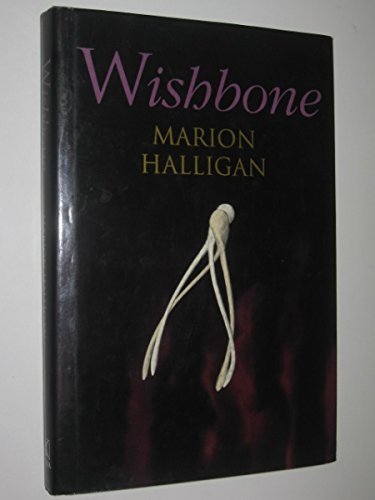
Marion Halligan, Wishbone (#BookReview)

My reading group’s last meeting of the year took the form of a tribute to Marion Halligan, who died earlier this year and who had generously attended our meeting when we discussed her Valley of grace (my review). We have done this once before with Helen Garner (albeit she hadn’t died) and it worked well. The process is that we choose something we want to read and share our thoughts with the group. I have read several of Halligan’s books, but I have a few on my TBR, so of course I chose one of those, Wishbone, her fourth novel, published in 1994.

Before I share my thoughts on that, I thought you might like to know what everyone read. Ten members attended the meeting. Some read two books, while others chose a short story or article. It is, after all, a busy time of year. The novels read were, in chronological order, Wishbone (1), The golden dress (2), The fog garden (1), Valley of grace (1), Goodbye sweetheart (2). Three people read her most recent memoir, Words for Lucy, while others read selections from Canberra tales (“Most mortal enemy”), The taste of memory (the first piece), Canberra Red (“A city of mind”), and Shooting the fox (“Shooting the fox”). In other words, we read widely across her oeuvre, resulting in an enjoyable – and occasionally excitable – meeting as we teased out some of her themes and ideas, including how much of her fiction was drawn from life!

“who knows what the hell is going on”

So now, Wishbone. It tells the story of a woman, Emmanuelle, her “motley family”, and the wishes they have for themselves. The novel starts with a young, passionate Emmanuelle having an affair with a married man, but it soon jumps some years hence when she is now married (to a man named Lance), and living in well-heeled Sydney with two children, Maud and William. The rest of the novel follows a period in the lives of these four and others in their close circle – friends, family and employees. During this time, we experience a life-threatening stroke, extra-marital affairs, mistaken assumptions, and a suspicious death, all set within perfectly rendered scenes of domesticity. Halligan can make you gasp with her audaciousness.

As I was reading this novel, a light dawned for me about why I so often use Jane Austen as a benchmark for writing I love. I do like all sorts of writing, but I am particularly drawn to writing that exposes human nature with wit, irony and a generous spirit. This is what Austen does, and this is also what Halligan does. Wishbone is a generous story about messy human lives. Halligan writes with a knowingness about those deep-down thoughts, wishes, and desires we all have, but she is also forgiving about her characters’ foibles and less admirable traits and behaviours. In Wishbone, she explores the tension between our wishes – particularly regarding love – and living with what you’ve got.

There’s something of a fatalist element, here, in the sense that we think we have choice in all this, but choice proves in fact to be elusive. Things happen that we have no control over. Late in the novel, as Emmanuelle sits around the kitchen table with her two children and au pair Mel, in what looks to be a cosy domestic scene, a question – which is both literal and existential – is suddenly proffered, “who knows what the hell is going on”. Who indeed? (And who is asking the question? Emmanuelle, surely, but there’s also an omniscient voice overlaying the characters’ perspectives. At least I believe so. Wishbone slides seamlessly between voices and perspectives in a way that never loses the reader, but that ensures we see multiple sides of things.)

This brings me to style, and how Halligan does what she does. Halligan is a born short-story writer. As I started Wishbone, I almost wondered whether I was reading a book of short stories. Every chapter is gorgeously titled and most felt like they could stand on their own as little nuggets from a life. The opening chapter, The Glade, tells of Emmanuelle’s youthful affair with her married man. It starts:

The difficulty of a love affair between a young woman and a married man may be its logistics. Where can they go? He lives with his wife. She lives with her parents.

They can’t afford hotels, and anyhow it’s too risky as the town is small, but Brian knows “a good place”, a little glade under a cliff. Whenever Brian thinks of going to the glade, he whistles Handel’s tune, “Where e’er you walk”, which “always gladdened his wife’s heart, because she knew her husband was feeling cheerful”. Halligan’s discussion of this song, Brian’s behaviour, and the wife’s response is delicious in more ways than this little irony, but I will just share Halligan’s nailing the point, with “the song told her about the walking and the sitting but what she didn’t know about was the lying”. Just think of the double meaning in that last word! This writing just makes you splutter.

From here, the plot unfolds quietly but surely. Hints are dropped but aren’t heavy-handed, so we are still surprised when certain events occur, which brings me to the title, and its reference to wishes. In the third chapter, The Man in the Train, there is a mostly mundane discussion about wishes until the chapter’s titular, and unnamed, “man” asks Emmanuelle what she would wish for. Her answer?

I would wish for the gift of making dangerous choices.

As the novel progresses, various characters express their wishes. Emmanuelle’s friend Susie idly wishes she were a widow, while au pair Mel wishes she were beautiful. Emmanuelle wants more passion from her husband, while chauffeur Stuart wants money. And so on … What these characters learn, you won’t be surprised to hear, is that their seemingly ordinary, or common, wishes often carry a danger that is not expected. You know that saying, “be careful what you wish for”. But Halligan’s book is no simple moral tale. What Emmanuelle realises near the end, in fact, is that all choices can be dangerous. Susie asks her:

Have you ever wished Lance dead?
I’ve wished him different.
And did that come true?
Not in ways that I’d have chosen.

Where does this leave us? We won’t stop wishing, and we certainly can’t stop making choices, but we can think about our choices and be realistic about the outcomes, whether they are the expected or unexpected ones. In the end, Emmanuelle probably has the answer:

being alive is like reading a book. You might think you’ve got a fair idea of the plot but you don’t actually know what’s going to happen next, you’re as much a mystery to yourself as a character in a novel. Perhaps the secret is just to keep turning the pages.

Reading Wishbone has reminded me how much I enjoy Halligan. I must get back to that TBR.

Marion Halligan
Wishbone
Port Melbourne: William Heinemann Australia, 1994
235pp.
ISBN: 0855615974

Gail Jones, Salonika burning (#BookReview)

Australian author Gail Jones’ ninth novel, Salonika burning, is a curious but beautiful novel, curious because she fictionalises four real people for whom she has no evidence that they met or knew each other, and beautiful because of her writing and the themes she explores. The novel is set during World War 1, but its focus is firmly on the interior rather than the grand stage of battle.

It opens dramatically with the burning of the city of Salonika (Thessaloniki). This is another curious thing, because this destructive event was caused not by an act of war but an accidental kitchen fire. Also, the novel is not set in Salonika but some 90 miles off, in and around “the field of tents that comprised the Scottish Women’s Hospital”, on the shores of Lake Ostrovo in Macedonia. It is 1917, and the novel’s narrative centre is this hospital and those working in and around it. Here, not Salonika, is where our four main characters are based — Stella, an assistant cook/hospital orderly; Olive, an ambulance driver; surgeon Grace; and Stanley, an orderly with the Royal Army Medical Corps. They are based on the Australians, writer Miles Franklin and adventurer Olive King, and the British painters, Grace Pailthorpe and Stanley Spencer. In her Author’s Note, Jones makes clear that she has fictionalised these characters, and that while all are known to have worked in the vicinity, there is no evidence that they met or even knew each other. It is “a novel which takes many liberties and is not intended to be read as a history”. This is fine with me. After all, a novel, by definition, is not history. The novel follows these characters over a few months after the burning of Salonika.

“everything was coming apart”

So, why Salonika? I see a few reasons. For a start, its burning sets the novel’s tone. On the first page we are presented with opposing ideas. The sight of the burning city is described as “strangely beautiful” but, on the other hand, “alarm, instant fear, the sufferings of others … were no match for excitement at a safe distance”. As the fire died, “excitement left and in its place was a murky lugging of spirit”. Throughout the novel, Salonika represents these contradictions, this tension between what is ugly, what is beautiful; between what is random, what is not; and in how to respond to, or feel about, what is being experienced.

The Salonika fire also encompasses the idea of witness and representation. In the opening scene, Jones describes a painting made of the fire by William T. Wood. It is a “morning-after scene, brightly calm, with a floaty view from the heavens” done in his “signature pastels, remote as a child’s dream and thinly decorative”. Those who saw this painting later, she writes, “saw the pretty lies of art”, whereas “former residents and soldiers said, No, it wasn’t like that”. This tension too is played out in the characters as they think about how they might represent their experience.

The burning of Salonika, then, embodies several ideas that are followed through in the novel. But, Salonika is also relevant to the plot. The novel’s narrative arc lies mainly in the characters and their emotional reactions to what is happening as the months wear on. Not only is there the war with its injured and dying soldiers, but malaria is rife, and the privations they experience, professionally and personally, are exacerbated by the burning of Salonika and the attendant shortage of essential provisions – food, petrol, medical supplies. However, a plot also unfolds, and it is something that happens on the way to Salonika, well into the story, which sets the novel’s final drama in motion.

Salonika burning traverses themes that are the stuff of the best war literature – themes that expose the “idiocy of this war, of all wars” and its impact on those caught up in it – but it offers its own take. The telling feels disjointed, particularly at the start, with its constant switching between the perspectives of the four characters who interact very little with each other until well into the novel – and even then it’s often uneasy, as befits their temperaments. And yet, the novel is compelling to read, primarily because of these characters. They are beautifully individuated, so flawed, so human, so real.

Olive, who is the first character we meet, and the one who closes the novel, is confident, tough and practical. Grace, too, is tough, doing her “duty” with a “dull vacancy”. Stella, at 38, the oldest of the four, is “cranky and wanting more”, more excitement to write about, but she believes in “chin-up and perseverance”, while the youngest, 26-year-old Stanley, is “ill-fitted … to this life of rough cynical men”.

These are “intolerable” times, and we are privy to their struggle to maintain their sanity. Olive resorts to her German grammar to escape the emotional load, while Stanley has his mules and favourite painters, his “Holy Rhymers”. Stella, “writing jolly accounts in her diary”, thinks about what stories she will tell, while Grace has her favourite brother to think about and write to. The disjointed structure mirrors, I think, their sense of isolation. Contact and the potential for friendship is there, but Matron discourages emotional engagement. There’s “no room for emotion”, she says, just “duty”. Olive, who seems to represent the novel’s moral centre, thinks otherwise:

It seemed another kind of duty, not to forget. Olive wanted to speak of what she had seen and known, though she suffered too much remembrance.

This could neatly segue to that issue of representation, and the post-war work done by Stella, Grace and Stanley, but instead, I want to conclude with another idea. On a supply trip to Salonika, Olive, “driving in her safe foreign aura”, had been indulging in a dose of self-pity, but is suddenly confronted by the loss Salonika’s burning represented for its residents, “and only now understood that it was the woe of others that claimed importance”. Likewise, Stanley, Grace and Stella are confronted with the woes of others through the novel’s closing drama, and must decide where their humanity lies.

I started this post noting some curious things about Jones’ approach to her story, but these didn’t spoil the read. Rather, they added to my interest as I read it. Ultimately, Salonika burning is a true and tenderly written novel that captures the essence of war’s inhumanity, and then goes about extracting the humanity out of it. A worthy winner of the 2023 ARA Historical Novel Prize.

Lisa and Brona also read and enjoyed this book.

Further reading

Gail Jones
Salonika Burning
Melbourne: Text Publishing, 2022
249pp.
ISBN: 9781922458834

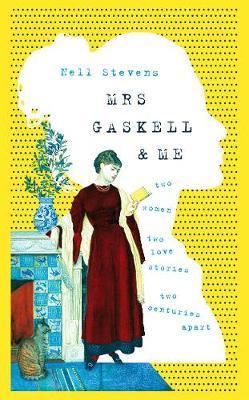
Nell Stevens, Mrs Gaskell and me: To women, two love stories, two centuries apart (#BookReview)

It’s a bit of a stretch, I admit, to submit Nell Stevens’ strange hybrid biography-memoir, Mrs Gaskell and me, as my second contribution to Bill’s (The Australian Legend) Gen 0. But, having read Elizabeth Gaskell’s two novellas, Lizzie Leigh and Cousin Phillis, for the week, and having had Stevens’ book on my TBR for a few years, I decided it was now or never to get it off the shelf. After all, as I wrote in my Two Novellas post, Mrs (Elizabeth) Gaskell (1810-1865) is a good example of a nineteenth century independent woman because, despite being a wife and mother, she managed to forge a career for herself as a writer.

So, let’s leap in. The reason this book is a bit of a stretch for inclusion in Bill’s week is not only because it is one of those hybrid biography-memoirs or bibliomemoirs, but because of Stevens’ statement in her disclaimer at the beginning of her book:

I have changed names, scenes, details, motivations and personalities. Every word has been filtered through the distortions of my memory, bias and efforts to tell a story. This is as true of the historical material as it is of the sections about my own life: studies, letters and texts excerpted here are not always faithfully quoted. This is a work of imagination.

So, it’s a work of imagination that tells two alternating stories. In first person, we have Stevens’ own story, which goes from 2013 to 2017, and encompasses her love affair with an American and the writing of her PhD on Mrs Gaskell. This is the memoir bit. In second person is Stevens’ story of Mrs Gaskell primarily covering the years 1855 to 1865 which encompass her three-months-long trip to Rome in 1857 and its aftermath. This is the biography bit.

Now, regular readers know my attitude to the fiction versus nonfiction question. I am more interested in truths than I am in facts. Facts on their own don’t always tell us a lot, and when we are talking a person’s life, they can be limiting. Knowing when a person married, for example, is far less relevant or interesting than how they felt about their marriage and the person they married, but, it is hard to get facts about those feelings. Even if the subject wrote letters and/or diaries, how truthful were they? And, did what they wrote one day in a fit of passion (positive or negative) reflect the truth of the relationship as a whole? And so on. All this is to say that I am happy to accept Mrs Gaskell and me as an imaginative bibliomemoir, but if you’re not, this book will not appeal to you.

Because of the reason I chose to read this book now, I’m not going to write the usual sort of review. There are several out there, if you are interested. Instead, I am going to focus on how it fits into Bill’s Independent Woman thesis, which is to look at non-Australian writers “whose work influenced, predated or paralleled the first wave feminists of AWW Gen 1”. This means, to me, that we can look at the works of these women writers and at their lives, and Mrs Gaskell had an interesting life.

“all of a sudden you had a career” (Stevens)

It was also, I think, though I haven’t read a true biography of her, a divided life. There was the traditional “Mrs Gaskell”, the well-brought up and educated wife and mother, but there was also this:

“Nature intended me for a gypsy-bachelor; that I am sure of. Not an old maid, for they are particular and fidgety, and tidy, and punctual – but a gypsy-bachelor.”

Gaskell wrote this in a letter in 1854. I checked its accuracy, given Stevens’ disclaimer, and it is, I believe, a true quote. Stevens goes on to write that Gaskell “played the role of wife and mother so very well, and so lovingly, but she was a ‘gypsy bachelor’ nonetheless”. So, while she was not one of those nineteenth century adventurers, like Isabella Bird and Flora Tristan, she was nonetheless independent. In her writing, this came through her “industrial” or “social novels” or what Stevens calls her “philanthropically motivated condition-of-England novels”. In these, she identified and questioned some of the significant social and moral issues of her era: in North and South, for example, she was among the first to explore conflict between employers and workers, and in Ruth (see Bill’s review), she preached compassion for “fallen” women. (I have read both of these, but before blogging.)

However, she also exhibited a level of independence in her personal life, despite its conventional trappings – and this is something that Stevens conveys (albeit with different motivations) in her bibliomemoir. Early in the book, Stevens writes, using her second person voice,

“You were always lucky, Mrs Gaskell; you were always grateful for what you had, and yet, all the same, you were restless” [my emph].

She then briefly chronicles Gaskell’s career trajectory from writing for herself, to sending articles and then short stories to magazines, to, finally, writing her first novel, Mary Barton, in 1853. Stevens writes that it “became the sort of book that people bought and reviewed and talked about, and all of a sudden you had a career”.

This is the background, but Stevens’ focus is Gaskell’s visit to Rome in 1857, when she was 46 years old, and what it meant to her. She went to escape, says Stevens, the potential fallout (of which there was plenty) from her Charlotte Brontë biography*. She found an energising community of artists (authors, poets, sculptors, painters, musicians) and met the seventeen years younger American author and critic, Charles Eliot Norton. They saw each other constantly, and remained in contact afterwards. It was, we believe, an unconsummated relationship, and not all agree it was a romance, though Stevens argues so. Whatever it was, it was clearly intense and significant, and given the (documented) ongoing years of contact that followed, it satisfied some of Gaskell’s intellectual yearnings and fed into her subsequent writing. Beyond this, Rome was, overall, argues Stevens, “transformative for her, to meet Norton, to be in Rome, to be treated as an equal by other artists”.

The other point I’d like to make is Stevens’ story that, at the end of her life, Gaskell bought and renovated a house in Hampshire without telling her husband. Sounds independent to me.

The Nell parts of the book, which chronicle Stevens’ own love affair and her struggles to write her PhD, mostly engaged me, particularly the academic life satire, but, I’m leaving it here because Mrs Gaskell was my theme. It’s an unusual book, but I’m glad I read it. I may not remember the details, which is fine given they may not all be exact, but I will remember how Stevens successfully transformed this intriguing author from her “Mrs Gaskell” persona to a living, feeling, independent woman.

* Wikipedia reports that in 2017 The Guardian named The life of Charlotte Brontë one of the 100 best nonfiction books of all time.

Nell Stevens
Mrs Gaskell and me: Two women, two love stories, two centuries apart
[Published in the USA as The Victorian and the romantic]
London: Picador , 2018 (e-Edition, 2019)
256pp.
ISBN: 978-1-5098-6819-3

William Trevor, The hill bachelors (#Review)

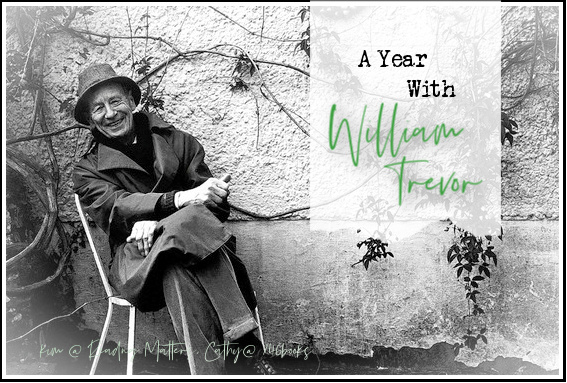
Well, Kim (Reading Matters) and Cathy’s (746 Books) “A year with William Trevor” project is all but over, and I’ve only done one post – on the titular story in the little The dressmaker’s child collection. The second story, “The hill bachelors” (as in bachelors living in the hills), was first published in his collection titled The hill bachelors.

William Trevor (1928-2016), as most of you will know, is an Irish writer of novels and novellas, short stories and plays. He is particularly good at writing about marginalised people, or those who are loners or outsiders, and writes authentically about them, regardless of their age or gender. “The hill bachelors” is another of these, though perhaps more a variation on the theme. Is the protagonist Paulie marginalised? In a sense perhaps? Is he a loner or outsider? Again, it depends on how you see him, and the choices he makes.

Trevor is one of those writers who lets the reader work out who’s who, what’s what, as we go. The first two paragraphs of this story describe a 68-year-old woman, wearing mourning clothes, waiting for “them” who will decide her future. Very little is overtly explained, but by the end of the second paragraph, we know that she has worked hard and got on with whatever life has thrown at her – and, it seems, she will continue to do so with a calm resignation.

Then, we are introduced to a man we come to realise is her 29-year-old son, Paulie. He is coming for his father’s funeral/wake. He is the youngest of five children, and had not had a good relationship with his “hard” father. It soon becomes apparent that the mother expects the children to work out what will happen to her now – and what will happen to her now, as soon becomes apparent, is that Paulie will return to the family farm. After all, “he was the bachelor of the family”, and his job as a lorry driver “wasn’t much”. However, to do this he will have to give up the woman he loved as she is not interested in a farm life.

While he is working out his notice back in town, his mother is helped by neighbours, the bachelor Hartigan and his sister. It is this sister who introduces the idea of the hill bachelors. She suggests that Paulie would not want to come back because

“It’s bachelors that’s in the hills now. Like himself,” Miss Hartigan added, jerking her bony hand in the direction of the yard, where her brother was up on a ladder, fixing a gutter support.
“Paulie’s not married either, though.”
“That’s what I’m saying to you. What I’m saying is would he want to stop that way?”

Seeing bewilderment in Paulie’s mother’s face, she goes on to explain that “the bachelors of the hills found it difficult to attract a wife to the modest farms they inherited”.

And so Paulie comes back. He “harboured no resentment … it was not the end of the world”. What was “the end of the world”, however, was hearing the woman he loved say that life on a farm did not attract her. He works hard, and he starts dating local women, but Miss Hartigan seems to have known whereof she spoke.

The story is told third person, through the alternating perspectives of the mother and Paulie. We hear what the the rest of the family thinks, or has done, mostly through Paulie’s and his mother’s thoughts and assumptions, through their deep knowledge of how their family works and of the rural traditions within which they live. There is a little dialogue, but not much. Paulie and his mother are both “types” and yet quietly individualised too.

There’s no big drama in this story, just ordinary people making the decisions that seem right at the time. Paulie’s mother is not unkind or demanding. Indeed, she offers to move in with a married daughter, and, in a little revelatory moment, Trevor lets on that she’d shed some private tears in her early days on the farm. She would do her best to make it easy for a new wife, unlike her own experience. However, marriage to a man from the hills has taught her passivity, to do what she’s told, so she resigns herself – as we are led, from the opening paragraphs, to expect she’d do – to see out her lot. Paulie, too, seems resigned, like his mother, to play out the role set for him, even if it means joining the titular hill bachelors.

All this makes it a far more complex story than it might seem on the surface. It means that, as much as we’d like to, it’s hard to see Paulie as a victim, because he does have a choice, difficult though it may be. But the pull of tradition and responsibility is strong, and while Paulie is aware of what is happening to him, he is resigned to it. Ultimately, as he himself realises, “guilt” and “goodness” have nothing to do with it, it just is what it is, “enduring, unchanging” – and he is not going to buck it.

Trevor thus leaves it for us to think about – to think what the different choices might mean for his mother, for Paulie, and, more widely, for the rural way of life that, regardless of their decisions or their own thoughts about it, does seem to be on its way out. It is up to us readers to ponder the bigger picture, to wonder where that will get him, them or the farm. After all, if he doesn’t marry, what will happen? In continuing their rural traditions, will anything be ultimately achieved, or will this be another sad little life?

Cathy (746 Books) has reviewed the collection.

William Trevor
“The hill bachelors”
in William Trevor, The dressmaker’s child
London: Penguin Books, 2005
pp. 21-39
ISBN: 9780141022536
(First published in The hill bachelors, 2000)

Margaret Atwood, The Labrador fiasco (#Review)

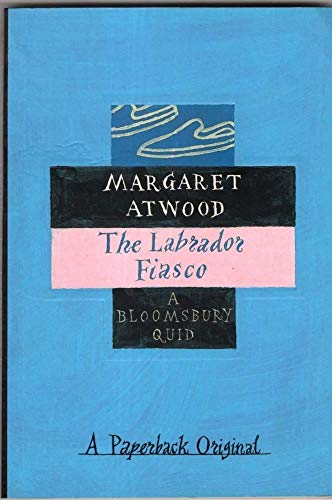
Although I am an Atwood fan from way back, I haven’t, to date, taken part in Marcie’s (Buried in Print) MARM (Margaret Atwood Reading Month) event. But I promised her I would this month, albeit with just one little short story probably, this one. I have had The Labrador fiasco on my “little book” TBR shelf since it was produced as a Bloomsbury Quid back in the 1996. I have no idea why I have not read all my little books, but, there you go!

Most of you will know Margaret Atwood (b. 1939). I read several of her books before blogging – including her dystopian novel, The handmaid’s tale; her historical fiction novels, Alias Grace and The blind assassin; and her more contemporary novels Cat’s eye and The robber bride – and I have more on my TBR. But, I have only reviewed her twice here, her novella, The Penelopiad (my review), and her recent poetry collection, Dearly (my review). Now, I bring you a short story. This woman is versatile.

As far as I can tell, “The Labrador fiasco” was first published in this edition. Many of my “little books” comprise previously published short prose works, but this doesn’t seem to be the case here. I have three other Bloomsbury Quids, two of which were previously published, with the other, Nadine Gordimer’s Harald, Claudia and the son Duncan (my review), also seeming to have been first published as a Quid. Interesting, but not relevant to my discussion of Atwood’s story, so let’s move on. The Quids, though, are gorgeous little books.

“The Labrador fiasco” is a “story-within-a-story” story. (Ha!) The framing story concerns the narrator and her aging father and mother. (The narrator’s sex is not provided, but let’s go with female as Atwood is female.) The father, in particular, is declining, having experienced a stroke six years before the story’s opening. It is told first person by the daughter, who regularly visits her parents.

The story within comes from Dillon Wallace’s The lure of the Labrador wild, published in 1905. Wallace was, says Wikipedia, “an American lawyer, outdoorsman, author of non-fiction, fiction and magazine articles” and this, his first book, was a bestseller. It tells of an exploratory trip through Labrador undertaken by Wallace and a man called Leonidas Hubbard, with their Cree Indian guide, George. The Cree bit is important as the Cree are not from the region they were travelling in. Anyhow, the aim was to explore a part of Labrador that hadn’t been explored by Europeans, with Hubbard wanting to “make his name”. However, as Wikipedia (and Atwood’s story) explains, they took the wrong river from the start, with tragic consequences.

Atwood’s story opens with:

It’s October; but which October? One of those Octobers, with quick intensities of light, their diminuendos, their red and orange leaves. My father is sitting in his armchair by the fire. He has on his black and white checked dressing gown, over his other clothes, and his old leather slippers, with his feet, propped up on a hassock. Therefore it must be evening.

There’s so much going on here, besides the gorgeously structure sentences. We are immediately put on the back foot with “which October”, and “it must be evening”, but at least the father is very much present. The uncertainty suggests that the story is being told from a later time. Whichever October it is, however, it is autumn – or fall – and that means the season of decline. Within a couple of paragraphs, we learn of the father’s stroke, and know he is declining. But, the question, “which October”, also hints at the October in the Wallace-Hubbard story when things have really started to sour – because not only is it cold of course, but our explorers have taken the wrong route and are running out of supplies.

This is the set up. As the story progresses, the narrator’s father, who was an experienced outdoorsman himself in his day, provides a running commentary on the explorers, with the narrator adding her own layer. “They took the wrong supplies”, the father says, pleased because he would have known what to take. However, our narrator wonders “what supplies could they have taken other than the wrong ones” … “No freeze-drying then” or “nylon vests”, for example.

“harsh and unmarked and jumbled”

What Margaret Atwood does in this story, then, is parallel the deterioration in the condition of the explorers as their expedition goes awry, with the narrator’s father’s decline as he ages. The explorers leave things behind, their feet suffer because they don’t have effective footwear. The father leaves hobbies behind, and says his feet are too sore to walk. The father thinks he would have done the expedition better, but he faces his own “forest” and in fact, like the explorers, he and his supporters are not fully equipped to deal with it.

And so it goes. In under 40 (very small) pages, Atwood combines commentary on a failed (colonial) expedition, conveying the poor planning and hubris of those involved, with a tender family story of an adult child and mother coping with a failing father. To do this she calls on her obvious love and knowledge of Canada’s history and “wilderness” (a contested term now, I know), and her keen interest in humans and how our lives play out.

We are all explorers, I think Atwood is saying, and the way, at least some of the time, can be “harsh and unmarked and jumbled”. It takes all our energy to traverse it. Good planning and the help of others can ease the way, but in the end, we each have to do it on our own. A clear-eyed, clever and tight story with an ending that encompasses genuine warmth with an acceptance of life’s realities. Beautiful.

Read for MARM 2023

Margaret Atwood
“The Labrador fiasco”
London: Bloomsbury, 1996 (A Bloomsbury Quid)
64pp.
ISBN: 9780747528890
Available online at Independent, 1996

William Trevor, The dressmaker’s child (#Review)

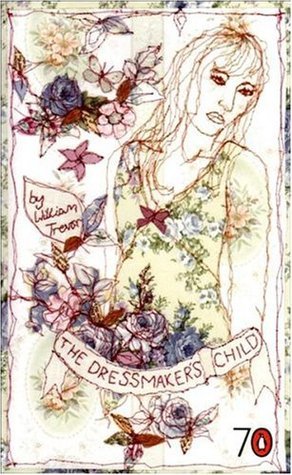
I knew, when Kim (Reading Matters) and Cathy (746 Books) announced their “A year with William Trevor” project, that I had a little book containing some William Trevor short stories but, could I find it? Nope. It was a little book after all. And then, voilà, just the other day while I was doing my book decluttering and packing, I came across it. It’s Pocket Penguin 22 from Penguin’s 70 Years celebration, and is called The dressmaker’s child, but it contains three short stories, so these will be my (very willing) contribution to the project. Two of the stories were chosen by the author from previous collections, but for the titular story this is its first appearance in book form.

Most of you will know of Trevor (1928-2016) but, in a nutshell, he’s an Irish writer of novels and novellas, short stories and plays. He won many literary awards in his life, and was particularly well regarded as a short story writer – making him right up my alley. In fact I have read one of his short stories before, early in this blog.

In her most recent Trevor review (of a novel titled The children of Dynmouth) kimbofo writes that it didn’t take her long to feel that she was in “familiar William Trevor turf in which he takes a seemingly ordinary character with eccentric traits and lets them loose in a confined setting”. This could apply to the short story, “The dressmaker’s child”, as it is about a young nineteen-year-old motor mechanic, Cahal, working for his father in a small town. He’s the only son in a family of girls – all of whom have left – and he is “scrawny” with a “long face usually unsmiling”. The story opens on him applying WD-40 “to the only bolt his spanner wouldn’t shift”, which sets a tone that perhaps other things are, or might be, locked up for our protagonist.

As he continues to work on the car, a young Spanish couple appears, wanting to be driven out to see the Sacred Virgin (Our Lady of Tears) who they believed – that is, they had been told so by a barman – would bless their marriage. Now Cahal knows the statue’s special spiritual status had been disproved and thus rejected by the church, but with a 50-euros job in the offing, he doesn’t actively dissuade them from their mission.

Trevor describes the trip, complete with hints of self-delusions, until on the way home Cahal’s car hits a child – the dressmaker’s child – who is known to run at cars and who, up till then at least, had never been hurt. With the Spanish couple kissing in the back of the car, and choosing avoidance over action, Cahal continues driving despite being aware of “something white lying” on the road behind him. Back in town, nothing is said about the dressmaker’s daughter for a few days, but Cahal remains uncertain. It affects his relationship with his young woman, and when the dressmaker herself starts to appear in town at his side, hinting that she knows what had happened, but is not reporting him, his fears and uncertainty increase.

This is not a thriller, but there is a plot and an ending (of course) so I will leave the story here. It’s nightmarish stuff, but very real too.

Trevor’s writing, his unfolding of story and character, is a pleasure to read. Take Cahal’s character, for example. From the stuck bolt (albeit does start to loosen, hinting at possibilities), he is depicted as rather gormless, bowling along, taking opportunities as they come without a lot of consideration – and somewhat different to his father who, during a conversation about the Swedish couple, shakes his head “as if he doubted his son, which he often did and usually with reason.”

This brings me to the point of the story which, as we are slowly brought to see, is the impact on Cahal of what he did or didn’t do – and the almost catatonic fear it engenders:

Continuing his familiar daily routine of repairs and servicing and answering the petrol bell, Cahal found himself unable to dismiss the connection between them that the dressmaker had made him aware of when she’d walked behind him in the night, and knew that the roots it came from spread and gathered strength and were nurtured, in himself, by fear. Cahal was afraid without knowing what he was afraid of, and when he tried to work this out he was bewildered. 

It changes his life – not in the way we might expect but in a way that shows with absolute clarity how avoidance and inaction can be as potent as anything else. Trevor, like my favourite short story writers, is less about drama and more about the complex realities of human interaction in which accommodations rather than simple resolutions are more often the go. I look forward to the next story.

William Trevor
“The dressmaker’s child”
in William Trevor, The dressmaker’s child
London: Penguin Books, 2005
pp. 1-20
ISBN: 9780141022536
(First published in The New Yorker magazine, October 4, 2004: available online)

Sandy Gordon, Leaving Owl Creek (#BookReview)

I do enjoy receiving books from non-profit independent publisher, Finlay Lloyd. Their books are physically distinctive, being longer and narrower than the norm, and they have a stylish, minimalist, design, which makes them lovely to look at and hold. They also appeal content-wise because Finlay Lloyd consciously, it seems to me, publishes books that regardless of form or genre interrogate prevailing values and attitudes, books that contribute to the conversation. Sandy Gordon’s Leaving Owl Creek is another such book.

Sandy Gordon could be included in my late bloomer category, meaning he’s an older first time novelist. A grandfather now, he is, however, not a late bloomer in terms of achievement because, as the book’s front-matter explains, he has had a significant academic and public service career, especially in the areas of intelligence and national security. The notes say that “when he finished his last academic book in 2014, he vowed never to write another footnote – hence the novel”. Lucky us.

Leaving Owl Creek is a dual narrative story, alternating between the first person diary of Nicholas (Nick) MacLean, who has been captured by the Mujahideen in Kashmir, and the third person story of his life which begins on the family property of Owl Creek. It’s not just his story, though, as also at Owl Creek are his sister Lilly, and Richard and Kate Connolly whose family has worked for the MacLeans for generations. The novel takes place over several decades covering the second half of the twentieth century, a time of significant social, cultural and political change. Two fundamental issues of change are introduced in the first chapter, one relating to class and status, and the other to gender, and particularly to masculinity.

However, the novel opens not with this chapter, but with Nick’s diary. He reports playing chess with his main captor, the Mujahid, and their discussing Nick’s western versus the Mujahid’s Islamic values. It is clear that Nick’s survival very likely depends on the Mujahid. This provides the main narrative tension for the novel, but it’s not the main interest, albeit I cared deeply about what might happen to Nick. (Gordon knows whereof he speaks, having written a nonfiction work about the region, India’s rise as an Asian power: Nation, neighborhood, and region.)

What I enjoyed about the novel was its portrayal of those issues I’ve mentioned. Nick and Lilly were born into the squattocracy, Protestant of course. They are privileged – materially, anyhow. In other ways, not so, because the expectations are not only high but they are conservative, which means, for example, that Nick is expected to live up to the traditional idea of manhood, an idea that focuses more on “honour” than on feelings. This does not sit well with Nick who is cut of a more sensitive and artistic cloth. He’s interested in art and poetry, which to his father are “not sound in a man”. Richard, the son of Catholic station workers, is closer to Mr MacLean’s idea of a man. This difference creates another tension in the novel as we watch Nick and Richard (named, ironically, for Richard Wright, but often more pointedly referred to as Dick) grow from boys to men. We do also have their sisters, who are each attracted to the other’s brother, but Leaving Owl Creek is not a cliched family drama. While these sisters’ roles are important to fleshing out the main themes, their relationships do not play out in the standard rural romance way – because, this is not rural romance. It’s a novel written by a man primarily about men.

“man of affairs” to “affairs of men”

So it is this that I’d like to tease out a little more. The second half of the twentieth century, and into the present, has been a difficult time for men. As women have found their place (albeit this has not yet translated into full equality) men have had to work out how their place fits in. For Richard, his Catholicism and working class background mean he starts with a handicap, but he’s a hard worker, a real “man”, and he gets opportunities as a result. He takes them and becomes a confident, successful, and powerful man, a politician in fact, but in the process he manipulates and betrays others, and loses his self. He talks big about a “man of affairs” being a humanist, but in the end, “the affairs of men” comes to encompass for him the ends justifying the means.

Nick, on the other hand, grows up with everything except what he wants most, the freedom to follow his own path. His struggle is great. He is sent to a prestigious boarding school, where his artistic preferences are not supported. On leaving school, he goes to university and gets caught up in the Push (about which I wrote early in this blog), and other leftist intellectual groups. It’s the 60s, and unsettled Nick falls prey to substance abuse. He fails his father’s expectations, and ultimately ends up in India where he finds a place for himself – until his capture. Nick too reflects on what it means to be a man but is less concerned with “manhood” than with what human beings are. In a fraught conversation with some leftist intellectuals, he sees the issue in terms of “moral choice”.

Politics provides the backdrop to the novel, and Gordon presents us with a broad sweep from Richard’s mother’s statement that their family had come out from Ireland for “political” reasons, through various wars, to our contemporary concerns with Indigenous dispossession and the increasing conflict between Eastern and Western values. But, threaded through this historical expanse is a recurring issue, the role of men, and the importance of “duty” and “honour”. Nick’s refusal of his Vietnam War call-up is the last straw for his father, and he is disinherited. From his father’s point of view:

‘If your country says it needs you … that has to be good enough. Beyond that it’s a question of honour …’

In the closing pages of the novel, Nick, still a captive of the Mujahideen, returns to these ideas:

The Mujahid. The thing is, he likes me, perhaps even loves me. Why then is it not enough? Why is it never enough?

Because duty, as he sees it, trumps liking, even love. Duty, honour, loyalty, death – these four ride side by side over the blistered landscape and will do so for as long as we humans occupy the planet.

Leaving Owl Creek is a highly readable and deeply thoughtful novel that tackles some complex issues, intelligently and generously. We feel for each of the characters at different points in their lives. We see the pressures they face – social, political, psychological – and we are encouraged to understand why they are who they are, and, beyond that, to consider how on earth we might all be better. Like Lisa, I recommend this book.

Sandy Gordon
Leaving Owl Creek
Braidwood: Finlay Lloyd, 2021
358pp.
ISBN: 9780994516565

(Review copy courtesy Finlay Lloyd)