Monday musings on Australian literature: 1962 in fiction

Once again it’s Karen’s (Kaggsy’s Bookish Rambling) and Simon’s (Stuck in a Book) “Year Club” week. This time the year is 1962, and it runs from today, 16th to 22nd October. As has become my practice, I am devoting my Monday Musings to the week.

The 1960s was an exciting decade for those of us who lived it. Change was in the air, and we truly thought we were making a fairer society. (Little did we know.) Wikipedia describes it thus:

Known as the “countercultural decade” in the United States and other Western countries, the Sixties is noted for its counterculture. There was a revolution in social norms, including clothing, music (such as the Altamont Free Concert), drugs, dress, sexuality, formalities, civil rights, precepts of military duty, and schooling.

I was in primary school in 1962, and my life was simple and stable. It wasn’t until the mid to late 60s that I became caught up in the excitement in the air. This is not only because I was a bit older, I think, but because the momentum was still building in the early part of the decade. However, there were hints of change in my 1962 research. But, let’s start with the books …

I found books published across all forms, but given my focus is fiction and I want to keep things a bit tight here, I’m just sharing a selection of 1962-published novels:

  • James Aldridge, A captive in the land
  • Thea Astley, The well dressed explorer (Lisa’s review)
  • Elizabeth Backhouse, Death of a clown
  • Martin Boyd, When blackbirds sing (Lisa’s review)
  • Patricia Carlon, Danger in the dark
  • Gavin Casey, Amid the plenty
  • Nancy Cato, But still the stream
  • Jon Cleary, The country of marriage
  • Robert S. Close, She’s my lovely
  • Frank Clune and P.R. Stephenson, The pirates of the brig Cyprus
  • Kenneth Cook, Chain of darkness
  • Dymphna Cusack, Picnic races
  • David Forrest (pseud. for David Denholm), The hollow woodheap
  • Catherine Gaskin, I know my love (Brona’s review)
  • Stuart Gore, Down the golden mile
  • Helen Heney, The leaping blaze
  • George Johnston, The far road
  • Elizabeth Kata, Someone will conquer them
  • Eric Lambert, Ballarat
  • Joan Lindsay, Time without clocks (Brona’s review)
  • David Martin, The young wife
  • John Naish, The cruel field
  • John O’Grady, Gone fishin’
  • Nancy Phelan, The river and the brook
  • Criena Rohan (pseud. for Deirdre Cash), The delinquent
  • Donald Stuart, Yaralie
  • Geoff Taylor, Dreamboat
  • Ron Tullipan, March into morning
  • George Turner, The cupboard under the stairs (Lisa’s review)
  • Arthur Upfield, The will of the tribe

Children’s literature was going strongly at the time, with books published by authors still remembered as writers of our children’s classics, such as Nan Chauncy, Ruth Park, Ivan Southall, P.L. Travers, and Patricia Wrightson.

There were very few literary awards at the time. The ALS Gold Medal went to Vincent Buckley’s Masters in Israel, and for the first time since I started taking part in the Year Club, the Miles Franklin Award was in existence. It was shared by the Thea Astley and George Turner novels listed above. There was also, though Wikipedia doesn’t list it, the ACTU Dame Mary Gilmore Award, but I plan a special post on it, so watch this space.

Writers born this year are mostly still around though I haven’t reviewed many: Matthew Condon, Alison Croggon (my post on her memoir), Luke Davies, and Craig Sherborne. Deaths included the novelist Jean Devanny and poet Mary Gilmore. The librarian Nita Kibble (for whom the Nita B Kibble Awards – now seemingly in abeyance – were named) died this year, as did the critic HM Green.

The state of the art

Of course, I checked Trove to see what newspapers were saying about Australian literature, and fiction in particular, and will just share two threads I found.

First Nations Australians

With the devastating loss of The Voice referendum here last weekend, I would like to start with some First Nations (or Aboriginal) Australians that came up in my Trove travels, which mainly involved references to writers including Aboriginal characters in their books. One was Helen Heney (1907-1990) whose father was the first Australian-born editor of the Sydney Morning Herald. Heney wrote several novels – plus social commentary, translation and a biography – but the one published in 1962 was The leaping blaze. It is set in a station in western New South Wales, which is now in the hands of the latest generation, the “spinster” Evangeline Wade. The Canberra Times’ reviewer (January 5, 1963) explains that Evangeline has been frustrated through her life, and now wants power over others. Part of her plan is to create an “aboriginal station on her property as. an experiment”, but this plan, says our reviewer, is “motivated more by a desire to gain further power than it is to further native welfare”. Unfortunately, our reviewer continues, the novel lacks a clear focus, which 

is a pity because Miss Heney is essentially a writer of ideas. She is not just telling a story. / She is obviously out to give her views on a number of sociological problems but the canvas is too large for anything more than a casual sketching of them.

The other novel I want to share is Yaralie by Donald Stuart (1913- 1982) which tells “the story of the daughter of a white father and a half-caste mother, and the people among whom they live”. The Nepean Times’ reviewer (October 11) writes:

Told with a good deal of warmth, the story is set in a native settlement in north-west Australia during the depression and deals with the ever-present problem concerning the treatment of the aborigines in a white Australia.

Donald Stuart is new to me, but seems worth following up. His work is sure to be dated now we have First Nations people telling their own stories, but he’s part of a tradition. Wikipedia says

Stuart attempts to view the world from the Aboriginal point of view, making him one of the few Australian writers, along with anthropologists such as T.G.H. StrehlowCharles Pearcy MountfordRonald Berndt and Catherine Berndt, to even attempt to come close to a personal knowledge of Aboriginal people.

Realist literature and The Australasian Book Society

The main thread I found through Trove, however, concerned communist writers and realist literature. This emphasis might be partly due to the fact that Trove’s content in this period is somewhat skewed as the Australian Communist Party’s newspaper, Tribune, has been digitised, because, like The Canberra Times, they have given permission despite still being under copyright. 

However, before I searched Trove, I had already noticed the significant number of authors in the list who were Communists – often members of the Communist  Party of Australia (CPA) – or Communist-sympathisers, so the slant may be real to some degree! Anyhow, what these writers tended to write were realist (or social realist) novels, the preferred genre for Communist writers. 

It was clear from several articles that these social realist writers felt under-appreciated at home. The Tribune regularly reported on the success of Australian social realist writers overseas. On January 17, the Tribune wrote that CPA-member Dorothy Hewett’s realist 1959 novel, Bobbin Up, about women in a spinning factory, was “becoming a novel of world repute” with translations being published, or to be published, in the German Democratic Republic, Rumania, Hungary and, very likely, the Netherlands. 

And on February 7, under the heading “Success despite critics”, the Tribune advised that another book by an Australian Communist author was garnering interest overseas ‘despite class-prejudiced criticisms by Australian daily press “experts”.’ Progressive authors like Katharine Prichard, Frank Hardy, Dorothy Hewett, and Mona Brand were being published overseas, it said, and now they’d heard Judah Waten’s Shares in murder, “a murder story that is different because of its social exposure content” was to be serialised in New Berlin Illustrated, and published in book form in Germany, Czechoslovakia, and, they expected, the Soviet Union.  

It is this very Judah Waten who, in another article, is scathing about Australia’s literary darlings of the time. On March 28, again in the Tribune, he wrote:

In Australia today the writers who are acclaimed in the daily press, win awards and prizes are those distinguished for the obscurity of their prose, their irrational characters, their dream symbolism, parallels to ancient myths, feudal attitudes and pornography.

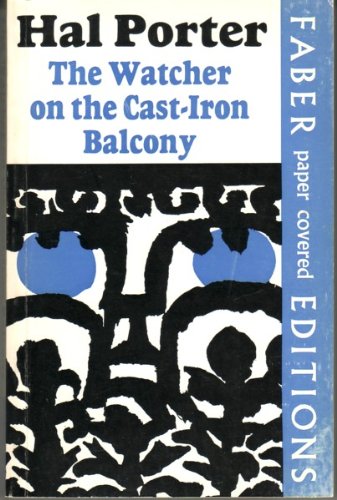
Who are these writers? Patrick White? Hal Porter? Thea Astley too perhaps?

I also noticed that many of the books praised in the Tribune were published by the Australasian Book Society, so I went hunting, and found a seminar was held about it in 2021.  The seminar promo described the Society as

a mid-twentieth-century, book-club style, cooperative publisher with a subscription model that promised four books a year to members and distribution through unions, industry associations, education organisations and the communities of the organised left in Australia, including the communist party. It sought to find readers who did not read literature and to develop writers who did not yet write it.

Fascinating. In 1962, this Society celebrated its 10th anniversary … but, like the Dame Mary Gilmore Prize, I think it deserves its own post.

Meanwhile, just to show that not all my research ended up at the Tribune, I’ll close with a review from The Canberra Times of Ron Tullipan’s novel March into morning, which was published by the Australasian Book Society in 1962, and won the Dame Mary Gilmore prize. It tells the story of a man “who started life as a ward of the State and was hired out to a slave-driving cocky, whose only interest in him was how to exploit him”. Writing on September 29, reviewer G.C.P. says it

may sound like one of those hopeless novels whose authors are only concerned to spit into Authority’s eye and point out wickedness in high places. / Fortunately, it is not, and reads more like an honest piece of reporting.

G.C.P. assesses its strengths and weaknesses, and concludes that “it is not great literature, [but] it is a very readable book”. Judah Waten would probably see this as damning it with faint praise! 

Sources

  • 1962 in Australian Literature (Wikipedia
  • Joy Hooton and Harry Heseltine, Annals of Australian literature, 2nd ed. OUP, 1992 (with Bill’s help)

Previous Monday Musings for the “years”: 1929, 1936, 1954 and 1940.

Do you plan to take part in the 1962 Club – and if so how?

Susan Glaspell, A jury of her peers (#Review)

One of my retirement activities is to co-ordinate a little band of volunteer indexers at the National Film and Sound Archive. Not only do we do useful work for the Archive, but we get to socialise a little with our peers, meaning we talk about what we are watching, listening to, and reading. Recently, one of the team sent me a short story to read. He “raved” about it, he wrote in the accompanying email. Well, I have now read it and I’m mighty impressed too. It’s by an American writer and appeared in one of the those annual best short stories volumes, this one for 1917.

Susan Glaspell

The author of the story, as you will have worked out from the post title, is Susan Glaspell (1876-1948). I had never heard of her, but fortunately she has a decent-sized Wikipedia page which you can read, but I’ll give a brief summary here. She was a playwright, novelist, journalist and actress. Indeed, she and her husband founded America’s first modern theatre company, the Provincetown Players. Wikipedia then says, and I’ll quote because why try to paraphrase it:

First known for her short stories (fifty were published), Glaspell also wrote nine novels, fifteen plays, and a biography. Often set in her native Midwest, these semi-autobiographical tales typically explore contemporary social issues, such as gender, ethics, and dissent, while featuring deep, sympathetic characters who make principled stands. Her 1930 play Alison’s House earned her the Pulitzer Prize for Drama.

Wikipedia has much more to say but essentially, like many women writers, her star faded, partly Wikipedia says, because her “strong and independent female protagonists were less popular in the post-war era, which stressed female domesticity”. However, from the 1970s on – we all know about this revival don’t we – she started to regain traction. Now, she is recognised as a “pioneering feminist writer and America’s first important modern female playwright”.

All this might clue you in to why I so enjoyed her story.

“A jury of her peers”

Kindle ed.

“A jury of her peers” is quite a long short story, but it engrosses from the beginning because of how Glaspell slowly unfolds the story, incisively developing, as she goes, a number of ideas that still speak to us today. We readers work out fairly quickly what has likely gone on, but our fascination lies in how the two women protagonists come to their understanding of the matter, how they try to resist what they have intuitively guessed, and what they decide to do about it. Overlaying this are the assumptions made about them (and about women in general) by the men involved, which adds a social dimension to the moral one. It’s a wonderfully complex story. It’s no accident that the main action takes place in that women’s domain, the humble kitchen.

The story, according to Wikipedia again, was loosely based on the 1900 murder of a man called John Hossack which Glaspell covered while working as a journalist. She originally wrote it in 1916 as a one-act play, Trifles, for the Provincetown Players, before turning it into a short story. Later, it was adapted for an episode of that 1950s TV series, Alfred Hitchcock Presents, and into a 30-minute film by Sally Heckel in 1980.

The plot is simple. A farmer, John Wright, has been murdered, and his wife, the diminutively named Minnie, taken into custody, the day before the story’s action takes place. The story opens with Sheriff Peters and the county attorney Mr Henderson picking up the Wrights’ neighbour, farmer Mr Hale, who had called in the death the day before. Their aim is to visit the scene to look for evidence that might explain what had happened, that might provide a motive. In the buggy is the sheriff’s wife Mrs Peters who is coming along to collect some clothes for Minnie. At the last minute, Mrs Hale is asked to join them, at the request of Mrs Peters who appears to need some support in her sad task.

So, this band of five arrive at the Wrights’ “lonesome-looking place” and, while the men go in search of their evidence, the women remain in the kitchen-living area to get those items Minnie had asked for. As they do, they start to notice things around them – providing insight into Minnie’s life and state of mind – and slowly they piece together an understanding of what had happened. These two women don’t know each other well, so they are cautious with each other, sometimes moving “closer together” in solidarity, particularly when the men appear at intervals and invariably belittle women’s skills and knowledge, but other times drawing apart, uncertainly feeling each other out as they simultaneously feel out their own thoughts and feelings.

The practical farmer’s wife Mrs Hale increasingly senses what sort of life Minnie had led, and feels guilty, criminal even, about never having visited her, but she is uncertain about how the timid-seeming, law-abiding Sheriff’s wife is reacting. However, every now and then she catches in Mrs Peters “a look of seeing into things, of seeing through a thing to something else”. Eventually, they connect, “in a steady burning look in which there was no evasion, no flinching”.

It is so beautifully done, with barely a wasted word or description, with every interaction carrying weight, with perfect use of metaphor (involving birds, cages, and knots) and irony. It reminded me, just a little, of Pat Barker’s The women of Troy (my review), another story in which men underestimate women, to their detriment (though they may not always know it). And so, in this story, a number of issues are explored, including morality and natural justice versus the law; gender and men’s superior, condescending dismissal of women’s skills and knowledge; neighbourliness and guilt; and female solidarity.

“A jury of her peers” is a subversive crime story, one that wowed me, for its subject matter, particularly given the time it was written, and for its sure, unflinching writing. I’m impressed that it was chosen for an annual best anthology by a man – but perhaps that’s me being condescending now. Whatever! I would love to read more Glaspell.

Susan Glaspell
“A jury of her peers” (orig. pub. in Every Week, 5 March 1917)
in Edward J. O’Brien (ed.), The best short stories of 1917 and The yearbook of the American short story
Boston: Small, Maynard and Company, 2014
pp. 256-282
Available online at Hathitrust

Mary TallMountain, Snatched away (#Review)

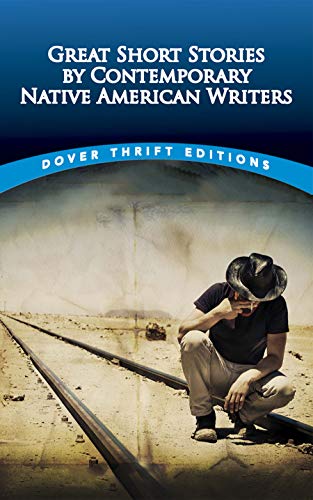
Mary TallMountain’s “Snatched away” is the ninth story of fourteen in the anthology, Great short stories by contemporary Native American writers, that I’ve been working through this year. It, like the previous three, was published in the 1980s, in 1988 in this case.

Mary TallMountain

Anthology editor Bob Blaisdell provides minimal information about her. He gives her heritage as Athabascan, Koyukan and Russian on her mother’s side, and tells us she was born Mary Demoski in Alaska in 1918, and died in 1994. Wikipedia’s article on her describes her as “a poet and storyteller of mixed Scotch-Irish and Koyukon ancestry” (Koyukon being Alaska Native Athabascan). Later in the article Wikipedia also mentions her Russian heritage.

Wikipedia provides more background, though not as much as on some of the other writers I’ve read in this anthology. She didn’t start writing until she was in her 50s, which means the 1970s , and she was part of the Native American Renaissance. However, the works listed seem to be primarily poetry, and there’s no discussion of her prose writing. It describes her main themes as being Native and Christian spirituality, including a connection to nature. It also tells us that she was given up for adoption when she was 6, by her tubercular mother, who knew “she would inevitably die” from the disease. It was not a happy experience for TallMountain. Her step-father was abusive, and she was forcefully dislocated from her culture.

TallMountain’s whole life was a challenge – from the unsurprising alcoholism, given her difficult childhood, to serious health problems, including cancer and a stroke.

“Snatched away”

“Snatched away” is told through the eyes of a white man, Clem, who has an Athabascan partner, Mary-Joe, and two children, though this is only slowly revealed. The framing story takes place over a day, in the 1920s, as Clem manoeuvres his way down the Yukon river, meeting rivermen and reflecting on his life. Through him, TallMountain tells of the culture of Athabascan river people whose survival depends on their river, fishing and hunting skills:

Quick dark silhouettes against the greens of alder and cottonwood, the Indians were part of sky, river, earth itself: they wove their dories through tumbling water, poled schools of darting salmon, strode like lumberjacks. Born rivermen, Clem thought with respect. Still, the river was a tough customer. In the seven years he’d been here, ten men and boys had downed between Nulato and Kaltag.

The river might be tough, but it is nature, and its spirit and theirs are entwined. The more problematical thing is the impact on their lives and culture of the arrival of white people, particularly with their diseases like small-pox and tuberculosis.

TallMountain doesn’t gloss over or romanticise life, before or after the arrival of the whites. Rather, she tells it as it is. Early in the story is a scene, told in flashback, in which Clem spends an afternoon on the riverbank with locals, young Andy, who had later drowned, and Little Jim. They see a bundle rolling fast down the river and, on his asking what it is, Clem is told it’s a “Baby. Throwed away”. A common practice in the “old time” for imperfect babies, with a “bum leg” maybe, or “head mashed”, it happened less now, but women will still do it, he’s told, if the baby is “too bad”.

Death pervades the story, actual or intimated – from the babies and the drownings to the aforementioned diseases – but its handling is unsentimental.

From the opening paragraph describing the Yukon as being in a “fierce, frowning mood” to the end when Clem’s “words are snatched away by the wind”, it is the river that controls the story. Its power and potential to both sustain with fish and birds and to kill, and its associated spirituality, are evoked through the people Clem interacts with on his journey – like the consumptive Floyd out hunting mallard and Willy the fisherman who “looked as if he had always been there” and who tells Clem “you got to watch that river” – and through Clem’s physical struggle to keep his boat upright and on course. The river is a living thing, and should never be underrated. Nor perhaps, should be the Woodsman, an Athabascan bad spirit about which Clem asks Willy. It’s a joking reference, but with a tinge of something else all the same, given soon after this Clem senses “something besides fish alive, out there in the river”.

There is clearly an autobiographical element to the story, with Clem’s partner, like TallMountain’s mother, contracting tuberculosis and the local doctor offering to adopt the children, just as Tallmountain had been. Clem is bothered, but philosophically believes “it will all work out in the wash”. Will it? Much is left open in this story.

Like many of the stories in the anthology, “Snatched away” is at least partly about the intersection of cultures. TallMountain, like many of the authors, is of mixed heritage, and in the little I’ve found about her on the Internet, she was comfortable with that. In fact I found an Interview with her in which she describes herself as an “inbetween”*, by which she means having “a connection between two different cultures” to which must be done justice. As Clem fights his way down the river, he thinks about his own heritage and background, as well as of the Athabascan people. As he tires, he sees the faces of his wife and children “wavering” in the mist. But, his specific pronouncement about “Indianness” just after this – “what difference now, how much the blood is mixed” – felt sudden and a bit out of the blue.

It may be that TallMountain was more poet than storywriter, but I did still enjoy the story, even if more for its gorgeous writing about the river and its people than for its narrative coherence. And it has been anthologised more than once, which says something.

* Joseph W. Bruchac III, “We are the inbetweens: An interview with Mary Tallmountain”, Studies in American Indian Literatures, Series 2, Vol. 1, No. 1 (Summer 1989), pp. 13-21

Mary TallMountain
“Snatched away” (orig. pub. 1988)
in Bob Blaisdell (ed.), Great short stories by contemporary Native American writers
Garden City: Dover Publications, 2014
pp. 65-74
ISBN: 9780486490953

Rayna Green, High cotton (#Review)

With Rayna Green’s short story, “High cotton”, we pass the halfway mark in that anthology I’ve been posting on over the last few months, Great short stories by contemporary Native American writers. We are also getting closer to the anthology’s publication date of 2014, so these chronologically listed stories are starting to bunch up in their dates. The previous two were both published in 1983, with “High cotton” being published just a year later in 1984.

Rayna Green

Again, I’m mostly using anthology editor Bob Blaisdell’s intro and Wikipedia to introduce the author. Blaisdell’s intro is brief, as usual, but it is he who formally clarifies Green’s identity as a Native American, explaining that her “Native background, through her father, is Cherokee”. Identity, as we’ve come across already in this collection, can be problematical so I was a bit unsure when Green’s Wikipedia article didn’t explicitly provide her tribal affiliation, as I’ve found for our preceding authors. As this anthology specifically contains stories by Native American writers, I do want to identify how each writer fits into this.

Wikipedia’s article on Green (b. 1942) isn’t completely silent. It does imply her heritage, describing her as the “first American Indian to receive a Ph.D.” in Folklore and American Studies, and stating, near the end, that she was “a founding member of both the Cherokee Honor Society and the American Indian Science and Engineering Society”.

Continuing with Wikipedia, I was also surprised that, unlike for our previous writers, Green is not introduced as a writer, but as a curator and folklorist – at the Smithsonian Institution, among other organisations – and as having worked in academia. Duke University is more useful regarding her writing career. In 2008, it said that she had written or edited four books and published “many essays on American Indian representations, American Indian women, American identity, American Indian material culture, and American Indian food and foodways”. The page also says, and this was of particular interest to me, that

Several of her short stories and essays on Native women and American identity have been widely reprinted and have served as standard reading for twenty years in courses in women’s studies, American Indian studies, and American studies (e.g., “The Pocahontas Perplex: The Image of American Indian Women in American Culture,” “The Tribe Called Wannabee: Playing Indian in Europe and America,” “Magnolias Grow in Dirt: Southern Women’s Bawdy Humor,” and “High Cotton”).

This seems like a good point to move to today’s short story …

“High cotton”

“High cotton” is a tricksy story. For a start, it is framed as a story within a story, which suggests that storytelling is one of its concerns. There is also the challenge of the Oklahoman Tahlequah vernacular that is used in the telling. Finally, there are complicated relationships, and, dare I admit it – identities – to unravel. I’m not sure I completely got them all, but that I think it part of the point about identities: To what extent are they what you are born as and to what extent what you choose?

The story-within-the-story concerns Rose who, in effect, gets the better of those who have made her life hell – the Baptist Church and her abusive alcoholic white husband Will – by emulating Jesus to encourage said husband to convert to Christianity and preach the word. The story turns to almost pure farce at this point as Rose prances around the bedroom in a cloudy, white nightgown exhorting her out-of-it husband to repent his ways. She can’t believe that he doesn’t recognise her, but she does such a good job of it that he does indeed repent and go on to preach the word while, in a pointedly ironic twist, she goes on to support herself by selling the very liquor that had made her life a misery. And, she stays away from the church.

Framing this is Grandma (Rose’s sister, I think) telling the story to Ramona (a great-niece, I think). Green opens her story with:

Is everything a story? Ramona asked her.

To which Grandma replies, somewhat cryptically:

It is if a story is what you’re looking for – otherwise it’s just people telling lies and there’s no end to it.

While Grandma waits for Ramona’s response, Ramona is watching some “purple cockscombs” through the kitchen door. This ends the opening paragraph so, hmmm, what do these “purple cockscombs” signify, as they seemed too deliberately placed there to mean nothing. They are flowers, but my first thought was of the cockscomb strutting about in foolish pride. My web search retrieved several, often paradoxical meanings. Symbolsage.com provides a good description, summarising them as symbolising “love, affection, silliness, partnership, individuality, strength”. Green could be calling on some of these, and/or on that “cockscomb” image of showy emptiness.

Perhaps more relevant to focus on is the black snake that runs across another character’s foot out in the cotton fields. The snake doesn’t bite her – a Cherokee named Gahno – but the event results in pandemonium and change that involves, over time, the women working on the cotton fields leaving. This infuriates the German plantation-owner Poppa, particularly when his daughter (Ramona’s mother) marries Gahno’s son: “Betrayal was bad enough, but race mixing was worse”.

It is only after we are told all this, and after Ramona has doctored Grandma’s iced tea with some “boogered Indian” whiskey, that we hear the story of Rose and Will. Grandma is quite the storyteller:

Rose got all the church women to pray and pray over him, week after week, and they kept poor Jesus awake yelling about Will’s sinful state. The more they prayed and hollered over him, the more he cussed and drank. And that made them pray more. You know how them prissy Baptist women is, honey—wouldn’t say shit if they had a mouthful—and they like to drove everyone to the ginmills and shake dance the parlors before long. But everyone was more disgusted with Will.

By the end of the story Will has been dead some years, and Rose “had turned Indian just as sure as she’d turned away from Christians”.

To conclude, we return to the aforementioned snakes. Grandma tells Ramona that Rose “always figured, just like Gahno, that snakes were meant to warn you, and she took the warning”. As for stories? Well, they may be lies or they may be what Grandma calls them, “snakebite medicine”. “High cotton” is an intriguing story. Green evokes a lively scene, and explores with dark humour the complexities of multiracial communities where personalities and cultures clash, but I did have to read it several times to work out who was who. If anyone else has read it, I’d love to hear your thoughts.

Rayna Green
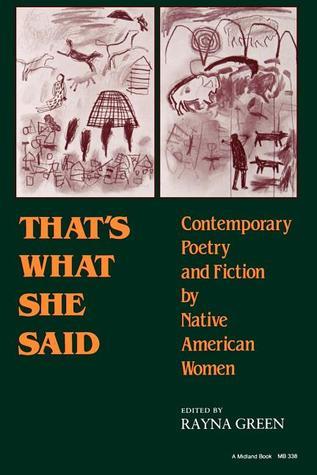
“High cotton” (orig. pub. 1984 in That’s what she said: Contemporary poetry and fiction Native American women, ed. Rayna Green)
in Bob Blaisdell (ed.), Great short stories by contemporary Native American writers
Garden City: Dover Publications, 2014
pp. 59-64
ISBN: 9780486490953

Monday musings on Australian literature: on 1923: 6, A postal controversy

Who would have thought that the cost of postage would generate controversy in the book world? And the sorts of issues that would be raised as a result?

Help Books Clker.com
(Courtesy OCAL, via clker.com)

In my research of Trove for book-related issues in 1923, I came across a letter to the editor opposing some proposed changes in postal rates for books and other printed matter. Of course, I researched it a bit more, and discovered that the issue had started in 1922 (or perhaps even earlier. I didn’t look further, as my aim here is to document some issues that seem interesting rather than use all my reading time on detailed research!)

As far as I can work out, investigating postal rates had started perhaps in 1921, but it was in early 1922 that the Postmaster General promulgated new regulations. They are described in detail in Melbourne’s Age of 25 January, which explains why they were needed:

These regulations are the outcome of prolonged conversations between Postal officers and those interested in the trade, and are designed to put an end to the confusion which has existed for many months past, while removing some anomalies which caused great irritation, and were responsible for considerable loss. Up to the present none has been able to say definitely what constitutes a book from the stand point of the Post Office. The new regulations, while opposed by some who are engaged in the book selling and book buying business, will at least establish uniform practice throughout the Commonwealth. 

The article describes the new regulations in detail, which I won’t repeat here. You can click on the link above if you are interested. I will just share the main contentious issues:

  • the definition of a book for postal purposes: a cookbook, for example, isn’t one, and nor is one containing advertisements.
  • the requirement to register books that are wholly printed in Australia (because they will get a favourable rate). The article tells us that books printed in Australia would cost 1d. per 8oz to post, while those printed outside Australia would cost twice that, at 1d. per 4oz. 

Now, let’s jump forward to 29 January 1923 which is when I first clocked the issue. It was in a letter to the editor in Brisbane’s Telegraph by one E. Colclough who was the Hon. Secretary of the Queensland Authors’ and Artists’ Association. His beef primarily concerned the issue of advertisements preventing a book’s “registration” as a book:

Such a regulation renders it prohibitive for a poor individual to undertake the publishing of his own works because it frequently happens that only by the assistance of the kindly advertiser is he enabled to finance his literary venture.

His association wanted Australian writers to be “encouraged and assisted in every way possible”, and asked for the regulations to be amended.

A few months later, on 13 June 1923, W.T. Pike, President of the Booksellers’ Association, wrote a letter to Melbourne’s The Argus in which he enumerated seven changes the association wanted made to the regulations. Number three was for the book rate to be applied to

all books printed in Australia without regard to subject or where the author lives. At present books printed in Australia are subject to the pernickety whims of officials. For instance, postal officials say a “cookery book is not a book but printed matter.

The Association wanted “a reasonable number of general advertisements to be allowed” and for books to not have to be registered. They argued that this was an “unnecessary time waster” because the printer’s name and address always appear on books, and books are “automatically sent under the Copywright [sic] Act to two public libraries”. They also wanted reciprocity with New Zealand in terms of rates, and suggested the reduction of overseas postage rates from the “absurd” 8d per lb to 4d per lb would be beneficial. “Quite a lot of books would be sent South Africa if postal rates were reduced”, wrote Pike.

The Commonwealth’s proposed rates bill was moved in Parliament in August 1923, and reported in Adelaide’s The Register. It makes for some entertaining reading, with some arguing against the changes because the money could be spent on other things, such as improving the actual post offices. Do read the report, as it’s short and entertaining.

Meanwhile I will end with two things, one being that the bill was passed, and the other being The Register’s report of one MP’s contribution:

Dr. Maloney (V.) supported the measure, but pleaded hard for an increase to pay to officials in allowance post offices. Some of the women, he said, worked for eight hours daily, under great difficulties, and only got 20/ to 25/ a week, or less than messenger boys.

I like this Dr Maloney, who, according to Serle in the ADB, “loved humankind, fought inequality and pressed the rights and needs of the poor”. I’ve moved away from my topic here a bit but, you know, this little series is as much about serendipity as about books!

I hope you like serendipity as much as I do?

Other posts in the series: 1. Bookstall Co (update); 2. Platypus Series; 3 & 4. Austra-Zealand’s best books and Canada (1) and (2); 5. Novels and their subjects

Jack D. Forbes, Only approved Indians can play made in USA (#Review)

The title of the next story in Great short stories by contemporary Native American writers is almost as long as the story itself. Well, not quite, but, occupying just two pages in the anthology, it is a short short story. It was first published the same year, 1983, as the previous story, “Turtle meat” by Jospeh Bruchac III, but is very different in tone.

(I apologise to those of you who were expecting my next post to be on Chris Flynn’s Here be Leviathans. It is coming, soon, but I had to put it aside for my end-of-July reading group book, and I do want to do it justice.)

Jack D. Forbes

Again, I’m using anthology editor Bob Blaisdell’s intro and, mostly, Wikipedia to introduce the author. Forbes (1934-2011), says Wikipedia, was an historian, writer, scholar and activist who “identified as being of Powhatan-Renapé and Lenape descent”. He is best known for his role in establishing one of the first Native American studies programs at the University of California Davis. He also cofounded D-Q University, “a prominently Native American college in Davis, California”. His activist career started in the early 1960s, when he became involved in the Native American movement, which, Wikipedia explains, “asserted the rights to sovereignty and resisting assimilation into the majority culture”.

Blaisdell introduces his story with this: ‘”Only approved Indians can play made in USA” is almost too sad to be funny, but funny it is’. Or, is it?

“Only approved Indians can play made in USA”

I enjoyed this story because of the way it addresses that issue that can dog First Nations peoples in colonial settings, that of proving indigeneity, which feeds into ideas about identity. It’s an issue I’ve discussed here before, including in First Nations writer Anita Heiss’ Am I black enough for you (my review), and in the essay “Channelling Mannalargenna” (my review) by the non-Indigenous journalist Kathy Marks.

In her book, which is a few years old now, Heiss shares the working definition of an Aboriginal or Torres Strait Islander person used by Australia’s Federal Government:

An Aboriginal or Torres Strait Islander is a person of Aboriginal or Torres Strait Islander descent who identifies as an Aboriginal or Torres Strait Islander and is accepted as such by the community in which he “or she” lives.

I share this purely for background purposes to this story. I am not going to get into the Australian situation because it’s not an issue I have followed recently. It was particularly problematical in Tasmania in recent decades, but I believe that much of that has now been resolved, to the extent that self-identifcation and community recognition are the accepted criteria.

Meanwhile, though, Heiss’s comment is relevant to Forbes’ story which concerns an All-Indian Basketball Tournament, and the two teams that are about to play, one from Tucson and one from the Great Lakes. Many people had come to watch, “mostly Indians” we are told, with many being relatives or friends of the players. There was betting, and “tension was pretty great”. The issue is that the Tucson players are, in general, much darker. Many also have long hair, and some have goatees or moustaches. A rumour starts from the Great Lakes camp that they are Chicanos, not Indians. (If you know your American geography, you will know that Tucson is in southern Arizona, so not far from Mexico, while the Great Lakes are up there near Canada.)

Anyhow, this is a serious point because, as the story goes, the Indian Sports League’s rule is that “all players had to be one-quarter or more Indian blood and that they had to have their BIA [Bureau of Indian Affairs] roll numbers available if challenged”. The Great Lakes players, coming from a big Midwestern city, are all over this:

they all had their BIA identification cards, encased in plastic. This proved that they were all real Indians – even a blonde haired guy. He was really only about one-sixteenth but the BIA rolls had been changed for his tribe so legally he was one-fourth.

You can feel the tongue firmly planted in the cheek – the satirical tone – here can’t you! They challenge the Tucson players, many of whom, as it turns out, can speak their language. None of the urbanised Great Lakes players could, but they claim this proved nothing. Only the BIA card did! The story is short and you can read it at the link below.

“Only approved Indians can play made in USA” is a clever, and oh-so succinct story that draws on recognisable conventions of competitive sport to produce a satire that explores the role of regulation and law in people’s lives, the way power can be wielded, and its potential for destabilising cultural heritage and disrupting solidarity. The ending is particularly biting because after the Great Lakes team has had its way, the last word is given to a white BIA official. That tells you all you need to know about this story.

Jack D. Forbes
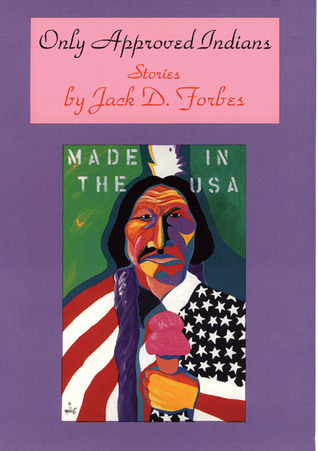
“Only approved Indians can play made in USA” (orig. pub. 1983; also published in Forbes’ collection, Only approved Indians: Stories, 1995)
in Bob Blaisdell (ed.), Great short stories by contemporary Native American writers
Garden City: Dover Publications, 2014
pp. 57-58
ISBN: 9780486490953

Available online at genius.com

Joseph Bruchac III, Turtle meat (#Review)

I’m continuing to work through the stories in Great short stories by contemporary Native American writers. With this post, we jump from 1968 to 1983, which mens we are getting close to contemporary territory. The story is “Turtle meat” by Jospeh Bruchac III.

Joseph Bruchac III

As before, I’m using anthology editor Bob Blaisdell’s intro and Wikipedia to introduce the author, though in this case Blaisdell is extremely brief. Bruchac was born in 1942 and, says Wikipedia, “identifies as being of Abenaki, English, and Slovak ancestry” with his Abenaki heritage coming from his grandfather. He writes poetry, novels and short stories, with “a particular focus on northeastern Native American and Anglo-American lives and folklore”, and is the director of a press which publishes new Native American writers. He is also a performing storyteller and musician.

This post’s short story, “Turtle meat”, was first published, according to Blaisdell, in 1983, in an anthology titled Earth power coming: Short fiction in Native American literature, which was published by the Navajo Community College Press. It was published again in Bruchac’s own collection, Turtle meat and other stories, nearly a decade later in 1992.

“Turtle meat”

Wikipedia’s description of his focusing on “northeastern Native American and Anglo-American lives and folklore” certainly rings true for this story. Blaisdell introduces the story this way, “In this strange great story about an elderly Native American who has been living for years with a debilitated woman, Bruchac writes one of the most extraordinary fishing scenes in literature”. That sure sets up some expectations. It is also a bit misleading because “the debilitated woman” is simply old. She hadn’t always been so.

The story concerns Homer LaWare who, when the story opens, had been Amalia (Mollie) Wind’s hired hand for decades after she had kicked out her husband and come for him. There’s a little sense of “Driving Miss Daisy” here except we are on a farm and life is more earthy than Miss Daisy’s refined life with her Black American chauffeur. To start with, Homer and Mollie have been lovers from the beginning, even though Homer always slept in his cot in the shed – his decision it seems, because “it’s the Indian in me”.

The point at which the story starts, both are showing their age. The story opens with Mollie calling out to him because she needs help getting off the toilet. He comes in from the once-farmed but now overgrown field, and “gently” lifts her, reassuring her that she’s not old, that it “must of was just a cramp. Nothing more than that”. This opening scene tells us a few things – that they are old, of course; that they are comfortable with each other; and that he is sensitively attentive to her physical and emotional needs. We also learn that she has retained ownership of the farm that had originally been her father’s, and that Homer is happy with that: “It’s the Indian in me that don’t want to own no land”. Her grasping husband, Jack Wind, had been sent packing, and her “no-good daughter” had not been seen for years.

The central part of the story describes Homer’s fishing expedition – his catching (and cleaning) several yellow perch, and then an old snapping turtle. It’s a battle – it was easier when he was young “and his chest wasn’t caved in like a broken box” – but he does it. Finally, having been out longer than he’d expected, he returns home, muddy and bloody, to find Amalia missing. Where is Amalia, and why is her daughter – who has “Jack Wind written all over her face” – sitting in Amalia’s rocker?

In one sense, “Turtle meat” is a traditional story of ageing parents and grasping children, but it is imbued with a different sensibility. Homer’s battle with the turtle recalls other literary battles between fishermen and their prey, but in this case it is not only about Homer confronting his age, but is also symbolic of the battle Amalia simultaneously faces. I suspect, too, that the choice of a turtle has specific cultural references for Bruchac, given turtles seem to feature often in his writing.

It’s a great story, as Blaisdell says, but what makes it particularly so is the writing. The characters are more than just types. There’s a natural dignity to them, with an individuality that is conveyed mostly through dialogue – and in Homer’s case, also through his thoughts expressed via italics. The descriptive writing is tight and fresh. And it has a quiet humour. Take, for example, Homer out on his boat:

He looked in the water. He saw his face, the skin lined and brown as an old map. Wattles of flesh hung below his chin like the comb of a rooster.

“Shit, you’re a good-looking man, Homer LaWare,” he said to his reflection. “Easy to see what a woman sees in you.”

How can you not warm to such a character and such writing?

Unfortunately, I don’t think this story is available online so you’ll just have to believe me that it’s another one worth reading from this anthology.

Joseph Bruchac III
“Turtle meat” (orig. pub. 1983)
in Bob Blaisdell (ed.), Great short stories by contemporary Native American writers
Garden City: Dover Publications, 2014
pp. 50-56
ISBN: 9780486490953

Leslie Marmon Silko, The man to send rain clouds (#Review)

After a two-month hiatus, I return to my reading from Great short stories by contemporary Native American writers with a three-decade jump from D’Arcy McNickle’s 1936-published “Train time” to Leslie Marmon Silko’s “The man to send rain clouds”, which was published in 1968 .

Leslie Marmon Silko

Again, I’m using anthology editor Bob Blaisdell’s brief intro and Wikipedia’s article to introduce the author. According to Wikipedia, Leslie Marmon Silko (b. 1948) is one of the key figures in “the First Wave of what literary critic Kenneth Lincoln has called the Native American Renaissance“. I don’t know much about the trajectory of Native American writing, within the larger American culture, so this gives me a bit of a guide to how it has gone.

Silko was born in Albuquerque, of Laguna Pueblo ancestry, and grew up on the Laguna Pueblo reservation – which I visited with my family on a memorable road trip through New Mexico in December 1991. (For those of you who haven’t been to New Mexico, I recommend it as a special place to visit – physically, historically and culturally.) Silko, says Wikipedia, was schooled at local Indian schools, before attending the University of New Mexico from which she graduated with a BA in English Literature, in 1969. She then briefly attended law school, before deciding to pursue a literary career full-time, which has included teaching at several universities.

This post’s short story, “The man to send rain clouds”, was published while she was an undergraduate. It earned her a National Endowment for the Humanities Discovery Grant, and continues to be a popular anthology choice, apparently. She has, since then, written several novels, a “poetic memoir”, and many essays. In one of those essays, Wikipedia says, she criticised Louise Erdrich for abandoning “writing about the Native American struggle for sovereignty in exchange for writing “self-referential”, postmodern fiction”. Interesting. I’ve only read two books by Erdrich, and one so long ago I can’t recollect the details, but The bingo palace (1995) does confront the challenge of marrying tradition with contemporary life.

Blaisdell’s introduction includes a statement by Silko on why she writes, which is

to find out what I mean. I know some of the things I mean. I couldn’t tell you the best things I know. And I can’t know the best things I know until I write.

I understand what she means here. I don’t find talking easy. I find it easier through writing to work out what I know and mean.

“The man to send rain clouds”

Wikipedia summarises Silko’s themes as being grounded in a wish “to preserve cultural traditions and understand the impact of the past on contemporary life”. Her career, it says, “has been characterised by making people aware of ingrained racism and white cultural imperialism”. Many of her characters “attempt what some perceive a simple yet uneasy return to balance Native American traditions survivalism with the violence of modern America”. This is all part of a continuing theme in the Southwest regarding “the clash of civilisations” and “the difficult search for balance that the region’s inhabitants encounter”. Much of this is already evident in this early short story of hers.

“The man to send rain clouds” concerns the interaction between Pueblo Indians and Christianity. It reminded me in a small way of Marie Munkara’s Every little thing (my review) except that Munkara’s is a full-length and often laugh-out-loud work versus Silko’s more wry short story. However, both show the power-play between the original people of a land and the churches that came in to save them, and also how the oppressed First Nations people can sometimes, at least, work it to their advantage.

Silko’s story concerns the death of an old man, Teofilo. It opens with his body being found under a “big cottonwood tree” by brothers-in-law Ken and Leon. It describes their going through some traditional death rites, including preparing the old man’s body with face-paint, before bringing him back to the pueblo. It’s here that the title is explained: they say to the old man, after scattering cornmeal, “Send us rain clouds, Grandfather”, which specifically introduces the importance of rain to them and suggests its role in their rites. On their way back into the pueblo, they meet the priest who asks whether they had found Teofilo, but they give a noncommittal reply, telling him that “everything is OK now”. When the priest replies that they “shouldn’t allow him to stay at the sheep camp alone”, they continue with their obfuscation:

“No, he won’t do that any more now”.

I loved Silko’s subtle use of humour in the story. In this brief conversation, Silko sets up exactly how the locals deal with the priest, politely but also determined as much as possible to keep him out of their business. The rest of the story concerns their funeral business, including another delightful encounter with the priest when one of the pueblo’s members feels that some “holy water” wouldn’t go astray.

It’s a quiet story, but a strong one. The tone is measured, the pace unhurried, mirroring the values and attitudes of the pueblo people who are doing their best to preserve their customs while maintaining peace with those who have the power. The same tone is used for the priest’s non-confrontational response, and his own decisionmaking, reflecting, presumably, his need to work with rather than against the people. It’s a story ripe for discussion.

The imagery is beautiful, evoking the snow-capped mountains, the arroyos, mesas, and sandy flats that characterise that part of New Mexico. There is a strong use of colour, which is mostly muted, supporting the tone, with a touch of red to herald something bigger. And of course there’s the rain motif that runs through the story, reflecting its importance to the pueblo’s survival.

A moving story, that I commend to you. It’s a quick read.

Leslie Marmon Silko
“The man to send rain clouds” (orig. pub. 1968 under the name Leslie Chapman)
in Bob Blaisdell (ed.), Great short stories by contemporary Native American writers
Garden City: Dover Publications, 2014
pp. 45-49
ISBN: 9780486490953

Available online via the University of New Mexico.

D’Arcy McNickle, Train time (#Review)

Continuing my reading from Great short stories by contemporary Native American writers, we now jump a decade from John M. Oskison’s 1925-published “The singing bird” to D’Arcy McNickle’s “Train time” which was published in 1936 .

D’Arcy McNickle

As before, I’m using both anthology editor Bob Blaisdell’s brief intro and Wikipedia’s article to introduce this author. D’Arcy McNickle (1904-1977) was, like the previous authors, of mixed parentage. He was born on the Flathead Reservation in Montana to an Irish father and a Cree-Métis mother, and was an enrolled member of the Salish Kootenai nation. He attended schools on and off the reservation, then went to the University of Montana, before studying at Oxford University and the University of Grenoble.

He wrote a few novels, but is probably best known for his first, The surrounded, which was published in 1936, the same year as the piece I’m reviewing here. From the summary I’ve read, it sounds like it draws from his own life, like so many first novels. However, that same year, 1936, McNickle started working at the Bureau of Indian Affairs, a US federal agency. He worked under John Collier, Commissioner of Indian Affairs, who encouraged self-government for Native Americans. McNickle became knowledgable about Native American policies, and in 1944, helped found the National Congress of American Indians in 1944. By 1950, he was publishing non-fiction works on Native American history, cultures, and governmental policies. Later, he worked in academia as an anthropologist.

Of his short stories, Blaisdell writes that “his quiet and intense stories seem to have been informed by a deep experience of Chekhov’s and Hemingway’s short fiction”. “Train time” is certainly quiet and, depending on your perspective, intense – with an ending that leaves many questions hanging.

“Train time”

“Train time” takes place on a train station, where twenty-five Native American (“Indian”) children from the local Reservation are waiting for a train to take them to an off-reservation boarding school. This has been organised by the local white Indian agent, Major Miles, who believes he is doing a good thing. He is, we are told, “a man of conscience. Whatever he did, he did earnestly”.

The trouble with earnest people – as I know a bit too well – is that they can lack imagination. He is thinking about these children who are about to leave the Reservation “and get a new start. Life would change. They ought to realise it, somehow-” It’s hot and stifling, the children are restless, and he is stiff and soldier-like. Not a recipe for the sort of inspirational words the situation needs. Then, he spies a young boy, “little Eneas”.

The Major remembers the moment, six months earlier in the depths of winter, when he had visited Eneas’ home to find out why his grandfather had not started the wood-cutting job he’d been employed to do. Turns out the grandfather and grandmother were no longer capable of such work. Not only that, they seemed ill, and the Major felt trapped. He feared catching pneumonia; he felt unable to help personally out of his salary, as where would it stop; and government resources were limited. Then, he had spied “little Eneas” who was doing his best to help the old people. Eneas’ “uncomplaining wordlessness”, his “loyalty to the old people”, had got the Major thinking. Here was “a boy of quality”. Surely he’d be “shirking his duty” if he failed to help him. So, he had come up with a plan to have the old people cared for and send Eneas off to boarding school. The trouble was that Eneas didn’t like the plan.

But, our Major was not to be dissuaded (so much so that “against his own principles” he had even bought “a week’s worth of groceries” for the old people):

Whether the boy understood what was good for him or not, he meant to see to it that the right thing was done…

You can imagine what that right thing was. The story concludes with our returning to the Major and the children on the railway station, and the Major trying to find those words to inspire the children. The Major knew that “none had wanted to go”, so he wanted to make them see “what this moment of going away meant”. What it meant of course, in the well-meaning Major’s mind, was a bright future.

There is no epiphany for the Major but the powerful imagery in the closing paragraphs, in which “a white plume flew upward” while the “flying locomotive loomed blacker and larger” conveys what the author thinks.

McNickle does a great job of evoking the Major. We see his good intentions, but we also see his stiffness and his obliviousness to the humanity of those he wants to help. This sort of well-meaning paternalism was pretty rife amongst those who wanted to do “the right thing” wasn’t it? I’d love to know how the story was received at the time. Did stories like this get the message across?

D’Arcy McNickle
“Train time” (orig. pub. Indians at work 3, from the Bureau of Indian Affairs, March 15, 1936)
in Bob Blaisdell (ed.), Great short stories by contemporary Native American writers
Garden City: Dover Publications, 2014
pp. 40-45
ISBN: 9780486490953

Myra Morris, The inspiration (#Review, #1940 Club)

As I have done for some previous “year” reading weeks*, I decided for 1940 to read a short story by an Australian author. After a bit of searching I settled on Myra Morris, and her story “Inspiration”, because … let me explain.

My last two Australian contributions for these reading weeks were works by men – Bernard Cronin and Frederic Manning – so this time I wanted to choose one of our women writers. I found a few in Trove, but the one that caught my eye was by Myra Morris, because she was already known to me: in my Monday Musings for the 1929 year, and back in 2012 in another Monday Musings where she was listed by Colin Roderick in his Twenty Australian novelists. She also has an entry in the ADB. Clearly she had some sort of career at least, even if she is not well remembered now.

Who was Myra Morris?

ADB‘s article, written by D.J. Jordan in 1986, gives her dates as 1893 to 1966. She was born in the Mallee town of Boort, in western Victoria, to an English father and Australian mother. Her literary abilities were encouraged by her mother and an English teacher at Rochester Brigidine Convent, and she had verse published in the Bulletin. From 1930 she was part of Melbourne’s literary, journalistic and artistic circles, and “was active in founding and organising the Melbourne branch of P.E.N. International”. Her circle of friends, it appears, included Katharine Susannah Prichard.

While she wrote book reviews, novels and essays, her favourite form was, apparently, short stories. She was published in newspapers, and her short stories have been anthologised, but there is only one published collection of her stories, The township (1947). Translations of her work were published in Germany, Austria and Switzerland.

Jordan writes that she:

has been acclaimed as one of Australia’s best short-story writers. Her clear pictures of life in country and town contain a wide range of characters and reveal her tolerance and understanding of humanity in its struggles. Like her novels, her stories combine earthy realism, poetic imagery and a broad humour. Sometimes her plots are marred by the demands of the popular market, but her often beaten-down and defeated people always contrast with her lyrical evocation of landscapes. 

“The inspiration”

I picked “The inspiration” primarily because it was by Myra Morris, but I was also attracted to it because it’s set in Melbourne and its protagonist is a musician. Both of these interest me. The plot centres on violinist, Toni Pellagrini, who, as you can tell by his name, is of Italian background. Every afternoon, he plays in a 5-piece ensemble in the cafe at “Howie’s emporium”. It’s when he is happiest, we are told. When he is playing, he is “a different creature entirely from the little dark, harassed person who at other times sorted out vegetables in his father’s fruit shop”. You sense the immigrant life. Indeed, at one point Toni realises that without his music he could be seen as “a fat, oily little Dago”.

Toni is ambitious. He wants to play somewhere better than the cafe, in Kirchner’s Orchestra for example. At the cafe, however, the customers are “indifferent”, and offer only “inconsequential applause”. They are more interested in their chatter, in being seen, than in the music. You know the scene. Toni’s distress starts to affect his playing, so much that the other players notice, until one day a young girl appears. She provides him with the needed inspiration (hence the title). She listens with an “absorbed gaze” and breaks into “furious clapping” when the music ends. Toni has his mojo back. Then, they hear that the famous Kirchner is looking for players and is at the cafe. But, as they begin to play, the girl is not there, and Toni is unable play well anymore without her, his inspiration …

What happens next is largely predictable – except that Morris adds a delightful little twist that doesn’t spoil the expected ending but adds an unexpected layer.

Like Jordan, the Oxford companion to Australian literature particularly praises Morris’ short stories, saying that “her talent for domestic realism and naturalistic description, especially of rural environments, is best suited to the short story”. “The inspiration” is not one of these stories – it is urban set, and is not domestic – but its immigrant milieu (both in Toni’s family and the gypsy-inspired ensemble in which he plays) and its resolution suggest a writer interested in capturing the breadth of Australian life as she saw it.

* Read for the 1940 reading week run by Karen (Kaggsy’s Bookish Rambling) and Simon (Stuck in a Book). This week’s Monday Musings was devoted to the year.

Myra Morris
“Inspiration”
Published in Weekly Times (2 March 1940)
Available online via Trove