Monday musings on Australian literature: Forgotten writers 1, Helen Simpson

Do you often wonder how many of the writers we love now will still be read a few decades on? How good are we at identifying those who will continue to be read? So-so, I think you’ll agree if you’ve noticed the many unfamiliar, but well-regarded-at-the time, names amongst the authors mentioned in my various historical posts. It is this that has inspired me to start a new, occasional, Monday Musings sub-series on forgotten Australian writers.

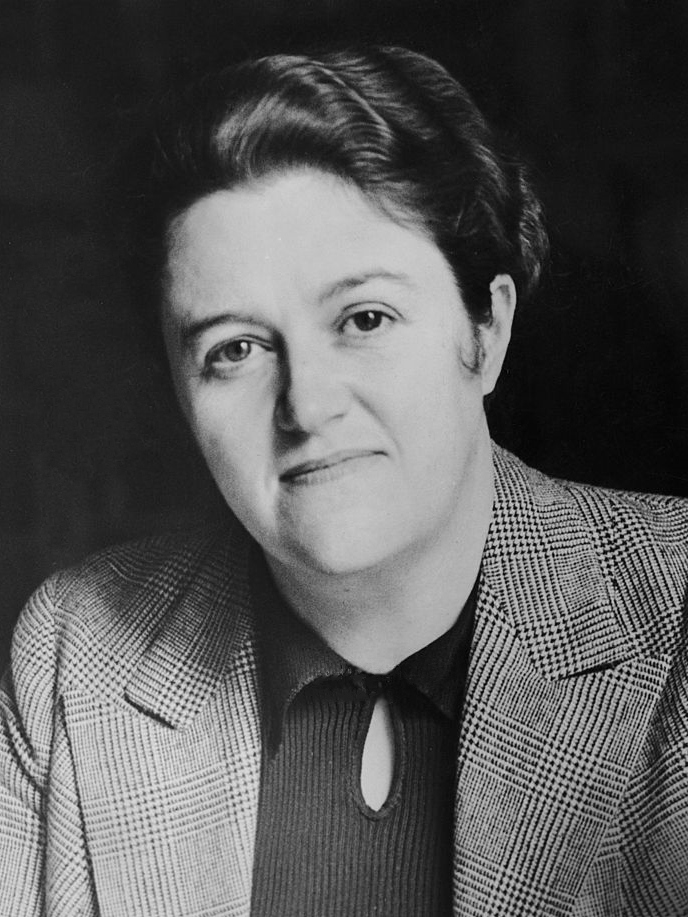
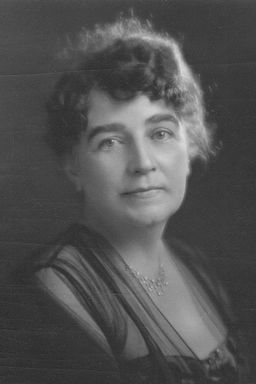
Helen de Guerry Simpson, ca 1935, photographer unknown. (Public Domain, via Wikipedia)

First up, I’ve chosen an interesting one because of her complex relationship with Australia. She’s Helen Simpson, or, more fully, Helen de Guerry Simpson, who was born in Sydney, Australia, in 1897 and died in Worcestershire, England, in 1940.

I’ll start with a brief bio. Simpson was born in Australia and lived here until 1914, when, at 16 years old, she went to England to join her mother who had separated from Simpson’s father several years previously. After that, Simpson spent very little time in Australia, as far as I can tell from the Australian Dictionary of Biography. She returned in 1921 for her brother’s wedding, but was back in England by February 1924. She was in Australia again briefly in 1927, but was back in England that year, as she married there in 1927. Her husband was Australian-born Denis Browne, interesting to us because his uncle was Thomas Alexander Browne (aka Rolf Boldrewood). However, he was significant in his own right as the Father of Pediatric Surgery. Simpson came back to Australia in 1937, to give a series of lectures for the ABC, but was gone again by 1938. Sadly, she died of cancer in 1940.

So, she was Australian, even though Arnold Haskell wrote in 1944 that Katharine Susannah Prichard, Helen Simpson and Henry Handel Richardson “are so well known in England that they are accepted as English writers”! Colin Roderick included her in his 1947 book Twenty Australian novelists, and Zora Cross includes Simpson in her list of writers who started here but then moved abroad.

Starting here is a bit of a moot point. The ADB says that she published several short plays and founded the Oxford Women’s Dramatic Society before her 1921 Australian visit. However, in 1921, Angus and Robertson did publish her Philosophies in little, “a collection of her own verse with her translations from French, Italian and Spanish”. In 1922, ADB also says, she entered a play about Benvenuto Cellini, A man of his time, in the Daily Telegraph literary competition. It was staged the next year by Australian theatrical producer Gregan McMahon. ADB says he only produced four Australian plays between 1920 and 1927, so that’s surely a feather in her cap.

Novels

Simpson wrote 13 novels between 1925 (Acquittal) and 1940 (Maid no more). A few were collaborative works, including a couple of detective novels written with Clémence Dane. She also wrote verse, plays, short stories and non-fiction works.

The Oxford companion to Australian literature (2nd ed.) devotes almost a full column to her. It says that two of her novels had Australian content – Boomerang (1932) and Under Capricorn (1937) – and that her “trio of fantastic novellas”, The woman on the beast (1933), includes one set in Australia in 1999! (Links are to Project Gutenberg Australia.) Two of her novels, one being Under Capricorn, were filmed by Alfred Hitchcock.

So, how good was her writing? Let’s start with Miles Franklin who mentions her in her diaries. She writes in August 1936:

Helen Simpson: one of the giants. Perhaps she would have wiped Brent [of Bin Bin, or Miles herself] out of his field had she not relinquished it. The lively vitality and inherent understanding of the Australian scene in Boomerang show what we lost, what England has gained. Again, in the third division of The woman on the beast in a sketchy, impressionistic effort, she indicates what she could have done to take Australia by the back of the collar and shake her to a sense of her asininity, her pathetic enslavement to an old sectarian controversy–a worse importation than the foxes and other noxious weeds. But H.S. left her country for her own great literary success.

Australian writer Coralie Clarke Rees, in an extensive article in The Sydney Morning Herald (1 June 1937), agrees, calling this “third division”

an imaginative “tour de force,” showing Australia, as the last stronghold of the old order of religion and politics, being invaded by a woman evangelist of the new totalitarian order, whose character seems an ingenious compound of that of Aimee Semple MacPherson and Mary Baker Eddy.

However, Miles Franklin later (around March 1940) modified her view of Boomerang, noting its “melodrama and disjointedness”, and Katharine Susannah Prichard, writing to Miles Franklin on 1 July 1932, says that

HM Green [see my recent Monday Musings post], of Sydney, writing to me the other day, said he liked it [Back to Bool-Bool] much better than Boomerang

Now, here I’m going to share the opening of Boomerang, which won the 1932 James Tait Black Memorial Prize:

Life can afford extravagance, books cannot; for this reason nobody will dream of believing in my two grandfathers. They are too true to be good–good fiction, at any rate; if I try to give some kind of picture of them, it is because they frame between them a vision of a golden age, which could only have existed in brand-new countries, among brand-new circumstances and laws. It was not a golden age for everybody, wives or servants for instance, but for these two it was; they were, to use a word which is almost dead, characters.

I am sorry to think what would happen to these two old gentlemen if they had the misfortune to live now; it would be something legal, that is certain, falling heavily to crush their magnificent egotism and eccentricity. Their wives, who in the ‘seventies put up with them with the uncomprehending patience accorded by Insurance Companies to Acts of God, would nowadays divorce them. Servants would bring, and win, actions against them for assault. As for their families, these would scatter immediately after the first row or two, and go forth to earn their livings with all the horrid freedom that the post-war period accords …

I love this cheeky tone, and her reference here (and in the Foreword) to the fact that fiction cannot be as “extravagant” as life! The Oxford companion says that Boomerang and Under Capricorn “have involved, highly coloured plots, lightly sketched but credible characters, and a lively, humorous and sophisticated narrative style”. This, in fact, summarises what I found in Trove.

So, for example, The Sydney Morning Herald reviewing (16 February 1932) Boomerang describes its rather wild episodic plot and thinks its characters are not particularly well-drawn, but argues that:

It can safely be said that no Australian novelist for many years has provided such an exciting tale, or handled separate scenes and episodes with such liveliness and wit.

I particularly enjoyed respected academic of the time T. Inglis Moore who wrote that:

it is in the romances, Boomerang and The woman on the beast in particular, that Helen Simpson has found her metier. In them she stands out amongst Australian writers as a witty romantic, a teller of vivid tales spiced with satire, tinged with wit.

His article (linked on his name above) in the Sydney Morning Herald (7 August 1937) offers a thoughtful, even-handed analysis of her, and is well worth reading. He recognises that she can be “romantically theatrical, artificial, escapist”, but, assessing her place in Australian literature, he says:

Amongst the contemporary novel-writers one stands supreme. No other Australian comes within cooee of Henry Handel Richardson. Then comes, well, Katharine Prichard, shall we say, along with Brent of Bin Bin? And here, somewhere, must come Helen Simpson.

He concludes with:

Taking her all in all, she is perhaps the most “intelligent” of contemporary Australian novelists in the sophisticated sense, and, along with Christina Stead, the wittiest.

This is strong praise. So what happened? Where did she go? Was her style not strong enough overall to overcome her plots and characters? Or, is it just a matter of fashion? Whatever, I have greatly enjoyed reading about this woman, and may very well share a bit more about her in the future because she was quite a character.

Printed sources

Brunton, Paul (ed.) The diaries of Miles Franklin (2004)

Ferrier, Carole (ed.) As good as a yarn with you (1992)

The Oxford companion to Australian literature, 2nd ed. (1994)

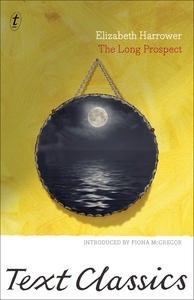
Elizabeth Harrower, The long prospect (#BookReview)

Oppression and tyranny, power and manipulation in human relationships are the stuff of Elizabeth Harrower’s writing, at least in my experience of it, and so I found it again in her second novel The long prospect. Unlike The watch tower (my review), however, which explores the more traditional domination of women by a man, The long prospect’s tyrant is narcissistic grandma Lilian who makes pre-pubescent granddaughter Emily’s life a misery. Why is a novel about a cruel, manipulative person wielding power over someone whom they should love so enjoyable? Let me try to explain …

The long prospect, which was first published in 1958, is set in postwar Ballowra, a fictionalised industrial town based on Newcastle, just a couple of hours’ drive north of Sydney. The major part of it takes place in the home of forty-seven-year-old Lilian who wields sadistic power over all who come within her purview, including but not limited to the aforesaid granddaughter Emily. The novel starts, in fact, with Lilian visiting her ex-tenant and apparent friend, thirty-something Thea, in her new apartment in another part of Ballowra. Lilian walks into the apartment, without being invited, “her eyes on swivels”, and very quickly we realise that this friendship is one in which Lilian has assumed power but is now feeling put out. Words like “disapproval”, “frowning” and “affronted” leave us in no doubt that Lilian’s visit is not the sort of generous one you’d expect from someone visiting their friend in their new home.

This controlling, self-centred, unaffectionate behaviour of Lilian’s, as I’ve said, is not limited to Thea and Emily but extends to all her relationships, including to her daughter Paula, and to the various men who populate the novel, such as the hapless “boy-friend” Rosen and the tender, thoughtful but powerless boarder Max.

At the heart of The long prospect is Emily’s desperate search for affection and attention, which she finally finds in this thirty-something Max, who had been introduced earlier, by name only, as a past lover of Thea. Max warms to the intelligent – but clearly neglected – young girl, and starts spending time with her, mentoring her intellectual and emotional development. Unfortunately, this doesn’t go unnoticed by Lilian’s self-centred and jealous entourage, and eventually insinuations are made that bring about the novel’s denouement. Before that, though, Emily’s blossoming enthusiasm for life and learning is a delight to see.

Harrower constructs her novel and builds up the tone and tension beautifully. She introduces Lilian’s character via her opening visit to Thea. She sets up Emily’s need for affection and her subsequent bond with Max through her previous attachment to Thea and her desperate crushes on teachers. Harrower’s word use is precise, from the recurring appearance of “grey”, describing people and place, to the plain spare language that pares relationships and actions down to their essence. Here’s the desperate Rosen, trailing after Lilian into the kitchen, still hoping she will keep him:

There, catching her, he chances a reproachful expression, seeing that, anyway, her grey eyes were no longer hard, but mild and blank. She had quite abandoned her fiery mood. He was reassured, and smiled at her sheepishly. Her new look must mean apology. In fact, Lilian thought about salmon sandwiches. She filled the kettle.

Catastrophic emptiness

But, now, here’s the thing folks. I finished this book, and half-wrote this post, just before my Dad died three weeks ago. I am having trouble remembering all the thoughts I had while reading it, thoughts that particularly related to Bill’s AWW Gen 3 Realism vs Modernism discussion we were having – but I’ll try. Harrower falls primarily into the Modernist tradition. She reflects the ills of the time through individual psyches, rather than exploring causes and social impacts as we find in Realist books like Mena Calthorpe’s The dyehouse (1961) (my review).

Both Emily and Max feel the psychological impacts of their environments. Early on Emily, desperate to belong, finds herself an outsider yet again:

There was a chill lack of desirability about the room she had left, and about those she might enter – a bleak and rigid lack of warmth that penetrated the future as well as the present and the past.

Max recognises that he had responded to “the catastrophic emptiness of the past few years” by settling for:

Comfortable resignation. He looked at the idea of it. It had not always been that, but the change had been slow and subtle, worked in him secretly. Now the metamorphosis was complete, surprising, disagreeable. (p. 150)

Disagreeable, particularly now that a crisis involving Emily, whom he had wanted to nurture and protect, had come:

Max fought down a sense of alienation … (p. 150)

And yet, in The long prospect there is also a subtle backdrop of the industrialisation that is one of the drivers behind Modernism’s theme of alienation and the individual. Emily’s father Harry Lawrence, on his way for a rare visit with her, considers his old home town:

After years in the country, this subjection to industry, the smoky sky, the matured deterioration immanent at the birth of such towns as Ballowra left him oppressed and indignant. He was unwilling that it should be so bad.

The overriding sense in the book – from all the characters – those we like, and those we don’t, is one of disappointed lives. Max is one of those we like, for his warmth and his capacity for mature reflection:

No external excuse, not lack of this or that fine feeling could be counted as justification. Nothing could undo the harm these casual people had done. Yet, Max argued, they were themselves and lived as they could, and had not been wisely treated either, very likely.

I like the “very likely” qualification! I also like this fundamentally non-judgemental attitude, that doesn’t then follow through to excusing poor behaviour. Max goes on: “it was too easy to exempt from responsibility those who felt no responsibility for their actions. Too easy, reductive, wrong.” In other words, understand but don’t excuse!

The long prospect is thoroughly engaging, despite its overall depressing subject matter. The perfection of Harrower’s insight into human psychology combined with the delicious precision of her writing make it, yes, a joy to read, even though Emily’s plight is heartrending. It’s no wonder, really, that Patrick White was disappointed when Harrower stopped writing. He knew a good writer when he saw one.

Read for Bill’s (The Australian Legend) AWW Gen 3 Week; also reviewed by Kim (Reading Matters).

Challenge logo

Elizabeth Harrower
The long prospect
Melbourne: Text Classics, 2012 (Orig. ed. 1958)
277pp.
ISBN: 9781922079480

Gene Stratton-Porter, The last Passsenger Pigeon (#Review)

I have passed up reading and/or posting on so many Library of America (LOA) Story of the Week offerings over the last months – sadly, because there have been some excellent selections chosen for their political relevance. However, when I saw a sentimental favourite, Gene Stratton-Porter (1863-1924), pop up, I knew I had to break the drought.

Gene Stratton-Porter (Uploaded to Wikipedia, by gspmemorial; used under CC-BY-SA-4.0)

Some of you may not be familiar with this American Midwest author who wrote, says LOA, “sugary (and extremely popular) fiction to underwrite her work in natural history”. It was one of these works, The girl of the Limberlost, that I loved, and later introduced to Daughter Gums who also loved it. Yes, it was sentimental, though it has its tough side, but it did also leave an everlasting impression on me of its setting, Indiana’s Limberlost Swamp. According to LOA again, it was the immense success of this book, and Freckles which I also read, that resulted in her publisher agreeing to also publish her less saleable nature books. She was, writes LOA, “a fighter for the world she saw disappearing around her, as Standard Oil of Indiana drilled new wells and farmers drained more land”.

Interestingly, LOA’s as usual excellent introductory notes focus not on Stratton-Porter but on her subject, the Passenger Pigeon. LOA discusses others who have written about this bird – novelist James Fenimore Cooper, a chief of the Potawatomi Indians Simon Pokogon, and naturalists John James Audubon and John Muir – before eventually getting to Stratton-Porter herself. LOA’s point is to document the extinction of these birds from the early 1800s, when they were still seen in immense flocks, to a century later in 1914 when the last one died in captivity. Stratton-Porter wrote her piece just 10 years after that.

So Stratton-Porter’s piece. She commences by describing the beauty of her childhood farm, including its woods and forests where birds, such as the Passenger Pigeon, loved “to home”. She writes, introducing her environmental theme, that:

It is a fact that in the days of my childhood Nature was still so rampant that men waged destruction in every direction without thought. Nature seemed endlessly lavish …

When people started to clear land they “chopped down every tree on it” without, she says, having any “vision to see that the forests would eventually come to an end”. She writes – and remember, this was 1924:

… as the forests fell, the creeks and springs dried up, devastating winds swept from western prairies, and os the work of changing the climatic conditions of the world was well under way.

She talks of animals and game birds “being driven farther and farther from the haunts of civilisation”, but she also talks of people who did not believe in living so rapaciously, preferring instead to live in log cabins in small clearings. She describes her family’s own hunting practices, including of quail. As their numbers decreased, her minister father forbade the family’s trapping and egg-gathering. He’d noticed that when bird numbers were low, grain-damaging insect pests were high.

He had never allowed, however, the hunting of Passenger Pigeons, despite their being significantly more numerous in those days than quail. Stratton-Porter thinks this stemmed from his having “a sort of religious reverence” for pigeons and doves. Others, though, had no such qualms, and she describes some brutal hunting practices involving wild pigeons, which apparently made good eating. Gradually, it became noticeable, writes Stratton-Porter, that their numbers were decreasing. Not only did her family miss the sound and beauty of these birds, but

The work that they had done in gathering up untold quantities of weed seeds and chinquapins was missed and the seeds were left to germinate and become a pest, instead of pigeon food.

Once again, she notes the wider ecological or environmental implications of species reduction or loss. She then writes of the death of the final two birds in captivity before sharing her own searching for any remaining wild birds. It was while she was watching and photographing, over a period of time, a brooding goldfinch, that she heard the unmistakable “wing music of a bird that should reasonably have been a dove, but was not”. She describes this beautiful bird, but says “it had not the surety of a bird at home; it seemed restless and alarmed”. This was, she argues, “one of the very last of our wild pigeons”, a male bird “flying alone, searching for a mate and its species”.

Stratton-Porter closes her essay with a cry from the pigeon, whose song she says sounds like “See? See?”:

Where are your great stretches of forest? Where are the fish-thronged rivers your fathers en- joyed? Where are the bubbling springs and the sparkling brooks? Why is this land parching with thirst even in the springtime? Why have you not saved the woods and the water and the wildflowers and the rustle of bird wings and the notes of their song? See what you have done to me! Where a few years ago I homed over your land in uncounted thousands, to-day I am alone. See me searching for a mate! See me hunting for a flock of my kind! See what you have done to me! See! See! See!”

And that was written in 1924! Nearly 100 years ago, and yet we still destroy habitat including, here in Australia, that of one of our most popular native animals and national symbols, the koala. Will we never learn?

Gene Stratton-Porter
“The last Passenger Pigeon”
First published: Good Housekeeping, 1924 (Collected in Tales you won’t believe, 1925)
Available: Online at the Library of America

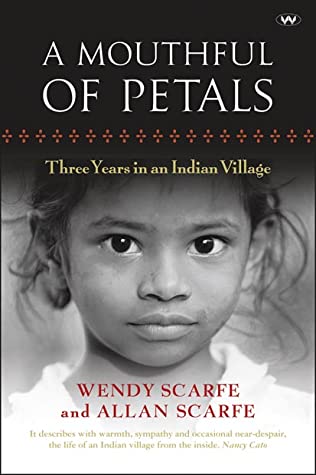
Wendy Scarfe and Allan Scarfe, A mouthful of petals: Three years in an Indian Village (#BookReview)

Husband and wife writers, Wendy and Allan Sharfe, first published A mouthful of petals, the story of their three years in the remote Indian village of Sokhodeora, in 1967. It is not, however, their only book. Wendy Scarfe has written poetry and several novels, two of which I’ve reviewed here, Hunger town and The day they shot Edward, while her late husband, Allan, also wrote some novels and short stories. Collaboratively, they wrote several books besides A mouthful of petals, including a biography of Indian independence activist Jayaprakash Narayan.

It was Jayaprakash, or JP as he was known, who invited the Scarfes to return to Sokhodeora in 1960, after their 6-month volunteering stint, because he believed serving India was in their hearts. Their service would, he wrote, be “of great value to us and would add to that international good-will and understanding that are so badly needed”. In their opening chapter, the Scarfes write poetically of the place that was to be their home for three years:

Sokhodeora is a dot that is part of the plain: beautiful, serene, full of a sense of continuity with the very beginnings of human civilisation.

But to enter the narrow, zigzag alleys between the congested houses is to lose much of the impression of beauty and to realise the antiquity of man’s anxiety, poverty and misery.

Their role was to be education-related, though on their arrival JP admitted that “frankly” he didn’t know “what specific, clear-cut work” to give them! Ah, the days before KPIs! (Or, more likely, as the Scarfes say, the difference between Western and Eastern world views.) The big picture, the ideal, was that education was needed, and that the villagers needed to see that education was about more than gaining Government employment, which, of course, most villagers would never do.

And so, the Scarfes set about developing their own goals and schedule of work, regularly calibrating with the supportive JP. Uppermost was starting a school for children and night classes for adults. However, they also responded to the practical reality of village life which was characterised by extreme poverty, which in turn meant problems like hunger and poor health. How can children learn, for example, if they are not reasonably nourished? When Jayaprakash comments on the villagers’ apathy, Wendy replies that she believed it was “nutritional”:

People can’t have physical and mental vitality on two meals of rice and pulse a day. A huge proportion of village women suffer from anaemia and they must be just dragging themselves around.

Here is where we realise that aid work like this requires not just the necessary professional skills – in this case, teaching – but resourcefulness and entrepreneurship. The Scarfes, for example, discovered the existence of a supply of powdered milk, and developed a program for its distribution. They wrote many appeals for foodstuffs, eventually landing a winner with the American Meals for Millions Foundation, which provided an awful-sounding but highly nutritional product called “Mysore Multi-Purpose Food”. Again, they were heavily involved in distribution and teaching how to use it. They looked at other issues too, including the provision of toilets, family planning, the building of a classroom, and so on. All this is macro-level. They also worked at the micro-level, supporting individual villagers in all sorts of ways, especially in obtaining the medical help and pharmaceuticals they needed. It’s no wonder that, as this edition’s Publisher’s Note says, this book served, for years, “as a primer for intending field workers”.

None of this was easy of course, and the challenge was exacerbated not only by the usual infrastructure problems – such as transport – but also by cultural and personal issues, particularly the challenge of engaging the villagers in an environment characterised by caste prejudice, gender inequality and inter-family quarrelling.

A mouthful of petals, then, has plenty of interesting content, but I would also like to comment on the writing. It’s a collaborative book, but what voice do you choose to write a book involving both authors’ lives? Ruth Park and D’Arcy Niland, in their memoir The drums go bang (my review), used first person plural when writing about joint experiences, and third person when writing about the experience of one of them. The Scarfes took a different approach, narrating the book in first person from Allan’s point of view, with Wendy spoken of in third person. It works, but I rather like Park and Niland’s approach.

Overall, the writing is straightforward, as it has to be to impart all the information it does, but there are lovely flourishes all the same, like the description of Sokhodeora I cited early in this post. The book is also enhanced by the people populating it. Not only are we given some insight into JP, but the Scarfes tell stories about several villagers, including the initially apprehensive but willing Mahadev who works for them from the start and the ultimately tragic Kesurwa whom they choose to train as their kindergarten teacher. These people give life to the bigger picture being told.

Now, when I read a book like this, by which I mean a book that is about a different place and time – after all, we are talking India of 60 years ago – I think about its relevance (beyond any intrinsic interest in the subject matter) to my place and time. This book provided a few such points, one being the importance of education. There’s literacy, of course, but the Sharfes specifically discuss the value of understanding cause-and-effect, of the ability to draw logical or useful conclusions from observation and experience – regarding pain and illness for example – and how this lack impeded village and villagers’ development. This made me think, rightly or wrongly, of what has been happening in the USA recently where there seems to be just that lack of ability in some of the populace. A failure of education?

Then there’s the big point: the idea of having global responsibility for each other. The Scarfes write:

We are all responsible for the human condition and those who are educated are responsible to those who are not.

I like the use here of “responsible to” not “for“. It shifts this idea of responsibility from a patriarchal notion to something more cooperative or service-oriented.

A mouthful of petals is a passionate book that still offers much to think about. It is well worth reading.

Lisa (ANZLitLovers) also enjoyed and reviewed this book.

Challenge logo

Wendy Scarfe and Allan Scarfe
A mouthful of petals: Three years in an Indian village
Mile End: Wakefield Press, 2020 (rev. ed. with Epilogue; orig. ed. 1967)
275pp.
ISBN: 9781743056844

Review copy courtesy author and Wakefield Press.

Bill curates: M.L. Skinner’s The hand

Bill curates is an occasional series where I delve into Sue’s vast archive, stretching back to May 2009, and choose a post for us to revisit. During the latter part of January we will look at some of Sue’s older posts which have relevance to my Australian Women Writers Gen 3 Week, Part II,17-23 Jan, 2021

Mollie Skinner is a little known Western Australian who served as a VAD (nurse) during WWI. Her importance to Australian Literature is that she co-wrote a novel with DH Lawrence, The Boy in the Bush (1924). She also wrote an account of her time as a VAD, and some other novels as well, at least two with some assistance from Lawrence.

_______________________________

My original post titled: “M.L. (Mollie) Skinner, The hand (#Review)”

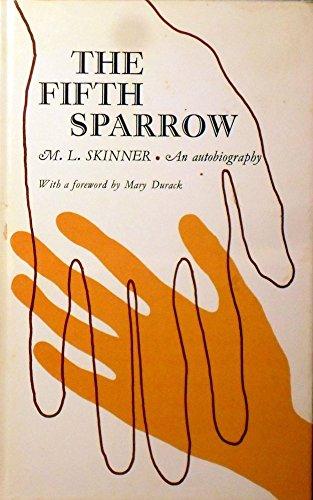
ML Skinner, The fifth sparrow

Pam of Travellin’ Penguin blog read ML Skinner’s short story “The hand” for a challenge she was doing, and, when I expressed interest in it, very kindly sent me a copy. “The hand” is a mysterious little story – and by little, I mean, little in that it takes up less than 7 pages of the anthology, Australian short stories, that she found it in.

Now, the story is a bit tricky, and I think is best understood within the context of Skinner’s biography. She was born in Perth in 1876, but the family moved to England and Ireland in 1878. Mollie was a keen student and reader but had to abandon formal education in 1887 because of an ulcerated cornea, which resulted in her spending much of the next five years in a darkened room with bandaged eyes. After cauterisation partially restored her sight, she started to write poems and stories. Presumably this was around 1892 (ie 5 years after 1887?) when she was about 16 years old. Later she trained as a nurse, which gave her her main living. And then, the ADB biography (linked to above) says something interesting in terms of our reading of this story:  “she recognized within herself an intuitive power, or sixth sense.” A little later in the biography, we are also told that “Mollie believed that God’s hand on her shoulder guided her life. She dabbled in the occult”. She returned to Australia in 1900, though returned to England later to study. She also travelled to India, and served there and Burma during World War 1.

So to the story, which was first published in 1924. It is set in a “mining hospital back there in the west.” As there was “little doing” and the light too dim to read by, the Matron is encouraged to tell a story which she is “good at” doing. They – presumably the off-duty staff – ask her about her life in “those posts way back in the interior”. Was she ever frightened, they ask?

‘Of what?’
‘Well–the loneliness. And bad white men, and bad blacks. Of patients in delirium. Or some awful maternity case you couldn’t handle.’
‘I didn’t think about it. I did what I could. I was frightened once, though: and that, really, by a nurse screaming. A nurse shouldn’t scream.’

Interesting, the “bad white men, and bad blacks”, but I’ll just take that as another of those ways in which contemporary stories provide us insight into the times, and move on with the story. She then tells the story of the scream. She describes the small outback post, the sense of community they had, and the little L-shaped hospital which was open to the bush on one side, and the road and railroad on the other. There were two other nurses besides herself, one being Nurse Hammer “a regular town girl, very attractive, but unstable, untried.” On the night of the scream, our Matron story-teller was doing accounts while the two nurses were chatting with the patients. Our Matron’s mind kept wandering she says. She’s

very practical, really, and then liable to feel things in the air, things that other people don’t seem aware of. My father called it “unwarranted interference”; and told me to taboo it. But it gets hold of me sometimes: and this evening I was uneasy, aware of “something”. There seemed to be a sound.

But, she can’t identify anything, so continues to try to work. She hears Nurse Hammer go to bed, and then – the scream. The rest of the story concerns locating the scream – it was Nurse Hammer – and working out the cause of it – a hand has grabbed Hammer’s leg.

In the end, there’s a practical explanation for “the hand” but along the way there’s a sense of an awakening or at least, a growing up, for Nurse Hammer. Initially, the Matron is

conscious, not only of Hammer’s terrible fear, but of a deeper source, dark and secret within herself. I remembered how lovely she was. How men in the wards watched with furtive eyes as she walked past. I remembered the way she walked–how she avoided those eyes. I knew then that the girl had herself been tempted, that she was powerless, now, in this dark room, because in her own life she was passing through crisis.

The Matron finds herself praying that “whatever we found in this room would not be evil.”

Skinner builds up the suspense well, the darkness, the lantern going out, until eventually the cause of the scream is determined. Before it is fully explained though, Nurse Hammer has a little more to endure, but, says Matron,

I glanced at Hammer. The Nightingale light was flooding her face …

And the Matron goes on to use words that imply a biblical aspect to Hammer’s enlightenment – but if I say more, I’ll give away the story which I’m not sure I want to do (though unfortunately the story does not seem to be available online).

Interestingly, Skinner attracted the attention of DH Lawrence … but I think I might make this the subject of tomorrow’s Monday Musings! Meanwhile, I think the story is to be understood in the sense of a divine intervention intended to test and try Nurse Hammer, from which she emerges, in a sense, reborn and now a real nurse, like Florence Nightingale. (But, I could be wrong.)

ML (Mollie) Skinner
“The hand” (1924)
in Australian short stories (1951)
ed. by Walter Murdoch and Henrietta-Drake Brockman
(pp. 148-154)

_____________________________________

Bill has also posted on Mollie Skinner – on her collaboration with DH Lawrence – so please check out his post, ‘Writing The Boy in the Bush’ too.

As always, we would love to hear your thoughts, particularly whether you have read Mollie Skinner or any of DH Lawrence’s Australian writing?

Bill curates: Monday musings on Indigenous Australian writers

Bill curates is an occasional series where I delve into Sue’s vast archive, stretching back to May 2009, and choose a post for us to revisit.

The feature of Whispering Gums that we all most look forward to is Monday Musings. But when did they start? It took me a while to locate – WordPress really needs the ability to scroll through post Titles by Date – but it turns out Sue put up the first one on 9 Aug. 2010 (here). Check it out, it’s only short, not much more than a statement of intent. No. 2 (here) covers 5 Australian novels, of which two would have to be my all time least favourite. So I’ve chosen for today, No. 3, from 23 Aug. 2009.
_______________________

My original post titled: “Monday musings on Australian literature: Indigenous writers”

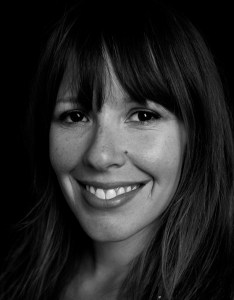
Tara June Winch

Tara June Winch (Courtesy: Friend of subject, via Wikipedia, using CC-BY-SA 3.0)

It’s important I think that my third post be on our indigenous writers. Again it’s going to be pretty idiosyncratic as my reading in this area has been scattered, not for lack of interest so much as the old “so many books” issue that we all know only too well. I was first introduced to indigenous writing at high school where I had two inspirational teachers who encouraged us to think seriously about human rights. It was then that I bought Oodgeroo Noonuccal’s (or Kath Walker as she was then) book of poetry, My people.

In my first Monday Musings post, I mentioned David Unaipon who is generally recognised as the first published indigenous Australian author. However, it was Oodgeroo Noonuccal, with her book of poetry, We are going (1964), who heralded contemporary indigenous Australian writing. So let’s start with her.

Oodgeroo Noonuccal My people (1970, poetry)

Noonuccal’s poetry is largely political. She wrote to right the wrongs which indigenous Australians confronted every day: the racism, the white-colonial-slanted history, the lack of land rights, and so on. Much of her poetry is therefore strong but accessible “protest” poetry. My people collects poems from her first two books and includes new works as well. Here are just a few lines to give you a sense of what she was about:

… Do not ask of us
To be deserters, to disown our mother,
To change the unchangeable.
The gum cannot be trained into an oak.
(from “Assimilaton – No!”)

Gumtree in the city street,
Hard bitumen around your feet,
Rather you should be
In the cool world of leafy forest walls
And wild bird calls.
(from “Municipal gum”)

I love the way she uses gums to represent her people – who they are, where they should be. Some of the poems are angry, some are conciliatory, and others celebrate her culture. I loved the book then, and I still value it now.

Sally Morgan My place (1987, memoir)

The next book in my collection, chronologically speaking, is Sally Morgan’s memoir My place. Sally Morgan is primarily an artist but her memoir became a best seller when it was first published. In it she chronicles how she discovered at the age of 15 years old that her colour did not come from an Indian but  an Aboriginal background, and her subsequent investigations into her family’s rather controversial story. I don’t want to go into the controversy here. Rather, the point I’d like to make is her story-telling: it is warm, funny, and thoroughly engaging.

Women of the centre (1990, short life-stories); Black chicks talking (2002, short life-stories produced in film, book, theatre and art)

Telling stories is an intrinsic part of Indigenous Australian culture. It’s how traditions have been passed on for 40,000 years or more. It’s probably simplistic to draw parallels between traditional story-telling and the telling of stories in general. After all, we all love stories. Nonetheless it is certainly clear from the little experience I’ve had and the reading I’ve done, that story-telling is an intrinsic part of Indigenous Australian culture and is becoming an important way of sharing their experience with the rest of us. This was powerfully done in Bringing them home: The stolen generation report of 1997 which contained not only the history of the separation of children from their parents and recommendations for the future, but many many first person stories which drove the drier points home.

Two books that I’ve read which contain personal stories by indigenous women are Women of the centre and Black chicks talking. The introduction to the former states that its aim is to help we non-Aboriginal Australian readers to understand lives that are so different from our own and “to provide personal written histories for the descendants of the women involved”. This latter is becoming an urgent issue in indigenous communities today – the capturing of story before more is lost. In Black chicks talking Leah Purcell interviews nine Aboriginal woman – some urban, some rural, some well-known, some not – about their lives. Another wonderful read.

Life stories/memoirs represent, in fact, a significant component of indigenous literature. Another work worth mentioning, though I’ve only seen the film and not read the book (shame on me!), is Doris Pilkington’s “stolen generation” story of her mother’s capture and subsequent escape involving an astonishing trek home, Follow the Rabbit-Proof Fence.

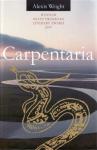
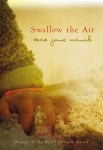
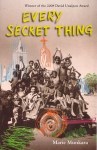
Alexis Wright Carpentaria (2006); Tara June Winch Swallow the air (2006); Marie Munkara Every secret thing (2009)

Finally, a brief mention of three recent fictional works, two of which I’m ashamed to say are still in my TBR pile. These are the two David Unaipon Award winners by Tara June Winch (reviewed since then) and Marie Munkara (reviewed since then). If you are interested in the latter, please check Musings of a Literary Dilettante’s review.

I have though read Alexis Wright’s Miles Franklin Award-winning Carpentaria (my post). It’s set in a fictitious place, tellingly called Desperance, in northern Australia. Its focus is colonialism (ie European invasion of the land), and conflict within black communities about how to respond. To explore these, Wright touches on lot of ground, including land rights, deaths in custody, mining rights, boat people, and petrol sniffing to name just a few. She flips between the real and the magical, she uses language that is image-rich and often playful, and she tells some very funny stories. It’s a big, wild and rather complex read that manages in the end to be hopeful despite itself.

This is just a small introduction to the wealth of Australia’s indigenous literature. It won’t be the last time I write about it. I will also in the future post on white Australians who have written about Aboriginal Australians, writers like Thomas Keneally who wrote The chant of Jimmie Blacksmith but who now says he wouldn’t presume to write in the voice of an Indigenous Australian. A vexed question really. I believe there should be no “rules” for writers of fiction and yet, sometimes perhaps, it is best not to appropriate voices not your own. But that is a question for another day…

Meanwhile, back to Alexis Wright – and stories:

Old stories circulating around the Pricklebush were full of the utmost intrigues concerning the world. Legends of the sea were told in instalments every time you walked in the door of some old person’s house. Stories lasted months on end, and if you did not visit often, you would never know how the story ended. (Carpentaria, p. 479)

____________________

I’m not surprised – and am glad – that Bill chose this one from my early Monday Musings, because this is an area of Australian literature that is dear to his and my hearts (and to Lisa’s who runs her Indigenous Literature Week each year.) And phew, I’m glad I’ve since read those two novels that were on my TBR back there in 2010.

[You can find all my Monday Musings by clicking on the Monday Musings category, or this link]

Would you, wherever you are, like to recommend any indigenous writers?

Bill curates: Favourite writers, no. 2

Bill curates is an occasional series where I delve into Sue’s vast archive, stretching back to May 2009, and choose a post for us to revisit.

We discovered in August that Thea Astley is Sue’s #3 favourite writer. We’ve always known that Jane Austen (here) is #1. So I thought we should check out # 2. And, if you’re wondering, I’ve looked and there is no #4. Sue of course – she’s a librarian – is astonishingly well organised, so to go to her Jolley reviews, click on Authors above. There you will find authors listed alphabetically, and beneath each author the books Sue has reviewed.

My original post titled: “Favourite writers 2: Elizabeth Jolley”

Not, unfortunately, being a time-traveller, I haven’t managed to see or hear Jane Austen in person. I am, however, far more fortunate in this regard when it comes to the subject of my next favourite writers post – Elizabeth Jolley. I did get to see and hear her at a literary lunch at the height of her career. My reaction was the same as many others – her “little old lady” appearance and voice belied her sharp wit and earthy worldliness.

Elizabeth Jolley (Photo: Courtesy Fremantle Arts Centre Press)
Elizabeth Jolley (Photo: Courtesy Fremantle Press)

It’s not surprising that she is one of my favourite writers: I call her my antipodean Jane Austen. She is witty and ironic, she is wicked (though blacker than Austen), and she tends to write about a small number of people in a confined, often domestic, situation. But here the similarity ends. While the “character” of Austen’s characters play a role in what happens to them – there’s a reason why Elizabeth not someone like Lydia “gets” Mr Darcy – Austen’s main interest is in the social and economic constraints on her characters. Jolley on the other hand focuses more on the interior. She explores loneliness and alienation. She looks at the disturbing or unsettling sides of relationships, the ‘feelings’ people have but often don’t admit to such as those for a person of the same sex or for a person for whom they should not have feelings for (due, for example, to age differences, power differences, or infidelity). She shows how difficult it is to maintain a long-term intimate or deep relationship that is equal on all levels (physical, intellectual, social, material, etc).

In the Australian and New Zealand Journal of Psychiatry (Vol. 25, No. 1, 1991), Jolley writes:

In my own writing I have been interested in the exploration of survival (perhaps emotional survival), resilience and responsibility. (I only know this now after several books are written).

How very Jolleyesque that aside is – humble but a bit sly at the same time. She continues a little later to say:

…for the most part my characters are perplexed, anxious, often frightened with perhaps one redeeming aspect in their personalities – that of optimism which might for a time, until it gets out of hand, keep them from the specialist’s doorstep.

Photo: Courtesy Fremantle Press

The first Jolley I read was the short story, “Night runner”, in an anthology titled Room to move. It introduced me to her concept of alienation and rather black notion of survival, her particular brand of irony, her portrayal of characters who more often than not suffer from some level of self-delusion, and her dark humour. I went on to read Miss Peabody’s inheritance, The newspaper of Claremont Street, The well, The sugar mother, and An innocent gentleman, among others, and have never really been disappointed. I enjoy her use of repetition and self-referencing, the motifs and the characters, even, that reappear in different works. She gets me in the pit of my stomach with her vulnerable but often unkind or downright cruel characters, but makes me laugh at the same time with her depictions of their attempts at survival. You just have to see Ruth Cracknell playing The woman in a lampshade to know what I mean!

I have not yet read all of Jolley’s works. Just as for a long time I kept back one Jane Austen novel because once I’d read it I’d have read them all, I am now doing the same with Jolley. Her books are so delicious they need to be savoured. I’m sure this is not the last post I’ll be writing about her.

Postscript: Since this post I have read more Jolley, but I still have some up my sleeve!

____________________

Bill is right. There is no #4, though I have frequently thought about who would be my number 4. I’ve also wondered about how many favourite writers it would be reasonable to have? I love so many writers, still living and those who are no longer with us … but I think that if I do name a 4th I will stick to ones who have died. And, I think I know who that would be.

You now know my top three writers, as I considered them 10 years ago? Would you care to name your top 3?

Thea Astley, An item from the late news (#BookReview)

Book coverSet in the satirically named town of Allbut, whose nearest large town is the equally satirically named Mainchance, Thea Astley’s An item from the late news is framed by the story of a man who comes to the town, fearful of “the atom bomb”, and wanting to live a quiet – sheltered, you might say – life.

Wafer is this man, and the story is narrated, from the perspective of ten years after the events, by townswoman Gabby. Introducing the story, she tells us that she was living at the coast when he arrived for “his sad little attempt at reclusion”, and goes on to say that

I reckon now, sprawled on my day-bed guilt, that … the town wasn’t really different from anyplace else except that its final actions become more redly horrible as I think about them.

This tells us much, that the story is not going to end well, that Gabby is implicated, and that Allbut is “anyplace”. It focuses our mind less on what’s going to happen, and more on how and why things go badly. This being Astley, the answers lie in small-mindedness, cowardice, brutality – and, in this story in particular, in greed. It is greed which provides the impetus for the denouement, but along the way, we see sexism, racism, and machismo running amok, all of which lay the groundwork for the behaviour that brings about the end.

Allbut is “anyplace”, one of hundreds of towns set in “landscape skinned to the bone”. It’s a “nothing” town, or, alternatively and ironically, “a clean and decent town”, “a caring town”. It has “all” the obvious things – people, farms, cemetery, pub, war memorial, police – “but” what you really need, kindness and generosity. Into this town comes the outsider, Wafer. Hippie-like in dress and behaviour, “he smiles at children, blacks, old gummy folk. He doesn’t count his change.” Indeed, Gabby tells us, he is “too friendly with the blacks. The town hates that.” He is too kind, too generous, but is also afraid. Having seen his father blown up before his eyes during the war, and having followed the Hiroshima attack, he has come to Allbut to build a bomb shelter.

Narrator Gabby, although of the town, is also an outsider, also a misfit. She has never quite fit with normal “squatting class” expectations, couldn’t be “the daughter of their Sunday social page dreams”. An artist by trade, she’d painted “the very heart of boredom”, albeit unrecognised by her buyers. After failed relationships, institutionalisation for a mental breakdown, and overseas travel, she returns to town, still bored and looking for love. She falls for Wafer, and starts painting again – well, drawing, anyhow. But, she tells us – ominously – “this whole horrible canvas will have the detail of a Brueghel and the alarm of Goya.”

Allbut is peopled with several characters: loner Moon with “the trigger-quick temper”, Sergeant Cropper, Councillor Brim, Smiler Colley and his teen daughter Emmeline, Headmaster Rider and son Timothy, the regularly mentioned but rarely seen (of course) Indigenous woman Rosie Wonga, and Doss (with “blonde hair set in jazz age waves”) and her man Stobo. Karen Lamb, in her Astley biography Inventing the weather, writes about Astley’s use of music: “A character’s mind might be full of classical music – to show an evolved intellect – but jazz was better to bring out a character’s exuberance and refusal to follow convention”. Doss, then, is one of the positive characters in the book, though she has little power to affect the outcome.

An item from the late news is a slim volume – at 200 pages in my edition – but through irony, foreshadowing, repetition, and evocative menace-laden language, Astley builds her story painstakingly but irrevocably to its conclusion. Sexual violence – first against shop dummies, then an assault on Emmeline – sets the stage, but it’s Wafer’s gemstone which captures the attention of the men in the town. It is then that the brutality really starts to build, and we know, even if we’d hoped before, that this really will not end well.

The novel is Astley’s 8th of 15, that is, it’s slap bang in the middle of her fictional oeuvre. By the time she wrote it, her broader themes were well established. These include concern about the Americanisation of Australian culture, the negative influence of television, rabid commercialisation and development (“Sunshine of the vanished sand … the high-blood pressure of the high rise”), poverty and social inequity, not to mention racism and sexism. She fears for the “nothingness” that she sees characterising people’s lives; she rails against what Wafer calls “this blinkered world”; and she exposes her ultimate truth that, as Wafer again says, “we all fail … we fail each other”.

You could also say, though, that there is a cliche at the heart of this story, that of the woman scorned, because although it’s the men of the town who are the most brutal, it’s Gabby who fails her big moment. However, she is such a complex creation that this is not how the novel reads. Instead, by having the damaged Gabby operating as both observer and actor in the events, Astley subtly subverts that trope – and encourages us to be generous.

It was in her review of An item from the late news, that Helen Garner described Astley’s writing as “heavy-handed, layered-on, inorganic, self-conscious, hectic and distracting” and wrote that “this kind of writing drives me beserk”. If you know the writing styles of these two writers, this will make sense, but I suspect Garner, who had a long relationship with Astley, came to appreciate her work. Certainly, the language could be seen as “heavy-handed, layered-on”, but I love its evocativeness and power, the richness of her allusions, the succinct yet poetic way in which Astley can convey an idea. Even the title conveys a punch. It’s thrilling to read.

An item from the late news is quintessential Astley. It offers an unflinching look into the heart of small-minded Australia, and finds much to disturb us. And that is the value of reading literature like this.

Read for ANZLL Thea Astley Week; Lisa also reviewed the book for her week.

Challenge logoThea Astley
An item from the late news
Ringwood: Viking, 1999 (Orig. ed. 1982)
200pp.
ISBN: 978014069488

Bill curates: Thea Astley, Drylands

Bill curates is an occasional series where I delve into Sue’s vast archive, stretching back to May 2009, and choose a post for us to revisit.

I selected Drylands because a) this is ANZLL Thea Astley Week; and b) I have just reviewed it myself. Sue apologizes that she relied on “not well-formed” notes, but she came up, as usual, with a well formed and insightful review which I probably should have read before I wrote my own.

_______________________

My original post titled: “Thea Astley, Drylands (Review, of sorts)”

Thea Astley, DrylandsI read Thea Astley’s Drylands many, many years ago now, so what I’m going to share here – inspired by my post earlier this year on confronting Australian novels – are the notes I made when I read it. They are not particularly well-formed, because I wasn’t planning a review at the time, though I must admit that I did spend some time skimming it as I tried to massage my notes into some shape. Too hard not to! It’s her last novel, and it earned Astley her fourth Miles Franklin Award (shared with Kim Scott’s Benang).Drylands is subtitled “a book for the world’s last reader”. It’s one of those tricky books that looks like a collection of short stories but is, albeit perhaps loosely defined, a novel. Its structure comprises sections titled “Meanwhile” by the so-called writer of the stories, Janet, alternated with stories about inhabitants of, or visitors to, a dying town called Drylands:

a God-forgotten tree-stump of a town halfway to nowhere whose population (two hundred and seventy-four) was tucked for leisure either in the bar of the Legless Lizard or in front of television screens, videos, Internet adult movies or PlayStation games for the kiddies.

[…]

No one was reading anymore.
It’s a town “being outmanoeuvred by the weather. As simple as that. Drought. Dying stock.”

The main subject of these stories are three men (Franzi Massig, farmer Jim Randler and the indigenous Benny Shoforth) and three women (Evie the writing teacher, Lannie Cunneen, and Joss the publican’s wife). This is all quite neat, except that we are thrown somewhat by the fact that the “Janet” character may be a conceit dreamed up by Evie, who says she will “write a story … about a woman in an upstairs room above a main street in a country town, writing a story about a woman writing a story”. Since Janet is an inhabitant of Drylands while Evie is not, it makes sense that this might be Evie’s work, not Janet’s, making Evie both character and observer*. Another spanner in the narrative-voice-works is that two of the stories – those of Franzi Massig and Joss – are told first person. I might be reading too much into it, but I wonder if Astley is using this uncertainty to mirror the disorder she sees in society, if that makes sense.

Drylands explores many of the issues important to Astley. The two overriding ones are words and their importance/power, and the impoverishment of the spirit (often related to our inhumanity). Subsumed in the latter are some of Astley’s recurrent issues – gender and race, dispossession and power imbalances. She rails against the shallowness and small-mindedness that lead to poor treatment of “other” (indigenous people, women, less educated people, the ageing, etc), to “the powerlessness”, as Benny calls it, “of poverty and colour”. Here is a husband coming to drag his wife out of her writing class to get him his lunch:

He was hurling words at his shrinking wife like clods or bricks and she was not dodging but receiving them like a willing saint, enduring abuse like a terrible balm.

I wonder what Astley would have written about our treatment of asylum-seekers had she still been around, but unfortunately she died in 2004.

Thea Astley is, as you’ve probably gathered, an unsettling writer – and one with some very strong viewpoints. Besides being unimpressed by how women, indigenous people, and ‘oddballs’ (or outsiders) are treated, she’s also not too fussed about computers, television, and our sports-mad society. For these reasons I’m inclined to agree with Kerryn Goldsworthy that there’s a dystopian element to her vision. I didn’t pick it at first because I tend to see dystopian novels as being speculative or fable or allegorical, as being, in other words, about what “might be” rather than what “is”. The handmaid’s tale is a dystopian novel that is not specifically set in the future but neither is it set in a recognisable “real” world. Lord of the flies and Animal farm are dystopian views of the world that are not set in the future but, arguably, neither do they present a realistic community/society/place. Drylands, though, is recognisably our world, but a pretty grim version of it, which suggests dystopia. It’s probably worth noting here that Drylands was published in 1999, that is, at the end of the millennium.

Regardless of formal definition, though, Drylands, like dystopian novels, is pervaded by a sense of hopelessness. There are likable people – many – but life isn’t easy or happy for them. There are, however, some positive or redemptive hints, particularly for Clem and Joss. Janet, the linking character, on the other hand, can only glimmer the fact that there might be something out there:

There was something out there, but she doubted she would ever discover. The idiocy of her wasted years made her laugh even more.

There were no endings no endings no

The writing in Drylands, though sometimes colourful, is sparer, more restrained than we are used to from Astley – and just right for a bitter tale about lack of literacy, loss of reading skills, and the implications thereof. Janet’s mother tells her that “being unable to read is being crippled for life”. Janet, writing her story, worries whether she’s getting her narrative right, but decides it’s “better for readers to frolic with their own assumptions from the words spoken, the deeds done” – which is, perhaps, the ultimate irony if everyone has lost the ability to read! If you only ever read one Astley, you couldn’t go wrong with this one.

Thea Astley
Drylands
Ringwood: Viking, 1999
294pp
ISBN: 9780670884704

* There is a scene in “Stranger in town”, where Evie briefly meets the eyes of the woman (whom we know is Janet) living above the newsagency.

____________________

Bill is too modest in his introduction. He has a different perspective on this book which is well worth reading – as is the set of comments that his post engendered. Do check it out (at the link in the intro above).

Have you taken part in Lisa’s Thea Astley week? 

Bill curates: Favourite writers: 3, Thea Astley

Bill curates is an occasional series where I delve into Sue’s vast archive, stretching back to May 2009, and choose a post for us to revisit.

Lisa’s ANZLL Thea Astley Week runs from 17 – 25 August so I thought it would be timely to skip ahead a bit as we make our way through the best of Sue’s older posts and pull out a couple of her half dozen or so Thea Astley posts (I’m going to have to go back and discover who favourite writers 1 and 2 are).
_______________________

My original post titled: “Favourite writers: 3, Thea Astley”

I love its densely woven grammar, its ingrained humour, its uncompromising politics, and its undimmed outrage at human folly, stupidity and greed (Kerryn Goldsworthy on Thea Astley’s writing)

and

Great story, great characters … Stylistically, however, this book is like a very handsome, strong and fit woman with too much makeup on … This kind of writing drives me berserk” (Helen Garner, on Astley’s “An item from the late news”)

Despite winning four Miles Franklin awards along with several other major Australian literary awards, Thea Astley(1925-2004) has to be one of Australia’s most underappreciated writers. The two quotes above, from two significant Australian literati, give us a clue why. She was uncompromising and gutsy in her subject matter and she took risks with her style. This made her a pretty controversial writer. It also makes her great for discussion by reading groups (if they’re prepared to give her a try!)

Before I continue, though, I need to be honest. Her career spanned over 40 years and some 15 or so novels, as well as countless short stories, essays and articles, but I have only read about half of the novels and a few short stories. I’ve read enough though, from her mid career A kindness cup (1974) to her last novel Drylands (1999) to know that I like her and want to read more.

Thea Astley, DrylandsTake Drylands, for example. It covers a lot of the things important to Astley. Two major ones are words and their importance/their power, and people’s cruelty to each other. Subsumed in this latter one are some recurrent issues for her – gender, race, and other power imbalances. She has several targets in this book: she’s not too fussed on computers, television, or our sports-mad society; she’s also critical about how women are treated, not to mention indigenous people and ‘oddballs’. She’s a writer with a strong social conscience – and, for example, tackled race issues head on in books like the ironically titled A kindness cup (1974) and the gorgeously titled The multiple effects of rainshadow (1996).

But it’s not her subject matter that loses her fans so much as her writing. It can be dense…though it can have a sly humour too. She once said in an interview with Candida Baker that “I can’t resist using imagistic language. I like it. I really don’t do it to annoy reviewers”! It’s how she thinks. Here, for example, are some lines describing a town and its “barbaric” Christmas from the first page of the novel, An item from the late news (1982), referred to by Helen Garner in my opening quotes:

…the beer-gut belchings and the rattle of schooner glasses that always discover the Christmas crib and soothe the infant with whack yoicks seem to me to have a muckworm style. All towns. Not just this one. Because this one is smaller, a mere speck on the world’s glassy eye, the grossness is horribly apparent.

Time usually diminishes the memory; but for me it has done nothing but magnify that swollen moment of history when Wafer had the wax on his wings melted from flying too close, not to the sun, but to the local grandees.

Astley, as you can see, is rather critical of small town Australia…and small towns are the common settings for her books. I’m not sure why I, an optimist, like her jaded view of the world. Perhaps being an optimist enables me to take on board her concerns – concerns that are hard to argue against – without being ground down by them?  Anyhow, in 2002 she won a much-deserved, I think, special award at the NSW Premier’s Literary Awards for being ‘a trailblazer’.

I hope, if you haven’t read her before, that this has whetted your appetite. I’ll say no more but end with a favourite line, with which I identify, from Drylands :

… she had never been harried by the glamour of any possessions but books.

(Note: You may notice that some of the content of this blog is also on Wikipedia. Please don’t accuse me of plagiarism: what I’ve used here is material I put there!)

____________________

Bill said in his introduction that he’ll have to suss out my first and second favourite writers. I wonder what he’ll think when he does? I haven’t written another Favourite Writers post but have considered it many times. How many favourite writers can I have, I’ve wondered? Anyhow, I do have a couple of writers in mind for 4 and 5, and may write them up one day.

Meanwhile, do you plan to take part in Lisa’s Thea Astley week, and, if so, what do you plan to read?