Monday musings on Australian literature: Prime Minister’s Literary Awards

I’ve written about the Prime Minister’s Literary Awards before – more than once in fact, as you will see if you click on my link. They were created in 2007 by our then new Labor Prime Minister, Kevin Rudd. What heady days they were. These were, at the time, Australia’s most lucrative literary awards, and were among the first of the major awards, when they instigated this in 2011, to provide a cash prize for shortlisted books. Awards were initially made in two categories – fiction and non-fiction – but gradually other categories have been added for poetry, children’s fiction, young adult fiction, and Australian history.

I do wonder though about the ongoing support. In 2010 the winners were announced on 8 November, then in 2011, it was 8 July, and in 2012 it was 23 July. Last year the winners were announced on 15 August, and this year they were announced tonight, 8 December. Why such inconsistency? Most major literary awards keep pretty much to a schedule, but this one is all over the place. Does this suggest a lack of commitment? I had started to think this year that they weren’t going to happen – until the shortlist was suddenly announced on 19 October.

I enjoy following these awards – and I’m primarily talking fiction here – partly because there is often something left field about them. Three winners – The zookeeper’s war by Steven Conte (2008), Eva Hornung’s Dog boy (2010) (my review) and Stephen Daisley’s Traitor* (2011) – didn’t win any other major award (as far as I’m aware). And the shortlists have included books that scarcely, if at all, popped up elsewhere, such as Sophie Laguna’s One foot wrong (2009) and Alan Gould’s The lakewoman (2010) (my review). Given that the arts is a subjective business, I like seeing different works being recognised. I can’t believe that there are only 6 or 7 books worth highlighting each year – and yet that’s what often seems to be implied when you look at the shortlists in any one year. (I suppose, though, if you are one of those 6 or 7 you hope that multiple listing will result in your winning at least once?)

Anyhow, it’s now time to announce this year’s winner of the fiction award – and it’s a joint award: Steven Carroll’s A world of other people and Richard Flanagan’s The narrow road to the deep north (my review).

And I can’t help giving a special mention to a couple of other winners:

  • Poetry award: Canberra’s gorgeous Melinda Smith with her collection Drag down to unlock or place an emergency call (published by the lovely little poetry press, Pitt Street Poetry). I haven’t read this, but I have heard Smith speak and mentioned her in my post on Capital Women Poets.
  • Non-fiction award: another joint award – Gabrielle Carey’s Moving among strangers (on my TBR) and Helen Trinca’s Madeleine: A life of Madeleine St John (my review).

The Australian history award was also made to two books. I have no idea what the authors think about all these joint awards, but as you can imagine, I like that the love was shared.

I do hope these awards continue, and hopefully on a more routine schedule.

Congratulations to all the authors, and their publishers, who won this year.

* I have been wondering about what has happened to Daisley, but I read just today in a catalogue from Text Publishing that he has a new book out in 2015, Coming rain, set in Western Australia in 1955, the year he was born! I’ll be looking out for it.
Monday musings on Australian literature: Prime Minister’s Literary Awards 2013 shortlist

We have been waiting, waiting, waiting for the announcement of the shortlist for the Prime Minister’s Literary Awards. The sudden resignation of the Minister for the Arts a couple of months ago seems to have caused a delay in this announcement, which was expected in May. It’s one of my favourite awards on the Australian literary calendar – partly because it operates out of my home town but mainly because the winners are often not the “usual suspects” from the other awards around the country. It will be a shame if politics gets in the way of its smooth running!

The press release announcing the shortlist reminded me that these awards are now in their sixth year – which is right because they were one of the exciting initiatives of the new Labor Government after it came into power in late 2007.

The winners are usually announced in July but I can’t see a date in the press release or on the page the release links to. More waiting methinks!

Anyhow, without anymore preamble, this year’s shortlist, drawn from books published in 2012, is:

Fiction
Floundering by Romy Ash (Also shortlisted for the Stella Prize and the Miles Franklin Award)
The Chemistry of Tears by Peter Carey (my review)
Questions of Travel by Michelle de Kretser (I’ll be reading this in July, at last! Also shortlisted for the Stella Prize and the Miles Franklin Award)
Lost Voices by Christopher Koch
Mateship with Birds by Carrie Tiffany (my review. Won the Stella Prize and shortlisted for the Miles Franklin Award)

Poetry
Burning Rice by Eileen Chong
The Sunlit Zone by Lisa Jacobson (also shortlisted for the Stella Prize)
Jam Tree Gully: Poems by John Kinsella
Liquid Nitrogen by Jennifer Maiden
Crimson Crop by Peter Rose

Non-fiction
Bradman’s War by Malcolm Knox
Uncommon Soldier by Chris Masters
Plein Airs and Graces by Adrian Mitchell
The Australian Moment by George Megalogenis
Bold Palates by Barbara Santich

Australian History
The Sex Lives of Australians: A History by Frank Bongiorno
Sandakan by Paul Ham
Gough Whitlam by Jenny Hocking
Farewell, Dear People by Ross McMullin
The Censor’s Library by Nicole Moore

Young adult fiction
Everything left unsaid by Jessica Davidson
The Children of the King by Sonya Hartnett
Grace Beside Me by Sue McPherson
Fog a Dox by Bruce Pascoe
Friday Brown by Vikki Wakefield

Children’s fiction
Red by Libby Gleeson
Today We Have No Plans by Jane Godwin, illustrated by Anna Walker
What’s the Matter, Aunty May? by Peter Friend, illustrated by Andrew Joyner
The Beginner’s Guide to Revenge by Marianne Musgrove

Congratulations to all the authors and publishers shortlisted. May they not have to wait too long for the winners’ announcement!

Monday musings on Australian literature: Prime Minister’s Literary Awards 2012

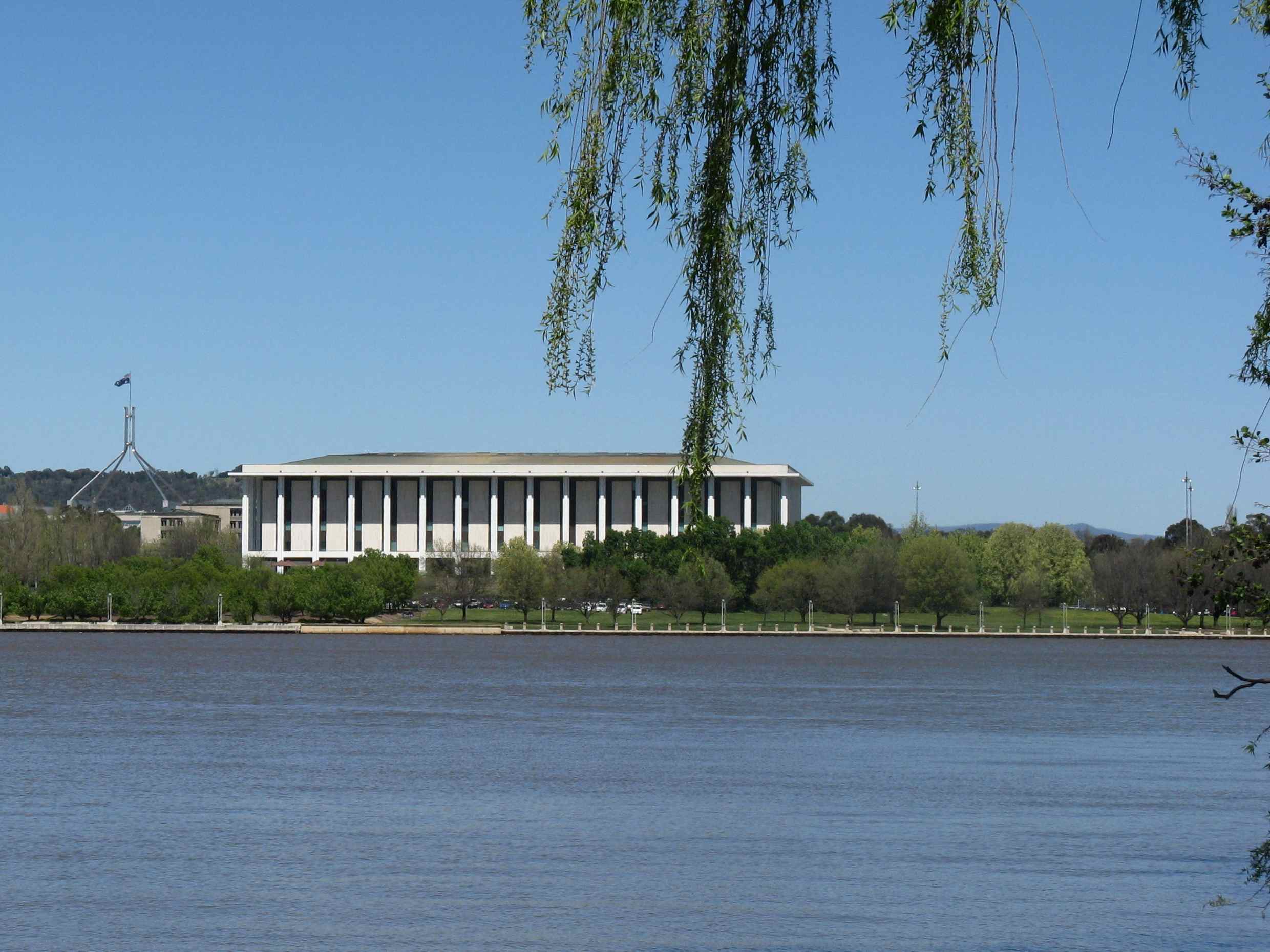
National Library of Australia

National Library of Australia, viewed from Commonwealth Park on the opposite side of Lake Burley Griffin

Last year I attended and reported on the post-announcement panel for the Prime Minister’s Literary Awards, held at the National Library of Australia. I attended again this year and, since it occurred today, Monday, I’ve decide to devote this week’s Monday musings to it.

First, the winners:

  • Fiction: Gillian MearsFoal’s bread (My review)
  • Poetry: Luke DaviesInterferon psalms
  • Young adult fiction: Robert Newton’s When we were two
  • Children’s fiction: writer Frances Watts and illustrator Judy Watson’s (illus.) Goodnight, mice!
  • Non-fiction: Mark McKenna’s An eye for eternity: The life of Manning Clark
  • History: Bill Gammage‘s The biggest estate on earth: How aborigines made Australia

Last year’s four awards were expanded to six this year by rolling the separate Prime Minister’s History Prize into them and, hallelujah, adding in a prize for Poetry. The awards are, I believe, the most generous of Australia’s publicly funded awards, providing $80,000 to each winner and $5,000 to each shortlisted author.

The panel members were Luke, Robert, Mark and Judy. Unfortunately, Bill Gammage is currently overseas, and Gillian Mears who suffers from multiple sclerosis had attended the announcement but needed to rest before her afternoon engagements. I was disappointed not to see her but of course can’t begrudge her putting her health first. The panel was chaired by local ABC radio announcer Louise Maher.

I won’t summarise the whole panel but just cherry pick a few interesting thoughts and ideas that came out of it. During a discussion about the writing process, in which Robert Newton said that he when he starts writing he rarely knows where his story is going to end, Mark McKenna offered a favourite quote from David Malouf:

I don’t write to record what I know. I write to find out what I know.

I like this. It makes me feel that we readers are on a journey with the author rather than being told what to think by the author.

There was, of course, the usual discussion about the impact of technology on books and reading and, while the responses weren’t quite as conservative as I felt they were last year, there still seems to be some resistance to thinking positively about change. I understand that. Livelihoods – of writers, publishers and booksellers – are at stake BUT, whether we like it or not, the change is coming (is here, in fact) and so our best chance is to embrace it.

Louise approached the question from a slightly different angle by asking how reading, which takes effort and time, fits into contemporary culture. Mark believes that the one-on-one aspect of reading is under threat, due I suppose to competition from other stimuli, and said that awards like these are important because they can bring more readers to books. (This point was, in fact, a bit of a mantra for him.) He suggested that the act of reading, the way we read, is changing and that the solitary experience is becoming rare. He noted that in just a few more decades the majority of people around will not have grown up with books the way we in the audience had. Their experience and expectations will be different, and books are likely to be produced in different formats with content and presentation varying between the formats. Mark also made the significant point that much of the change that is occurring is in the culture around the book rather than in reading itself, and I guess he’s right. The way books are sold – and published – is changing. Electronic books can’t be physically browsed in a bookshop. It’s not easy to lend an electronic book. You can’t get your electronic book signed. And so on …

Rob’s response that reading and technology will have to grow together was a pragmatic one. But he also commented, regarding the effort involved in reading, that he likes “the idea of books making kids work a bit”. Judy talked of inculcating a reading habit with children when they are young, and said she limits her (young) children’s time with technology. I liked Luke’s honesty when he said that attention span is the issue and that he can see it in himself, that he finds himself being drawn too often to “fiddly” little things on the Internet, like favourite blogs, and away from concentrated reading. But, he also said that he believes that our “emotional and spiritual” relationship with words will always be there. That makes sense. The forms and formats might change but our love affair with words and the ideas they express surely won’t! As one person said, we need to respect the new forms but recognise that the story, the empathy, will always be the thing.

There was a question from the floor late in the session regarding what difference the monetary prize would make to their lives. The answers weren’t really surprising but were interesting nonetheless:

  • Luke, who admitted to being more broke now than he has been for many decades, said he will pay off his debts and that the remaining money will give him a buffer enabling him to say no to jobs that he “shouldn’t” be doing, that aren’t, he said a little self-consciously, in response to his muse.
  • Rob said he’d buy a new surfboard and a laptop with working shift and caps lock keys, and that he’d consider taking some time off from his job as a firefighter to write full-time.
  • Mark said it would buy a little financial independence and provide some seed money for his new book, which will tell the history of Australia through some selected places that he will need to visit.
  • Judy also said it would take off some of the financial pressure and allow her to work on what she wants to rather than on jobs “for the money”.

A great session. I thank the National Library for again providing the opportunity for members of the public to “meet” the authors this way, and I thank the authors for giving up their precious writing time to talk with us!

Prime Minister’s Literary Awards Shortlist, 2012, announced: Fiction

I don’t announce all shortlists and awards but I do like to follow the Prime Minister’s Literary Awards so am announcing its shortlist for fiction for 2012:

One of the reasons I like to take note of the Prime Minister’s Awards is that it seems depart a little from the other awards around the country. For example, in 2011 the award went to Stephen Daisley’s Traitor, a book that received little notice in other national awards. And in 2010, Eva Hornung‘s wonderful Dog boy won. It also had received little recognition elsewhere. This year’s shortlist contains only two novels in the Miles Franklin shortlist – those by Mears and Funder – and Miller’s novel was longlisted. I’m not saying this is a totally bad thing. In fact, it demonstrates the depth of writing in Australia.

What particularly pleases me about this year’s list is the inclusion of Janette Turner Hospital. It’s been a while since we’ve heard from her, but I do have Forecast: Turbulence, a short story collection, on my Kindle. This just might be the incentive for me to bump it up my reading priority order.

Two new categories were added to the Awards this year: Poetry and History (this latter having previously been a separate award). The complete shortlist can be seen on the Office for the Arts website.

Winners of the 2011 Prime Minister’s Literary Awards

National Library of Australia, photo taken by ...

NLA, 2004 (Image courtesy John Conway, via Wikipedia, using CC-BY-SA 3.0)

Brought to you straight from the afternoon presentation with Caroline Baum in the National Library of Australia Theatre:

  • FictionTraitor, by Stephen Daisley
  • Non-fictionThe hard light of day, by Rod Moss
  • Young adult fictionGraffiti moon, by Cath Crowley
  • Children’s fictionShake a leg, by Boori Monty Pryor and Jan Ormerod

This afternoon’s panel discussion followed the formal announcement and presentation of the awards this morning. The afternoon session, chaired by journalist and broadcaster Caroline Baum, involved a panel of three winning authors (Stephen Daisley, Rod Moss and Boori Monty Pryor) and one shortlisted author (Laura Buzo).

Baum led off her discussion with a question to the authors about their use of technology. It turned out that they were generally a conservative lot though Pryor did admit to having, and using, a laptop. A later question from the audience brought the response from Moss that while he did not use technology in a sophisticated way he was happy for publishers to apply whatever technology they saw fit to get the works out there. Our audience member was wanting more though. Perhaps aware of the recent apps for TS Eliot’s The waste land and Jack Kerouac’s On the road, he was hoping the authors were thinking more imaginatively about using technology in the creative process rather than for distribution after the fact … but these authors were not quite there yet it seemed.

Another question Baum asked was to Stephen Daisley on writing about place. She said that roughly 50% of authors writing about foreign places say they must visit a place to write about it, while the other half argue that visiting the place isn’t necessary. Daisley admitted that he had not visited all the places he’d written about in his novel Traitor, which of course led Baum to ask how one can write about a place without going to it. Daisley’s answer? One word: Google!

I won’t summarise the full discussion, but will mention one other issue Baum raised, and that was to do with indigenous Australians and the problems they – and we – are facing. Pryor (an indigenous Australian) and Moss (whose book is about his experience as an artist working amongst indigenous Australians) answered along similar lines. Moss suggested that he had no “answer” but that what is missing is “genuine friendship” between black and white Australians. Pryor said that it was up to each person to make their own journey but that a true recognition of the special nature and importance of indigenous language, land, art and storytelling would have a ripple effect. In other words, what I “heard” them both saying – and what I’ve heard others say – is that more important than such things as health and education programs is, simply, the showing (or, should I say, feeling of) real respect. Not lip service, not a “send them here, send them there” attitude, but a true respect for the people and their culture. From that all else should logically flow. A sobering but not negative conclusion to what was a fascinating hour or so spent in the company of some very thoughtful people.

Postscript: Some interesting changes are occurring in the literary prize community. This year the Miles Franklin award and the Prime Minister’s Literary Awards included prize money for the shortlisted books too. This is, don’t you think, a great step, recognising, if in a small way, that such awards do have a strong subjective element. So, in the Prime Minister’s Literary Awards the overall prize money remains the same in 2011 as it was last year: $100,000 for each of the four categories. But this year the winning book in each category will win a tax-free prize of $80,000, and each short-listed book (to a maximum of four in each) will receive $5000. I do hope the winners are happy with their reduced purse!

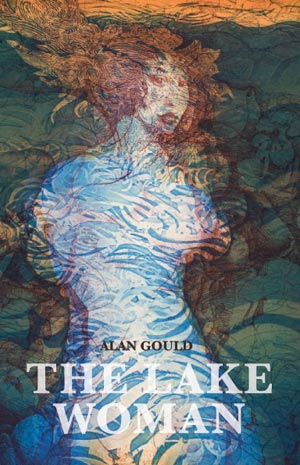
Alan Gould, The lakewoman: A romance

Alan Gould, The lakewoman

Book cover (Courtesy: Australian Scholarly Publishing P/L)

I’m a little embarrassed to say that until The lakewoman was shortlisted in the 2010 Prime Minister’s Literary Awards, I only knew of Alan Gould as a poet. Turns out, though, that he has written several novels, of which this one is his most recent. It is, ostensibly, a war novel, in that much of it is set in or around World War 2, but it is not in fact about the war.

It’s an intriguing book that slides literally and metaphorically between the solidity of the earth and the fluidity of water, between pragmatism and magic (or enchantment). It tells the story of Alec Dearborn, an Australian grazier’s son who was born in 1918. He goes to Cambridge in England and, when the war starts, decides to join up with the British Army rather than return home. The novel starts with his having landed in a lake, after parachuting from a plane for the D-Day Invasion. He is drowning, dragged down by his weapons bag and parachute, but is rescued by – yes – a lady in a lake. Ha! Now you see why it is called a “romance” because, while it contains “a” romance, it also hearkens back to the “romances” of yore, like the Arthurian legend. Here is the set up, pp. 2-3:

As he vomited he also wondered why this sudden young Mamzelle happened to be present at the exact, unlikely spot in France where his foolish body had come to earth. It was a question that would usefully occupy his mind later, when he was behind the wire with the austere leisure to brood on the magic that settled into his life following this, his fluky rescue. Magic? He was not a fellow given to outlandish notions, and would interrogate the dubious word, looking for its sense, not in mumbo jumbo, but as some friable quantity existing within the very crevices of everyday occasions.

In this passage, we see how carefully Gould has laid out his novel. He introduces us to the ideas of coincidence (fluke) and magic versus the everyday business of living, and he uses foreshadowing to distract us from plot issues (what will happen next) towards more interior ones (what is the meaning of what happens). As the novel progresses, this fellow who is not given “to outlandish notions” finds himself drawn, almost telepathically (it seems), to his rescuer. She , Viva, rather like the Arthurian lady-in-the-lake, frames the rest of his life, one way or another.

What happens on the surface of the novel is fairly matter-of-fact. Alec’s life runs its course in a mostly unremarkable way. One of the central questions of the book is that which Alec poses to his sister, Bell, a little while after he returns to Australia:

What I can’t work out is […] Well, how a person knows whether the existence he’s been given has been of value to anyone else.

This is Alec’s conundrum. He does not fulfil the traditional expectations of a grazier’s son (“Dearborn”, after all), despite his “prospects” : he’s intelligent, sensitive, and physically capable (“the dynamism in balance with the dreaminess”). Much of this failure stems from his being “disarmed” on June 6, 1944, by Viva. There are some lovely, appropriate wordplays in the novel, and one of these centres on the idea of disarming/arming, which works beautifully against the novel’s military background:

‘If you think about me, then, when you are gone, I will be arming you still,’ she assured him, mysteriously.

Soon after he leaves her, he ponders what has occurred:

‘I feel distress at having relinquished you,’ he supplied on consideration. For it was distress, he recognised, to be walking away from this sudden new claim on his life. ‘It is this that has disarmed me, I reckon,’ he explained for her.

I will be arming you, she reminded.

It is difficult with this WordPress theme to get the formatting right: this last statement by her is in italics in the novel and suggests either his memory of her words or an actual telepathic communication. Which one it is, is one of the lasting ambiguities of the novel. Italics are used throughout the novel for “communications” like this and for interior monologues/reflections, usually Alec’s, since this is a third person narrative, told mostly from Alec’s point of view.

By now you may be thinking that this novel is a fantasy, even a romantic fantasy, but not so. Neither is it magical realist. It’s simply that there is a sense that slightly mystical things may be happening, things that make sense psychologically but that also convey another plane of human thought and behaviour. It reminded me, at times, of Patrick White‘s Voss, but to suggest more than that would be to do it a disservice because it is not at all derivative. Rather, it is simply that the story focuses on a dimension of experience that can’t always be logically explained but that is nonetheless very real. Gould has, I think, pulled this dichotomy off, by careful manipulation of tone: through language that is poetic but not overdone; a pacing that is meditatively slow at the beginning and pragmatically faster at the end; evocative chapter titles (such as “To Fling the Lovely Foolish Body”, “Had You Down Dead”); the occasional light touch (“‘You are the invasion?’, she asked”); and timing that foreshadows just enough to make sure we stay focused on the ideas and not the facts.

And for me, the main idea (the one that provides an “undercurrent” to all the others) is that of completing the self, which is something Alec struggles  to do. In the end though:

…the joy, the completion was her presence, and the talk was strangely superfluous. Yet by convention they did talk from some region of the mind where the words did not especially matter but the proximity of the person created an entirety of being.

This is a rather melancholic, but by no means sentimental, book – and it moved me deeply.

Alan Gould
The lakewoman
North Melbourne: Arcadia, 2009
296pp.
ISBN: 9781921509346

Prime Minister’s Literary Awards, 2009

Nam Le’s The boat has won the fiction category in the Prime Minister’s Literary Awards. Much deserved too I say! Interestingly, the non-fiction prize was shared by two books: Evelyn Juers’ House of exile, and Marilyn Lake and Henry Reynolds’ Drawing the global colour line. Lisa, at ANZLitLovers, recently wrote about Juers’ book – you can read what she says here.

The Boat – Recap

Back in February I reported on my bookgroup’s discussion of The boat on our group blog, but that was before I started writing here. I won’t repeat here what I said there – as you can read it yourselves. I will note though that one of its stories was included in Mandy Sayer’s recent anthology, The Australian long story. That has to say something! If you haven’t read it yet, think about it now. Nam Le is a new voice on the scene and I certainly hope he isn’t a flash in the pan.