Shankari Chandran, Chai time at Cinnamon Gardens (#BookReview)

Shankari Chandran’s Miles Franklin Award winning novel, Chai time at Cinnamon Gardens, was my reading group’s March book. Unfortunately I was out of town at the time of the meeting, but of course I wanted to read it – and I did, finally!

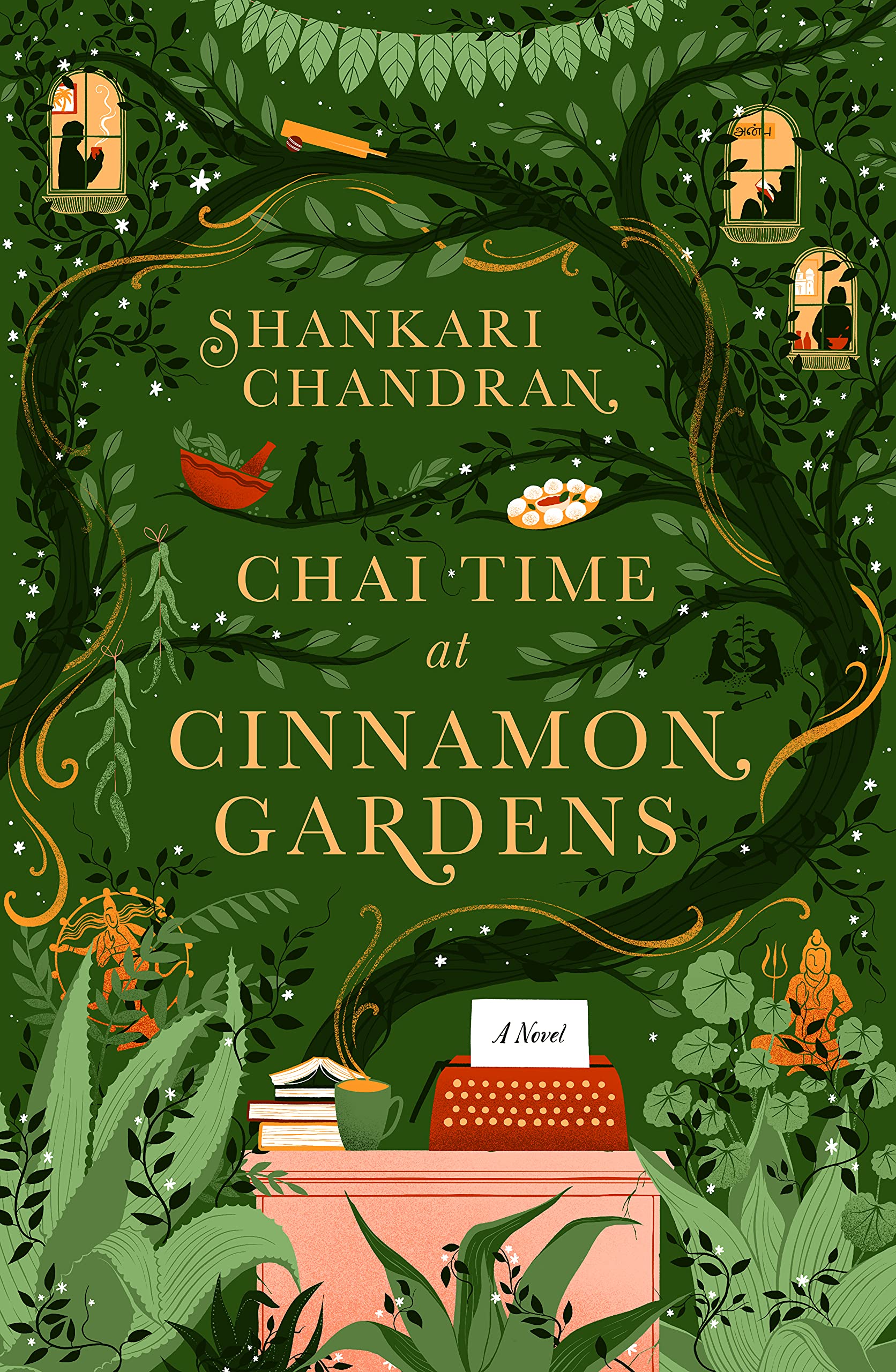
Like many people, I think, when I first saw the book, I assumed it was one of those cosy crime novels set in a nursing home or retirement village. The title and the pretty cover certainly suggest that. Only a fraction of this first impression was right, though. It is set in a nursing home, and crimes do occur, but it is not a crime novel and nor is it cosy. Instead, it is a serious, thoughtful and immersive novel that covers many issues confronting modern multicultural Australia, but that also has one main driving idea – which I’ll get to soon.

First, though, I want to clear up another assumption I had, which was that Chandran is a Sri Lankan-Australian writer. Wikipedia told me otherwise. It describes her as a British-Australian writer, who was born in London to Tamil refugees from Sri Lanka. She grew up in Canberra, and studied law at the University of New South Wales, before working as a human rights lawyer in London for a decade. She now lives in Sydney. Chai time at Cinnamon Gardens is her third novel. GoodReads describes her first novel, Song of the Sun God (2017), as being “about three generations of Australian Tamil women and the choices they make to survive Sri Lanka’s civil war“. I don’t know what that novel’s overarching idea is, but Chai time at Cinnamon Gardens also draws from its main characters’ experiences during that civil war, and I do have a view on what drives it, so let’s get to the novel.

It is set in the Cinnamon Gardens Nursing Home in a fictional Sydney suburb called Westgrove, which situates it in Sydney’s multicultural western suburbs. The home is taken over in the early 1980s by Sri Lankan migrants, Cedric, Zakhir, and his wife Maya who wants to transform it to a place “where people will be valued”. The novel is told through multiple alternating voices, but starts with a Prologue which describes the home and which, if you read carefully, also prepares us for what’s to come:

Arabian jasmine climbs the wooden trellises staked in the garden beds. They are bold travellers, dark vines carrying white stars up the two-storey walls and around the windows of the residence. The plant grows obediently in the quiet suburb of Westgrove, Sydney, but its tropical ancestors are a wild breed, a vine that grows rampant in the villages of Sri Lanka, a home more familiar to many of the residents.

“Bold travellers”, “dark vines”, and “white stars” together with words like “obediently” and “wild” suggest a tension that we are going to explore.

We then start the narrative proper. It’s 2020, and Maya is now old and living as a resident in the home – albeit one who still holds many strings. Ruben is attending her, and we become aware that he bears fresh and old scars on his body. As the narrative progresses, we learn that the fresh scars come from recent racist attacks on him in the vicinity of the home, while the old scars relate to his experiences in Sri Lanka during the war. These scars more literally embody the tensions that pervade the novel.

From here, the rest of our narrators, all third person, are gradually introduced – Ruben; Maya’s daughter Anjali (Anji), who now manages the home; Anji’s old schoolfriend Nikki, who is the home’s geriatrician; and Nikki’s husband Gareth, who is white-Australian and a local councillor. There are other characters, including, most significantly, Anji’s also white-Australian husband, Nathan, and Maya’s aforementioned husband, Zakhir who disappeared, now presumed dead, ten years before the novel’s opening.

A strength of the novel is the way these characters inveigle their way into our hearts and minds so that we care about them, even the unappealing Gareth who, blinded by self-pity, rashly but unintentionally unleashes the dreadful drama that unfolds. It all hinges on racism. Chandran exposes the awful truth of how endemic racism is in Australian society and how, as a result, things can so quickly get out of hand. Interspersed with this present-day storyline are Maya’s, Ruben’s and Zakhir’s backstories, which explain why they had come to Australia – personally, in terms of what they had experienced during the civil war, and politically, in terms of their Tamil heritage and what that civil war was about.

I said at the beginning that the novel covers many issues which confront modern Australia, but that it also has one main driving idea. The issues include racism, colonialism, and multiculturalism; trauma, loss and grief; friendship, family and community; and the role played by the media, including social media, in fuelling emotions rather than encouraging reason. Underpinning these issues is the idea that drives the narrative – storytelling, and “the most powerful” of all stories, history. By framing her story within the Sri Lankan civil war and its battle over contested histories, Chandran makes her novel relevant to all cultures and societies where history has been used to oppress minorities resulting in violence, disempowerment and oppression, where distortion produces misinformation and confusion that can be manipulated to serve personal and political ends.

As grim and confronting as much of it is, Chai time at Cinnamon Gardens is not without hope. Alongside Chandran’s exploration of the misuse of history is a commitment to the positive value of story. To this end Maya, from the beginning, interviews all residents of the home, capturing their lives and their dreams in order to properly know and care for them. This provides the book with another underlying tension, that between histories that erase and stories that “must not be erased”.

Does it all work? Chandran holds a lot of balls in the air. Early on I felt caught in an awkward amalgam of a contemporary novel about middle class angst (husband versus wife, daughter versus mother, and so on) and one exploring critical political ideas. Also, there’s constant moving backwards and forwards in place and time, the plot felt a little contrived in places, and the main themes are hammered home. However, Chandran balances the tone well, mixing light humour and satire with sadness and tragedy, and the characters are vividly and sympathetically drawn. The end result is a book that reveals our essence, and asks us to consider how we might live together in respectful community. Consequently, despite some unevenness, I greatly enjoyed the read.

Shankari Chandran
Chai time at Cinnamon Gardens
Ultimo: Ultimo Press, 2022
360pp.
ISBN: 9781761151408

Monday musings on Australian literature: News on two awards

Originally this post was going to be about South Australia’s reframed literary awards, but then I saw some news on another award, and decided to do a little consolidated post. Here goes…

South Australian Literary Awards

Some of you might be aware that in my sidebar I have a widget (or whatever it’s now called) for the current year’s major Australian Literary Awards – like the Miles Franklin, the ALS Gold Medal, the Stella Prize – focusing, mainly, on the fiction winners. One of the awards I had in that list was the biennial Adelaide Festival Awards. It was due again this year – but no awards were announced, and I wanted to know why. A little search revealed the answer. The award has been reframed as the South Australian Literary Awards, which are being managed by the State Library of South Australia. They will still be biennial, apparently.

The page, linked above, reminds us that the awards were were introduced in 1986 by the Government of South Australia and that they “celebrate Australia’s writing culture by offering national and state-based literary prizes across a range of genres”. This year the shortlists will be announced in July, and the winners in November.

The awards include prizes for published and unpublished works:

  • Fiction Award ($15,000): for a published novel or collection of short stories.
  • Children’s Literature Award ($15,000): for a published fiction or non-fiction book aimed at readers up to 11 years.
  • Young Adult Fiction Award ($15,000): for a published book of fiction aimed at readers aged 12 to 18 years.
  • Non-Fiction Award ($15,000): for a published non-fiction work.
  • John Bray Poetry Award ($15,000): for a published collection of poetry.
  • Jill Blewett Playwright’s Award ($12,500): for an un-produced play of any genre written by a professional South Australian playwright. (Supported by State Theatre Company South Australia.)
  • Arts South Australia Wakefield Press Unpublished Manuscript Award ($10,000 plus publication by Wakefield Press): for an unpublished, book-length manuscript by a South Australian writer.

And some fellowships:

Barbara Hanrahan, The scent of eucalyptus
  • Max Fatchen Fellowship ($15,000): for a South Australian writer for young people working in the genres of fiction, drama, poetry or screenwriting.
  • Barbara Hanrahan Fellowship ($15,000): for a South Australian writer working in the areas of fiction, poetry, drama, scriptwriting, autobiography, essays, major histories, literary criticism or other expository or analytical prose. (My review of Hanrahan’s The scent of eucalyptus)
  • Tangkanungku Pintyanthi Fellowship ($15,000): for a South Australian Aboriginal and Torres Strait Islander writer working in the genres of fiction, literary, non-fiction, poetry and playwriting.

Hilary McPhee Award

The news that changed this post was the announcement of the 2023 Hilary McPhee Award. It’s not for fiction, so is not an award many of us follow closely. However, it is worth noting. After all, it is in the name of a significant Australian publisher, Hilary McPhee, co-founder of McPhee Gribble Publishers, which operated from 1975 to 1989 and which put many of the Australian writers we love today – like Helen Garner and Tim Winton – on the map. The announcement came in an email from that major Australian literary journal, Meanjin, and said that this year’s winner is Declan Fry for his essay “911 Lonely: Call Me Call Me Call Me” on the work of McKenzie Wark. It was published in Meanjin 82 (4), Summer 2023.

The email provided some background, but I did write about the award last year, so I won’t repeat it all. Essentially, the award has been presented annually since 2016, and “recognises brave essay writing that makes a fearless contribution to the national debate”. The essays are drawn from those published in Meanjin in the previous calendar year. It’s worth $5,000.

This year’s winner, Declan Fry, has appeared in my blog a few times. Most recently I’ve noted his being a judge of the 2022 Stella Prize, and a panel member at the 2024 Blak and Bright festival, but I’ve also quoted him in a couple of other posts. He is a writer/poet/essayist based in Naarm/Melbourne. Meanjin’s editor, Esther Anatolitis, says of his winning essay:

I found Declan’s essay thoroughly exhilarating. It’s scholarly, rigorous and utterly delicious. I deeply admire the ways he twists and pulls the essay form—way beyond its limits, and then all the way back—in ways that honour his chosen subject magnificently.

As for his chosen subject? McKenzie Wark has a Wikipedia page. She “an Australian-born writer and scholar”, who writes on media theory, critical theory, new media, and more. She is a professor of Media and Cultural Studies at The New School, and has lived in the USA for some time I believe. Fry’s article, linked on its title above, took a bit of brain-power to digest. But, once I got into it, I could see what Anatolitis means. I do love writers who play confidently with form, and the way Fry teases out Wark’s ideas about language and meaning, identity, race, gender, memoir, and more, to understand her and her theories makes good reading.

‘Do we need to be “we” at all—why not just a collection of I and I and I?’ (Wark in The virtual republic)

However, the truth is that if I tried to describe the essay and the ideas it mulls over, I would reduce them to less than their whole so, over to you…

(There was an event about this at Muse yesterday afternoon, around the time I arrived back from Melbourne. If I’d been here, I would have been there!)

Stella Prize 2024 Shortlist announced

For what it’s worth, given I’ve not read any of them, here is the Stella Prize shortlist. The announcement I received via email this morning describes it as comprising:

a diverse mix, featuring novels, memoir and an essay collection. Three of these works are by debut authors, showcasing fresh voices in Australian literature. 

To summarise from my longlist announcement, this year’s judges are writer, literary critic, Artistic Director of the Canberra Writers Festival and this year’s chair, BeeJay Silcox; Filipino-Australian poet, performer, arts producer, and advocate, Eleanor Jackson; First Nations award-winning poet and arts board member, Cheryl Leavy; noveslist, occasional critic and full-time dad, Bram Presser; and writer and historian, Dr Yves Rees.

The shortlist

Here is the list, in alphabetical order by author, with brief comments from the judges (found on the Stella website’s page for each book, linked on the title):

So four novels, and two works of nonfiction. No poetry on this year’s shortlist. I have added a couple of reviews from my blogger friends, including Bill’s for Praiseworthy (which was also included in my Longlist post). Kate, as you will have seen, has managed to read two of them since the announcement. I am certainly interested in some of these.

The winner will be announced on 2 May. You can seen more details on the Stella 2024 page.

Any comments?

PS: Darn it, I copied my longlist post and then edited the title incorrectly so it was published as “Stella Prize 2023 Longlist” not “Stella Prize 2024 Shortlist!! Shows how distracted I am.

Stella Prize 2024 Longlist announced

As has happened in the past, this week’s Monday Musings has been gazumped by the announcement this evening of the Stella Prize longlist. I attended the online streamed announcement from the Adelaide Festival Writers Week

As I say every year, I don’t do well at having read the Stella Prize longlist at the time of its announcement. In recent years the most I’ve read has been two (in 2019). This year, like the last two years I’ve read none, but a couple are on my TBR! Is the a start?

I was, however, doing better at reading the winners, having read Carrie Tiffany’s Mateship with birds (2013), Clare Wright’s The forgotten rebels of Eureka (2014), Emily Bitto’s The strays (2015), Charlotte Wood’s The natural way of things (2016), Heather Rose’s The museum of modern love (2017), Vicki Laveau-Harvie’s The erratics (2019), Jess Hill’s See what you made me do (2020), Evelyn Araluen’s Dropbear (2022). I have the 2021 and 2023 winners on my TBR, Evie Wyld’s The bass rock and Sarah Holland-Batt’s The jaguar, respectively.

This year’s judges include one from last year, and some newbies, keeping the panel fresh as in Stella’s commitment: writer, literary critic, Artistic Director of the Canberra Writers Festival and this year’s chair, BeeJay Silcox; Filipino-Australian poet, performer, arts producer, and advocate, Eleanor Jackson; First Nations award-winning poet and arts board member, Cheryl Leavy; noveslist, occasional critic and full-time dad, Bram Presser; and writer and historian, Dr Yves Rees.

The longlist

Here is the list, in alphabetical order by author, not the order in which they were presented, and with a few scrabbled notes I made as I listened to the list being read out.

  • Katia Ariel, The swift dark tide (memoir)
  • Stephanie Bishop, The anniversary (novel): “genre fiction at is very best … as clever as it is delicious” (kimbofo’s review)
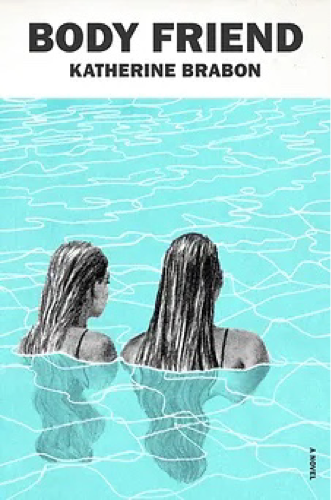
  • Katherine Brabon, Body friend (novel)
  • Ali Cobby Eckermann, She is the earth (verse novel)
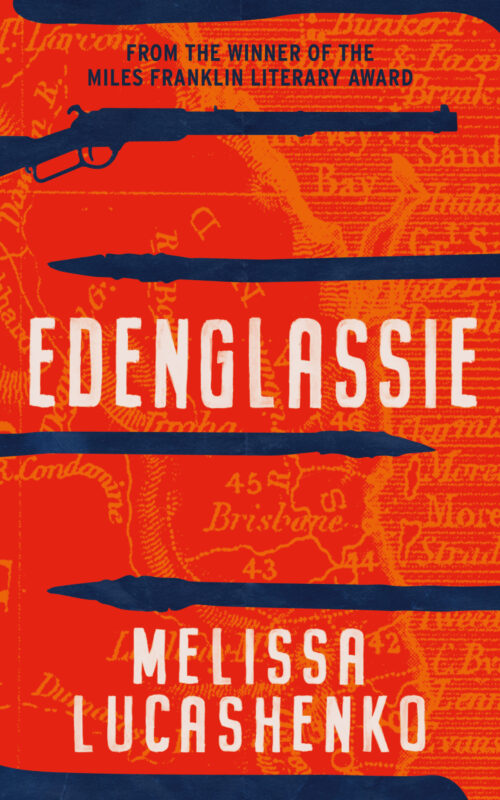
  • Melissa Lucashenko, Edenglassie (novel): “triumph of characterisation … gives truth to state sanctioned violence” (Brona’s review)
  • Maggie MacKellar, Graft (memoir/nature writing) (Kate’s brief review)
  • Kate Mildenhall, The hummingbird effect (novel): “speculative fiction at its finest” tackling the issues of our age (Brona’s review)
  • Emily O’Grady, Feast (novel): “country house novel … be wary of deep subjectivity of moral value”
  • Sanya Rushdi, translated by Arunava Sinha, Hospital (novel): “unflinching and insightful work of autofiction”
  • Hayley Singer, Abandon every hope (essays): “no moral shrillness here”
  • Laura Elizabeth Woollett, West girls (novel): “a novel of sad girls that is the antithesis of sad girl novels”
  • Alexis Wright, Praiseworthy (novel) (Bill’s second post): genre-buster, “fierce and gloriously funny – part manifesto, part indictment”

The panel discussion that followed the announcement was wonderfully engaging, with the judges (sans Bram Presser who was home looking after his kids), exploring the individual works, and looking at the “conversations between the books”, that is the ways the books intersected with each other in subject matter and form. They talked about how many of the books critique systems of power wielded over others, how many embodied the idea of the body, how climate change is addressed in different ways, and more. It was too much to capture and listen to at the same time. They talked about form, and how some books were true to form and were great because of that, while in others form was wildly broken (like Alexis Wright’s Praiseworthy). The books, they said, are powerful but without sentiment, asking instead for “the dignity of witness”. They are not hectoring, and many are deeply funny.

I am not going to say anything about the selection, because the Stella is such a wonderfully diverse prize that aims to encompass a wide range of forms and styles. There will always be choices we question. But, I will just say, because I can, that I’d love to have seen Carmel Bird’s Love letter to Lola (my review) recognised, because as they spoke about the books they read, I felt that Bird’s collection has the energy, the wit, the heart, and the awareness of “the issues of our age” that their selected books apparently also have. Did they even read it, I wonder?

Opening the session, Beejay Silcox said that the “heartbeat of Australian writing is here” and it’s damning that our writers cannot make a living from their craft. Amen to that.

You can write a different future and dream the culture forward. (end of the Panel discussion)

The shortlist will be announced on 4 April, and the winner on 2 May. You can seen more details on the Stella 2024 page.

Any comments?

Monday musings on Australian literature: Stella Book of the Month

Most readers here know the origins of the the Stella Prize. I have written about it many times before, but it was in my post on the inaugural longlist in 2013 that I described its origins and goals in a little detail. I wrote then that:

The award was created by a group of 11 women, including the writer Sophie Cunningham, in response to what many of us felt was an abysmal under-representation of women writers in Australia’s major literary awards and other literary activity (such as reviewing and being reviewed). The Stella Prize people want to turn this around …

And I then listed their goals as they expressed them at the time. These goals have remained roughly the same but are expressed on their website now in more depth and with clarity about how they are working to achieve them. They make it very clear that they are about more than the prize. Stella, they say,

delivers a suite of year-round initiatives which actively champion Australian women writers, tackle gender bias in the literary sector, and connect outstanding books with readers. (Accessed 26 February 2024)

As most Australian readers of my blog will know, many of the original drivers have been achieved, quantitatively speaking at least. There is better representation of women writers in our literary awards, and in the reviewing sector, as the Stella Counts of 2019 and 2020 showed.

Most of my posts, however, have been about the annual prize. I have rarely mentioned the other initiatives Stella has implemented, but they are important because Stella knows – we know – that achievement in the social justice arena can never be taken for granted. Their initiatives are many and you can read about them on the Initiative pages on their site. They range in size and reach, but include events, residencies, and a lot of work in education to encourage more reading of books by Australian women writers in schools because, really, that’s where reading habits very often start.

Stella Book of the Month

One of their more recent initiatives was announced in December last year, “the book of the month”. As far as I can tell – as there’s not much that I can find specifically about the initiative – the aim is to shine a light each month on a book which has been listed for, or won, the Stella Prize. We all know how easily books – no matter how good they are – disappear from the shelves and then from public consciousness. With this initiative, Stella is staying true to its aim of keeping Australian women’s writing to the fore, which means not just the latest writing, but the body of writing by women. Of course, the Stella prize is just over 10 years old, so a blip on the radar of Australian women’s writing, but 11 years worth of lists is not inconsequential either, and has a chance of still being available. They list the books on their own site, and on their Facebook page.

It’s a new initiative, so there just three books have been chosen to date:

  • December 2023: Carrie Tiffany’s Mateship with birds (my review): Tiffany’s book, as the prize’s first winner in 2013, is an obvious choice for kicking off this initiative.
  • January 2024: Georgia Blain’s Between a wolf and a dog: Stella introduces this choice by saying it “celebrates … a heartfelt and intelligent book shortlisted for the 2017 Stella Prize, and the life of its author, the late Georgia Blain”. They say that this, Blain’s last novel before she died, has been republished with an introduction by Charlotte Wood. This is what we like to hear, eh?
  • February 2024: Maxine Beneba Clarke’s The hate race (my review): The reason for choosing this memoir seems to be its having been “adapted to the stage”. It was shortlisted for the 2017 award along with Blain’s novel. Clarke was the first author to be shortlisted for the Stella Prize twice, after her short story collection, Foreign Soil, was listed in 2015

Each “book of the month” page (linked on the titles above) contains useful content about the books, such as interviews, and links to reviews and reading notes. This may not be the most exciting of their initiatives, like, say, their Stella Day Out program, but not all initiatives have to be exciting. They just have to play their part in achieving their overall vision. I have chosen it for my post tonight because we are readers, and we all love a list!

I wonder what will be next – and why? In the meantime, all being well, I will be posting on this year’s longlist next Monday, in lieu of Monday Musings.

What do you think about initiatives like this, and, is there a Stella winning or listed book you’d like to see as a “book of the month” selection?

Barbara Kingsolver, Demon Copperhead (#BookReview)

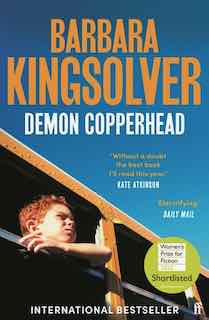
Barbara Kingsolver’s latest – and multi-award winning – novel, Demon Copperhead, was inspired, as I’m sure most of you know, by Charles Dickens’ autobiographical novel, David Copperfield. Indeed, Demon Copperhead opens with an epigraph from that novel:

“It’s in vain to recall the past, unless it works some influence upon the present.”

This could be an argument for writing historical fiction, and is certainly relevant to Kingsolver’s political intent, but for the novel’s protagonist it’s far more personal. Several times through the novel Demon refers to the point at which things changed – usually for the worse – but it’s two-thirds through where he makes it clear

Where does the road to ruin start? That’s the point of getting all this down, I’m told. To get the handle on some choice you made. Or was made for you. […]

In my time I’ve learned surprising things about the powers stacked against us before we’re born. But the way of my people is to go on using the words they’ve always given us: Ignorant bastard. Shit happens.

But, I’m jumping ahead here … so let’s back up a bit. I started by referencing the fact that the novel was inspired by David Copperfield, and it was inspired by it for one very good reason, which Kingsolver explains in her Acknowledgements:

I’m grateful to Charles Dickens for writing David Copperfield, his impassioned critique of institutional poverty and its damaging effects on children in his society. Those problems are still with us. In adapting his novel to my own place and time, working for years with his outrage, inventiveness, and empathy at my elbow, I’ve come to think of him as my genius friend.

So there you have it. Kingsolver has transferred Charles Dickens’ London of the early to mid-nineteenth century to Lee County Virginia from around 1990 to 2004 or so. While Demon struggles to make something of his life against all odds, not recognising or accepting until later that those odds were stacked against him from the start, Kingsolver, like Dickens, is a reformer doing her best to ensure that we will see from that start just how stacked those odds are at every level. I was expecting the book to be primarily about the OxyContin/opioid addiction crisis but it is much broader than that. It’s about poverty and the intergenerational trauma that this engenders – and how this helps lay the foundation for something like OxyContin to take hold.

“What matters in a story is the heart of its hero” (Demon)

I admit that I was not initially keen to read this novel. Not only is it very long, but I’ve read (and, yes, enjoyed) Barbara Kingsolver before, and I have higher priority books on my TBR. However, it was my reading group’s first read of the year, so of course I read it. It’s not a perfect novel, but Demon’s voice was so engaging and the translation of Dickens to Appalachian America is so pertinent to contemporary politics, that I’m glad I read it.

I can see, though, why it’s one of those divisive novels that engenders strong feelings one way or another. For a start, translating Dickens to contemporary times is risky. Dickens’ novel, being published in serial form, is long and episodic, with a large cast of characters, a touch of melodrama, and a lot of detail. A big, baggy, monster in other words. This style does not necessarily suit contemporary readers, but this is what you get with Demon Copperhead.

Like Dickens’ novel, Demon Copperhead wears its heart on its sleeves, meaning it’s not subtle. It can be didactic at times, as in Mr Armstrong’s lessons on capitalism and coal mining companies and Tommy’s discussion of historical truths. Its large cast of characters aren’t quite stereotypes but many are clearly typified by their behaviour – the bad characters who manipulate and use others (like stepfather Stoner, foster-father Crickson, and anti-hero Fast Forward), the weak characters who are well intentioned but can do more harm than good (like Coach), the kind hearts who pick Demon up when he’s down but can’t properly guide him (like the Peggotts), and the shining lights who try to set him on the right path but know he has to decide for himself (namely June and Angus).

In other words, Demon Copperhead is an in-your-face novel, which could be alienating. However, what kept me engaged was the character of Demon himself. Born to a junkie mother and orphaned at 11 when she ODs on oxy, he has a vivacity, an openness, and a heart that you want to see survive, despite setback after setback after setback. He’s “resilient”, a survivor, which is something those around him see early on. This is not to say, though, that he will survive, because even survivors need a hand, and this is what Demon sometimes gets, sometimes doesn’t, and, distressingly, sometimes eschews because he is determined not to be helped, to make his own decisions, to be his own man.

Regardless, once Demon had me, I was in. I have lived in Virginia (albeit very middle-class northern Virginia) and I have driven through various parts of Appalachia. I am interested in the culture, and, having recently read JD Vance’s Hillbilly elegy (my review), I am interested in how it is playing out in contemporary America. Kingsolver explores the role played by big pharma in targeting poor Appalachian regions with their painkillers, at a time when the region was suffering from the callous withdrawal of coal companies*. She shows how socioeconomic factors like these, combined with systemic failures in child welfare, not to mention poor educational opportunity, and the ongoing ostracism of “hillbillies”, contribute to the rise of MAGA politics in the USA.

She also shows the opposite, because while Demon is aware of the factors that work against him, he also sees what can sustain – good people offering the right support, the best parts of rural traditions, and nature, whose benefits are both spiritual and practical. The question is, are these enough? Or, what is needed to make them enough?

You have probably noticed by now, that I am not doing my usual sort of review here. This is partly because, being a multi-award winning Barbara Kingsolver novel, Demon Copperhead has already been written about ad infinitum, and partly because I wanted to tease out my own feelings about such a polarising novel. Yes, I can see – even agree with – some of the criticisms. It’s long and detailed, is didactic in places, and is not what you’d call subtle – rather like Dickens, in fact. However, the power of the story and its accompanying messages, combined with Demon’s utterly captivating voice, got me over the line. Kingsolver, I’d say, does her epigraph proud, whichever way you read it.

* One of my reading group members share an article about this very issue in a January 28 article in The Guardian.

* For a more traditional review of the novel, do check out Brona’s.

Barbara Kingsolver
Demon Copperhead
London: Faber & Faber, 2022
644pp.
ISBN: 9780571376490 (eBook)

Monday musings on Australian literature: Henry Mayer Book Prize

This last week I have become aware, via two different paths, of the Henry Mayer Book Prize. I feel I’ve seen it referenced before, but it hasn’t fully registered. I certainly haven’t written about it before, so, now’s the time.

I’ll start by introducing the person for whom the prize is named, Henry Mayer (1919-1991). He has a well-detailed entry in the Australian Dictionary of Biography, but in a nutshell, he was – surprise, surprise – a professor of politics. German-born, he moved with his father to Nice, France, in 1934 after Hitler had become Chancellor in 1933. From there he went to Switzerland, and thence England, where, after the war started, he was identified as an “enemy alien”. He was among the group of over 2,500 enemy aliens transported on the infamous Dunera from Liverpool to Australia, became an academic, and was a foundation member of the Australasian Political Studies Association (APSA). ADB characterises him as having “wide reading, love of argument, and disdain for sacred cows”.

Now, to the award. Offered by APSA, the Henry Mayer Book Prize is a biennial prize is for “the best book on Australian politics (including political history) published during the previous two years”. It is funded by income generated by the APSA endowment established, in 2009, by the Henry Mayer Trust. The prize is $1000.

To add a little more detail to the criteria, the current website for the prize (linked above) says that book can be “published by a university or commercial publisher (in Australia or overseas)” and that preference is “given to a monograph that focuses on one or more of Mayer’s special interests: the media, political parties or Indigenous affairs”.

The prize, says the same website, judges by a panel which is chaired by a member of the APSA Executive, and will “consist of at least three judges (including the chair), of which at least one will be a woman”. (Interestingly, there’s no similar qualification that “at least one will be a man”. That rather presumes that male judges are a given?)

The reason this prize came to my attention this week was because:

  • On Tuesday, I attended the second Rod Wallace Memorial Lecture, held by the Friends of the National Film and Sound Archive. Our lecturer was Jenny Hocking, whose book, The Palace letters: The Queen, the Governor-General and the plot to dismiss Whitlam, was highly commended for the 2021 award.
  • On Friday, I attended the announcement of the 2023 ACT Book of the Year Award (my post), and the winning book, Frank Bongiorno’s Dreamers and schemers: A political history of Australia, also won the 2023 Henry Mayer Book Prize.

I love it when serendipity strikes like this.

Henry Mayer Book Prize winners to date

  • 2023: Frank Bongiorno, Dreamers and schemers: A political history of Australia, Black Inc, 2022.
  • 2021: Sally Young, Paper emperors: The rise of Australia’s newspaper empires, UNSW Press, 2019.
  • 2019: Paul Strangio, Paul ‘T Hart & James Walter, The pivot of power: Australian Prime Ministers and political leadership, 1949–2016, Melbourne University Press, 2017.
  • 2017: Sarah Ferguson and Patricia Drum, The killing season uncut, Melbourne University Press, 2016.
  • 2015Stephen Mills, The professionals: Strategy, money and the rise of the political campaigner in Australia, Black Inc, 2014.
  • 2013Paul StrangioNeither power nor glory: 100 years of political Labor in Victoria, 1856 – 1956, Melbourne University Press, 2012.
  • 2011: James Walter, What were they thinking? The politics of ideas in Australia, UNSW Press, 2010.
  • 2009: Sarah Maddison, Black politics: Inside the complexity of Aboriginal political culture, Allen & Unwin, 2008 AND David McKnight, Beyond Right and Left: New politics and the Culture Wars, Allen & Unwin, 2007.

Since 2016, the prize has been alternated with the Crisp Prize, which is offered for a similar topic but with a different qualification -“the best scholarly book on political science by an early or mid-career researcher“, which they define as someone who has graduated with a PhD within the previous 10 years.

How many more specialist book awards are there out there?

ACT Book of the Year Award 2023 shortlist and winner

This year I attended, for the first time, the announcement of the ACT Book of the Year award, which was held at the Woden Public Library. For some reason our award doesn’t get the media recognition or attention that it deserves. Sure, it is not one of the wealthiest literary prizes in the country, and it is geographically limited to local authors, but, we have some impressive authors here. They produce good books that are worth shouting about – within and without the ACT.

The ACT Book of the Year is one those broad-based awards, meaning that it encompasses fiction, nonfiction, plays, and poetry. The award is presented by the ACT Government, and was first made in 1993, making this year its 30th anniversary. The first award was shared by poet AD Hope and novelist Marion Halligan. Halligan has won it three times.

The award was announced by ACT Minister for the Arts, Tara Cheyne. She advised that the winner would receive $10,000, and the highly commended authors, $2,000.

I posted last year on the 2022 shortlist. It had seven finalists from 43 eligible nominations, and comprised a play, a short story collection, a book of poetry, a novel, and three works of non-fiction (two histories and a memoir). The novel, Lucy Neave, Believe in me (my review) won.

The 2023 shortlist was very different. It comprised ALL nonfiction, which Tara Cheyne said was not surprising coming from Canberra, the “knowledge capital”. There were 38 entries – books published in 2022 – and they included books which have been shortlisted in other awards over the last year. The shortlist comprised 6 titles.

The 2023 shortlist and winner

  • Frank Bongiorno, Dreamers and schemers: A political history of Australia (political history; winner of the Henry Mayer Book Prize; shortlisted for this year’s NSW Premier’s History Awards)
  • Robert Bowker, Tomorrow there will be Apricots: An Australian diplomat in the Arab world (memoir)
  • Marion Halligan, Words for Lucy (memoir; on my TBR)
  • Julieanne Lamond, Lohrey (literary criticism; Lisa’s review)
  • Katrina Marson, Legitimate Sexpectations: the power of sex-ed (social science)
  • Niki Savva, Bulldozed: Scott Morrison’s fall and Anthony Albanese’s rise (political history; winner of the the 2023 Australian Political Book of the Year)

Cheyne announced that the judges had made two Highly Commended awards, Marion Halligan’s book which the judges described as ““empathetic … and relatable” and Julieanne Lamond’s which they called, among other things, “immersive”. But, the winner was:

Frank Bongiorno’s Dreamers and schemers: A political history of Australia

Bongiorno, who is one of Canberra’s well-loved and generous academics, spoke briefly. He described himself as an academic historian, but one who believes that academics should be writing “accessible and affordable” books. I liked that he included “affordable” because so many academic books have stratospheric prices which put them out of the market for the general reader. The judges’ statement included that:

Through Dreamers and Schemers Frank Bongiorno has skilfully combined multiple elements to deliver a captivating account of Australia’s political history. The book’s perceptive honesty and contemporary sensibility shine throughout the narrative, providing readers with a fresh perspective on the subject.

With this win, Frank Bongiorno joins Marion Halligan as a three-time winner of the award.

This year’s judges were fiction writer Kaaron Warren, writer Adam Broinowski, and playwright Dylan Van Den Berg.

Big thanks to my reading group friend and Marion Board Member, Deb, for inviting me to join her at the announcement.

Tara Cheyne closed the event by encouraging us all to share “literary joy” in 2024! Couldn’t have said it better myself.

Finlay Lloyd 20/40 Publishing Prize 2023 Winning Books Launch with Conversation

I have written about Finlay Lloyd’s 20/40 Publishing Prize a few times now, so I hope I’m not imposing too much on your precious time. However, this weekend was the launch here in Canberra, and it involved a conversation led by a favourite Canberra journalist, Virginia Hausseger, with the two winning authors. I had to go.

The participants

Rebecca Burton and Kim Kelly are the two winners, and I’ve introduced them before, so just to recap, Burton is an editor and author of two young adult novels, while Kelly is also an editor and the author of twelve adult historical fiction novels.

Virginia Hausseger is, to use Wikipedia’s description, an “Australian journalist, academic advocate for gender equity, media commentator and television presenter”. She is well-known to Canberra audiences, having been our local ABC news presenter from 2001 to 2016.

Julian Davies did the introductions. He is the inspiring publisher and editor behind Finlay Lloyd, a company he runs with great heart and grace (or so it seems to me from the outside.)

The conversation

Before the conversation started proper, Julian provided some background to the prize. Human nature, he said, seems drawn to large things. Why else would we have things like the Big Potato! What is it about large things? He sees it related to the “tussle between quality and quantity” and thinks there’s something problematic in our tendency to admire the grand and overlook the miniature. (Yes!) He believes restrictions can liberate writers, and sees the novella form as perfect for this. It can encourage succinctness while allowing room for development. I don’t expect he had any argument about that in the room.

He reminded us that it was judged blind (by two old men and three young women). That it was won by published writers shows that those who have developed their craft are likely to shine through.

Then, Virginia took over …

On their novellas

Kim described her novella with beautiful succinctness saying it was set in 1922 Sydney in the wake of World War 1, just as the city was starting to wake up. It’s about grief, and about how recognising pain in the other leads to the young women rescuing each other. She added a little later that many novels have been written about the War, but not so many about after it, and even fewer about young women’s experience of that time.

She has written three novellas, and “kind of” knows at the beginning which form the story will be. The impetus for this one was wanting to impress a potential PhD supervisor. While researching Trove she saw the ad for the Room (which she included as an epigraph.) Virginia remarked that the closing pages set up a whole new story.

Rebecca said that hers was about two teenage sisters over six weeks of summer in 1986. The old sister, who is anorexic, has been admitted to hospital for bed-rest, and the younger sister visits her daily. It’s about what the sisters learn about each other, and the impact of this condition on the family.

She said that she hadn’t set out to write a novella, but she is comfortable with a word length which is shorter than the standard novel. Then she saw the prize! Writing adult fiction is a new genre for her, but she had stopped reading YA fiction and adores literary fiction. A friend suggested that she write what she reads. Sounds good advice to me.

On Ladies Rest and Writing Room

Kim explained that rest and writing rooms “were a thing” in the late 19th and early 20th centuries, for men and women. What is special about hers is that it was in a department store, and how it was advertised.

Dotty’s grief comes out in shopping addiction and behaving as though she had a death wish. She is so tied up in herself that she doesn’t notice her old schoolmate Clarinda. The book is built around the moment of recognition, that is, when Dotty “sees” Clarinda.

When Virginia commented on how well the “story gallops along” while still being “tight, descriptive, elegant”, Kim said that was the “magic of editorial process”. Also, she said, she knows that Sydney well.

On Ravenous girls

Answering where her story came from, Rebecca said that it was a story she had to write. Frankie had been with her for a long time, and a story about her childhood kept coming to her. The trickiness was not so much the 1986 summer story, but managing the way the time telescopes at the end. She wanted to nod at the years that go by after someone comes out of hospital.

When Virginia commented on how well she’d handled the scene of another girl post-hospital, providing an alternative glimpse of how it goes, Rebecca said she wanted to tell other stories because every story is different.

Young Frankie loves her sister, but is bewildered. An enlightening moment for her is when she realises that sister Justine is the only one allowed to suffer, that her own pain is not seen. She realises that the story she’s been told is not right. Hers is a story of loss, grief, sadness. She’s left to her own resources, and because her older sister is sick, she’s left with no role model.

As for Justine, she uses hunger to mute her desires. Rebecca said that her working title was Yearn, and quoted that great line from the novella, “I don’t want to want the things I want”. Justine feels shame for wanting things, and so starves herself for wanting them.

On the physical process of writing

Kim throws her whole self into a new project, trying to get it all down before she loses her emotional or imaginative connection. Then she goes away, coming back some time later to a “full tub of play dough” that she can then mould. She is able to quarantine the time to work this way because as a freelancer she can manage her time. She loves to be free to fly through the story.

Rebecca has a very different more measured process. She works part-time to a set roster, so has a “chipping away” process. Since her new job, she has created a ritual involving getting up an hour earlier than usual, making a cup of tea and writing for an hour. This helps her manage the peaks and troughs that happen with writing. If things go badly she can get up and go away, leaving it for the next time, and if they go well, she can get up feeling good! It’s important for her not to get obsessed with writing.

On the editing process

Rebecca said for her it went structural edit, then copy edit, then the final proofread. The delight of working with small publisher was that time was allowed for growth.

Kim seconded Rebecca’s comment about the delight of working with Julian, who “cares about words and ideas”. In her worklife as commercial fiction editor, time is of the essence, so she luxuriated in the “nurturing” experience of working with Julian.

On what’s next

Kim’s next project is her PhD, which will include a story about an ancestral grandfather who intersects with Dickens. It’s an idea she has had for a long time, but she will need to try Rebecca’s “chipping away” approach for this!

Rebecca has these characters in head, and wants to see these young girls into adulthood. This could mean three related novellas, the next set in 1993 with Justine in recovery and in her first relationship. She wants to explore recovery because some never move beyond “functional recovery”. The third book she’d like to be about Frankie in her 30s or 40s to see how things have worked out for her. Some of these futures are hinted at in Ravenous girls.

Virginia was an excellent, well-prepared and enthusiastic interviewer. She knew the books well and showed genuine interest in them and their authors.

There was no Q&A which suited me, as I had to rush off to get to my monthly Jane Austen meeting where we were to discuss the up-and-comers in Austen’s novels. However, I did have a very brief chat, as I was leaving, with the other “old man” judge, John Clanchy whose writing I love and who had commented on my recent novella post. He talked about his interest in the form and the choices writers need to make when working within it, such as which characters or stories to develop and which to leave by the wayside.

The Finlay Lloyd 20/40 Publishing Prize Winning Books of 2023 Launch
Harry Hartog Booksellers, Kambri Centre, ANU
Saturday, 18 November, 12.30-1.30pm

Kim Kelly, Ladies’ Rest and Writing Room (#BookReview)

Early in the month I reviewed the first of the two winners of Finlay Lloyd’s inaugural 20/40 Publishing Prize, Rebecca Burton’s Ravenous girls (my review). It was set in Sydney in the 1980s. Now, as promised, I bring you the other winner, Kim Kelly’s Ladies’ Rest and Writing Room. It is also set in Sydney, but in the early 1920s. Some of you will know Kim Kelly, as she has published around 12 novels, mostly historical fiction. Not only that but she was longlisted for the ARA Historical Novel Prize 2022 and shortlisted for the Viva La Novella 2021 prize with her novella, The rat catcher: A love story.

So, she has written novellas, before. A check on her GoodReads page revealed others, including what I think is her best known book, Wild chicory. So, she, like Rebecca Burton, is comfortable with the novella form (or length).

Finlay Lloyd describes the book on their website like this:

Two young women, brought up to expect conventional lives, are thrown together in unexpected circumstances. Each has suffered a devastating loss that challenges their belief in life and themselves. It’s rare to come across a work of deep psychological insight conveyed with such verve and lightness of touch.

As I said in my opening paragraph, Ladies’ Rest and Writing Room is set in 1920s Sydney. The title is explained in the first of two epigraphs. It comes from an advertisement in the Sydney Morning Herald, in 1922, for the Ladies’ Rest and Writing Room in Farmer’s department store. This “artistic room” was intended as a place of respite for busy shopping ladies. It was also where they could also write any “urgent notes” for “the very next mail”. Writing facilities were provided for the purpose. The room was, of course, intended for the well-heeled, as you paid a “nominal charge of 8d.” to avail yourself of its charming “rose shades”. The second epigraph comes from Sappho, which might or might not tell you something!

The story is told in from alternating third person perspectives of two young women. One is the apparently entitled Dotty, who comes from a wealthy business family and who uses the Room in the opening chapter. She is introduced, however, on the street outside where she plays chicken with a tram every Tuesday on her way to Farmer’s and its titular room. Why does she do this? We soon come to understand the pain this young woman, who seems on the outside to have it all, is dealing with. And it’s to do with World War 1, if you haven’t already guessed from the time setting.

The other young woman is down-on-her-luck Clarinda, who has just started work as the Room’s attendant. She went to school with Dotty, but Dotty, in her grief, doesn’t notice her, which doesn’t surprise Clarinda after her shooldays’ experiences with Dotty. Clarinda has her own sadness, partly stemming from losses in the War, but also from the fact that due to her father’s tragic death she and her mother are now on the proverbial hard times.

The narrative takes place over a few weeks encompassing Christmas, and comes to a head when Dotty’s pain becomes too much for her, resulting in a crisis in the Corset Salon (next door to the Ladies Rest and Writing Room). Clarinda steps in to protect Dotty, and, through what ensues, both young women grow. Clarinda treats Dotty with compassion and forgiveness, while Dotty wakes up to sadnesses in others.

What I most enjoyed about the book is its evocation of post WW1 1920s Sydney. Kim Kelly knows the place and the time well, and, despite the shortness of the novella form, she vividly captures a city and people in flux – the grief of wartime loss, the changing workforce as men return home after the war, the increasing migration, the excitement of change in the air, but with old social values and class structures still in place.

Clarinda, for example, was grateful for having finally landed a decently paid job:

It certainly beat unreliable casual waitressing at three shillings a luncheon, or three and six per dinner service, or sixty hours per week as a shop assistant at considerably less than two pounds, both of which she’d done, piecing together a living. All the better paying more respectable clerical positions for which she was qualified, were being given to returned soldiers, and that was fair enough, except that nothing fair had happened for Clarinda since her brothers were ripped from this life and …

So much is told in these words.

Kelly is also adept at characterisation, creating two well-differentiated characters in Dotty and Clarinda. They immediately come to life on the page, which is particularly important in a novella where there’s no time to waste. We care about them both, because we are privy to what’s going on for them, and thus to their isolation, even if those around them aren’t.

The writing and plotting are assured. Kelly is clearly experienced in writing historical fiction where description and rhetorical language are used to create the sort of atmosphere and tone needed to drive a plot forward. Kelly does this very well, and I quickly became engrossed in these two girls’ lives. It’s a novella that wears its heart on its sleeves, and I wondered at times whether some pulling back might have challenged us readers to delve into more of the complexities, and maybe leave us with more questions than answers. But, that would have been a different book. As it is, Ladies’ Rest and Writing Room is beautifully accessible and will hopefully attract more people to the novella form. It and Ravenous Girls would make excellent stocking stuffers for busy readers in your lives. And I don’t mean this condescendingly! I am referring to their perfect stocking-stuffer size!

As with all Finlay Lloyd books, the design is gorgeous, with an appealing monochromatic cover featuring a woman’s hands writing a letter. Very different to your usual historical fiction cover.

Ladies Rest and Writing Room is a good read about a significant and complicated time in our history. Like Ravenous girls, it is a compassionate book, this one about navigating deep loss and the grief that attends it, and, even more, about the importance of generosity in dealing with others. I wish these two books well and thank Finlay Lloyd for sponsoring such an appealing, targeted prize.

Read for Novellas in November. Lisa (ANZ Litlovers) and Theresa (Theresa Smith Writes) have reviewed both winners in one post, but I have done them separately.

Kim Kelly
Ladies’ Rest and Writing Room
Braidwood: Finlay Lloyd, 2023
122pp.
ISBN: 9780994516596