This last week I have become aware, via two different paths, of the Henry Mayer Book Prize. I feel I’ve seen it referenced before, but it hasn’t fully registered. I certainly haven’t written about it before, so, now’s the time.
I’ll start by introducing the person for whom the prize is named, Henry Mayer (1919-1991). He has a well-detailed entry in the Australian Dictionary of Biography, but in a nutshell, he was – surprise, surprise – a professor of politics. German-born, he moved with his father to Nice, France, in 1934 after Hitler had become Chancellor in 1933. From there he went to Switzerland, and thence England, where, after the war started, he was identified as an “enemy alien”. He was among the group of over 2,500 enemy aliens transported on the infamous Dunera from Liverpool to Australia, became an academic, and was a foundation member of the Australasian Political Studies Association (APSA). ADB characterises him as having “wide reading, love of argument, and disdain for sacred cows”.
Now, to the award. Offered by APSA, the Henry Mayer Book Prize is a biennial prize is for “the best book on Australian politics (including political history) published during the previous two years”. It is funded by income generated by the APSA endowment established, in 2009, by the Henry Mayer Trust. The prize is $1000.
To add a little more detail to the criteria, the current website for the prize (linked above) says that book can be “published by a university or commercial publisher (in Australia or overseas)” and that preference is “given to a monograph that focuses on one or more of Mayer’s special interests: the media, political parties or Indigenous affairs”.
The prize, says the same website, judges by a panel which is chaired by a member of the APSA Executive, and will “consist of at least three judges (including the chair), of which at least one will be a woman”. (Interestingly, there’s no similar qualification that “at least one will be a man”. That rather presumes that male judges are a given?)
The reason this prize came to my attention this week was because:
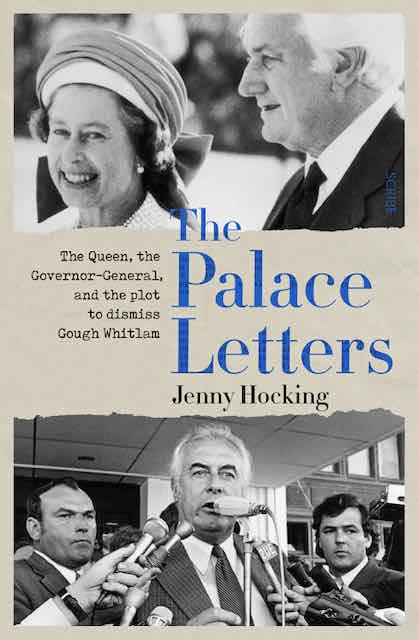
- On Tuesday, I attended the second Rod Wallace Memorial Lecture, held by the Friends of the National Film and Sound Archive. Our lecturer was Jenny Hocking, whose book, The Palace letters: The Queen, the Governor-General and the plot to dismiss Whitlam, was highly commended for the 2021 award.
- On Friday, I attended the announcement of the 2023 ACT Book of the Year Award (my post), and the winning book, Frank Bongiorno’s Dreamers and schemers: A political history of Australia, also won the 2023 Henry Mayer Book Prize.
I love it when serendipity strikes like this.
Henry Mayer Book Prize winners to date
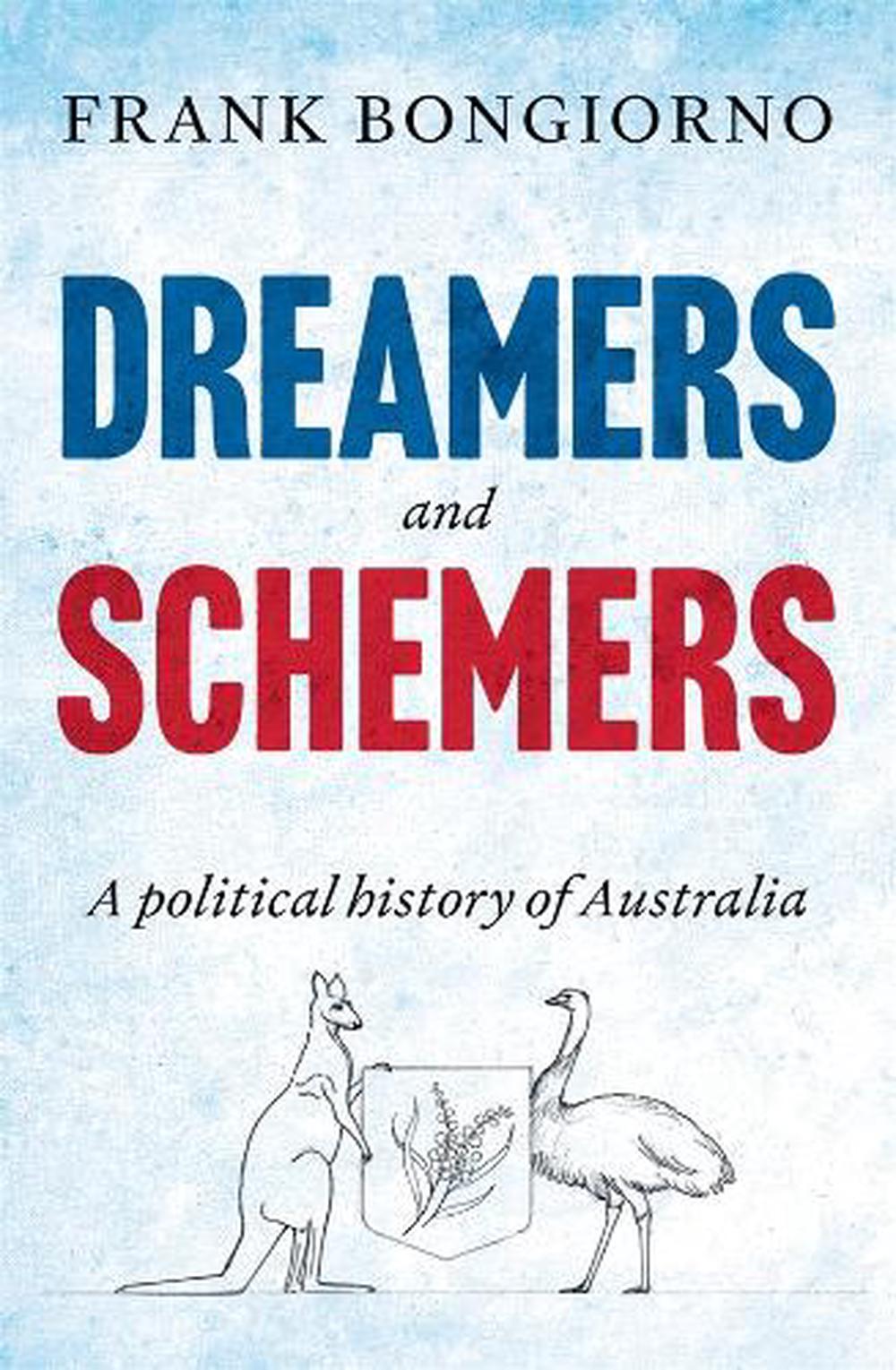
- 2023: Frank Bongiorno, Dreamers and schemers: A political history of Australia, Black Inc, 2022.
- 2021: Sally Young, Paper emperors: The rise of Australia’s newspaper empires, UNSW Press, 2019.
- 2019: Paul Strangio, Paul ‘T Hart & James Walter, The pivot of power: Australian Prime Ministers and political leadership, 1949–2016, Melbourne University Press, 2017.
- 2017: Sarah Ferguson and Patricia Drum, The killing season uncut, Melbourne University Press, 2016.
- 2015: Stephen Mills, The professionals: Strategy, money and the rise of the political campaigner in Australia, Black Inc, 2014.
- 2013: Paul Strangio, Neither power nor glory: 100 years of political Labor in Victoria, 1856 – 1956, Melbourne University Press, 2012.
- 2011: James Walter, What were they thinking? The politics of ideas in Australia, UNSW Press, 2010.
- 2009: Sarah Maddison, Black politics: Inside the complexity of Aboriginal political culture, Allen & Unwin, 2008 AND David McKnight, Beyond Right and Left: New politics and the Culture Wars, Allen & Unwin, 2007.
Since 2016, the prize has been alternated with the Crisp Prize, which is offered for a similar topic but with a different qualification -“the best scholarly book on political science by an early or mid-career researcher“, which they define as someone who has graduated with a PhD within the previous 10 years.
How many more specialist book awards are there out there?
 Whispering Gums