Us Mob Writing, Too deadly (#BookReview)

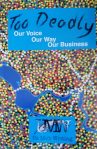
Us Mob Writing, Too DeadlyToo deadly is an anthology of writings by the Canberra-based writing group Us Mob Writing. Comprising Australian First Nations writers, this group was formed in the late 1990s and is, apparently, one of our capital’s longest running writers’ groups. I saw advertising for the book’s launch back in late 2017, but was unable to attend. I was consequently thrilled to be offered a copy to review some months later. Finally, it worked its way to the top of the pile and I have read it. Things happen slowly here at the Gums!

The book comprises works by 11 women writers. It is introduced by Jeanine Leane whose novel Purple threads I reviewed a few years ago. She describes the content as including “prose and narrative poetry; flash fiction, fiction and creative non-fiction; and life writing.

It was interesting to read this just after reading Anita Heiss’s anthology, Growing up Aboriginal in Australia (my review). Heiss’s book, obviously, is all life-writing, while this anthology is more varied in form and subject matter, but, as in Heiss’s book, many of the works are overtly political, not surprisingly, but all writers speak of connection to culture, in some way.

Now, how to do this? I don’t usually discuss every writer in an anthology because doing so, without writing a tome, risks being superficial, but I’m going to try here and see if I can find a fair balance. You be the judge.

Wulli Wulli writer Lisa Fuller: eight pieces, mostly poetry. They deal with her writing practice, her sources of inspiration, and her sense of self. My heart went out to her struggles to accept that she is “good enough” in poems like “Who me?” and “Never enough” (“I will kill myself through/ should-i-n-g and my 20/20 judging”), but I also loved her sense of humour and word plays. “Waking” made me laugh, with the “only clock in the place/ disguised as a phone” as did her wry references to her “Master pieces” in “Electronic inclusions”, which describes her preference for “paper and pen” over keyboard. She also writes of nature and the inspiration it provides, including:

the mist envelops
its cool embrace
blocking everything
making the everyday
more mysterious
(“Surrounds”)

Juru-Kija poet Michelle Bedford: six poems, most of which directly address culture – her connection with it, and/or loss of it. In “Kindred Spirit-so many stories untold”, the refrain at the end of each verse is “so many stories untold”, while “Straight up and back with a certain native pride” tells of a hunting party and how engaging in cultural practice brings contentment and pride. Coming from the beautiful Kimberleys, she has some poems evoking her love of that landscape: “Colour me fine” is a love-letter to the Kimberley that I could relate to. Other poems are more overtly political. “Standing alone with others” and “I promise you … she is worthy” reminded me somewhat of Oodgeroo Noonuccal’s work.

Wiradjuri poet Yullara Reed: one poem, “Catch me if you can”. Told in the voice of a bird, her allegorical poem confronts its reader with the realities of indigenous life, particularly regarding the stolen generations, as the bird watches out for catchers. There’s a cheeky freshness to this poem which makes its message so much starker.

Erubian writer Chella Goodwin, from the Torres Strait: two poems and one prose piece. “Morning dreaming” is a gorgeous poem about yearning for a simpler life. Her irregular use of rhyme here is particularly effective. Many of us can relate to these lines, “microsoft word/ part of the city herd”, and to

divorcing the city
with its traffic and hustle
for straight roads to the horizon
where the kookaburras hustle

Bundjalung writer Samia Goudie: six pieces, mostly poems. They mourn a loss of culture, but also express defiance (particularly “White lie”) and sorrow (“Dirt child”). Her prose piece, “Coming home”, is a short story about a stolen generation daughter meeting her mother for the first time. The insensitivity of the church official, where the meeting is effected, is breathtaking. He wants a photo for, he says:

“… the church newsletter, the story, our story; it is such a great story. The congregation will love it.”

Whose story?

Yuin writer Brenda Gifford: one memoir piece about her life on the road, for ten years, with the mixed indigenous and non-indegnous band, Mixed Relations. Much of the story would be familiar to any band, I guess, except that this one has the added issue of race to deal with. She talks of confronting racism in Moree, and of the opposite in Brewarrina, where the local mob showed them the fish traps (now made famous by Bruce Pascoe in Dark emu.) She also writes of touring North America, and sharing experiences with First Nations Americans (not to mention trying their wonderful fried cornbread!)

Wiradjuri author Kerry Reed-Gilbert (grandmother of Yullara above) has ten pieces, and is the best-known, most published of the group. Reed-Gilbert also appears in Growing up Aboriginal in Australia, with a strong small town story. Some of her poems talk of dark history, such as blood loss and massacres in “The place in the paddock”, while others ask for Australians to work together, as in “Reflections” and “I know you”. Many of her pieces, as do those of others, talk of the wisdom of older people (uncles, grandfathers, grandmothers) and, further back, of the Old or Ancient Ones from whom the laws come.

Ngemba/Barkindji writer Barrina South: four pieces. Her poem “Ghost Gum” describes the ageing and regeneration of a tree, but surely also works as a metaphor for indigenous history – the losses (“pooled blood appears on the surface caused by previous contusions”) and the hope for the future (“She reaches up and gently sways/ Dancing in time with the stars…”) “Baaka” is more overtly political, but also uses nature, the river in this case, to oppose long connection with culture (and the “old people”) against loss (and “they [who] fence rivers”).

Wiradjuri poet Marissa McDowell: three pieces. “By the campfire” is a lovely hymn to indigenous creation spirit Biamie, “the maker of all things”, while “Me” is a plea to be respected “before all is lost/at what human cost”.

Kamilaroi writer Joyce Graham: eight pieces, starting with three haiku which lead into more powerful, pull-no-punches poems. “Proud Uncle” references, I believe, the story of the two indigenous men Jimmy Clements and John Noble who walked miles to attend the opening of Canberra’s provisional parliament house in 1927. It confronts us with our lack of interest (“ignored by white/ present not caring/ not curious/ Dismissive/ ignorant of your importance”). It’s a story most Canberrans didn’t know until recently. Certainly I didn’t – “ignorant”! “Life’s landscape” uses strong language, too, to make its point, describing “the white dust storm” and its aftermath.

Torres Strait Islander writer Samantha Faulkner: twelve pieces, including five prose pieces. Faulkner’s pieces, like many others, explore the history of indigenous experience in Australia. “The Old Man” also reflects on the Jimmy Clements and John Noble story, describing the two men as “compelled to be there”. “Tribute to Mabo” is another straightforward narrative poem about an indigenous hero. “One Day at Walpa (Walpa Gorge, Kata Tjuta/the Olgas” made me laugh at its depiction of tourists visiting this beautiful peaceful, place. And “It’s a small town world” succinctly conveys opposing images of small towns – narrow on one hand, and big-hearted on the other. Faulkner’s is, generally, a lighter touch than some in the book, but no less effective for that.

There are, then, recurring themes in the anthology, as you’d expect – to do with loss and disconnection caused by colonisation and white laws – but while some are angry (and understandably so), many are generous and hopeful, looking to a better future. Motifs recur too. There’s the wisdom of older people and of the Old Ones, and, of course, nature, particularly trees and birds, appears in many pieces.

Too deadly is a challenging book to read with its varied styles and tones, but it is well worth the effort because this very variety provides a breadth of insight that is not easily come by. I’ll close with some lines from McDowell’s “Me”, because, in many ways, it conveys the heart of the book (but apologies for not getting the lines’ layout right):

Images are plastered all over our screens
Scaring the weaker
And empowering the meaner
Open your door and open your mind
move a bit closer
I could be your friend
not an enemy
Who’s portrayed as the end.

AWW Challenge 2019 BadgeUs Mob Writing
(Eds. Kerry Reed-Gilbert, Samantha Faulkner, Barrina South)
Too deadly: Our voice, our way, our business
Us Mob Writing, 2017
172pp.
ISBN: 9780992559823

(Review copy courtesy Sarah St Vincent Welch and Us Mob Writing)

Anita Heiss (ed.), Growing up Aboriginal in Australia (#BookReview)

Anita Heiss, Growing up Aboriginal in Australia

As many others have said, including my reading group, Anita Heiss’s anthology, Growing up Aboriginal in Australia, should be required reading for all Australians. At the very least, it should be in every Australian secondary and tertiary educational institution. Why? Because it contributes to the truth-telling that is critical to real reconciliation between Indigenous and non-Indigenous Australians. Truth-telling comes in many forms. There are formal processes, as through truth-telling commissions, but there are also the informal processes that we can all engage in while we wait for the government to fiddle-diddle around deciding whether it can front up and do the right thing.

Essentially, truth-telling means all Australians acknowledging and accepting “the shared and often difficult truths of our past, so that we can move forward together”. These truths include the original colonial invasion of the country, the massacres, the Stolen Generations, and the ongoing racism that results in continued inequities and significant gaps in almost every health, educational and occupational measure you can think of. Informal truth-telling encompasses all the things we do to inform ourselves and each other of these truths. Heiss’ anthology, Growing up Aboriginal in Australia, which contains 50 stories by indigenous Australians on their experience of growing up indigenous in this so-called lucky country of ours, contributes to this informal truth-telling. Taken as a whole, the book provides a salutary lesson, for all Australians who care to listen, on the experience of being indigenous in Australia. Taken individually, each story has the potential to break your heart. If you think I’m laying it on a bit thick, then you haven’t read the book!

“a stranger in my own land”

The above line from William Russell’s story, “A story from my life”, brought me up short because it replicates a line I read in Atkinson’s book The last wild west (my review). Atkinson describes his Indigenous friend and co-worker Sno as being “an alien in his own homeland”. There is strength in this replication between books, just as there is strength in the repetition of experiences within Heiss’s book, and the strength is this, that every repetition reinforces the truth of the historical (and continuing) injustice faced by Indigenous Australians. The stronger, the more inescapable the truth becomes, the harder it must surely be to ignore.

So, what are the repeated experiences in Growing up Aboriginal in Australia? Well, there are recurring references to the Stolen Generations, to being questioned about identity (“are you really Aboriginal?”, “you look too white to be Aboriginal”), to feeling disconnected from culture, to being called racist names, to being humiliated in myriad ways too numerous to list, and to being physically attacked. These are the experiences that we’ve all heard of, but Heiss’ contributors enable us to feel them. And that’s important. I’ll share just a few quotes from a few stories:

Thankyou for your acknowledging every 26 January with such grace and humility. Thankyou for your encouragement – and advice to me – to let the past be in the past, to simply ‘get over it’ on the day my people’s land was invaded and dispossessed. (Dom Bemrose’s biting “Dear Australia”)

My father cut to the chase. ‘Olly, you can’t go telling people we’re Aboriginal … It isn’t safe’. (Katie Bryan, “Easter, 1969”)

I would paint and draw and sculpt about being Aboriginal. I would see people twitch uncomfortably and sometimes even let their ignorant thoughts out: ‘But you don’t look it’, ‘From how far back’, ‘Do you get lots of handouts?’ (Shannon Foster, “White bread dreaming”)

In Year 2 I was lined up with Aboriginal classmates to be checked for nits and, as I stood there with fingers being raked through my hair, I felt angry and embarrassed as my non-Indigenous classmates watched. I realised that … for some reason it was only supposed to be us Aboriginal kids that had nits. (Jared Thomas, “Daredevil days”)

None of us kids are allowed to go anywhere outside after dark by ourselves. We can’t ever go to the toilet at night: we gotta go in twos, and Mummy stands at the door and watches. She has a big bundi* ready in case there’s trouble … Terror is outside the door, and we can’t do anything about it. (Kerry Reed-Gilbert, “The little town on the railway track”)

It was hard selecting these quotes – not because they were hard to find but because there were so many options that it was hard to decide which ones. That’s the shame of it. And these stories come from all ages – from teenagers to those in their 70s or 80s –  and from all parts of Australia, from, as Heiss writes in her Introduction, “coastal and desert regions, cities and remote communities.” They come from “Nukuna to Noongar, Wiradjuri to Western Arrernte, Ku Ku Kalinji to Kunibídji, Gunditjamara to Gumbayanggirr and many places in between.”

The contributors include many well-known people – writers like Tony Birch and Tara June Winch, sportspeople like Patrick Johnson and Adam Goodes, performers like Deborah Cheetham and Miranda Tapsell –  but there are also lesser-known but no less significant people, many of whom are actively working for their people and communities.

Despite the devastating picture being painted, the book is not all grim. There are also positive repetitions in the book. They include deep connection to country, the importance and support of family, and particularly, the strength of mums. There’s humour in some stories: you can’t help but laugh, while you are also grimacing, at Miranda Tapsell’s story of her friends expecting her to turn up to a party as Scary Spice, but opting for Baby Spice instead (Miranda Tapsell, “Nobody puts Baby Spice in a corner”).

“two divided worlds”

One of the early stories is particularly sad because its 29-year-old author, Alice Eather, took her life before the book was published. In her person, in her story, in her life, she represents the challenge Indigenous people face in Australia today. Her story “Yúya Karrabúrra” starts with a poem. At the end of the poem she writes:

This poem is about identity, and it was a really hard thing to write in the beginning because identity is such a big issue. It’s a large thing to cover. The poem is about the struggle of being in between black and white.

Now Alice, like many in the book, had an Indigenous parent and a non-Indigenous one, but the struggle she names here is faced by every person in the book, regardless of their family backgrounds, because every one of them must contend with white society and culture, and it’s clearly darned hard.

I’m going to close on this idea of identity, because identity is the well-spring from which everything else comes. The stories are organised alphabetically by author, which I’m sure was an active decision made to not direct the conversation. Coincidentally, though, the last story – Tamika Worrell’s “The Aboriginal equation” – provides the perfect conclusion. It constitutes a strong, unambiguous statement of identity. She says:

I will not sit quietly while my identity is questioned. It doesn’t matter how many times you say you didn’t mean to be offensive, that doesn’t dictate whether or not I’m offended.

Then concludes with a hope that she

will live to see a future that is less ignorant, less racist and at least somewhat decolonised. Until then, I’ll continue to be an angry Koori woman, educating those who don’t understand and those who choose not to.

She’s not asking for the moon here is she? The least we can do is choose to understand – and we can start by reading books like this.

Lisa (ANZLitLovers) has also posted on this book, and there are several reviews for the Australian Women Writers Challenge.

* “bundi” is a Wiradjuri hitting stick I believe.

AWW Challenge 2019 Badge

Anita Heiss (ed.)
Growing up Aboriginal in Australia
Carlton: Black Inc, 2018
311pp.
ISBN: 9781863959810

Neil H Atkinson, The last wild west (#BookReview)

In one of those strange synchronicities, I attended an event, a few hours after finishing Neil H Atkinson’s The last wild west, that gave me the perfect opening for my post. This event was the launch of the VR film, Carriberrie, at the National Film and Sound Archive. Speaking at the launch, indigenous woman and participant in the production, Delta Kay, referred to being approached by the non-indigenous filmmaker Dominic Allen about making the film. Most non-indigenous people, she said, come to their community and “want, want, want” but Allen was offering to “give”, in a spirit of true reconciliation. This spirit of “giving” to indigenous people was as far from Atkinson’s experience as you could get.

Neil H Atkinson, The last wild westAtkinson’s memoir –The last wild west: A saga of Northern Territory cattle stations, racial violence, wild horses and the supernatural: A true story – chronicles the time, 1977-1980, he spent working at a Northern Territory cattle station. He went there in a state of disillusionment and despair, having been refused shared custody of his children after his divorce. His aim was to transform himself, to become a man the judge would see as stable and reliable, to become, in other words, a person “like other people, who were trusted and respected”. He did transform himself, but not quite in the way he’d expected. He had felt that in the Northern Territory he could work hard and prove himself a man. In no way did he think that he would become involved in brutal racial conflict and that the “manhood” he sought would encompass a new understanding of humanity.

I’ve read novels about white brutality towards indigenous people in Australia – such as Thea Astley’s A kindness cup – and I’ve read histories and other nonfiction books, like Chloe Hooper’s The tall man, which tell this story. However, I haven’t read a memoir this charged on the subject. The physical and psychological brutality conveyed here is truly confronting – and what makes it worse is that, much as we’d prefer it be otherwise, it’s not surprising or unbelievable.

But, why write it now? Atkinson’s experience happened 40 years ago, and progress has surely been made (as suggested by projects like Carriberrie.) Atkinson answers this in his Introduction:

I wanted to hold up a mirror; otherwise it is too easy for people to say: “That was then, and  our society isn’t like that anymore.” I wanted to ask if things had changed as much as people thought they had.

This is a question for each reader to consider. I would certainly hope that the sort of brutality described in this book is no more, but I really can’t be sure. However, I do know – we all know – that we still have a long way to go before true equality is achieved. For that reason – because we all know about slippery slopes – Atkinson’s book is relevant, and worth reading.

“an alien in his own homeland”

And now, I’d better give you some sense of what Atkinson’s experience was. Self-described as timid and insecure, Atkinson, with no cattle station experience, decides that the Northern Territory is the place to remake himself. Serendipitously, while en route, he meets two truckies who give him the names of a pub, of a man who visits that pub and of the station he works for. They advise him not to admit his lack of experience but to “wing it”. They also tell him that “blacks are treated worse ‘n shit”, that they “should get more credit and be paid more”, and, most critically, that “there’s a hell’va lot of bad blood between whites and blacks right now.” This was post-Wave Hill, a landmark for indigenous land rights that heralded a time of change in the outback. White owners and bosses felt threatened, and, while the tide might have been changing, indigenous people were still deemed inferior and had little or no power.

Atkinson’s story is one of being caught between these two worlds. While he starts off having little regard for indigenous people and their rights, early describing himself as having “little sympathy for the blacks”, he is a sensitive person. He soon experiences the brutal machismo of the men in charge – to greenhorn men like himself, to the indigenous workers and their families, and to the cattle. Indeed, his descriptions of the treatment of the cattle by the station workers and managers conveys such barbarity that you are prepared for anything.

To write this memoir, Atkinson draws from the diaries he kept at the time, in which he recorded experiences “as they occurred, the same day or shortly after, and using as far as practical, people’s own words”. The result is that the dialogue and descriptions feel fresh and authentic. He is a good story-teller, telling his story chronologically, and building up slowly to the event which – well, I won’t spoil it. He shares this journey with an almost ego-less honesty, admitting that, even two-thirds of the way through his time in the Territory, even after seeing much brutality, he was still thinking “It was an Aboriginal problem, not mine.” His intellect, his historical understanding, in other words, lagged behind his humanity. Emotionally, he started aligning himself increasingly with the indigenous workers, but he continued to do his darndest to avoid becoming involved in the conflict, to avoid even recognising that the indigenous people’s struggles for voice, dignity, and land, was an “Australian” problem not just an “Aboriginal” one. This attitude is, to a degree, understandable, given the power and control wielded by the white station foreman and his henchmen.

Atkinson’s writing is highly evocative. Initially, I found it almost over-blown – too many adjectives I was thinking. But, as I got into the story, I became mesmerised by his voice, by his way of imbuing feeling into what he was seeing and experiencing. This is not the spare writing of modern writers – but it feels right for Atkinson. Certainly, it conveys an inner response to the situation he found himself in:

Dawn knocked with such blinding clarity, its beams should have scarred the door and windows with clutching fingers of blazing red and yellow, as if I should just hurry over and embrace the new day because of its arrogant promise of purity and renewal.

[and, on Sno, his indigenous co-worker]

I then watched him walk away, a black man with a black shadow cast over the baked red earth of a past filled with pain.

Now, I’ve discussed here many times that issue concerning white people telling black stories. This is not, ostensibly, a problem here, because this is Atkinson’s memoir of his experience. It involves sharing his understanding of indigenous people’s culture, particularly of their attitude to place (“country” is not used here – was not used, I think, so much back in the 1970s) and of their spirituality. Mostly, he quotes their words to him, or his interpretation of their words. It can be a fine line.

As I often say in my posts, there is so much more to this book, so many issues and ideas that I haven’t touched upon, but I’m going to close with two ideas Atkinson discusses in the book, ideas which get to the nub of why this book is worth reading. One concerns his understanding of the history wars:

Such wars are as much about morality as about facts, because we choose the way we frame the national drama: either to regard the dispossession of the people as an injustice that needs addressing, or not. There is no neutral body of facts to which to appeal to answer the basic question. We all have to answer for ourselves. Every Australian has to exercise historical judgement. (p. 149)

And the other, in a sense, frames this:

Most ignorance is ignorance you choose. We don’t know because we don’t want to know. Our will decides how and upon what subjects we use our intelligence, direct our interest. Those who don’t detect any meaning in the Aboriginal world generally do so because, for one reason or another, it suits their opinion that the black world should be meaningless, so it is. (p. 194)

I don’t usually like to use book review clichés, but The last wild west is, I must say, provocative in the best meaning of the word.

Neil H. Atkinson
The last wild west: A saga of Northern Territory cattle stations, racial violence, wild horses and the supernatural: A true story
Melbourne: Hybrid Publishers
288pp.
ISBN: 9781925272918

(Review copy courtesy Hybrid Publishers)

Jarrah Dundler, Hey Brother (#BookReview)

Jarrah Dundler, Hey BrotherIs she ever going to write another actual review you’ve been probably wondering but yes, I am – and it’s for the young protagonist book I mentioned in my recent Reading Highlights post. The book is Jarrah Dundler’s debut novel, Hey Brother, which was shortlisted for the The Australian/Vogel Upublished Manuscript Award in 2017 under the title Tryst. Tryst is quite a clever title: it’s the nickname of the 14-year-old protagonist Trysten, and suggests actual and hoped for trysts between the teen couples, but maybe it also has overtones of something more genre-like so was rejected? As it is, the published title conveys both the familial and broader meanings of brotherhood, which are played out nicely in the novel.

Publisher Allen & Unwin categorises Hey Brother as Popular Fiction, and describes it as “a genuine and compellingly portrayed family drama of a tough kid from rural Australia”. I would describe it, however, as a coming-of-age novel, and it reads to me as more Young Adult than Adult. There’s nothing wrong with this, but it explains my uncertainty about how to read it – or, to be more specific, how to write about it.

So, the book. Hey Brother has a first person narrator, the aforementioned Trysten who lives on a property in northern New South Wales with his mother, Kirsty, and his big brother Shaun. His father, Old Greggy, is there too, but prior to the novel’s start he’d been exiled by Kirsty to a caravan down by the river. So, it’s a somewhat fractured family, but not devastatingly so, because it becomes quickly clear that there’s an underlying love and respect between them all. The novel starts with big brother Shaun going off to fight “the Taliban in Afghanistan”, where he’d “been keen to head from the get-go, back when the dust from the Twin Towers was still settling”.

Into this mix comes uncle Trev who turns up to support his sister, Tryst’s mother who is worrying about her son off at war. Her form of “worrying” includes self-medicating with alcohol and letting her other responsibilities fall by the wayside. Unfortunately, Trev, who has some lovely moments of wisdom, also self-medicates his own demons the same way. It’s not a lethal mix, but it creates its challenges, and in fact offers Trev some insights. There is also Tryst’s best friend Ricky, and, as the book progresses, their girlfriends, Jessica and Jade. It’s a tight little community, and Dundler handles the relationships well. They feel real, with the tensions authentic, understandable, and not over-dramatised. In fact, Dundler’s characterisation is a strong point. His people live and breathe from the moment they appear on the page.

Hey Brother, then, features the typical YA narrative – a young teen meets his first love and is desperate to spend more time with her. But this particular story is complicated by the teen’s relationship with his brother whom he hero-worships but who returns from war psychologically damaged, suffering from PTSD. The novel’s crisis is, in fact, triggered by Shaun’s mental distress, and complicated by the conflict confronting Tryst between his love for Jessica and for his brother.

The novel is told first person by Tryst, in the vernacular of a rural, teenage boy. It’s fresh, direct, immediate, full of the profanity and colloquialisms that are appropriate to the context – but, here’s the thing, it is also more descriptive than reflective. Tryst comes across as a loving, heart-of-gold young man, but he is about the moment. To some extent we can see the deeper issues at play here – the PTSD, the complexity in the adult characters’ lives and relationships – but these are not the novel’s focus. The focus is Trysten, his life and, ultimately, his growth. This, to me, makes the novel Young Adult – and makes it quite different from, say, Laguna’s The choke (my review) where, although the story is young Justine’s, the themes focus on the impoverished environment – economically, socially, spiritually – that makes her life the way it is.

Did, then, I enjoy the novel? Yes, in that its protagonist and setting are foreign to my experience and I like to read about lives different to mine, and because the writing was engaging, lively, and appropriate in language and imagery. Here, for example, Tryst describes Trev confessing to past troubles:

It was like he wanted the words to go straight down the plughole after he’d uttered them.

And Trev, late in the novel, gives Tryst some advice:

‘Decisions, mate. That’s what defines you in the end. Some advice for ya–before you make one, try and give it a little thought beforehand, would ya? ‘Cause, believe me, regret’s a f****n c**t of a thing to live with.’

I also liked that late in the novel, we learn, in passing, that Ricky, Tryst’s friend, is indigenous. The reference is somewhat didactically done, but Dundler clearly wanted to do what we need more of, that is, to include indigenous characters without their indigeneity being an issue in the story. How you do this is the challenge.

However, Young Adult Fiction is not really my interest. Young Adult concerns belong to a long-ago part of my life. I appreciated Dundler’s skills in plotting and characterisation, not to mention his heart and desire to give life and air to some big issues, but I did tire at times of Tryst’s concerns, perspective and voice. Not his fault, mine. I would unhestitatingly recommend this book to YA readers – and would willingly check out Dundler’s next work. A good debut.

For a beautiful post on this book, check out Theresa Smith’s (Theresa Smith Writes).

Jarrah Dundler
Hey brother
Sydney: Allen & Unwin, 2018
281pp.
ISBN: 9781760631123

(Review copy courtesy Allen & Unwin)

Note: The asterisked words in the quote are to defect the wrong sort of hits coming my way.

Monday musings on Australian literature: Bush Sketcher (Intro)

I was uncertain about whether to title this post The Australasian or “Bush Sketcher”, but have decided on the latter. However, I will start by introducing The Australasian!

The Australasian was a weekly newspaper established in 1864 by the merger of three Melbourne weeklies, and later incorporating a couple of other publications, including, in 1889, the monthly Australasian Sketcher with Pen and Pencil. The Australasian was the weekend companion to the Argus, and lasted until 1946 when it became the Australasian Post. That publication had a bit of a chequered history, but lasted until 2002 (albeit named, by then, Aussie Post.)

The reason, though, that I checked all this out was because of a regular column or section in the Australasian called “Bush Sketcher” as it was under this banner that Katharine Susannah Prichard’s short stories, “The bridge” and “Christmas tree”, were published (links are to my recent posts). It was when I saw the second story appear under the banner that I decided to check out this “Bush Sketcher” business. Through my best Trove jiggery-pokery (without spending hours), I think I can say that this “Bush Sketcher” column ran from around 1895 to 1925.

Bush Sketcher

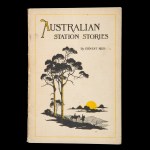
Ernest Reid, Australian station storiesArticles ranged from 600 to 3000 or so words, with most being in the vicinity of 1500 to 2500 words, so this was more than a “column”. All the articles have by-lines, but many are pseudonyms (like Bushwoman, Millewa and Coriander) or just initials (such as J.A.M., A.H., and R.V.L). However, as we already know, some authors, like Katharine Susannah Prichard, are fully identified. Another well-known author who came up in my search was Daisy M Bates. Other lesser known writers (to me) include Hetty Ralph-Baker, Ernest Reid (whose short stories from The Argus and The Australasian were published in 1930 in a collection titled Australian station stories), and  E.S. Sorenson (novelist, poet and short story writer who appears in the Australian Dictionary of Biography). So, a varied bunch.

The content is varied too as a random selection of article titles shows:

  • “Aboriginal relationships” (Daisy M Bates – a detailed description of Western Australian Aboriginal kinship systems, written in 1922)
  • “Racing in the never never” (Bushwoman)
  • “A day at Bushvale” (Coriander)
  • “Far north blacks” (Hetty Ralph-Baker – but this article is barely legible, so worn or faded is it)
  • “The old station” (Ernest Reid)
  • “Sundowners” (ES Sorenson)

And, not only is the content varied, but the form also: some of the articles are short stories, while others are more journalistic or slices-of-life non-fiction.

I will return to “Bush Sketcher” in future as there’s some fascinating material here, but will close by sharing one …

“Women’s work in the North West”

Written by A.H. and published on 18 December, 1920, this article is written by the mistress of a station homestead. Focusing on wash-day, it describes the work undertaken by women in managing a homestead – though in fact the women whose work is mostly described is that of the Aboriginal women (or “gins” as she calls them). I think A.H. is being genuinely inclusive in her title, “women’s work”.

The homestead is set in the Kimberley area and provides insight into life there. The story starts with a somewhat purple but highly evocative description of the landscape around the station, then tells us that it’s wash-day. The arrival of the indigenous women reminds her that there’s no time to waste:

The women, running up with their shouts, laughter, and repartee to their lazier men folk, warn us that if the great mountain of soiled clothes in the laundry is to be clean goods by noon we too must be on the move.

She tells us how they all wear white in the house! Really? In the red-earthed north-west! And she describes the women: “Hebe, our bed room girl [who] has been well trained for her work from the age of ten …The other women … were all older – Chatterbox, the children’s nurse; Chloe, the dining room and pantry maid; Mirabon, the kitchen help; and old Biddy, Hebe’s mother, a general utility, able to clean windows, wash down verandahs, and help in the laundry.” She describes the challenges involved in keeping them on task, including bribing them with “a tin of apricots”.

However, once she’s got the women started on the washing, she writes that:

I can safely go in now to the half-past 6 breakfast, which is spread on the shady verandah. The children are in their nursery, the netted in end of the vine-covered verandah, where a swing and a hammock, a rocking horse, and boxes of bricks, with slates and pencils, minister to their amusement and interest through the long hot day. Every one, native and white, has a siesta from 12 till 3 in the afternoon, noon. Breakfast is taken at 6 or half-past, tiffin (a light meal of cakes and tea or coffee), at 10, lunch at 12, (a light meal also); afternoon tea at half-past 4; and dinner at half-past 7. Such are our rules, and these vary little among the station homesteads between the Gascoyne and Marble Bar, Broome, Derby, and Wyndham.

So, we get a lovely time-table of station-life.

The whole thing is paternalistic as you’d expect from the times – at one stage she calls the women “happy creatures” – but A.H. is not totally closed-minded to indigenous lives and ways. I was fascinated by this:

When the copper has its first consignment, the women pause for a drink of cold tea and a nice repast of broiled frogs, which Topsy a 10-year-old Coorie, has brought up smoking hot from the camp, and they do not look untempting, lying well browned on a mass of gum leaves in the boat shaped Tar-doo, which serves the natives as a tray. With a sleight of hand quite wonderful the frog is stripped of its brown coat, attendant ashes, and in the same movement the shrunken “innards,” leaving only the succulent limbs, which are swallowed as we swallow oysters.

She also describes some of the lively repartee with Chloe who, though under our writer’s control, is not afraid to express her frustration, telling A.H., “Missis too much wongi wongi: make black-fella woman bad fella”. Then, having given this “frank opinion”, she gets back to work “on the tubs.”

Particularly interesting, though, is A.H.’s concluding paragraph:

The natives who belong to the territory taken up by the squatter become, by an arrangement with the Government, his indentured servants. He is responsible for their upkeep. A liberal scale of diet is specified by the Protector of Aborigines, who also sends an agent from time to time on surprise visits to see that all regulations are fairly kept.

That, I suppose, is to reassure the city-readers that all is properly managed and happy on the stations.

There is of course so much we, a century later, could read into this wash-day slice-of-life, but I’m not going to say the obvious here. My point really is to show what a rich source “Bush Sketcher” is for providing insight into Australian outback life – including values, attitudes and language – at the beginning of the Twentieth Century. I’ll be back with more …

Margaret Merrilees, Big rough stones (#BookReview)

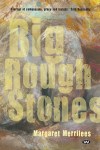
Margaret Merrilees, Big rough stonesIn her latest novel Big rough stones, Margaret Merrilees seems to have done for Australian lesbians what Armistead Maupin did for the American gay community in his Tales of the city series. It is the story, spanning roughly three decades from around 1970s on, of a character named Ro and her lesbian sisterhood in Adelaide. In so doing, it also encompasses some of the feminist activism and sociopolitical concerns of those decades.

Now, Merrilees has appeared here before – with her debut novel The first week (my review) and in my post on her essay about non-indigenous writers writing about indigenous people. I’ll return to this point later …

The novel’s title comes from Miriel Lenore’s poem, “the walls of lesbos”, which is quoted at the beginning of the book. It starts:

to build a lesbian wall
take big rough stones

don’t cut to fit

The poem concludes with the idea that the strength of the wall lies in the combination of the places where the stones touch and the gaps between. This idea perfectly encapsulates the relationships in Big rough stones, because there’s a real sense of a bunch of different individuals who support each other for the long haul. There are points at which they meet. They share political beliefs, for a start, and they share their lives (sometimes as lovers, sometimes in share houses, sometimes in work). But there are also the gaps, those individual differences that either make a community stronger or break it apart. Here, they make it stronger.

Ro, we soon realise, is not the easiest person to live with, not always the most responsible or reliable person, but she’s “sturdy and energetic, descended from a Welsh pit pony and a dour Scot.” She’s idealistic, passionate, and will give things a go. She’s our focal point. The novel is told third person but mostly through her perspective. However, we also get to know several of her friends and lovers, sometimes through her eyes, but sometimes we pop into their heads for a brief while too.

Besides this occasionally shifting third-person point of view, the novel also has an interesting, almost circular, 4-part structure: Now, A while ago, A long time ago, Now. At the novel’s opening – in Now – Ro is in her 60s and learns that she has terminal cancer (so, no spoiler here). We also learn that, at this stage in her life, she wishes she still had someone called Gerry in it. We then move back in her life, eventually reaching “a long time ago” where we meet Gerry and discover why she is no longer in Ro’s life. It’s a sad story. In the final “Now”, Ro is in the terminal stages of her cancer, being cared for by her friends. We see just how strongly that wall has been built. The story reminded me just a bit of Helen Garner’s The spare room – not that Ro tries ineffective alternative medicine, but in the challenges her friends face in caring for a seriously ill person. It isn’t easy.

So, the book is about relationships – lesbian ones, yes, but there’s much that’s universal here too. However, it is also about the times – about political ideals and feminist activism, about the environment and climate change. Several of the women, including Ro, work in a Shelter for abused women. They work as a collective, and we share in some of the struggles of making such arrangements work. We sit in on a collective meeting, after Ro has missed a shift without calling in. There’s discussion and dissension about Ro’s commitment, with one member suggesting this might not be the job for her. Lovely, loyal Maddie speaks up:

I don’t like this. We’ve never been into sacking people or any of that sort of patriarchal shit.’

‘Maybe that’s our problem,’ said Tilda. ‘The place would run a lot more efficiently if we were.’

But this was going a bit too far for the others.

‘No, that’s completely against what we value,’ said the oldest member. ‘People always come first, and that includes workers. It’s up to us to honour Ro’s strengths and figure out how to work with her.’

Ro herself was struck by Tilda’s echo of her own thought. We should have a few more rules, she wanted to say.

She doesn’t say it, though. Instead, she concedes that she was wrong, and offers to work on her relationship with Tilda. An uneasy truce is achieved!

Another quote from the novel that has been used in its promotion provides a good sense of what Ro and her friends were about:

‘You thought feminism would stop violence against women,’ said Julia. ‘And that would stop war. And stop people trashing the Earth. You tried.’

‘Not alone,’ said Ro modestly. ‘I had help.’

Truth-telling

I want to end, however, with Merrilees’ concern about representing indigenous Australians in our stories. Here’s something I quoted from her in my previous post:

To write about Australia, particularly rural Australia, without mentioning the Aboriginal presence (current or historical) is to distort reality, to perpetuate the terra nullius lie. However, for a non-Aboriginal writer to write about Aboriginal people is to run the risk of “appropriating” Aboriginal experience; speaking on behalf of … There’s been too much of that already.

This, as I see it, relates to the issue of truth-telling. There’s the formal truth-telling – via, say, a truth-telling and reconciliation commission – but there’s also the more informal truth-telling that we can all do. Truth-telling is about all Australians coming to a “shared understanding of our history”, which includes “the acceptance of mass killings, incarceration, forced removal from land and forced removal of Aboriginal and Torres Strait Islander children from their families”. The now standard welcome or acknowledgement of country statements are part of this.

So, in Big rough stones, Merrilees has taken a sensitive approach. She does not, here, as she did in The first week, have an indigenous character, but she acknowledges indigenous Australians by showing her characters being aware of the “truths”. For example, Alby, one of Ro’s friends gets a job at a mine. Ro is horrified, and says:

‘Shit, Alby. How could you? Mining. Probably on Aboriginal land.’

‘Certainly on Aboriginal land. The whole country is Aboriginal land. This pub is on Aboriginal land.’

True! On another occasion, after a protest in Alice Springs against Pine Gap, Ro ends up in gaol for a night. The cells are disgusting and Ro finds it hard to engage in the political debate about the US base:

The walls were covered in graffiti. The misery and degradation of the previous occupants hung in the air, a miasma, shockingly brutal. The protest about the US base lost its urgency. Here was racism, fundamental, elemental, an Australian truth most of them had never seen before. Not close up. This they should protest about.

She realises that:

She and the others had privilege that no Aboriginal prisoner ever had. They could give up their resistance and walk away any time. And eventually they did.

I think she has hit on a way of not continuing terra nullius but, at the same time, also not appropriating indigenous experience. It may not work in all situations, but here, with politically aware characters, it does.

Fundamentally, Big rough stones is a straightforward, accessible story with a lot of dialogue that keeps the story moving along – but this is not all it is. Like Tales of the city, it offers a realistic, but warm-hearted portrayal of a time and place, with all the attendant personal and political messiness. An engaging read.

Lisa (ANZLitLovers) also liked this novel.

AWW Badge 2018Margaret Merrilees
Big rough stones
Mile End: Wakefield Press, 2018
278pp.
ISBN: 9781743055526

(Review copy courtesy Wakefield Press.)

Monday musings on Australian literature: Reading for Reconciliation

Funny sometimes how Monday Musings topics suddenly appear to me. I was researching for a future post, when I came across a site called Reading for Reconciliation – and couldn’t go past it for today’s post.

However, the site’s Home Page needs a bit of unpicking. It has a heading, “Finalists in 2012 Queensland Reconciliation Awards”, followed by text which reads “More than a ‘book club’ – we celebrated our 10th Anniversary in August 2014.” At first, I thought the page was going to list the 2012 finalists, but then I realised that they were saying that their bookclub was a finalist in the 2012 awards? Duh, silly me! Anyhow, the accompanying text tells us that the group:

  • is diverse in background and age, and has no political or religious affiliations; and
  • seeks “to expand our knowledge and understanding of current issues impacting on Australia’s First Peoples by reading and discussing works in an informal, friendly setting”.

They are a Brisbane group, which meets every 6 weeks or so – and they welcome new readers. The way they work is for members to take turns in leading discussion of the chosen book, with this leader being expected “to provide some extra background or context, focus the discussion, etc.” I’d be there if I lived in the Brisbane area. A bit more Googling uncovered the fact that they seem to run under the banner of Reconciliation Queensland Incorporated.

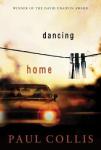
Paul Collis, Dancing homeAnyhow, next on the home page is the list of books they’ve scheduled for 2018:

  • John Newton, The oldest foods on earth
  • Damien Freeman & Shirleen Morris, The forgotten people
  • Anita Heiss, Barbed wire & cherry blossoms
  • Mark Tedeschi, Murder at Myall Creek
  • Mark Moran, Serious whitefella stuff
  • Mark McKenna, From the edge
  • Nonie Sharp, No ordinary judgement
  • Paul Collis, Dancing Home

A varied list, and one that contains some titles and authors I don’t know. However, the best thing about this site is that they also have a page listing every book they’ve discussed since they started in 2004. That’s a great resource for anyone else wanting to read for reconciliation (or start such a group!) It’s worth noting that the books they read aren’t all by indigenous Australians, and they include fiction and non-fiction. They’ve read books by indigenous authors like Kim Scott and Anita Heiss, Bruce Pascoe and Jeanine Leane, for example, all of whom you have met here. Non-indigenous writers they’ve read include novelist Kate Grenville and historians Henry Reynolds and Ann Curthoys.

Understanding the past to comprehend the present

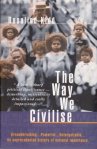
Rosalind Kidd, The way we civiliseAnyhow, I kept Googling, as I wanted to find out how this group started, and up popped an article titled “Six Books for Reconciliation Week” on an Amnesty International site! The article is by the group’s founder Helen Carrick. She starts:

In a Brisbane suburban lounge room in 2004, a diverse group aged from their 20s to 70s gathered to discuss Ros Kidd’s ‘The way we civilize’, which Professor Marcia Langton has described as a “ground-breaking history in the lives of Aboriginal people.”

They may have been diverse but their reason for meeting was not. They “all wished to learn more about Australia’s shared history – all regretted this hadn’t been learned at school.” They believe that they need to understand the past, in order to comprehend the present.

Carrick then describes the group’s history to date – including moving its home from members’ lounge rooms – and lists some of its highlights, including:

  • being a finalist in those awards I mentioned above!
  • establishing their website
  • having authors attend some meetings to discuss their books
  • the establishment of similar groups in Logan City (still Qld – you can see their 2016 list here) and Lismore (NSW)

And with this, I’ll end, making it a short Monday Musings for us all. I’ll just say that it’s great seeing a group like this – and not just seeing it, but seeing it survive for more than a decade and seeing the idea copied by others. Meanwhile, if you’re interested but can’t join a group, there’s always Lisa (ANZLitLovers)’s Indigenous Reading Week. From little things, big things grow – hopefully.

Do you take part in any reading for reconciliation programs?

Canberra Writers Festival 2018, Day 1, Pt 3: Indigenous Australians (1)

I planned to write a combined post for my last two events of Day 1, given both focussed on Indigenous Australians, but there was so much that I wanted to document (for myself, at least) that I decided to devote a post to each. There was, though, some overlap in terms of issues discussed, albeit from different perspectives. One of these was the fraught issue of “sovereignty.”

GR60: First things first

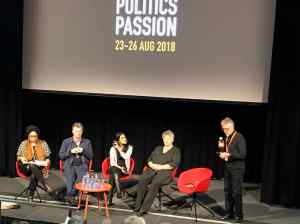
Sandra Phillips, Paul Daley, Shireen Morris, and Melissa Lucashenko

Sandra Phillips, Paul Daley, Shireen Morris, and Melissa Lucashenko

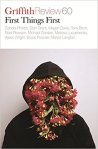
This event drew from Griffith Review’s 60th issue, titled First things first, which I referenced in my recent introductory post on this year’s festival. The event was advertised to be a panel: Dr. Sana Nakata, Shireen Morris, Paul Daley and Melissa Lucashenko moderated by Dr Sandra Phillips, but, as happened with most panels I attended, one person – here, Dr. Sana Nakata – didn’t appear. It was, however, an excellent session, albeit one which reminded us of the challenges still ahead for Australia. Given the session’s topic, the panel clarified who was (Phillips and Lucashenko) and was not (Daley and Morris) indigenous.

The Voice

Moderator Dr Sandra Phillips was also the co-editor of First things first. She introduced the participants, and briefly described the edition’s genesis in the Uluru Statement from the Heart, and the implications of then PM Turnbull’s rejection of the Voice. She then asked the participants to explain why were taking part in the panel. From there the conversation flowed somewhat organically, with Phillips injecting the odd question as needed …

Melissa Lucashenko said that when it comes to the issue of sovereignty, she’s somewhere in the middle, because she can’t claim to speak on behalf of anyone, beyond her family, until there is an elected model.

Constitutional lawyer and advisor to the Cape York Institute, Shireen Morris, described the Uluru Statement from the Heart, which resulted from an extensive consultative process, as historic. There were only 7 dissenters out of 250 delegates, albeit some dissent is good she said. The delegates coalesced around the idea of a Voice, so Turnbull’s outright rejection has been devastating.

Lucashenko was not as positive as Morris, feeling that the process had been rushed. She wasn’t convinced that the delegates had a mandate to represent all indigenous people. Here, political journalist Paul Daley, responding to her question, confirmed that our original Constitution was developed over 10 years. Phillips, however, felt that the consultation had been thorough and, further, had built on significant work preceding it (and on “the back of continuous failure to resolve things”.)

So, there was a difference of opinion about the Uluru Statement but the discussion remained completely respectful and focused on facts, on exploring ideas, and on sharing information. Lucashenko reiterated several times that she is very interested in the Voice but is concerned about what it would look like, how it would be made representative. Meanwhile, she said, she exerts her own sovereignty everyday.

Morris’ focus is constitutional reform. She strongly believes that getting something significant into the constitution is important because it’s harder to change, harder to get rid of (than something legislated, like ATSIC!) But, of course, this means that change is hard to get into the constitution too! So, the Voice needs to be in the constitution. Morris argued that the idea of a Voice can be enshrined in the constitution (via a referendum of course) with the details worked out and legislated afterwards. This is not an unusual process – but, of course, it requires trust, doesn’t it? Morris said the government should be working on the details now!

Later in the session, Morris said she’d argue that First Nations sovereignty was never ceded, and that the constitution is “squashing down” their sovereignty. Substantial constitutional reform is need to allow First Nations sovereignty to shine through, to express itself in a permanent way.

Daley commented that the Uluru Statement asks Australians to walk together “for a better future” for all, but that the immediate response of the then Deputy Prime Minister was that “that’s not gonna happen” and, of course, Turnbull dismissed the request for a Voice to considered a few months later in a press release. There was general agreement that the “whitefella political position is dire.” There was fury that ATSIC was killed off because of concerns about corruption, but the same thing doesn’t see whitefella institutions pulled down.

Truth-telling

The other important issue coming out of the Uluru statement is the need for truth-telling. The panel discussed Daley’s contribution to GR60, his truthtelling essay “Enduring traditions of Aboriginal protest” about the two indigenous men, Jimmy Clements and John Noble, who “turned up for the royal opening of the new Commonwealth Parliament building in Canberra” on 9 May 1927. Their story has never been properly told, and indeed in most reports and stories, the two men have been conflated into one. Daley sees their attendance as their assertion of Aboriginal sovereignty and as part of ongoing indigenous protest and resistance. Daley said that we have a responsibility to educate ourselves, and that the story of the frontier is there in Trove (yes!), if you want it.

Phillips added that contemporary Australian history is so short, there is no excuse for our not knowing the full story of our country. She argued that literature (meaning, I think, forms like fiction and poetry) plays a role in the truth-telling process.

At this point there was discussion of Lucashenko’s latest novel Too much lip, which Phillips said was about Aboriginal family relationships, about history and how “what happened in the past is with us today.” Lucashenko added that her characters are living in an age of depression and anxiety, but “don’t be depressed,” she said, “be angry.” She talked about the challenge of making these “hard” stories funny. For her next project, she’d like to write about colonial Brisbane. Trove – and archives in general – abound, she said, with “stories of resistance.”

Phillips added, cynically, that despite all these stories we end with lead characters in films that are Red Dogs! (Oh dear, my Red Dog post is still in my top ten posts.)

Daley talked about the novel he is writing. It’s inspired by the 1948 American-Australian Scientific Expedition to Arnhem Land, and in it he explores how the expedition was seen by indigenous and non-indigenous people. He realises it’s a cultural fraught thing to do, but he will, he assured Lucashenko, get indigenous assessment of what he’s written.

Phillips noted that there’d been millennia of successful governance in this country, and 230 years of destruction and oppression. Repairing this needs time, but we all need to be part of the dialogue. Meanwhile, she hoped, the panel had provided some illumination of the issues we are all facing. Yes, it did, I’d say.

Q&A

This is getting long, and there were quite a few questions, so I’m just going to summarise some of the main points that arose:

  • ATSIC represented a minimum model of what indigenous people want/need but she, Lucashenko, has good memories of it. It was killed off because, she said, white people don’t like indigenous people managing resources.
  • The Constitution issue is currently at a complete impasse, because our current (white) politicians appear to have no will to engage with the Uluru Statement.
  • Indigenous groups don’t need to wait for the Federal Government to act and are in fact working at local, regional and state levels to forge agreements.
  • Representation models for the Voice to Parliament could vary across the country depending on the needs and desires of different indigenous groups.

Canberra Writers Festival and the Griffith Review 60: First things first

Yesterday (9 August) was, as you probably know, the UN’s International Day of the World’s Indigenous Peoples. I had planned to get this post completed by then, but, being on the road (again), it didn’t happen. I don’t think that matters a lot, though, as we should be caring about Indigenous Peoples every day until the disparities between us are removed, n’est-ce pas?

So now, my post. The title may look a bit strange. It’s because this post was partly inspired by my wanting to mention the Canberra Writers Festival. This year is its third under its current iteration, and the theme has remained the same: Power, Politics and Passion. Now, some of us literary types, are a little disappointed by the Festival because of this focus. We want more literature, as in literary fiction, but what we get is quite  lot politics. I understand this. We are Canberra, the national capital, and this is a way of positioning our Festival as something different from others around the nation. Fair enough I suppose – it’s just not what I would prefer.

However, there are sessions that I’m very interested in, and two of these relate to indigenous Australian literature and culture. They are:

  • GR60: First Things First: A panel discussion inspired by the recent Griffith Review, the one numbered 60 and titled First Things First. It was inspired by the Uluru Statement from the Heart, and the panel comprises some of the contributors to that edition, Dr. Sana Nakata, Shireen Morris, Paul Daley and Melissa Lucashenko. It is moderated by Dr Sandra Phillips.
  • An Evening with First Nations Australia Writers: Comprises poetry readings by Ellen van Neerven, Yvette Holt, Jeanine Leane and Charmaine Papertalk Green, followed by a panel discussion titled Sovereign People – Sovereign Stories, involving Kim Scott, Melissa Lucashenko, and Alexis Wright, and moderated by Cathy Craigie.

Griffith Review No. 60Now, I’m not always very good at doing homework for writers’ festivals, but I have started reading the Griffith Review in preparation for that panel. I haven’t got very far, having only read editor Julianne Schultz’s introduction “Whispering in our hearts”, indigenous constitution lawyer Megan Davis’ piece “The long road to Uluru”, and Alexis Wright’s poem “Hey ancestor!”

For this brief introductory post, I’m just going to focus on Davis’ piece. Griffith Review’s bio for her says she is “a constitutional law professor and Pro-Vice Chancellor Indigenous at the University of NSW. In 2011 she was appointed to the Prime Minister’s Expert Panel on Recognising Aboriginal and Torres Strait Islander Peoples in the Constitution, and in 2015 she was appointed to the Referendum Council and designed the council’s deliberative constitutional dialogue process.”

This process – the First Nations Constitutional Dialogues – is the one that resulted in the Uluru Statement from the Heart. It was a rigorously defined and executed process that was, she writes, “quite different to the usual tick-the-box consultation.” It had to be, given the diversity of the groups involved, the importance of the work they were doing and the significance of the outcomes they desired – which was essentially to advise the government on a process for recognising the sovereignty of Aboriginal and Torres Strait Islander peoples in the Australian Constitution. Davis writes that

A concrete model of recognition was needed to focus the nation’s attention and move the project forward. Uluru eventually provided the model.

In this article, she describes clearly, and in detail, the recent political history of “the progress toward recognition”, and then the development of a dialogue process aimed at ensuring that the results would be valid and authentic. It involved a Civics education module, so that the participants would understand the western democratic system within which they were working. This is an important point I think. We are not talking revolution here but a willingness to work with the wider Australian people and the government to resolve the ongoing issue concerning constitutional recognition of indigenous Australians – and all that that entails.

The article is excellent, and makes some significant points, including:

  • that recognition of indigenous Australians in the constitution must be more than symbolic – it must be substantive.
  • the importance of truth and justice, of the fact that the truth must be told and understood before justice can be achieved. She reported that “There was an overwhelming view in the dialogues that a nation cannot recognise people they do not know or understand. The Aboriginal experience in Australian history is critical to recognition.” A valid point – and one on which progress is being made but not fast enough.
  • why the Voice to Parliament is so important – which includes that it “could provide a front-end political limit on the parliament’s power to make laws for Indigenous peoples.” In other words, it could head problems off at the pass, avoiding the current situation where inappropriate or ineffective or, worse, discriminatory legislation is enacted, which then costs money and time to challenge.

Indeed, in terms of priorities, she writes:

The First Nations Regional Dialogues ranked the Voice to Parliament as the primary reform priority. The next priority was treaty or agreement-making. The third was truth-telling.

How gut-wrenching then for this priority to have been dismissed so summarily by Prime Minister Turnbull, as it was within four months of the announcement. Many of us are still shaking our heads.

I could say more because this is a rich essay – but this seems to be a good point on which to finish for the moment. I’m sure I’ll be saying more after I attend the session at the end of August.

Marie Munkara, Of ashes and rivers that run to the sea (#BookReview)

Marie Munkara, Of ashes and rivers than run to the sea

The stories keep on coming, the stories, I mean, of indigenous children stolen from their families and what happened to them afterwards. I’ve posted on Carmel Bird’s compilation of stories from the Bringing them home report, The stolen children: Their stories, and also on Ali Cobby Eckermann’s memoir Too afraid to cry. Now it’s Marie Munkara’s turn with her excruciatingly honest, but also frequently laugh-out-loud-funny memoir, Of ashes and rivers that run to the sea.

Late in her memoir, Munkara learns that she was born “under a tree on the banks of the Mainoru River in Western Arnhem Land.” But, what she writes next is shocking

‘Too white,’ my Nanna Clara said as they checked me out by the camp-fire light, and everyone knew what that meant. Back in those days any coloured babies in my family were given to the crocs because dealing with these things right away saved a lot of suffering later on. It was better that we die in our own piece of country than be taken by the authorities and lost to our families forever.

Does that remind you of anything? It did me – of Toni Morrison’s novel Beloved, and the slave mother’s decision there. Anyhow, knowing what we know now about the lives of many stolen children, we can surely understand her indigenous family’s actions. Luckily, though, for Munkara – and us – Nanna Clara saw something “special” in her, and she was kept. That was in 1960. Three years later, now living on the Tiwi Islands, the inevitable happened and she was taken from home one day when her mother was at work at the mission laundry. Her mother begged for her to be returned, to no avail.

All this, however, we learn near the end of the book. Munkara starts the book when, at the age of 28 and quite by accident, she came across her baptismal card tucked in a book in her parents’ library. It told her that she was born in Mainoru in Arnhem Land. “In the space of an instant,” she writes, “excitement was replaced with mortification as old geography lessons began to resurface” about a “wild and untamed place where Aborigines hunted kangaroos and walked around butt-naked.” However, she decides to find out more, and soon discovers that her mother was still alive and still living in the Tiwi Islands. She decides to go meet her, with no advance notice.

To say that she was shocked by what she found is an understatement. “This is not the tropical island I had imagined,” she writes, “with luscious vegetation and cute little palm-frond houses. It is a dump.” She tries hard to enjoy her time there, but hates it and three days later returns home. However, it’s not long before she realises that she has to return. This ends Part 1 of the four-part book. In Part 2, she goes back in time and tells of her life as the foster child of two unhappy but highly religious people. Her mother was strict, and cruel, but her father was worse. He molested her for many years. A sad, sad upbringing but Munkara, as she admits herself, is a survivor:

But aren’t human beings amazing creatures and even at an early age we can choose to let the bad things in life devour us and we sink or we can make the most of the good bits and swim. … I chose to swim.

Part 2, then, makes for hard reading, but Munkara’s sense of humour, her ability to believe that things will work out, and her independent mind bring her, and us, through. She’s a great story-teller, which makes this section more manageable than you might expect – but it still leaves you angry!

And then we come to Part 3 in which she tells of her return to Bathurst Island. This is where the real interest of the book lies because it is here that Munkara takes us on her journey into another culture. She is us – to a degree. She has been brought up white – albeit “a dusky maiden” version – and her expectations and initial reactions are very much as ours would be. She describes how she tries to apply her whitefella ways to her new life with her Aboriginal family. She expects privacy, cleanliness, order and, most of all, respect for her possessions. None of these sit well with traditional Indigenous values as she found them on Tiwi, but she’s determined nonetheless. We can feel her horror and frustration – but she’s telling this story long after the events, and imbues them with a light touch of self-deprecation and a warmth for her family which encourages acceptance rather than judgement (in herself and us).

Some examples:

I spend the day scrubbing the kitchen and neatly place all my things by themselves on a shelf so everyone can see they belong to me, and then I have a well-earnt nap. I sleep soundly and wake up to the smells of cooking. Stretching and yawning I make my way to the kitchen to put on the billy for tea only to stop at the doorway in horror, my mouth still open from the yawn. The room in an absolute shithole of a mess. My stuff is strewn everywhere […] Everyone tiptoes around me now they know I’m in a bad mood and I’m fine with that, maybe they’ll learn not to touch things that they shouldn’t.

and

They are instantly awake when they see that I’m only dressed in my bra and underpants. Thankfully my underwear is matching…

Haha, as if they’d care! And,

… after going to the footy on the weekend with my family for protection I’ve gotten over my fear of big crowds of black people. I now feel quite foolish for thinking they could be harmful to me and reckon I must have gotten this irrational fear from my white parents.

So much of this section resonated with me because it reflected many of the things Mr Gums and I were learning and experiencing as I was reading it. I’ve already posted on the cars, but there’s also the mess, the confusing kinship (including her having to call various dogs her brother, her son, her uncle and so on), the trust in spirits, the lack of concern for possessions, all of which can result in decisions and behaviours mystifying to us whitefellas.

But Munkara also learnt more seriously confronting things, such as that her mother’s damaged leg was caused by leprosy, something she’d thought only happened in the Bible and poor countries:

I slide my ill-informed thoughts into the rubbish bin and slam the lid down tight, angry that our First World country can live in ignorant bliss of our Third World problems. … I bet there wouldn’t be too many white people afflicted with leprosy in Australia because if there were it would be front-page news.

However, while the memoir is, for us, an eye-opening, necessary journey into another culture, it is, ultimately for Munkara, a journey to her self. By the end of Part 3, she has come to a better understanding of who she is:

But they don’t realise that there is no stolen and there is no lost, there is no black and there is no white. There is just me. And I am perfect the way I am. And I know now that I have to leave this place because I’ve learnt all I can for the time being and this lesson is over now.

She only leaves as far as Darwin, however, so she can remain in contact with her family. And so it is that, late in the book, Munkara writes about her (biological) mother’s dying:

When I asked her if she had any regrets she said there were no words in any of our family languages for regret. To regret something was a waste of time so why make a word for something that you didn’t need.

Munkara’s mother’s comment that her language doesn’t have a word for “regret” encapsulates for me the value of reading this book, which is its chronicling of the meeting of two opposing cultures. I thoroughly recommend the book, because understanding what divides us is critical to reconciliation – and because it is a darned good read. She can tell a story, that one!

ANZLitLovers ILW 2018

Lisa (ANZLitLovers) has reviewed this book, as has French blogger Emma (Book around the corner) and the Resident Judge. Read for Lisa’s (ANZLitLovers) Indigenous Literature Week.

AWW Badge 2018

Marie Munkara
Of ashes and rivers that run to the sea
North Sydney: Penguin Random House, 2016
179pp. (print version)
ISBN: 9780857987280 (eBook)