Ellen van Neerven, Heat and light (Review)

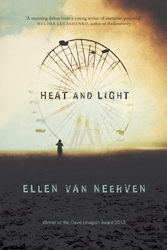
Ellen van Neerven, Heat and light, book cover

It’s silly I know, but I had a little thrill at the end of Ellen van Neerven’s Heat and light, because not only was the last story set in a place where I spent six of the formative years of my childhood – Sandgate on the northern edge of Brisbane – but one of the characters learnt to swim in the same pool there that I did, and her brother has a beagle, just as we did. Ah, childhood. Enough, though, of readerly nostalgia. Time to properly discuss the book.

Heat and light won the David Unaipon Award for Unpublished Indigenous Writer in 2013, and has been on my TBR for several months. I hadn’t prioritised it for reading, but its longlisting for the Stella Prize last week convinced me to squeeze it in before two works I had to complete by 21 and 24 February. I hope I won’t regret it. No, let me rephrase that: I know I won’t regret having read it, but I hope I don’t regret my decision to read it right now!

The first thing to say is that Heat and light isn’t a novel. It has, in fact, an intriguing form, something that’s not unusual with writers from an Indigenous background. Simplistically speaking, it comprises short stories organised into three sections titled Heat, Water and Light. However, each of these sections is quite different. Heat comprises interconnected short stories (5) about three generations of the Kresinger family, while Water is longform short fiction (54 pages in my edition) in the speculative fiction genre. Light, on the other hand, is more like a “traditional” collection of short stories (10). Together, the three sections, including the future-set Water, create a rich picture of contemporary indigenous life and concerns.

And here I confront again the challenge of being a non-Indigenous Australian reviewing a work by an Indigenous Australian featuring Indigenous people. It always makes me a little anxious: I fear sounding earnest or, worse, patronising; I fear making what’s different sound exotic; and, I fear missing the point. And yet I love reading Indigenous writers, because their perspective is different and because they (see, I’m generalising, aren’t I?) tend to be adventurous in their story-telling, often taking risks with voice, form, chronology, genre, and more. Van Neerven, as I’ve already implied, is such a writer.

The titles of the three sections – Heat, Water, Light – make me think of the elements. They are not quite the classical elements (fire, air, water, earth) but they convey, it seems to me, the essence of what’s needed for life. The focal character in Heat, though we don’t see a lot of her, is Pearl, the grandmother of the narrator of the first story which is titled, in fact, “Pearl”. Pearl is a bit of a free spirit – earthy, hot (in its sexual meaning, with “her siren eyes”), and likely to appear or disappear with the wind. Over the five stories in this section we learn about Pearl, her sister Marie, and the two succeeding generations. Van Neerven’s writing is confident, moving comfortably between first and third person narrators, all of whom are members of a complex extended family. Loyalties – to their indigenous background and to their blood relationships – are tested. As the narrator of “Pearl” says:

So much is in what we make of things. The stories we construct about our place in our families are essential to our lives.

And this is true, whether or not the stories so constructed are “true”. The implication is you need to know what you are doing. Colin, for example, finding himself, through his own actions, disconnected from his Indigenous heritage, wants to return, but

she told me if I was going to make my way home I’d better do it soon before the dust had covered my tracks.

The third section, Light, explores similar issues to those in Heat, but through ten separate stories, ranging from 2 pages to 30. The characters in both sections both move between city and country, but, while Heat is set in southeastern Queensland, the stories in Light are set in Sydney, Western Australia and Queensland. The protagonists tend to be young, and female. They also tend to be in formative stages of their lives, or at crossroads; they are sorting out their relationships, their sexuality, their identity. They confront racism and face conflict, but they also experience and give love. There’s humour, some of it wry, such as the young girl noticing that the tag on her pants states that “this colour will continue to fade”.

Water, the longform story that occupies the middle of the book, is very different. For a start, it’s set in the near future, the 2020s, when Australia is a republic with a female president. There’s a new flag and Jessica Mauboy’s song “Gotcha” is the national anthem. There’s also a social media ban! I reckon Van Neerven enjoyed imagining this. However, life isn’t perfect. Our narrator Kaden has a new job as a Cultural Liaison Officer and was initially pleased because she thought she’d be working with “other Aboriginal people” which would provide a “way of finding out about my culture and what I missed out on growing up”. But, she discovers she’ll be working with “plantpeople” who are sort of mutant plants with human features created during “islandising” experiments. Kaden’s job is to evacuate them in preparation for the Australia2 project.

I don’t want to give any more of it away, but you’ve probably guessed that it’s a story about how we treat other, about segregation, discrimination and dirty politics. It’s also about connection to country and about the importance of controlling one’s own art. Artist Hugh Ngo says:

I don’t make art for galleries. Or for money. I make art that speaks the truth.

This is a clever (and true!) book. The bookending sections Heat and Light present stories of Australian people going about their lives, and most of them happen to be indigenous. Their indigeneity is evident, and it affects the issues they confront, but there’s no specific advocacy. The middle section, on the other hand, is more overtly political. It picks up issues that appear in the shorter stories and provides a coherent, ideological context for the whole.

Heat and light is one of those really satisfying reads: it combines engaging writing with stories that make you feel you’ve got to the things that matter. So no, regardless of whether I meet my other deadlines, I’m not sorry I bumped this book up in my reading priorities.

awwchallenge2015

Ellen van Neerven
Heat and light
St Lucia: UQP, 2014
226pp.
ISBN: 9780702253218

Note: One of the stories in Light, “The Falls”, is available on-line at Kill Your Darlings
Monday musings on Australian literature: Indigenous writers recommend …

Last week, to commemorate the beginning of NAIDOC Week, I devoted Monday Musings to Anita Heiss’s series of interviews with indigenous Australian writers, In conversation with BlackWords. I said then that this week’s post would also draw from the series – and so here it is.

I’m not 100% sure of Heiss’s process, but I think she sent the same set of questions to all writers, and they answered some or all of questions as they desired. I am focusing, in this post, on one of the questions. Seventeen of the twenty writers responded to it. The question is:

What book do you think every Australian should read?

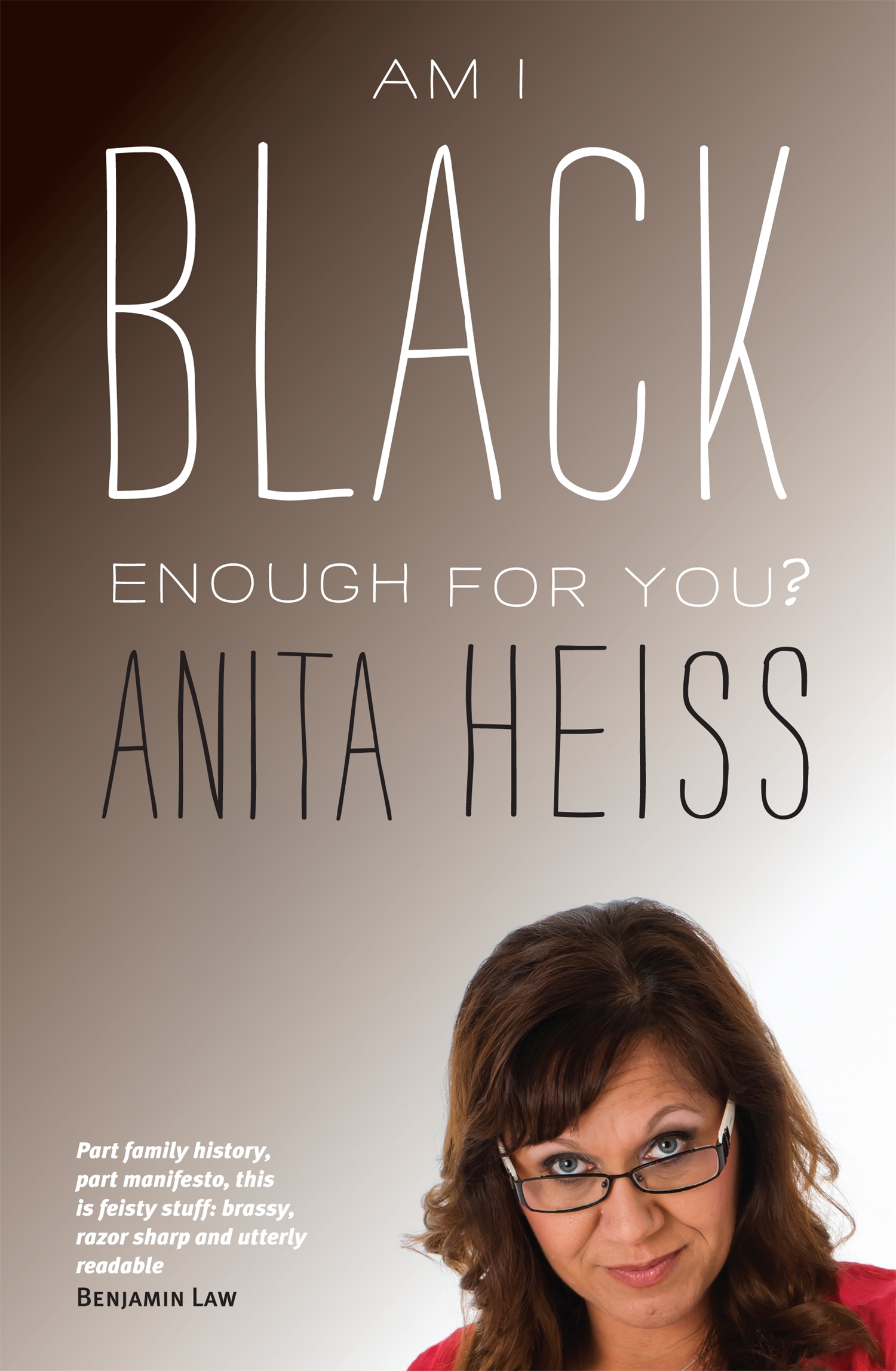
Anita Heiss, Am I black enough for you?

Courtesy: Random House

The answers are fascinating. Most, as you would expect, recommend books that would help all Australians learn and understand more about indigenous culture and history, and the books they recommend are mostly by indigenous Australians. But, the interesting thing is that there’s a lot less duplication than I expected. I like this. It suggests the existence of an active indigenous literary culture. No simple, easily defined cannon here! It provides a great list for us all to go to – both now, and when we are planning for ANZLitLovers’ 2015 Indigenous Literature Week.

Anyhow, I thought, when I decided to do this post, that I could tally up the recommendations and list them in popularity order. But, given what I actually found, I have decided instead to simply list them in alphabetical order by author/editor, with the name of the recommender/s and comments where appropriate.

  • Berendt, Larissa: HomeEllen van Neerven called this “A very important book.”
  • Carey, Peter*: True history of the Kelly GangJared Thomas said it “alerted me to class struggle – the fact that it is not only Aboriginal people who have endured persecution in this country.”
  • Chi, Jimmy: Bran Nue Dae (script). Kim Scott.
  • Eckermann, Ali Cobby and Fogarty, Lionel (eds): Southerly, Vol 71, No. 2, 2011, “A Handful of Sand: Words to the Frontline”. Lorraine McGee-Sippel described this as “An invaluable resource of Australia’s First Nations writers … Across all genres, ages and life experiences”. She believes is should be “compulsory reading … in all high schools and universities”.
  • Eckermann, Ali Cobby: Ruby MoonlightBruce Pascoe.
  • Gammage, Bill*: The biggest estate on earthKim Scott simply said “an important book”.
  • Gilbert, Kevin: Because a white man’ll never do itKerry Reed-Gilbert, his daughter.
  • Green, Evan*: Adam’s empireSue McPherson described it as “a good Aussie story. It should be made into a film.”
  • Haebich, Anna*: For Their Own GoodKim Scott said that it “focuses on south-west Western Australia, but the power relationship it articulates applies across the continent”.
  • Heiss, Anita: any book. Lionel Fogarty gave Heiss as an example in recommending “Indigenous-authored books such as those by Anita Heiss.
  • Heiss, Anita: Am I black enough for you? Jared Thomas, Bruce Pascoe (my review)
  • Heiss, Anita and Minter, Peter (eds): The Macquarie PEN Anthology of Aboriginal LiteratureKerry Reed-Gilbert.
  • Leane, Jeanine: Purple threadsMelissa Lucashenko (my review).
  • McMullen, Jeff*: any writing. Samuel Wagan Watson.
  • Maynard, John: Fight for liberty and freedom. Recommended by himself.
  • Munkara, Marie: Every secret thingBruce Pascoe (my review).
  • Papunya School with Nadia Wheatley and Ken Searle: The Papunya School Book of Country and HistoryAnita Heiss likes this because it is “accessible to all”.
  • Pascoe, Bruce: works by him. Recommended by himself.
  • Pascoe, Bruce: EarthMelissa Lucashenko.
  • Pilger, John*: A secret countryKate Howarth.
  • Reynolds, Henry*: any book. Kerry Reed-Gilbert argued that “it’s time for people to know the truth of this country”; Samuel Wagan Watson.
  • Reynolds, Henry*: Forgotten WarLorraine McGee-Sippel said that it “addresses Australia’s selective amnesia in relation to the wars fought between Traditional Owners and the Invaders. Where are our memorials?”
  • Reynolds, Henry*: This whispering in our heartsJackie Huggins.
  • Scott, Kim: Benang: From the heart. Bruce Pascoe.
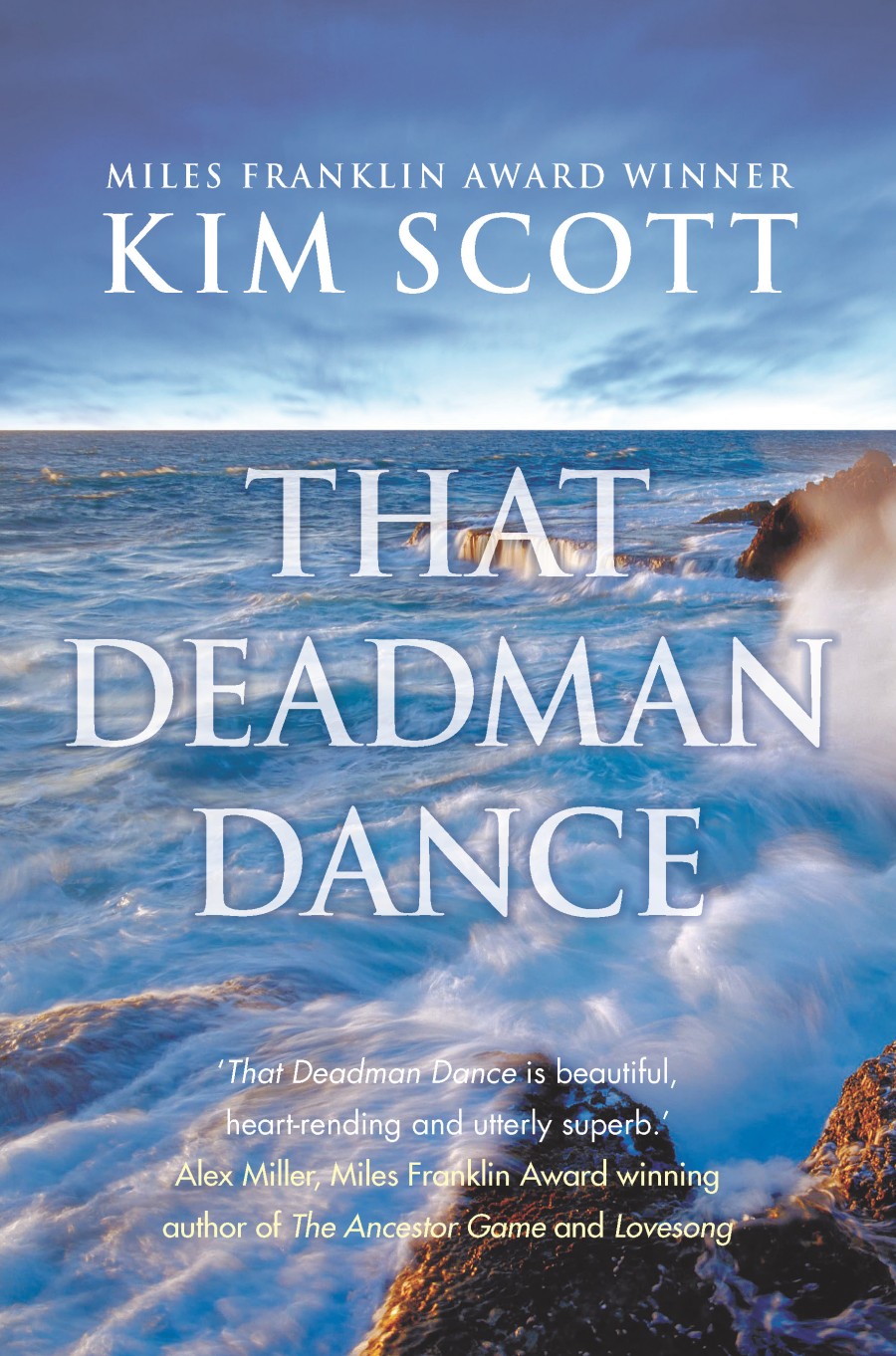
  • Scott, Kim: That deadman danceKerry Reed-Gilbert; Bruce Pascoe (my review).
  • Scott, Kim: True countryMelissa Lucashenko.
  • Thiele, Colin*: Labourers in the vineyardBruce Pascoe.
  • Weller, Archie: stories by him. Bruce Pascoe.
  • Willmot, Eric: Pemulwuy: The rainbow warriorDub Leffler.
  • Wright, Alexis: CarpentariaBruce Pascoe (my review).
  • Wright, Judith*: stories and poems by her. Bruce Pascoe.
Kim Scott also recommended that people read an anthology of writing from the region in which they live, such as Those Who Remain Will Always Remember: an Anthology of Aboriginal Writing, edited by Rosemary van den Berg, Anne Brewster and Angeline O’Neill.

Tegan Chillcott and Samuel Wagan Watson were a little wary of being prescriptive. Chillcott said, simply, ““whatever book seems most interesting to them”.  Watson, though was a little more explanatory. He said:

Every Australian?’ Hmmm … It’s hard to say, and I know mature Australians who have admitted to having never finished reading a book because literature bores them. I can’t answer that question? I’ve never watched a cricket match in my 41 years either … So I must seem weird to people who don’t pick up a book. If I was on a ‘soapbox’, I’d say any writing by Uncle Henry Reynolds or Uncle Jeff McMullen.

But some people can be turned off literature – altogether – by books that are too confronting. And that’s the delicate balance that needs to be dealt by a writer when you’re thinking about audiences. I do believe some writers have no idea that they are either not engaging with an audience or they don’t care? As a writer, on the journey of composing your work or novel or music, you need to consider your audience at every turning point. If you don’t think about the needs of your reader, you are simply writing in a very tight vacuum.

Another respondent who didn’t seem keen to name specific titles or authors was Samantha Faulkner.

Papunya School Book

(Courtesy: Allen & Unwin)

I’d like to conclude with her lovely, generous statement. She wrote:

Any book by an Aboriginal and/or Torres Strait Islander writer. Reading a book by a First Nations Australian writer will identify similarities that connect us, and bring us together, rather than divide us. After all, we live on this beautiful country together.

* Non-indigenous author

Tara June Winch, Swallow the air (Review for Indigenous Literature Week)

Tara June Winch

Tara June Winch (Courtesy: Friend of subject, via Wikipedia, using CC-BY-SA 3.0)

Tara June Winch’s Swallow the air is another book that has been languishing too long on my TBR pile, though not as long as Sara Dowse’s Schemetime. For Swallow the air, it was a case of third time lucky, because this was the third year I planned to read it for ANZLitLovers Indigenous Literature Week. Like the proverbial boomerang, it kept coming back, saying “pick me!” Finally, I did.

Winner of the 2004 David Unaipon Award for unpublished indigenous writers, Swallow the air made quite a splash when it was published in 2006, winning or being shortlisted for many of Australia’s major literary awards. (See Tara June Winch’s Wikipedia entry). I believe Winch is working on another novel, but it hasn’t appeared yet.

Now, though, to the book. The first thing to confront the reader is its form. It looks and even reads a little like a collection of short stories*, but it can be read as a novella. There is a narrative trajectory that takes us from the devastating death of narrator May Gibson’s mother, when May was around 9 years old, to when she’s around 15 years old and has made some sense of her self, her past, her people. May’s mother is Wiradjuri, her father English. At the novel’s opening, she is living in coastal Wollongong, which is not her mother’s country, in a single-parent household with her mother and her brother, Billy, who has a different and indigenous father. Absent fathers are, I should say, disproportionately common in indigenous families.

In fact, one of the impressive things about this debut novel is how subtly, but clearly, Winch weaves through it many of the issues facing indigenous people and communities. Poverty, loss of connection to country, the stolen generations, mining and land rights, alcoholism, drug addiction, racism, rape, child abuse by the church, imprisonment and the tent embassy are among the concerns she touches on during May’s journey. Listing them here makes it sound like a political “ideas” novel but, while Swallow the air is “political” in the way that most indigenous writing can’t help but be, its centre is a searching heart, for May has been cast adrift by the suicide of her mother. Life, which was tenuous anyhow, becomes impossible to hold together as her brother and aunt, both loving, struggle with their own pain.

This is where I become a little uncomfortable as a non-indigenous person making a generalisation about indigenous literature, but I’m going to do it anyhow, because I think I’m on firm ground. I’m talking about story-telling and what I understand to be its intrinsic role in indigenous culture. It imparts – or can do – a different flavour to the writing. Marie Munkara’s David Unaipon Award winning Every secret thing (my review) has some similarities in form to Swallow the air, and covers some similar thematic territory, but is very different in tone. Munkara’s novel also presents as a bunch of stories, with a uniting narrative thread. Swallow the air is more subtle, but nonetheless it’s the idea of stories that underpins the narrative.

What particularly impressed me about Winch’s writing is the way she manages tone and structures her story. She understands the Shakespearean imperative to offer some light after dark. For example, there’s a lovely little chapter/story called “Wantok” about family closeness which occurs after a story about a difficult work experience. In another situation, with just one word at the end of a story (“Mission”) – “Seemed [my emphasis] all so perfect, so right” – she prepares us for the opposite in the next (“Country”).

This flow – with shifts in tone that are sometimes subtle, sometimes dramatic, and with a narrative that is mostly linear but with the occasional flashback – kept me reading and engaged until the end. As did the writing itself. It’s deliciously poetic. Sometimes it is tight and spare, as in:

I do not cry, my eyes are hardened, like honey-comb, like toffee. Brittle, crumbling sugar. He puts his hand out toward me; we shake hands, a pact that I won’t be here digging up his past when he gets back.

And I’m not.

And in this description of life in the city: “Suits and handbags begin to fill the emptiness of the morning”. Other times it is gorgeously lyrical (a review buzz word, I know, but sometimes there’s no other word):

The river sleeps, nascent of limpid green, tree bones of spirit people, arms stretched out and screaming. And at their fingertips claws of blue bonnets, sulphur-crested cockatoos and the erratic dips and weaves of wild galahs, grapefruit pink and ghost grey splash the sky.

But back now to the story. As May makes her journey, we meet many characters – her brother, aunt, women like Joyce who care for her but also know when to push her on, men with whom she hitchhikes, to name a few. None of these characters are developed to any degree, but we learn what we need to know about them by how they relate to May. Most are kind, generous, nurturing. May’s journey, in other words, is not challenged so much by human barriers, but by emotional, social, political and historical ones. It is a generous thing that when she starts to understand her place, it’s an inclusive understanding, one that encompasses all of us who occupy this land:

And it all makes sense to me now. Issy’s drawing in the sand, boundaries between the land and the water, us, we come from the sky and the earth and we go back to the sky and the earth. This land is belonging, all of it for all of us.

However, while May comes to a better understanding of the land and her relationship to it, there is no easy resolution to the ongoing struggle of living in a place in which there is still “a big missing hole” created by the loss of connection to culture. It will take a long time to refill that hole, if indeed it can be done, but books like this will help communicate just what it means, and how it feels, to be so disconnected.

awwchallenge2014Tara June Winch
Swallow the air
St Lucia: UQP, 2006
198pp.
ISBN: 9780702235214

* One chapter/story, “Cloud busting” was published in Best Australian Stories 2005.

Monday musings on Australian literature: In conversation with Black Words

Today* marks the first day of NAIDOC Week 2014, which will run through to July 13. In honour of this, and of Lisa’s Indigenous Literature Week at ANZLitLovers, I thought I’d devote this week’s Monday Musings to indigenous Australian writers – and specifically to Anita Heiss’s “In conversation with Blackwords” series.

This series is described on the AustLit website as follows:

In late 2013 Dr Anita Heiss sent a series of questions to contemporary Aboriginal and Torres Strait Islander writers. The responses she received are at times funny, sad, moving, and always deeply insightful. Universally an important piece of advice was to ‘Read, read, read’ if you want to write. As an ambassador for the Indigenous Literacy Foundation, Anita was very happy to see that advice coming from some of Australia’s most admired and read authors.

As far as I can understand from the website, some 20 interviews were gathered, and posted on the site between November 2013 and May 2014. The last interview (to date anyhow) is with Heiss herself. The writers interviewed include some well-known to me like Melissa Lucashenko, Kim Scott, and Bruce Pascoe, and some I’m not at all familiar with like Dub Leffler and Sue McPherson. Heiss starts by asking them about their mob and where they are from, and then asks them about their writing and their reading – about, in other words, all those things other readers and writers love to know.

I haven’t read all the interviews, as they are pretty extensive, but have at least dipped into most, and will read more in the coming days. Here, in no particular order, are some of the things they say:

Samuel Wagan Watson (internationally recognised poet and storyteller) said this in response to “what makes a good writer”:

As far as what makes a ‘good writer’ … I don’t know? I’m an ‘established writer’ yet I wouldn’t consider myself a ‘good’ writer. Should we define a ‘good writer’ as someone who publishes a novel every year or an artist who simply falls in love with language and is a skilled technician who writes a sentence now and then that simply smokes with pearly-wings of an epiphany in the midst of your mind’s eye?

Anyone who can write “smokes with pearly-wings of an epiphany in the midst of your mind’s eye” must surely make some claim to being a good writer?

Kim Scott That Deadman Dance

(Courtesy Picador Australia)

Kim Scott (author of That deadman dance, among other things) said this about his aims as a writer:

To reach and connect. To provoke, sometimes. To transform, if only a little. As Elizabeth Jolley said, to provide ‘places where people may meet’.

To touch on greater truths. Language and stories shape the world; I sometimes want to flex and remake it again.

He’s won me over, first, by referring to one of my favourite writers, Elizabeth Jolley. But, I also like his desire to “touch on greater truths”. It’s not surprising that an indigenous writer might also want to “flex and remake” the world.

Ali Cobby Eckermann (poet, and author of Ruby Moonlight) offered this advice to writers:

My advice is to be creative! Turn the telly off and be creative. A half an hour each day has the capacity to achieve remarkable results. Be relentless, and find happiness in honouring your story, the legacy of your cultural knowledge.

Being creative, I think, is easier said than done, but I do love her suggestion to “find happiness in honouring your story”.

Ellen van Neerven (winner of David Unaipon Award in 2013) is a writer I hadn’t heard of before. She said in answer to “who do you write for?”:

Sometimes I could be writing for my younger self. I want people to feel less alone. I want people to feel less confused.

Now, that’s an answer from the heart.

Bruce Pascoe (writer of fiction, non-fiction and YA fiction). I had to finish with Pascoe’s response to the question about his writing process:

Get up, go into room and work arse off. Break for lunch, tour of vegetable garden, back into room. In good weather I write down by the river, especially if it’s a job I’m writing longhand. In my room I’ve got a growing gallery of dead Black friends to watch over me and all the birds who come to the door and want to know if it’s ok if they tell me a story. The Willy Wagtail is good but the Scrubwren is profound, the Powerful Owl haunting, the pelican a bit superior on occasions and the cormorants are always good for a laugh. I get a hell of a lot of story from birds and animals.

With such an imagination, you can sure see why he’s a prolific writer.

I plan a follow-up post on this series of conversations for next week’s Monday Musings to conclude NAIDOC Week.

* Hmm … just realised today is 7 July! NAIDOC Week started officially on 6 July!

Winter Solstice: New Lights and Dark Chords

While Hobartians are enjoying a full-on festival – Dark Mofo – to celebrate the Winter Solstice, we here in the national capital have had our little celebration. Or, at least, Mr Gums and I attended one. There might be others going on that I know nothing about.

Winter Solstice: New Lights and Dark Chords was, hmmm, what exactly was it? Well, it was a program inspired by the solstice that combined story, poetry, astronomy and music to explore our responses to light and darkness. It was held at the National Library of Australia. Their promotion described it as follows:

White like black, like light and like darkness, connect literature, music, art, spirituality and science. Cultures around the world have been observing the winter solstice for thousands of years. Join us to celebrate the universal wonders of light and dark and their resonances through contemporary art, music and poetry …

That’s pretty much what it was … and this is how it went.

We arrived and entered the atmospherically darkened theatre before start time to find flautist Kiri Sollis and harpist Laura Tanata of the Griffyn Ensemble playing the opening movements of Polish composer Henryk Górecki’s moody, atmospheric Good Night (which I have heard them perform before). It was a moving opening, spoiled only by two women talking rather loudly, completely oblivious it seemed to the quiet, expressive performance going on in front of them.

The program then officially opened with a video “welcome to country” from Paul House. It was a longer “welcome” than we usually hear but I appreciated the exhortation for us to follow the law of the country which includes to “honour all people and parts of country, respect everything living and growing”. Should be simple, eh?

This was followed by our MC for the evening, actor Rhys Muldoon, reading a brief poem titled “Sunset” written by John Kinsella for the Luminous World exhibition currently running at the Library. Muldoon then introduced us to the aforementioned Paul House who told us the local indigenous story of the Seven Ice Maidens who, he said, are also known as Pleiades. It’s a creation story about ice and snow that integrated perfectly with the program and marked, I think, an important step on our reconciliation journey, at least in terms of my experience of such events.

House was followed by Helen Carroll, the curator of the “Luminous World – Contemporary art from the Wesfarmers Collection” exhibition currently at the National Library. Wesfarmers is a Western Australian corporation that has been collecting Australian (and now New Zealand) art for over three decades. Luminous World is a travelling exhibition of photos, painting and sculpture that has been formed around one idea – light. Carroll then showed several of her favourite pieces from the collection – such as David Stephenson’s intriguing “Star Drawing” photos, Gretchen Albrecht’s abstract expressionist “Sherbert Sky”, Howard Taylor’s austere “Bushfire Sun”, and Rosalie Gascoigne’s dramatic “Hung Fire”. Another was indigenous artist Timothy Cook’s yam dreaming painting “Kulama”. What did that have to do with the theme I wondered? But Carroll explained that it depicts the orange light around the moon which indicates that the yams are ready to eat. Carroll ended with two beautiful photographs by Bill Henson, the last being of Sardinia which perfectly conveyed, she said, “the poetry of light”. You can check out the exhibition online. Fremantle Press has produced a book of the exhibition, which includes the art works, essays and John Kinsella’s poetry.

AnalemmaJailbird

Analemma pattern in the sky (Courtesy: jailbird, using CC-BY-SA-2.0-de, via Wikipedia)

Next up was probably for me the most surprising – as in surprisingly interesting – part of the evening, astronomer and photographer David Malin who presented a talk titled “Casting light on the solstice: the stars as clock, calendar and compass”. I say surprising because I find astronomy beautiful but, like geology, mind-boggling.  Malin explained the science of the “solstice” and introduced me to the concept of the “analemma“, which is most commonly used for the curve that describes the Sun’s apparent motion, observed from a fixed position on the Earth (Wikipedia). He accompanied his talk with the first successful photo of an analemma taken by Dennis Di Cicco in 1978/9. I found it all beautiful and fascinating. Of course, this may not be new to you all, but for me it was a case of “you learn something new every day”!

Malin’s talk was followed by the Griffyn Ensemble performing the last movement of “Good Night”, with soprano Susan Ellis and the rest of the ensemble on percussion joining Kiri and Laura. You can hear another version of this piece, with piano instead of harp, online.

Muldoon returned with another poem by Kinsella, titled “The Universe”. I loved the line “When we are made, unmade, remade” for reminding us that we and the universe are never static. He then concluded the program with a well-known but apposite quote by Elizabeth Kübler-Ross:

People are like stained-glass windows. They sparkle and shine when the sun is out, but when the darkness sets in, their true beauty is revealed only if there is a light from within.

It was the perfect end to an enjoyably varied and nicely structured program – except that wasn’t quite the end, because we all filed out of the theatre and up to the National Library’s foyer, with its famous stained-glass windows, to partake of canapés and a choice of drinks, including ice wine*, mulled wine, hot apple cider. We went home warmed and enlightened!

* Coincidentally, I only discovered ice wine last month when we visited Canada’s best-known producer of ice wine, Pillitteri Estates Winery.

On Howard Goldenberg writing about indigenous matters

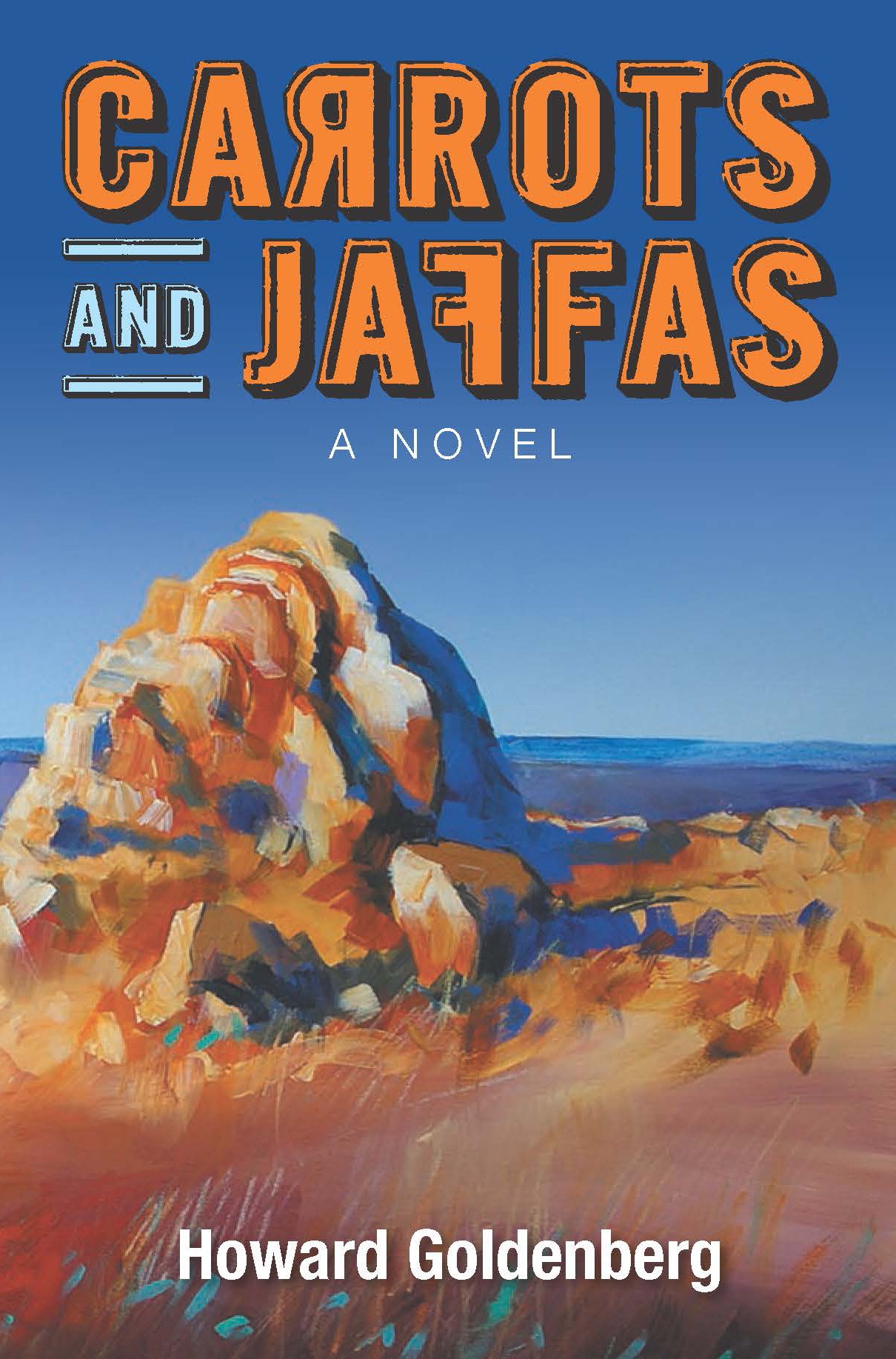
Howard Goldenberg, Carrots and Jaffas

Courtesy: Hybrid Publishing

It’s funny how reviews go, at least how mine go anyhow. They sometimes head me off in a direction quite different to the one I started and I feel powerless* to change it. That happened with my recent review of Howard Goldenberg’s novel, Carrots and Jaffas. I started by mentioning the issue of white writers writing on black subjects but ended up focusing on the main issue in the novel that grabbed me – suffering and loss. But this is where it’s great to be a blogger: I can just write another post. I am my own boss after all! Consequently, in this post I plan to return to that opening point and discuss how Goldenberg writes about indigenous issues. I’m a bit anxious about it, however, as here I am, a white blogger writing about a white writer writing about black subjects. How far removed is that? You must read, therefore, what I say from that point of view – a non-expert who thinks the issue needs to be kept on the table.

Goldenberg has tried a tricky thing. He has taken the issue of the stolen generations and spread it out in a few directions. He’s taken the universal issue of traumatic, sudden loss (of children, siblings, parents), which is what I focused on in my review, and used it to provide readers with an entrée into the very particular loss experienced by those affected by the stolen generations policy. He has revolved his plot around the abduction of a white child to provide a parallel with the large-scale abduction of indigenous children. And he has placed the abducted child in an indigenous setting, enabling him to explore different responses to land or country, which is what I want to discuss here.

Three of the book’s characters are significant to this aspect of the novel. Goldenberg takes pains early in the novel to individuate the twins, describing Jaffas as interested in music, dance, beauty, as an “infant aesthete”, while Carrots is active, “exuberantly physical”. It is Jaffas who is abducted, the one more likely to be responsive to what Goldenberg has planned for him! Then there’s the indigenous woman, Greta. Goldenberg introduces us to her before she meets Jaffas, establishing her as a nurturing woman. She has brought a very sick baby, her great-niece, to see Doc, our third character. He observes her with the baby, noticing that she “crooned soft words in language, words to hold her safe”. As for Doc, we meet him just before we meet Greta. He too has suffered a loss, when his loved young sister was taken overseas by his father as the result of divorce. He’s been researching bowel infections for decades and has now gone bush to help prevent Aboriginal babies dying from diseases like dysentery.

Through these three characters, Goldenberg explores different ways of relating to our land, specifically in this case, the rock country of the Flinders Ranges:

The doctor set out early. The sun blessed its morning favourites – western peaks, taller treetops, selected folds of hill. Here and there, narrow beams probed gaps in the ranges and dowered the lower slopes with gold.
Greta shows Jaffas how to make fire, and catch goannas. She teaches him about her Dreaming by telling stories that were passed down to her:
Warraiti, you call him emu, you know? Very strong spirit. Warraiti, he the Law Man. He protect the Law. Plenty mob – blackfella mob, whitefella mob – eat warraiti, but not me. Never me. Warraiti, he my dreaming, my father …

Doc tells Jaffas that he is in the Flinders “to learn the stories of this country”. His perspective is broad. There is, he says, only one story, which is: “Where do we come from? What are we? Where are we going?” And so, over the two months that Jaffas spends with Greta and Doc, he learns their stories. Greta tells him about her country, about how to live in it and how to relate to it, while Doc tells him his stories. He talks of fossils, telling Jaffas that “it’s a story of ‘Where do we come from?'” He tells him about the geology – about the hills that are older than time – and about the first people, the Adnyamathanha, who lived off the land for thousands of years. And he tells him that the new people, the settlers, have stories too. At times, it verges on the didactic, but then Doc is “teaching” Jaffas, and Goldenberg’s hand is light, so it works.

Jaffas, for his part, absorbs what he is told, and wants to share what he has learnt. He “needs Carrots to understand the important things”. He wants Carrots to hear Greta’s stories, and the Doc’s “many stories that are one great story”.

So, what is Goldenberg doing here? Well, he is writing a story about stories – about sharing stories with each other, about respecting each other’s stories, and, most importantly, about the role stories can play in healing the division between indigenous and non-indigenous cultures in Australia.

Carrots and Jaffas has several themes, but is, essentially, a modern story of abduction that conveys truths about the stolen generations, and about the wrongs, in general, done to indigenous people. It’s not, however, admonitory in tone. Instead, Goldenberg offers a prescription for healing. To do this, he has presumed to “speak” through an indigenous character (not to mention through white children, an immigrant woman and white men). I believe he has done it with respect and on the basis of personal knowledge. I found it honest and effective. I look forward to hearing what others say.

* Of course I have the power, but often I like the way I’m going while mourning the way I’ve left!

Howard Goldenberg, Carrots and Jaffas (Review)

Howard Goldenberg, Carrots and Jaffas

Courtesy: Hybrid Publishers

Howard Goldenberg, we are told in “About the Author” at the back of his debut novel Carrots and Jaffas, is the sole practitioner of a literary genre – the rhyming medical referral letter! Wouldn’t I love to see some of those! Anyhow, you’ve probably guessed now that Goldenberg is a doctor, and you’d be right. But he’s a doctor with some very specific experience. Earlier this year I wrote about white writers writing on indigenous subjects. It resulted in quite a discussion. While the overall opinion was that there should be no taboos in subject matter for writers, we agreed that such writing is most effective when done from a standpoint of knowledge (and, it goes without saying, sensitivity). Howard Goldenberg, whose novel Carrots and Jaffas I’ve just completed, has such knowledge*, as he has and still does practise for part of his time in outback Aboriginal communities. Beats me how he could also find time to write a novel, but like all passionate writers, he has!

I hadn’t heard of Howard Goldenberg before, but apparently he was featured in one of the sessions at this year’s inaugural Melbourne Jewish Writers festival, about which (the festival, not Goldenberg) Lisa (ANZLitLovers) and Jenny (Seraglio) have posted on their blogs. Goldenberg writes on his blog of his session with Martin Flanagan. He says that Flanagan “led a conversation about the book, about my choice to turn from serious non-fiction to the novel, about stolen children – the ultimate wound, about twinness, about the problems and pitfalls of the whitefella writing about blackfellas.” Oh, wouldn’t I have loved to have been there!

This novel, Carrots and Jaffas, is pretty ambitious. It covers a lot of ground, asking us to make the right connections between different experiences of suffering and loss. It uses parallel stories and a frequently shifting narrative perspective to do this. It has the odd awkward moment – a coincidence pushed a little far, an irony that doesn’t quite ring true, an earnestness that gets in the way – but these are minor in a story that totally got me in from the first page. Goldenberg has written two works of non-fiction – a memoir about his father, My father’s compass, and a book of stories about his experiences as a doctor in outback Aboriginal communities, Raft. These non-fiction works have clearly honed his narrative skills.

The main action of the novel occurs around 2004, with the setting split between suburban Melbourne and the Flinders Ranges in South Australia, in Adnyamathanha country. The plot starts with the abduction of 9 year-old Jaffas, one of identical twins, by an ex-drug addict, ex-con, who plans to deliver him to an old indigenous woman, Greta, who had two sons stolen from her in the 1960s. Clean now, but with a brain damaged by PCP, he (Jimmy aka Wilbur) sees himself as Golem or the Redeemer. He is going to right a wrong. He planned to take the two boys but it goes wrong and he ends up with just Jaffas, leaving behind a distraught Carrots. The story then flashes back to the story of how Carrots and Jaffas came to be, to the meeting and subsequent marriage of their parents, Bernard, an IT specialist who had lost his father when young, and Luisa, an immigrant from Buenes Aires who, we gradually learn, had suffered significant trauma and loss in her youth. Later, we meet Doc who works in the Flinders Ranges, but who has experienced a loss of his own, a sibling through divorce.

From here the story alternates between Carrots at home, and Jaffas in the outback in a neighbouring state. As Carrots starts to fall apart, Jaffas, who was threatened with the death of his twin if he tells, is introduced to indigenous culture. He is not happy, is biding his time for an opportunity to go home, but in the meantime, over a period of a couple of months, he starts to hear different stories about life – indigenous ones from Greta and scientific ones from Doc – and learns another way of living. I will leave the story at this point … except to say that there is drama alongside reflection. It’s quite a page turner, in its quiet way!

There is humour here, despite the serious subject matter. I particularly loved the chapter on the kindergarten fancy dress parade. It brought back such memories. Even in this lighthearted scene, though, there’s seriousness. One child is particularly diminutive, and Goldenberg writes:

No one in his class considered him abnormal. But already behind him, forever past, were the years of parity with his classmates. This would be his last year of unselfconsciousness, the last year before he entered the big school, where bigger kids would be free with unkind comparisons. Luisa gazed at him, concerned; she realised the child did not suffer from dwarfism – not yet.

Oh, the power of labels!

The characters are engaging, each clearly individualised – from Luisa’s bible-learnt English and understandable fearfulness to Greta’s confident, nurturing nature, from Bernard’s practical approach to life to the Doc’s passionate if somewhat eccentric one.

There are many losses explored in this novel – parents “lose” children, and children their parents, siblings lose siblings – and they are mostly needless, human-induced. Goldenberg examines what happens to the soul, the spirit, when it experiences such pain. Not everyone responds in the same way – some start to disintegrate, some go into problem-solving mode, others respond with increased generosity of spirit – but all suffer.

Carrots writes letters that he clearly can’t send to the abducted Jaffas. In one of them he writes “I am not me without you”. They are of course twins, but most people, Goldenberg shows, are irrevocably changed when they experience loss. For all this, the novel is redemptive. I’d love to know how indigenous people respond to the novel but, for me, it’s a novel written with love from the heart. I enjoyed it.

Howard Goldenberg
Carrots and Jaffas
Melbourne: Hybrid Publishers, 2014
242pp.
ISBN: 9781925000122

(Review copy courtesy Hybrid Publishers)

* Read, for example, his powerful, heartfelt blog post on the current Budget recommendations regarding co-payment for medical treatment.

Neomad: A Yijala Yala Project

First up, I have to admit that I’m rather challenged when it comes to e-book apps. I did love The Wasteland app which I reviewed a couple of years ago, but it was clearly designed for a, let us say, more staid demographic. Neomad, “a futuristic fantasy” in three episodes, is another matter. Consequently, my aim here is less to review it as a work and more to talk about what seems to be an exciting collaborative project involving 30 young people from Roebourne in the Pilbara, comic artist Sutu and filmmaker Benjamin Dukroz.

We hear so much negativity about indigenous communities in outback Australia that it’s easy to feel the situation is hopeless. However, while we should not forget for a minute that the situation for many indigenous Australians is still dire, things are happening. Not enough, but nonetheless something, and these things can surely be seen as models for further action.

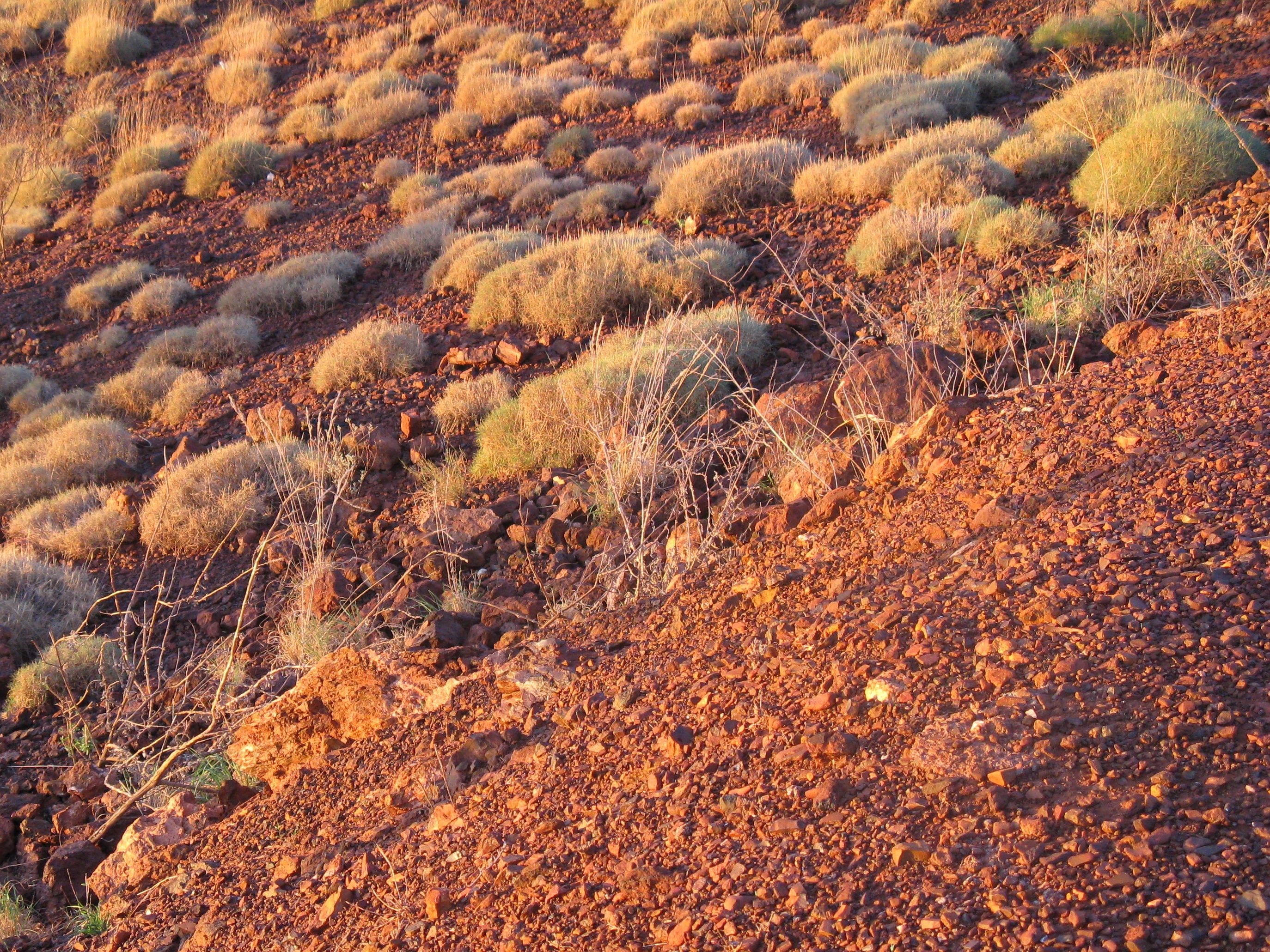
Pilbara landscape, Newman, WA

Pilbara landscape, Newman, WA

So, back to Neomad. Produced as part of the Yijala Yala Project, it’s currently available free from iTunes (or the Apple App store), so I decided to have a look. It’s colourful and infectious. The Facebook site calls it “an interactive digital comic”. Late last year it won Best Game – Multimedia Production in the 2013 ATOM (Association of Teachers of Media) Awards. So what is it? A game? A book? What’s in a name did I hear you say? Fair enough. Let’s not get bogged down in categorisation right now, except to say that it’s an example of what is apparently being described as “interactive fiction”.

Ignoring the categorisation issue, though, the ATOM site is useful for the neat little summary it provides of the story:

Set over three episodes, NEOMAD follows the story of the Love Punks and Satellite Sisters, techno savvy young heroes from a futuristic Roebourne in the Pilbara region of WA, who speed through the desert full of spy bots, magic crystals and fallen rocket boosters branded with a mysterious petroglyph.

The app itself says it is “based on real characters, places and stories that connect people to their country”. This becomes evident when you click “Play” on the Home page, as it starts with a lovely live-action sequence set somewhere in the Pilbara, involving a group of indigenous boys. They are the Love Punks and they feature in Episode 1. They tell us “When you see a star fall at night be sure to welcome it to the land for the star brings new life”. The story is set in 2076 and sees the Love Punks chasing a space robot (oops, space bot) across the sky, only to find, when it crashes to earth, that it bears the image of an ancient petroglyph. What does this mean? Episode 2 begins with quite a different live-action sequence involving indigenous girls, The Satellite Sisters, learning about the importance of their ancestors. Like Episode 1, this sequence progresses into an animated comic, which you can read as text or click on the speech bubbles to hear the characters speak the words.

As an interactive-game-challenged person I wasn’t always sure how much was on each “page”. For example, on some pages extra “things” pop up when you tap to “turn” the page. I presume that you can’t miss anything important, that no matter where or how often you tap or swipe, the app won’t take you to the next “page” until you’ve seen everything on the current page. However, I did find it disconcerting, as pages vary in layout so you never know what might be there behind the clicks! I expect this is not a problem for the people to whom the app is targeted though!

There’s an Extras section, comprising short live-action movies providing background to the project. We hear the kids talk about the meaning – one Satellite Sister tell us “that film is about the Satellite Sisters looking after the country” – and the process, such as how they learnt to use PhotoShop to colour the animation. There is also a “junk percussion” music video in which the Love Punks perform music using found objects such as corrugated iron, old drums and metal bars. I love it!

What is exciting about this project is that, amongst all the glitz and colour, it reaffirms the importance of country. As the name – Neo (new) Mad (nomad) – suggests, it marries respect for tradition with acceptance of change, looking for the points where they coincide:

“You boys need to respect these men and their robots. They’re all part of our community and they’re all looking after our ngurr, our country.”

“Sorry Nanna Tootie.”

This is kids telling a story in their language for other kids – and it is good fun. If you have young children around – and even if you don’t – do check it out. Meanwhile, thanks to E. Teacherlord, as our daughter calls her brother, for introducing me to the Love Punks and Satellite Sisters.

Margaret Merrilees, The first week (Review)

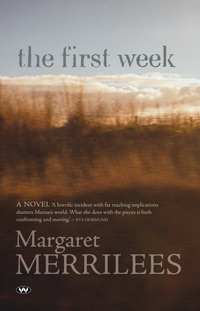
Margaret Merrilees, The first week

Courtesy: Wakefield Press

Having discussed in this week’s Monday Musings Margaret Merrilees’ essay on white authors writing about indigenous Australians, I’m now getting to my promised review of her debut novel, The first week, in which she does just this. It also, according to Wakefield Press’s media release, won the Adelaide Festival’s Unpublished Manuscript Award in 2012. I can see why it did.

The plot is simple. It chronicles the first week in the life of Marian, after she hears shocking news about something her adult son Charlie has done, news that would chill the heart of any parent. Marian is a middle-aged, widowed countrywoman who jointly manages a farm with her oldest son, Brian. She holds the conservative views that would be typical of her demographic. The setting is south-west Western Australia, the Noongar country of Australian author Kim Scott whose That deadman dance (my review) tells of early contact in that very region, but Marian understands little of that. She’s about to learn though, because, standing at a fence that she used to clamber through, she realises

… it was different now. There was a claim on it. This fence, a fence she’s ignored for years, had taken on new meaning. Where she stood was her land. The other side was theirs. Someone’s. Those Noongars from town.

What would they do with it? Any more clearing would be a disaster. The salt was already bad down there.

This comes early on day one, Monday, before she hears the news about Charlie, but already Merrilees has introduced us to Marian, the land she works and her attitudes. She clearly has little respect for “those Noongars from town” and yet she knows the land has been damaged. Merrilees also describes other aspects of Margaret’s life that will help inform our understanding of the week to come – guns, the family’s dynamics including her relationship with her troubled late husband, a dependence on a more savvy friend. It’s all lightly, naturally done through a well controlled third person voice.

By day two, Tuesday, Marian is in Perth, where the first order of the day is to attend Charlie’s arraignment in court. Here she meets Charlie’s housemates and is invited to their home to talk about what has happened – and there she meets Charlie’s neighbour and friend, the indigenous woman, Lee. In addition to the reference to “those Noongars” on Monday, Merrilees leads us up to this meeting with other suggestions of Marian’s prejudiced attitudes to “other” (to Asians and Aboriginal Australians). Needless to say, her meeting with the educated, political Lee does not go well.

This is where Merrilees confronts the issue she addresses in her essay, because for Marian to develop she needs to hear from indigenous characters. Marian meets Lee cold, that is, she doesn’t know Lee is indigenous: “No one had mentioned that. They wouldn’t think it mattered, probably. But it did.” Lee tells her about the Reserve in her region, about the treatment of indigenous people there and in the town. Marian doesn’t want to know – or believe – what she hears. She uses those patronising words “you people” and leaves in rancour. However, she is a woman still in shock and, knowing that all this has something to do with Charlie’s actions, her better self starts to realise that “she had to know whatever there was to know”. She reads Lee’s paper, attends Lee’s talk, and converses again with Lee. Lee is presented as fair but determined. She doesn’t go easy because Marian’s in pain, and when Marian admits that Lee has made her think, and that she’s ready to learn, Lee tells her:

Then you owe me … I won’t forget. Salvation doesn’t come cheap.

To my white Australian mind, Merrilees handles her indigenous characters well. They ring true to what my experience and reading tell me, but, as Merrilees also says in her essay, “it is not for a white writer or critic to decide what is appropriate.” I would love to know what indigenous readers think.

And this segues nicely to what I most enjoyed about the book – its humanity and lack of judgement. Merrilees lets her characters be themselves, warts and all. Lee, for example, is rather fierce but open to discussion and sad about the direction Charlie took. Marian is conservative, in great pain and feeling a failure as a mother, but is open to change. I particularly liked the way Merrilees captured the physicality of Marian’s pain – she can’t eat, or sleep, or remember her son’s phone number, her chest tightens, her heart races. From my own experience of an awful shock, I related to the point where she really has to face her changed circumstance:

Getting out of the car and leaving it behind suddenly seemed difficult. Her last tie with home and normal.

If my review has seemed a little vague about detail, that’s partly because the book is too. There’s a lot we aren’t told about what exactly happened, about why Charlie did what he did, but that’s because he is not the book’s main subject. Early in my reading, I was reminded of Lionel Shriver’s We need to talk about Kevin. This, though, is a different book. Yes, both books are about a mother and a terrible act by a son, but Merilees’ compass is broader. It’s both personal and political. And so, on the personal level, Marian realises that she can – she will – survive. But it’s the political lesson that is dearest, I think, to Merrilees’ heart, and it is simply this, “that she, Marian, was ready to listen” to Lee’s story, to listen to it “wherever and in whatever way” suits Lee. The first week is a compelling read with, dare I say it, an important message. I hope it gets out there.

Lisa (ANZLitLovers) also recommends this debut.

awwchallenge2014Margaret Merrilees
The first week
Kent Town: Wakefield Press, 2013
225pp.
ISBN: 9781743052471

(Review copy supplied by Wakefield Press)

Monday musings on Australian literature: White writers on Indigenous Australians

Over the years I’ve read many books written by white Australian writers on indigenous Australians*, including Mrs Aeneas Gunn’s We of the Never Never, Nene Gare’s The fringe dwellersThomas Keneally’s The chant of Jimmie Blacksmith, Kate Grenville’s The secret river, Peter Temple’s The broken shoreand several books by Thea Astley. Later this week I’ll be reviewing another, Margaret Merrilees’ debut novel The first week. I avoid reading reviews of books before I write my own, but I did want to find out about Merrilees, who is new to me. My research uncovered an essay written by her in 2007 titled Tiptoeing through the spinifex: White representations of Aboriginal characters.

In it, as the title implies, Merrilees tackles the dilemma faced by white writers in Australia:

To write about Australia, particularly rural Australia, without mentioning the Aboriginal presence (current or historical) is to distort reality, to perpetuate the terra nullius lie. However, for a non-Aboriginal writer to write about Aboriginal people is to run the risk of “appropriating” Aboriginal experience; speaking on behalf of … There’s been too much of that already.

I don’t think this dilemma is confined to writers, but writers occupy a particularly visible and influential position which heightens the challenge for them. Thomas Keneally has said that if he wrote his 1972-published The chant of Jimmie Blacksmith today he would not write in the voice of Blacksmith but from a white perspective, because “the two cultures are so different in their maps of the world that it was reckless to do it”’. Kate Grenville, whose The secret river was published in 2005, wrote in Searching for The secret river that:

I’d always known that I wasn’t going to try to enter the consciousness of the Aboriginal characters. I didn’t know or understand enough – and felt I never would. They – like everything else – would be seen through Thornhill’s eyes.

Fair enough. However, as Merrilees realises, it’s not always that simple. She looks broadly at the history of white representation of indigenous Australians in literature, suggesting it has often been well-intentioned but fraught nonetheless. She “listens” to what indigenous writers such as Jackie Huggins, Melissa Lucashenko and Kenny Laughton have said about “whites writing on blacks” and the resultant distortions and misconstructions. She explores some examples of fraud and theft of indigenous stories and culture by white Australians, such as Elizabeth Durack painting as Eddie Burrup and Patricia Wrightson using Aboriginal mythology. And she discusses the dangers of the opposite of appropriation, that is, the complete absence of indigenous people. She recognises that the situation hasn’t been helped by the paucity of indigenous writers, although this has started to slowly improve in recent decades.

So what are white Australian writers to do? Merrilees argues that

a novel which attempts to capture the Australian consciousness, and in particular a novel with a rural setting, or in which landscape plays a part, is impoverished if it does not address in some way the question past and current Aboriginal presence.

The question is how to do this. Taking herself as an example, Merrilees suggests that while she would decide not to write in the voice of an Aboriginal character, she wouldn’t want Aboriginal people to be silent. However, as soon as she made her indigenous characters speak, she writes, she’d be “tramping about” inside their heads “even though I said I wasn’t going to. A character who speaks is generally doing so in first person. So speech is just a form of first-person narrative after all … How am I going to explain this to all those Aboriginal writers who don’t want me speaking for them?”

Australian academics Kenneth Gelder and Jane Jacobs, she says, state that appropriation is implicit in fiction. If we accept this, we are then confronted with assessing the authenticity of the representation, but this raises more questions:

In the present political climate it is not for a white writer or critic to decide what is appropriate. Only Aboriginal people can decide. And of course, there is never going to be a unified Aboriginal view, any more than there is a unified white view. There is no such entity as “the Aboriginal people” to provide answers.

She therefore argues that “questions of appropriation become issues of personal ethics, conscience issues” and that there can be no definitive conclusions. She’s right, I believe. The only answer, I think, is something she says very early in the essay:

the best thing I [we] can offer Aboriginal Australians is to shut up and listen to them, actually find out what they think.

Genuine, thoughtful trial-and-error seems to be the way to go. Listen, give it a go, and listen again. What do you think?

* I will primarily use the term indigenous Australians to refer to Australia’s Aboriginal and Torres Strait Islander people.