Ellen van Neerven (ed.), Writing black (#BookReview)

Writing black: New indigenous writing from Australia is one of the productions supported by the Queensland Writers Centre’s if:book that I wrote about in a recent Monday Musings. It’s an interactive e-book created using Apple’s iBooks platform, and can be downloaded free-of-charge via the if:book page or directly from iBooks.

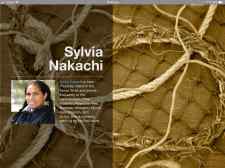
Title page for Ch. 16, Sylvia Nakachi

Ch. 16, Sylvia Nakachi (Using fair dealing provisions for purposes of review)

Writing black was edited (and commissioned) by Ellen van Neerven (whose book Heat and light and story “Sweetest thing”, I’ve reviewed here). It contains works by 20 writers, in a variety of forms, including prose by writers like Bruce Pascoe, Tony Birch, and Marie Munkara; poetry by Tara June Winch, Lionel Fogarty, Kerry Reed-Gilbert and Steven Oliver (most of which are presented in both text and video); and twitter-fiction by Siv Parker. For each writer, there is a “title” page which provides a brief biography, and the works are illustrated with gorgeous sepia-toned photography by Jo-Anne Driessens.

In her editor’s introduction, van Neerven states that, by the time of publication, there had not been a “digital-only anthology of Australian indigenous writing”. This book addresses that gap, but with a very particular goal. It was, she writes, “moulded by possibility”, by the fact that “the multimedia and enhancements a digital publication allows lifts the imagination”. Certainly, we see some of these possibilities in this production.

Her point, though, that particularly interested me was this:

Expectations of what we write about are changing, no longer the narrow restriction of life stories and poetry. Indeed, Indigenous writers do not need to write about Indigenous issues at all, if they choose not to. With more Indigenous books and authors comes a new generation of readers — open-minded to what Indigenous writers can write about, and across new forms and experiences.

Great point – just as it’s important that we see indigenous people on television and in movies, for example, without their indigeneity needing to be referenced or be part of the story. Anyhow, we see this broadening of content in Writing black – in Jane Harrison’s “Born, still”, for example – although, not surprisingly and completely understandably, given where we are on the reconciliation journey, many of pieces do have political intent.

This brings me to one of the appealing aspect of this production, which is its variety, not only in form as I’ve already mentioned, but in tone and content. The pieces span moods from the intensity of Tara June Winch (“Moon”) to the cheeky humour of Marie Munkara (“Trixie”), from the anger of Kerry Reed-Gilbert (“Talking up to the white woman”) and the frustration of Steven Oliver (“You can’t be black”) to the melancholy of Bruce Pascoe’s (“A letter to Barry”). Many of the pieces speak to loss of country and identity, and the emotional impact of these. What makes them particularly powerful is that they come from all over, from the tropical north to country Victoria to various urban settings.

Another appealing thing, which stems from its being an e-Book, is that we can hear poets perform their own work, as well as read the text ourselves. One of these is the new-to-me Steven Oliver. He has four poems in the collection – “Real”, “You can’t be black”, “Diversified identity” and “I’m a black fella” – with video of him reading each of them. He (or his poetic persona) is an urban dweller who regularly confronts questions concerning his indigenous identity. In “Real” he describes a discussion with another who refuses to accept he’s “black”, who produces those crass arguments like he’s “more of a brown” and “not really a full”, but who suddenly turns when our poet responds that his English name suggests he’s not “from here”. Oliver writes:

Listen here Abo, you know-it-all coon
It seemed that my friend has spoken too soon
Just moments ago I was not the real thing
Yet now by his words my heritage clings

This is a long-ish poem, but is accessible. Its use of rhyming couplets provides a light touch that keeps the reader engaged while the actual words drive home a serious point about Aboriginal identity. I hope it’s taught in schools.

Another poem of his, “You can’t be black”, also addresses assumptions others make about what being Aboriginal is:

You can’t be black
When the media shows Aborigines they live on communities
And struggle with petrol, poverty and disease
So you can’t be black
If you’re black you wouldn’t have nice clothes on your back.

Oliver’s poems are made to be performed, as are those of the next poet Kerry Reed-Gilbert.

She also comes out fighting, with five poems. She writes of being in a bar, waiting for the racist slurs (“A conversation and a beer”), or of being exploited by people who only want to know her to further their own aims (“Talking up to the white woman”). She speaks in the voice of a white racist in “Because my mum said so” to show how racism is learnt through families. This is a particular concern of mine. I’ve seen schools trying their hardest to teach tolerance and respect – but that role-modelling at home is mighty powerful stuff.

Another well-established poet who has been politically active for decades is Lionel Fogarty. His two poems in this collection focus more on caring for country, on sharing the land, on passing knowledge on.

The prose pieces are, overall, more diverse. There’s Tristan Savage’s cheeky short film script, “Gubbament man” about Freddy the indigenous “discrimination prevention officer”. Siv Parker’s twitter-fiction piece “Maisie May” was originally released as tweets over several hours on, note, 26th January, in 2014. It tells of a trip to country for the funeral of Aunty Maisie May who “could tell you about country and our ways that we lost over the years.” Marie Munkara is here too with her particular brand of humour to tell about “Trixie” who takes revenge on her ex. There’s also Tony Birch whose “Deep rock” clearly draws from (or fed into) his novel Ghost River (my review). And there’s David Curtis whose “What kind dreaming” tells of three young indigenous men, two already becoming familiar with the life and law of their country and the other a greenhorn from the city, who go bush. Our greenhorn soon learns a few things from the other two, who respect “them old people”.

In an interview in Sydney Review of Books, Ellen van Neerven comments briefly on why she wanted to do this “digital collection”:

For me it’s as much about audience and access. There is a really hungry international audience for Indigenous writing but also lots of roadblocks in getting the books out there. Being able to access work online is definitely an advantage and we’ve had a lot of feedback and contact from people overseas who have been able to find out about Indigenous writing and read content from 20 different authors that way.

And that’s exactly it. This oh-so-rich collection introduces readers to many of Australia’s current significant indigenous writers, not to mention the range of issues that interest them. And it’s free to download. That we should be so lucky! A big thanks to if:book and the Queensland Writers Centre for supporting such innovative and sophisticated projects as this one.

aww2017 badgeEllen van Neerven (ed.)
Writing black: New indigenous writing from Australia
State Library of Queensland, 2014
133pp.
ISBN: 9780975803059

A paradox of empowerment: Kim Scott’s Ray Mathew Lecture

Kim Scott and the whale's eye

Kim Scott and the whale’s eye

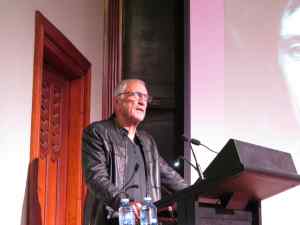
Why was Raimond Gaita’s Seymour Biography Lecture booked out, but not Kim Scott’s Ray Mathew Lecture*. Both lectures, held at the National Library of Australia, are endowed by generous benefactors and are free. Don’t get me wrong. I love that Gaita was booked out, but so should double Miles-Franklin-winner Noongar-author Kim Scott have been. His novel, That deadman dance (my review), is a pivotal book in terms of our understanding of first contact and therefore important to reconciliation. I had to see him in person.

Scott’s lecture, titled “A paradox of empowerment”, was described on the National Library page as being about “how reclaiming Aboriginal language and story may offer a narrative of shared history and contribute to social transformation.” And this is exactly what he spoke about, based on his Noongar project.

The evening started with a Welcome to Country by local Ngunnawal elder Tyrone Bell, who explained the tradition behind this practice. It led beautifully into Kim Scott’s talk, which he said was fundamentally about reclaiming Aboriginal language and story.

Looking through a whale's eye

Looking through a whale’s eye

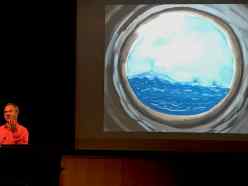
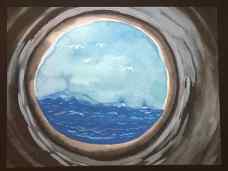
Scott started by explaining the picture on the screen beside him. It’s from a story about a Noongar man entering a whale. He chose it because it represents the idea of seeing things differently. (You could tell he’s a novelist by the way he framed his lecture around imagery to convey his ideas!) For example, is this a porthole? Or are we looking through an eye, or even with the eye, this latter suggesting that the Noongar man has become the whale, has been transformed. This possibility of transformation was the underlying theme of his lecture.

Before he continued though, Scott offered some provisos. He likes, he said, to be particular, to start with the local (which approach also appeals to me). However, he is often criticised, he confided, for being somewhat diffident, hesitant, by which I understood him to mean for not being out there on the political hustings. He’s hesitant, he said for a few reasons:

  • the project – a small community-based language revitalisation project – is insecure. Funding and resources are uncertain, people with the needed knowledge are passing away, and the project is not connected to any institutional infrastructure.
  • it is a regional, provincial activity that may not be relevant elsewhere, although he suspects it is, because the reality is that some of most substantial renaissance work has originated in regional projects.
  • the project produces books – which give status, provide focus, can be used by schools – but books can be accessed widely, which could result in non-Aboriginal people learning the language before its owners do. This would continue the disempowerment the project aims to overturn.

Outside the circle

And here, Scott the novelist turned to again to metaphor. He quoted Governor Phillip who, having been welcomed into Port Jackson by the local people, found their curiosity problematic. He wrote:

‘As their curiosity made them very troublesome when we were preparing our Dinner, I made a circle round us; there was little difficulty in making them understand that they were not to come within it, and they then sat down very quiet.’

Scott used this circle motif as a metaphor for the ongoing exclusion of indigenous people by the settlers. The circle marked a power relationship, an exclusion, that became a defining feature of Aboriginal people’s identity. And yet, he said, researchers like Bill Gammage (The biggest estate on earth) and Tony Swain (A place for strangers) are starting to identify what lay outside this circle – knowledge and skills, an active not passive relationship with the land – that the settlers could have learnt from. This knowledge is still outside the circle, he said.

Noongar language (Daisy Bates)

Noongar language (recorded by Daisy Bates)

He provided specific examples – many of which he used, in fact, in That deadman dance – of the Noongar’s documented sophisticated, positive response to the first settlers in Western Australia. But still, they were kept outside the circle. He shared, as an example of the Noongar’s open-minded, lively response, a Noongar story recorded by Daisy Bates, which incorporated the name of the new colony’s town, King George Town, into their language.

Changing this circle is, he said, vital to healing. He believes that through projects like his, together with the research of people like Gammage and Swain, things are beginning to change, that Aboriginal culture is starting to be recognised, appreciated, rather than denigrated.

Wirlomin Noongar Language and Stories Project

And so he got to the Wirlomin Noongar Language and Stories Project, a local language revitalisation project that is occurring outside the circle. His argument is that over time, since first contact, Governor Phillip’s original circle expanded, and the world outside it became increasingly impoverished. The Wirlomin language project believes that by recovering language, and the stories that go with it, the circle can be changed.

Proven benefits to social and personal wellbeing emanating from strong attachment to Indigenous cultural traditions. (Kral and Falk 2004, Anderson and Kowal 2012, and others).

He described the project – what it uses, what it produces, and how the knowledge is shared. I won’t detail that here, as you can learn much of it at the website. But I will share his teasing out decisions made, and their political implications. For example, when Kayang (Hazel) Brown took people to a special place in country, told its stories, and then re-covered the marks, her aim was not to practise the same attitude of exclusion, but to establish a protocol of respectful, negotiated relationships for sharing knowledge.

Another example concerned an event the group was organising to present books in language that they’d produced. He said that his view, “as the sophisticated man in the group” was to only invite Noongar, but Aunty Hazel (Kayang Brown) said they should invite some of the local non-Aboriginal people. Scott questioned why, given these people had controlled and spoiled their land, but Kayang responded, regarding one particular person, that “we grew up with him”. So he was invited, was given a copy of the stories, and responded positively, and emotionally. Scott learnt, through this experience, the paradox of empowerment through giving, and what can be achieved by moving into the circle.

All these, he concluded, open up possibilities of healing and transformation, with giving and sharing being the major denominations in the currency of identity and belonging.

This was a wonderful lecture, given by a man who emanated dignity, humility and grace. It was deceptively simple, but the thinking behind it was generous and sophisticated. You had to be there!

Ray Mathew Lecture
National Library of Australia
21 September 2017

* The Ray Mathew Lecture was established in 2009, through The Ray Mathew and Eva Kollsman Trust, created by Eva Kollsman to support and promote Australian writing. The lecture is named for the Australian poet and playwright, Ray Mathew (1929–2002), who left Australia in the late 1960s, and never returned. He spent most of the remainder of his life living in the New York apartment of his patrons, Eva and Paul Kollsman.

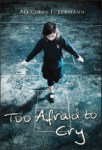
Ali Cobby Eckermann, Too afraid to cry (#BookReview)

ANZ Lit Lovers Indigenous Literature Week bannerHaving reviewed Yankunytjatjara/Kokatha woman Ali Cobby Eckermann’s poetry collection, Inside my mother (my review) for Lisa’s ANZlitLovers Indigenous Literature Week, 2017, I decided to also read her 2012 memoir, Too afraid to cry. It filled in a lot of gaps, which is not necessary to appreciate or comprehend the poetry but which does deepen the understanding.

The memoir’s dedication starts with the lines:

this is a poetic memoir
a story of healing
not burdened by blame

And that is pretty well what it is. It’s not an angry book, so much as a sorrowful one. Sorrow about the abuses and losses that affected her childhood and early adulthood, in particular. The sorrow starts early, when she’s young, and abused. She writes of her uncle rubbing her leg inappropriately, and progressing to assault, though she doesn’t say that because she’s only 7 years old. However, while she may not have the language to analyse what was happening to her, she does have the language to describe the feelings:

I felt the icy wind inside my head begin to blow. I could not move. The icy wind is very dangerous.

This “icy wind” becomes a metaphor throughout the book for the abuse, for her memory of it, and for its impact on her psyche until she can no longer cry – “the ice block had turned to stone, and now there was no moisture left inside me”. Hence the title of the memoir.

So, to summarise the book before I delve any further, Too afraid to cry is the story of a young indigenous baby adopted by a non-indigenous family. It’s a good loving family, with parents who, unable to have children, adopted four – two from the mission – and fostered another. But this family, as loving as it is, is a deeply religious one which does not understand the pain experienced by children from a different culture to its own. The result is that Eckermann is left to contend with racism and abuse that she, too, does not initially understand. Here, for example, is a schoolyard experience:

[I] didn’t notice that they had begun to form a circle around me, but I did notice that the icy wind was blowing inside my head and was starting to freeze my guts. Someone held me while other hands pulled my underpants down. There was a strange noise in my ears, like a faraway scream, but I could still hear the sounds of those doing the laughing and teasing. They said they wanted to know if I was the same as other girls. Someone laughed, saying they didn’t know if ‘boongs’ were different. I was frozen with the icy wind roaring through my body. I didn’t want to know what a ‘boong’ was.

Note the “icy wind” again. As childhood turns to adolescence, Eckermann, who had been an excellent student, begins to withdraw from her family and turns instead to alcohol and drugs to cope with the pain and sense of disconnect. It’s not a surprising story, but it’s a useful one for those who don’t understand what disconnection from one’s own culture can do, particularly in a society where difference is not tolerated. Eckermann learns much later, apparently, of the ridicule her adoptive mother had faced for having aboriginal children.

Anyhow, gradually, after many experiences, painful ones, risky ones and some more positive, Eckermann finds her way to her own culture, and healing begins:

Slowly the stone inside me turned to ice and then the ice began to melt. I felt real tears on my face for the first time in my adult life.

What’s remarkable about the memoir – something you may have guessed from what I’ve written – is her ability to get into her head at the time, to write from the point of view of the age and person she was when the things she describes happened, rather writing them as memory that she is now reflecting and commenting on. Of course the telling of the experience, the choosing of which experiences to tell, is a form of commentary, but I’m sure you get my point.

The memoir is remarkable for other reasons too. It’s told in 92 short anecdotal chapters, which are divided into four parts. The style is spare, with short, simple sentences. This is a book which shows rather than tells. Much of the commentary is conveyed through poems inserted between some of the chapters, such as “Heroin” between Chapters 45 and 46. It’s a short poem, like most of hers, and uses repetition and powerful wordplay on the word “arms”, to invoke prostitution, loving and heroin. The last stanza reads:

in their arms
they survive
a modern world.

Some of the poems appear again – the same or sometimes changed* – in Inside my mother.

Another aspect of the memoir, which adds to its sense of almost mythic universality, though is probably also done to protect individuals, is her minimal use of actual names. Her siblings, for example, include Big brother, Foster brother, and some relations are Aunty and Uncle. She does though name her mothers.

Too afraid to cry is an innovative and evocative memoir, which manages to convey hurt and pain, truthfully, but with a generosity that is humbling.

aww2017 badgeAli Cobby Eckermann
Too afraid to cry
Elsternwick: Ilura Press, 2012
224pp.
ISSN: 978-1-921325-29-8 (eBook)

* Changed, I think. I’m writing this in California, and my copy of Inside my mother is back in Australia.

Delicious descriptions: Kim Mahood’s desert

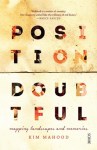
Kim Mahood, Position doubtfulI wanted to use this Descriptions series to share a couple of Mahood’s gorgeous descriptions from her memoir, Position doubtful, which I reviewed recently, but I’ve decided to share one about maps and relationships (and you’ll probably see why), and a description.

From a mapping expedition:

The shortcomings of my prototype map soon become evident. The first lesson in the overlapping of knowledge systems is that Aboriginal knowledge doesn’t confine itself to the square dimensions of the canvas. Traditional jurisdictions extend to Well 50 in the west and to Jalyuwarn in the south. The ancestral dingoes who created the lake came down from the north and Kiki, the falling star, fell from the sky in the east. All these places and events are off the map.

– Puttem, I am told. You can fixem up later.

I puttem, and the edges of the canvas became congested with names that belong to the country outside the square.

She goes on to describe the process of capturing stories and knowledge, how “each site has its attendant stories – dreaming stories and traditional ways of living, accounts of the station days and mission days and first-contact encounters.” So fascinating – but these maps can be fraught with risk too.

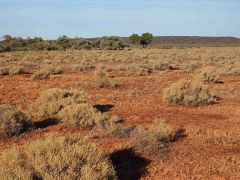
Samphire Shrubland

Samphire landscape, Central Australia (By Mark Marathon, using CC BY-SA 4.0, via Wikimedia Commons)

From a trip to Lake Ruth, 2008:

… The anthills on the plain are small and crenelated, like urban skylines. Ahead of us the horizon feels unstable, as if we are approaching an edge of some kind. The sandy soil becomes littered with limestone pebbles, and the anthills morph into the massive conical forms of cathedral mounds. Abruptly, the salt lake is before us, a negative space boundaried to the south by another unstable horizon. …

Between the salt lake and the limestone ridge where we have halted is a low red dune, an arc of sand created by wind and waves when the ephemeral lakes were substantial bodies of water. Stunted ti-tree grows along the dune, and red and gold samphire spreads out onto the salt crust, which is buckled and crisp. The southern horizon ripples with dissolving light, like wind moving through invisible fields of grass.

These descriptions of the desert are so vivid, so true. They show that Mahood is not just a mapmaker and artist, but a writer too.

Ali Cobby Eckermann, Inside my mother (#BookReview)

ANZ Lit Lovers Indigenous Literature Week banner

Ali Cobby Eckermann, a Yankunytjatjara/Kokatha woman, has featured a few times on this blog, including in my review of her verse novel, Ruby Moonlight, and my Monday Musings post on her winning the valuable Windham-Campbell Prize this year. She is now appearing again as I review her poetry collection, Inside my mother, for Lisa’s ANZlitLovers Indigenous Literature Week, 2017.

Ali Cobby Eckermann, Inside my mother

Inside my mother is a challenging read, particularly if you are an occasional reader of poetry like I am, but it’s well worth the effort – for the insights it offers, and for the pure pleasure of reading a skilled wordsmith. As the title suggests, the collection’s focus is mothers – and there’s a reason for this, one all too familiar to First Nations Australians. Cobby Eckermann’s family has a history of children being taken from their mothers – her mother was taken from her mother, Cobby Eckermann was taken from hers, and then Cobby Eckermann had to give up her son for adoption. You can hear and feel the pain of these losses in the collection, but you can hear more too, because while these losses frame the collection, Eckermann doesn’t confine herself to them.

The collection is divided into four parts, which build up in intensity until we reach the last part in which the focus is squarely on grandmothers, mothers and children – and the attendant losses.

The poems, though, are not all grim in tone, they vary in form, and they are held together by recurring motifs or ideas, specifically, mothers (of course), sky, earth and birds, all of which make perfect sense given the author, her culture and themes. The first poem is one of a small number of shape poems. Shaped like a bird’s wing, and titled “Bird song”, it references the power of Indigenous spirituality, and ironically comments on how it was so often co-opted by the church. It gets the collection off to a good start. Part 3 starts with another poem about birds, “Tjulpu”. It comprises two-line stanzas, with a separate final last line, and attests to the power of birds for the speaker. “Life is extinct/without bird song”, it starts.

The first First Nations Australian poet I ever read, probably like most Australians around my age, was Oodgeroo Noonuccal (or Kath Walker, as my still loved edition had her). When I started reading Inside my mother, I wasn’t immediately reminded of Noonuccal, but when I got to the devastating poem written in the voice of a woman who drinks too much, “I tell you true”, I immediately thought of Noonuccal’s poems and their effective blend of the personal and the political. The poem is a plea for people to not rush to judge when they see someone “drunk and loud and cursing/Don’t judge too hard ‘cos you don’t know/What sorrows we are nursing”.

This poem looks simple. It uses those traditional rhetorical tools of rhyme and repetition to produce a singsong rhythm which satirically mocks the seriousness of the story it is telling. The effect is mesmerising. The second verse starts:

I can’t stop drinking I tell you true
Since I found my sister dead
She hung herself to stop the rapes
I found her in the shed

Other poems deal with traditional culture (“Vengeance”), political issues (“Hindmarsh Island”, “Kulila”, “Oombulgarri“), love (“Love 22/06/10”), stolen generations (“Severance”, “First born”, “The letter”), to name just a few. The meaning of some of these, particularly those I’ve listed under political issues, depend on knowledge of the politics they reflect. I needed, for example, to look up Oombulgarri.

Some poems are more personal (or, personally political!), such as “Eyes”, to give just one example. “Which eyes will she need today”, the speaker asks? Those of terror, or submission, or of “wonder or contempt”. I won’t tell you which ones she chooses, but they’re appropriate for the overall tone of this collection, reflecting its sorrow and its grit.

And then some, as usually happens with poetry collections, I found a little obscure, although, as I reread many for this review, more of them fell into place. You can’t rush poetry.

While it’s not my favourite poem in the collection, the last poem in Part 1 is appropriate to end on because it addresses the theme of this year’s NAIDOC Week. It’s called “Lament”, and is another poem featuring two-line stanzas, and repetition. Of the six stanzas, three are the same: “I can not stop/must sing my song”. And why can’t he stop? Because he’s the “last speaker/of my mother tongue.” Language. So important.

aww2017 badge

Ali Cobby Eckermann
Inside my mother
Artarmon: Giramondo, 2015
90pp.
ISBN: 9781922146885


Monday musings on Australian literature: Reading indigenous literature

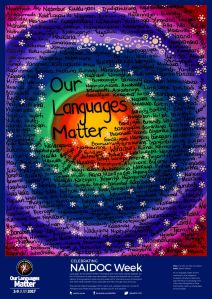
2017 National NAIDOC Poster (used under Creative Commons licence, CC BY-NC-N4 4.0)

Each July, as well as contributing at least one review to Lisa’s ANZLitLovers Indigenous Literature Week, I try to write a Monday Musings post related in some way to NAIDOC week which, as Aussies will know, is a week, usually the first full week in July, during which activities are planned to “to celebrate the history, culture and achievements of Aboriginal and Torres Strait Islander peoples”. Each year there is a theme, and this year it’s a good one, Our languages matter.

I have for as long as I can remember – since high school anyhow – been interested in social justice and civil rights (as we called it in the 1960s & 1970s). I read a lot back then about indigenous Australians and African-Americans in particular, such books as Douglas Lockwood’s I, the Aboriginal and Katharine Susannah Prichard’s Coonardoo. These books helped fire my feelings about injustice: they showed me some of the impacts of the inequities stemming from racism and of course they touched my emotions.

However, the only indigenous Australian writer I remember reading was Kath Walker as she was known then (or Oodgeroo Noonuccal as she became), until I read Sally Morgan’s My place in 1988. These writers started to help me see and feel, under the skin, the experience of being indigenous in Australia.

Now, if you keep up with discussions about the value of reading, you are sure to have read the various arguments for, or theories about, how reading can improve empathy. There was a Scientific American article in 2013 which reported that “Researchers [Emanuele Castano, a social psychologist, and PhD candidate David Kidd] in New York City have found evidence that literary fiction improves a reader’s capacity to understand what others are thinking and feeling.” Another article in The Washington Post in 2016 reported on cognitive psychologist Robert Oatley’s research of over a decade and his conclusion “that engaging with stories about other people can improve empathy and theory of mind”, resulting in improved “social ability”.

There are the naysayers to these arguments, of course, and I don’t know if reading fiction has increased my ability to empathise or not, but I can’t help agreeing with novelist Joyce Carol Oates’ statement that “Reading is the sole means by which we slip, involuntarily, often helplessly, into another’s skin.” “Sole” may be pushing it too far, but otherwise here’s my experience … and I fear I’m a bit clumsy in putting it but hope it makes sense!

I have become aware in recent years that my understanding and awareness of indigenous lives has deepened beyond the intellect and simple empathy, to a level of “knowing”.  In other words, I knew about – and could empathise with – the sense of loss, anger, disempowerment that those earlier, mostly non-indigenous writers described, but now that empathy is increasingly underpinned by knowledge of how dispossession plays out. I can never know what such historic dispossession does to a person’s psyche from personal experience but reading writers like Kim Scott, Alexis Wright, Jeanine Leane, Marie Munkara and many others, has given me the next best thing.

To labour it a little more: because I “know” my white anglo culture, I can can more quickly understand the context for a story about a gay man or an abused wife even though I’m neither of these. The leap to real empathy, which I’m arguing requires a thorough understanding of the underlying culture, is not a big one when people come from my own world. When they don’t, I can empathise at a human level – at the level any of us can when we see someone else in pain, struggling, angry, triumphant, and so on – but I sense that it’s a shallow empathy that doesn’t comprehend the forces behind that pain (etc). How do you get to comprehend those forces?

Well, Jeanine Leane, as I wrote in a recent post, says you need to immerse yourself in the “other’s” culture, in her case, indigenous Australian culture. For most of us, however, this is very difficult, if not impossible, but Leane argues that reading indigenous literature, that is writings by indigenous people about indigenous people’s lives, is a way in which we can engage with the culture. In her book, Position doubtful, which I reviewed recently, Mahood talks about the moments she waits for when, in a sense, a lightbulb turns on, when she experiences “a cognitive shift”. It’s that cognitive shift that I feel happening as I read more and more indigenous authors (of both fiction and non-fiction, particularly memoirs). It manifests in the fact that I don’t have to recalibrate my bearings so much when I open a book by an indigenous author. Certain things are givens – such as the original dispossession, the stolen generations, relationship to country. I don’t have to work to understand these, as I read, they’re there.

I hope this doesn’t repeat too much what I’ve written before, and I hope that it doesn’t sound arrogant, because it’s not meant to. I certainly know that I have much more to learn and understand. However, while I read and listen to commentaries in papers, on television, via the radio, it is through the indigenous writers I’ve read that what once felt more like information is now becoming a truth. I think that’s a powerful thing – and is why I’d argue that more Australians need to read more indigenous authors.

Kim Mahood, Position doubtful (#BookReview)

Kim Mahood, Position doubtfulKim Mahood’s memoir Position doubtful is a such a stimulating read. That might sound weird for a book whose subtitle is Mapping, landscapes and memories, but the thing is that it hits the spot in so many ways that are central to the issues confronting Australians right now. In other words, it’s about our relationship to place. Specifically, it’s about how kartiya* (non-indigenous Australians) comprehend our love for place, how we reconcile that vis-à-vis that of indigenous Australians, and how we go about respecting each other’s relationship with our land. Mahood may not explicitly generalise it like this, as for her it’s a personal journey – one exploring her experience of place and her reckoning of that with the indigenous owners – but I believe we can extrapolate her thinking to encompass something more universally Australian.

So, let me describe this personal aspect of the journey first, because this is, essentially, a memoir. It primarily covers the twenty years or so, from the mid 1990s, during which Mahood, chasing “unfinished business”, made annual trips back, from her Canberra region base, to the Tanami Desert region where she’d spent her childhood on a cattle station run by her parents, but which is now owned by the local Warlpiri people. She chronicles her desert art trips with Pam Lofts, the mapmaking she does to document country and stories, her various itinerant jobs, and most of all her relationships in the communities in which she stays, particularly Mulan (a Walmajarri community) and Balgo (where she works early on in the art centre).

Maps underpin her way of viewing and understanding place, and have become, also, the basis of her art practice. Early in the book, she writes:

In recent years I have made a number of maps with Aboriginal people, designed to reveal common ground between white and Aboriginal ways of representing and understanding country … The information marked on them is a mixture of Aboriginal knowledge – traditional camp sites, the birthplaces of individuals, the tracks of ancestors – scientific information about ancient shorelines and archaeological investigations, and the template of bores and paddocks and tracks and boundaries that represent the cattle stations and stock routes of white settlement. They serve different purposes – aboriginal, scientific, testimonial, environmental – depending on when and where they are used. Often there is a mismatch between my interpretation and the Aboriginal interpretation of their purpose.

So, this is a story about communication and negotiation, about sharing knowledge and understanding, about layers and multiple meanings, and above all, about respect for other while standing one’s own ground. The way Mahood navigates all this – the accommodations and understandings she works through, socially, personally, intellectually, scientifically, artistically and philosophically – is, really, what the book’s about. And it’s what makes it such a relevant read.

Now it’s my turn, I’m going to tell my side of the story

But of course, to write this story, she had to confront that issue I’ve raised here several times before of kartiya speaking for and/or about indigenous people. She addresses this in the last chapter (without specifically discussing the issue itself), when she describes visiting Mulan in September 2015 to tell them about her book. She organises several meetings, and reads “everything” that she thinks “might offend or upset people”. She is particularly anxious about her suggestion that the “popular version” of a massacre story she’s been told could be “a compilation of several distinct events” but she needn’t have worried. Her listeners nodded in agreement and pointed her to other people she could talk to.

This massacre “story” reminded me of another ongoing thread of mine – that one about “fact” versus “truth”. The truth is that massacres occurred – that’s not denied – but the evidence is now so murky that the various “facts” presented don’t always align. Does this mean the history, the recording of massacres, is wrong? I don’t think so.

a template of country infused with multiple meanings

The book is structured more or less chronologically following her trips, but she does move backwards and forwards occasionally – to finish an experience or flesh out a story. In between the more chronological, narrative chapters, are specifically reflective ones where she pauses to explore an idea. One is titled “Mapping Common Ground”. In it she articulates her ideas about language, maps, and being human. She says that “mapmaking was the common ground” on which she and her “Aboriginal companions put together our different conceptions of country”. She describes how maps “captured the imagination of the local mob”. They provided

concrete evidence of the knowledge that existed in the country, and they represented country in a way that everyone could understand, including the kartiya upon whom so much of the negotiations about land depended. … But the maps also aggravated the simmering arguments about who came from where, who owned which place.

And there, you see, is the politics. Politics is not Mahood’s focus but it is there, and the more you know about indigenous history, past and present, in Australia, the more you see it in the book. It’s there in the implications of changing a word from “custodians” to “ownership”, in the absence of middle-aged men resulting in matriarchies, in the “unintended consequences” of the 1968 equal wages bill, in the high prevalence of disease like diabetes, in who has or controls the money, and so on. It’s rather a mess, but “fixing” is not Mahood’s aim here, so she notes and moves on.

The title itself subtly references the underlying politics. Literally it means “of uncertain position” and is often used, for example, to indicate shipwrecks. However, when her father used the term, while navigating in the Tanami Desert, Mahood writes:

The term lodged in my mind as a metaphor for the way in which white Australians move through and occupy the country, especially the less accessible parts of it. And while the advent of satellite technology has given us the tools to find and map geographic locations with great accuracy, it seems to me that our position in relation to the remote parts of the country is more doubtful than it ever has been.

Metaphor, in fact, underpins much of how Mahood sees and explains the world, and I enjoyed that aspect of her writing, the way she finds some term or experience or object to reference bigger meanings.

Position doubtful is not exactly an easy read, but it’s a thoroughly engaging one. As memoirs go, it’s a strange hybrid, combining wonderfully warm and sometimes funny anecdotes about the people she meets and travels with, oral histories, indigenous creation stories, poetic insets, travel writing containing beautiful descriptions of landscapes, and of course her introspective reflections on who she is and what she’s doing. She allows herself to be vulnerable, and yet there’s a strong sense of self there too.

Kim Mahood, Gia Metherell

Bessie’s map, from the book and shown at CBR Writers Festival, 2016

I’ll close with some comments she makes regarding a trip to Lake Gregory with local owners and kartiya, including the palaeontologist Jim Bowler. It’s aim was to create “a cross-cultural document” showing “the interplay between  Aboriginal knowledge and western scientific knowledge in a form … easily accessible to both Walmajarri and kartiya“. She writes:

To have the ancient geography interpreted simultaneously through modern science and the Waljirri or dreaming, lays down a template of country infused with multiple meanings. While I don’t believe the creation stories in a literal way, they breathe animate life into the landscape in a form as potent and awe-provoking as the deep-time story Jim’s science tells. They complement rather than contradict each other.

And then, she talks of a discussion with Bessie, premier traditional owner for the area, in which they look at Bessie’s painting (see my image above) and the big painted map created during the project. As they talk, Mahood writes:

In putting together these two ways of conceptualising the same place, I experience a cognitive shift from which I will never entirely cover.

It’s a cognitive shift that is gradually happening throughout Australia – I hope – as we all come to terms with our different ways of seeing our history and our relationship to place and each other. This book makes an excellent contribution to this process.

Lisa (ANZLitLovers) appreciated this book too. Her write-up fills in some of the gaps I couldn’t cover without writing a tome.

aww2017 badgeKim Mahood
Position doubtful: Mapping, landscapes and memories
Brunswick: Scribe, 2016
320pp.
ISBN: 9781925321685

* Kartiya: white people (there is no one indigenous word for white people)

My literary week (8), a cultural life

There’s always something going on here in the nation’s capital, besides politics that is and despite the belief in some circles that it is a soulless place! In fact, it’s so busy here – so packed full of things to do – that my reading has been pretty slow of late. However, I have been active, and thought some of my activities might interest you.

Blog mentoring – and a question for you

In my last Monday musings I mentioned that I’ll be mentoring two ACT Lit-bloggers for the rest of this year. We had our first meeting last weekend, and one of the issues we talked about – and it’s one we’ll continue to talk about – relates to what litblogging actually is. What is the difference, we want to explore, between litblogging, review and criticism? Where are the lines, what are the crossovers? We tossed a few ideas around, including the issue of informality/formality, but there’s a lot more to explore regarding content (and these concepts of review, criticism, analysis) and audience (who reads blogs, what do blog readers look for, and can this audience be widened?)

So now I’m throwing it over to my brains trust – that is, you who read this blog – because you cover a wide range of backgrounds. What say you to these questions? And how (or where) do you think litblogs fit into literary culture?

Coranderrk

I mentioned Coranderrk on this blog a couple of years ago. It was an Aboriginal Station in Victoria, established and successfully run by some remaining local indigenous people, and it operated from 1863 to 1924. I came to the story through the Bread and Cheese Club’s activity in the 1950s when they held working bees to repair the cemetery and restore the monument of leader William Barak to its rightful place in the town.

So, when I saw that the play Coranderrk, which was first performed in 2013, was going to be part of his year’s Canberra Theatre Centre season, I bought tickets, and we finally got to see it this week. It tells the story of the community’s attempt to obtain formal control over the land when local farmers started making moves to move them on! They felt the land was too valuable to be run by Aboriginal people (!), and so, as the program says,

the men and women of Coranderrk … went head-to-head with the Aboriginal Protection Board at a Victorian Parliamentary Inquiry to be allowed to continue.

The play tells this story primarily using words from sources of the time – mainly evidence and testimony from the Inquiry. The four actors – three men and one woman – each play several indigenous and non-indigenous characters to tell the story of the conflict. It is, really, like a documentary in play form (called, I believe, verbatim theatre), and it could have been very dry. Fortunately, I like documentaries. And anyhow, the writers do manage to inject the words, the story, with a sense of theatre, partly through little recurring motifs, like banter over a hat, and word plays, as well as, of course, the drama of the story itself.

It’s not a happy outcome, as you’d expect for the time, but the program says “The production aims to encourage a shared understanding of the past between Aboriginal and non-Aboriginal people.” It is just one of the many stories that are coming out now about our colonial past and that we Australians need to know if we are to advance as a “real” nation, that is, as one that knows its true history.

Coranderrk
Written by Andrea James & Giordand Nanni
Directed by Eva Grace Mullaley
Produced by Ilbijerri Theatre Company & Belvoir
Canberra Theatre Centre, 14-15 June 2017

John Waters

John Waters, NFSAOne of my several post-retirement commitments is involvement in the Friends of the National Film and Sound Archive. Like most Friends organisations we volunteer for our “parent” body, and we organise events. Recently, we ran a bus tour of the suburb of Moncrieff, whose streets are named “to honour Australia’s music history”.  We enjoyed driving around the streets, being regaled by local music expert David Kilby with biographies of and entertaining clips from such performers as Johnny O’Keeffe, Jimmy Little, Harold Blair and June Bronhill.

Then, this week, we presented an evening, to a full house, with the wonderfully generous Australian actor John Waters who willingly gave up his time, driving himself to Canberra, to talk about his career in film and, at the same time, promote the importance of preserving Australia’s audiovisual history. The NFSA is “our nation’s album” he said, and “who doesn’t like a family album”. Exactly.

There was more to my week, including my local Jane Austen group’s discussion today of the plethora of biographies about our Jane – but I think I’ll save that for another post. There’s only so much culture you can manage at a time!

Telling indigenous Australian stories

This weekend is particularly significant for indigenous Australians. No, let me rephrase that: it’s significant for all Australians because what happens to indigenous Australians marks who we are as a nation. And, right now, who we are is not wonderful.

Anniversaries galore

If you’re Australian, you’ll know what I’m talking about, but for everyone else, the situation is that we have two important anniversaries this weekend. Today, 26th May, is the 20th anniversary of the tabling in Parliament of the Bringing Them Home report documenting the Stolen Generations. (On 26th May the following year, the first National Sorry Day was held to keep front and centre our poor treatment of indigenous Australians, so next year will be its 20th anniversary). Then tomorrow, 27th May, is the 50th anniversary of a referendum held in Australia to change the Constitution regarding indigenous Australians. The resounding Yes vote (90% overall) ensured that indigenous Australians would from then on “be counted in reckoning the Population”. It also gave the Federal Government the power to pass legislation specifically for indigenous Australians. And, just to add to the significance, next week, on 3 June, will be the 25th anniversary of the Mabo decision which recognised native title in Australia.

These anniversaries are, naturally, causing much reflection about what has been achieved since then, and what we (and indigenous Australians in particular) would like to achieve. The truth is that achievement has been woeful. Indigenous Australians’ health, education, incarceration rates – and so on – are significantly worse than for the rest of the population. It’s outrageous – and a subject too big for me here. However, I did want to mark this time, so am going to return to an issue we’ve discussed here before – who tells indigenous Australians’ stories. I’ve chosen this approach because of a serendipitous find in the National Library (NLA) bookshop yesterday.

Jeanine Leane's Purple threads

Courtesy University of Queensland Press*

You see, I’ve been wondering recently what indigenous writer, Wiradjuri-woman, Jeanine Leane is up to. I greatly enjoyed her book, Purple threads (my review), and was impressed by the forthrightness and clarity with which she discussed this issue of telling indigenous Australian stories at an NLA conference back in 2013. She spoke particularly about classics, and she said this (re-quoting from one of my posts):

Through Xavier Herbert, Patrick White, David Malouf & more recently Kate Grenville, who among others have been hailed as nation writers & what I saw and still see to some extent in Australian literature to date, is a continuous over-writing of settler foundation stories which overwrite Aboriginal experience and knowledge. Settlers are always re-settling and Australian literature really reflects this and the critics and scholars write of such works as if everyone reading it is also a settler reader.

Now, here comes the serendipitous bit. I was browsing the Library’s bookshop yesterday while waiting for a meeting and noticed a recent issue (No. 225, Summer 2016) of the lit journal, Overland. I find it hard to resist lit journals so I picked it up and, flicking through the table of contents, saw an article by Jeanine Leane titled “Other people’s stories: When is writing cultural appropriation?”. That was all the excuse I needed to buy the issue.

Settler narratives controlling indigenous stories

In some ways it goes over ground I’ve written on before, but that post discussed an article on the topic by non-indigenous writer, Margaret Merrilees. She argued that “questions of appropriation become issues of personal ethics, conscience issues”. However, Merrilees was approaching the topic more from a practising writer’s point of view, and she made some sense regarding the challenge confronting non-indigenous writers. If they leave indigenous characters out altogether they are continuing the dominant culture’s silencing of indigenous lives but if they include them they risk not getting it right.

Leane explores the issue from a broader political view. She’s concerned that the “Australian” story continues to be in the hands of “settler” writers and that their stories – including, and particularly, those involving indigenous characters, like Katharine Susannah Prichard’s Coonardoo and Patrick White’s A fringe of leaves – become “the authoritative narrative of settler colonialism”. Readers see these books as “Aboriginal stories” but they are not, she says.

She unpicks Lionel Shiriver’s controversial dismissal of concerns about “cultural appropriation” at the Brisbane Writers’ Festival last year. She argues that Shriver’s idea of writers using “empathy” to create characters who are “other” to themselves does not recognise what this “empathy” really involves. For Leane, you don’t get this “empathy” from archival research but from social and cultural immersion. She criticises Australian writers for not having “this level of exposure” and, moreover, for not “striving for it”.

Leane accepts that the books by “settler” writers – like Kate Grenville, et al – have a place in the study of Australian literature but they need to be read and studied side by side with works by indigenous Australian writers, who are now emerging and challenging settler representations. She refers to Larissa Behrendt’s analysis of White’s A fringe of leaves in her book Finding Eliza: Power and colonial storytelling (a book I’ve still to read but which Lisa, Michelle and Bill have reviewed on their blogs).

Engagement through literature

Leane ends her essay discussing what she sees is the critical issue – which is not whether non-indigenous authors should include indigenous characters in the their books or how they can do it – but the paucity of indigenous writing being taught in schools. She argues there is a link between the higher attrition of indigenous students in schools and “the lack of Aboriginal voice and representation in the curricula”. And,  further, she asks,

if, on the whole, non-Indigenous people are not reading Indigenous self-representation, how can they write about Indigenous lives and experiences? Put another way, if non-Indigenous people are still only encountering Indigenous people via the works of non-Indigenous writers/historians/filmmakers/artists, then are they really encountering us at all? How can they even think about writing about us if you don’t really know us?

Very good question – which addresses both Shriver’s ideas re “empathy” and Merrilees’ concern about including indigenous characters.

Leane quotes Canadian scholar Margery Fee who addresses the gap between indigenous and non-indigenous people. There needs to be a conversation between us, she says – and that conversation, says another Canadian, Judy Iseke-Barnes, can be had through the sharing of literature. Yes! Iseke-Barnes talks of “conversation-through-literature, of cross-cultural engagement through ‘deep and informed readings’ of Indigenous texts”. She sees this as an ongoing process. Leane argues that “this kind of engagement must precede any discussion of how to ‘write’ Indigenous people.”

She then teases out this engagement, clarifying in simple terms exactly what it means, and concludes that without sincerely trying to understand indigenous culture, it is impossible to properly represent indigenous characters. It is, instead, cultural appropriation, it’s “stealing someone else’s story, someone else’s voice”.

I like that Leane not only presents the problem here – and argues it lucidly – but she has a solution. And it’s a solution that would surely make sense to any reader – which presumably is all of you who read my blog? I’m glad I found – serendipitously – what Leane was up to!

This essay is available online, free, at the Overland site, but if you’d like to support them, you can also buy it at the link.

Bruce Pascoe, Dark emu, black seeds: Agriculture or accident? (Review)

Bruce Pasco, Dark emu

Indigenous author Bruce Pascoe’s Dark emu, black seeds: Agriculture or accident? was my reading group’s October book, and a very interesting read and discussion it turned out to be. It’s not a simple book to discuss and really got us thinking, eliciting a variety of responses, though we all agreed with Pascoe’s basic premise that we Australians need to revise our understanding of, and beliefs about, Australia’s history. How could we not?

Publisher Magabala’s website says Dark emu

argues for a reconsideration of the ‘hunter-gatherer’ tag for pre-colonial Aboriginal Australians and attempts to rebut the colonial myths that have worked to justify dispossession.

Pascoe, they continue, contends that indigenous “systems of food production and land management have been blatantly understated in modern retellings of early Aboriginal history”.

A case to be argued

Dark emu is, then, a book that is determined to argue a case – and herein lies its challenge. In his Introduction, Pascoe sets out his main thesis which is that Aboriginal economy was “much more complicated … than the primitive hunter-gatherer lifestyle we had been told was the simple lot of Australia’s First People”. He asks:

Could it be that the accepted view of Indigenous Australians simply wandering from plant to plant, kangaroo to kangaroo in hapless opportunism was incorrect? (p.12)

Now, there are a couple of things here that disconcerted me. Firstly, emotive language like “hapless” doesn’t help when you want to present a logically argued case. And, anyhow, “hapless” is not a word I would ever apply to hunter-gatherer societies. Being hunter-gatherers doesn’t, to my mind, mean they don’t know their environment and don’t use this sense and knowledge in their hunting and gathering. But secondly, I didn’t comprehend his argument that the early settlers had no legitimate right to seize the land because Aboriginal Australians were practising agriculture:

In denying the existence of the economy they were denying the right of the people their land and fabricating the excuse that is at the heart of Australia’s claim to legitimacy today. (p.17)

Arguing this seemed to me to imply the corollary that if indigenous Australians did not have this economy, if they were indeed simply hunter-gatherers, then taking the land would be legitimate? But surely the fundamental truth is that, regardless of how indigenous people were living and using the land, it was their home and they had a right to be treated as the owners? Being on the path to sedentism, practising agriculture and aquaculture, didn’t, in my mind, make their ownership of the land more legitimate. Did it? I needed to understand this a bit more so, unusually for me, I set off looking for discussions of the book before completing my review, and I found the answer.

It was in a discussion of the book by Amy McQuire at NewMatilda.com. McQuire wanted to know why Australia had “so readily embraced” Dark emu, and whether it meant Australians must now “embrace the issue of sovereignty and treaty”. She quotes Professor of Law Megan Davis (from It’s our country: Indigenous arguments for meaningful constitutional recognition and reform):

“It mattered whether claiming a territory was done by settlement or whether by conquest and cession, because each had differing implications for the reception or not of British law.

“Settlement occurs when the land is desert and uncultivated and it is inhabited by backward people.

“Conquest means that it is a forcible invasion of occupied land and cession means that there is a treaty over occupied land. In the case of conquest, the laws of people conquered apply until the Crown or other foreign power laws apply, and in regard to cession, a treaty is entered into but the Crown or foreign power abrogates it.”

She writes “When lands are cultivated, then they are gained through conquest or they are ceded by a treaty”. And when lands are conquered or ceded, it still has laws of its own.

“Until the Crown asserts sovereignty and actually changes them ‘the ancient laws of the country remain’.”

Ah, so now the penny dropped. It’s all about the “law” (European law, that is), not about “reason” or “logic”. Pascoe makes reference to “Australia’s claim to legitimacy”. He discusses the way colonisers can fabricate history and be reluctant to credit colonised peoples (e.g.. p.61) for their achievements, and in so doing underrate sovereignty. But it didn’t properly click with me. I consequently didn’t see why he was arguing so forcefully for this “new” vision of pre-colonial Aboriginal Australian life. I was reading it more as an interesting, and yes very important, contribution to our understanding of Australian history, and I was seeing it as a way of correcting the historical record, and therefore of restoring the “truth” and, critically, “Aboriginal pride in the past”. But I didn’t fully grasp the import of the distinction he was making (and why, accordingly, the odd emotive word or long bow crept in.)

Convincing the doubters

However, this little niggle didn’t stop my being thoroughly engaged by the book. I loved the way Pascoe interrogates records from the past, particularly the journals of explorers such as Charles Sturt and Thomas Mitchell, to prove that Aboriginal Australians* were developing a sedentary culture based on intensification of agriculture and aquaculture. They managed the land, “manipulating the landscape” to produce crops for harvesting, corral animals for hunting, and trap fish for capturing and spearing. They irrigated, they built wells and dams, they stored food for future use. They built dwellings and lived in village groups. And they had been doing so for thousands, if not tens of thousands, of years making them among the world’s earliest, if not the first, agriculturalists (depending on whose “dating” you believe).

Pascoe, however, doesn’t stop at his argument that they practised agriculture. He also contends that they practised it sustainably, using a variety of techniques, including what archaeologist Rhys Jones called “firestick farming”. He argues that there’s much about Aboriginal practices that we could learn and use today, and that modern Australian agriculture could be more sustainable, particularly in our environmentally-uncertain-climate-changing world, if we focused our efforts on Australian plants and animals.

The depth of Pascoe’s research is mind-boggling, and is perhaps partly explained by his comment in that NewMatilda.com article that academics had criticised his previous writing, which apparently used his own words. He decided “to use an authority that they respected … the explorers and the settlers… you know the ‘heroic’ first settlers.” (Oh dear!) But he also draws on a wealth of other research from anthropologists (like WEH Stanner), archaeologists (like Rhys Jones), historians (like Gill Gammage and Rupert Gerritsen), and others. The book is heavily but not intrusively footnoted (I do like a footnote!), and contains an extensive bibliography.

While I would never have called myself a doubter needing to be convinced, it is true that, for all my interest in the subject, my knowledge of indigenous history and culture was rather out of date. Dark emu should, really, be read by all Australians, and at 156 pages of text, it is not a big ask.

Several of my blogger friends have reviewed this book, including historians Janine (Resident Judge of Port Phillip) and Yvonne (Stumbling Through the Past), as well as teacher-librarian Lisa (ANZLitLovers) and biographer Michelle (Adventures in Biography).

* Terminology, terminology! I note that Pascoe mostly uses the term Aboriginals.

Bruce Pascoe
Dark emu, black seeds: Agriculture or accident?
Broome: Magabala Books, 2014
175pp.
ISBN: 9781922142436